I am not normally a huge fan of the waltz, but I don’t think my words can describe the kind of day I had today as well as this excerpt from the Vienna Philharmonic’s 2013 New Year’s Day concert:
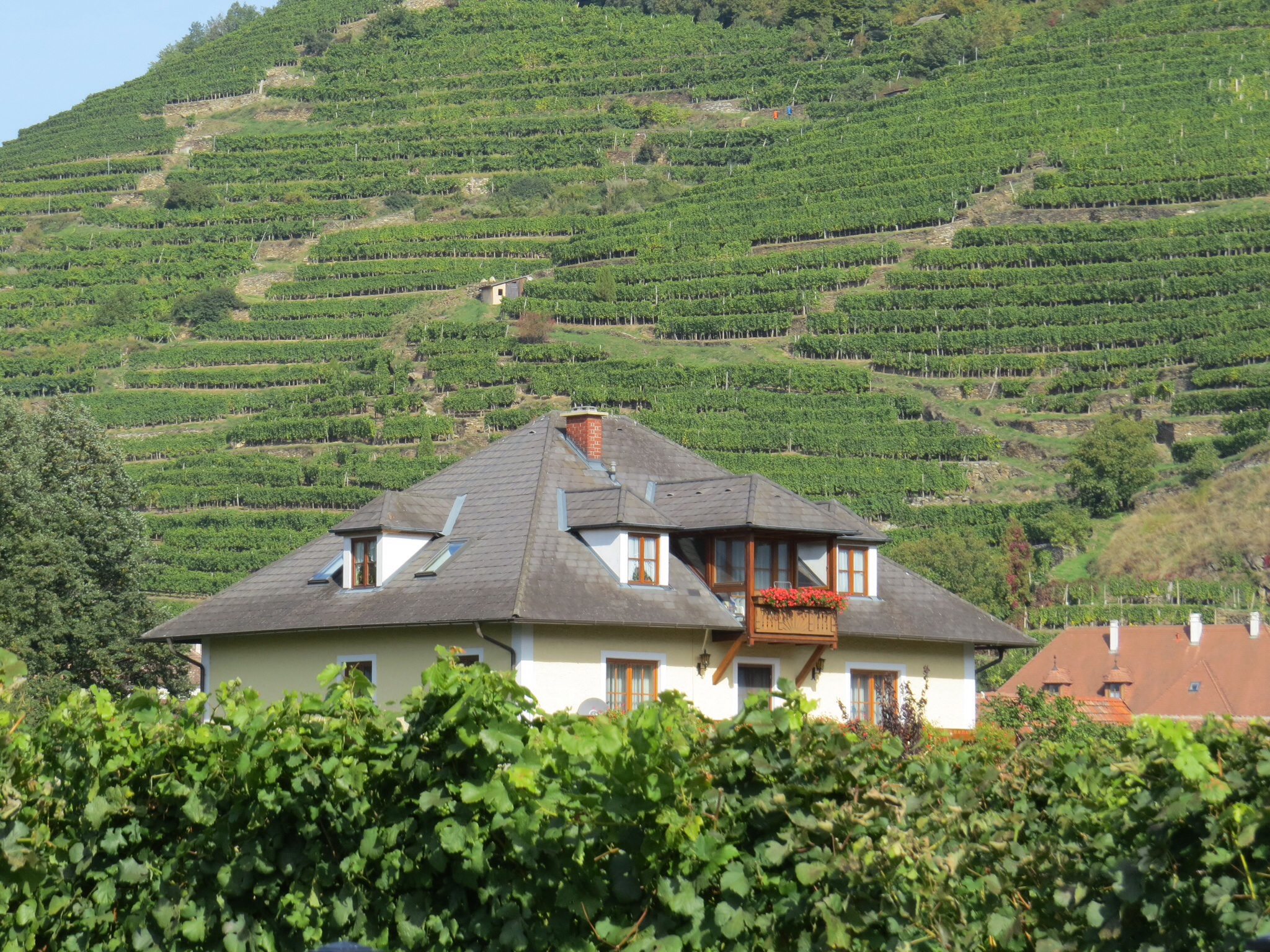
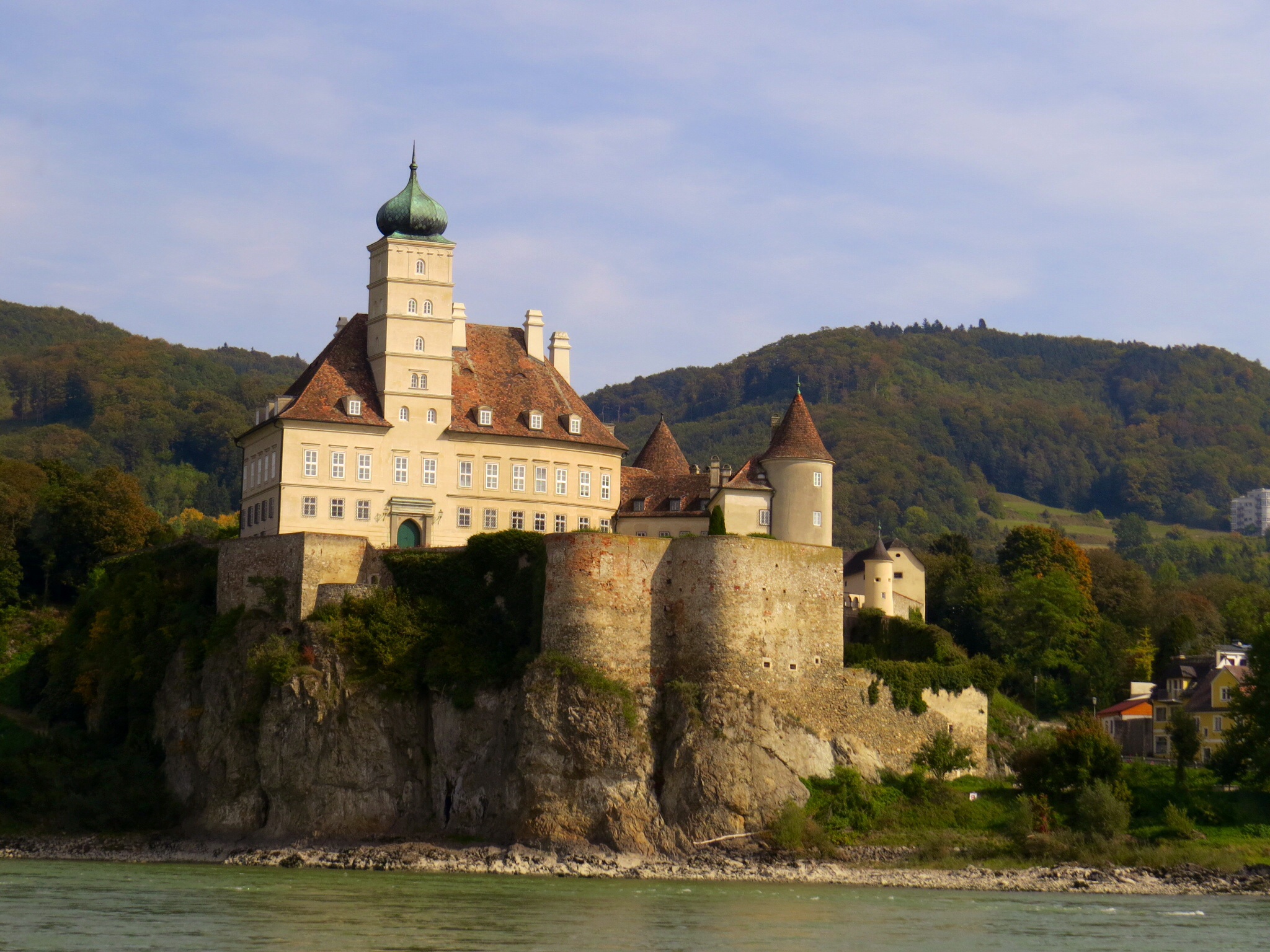
Two Hour Cruise on the Danube
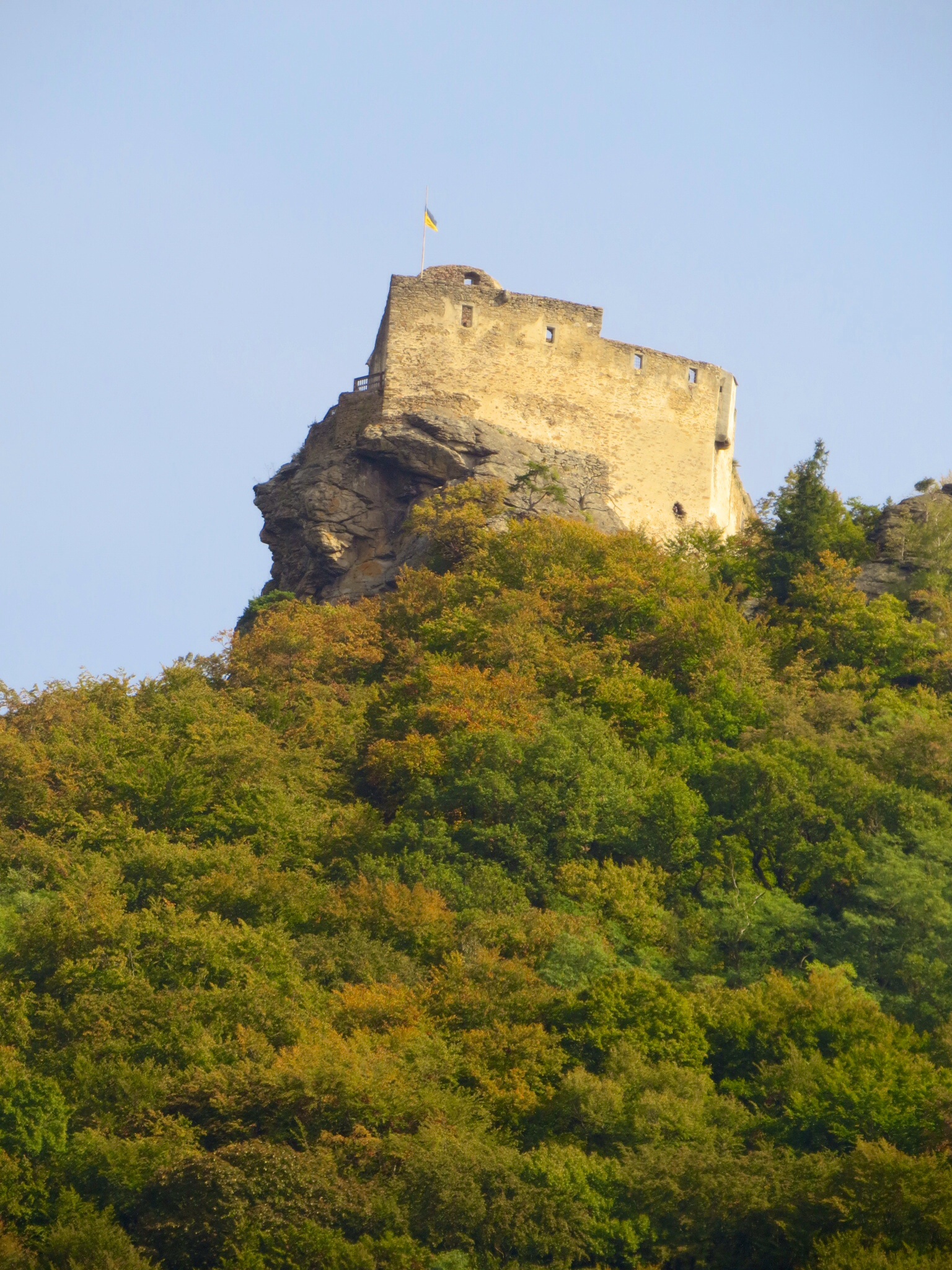
Ancient ruin
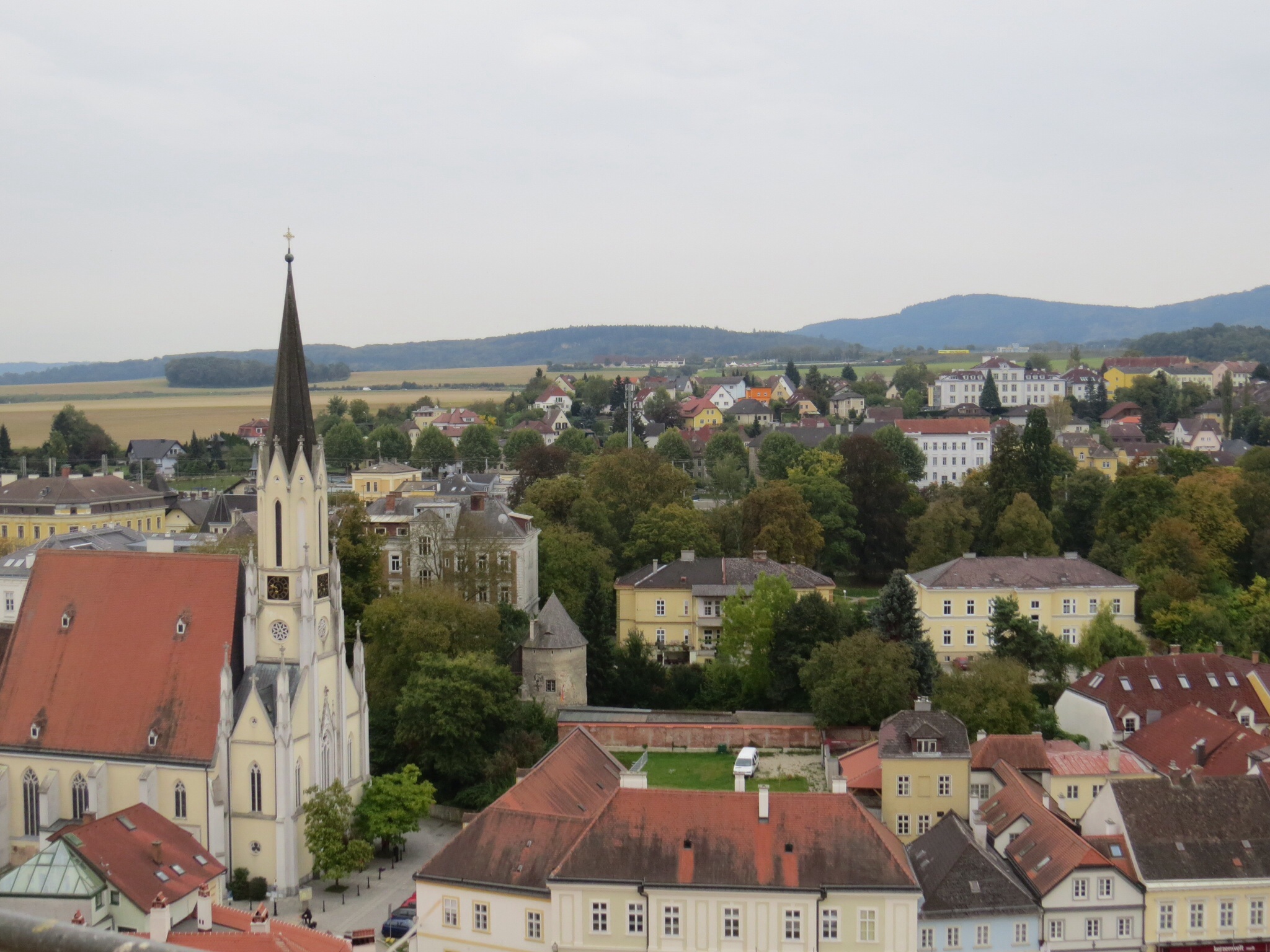
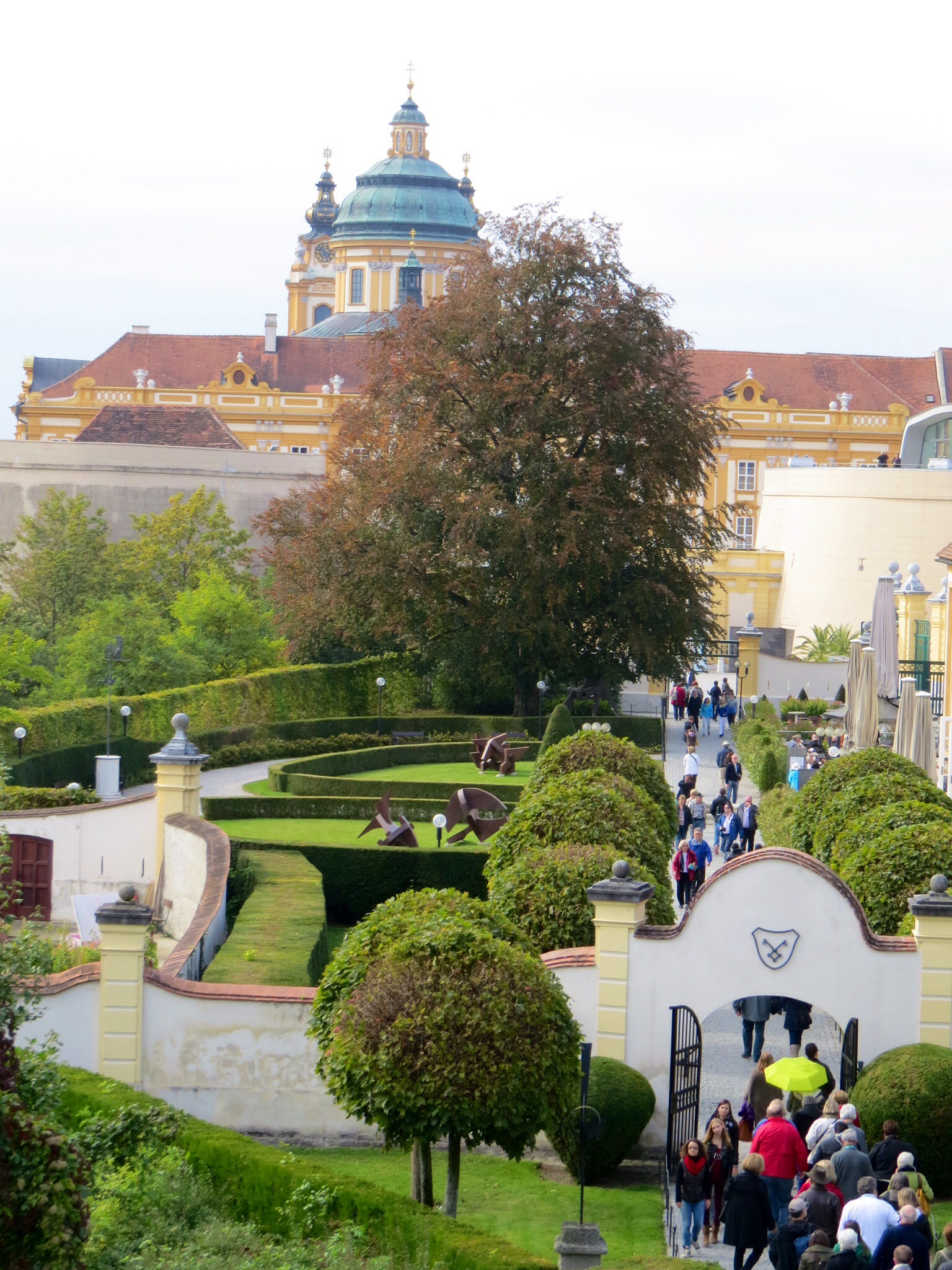
After a drive through the gorgeous Austrian countryside, we arrived at the Town of Melk.
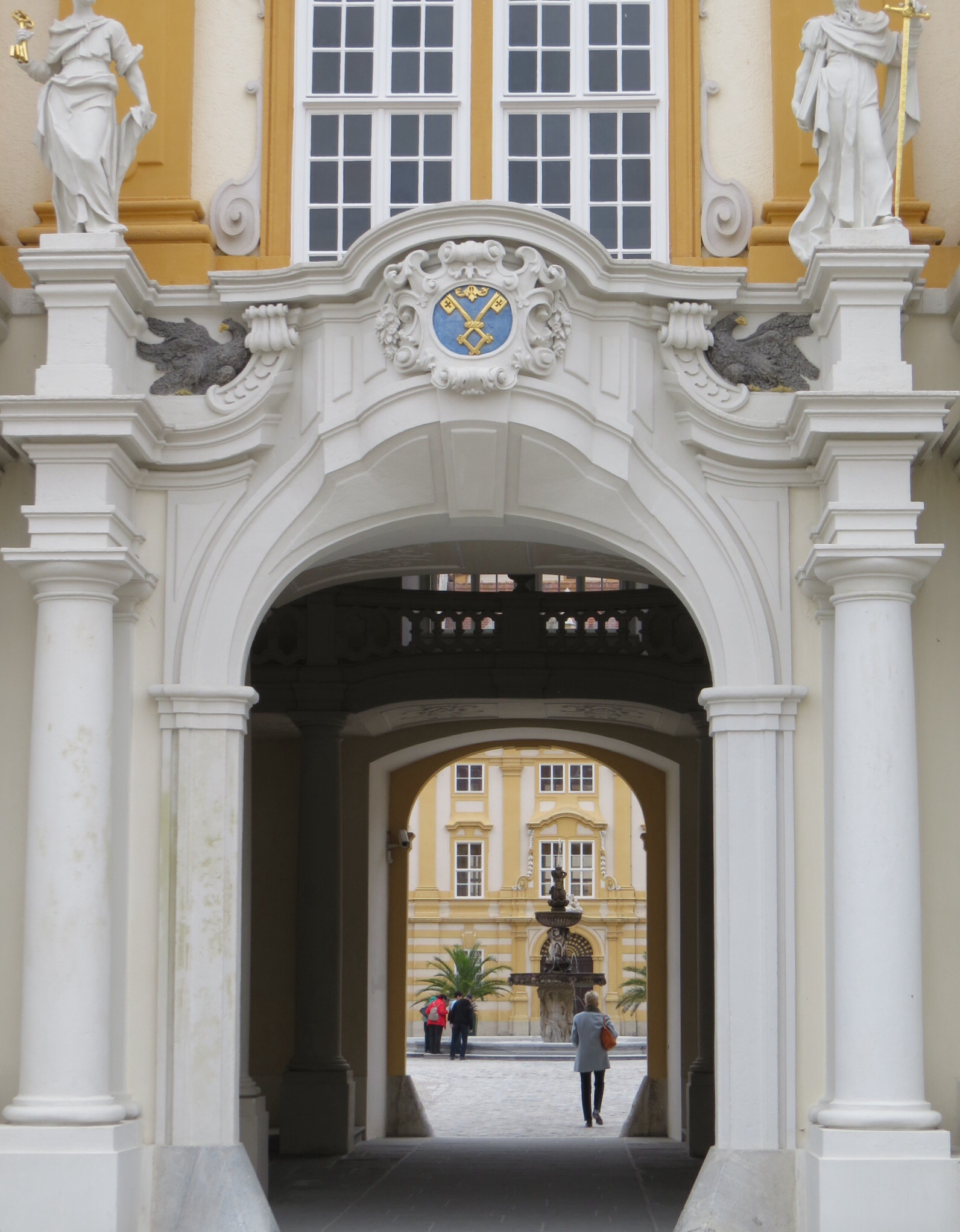
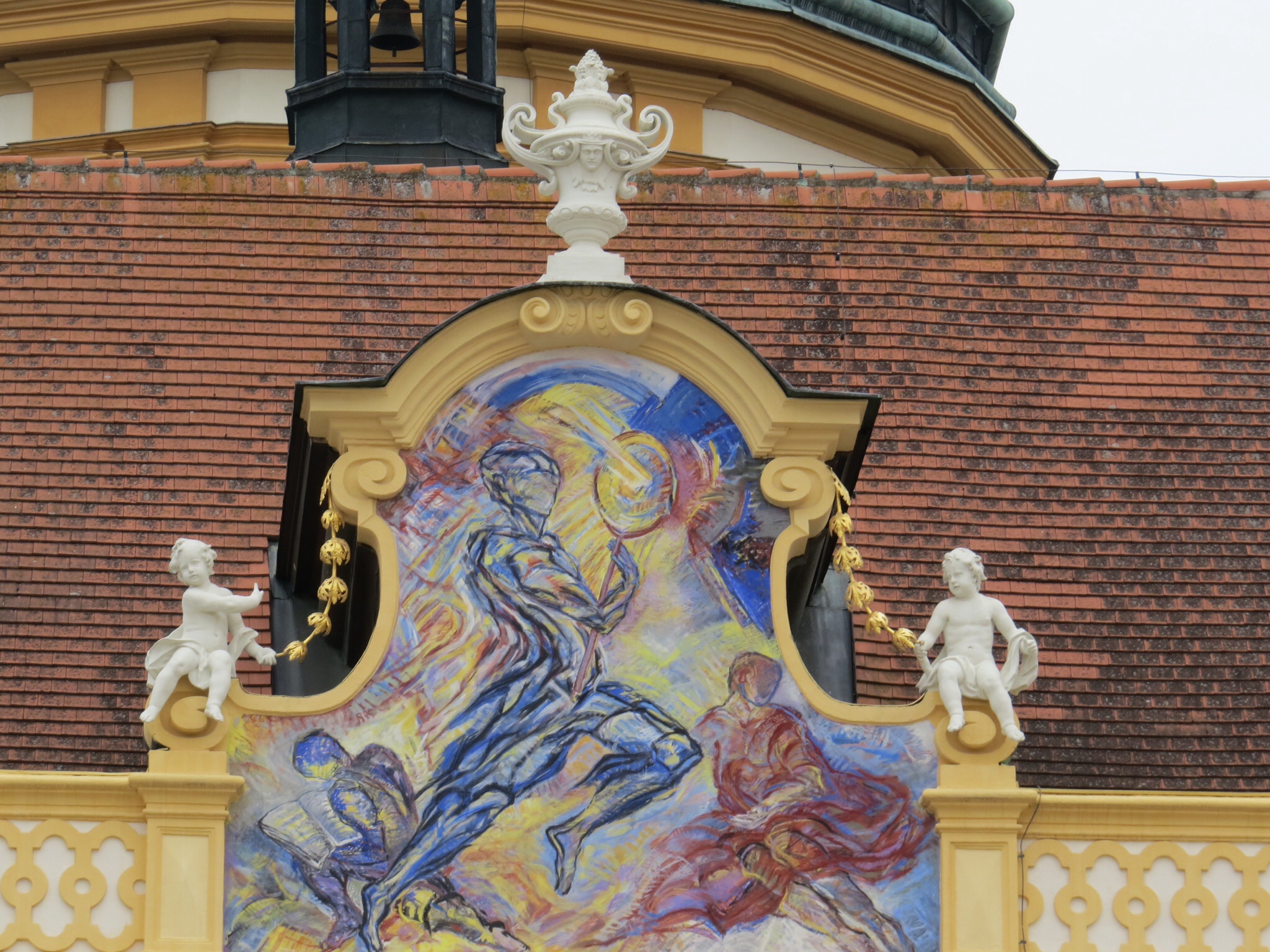
Melk Benedictine Monastery
Melk has been a spiritual, cultural and intellectual center of the country for more than 1000 years, first as a castle for the Babenbergs, then from 1089 as a Benedictine monastery, founded by Margrave Leopold II. Many famous visitors, such as the Dali Lama, have spent time here on retreat. The Benedictine monks are known for their liqueur, and I picked up a small bottle for Bonnie.
The Marble Hall
“I’m getting this crick in my neck.” “Me too, pass me the Aleve.”
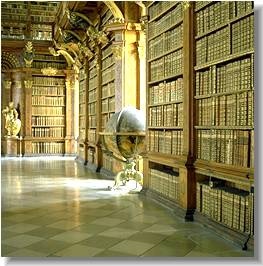
The Library
The library of the Melk abbey consists of a total of twelve rooms containing about 1.888 manuscripts, 750 incunabula (printed works before 1500), 1700 works from the 16th, 4500 from the 17th, and 18.000 from the 18th century; together with the newer books, approximately 100.000 volumes in total. About 16.000 of these are found in this library room. I downloaded these images.
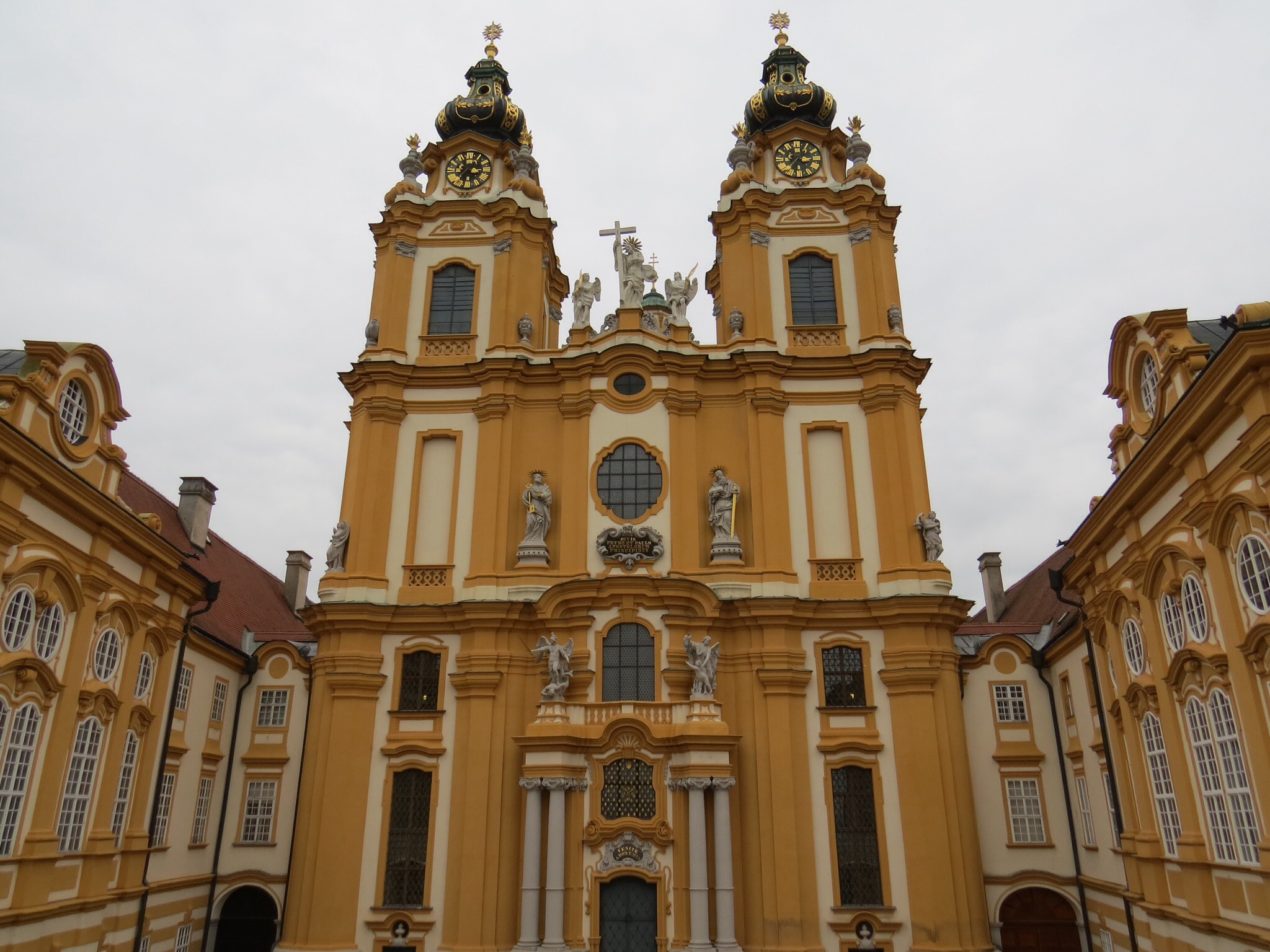
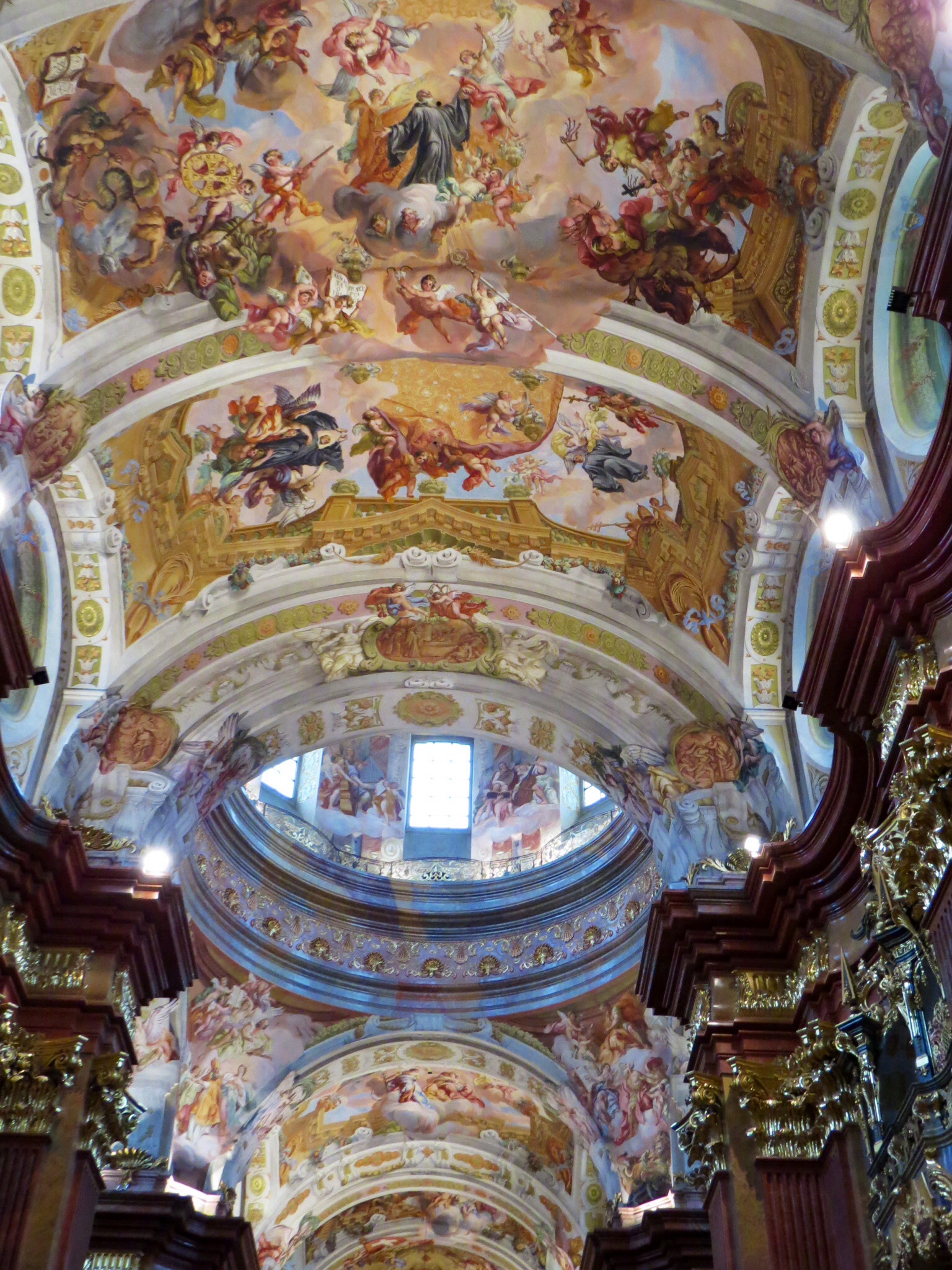
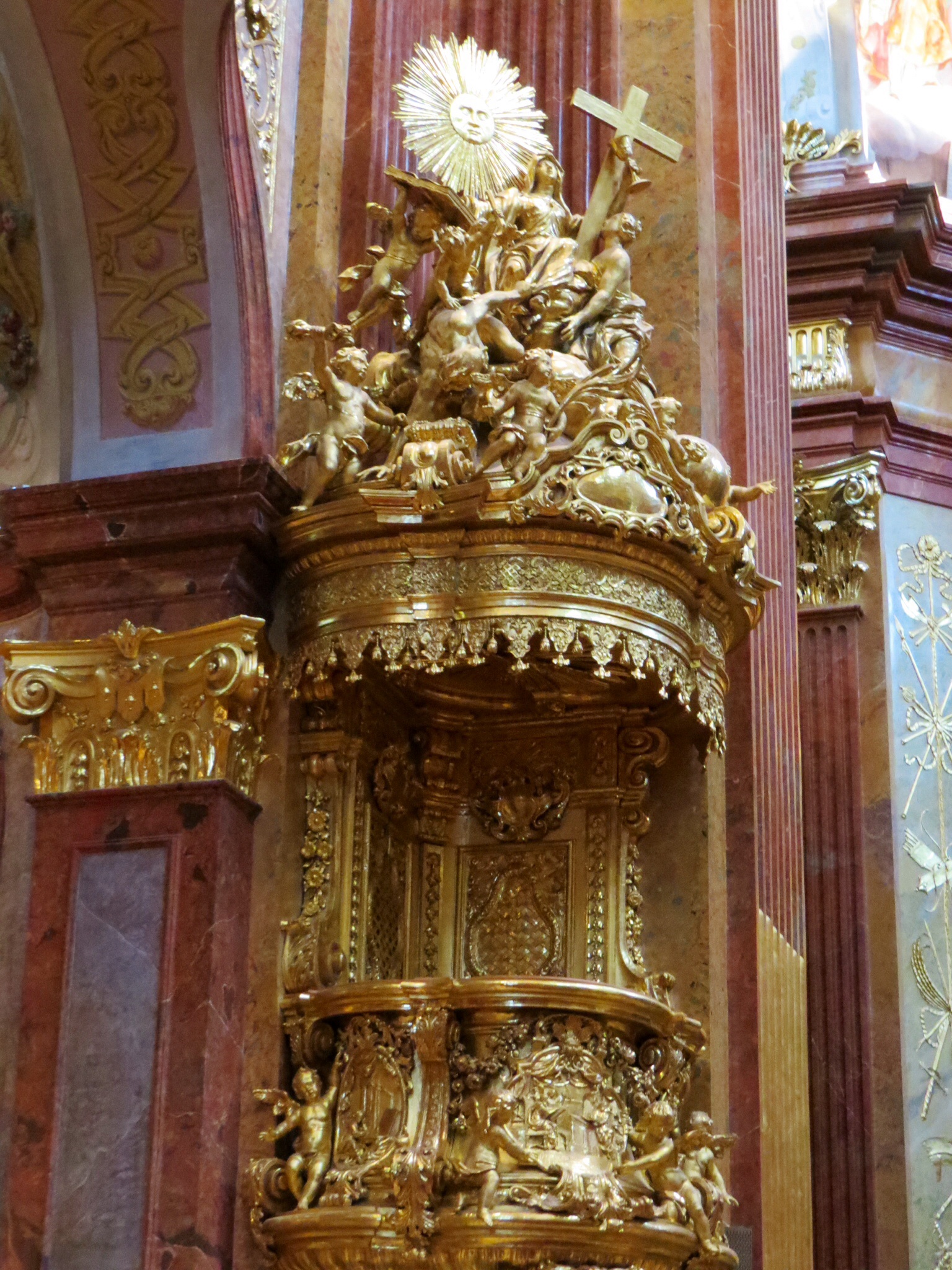
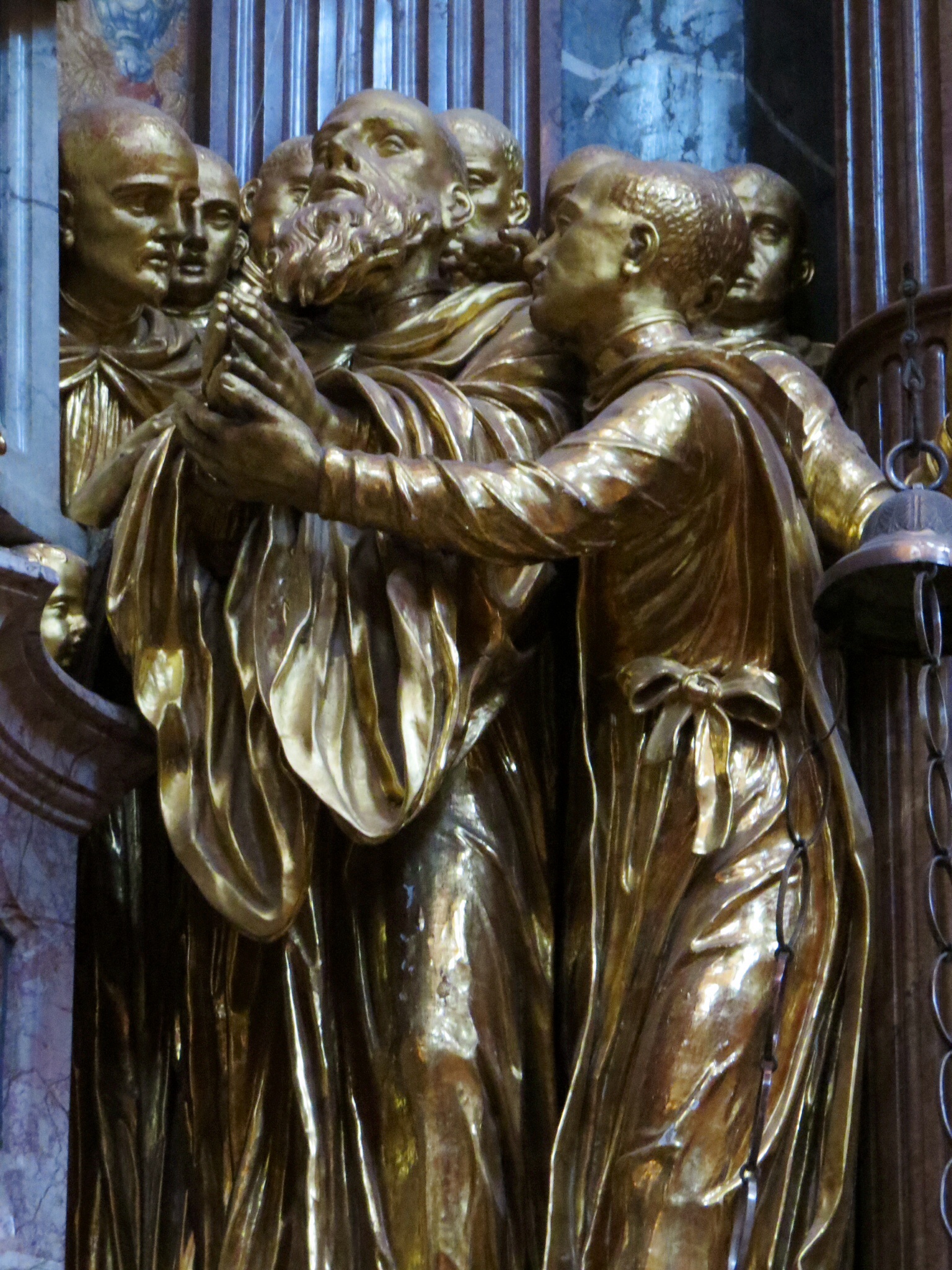
The Church
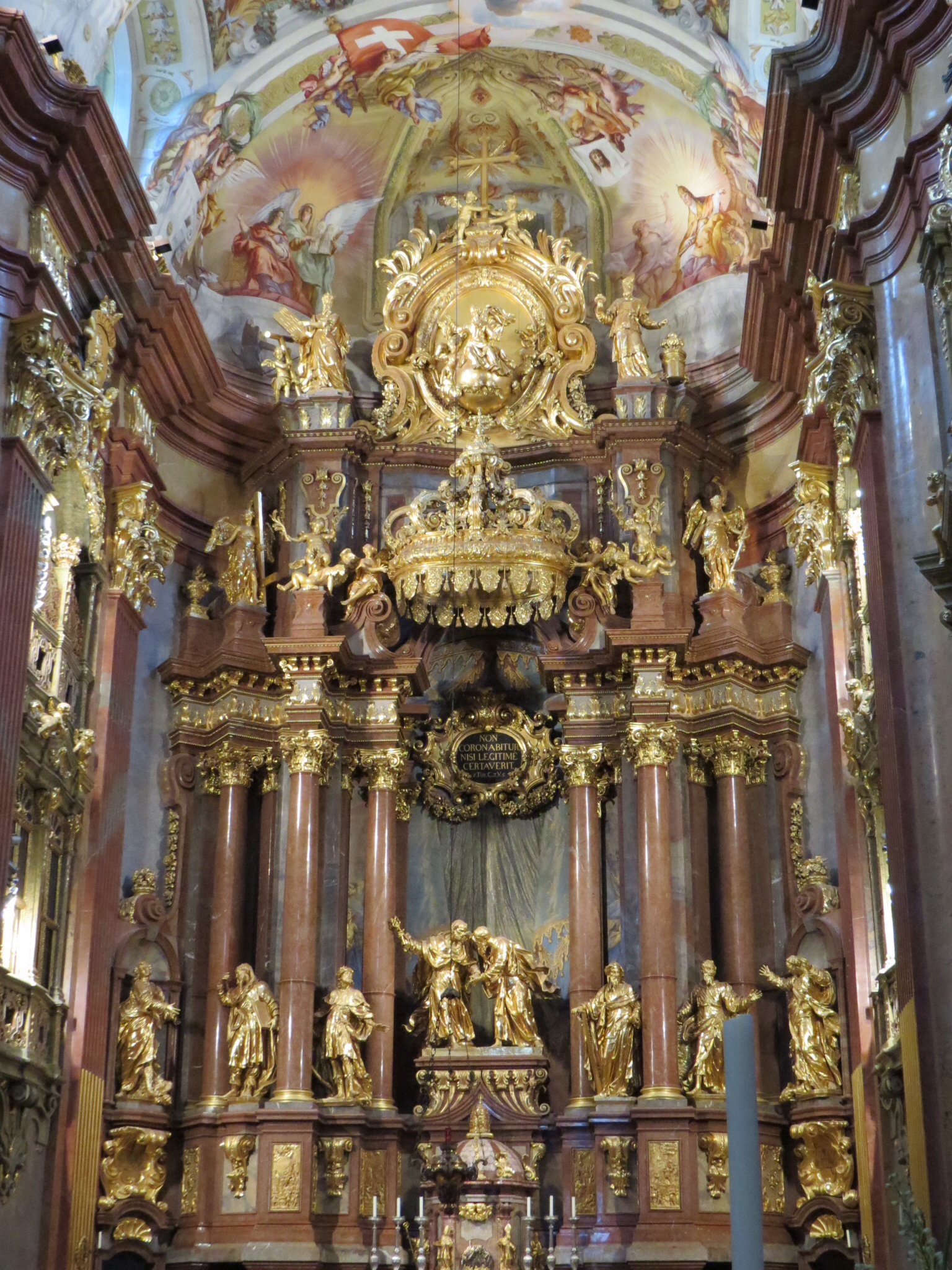
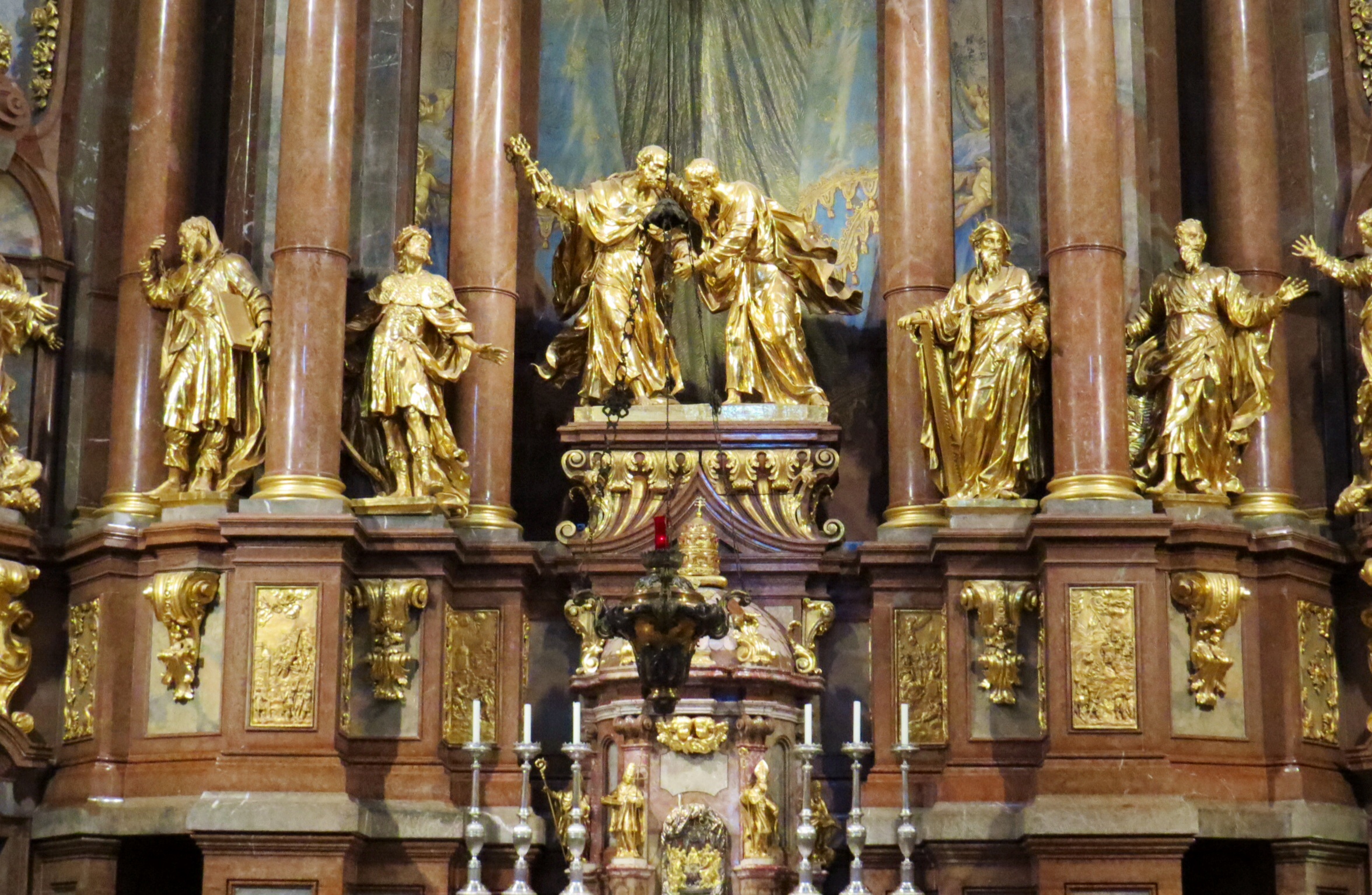
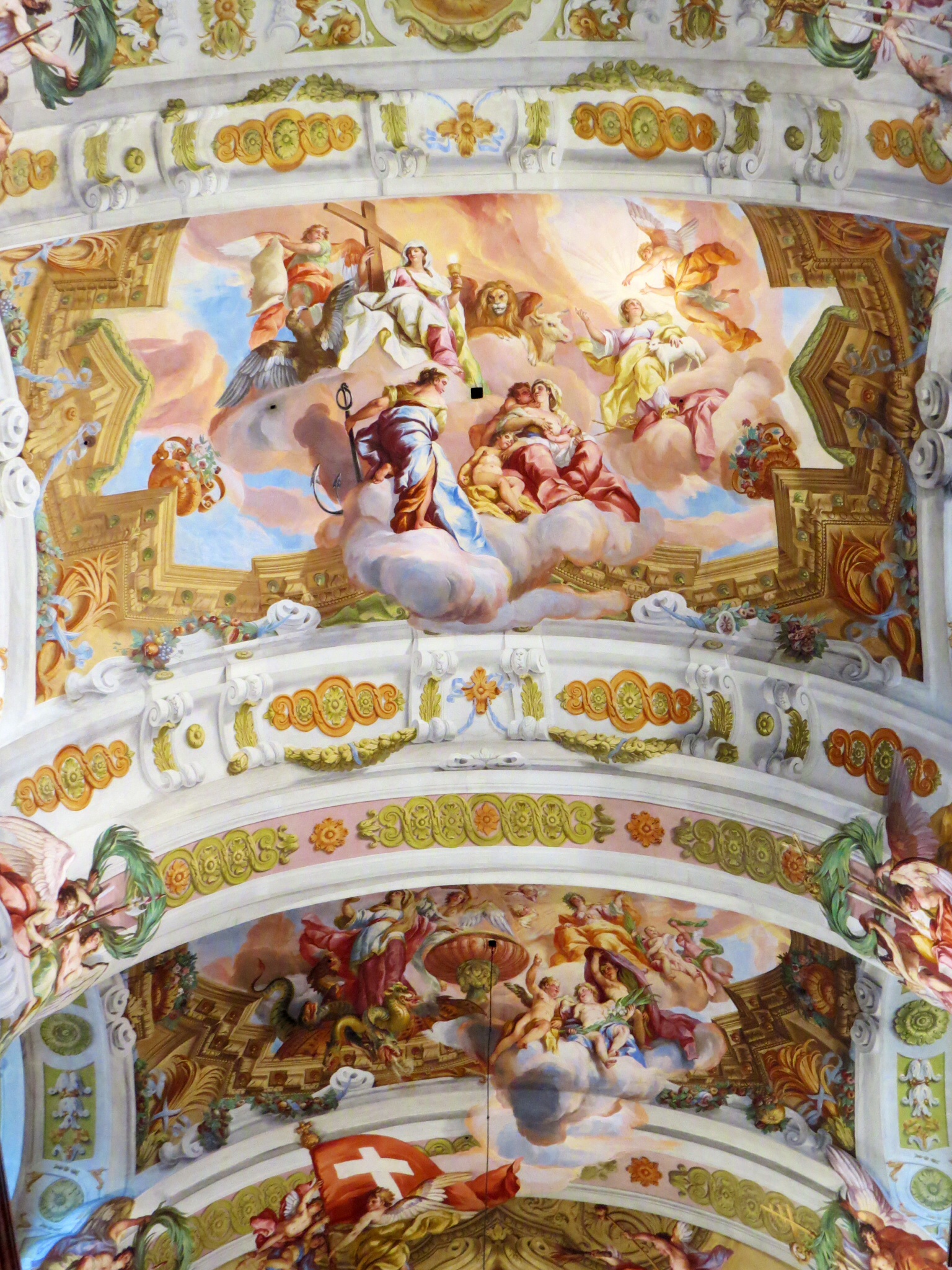
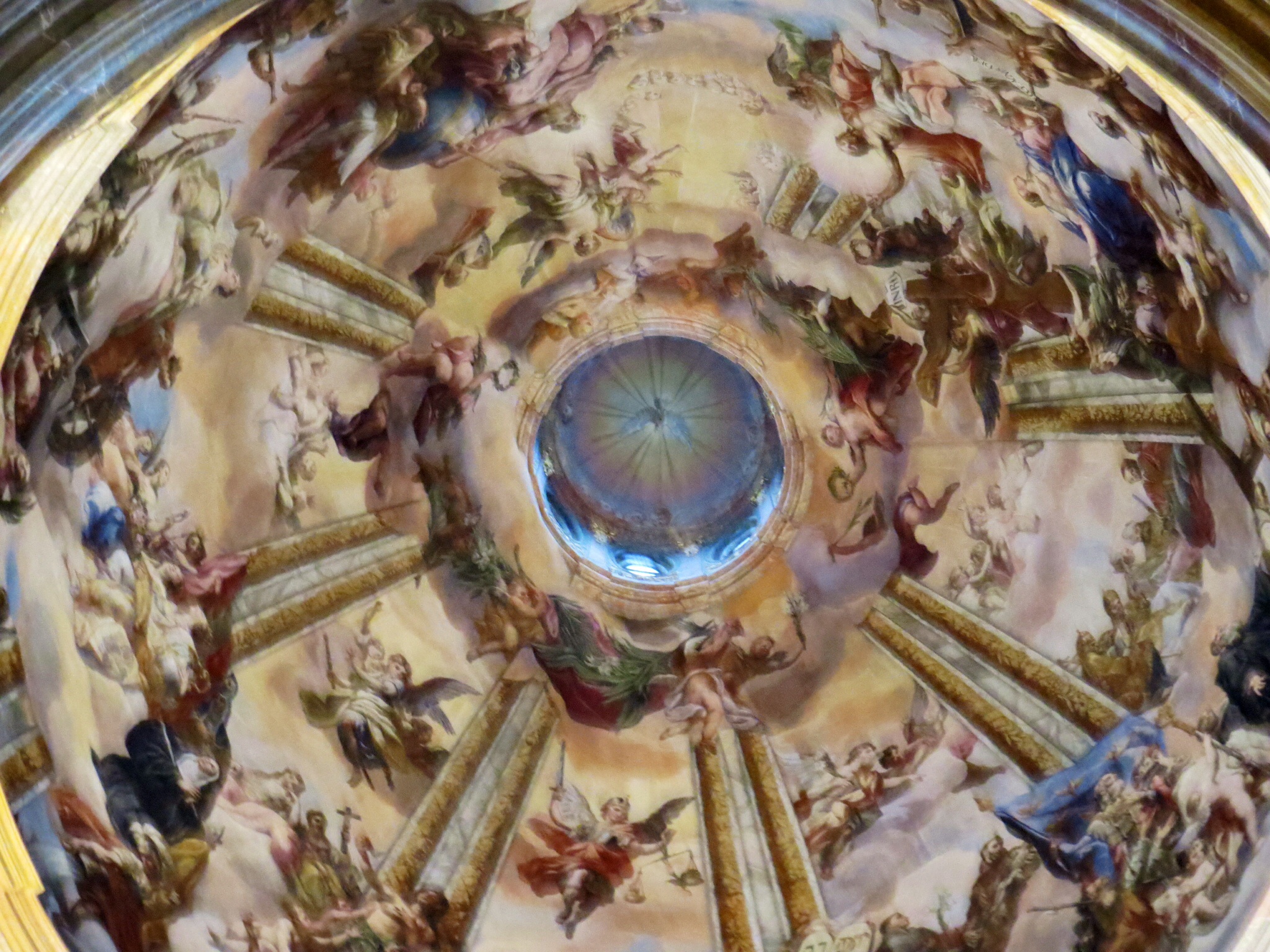
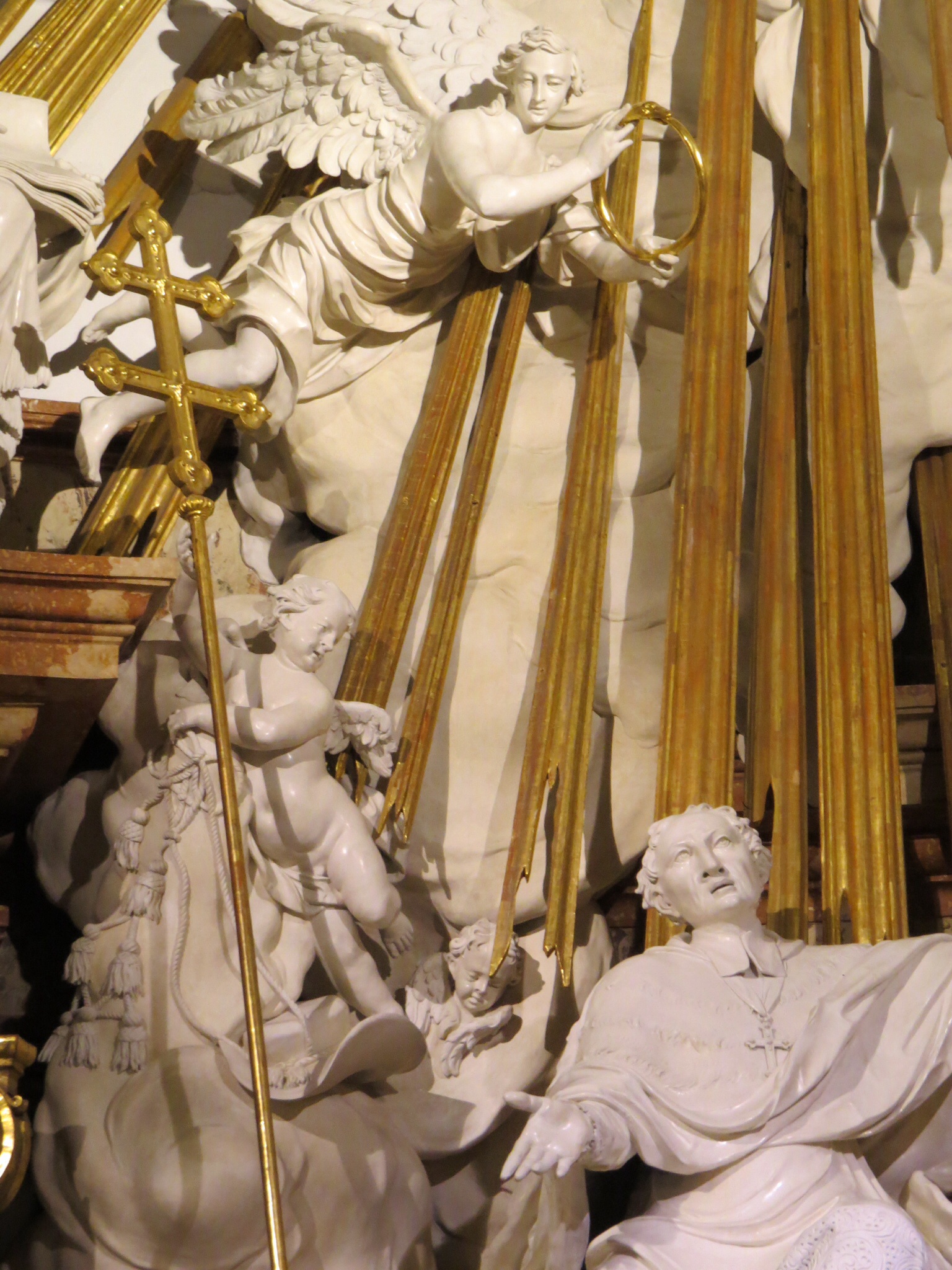
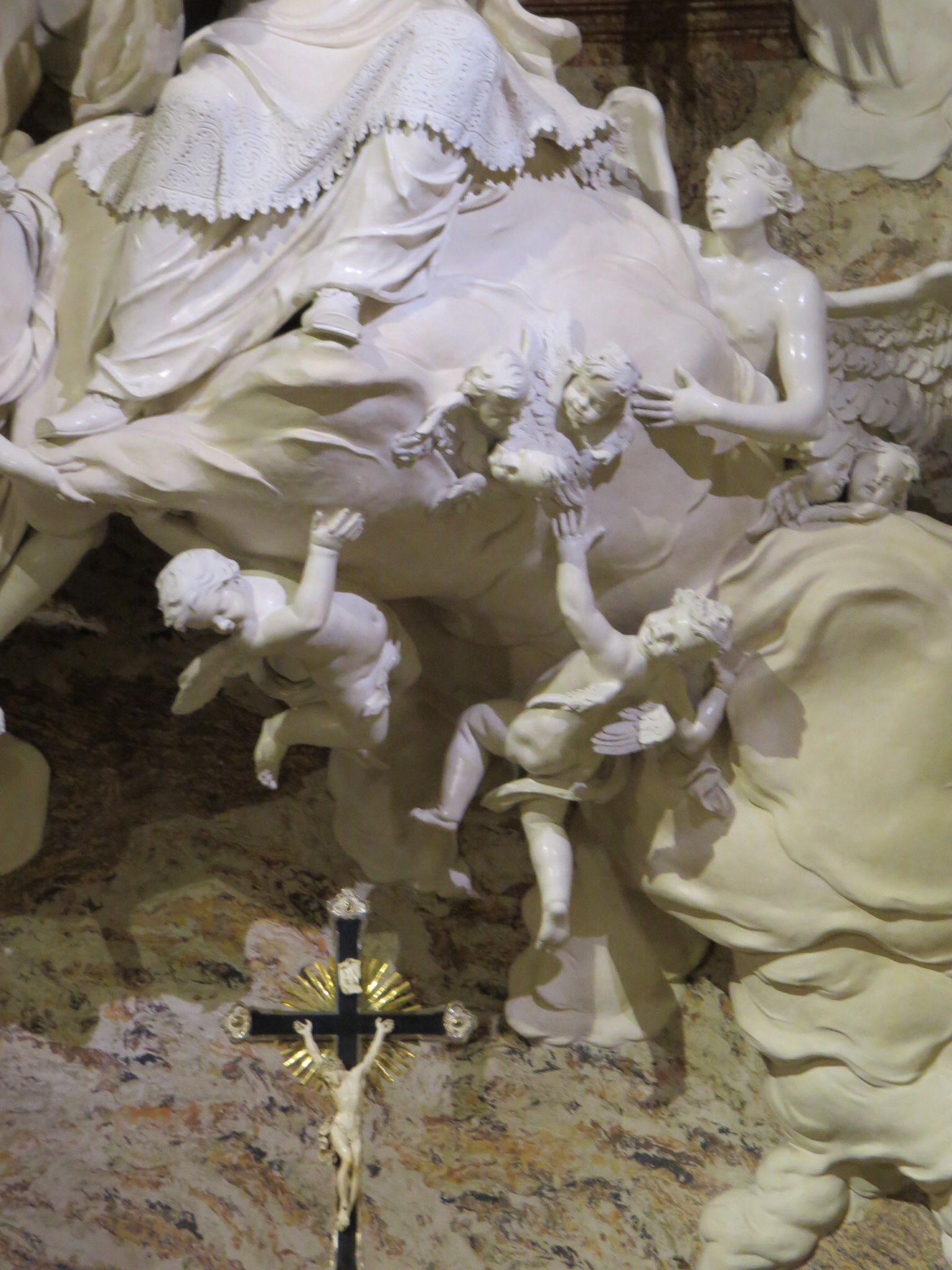
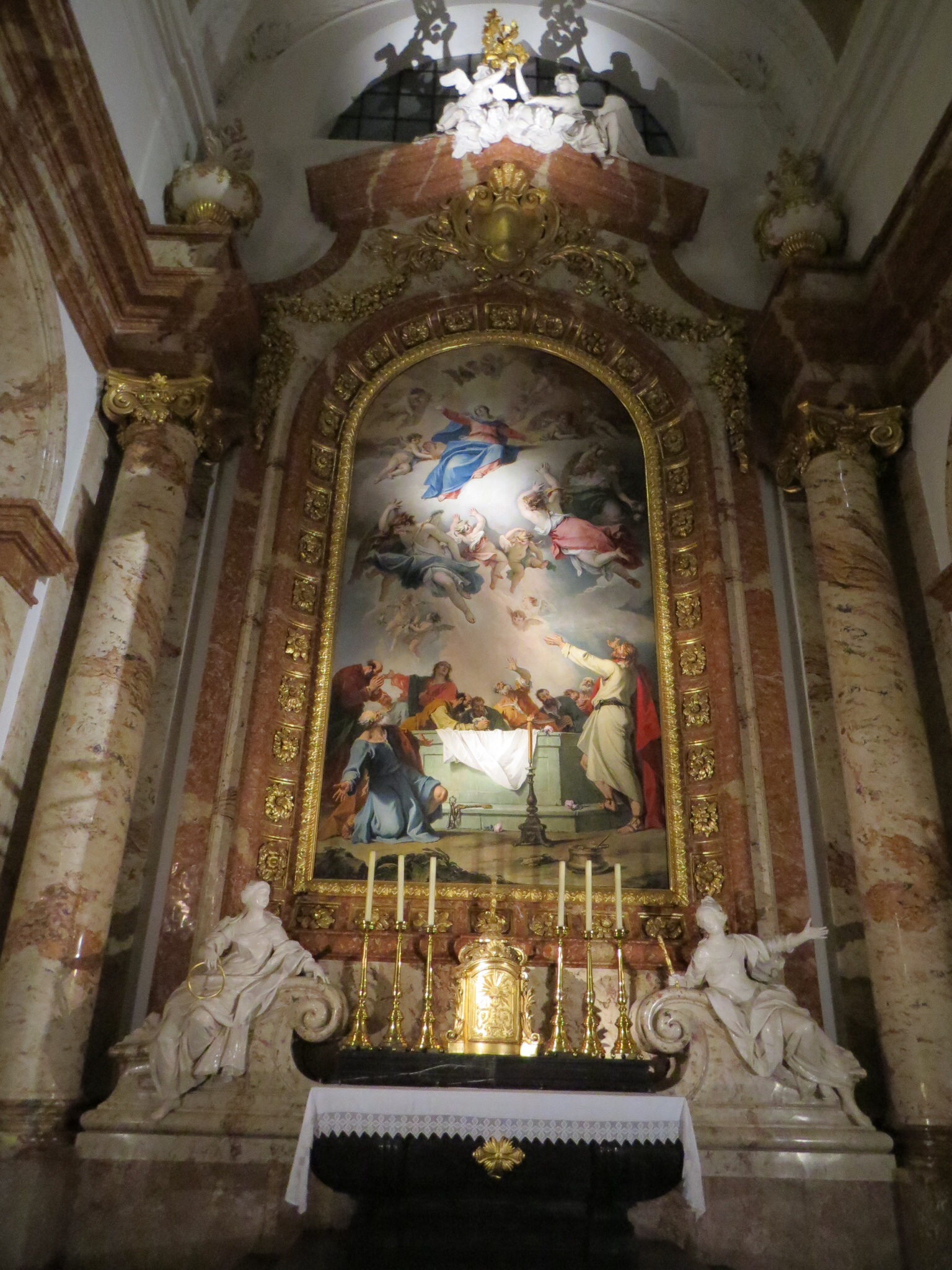
Smaller than many of the cathedrals I’ve seen, this Baroque jewel is no less beautiful.
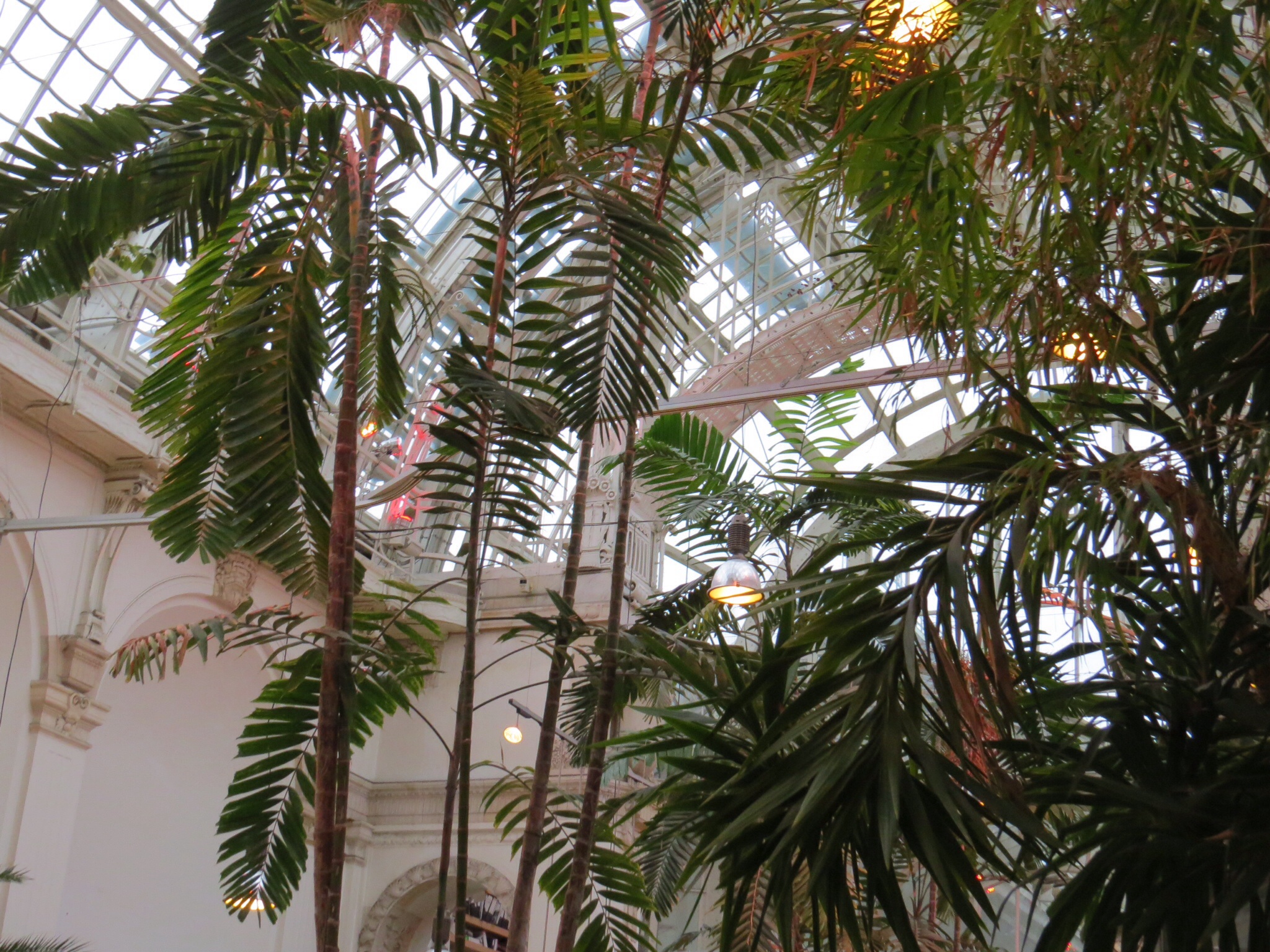
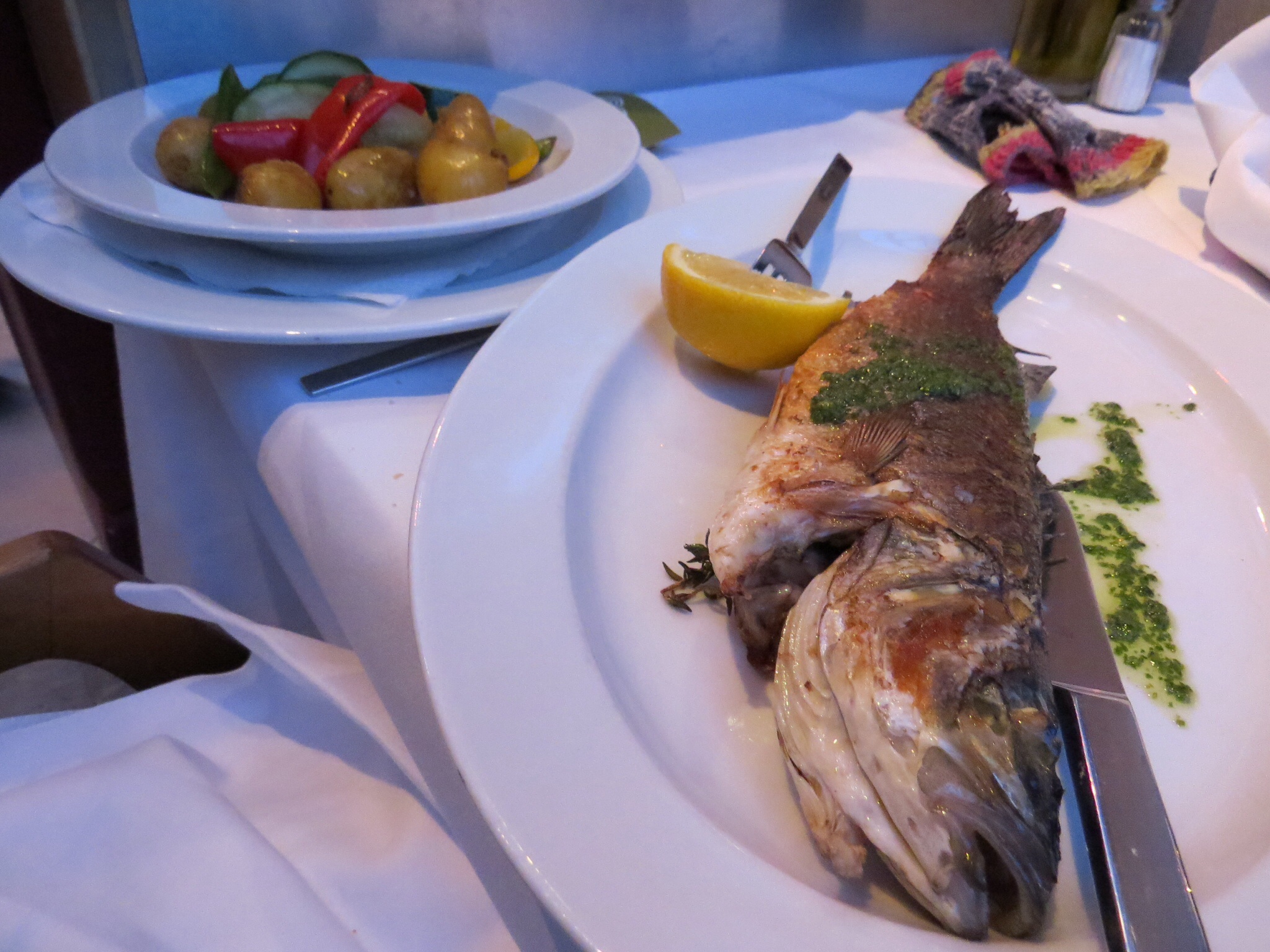
At the end of this fabulous day trip, I was deposited back downtown with enough time for dinner before my last Vienna concert. I had seen and read about The Palmery, a lovely conservatory on the back of the Palace. I was not disappointed, and the food, notwithstanding its very Viennese presentation, melted in my mouth.
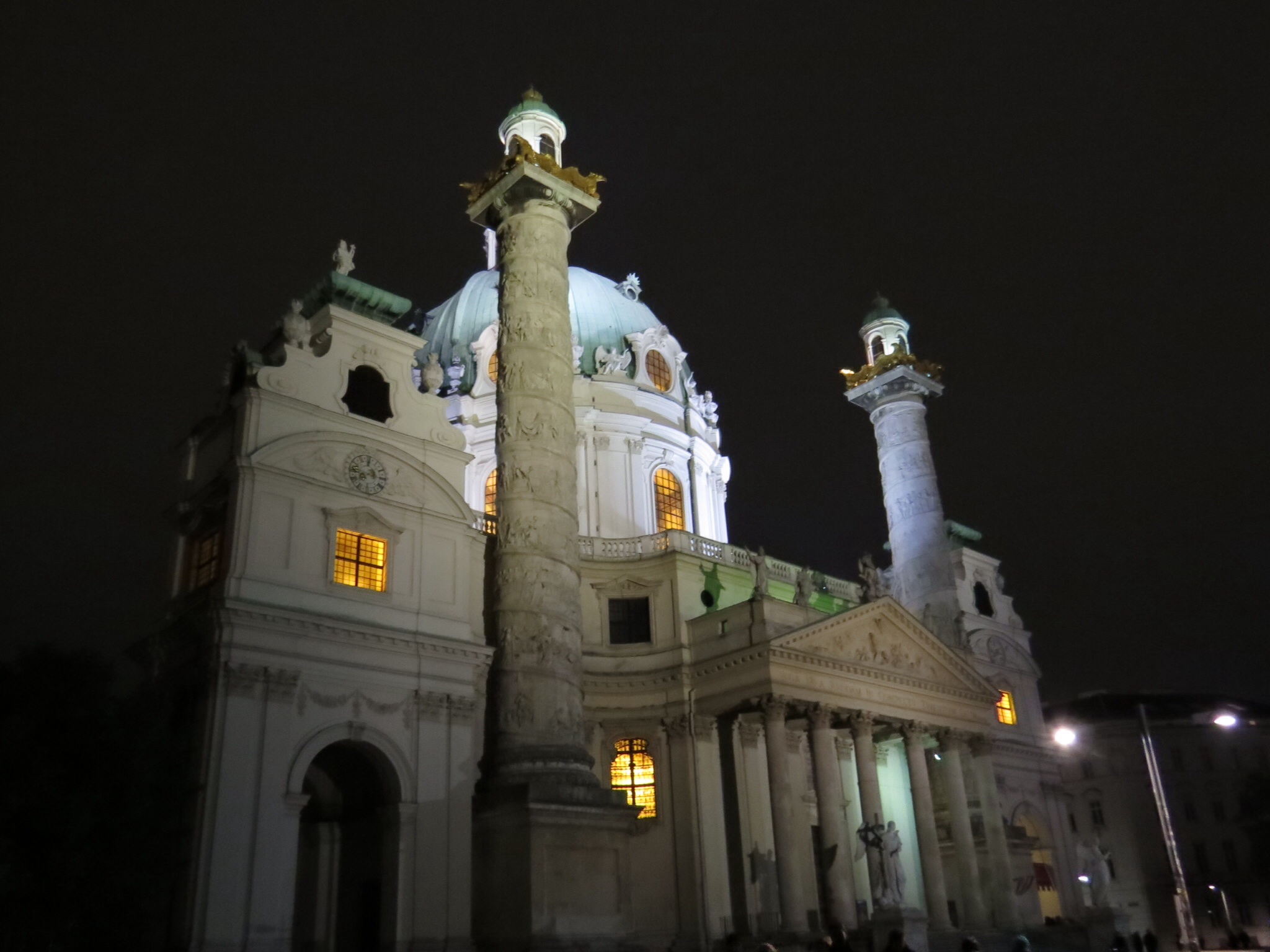
Mozart’s Requiem at Karlskirche
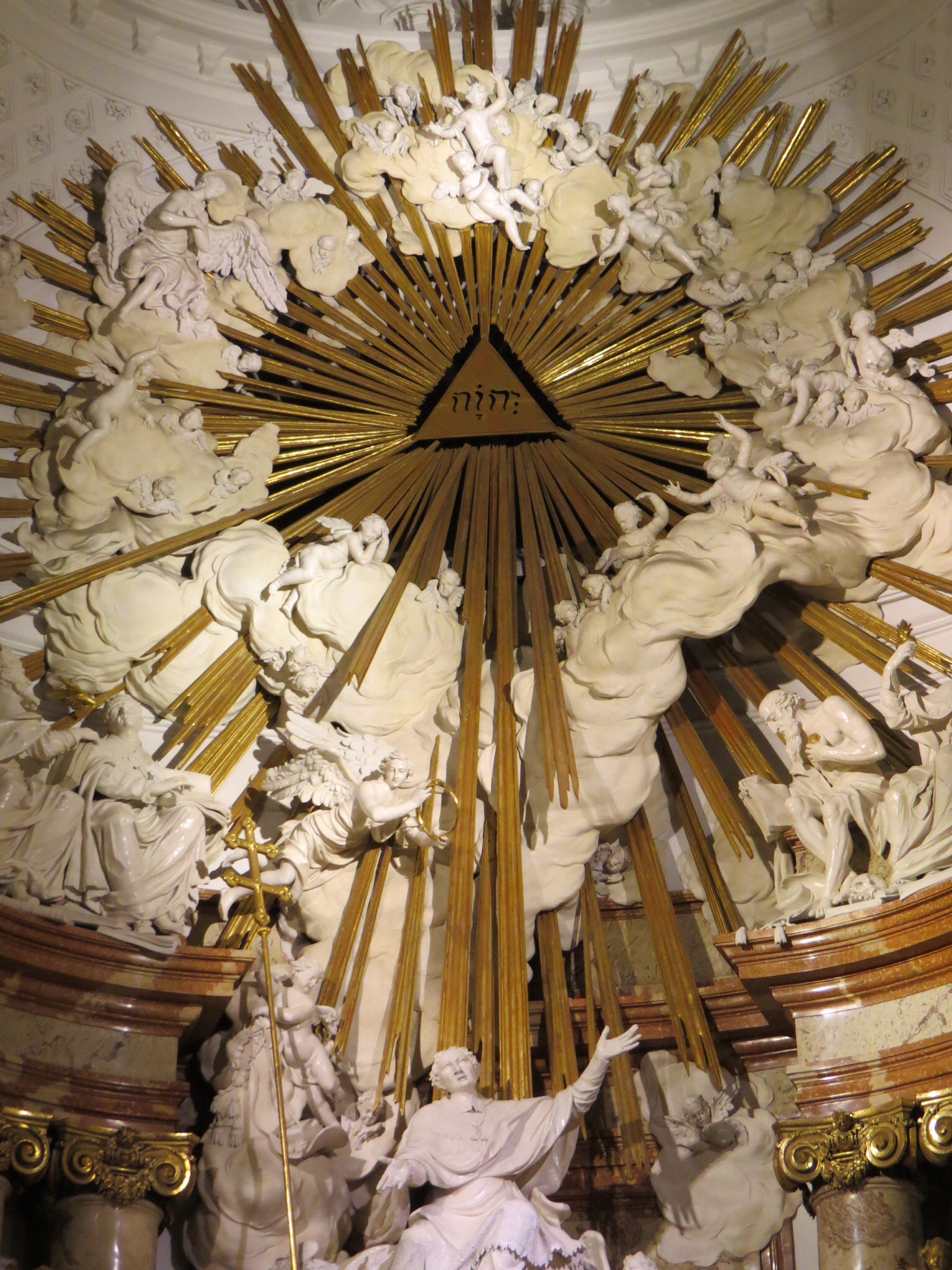
The Monstrance of all monstrances
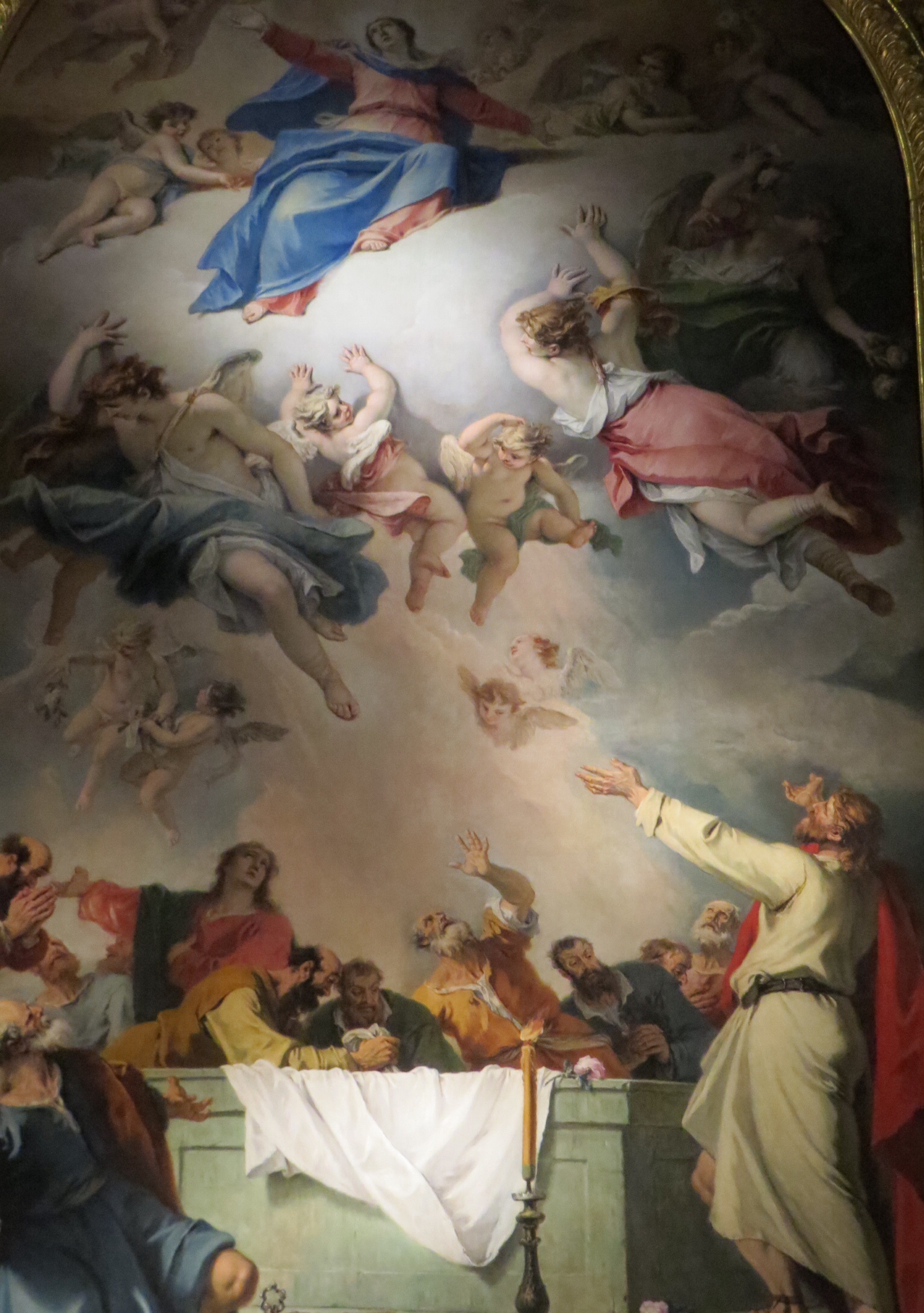
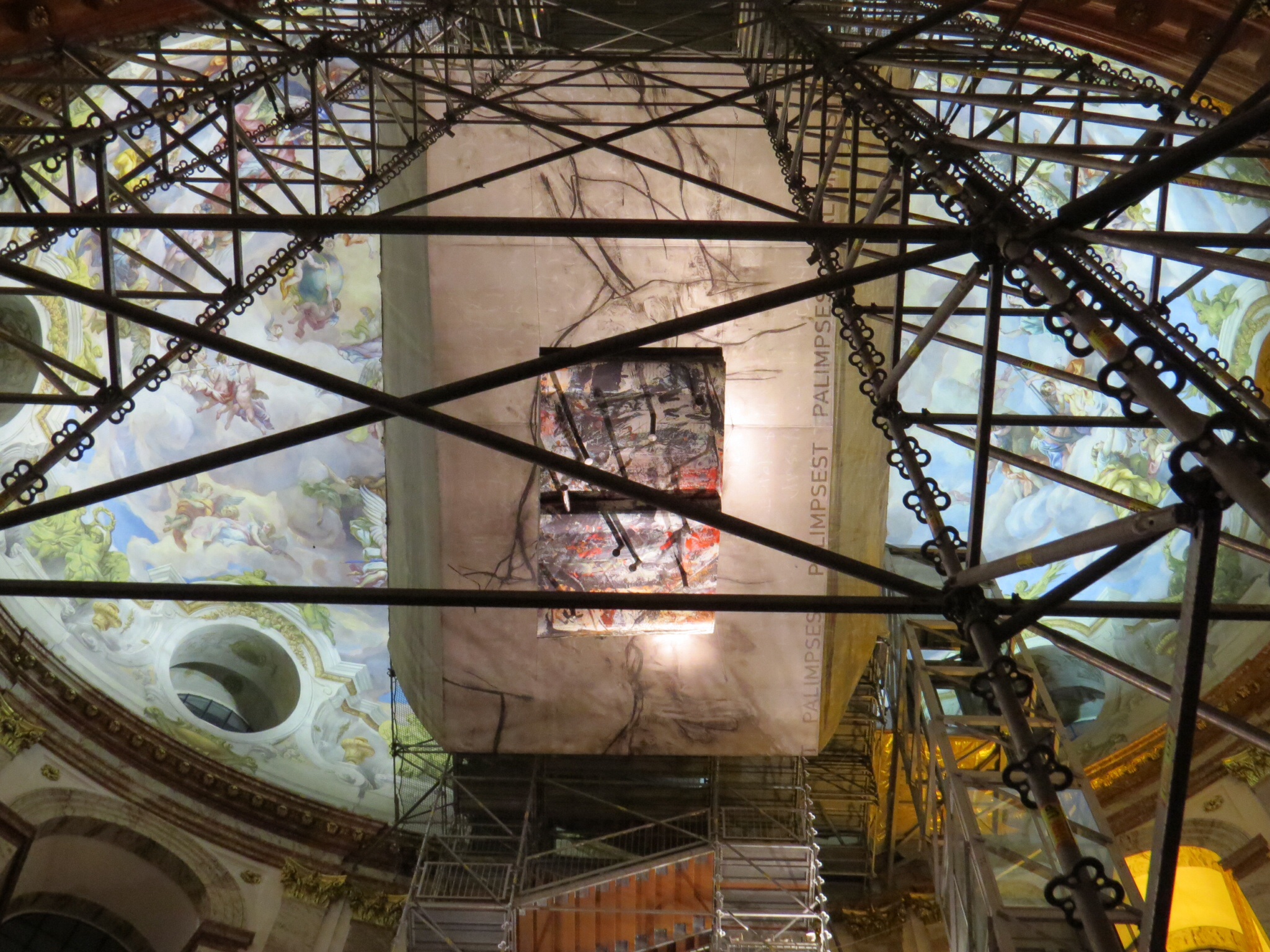
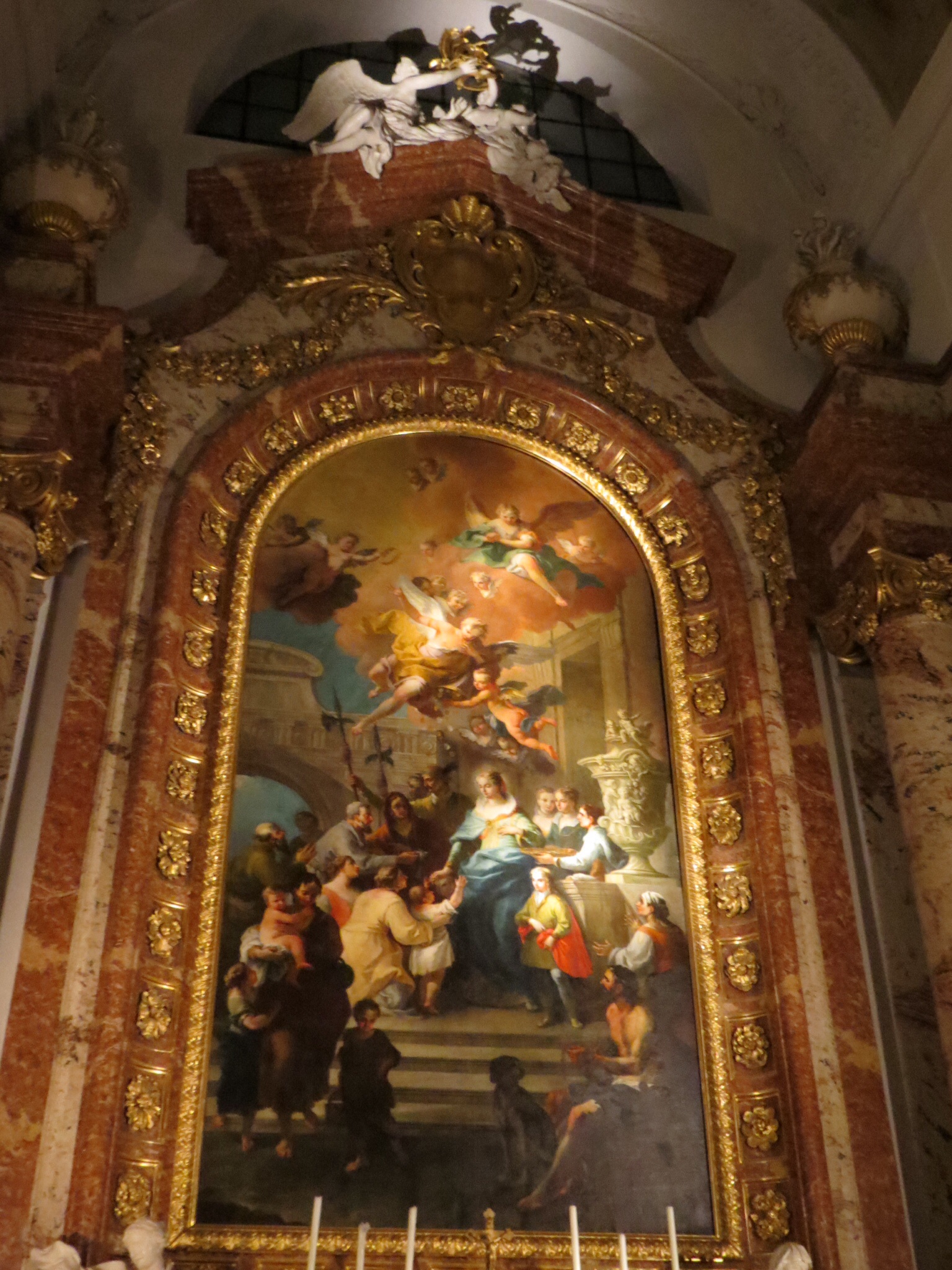
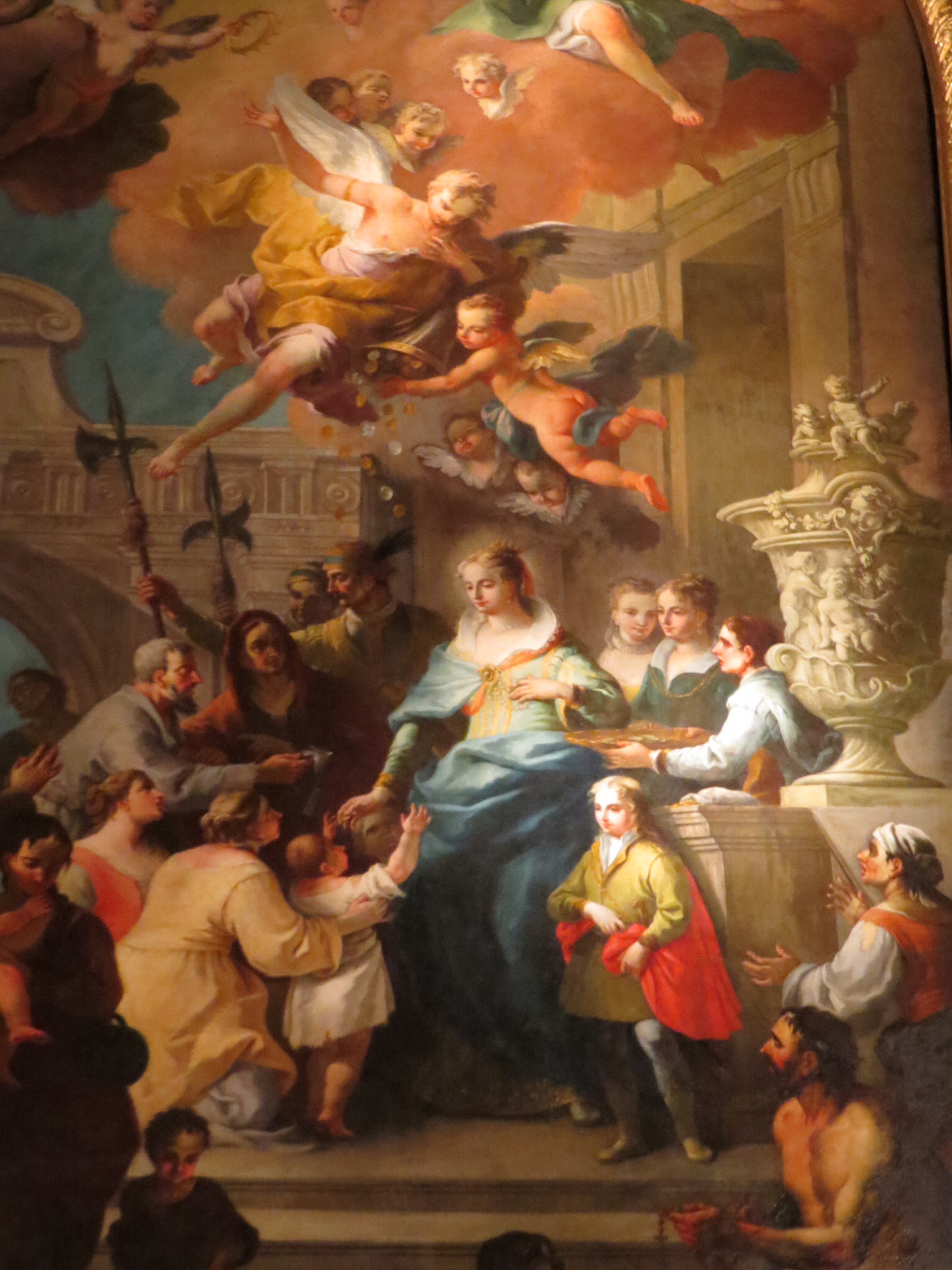
Paintings and Frescoes
The Concert
The first time I heard Mozart’s Requiem was many years ago at a Mozart Festival by the Toronto Symphony with the Ballet Jazz de Montreal at the Roy Thompson Hall. It left me in tears. He wrote it ostensibly for a patron’s wife’s requiem, but Mozart lay dying and I have little doubt that he wrote his last work as his own Requiem. Producing a work of such uncomparable beauty when he was so ill is heart-breaking. The Requiem incorporates a choir and an orchestra of early instruments, some of them of Mozart’s own invention, with over 40 musicians.
Orchester 1756 (on period instruments)
Heinrich Biber Chorus
conductor: Konstantin Hiller
Here is a preview:
Parting View of Vienna
How many days in my life will be like this one, starting with a cruise on the Danube and ending with Mozart’s Requiem? It warranted a toast – and I cracked open Bonnie’s Benedictine, and raised a glass to Vienna, Mozart – and Bonnie!
As foiled as my plans were yesterday, they were successful in the same measure today. The familiar slight panic that sets in on the penultimate day in a place has set in. I had planned on a full day devoted to Gustav Klimt, the Viennese artist who painted The Kiss, and there were many opportunities in the city to see his work. But I hadn’t even been to Hofburg Palace yet, so I compromised.
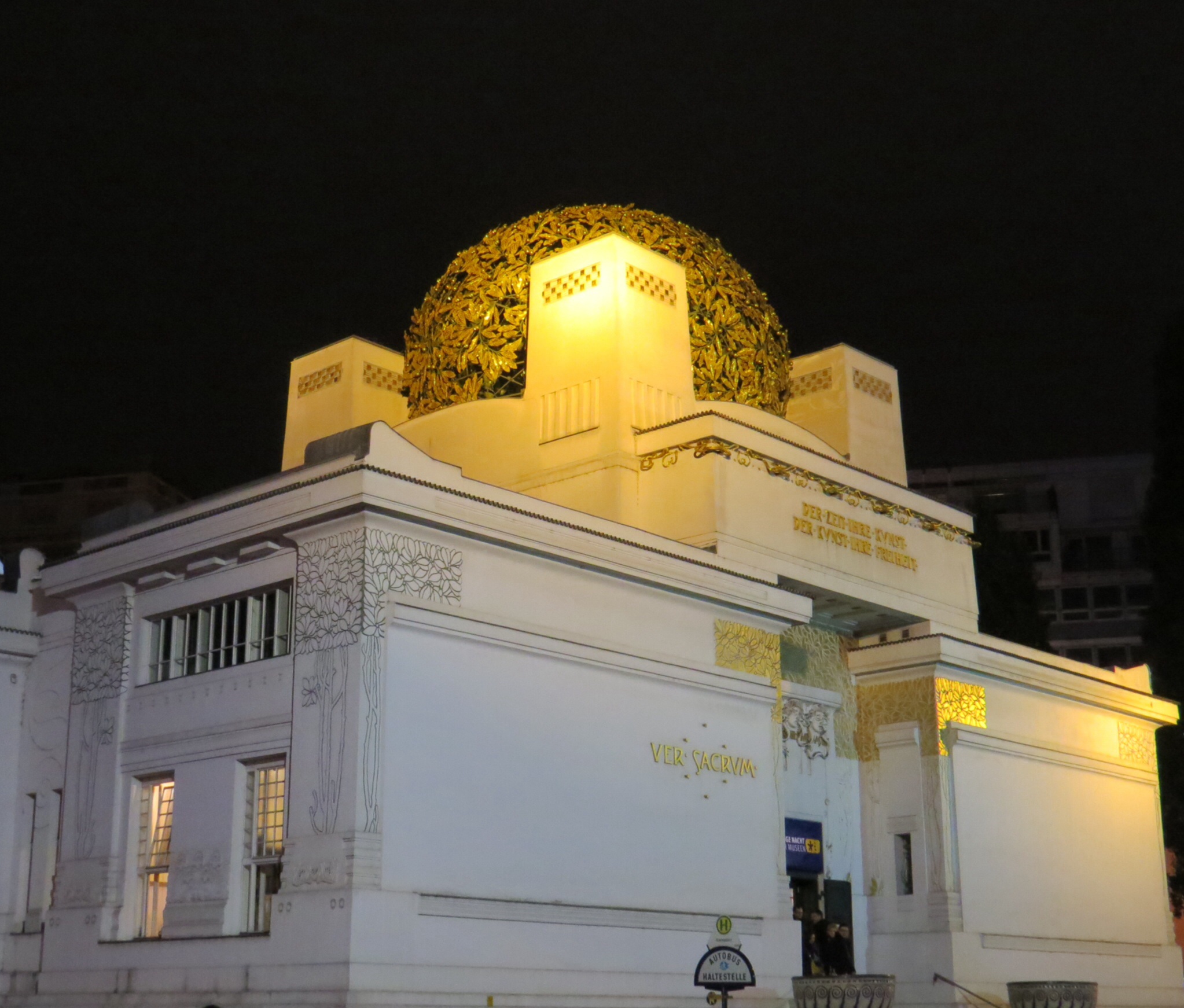
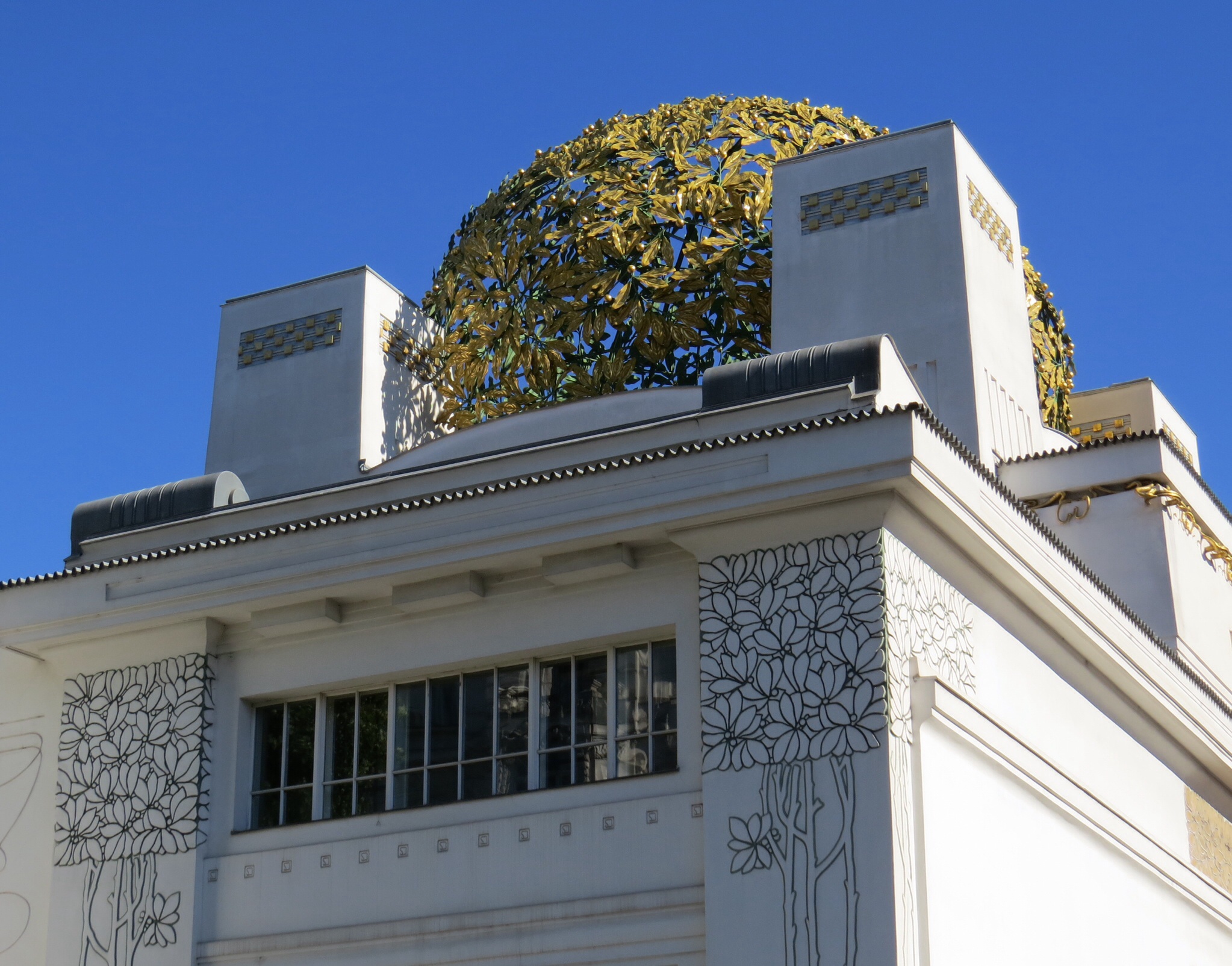
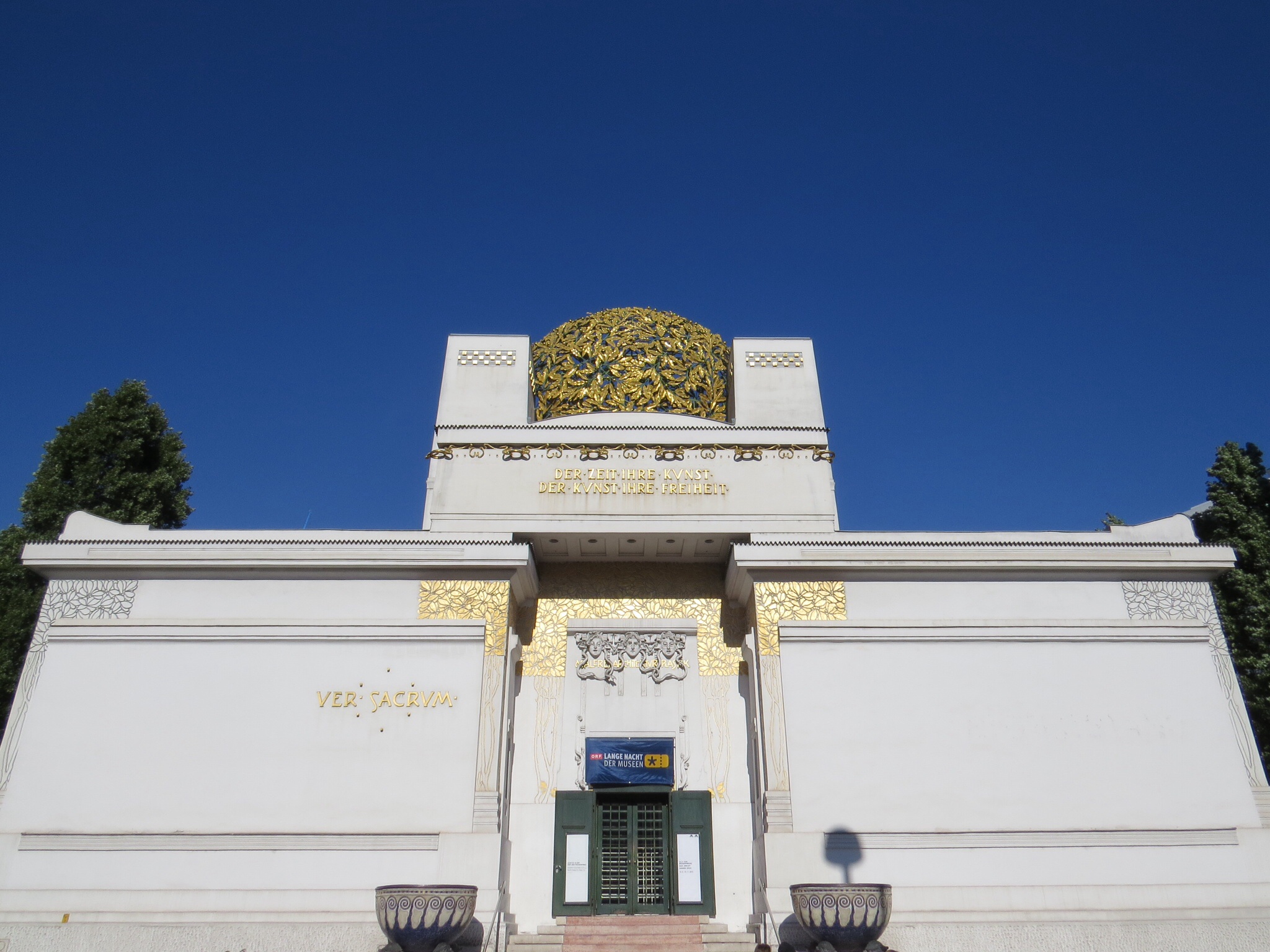
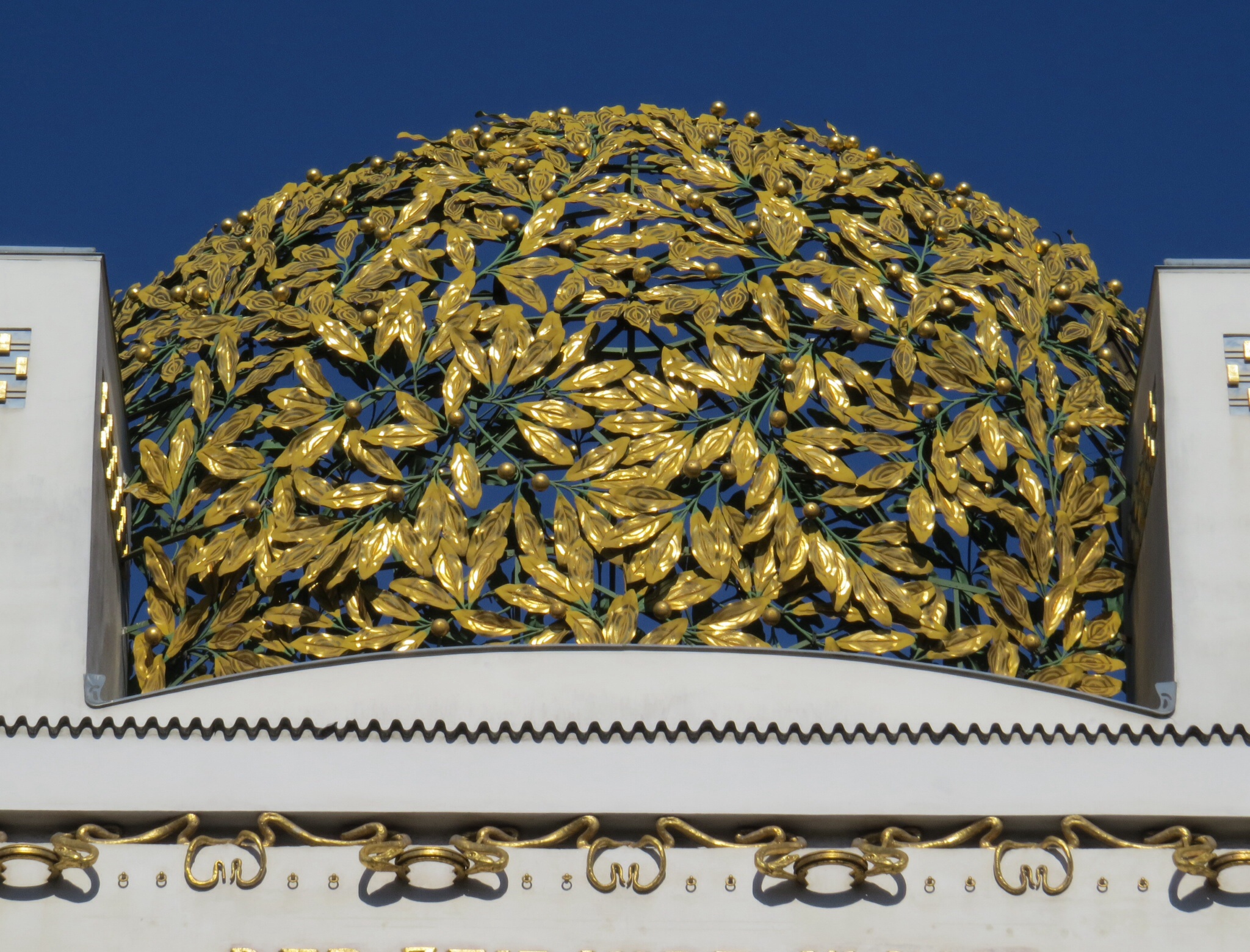
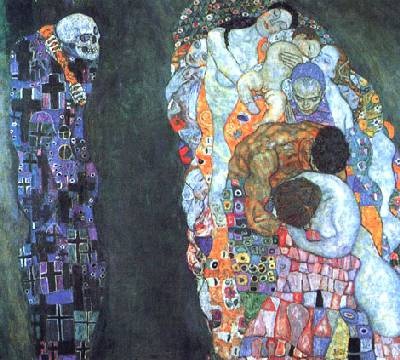
I got up early and started at the Secession Building which Klimt and his friends built in 1897 as home for a break-away artist’s collective, The Secessionists. “To every age its art, to every art its freedom” is the statement above the entrance and the rallying call of the Secessionists. Freude’s first publications were also released in Vienna at this time, which informed the Secessionists’ work. Klimt was the originator of Art Nouveau and you can see his influence in the golden globe entwined with laurel leaves (dubbed The Golden Cabbage by critical Viennese contemporaries) in brilliant contrast to the solid white block building supporting it.
The “Golden Cabbage”
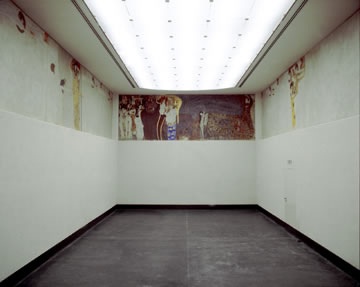
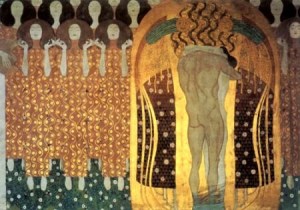
My target was the Beethoven Frieze housed deep in the basement.
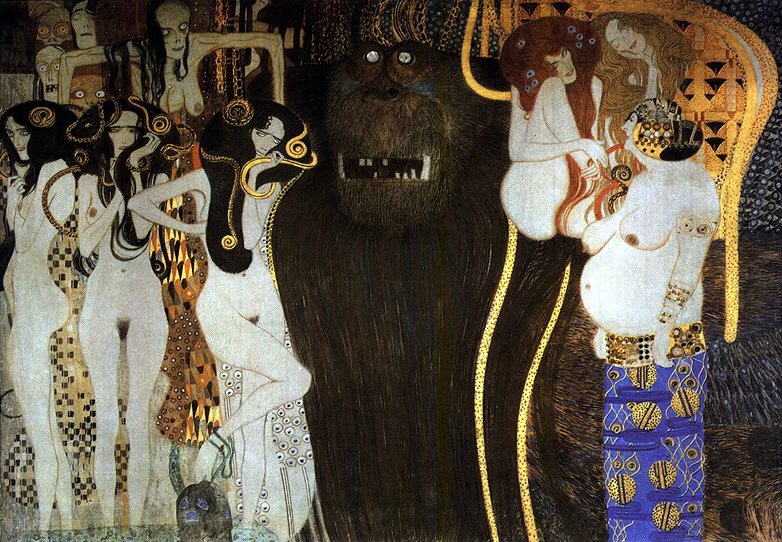
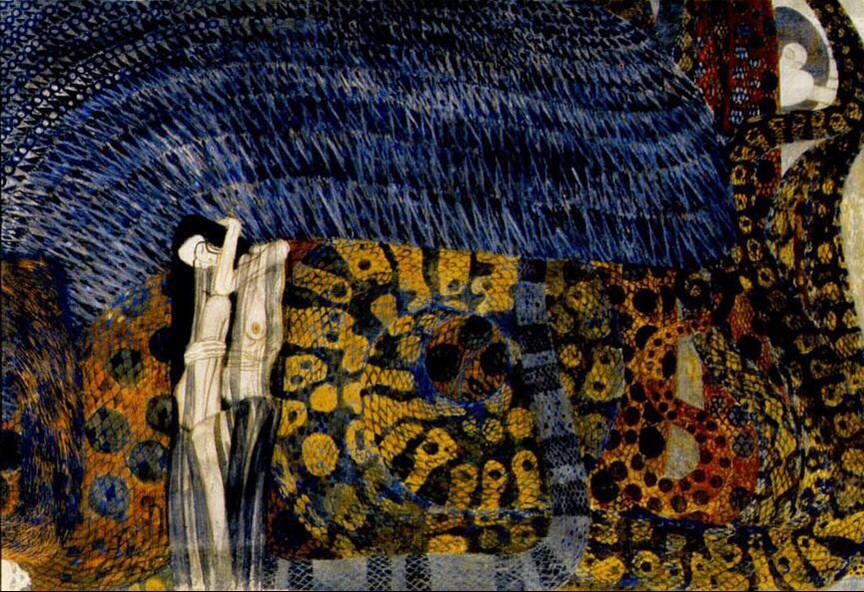
In 1902, Klimt painted the Beethoven Frieze for the 14th Vienna Secessionist exhibition, which was intended to be a celebration of the composer and featured a monumental polychrome sculpture by Max Klinger. Meant for the exhibition only, the frieze was painted directly on the walls and was designed so that the sculpture of Beethoven was highlighted in an opening in the walls, himself becoming an intrinsic part of the Frieze. The painting was preserved but was not to be seen again until 1986 when it found a permanent home in the Secession Building.
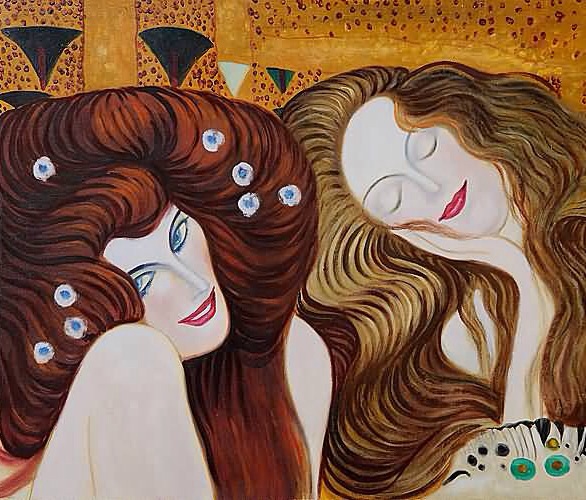
The Frieze is as monumental as its subject, and the type of work you could surround yourself in for an hour and still be seeing more in it. It represents an epic human journey which wraps its way around the room, taking you on the journey with it. It starts with human sufferering and a knight’s quest through the darkness to find joy and end human suffering. The journey ends in the discovery of joy by means of the arts and contentment, represented in the close embrace of a kiss. The frieze expresses human yearning, ultimately satisfied through individual and communal searching and the beauty of the arts coupled with love and companionship embodied in the secessionist idea of the gesamtkunstwerk – a comprehensive work of art.
The Beethoven Frieze
Far Wall, LeftFar Wall, Right
I had decided in my slightly compacted schedule to rule out the Klimt permanent collection at the Belvedere Palace this morning. But on seeing the Frieze, I decided that I could no more leave Vienna not seeing The Kiss than Anna could have left Paris without going up the Eiffel Tower.
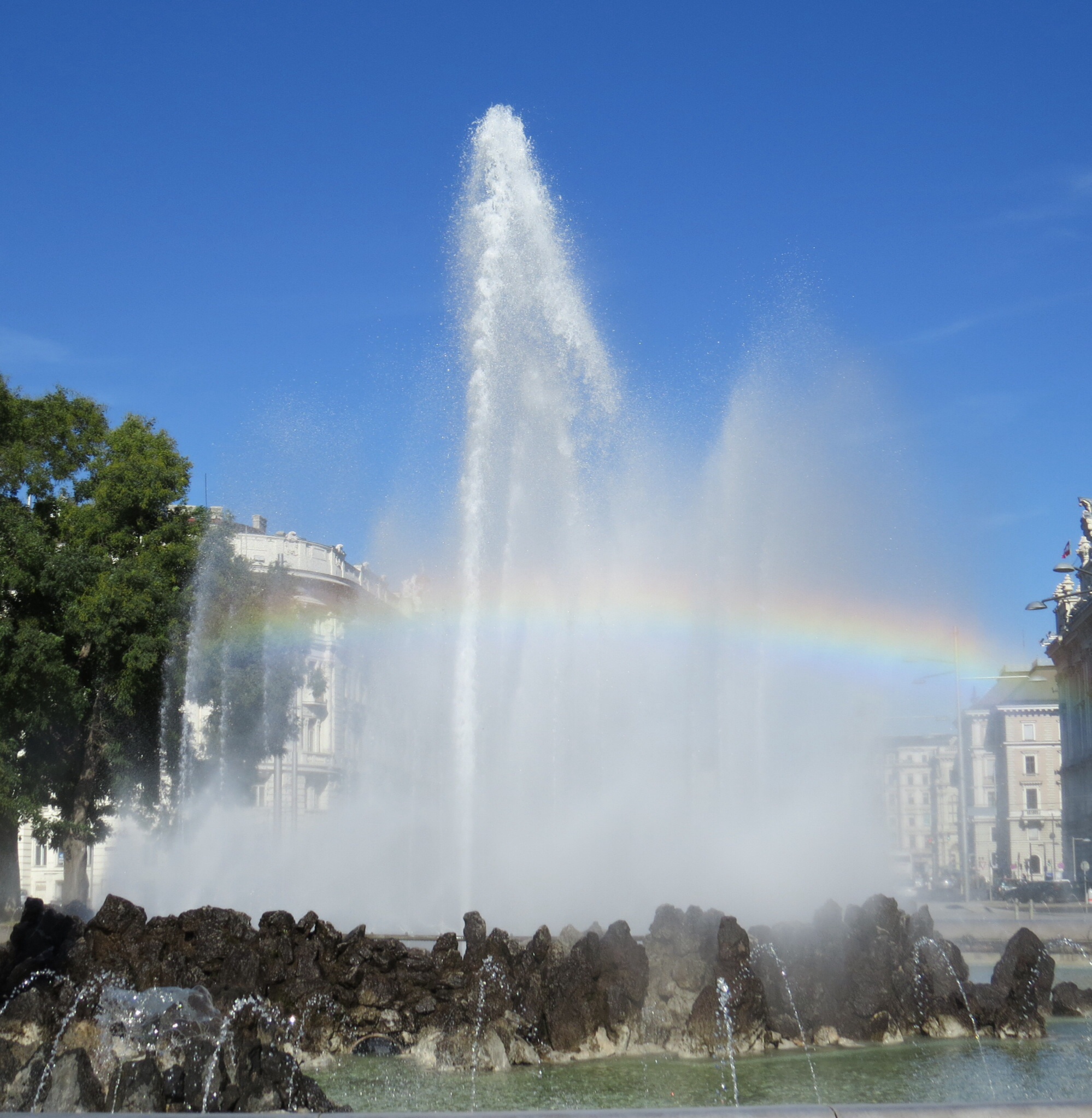
En route I passed through Schwarzenbergplatz. The Hochstrahlbrunnen (high jet fountain) was built in 1873 to celebrate the completion of Vienna’s water supply system. Anton Gabrielli, the head of the company responsible for the projec, personally funded the construction of the fountain.
Right behind the Hochstrahlbrunnen is the Denkmal der Roten Armee (Red Army Memorial), locally known as the Russendenkmal (Russian memorial). The memorial was erected in 1946 by the Soviet Army which occupied a sector of the city until 1955. Before that year, a T-34 tank accompanied the monument. I recognized the rich, musical Russian language of Russian tourists at the memorial when I was there.
Naturally I got lost and tried a new tactic. I took a gamble on following a small gaggle of guys who had the same Top 10 guidebook in their hands as I had, noticing they were going the opposite way to what I had intended and I got lucky. Sure enough we all wound up at the Belvedere Palace.
I took an abbreviated tour of the main palace focussing on the Klimt rooms. It would be a wonderful place to return to another time, with beautiful grounds, two palaces, and lots of art. I snuck a few photos but lost my nerve when it came to The Kiss, heavily guarded as it was. Klimt’s transition from Impressionism too his own style is evident in these paintings, you can see The Kiss starting to take shape:
Allee im Park vor Shloss KammerBauerngarten mit Sonnenblumen
The Kiss, and Judith were simply breathtaking, and larger than life. Deanna MacDonald says of The Kiss in The Globe and Mail, “it is startling, vibrant, erotic and just a bit frightening. No image better embodies fin-de-siècle Vienna: an entwined couple kneeling precariously at the edge of a glittering abyss; the surface is dazzling and modern, but just beneath lurks a sense of anxiety and impending doom.” I downloaded these images:
Headed back out in the sun and grabbed a tram to expedite my travels, landing me back in the centre of town. But all this Klimt had left me hungry. I headed toward the Hofburg Palace and the Albertina Museum, not for the exhibits but the ancient monastic winery beneath, the Augustiner-keller. It was a dark stone, moody place where one had to sample the wine and enjoy a good meal. It was everything I hoped for! I could eat it again right now….
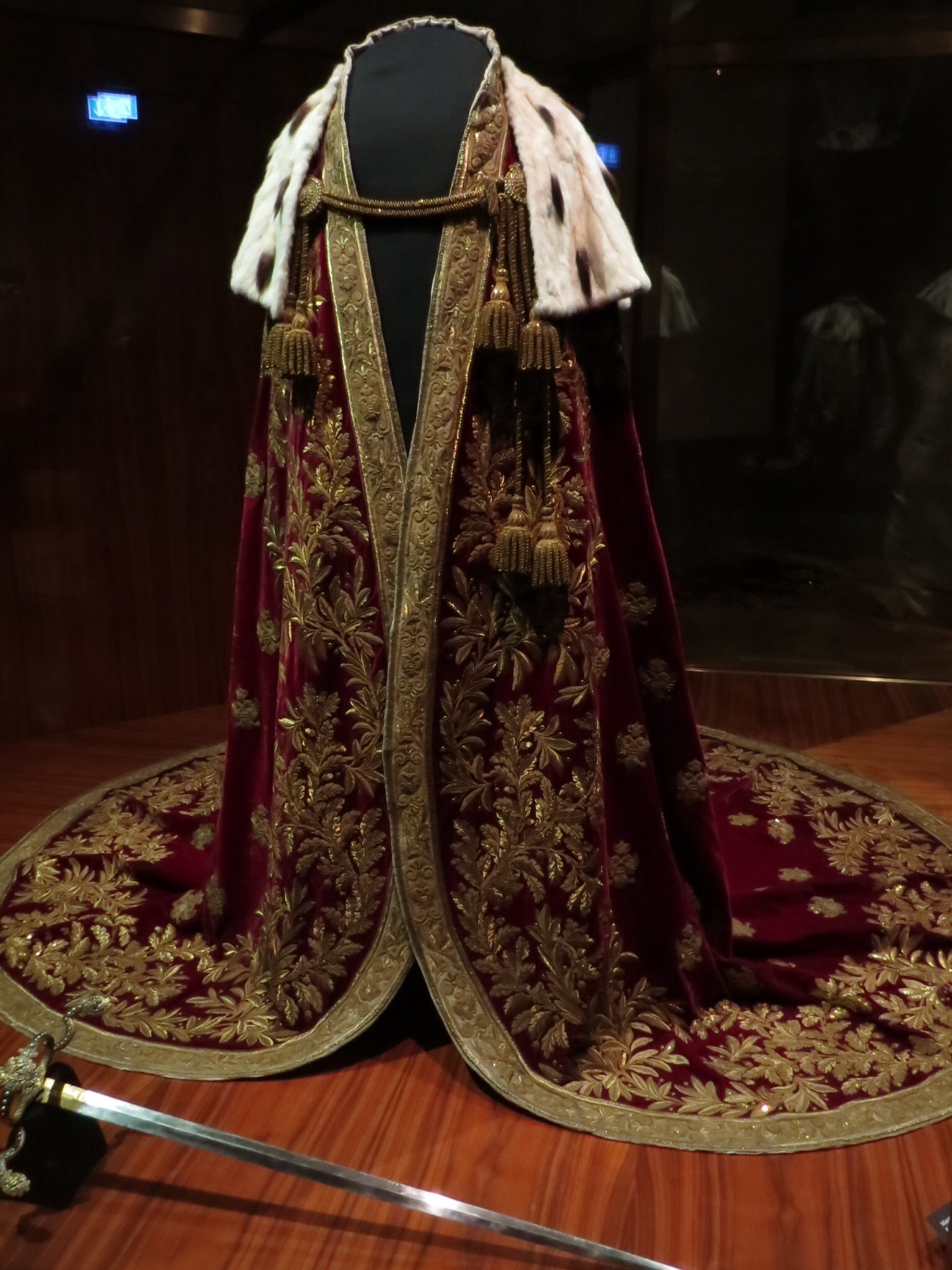
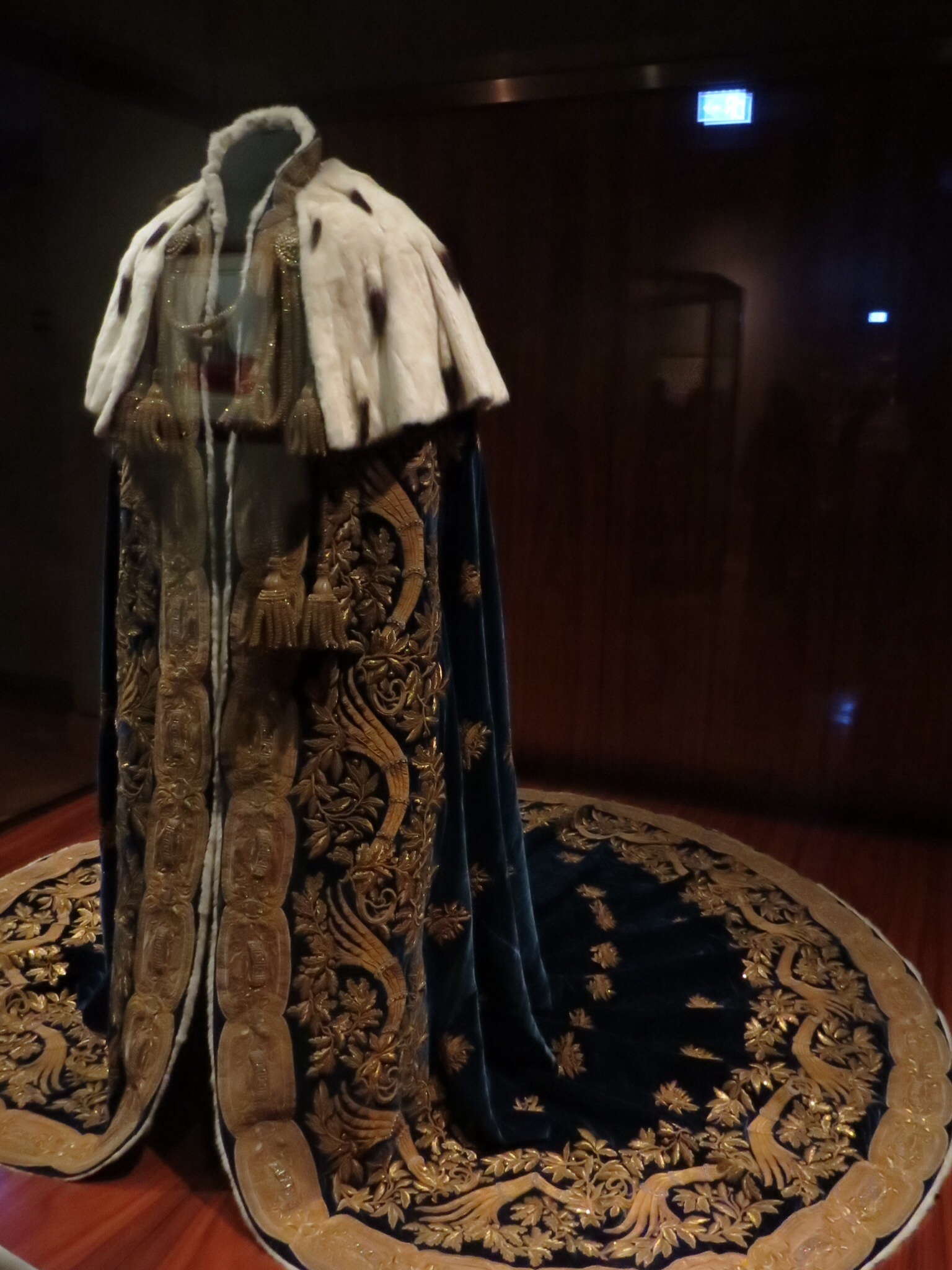
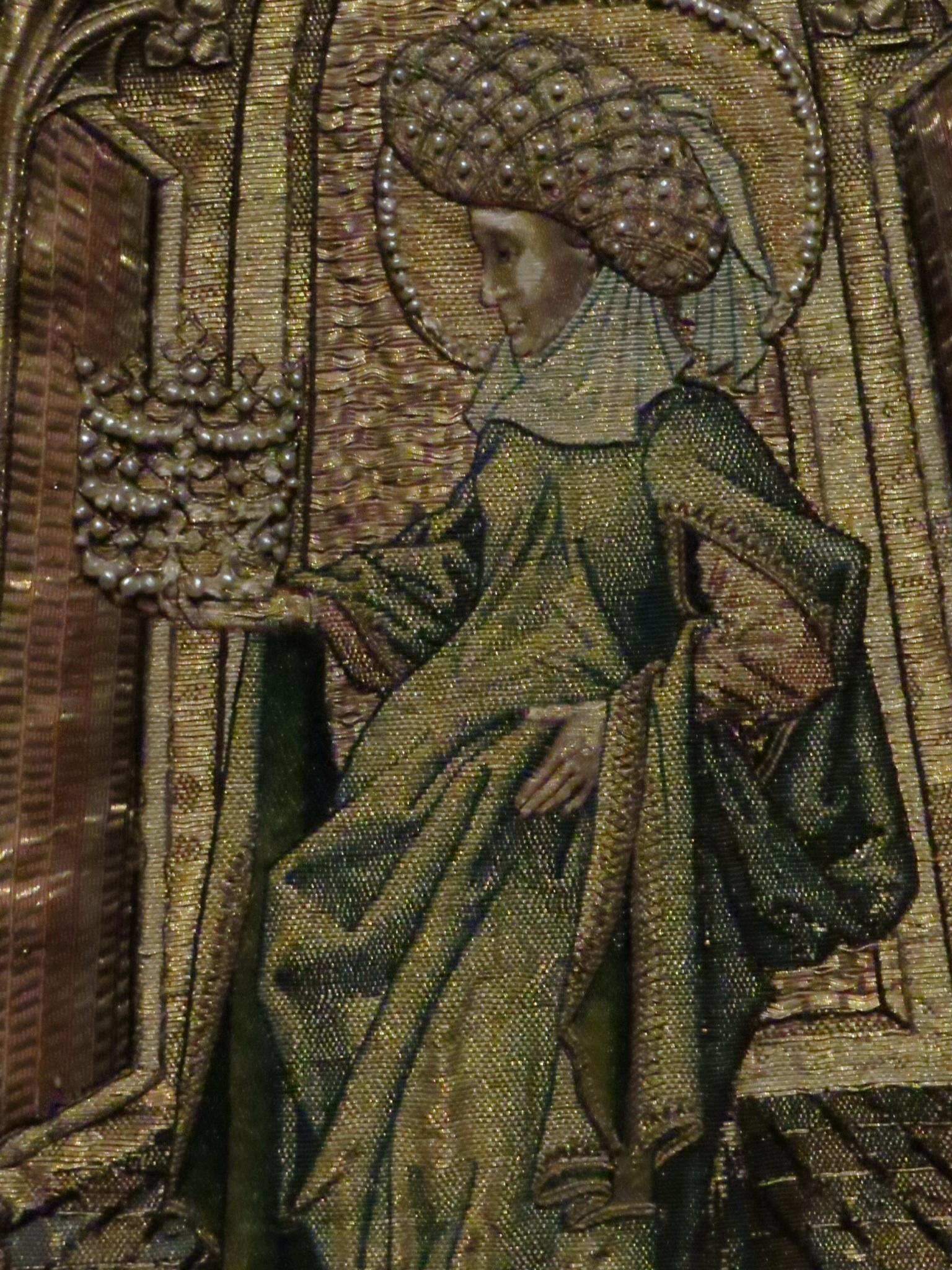
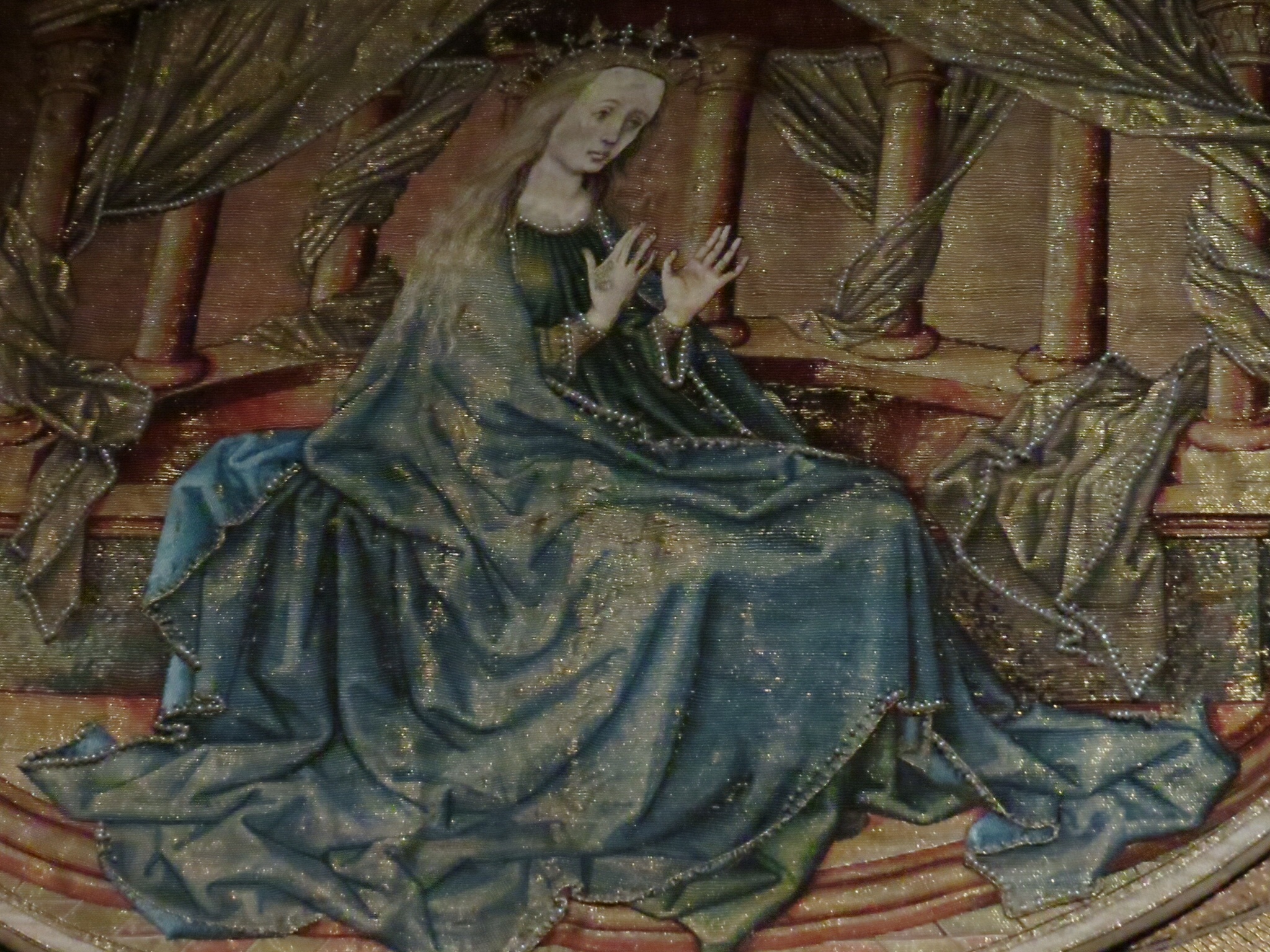
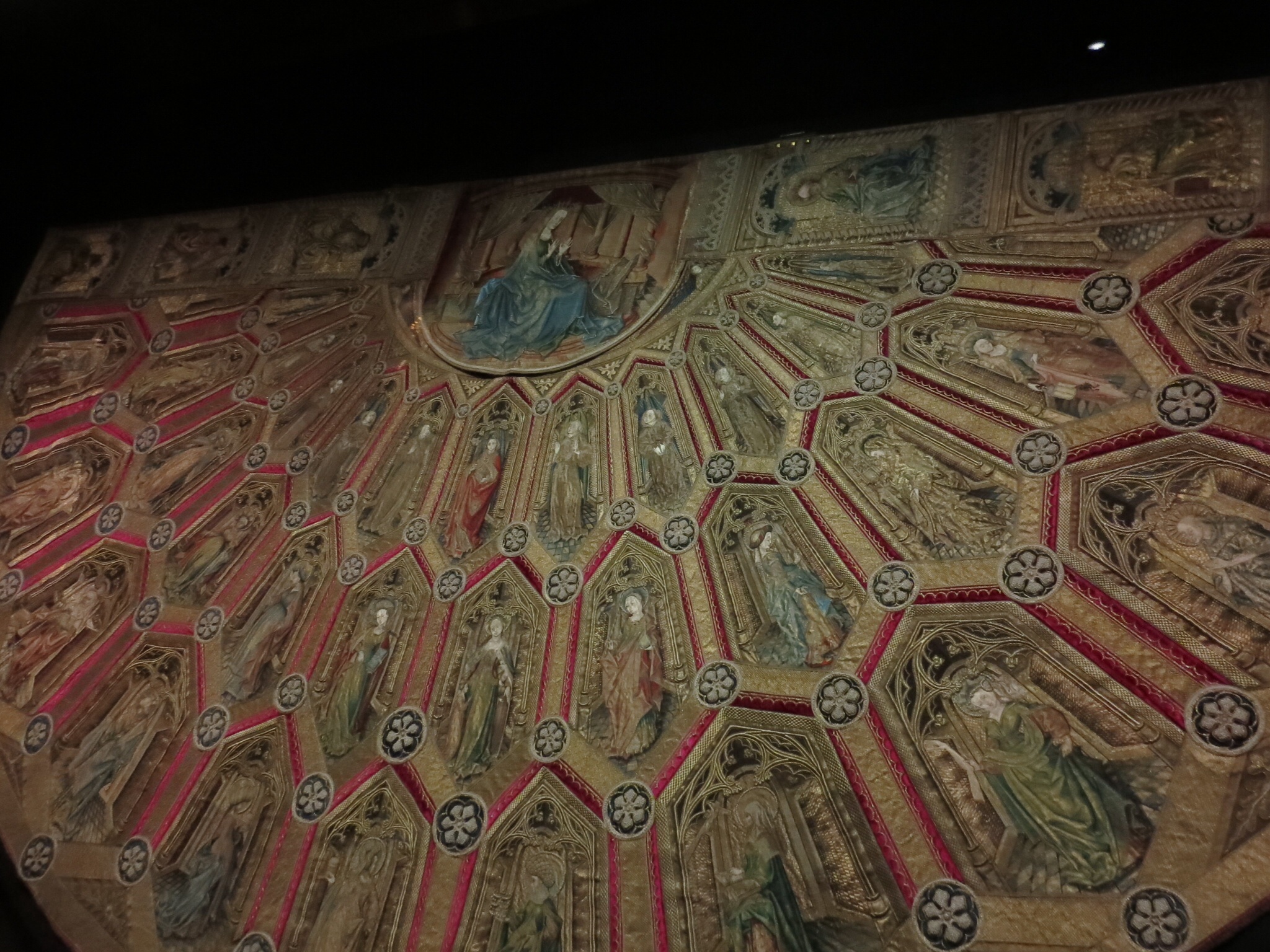
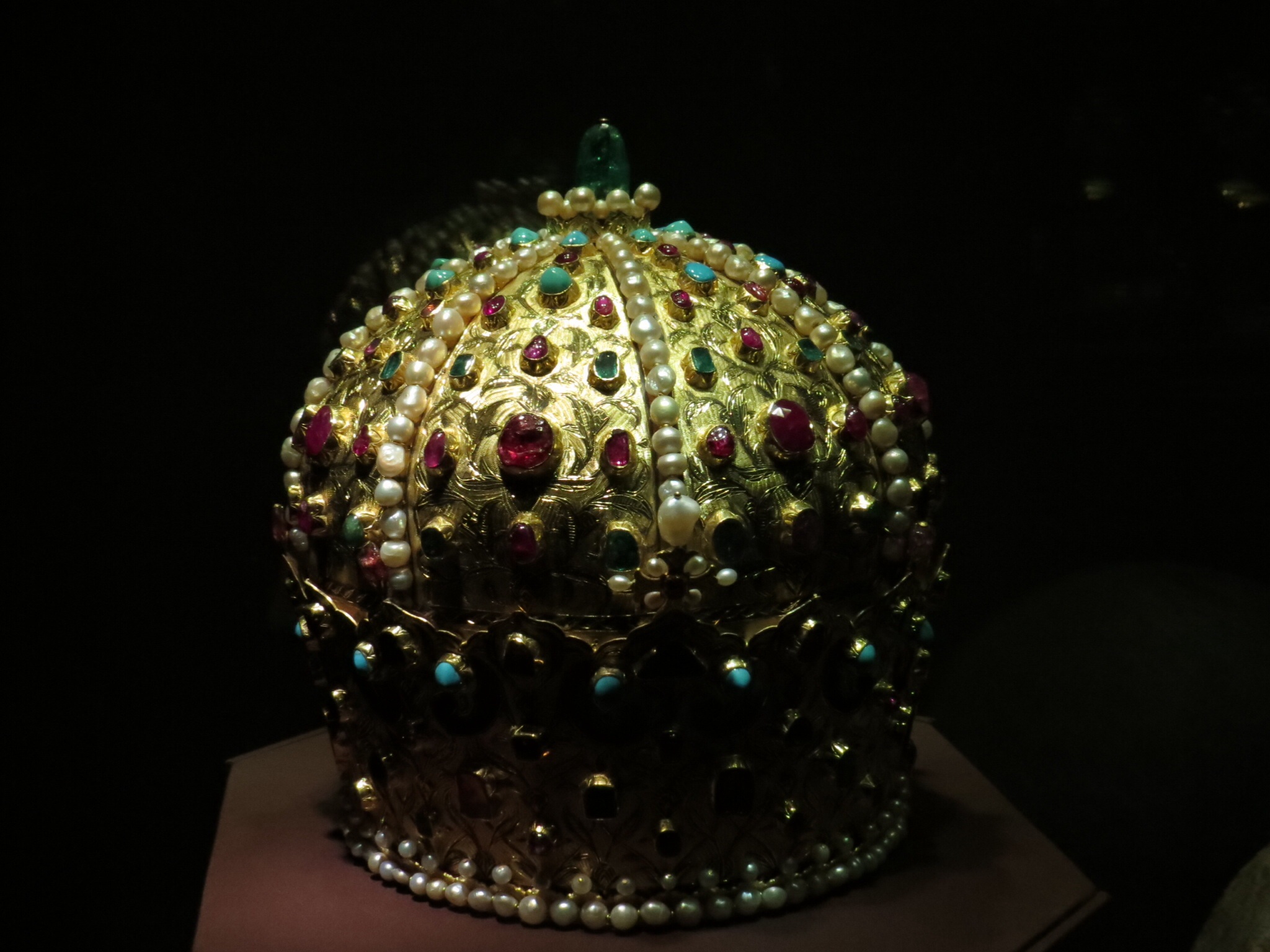
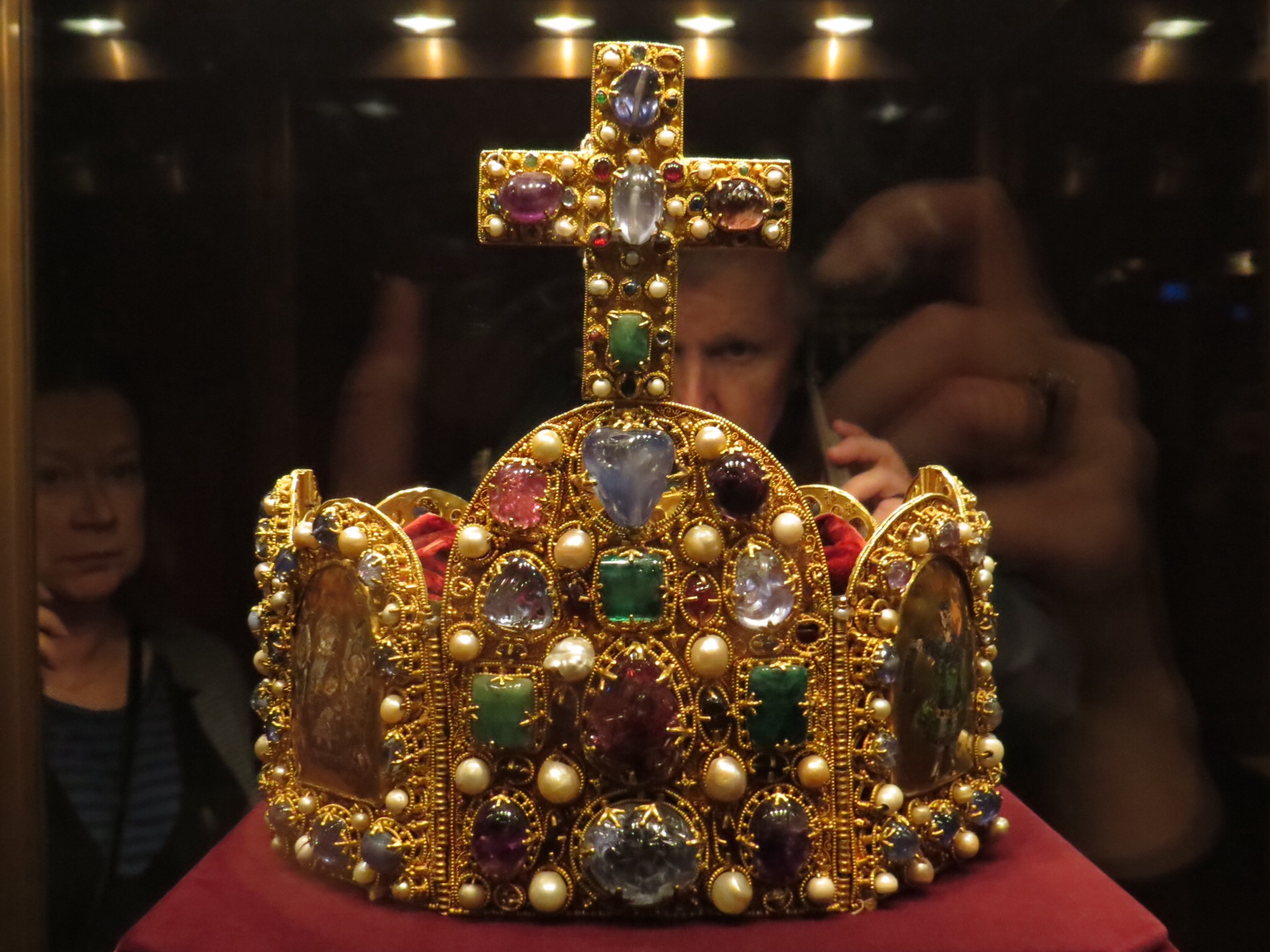
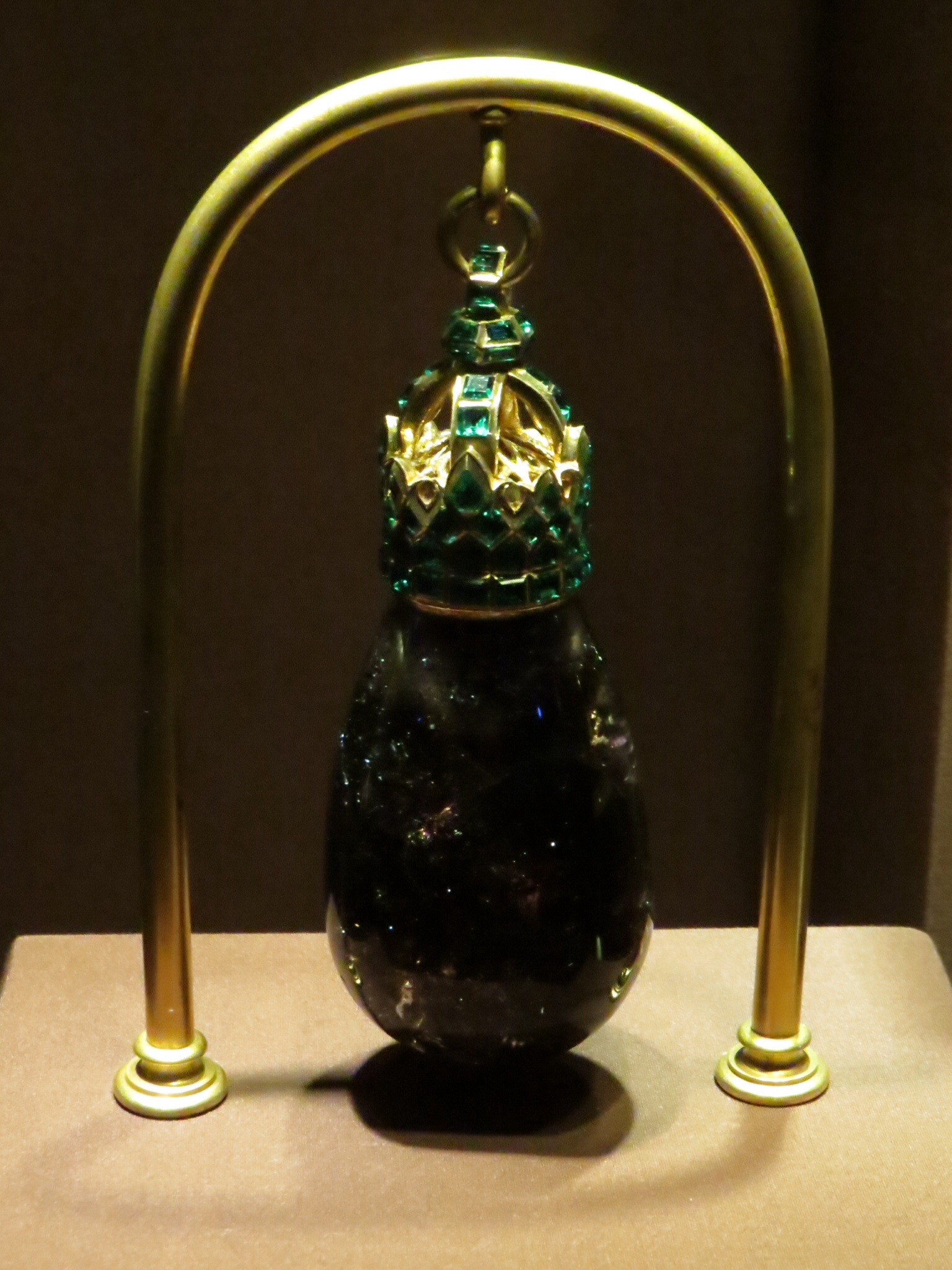
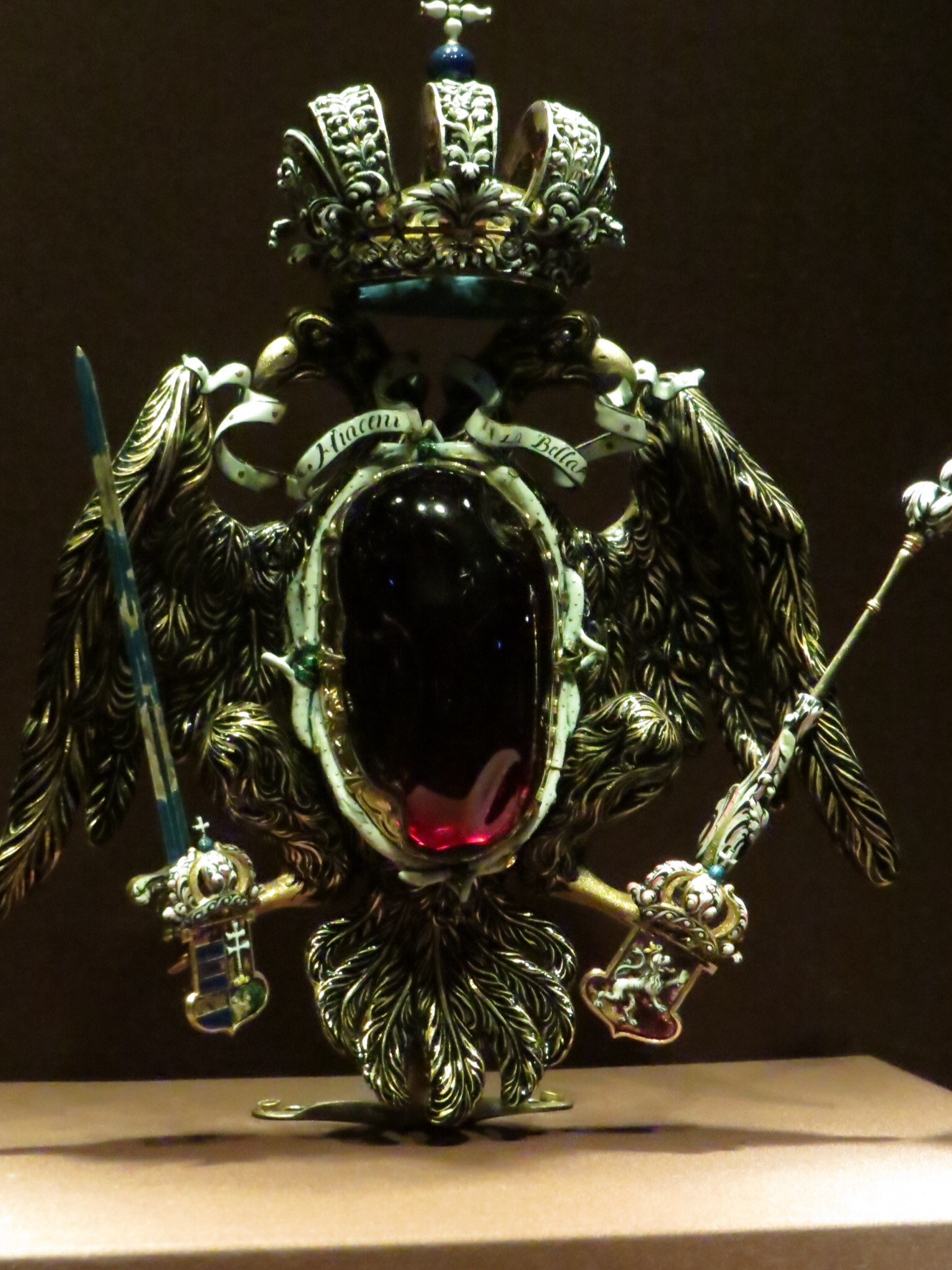
Well fortified, I headed for the Imperial Treasury within the palace, an orgy of riches. Ceremonial clothes and knights’ garb sewn with gold and silver threads, gilt bejeweled crowns, vestments of The Order of the Golden Fleece heavy as tapestries of gold. A cradle and christening set that had been sent to the new baby King of Rome, a gift of Maria Theresia. Jewels so large they were named.
The Hair AmythestHyacinth “La Bella”
Ephesus Museum
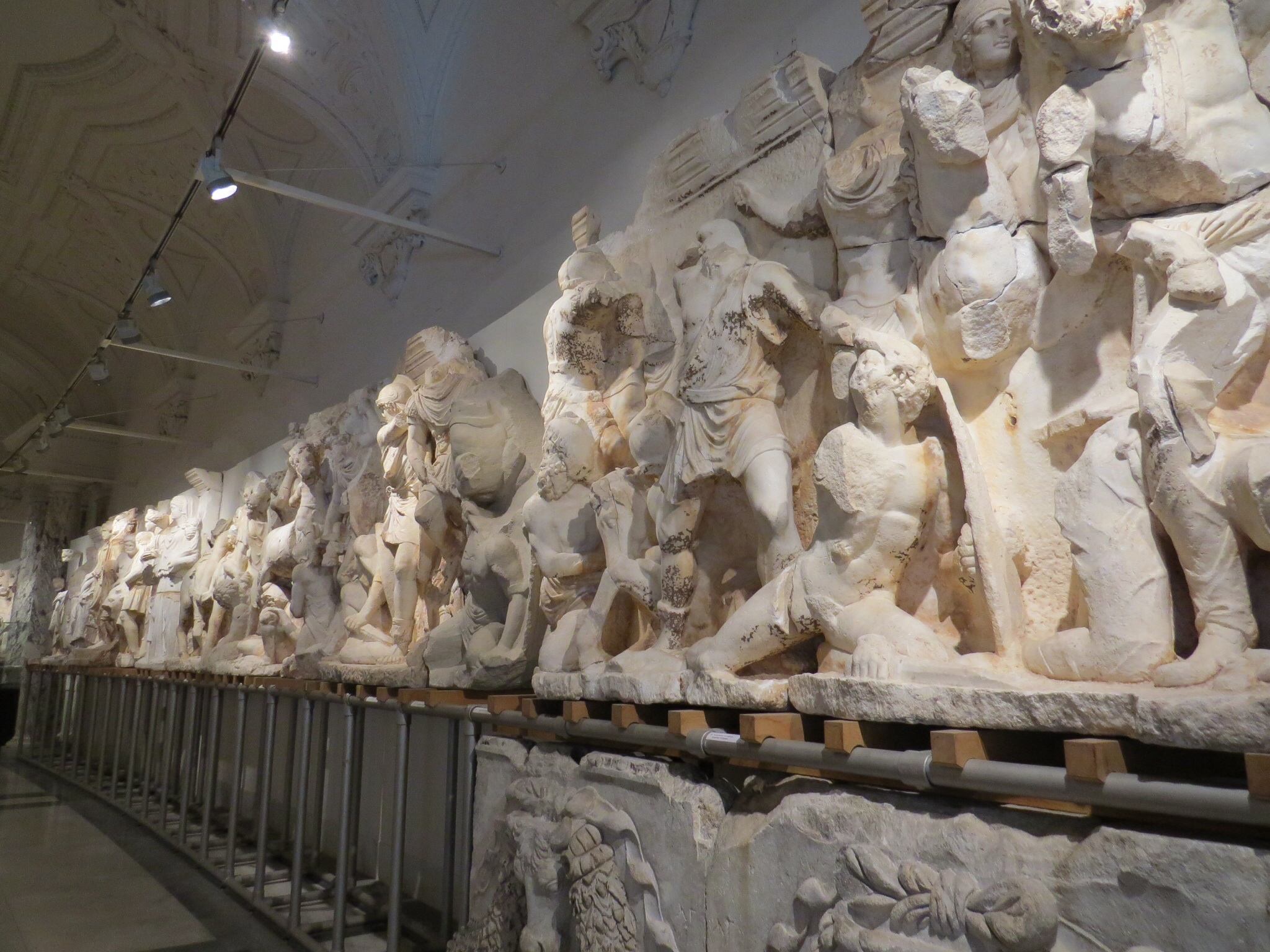
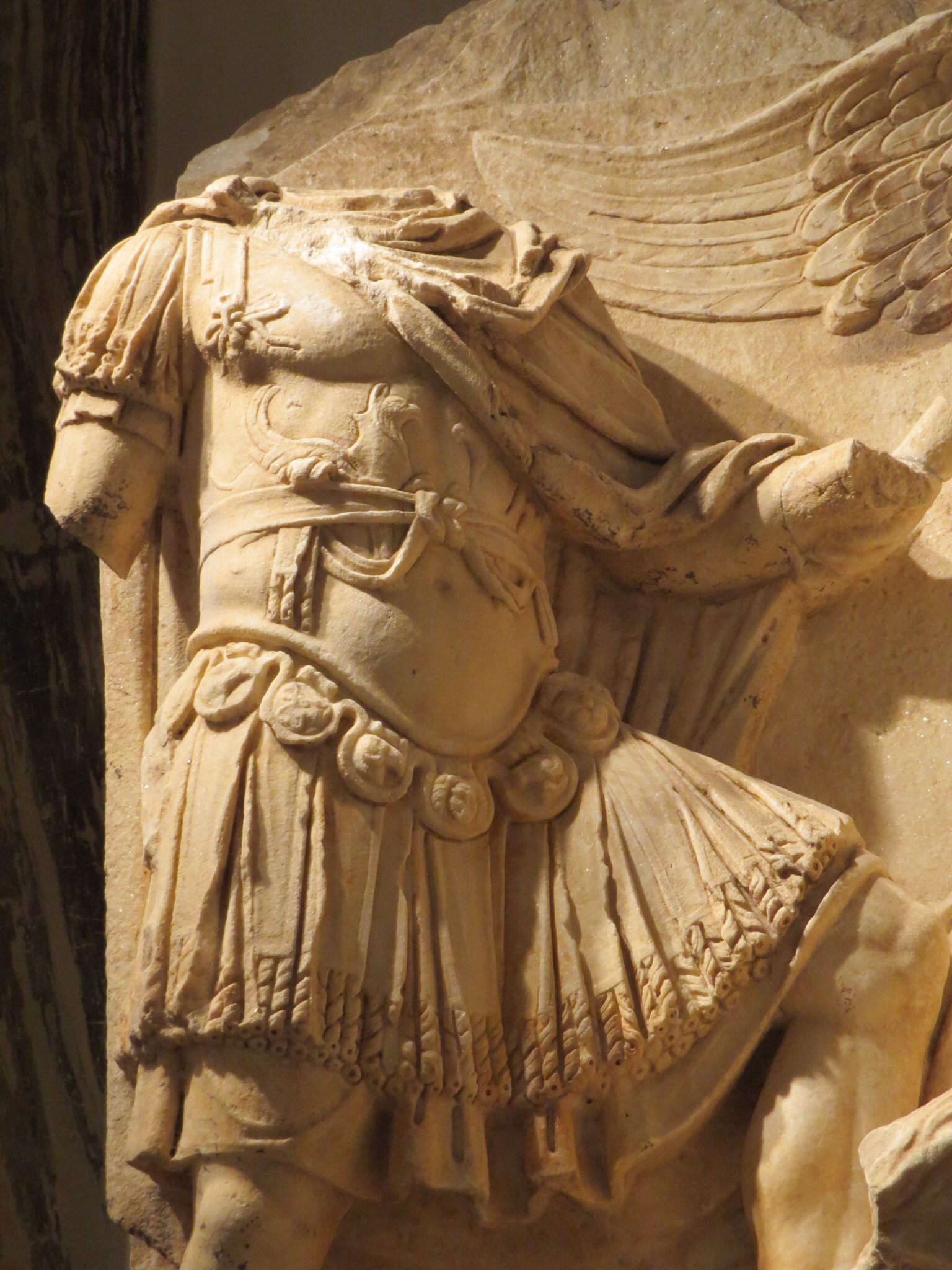
The Neue Berg holds the Museum of Arms and Armoury, the Museum of Ancient Musical Instruments and the Ephesus Museum. Viennese archeology at Ephesus continues, but relics no longer follow the scientists home. Between 1895 and 1907, objects did find their way to the Kunsthistorisches and I was most impressed by the Parthian Monument.
The Parthian Monument is one of the most important Roman-age reliefs from Asia Minor. It commemorates the Roman Emperor Lucius Verus, who established a camp in Ephesus during his Parthian Campaign of 161-165 AD. The individual pieces have been arranged in the form of a monumental altar, but this is only a guess at their correct arrangement, as they were not found in their original state. The friezes have a total length of about 70 metres, of which 40 metres are on display. The detail of these reliefs amazed me.
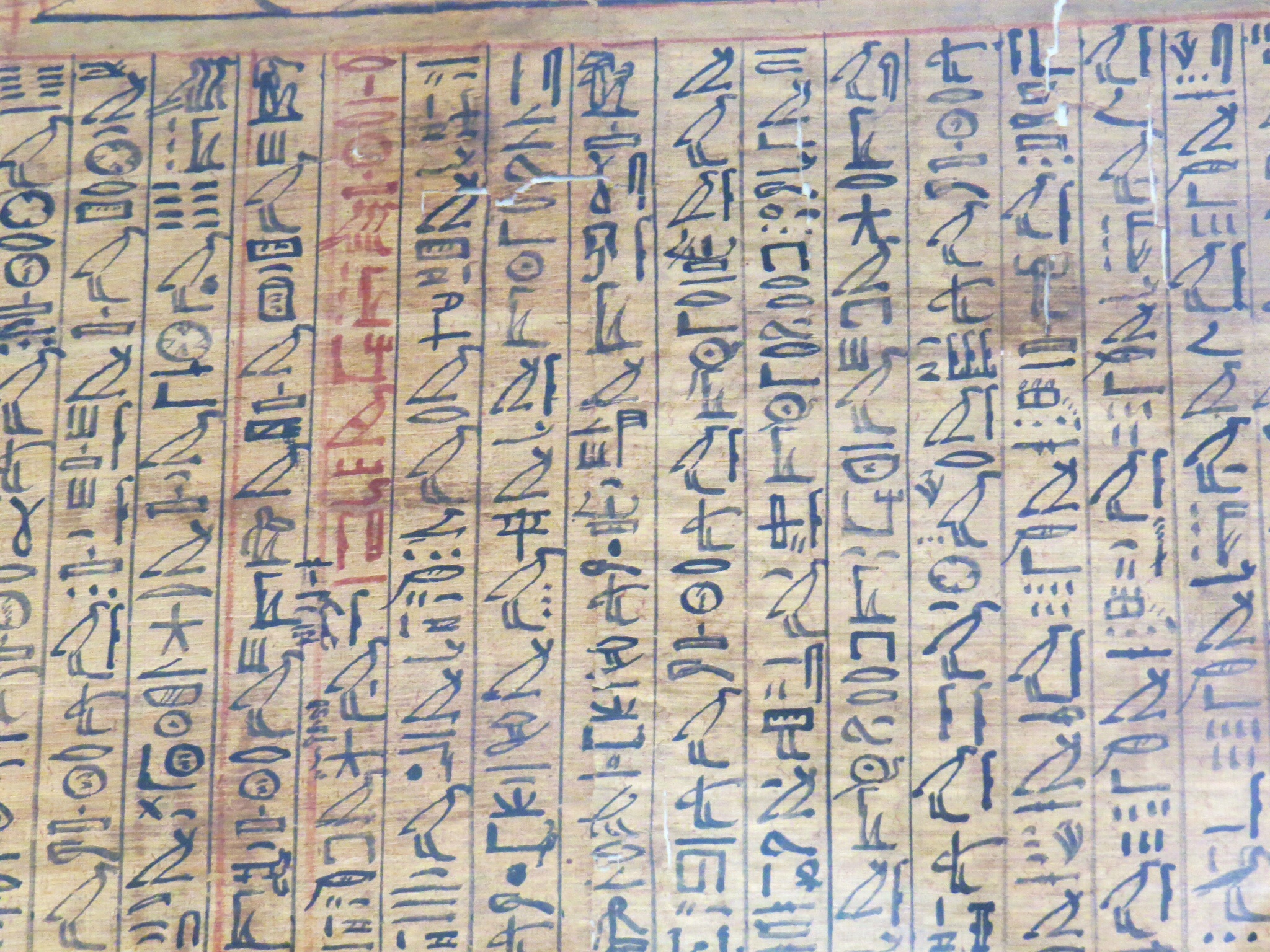
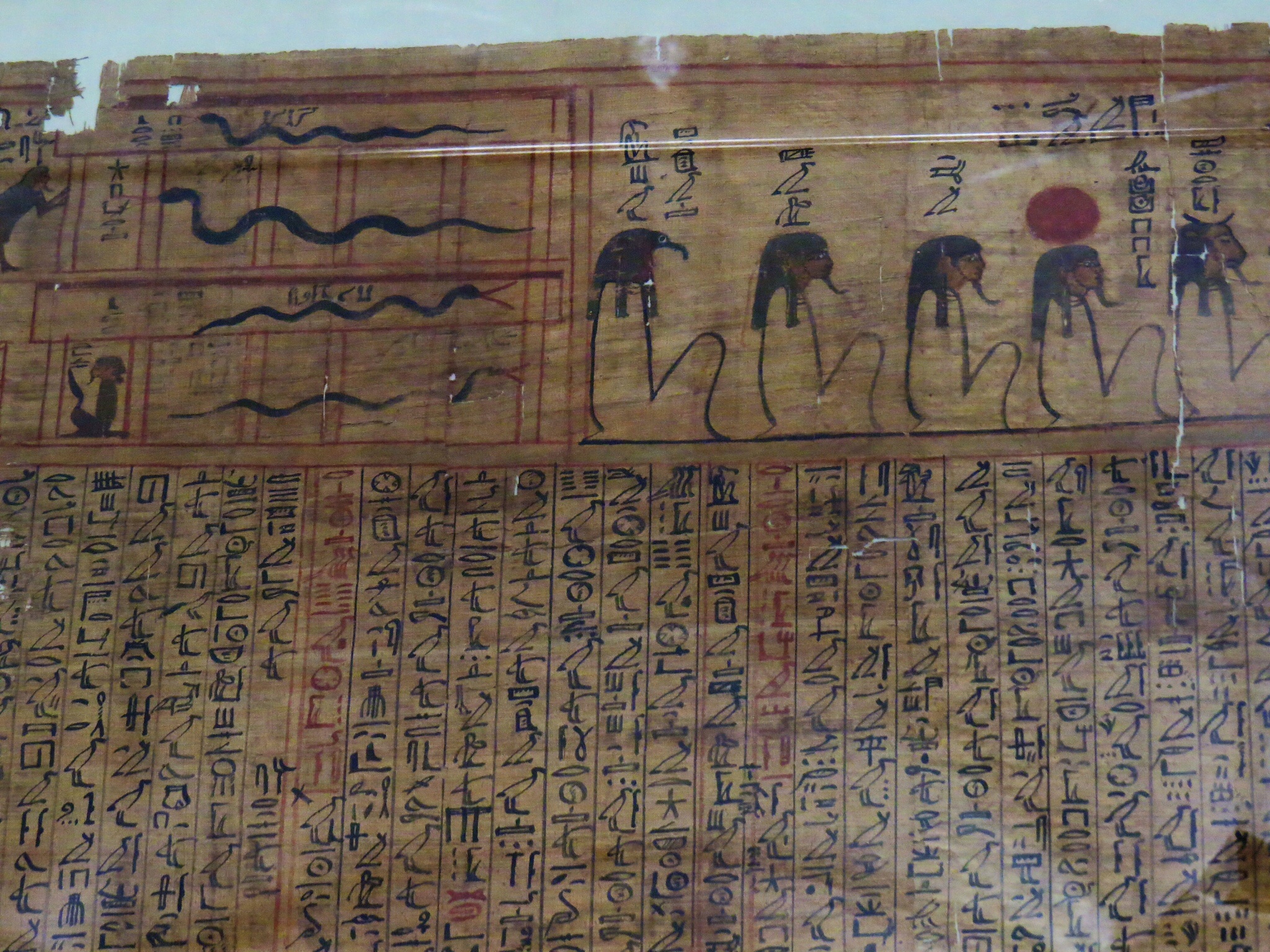
Papyrus Museum
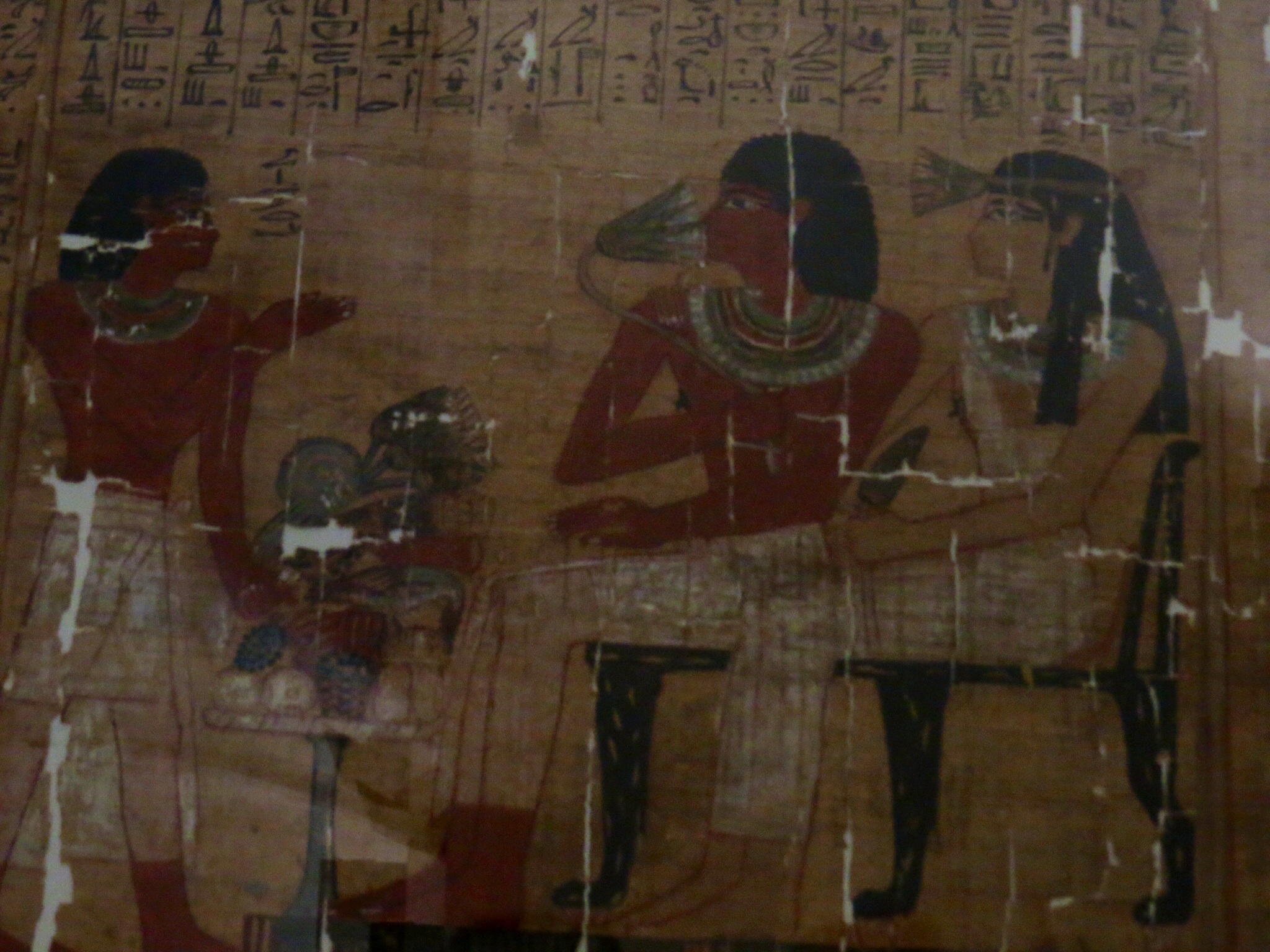
The Museum originated from the collection of Archduke Rainer, who began acquiring texts written on papyrus, parchment, ostraca and paper from Egypt in 1883. On August 18 1889 the Archduke donated his collection as a birthday present to the Emperor Franz Josef I, who included it in the Royal and Imperial Court Library as a special collection.
Today, the Papyrus Collection with its 180.000 objects is one of the largest in the world. In October 2001 the Collection was included in UNESCO’s list “Memory of the World” as a world documentation heritage site. The museum is tiny, within the Austrian National Library (in the Neue Berg), and only exhibits a couple of hundred specimens at a time. The small size of the museum does not detract from the delicacy of the artifacts, the sophistication of the writing or the bridge that these items form reaching across 3,000 years to connect us with our past. If you thought your writing was going to be read again in 3,000 years, what would you say? Watch out for the snakes would definitely be something I would say, too!
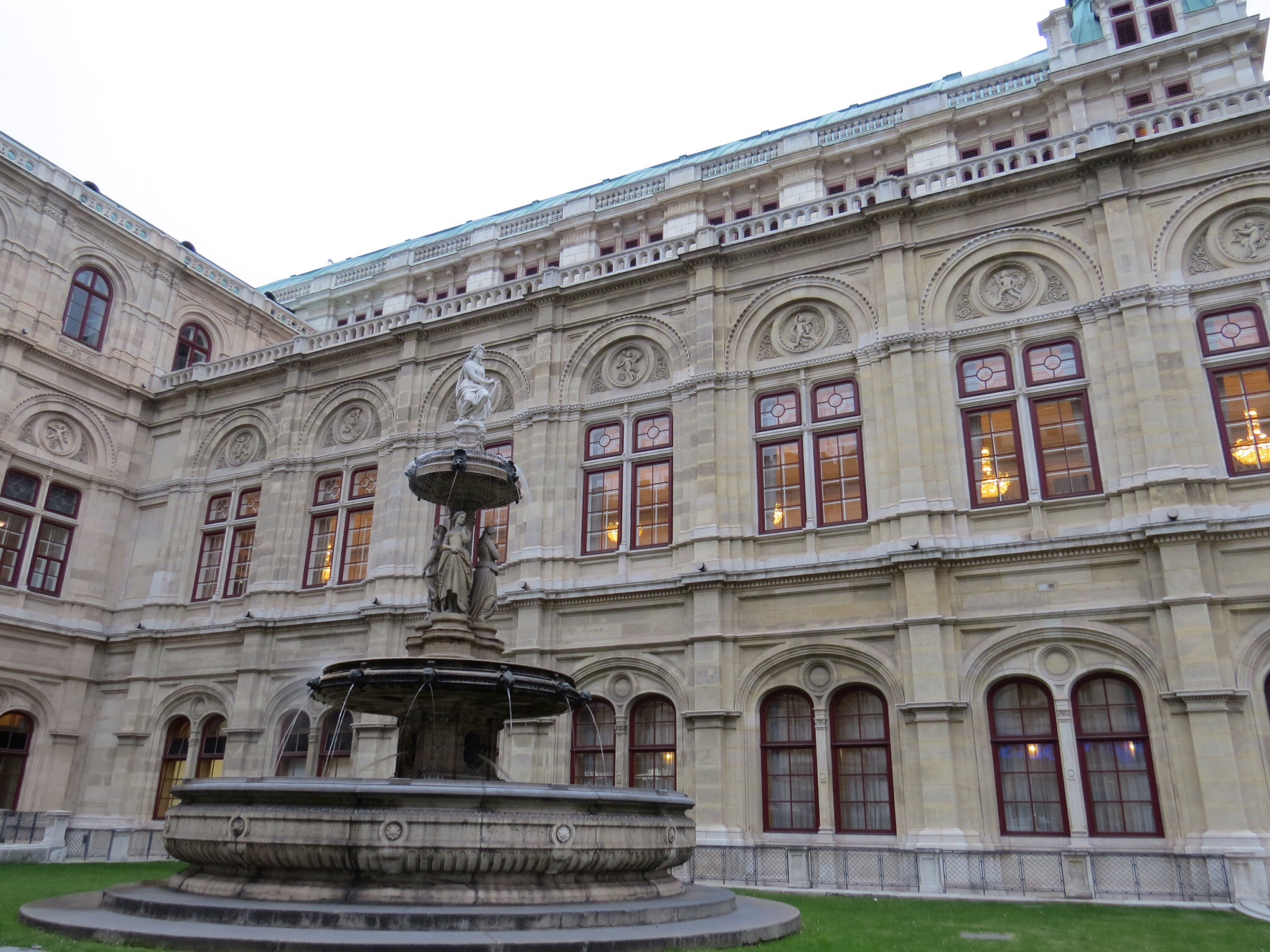
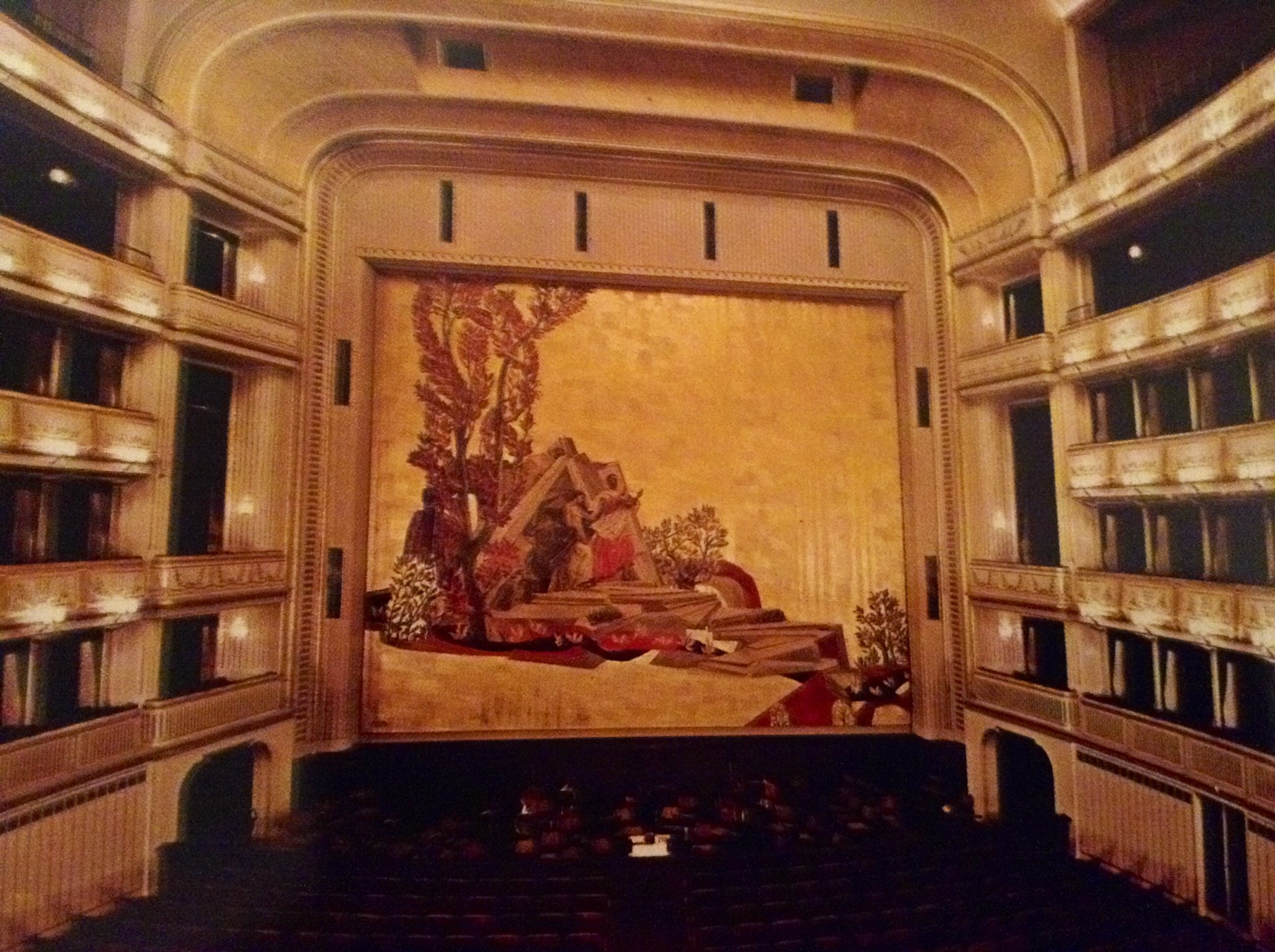
Once again I saw everything I had hoped to and more. I dashed home and changed into the dress I had been saving for the occasion, for what I knew was going to be a night to remember, a sold-out performance of Verdi’s opera Simon Boccanegra at one of the world’s greatest opera houses, the Vienna State Opera House.
The Viennese love their music. The waiting list for subscriptions to the opera is 13 years. Yet the VSO still manages to be accessible to all. Standing room only seats cost 3 euros, and the SRO areas were jammed. Here is the lineup for the SRO tickets, down the block and around the corner out of sight. And after standing for four hours, the SRO section gave the loudest bravos, the most curtain calls.
A tent has been erected on the roof for children’s concerts.
/
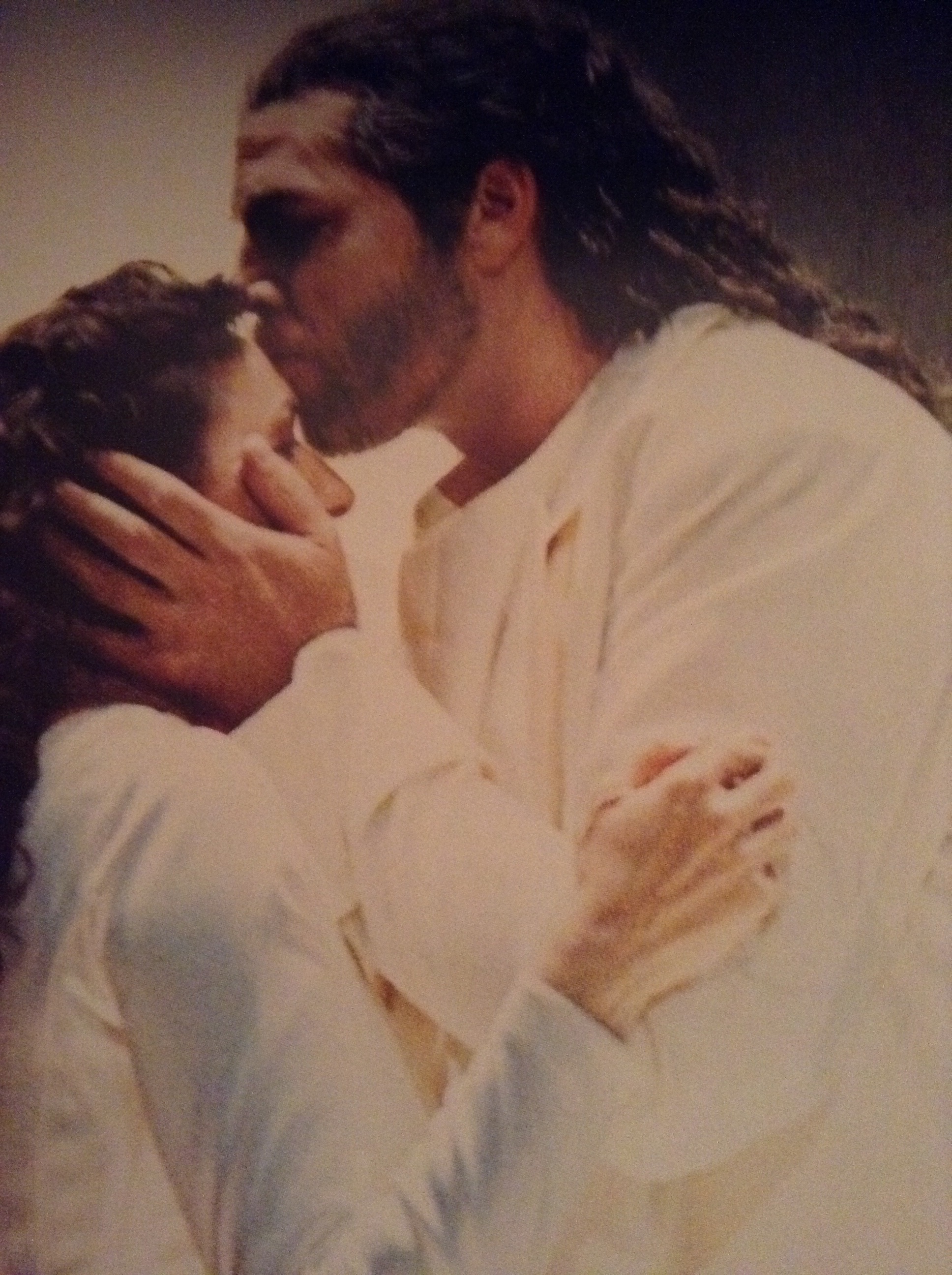
Often in opera, the music follows the plot: soaring, full of hope and love in the first half, depressing and tragic as revenge, death and tragedy unfolds in the second.
Not so in Verdi’s Simon Boccanegra, with some of the most beautiful music in all opera, achingly gorgeous from the first note to the last. Stunning solos, duets and trios.
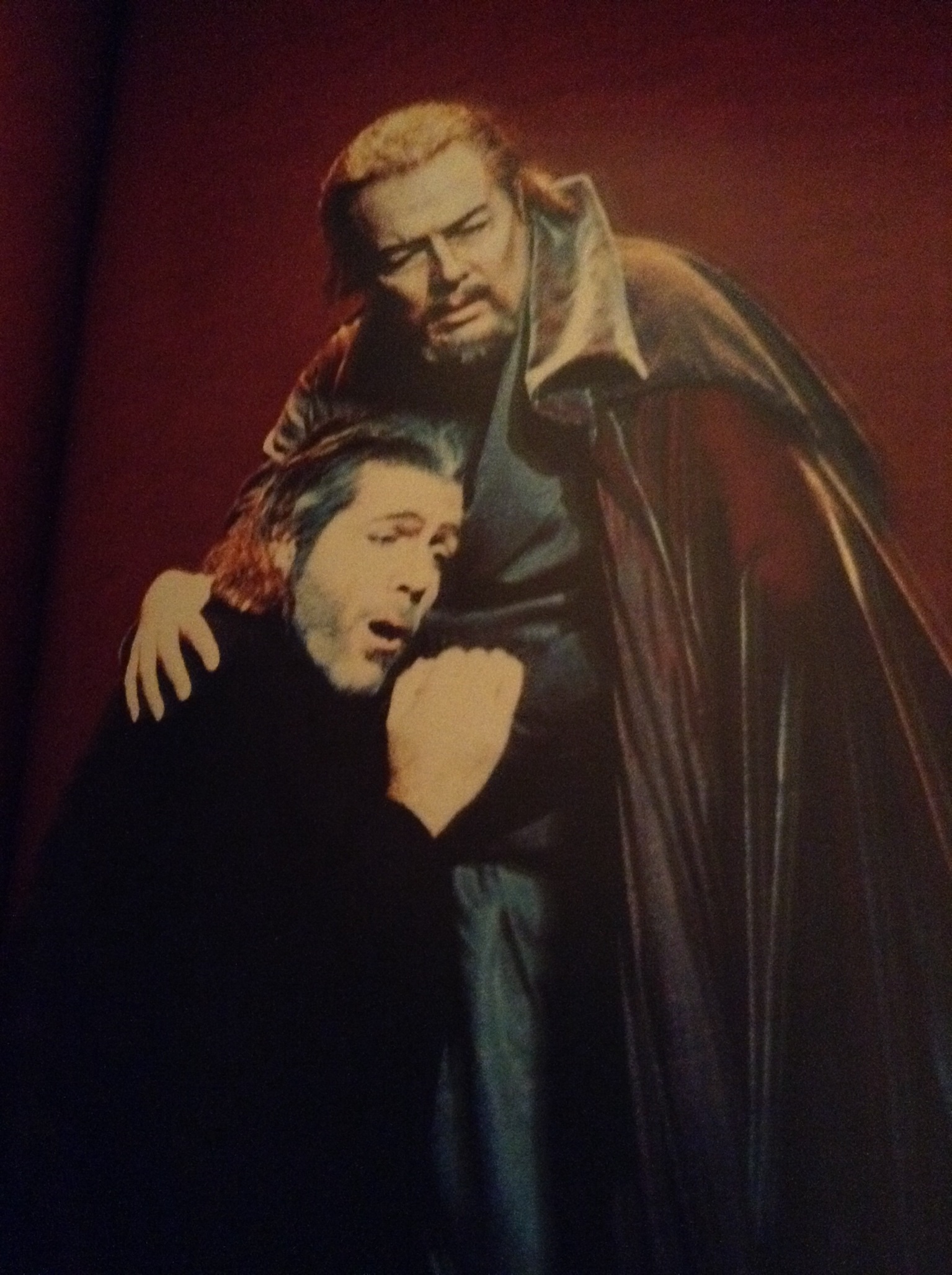
Played by the fabulous Vienna Philharmonic, rated 3rd greatest orchestra in the world. Attached at the link above, the Gramaphone U.K.’s article in which the panel discusses their rankings of the world’s greatest orchestras. (Bonnie will recall that we first saw the Vienna Philharmonic at Carnegie Hall with Yo-Yo Ma in another inspiring concert.) Thomas Hampson, playing Simon Boccanegra, has sung the role before. The award-winning American baritone will perform across Europoe and the US including the title role in Eugene Onegin in Zurich and several roles at The Met in the 2013-2014 season. He interpreted Simon Boccanegra beautifully with all the heart and pathos of this tragic figure.
The real Simon Boccanegra was the first Doge of Genoa, whose term of office from 1339 to 1344 was marked by wise and sober government. He was not a pirate, as in the libretto – although he had a pirate in the family: his brother Egidio. Boccanegra resigned as Doge after five years in the face of strong opposition and outright hostility on the part of the feudal nobility and the rich merchants. In 1356 he was recalled from retirement in Pisa to resume office again – only to encounter the same obstacles as before, and in fact several attempts were made on his life. He was fatally poisoned in 1363. His successor as Doge was Gabriele Adorno, a weak and irresolute ruler who retired from office in 1370.
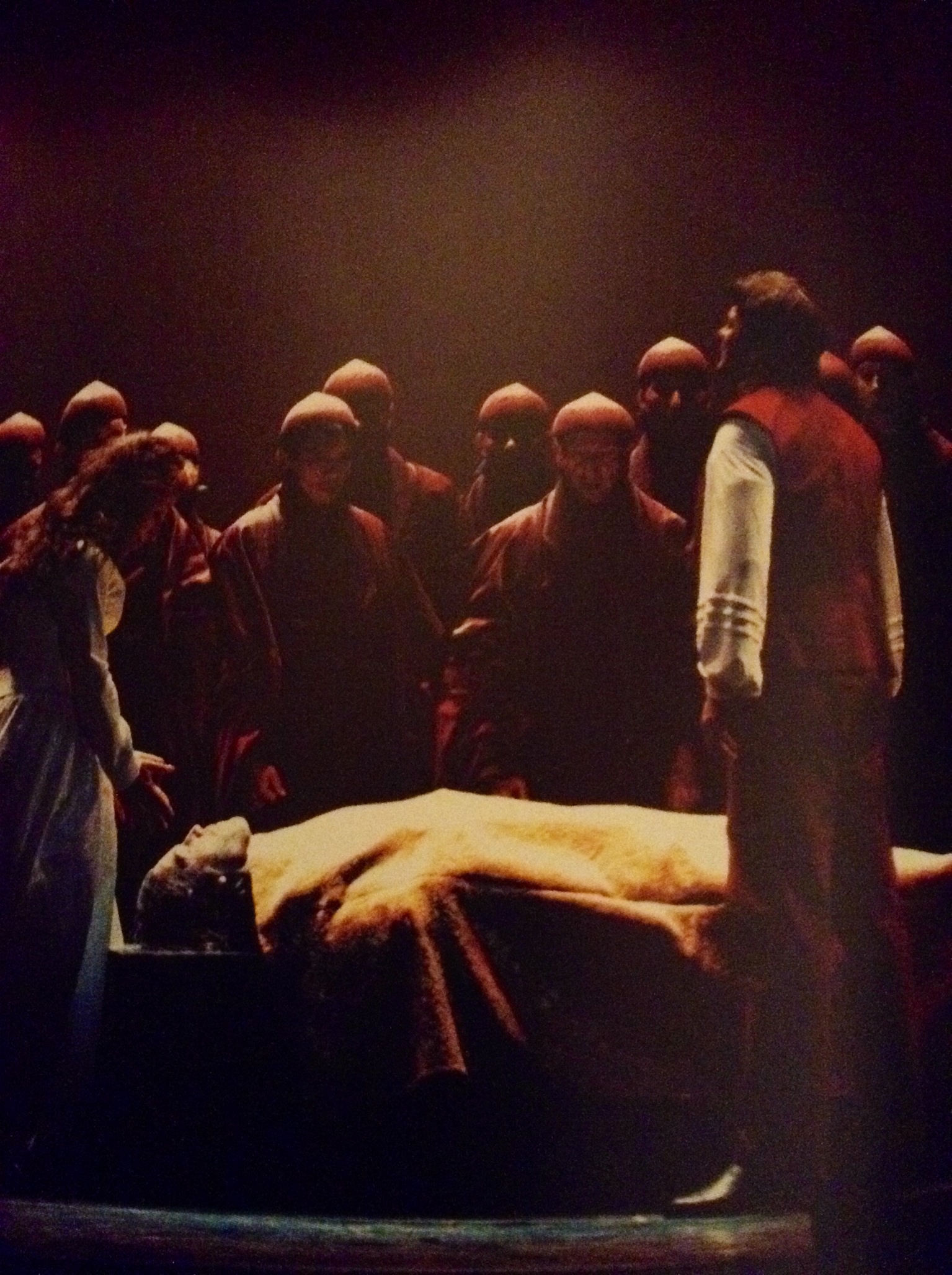
The plot has all the elements of a great Italian opera: power struggle, back-stabbing politics, true love, misunderstandings, deceipt, revenge, murder, reconciliation and regret. But this story is moderated by a father/daughter subplot: more tender, more bittersweet. Both want the cycle of violence in Genoa to end. Look at this impassioned plea from Simon:
“Plebians! Patricians! People!
Heirs only of the ferocious story of the hatred
between the Spinolas and the D’Orias,
while the vast kingdom of the seas happily beckons you.
You break hearts in the homes of your brothers.
I weep over you, over the peaceful light of your hills
Where the olive branch flowers in vain.
i weep over your hypocrital flower festival,
And I want to cry out: Peace!
And I want to cry out, Love!”
And at the interval, champagne, delicate little open-faced sandwiches and petit fours.
Amazingly, if you were so inclined, you could watch the entire recent Met production of Simon Boccanegra with Placido Domingo (in a baritone role) conducted by James Levine on youtube at:
Like March, today roared in like a lion and sputtered out with a whimper, museumly speaking. I had set aside the day to focus on Vienna as one of the most musically creative centres of all time.
The classical period from 1730 to 1820 began with the “First Viennese School” of Haydn, Mozart, Beethoven, and peripherally, some 50 years later, Schubert. Haydn, born in 1732, invented the symphony. Mozart followed, born 24 years later. He took Haydn’s harmony to new levels. Beethoven came along in 1770, and think how he developed the treatment of the motif, in the 5th Symphony, for example. Bum-bu-bu-buuuuum. The three never collaborated, but knew, respected and inspired one another. How did all of these creative geniuses come together in one city within one another’s lifetime? How does the creativity of one person inspire creativity in another?
If money drew these artists to Vienna, what attracted the patrons to these musicians? What brought painters to Florence in the 1400’s, what brought the Medici to the painters? What brought writers to 1920’s Paris, who brought the salons to Paris? What electricity finds its ground in these artists, these patrons, in these unique times and places? What comet struck Vienna, bringing the creativity, like water, from the universe? In Top Ten: The Vienna Four, Anthony Tommasini, chief music critic of the New York Times attempts to answer this last question in a blog I’ve attached in the link above.
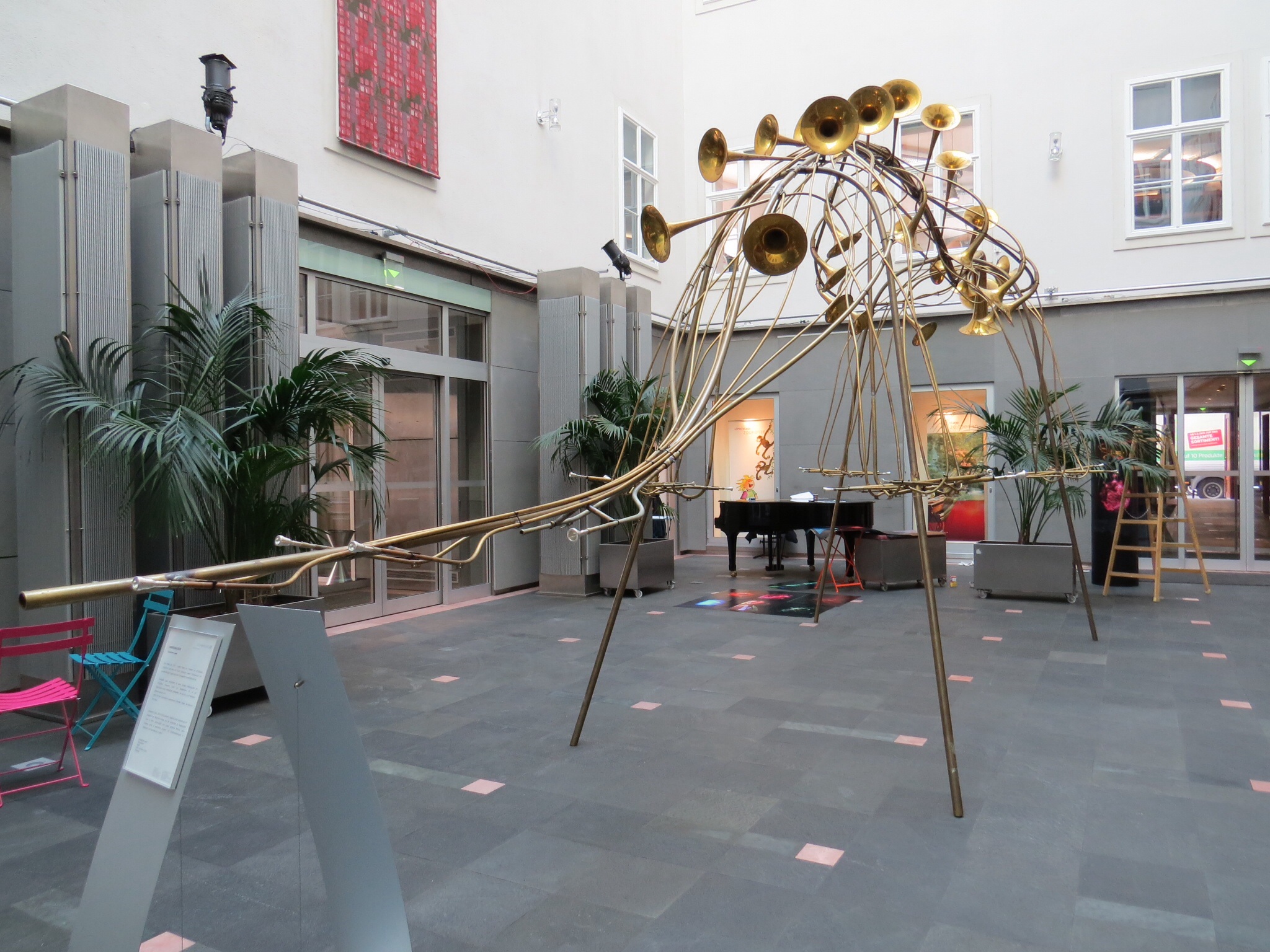
I started at the Haus der Musik to get an overview. At one time the Palais of Archduke Charles, today’s House of Music was also the residence of Otto Nicolai, who founded the Vienna Philharmonic concerts here. This museum is a great place to bring the kids, lots of experimentation with sound.
Vibrosaurus
I went straight to the top, to the Composers’ rooms.
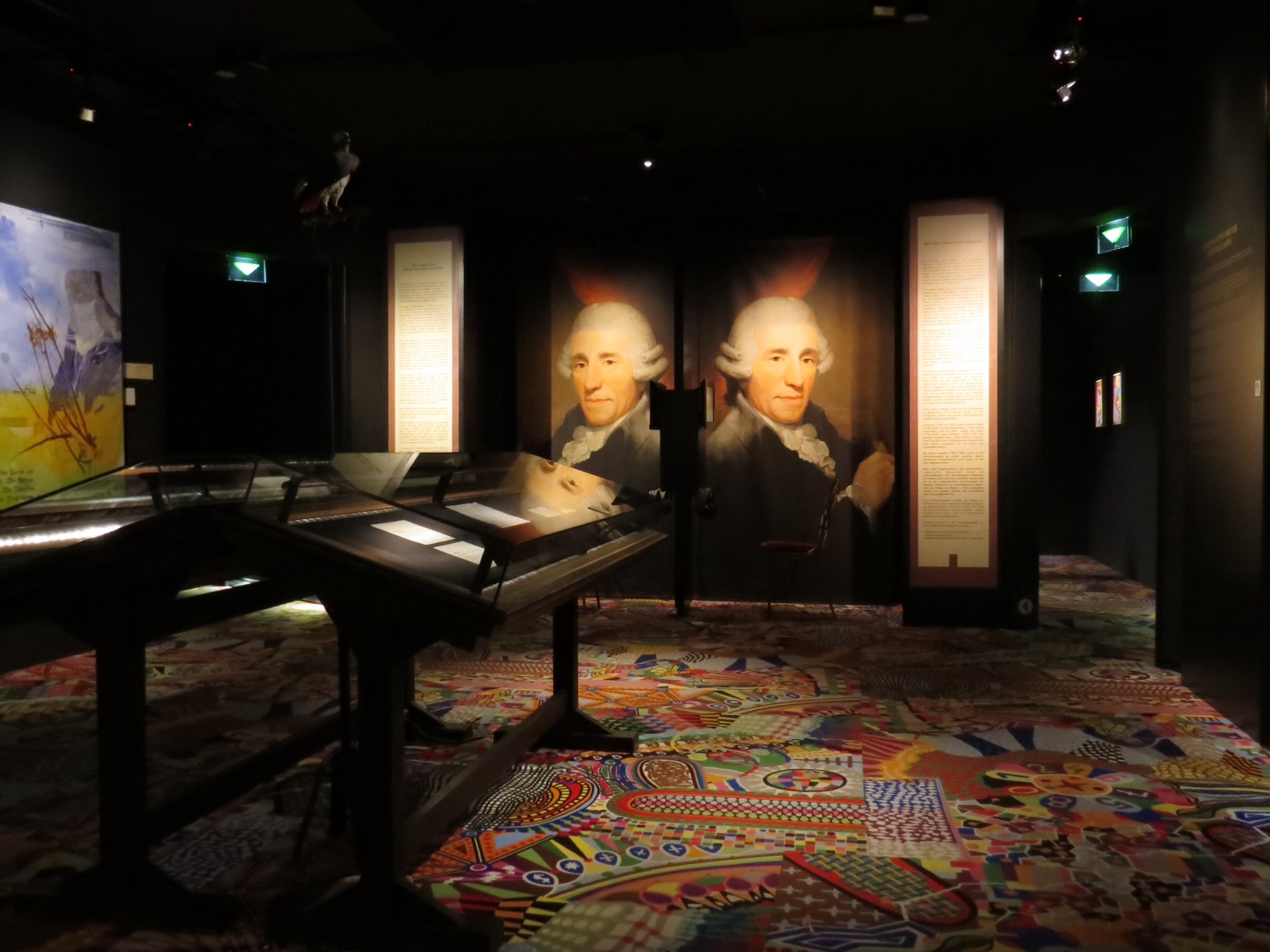
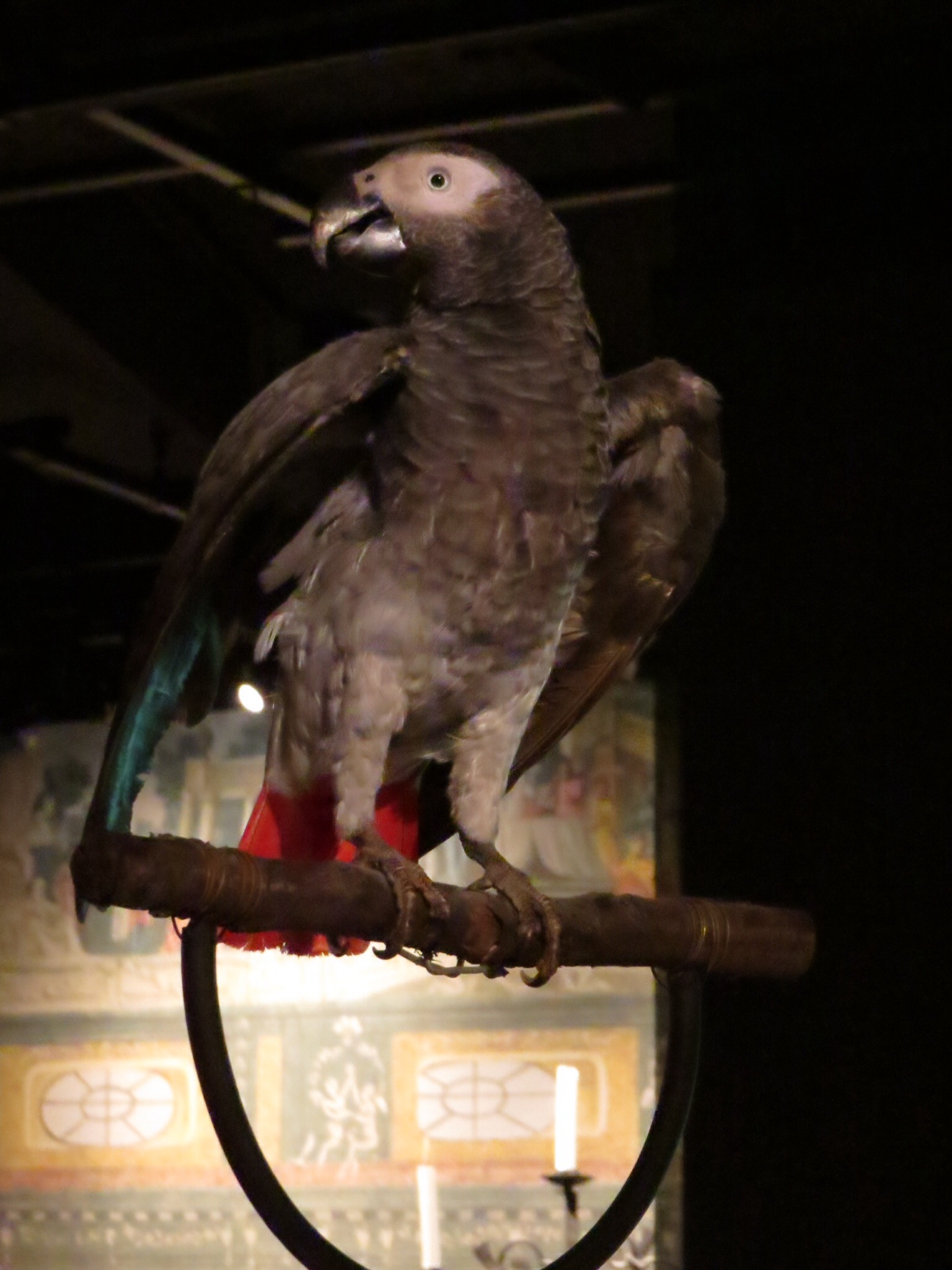
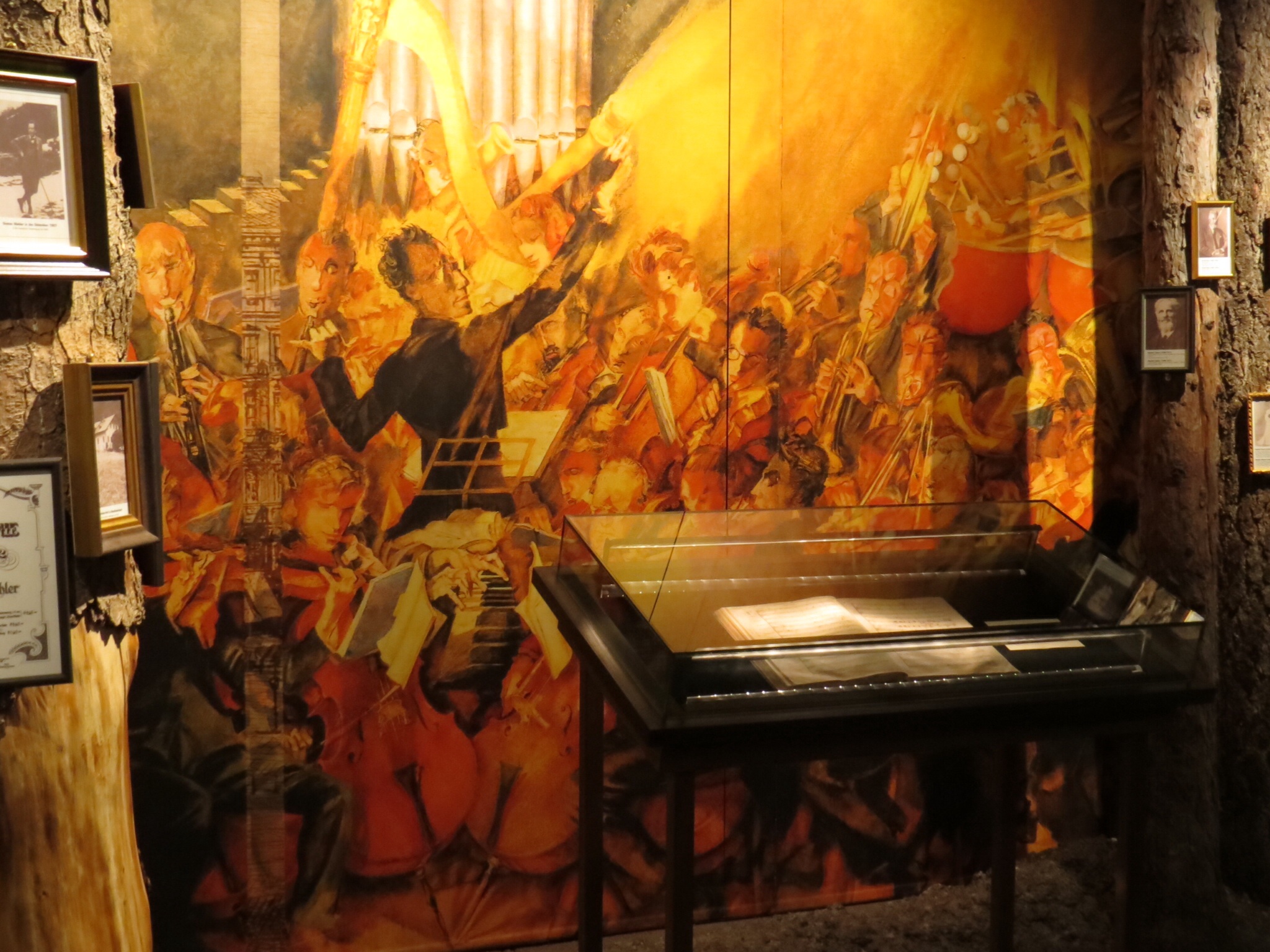
The museum has rooms dedicated to Haydn, Mozart, Beethoven, Schubert, Strauss, Mahler, and the Second Viennese School of Schönberg, Berg and Webern – all the displays are multi-media, interactive and fun as well as educational. Mahler’s family designed his room in a forest setting. Haydn’s room contains his pet parrot – the actual stuffed deceased parrot – what might it sing if it could talk now? There was lots of music, of course, and fascinating manuscripts. Beethoven’s passion flooded out of him through his pen – mad scribblings, doodles, notes, changes and sidenotes. I had filled my itinerary with concerts by these composers and this museum brought them to life.
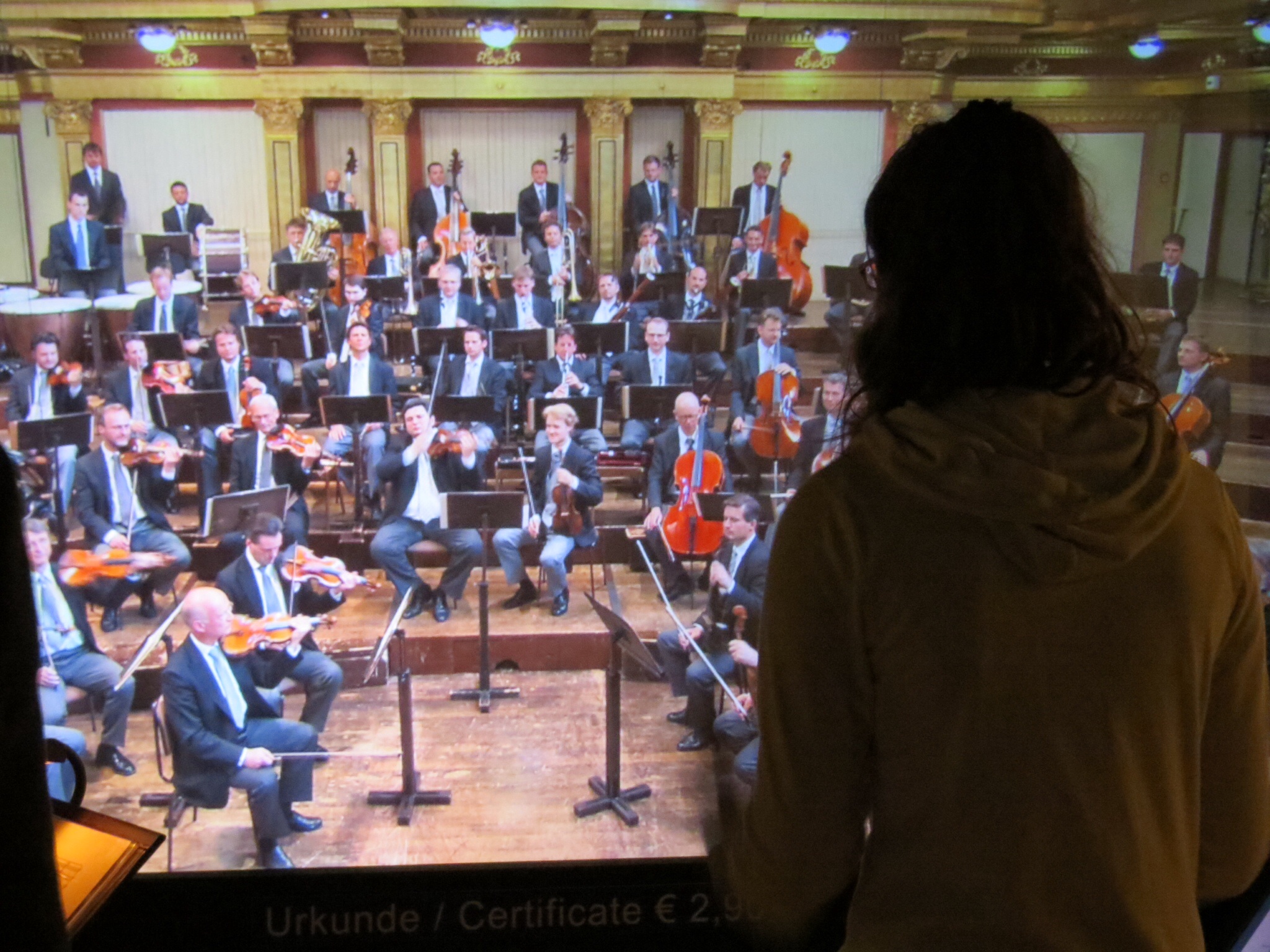
The floor also had several large circular screens which projected the Vienna Philharmonic and they reacted to your baton, so you were the Virtual Conductor.
Haydn’s Room
Mahler’s Room
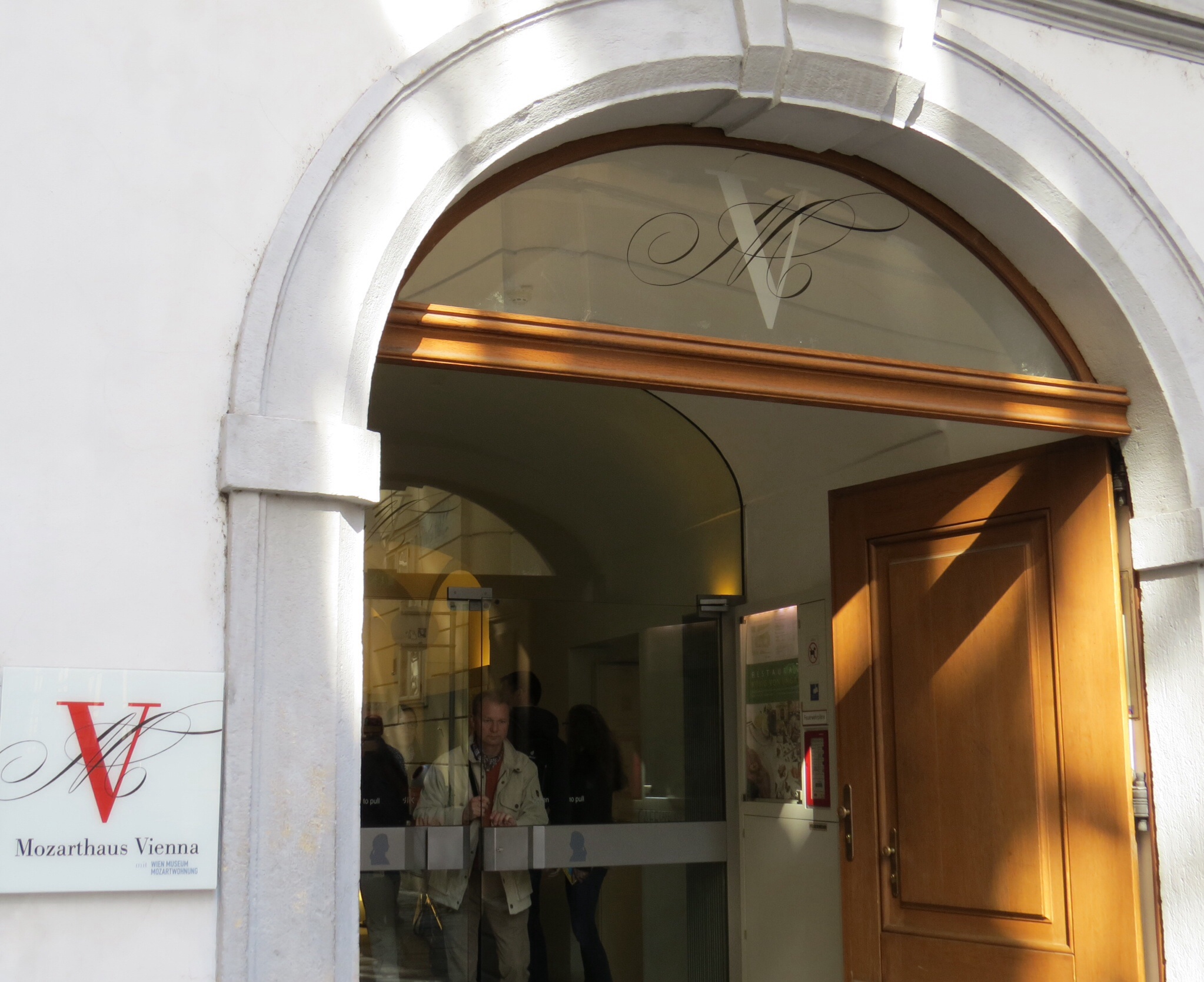
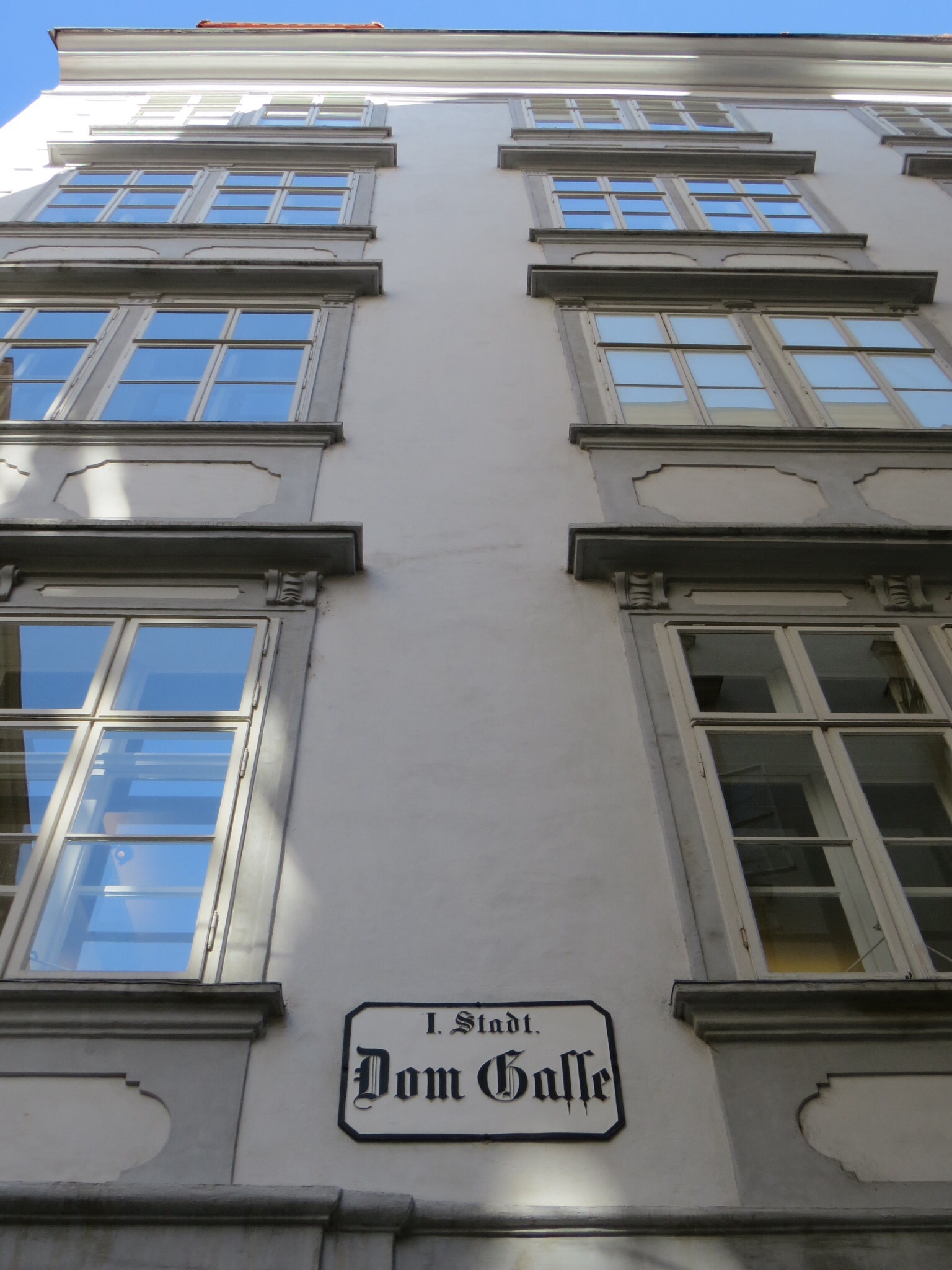
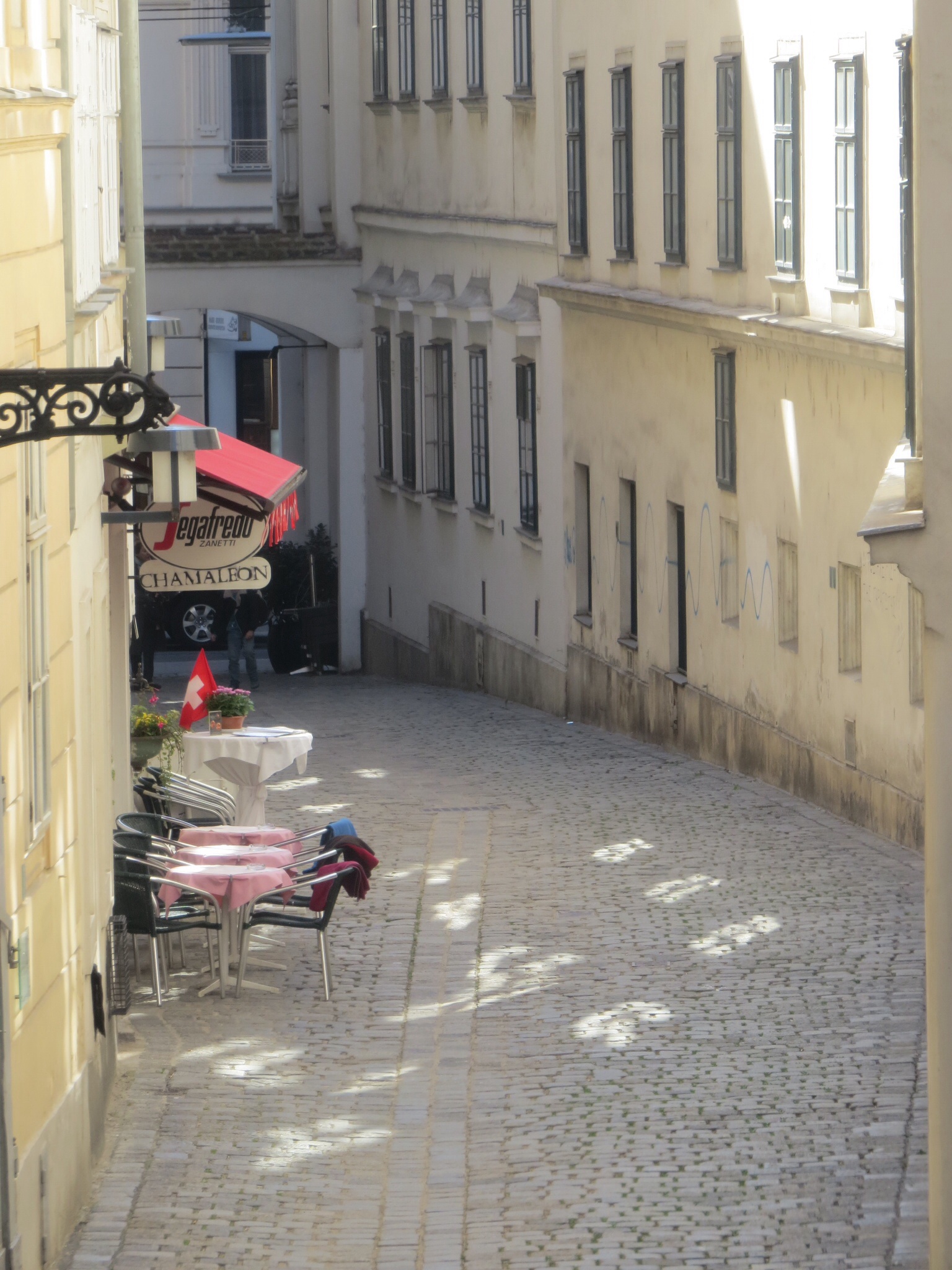
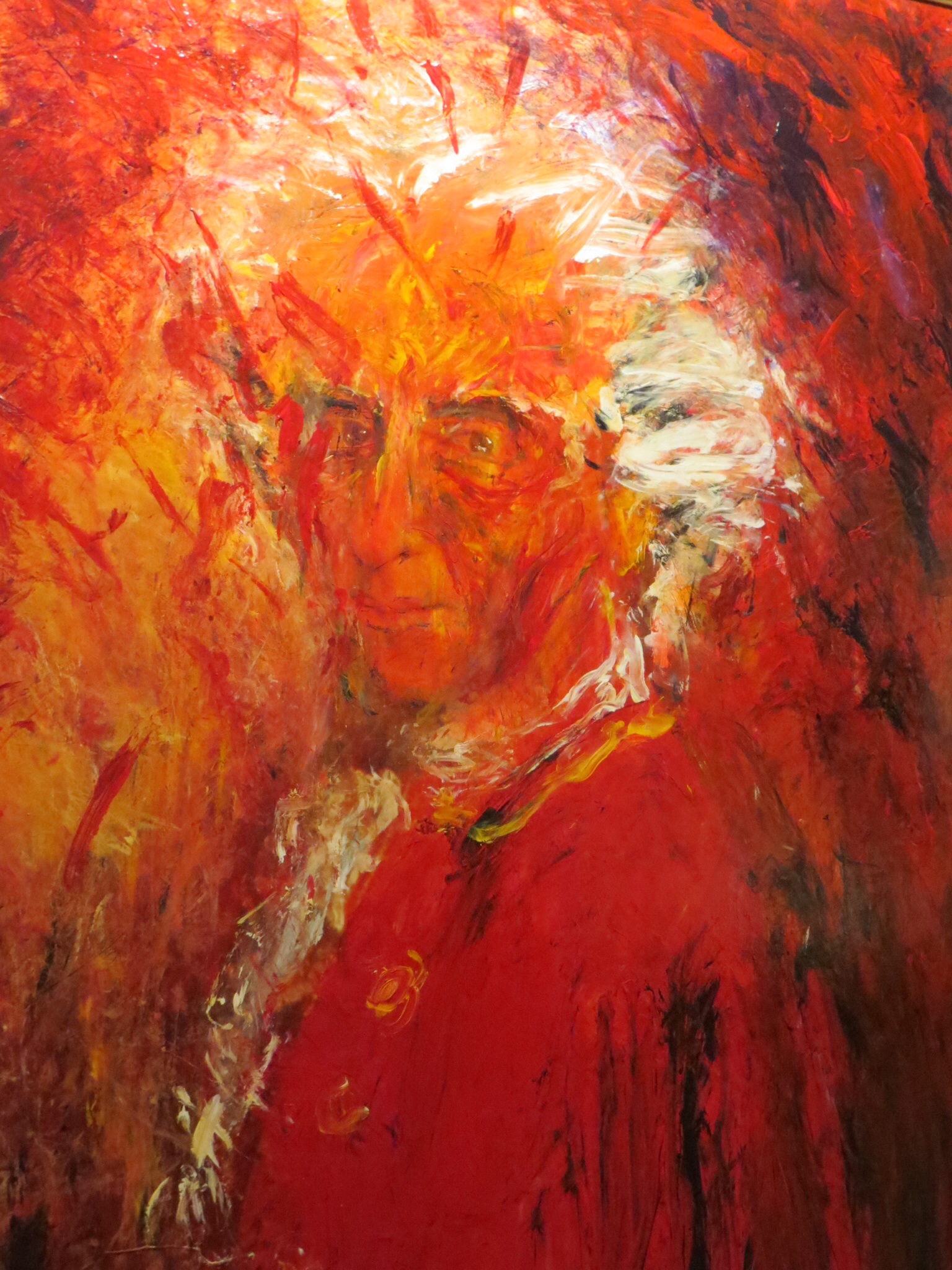
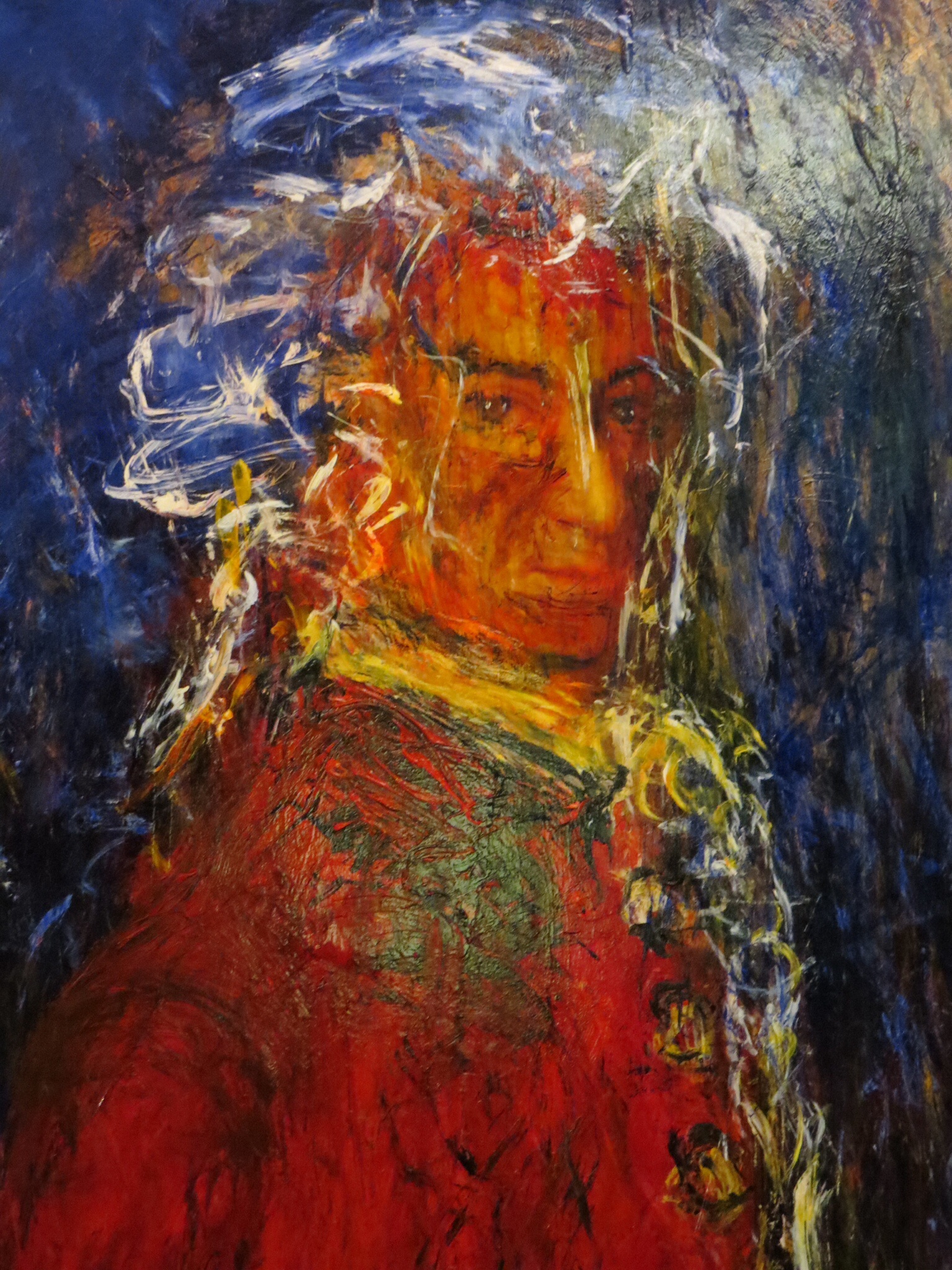
Next I went to Mozarthaus, a sweet apartment tucked right in behind Stephensdom in the heart of Vienna. Mozart and his family lived here from 1784 to 1787 during his most prolific and successful years. He wrote the Marriage of Figaro here. While few furnishings remain, the view from the window today is the same Mozart would have seen. To someone Mozart-curious, there was a lot of interesting detail, and his soaring music always inspires. There were wonderful touches, such as the fiery red portraits. Heinrich Heine said, “his music makes us feel as if we were present when God created the world.” I floated away.
View from Wolfgang’s window
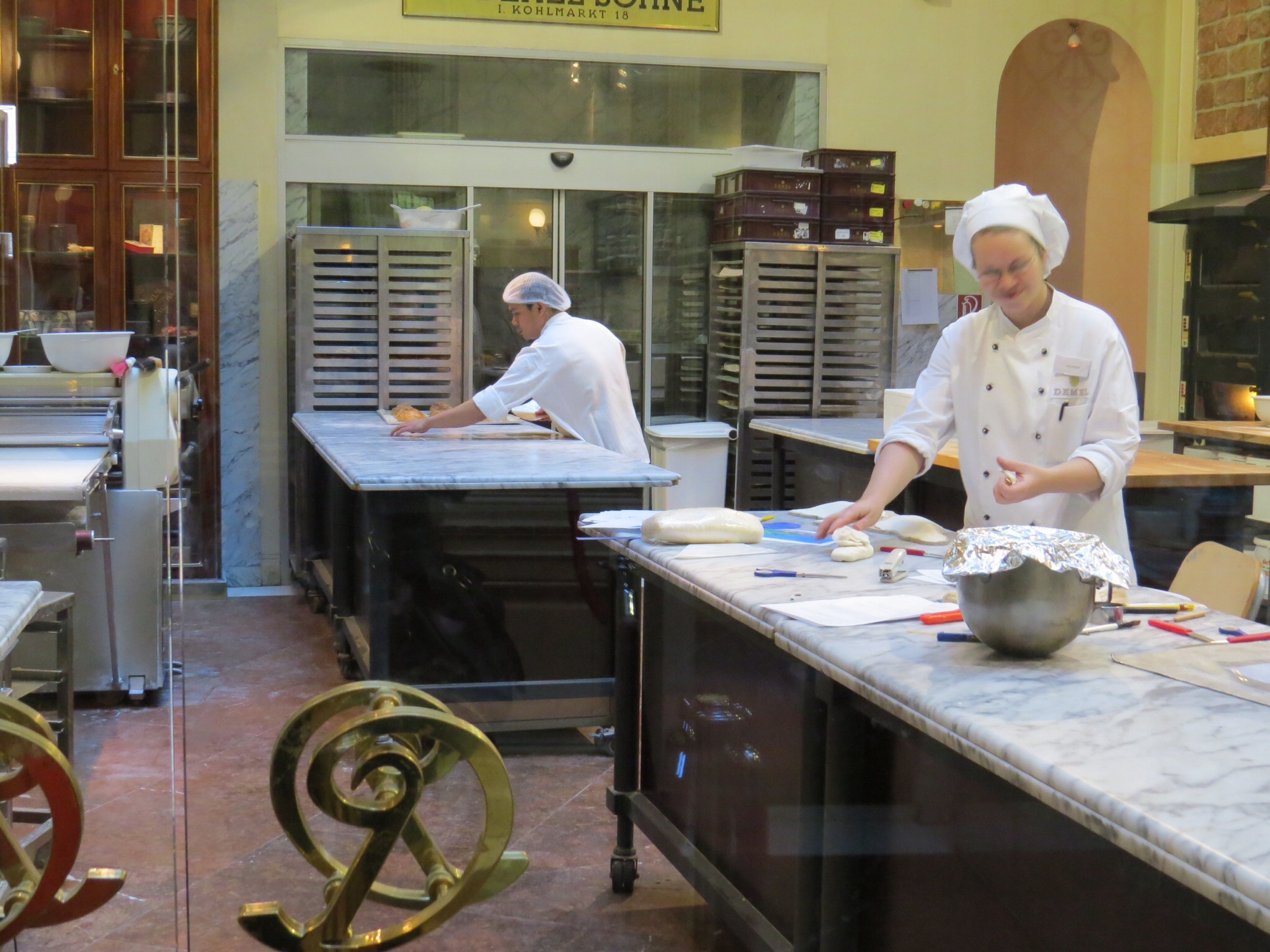
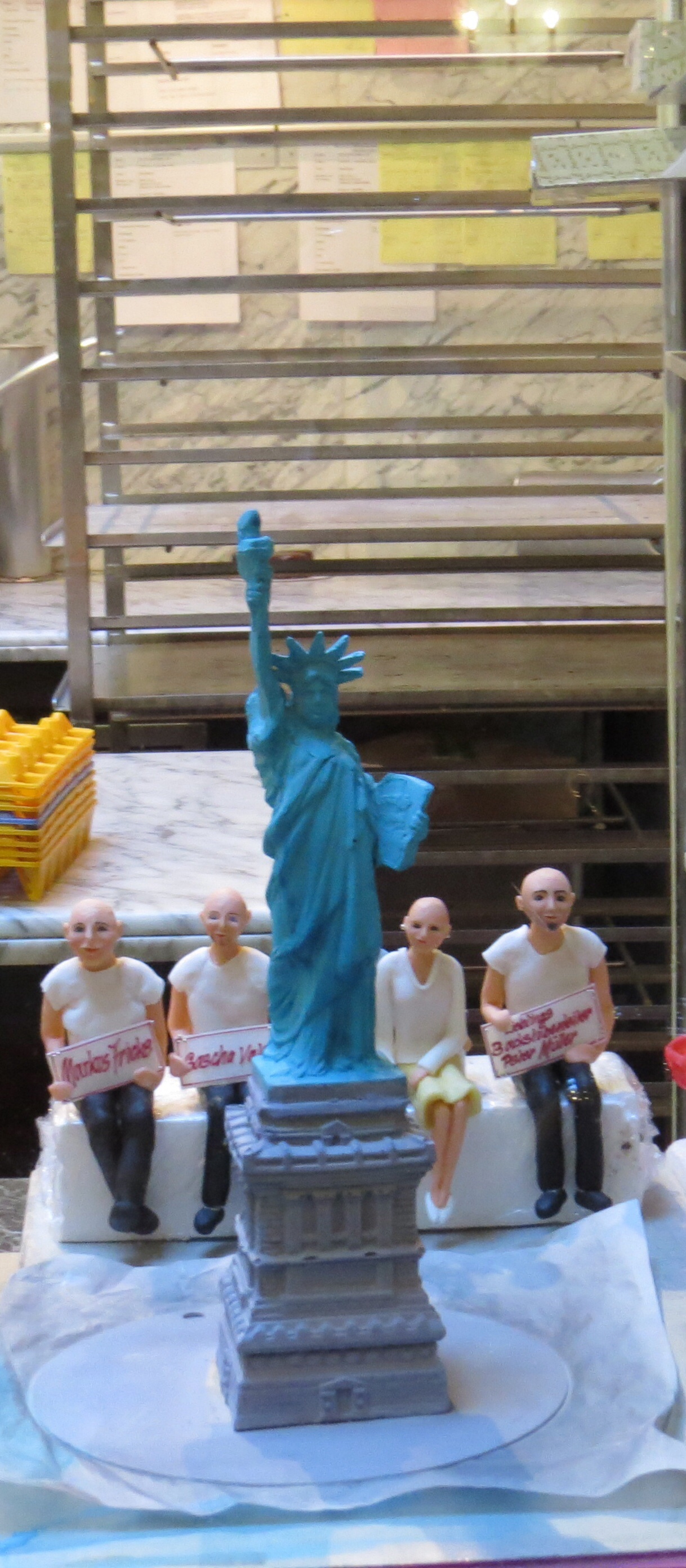
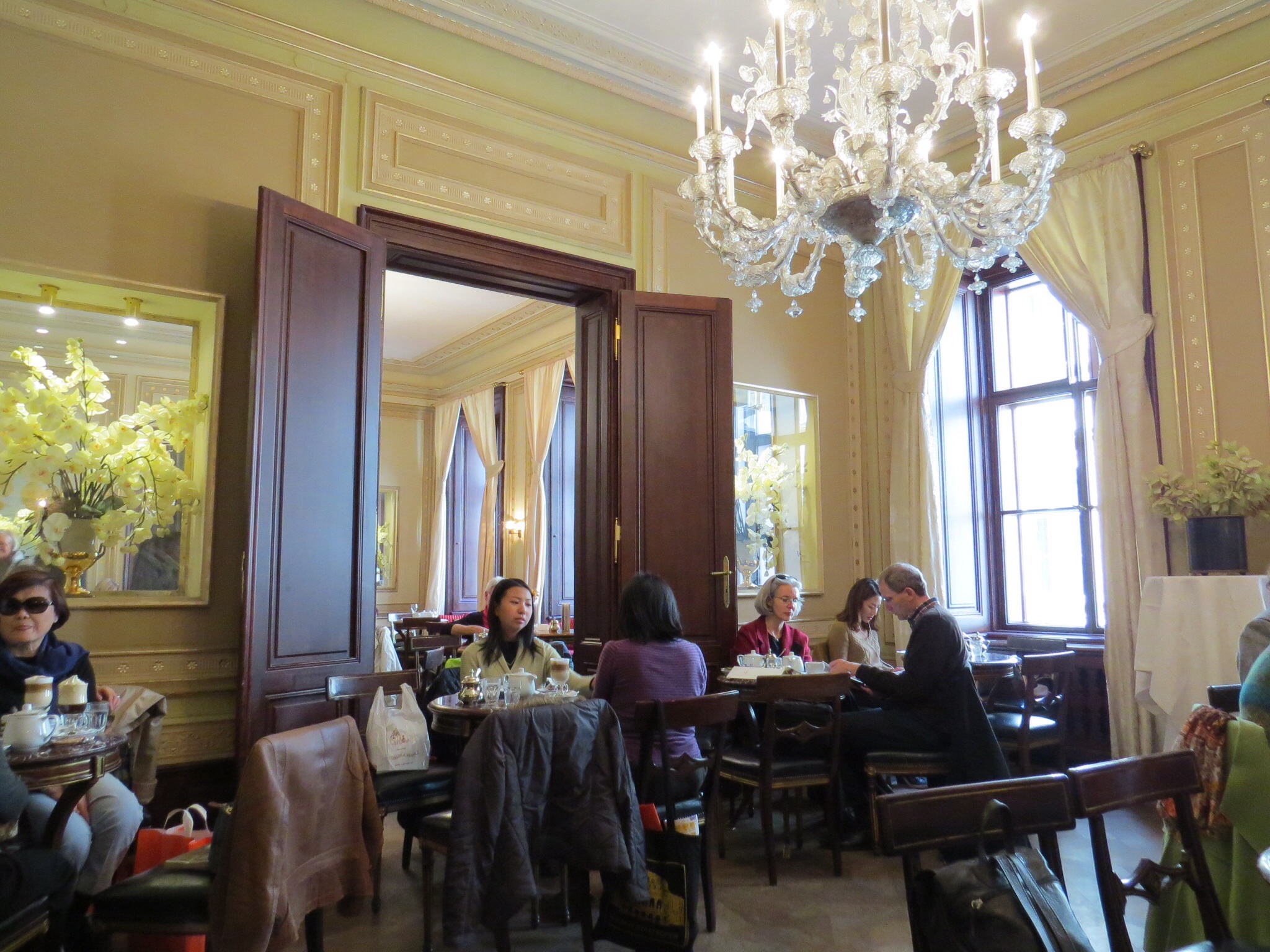
I may have floated to the stars on Mozart because I was unable to come down to earth and navigate my way to Pasqualatihaus, Beethoven’s museum and former home. Flummoxed again! Gave up and made my way back into the town centre and noticed the temperature had dropped considerably, deliciously recalling winters of my past. I remembered reading that Demel Cafe has been open since the 1700’s and that all the noble ladies would annually meet at Demel’s Cafe for a cup of hot chocolate on the first cold day of the year, so where else would I want to be?
Vienna’s coffee craze was born in 1683 (more than a century before Schubert arrived on the scene). When the invading Turks left Vienna that year, they abandoned hundreds of sacks of coffee beans. The Emperor gave a man named Franz George Kolschitzky some of this coffee as a reward for providing information that allowed the Austrians to defeat the Turks. Kolschitzky then opened Vienna’s first coffee shop. The Viennese passion for coffee continues to this day.
Liberty Cake Namaste Cake
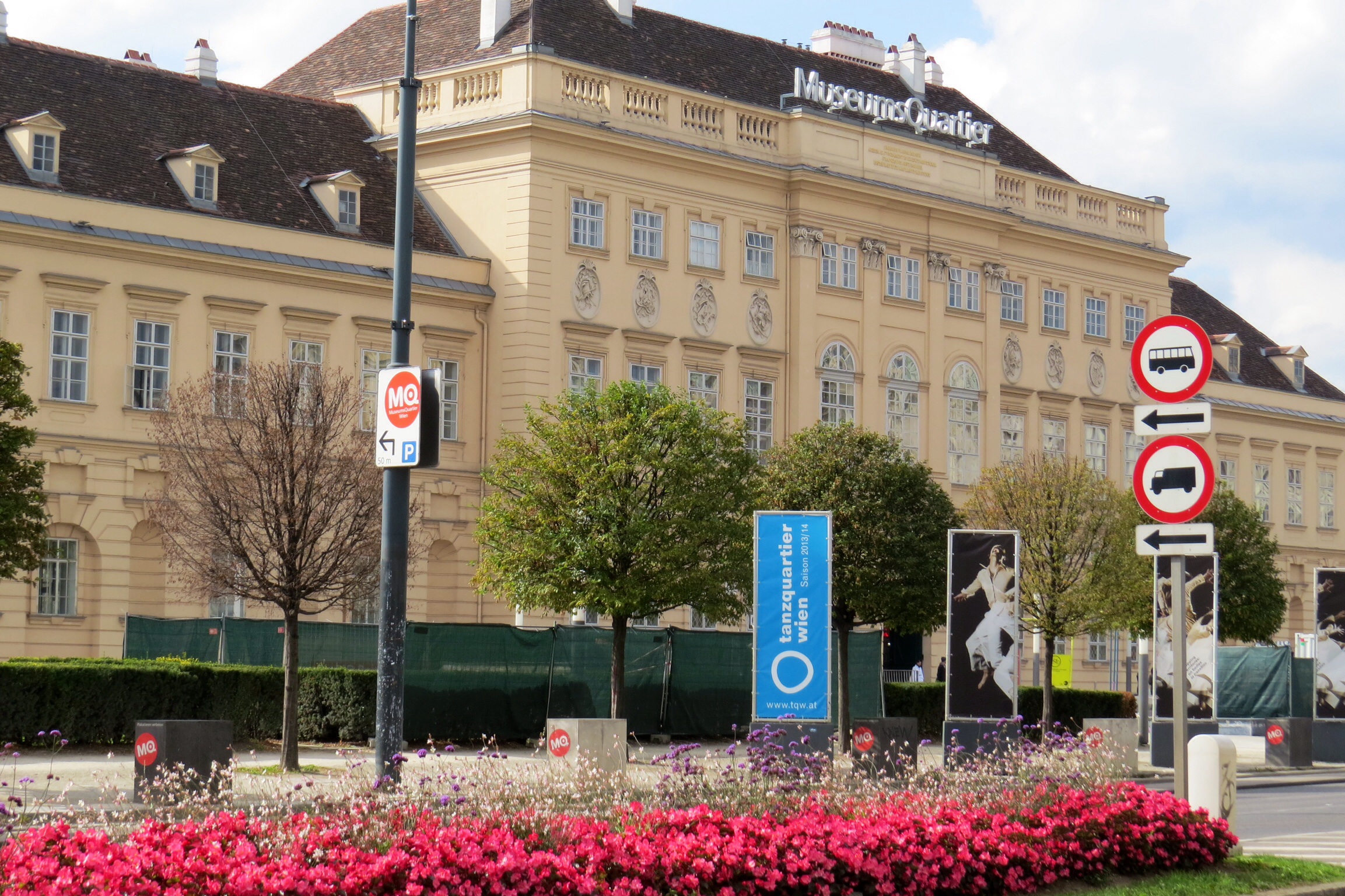
After refortifying I decided to switch gears, but there are many more composers’ homes/museums for another visit. Time to do a bit of shopping and soaking in Vienna’s great vibe. The Museumsquartier was open late this evening, a hub of art and culture with several museums and theatres, so I could do that later.
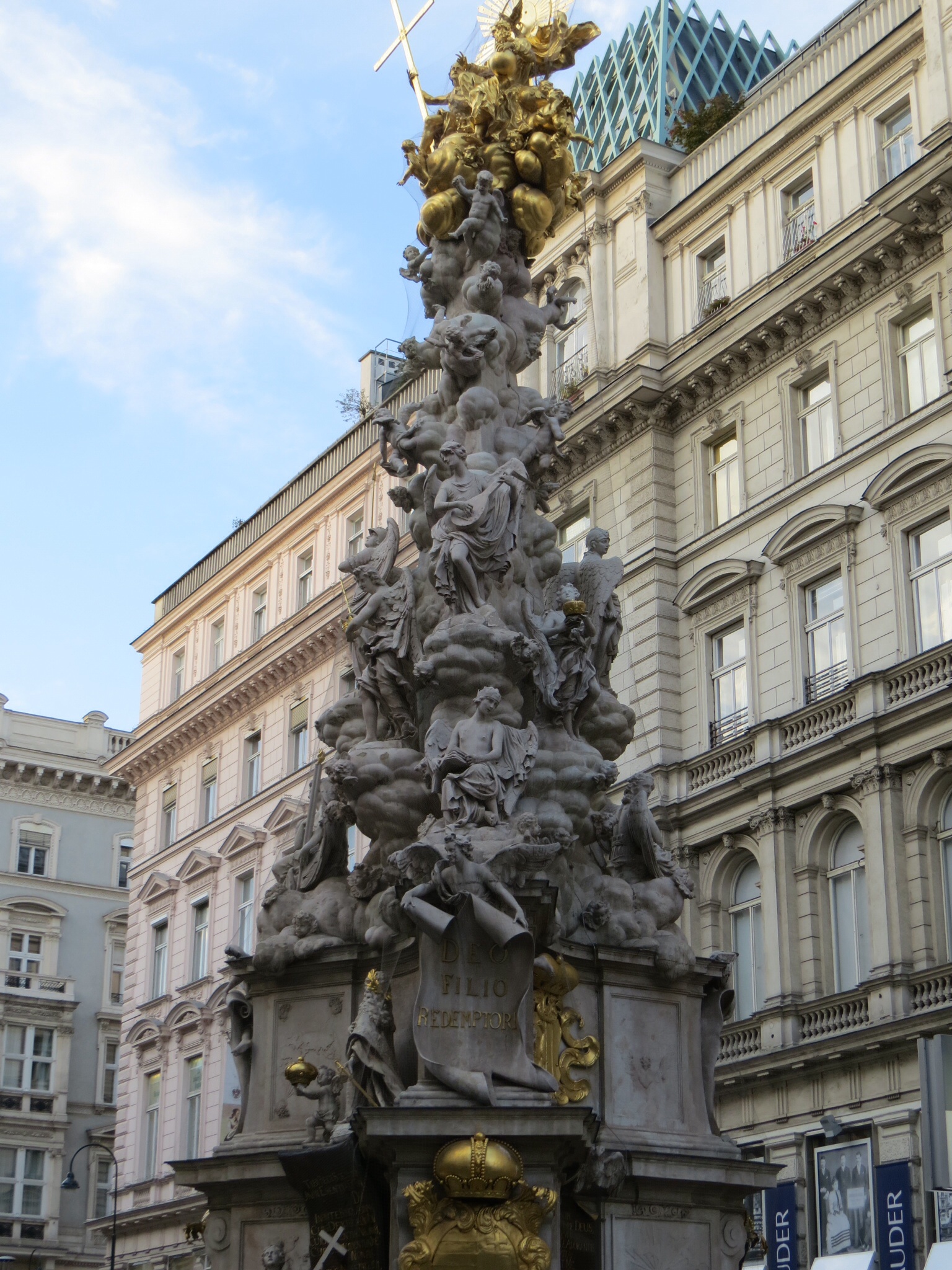
In 1679, Vienna was visited by one of the last big plague epidemics. Fleeing the city, Emperor Leopold I vowed to erect a mercy column if the epidemic would end. The monument was inaugurated in 1693.
Plague Monument
Swarovski HQClosest I got to the Lipizzaner Horses of The Spanish Riding School
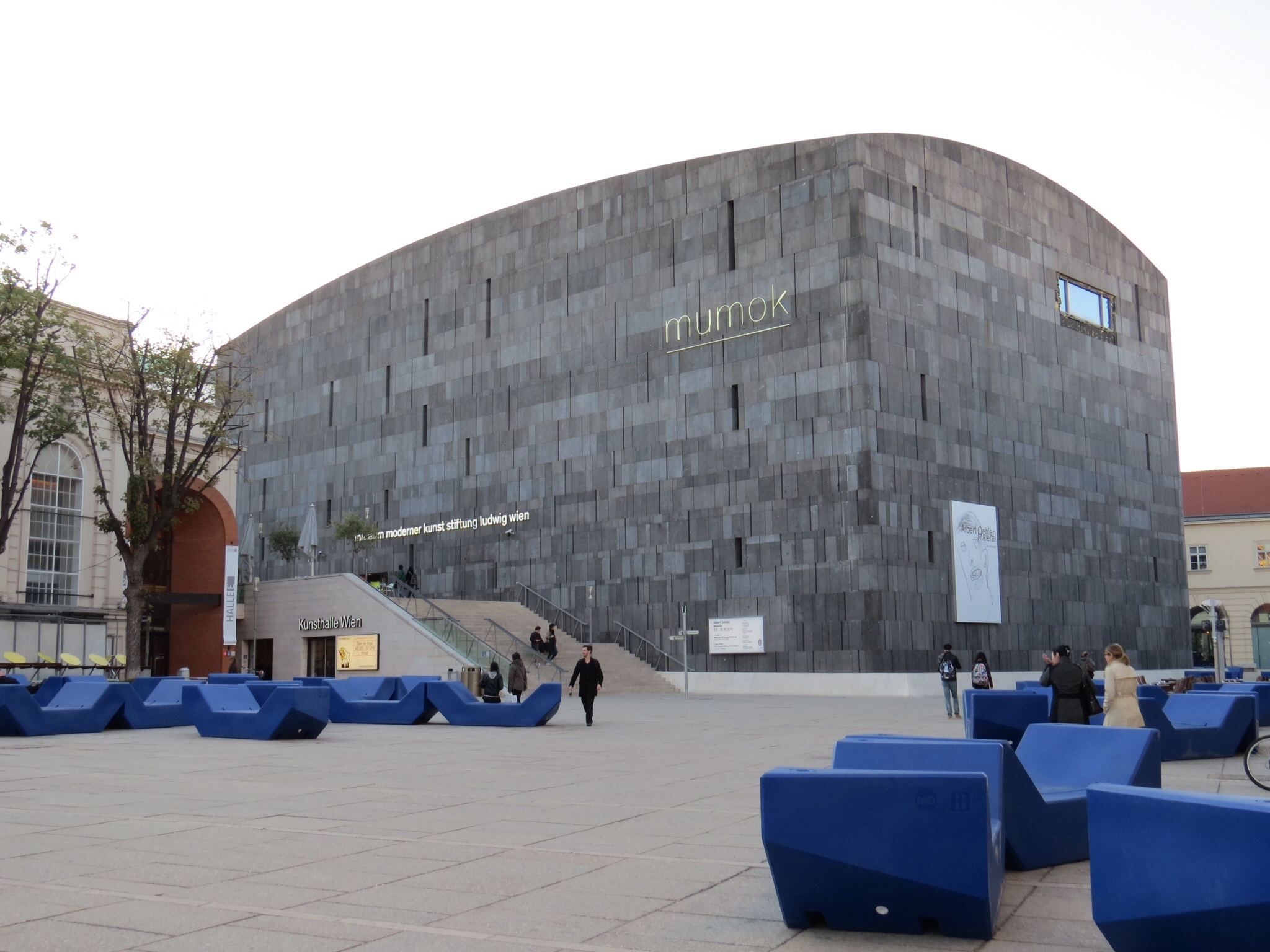
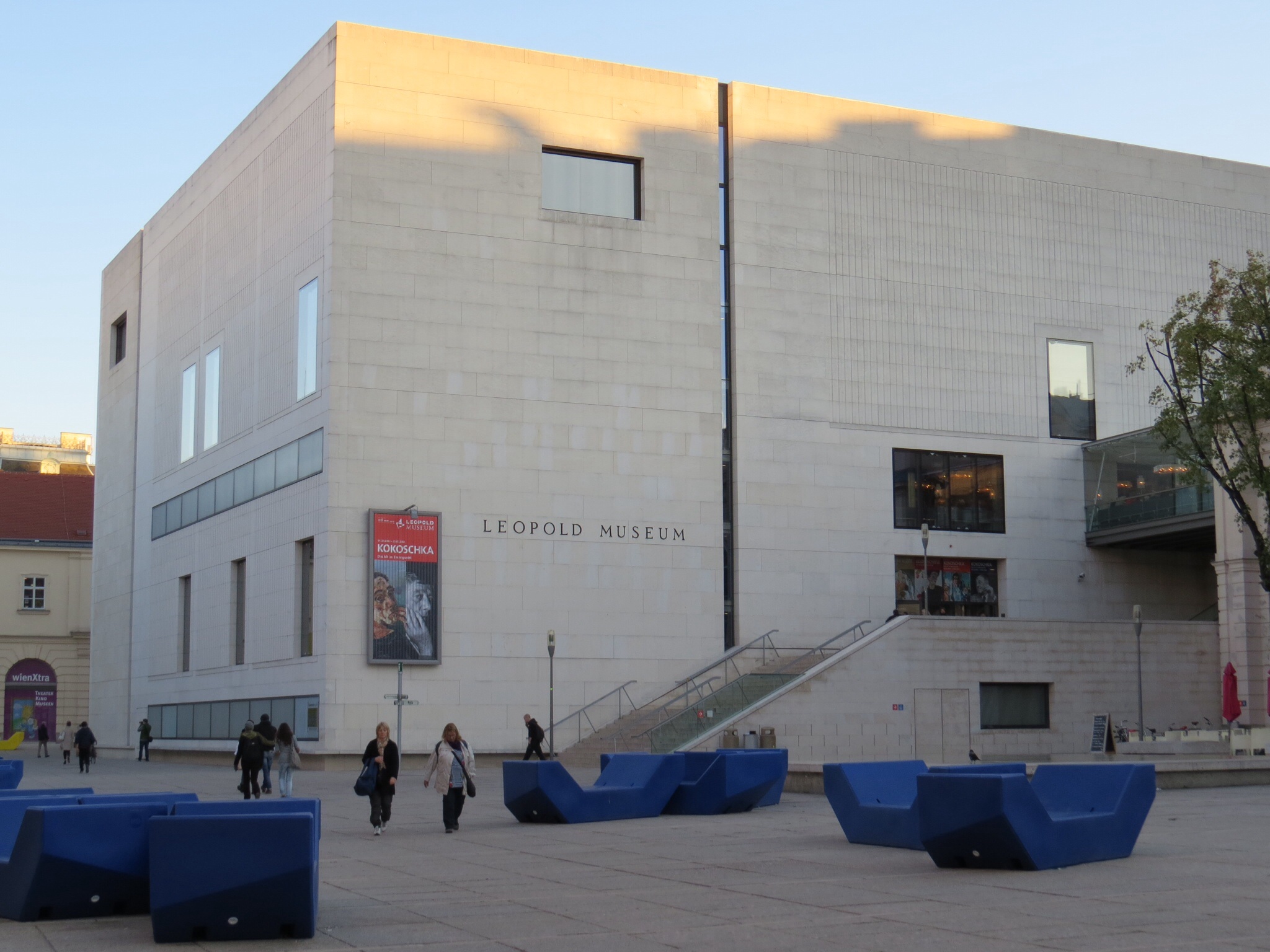
The two museums I was most interested in inside the Museumsquartier were the Leopold, housing modern Austrian art including many Klimts and the world’s largest collection of Egon Schiele, and the Mumok, Museum of Modern Art, home to Warhols and Picassos, among others.
After tracking down the box office and buying my pass, I bounded into the courtyard and headed to the Leopold. No. The Leopold is closed for a special event, come back tomorrow. Right. Hopped over to Momak. Must check my coat and camera? Ok. No. Coat check doesn’t take cameras, use a locker? Ok. Load my locker. Oh, not free like the others? Ok. Do you have a 2 Euro coin for the locker (she asked at the 2 Euro coat check)? No? Change is back at the box office?
And with that I threw up my white flag, threw my gear back on, walked back to the box office – and kept on walking til I reached my hotel room. It was a great day nonetheless and an evening to put my feet up was welcome. Tomorrow is another day!
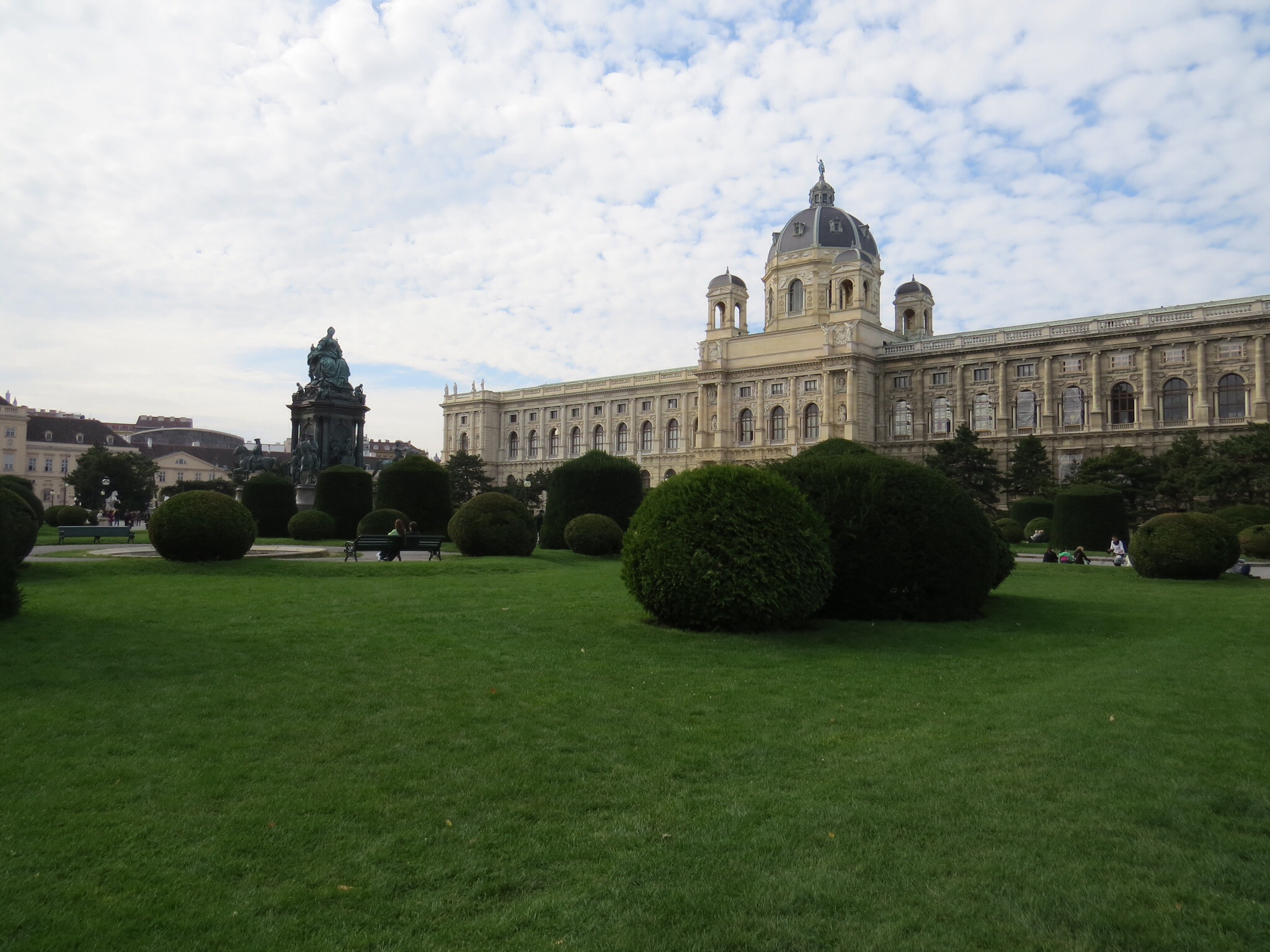
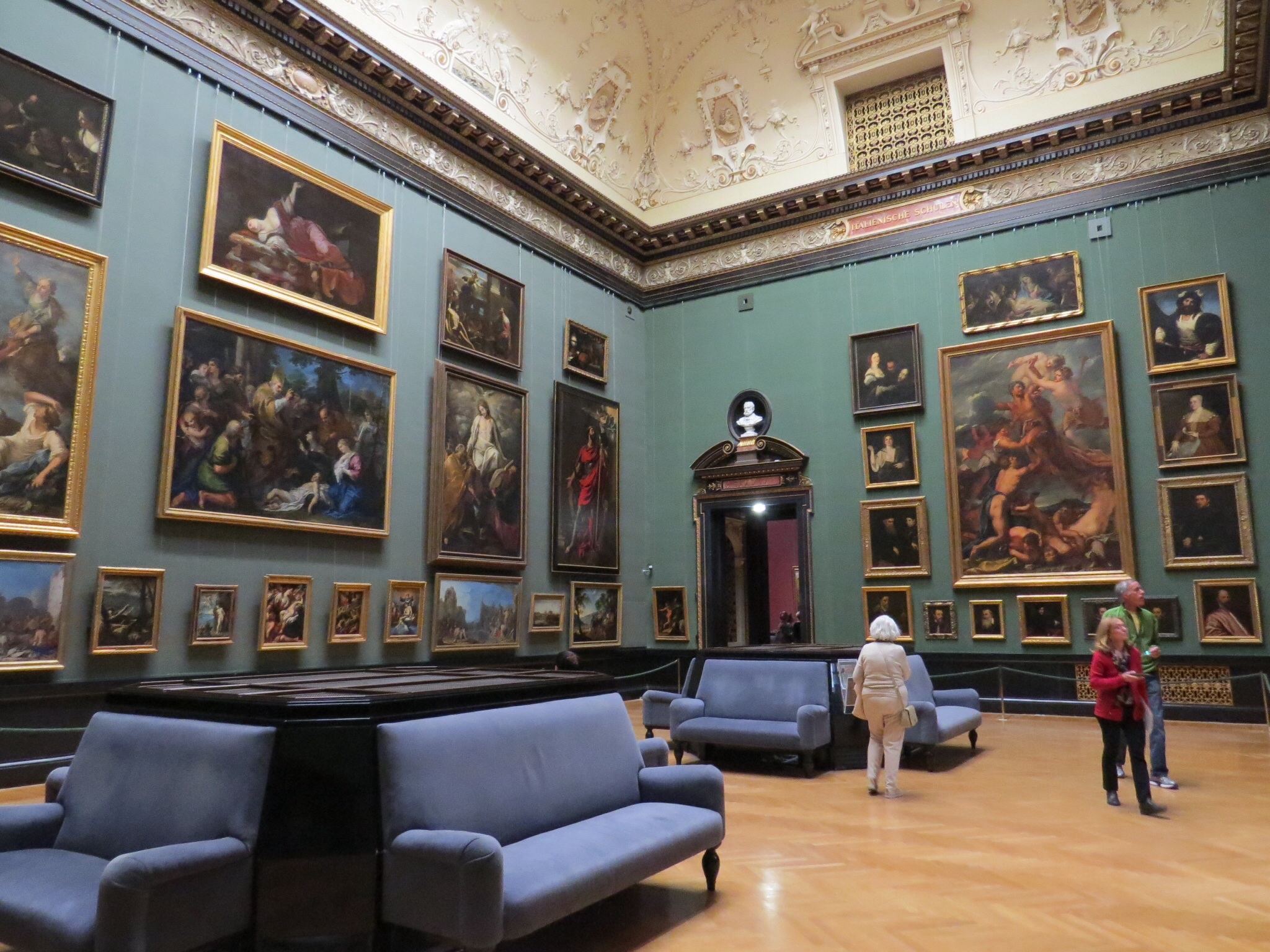
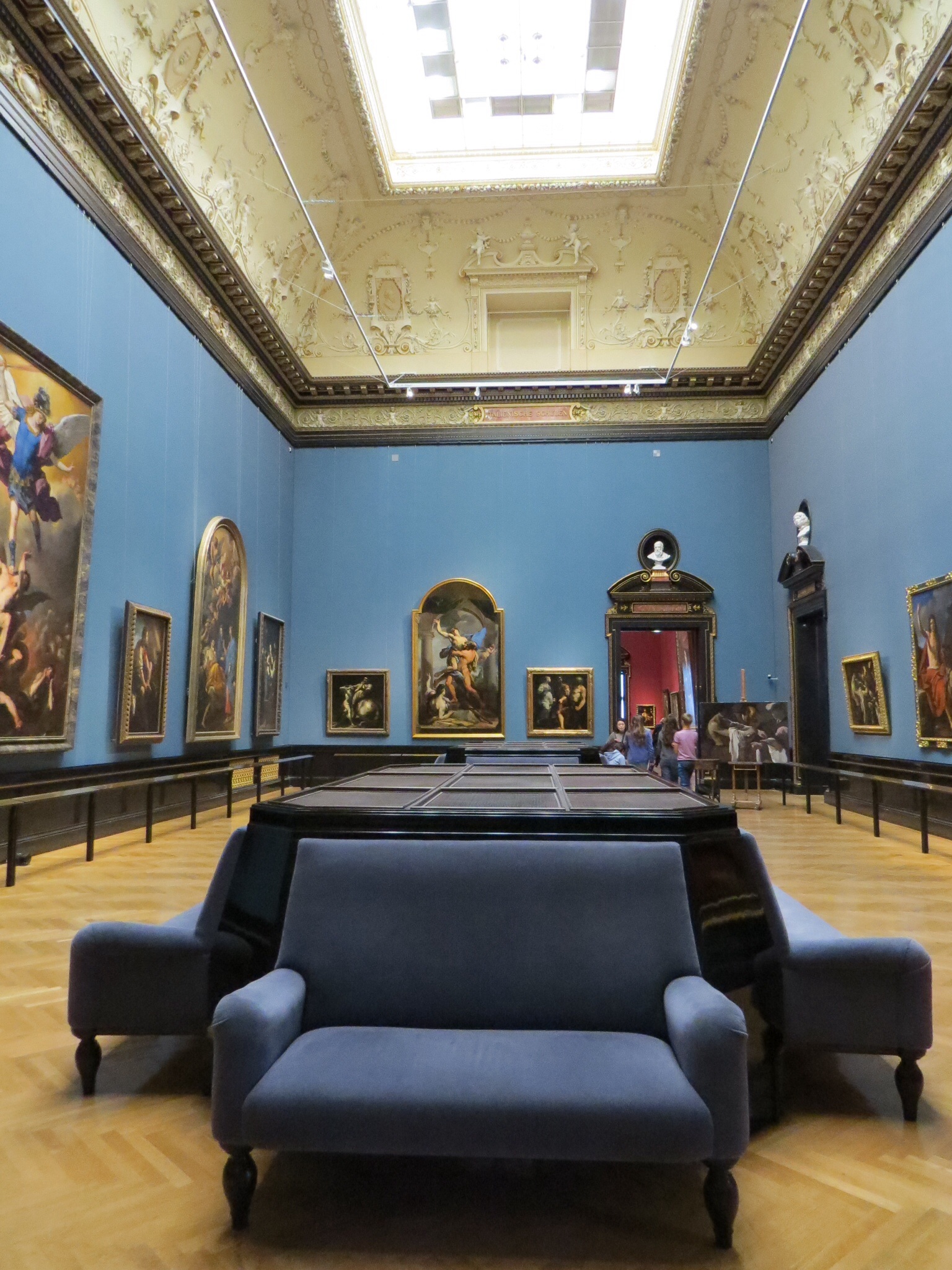
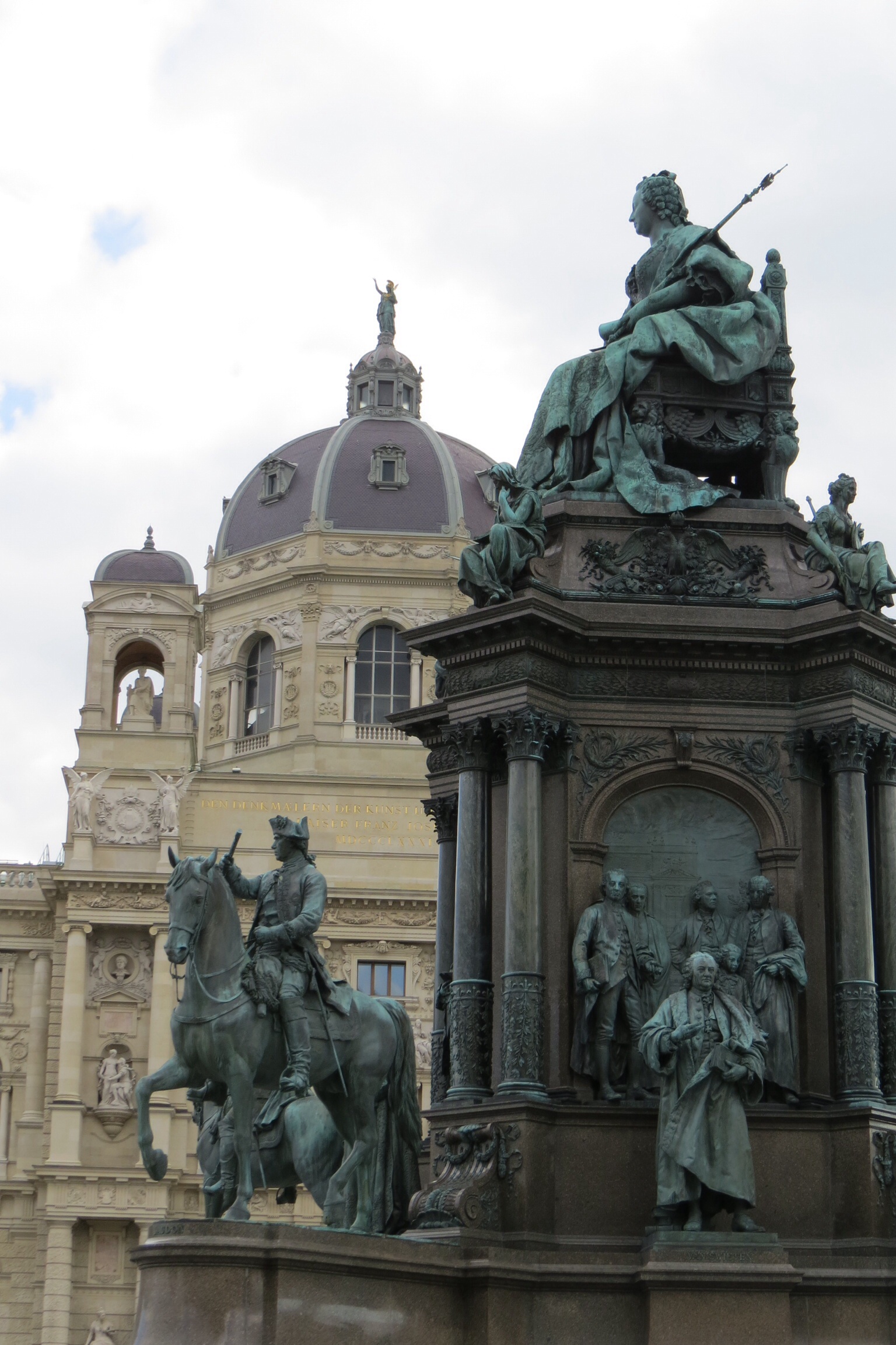
This stunning building was designed at the behest of Franz Joseph I not as a palace, but to get the priceless Habsburg collections out of private palaces into suitable surroundings accessible to all.
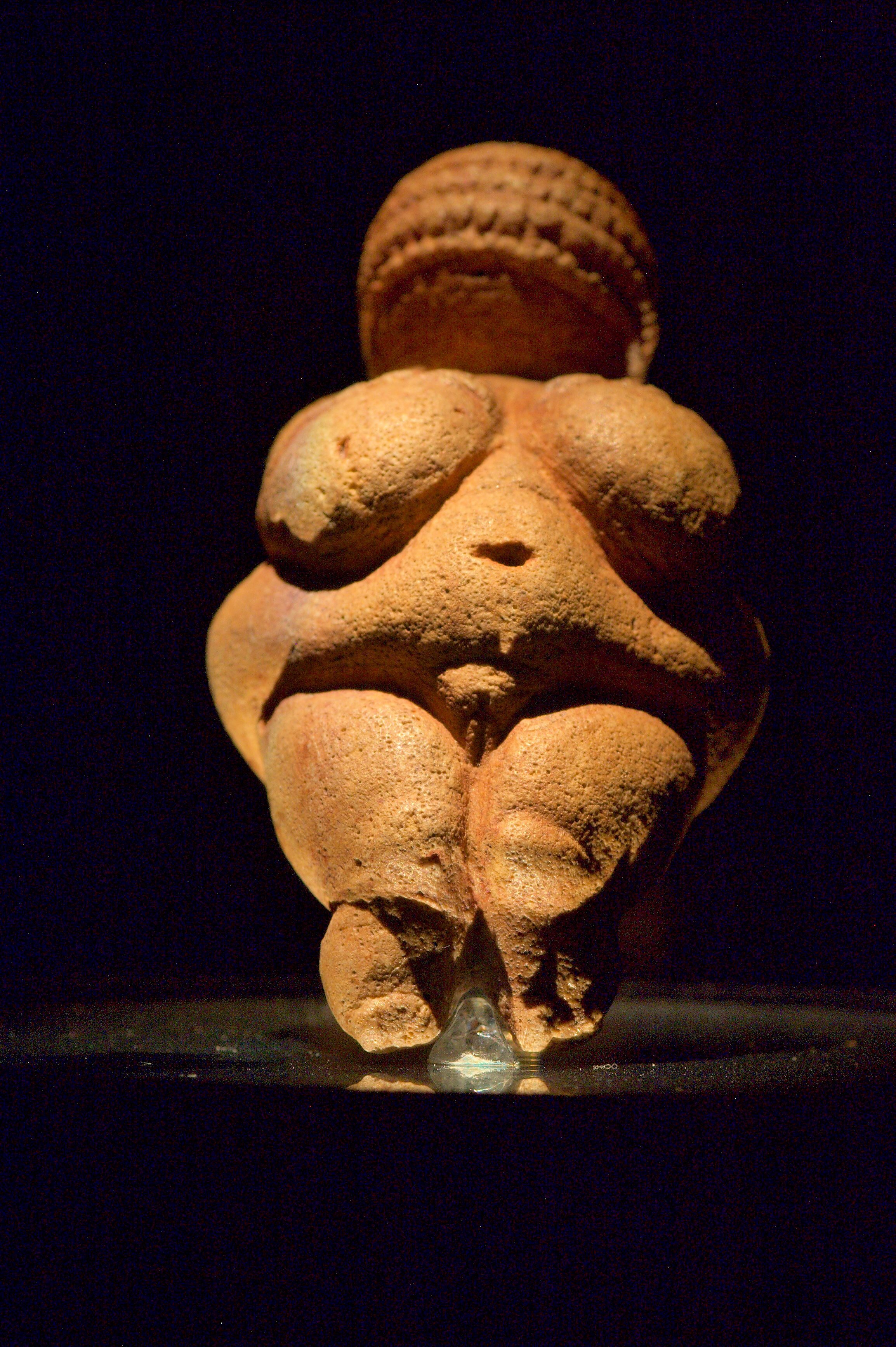
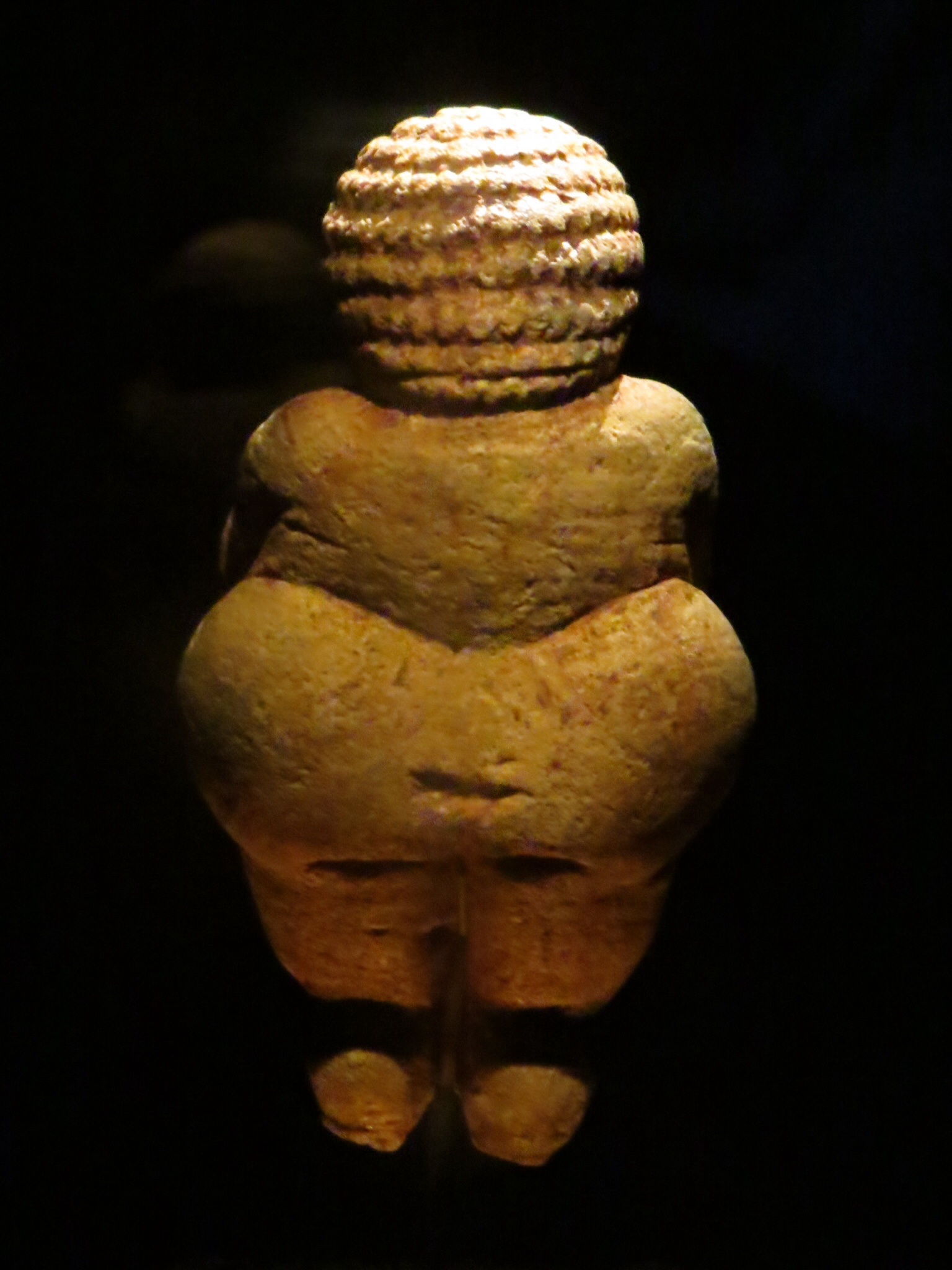
The identical building across Maria-Theresia-Platz houses the natural history museum. I had to deak in to see Venus of Willendorf. This fertility goddess was carved during the ice age between 22,000 and 24,000 BCE, when a plump, healthy body was especially valued for survival of the species. I never imagined crossing the span of 26,000 years, and I look at her and see my knees, my hips, my hair, my bone structure. And my connectedness to my past, present and future and my place in that continnuum wraps me like a warm blanket. Even though she is only 11 cm high, she carries the weight of humanity powerfully on her shoulders.
Maria-Theresia in front of Kunsthistoriches
The majority of the rest of my day was spent in the Kunsthistorisches. Housing one of the most significant art collections in the world, it includes fine art, Greek, Roman and Egyptian antiquities and part of “Schatzkammer,” a playful name I can’t help thinking sounds a lot like “kitsch,” the Imperial Treasury.
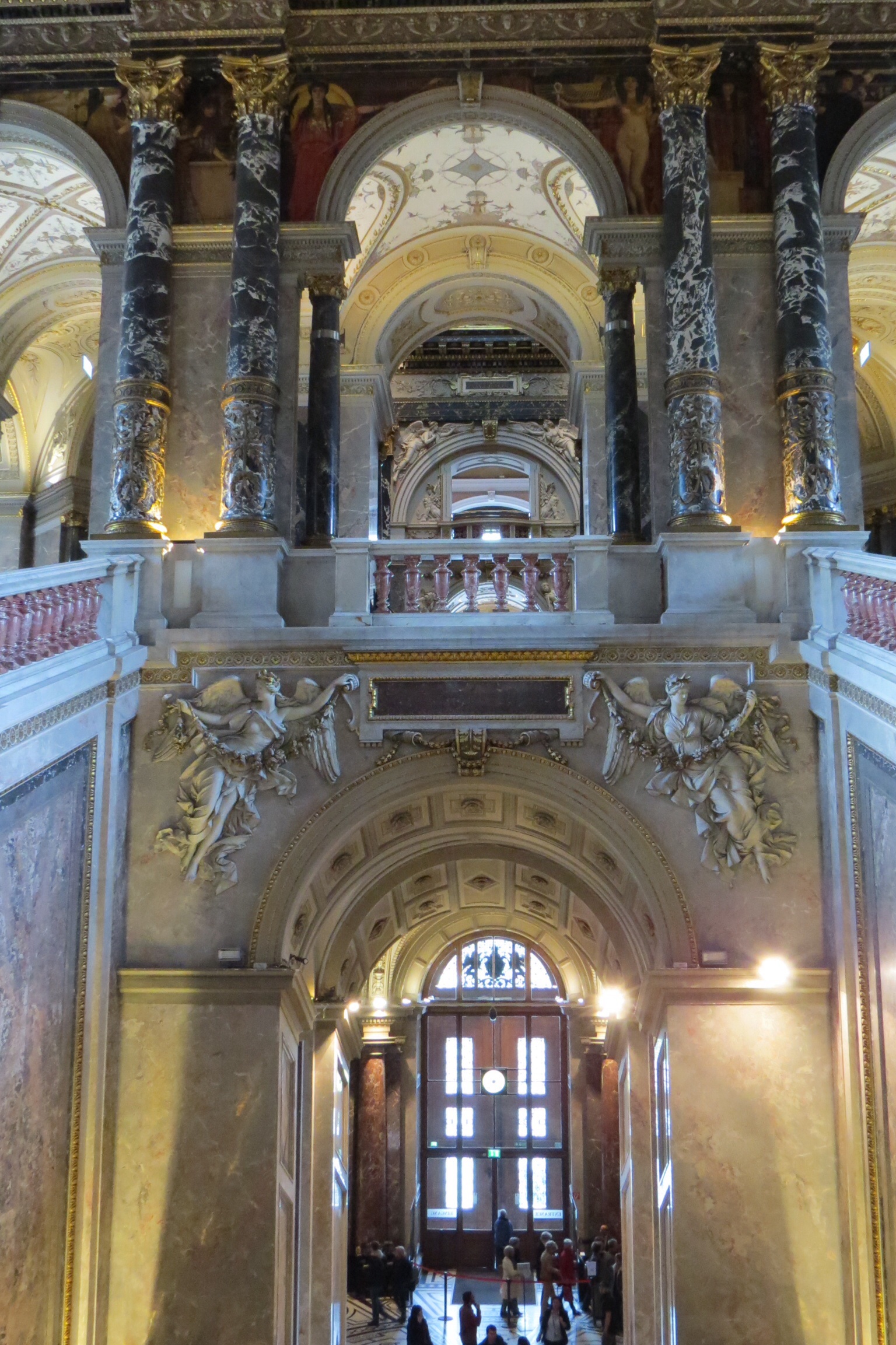
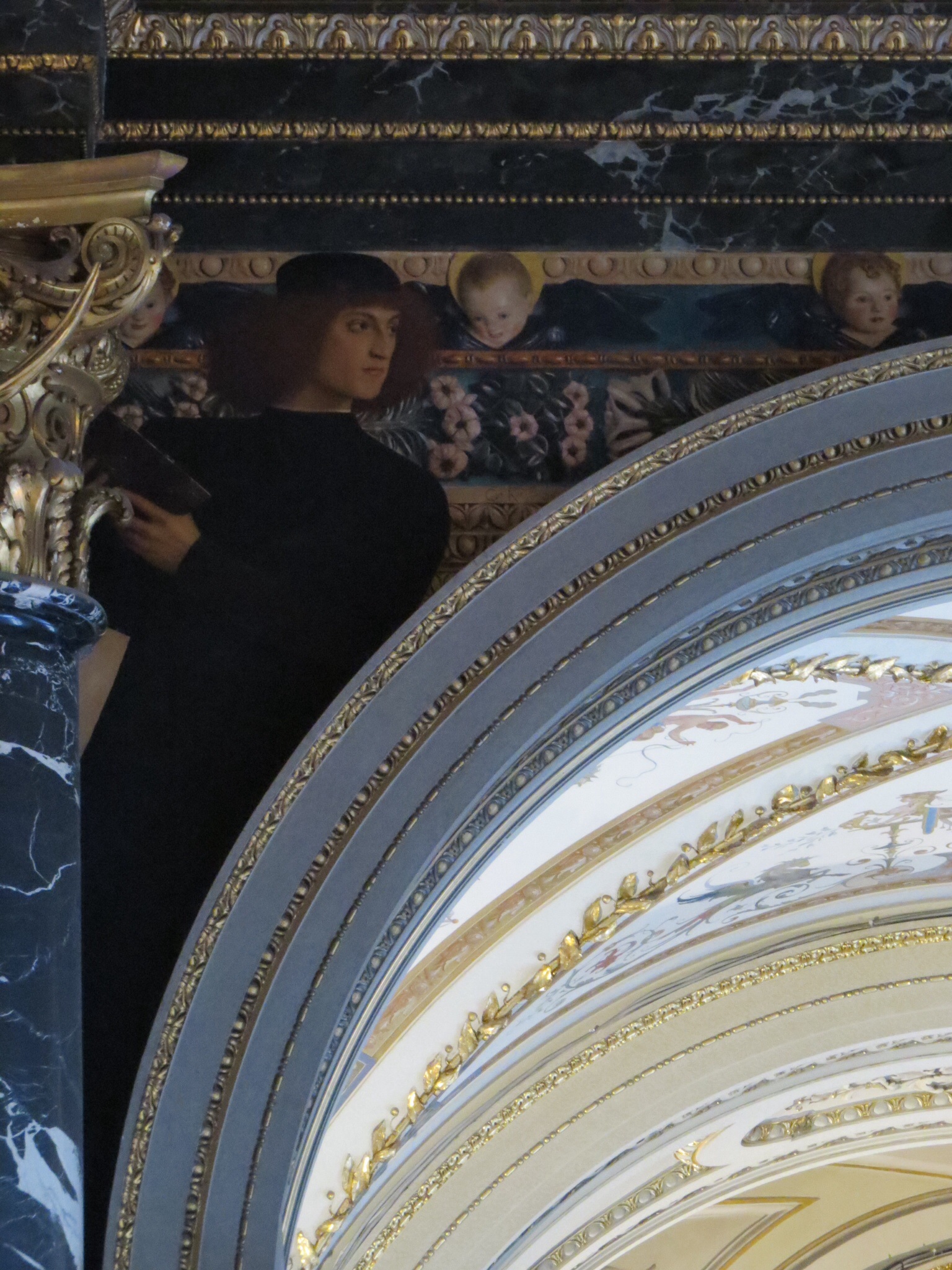
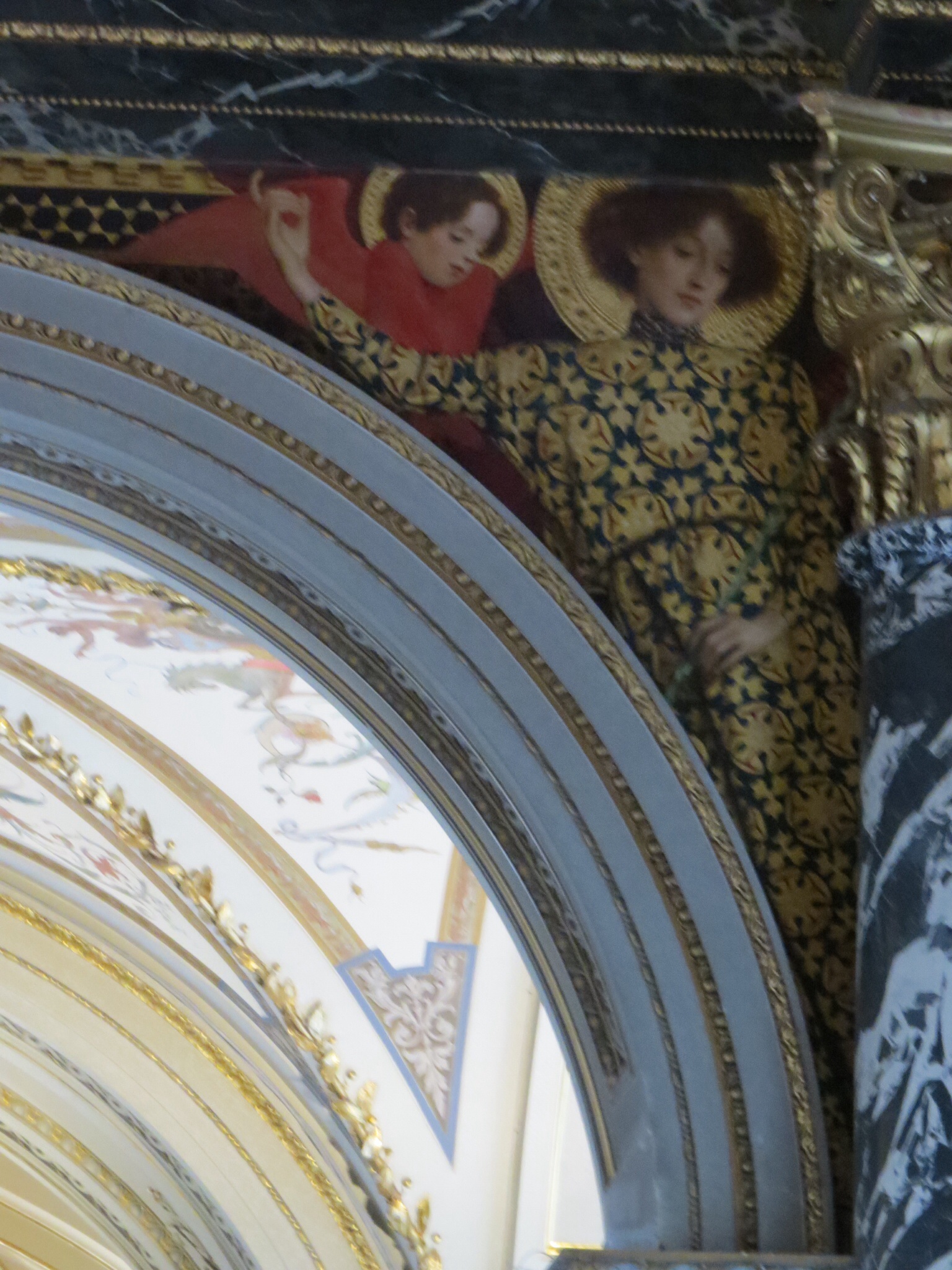
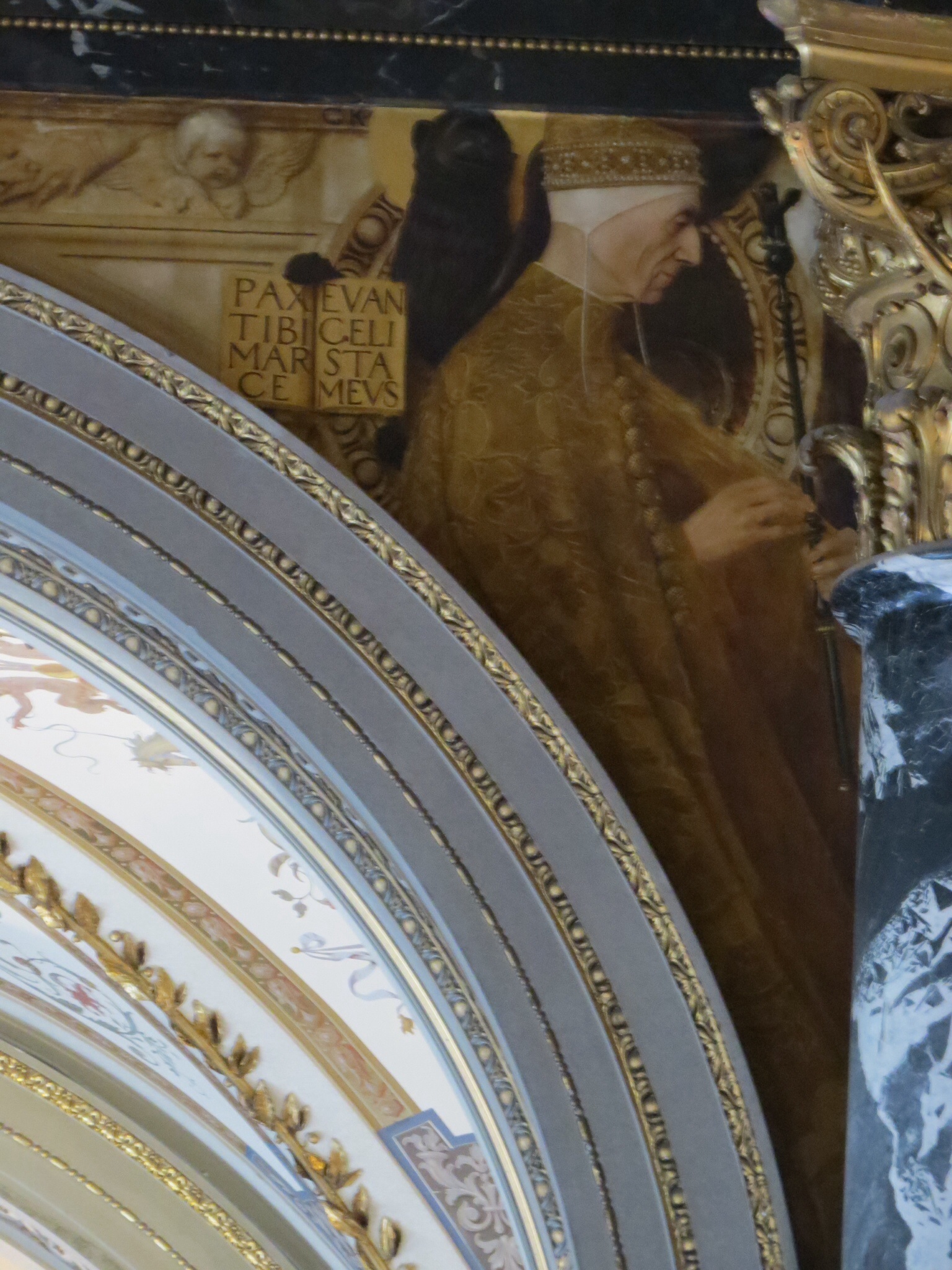
The grand double staircase leading up to most of the exhibits is a work of art in its own right. The marbles and glorious frescoes, painted by Klimt and other artists, surround you.
Fine Art
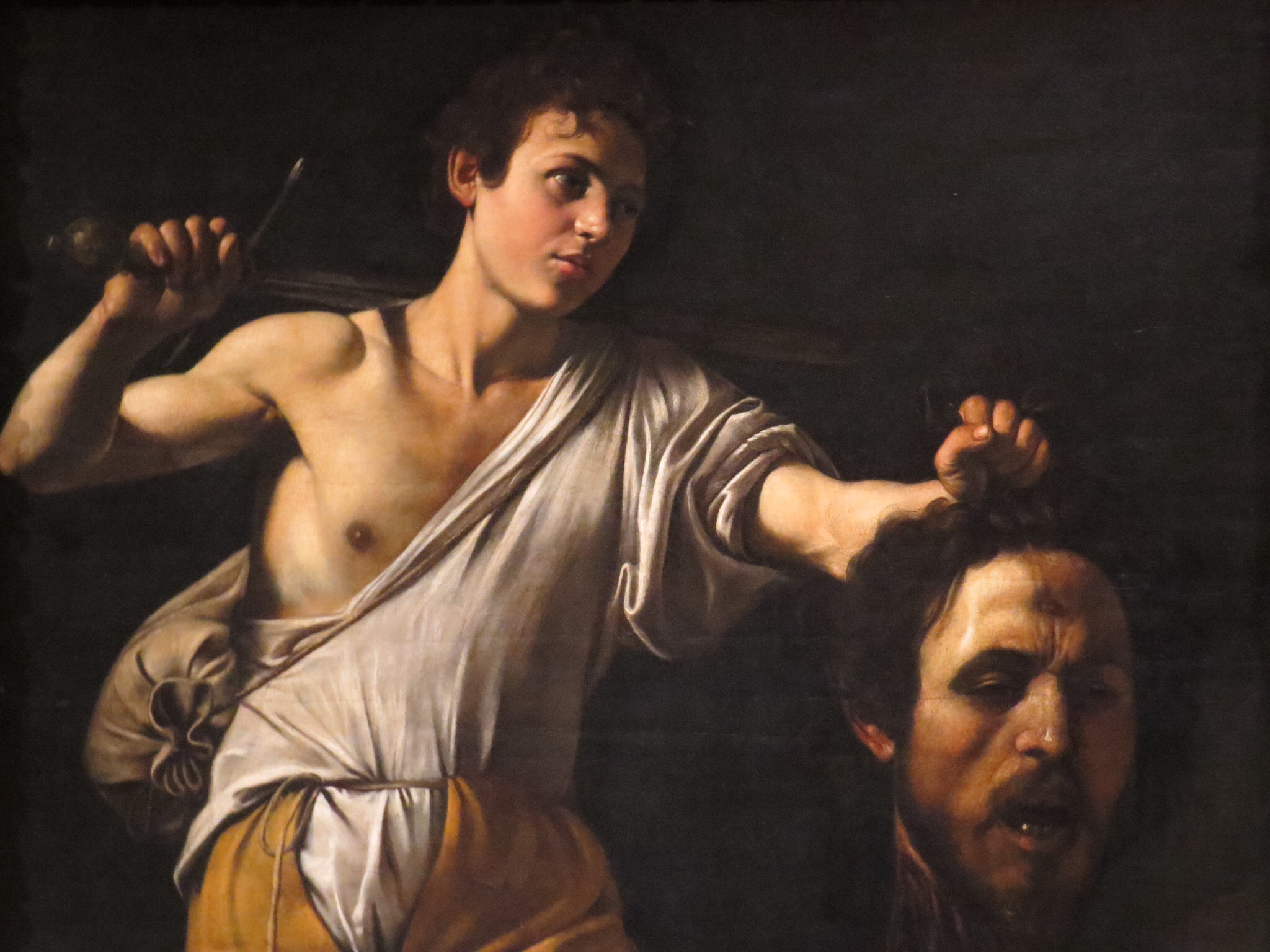
David with Goliath’s Head, Caravaggio
(Recognize Caravaggio’s muse and model from the angel painting in Berlin?
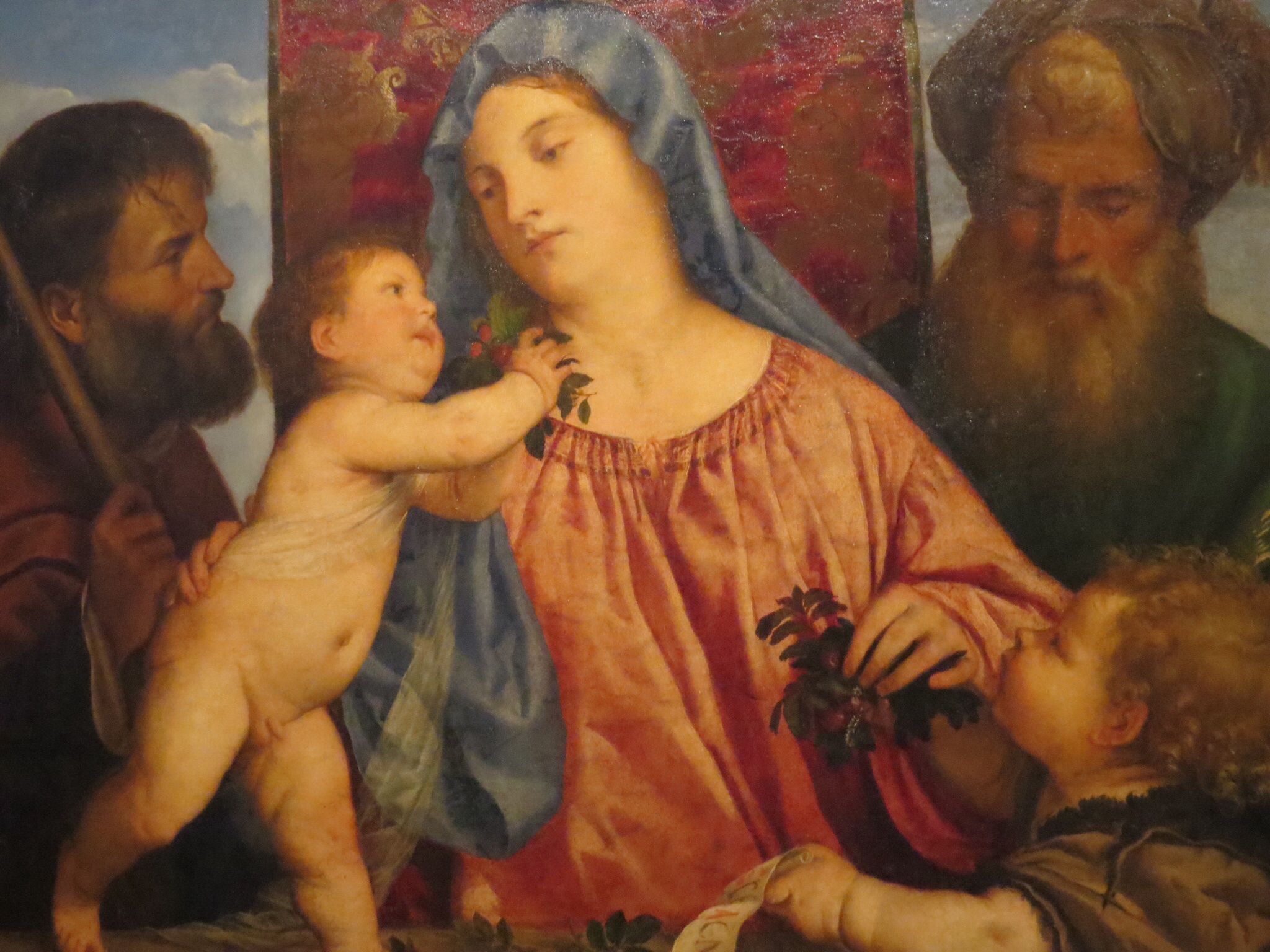
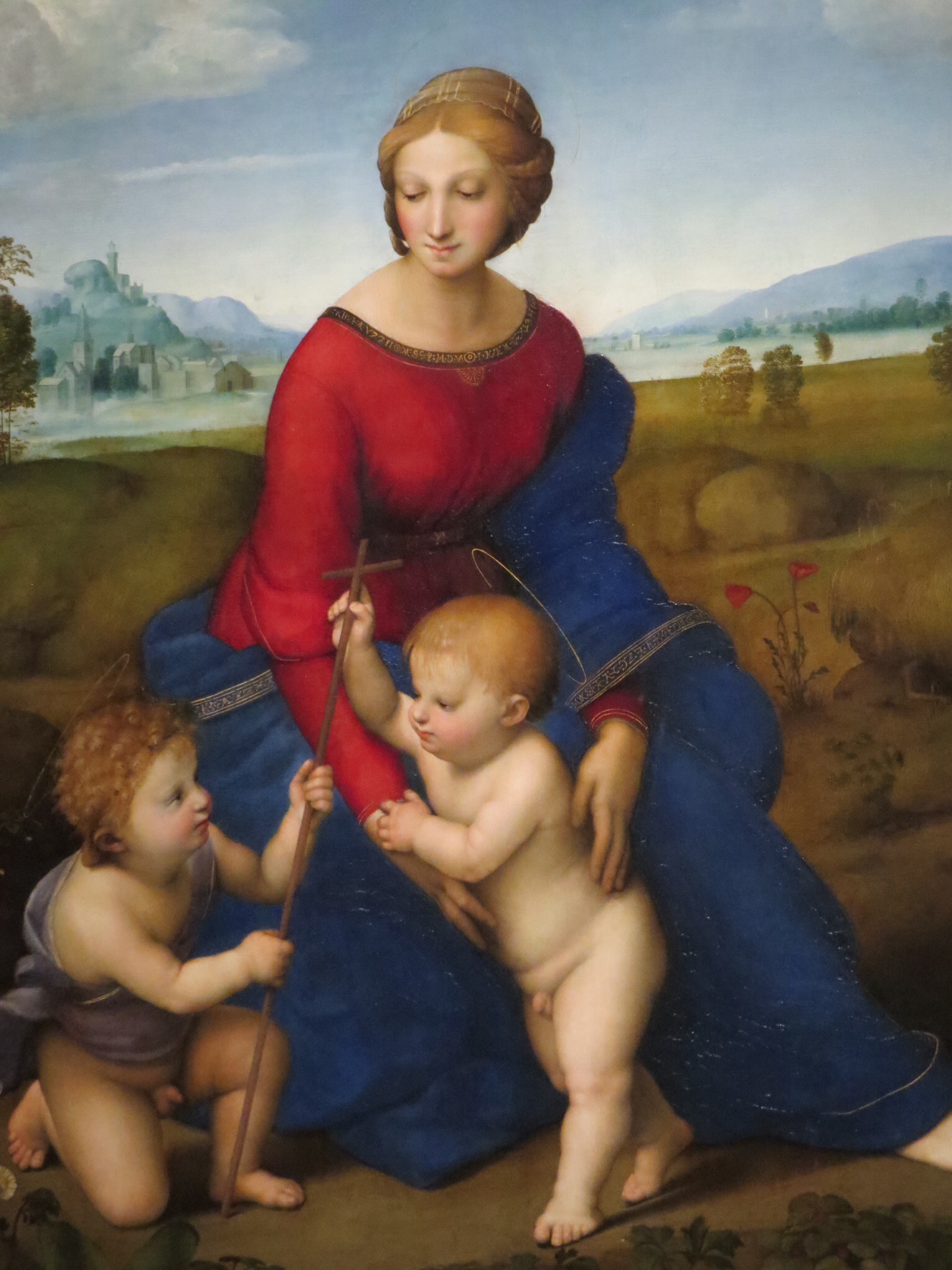
Crowning of Thorns, CaravaggioMadonna of the Cherries, TitianMadonna with the Pear, DurerRaphael
(So many painters have depicted Raphael’s foreboding and threatening scene: John the Baptist and Jesus as two sweet cherubs, John introducing Jesus to a toy-sized instrument of his future torture.)
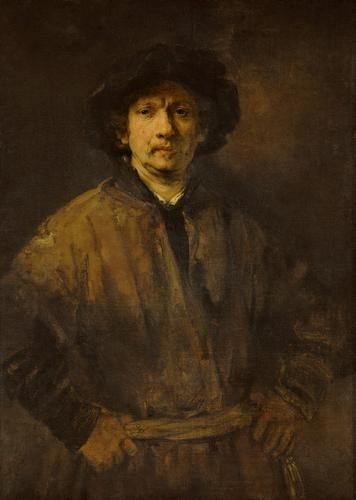
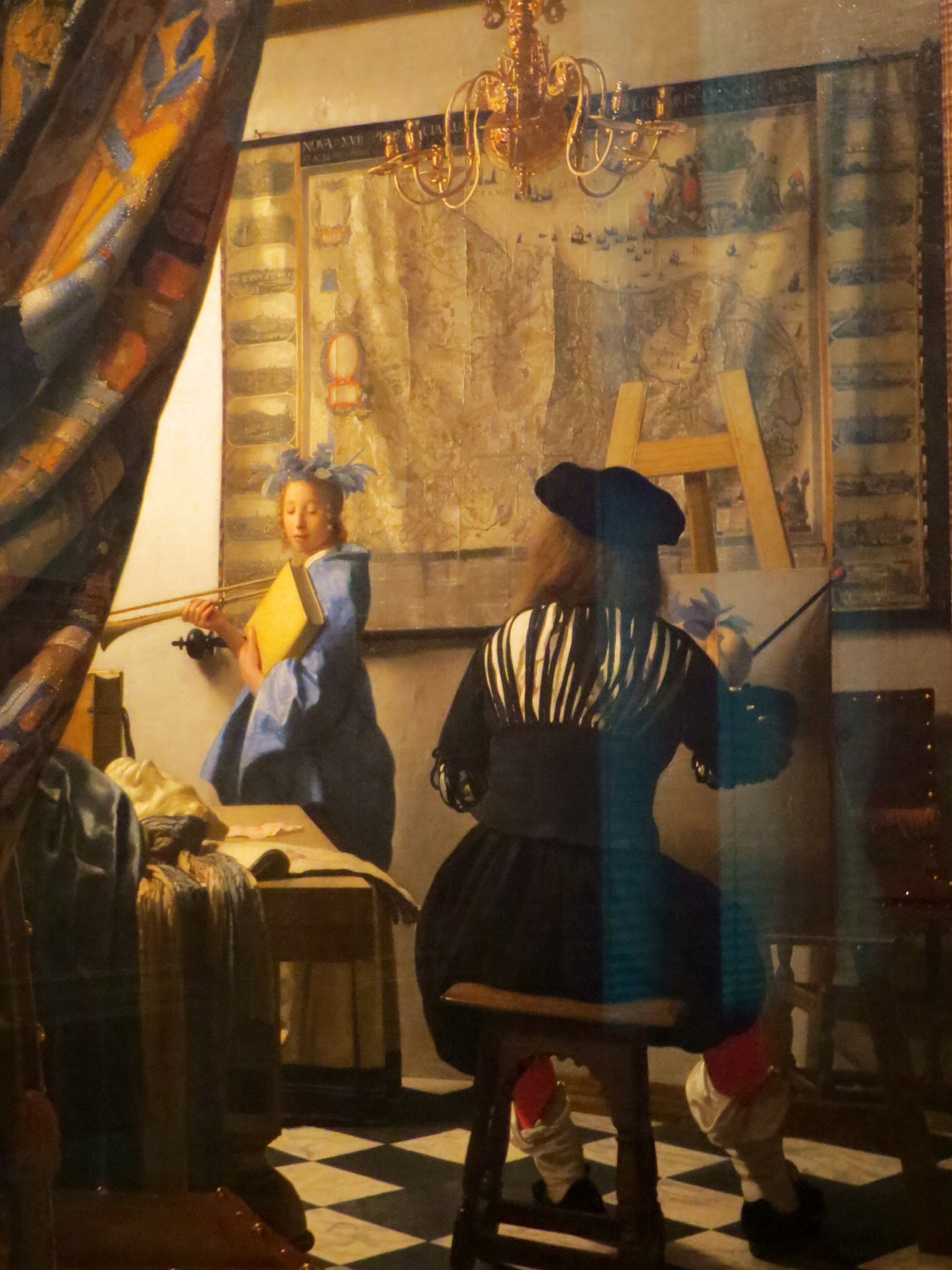
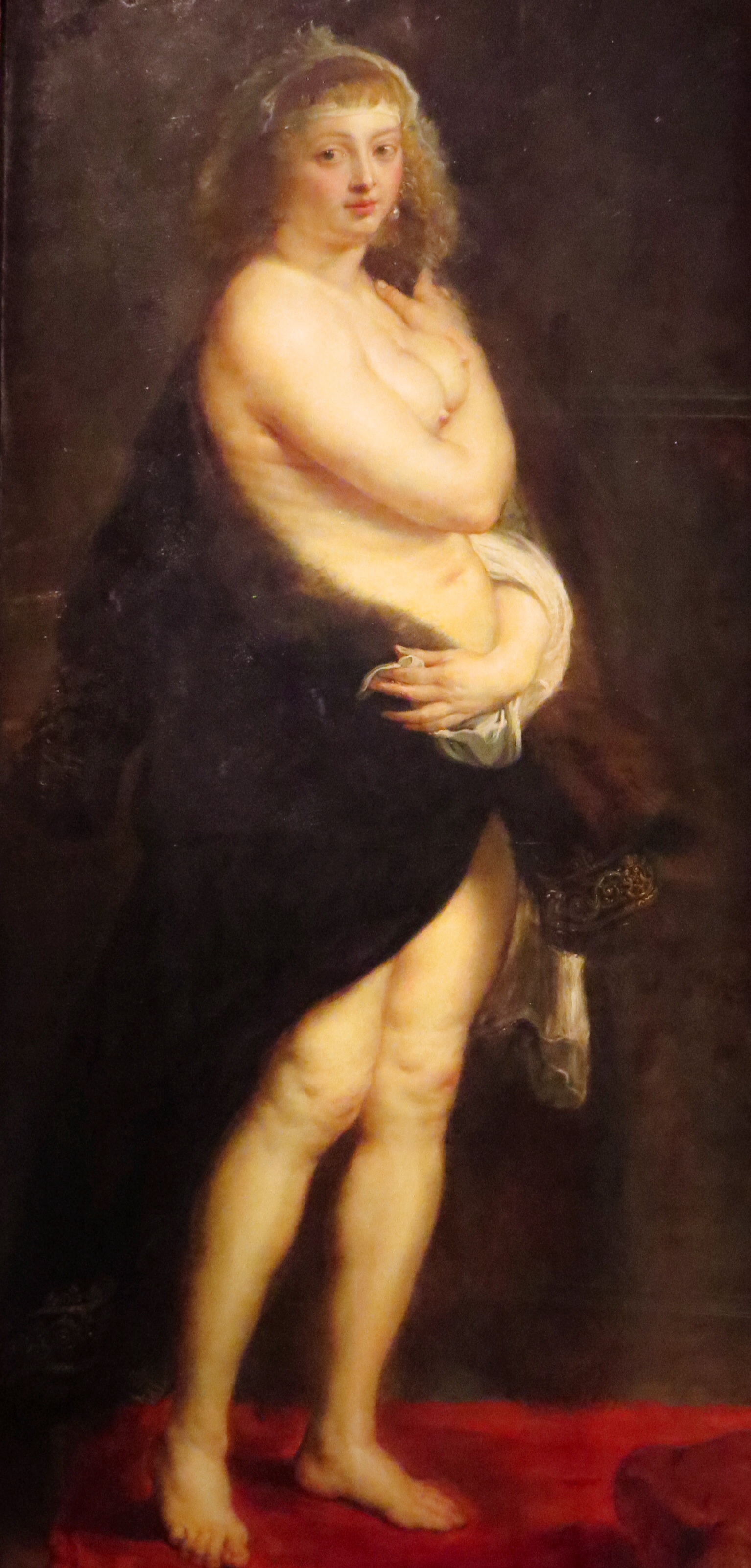
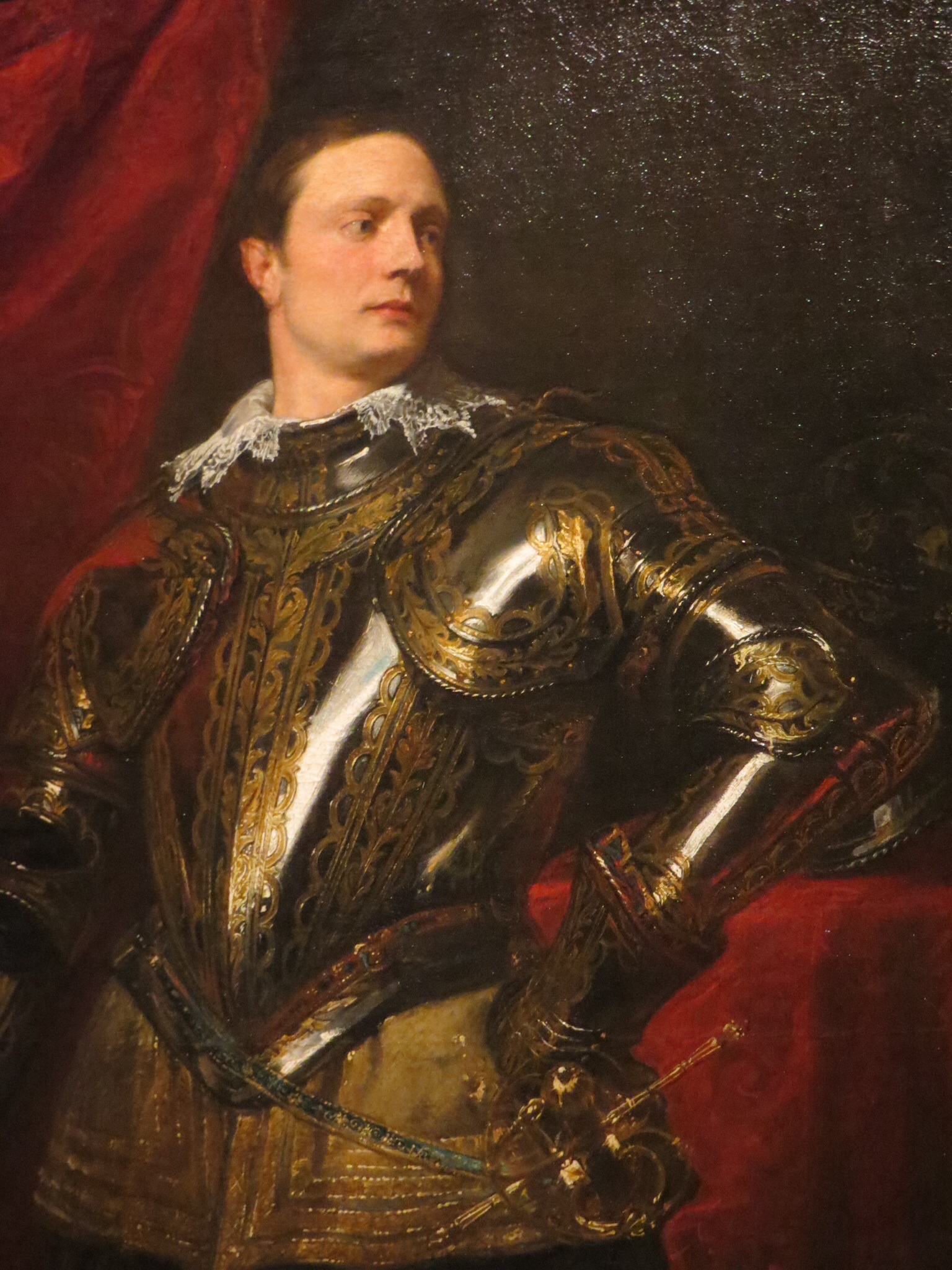
Self-Portrait, RembrandtThe Art of Painting, VermeerThe Fur, ReubensYoung General, van Dyck
Antiquities
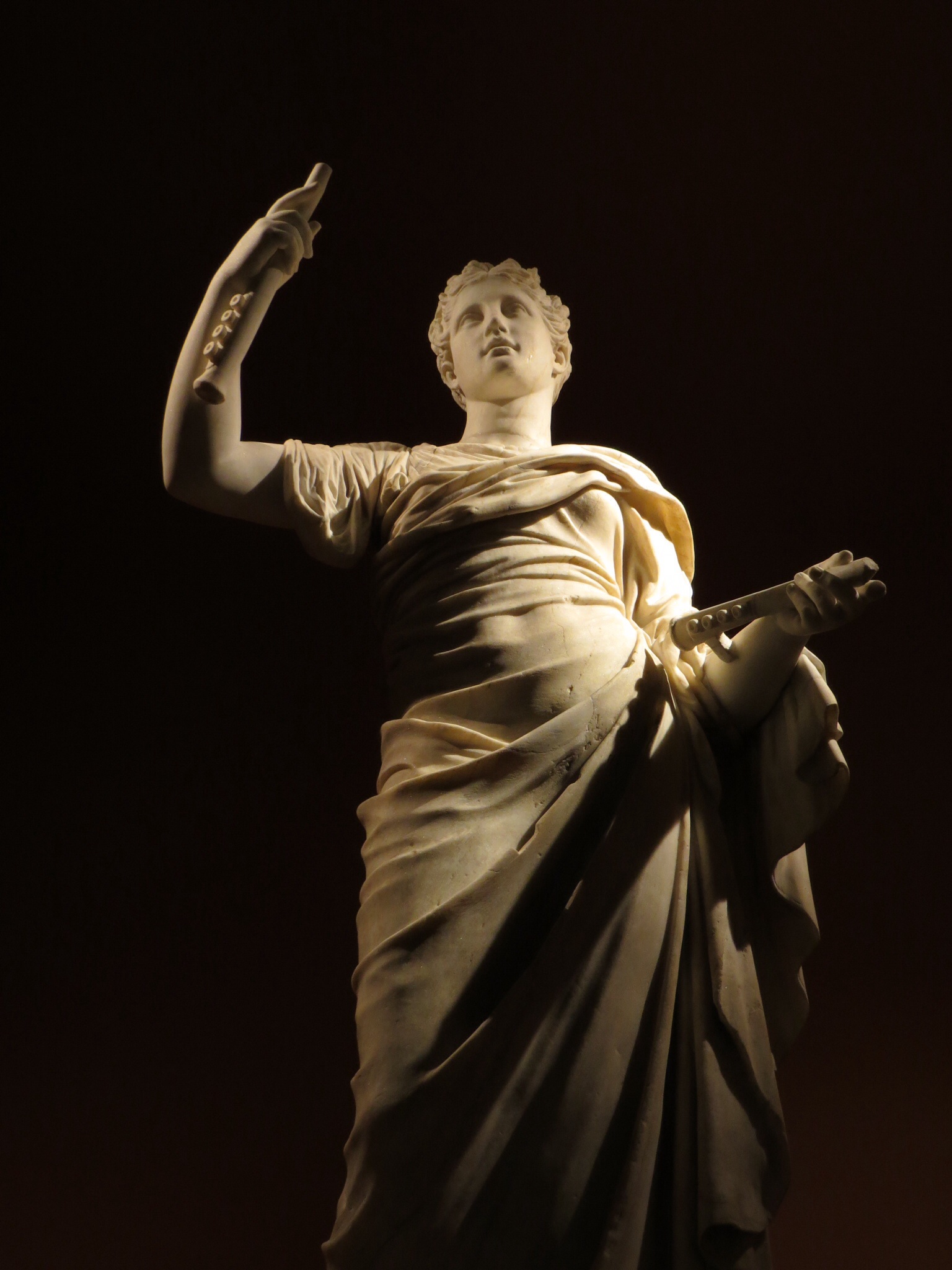
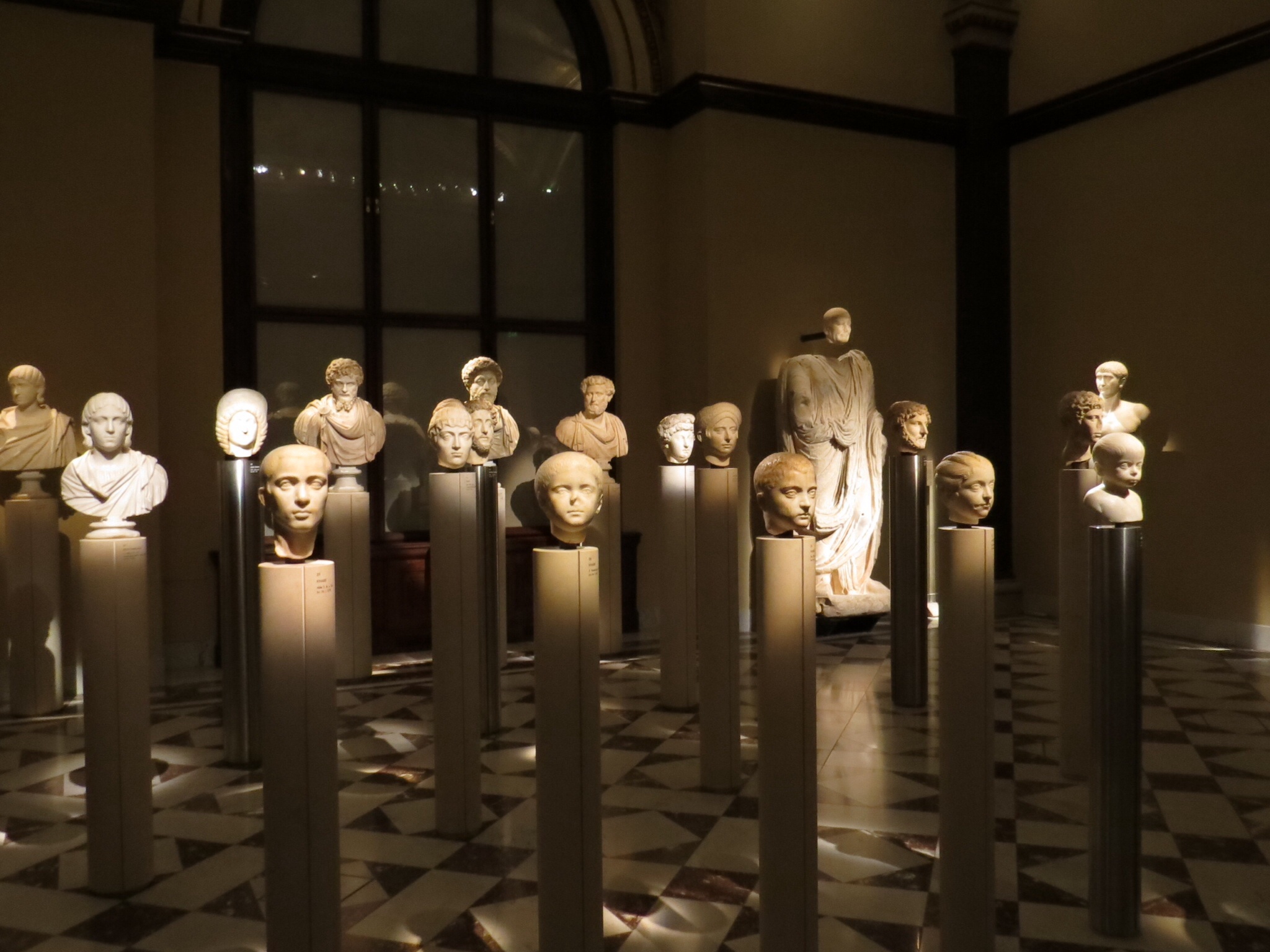
A couple of Roman exhibits especially impressed me, Muse, a late 4th C. AD stunning statue, and a dramatic display of Roman busts.
Schatzkammer
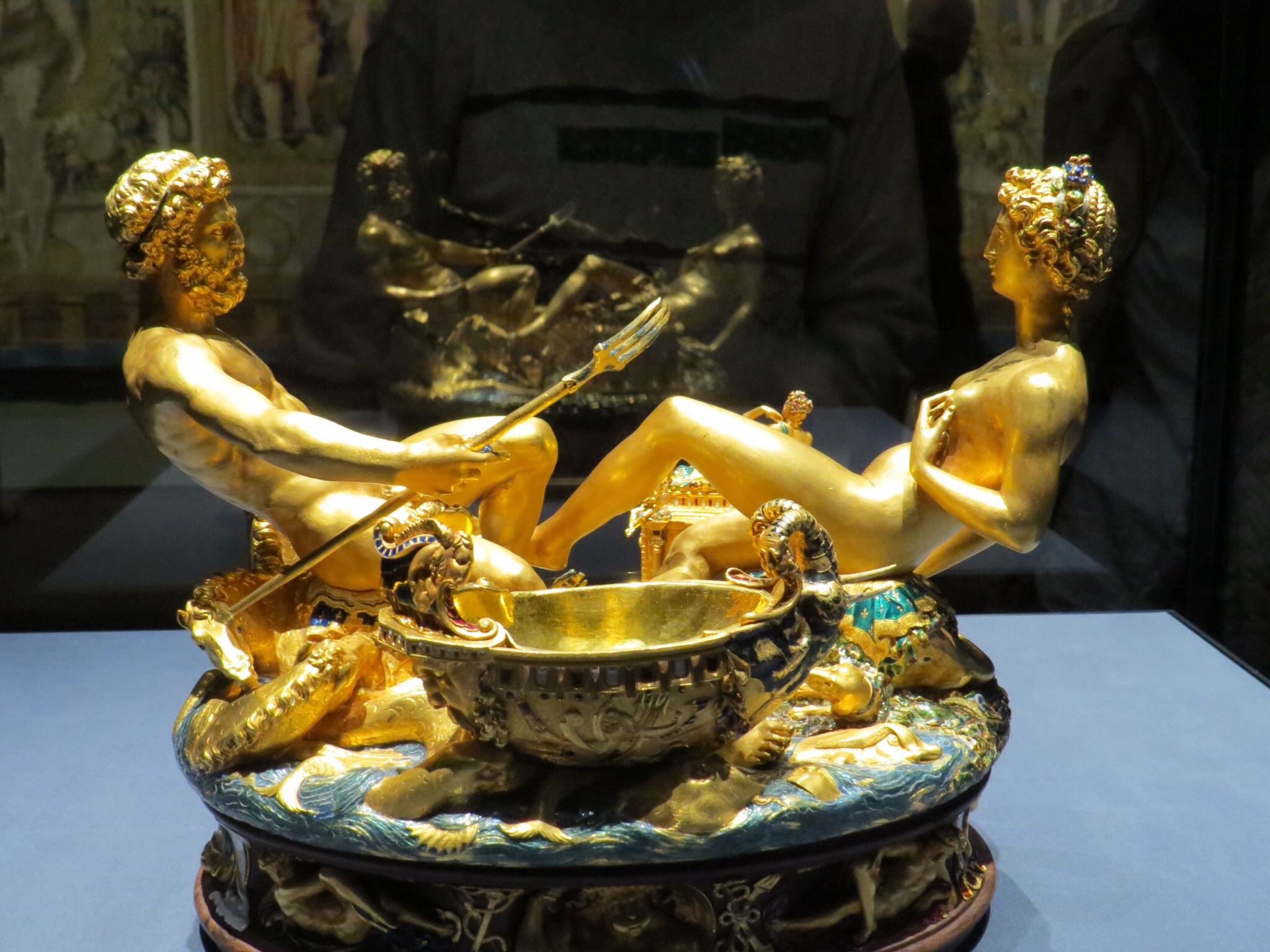
One of the museum’s most important objects, the Cellini Salt Cellar sculpture, made from gold, enamel, ivory and ebony by Benvenuto Cellini, was stolen on May 11, 2003 and recovered on January 21, 2006, in a box buried in a forest near the town of Zwettl, Austria. It had been the biggest art theft in Austrian history. Its theft is featured in an episode of the tv show, The Art of the Heist. Created in 1543 and representing the earth and the sea, this sexy sculpture is the sole remaining object by Cellini.
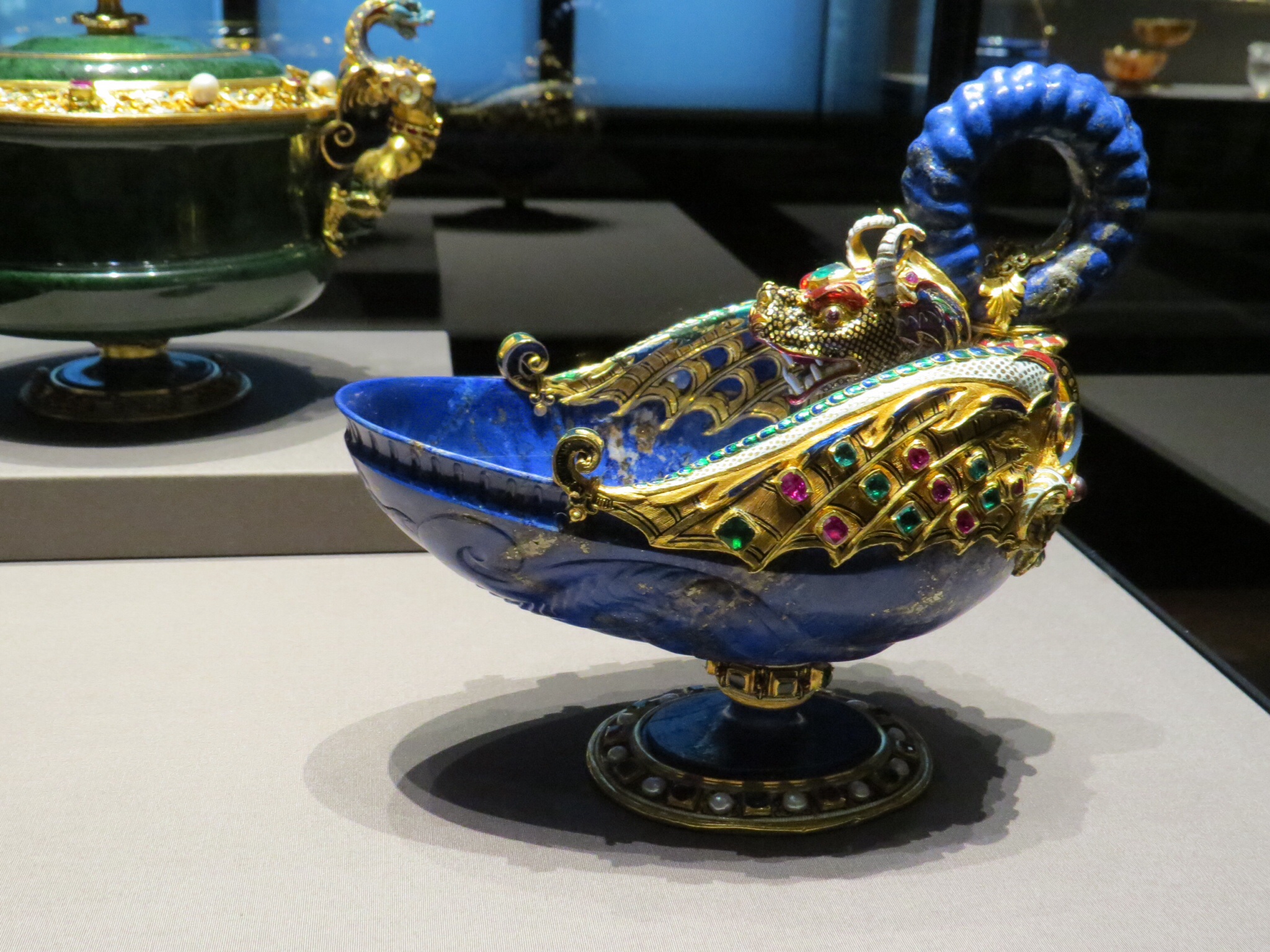
Other pieces are made from gold, precious gems, ivory and various priceless materials.
A great little 2012 film was made with the Kunsthistorisches as its backdrop and one of its characters. Museum Hours was reviewed by a Vancouver critic: “In Jem Cohen’s Museum Hours, an Austrian guard at Vienna’s Kunsthistorisches Museum finds himself compelled to talk to a Canadian visitor. This tiny gesture serves as the catalyst for one of this year’s most alluring and accomplished films.”
Beneath the Kapuzinerkirche lies the Imperial Crypt I visited earlier. I previously posted a few photos of the tombs of Maria Theresia and family, but there are tombs here of more recent emperors and empresses who also contributed to Vienna’s colourful and ultimately tragic history.
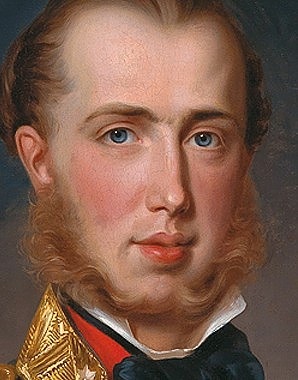
The body of Emperor Maximilian I of Mexico was repatriated here after his death by firing squad in Mexico in 1867. Younger brother of Franz Joseph I, he was part of Napoleon III’s grand scheme to create a Mexican monarchy, having invaded Mexico in 1861. However, Max I’s emperorship was not recognized by Mexico or the U.S. and ultimately France’s troops withdrew from Mexico, abandoning Maximilian. He remains in the hearts of the Viennese, as evidenced by the fresh flowers still placed at his tomb today.
Maximilian I
Franz Joseph I reigned for 66 years until 1916. His brother Maximilian’s death was only the beginning of family tragedy for this beloved emperor.
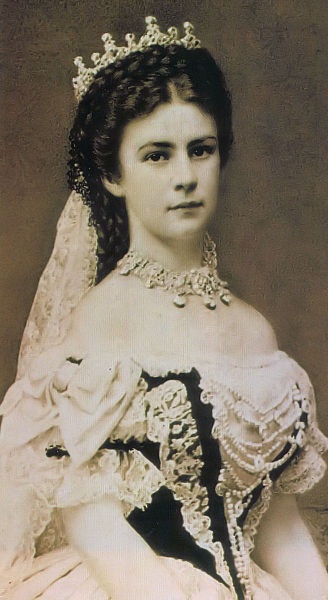
Born in Schonnbrunn Palace in 1830, he inherited the throne in 1848. He married Her Royal Highness Duchess Elisabeth Amalie Eugenie of Bavaria (Sisi, as she was fondly known by Austrians) in Augustinerkirche in 1854.
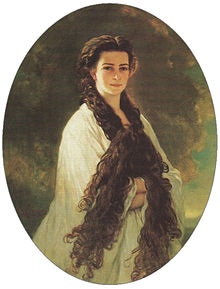
Considered a great beauty, Sisi created a sensation everywhere she went. In private, she was also depressive, anorexic, addicted to exercise and spent hours every day having her floor-length hair done and corsets tightened to emphasize her small waist. She slept little and instead studied languages, poetry, the classics and philosophy. She travelled extensively and spent little time with her husband in Vienna. Her health severely deteriorated and she withdrew from court life completely when her son Rudolf committed a murder-suicide in 1889. (Crown Prince Rudolf is interred in the Imperial Crypt.)
Photograph of Empress Elisabeth on her Coronation DayLater Portrait of “Sisi”
Close friend and cousin of Ludwig II of Bavaria (builder of Neuschwanstein Castle), did they commiserate re celebrity and court obligations, or did they share the mental illness that ran in their family? Sisi’s own father was peculiar, he had a childish love of circuses and travelled the Bavarian countryside to avoid the obligations and stiffness of court life.
At 1:35 p.m. on Saturday, 10 September 1898, travelling incognito due to threats on her life, Elisabeth and her lady in waiting, Countess Irma Sztaray were walking the promenade in Geneva, Switzerland on their way to the train station bound for Montreux. 25-year-old Italian anarchist Luigi Lucheni approached them, attempting to peer underneath the empress’s parasol. According to Sztaray, as the ship’s bell announced the departure, Lucheni seemed to stumble and made a movement with his hand as if he wanted to maintain his balance. In reality, he had stabbed Elisabeth with a sharpened needle file that was 4 inches (100 mm) long (used to file the eyes of industrial needles) that he had inserted into a wooden handle. When she collapsed, no-one knew what had happened, but by the time they carried her back to the hotel, the Empress was dead. She was returned to Vienna by a funeral train, and after a state funeral, was entombed in the Imperial Crypt.
By the early 1900’s, only one relative, nephew Franz Ferdinand, remained to succeed Franz Joseph on the Austrian throne. Franz Joseph didn’t like his nephew, or his wife Sophie whom Franz Joseph considered beneath the family’s station.
Franz Ferdinand & Sophie
In June, 1914, Franz Ferdinand and Sophie were in Sarajevo when a grenade was thrown at them. It missed them, but injured several others around them. The couple insisted on travelling to the hospital to visit the wounded, and en route, their driver took a wrong turn. Trapped on a small side street, their assassin caught sight of them and shot them both. Franz Ferdinand cried, “Don’t die darling, care for our children!” Franz Ferdinand died first, and Sophie, shot in the abdomen, died shortly thereafter. They left two sons and a daughter. The objective of the assassins was for slav nations to break off from Austria-Hungary and form an independent nation. The masterminds behind the assassinations ranked high in the Serbian military, including the Chief of Serbian intelligence; several were tried and three of the high-ranking conspirators were executed. But this was not enough to appease Austrian leaders. Within a month of the murders, Austria-Hungary declared war on Serbia, invoking various treaties and alliances, and triggering World War I.
Franz Joseph I did not attend the funerals of Franz Ferdinand and Sophie and they are not buried at the Imperial Crypt; their bodies are interred at their castle at Artstetten.
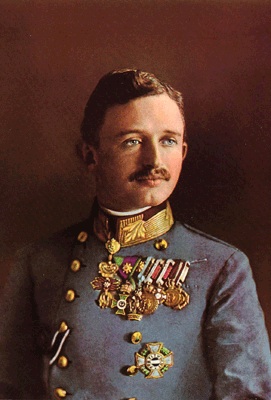
By the time Franz Joseph I died in November 1916, he believed the break-up of his empire at the end of the war was inevitable. His great-nephew Karl I assumed the throne until the end of the war and the end of the empire in 1918. Karl I and his wife were exiled to the Island of Madeira and within four years at age 34 Karl was dead (from a cold that developed into pneumonia). He has since been beatified by the Vatican for his faith and his efforts to end WWI. Numerous attempts to have his remains moved to the Imperial Crypt have failed. Franz Joseph I, Austria’s last great emperor, was the last emperor interred in the Imperial Crypt in the Kapuzinerkirche in Vienna.
Today’s plans were tweaked, and officially began with lunch.
Glacis Beisl, the perfect place to start. A cosy backdoor kind of restaurant where you feel at home among locals eating locally-sourced Austrian food. The autumn chill in the air made the pumpkin soup, laced with roasted pumpkin seeds and creme fraiche, perfect. The waiter frowned when I eagerly ordered wiener schnitzel (a tourist dish, apparently) and I should have paid attention. Instead, Yes, I said. When a large dinner plate of deep-fried meat garnished with a single lemon wedge arrived, I should not, therefore, have been surprised…. A warm, crunchy apple crisp to follow, was delicious.
Having abandoned several museum plans for the day, I headed out to explore the city’s amazing churches. All of these churches are Catholic, and all in the centre of Vienna within a short walk of one another. These are just a smattering of the countless beautiful churches in Vienna. Russia’s onion domes have followed me here – the Russian Orthodox Church does not own the rights, apparently. In all the cities I’ve been to, I’ve enjoyed the dialogue that goes on between the spires, cranes and modern towers in the landscape.
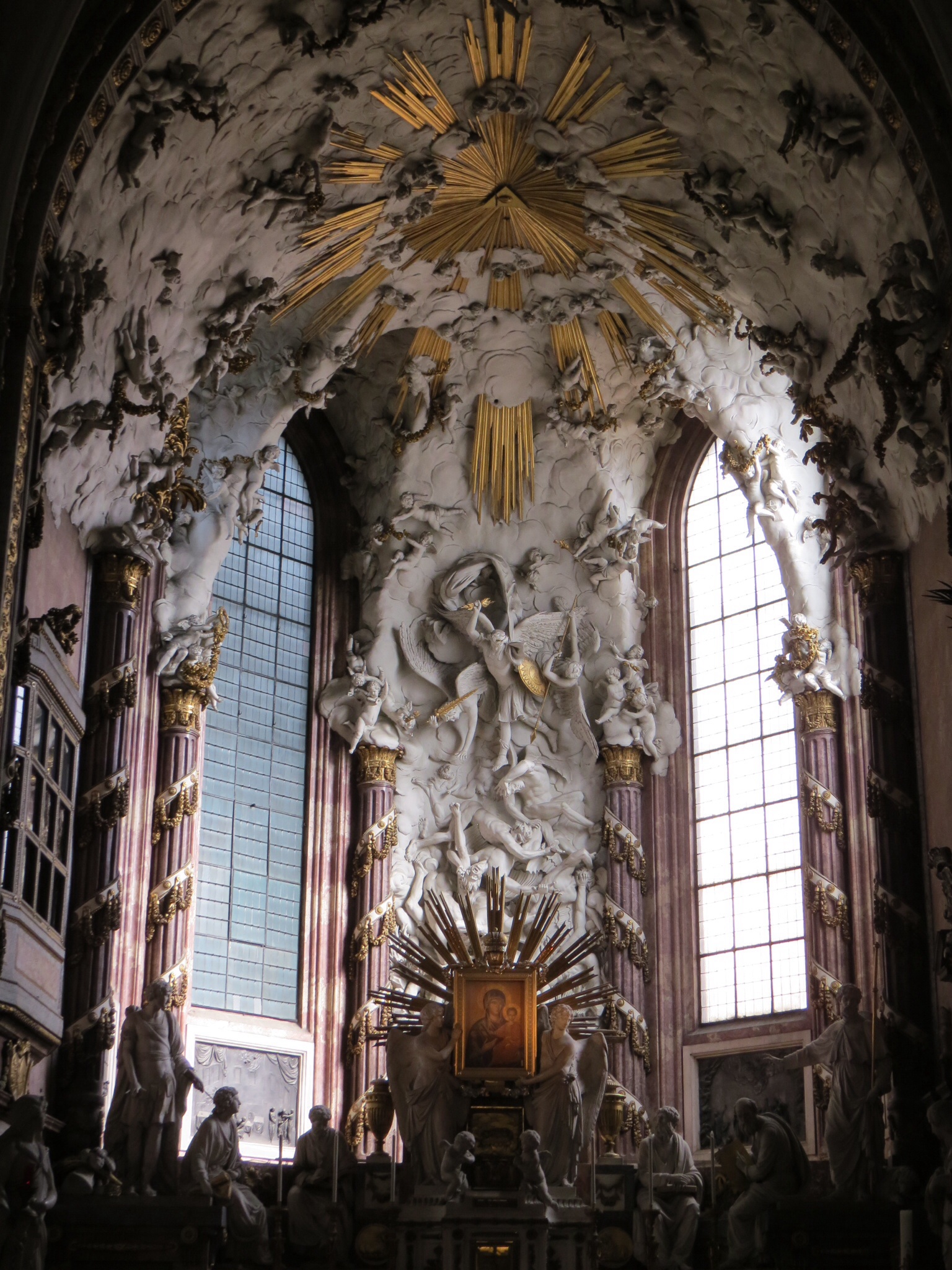
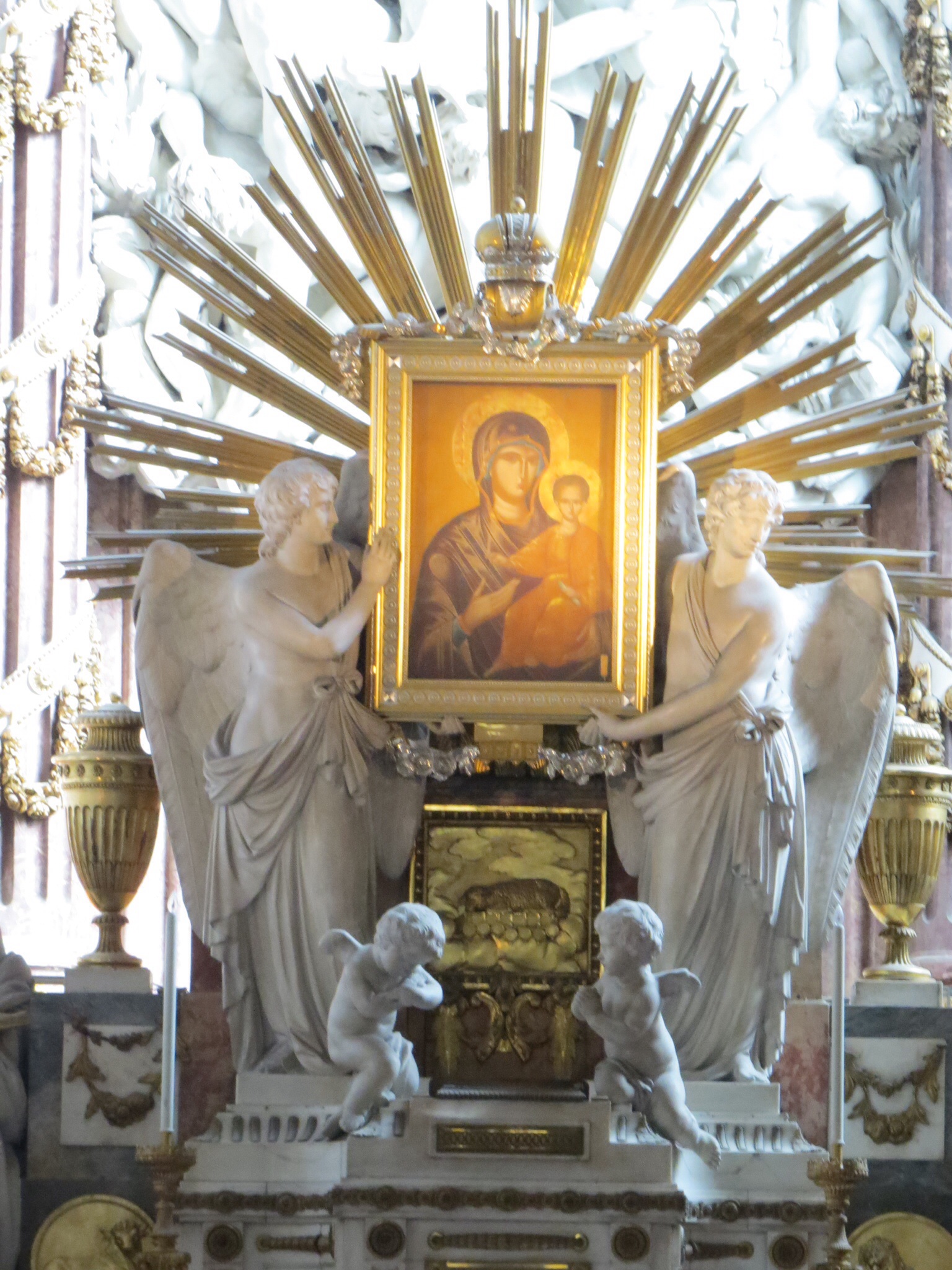
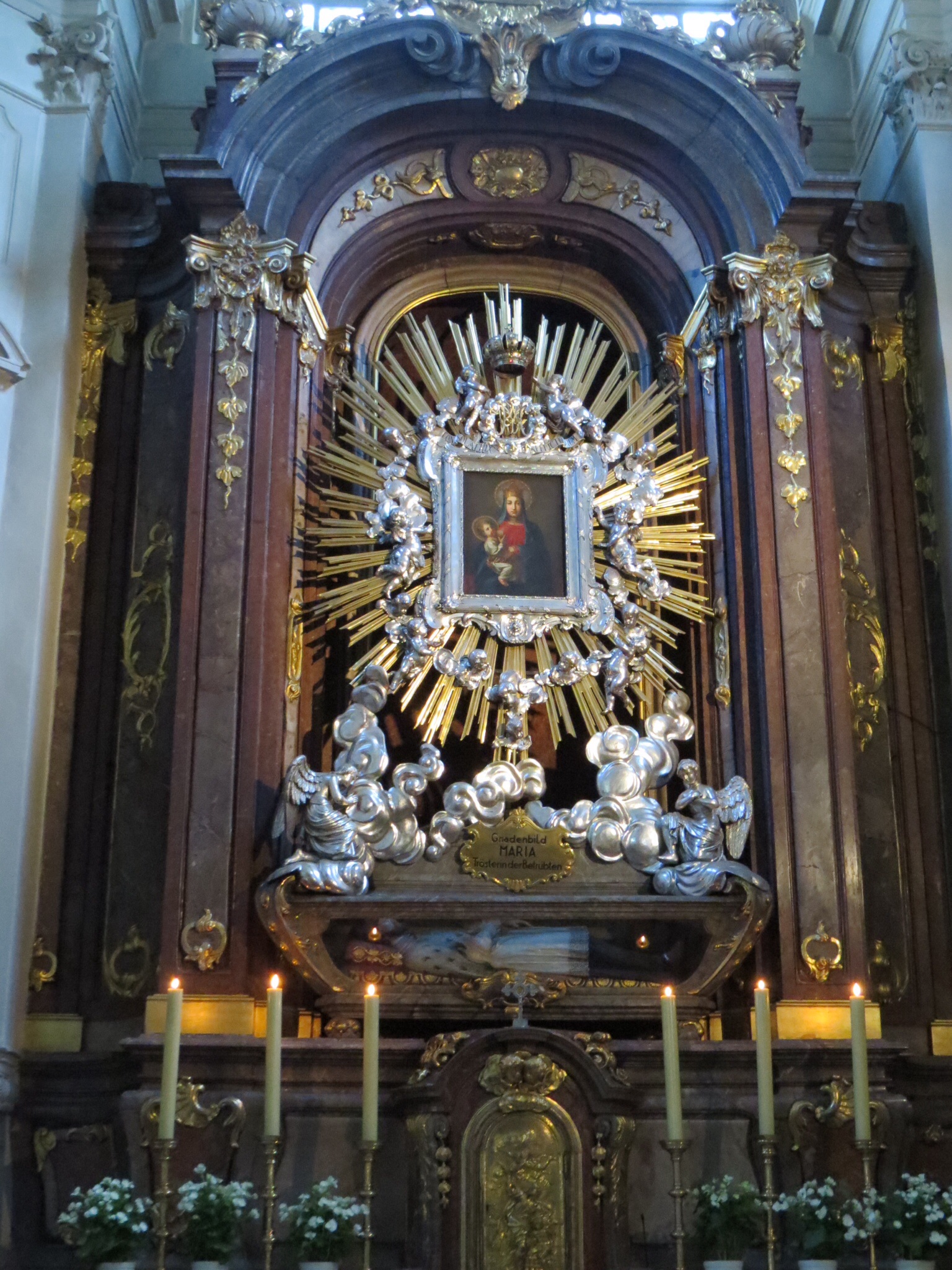
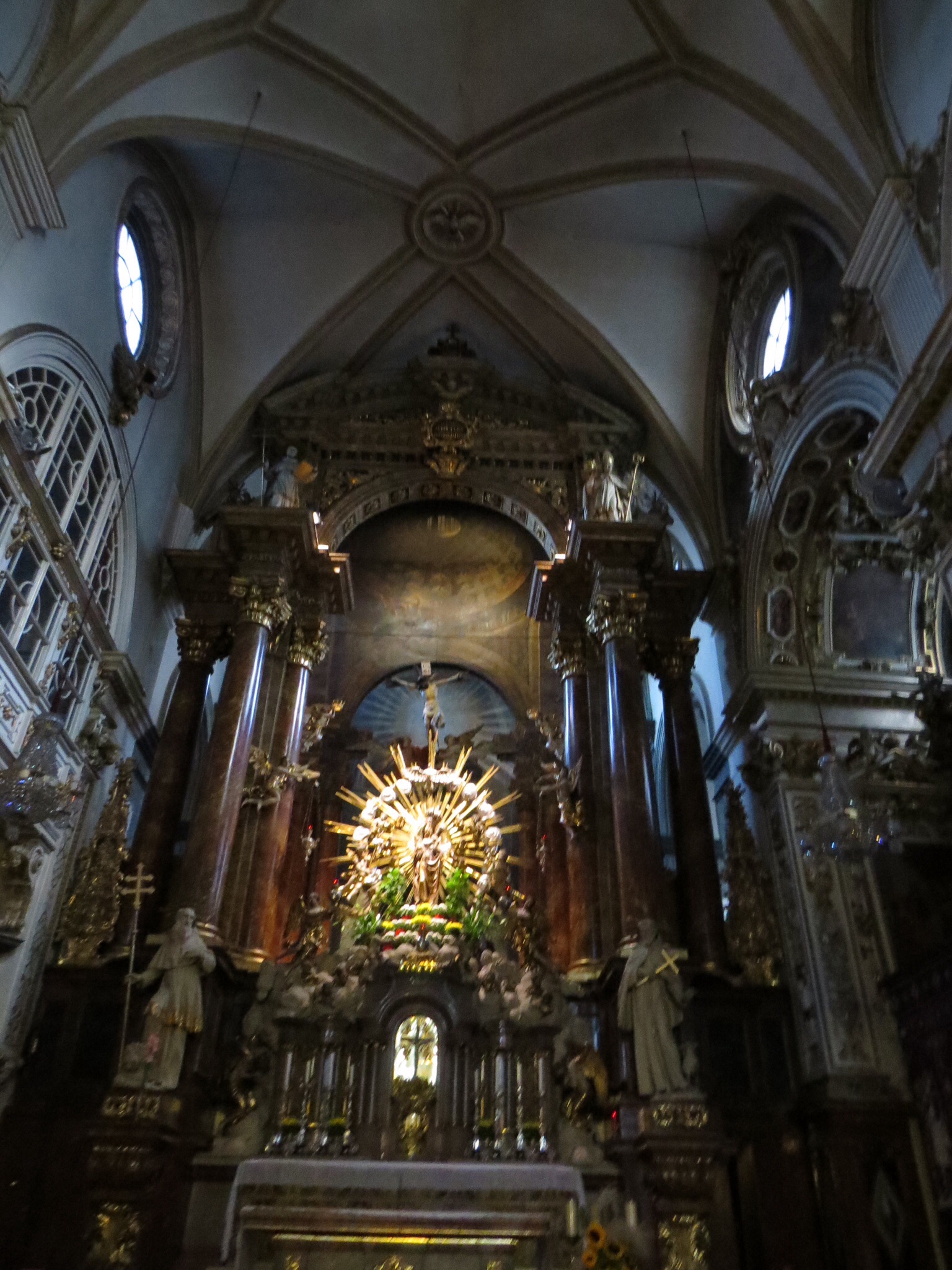
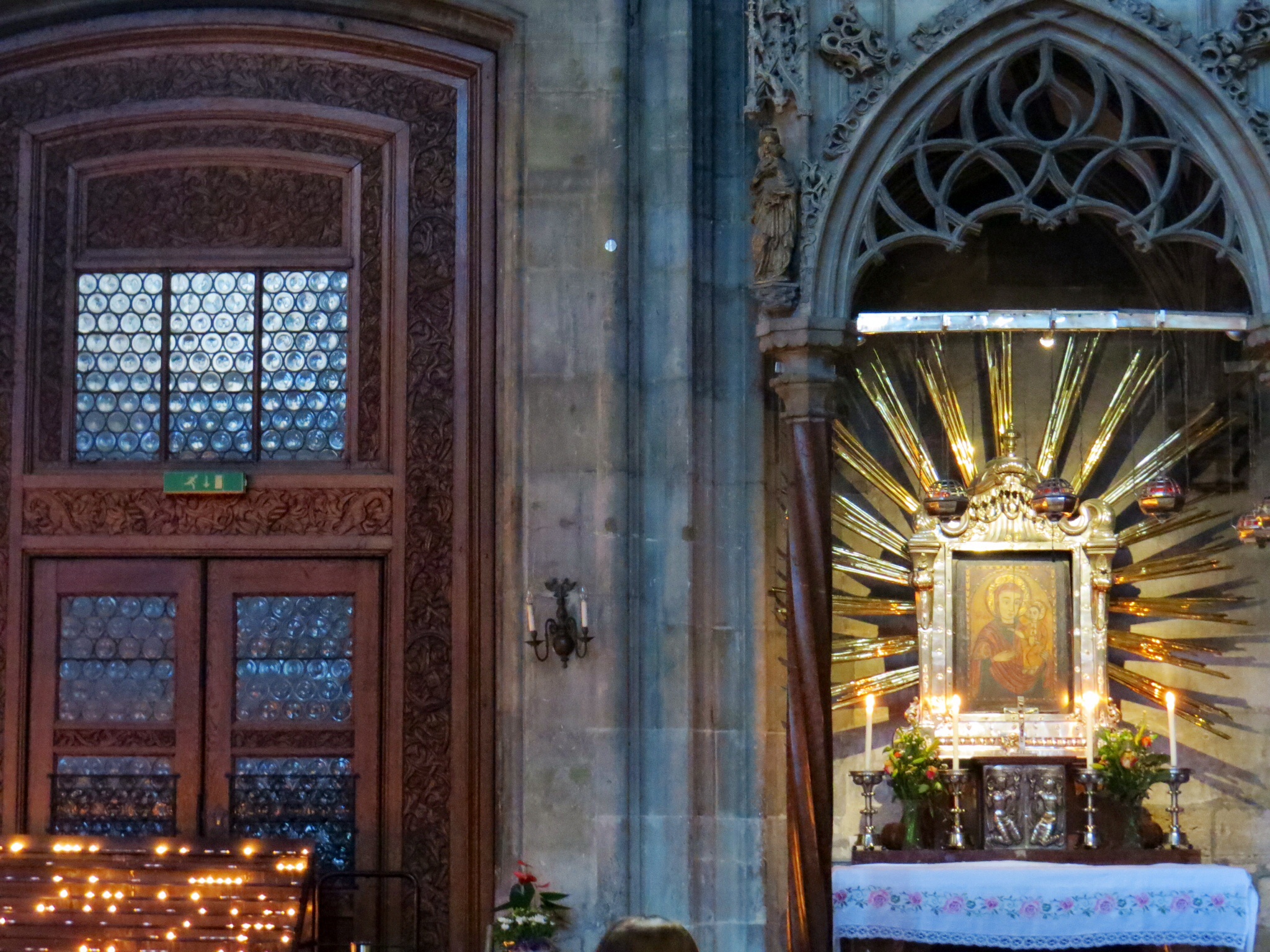
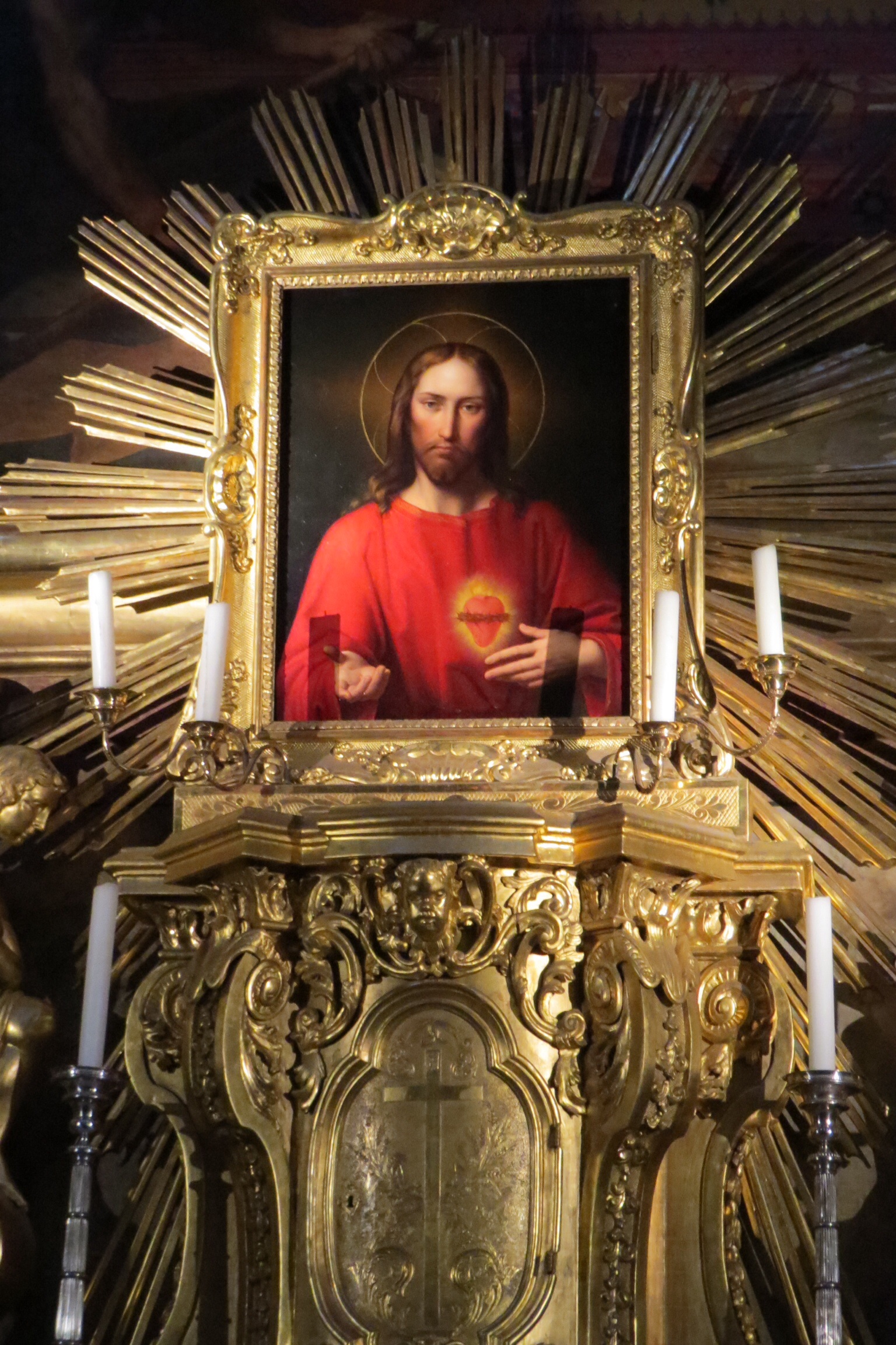
Every city has its own signature, and in the Viennese churches, the motif of the monstrance was everywhere. The word jangled vaguely around in the back of my mind and I looked it up to confirm – the monstrance is a decorative, usually sunburst patterned, vessel used to carry the “host” – the communion wafer – during Catholic services.
In the Catholic church, the bread in the monstrance is believed to go through “transubstantiation,” meaning that the bread literally becomes the body of Christ, it just doesn’t change its outward appearance. This notion bothered my little atheist mind and I had to delve deeper. To demand this leap of faith from the symbolic to the “transubstantiated” demands too much from the faithful, in my mind. Aha, cries the Church, we’ve really got them hooked now, they defy what stands right before them! A modern artist, Michael Craig-Martin, created an installation for the Tate Modern which I think challenges this concept beautifully:
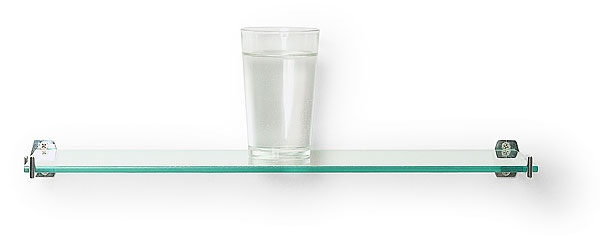
An Oak Tree is a conceptual art installation consisting of a glass of water, which the artist declared he had turned into “a full-grown oak tree without altering the accidents of the glass of water.” Craig-Martin is claiming that he has changed the substance but not the appearance. The text he included as part of his work states: “It’s not a symbol. I have changed the physical substance of the glass of water into that of an oak tree. I didn’t change its appearance. The actual oak tree is physically present, but in the form of a glass of water.” Ok, he’s not God. one could argue, but still….
So, if you believe the glass of water is an oak tree then I guess you can believe a cracker actually is the human body of a 2000-year-old man that looks like a cracker. This is a much further stretch than a belief in God or spirit, wouldn’t you say? In any event, the monstrance itself is beautiful and the artists decorating Viennese churches have adapted it spectacularly.
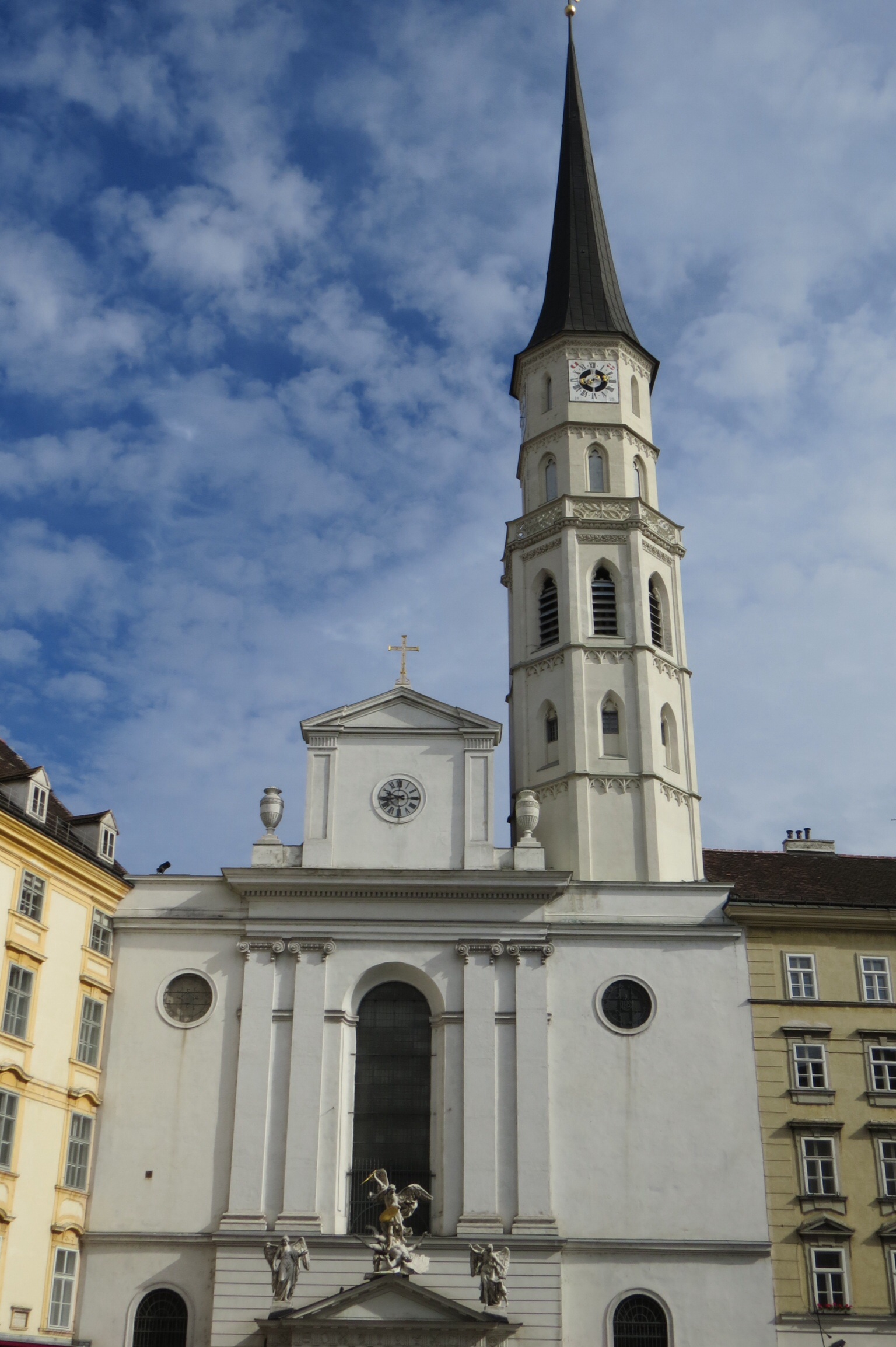
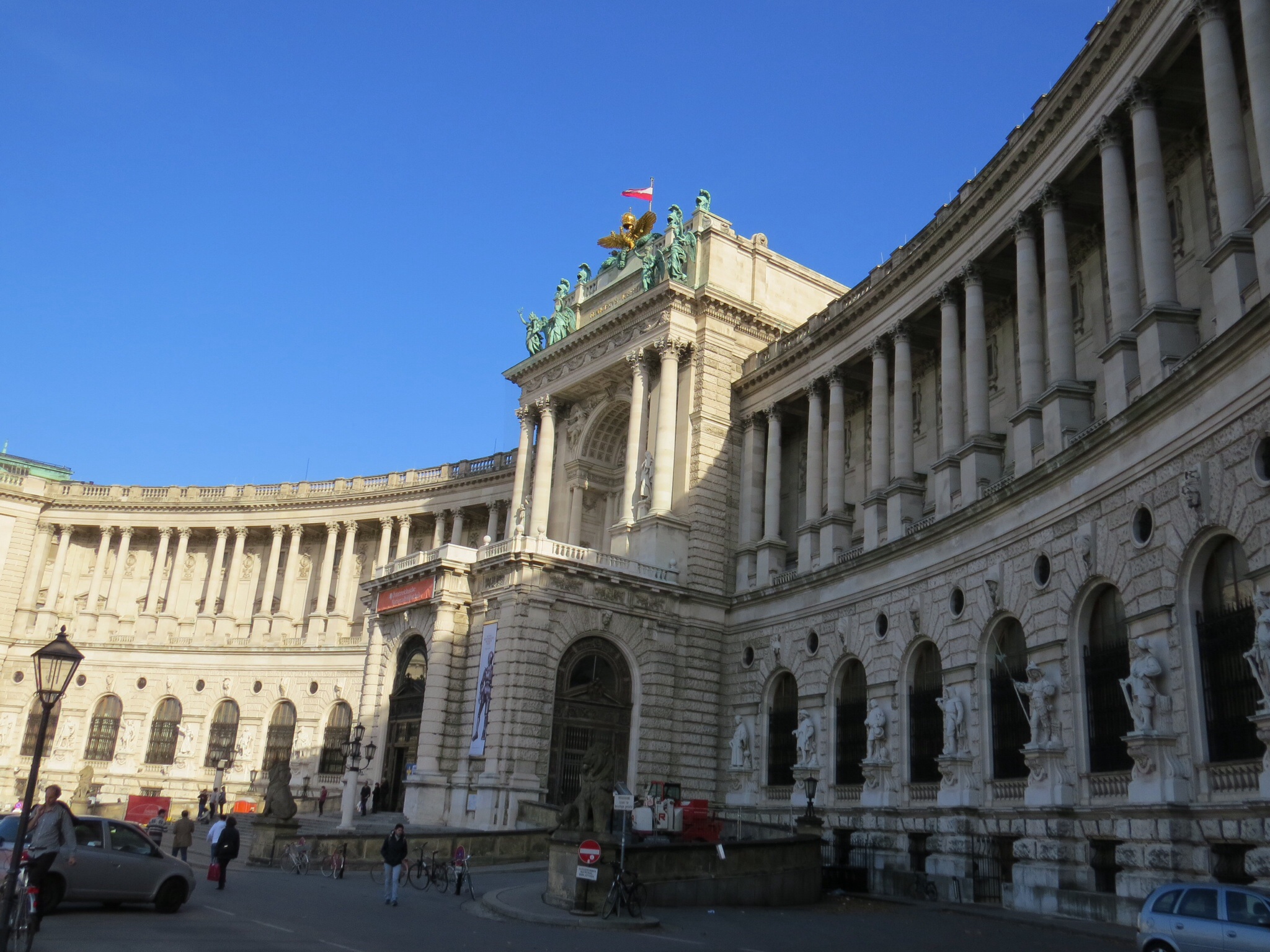
The first church I visited was Michaelerkirche, next door to the Hofburg Palace, the imperial “Winter Palace.” St. Michael’s Church, built in around 1220 AD, was built in the Romanesque style. Appropriately, just outside its door a Roman ruin was discovered and is being lovingly restored. Mozart’s Requiem was first played here; imagine hearing it here. (Mozart’s home where he wrote this on his deathbed is just a 10-minute walk down the street. Although Mozart wrote this for an anonymous patron, he would have known he himself was dying, he would have realized this was his last. His faithful student, to critical praise now, finished the Requiem after he died.) The Church is known for its catacombs which house some 4,000 former wealthy Vienna residents. Some have mummified and are displayed with open coffins. I couldn’t partake because of the service, and I’m not sure I would have had the stomach for it in any event.
Roman ruinHofburg Palace
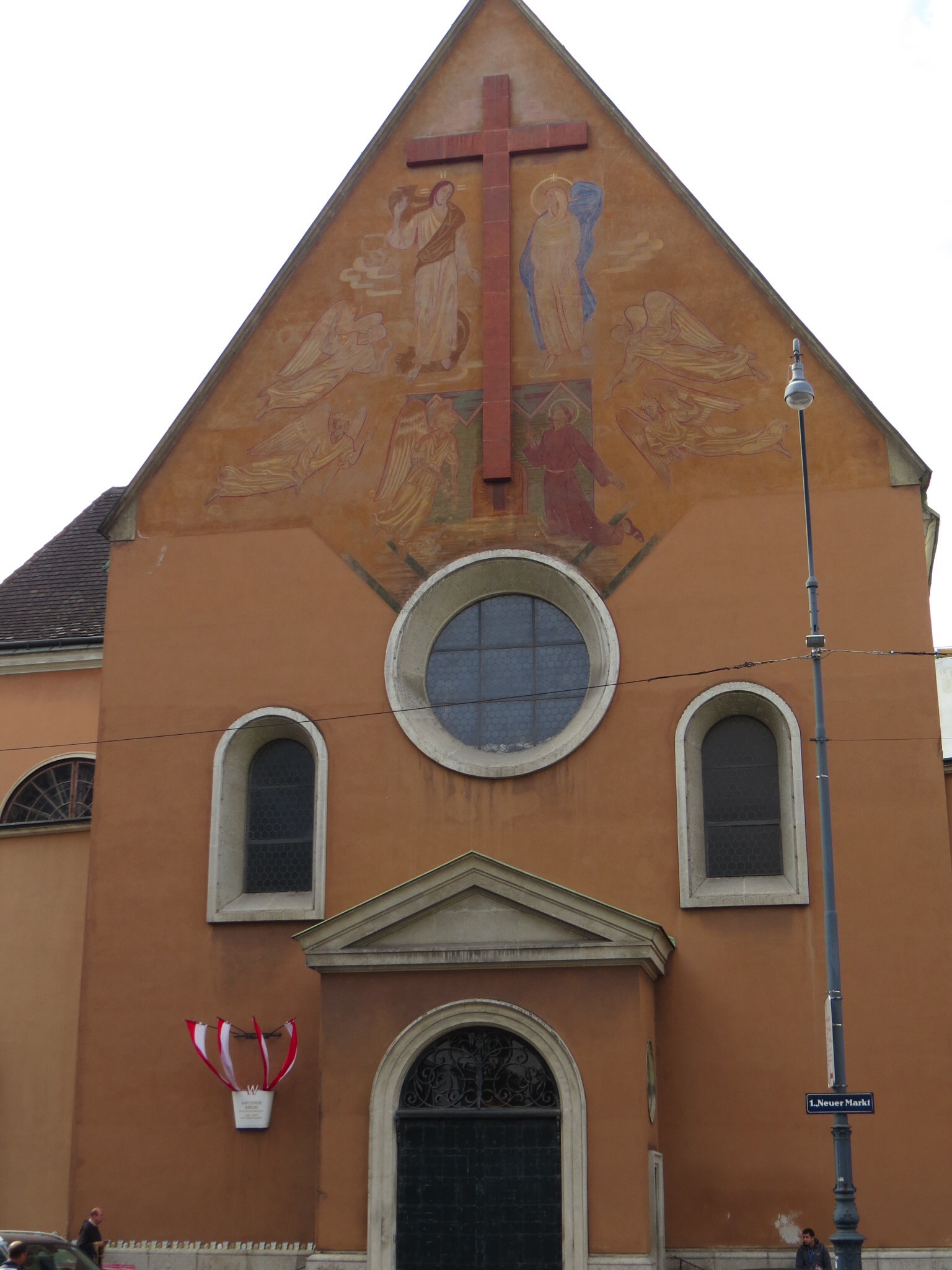
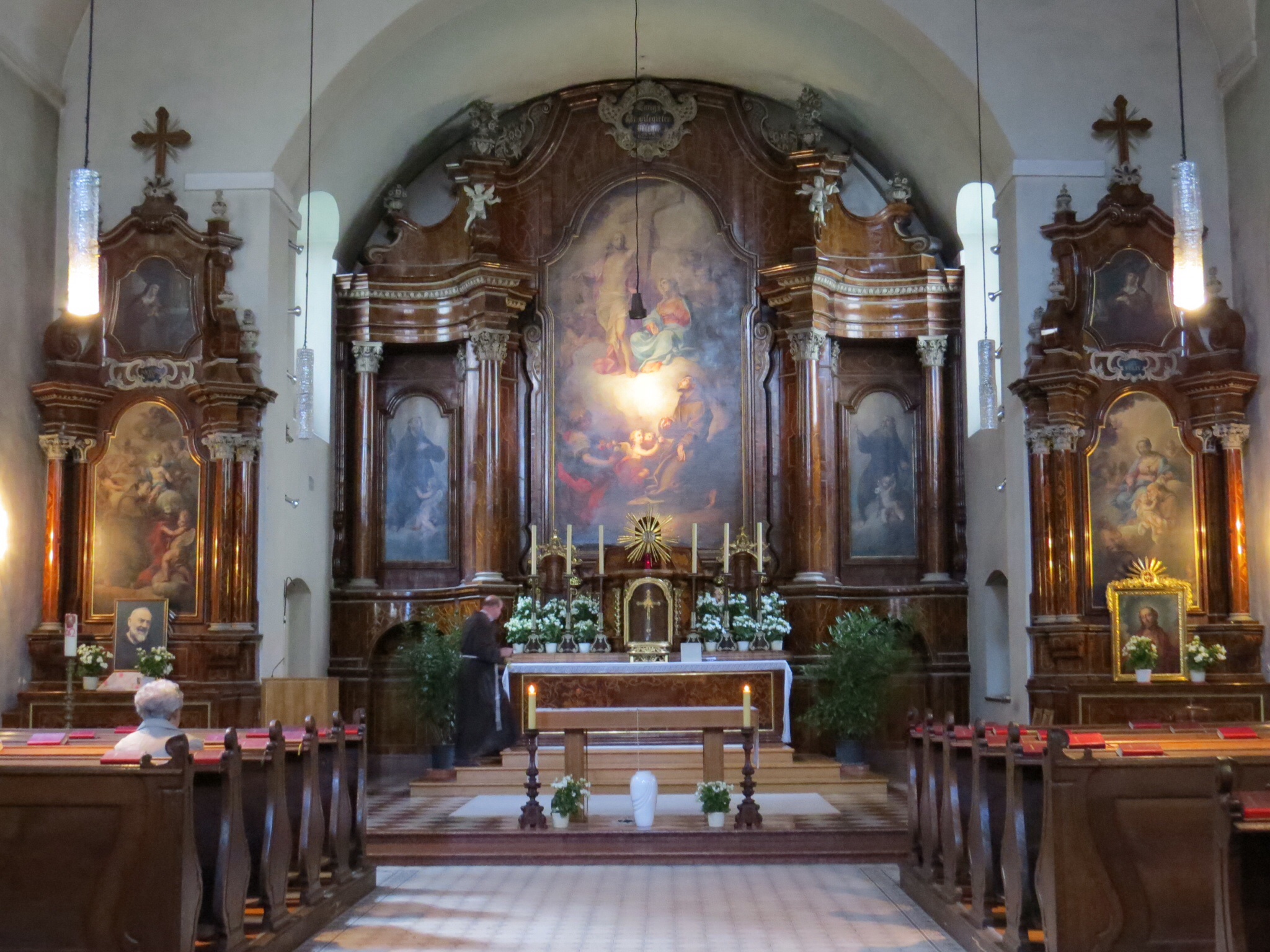
My next stop was the Kapuzinerkirche (Capuchin Church, whose monks wear brown robes with cream-coloured caps and in Italy gave cappuccino its name). I headed straight for the Imperial Crypt in the dark, quiet and slightly eerie basement. More on that coming soon. Meantime, the Capuchin Church, upstairs, is beautiful, too. Built in 1632.
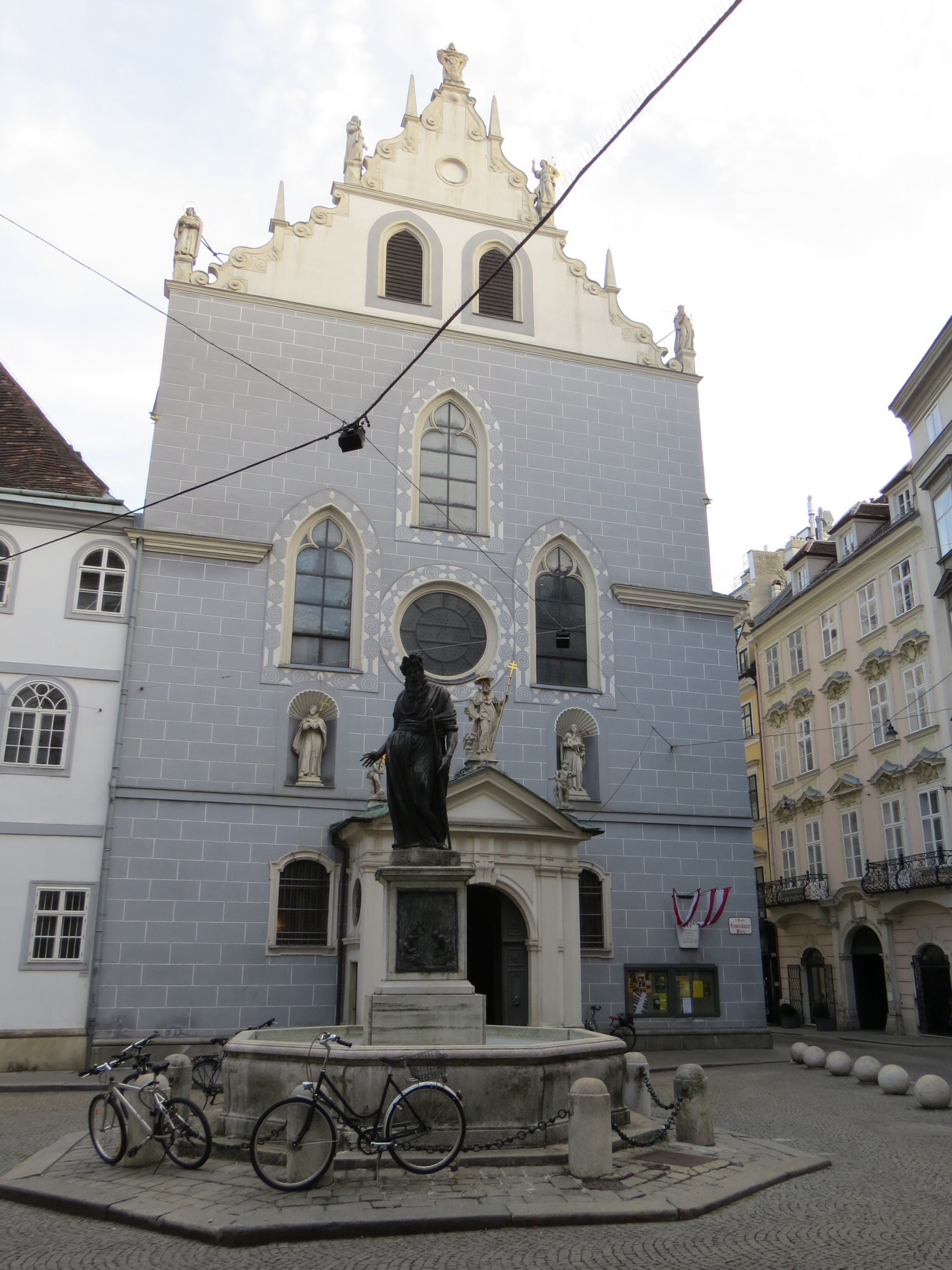
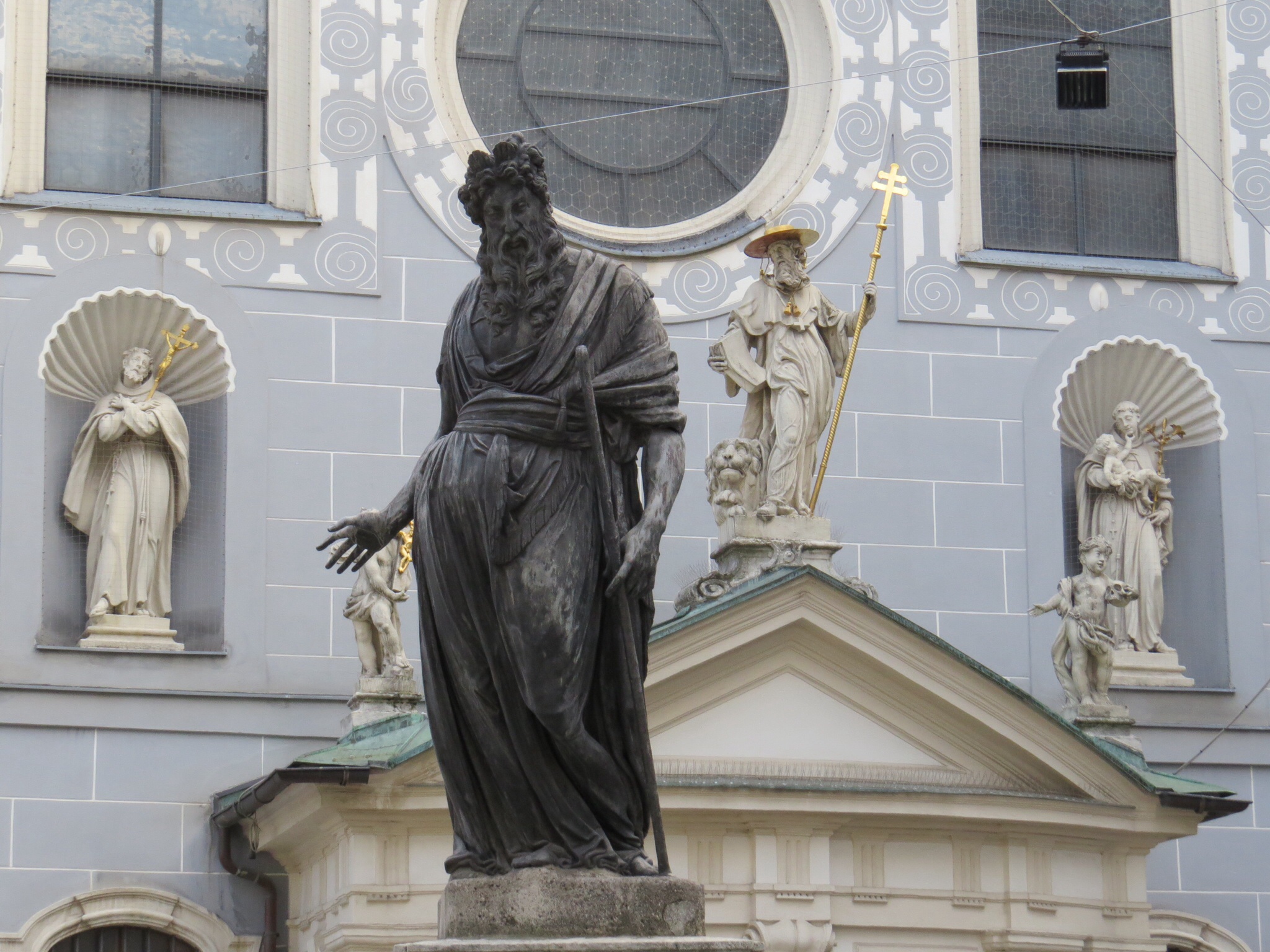
Built in 1603, Franziskanerkirche, also known as Church of St. Jerome, is unusual because its exterior is Renaissance but its interior Baroque. Outside the Church in the charming little square lives a statue of Moses. Nearby, on the Church is a statue of St. Jerome, who is depicted as a Middle Ages cardinal. About 1,000 tombs lie beneath the Church, many of which were torn open by French soldiers looking for jewelry and closed up again. A later monk tried to “tidy up,” attempting to re-assemble the bodies, but died of a fungal infection – and the crypt is now closed.
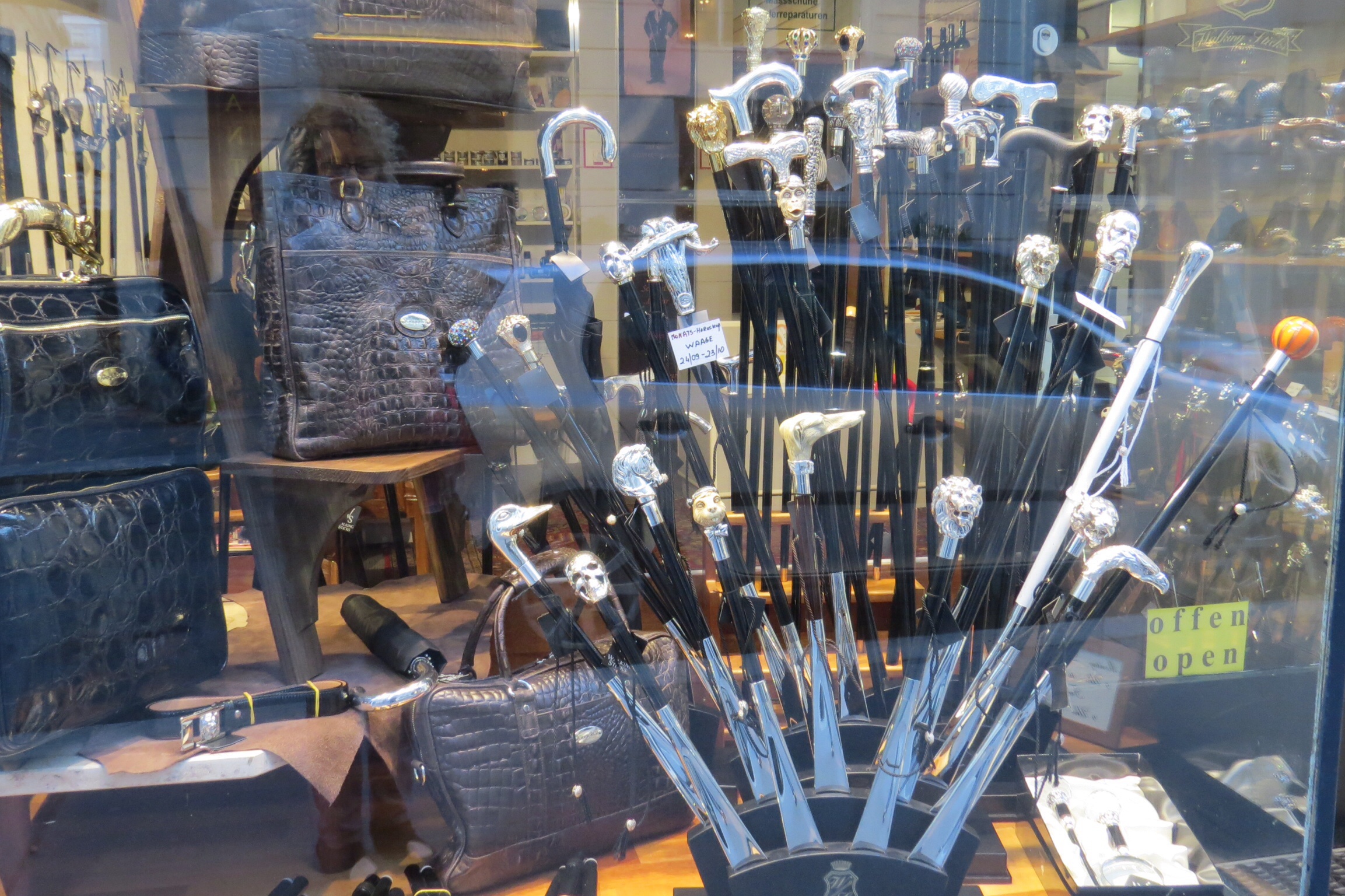
I passed a store window which has its own take on the monstrance:
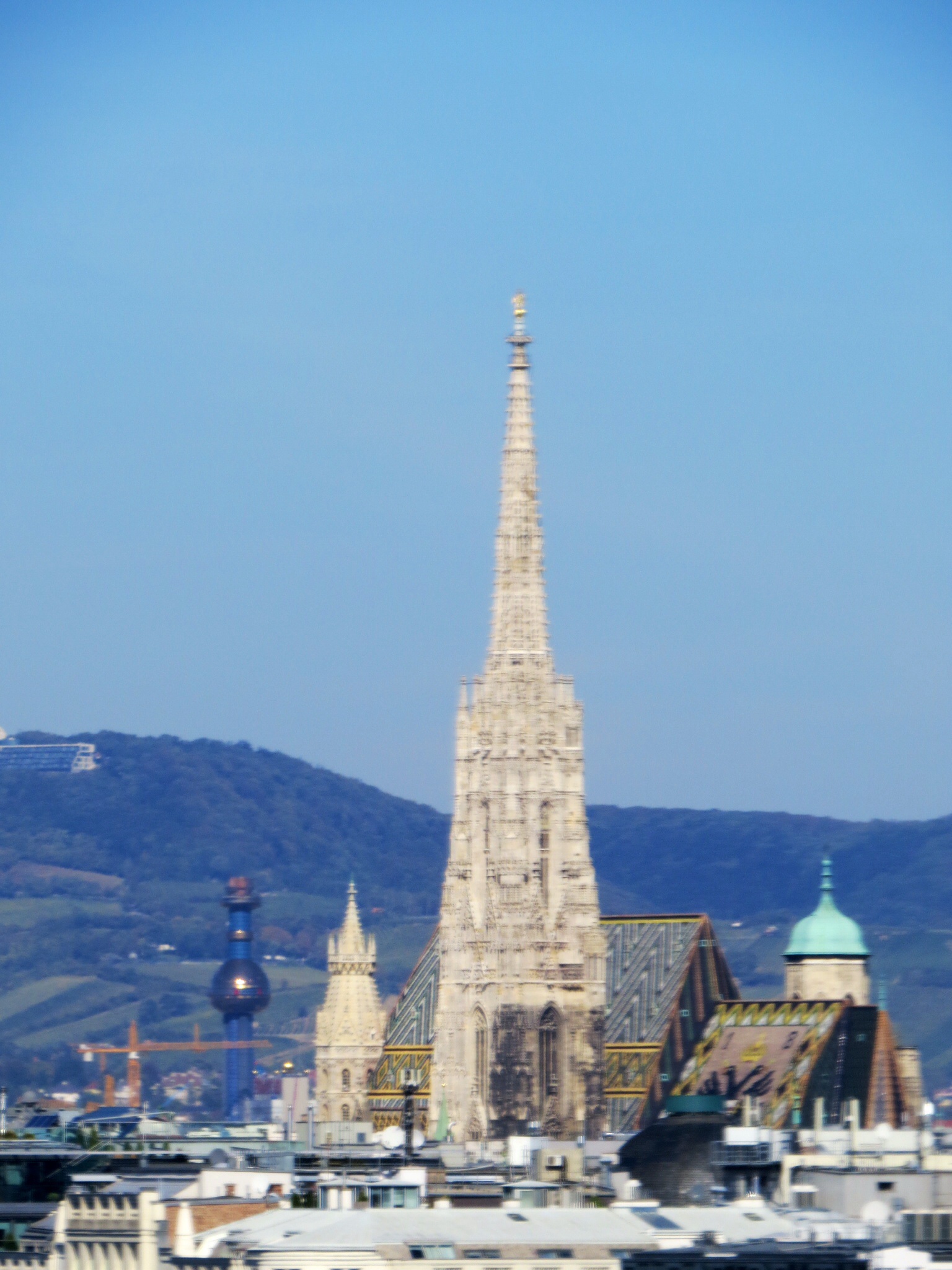
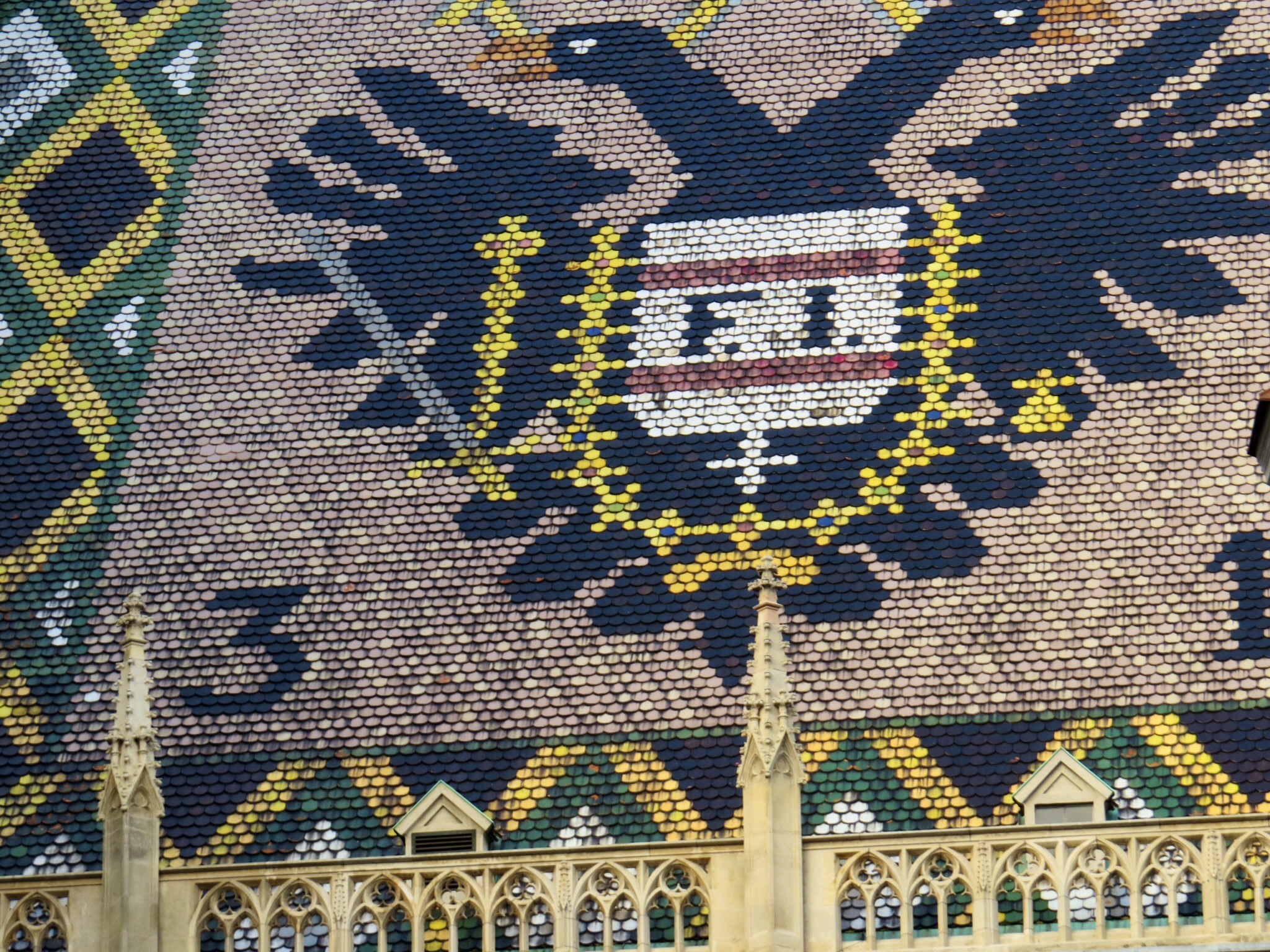
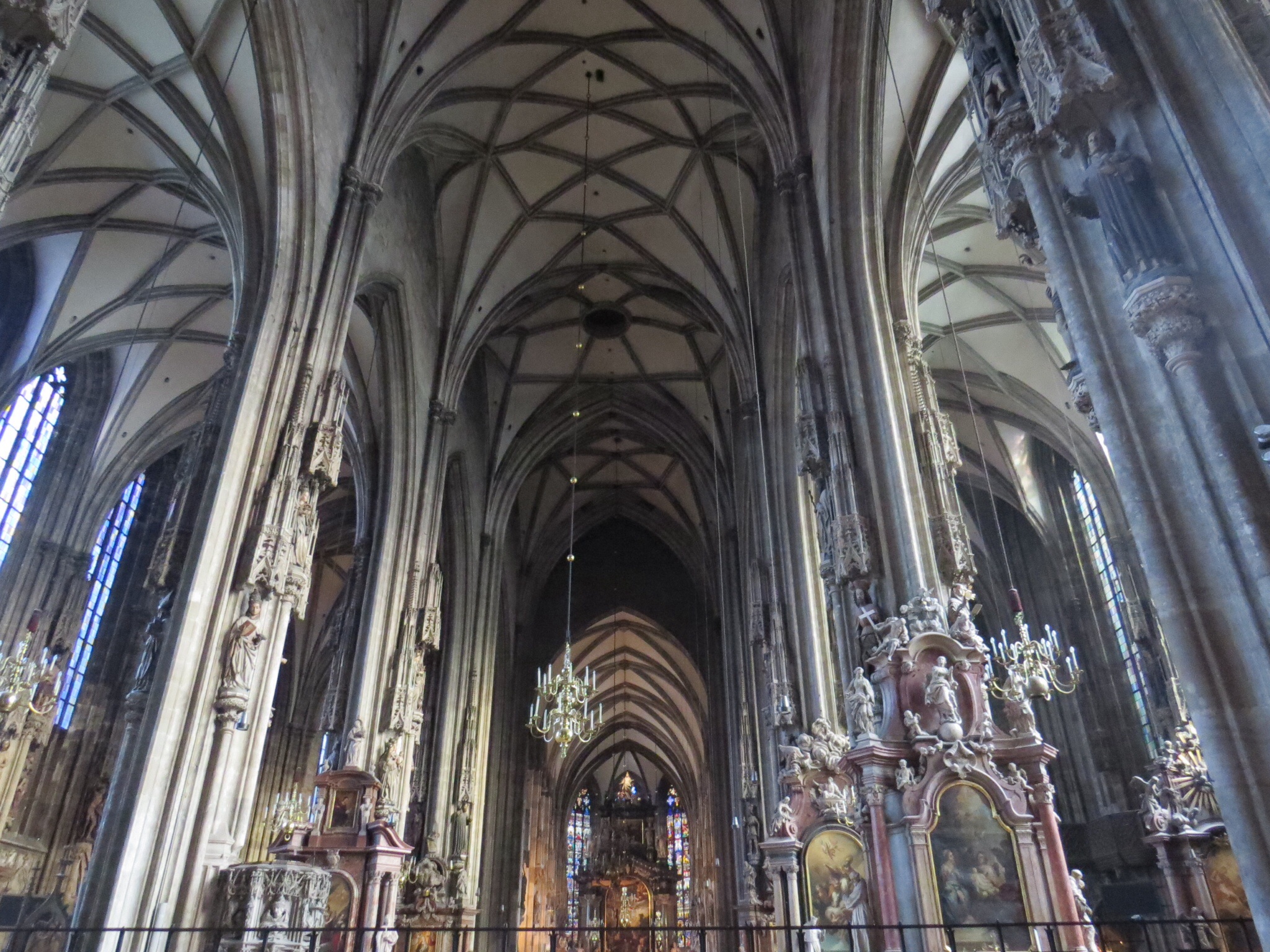
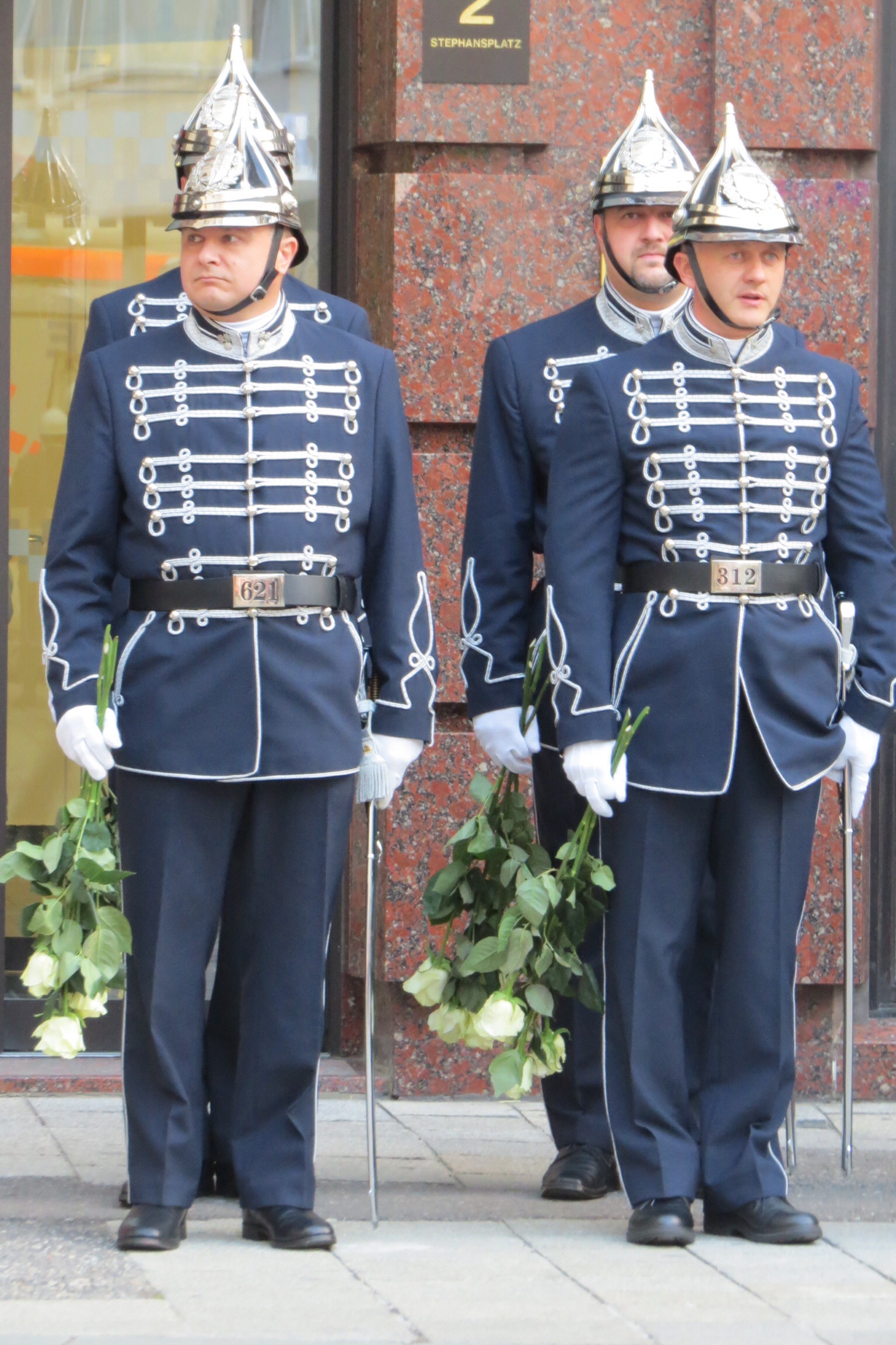
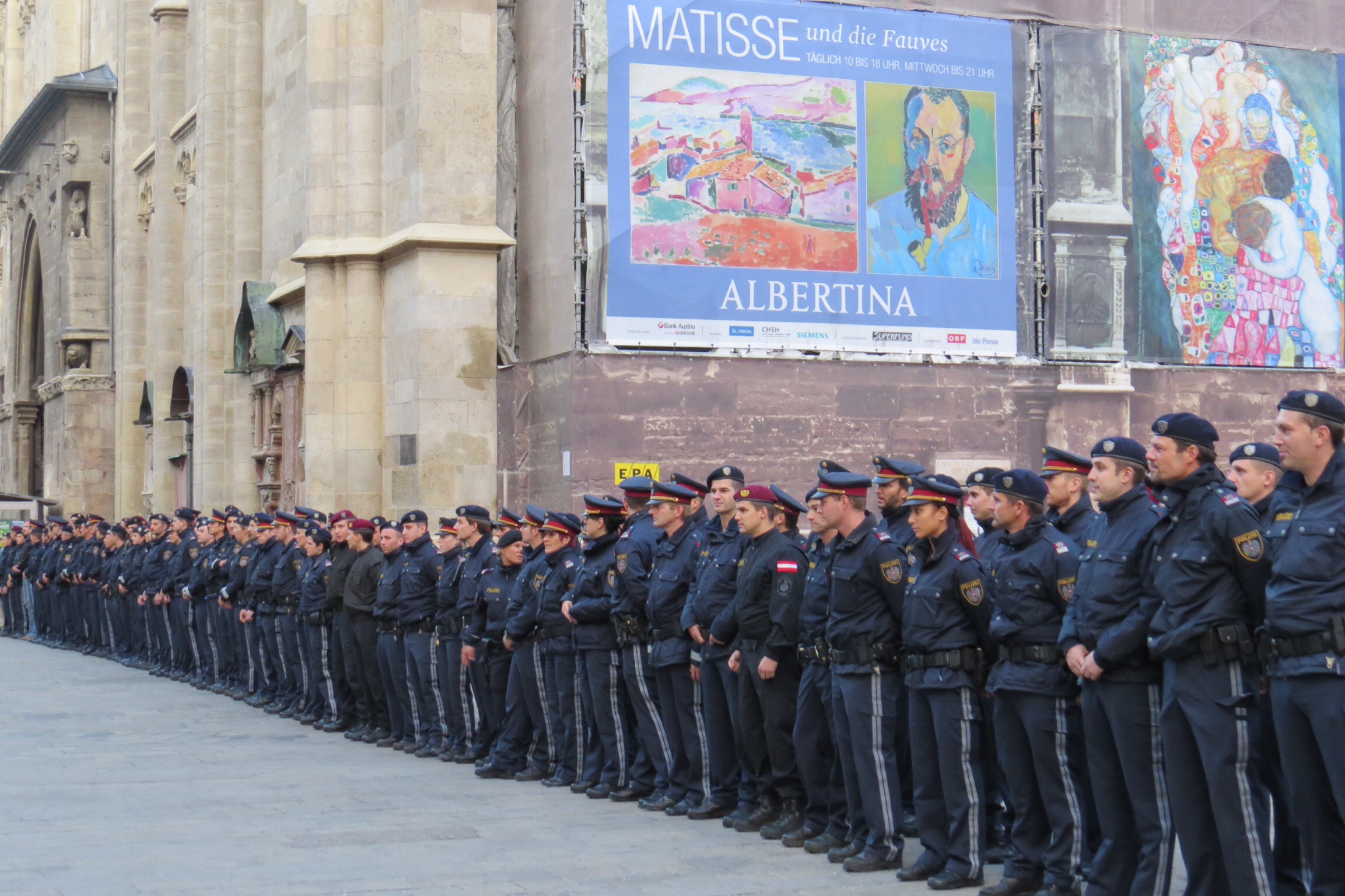
Stephensdom, or St. Stephen’s Cathedral, is the best-known landmark of Vienna and the heart of the city. Built in the Gothic style in 1359, it was intended to emphasize that Vienna was the capital of Austria. There was a police service commemorating fallen comrades this afternoon. Grotesquely, and I’m not sure why, the imperial bodies were divested of their organs before burial. The bodies lie in the tombs at the Imperial Crypt in the Kapuzinerkirche, the hearts reside in the Augustinerkirche, and the internal organs grace the Stephansdom. I didn’t see them.
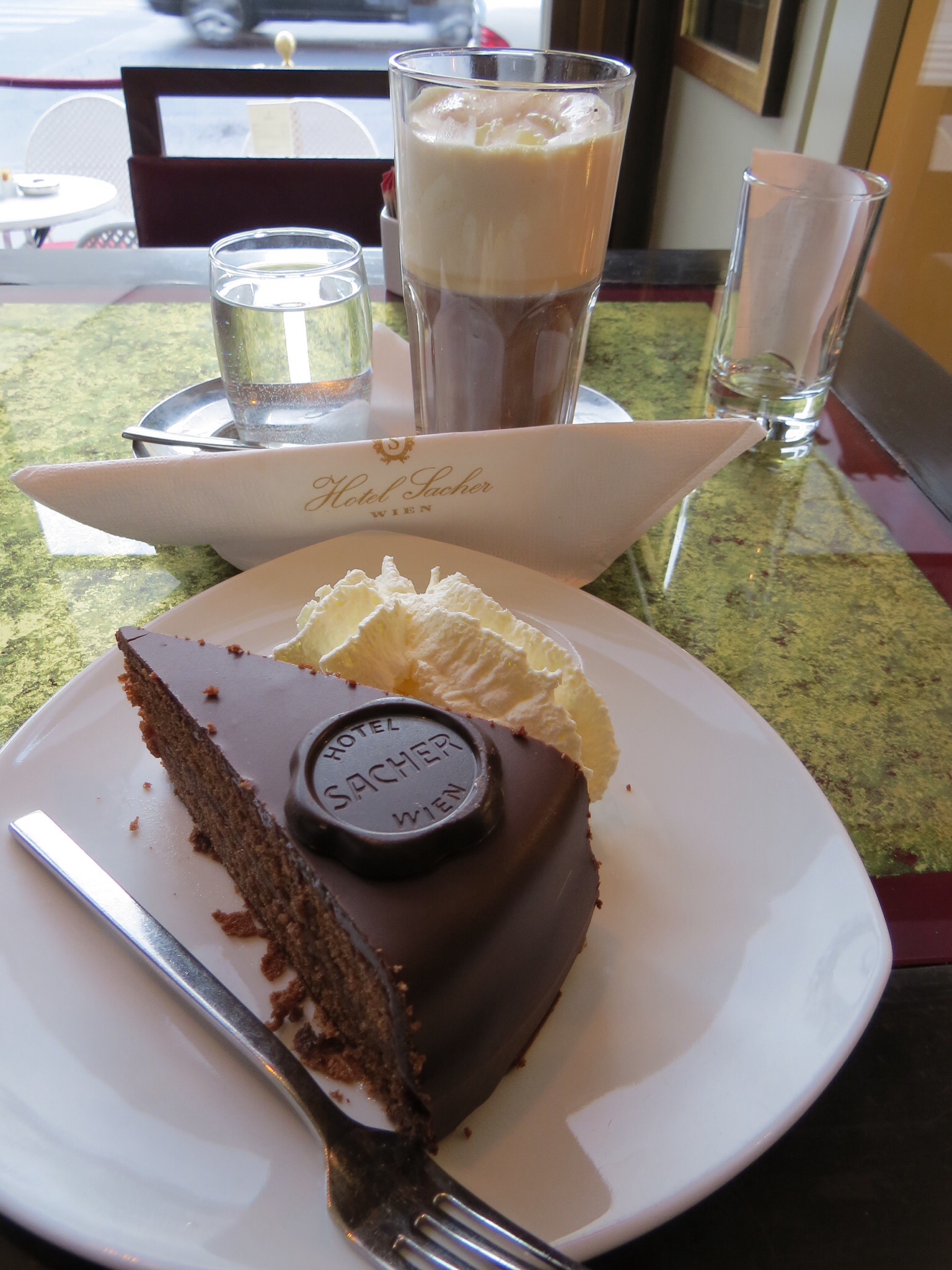
Next, darned if I didn’t take a wrong turn and wind up right in front of the Sacher Cafe! What could I do?
World-famous Sacher Cake, chocolate with apricot
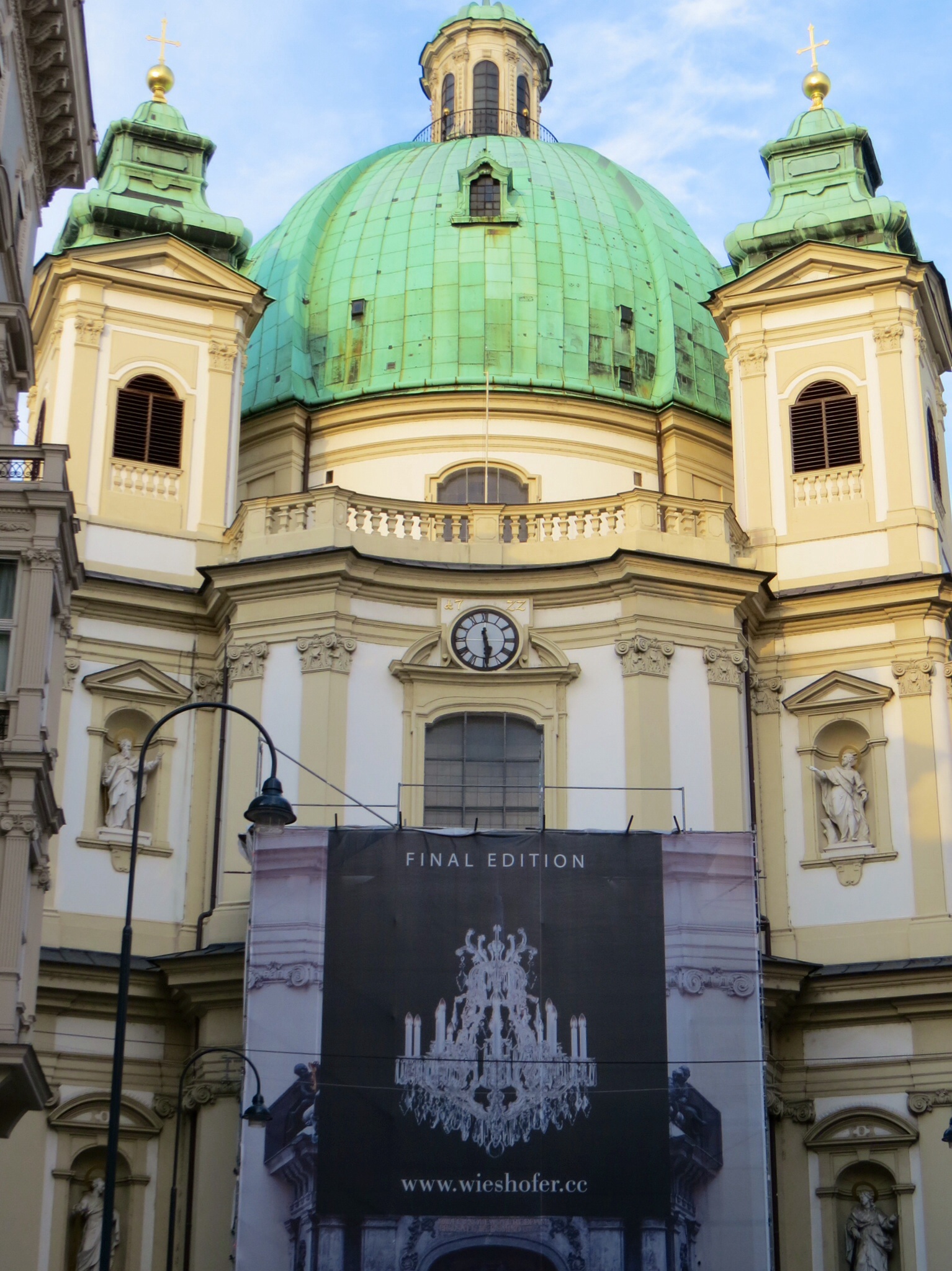
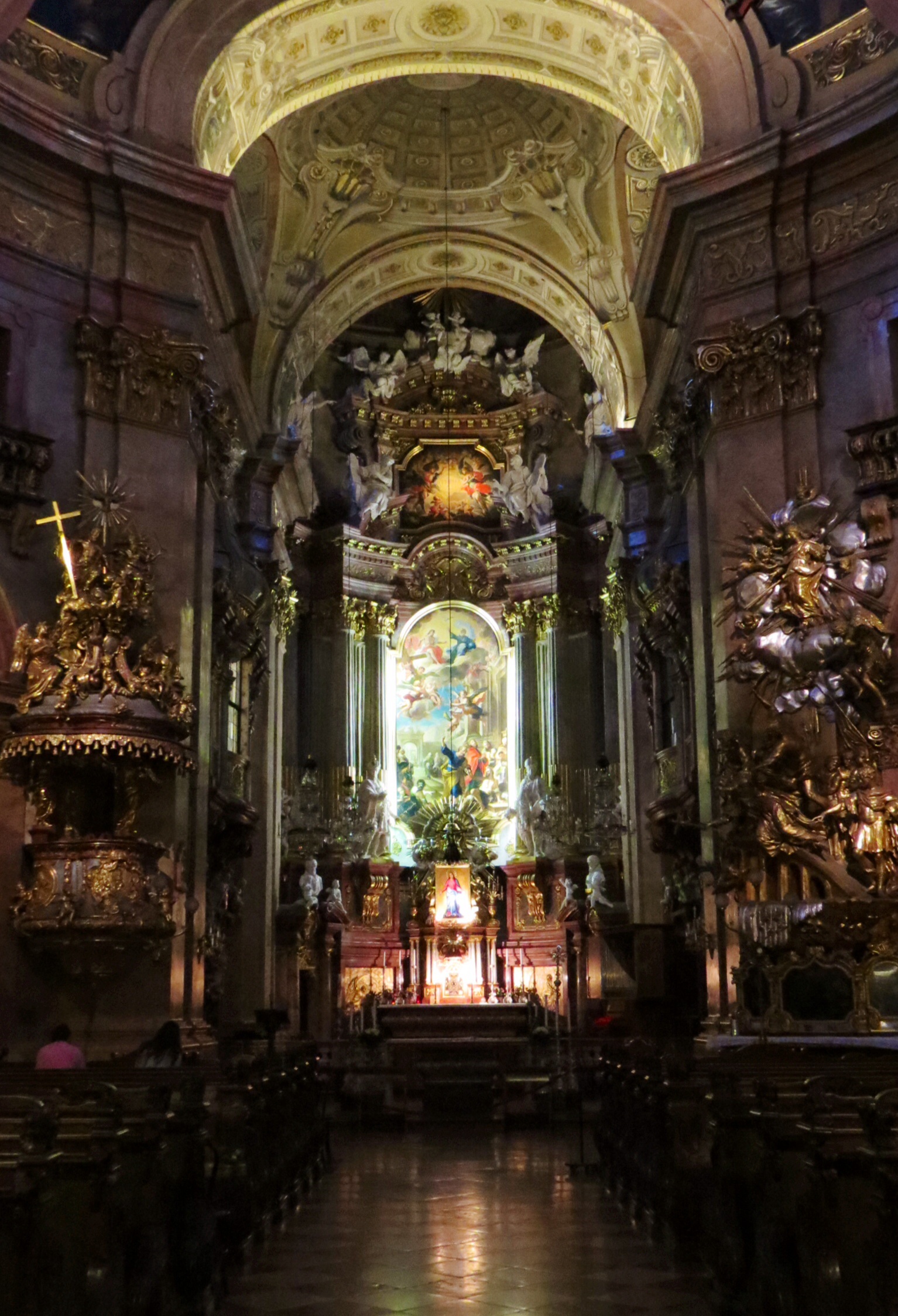
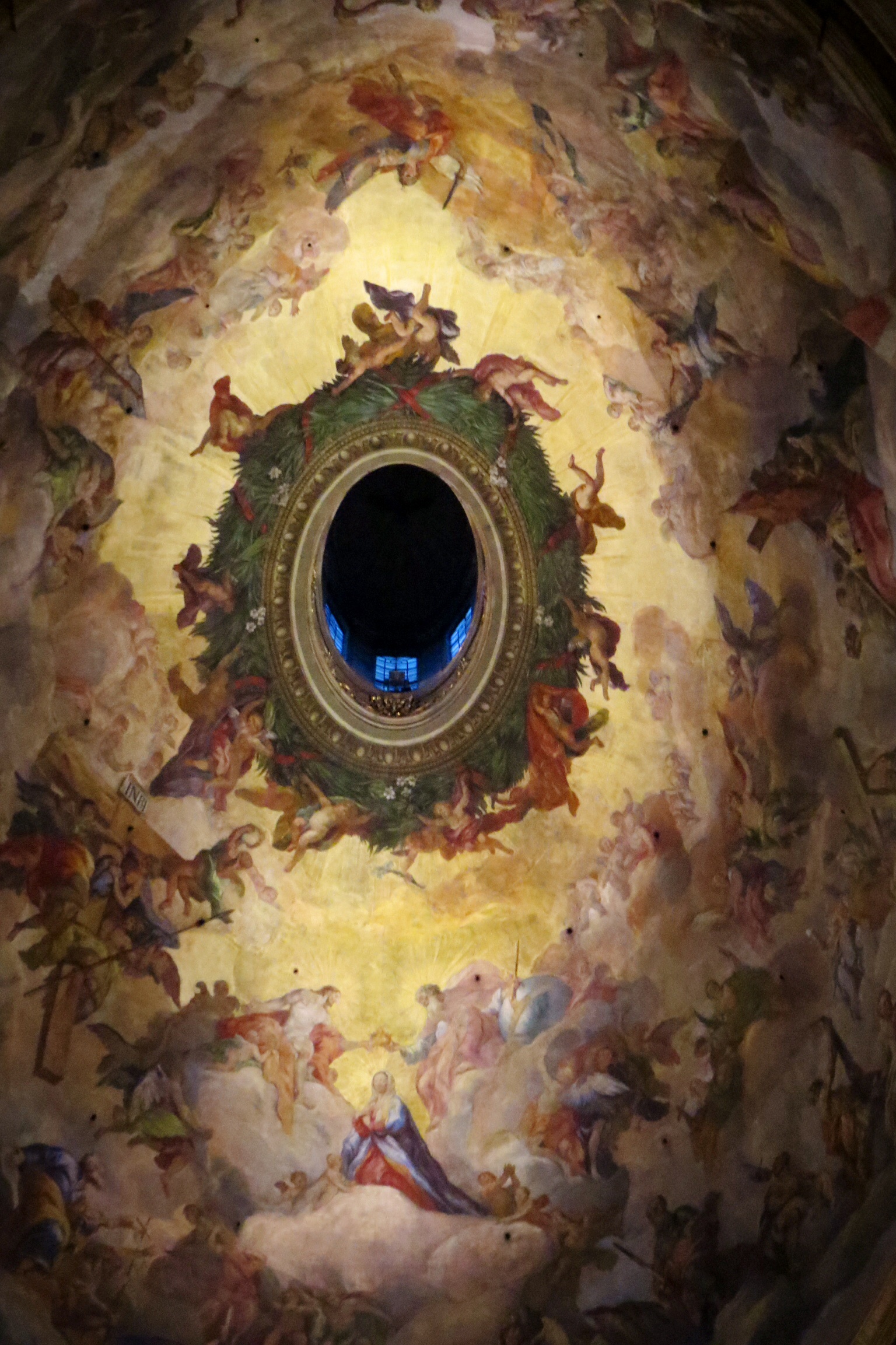
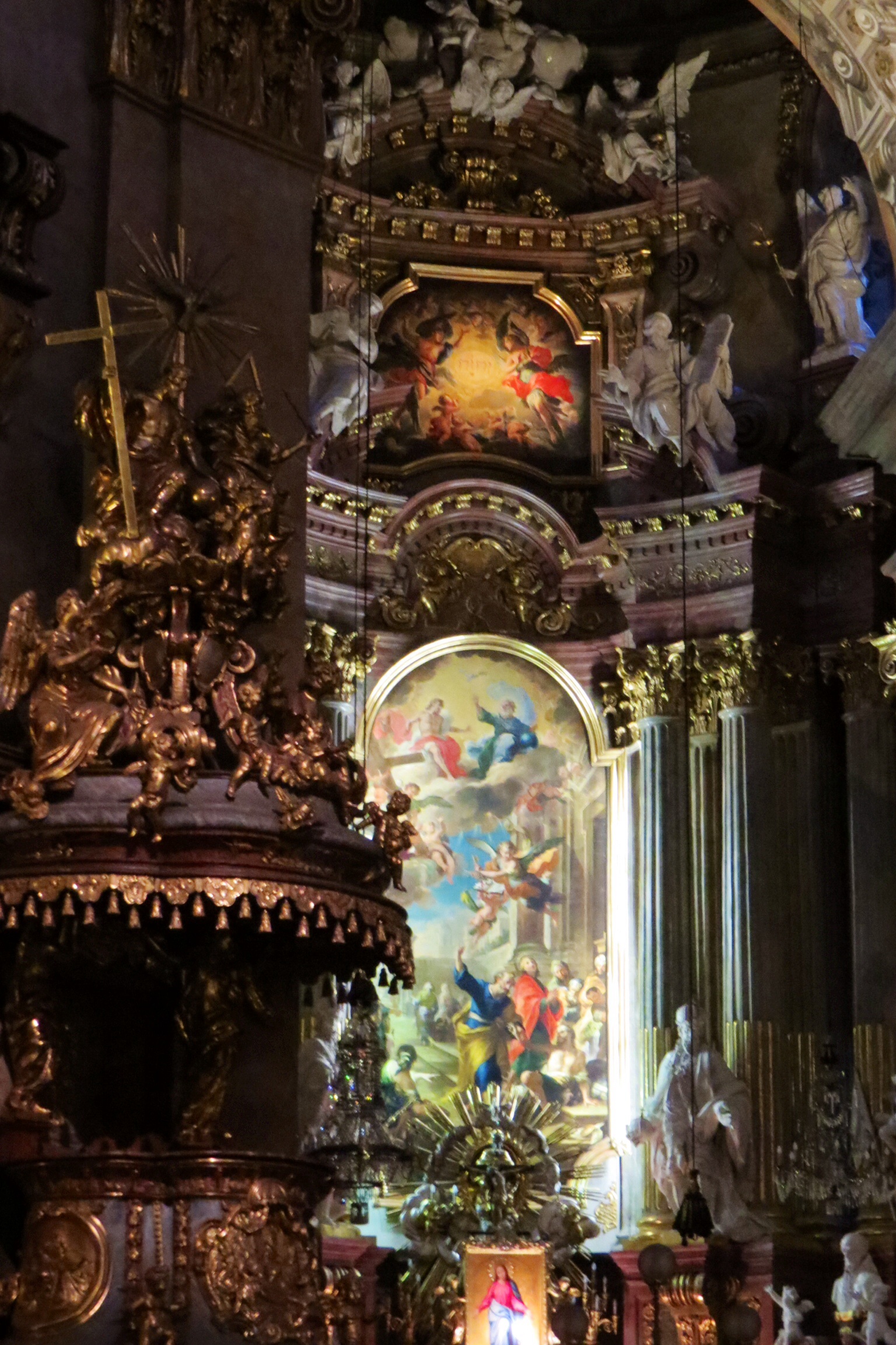
Peterskirshe, Opus Dei’s contribution to Vienna (remember the da Vinci Code?). Built from 1701 to 1722, it holds Vienna’s first dome.
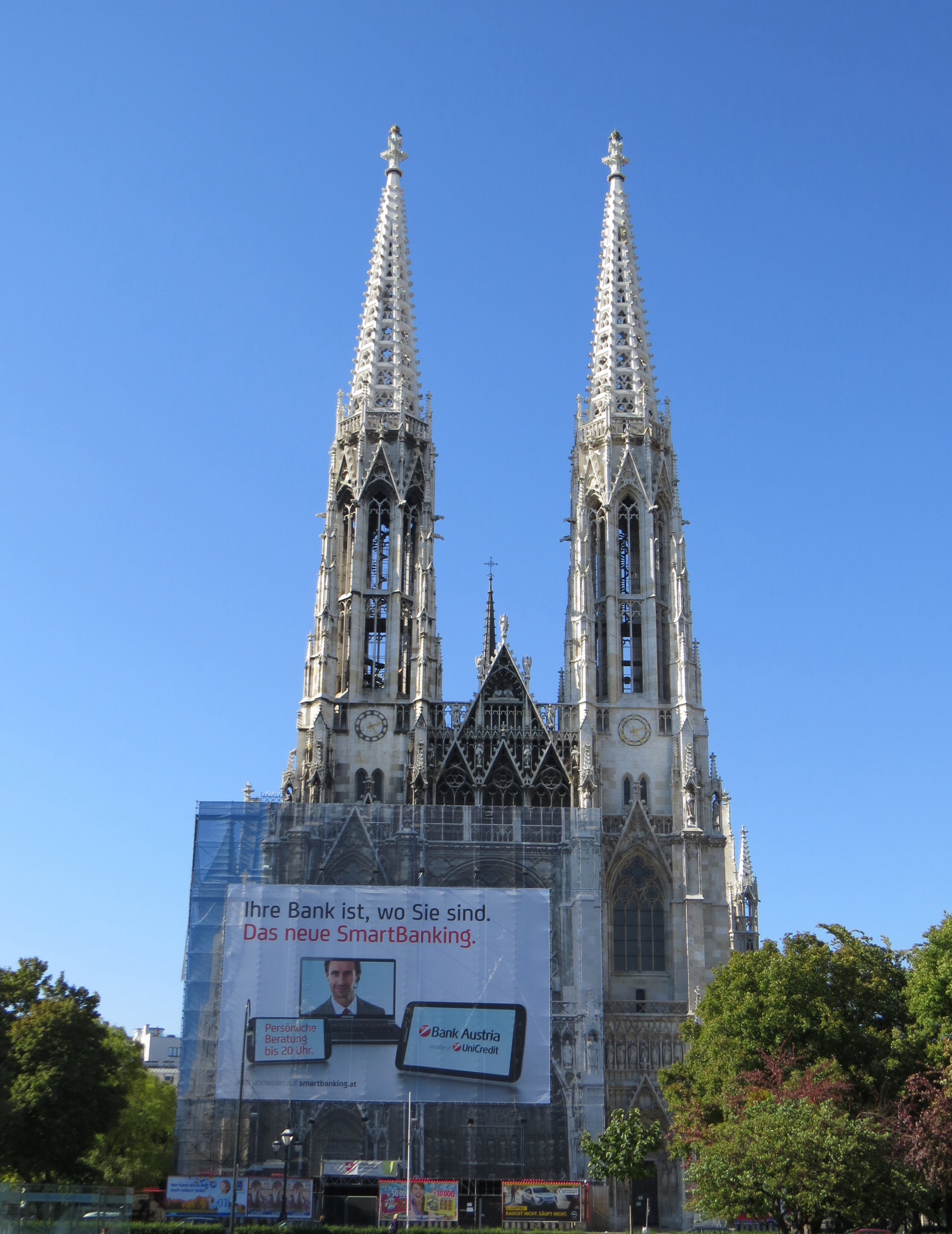
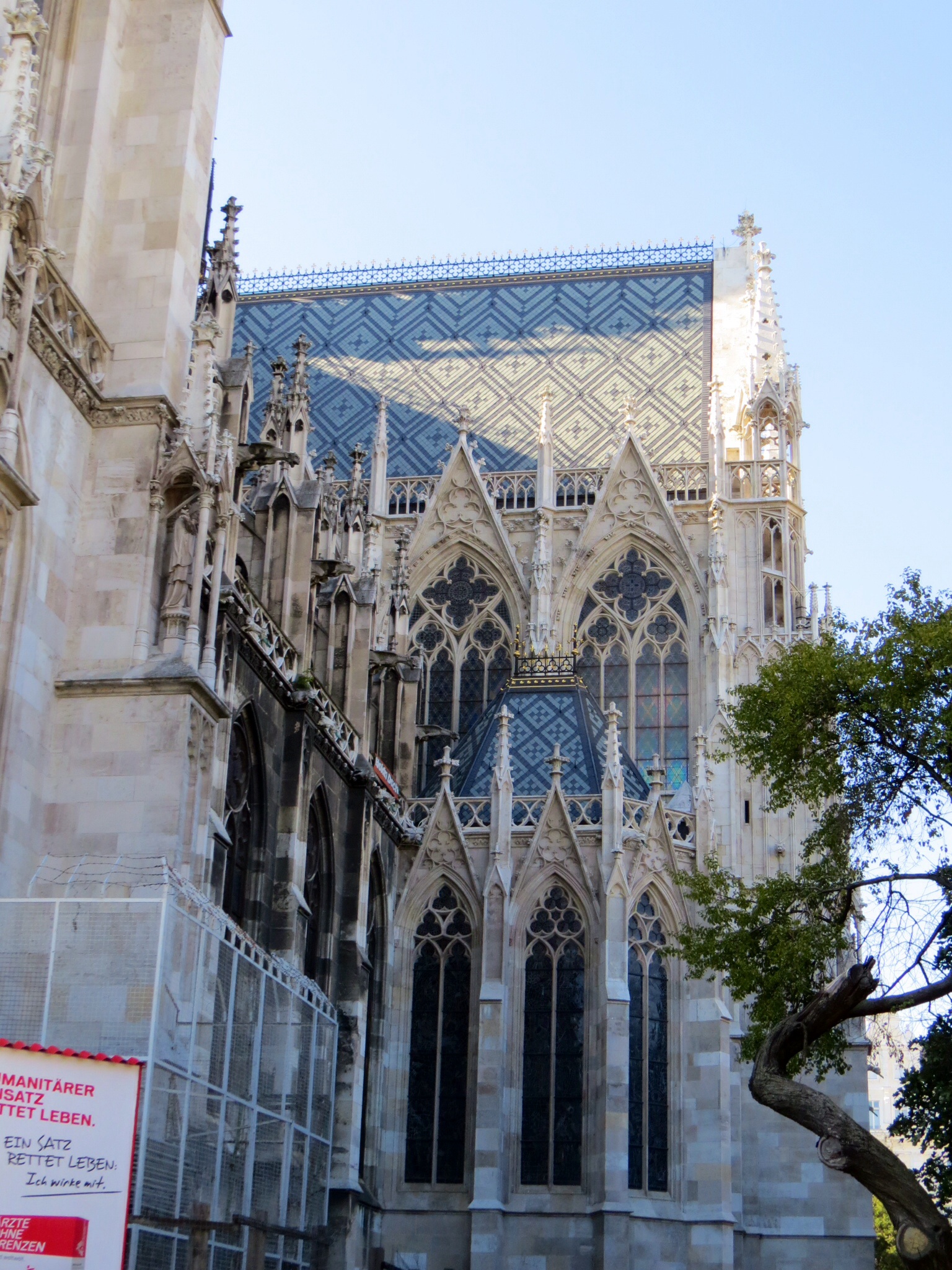
The Votive Church, on the Ring Circle near the university, serves a cosmopolitan parish. The brother of the Emperor, Archduke Ferdinand Maximilian, later emperor of Mexico, called on the Viennese people to commemorate the failed assassination attempt of the very young Franz Joseph I on the site of the attack “to thank for the salvation of his Majesty” and to donate to and build a new Church in Vienna. Today the church serves the Viennese, English-speaking ex-patriots and the Latin-American and African communities.
It seemed fitting to end the day at Ruprechtskirche, the city’s oldest church, for a concert of early music played on old instruments. Achingly beautiful notes, heard from achingly stiff pews, reverberated off the old walls of the 11th century and stained glass dating back to the 1200’s.
Before planning this trip, what I knew of Vienna was pretty much limited to the Waltz, the Danube, Mozart and Sacher Cake. However, it was the fact that Vienna was the cradle of a major European superpower that was to frame most of my visit.
The House of Habsburg began at least by 1020, but on March 19, 1492, it suited the political purpose of Pope Nicolas V to declare, in grand ceremony in Rome, Frederick III of Habsburg as Holy Roman Emperor. The House of Habsburg was Catholic and through the turbulent 17th and 18th centuries its allies were Catholic (with the exception of France, itself with so much power that the two were natural enemies).
Historically, the Habsburgs consolidated power through strategic marriages rather than war (although it was attacked often and forced into many wars). At various times through the dynasty’s history from 1438 to 1780, the family produced Kings of Bohemia, England, Germany, Hungary, Croatia, Ireland, Portugal, Spain and several Dutch and Italian countries. Most of these countries and others were under the rule of the Holy Roman Empire at one time or another.
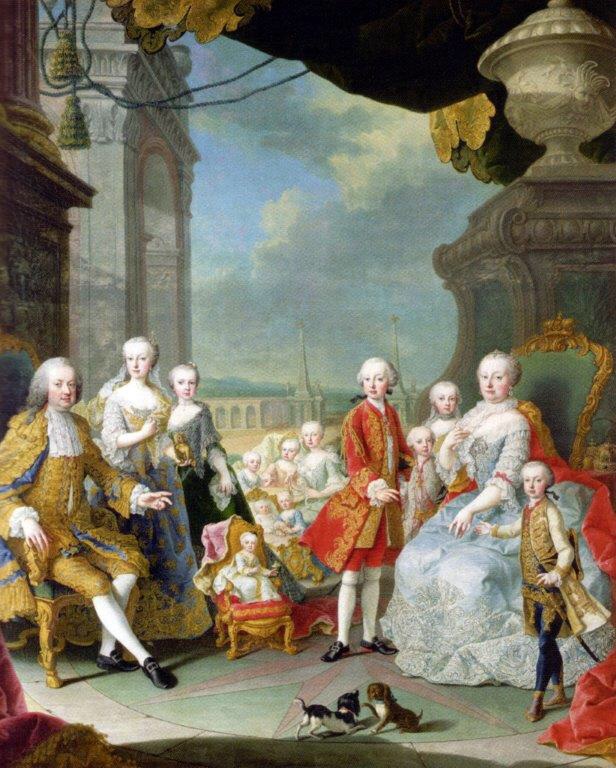
No-one was better at gaining power through marriage than “Empress” Maria-Theresia. This woman was a powerhouse and ruled Austria for 40 years, from 1740 to 1780. Though she was heir to the throne, the Holy Roman Empire was acceded by primogeniture, but she didn’t let a little thing like that stop her. Through sheer force of her will, she made her husband co-ruler of Austria and Bohemia and through the Treaty of Fussen, ensured her husband’s inheritance of the Holy Roman Empire, to which Francis I acceded in 1745. Her husband was not ruler material and therefore suited her ambitions perfectly (although his continual extra-marital activity was a problem between them throughout their marriage). Maria Theresia ruled the empire, making all political and war decisions, often turfing her husband out of the room when he disagreed with her. This painting, for which the family sat, says it all, her husband pointing to her, she pointing to herself, her eldest son (future Emperor Joseph II) at her side standing atop a star.
Maria Theresa and Her Family on the Terrace of Schonbrunn Palace, by Martin van Meytens, c. 1755
Over the course of 20 years, Maria Theresia delivered 16 children through several wars and troubling times. She said but for her pregnancies, she would have fought battles herself. Thirteen of the children survived, and all of the girls were named “Maria.” Several were married to foreign kings and emperors, including her youngest, Maria Antonia, whose marriage to the Dauphin of France was arranged as part of the resolution with France of the Seven Years War. Maria Theresia wrote often to Marie Antoinette scolding her for being lazy, frivilous and for failing to conceive a child. Perhaps if Marie Antoinette had listened to her mother’s advice…. Maria Theresia controlled all of her adult children just as she had when they were young, and chided them for not producing more children. She had “only” 24 grandchildren, whereas she would have liked 100.
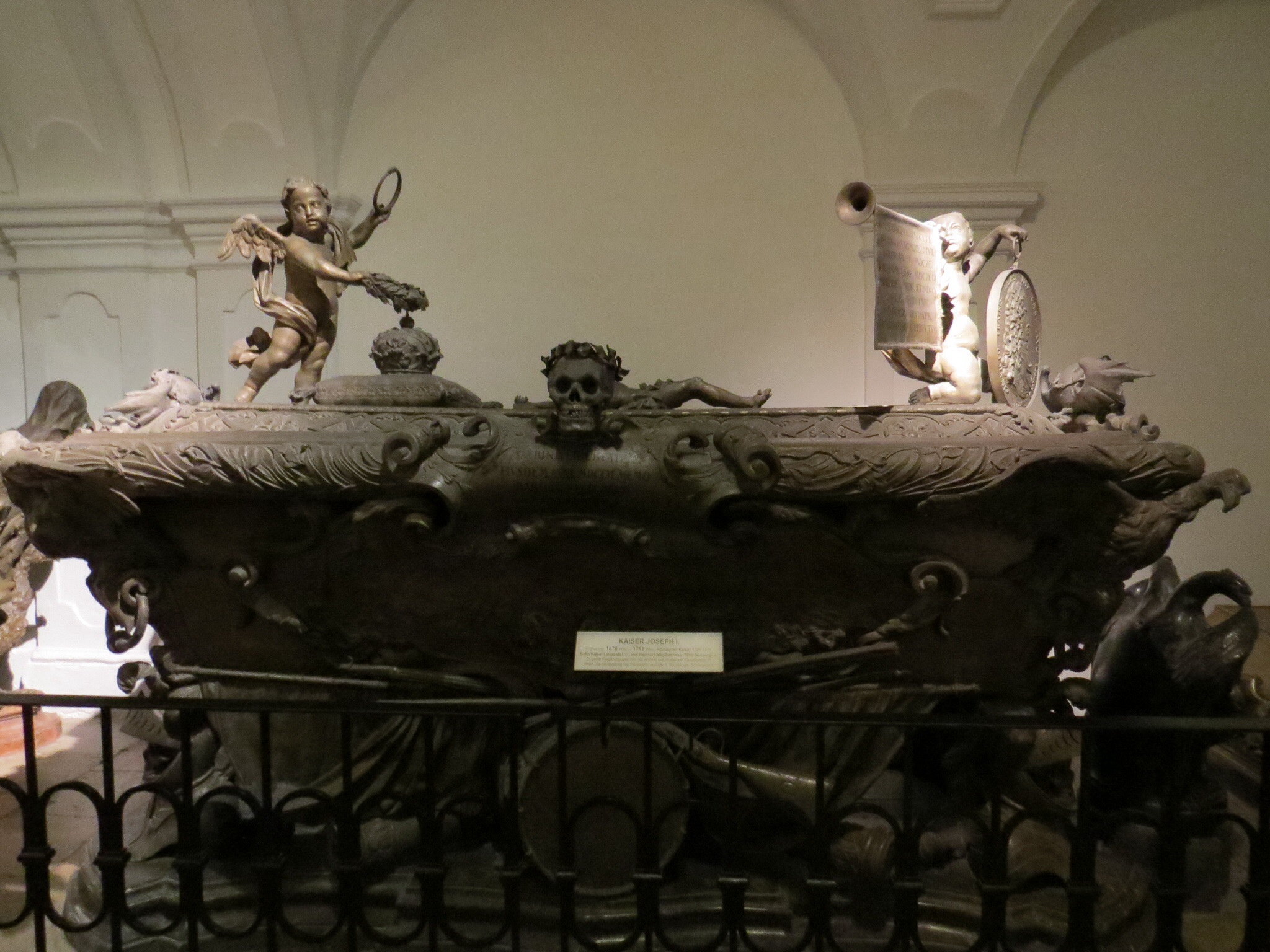
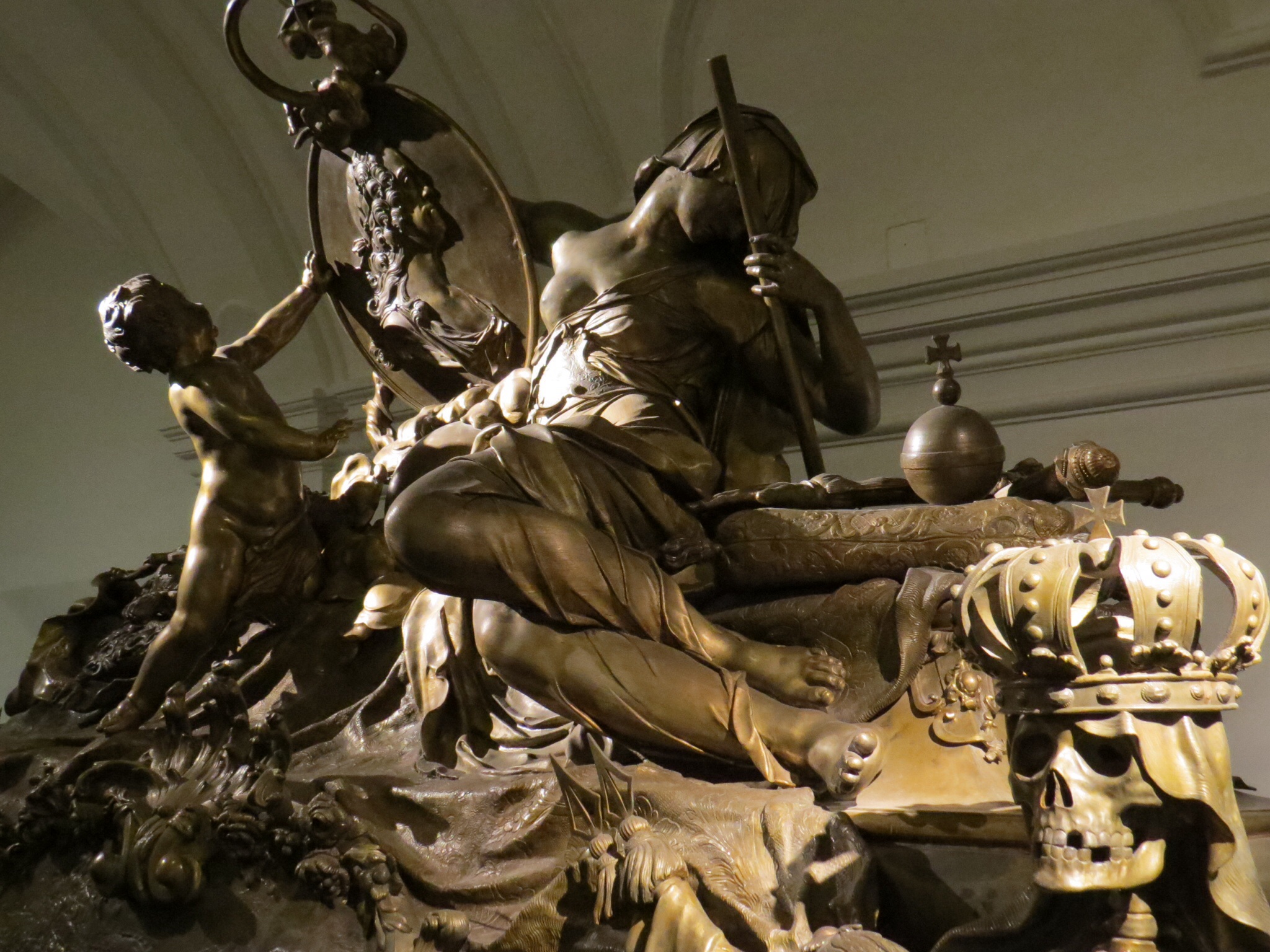
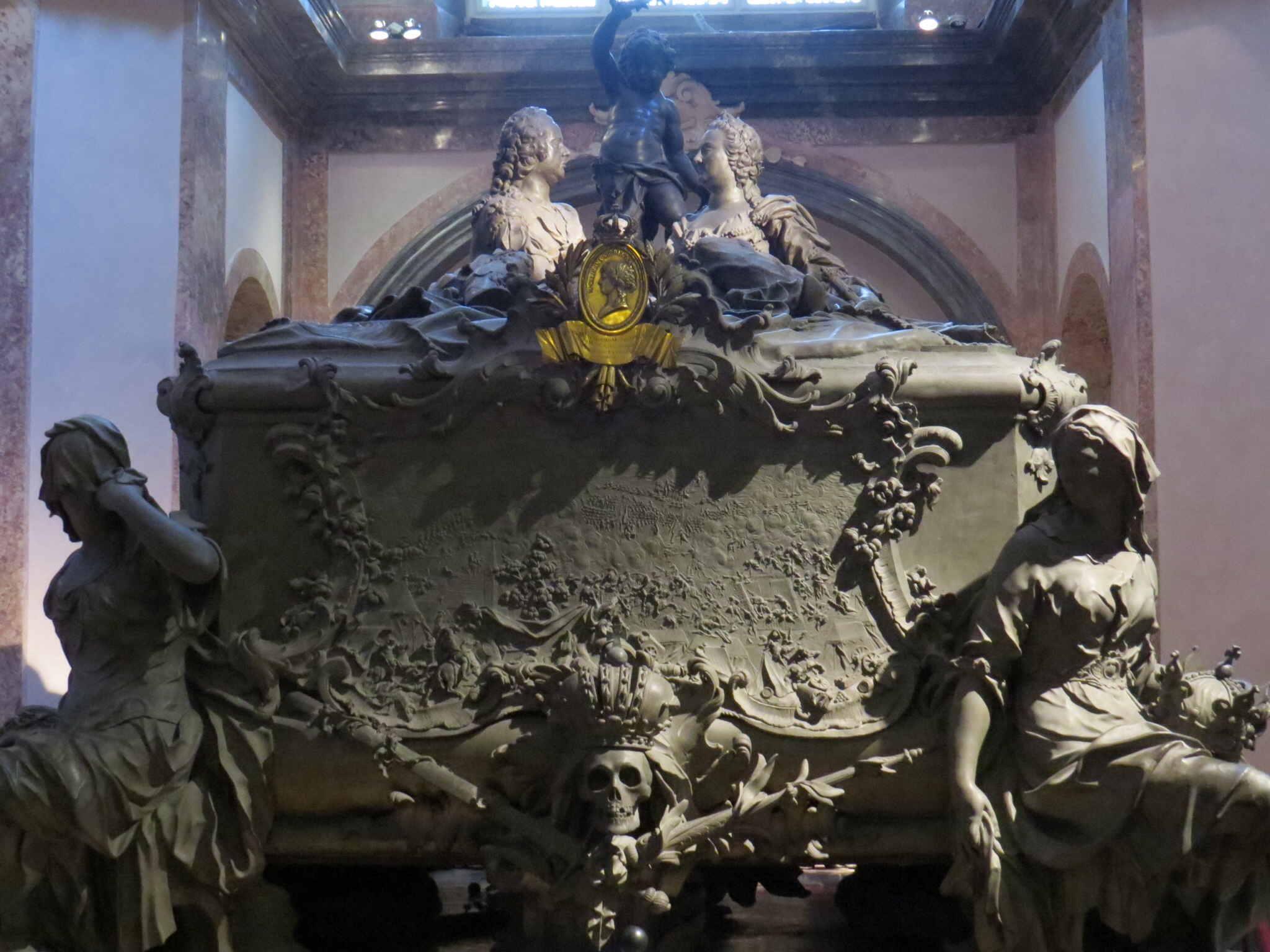
Illustrative of the size of Maria Theresia’s ego and ambition are the tombs at the Imperial Crypt. Her predecessors Joseph I’s and Karl VI’s tombs are the size of most people’s tombs – human-sized. The double tomb of Maria Theresia and her husband (he is listed there as her “consort”), which she herself had constructed, takes up an entire room; for context, when taking the photo below, I was standing in front of the tomb and my skull was below the height of the bronze skull at the bottom centre of the photo.
Joseph IBrother of Joseph I, Charles VI of the Holy Roman EmpireMaria Theresia and Francis I
In addition to expanding and protecting the Empire, she buttressed the military, doubled state revenues, reformed medicine and started innoculation, introduced civil rights, increased some of the power of the state over the Church and improved public education. Hers was the Golden Age of the Empire.
So with that background, back to Vienna.
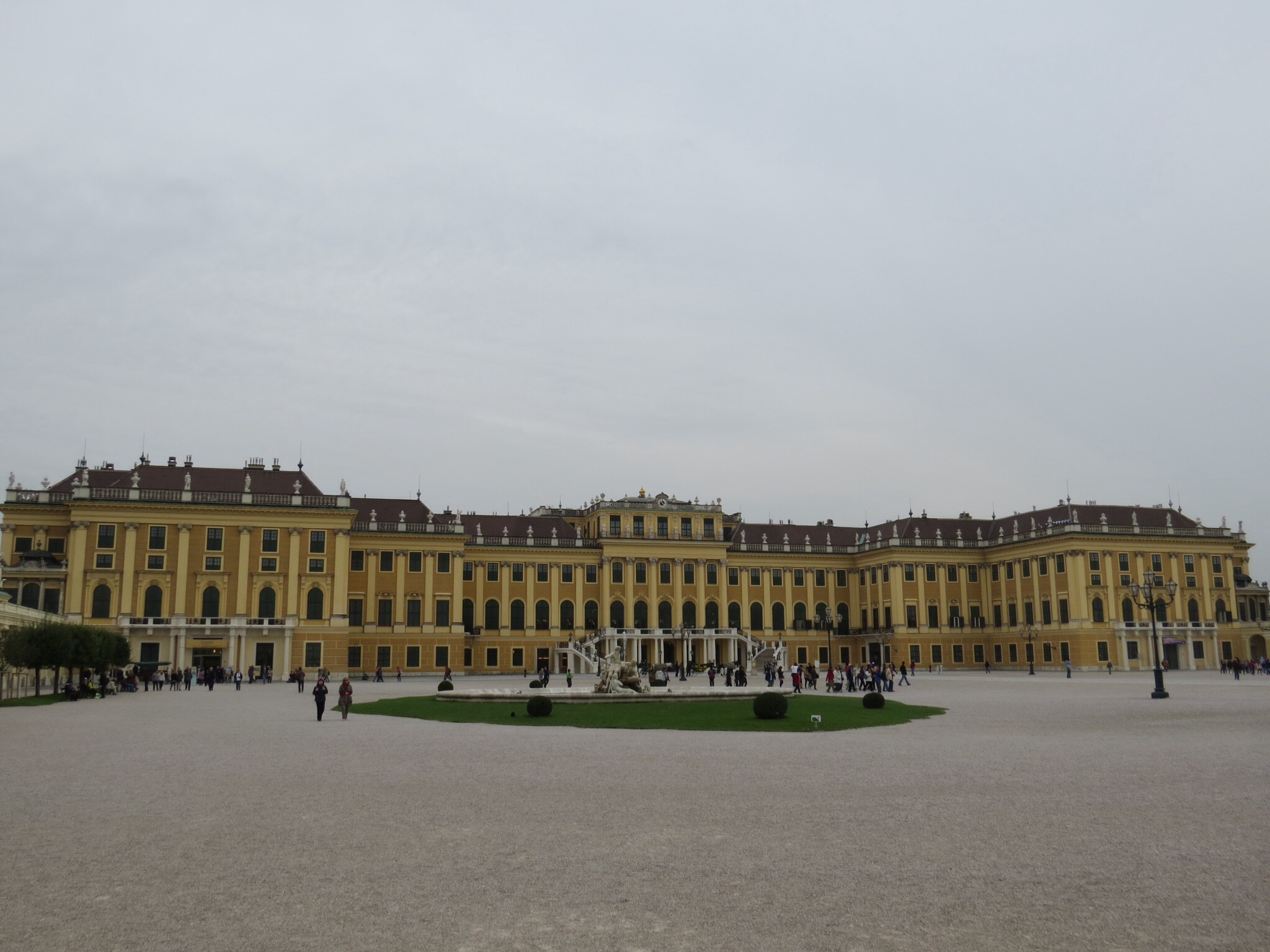
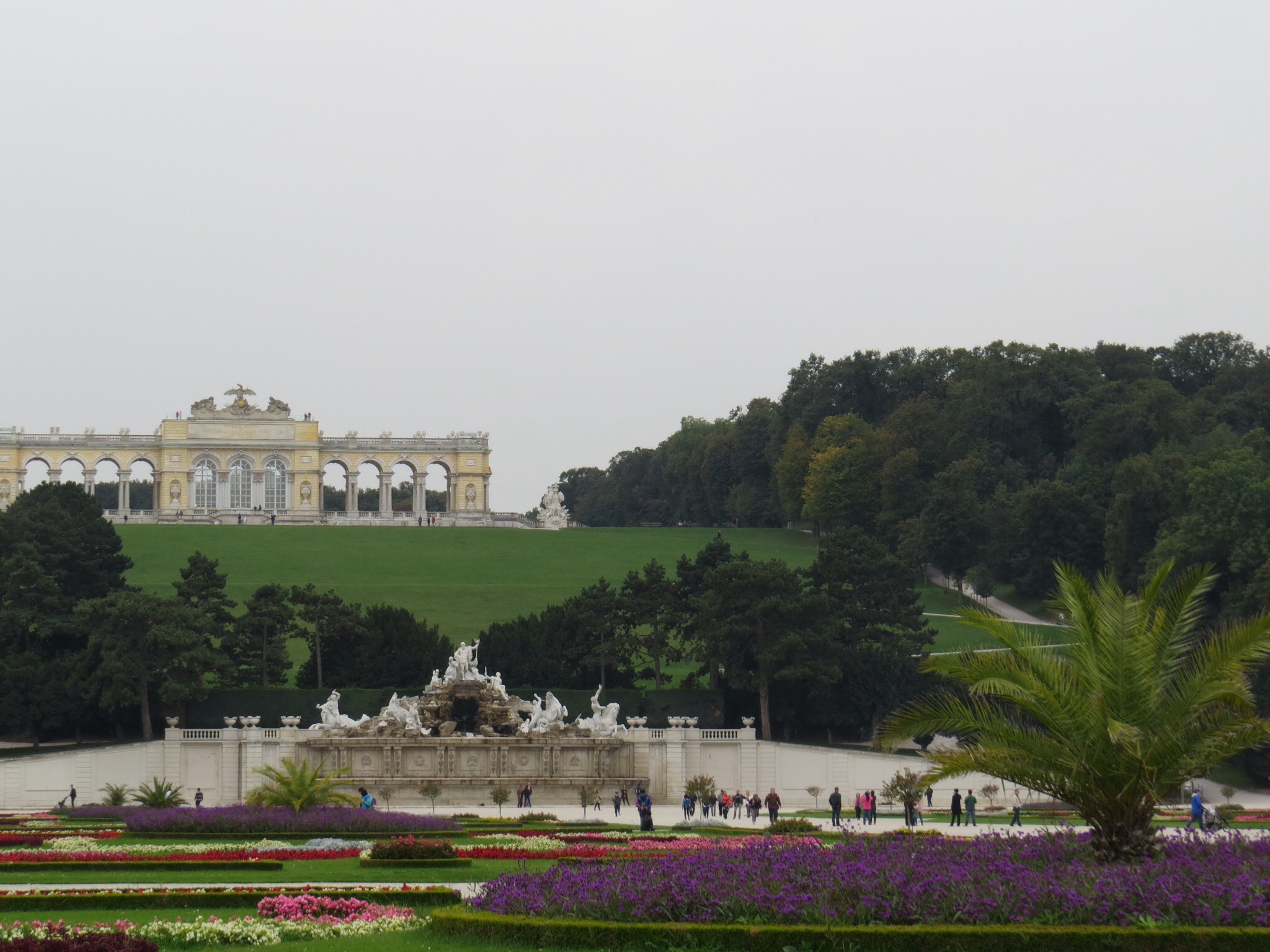
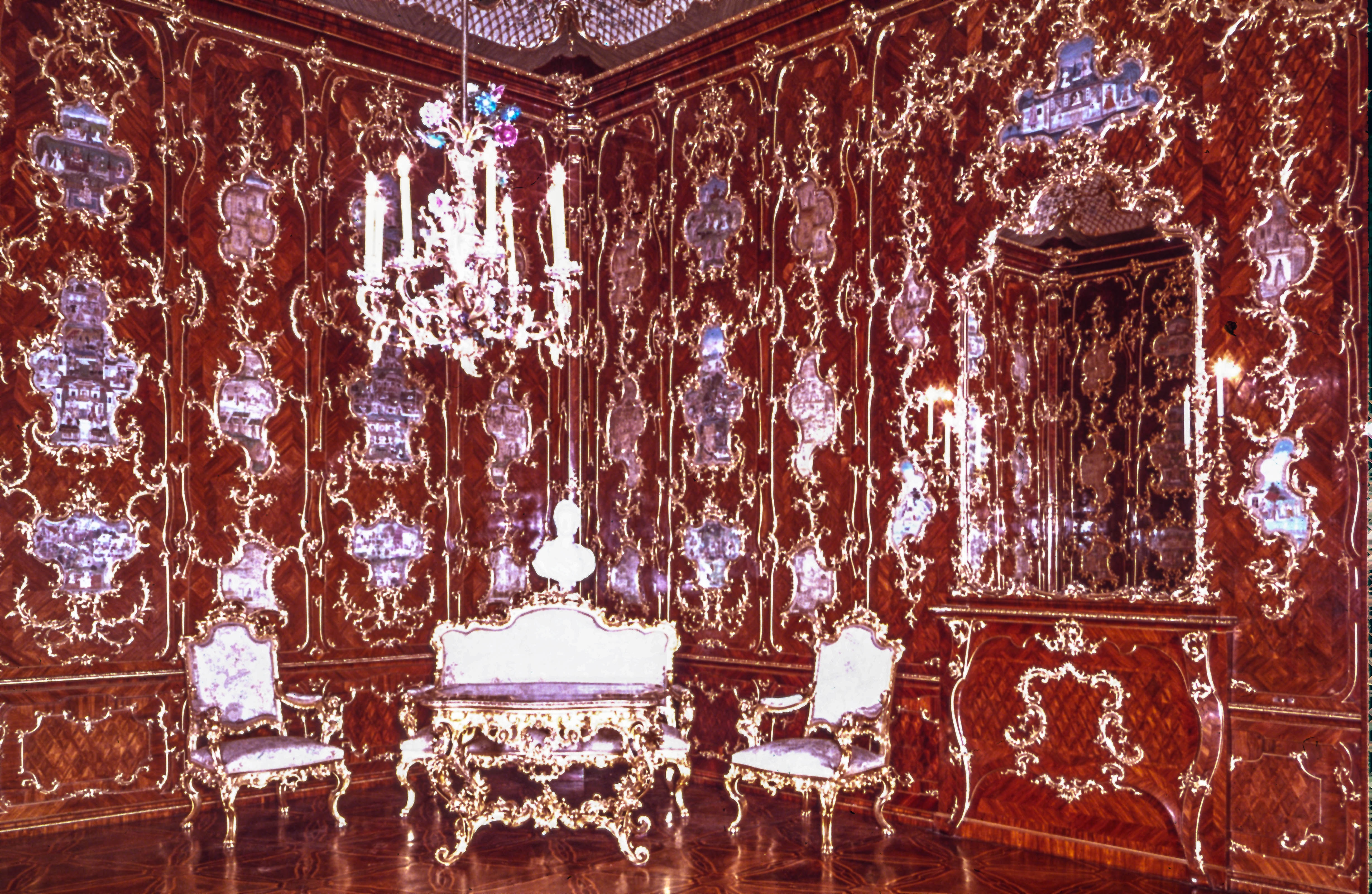
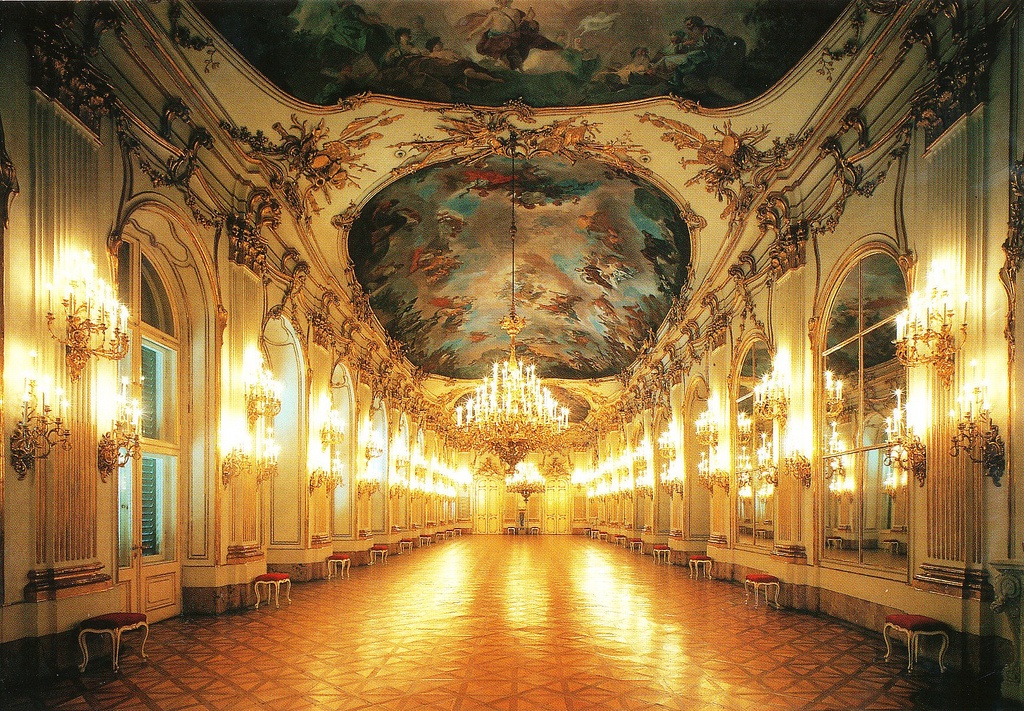
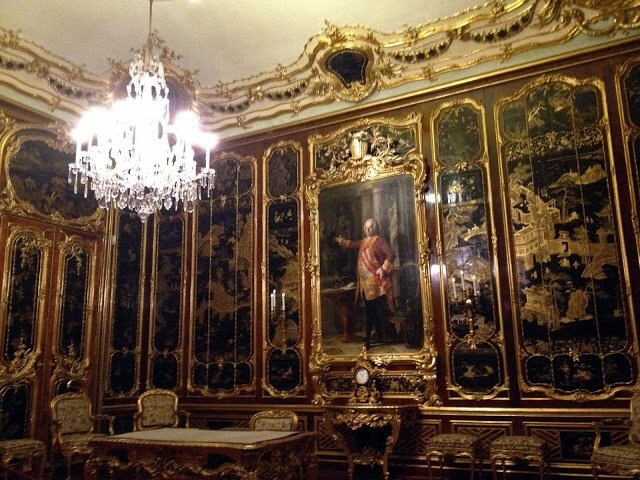
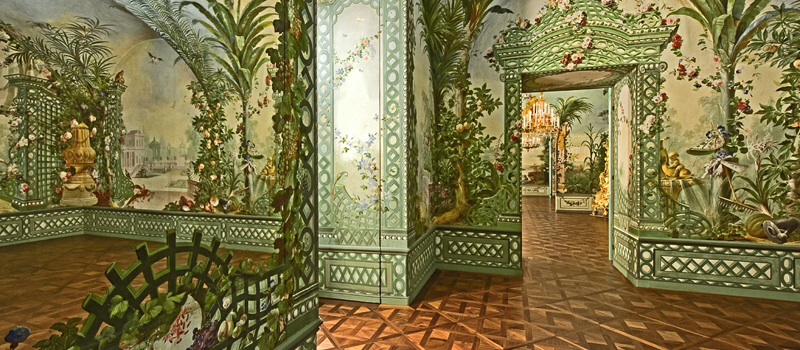
After arriving by train from Prague but before even checking into my hotel, I dropped off my bags and was met by a driver to take a bus tour of Vienna and a trip to Schonnbrunn Palace, Maria Theresia’s magnificent summer palace, whose only rival is said to be Versailles (although Peterhof and Catherine’s Palace need to be added to this mix). The palace is massive, with 1,441 rooms, only a few of which are open to the public. Once again, I was struck by the originality of the rooms – they were equally opulent to previous palaces I’ve seen, but each room had a distinctive beauty. One of the more priceless rooms was the exquisite Walnut Room which Maria Theresia called her “millions room” due to the expense of the wood. The Great Room which MT installed was almost identical, complete with mirrors, to the Hall of Mirrors at Versailles. Two round anterooms had stunning inlaid wood floors and gold embellishments. The “Ceremonial Hall” had five magnificent paintings, one depicting the wedding of MT’s oldest son Joseph II. It shows Mozart entertaining the guests, even though Mozart did not visit Schonnbrunn until two years after the marriage. Much of the original furniture is intact, and many emperors used the palace after MT. In fact, John F. Kennedy met with Khrushchev here in 1961. (All the rooms can be toured at http://www.schonbrunn.at.)
The grounds are equally spectacular, complete with a carriage museum, zoo, palm house, maze and many outbuildings.
Millions Room
Ebony Room
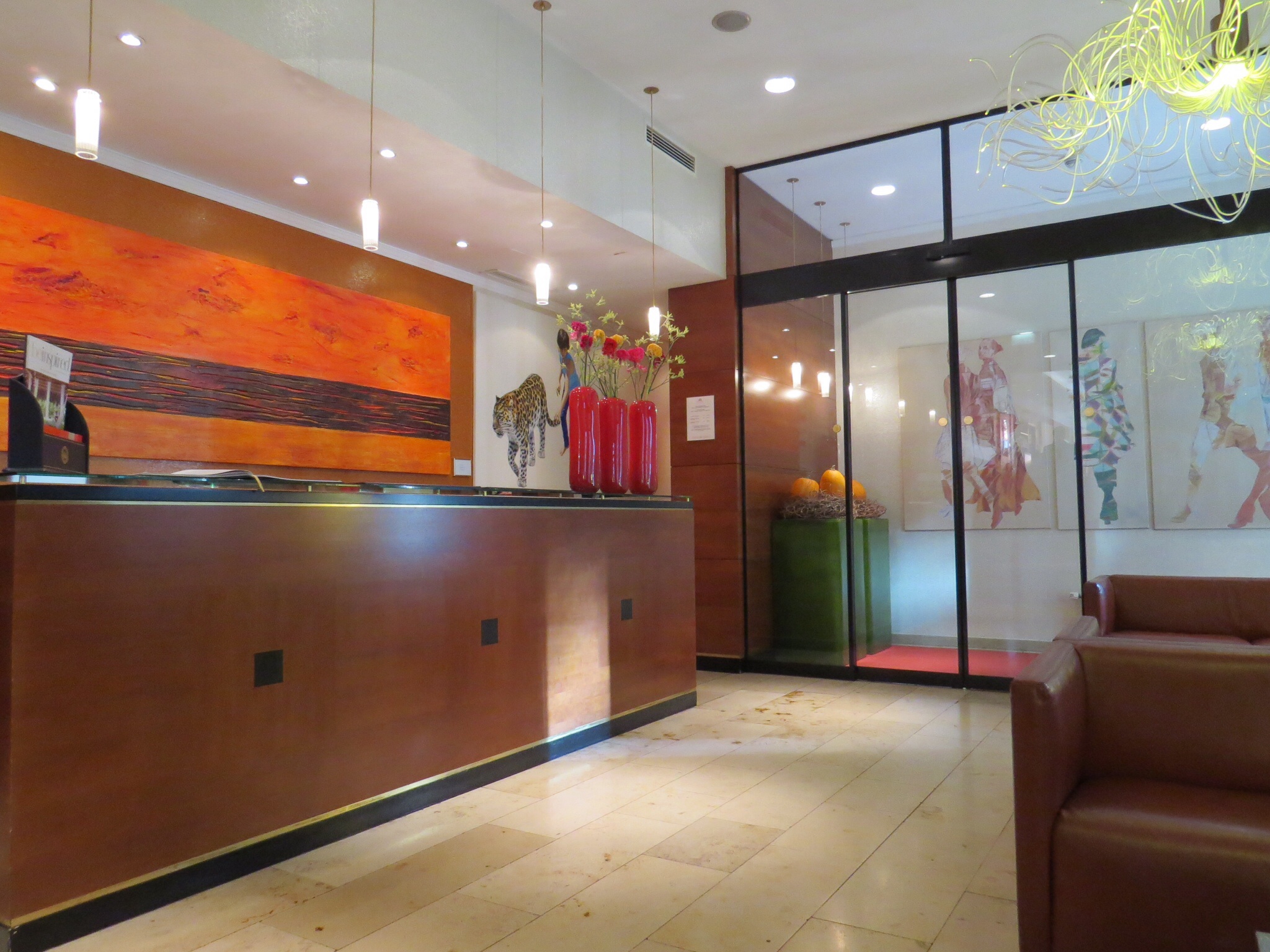
After this tour I checked into what was to be my favourite hotel, one I highly recommend. Das Tyrol is a boutique hotel located a 5-minute walk from all the sites on one of the longest shopping streets in the world. It was such a treat to stay somewhere so comfortable on the fourth week of my trip. The sauna/steam room was wonderful as were the included breakfasts.
After checking into my hotel I was scheduled to attend an opera tonight. Attend I did, as I had been looking forward to seeing Strauss’s Salome, based on the Oscar Wilde play about the biblical story of Herod’s daughter and the beheading of St. John the Baptist. Perhaps it was because I was tired and had packed a little too much into my day, but I did not enjoy the opera at all. Much of the singing was swallowed up deep in the stage, the orchestra drowned out the singers, the lead soprano, while she had range, didn’t have the power needed and couldn’t dance (the story turns on the Dance of the Seven Veils) and the set and costumes didn’t work for me. The audience went wild for it though so it may have just been me. But here’s a production where it works better by surrounding the diva with professional dancers: http://youtu.be/l98bRaUOMHw
So after a late bite and a glass of wine in the perfect little Italian restaurant around the corner from the hotel, I called it a day!
In a city of 1.3 million, Munich has over 40 museums. Their largest museum, the Deutsches, is supposed to be one of the largest and most important museums on technology and design in the world.
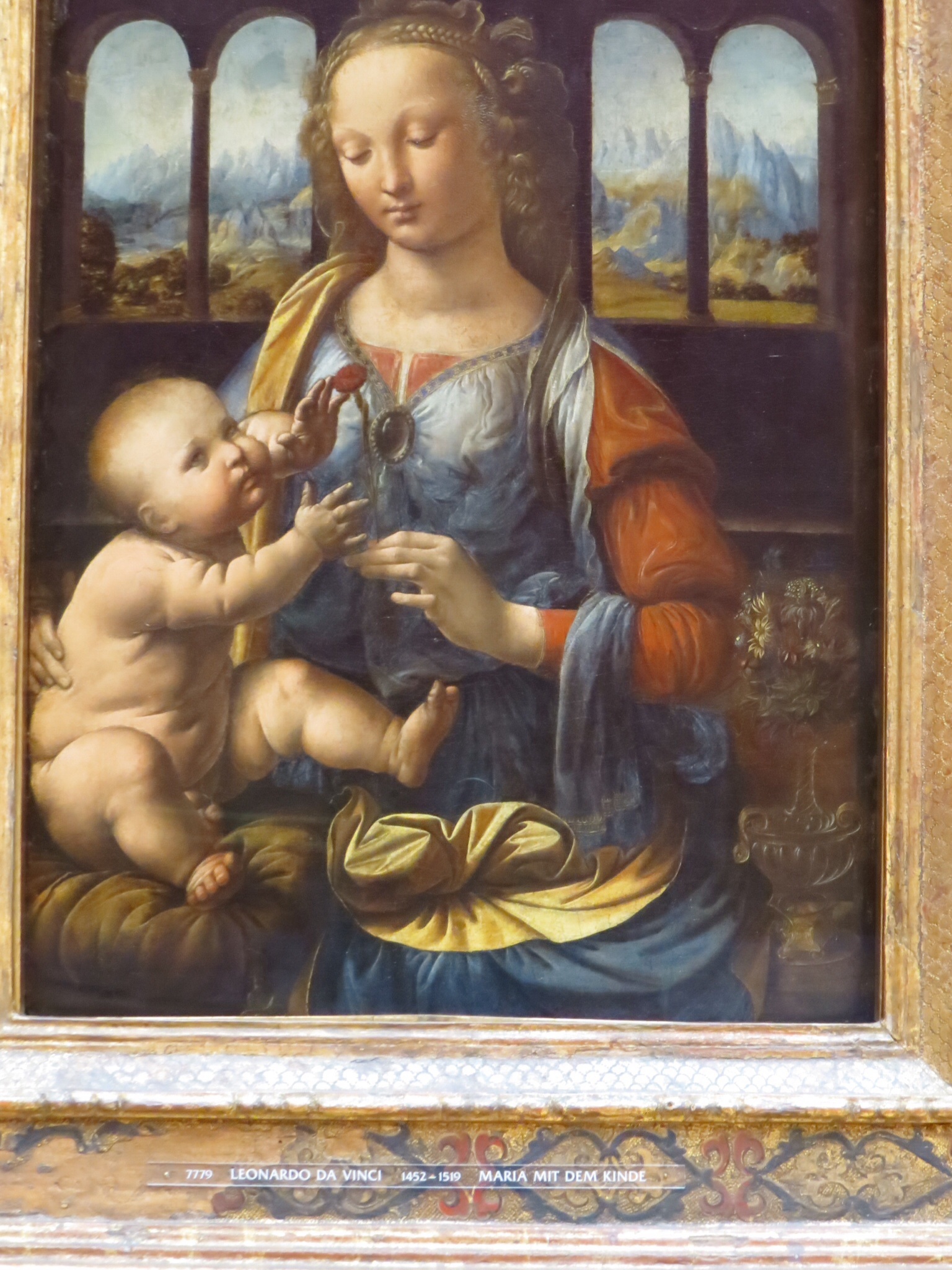
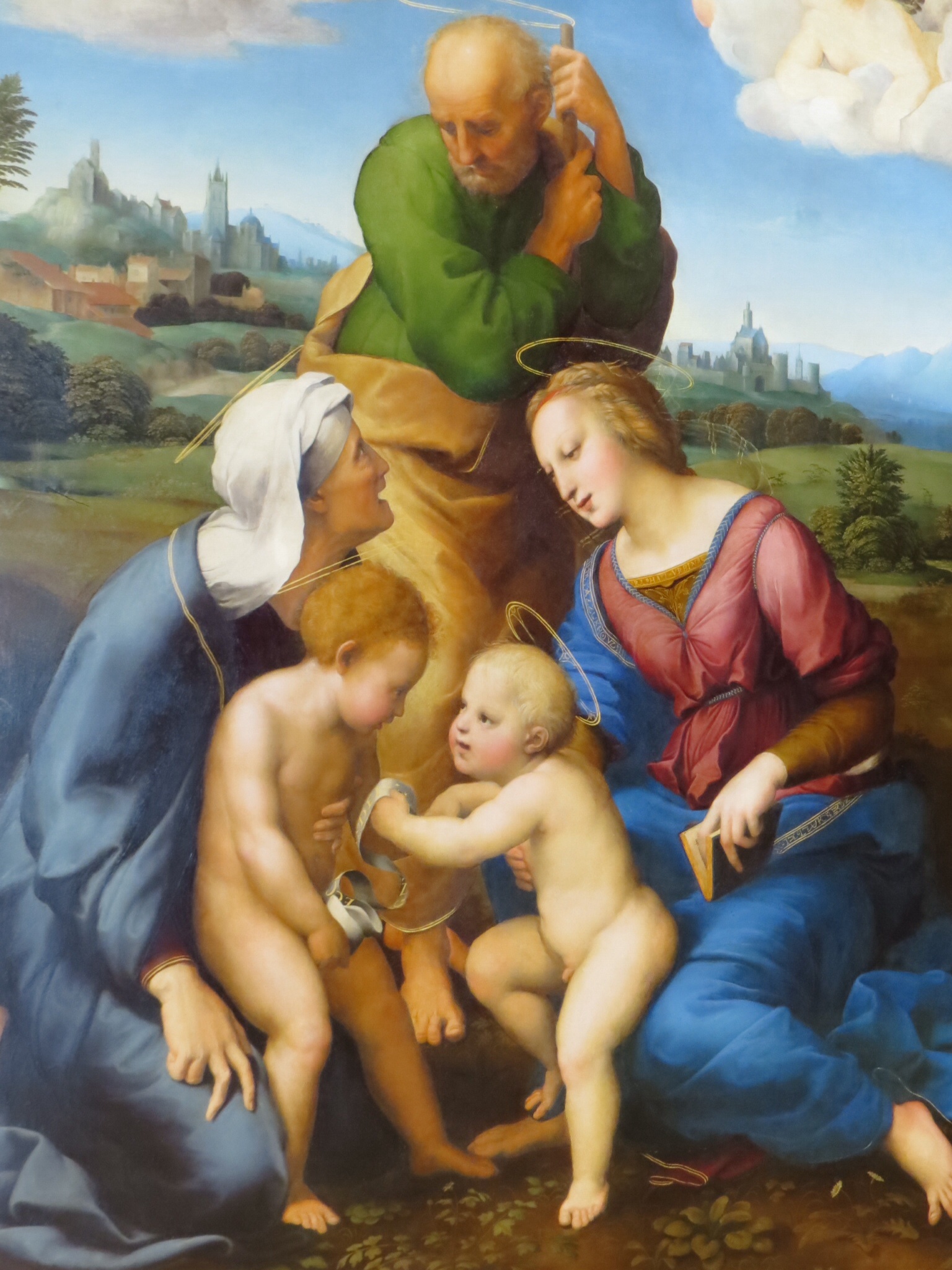
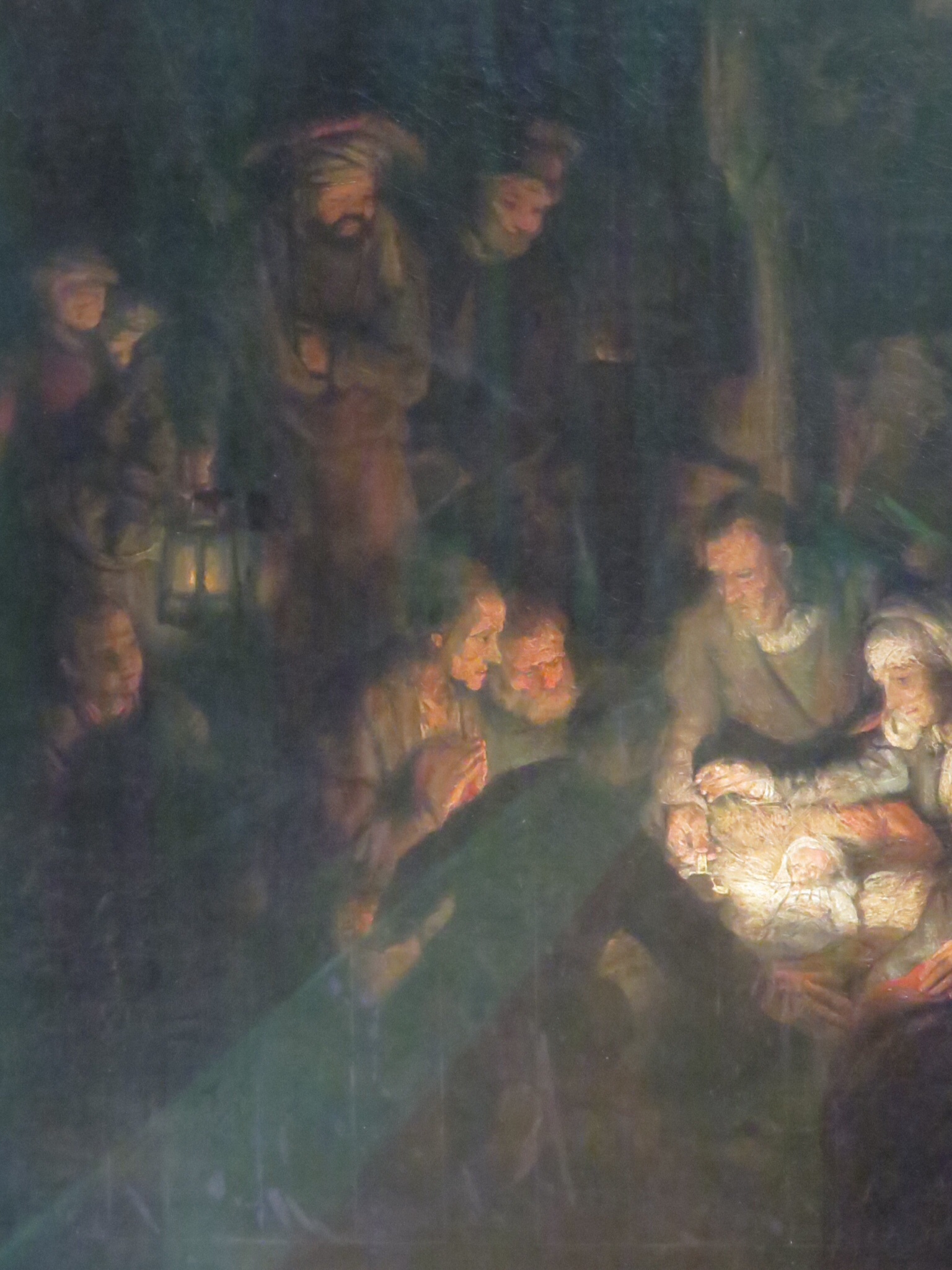
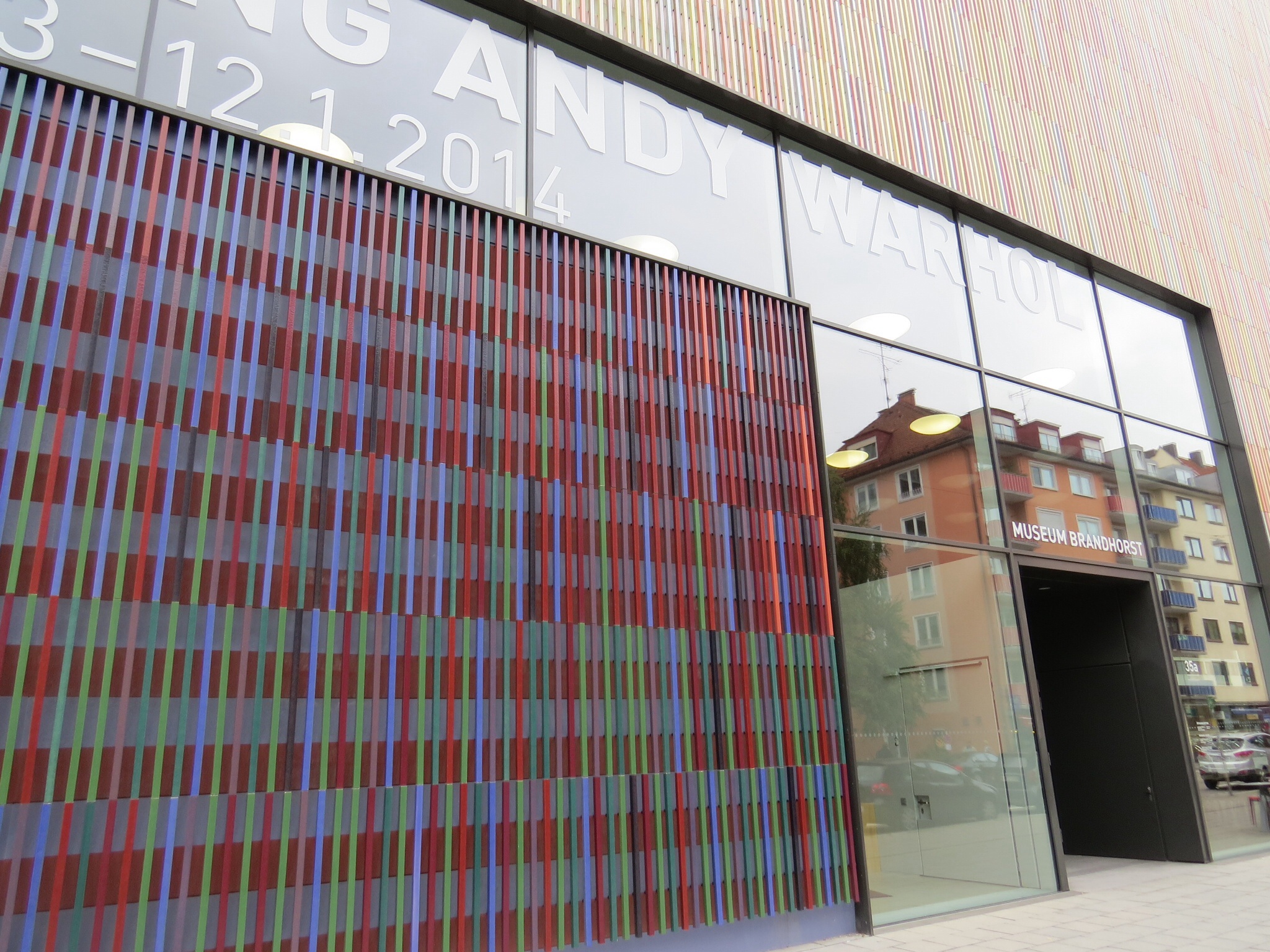
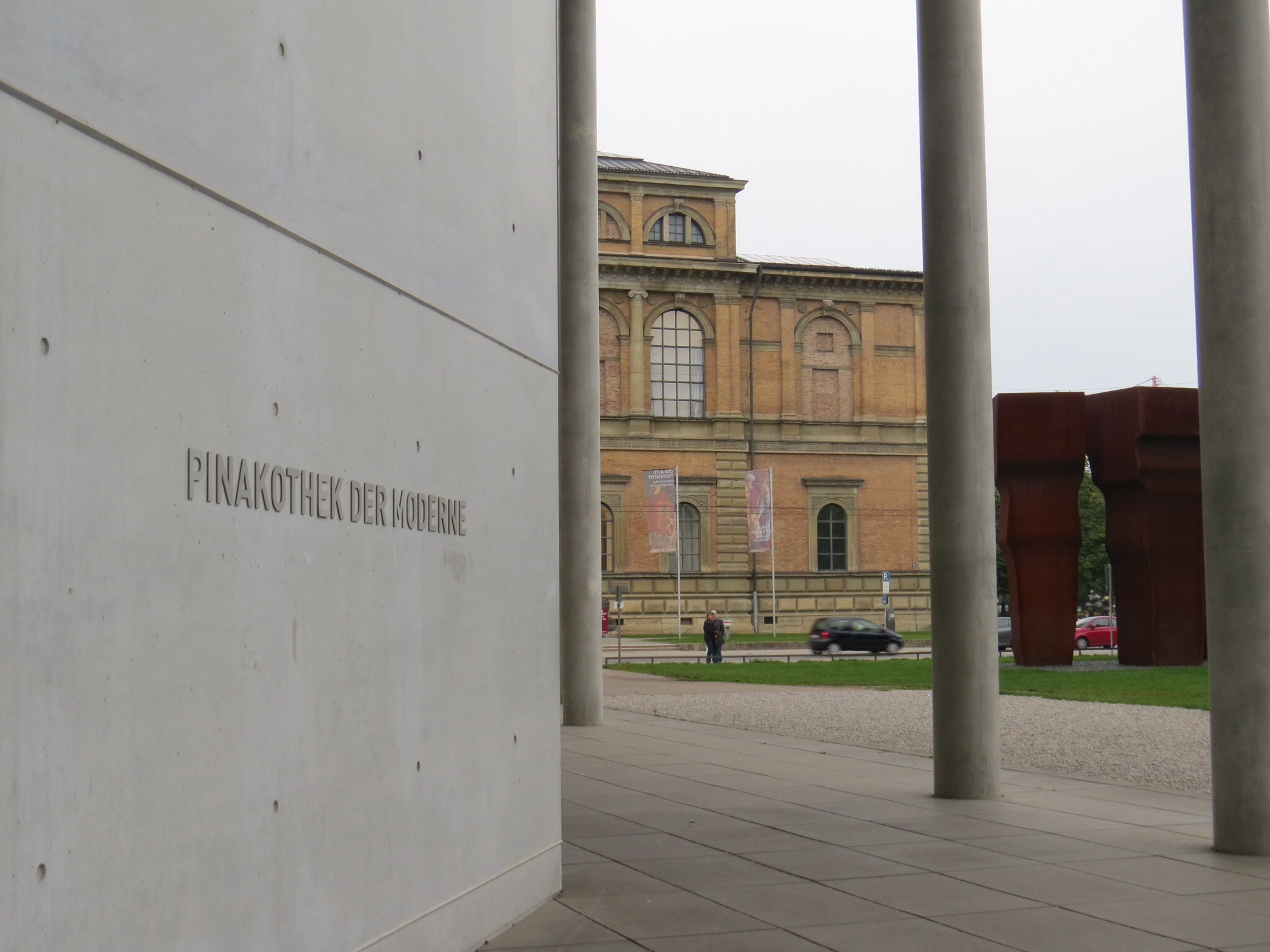
That wasn’t my area of interest, but I did visit an area of the City called the Kunstareal (art district) which has several large, impressive museums on a single square. The Alte Pinakothek (“old gallery”) is devoted to classical paintings and sculpture, the Neue Pinakothek holds the collection of 19th Century art, and the Pinakothek der Moderne holds modern and post-modern art. In addition, a private museum, the Museum Brandhorst, has a large collection of Andy Warhol paintings. There are also Egyptian and Greek museums of antiquities, and several others in the square. I focussed on the art.
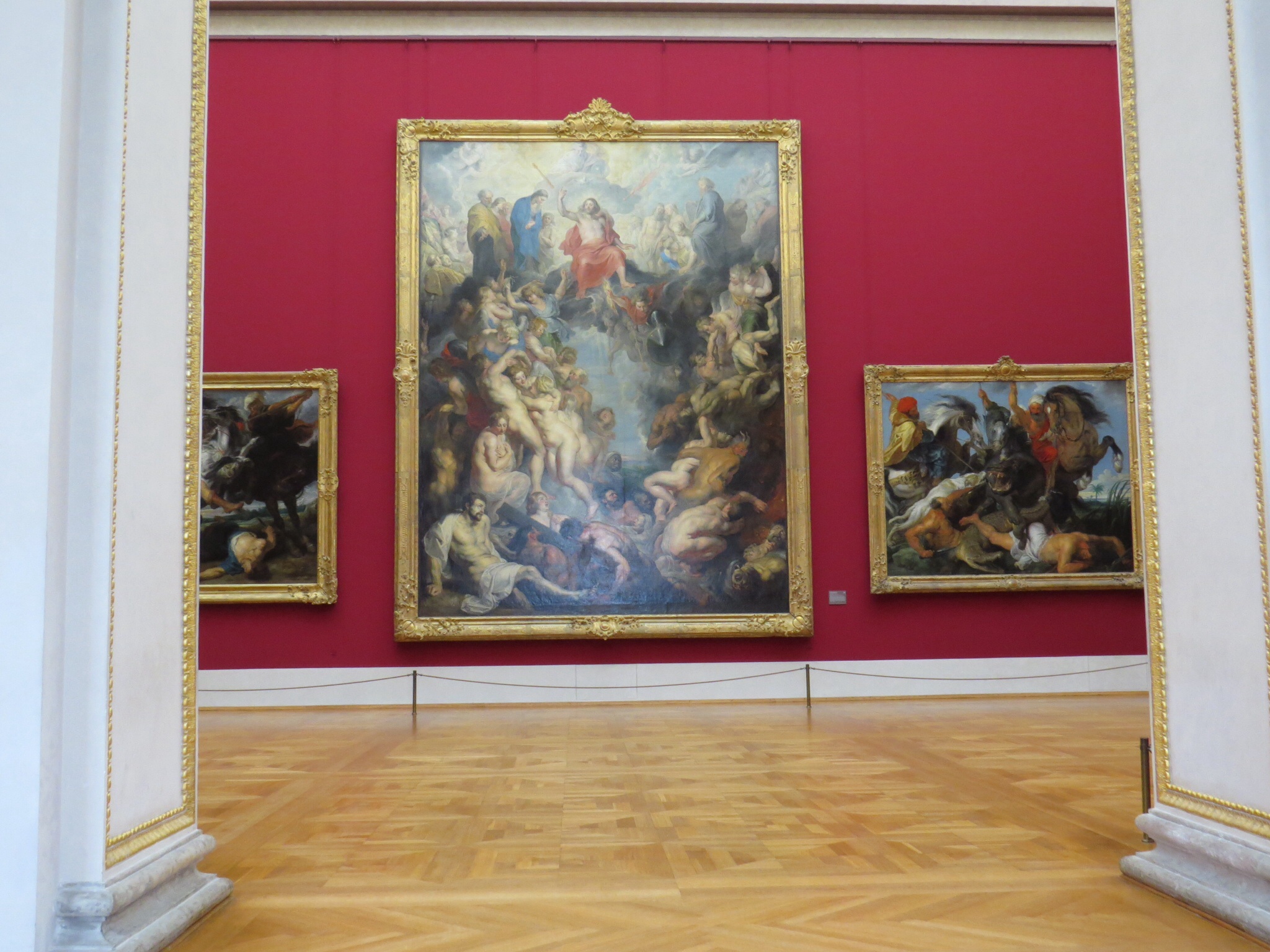
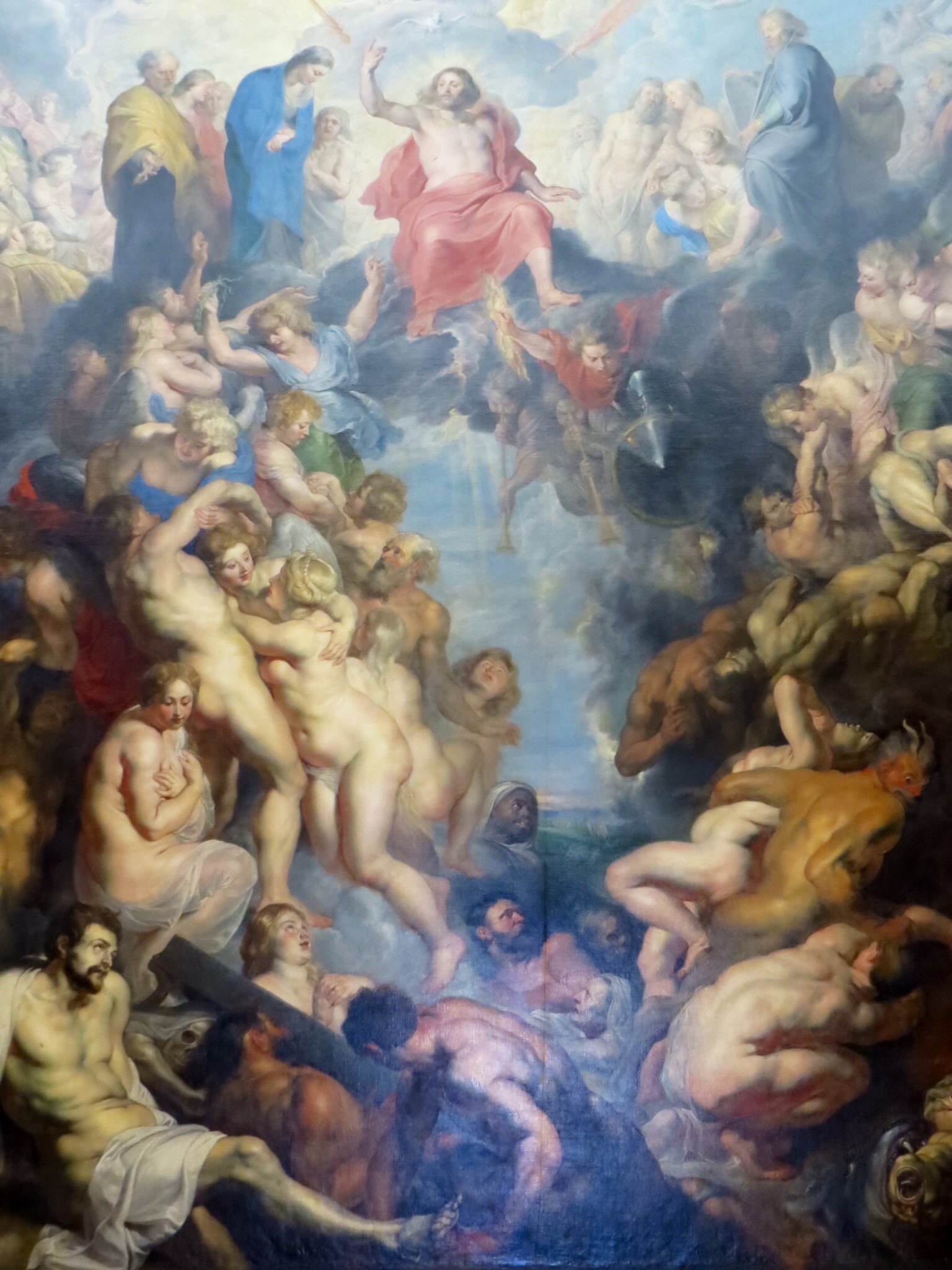
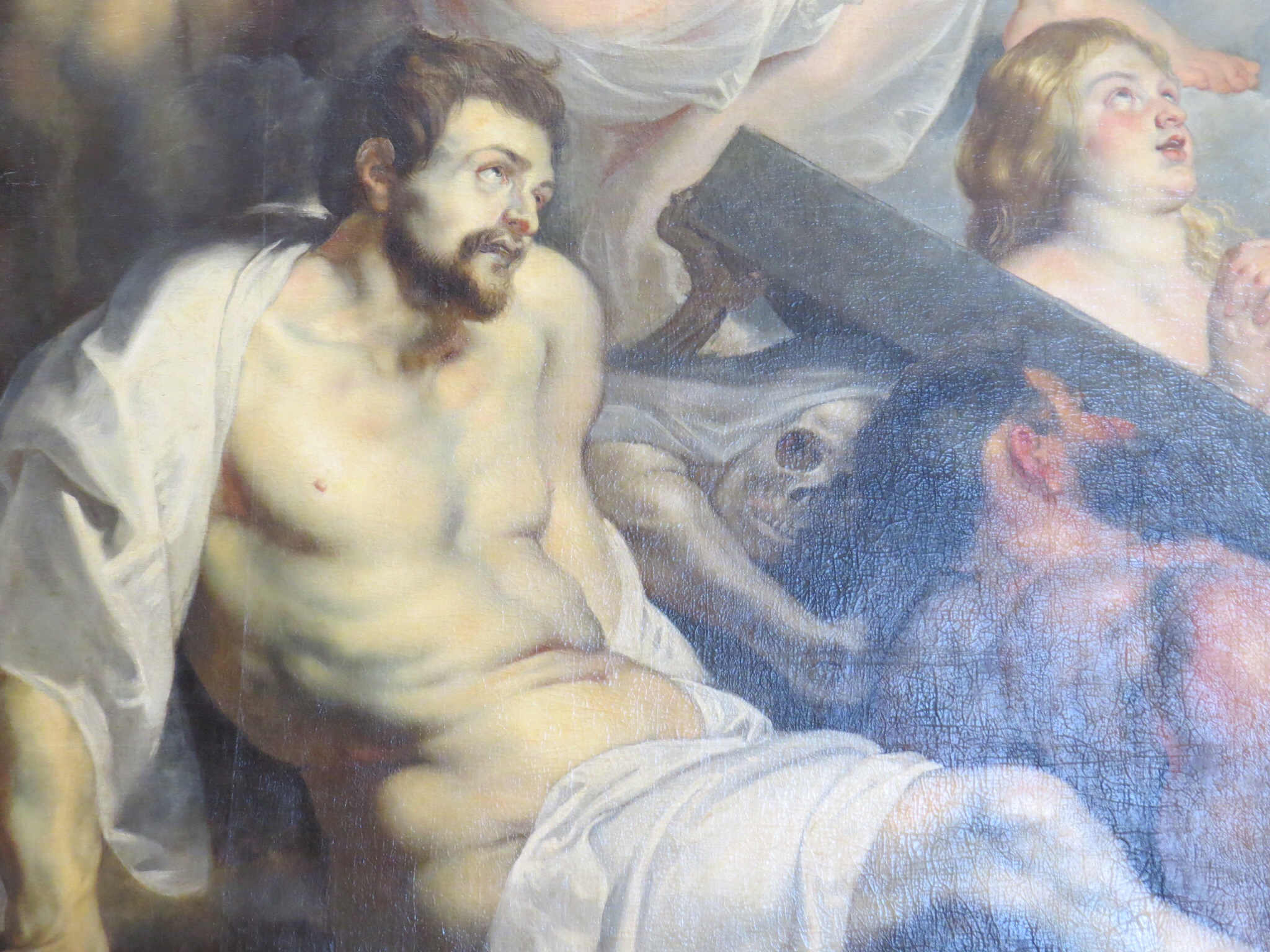
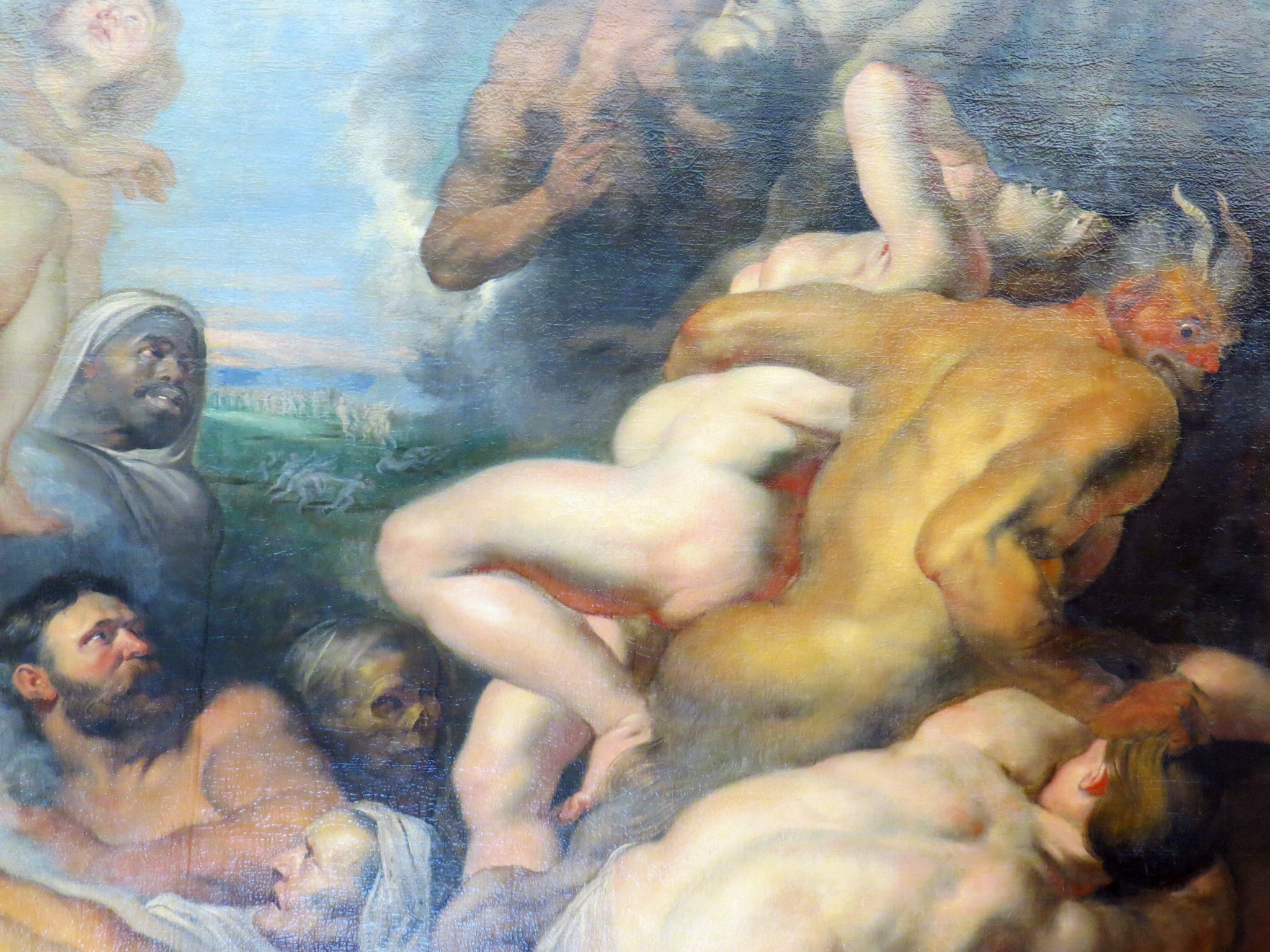
The main reason I went to Munich was to see Reubens’ Great Last Judgement, painted in 1617. It was the largest canvas ever painted in its time, and the room within the Alte Pinakothek it is housed in was built for it. The museum was built in 1836 but this piece had been in the Wittlesbach dynasty’s collection since the late 1600’s or early 1700’s when it was ordered from Reubens.
Reubens’ Last Judgement
Detail, Reubens’ Last JudgementDetail 2, Reubens’ Last Judgement
Da VinciBotticelliRaphael
Titian
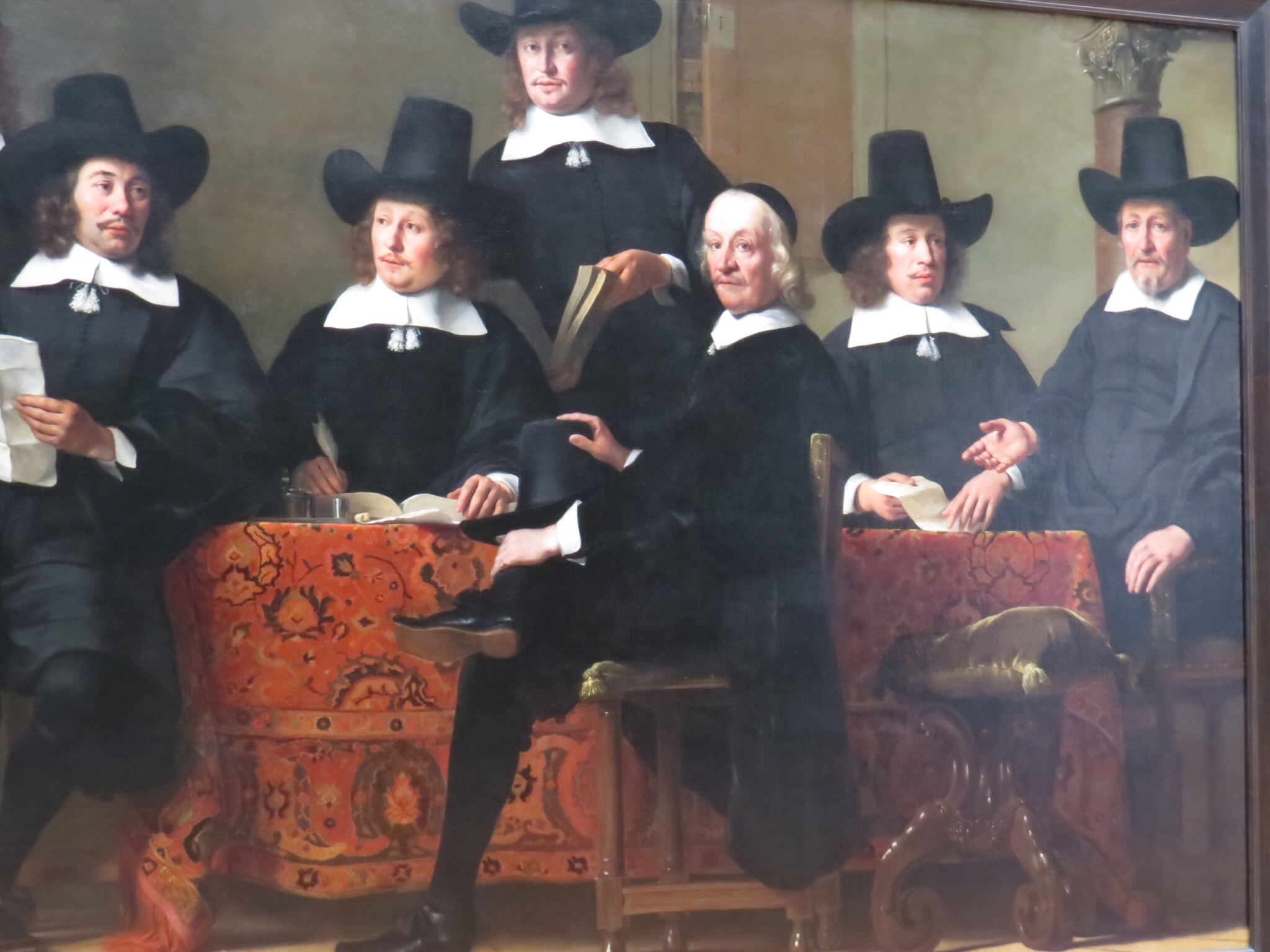
RembrandtThe Governors of the Amsterdam Wine Merchants’ Guild by Ferdinand Bol
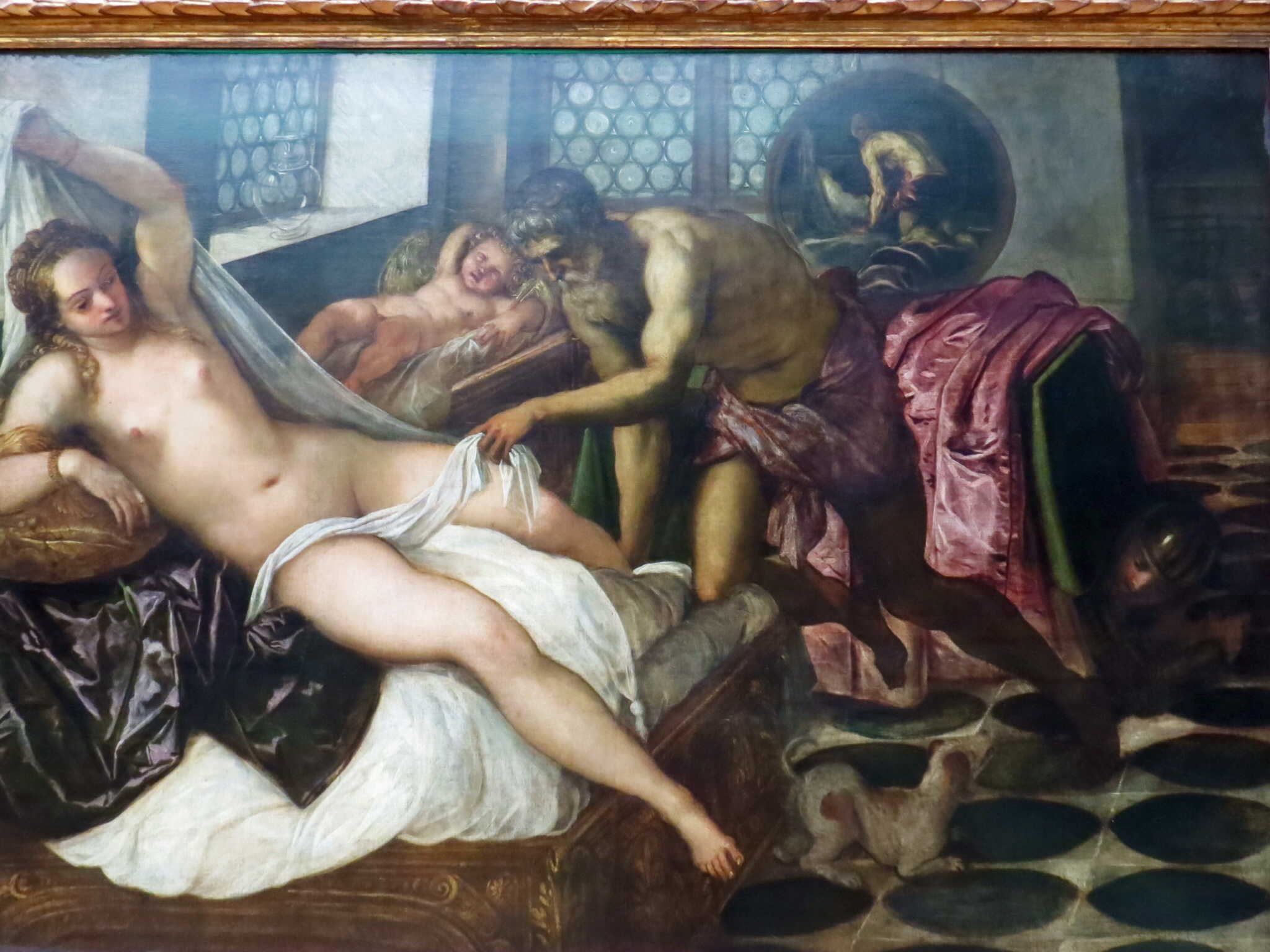
This next painting is fun after you look at it for awhile – Just at the moment a tryst between Venus and Mars is being discovered – Mars is hiding under the bed hoping the dog won’t bark, but too late, and in case there is any doubt about the scene, look at Cupid, in the same pose as Venus, exhausted, spent, done.
Vulcan Surprising Venus and Mars by Tintoretto
The Brandhorst Museum, a playfully striped building, had several Andy Warhol paintings and a fascinating current exhibition of books Warhol designed or illustrated. Warhol’s art was so influenced by his work as a commercial artist. The next museum I visited, the Pinakothek der Moderne, had a display of Warhol graphic drawings which show his enormous talent. I am always amazed when someone simply picks up a pencil and puts it to paper, and magic happens. That’s talent.
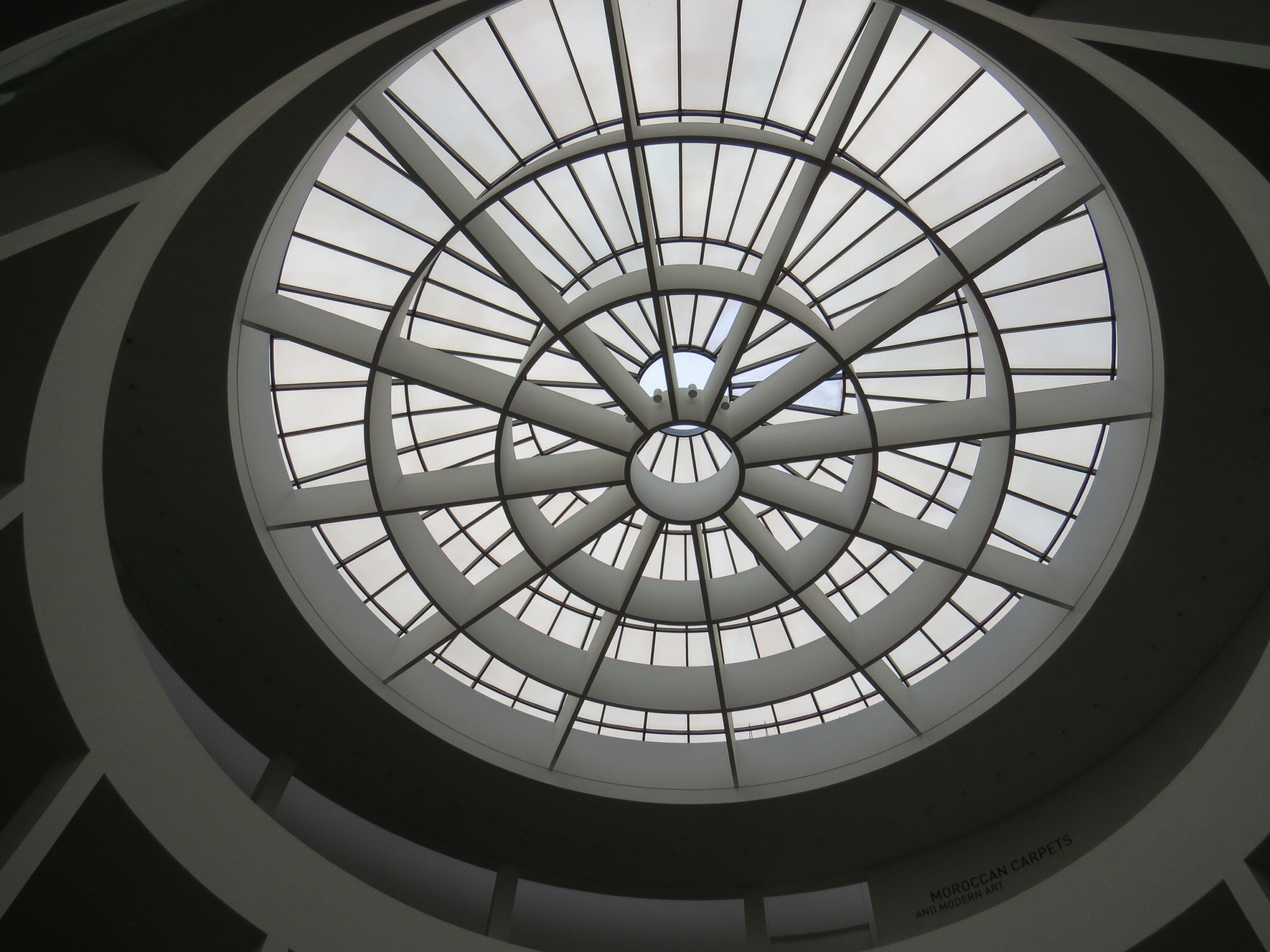
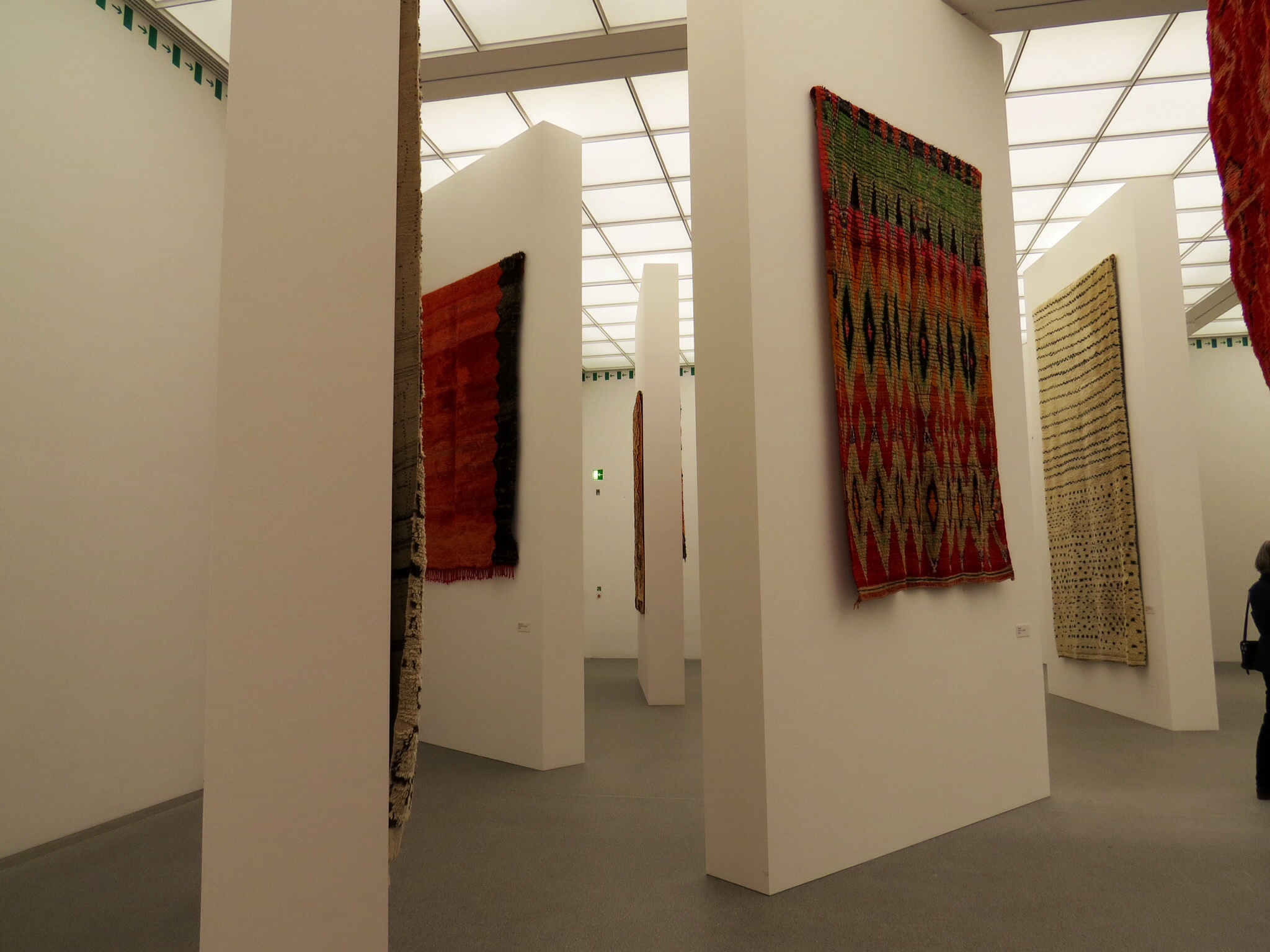
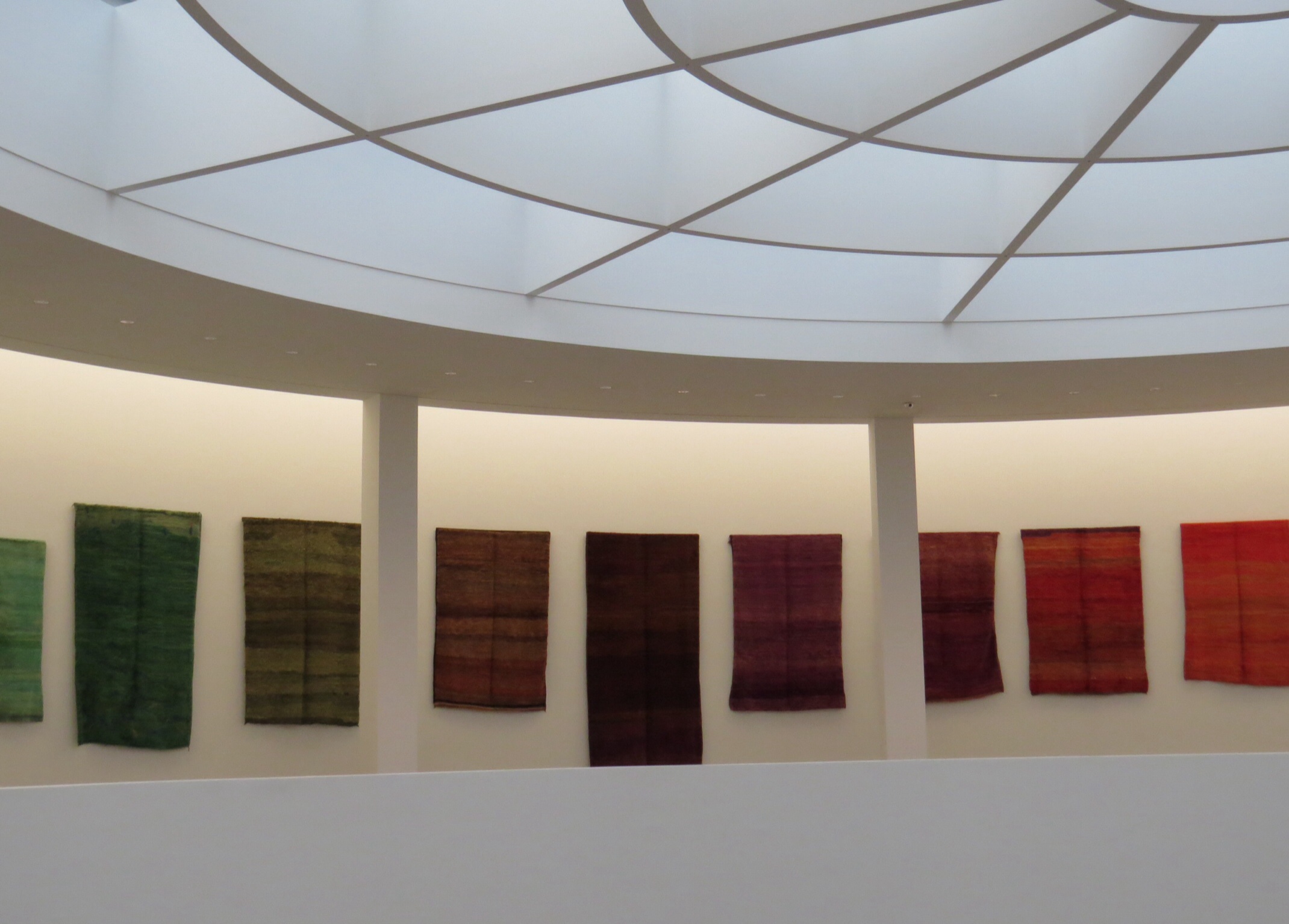
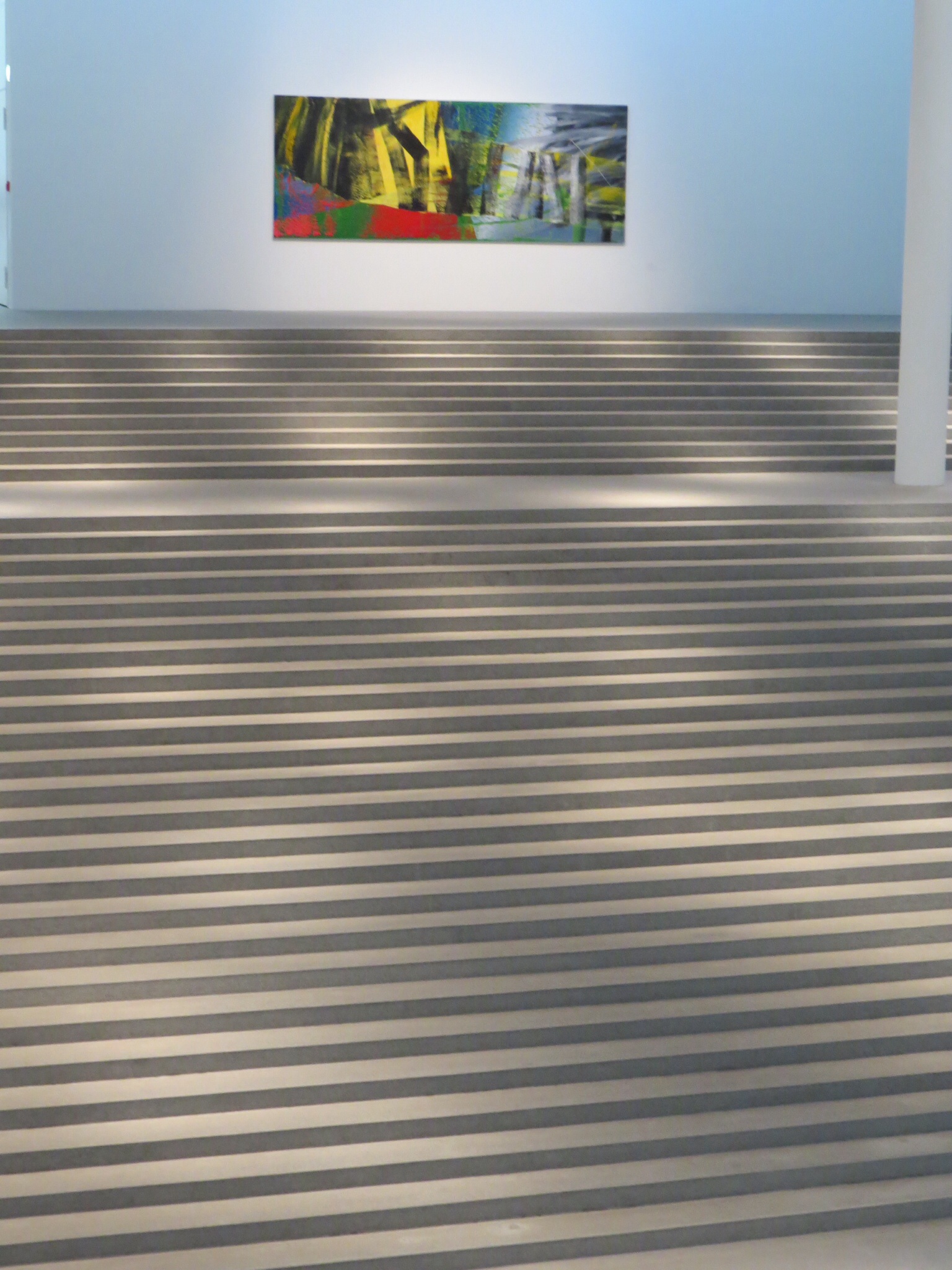
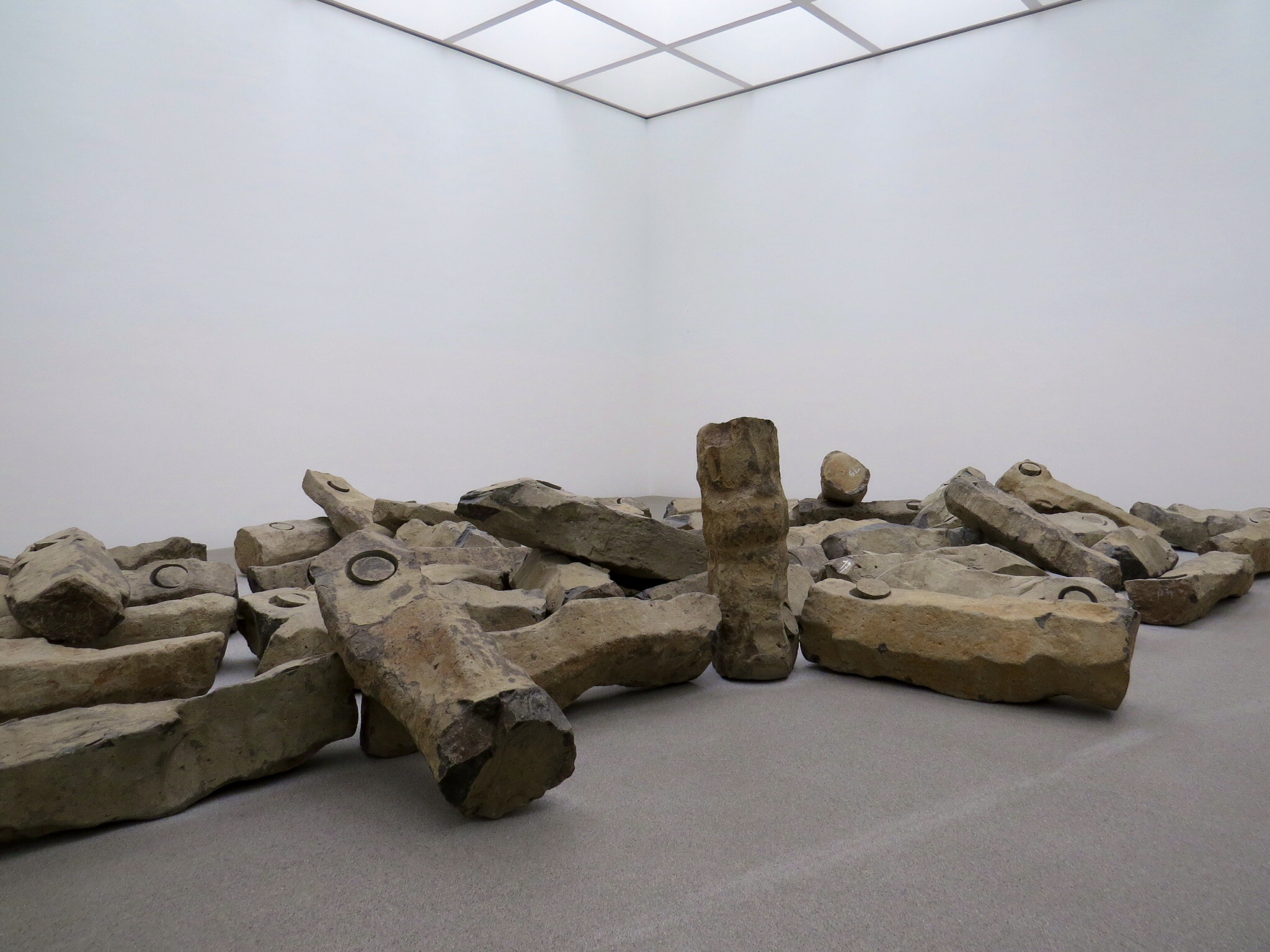
The Pinakothek der Moderne had just re-opened after renovations, even though it was a relatively new building; this meant there were lots of locals out to see the new exhibits as well as tourists. The building is outstanding and in some ways reminded me of the Guggenheim in NYC but doesn’t have the same intimacy, It does have a much bigger collection and had a fabulous display of a Moroccan rugs. All the reds popped out against the white and concrete. The curator was trying to make a case for this being avante-garde work, which I thought was a bit of a stretch. They were beautiful rugs, and there has long been debate about what is art and what is craft which I think depends largely on the piece. The building was also large enough to accommodate large installation art which I always find fascinating, with a little guidance on its interpretation. There were also a few familiars – Matisse and Picasso.
On Thursday, I had the option of seeing one more Baroque Palace, the Nymphenberg (which has an incredible gold carriage that was used by the Faerie Tale King), or heading to the Neue Pinakothek. Since it was teeming rain and I have seen so many palaces, I opted for the gallery. This also gave me the luxury of sleeping in and taking the morning off.
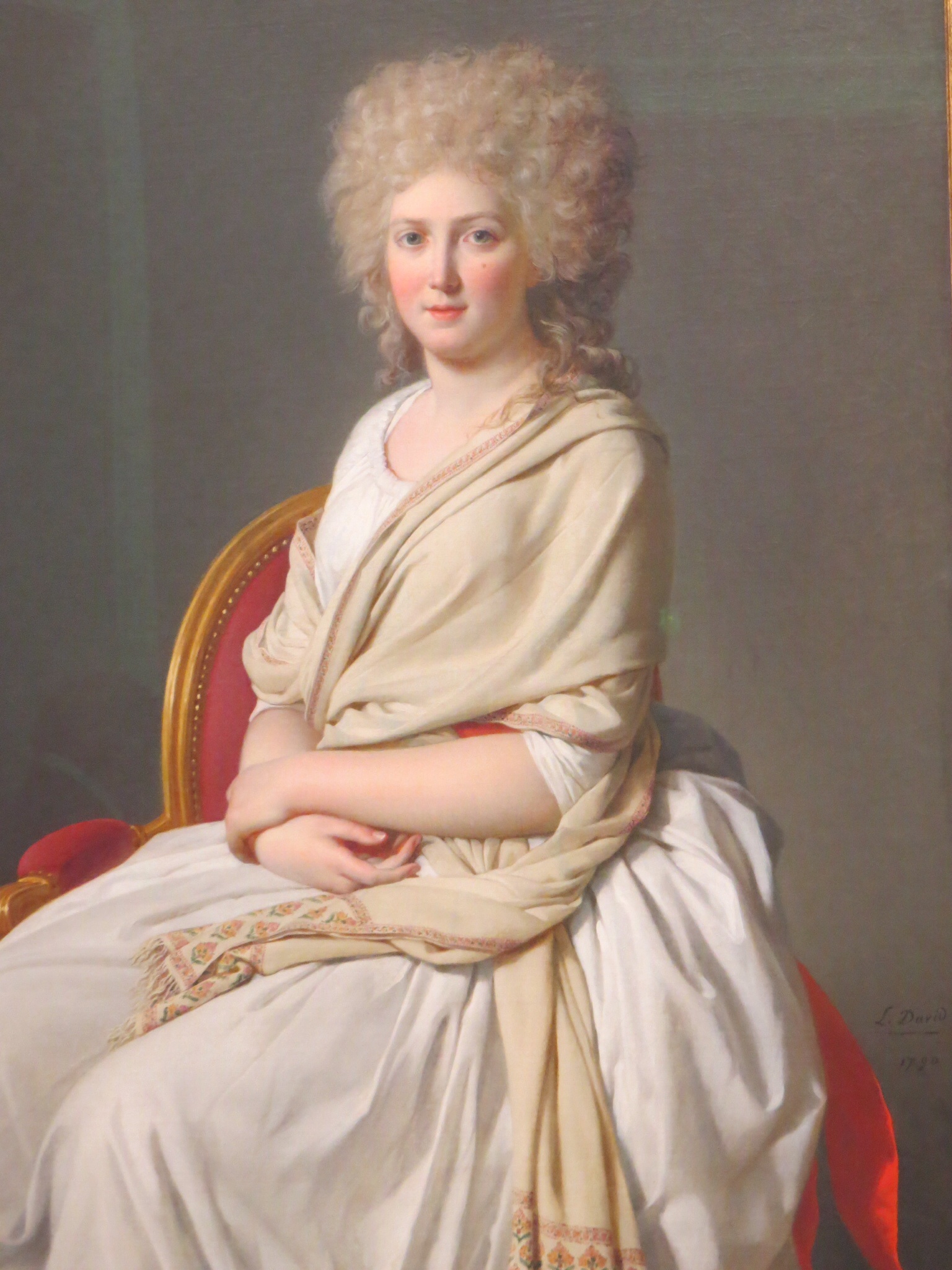
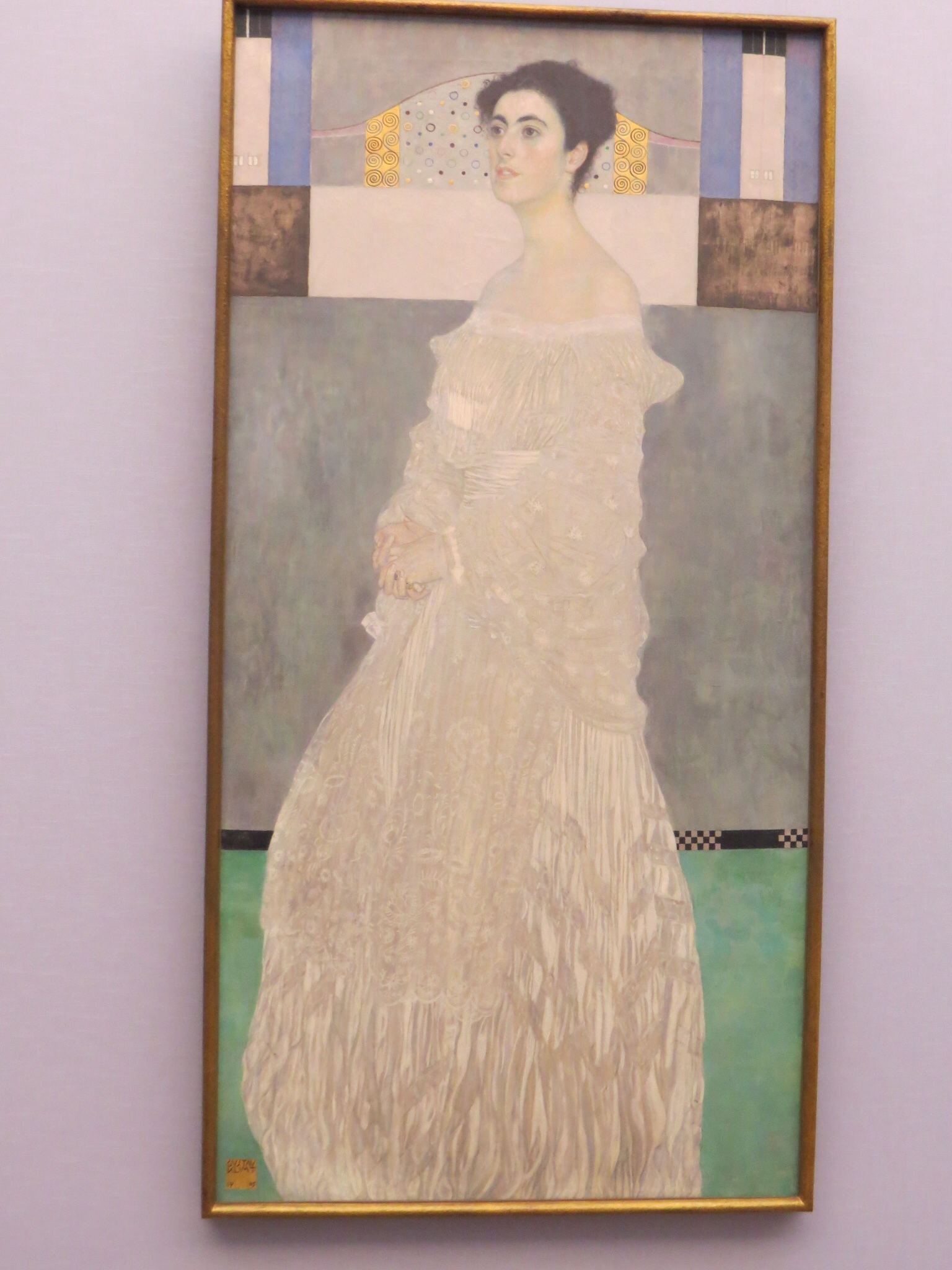
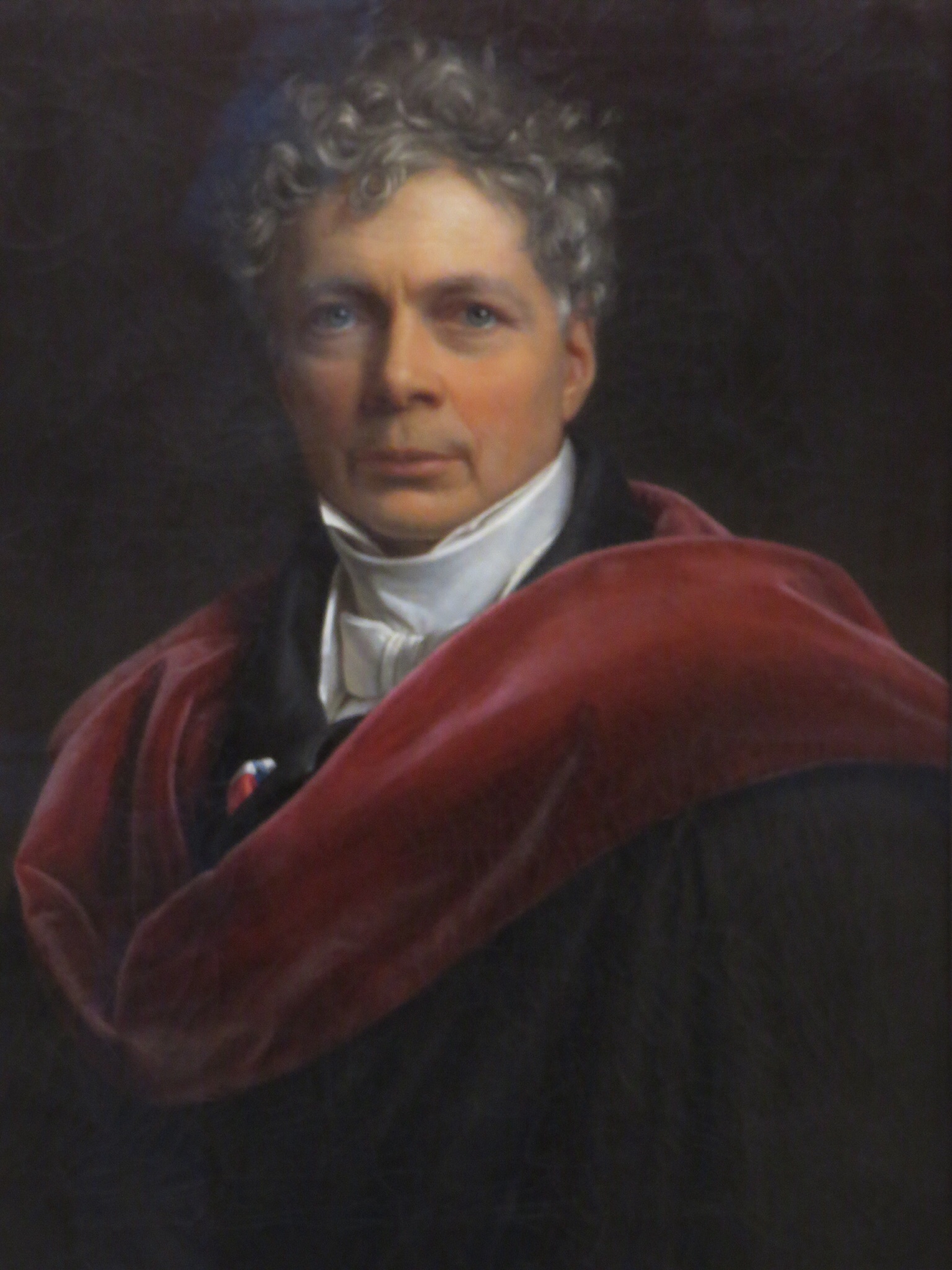
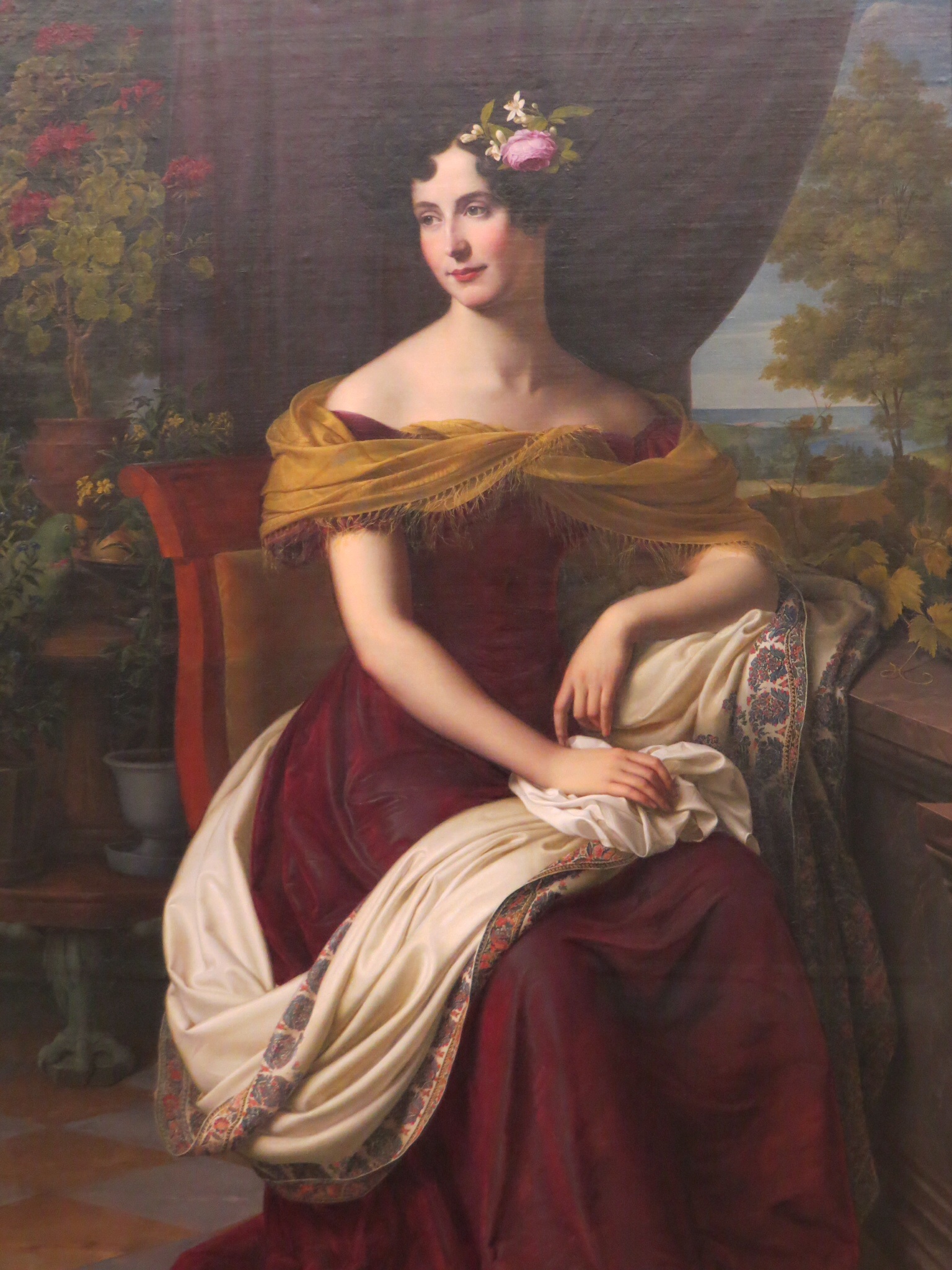
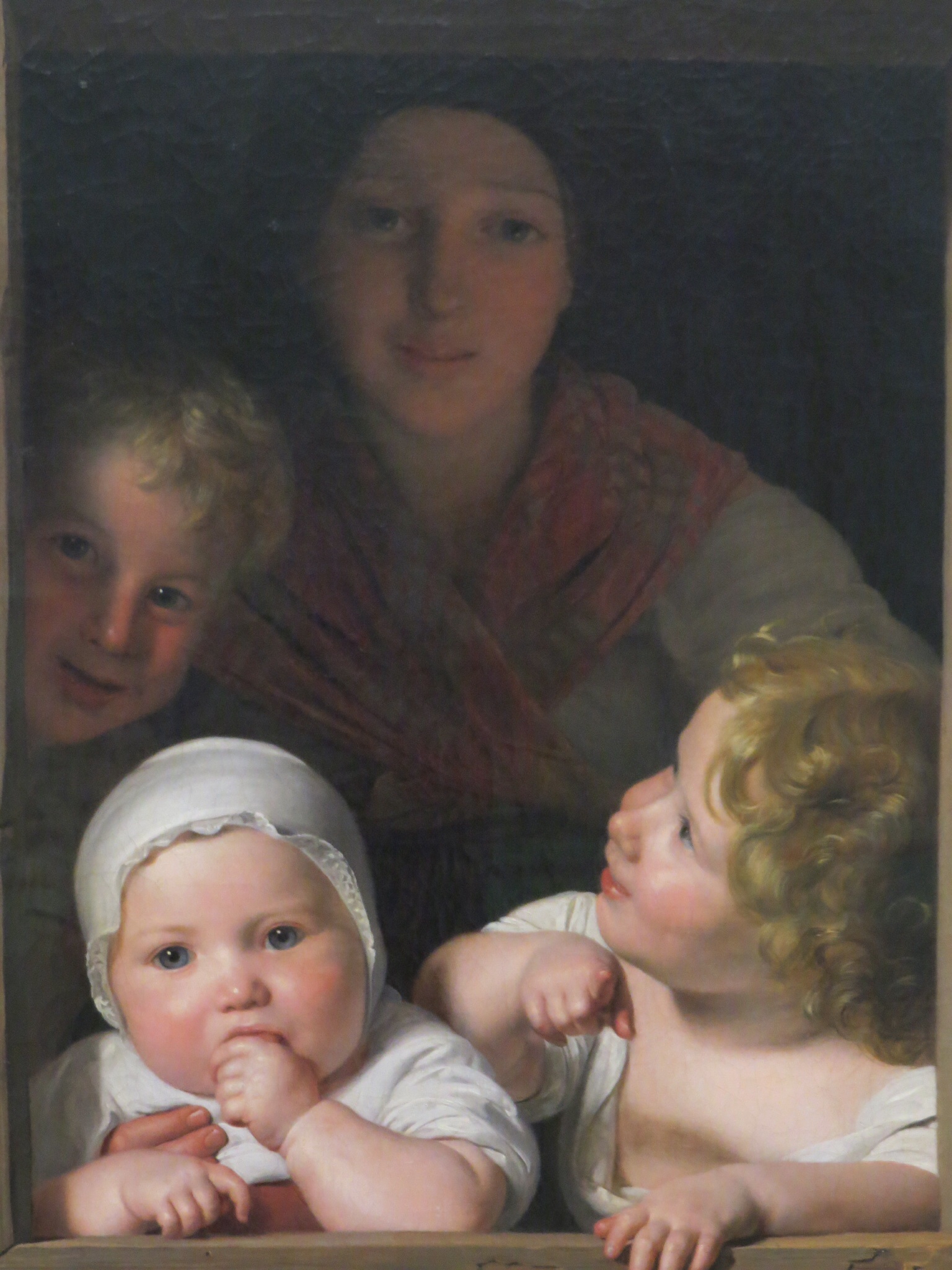
Among its collection of 19th Century art are many Impressionist paintings and paintings by Klimt and Schiele, two important Austrian painters. Klimt is recognized as the father of the Art Deco art movement. I was also impressed by the number of amazing portraits by German painters.
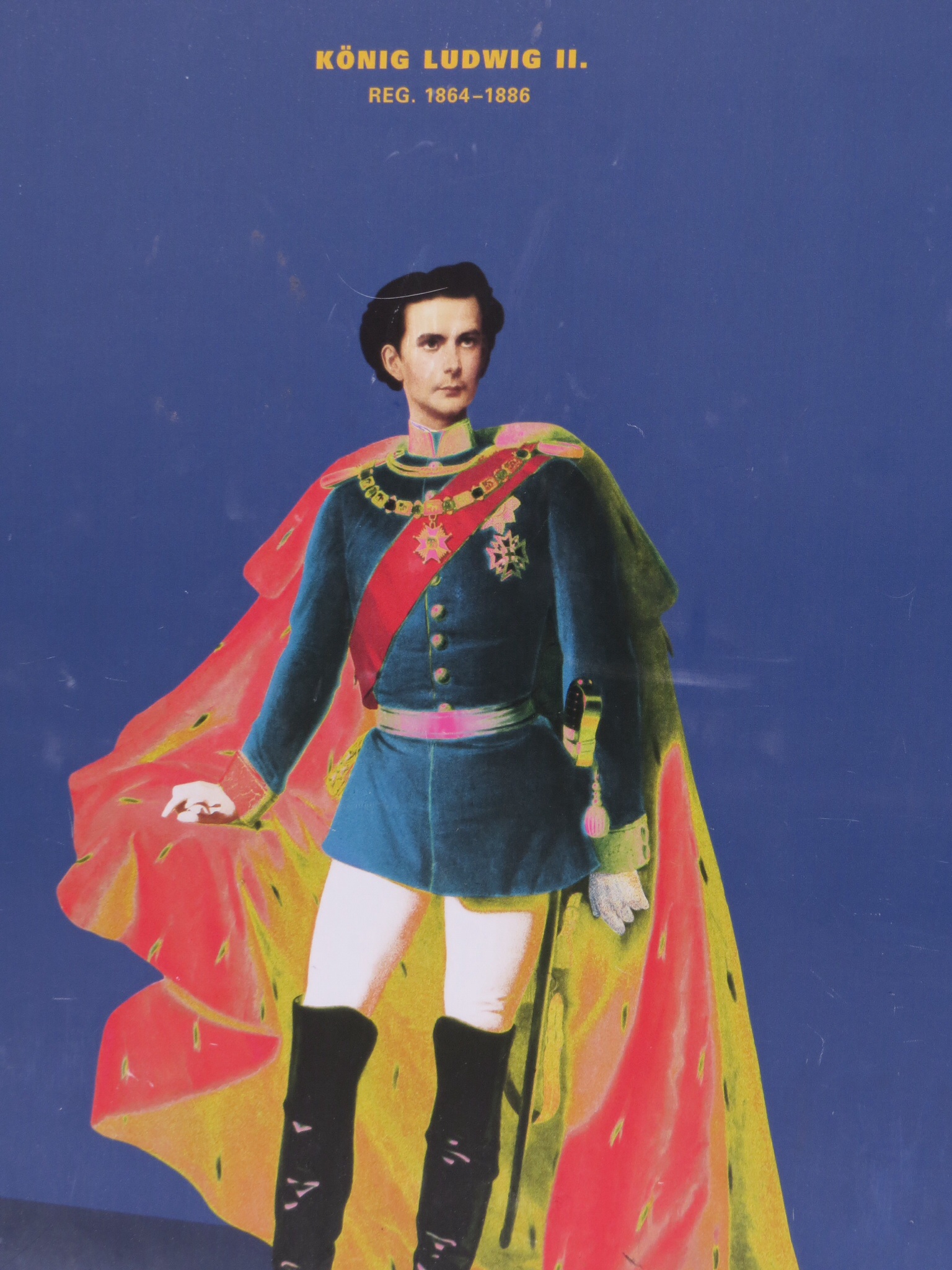
It was interesting to notice that although there were many, many portraits and busts of Ludwig I, I did not find a single painting of Ludwig II. I am not sure whether this was because he didn’t leave an impression on his country, or whether he simply didn’t wish to sit for a portrait and have his likeness on display. I have seen a couple of portraits online which I believe are held at his palaces.
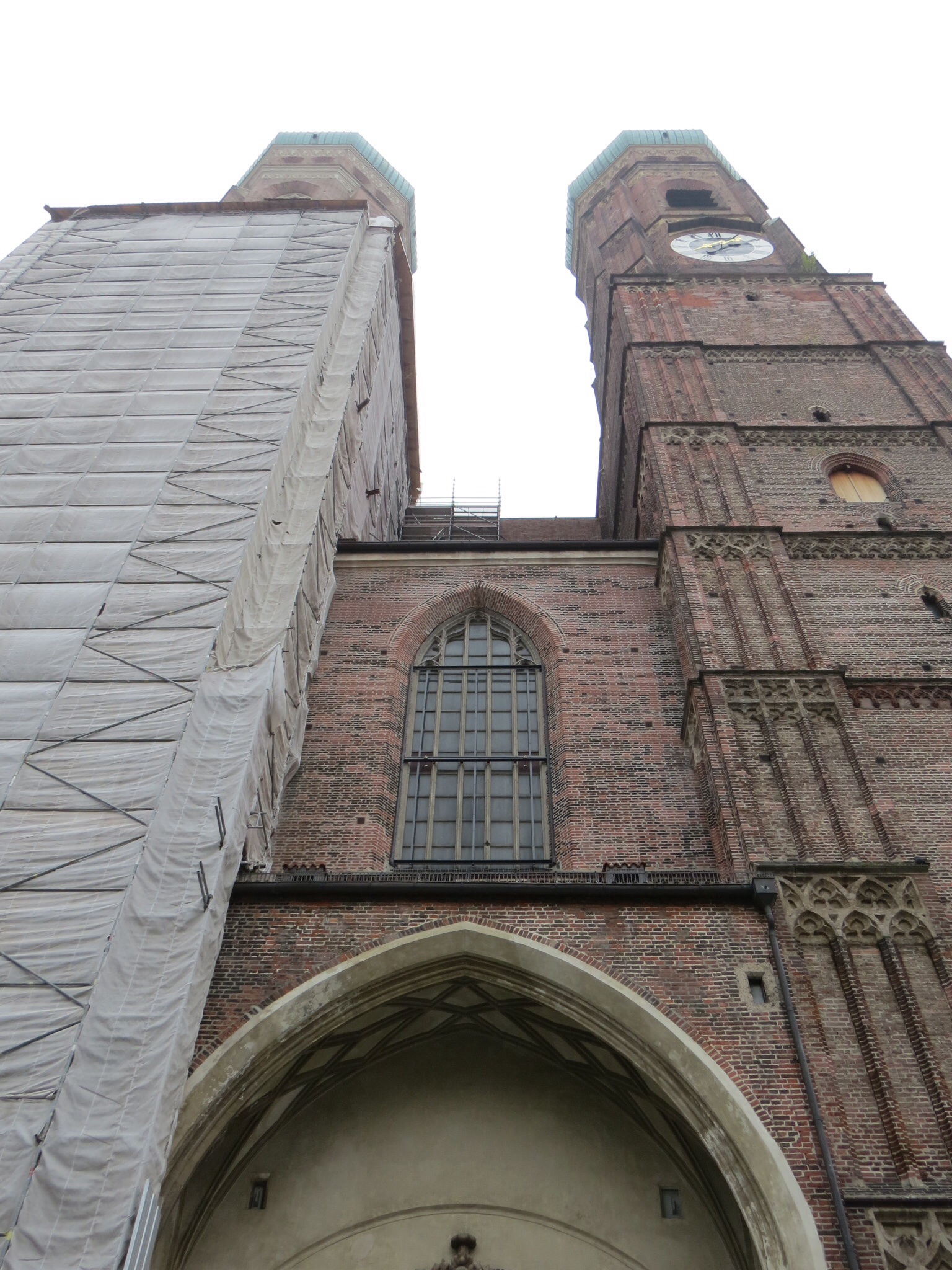
For such a small city, these museums really put Canada to shame which, except for the National Gallery in Ottawa, isn’t hard to do. The Alte Pinakothek was the first built solely to function as a gallery and became an example throughout Europe. This may be a fact of history, but European countries were as busy with wars and revolution as we were with founding a nation. And I think they are leaving us behind in this era as well. Everywhere I went, and it was the same in Italy and Paris as well, there was scaffolding and sheeting up, which appear in some of my photographs. Even the Trivoli fountain was half enshrouded when I was in Rome. I see this as a different kind of beauty. Restoration and preservation of the priceless art in the architecture, churches, palaces, museums and statuary shows a love of history, culture and art. It is being funded by taxpayers who take pride and interest in their own unique culture and history. Yes, populations are increasing and gaps are being filled with modern buildings, but the antiquities are not being ploughed down to make way for more condos. Perhaps Canada and the US haven’t been countries long enough to value our history and preserve it for future generations.
It was pouring even harder by the time I had seen every painting in the museum. I waited around awhile, but eventually decided to head downtown for dinner before my 7pm final concert on my last night. I found a cozy little Italian place for dinner and watched the rain turned to snow!! I was soaked through and it was windy, cold and wet. I have had such fabulous weather overall, it was kind of a fitting way to be sent home from Central Europe and Russia, with snow nipping at my heels!
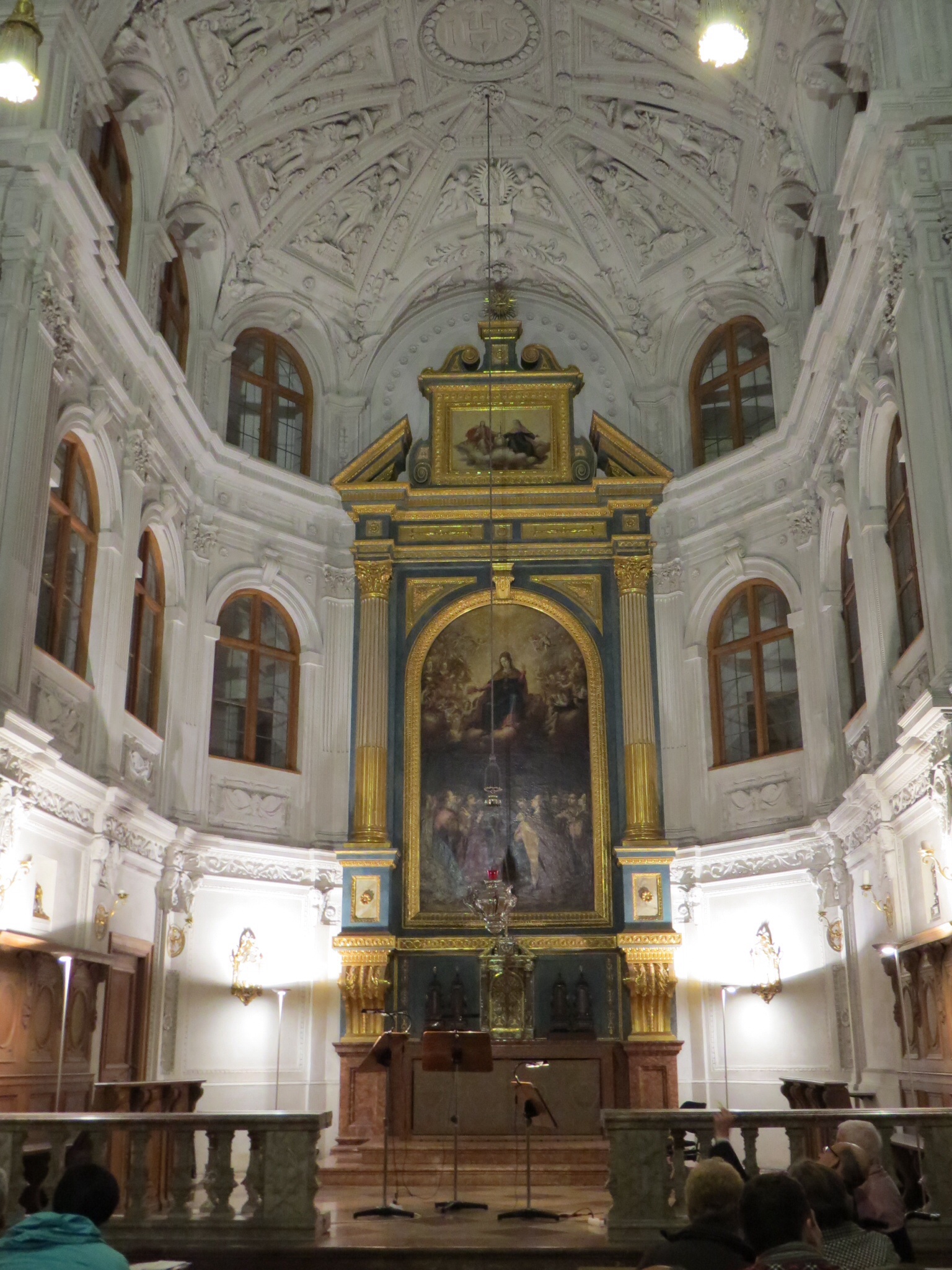
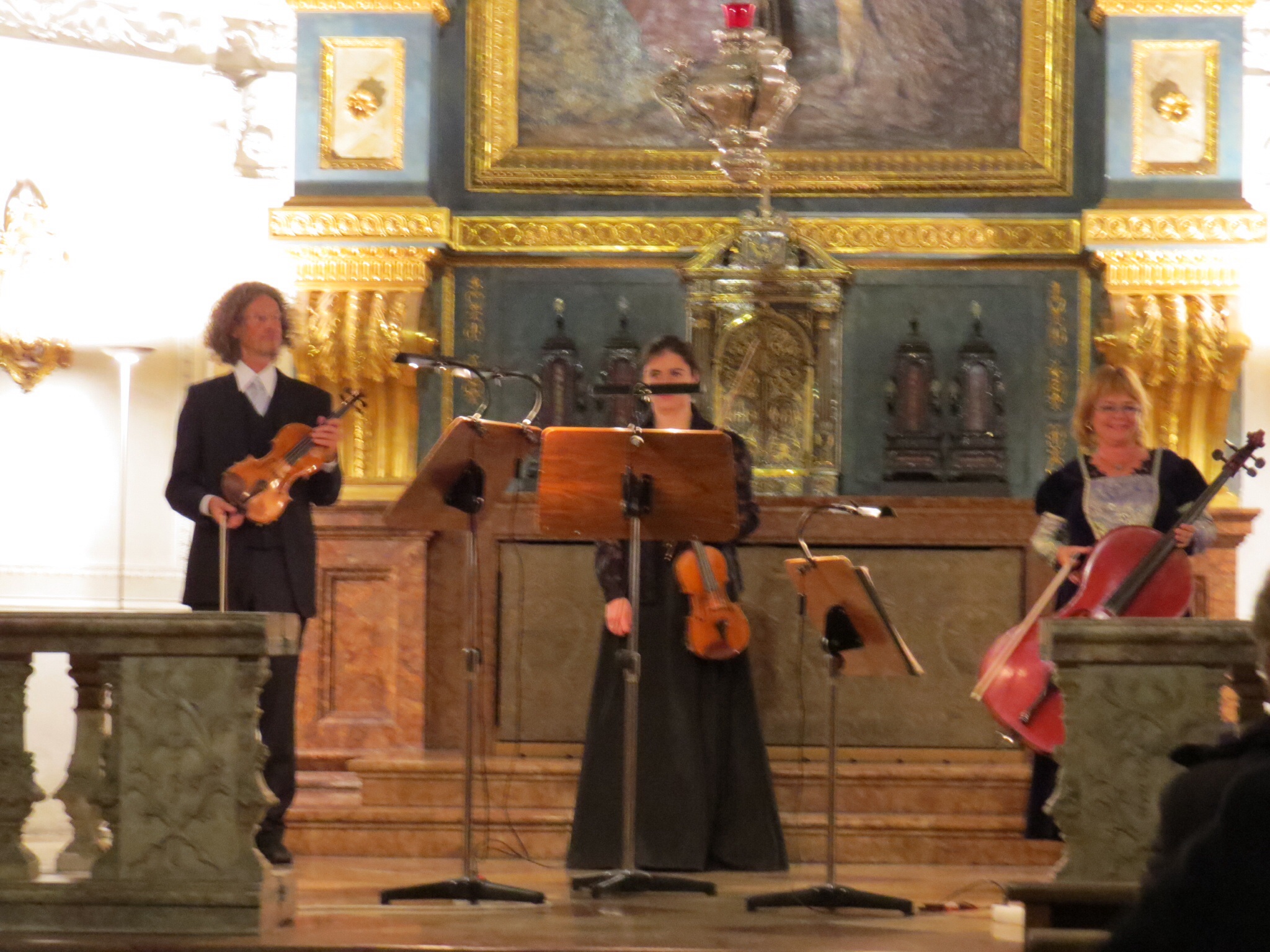
The concert was in a beautiful Baroque chapel in the palace, the Residenz, in downtown Munich, and was magical, two violinists and a cellist playing mainly Vivaldi music. The acoustics were incredible and the setting so fitting for the music. This was a lovely way to wind down what has been an amazing five weeks full of art, music and history.
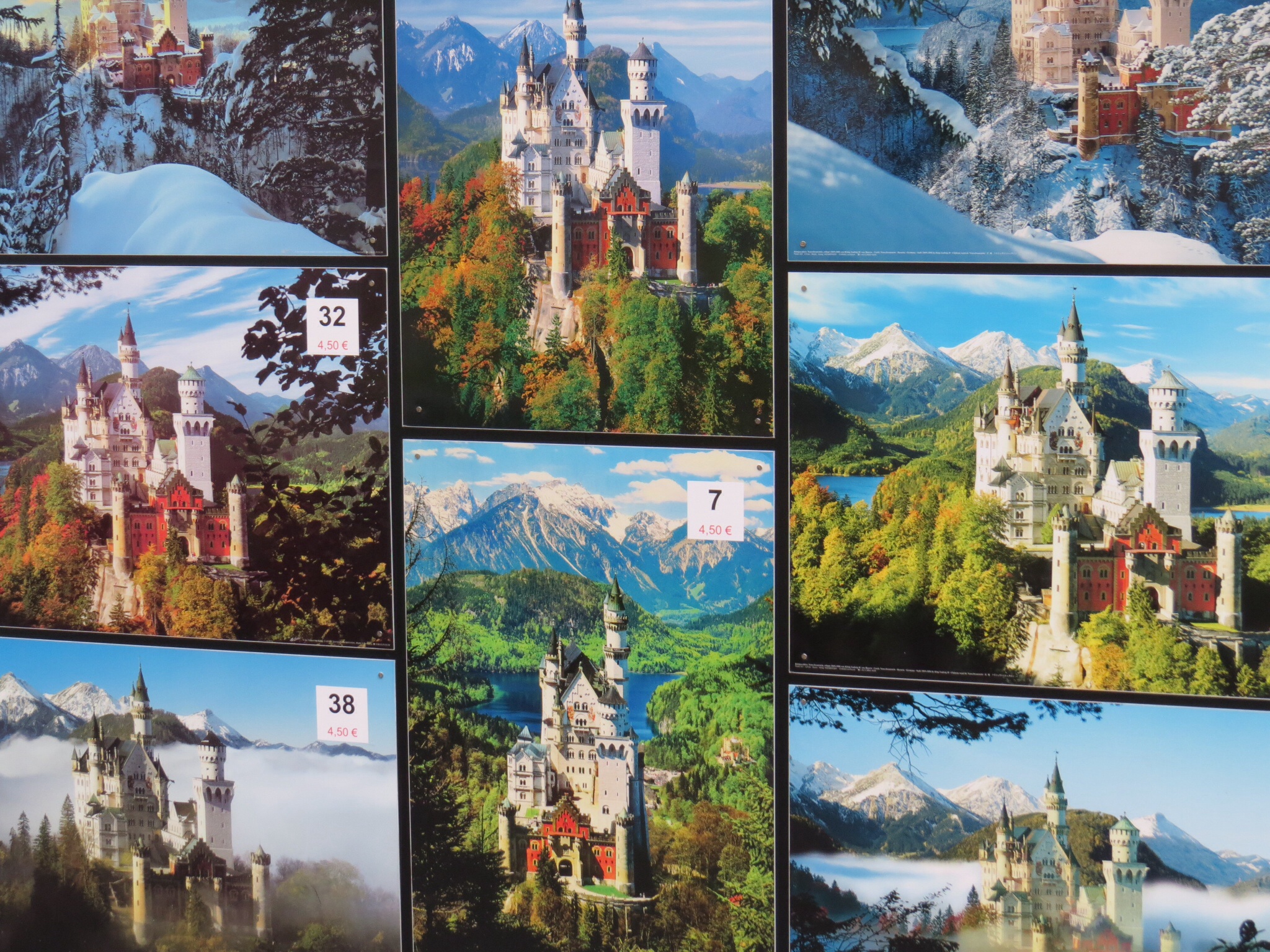
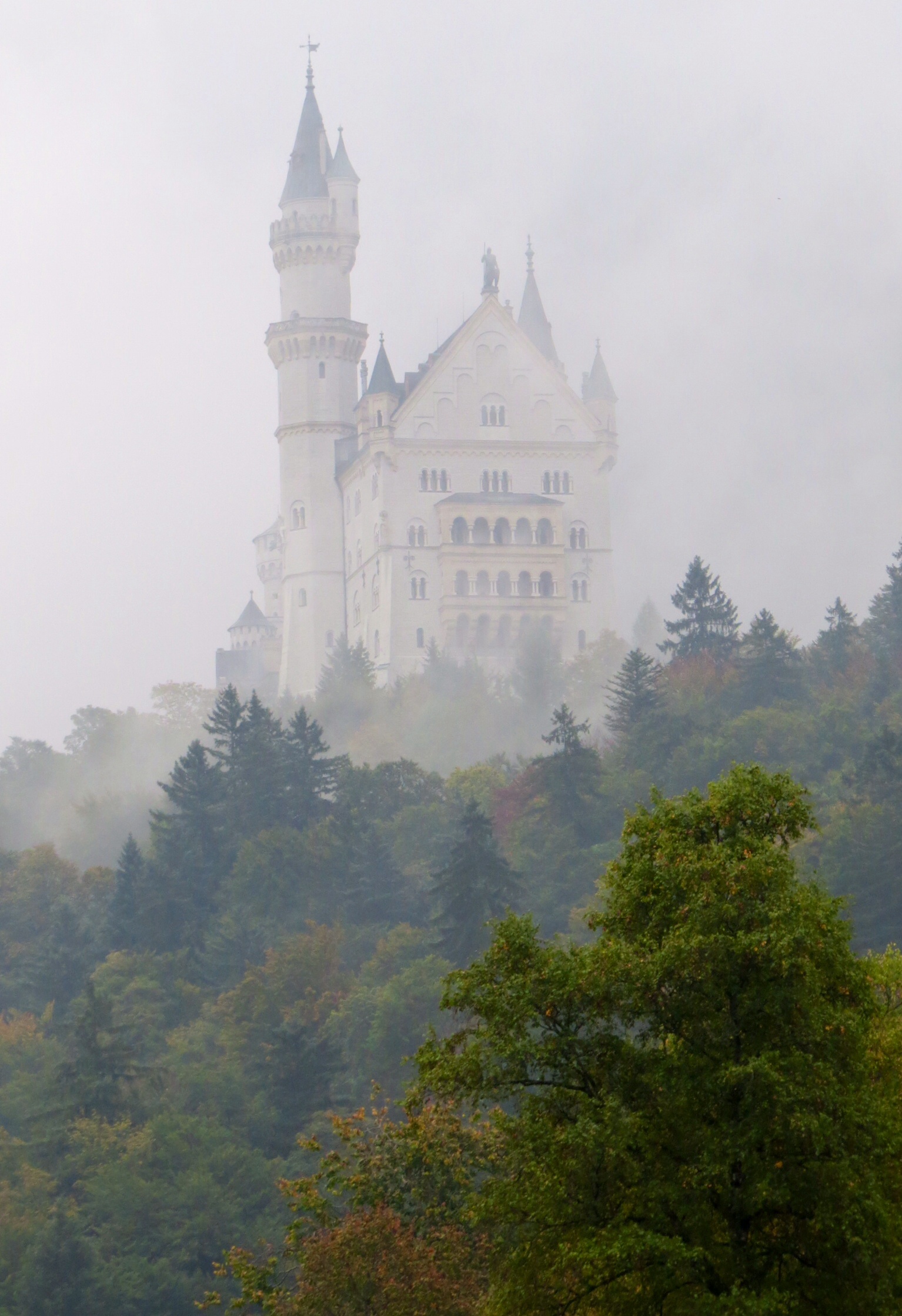
Edward VIII was not the first heir to a throne who was not up to the task. King Ludwig II, who reigned in Bavaria from 1864 to 1886, was another of those unfortunate kings. To distract himself from the daunting or unsavoury decisions before him, he built castles. I was to see two of them in the Bavarian countryside today. (No photos permitted inside.) One of them, Neuschwanstein, was the inspiration for the Disneyland Castle and resulted in the King’s nickname, the Faerie Tale King. To see Neuschwanstein was one of the reasons I came to Munich.
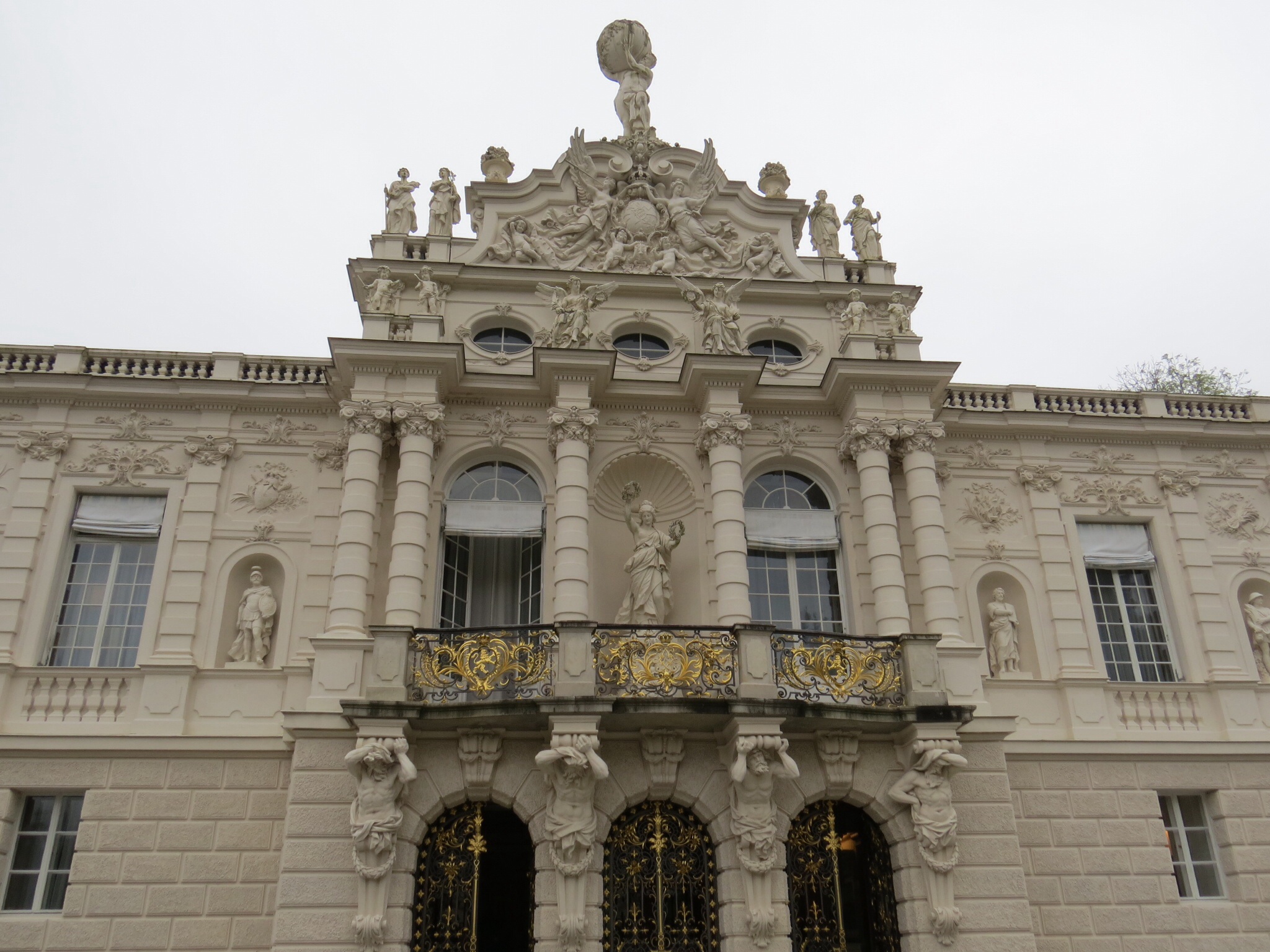
But the tour started nearby at his palace at Linderhof. I was stunned by the many similarities between his Baroque/Rococo palace Linderhof and that of Frederick the Great’s, Sansoucci. There were parallels in their personalities as well. They were about a century apart, but surely Ludwig had read about Frederick the Great’s life and/or visited Sansoucci.
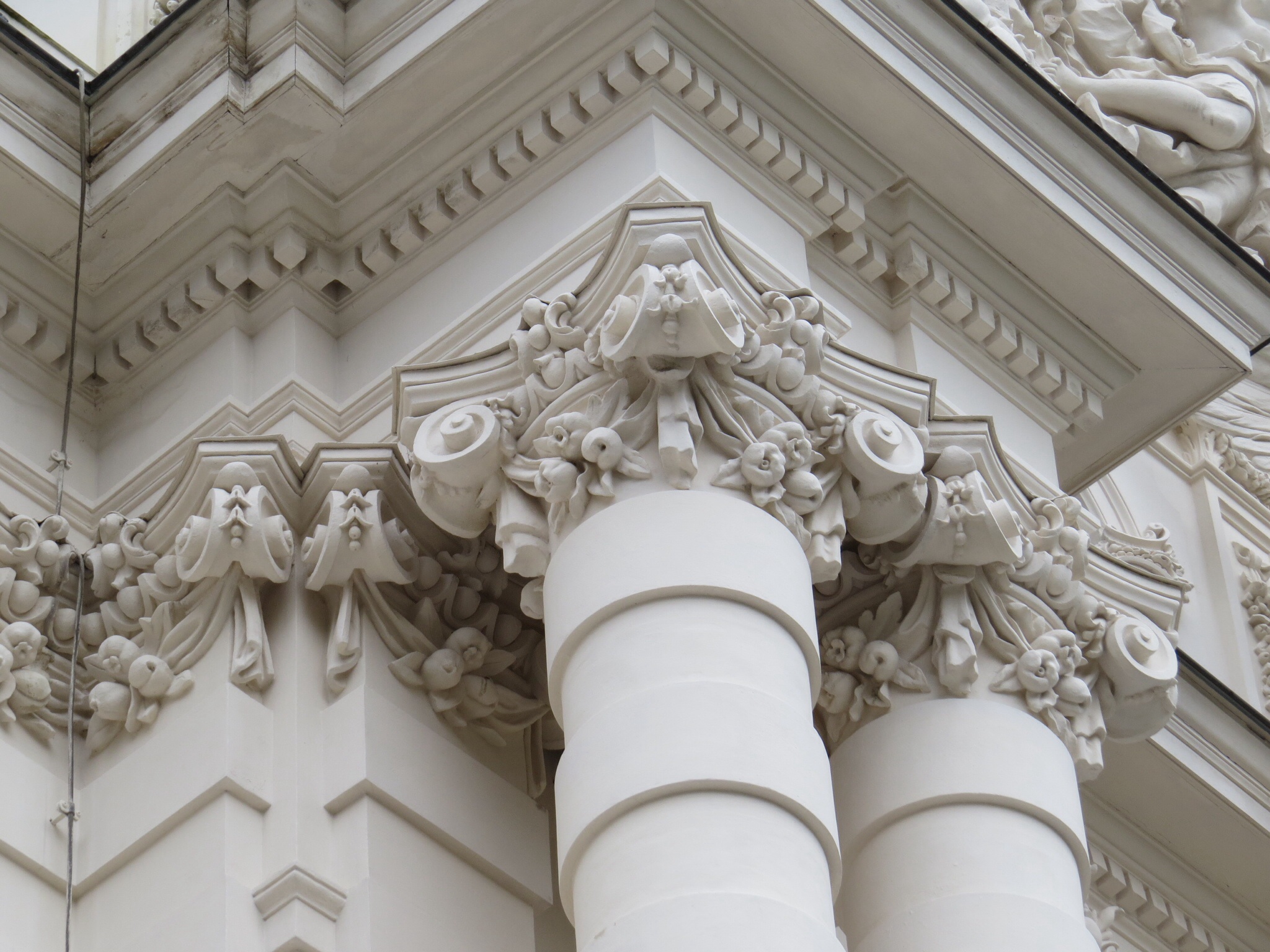
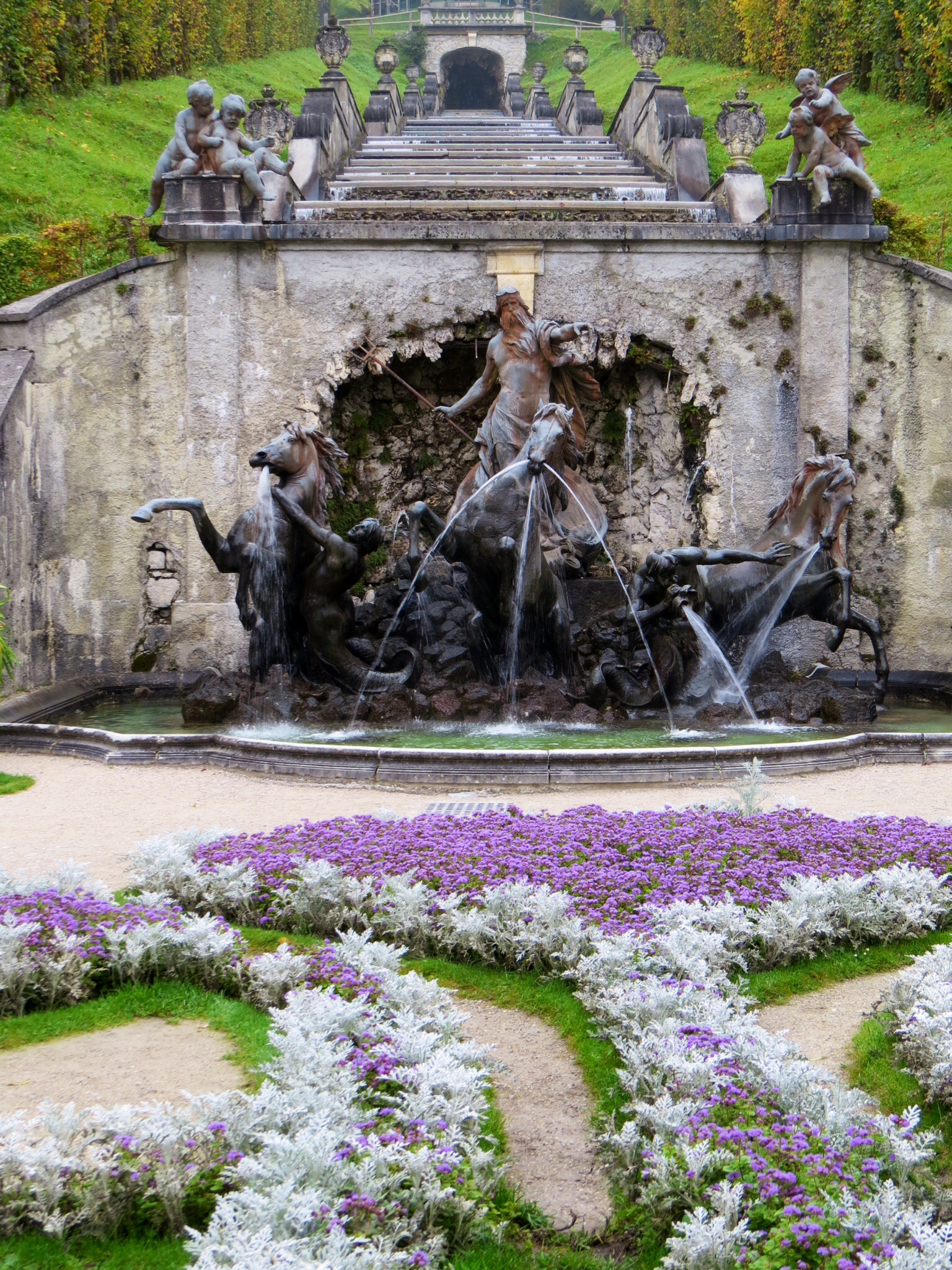
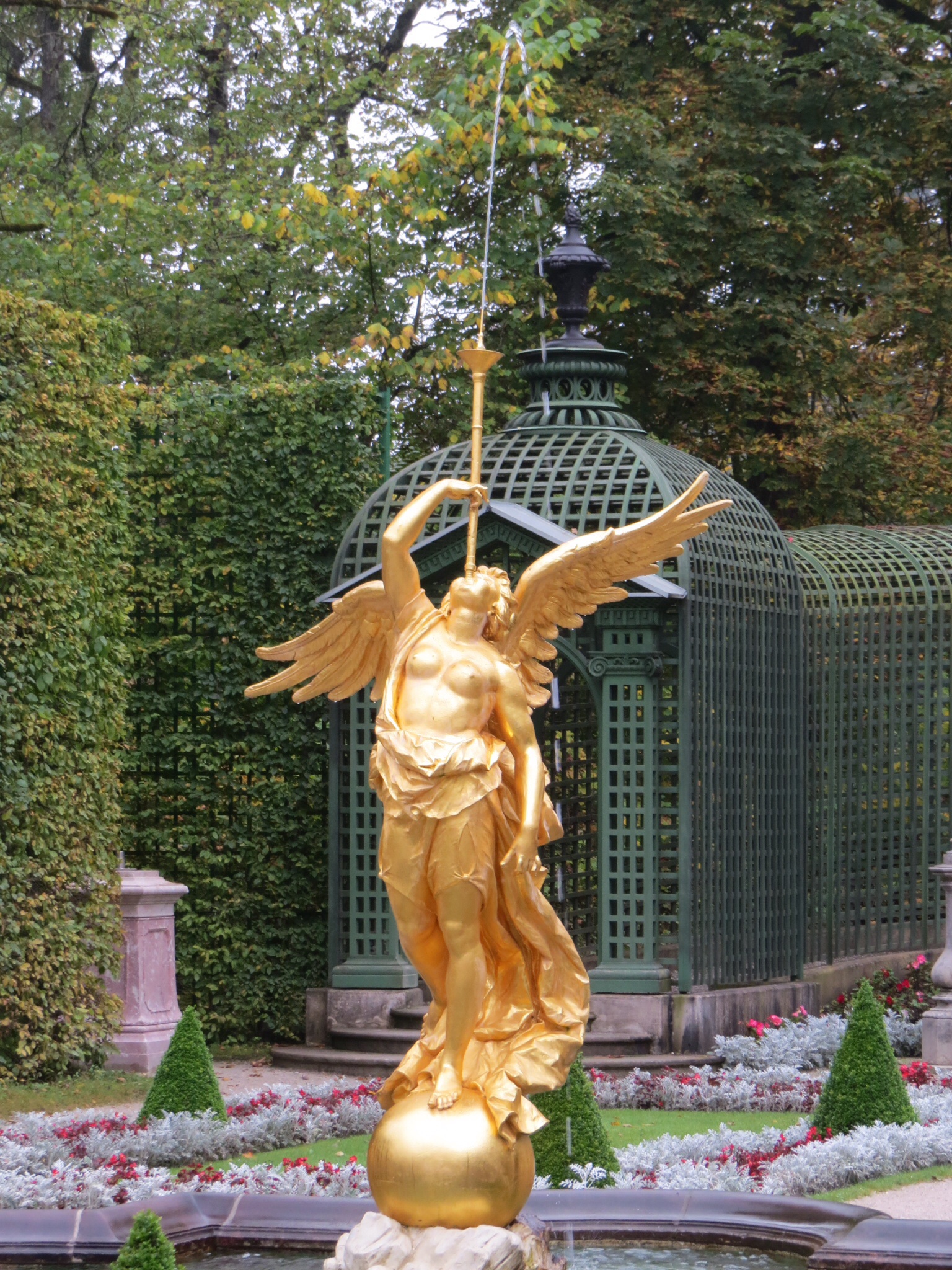
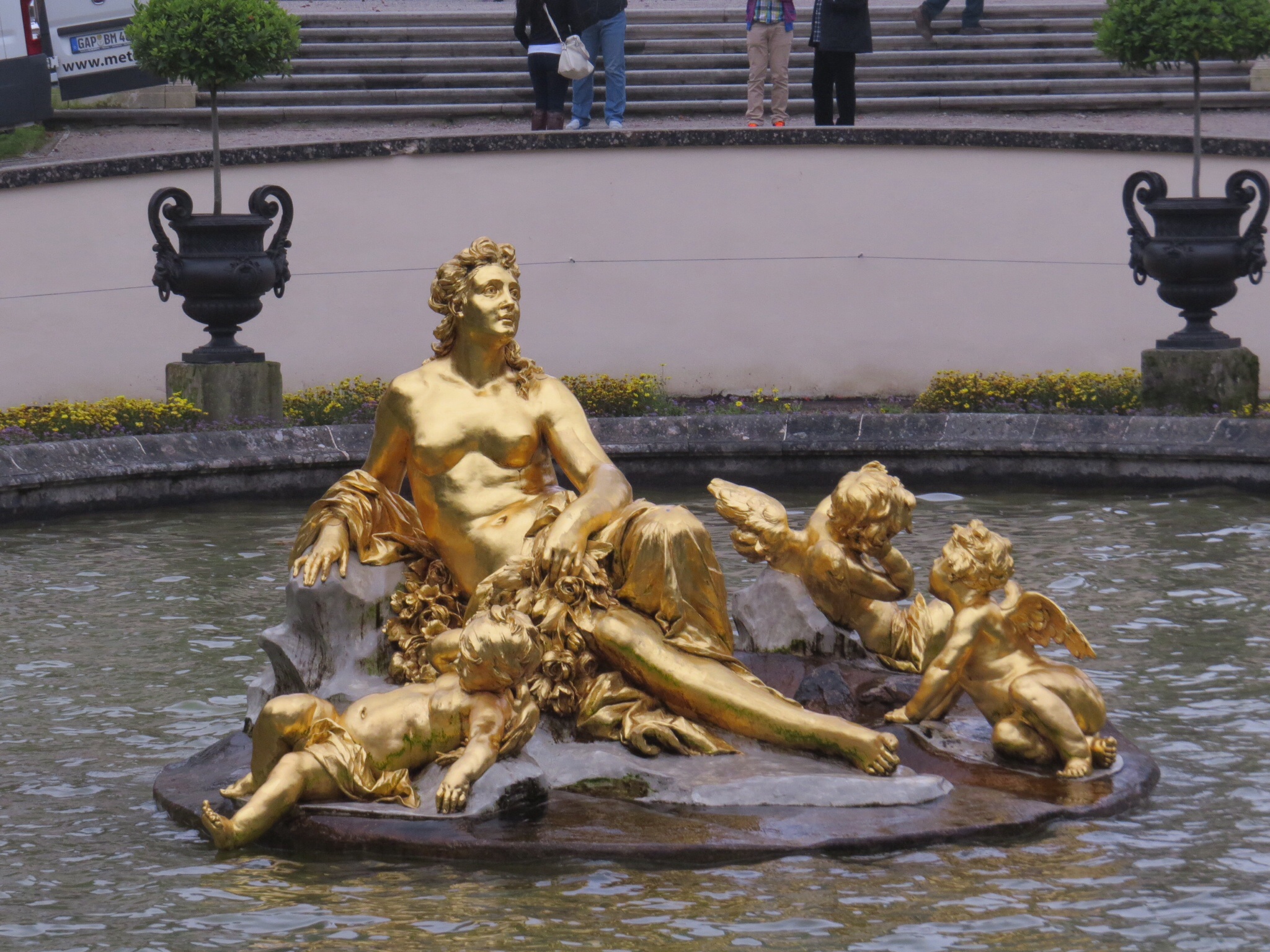
First, Linderhof was built far outside of Munich; the location ensured the privacy Ludwig, like Frederick, craved. It was a small palace but the few rooms were exquisite. One room had mauve upholstery, where Frederick’s had pink. Frescoes on the ceiling came alive with wood-carved legs falling out of the painted bodies. Gold scrolls, trills and frills embroidered every surface. Outside, there were gold fountains and a grotto which showcased a Venus statue.
Similar to Frederick, Ludwig never married. He was close to one woman, as a friend, his cousin “Sisi”, Queen Elizabeth of Austria. He became engaged to her sister, Sophie, but he called the wedding off two days before it was to take place. He wrote Sophie, saying that really, the only thing they had in common was their devotion to Richard Wagner, the opera composer. He never had children. His interests were artistic – interior design, style and music. He was a good friend and patron of opera composer Richard Wagner, and it is said that without Ludwig II’s patronage, the Ring Cycle would never have been written.
Neuschwanstein, however, was Ludwig’s monolithic project. He funded it out of his own personal fortune but he spent all his own money and racked up debt as well, which his family repaid after his death. He designed this enormous castle himself atop a very steep, very high mountaintop. He had seen this mountaintop as a child from his father’s palace and had wanted to put a castle there all of his life. He had grand designs and finished about 25% of the rooms before he died. The palace only became habitable in his last two years of life, and in that period he stayed there for a total of about six months. On his death, construction was immediately halted and was never completed.
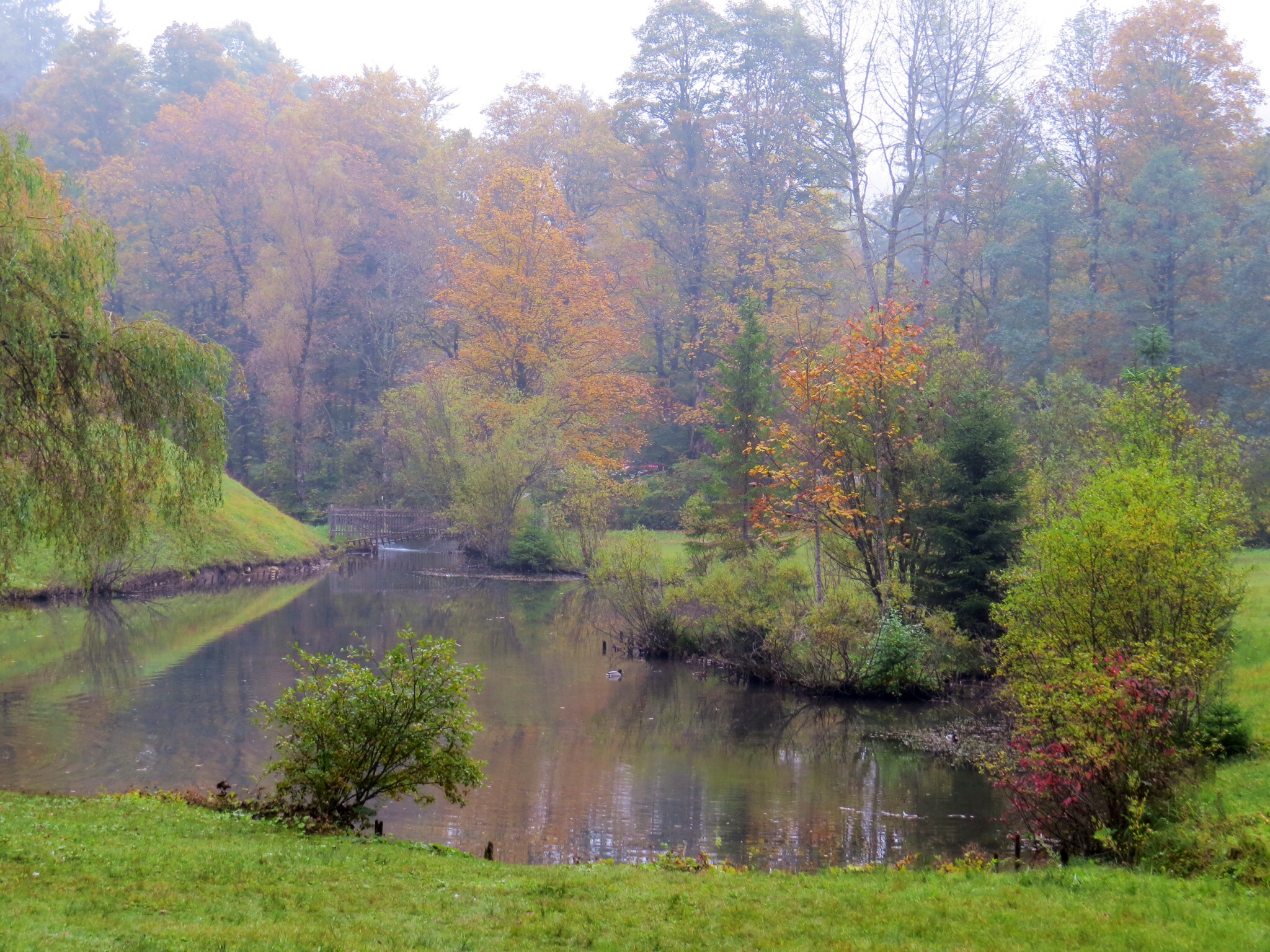
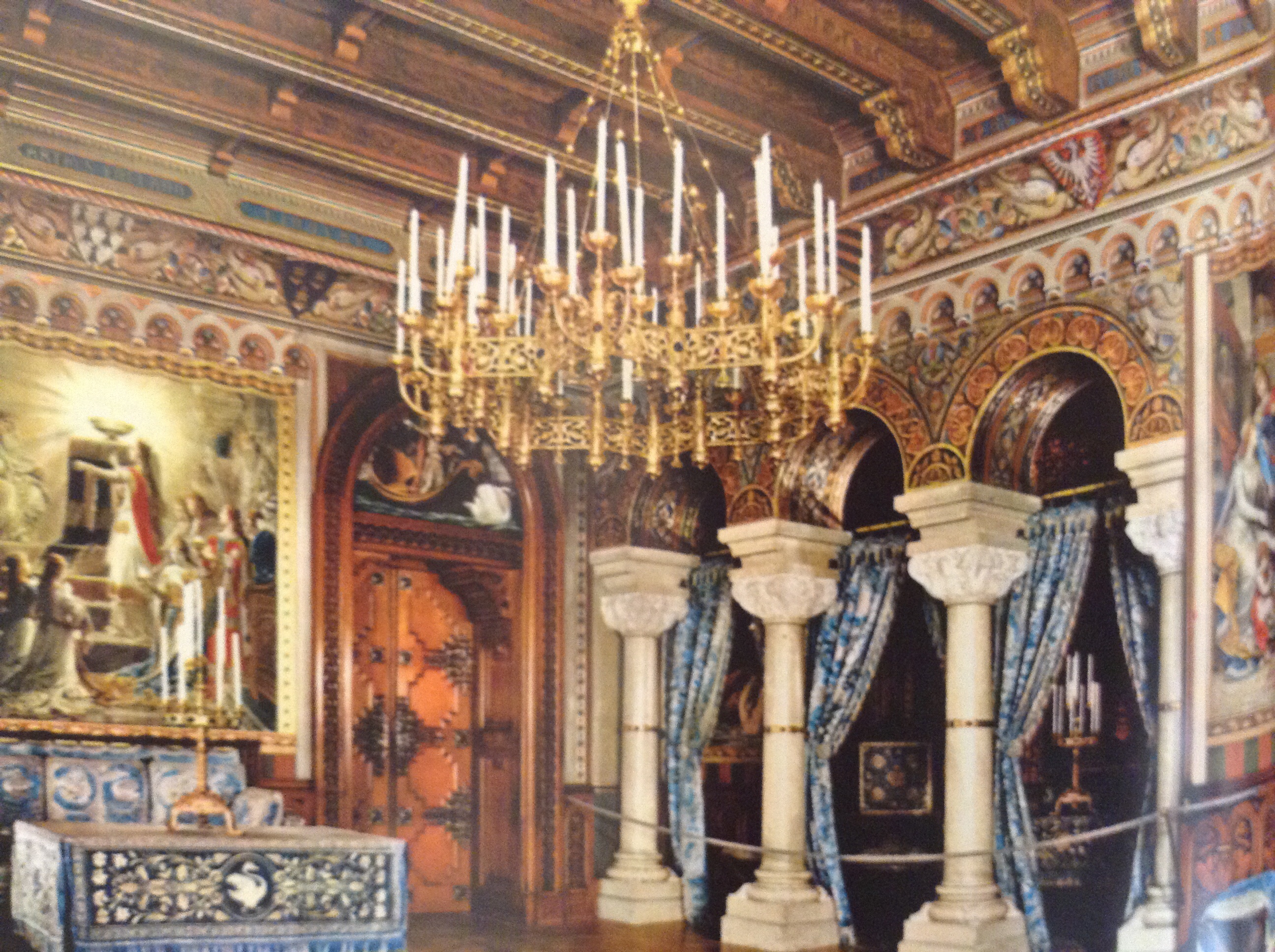
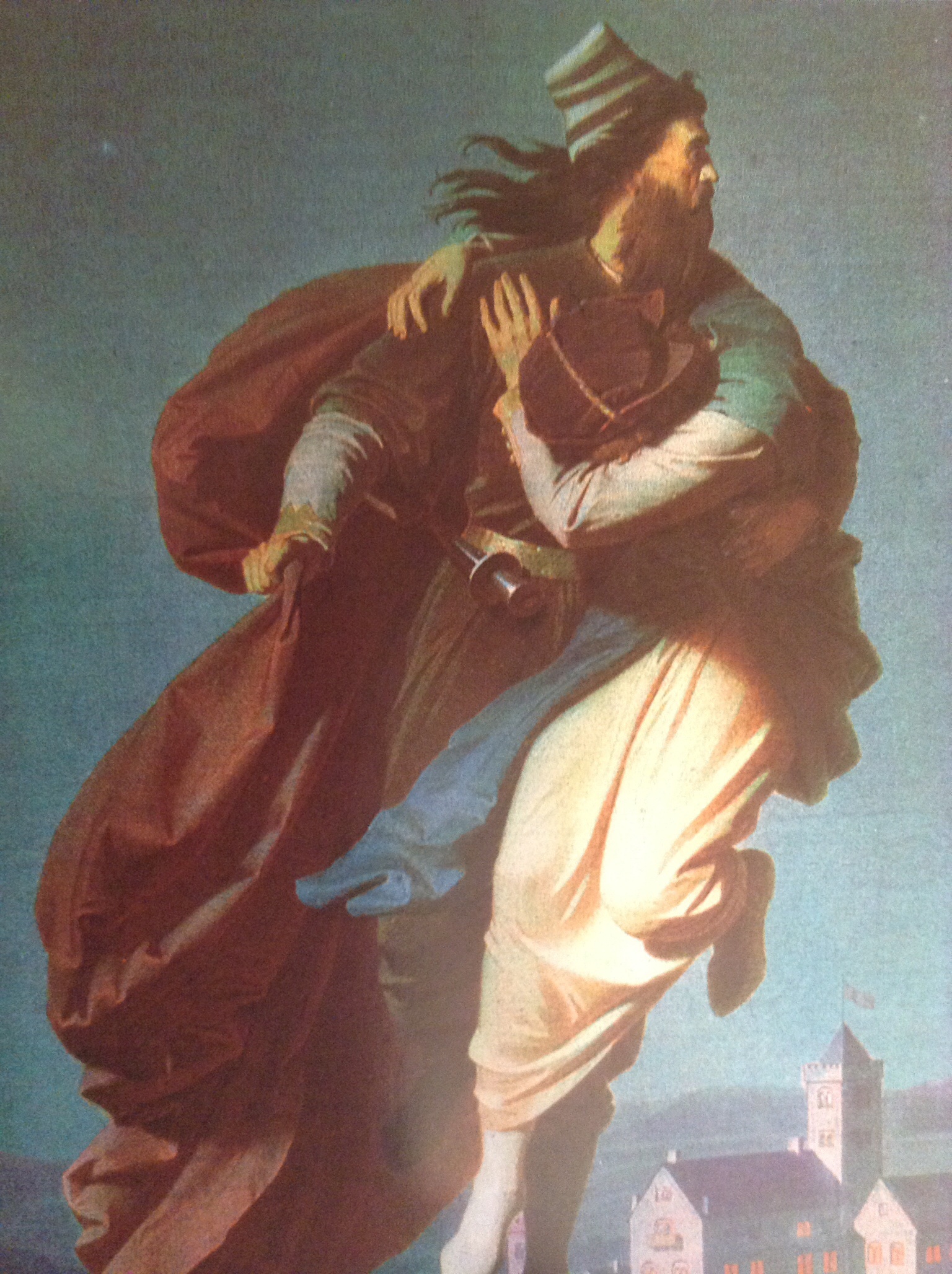
This castle was completely different from anything I’ve seen (and atmospherically foggy when I was there). It was built as a fantasy, in medieval style. Ludwig built the castle in honour of Wagner, so there are no depictions of Ludwig himself. The walls of the finished rooms were covered with frescoes depicting scenes from Wagner’s very dramatic operas. Ludwig’s bedroom was based on Tristan and Isolde, an opera Wagner premiered in Munich in 1865. Wagner based the opera to some extent on the philosophy of Arthur Schopenhauer. This is complicated but I’ll give it a shot: Day represents the societal expectations which require us to act in conflict with our true desires and Night (or death) is where true desires would be fulfilled. (That Schopenhauer was the first philosopher to discuss homosexuality since the ancient Greeks may also be relevant.)
In other palaces he built,Ludwig imitated Versailles and was a devotee of Louis Quatorze, who was known as the “sun-king.” Ludwig became known as the “shadow-king” or “moon-king.” It was rumoured that as he aged, he slept more during the day and rose at night. This may be why he has been associated with werewolves in video games.
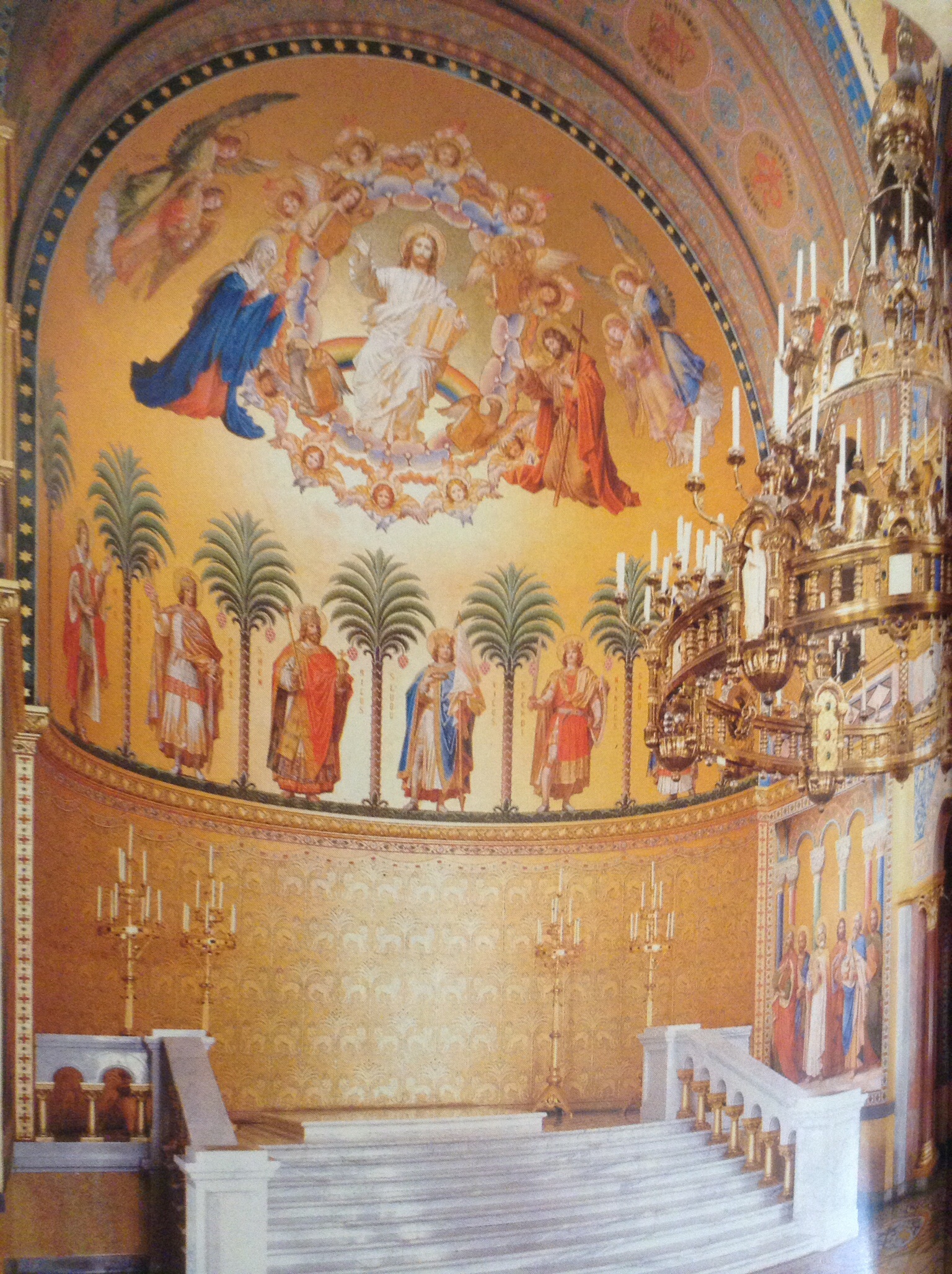
Ludwig’s bedroom was Gothic but like nothing you’ve ever seen before. I’ve taken a photograph from a book to show you especially the canopy over his bed, because any description I could give would understate the reality.
Ludwig and Frederick were similar in that they disliked politics and disliked the people they were forced to deal with. Although he was well-loved by his people, Ludwig was often forced by politicians to make laws he didn’t agree with. Unlike Frederick, Ludwig was not a warrior and was reticent to commit his country to war even when political alliances required their support. In particular, in 1870 when France declared war on Prussia, Prussia expected the support of Bavarian troops, and ultimately Ludwig was forced to sign the order putting his troops at the disposal of Prussia.
Later, the Senate was highly critical of the King’s spending. He also seemed to have lost touch with changing times, in that Ludwig had an inflated perception of the role of a king; kingship was no longer an absolute monarchy as he liked to think. (For example, he idolized Louis XIV who was pre-French Revolution.) Eventually, the Senate declared the King was insane and produced three medical reports supporting the accusation of madness, but none of the doctors had ever met or examined him and based their diagnoses solely on what the senators told them. They had the King deposed and replaced by his uncle as Regent.
The Senate attempted to arrest the King but failed initially. He was advised to flee but he did not. He went to another palace, “Berg,” under the supervision of Dr. van Gudden, the head doctor who had declared him insane. That night, he went for a walk with Dr. van Gudden and the pair never came back. The next day, both were found drowned in the shallows of the lake. Only Dr. van Gudden showed signs of struggle, with scratch marks on his face and arms. How these deaths occurred has never been solved.
“I want to remain an eternal mystery to myself and others,” he is quoted as saying to his governess. Was this a self-fulfilled prophecy? Not likely.
Neuschwanstein and Ludwig’s other construction projects hired hundreds of workers for 10 years. Virtually the whole town around the castle was hired to maintain it. More recently, the existence of these palaces has supported all of Bavaria for the tourism they attract. It is sad that, like Frederick the Great, Ludwig II was loved by his people but could not work with the people who surrounded him. Both men may have been homosexual, but in any event both withdrew from society, never married, never had children, and both died lonely men.
Ludwig met Richard Wagner on many occasions, the two were friends. Wagner knew about the King’s project, but sadly, he died two years before the castle was inhabitable and he never saw the palace. Now, a huge theatre has been built by the lake, and a summer festival which includes Ludwig II’s story and Wagner’s operas draw thousands of visitors every year to Bavaria.
After sleeping in and taking the morning off, it was high time for an authentic Bavarian meal so I headed to Augustina in Marianplatz, the city centre square. I had just enough time for a hearty potato soup and an open-faced ham sandwich. Pork is the plat du jour just about every day, at every meal. But the flavour is superior to our pork at home, it seems to me artisanal, probably local farm-raised animals and more art put into the smoking.
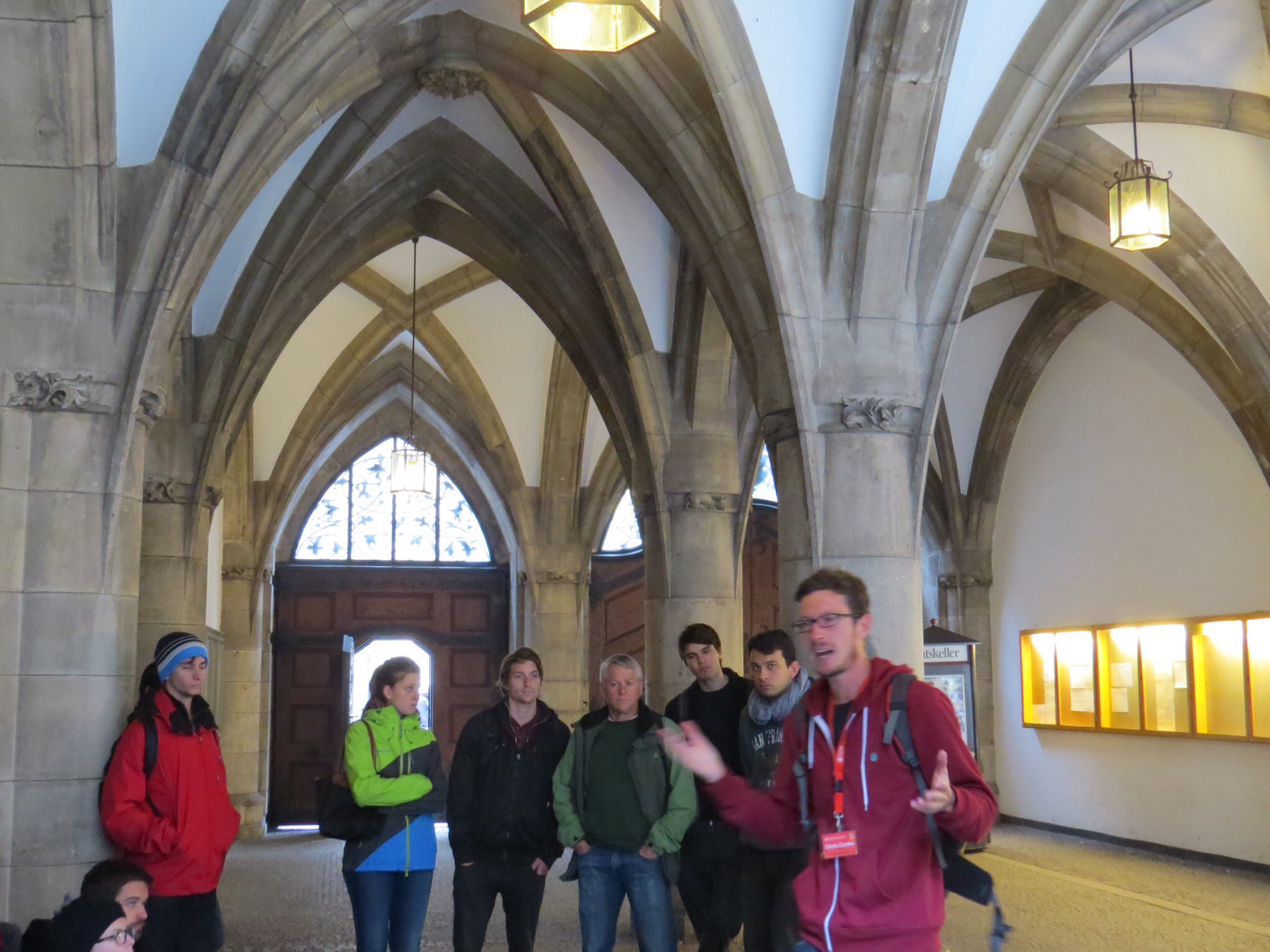
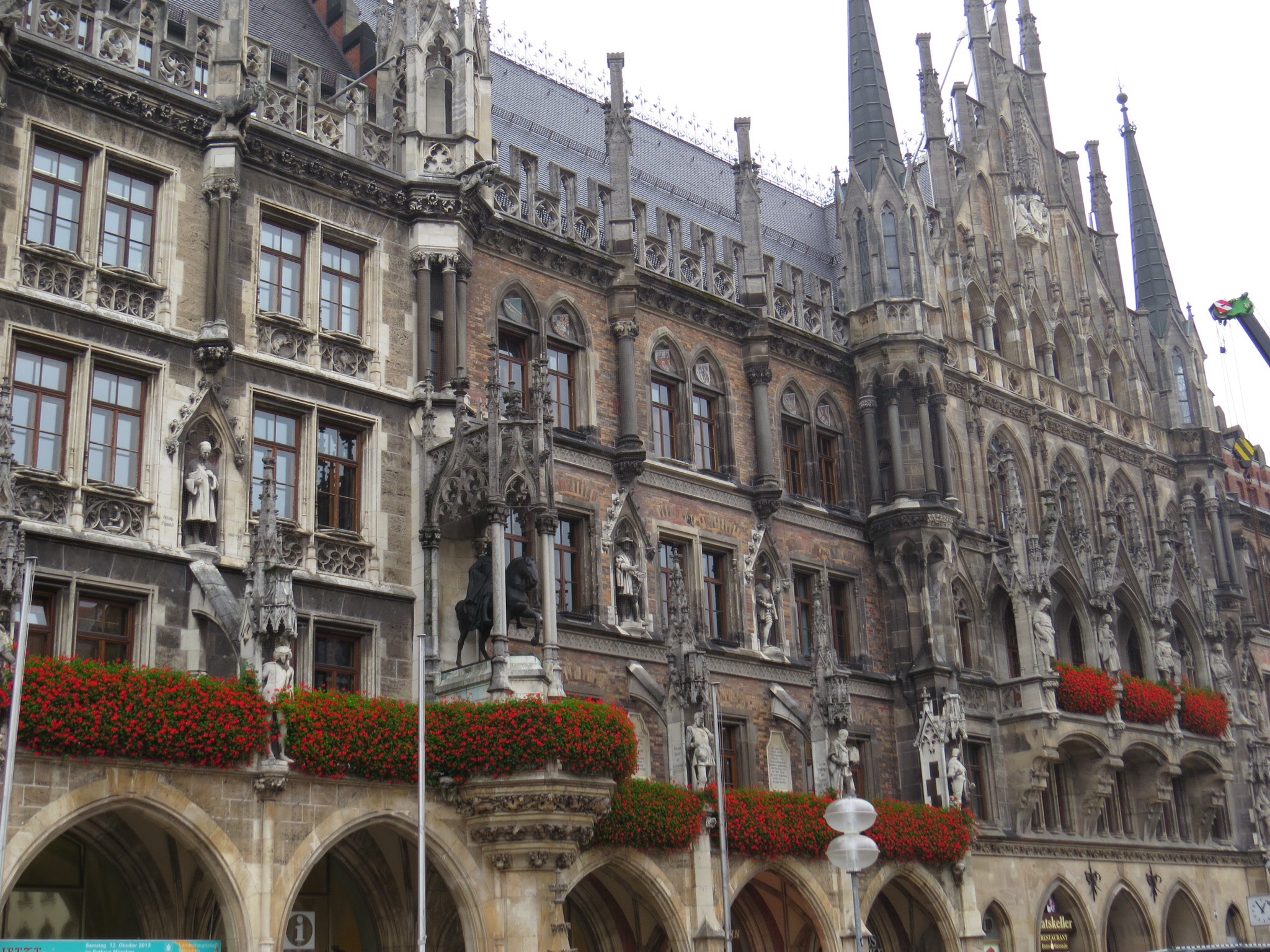
I joined a large group in an excellent walking tour of the city centre learning much about Munich’s history along the way. The city has suffered much. When the plague swept through Munich 24 times, the city, willing to try anything, thought perhaps the cats were the problem and they exterminated every cat in the city. When they learned later that no, it was the rats that were the problem, they sent missions to Italy to kidnap hundreds of cats to restore the city’s feline population.
The empire has a long dynastic history in the Wittelsbach family, but for much of their middle history they had only the status of Elector under the Holy Roman Empire ruled by the Hapsburgs of Austria. Eventually they were empowered with their own king, and they had five kings in succession named either Ludwig or Max.
Liquid Gold, or beer as it is known elsewhere, has played a central role in Munich for centuries. They have six breweries. Apparently the Hofbrauhaus was at one time a place women did not visit, particularly no MSE’s, because a trough and drain system was installed under the massive tables men sat at, achieving maximal efficiency, profits and satisfaction in that the men could actually continue drinking beer even as they rid themselves of their previous litres.
In 1632, during the Thirty Years War when the Swedes occupied Munich, they struck a deal with the city: in exchange for not pillaging and plundering the city they were given 1,000 buckets of beer from the Hofbräuhaus, including 361 buckets of Maibock. Since then, Munchens call their beer “liquid gold.”
In World War I, although the war was triggered by the assassination of heir to the throne Archduke Franz Ferdinand and his wife Sophie of Austria and resulted from a complex series of alliances and treaties, Germany was blamed for the war and Munich was severely bombed and damaged. Bavaria was dissolved and merged with Prussia. In 1933, Munich became the cradle for the Nazi party and the rise of Hitler’s National Social German Workers’ Party. In fact the constitution of that party was drafted and signed by Hitler in the Hofbrauhaus. Munich was once again heavily bombed during WWII.
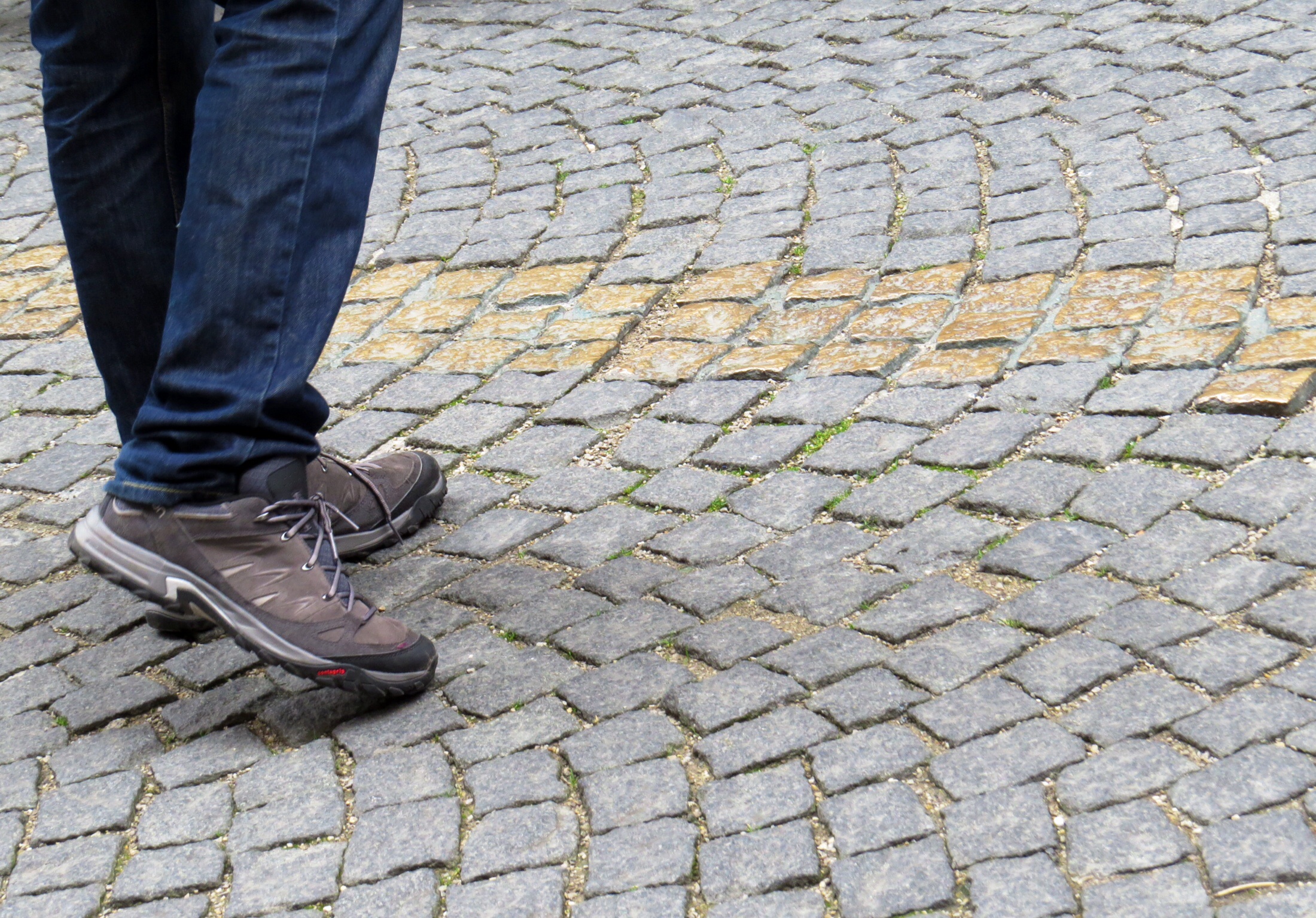
Munich has taken steps similar to those in Berlin, memorializing various locations where Nazi cruelty occurred in order to educate the young and prevent radicalization. They do not use words, plaques or posters to explain these memorials. For example, there was a central location where armed SS guards enforced a law that required citizens to make the famous salute as they passed the flag of the Nazi party. Many people resisted by ducking down an alley to avoid passing the flag. This has been commemmorated by a line of gold bricks replacing stone cobbles, demarcating the path. The hope is that citizens now will be curious about the line of gold bricks, do some research, and educate themselves about some of the city’s dark history.
Another tragic Munich event was the terrorist attack on the 1972 summer Olympics, in which nine Olympians were assassinated.
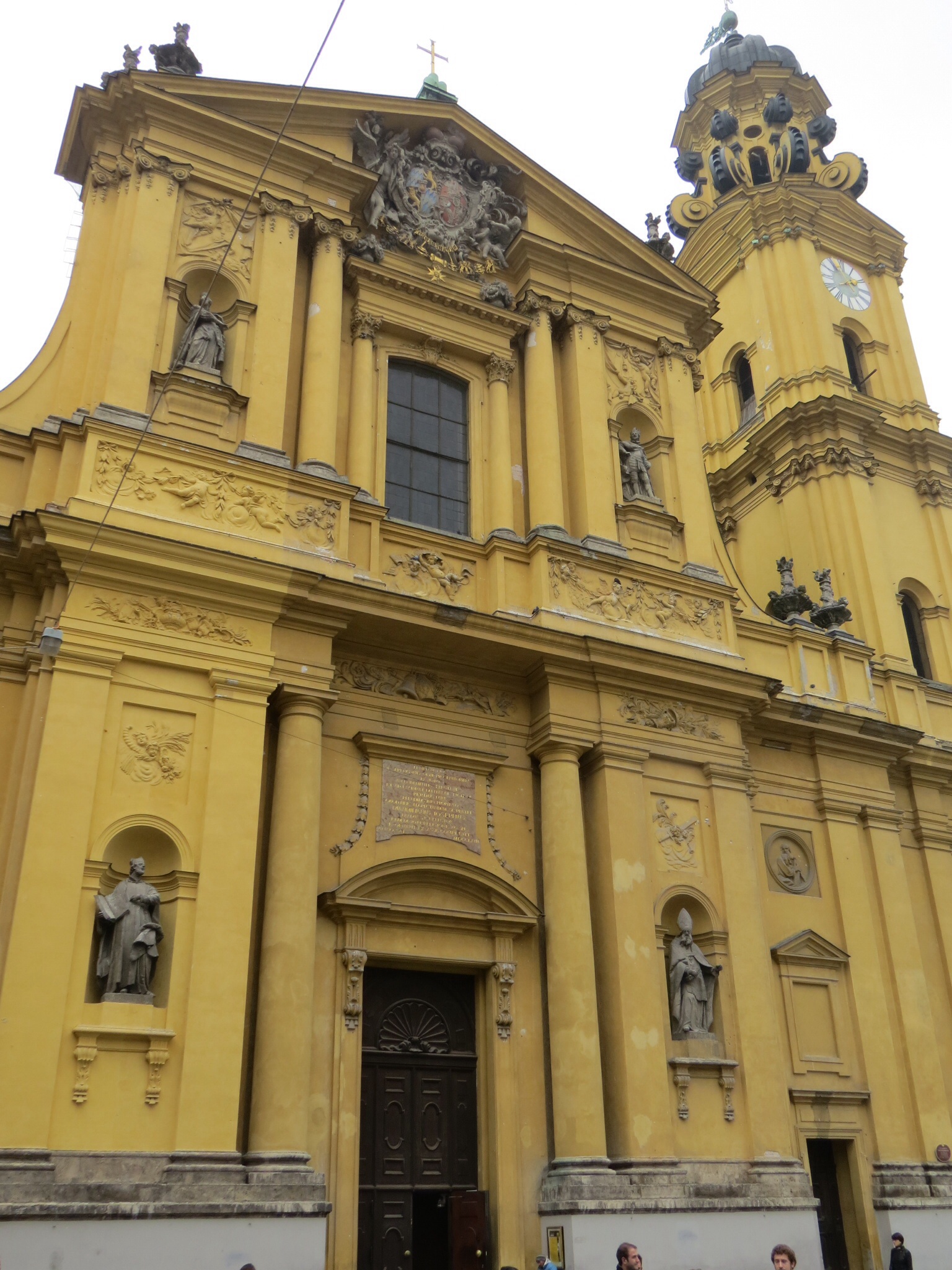
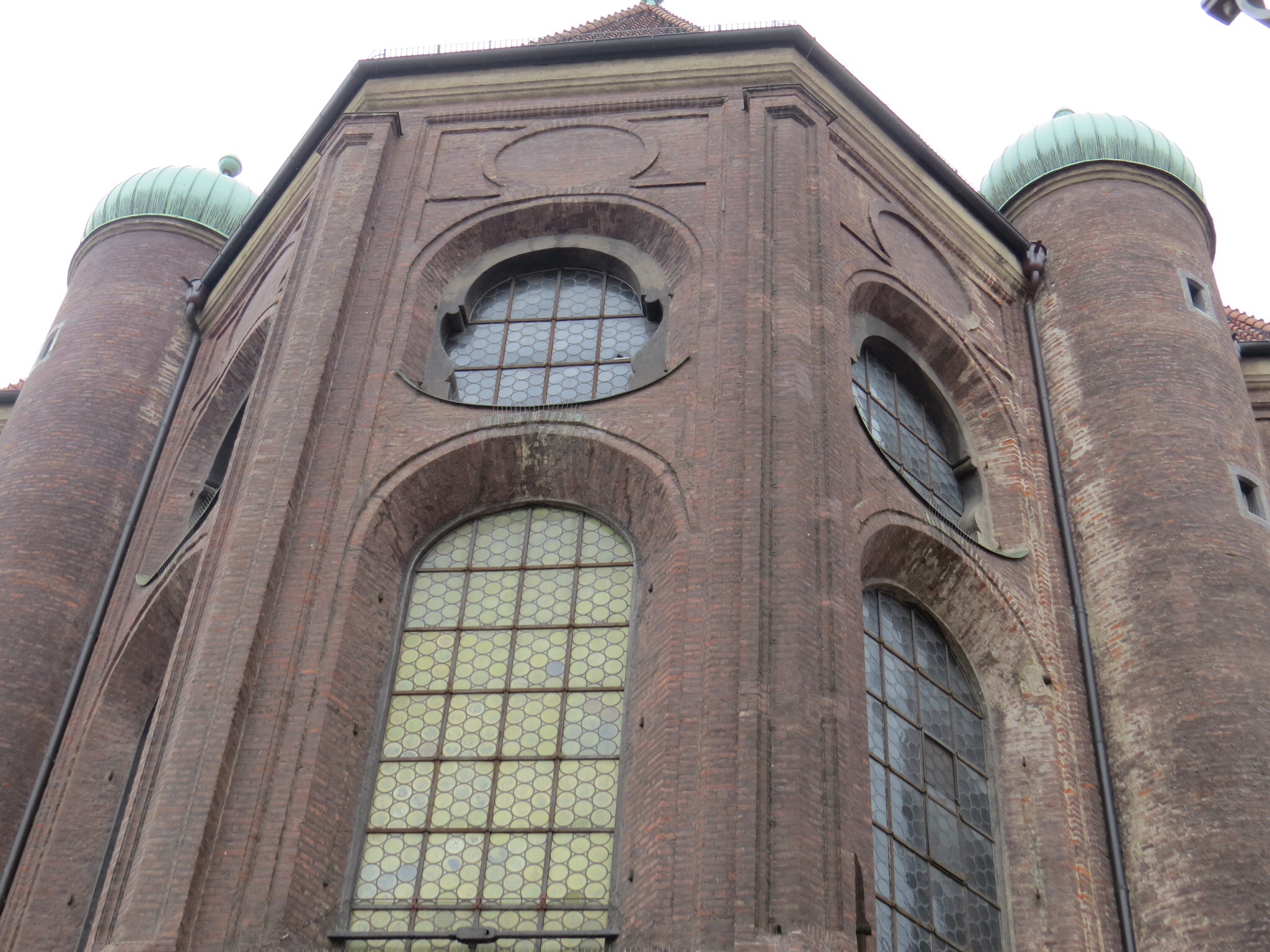
We toured many churches in the downtown core, all of which are Catholic, as Bavaria was the heart of the Catholic Church in otherwise Protestant Germany. The city held a referendum on its reconstruction, and the citizens of Munich opted to rebuild their city in the manner of the original instead of building modern buildings as Berlin has done. As much original walls or fragments were used as possible, and one cannon that was at one time fired at one of the churches remains embedded in the church wall to this day.
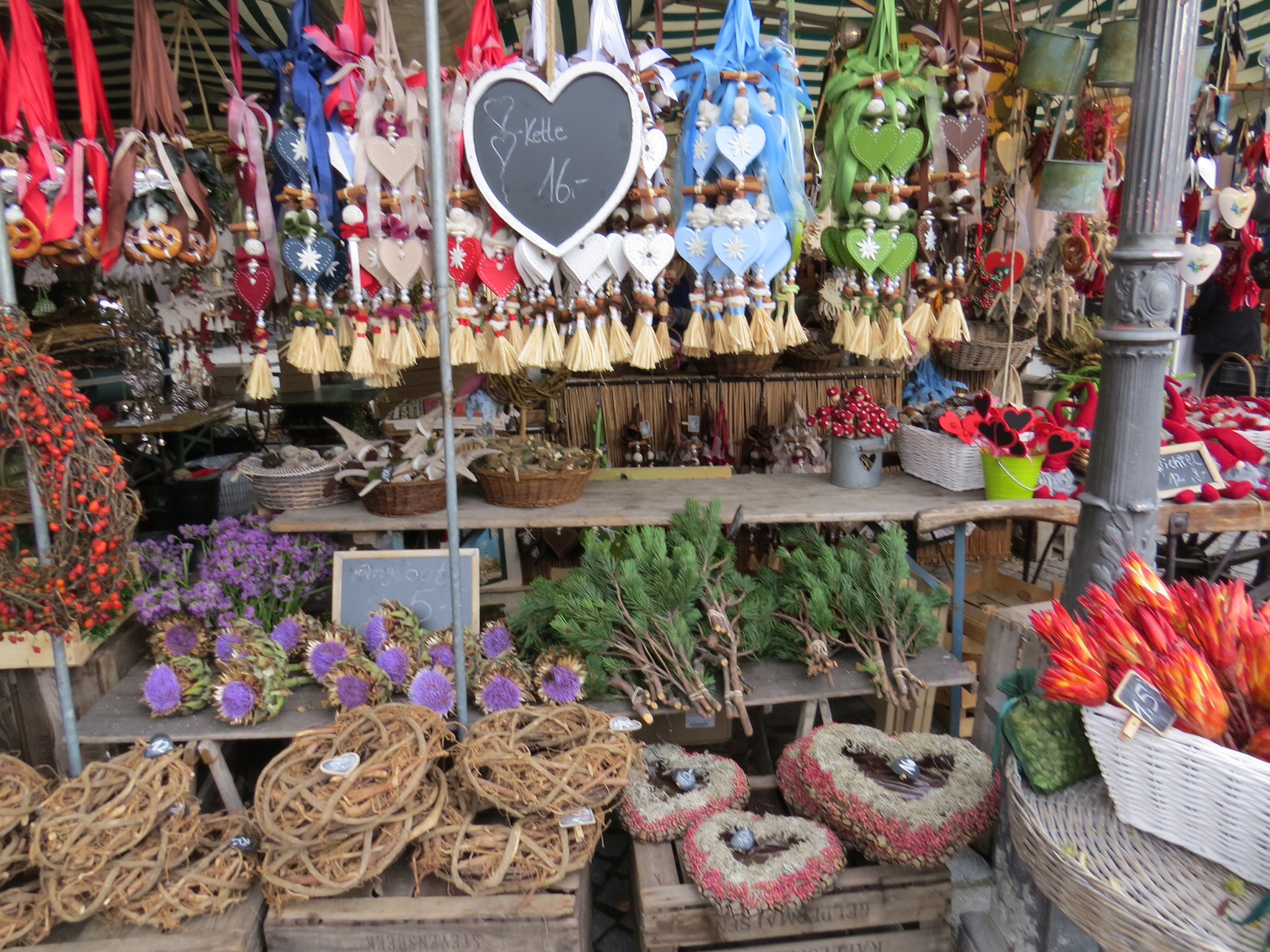
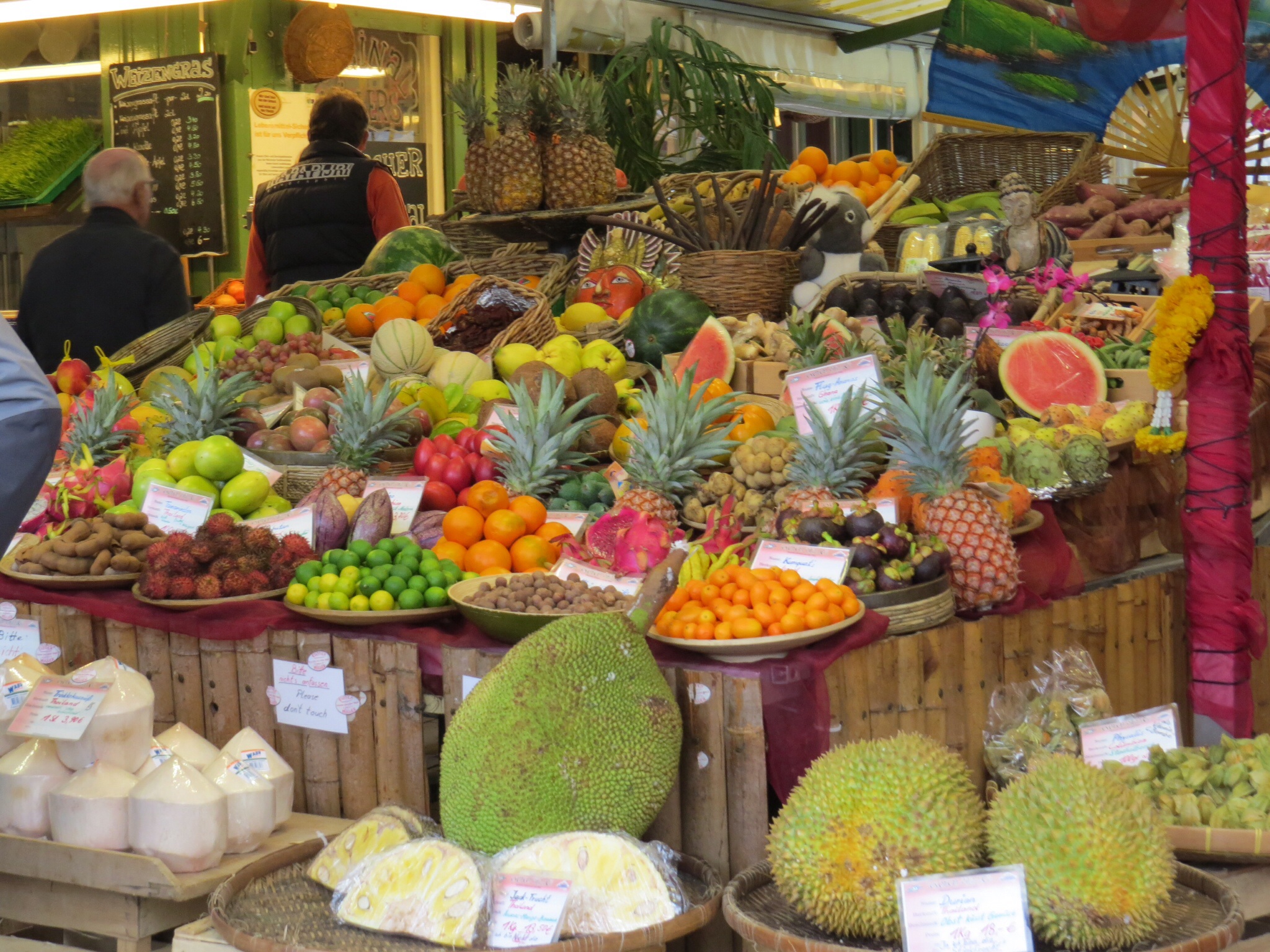
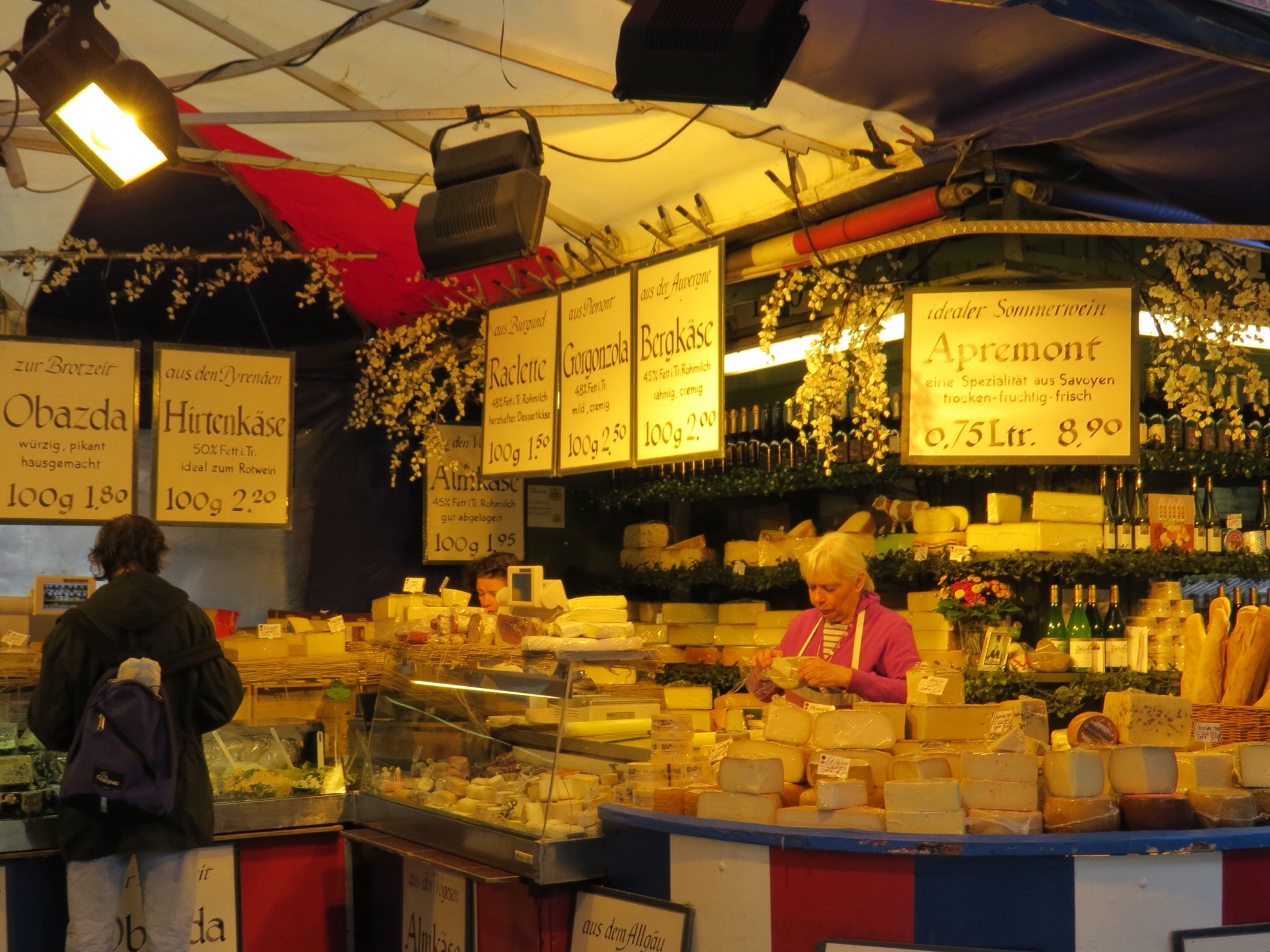
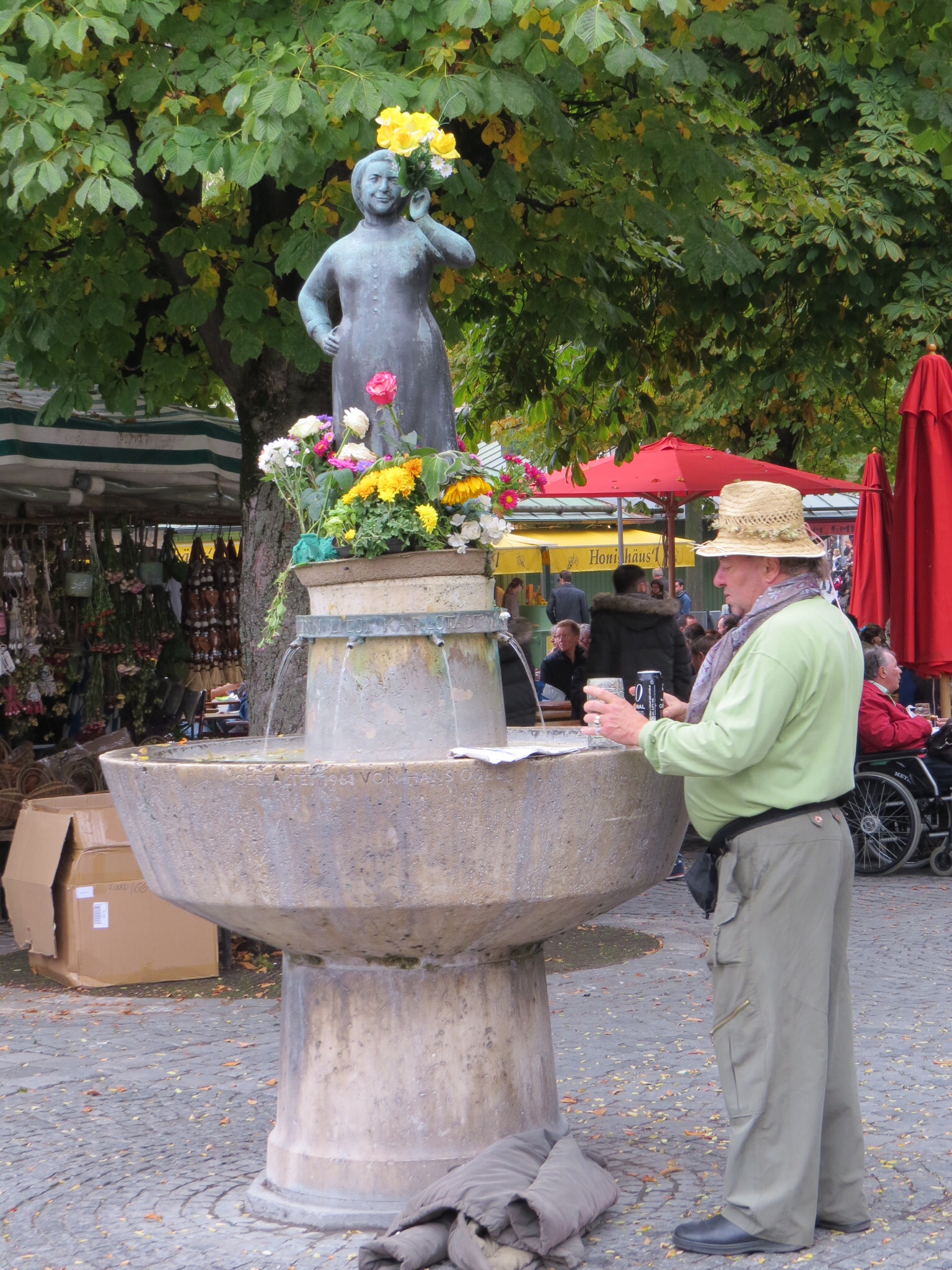
The tour ended in a charming market area with a biergarten and many stands and little shops carrying crafts, cheeses, meats, wine, pastries and just about any Bavarian-style food you can imagine.
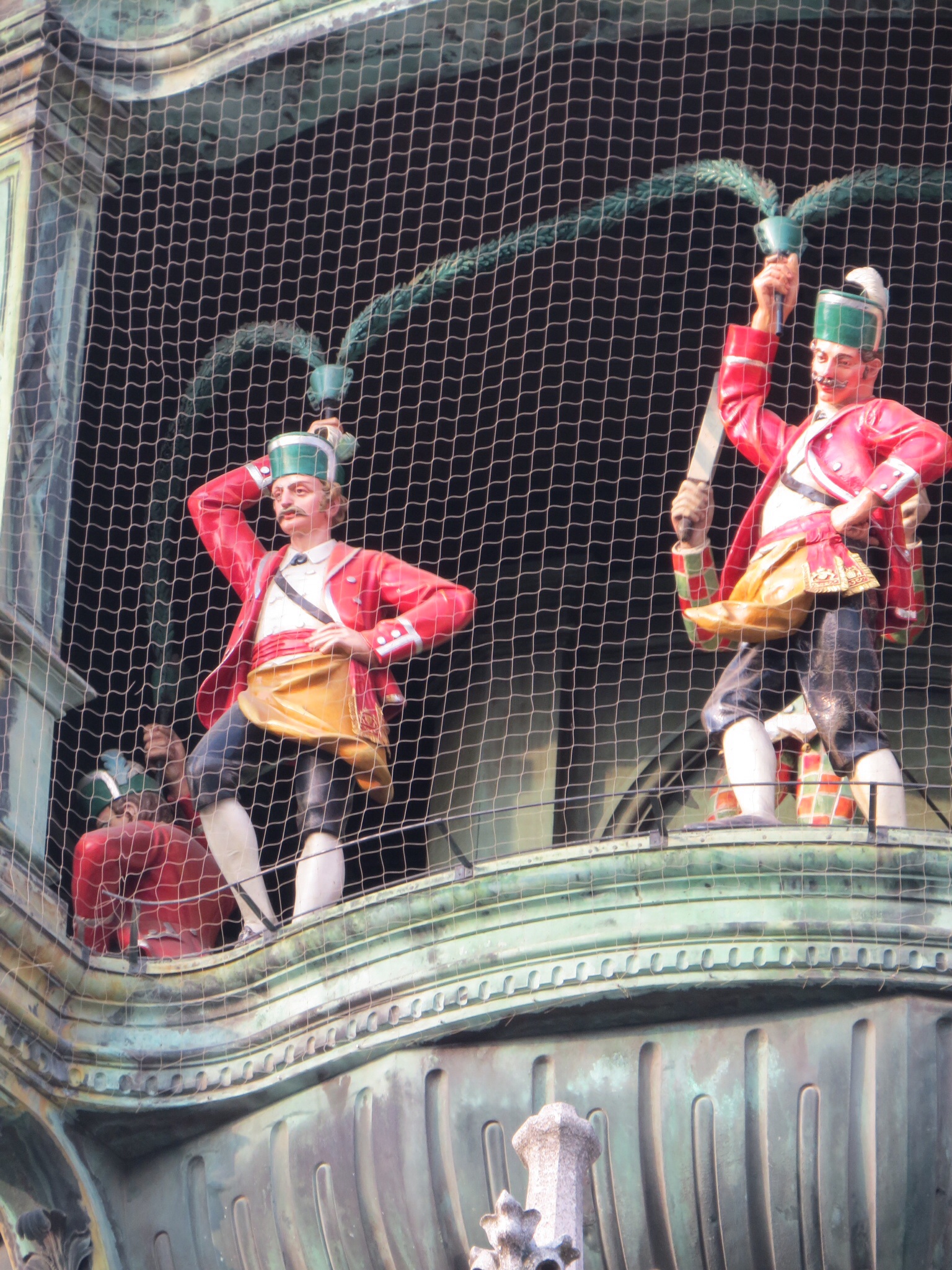
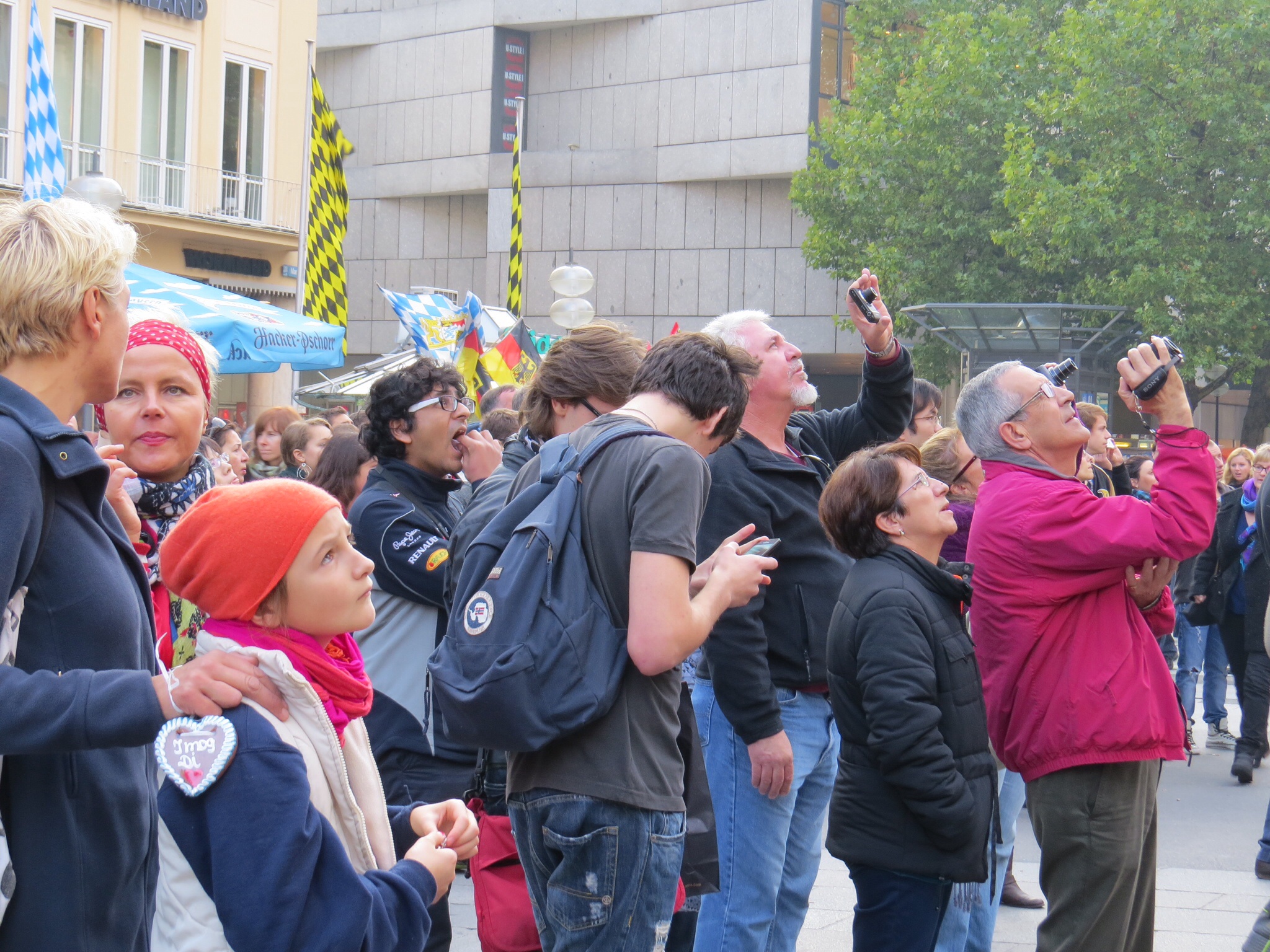
We were warned that the famed Glockenspiel Clock in Marienplatz is the second-most over-rated tourist attraction in Europe, after the astronomical clock in Prague’s central square. Nonetheless, I had to wait in the square for the 5pm carillon accompanied by dancing puppets and a papier mache re-enactment of a battle between knights of Bavaria vs. knights of Prussia. Guess who won?





























































 Carpe diem