Category Archives: Uncategorized

Whirling Dirvishes

Sadly we had to depart Antalya, another place to return to sometime (note:  they have the largest and busiest airport in the south so an easy place to swoop into for a few days or a week).

Heading inland today, our destination was Cappadocia, but we had a planned stop about halfway in Konya.  We drove through stunning pine-covered mountain scenery, and then up above the alpine into some snow over an 1,800 metre peak.  A local specialty was pine-flavoured honey.


In the 12th and 13th Centuries, Konya was the capital of the Selcuk Empire of Rum, but the city is best known for the founding of the order of Whirling Dervishes by Mevlani Rumi, one of the great poets and mystics of the Islamic world. We visited the 13th Century Mevlana Mosque and complex, now a museum.  The complex is also used to teach Rumi’s philosophy to students who come from all over the world.

There were several rooms showing historical artifacts, beautiful calligraphy, highlighting some of the leaders and depicting the day-to-day life of the followers. 

The highlight, though, was the stunning interior of the Mosque.

The Mosque was crowded with tourists and pilgrims.  Rumi’s tomb was in the Mosque but in another room there was a silver box inside a display case containing a lock of Rumi’s hair at which many devout were praying and several men and women were moved to tears.  It seemed like a place people had come from far corners of the vast country to pay their respects, perhaps once in a lifetime.   We tried to be very respectful and I didn’t take a photograph.

This religion is at the heart of all Turkish religion.  Rumi’s interpretation of the Q’oran was based on 4 books by one mystic.  Murat broke the philosophy down to its simplest form:   

1) monotheism – belief in God – Allah – one god; and

2) everything in life is evolving even if we don’t feel it – the Earth, the galaxy, the blood circulating in the body.  

Rumi was a Muslim believer, but his primary focus was on tolerance and forming a worldwide brotherhood.  Anyone could become a suphi if they understood and there are Christians, Catholics and people of other religions who are believers.   Many devout followers give up speech in order to avoid insulting or criticising anyone.  If someone enters the practice but isn’t suitable, rather than asking them to leave, they turn the person’s shoes, left on the porch facing inward, outward.

“The Seven Advice of Mevlana

1. In generosity and helping others be like a river
2.  In compassion and grace be like sun
3.  In concealing each other’s faults be like night
4.  In anger and fury be like dead
5.  In modesty and humility be like earth
6.  In tolerance be like a sea
7.  Either exist as you are or be as you look.”

The not talking was a practice of self-control and it led to a practice of music and singing and this is how the Whirling Dirvishes began.  The dance is a religious ceremony full of symbolism.  The whirling person forms an axis representing the number 1, for one god.  The spinning represents the revolving flow of life.  The white costume represents purity, meaning everything that comes to God returns to God.

This centre is where Rumi lived.   When he died there on December 17, 1273, he wanted it to be a celebration, his return to God, so instead of a funeral, he asked that there be a wedding ceremony.  People came from all over the world including from Western countries.

Every December there is a Whirling Dirvish festival here with believers coming from around the world. 

We drove on and Murat announced that if we were to arrive in time, he had arranged for us to attend a Whirling Dirvish religious ceremony.  Our driver, Sunni, ensured we made it by 6:00 pm to the small building where the ceremony was held.   A woman announced that there must be silence, no applause, and no photography because it was a religious ceremony, but there would be time for photographs later.  Three men in tall fez-style felted hats (which must be very hot to wear), and cream coloured robes entered.  They were musicians playing a balalaika-type of instrument, a set of two drums played with the hands, and a long flute or recorder.  They played several Eastern-sounding pieces.
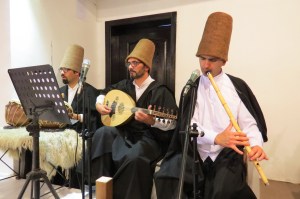
51E01D0E-C039-43C5-93B8-4807F7E192D6

Four men entered, one appearing to be a priest.  The other three wore wide white robes over white pants and the same tall felted hats.  They all took care to tuck their hair under their hats.  There were a series of bows and kneeling, and then the priest moved to the centre of the stage.  One of the musicians stood up and began to chant with an unusual vibrato pattern which was very controlled.   The three Dirvishes started to whirl, slowly at first and moving faster and faster as the music picked up the tempo, faster and faster.  They twirled for at least 20 minutes, stopping briefly every five minutes or so.  They didn’t focus their eyes on one point and rotate the head quickly to that point the way ballerinas do.  They reached the right foot around as far as they could and the body and left foot followed.  One closed his eyes and one was wide-eyed.  The priest moved between them a bit, ensuring they didn’t stray off the stage.  There was no evidence of dizziness when they stopped.  The priest chanted, there was more bowing and kneeling and the ceremony was over after about 45 minutes.   It was fascinating to watch and we were so grateful to see the actual ceremony instead of a touristic showy (phony) musical performance.  True to their word, the dirvishes whirled again for photographs.

We drove on for a short time and a very different landscape revealed itself to us.   The air was dry and the landscape parched.  We appeared to be in a very broad canyon filled with hoodoos of every size and shape, including mushroom tops.  We passed through a small town in which there were clearly people making their homes inside the so-called “fairie chimneys” and homes, hotels, and shops filled caves which occupied the canyon sides.   

In about 10 minutes, we pulled into to an even smaller village.  By now dusk had settled in.  We pulled up to the most charming hotel on the trip.  We stepped inside the stone wall to a courtyard filled with roses.   There were tables and chairs in the shade inviting us to a chilled glass of white wine.

9539FEC4-48A4-4018-AE78-CE3786CD5D79

Our rooms were unique.  I climbed to mine onto the roof and down a hallway.  Inside, the cool stone walls set off antique furniture and Turkish rugs.  The bathroom was filled with stone cold marble, welcome in the jet hot surroundings outside.  Some rooms were carved into the canyon.

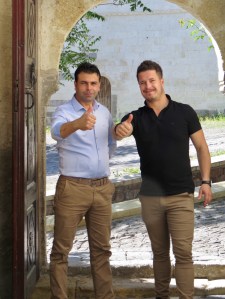
The staff were equally charming.
C26DA4B9-0377-4C43-ACB4-7F88F95A8176

Dinner was a special treat.  Tender cubes of beef had been cooked for hours in clay pots sealed with wax.  They pots were brought to a separate table flambois.  The server used a giant machete to lob the top of the pot into the flames and fire jumped.   Of course the contents were delicious as was the rest of the meal.

Tomorrow we would explore the caves and chimneys in this foreign landscape.   But first, we would rise at 4:00 am and take to the air.

Best,

Jan

Antiquities (Perge) and some Local Culture

Just 19 kms east of the city of Antalya stands the ancient city of Perge.   According to Greek mythology the legendary origins of Perge date back to the 13th century BC, when the Hittites arrived to Pamphylia, traversing Asia Minor after the Trojan War. The leaders of this movement were supposed to be three famous seers – Mopsos, Calchas and Amphilochus. The first two of them had been recognized as the founders of Perge.   At that time, a peace treaty was signed King Kurunta of Tarhuntassa.  We will get a lot more information on the Hittites at the fascinating Anatolia Museum of Civilization in Ankara.

The majority of the ruins in this extensive site date from Roman times.   

The well-known symbol of Perge, Hadrian’s Arch, is still being restored and reconstructed.  According to inscriptions, there were statues of all the families of the gods on either side of the arch.  The ornamentation of the Arch served explicit political purposes depicting Hadrianus, his family and the Roman Emperors without “Damnatio Memoriae” (Damnation of Memory”).


The Arch leads into the well-marked ancient shopping streets of the agora, Kule Towerand a stadium.


There are extensive, well-preserved Roman baths.  


Apollonius, a mathematician and astronomer who gave the ellipse, the parabola, and the hyperbola the names by which we know them, lived at Perge.  Perge was also well known as a sanctuary.  There is evidence of an Artemisian temple but the temple itself has not been found.

The real gem sits at the nearby ruins of Aspendos.  The superb theatre is much larger and more complete than Epidaurus in Greece; it is the best preserved theatre in all antiquity.  Built in 155 AD by the Greek architect Zenon, a native of the city, it holds 12,000 spectators.  I had to climb to the top to get a full view of the stage.  The acoustics are amazing – I could clearly hear Norman speaking in an ordinary voice at the far end of the theatre.   I am so glad I disregarded my temptation to hang out in Antalya instead of visiting another ruin.  I am astounded by the number and extent of the massive archaeological sites in Turkey and at the theatre at Aspendos.


We drove on a little further to see the Aquaduct.


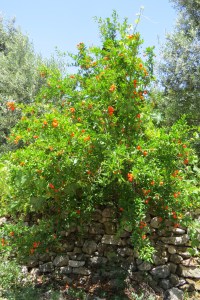
One of many pomegranate trees we have seen this trip.

417FB4C7-A75A-4933-9232-8D9146021E20

It was time for lunch and Marut had another wonderful plan.  We went to a tiny local village and had a fabulous meal made by kind ladies in the traditional way over a wood-fired oven.  They were like crepes, done flat over a large sulrface, or like quesadillas, with delicious fillings.  


Back to Antalya in just enough time to visit the Archaeological Museum before heading to the Hammam (Turkish baths).  We were only slightly rushed and saw the whole museum.   We were astounded to learn that the entire contents of the museum, all of the magnificent and detailed statuary, were discovered at the one site of Perge.  Visiting the museum after visiting the site is always a must for me – it puts the site visit, sometimes little more than piles of rocks or outlines of walls, into perspective.  In the ancient times, the temples were truly amazing and the luxury and decoration were exquisite.  Note the subtlety of the positions the statues are in.  There must have been a statue between each column at the site.


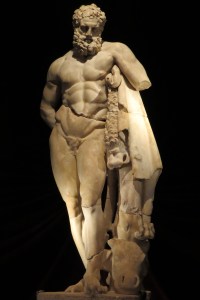
The statue of Hercules is world-famous, perhaps because of its story.  Note the crack along the waist, likely the result of one of several earthquakes.  The upper half of the body was discovered by American archaeologists and given to the Metropolitan Museum where it was displayed for decades.  Turkish archaeologists discovered the lower half and it did not take long to learn the whereabouts of the missing upper half.  After years of pleading, the Met finally decided it was right to restore the upper half to Turkey, and the two were reunited.   There were approximately 60 versions of the bronze made in antiquity but these two are believed to be one version and the archaeologist who studies the versions advised to name this “The Heracles Farnasi of Perge.”  

C2A1FAAC-A9B0-40BB-B476-633C5B6DA44B

The Hercules Sarcophagus also was a highlight.  All of the 12 labours of Hercules are featured, starting when he was young and carrying on throughout his life, with the face showing his age as the scenes progress.

Driven mad by Hera (queen of the gods), Hercules slew his son, daughter, and wife Megara. After recovering his sanity, Hercules deeply regretted his actions; he was purified by King Thespius, then traveled to Delphi to inquire how he could atone for his actions. Pythia, the Oracle of Delphi, advised him to go to Tiryns and serve his cousin King Eurystheus for twelve years, performing whatever labors Eurystheus might set him; in return, he would be rewarded with immortality.  He did complete all twelve labours*, and I think these marbles attest to his immortality.


The Dionysus Sarcophagus (god of wine) also is exquisite.


We quickly made our way back to the hotel where we were met with a driver to the Hammam.  This was a real Turkish bath, quite different than the one I had in Andalusia.  In this one, there was in fact no bath or pool at all.  First, we peeled off to the separate Ladies only spa.  After changing, we were alll with little warning splashed with hot water and told to lie down on an enormous round sort of hot marble table.  When we couldn’t bear the heat any longer we each had our own little sink and rinsed off with cool water.  Directed to a bed, we were thoroughly salt-scrubbed with a loofah and then a wash of soap suds was poured over us.  Next, we were wrapped in hot towels and received apple tea and water.  A short time later, four at a time, we received wonderful oil massages of about 30 minutes, while the ladies cheerfully chatted in Turkish and we all laughed trying to break the language barrier.  We were thoroughly melted and felt relaxed for days afterward.  Needless to say, there are no photos.

Dinner was so good last night that we returned to our seaside aerie for another lovely meal.

That was a day!  I couldn’t have possibly done all this without the wonderful arrangements by our guide, Marut.

Best,

Jan

*PS In case you are interested, the 12 labours of Hercules, which he completed, were:

  1. Slay the Nemean lion.
  2. Slay the nine-headed Lernaean Hydra.
  3. Capture the Ceryneian Hind.
  4. Capture the Erymanthian Boar.
  5. Clean the Augean stables in a single day.
  6. Slay the Stymphalian birds.
  7. Capture the Cretan Bull.
  8. Steal the Mares of Diomedes.
  9. Obtain the girdle of Hippolyta.
  10. Obtain the cattle of the monster Geryon.
  11. Steal the apples of the Hesperides.
  12. Capture and bring back Cerberus.

Turkish Riviera

Today we headed for Antalya on the south coast.  

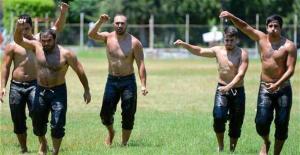
En route we stopped for another authentic experience, having lunch in a little town whose name I can no longer figure out, but it is renowned for its annual oil wrestling festival.  Oil wrestling, I know you’re asking?  Of course I’m about to digress.

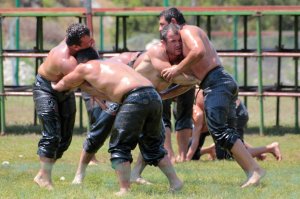
Oil wrestling,  yağlı güreş, is one of the oldest sports in Turkey, the favourite and the national sport, which includes a historic festival with music and lamb barbecue that has been held annually since 1346. Doused in oil, male wrestlers from young novices to trained professionals battle it out for matches that can last for hours.  The object of oil wrestling is to get your opponent in a position where his belly button faces the sky, at which point he loses the game.  The oil makes things fair, as it’s not about the size or strength of the wrestler but the technique, since both have the disadvantage of being doused in slippery oil.

You may think they look a bit silly:

81DD29AF-F70D-4224-BB3C-7788E1B9947A

Here’s another view:

090B3117-8093-48ED-A8EA-A12751856A2B

Anyway, back to the little town for lunch.  It was Ramadan and services were just ending.  Men poured out of the beautiful mosque to walk or ride their bicycles home.  Only a couple of restaurants were open and we chose one with several locals inside.   We could not communicate using language so they invited us into the kitchen to point out what we would like to eat.   There were a lot of men behind the counter; it was likely a family-run cafe.  Service was warm and friendly.  A bowl of tomato-based spinach and poached egg with rice pilaf on the side made the perfect brunch to be followed with an exotic sour cherry and lemon ice cream cone.

Arriving in the beautiful city of Antalya, we were in for a big treat.  This city of 1.5 million feels like a charming village.  The bus could not get into the central old town with its narrow streets, so we passed through Hadrian’s gate (a Roman gate dedicated to Emperor Hadrian when he visited the city in 130 AD) and walked to the hotel.

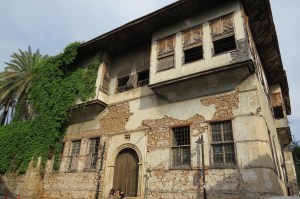
After settling into our stone hotel (a couple of converted old mansions),

we headed out to stroll the narrow streets and medieval buildings.

938AC2F7-0C18-4FA3-A38C-8E0F80C562F6

With some help from locals, we made our way to the ocean, a protected harbour.  We walked around the harbour and took an elevator to a viewpoint.

On our way back, we bumped into Murat who told us to sit down and have a drink at a lovely overlooking restaurant rather than go back to the hotel and then walk back.  We happily complied and enjoyed our front row view over a glass of wine, followed by a delicious lamb kebob dinner.

Best,

Jan

Cotton Castles

Our long drive to Pamukkale could have been boring with lunch at a touristic bus stop.   Instead, Mahrut guided us through a delightful, colourful local market.  We all picked out various items to share at a picnic.

We drove inland, up into the mountains, and Mahrut found us the perfect picnic spot.  We munched on dates, nuts, bread, homemade butter, cheeses, cherries, watermelon and other treats in beautiful fresh mountain air.

The loveliest part of our visit to the market and picnic was that they were such non-tourist-bus things to do, ones we all agreed we would have done had we been travelling on our own not on a tour.

I had neither heard of nor seen pictures of Pumakkale, but on arrival I learned that apparently everyone else in the world had, and they were all here.   The parking lot packed with busses and throngs of tourist groups really did not detract from our experience of Pumakkale.  The thermal springs and gorgeous, chalky hillside has attracted medical tourists since ancient times, so it was not surprising that there was an archaeological site and museum as well as the opportunity to swim or dip our feet in the very warm, healing waters.

The sprawling archaeological site included a large theatre, numerous temples, a water delivery system and most importantly, the baths.

The small, gorgeous museum had a wonderful collection of Roman sculptures, some indoors.  There was a map of the result of archaeological research by Prof. Dr. Francesco D’Andria envisioning the city as it was in ancient times.  There were sarcophagi using garlands and columns to decoratively support the weight of the lid.

This relief shows that bull fighting was done in Roman times.  (We were speculating about the origins of bull fighting while we were in Spain so this was interesting to see.)

98CED968-77AA-41A0-B010-EE14E718CE5D

This statue shows a female health official, an important position in this city-state.

Some relics were outside in the garden.

There was a letter from Hadrian to Hieropolis found at the site.

There also was a unique collection which had formed a frieze around the theatre, showing actors, dancers, musicians, and a costume depicting Artemis.  Was she goddess of theater?

We only spent one night at the very appropriately-named “Collosae Hotel”, a large corporate-style hotel designed to move groups through this isolated area.   We were able to swim in the hotel’s surprisingly uncrowded thermal spa.  I had a great sleep after this lovely day.

Best,

Jan

Neighbours

Before leaving Kusadasi this morning, we visited a leather shop and saw, and some of us participated in, a fashion show.   It was good fun, but I didn’t get a leather jacket.  After seeing video of me “modelling” a loose, red jacket, I wish I had bought it.  Oh, well, I’ll just have to come back.

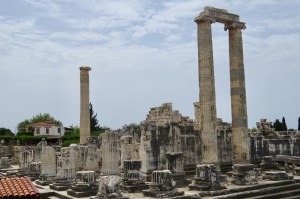
Today was a driving day but we stopped at Didyma to visit the massive marble Temple of Apollo at Didyma. Stepping off the bus we were hit with a wall of heat.  With the heat radiating off the Temple, it must have been in the mid-40’s.  This was the site of one of the most famous oracles in the ancient world – a place where people would come to have their fortunes told and the future predicted and one of the largest temples we have seen in Turkey.

2985939E-B92A-451C-A5B2-9743563B7EFC

There were two oracles in ancient Greece, one at Delphi, and the one here.   An oracle is a woman who communicates directly with the gods, usually chosen as a young girl with a gift for visions.   No-one would see the oracle except a single priest who would act as mediary.   The oracle would be consulted by even the highest office, Emperor; for example, before entering a war or a battle, the gods would be consulted in this way.

We headed to Altinkum Beach for lunch and envied all the swimmers who lolled in what, given the numbers must have been very warm  temperature of the Adriatic.  The atmosphere called for a frosty margarita.  After a delicious lunch, we strolled along the promenade.

We drove on to Bodrum which still has a strong Greek look and feel to it and this beach town attracts the rich and famous with their beautiful yachts.  The town is the site of another of the Seven Wonders of the World – the Mausoleum of Halicarnassus. Built in the 4th Century BCE.  The tomb was the largest and most elaborate ever built and has served as a model for hundreds of thousands of tombs ever since. The 15th Century Castle of St. Peter built by the Knights of St John using some of the pieces of the Mausoleum, graces the landscape.

Our bus climbed the steep hill to a hotel with a gorgeous view of the town and it’s whitewashed houses tumbling down the hillside.  Later, we walked downslope to a Greek-style outdoor seaside restaurant.  After tzaziki, eggplant and other dips and fresh bread, fresh fish and a beautiful array of fresh fruit, we strolled the promenade and shops brimming with dark brown handmade leather sandals and taxied back up the hill.


It’s interesting to note that since the times of Alexander the Great, while empires came and went, ordinary Greek people continuously lived along the west coast and islands just off the coast of Turkey until the Republic was formed in 1923, and of course many Turks lived on Greek islands and the Greek mainland.  In 1923, Ataturk and the Greek govenrment declared a great “Exchange.”  Greeks were expelled from Turkey and Turks were expelled from Greece.  This left the people at loose ends; these Greeks returning to Greece were treated as Turks by the Greek people, and the Turks returning to Turkey were treated as Greeks by the Turkish people.  Many of them wound up on ships to America.

The little gem of a foodie film, “A Touch of Spice,” deals in a light-hearted way with the plight of a Greek from Turkey moving to Greece – it’s available for purchase on Amazon or rental at Picaflik in Oak Bay, Victoria.  The trailer:


Best,

Jan

PS in case you are interested, the seven wonders of the ancient world are:

  • the Great Pyramid at Giza, Egypt
  • the Hanging Gardens of Babylon
  • the Statue of Zeus at Olympia, Greece
  • the Temple of Artemis at Ephesus
  • the Mausoleum at Halicarnassus
  • the Colossus of Rhodes
  • the Lighthouse of Alexandria, Egypt

The only one intact today is the Great Pyramid at Giza.

Ephesus

On our second day in Kusadasi we visited Ephesus.

This magnificent city-state, containing one of the Seven Wonders of the Ancient World, was largely built by the ancient Greeks but in fact, like Pergamon, the archaeologists’ digs peeled back the layers like the skin of an onion, revealing the many civilizations that have come and gone at Ephesus.

The earliest find at the site dates to the late 7th millenium BCE, the early Chalcolithic period, in other words, 9,000 years ago.  It strikes me that the Mother Goddess of this age found at Ephesus, now in the Ephesus Archaeological Museum (below left), is very similar to the fertility goddess, the Venus of Willendorf, that I saw in Vienna’s Natural History Museum which dates back to at least 22,000 BCE.

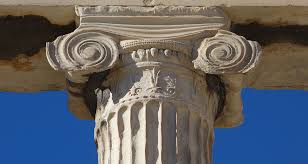
At some point in the 11th century BCE, the west coast of Turkey, including the city of Ephesus, was conquered by the Greeks in what is now known as the Ionic civilization (identified by the decoration at the capital) that represents a ram’s horns).

C501A456-A5F1-4A04-8931-1F9658DD64B4

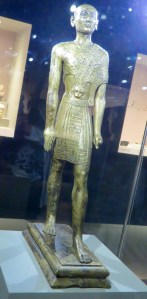
This bronze statue of an Egyptian priest from the 6th century BCE found on site suggests very early communications between Egypt and Ephesus.

CB8C2880-7E9B-41D6-B5C9-B053C7E6CF75


Shortly after 550 BCE, Lydian King Kroisos conquered the city, but not for long.  In 546 BCE, the Persians took the city and maintained control until Alexander the Great took the city in 334 BCE.

During this Hellenistic (Greek) Period, the city of Ephesus was extensively reconstructed.  A 9 km fortification wall was built around the entire city, enclosing two main areas.  The Upper Area comprised the political and residential area including a small theatre for political debates.

The Marble Road connected the upper and lower areas.

The Lower Area was the cultural and mercantile area which included a theatre, agora and stadium. 

The centerpiece of the entire site today is the Lower Area 3-storey Library of Celsus, which was the third largest library in the world.  

In 88 BCE when Romans attempted to take over the city and impose a tax, all Italians were sentenced to death and 80,000 people were violently murdered in a single night. 

When the Apostle Paul preached here between 52 and 55 BCE, he was confronted by a determined pagan cult and the Jewish community and was ejected from the City.  He carried on to Corinth where he delivered his scolding “Letters to the Corinthians”.

In 33 BCE, Antony (below, left) and Cleopatra spent the winter in Ephesus planning their campaign against the Roman, Octavian.  Of course, they lost that battle and the Octavian took the name and title Emperor Augustus and made Ephesus his headquarters and the capital of Asia.  There were purposefully built construction projects which were used as political tools. 

The Romans retained power until about 270 AD when a catastrophic earthquake and Gothic raids sent the city into a severe decline.  

Many of the discoveries at this site date to Roman times.

Just off the road connecting the upper and lower areas was the Temple of Artemis where both the exquisite 1st century AD statue of Artemis (below, left) was discovered as well as the 2nd century AD replica.

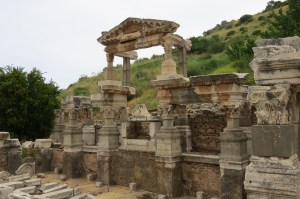
The Nymphaem fountain building was donated by Tiberius Aristion and his wife in 114 AD.  Originally, a 2-storey facade surrounded the fountain on 3 sides and Trajan stood, with a globe under his foot stood above the water outlet.

3AC0CD99-0F1F-48F6-A39A-01A76FE5B6DA


The Terrace Houses

A special exhibit at the site is a collection of stencils and mosaics from some of the Roman mansions found at the site.   It seems like the ultimate challenge for an archaeologist, patching together equisiite marble and mosiac fragments, a reality jigsaw puzzle.

One of the typical upper middle class homeowners was C. Flavius Furius Optus, a priest and municipal counsellor.  His walls were decorated with stencils and frescoes.

Other homes had wall frescoes and mosaic floors.  Medusa, my least favourite godess, makes an appearance.

Ephesus Archaeological Museum

Other beautiful Roman statuary are protected in the museum including statues or busts depicting Aphrodite, Artemis, Zeus, Androclus, a resting warrior and others.

An ivory frieze was found in one of the terrace houses.

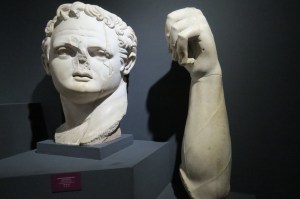
Head and arm of what must have been an enormous statue of Emperor Dimitrius.

E0CA7C43-CBC8-4204-AB04-0D84B7D34CE2

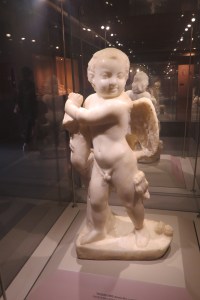
Impish little Eros, doesn’t he look like a whole lot of mischief?

9B8AEFAA-A9F3-4DB6-A5B0-78714BDEA72B

Artemisian Temple

One of the Seven Wonders of the Ancient World, this temple is the most important building at Ephesus but the current view does not look so impressive today.  It is notable that all religions are represented here (a church, mosque and ancient castle stand in the background)

The Romans retained power until about 270 AD when a catastrophic earthquake and Gothic raids sent the city into a severe decline.

A pillar top makes the perfect home for a growing stork family.

422725E8-95AA-411F-A069-B20AAE1ED223

The city experienced a resurgence during Byzantine times and several major churches were built.  A statue of Proconsul Stephanos dating to the 6th century was found on the site.

F5293DFB-72B2-4F53-A3A6-8DF72F00B54E

Shrine of the Blessed Virgin

This was the period when the Shrine of the Blessed Virgin we were to visit was installed at what is believed to be the last home of Mary.  It was written that Jesus entrusted St. John to take care of his mother for the rest of her life, saying “here is your mother.”   John’s tomb has been found at Ephesus.  John was given responsibility for Asia Minor and likely came here after persecution in Jerusalem.  Further evidence put forth at the site states:

“Catherina Emmerich was an invalid and had never left Germany.  In her visions, she described with amazing accuracy the hills of Ephesus and the house where she saw the Blessed Virgin spend her last years.  Accordingly, two scientific expeditions were organized in 1891 and they found this place in perfect and identical correspondent with the indications of Catherina Emmerich.”

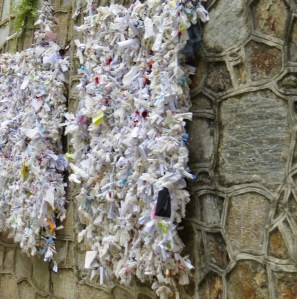
Followers leave messages for Mary.  It reminded me of the John Lennon wall in Prague and the letters to Juliet in Verona.

FB51639F-C892-4563-A75C-070A4633519F

Excavation of this whole complex of Ephesus has been ongoing since 1985, but estimates suggest that 80% remains buried.  It is certainly the largest archaeological site I’ve ever visited and it is easy to perceive the vastness and importance of the city-state in ancient times.

Best,

Jan

On the Rocks

I had a delicious free day to myself to recharge and enjoy this tropical seaside city (the first of many on our itinerary).  After sleeping in, I walked along the lovely promenade, taking in the sights.  An ancient castle forms a natural breakwater for the protected harbour.  An ancient building bedecked with flags and Ataturk’s image has been made into a museum.  

I was in search of a coffee and some breakfast.  I hate to admit that I jumped for joy at the sight of a Starbucks in the port area; I longed for a fix of my usual daily grande half-caff non-fat iced latte.   Extremely touristic, of course, because Turkey is renowned for its coffee.  Coffee is not drunk walking around in a paper cup, it is served only after the meal is over.  The small accompanying glass of water is meant to be drunk first to cleanse the palate.  Turkey serves its coffee strong, black, with a bit or a lot of sugar and a coffee ground sludge taking up about the bottom quarter of the espresso-sized cup.   There is some debate about whether to stir the grounds into the liquid or leave it settled at the bottom of the cup.  Either way, it is never served with milk and when asking for milk, the reaction has ranged from bewilderment to shock to aggrievement.  I have taken to ordering a separate glass of milk and adding it myself.  In any event, my iced latte was a lovely treat.

The view of the city was lovely from Starbucks.

7855E6E2-7288-4EB9-93E0-3D3EA8C29E7C

By now it was near noon and I still had breakfast to come. I found a nice spot on the water that was open for lunch and advertised its lattes and cappucinos.   I ordered a second iced latte.  I was on a roll.

EE460A29-57B3-440B-9081-CE8678764F8E

It was about halfway through the second latte when I remembered that we were drinking and cleaning our teeth using only bottled water only and the ice in my lattes was melting into my drink and was now in my body.  Rather than not finishing the drink, I gulped it down quickly so less ice would be melted.  In any event, I was relieved to find I didn’t have any symptoms later but it was a good reminder at how easy it is to slip up when you are on the road faced with a lovely reminder of home.

After a scrumptious margherita pizza, I went shopping.  There were some charming shops with local products and some very nice independent fashion shops.  I certainly didn’t come home empty-handed.  I stopped en route at a small city centre beach to dip my feet in the ocean.

B8ABB8DC-6C75-4DCE-8178-F64B2B27F68D

After a siesta the group met in the lobby and we walked to a seaside restaurant for dinner.  Like Greece, much of the food that accompanies a main course is complimentary.  We were served mountains of fresh bread, tzatziki with fresh herbs, stewed eggplant, an artichoke dip and a spicy tomato spread.  A salad followed and our main course was fish, always attractively garnished.  For dessert, plates of decoratively arranged fresh fruit arrived.   Delicious!

Walking back to the hotel we first noticed the increased security presence that was to follow at all the favoured southern beach towns and important archaeological sites.  We were told there were plainclothes police everywhere as well.

The sunset put a lovely period at the end of the sentence that was my free day today – the view from my room through the lineup of ships by the ancient castle:

Best,

Jan

Two Ruins, a Snake and a Football Match

Troy

There was more than Helen and Aphrodite at the Troy Museum, including, of course, lots of information about the archaeological site, so it was a good place to start.


The 9 layers of civilizations that had lived at Troy confounded archaeologists looking for the city described by Homer in the Iliad and Odysseus and supported elsewhere in historical records.  In the late 1800’s, German Heinrich Schliemann was a businessman in search of the elusive Troy treasure.  It wasn’t until after his death that his student, Wilhelm Dorpfeld, identified the city walls of Troy VI and concluded that the Trojan War took place at this level, which he referred to as “Homeric Troy.”


About 40 years later, American Carl Blegen began further investigations and excavations, meticulously recording his discoveries.  He identified 47 layers of civilization using more advanced technology based on pottery.


Another 50 years later, Turkish professor Dr. Manfred Korfmann proved that Troy was an Anatolian Bronze Age city with a fortified lower city.  In 1998, the site was designated a UNESCO world heritage site.

We visited the archaeological site.


The Athena Temple Troy VIII/IX


The Citadel Wall Troy II/IIII

33F23AAC-C30C-42EB-95EA-0605FA29C481

Main Entrance to the Citadel


The Megaron Troya II/III


Troy I Fortification Wall (2920 BCE).  In front of the tower stood at least one stone stele with relief decoration showing the upper half of a human figure.  The tradition of such stelae seems to live on at Troy for centuries:  over 1,000 years later such stone stelae reappear in front of the south gate of Troy VI.

6FC2114D-13FB-4F27-BF2C-58FF8F006A56

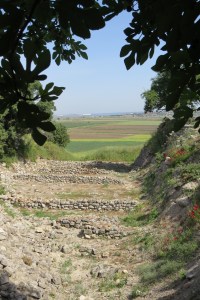
The “Schliemann Trench” was carelessly dug, not employing the careful techniques used later.

64FDD6AA-B8F3-497B-A738-712301298F8C

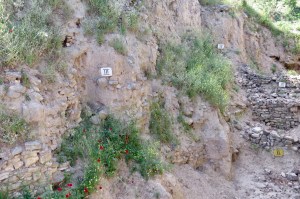
An example showing the actual levels of civilizations at Troy

507007B3-7F24-446E-933B-2FFE2C329592

Roman constructions from Troy VI/VII


Research continues, but the current thinking is that archaeological evidence confirms Homer’s stories about the Trojan-Greek wars although he appears to have drawn from numerous different wars across time.   There is also archaeological support for the stories about Helen.   The Trojan Horse, to this date, remains elusive and given it was made of wood, seems likely to remain the stuff of legend.

Pergamon

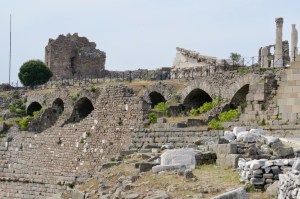
This afternoon we drove on to Pergamon.  Pergamon comprises two sites:  the acropolis atop a mountain above the Bakircay Plain, and Asklepion, a renowned and earliest known healing centre below.  Surveyors for the railway discovered the sites which date to the 3rd century BCE.

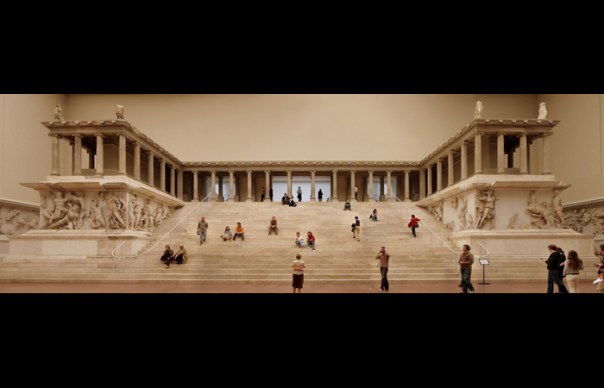
German archeologists discovered the Great Alter at Pergamon and  shipped most of it to Berlin for research and restoration.  That is how I came to see the magnificent Great Alter at the Berlin Pergamon Museum.  Of course now, the Turkish people would like it to be returned.

76190ACB-2A09-44A0-B3C6-38F89FEE7756

The Acropolis

The acropolis was the capital of the Hellenistic (Greek) Attalid dynasty, a major centre of learning in the ancient world. Monumental temples, theatres, stoa or porticoes, gymnasium, altar and the second most important library Alexandria were set into the sloping terrain surrounded by an extensive city wall. Later the city became capital of the Roman province of Asia. The acropolis crowns a landscape containing burial mounds and remains of the Roman, Byzantine and Ottoman empires in and around the modern town of Bergama on the lower slopes.

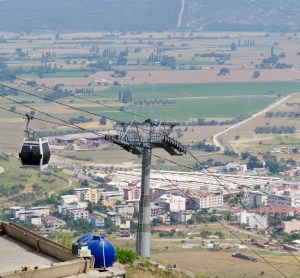
We had the luxury of a cable car, but one can appreciate the engineering and ingenuity necessary to build the original acropolis.

11F55515-B67D-455B-8C16-AC896E25A4A0


The massive cisterns provided the acropolis with water.

33B10BB8-DD6F-4C7D-BD72-A941F9D17997

The site contains the steepest ancient theatre in the world:


The most important temple in the acropolis is dedicated to Zeus.

5B42278D-6C47-482F-9AE9-E8CADD7E6496

The agora – bazaar/market/shopping mall – is divided into various shops.

3238E10A-DC65-4644-A02D-CDA8C50F4BF3

Asklepion

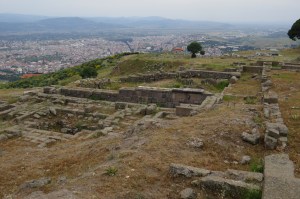
We visited the site of the ancient healing centre, Asklepion.  It must have been gorgeous, with a marble collonade surrounding the grounds and several marble temples and treatment areas.  


A natural spring that was used for treatment still spills from the spout here.

CB4E28D7-C9F7-4CEE-A93D-69A95305FC6F

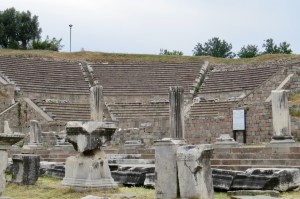
The small amphitheatre was used for sharing research and discussions about treatment.

51109863-8807-4614-A600-2F534C05F0E0

Treatment rooms were accessed through a long tunnel.


The first known centre for health, treatments were innovative, including diet, baths, exercise, music therapy and dream interpretation. The centre developed a reputation throughout the Mediterranean and Europe, similar to the reputation the Mayo Clinic has today.  Asklepius, the centre’s founder,  proved blood circulated through veins in the human body.  He treated battle wounds, burns, frostbite, a full range of illnesses.

The Greeks regarded snakes as sacred and used them in healing rituals as snake venom was thought to be remedial and their skin-shedding was viewed as a symbol of rebirth and renewal.    Asklepious decided to raise a snake of his own. He most probably chose one from Epidaurus in nearby Greece, where the snakes were known to be tamer.   He also founded a healing centre at Epidaurus and in hopeless cases, he experimented with sending patients into a pit with vipers, as it was thought that they were gatekeepers of the Underworld and would prevent them from going there.   His life forever after would be closely connected with the snake.  The staff of Asklepious with the snake entwined around it came to be the sign still used today to represent health and medicine.  Ironically, as we entered the centre, we came across a large snake.  I did not stick around to take a photo, nor did I seek a snake treatment, though I do agree he came to us from the Underworld. 😱

The World Health Organization Flag:

DFDB1E5E-CCA7-4D75-A643-8AAFA450864B

———–

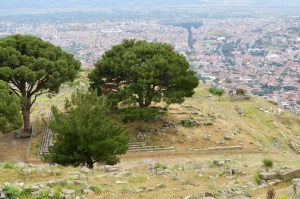
A pastoral scene and the lovely Turkish pines met us as we left Asklepion.   The skies have been hazy for a couple of days due to a north African sandstorm.


Leaving Pergamon, we passed through Izmir, now a modern city but was an ancient city then known as Smyrna.  Then as now, the city is prized for its mild climate, fertile soil, and a large, protected harbour.  Smyrna is mentioned in the bible and was the birthplace of Homer.

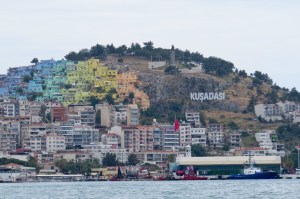
Arriving in the lovely seaside city of Kusadasi was exciting.  Ramadan is being celebrated this month and this weekend was also the celebration of the founding of Turkey.  Added to that, there was a pop/rock concert being held in the main square, and, precisely at the moment we arrived, we saw bars packed with people, all throwing their arms up in the air and then pouring into the streets.  Turkey had just won the Euro Cup of soccer.  But as per the experience of all of this trip to date, perfect planning by Norman and Julie of Royal Heights and Marut of Fez Tours landed us in a 12th floor restaurant where we had a bird’s eye view of the celebrations below.  It was a cacophony of horns, cheering, music and fireworks.


Best,

Jan

Beauty Like the Dawn

512636C6-841B-4BB0-9636-C5CBC30AFED6                                       – “Helen of Troy” by Dante Charles Gabriel Rossetti

1   Was this the face that launched a thousand ships
2 And burned the topless towers of Illium?
3 Sweet Helen, make me immortal with a kiss:
4 Her lips suck forth my soul, see where it flies.
5 Come Helen, come, give me my soul again.
6 Here will I dwell, for heaven be in these lips
7 And all is dross that is not Helena.
8 I will be Paris and, for love of thee,
9 Instead of Troy shall Wittenberg be sacked;
10 And I will combat with weak Menelaus
11 And wear thy colours on my plumed crest;
12 Yea, I will wound Achilles in the heel
13 And then return to Helen for a kiss.
14 O, thou art fairer than the evening air,
15 Clad in the beauty of a thousand stars;
16 Brighter art thou than flaming Jupiter
17 When he appeared to hapless Semele,
18 More lovely than the monarch of the sky
19 In wanton Arethusa’s azure arms,
20 And none but thou shalt be my paramour.

                                – Doctor Faustus, Christopher Marlowe    (1564-1593)

The history at Troy puts Helen, the most beautiful woman in all of history, front and centre.  But her story starts in Sparta, near the ancient site of Mycenae, on the Peloponnese peninsula in Greece.  Like so many ancient Greek stories, the lines tend to blur between the mythological and the real.  But there is much to support the existence of Helen and events at Troy, in archaeology.

Stories of Helen link her beauty with violence.  The story of the mythological Helen began with an act of vioence: the rape of her mother, Leda, by Zeus, who had transformed himself into a swan. 

Poem Leda and the Swan, by W.B. Yeats:  https://www.poets.org/poetsorg/poem/leda-and-swan

According to historians, Helen, the girl, aged 13, was raped by 70-year-old Theseus, King of Athens, and then forced into marriage.  It is hardly surprising, then, that Helen fell in love with the handsome young warrior, Paris, the second son of the King of Troy, when he swept in, fell passionately in love with her, and the two fled to Troy, a city controlled by the Hittites.  Helen was an aristocrat, a consort ruler of Sparta, and would have had disposible wealth and owned fertile land.  The women of her day were in charge of religion and mysticism and all of this suggests Helen had a lot of power and in all likelihood went to Troy of her own volition.  This also explains why, on orders from her husband who was away at sea, Greece immediately dispatched a fleet of ships to follow Helen and Paris to Troy with orders to bring Helen back.

8C97EC12-0399-44CB-9056-2C412DC1CB04                         – “The Love of Helen and Paris,” by Jacques-Louis David
(oil on canvas, 1788, Louvre, Paris)

At Troy, Helen appeared to be pulling all the strings, Homer said she spent a lot of time weaving tapestry with a golden spindle.  She walked around the Trojan horse three times while tearing at her clothes, likely drawing attention to it by the Trojans.  The City of Troy’s fate was sealed.

According to Homer, Helen had a perfect view from Troy of Paris and Manaleus fighting to the death for her, what beauty, terrible beauty, said Homer.  Paris was dragged to the Greeks and they were about to kill him, but Aphrodite covered the field in mist and brought Paris back.  Helen didn’t want to speak to Paris, he’d dishonoured her, but the more Helen poured scorn on Paris, the more he wanted her.  The fighting raged on and Paris was eventually killed with a poisoned arrow.   Meneleus wanted to kill her, but when he saw her, all he wanted was to have her back.

Helen and Meneleus returned to their Spartan palace.  When Trojan visitors later came to Sparta, she dropped poison into their drinks to make them forget what she had done.  Helen still controlled things, but her golden age of heroes were about to be extinguished.  Archaeological evidence shows that the Hittite empire collapsed, Troy suffered an earthquake, Sparta a fire and the Dark Ages began.  But Helen lived on, worshipped as a goddess.  Homer made her the excuse for a war in which men by the thousands were killed.  Her tomb was never found, but the area is known, and what was found there by archaeologists?  A bronze age golden spindle.

———–

One could imagine a beauty like Helen wearing the gold jewelry which formed part of the treasury discovered at Troy, now housed at the excellent new Troy Museum we visited today.

A statue of Aphrodite, the goddess of beauty, found at Troy:

DF7B5770-2CF7-4657-BACA-BD411A2ABC45

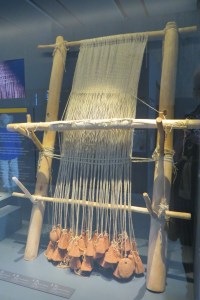
Thousands of loom weights, spindles and dye production tools have been discovered at Troy, suggesting an extensive weaving production and trade, just as Homer had referenced.

647FF684-7CA7-421C-B6B5-A85FC354BFCA

Later, we’re heading to the archeological site.

Best,

Jan


Some masterful military strategies, some not so much

We left Istanbul this morning and headed out into the countryside towards the city of Canikkale.  En route we will climb into the mountains and stop at Gallipoli, just a stone’s throw from the ancient site of Troy.  

Appropriately, wild red poppies dot the landscape.


We stopped for a delightful lunch at an oceanside restaurant where we selected our fish from a case of the catch of the day at the pretty seaside town of Gelibolu. Gelibolu was the birthplace of Piri Reis, a famous cartographer whose 1513 map of the world included America (“the Piri Reis Map”).


———————

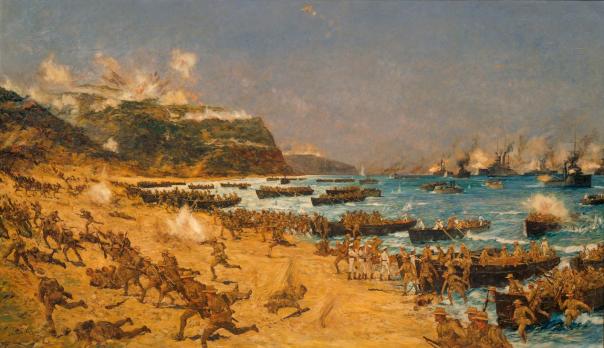
“Anzac,the Landing, April 25, 1915,” by Charles Dixon:

9DFCE1CF-5D32-4EA3-A152-842CF7632402

From the muddy WWI trenches of the drab Flanders fields, Gallipoli had provided a splash of colour. The battle took classically educated Allied officers to a romantic country, familiar to them from the pages of Homer.  The Allied troops believed they were fighting for democracy, but many of the Turk soldiers were locals, defending their own homes, families and their Muslim faith.

Both sides dug in for months, eventually someone had to make a move.  Mustafa Kemal, the Turkish commander, describes the night of August 10, 1915:

“The British forces of 20,000 settled into their trenches where they had spent days digging in and waiting for the moment to attack….  Dawn was about to break when I called the commander of the 8th Division and other forces.   I told them that I have total faith in us and that we will defeat the enemy.  However, don’t hurry, firstly I will go forward and when I raise my whip to give the action sign, you will all attack together.   I walked through to the enemy silently 20-30 metres.  There was absolutely no sound where there were thousands of soldiers lips praying quietly in the hot night.  I paused, lifted my whip over my head and rotating it before bringing it down rapidly.  Bedlam broke loose at 4:30 a.m….  Shrapnels and bullets drop like rain rained from the sky and a piece of shrapnel suddenly hit me over my heart…. The pocket watch which was over my heart had been shattered….  As a result of this attack, the English withdrew completely, leaving thousands of dead behind and fully understanding the Canakkkale straits could not be passable.”


Meanwhile, the battle raged on.  It was disastrous for the Allies – in the first month, over 45,000 Allied soldiers were lost.  After nine months, 250,000 casualties were amassed and the remaining Allied troops were evacuated.  

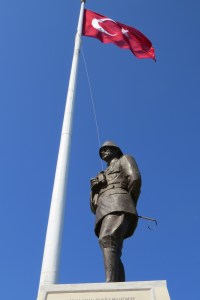
Gallipopli was the most important battle in Turkish history as it founded the nation.  The annual celebration, similar to an Independence Day, is taking place this weekend.  There are Turkish flags and images of Ataturk hung all over Turkey.  The Turkish flag 🇹🇷, adopts the traditional symbol around the eastern Mediterranean, the crescent moon and the star.  The flag symbolizes the scene at Golipolli that fateful night:  the red blood of Turkish soldiers that flowed on the ground reflecting the crescent moon and the stars.

As a result of the success of the Mustafa Kemal, he became known as Ataturk and was installed as the first and most beloved leader of the modern Republic of Turkey.   The course of Turkish history might have been very different, were it not for that one gold pocket watch.

7C2F32F0-7F8C-4CDE-A250-E3DBEA0FD550

A touching example of his leadership met us at a memorial for ANZAC (Australian and New Zealand) soldiers who were his enemies during the war:

“Those heroes that shed their blood and lost their lives, you are now living in the soil of a friendly country, therefore rest in peace.  There is no experience between the johnnies and the mehmets to us where they lie side by side in this country of ours.  You, the mothers who sent their sons from far away countries, wipe away your tears.  Your sons are now lying in our bosom and are in peace.  After having lost their lives on this land, they have become our sons as well.”
— Ataturk, 1934

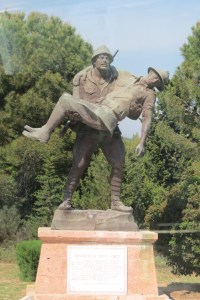
Statue of a Turkish soldier rescuing a wounded Allied soldier:

02E6DD00-3073-40B2-AD50-360F3FB0C2D1

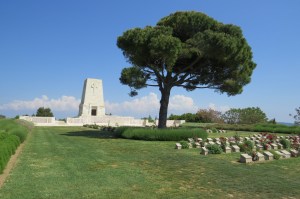
We joined an Austrialian group at Ari Burnhu, an Allied cemetery:


Lone Pine Cemetery, where the names of all known ANZAC soldiers  lost are recorded with the inscription, “their names liveth for evermore.”

96DA7F17-2725-40A0-98FC-1A9F92EE7C21

A Turkish monument site with the remaining trenches largely filled in by sand over time.


Things did not go quite as well for Winston Churchill, whose idea it had been to seize control of the Ottoman Empire and gain control of the strategic waterways linking the Black Sea in the east to the Mediterranean Sea in the west.  A young politician, Churchill liked to think of himself as a military strategist. 

“I have it in me to be a successful soldier.
I can visualize great movements and combinations.”

Although at least some of the blame was on the shoulders of the military leaders, following the defeat, Churchill was demoted to a minor portfolio in the government.  Displaying the gritty determination that would one day give him the moniker “the English Bulldog”, he resigned and headed to the front lines in France as an infantry officer. After several brushes with death, he returned to politics in 1917.  

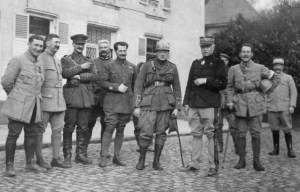
Major Winston Churchill, wearing a French steel shrapnel helmet, stands with General Emile Fayolle and other officers including Captain Edward Spears (third from left) at the headquarters of XXXIII Corps, French Army, while visiting the French front line on 15 December 1915:

D5AE8C0A-B5FD-4B1E-ABD0-16B96E7C4CF4

By 1940, the world was again embroiled in war and Churchill became prime minister of England.

“All my past life had been a preparation for this hour and for this trial.”

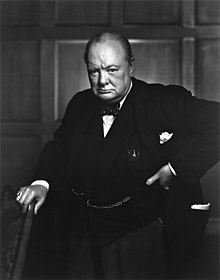
The Roaring Lion, an iconic portrait by the great Canadian portrait photographer, Yousuf Karsh, taken at the Canadian Parliament, December 1941:

14D97275-BB3F-474C-A2C8-823CAB8E68E9

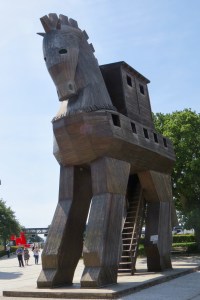
Although Churchill would redeem himself during WWII, at Gallipoli, he would have done well to consult history for inspiration.  After all, he was only kilometres away from the site of one of the most ingenious military strategies ever conceived.   The Greeks had the city of Troy under seige for months with no success at penetrating the city.  Not giving up, the leader Epeius commanded his soldiers to build a wooden horse, which they did within three days.   The plan called for one man to remain outside the horse; he would act as though the Greeks had abandoned him, leaving the horse as a gift for the Trojans.  The Trojuns wheeled the gift into the city, and we all know what happened next.  In the morning, we are heading to Troy.

FAB2CB7F-C6A9-444E-B157-1C5AF84AEA8C

Best,

Jan