I Heart Berlin

From the moment I touched ground, I have loved this town!

I caught a painfully early flight to Berlin Monday morning so that I could join a walking tour (Insider Tours Famous City Walk) by 10 am. I dropped off my bag at my hotel (the berlin mark for those planning trips – very reasonable rates and great location in former west berlin but very no frills, clean, comfy bed but tiny shower) and they gave me a room right away. I walked the 3 blocks to the starting point of the tour and grabbed a pastry and a coffee while I waited.

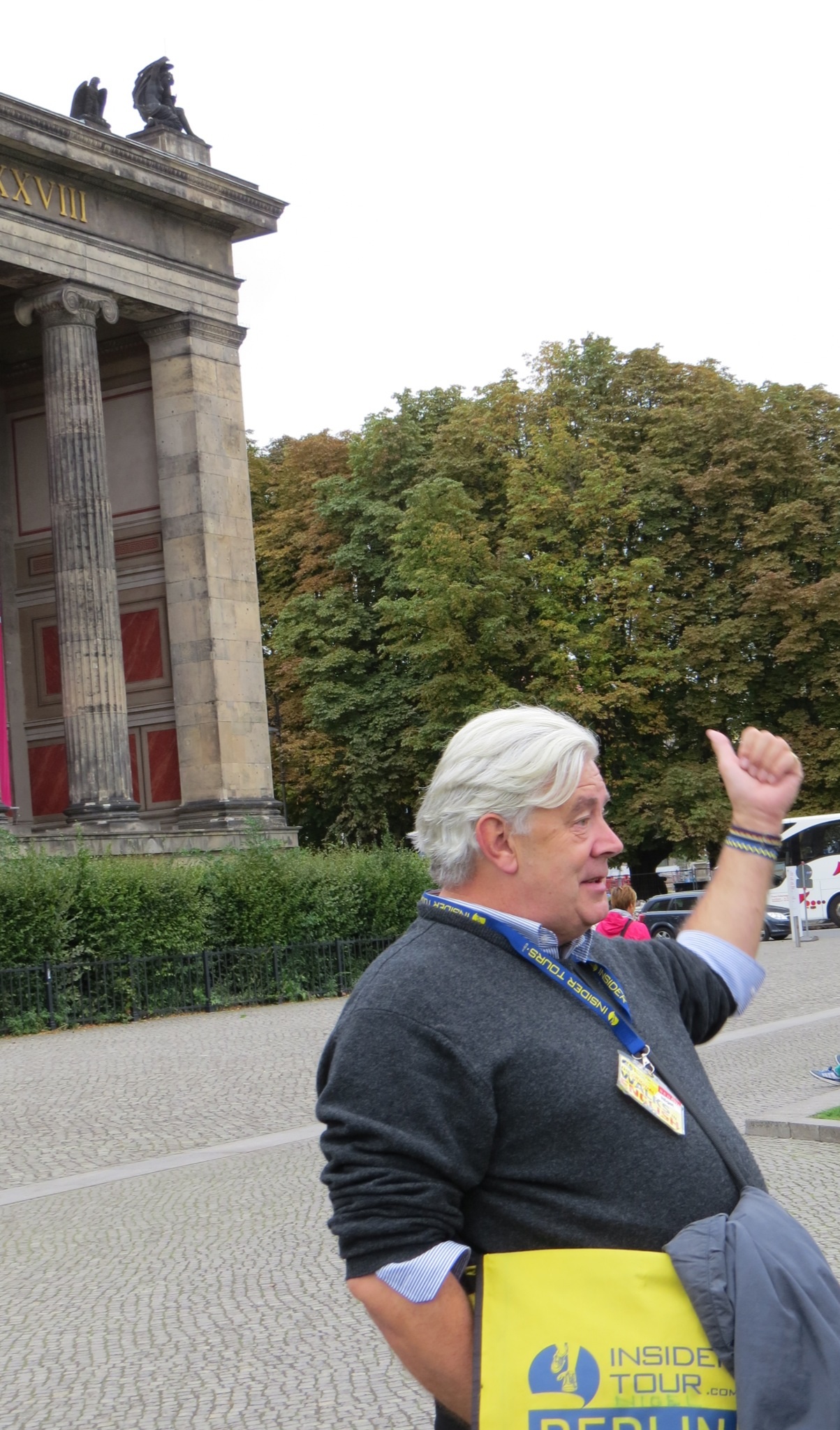
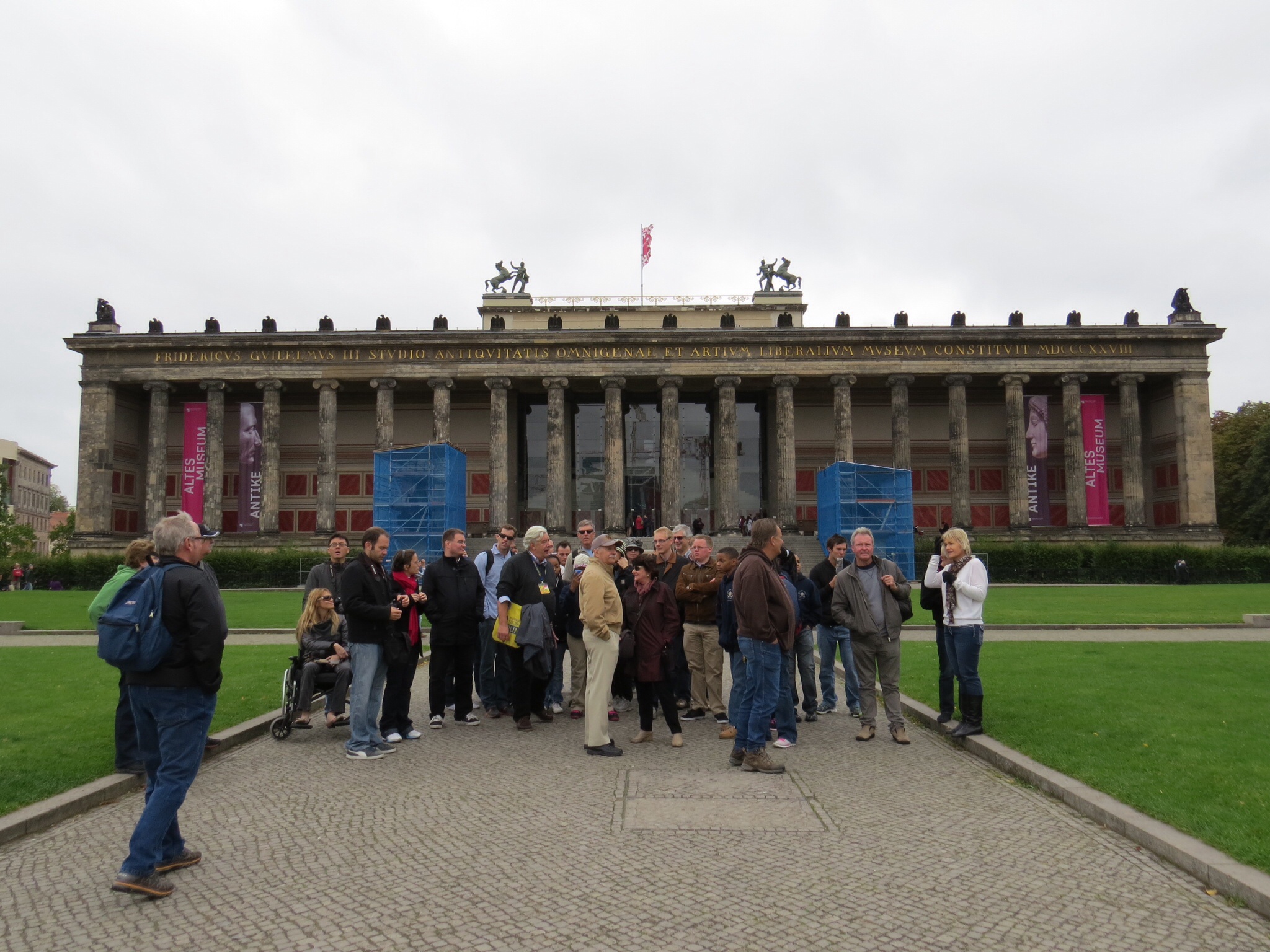
The tour was led by Nigel, a British ex-pat history professor who had been a diplomat for 5 years and who also claimed to have been a spy for Britain in Berlin during the cold war. He said he had to be able to speak German without an accent and was trained in speaking Russian for 2 years before he was assigned. Then he and his comrades crossed into East Berlin and stole armaments and took photographs and gathered intelligence on what the Russians were doing in East Berlin. He was there on the day (prior to the wall being built which didn’t happen until 1961) when the Americans rolled their tanks down the street to the edge of the international no go zone, and then the Russians rolled their tanks up to the edge of the east Berlin international no go zone, and was there until the Russians retreated and everyone breathed a sigh of relief. He was also there the day the Russians started installing the wall – which no-one had anticipated – and which for the first couple of days was simply rolled out barbed wire. He says he took a bunch of soldiers and put them on the back of a tank and got huge rolls of barbed wire and got them to start throwing it off the back of the tank, and realized there was no way they could take down the wall as quickly as the Russians were putting it up, so the mission had to be aborted.
imageimageimageimageimage
image
imageimage

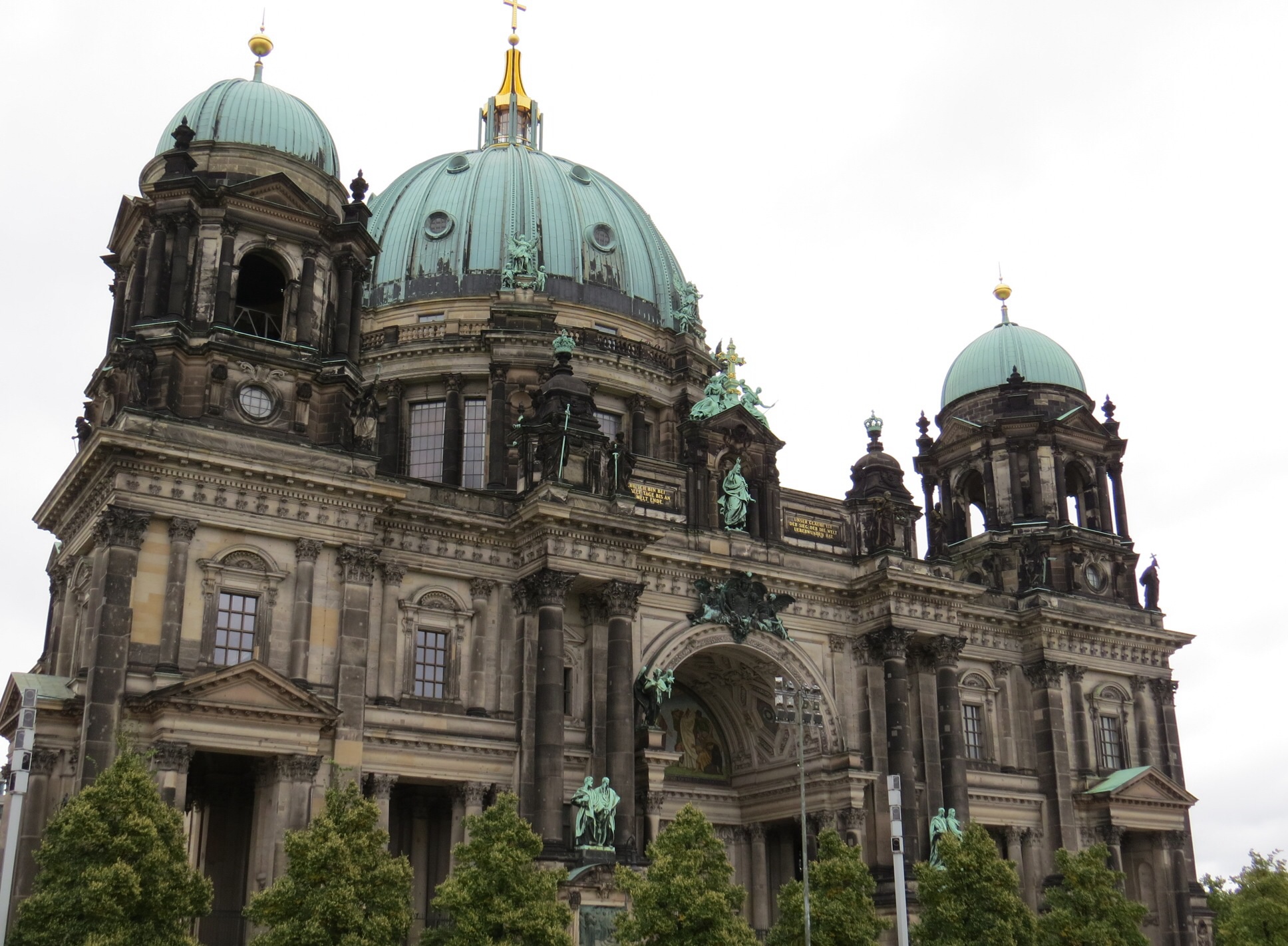
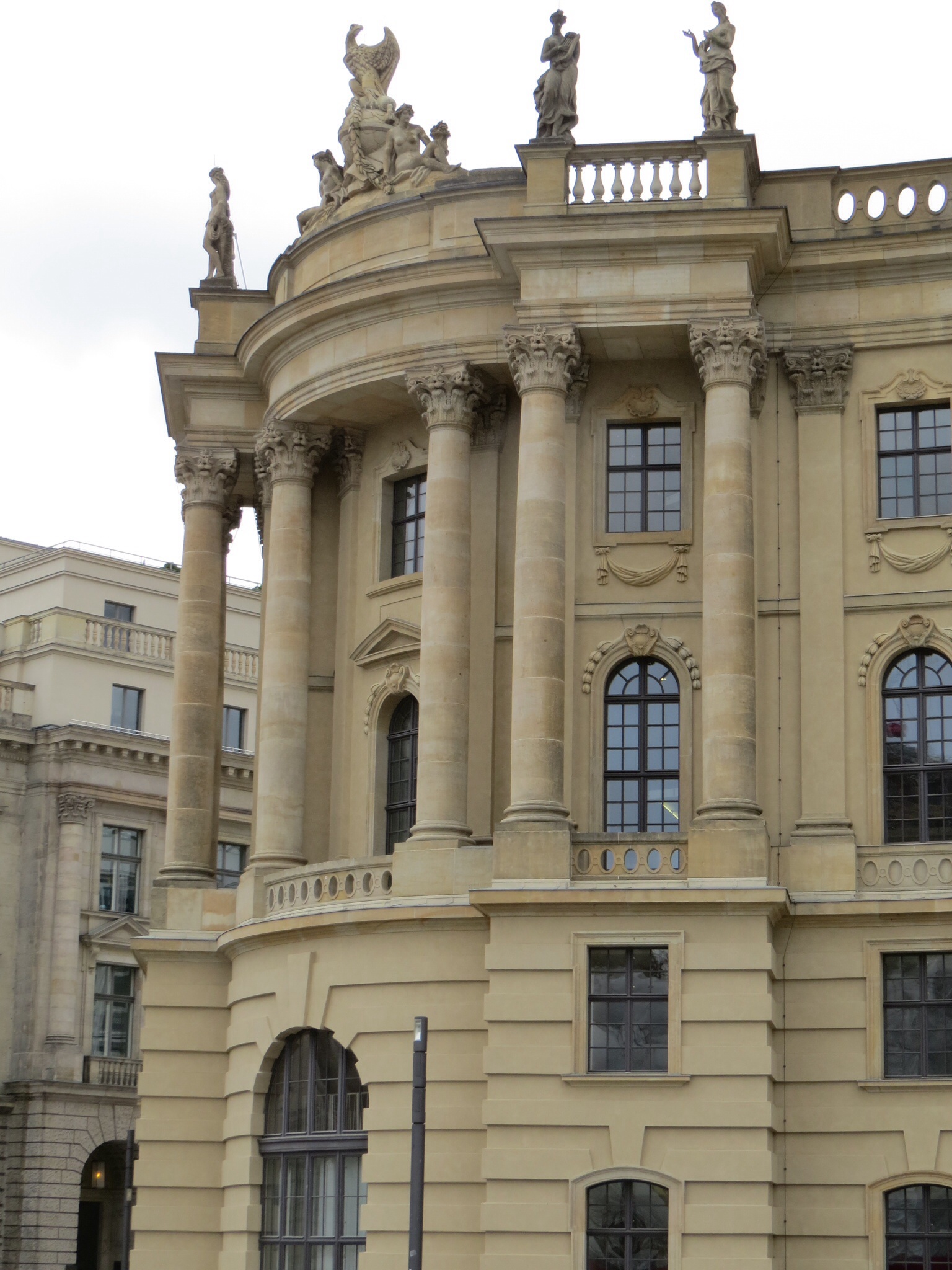
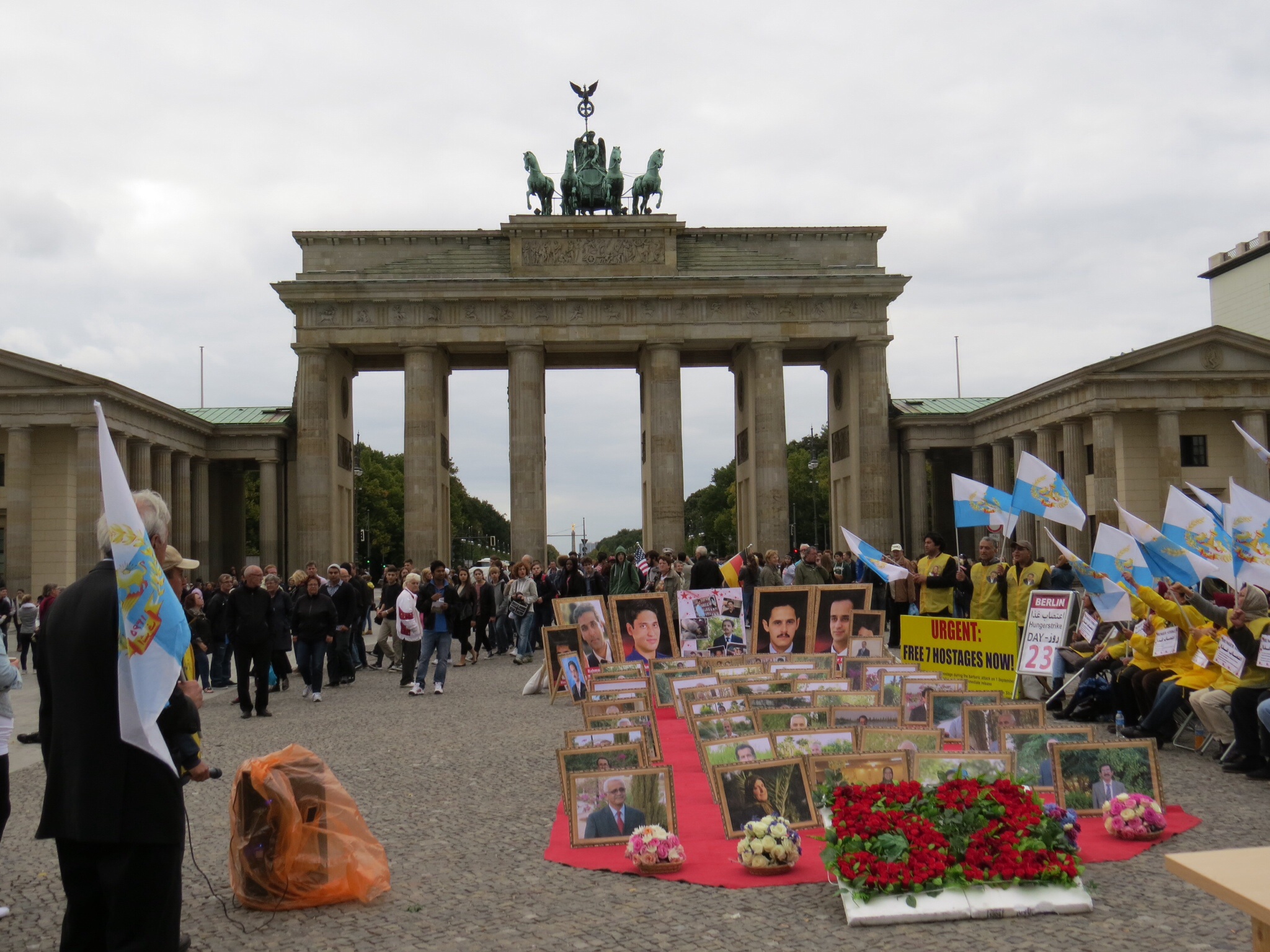
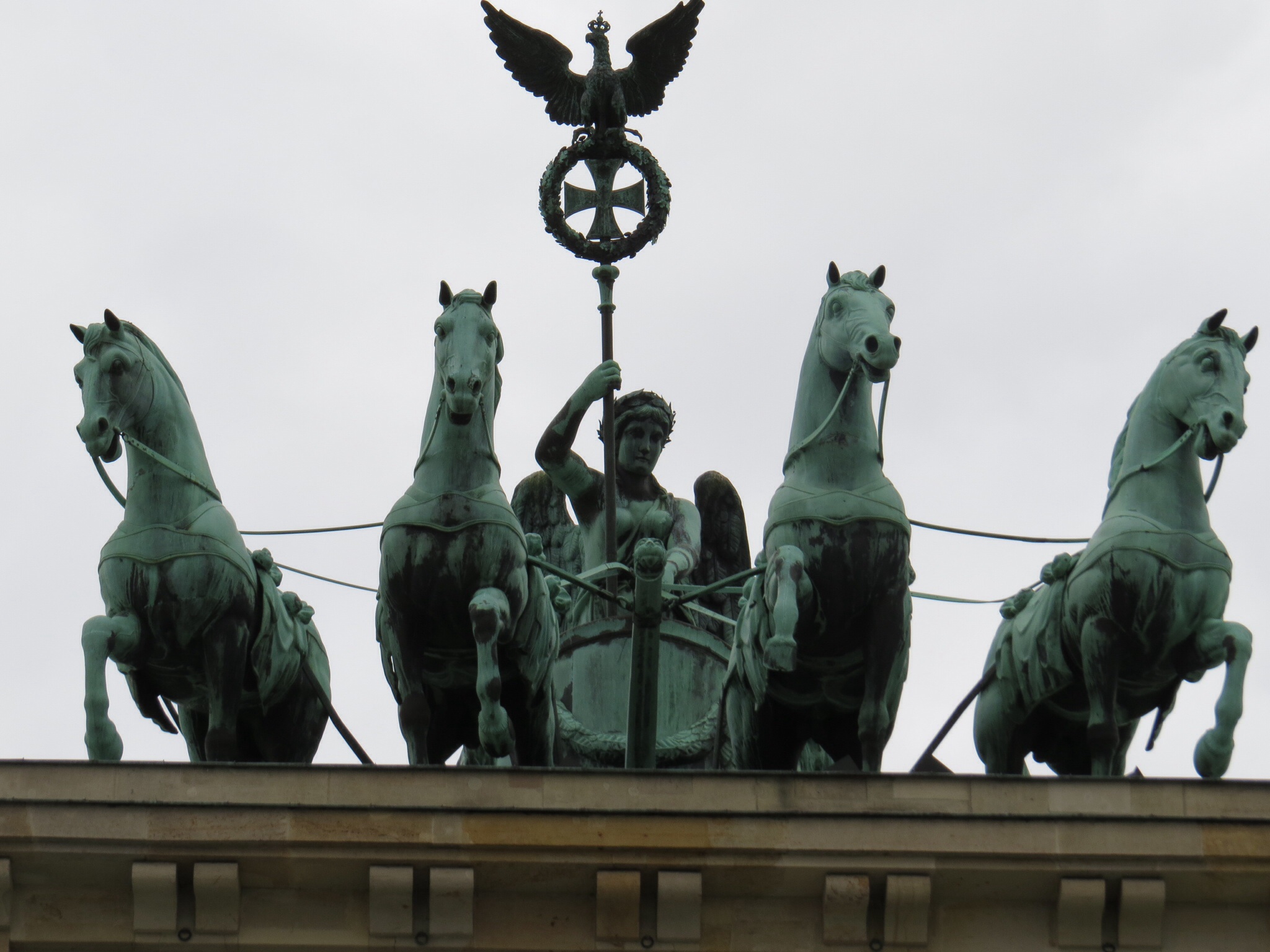
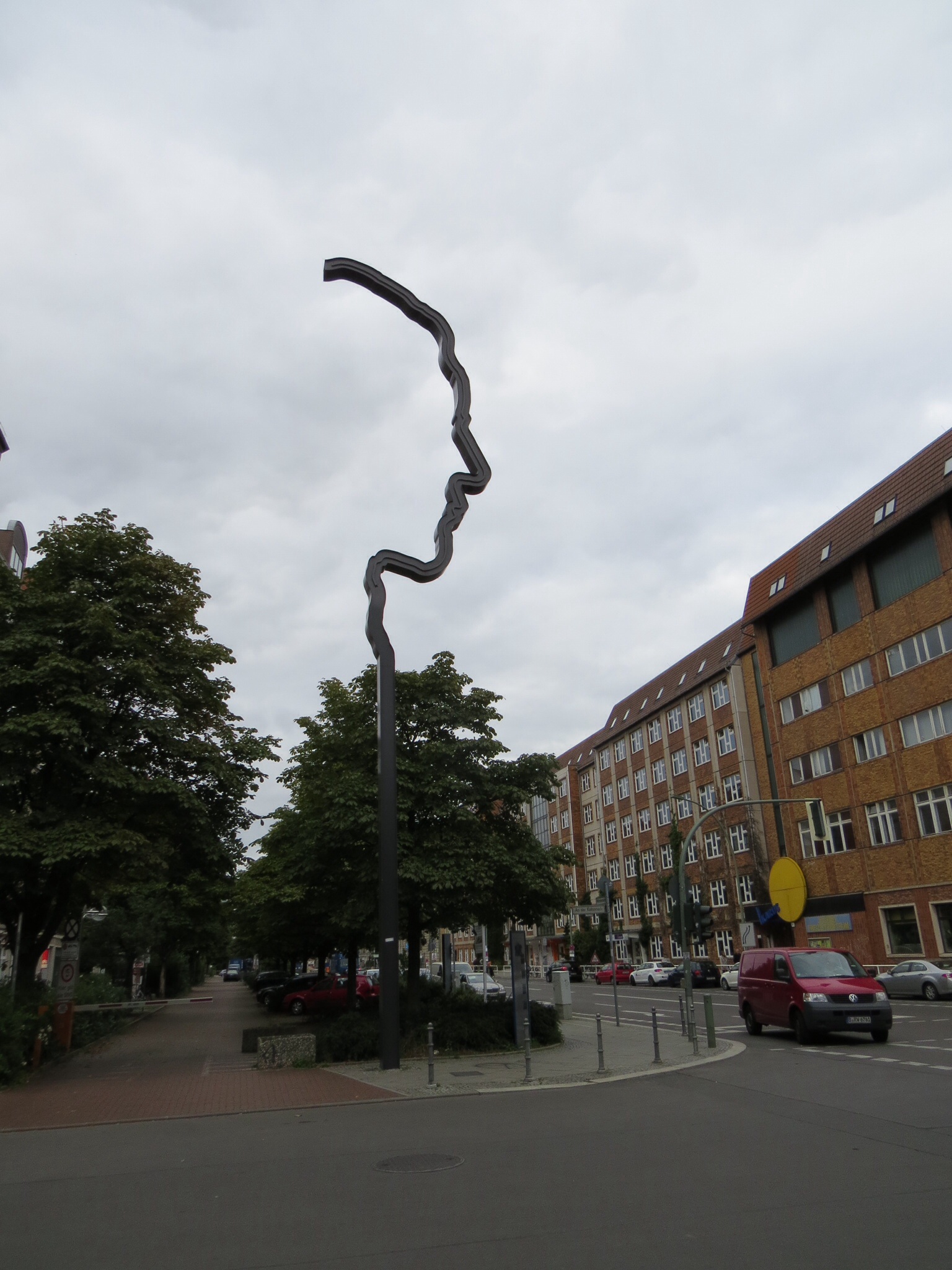
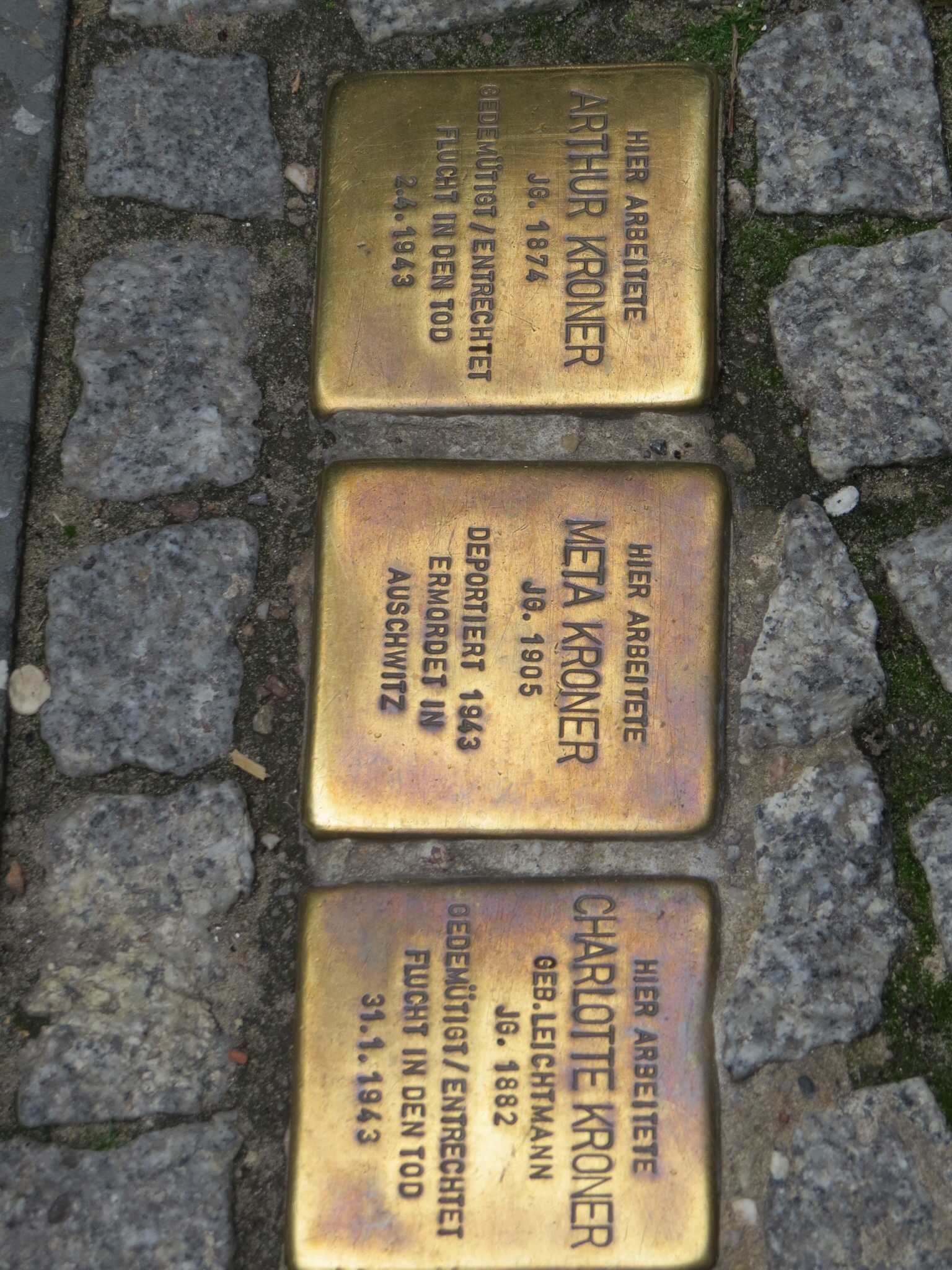
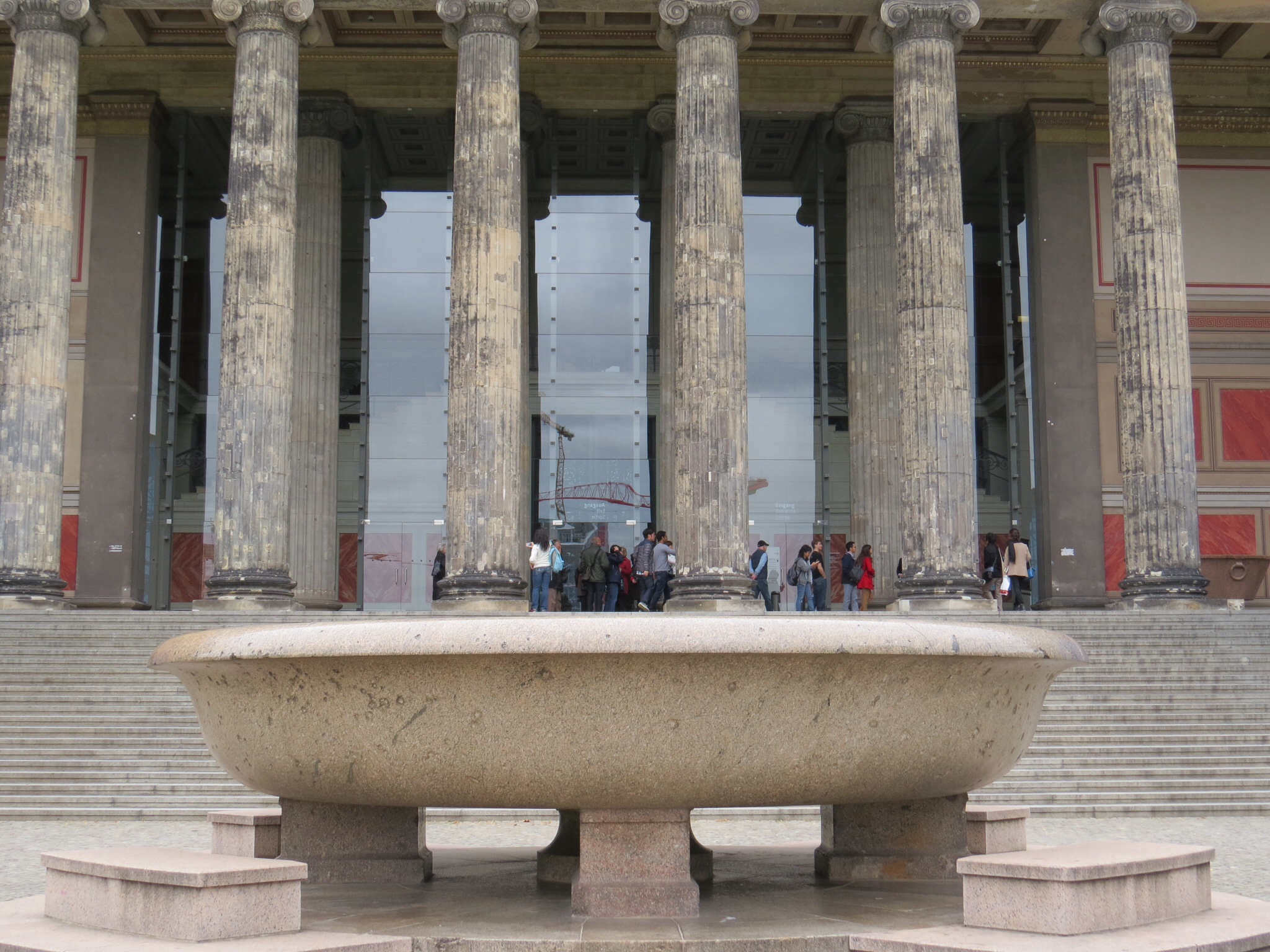
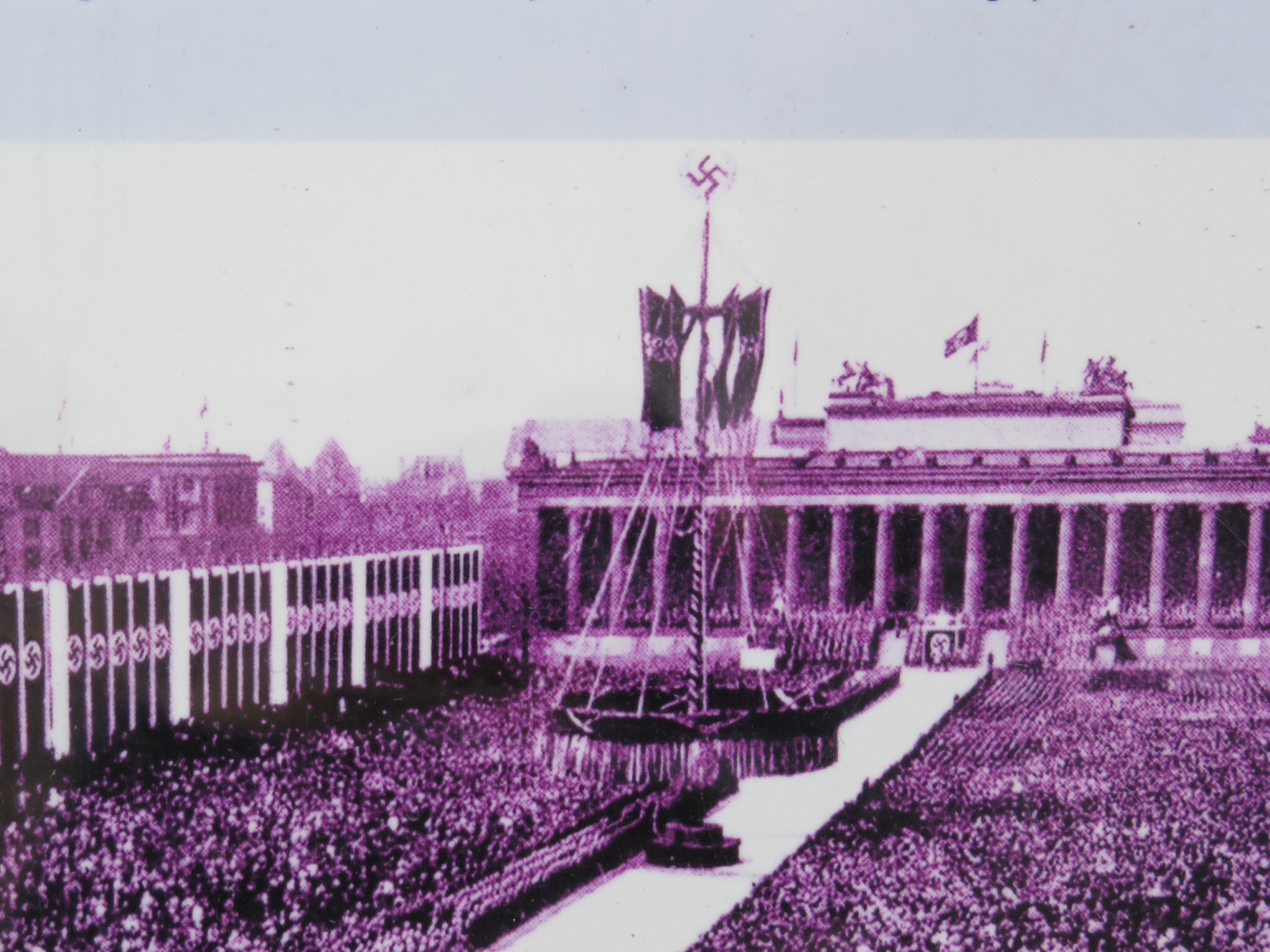
All of this added much colour to the tour and he was also hilarious and entertaining and engaged equally a class of junior high school age students and adults. We saw all the main sites – Checkpoint Charlie, Brandenburg Gate, and various former Nazi sites, including standing over the location where Hitler committed suicide in the bunker below. A lot of this was a bit creepy but very interesting history. The b&w photo below is the same square as in the previous shot but was taken during one of Hitler’s earliest rallies.   Bizarrely, it was May 1st so they erected a giant maypole in the centre of the square.  The Jewish Memorial is amazing – a large tract of land has been filled with concrete blocks that you walk amongst. Perspective is intentionally skewed and it can be a bit disorienting walking among them. Nigel explained that only in the past 5 years or so have the Germans institutionally begun to face their ugly past head on. In part this is being done now because there is a completely new generation of students now who have never heard of the war and authorities fear a recurrence of neo-Naziism. They have a list of every single Jewish person who lost their life to the Nazis, 6.2 million names, at the site of the memorial. They have added “stumbling stones” to the city, installed in the sidewalk, in locations where a person lived and had disappeared. This has had a profound effect, because, as happened to Nigel, you come out the door of your apartment one morning and find a stone embedded there about a person who lived next door to you who was “disappeared” and you didn’t have a clue about it until the “stumbling stone” appeared. They have added other art installations throughout the city and are building more and more memorials and reminders.
imageimage
imageimageimage
image
imageimage

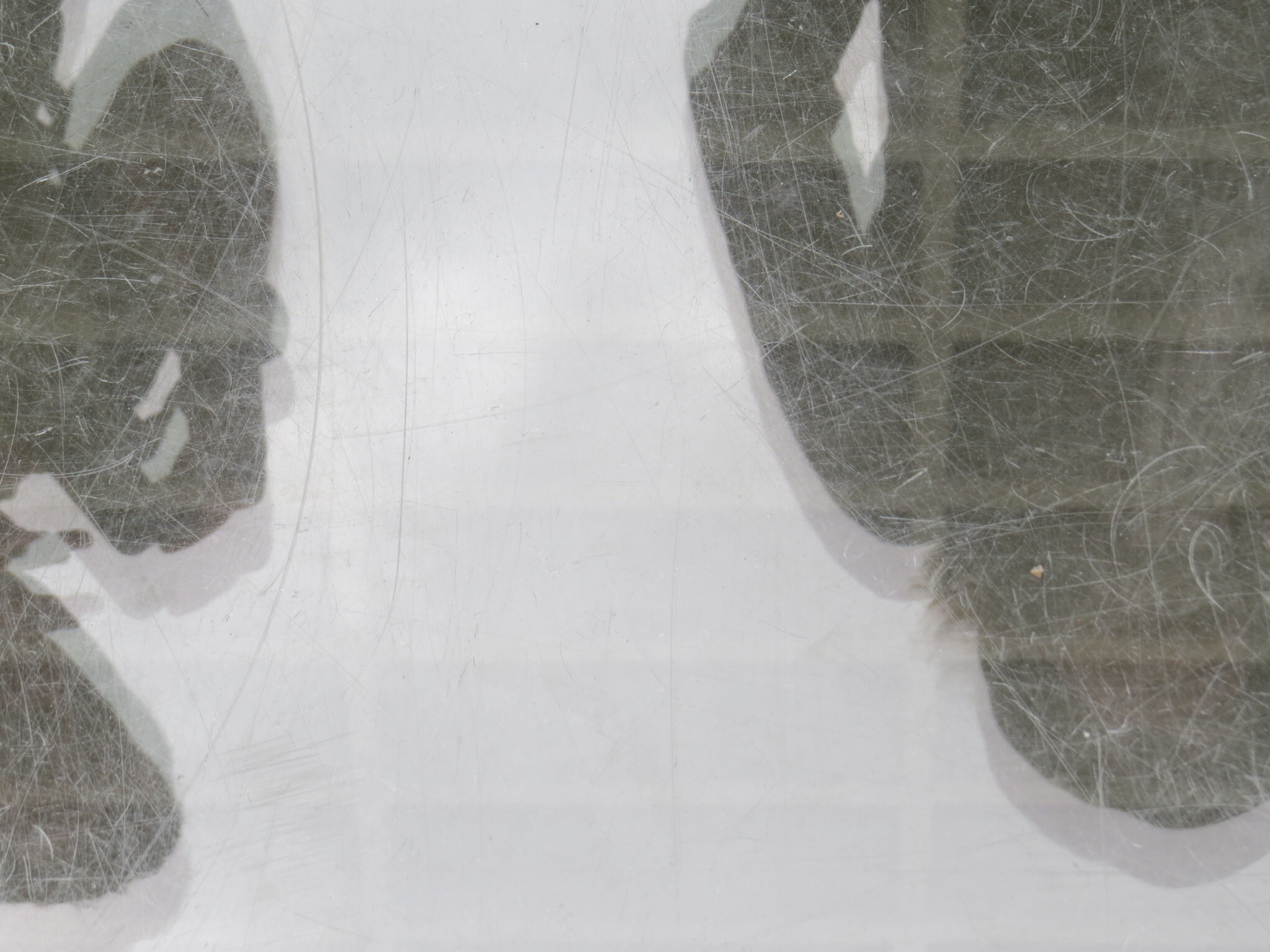
Another memorial was a 4-metre square plexiglass piece that you look down into on the square in front of the university. In there you see blank white shelving hung upside down, enough shelving to house 20,000 books. But there are no books here. This is installed on the spot where the Nazis burned 20,000 books. Very effective. The artist quoted Heinrich Heine, a German who in 1821 famously said, “where they have burned books, they will end in burning human beings.”
image

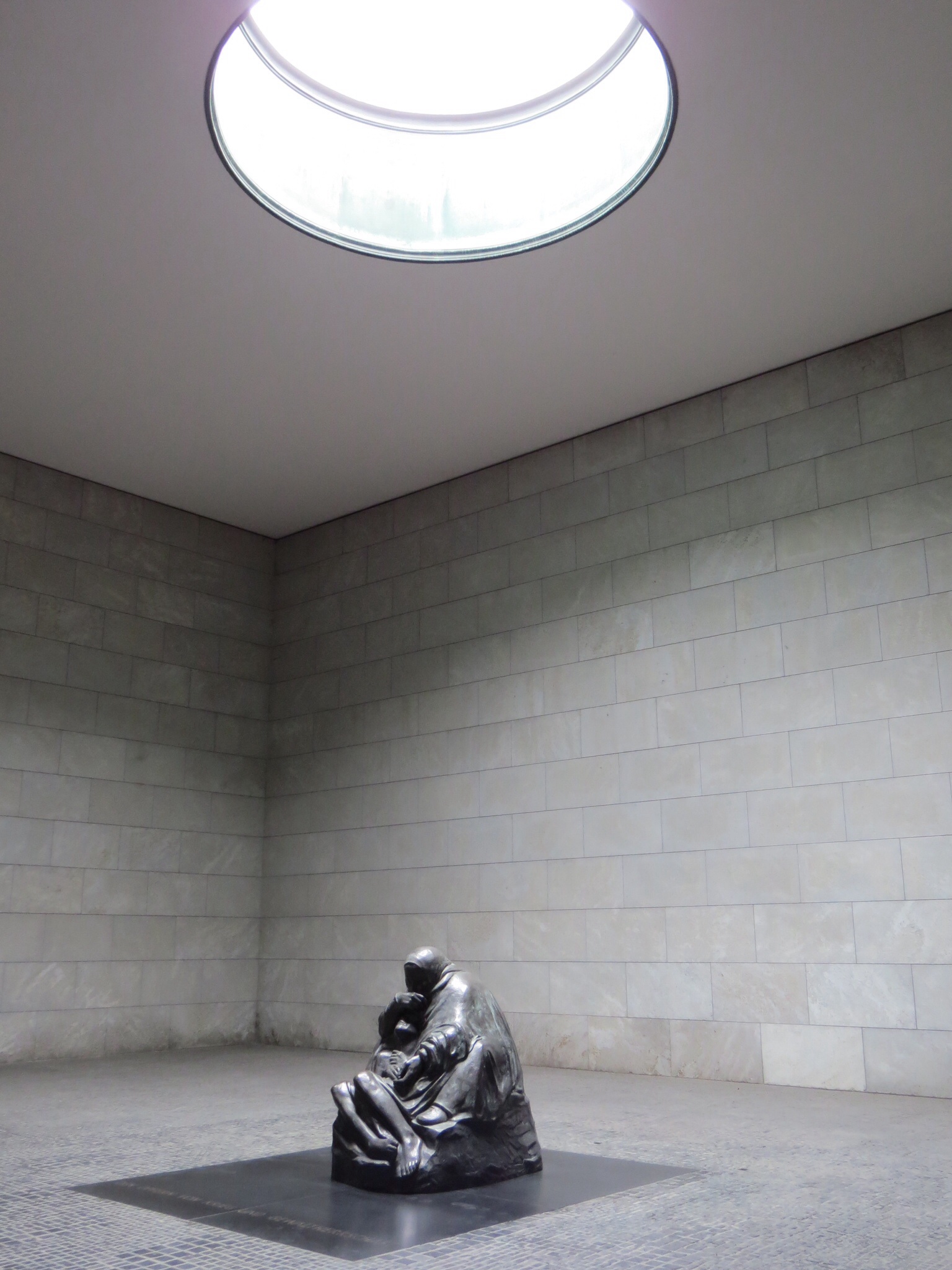
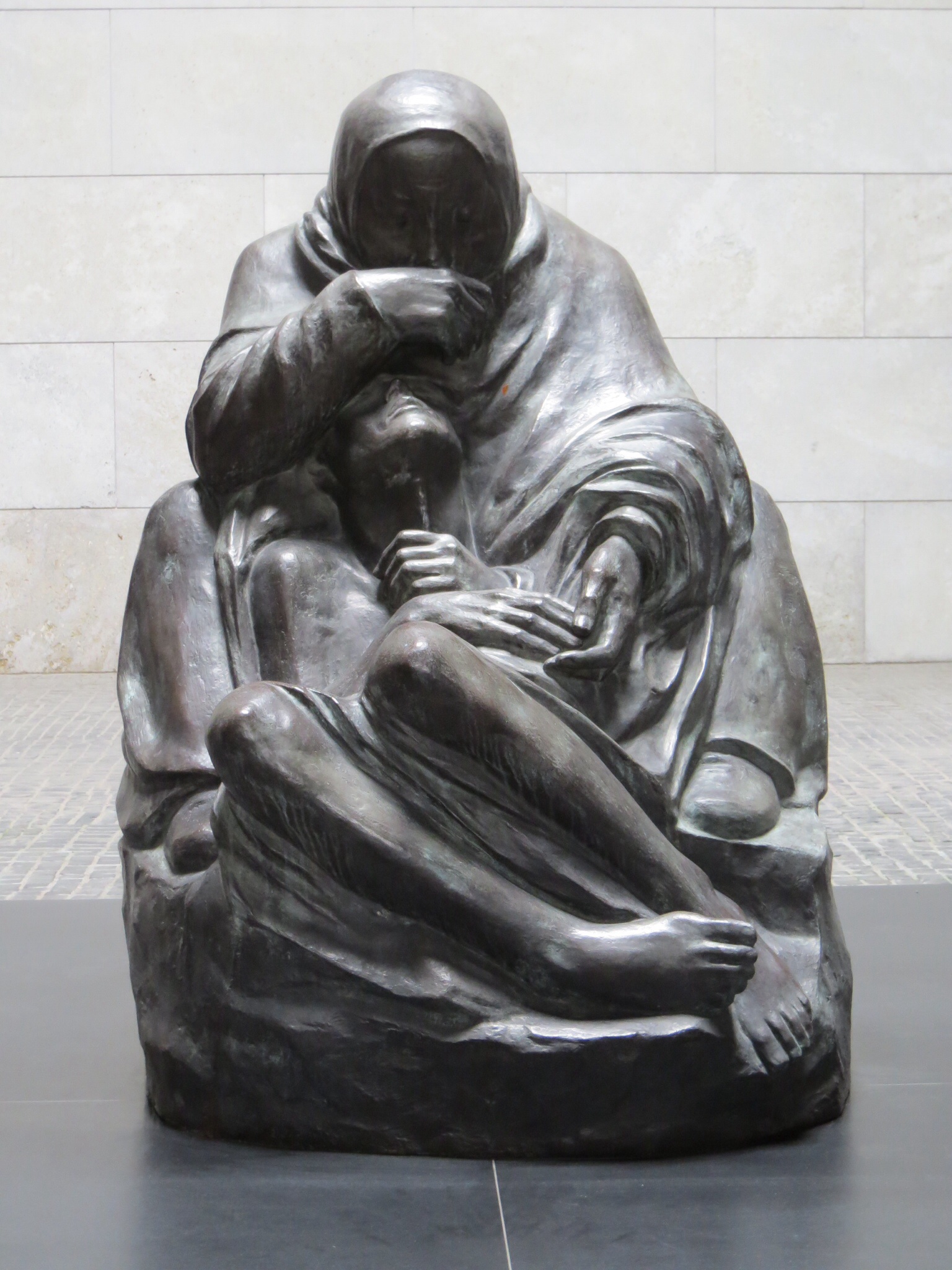
The Neue Wache memorial was the most moving one for me. It had been a memorial for WWII with an unknown soldier and a holocaust victim buried there. There was an oculus cut into the ceiling. But after reunification a mother complained that she had nowhere to memorialize or honour her son and hadn’t had a chance to hold him when he died, and so a memorial was added for all victims of war and tyrrany, a statue of a mother holding her dead son. It evokes the same kind of painful beauty as Michaelangelo’s Pieta in St. Peter’s Basilica. The hole in the ceiling hasn’t been removed, and apparently it is quite profound to see the statue in the rain or in winter, covered in ice.
imageimage

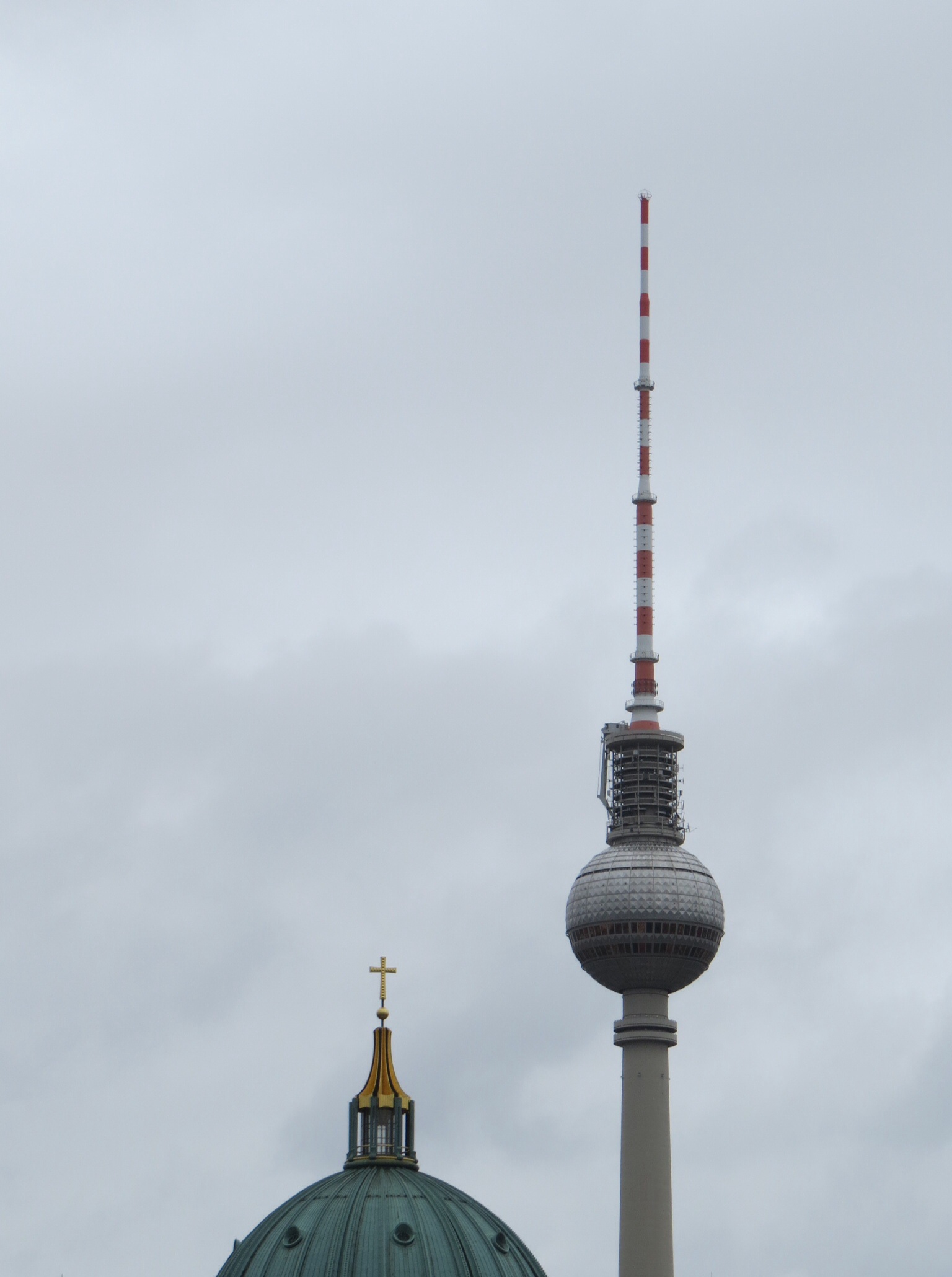
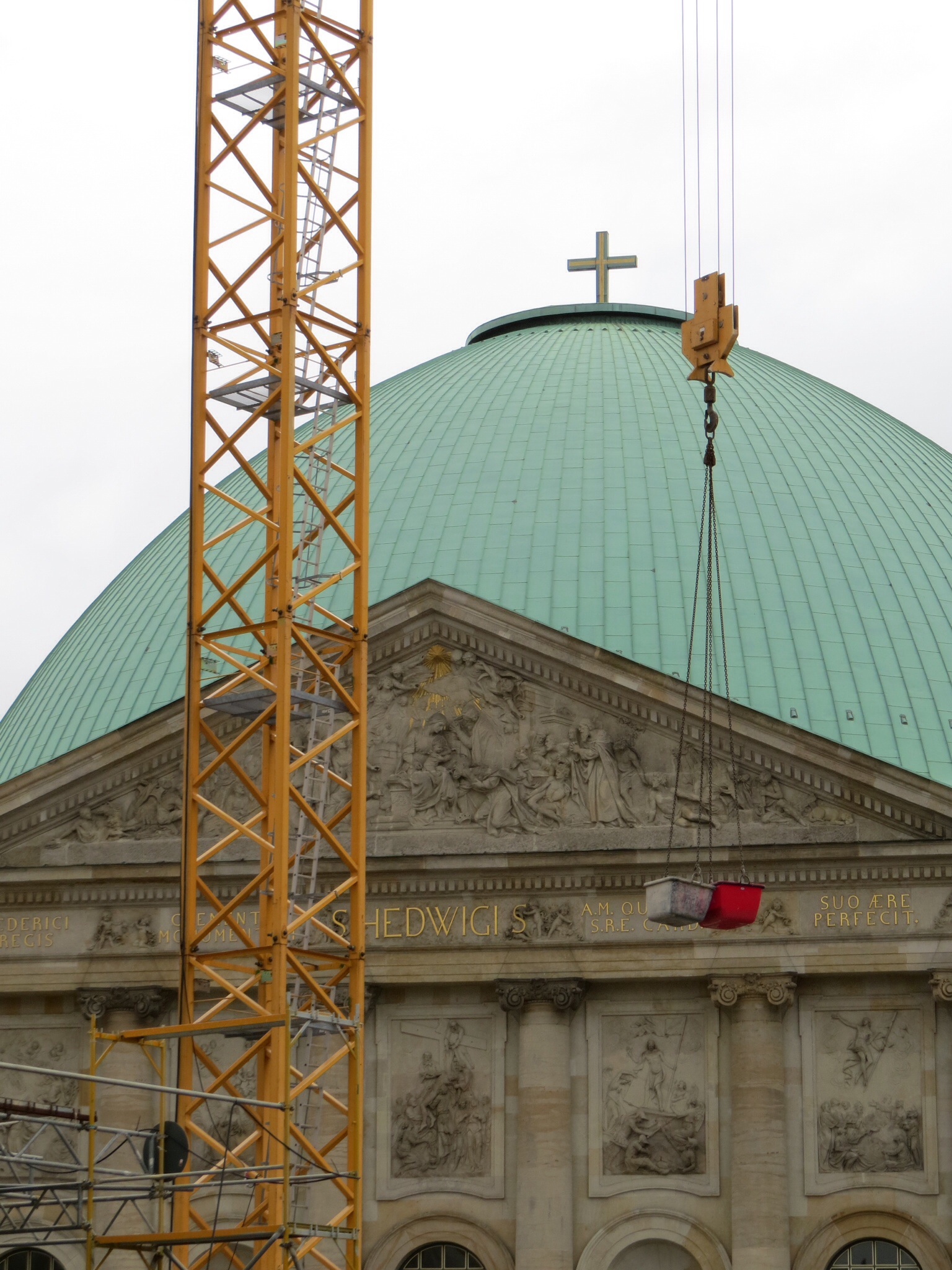
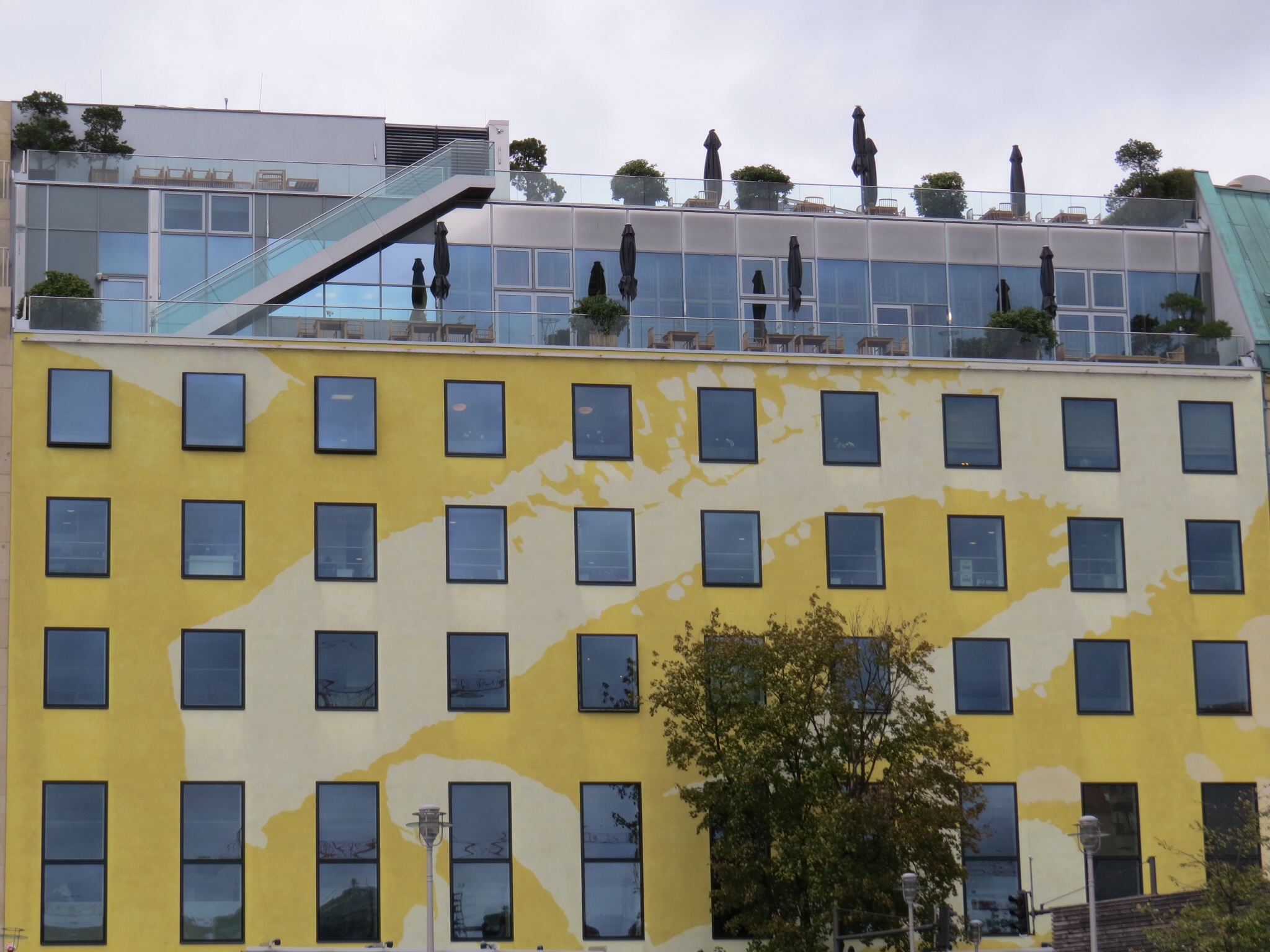
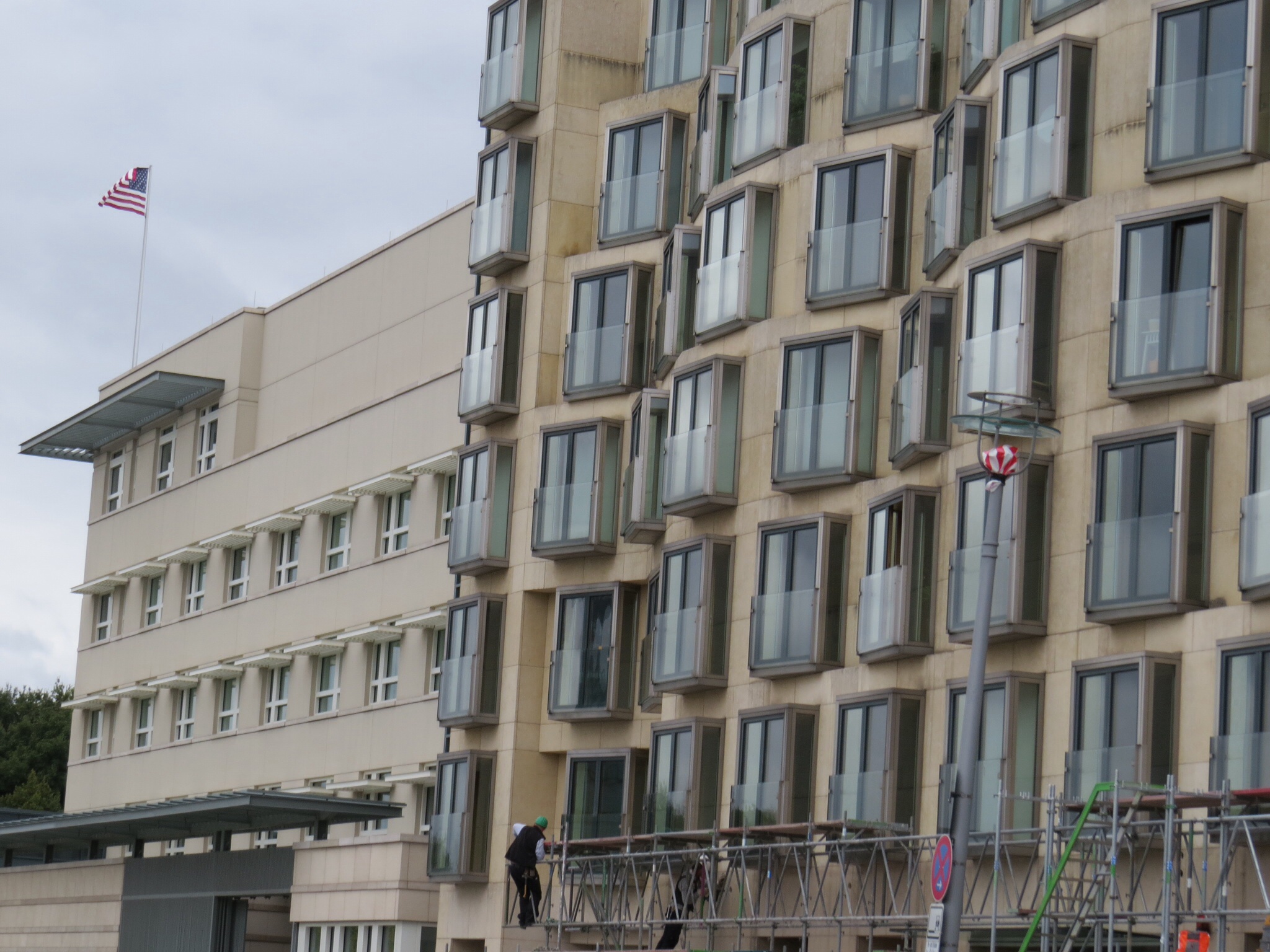
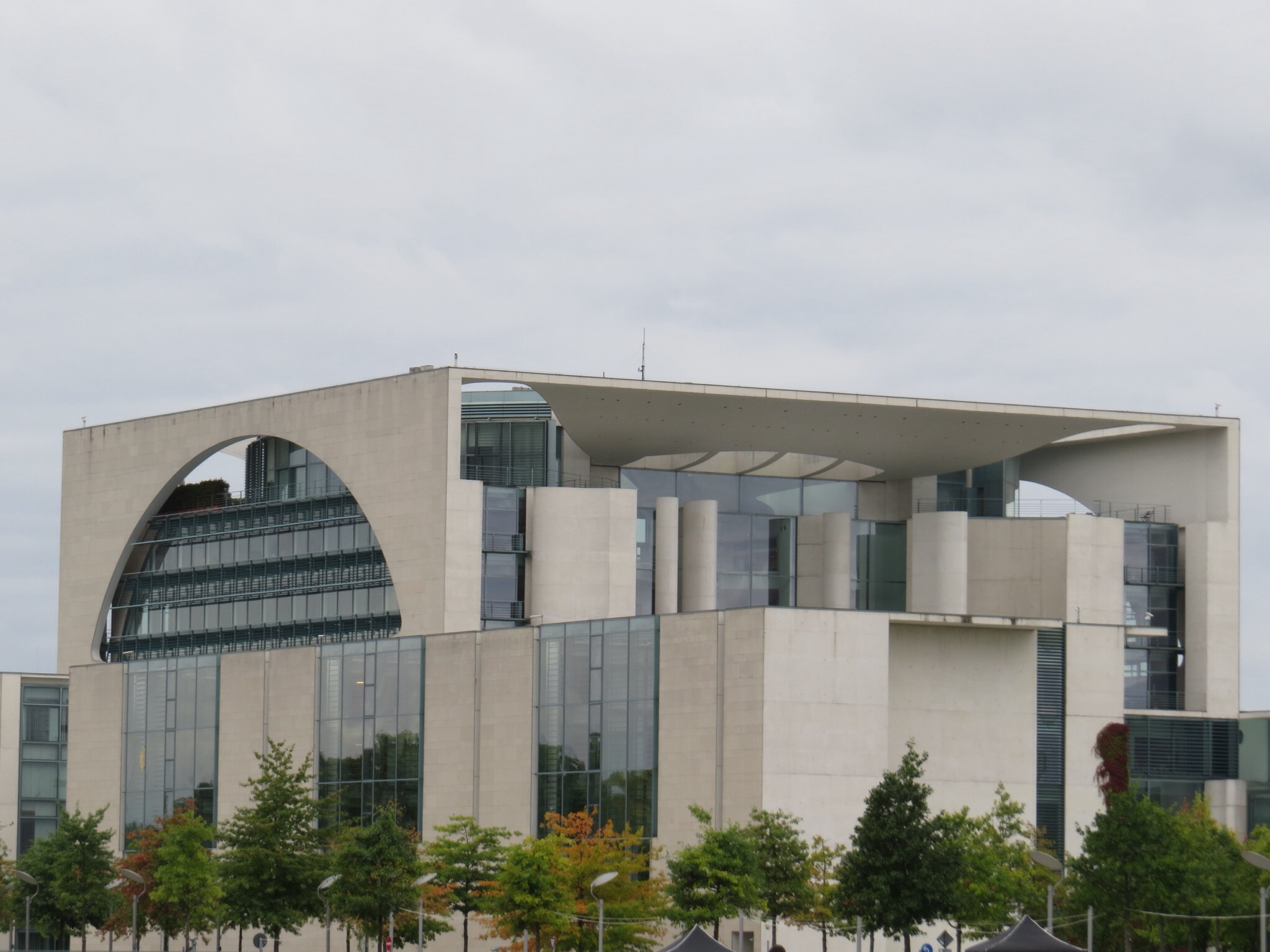
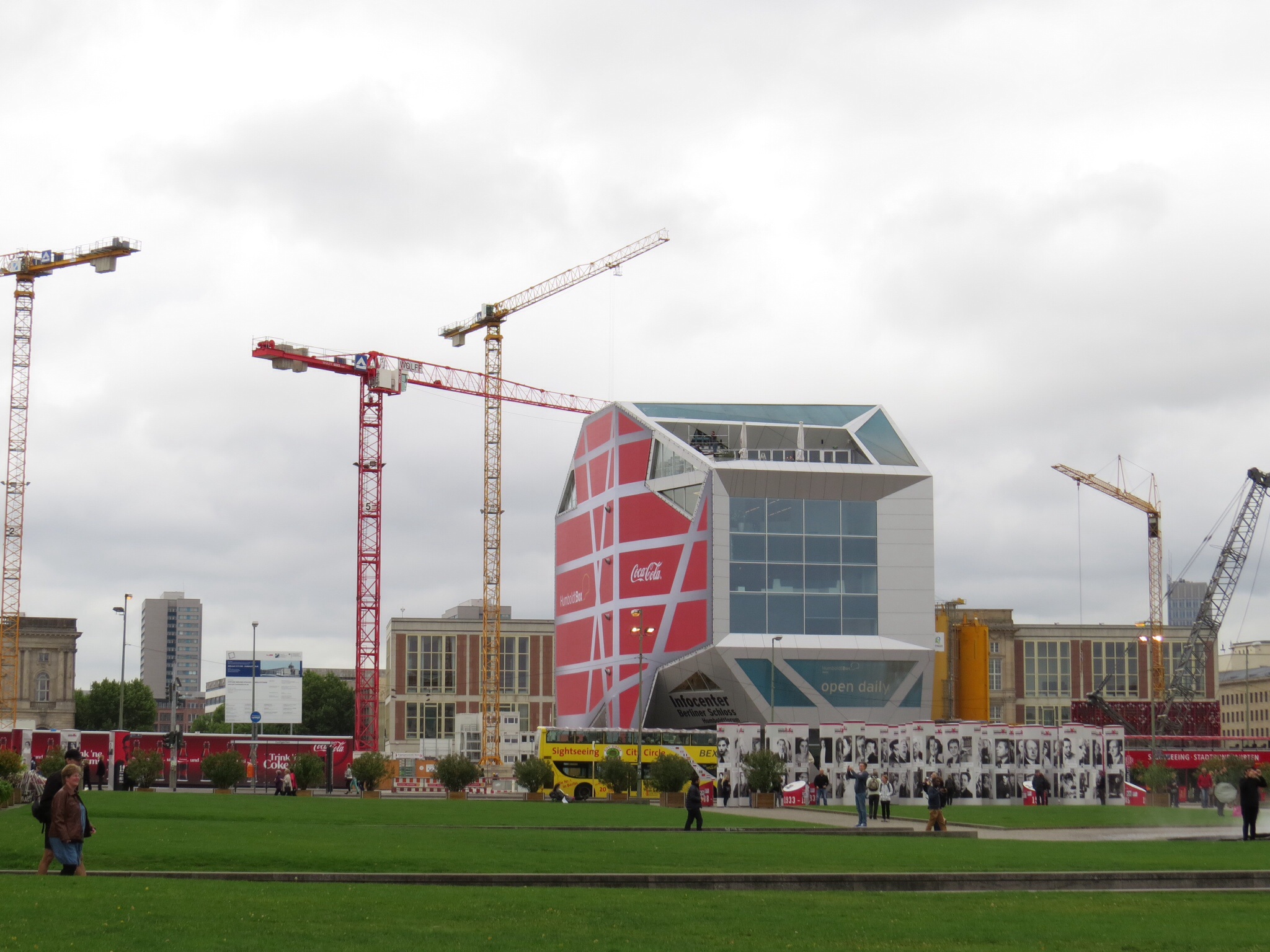
Out of all the destruction, and there are still areas downtown that haven’t been filled in after being bombed in the war, is coming creation. Construction is booming to a degree I have never seen anywhere else. The modern architecture is absolutely amazing. It is interesting how many buildings are being designed where perspective is intentionally wonky – this may be reflective of the Berliners who are still struggling to understand how they allowed the Nazis to take control of their country. The skyline has cranes, old classical buildings and brand new modern buildings all juxtaposed against one another. Large crazy pipes run up and down streets at each construction site, pumping out the water due to the very high water table.
imageimageimageimageimageimage//image

All of this visual stimulation I think reveals what is really going on in the psyche of the Berliner and the culture of German society. However, apparently the German psyche is quite capable of thinking in silos, because despite the collective guilt and the attempts to reconcile its past, many of them form a boorish lot, to be honest. They push, shove, butt in line and steal your cab. The salespeople are rude and the cyclists anarchists. The man at the train station information desk is the type who delights in picking wings off a fly, and he eyed my wings hungrily as he gave me the wrong platform number. It cannot be said that Berlin is boring; you suck it up, adopt a certain armour, and enjoy the ride!

Jan

Dragging fingernails and Mookba

Reluctantly we left our beloved Petersburg on a train to Mookba (Moscow). There was some farming in the countryside, but mostly we passed thru dreary factory towns with identical concrete apartment blocks. Evidently the modernization of Russia hasn’t caught up in the countryside, and the vast majority of Russians live in cities.

After all our beautiful weather in St. P, it poured buckets in Moscow. Our brave attempt to take the Metro to our hotel was the wrong choice but ultimately we achieved our goal. The Metro has signs in only the Cyrrilic alphabet so it was like travelling blind. Several kind gents added a helping hand with my suitcase on the many stairs, without making me let go of my bag. Chivalry lives in Moscow!

Saturday was rainy and we encountered long lineups at the main attractions. The day was saved by a wonderful dinner at Cafe Pushkin, one of Moscow’s best restaurants about a block from our hotel. Cosy and old-fashioned, there were lots of Muscovites celebrating various occasions. Shirley went for it and had beluga caviar with blinis, a local fish presented like a shark, and Russian honey cake. Since it was, despite its name, a french restaurant, I opted for cured salmon and duck with cherry risotto. It was a lovely meal and a great way to end our trip together to Russia.

Sunday was dry but threatening and we made our way to Red Square and the Kremlin. Our visit to the Armoury was thrilling: Catherine the Great’s wedding and coronation dresses we had seen in photos and never dreamed we would ever see for real, Faberge eggs and the carriages of the empresses, described accurately by one ambassador of the day as “little castles.” Truly amazing. I was underwhelmed with the rest of the Kremlin – an old drab brownish-red church is the first thing you see, and Red Square was filled with construction and scaffolding so you really couldn’t imagine this was the square that was the site of so many of Russia’s triumphs and cruel history. We wandered GUM, the famed department store filled with expensive designer shops.

I must admit I was not crazy about Mookba, land of Mr. Takes His Shirt Off-alot (if you don’t know who I mean, youtube it along with the name putin, it’s hilarious). No-one smiled and they eyed you with suspicion if you smiled at them. I was not there long enough to really appreciate it and wasn’t able to take in much of the culture there.

However, I loved St. Petersburg almost as much as Paris. A gorgeous city with stunning architecture down elegant streets, glittering canals, rivers and statuary – I would go again and there would still be much to see. And there were many kindnesses, even from the occasional FSL (former Soviet landlady)!

Sadly Shirley and I had to say our goodbyes – what experiences we shared and what a great friend and travel companion! Looking forward to our next movie or event all the way back in Victoria….

Now turning the next page….

Jan

PS I didn’t take photos in Moscow because it was raining and photographs weren’t allowed at the Armoury.

Liberty!

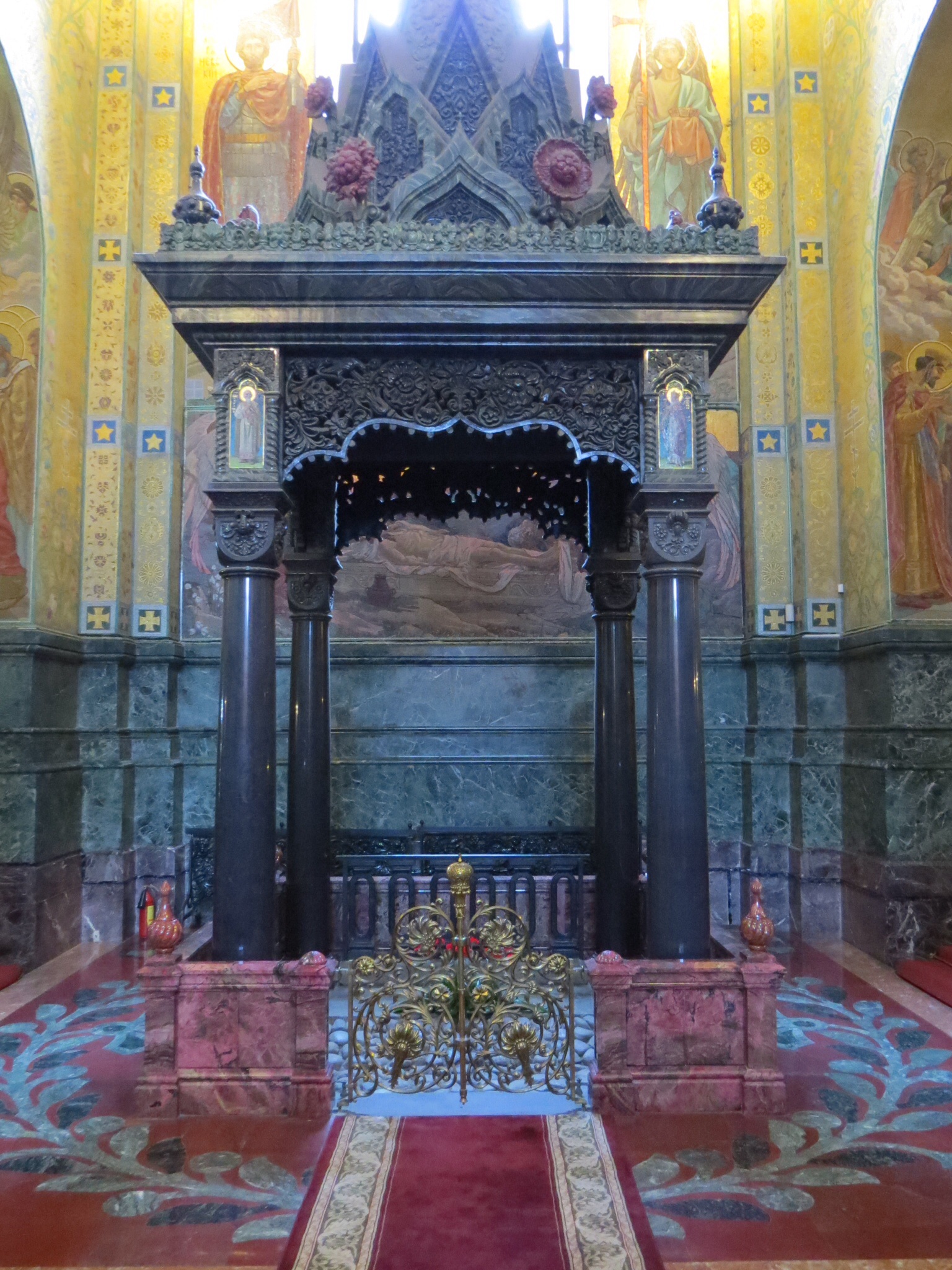
Russians erected Church on Spilled Blood on the site of Tsar Alexander II’s assassination and treat it as a monument to him with no religious services held there. Alexander II ended serfdom and released serfs from their bondage to nobility and land, and he was killed by a bomb.

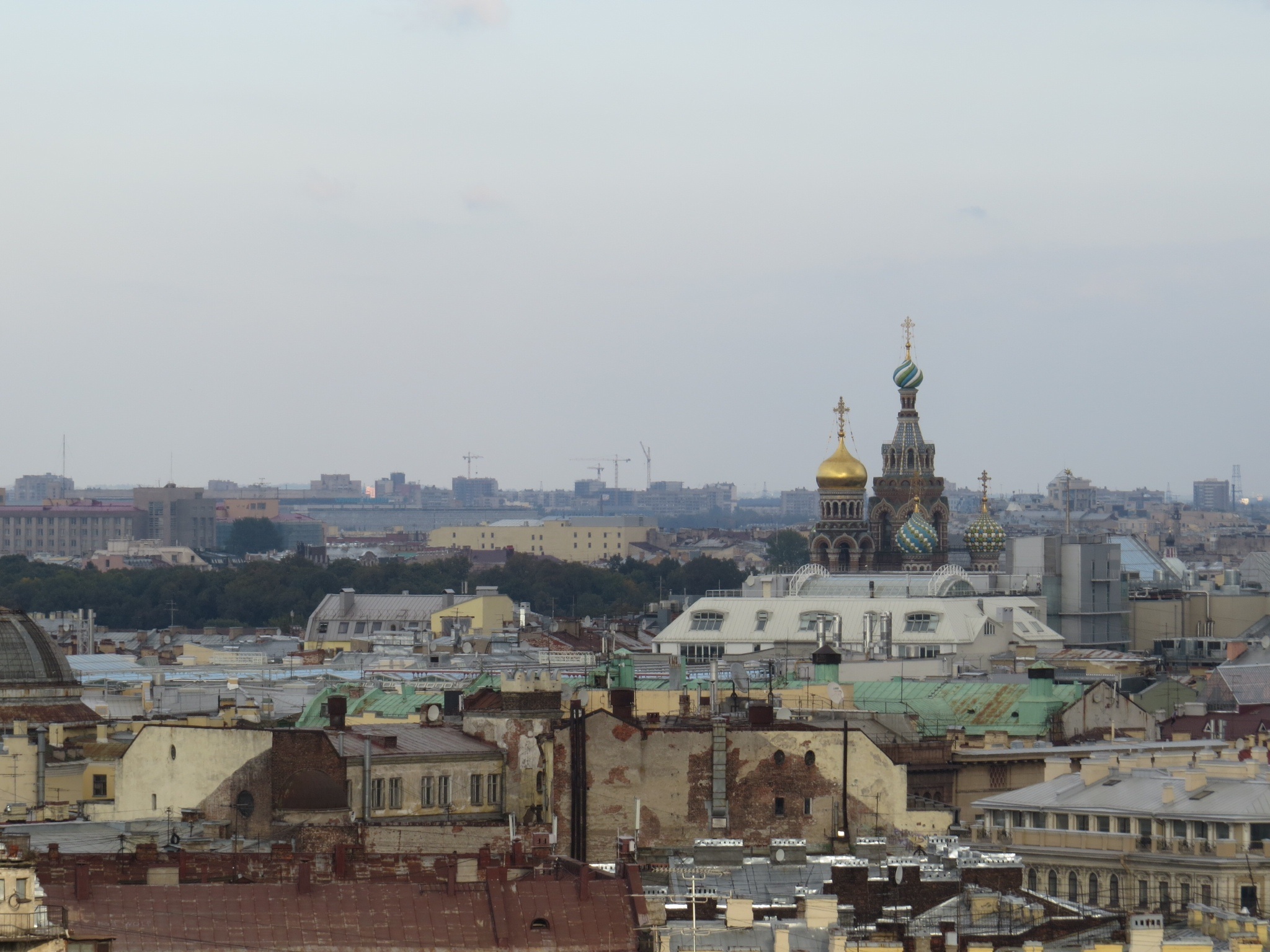
We have enjoyed a view of the Church morning and night, and its soaring onion domes popped up almost comically above the cityscape almost everywhere we went, like a lighthouse, guiding our way home. But we had not yet had a chance to visit inside the church and it was #1 on our priority list for our last full day in Peter.

image

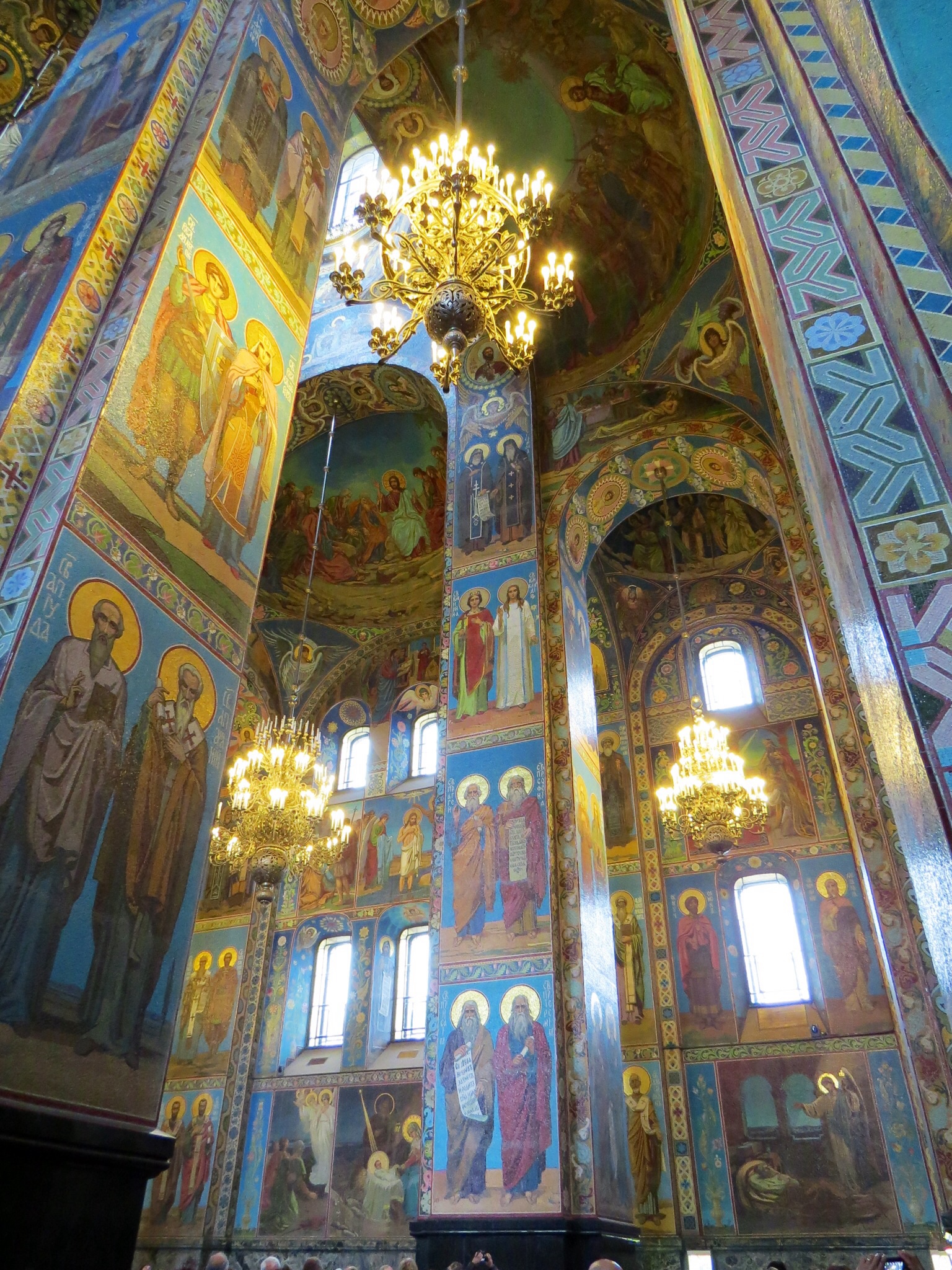
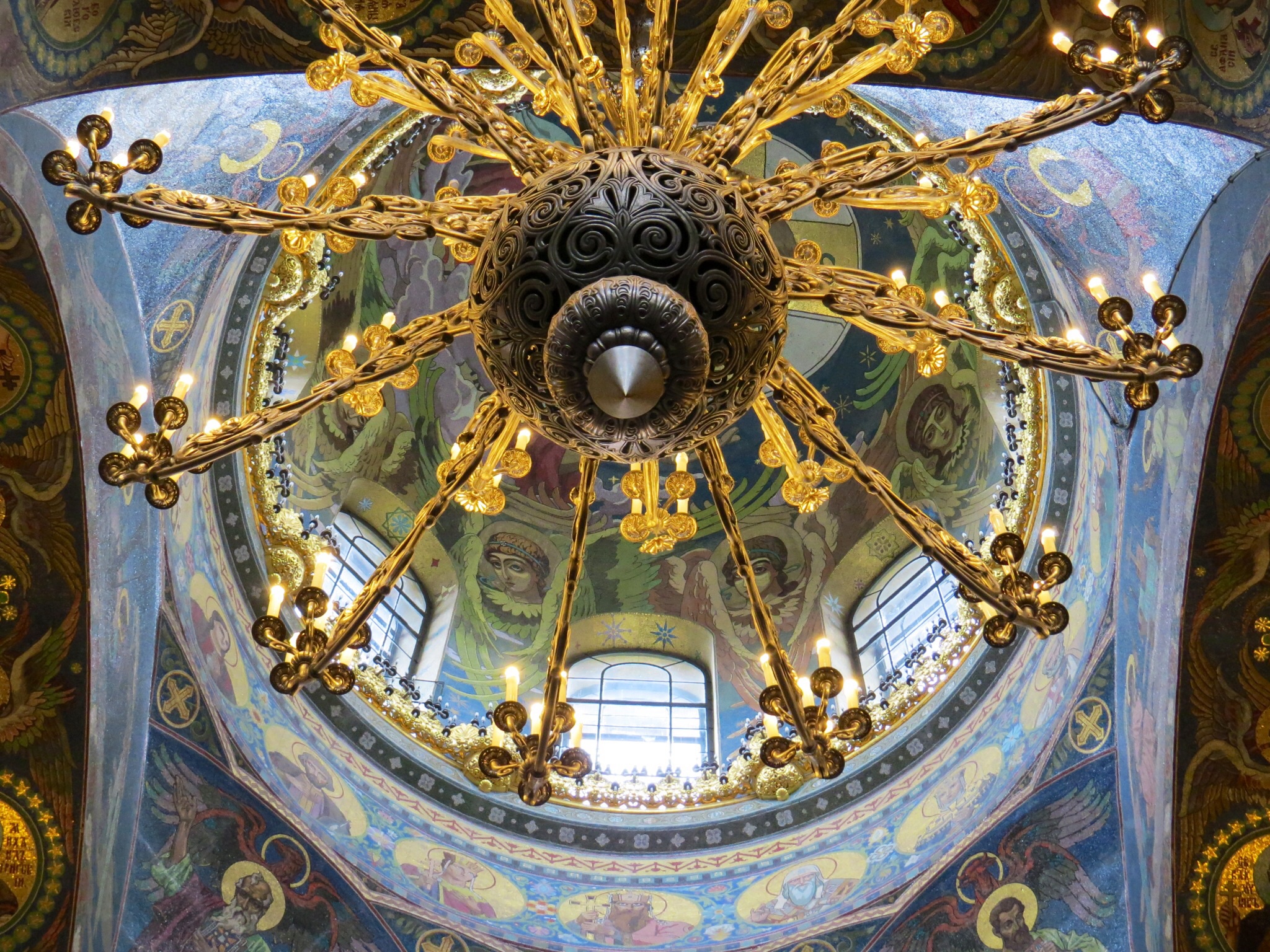
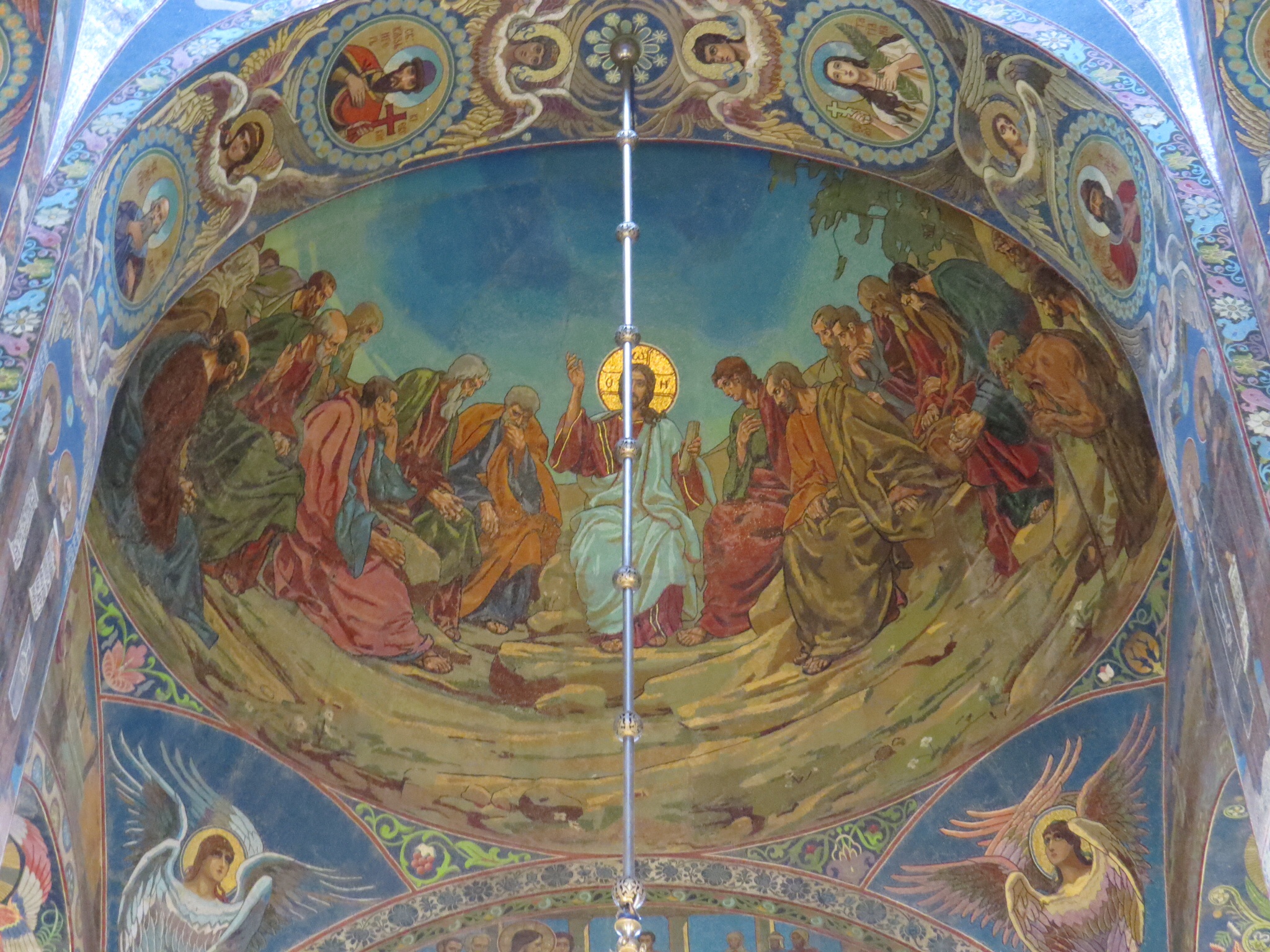
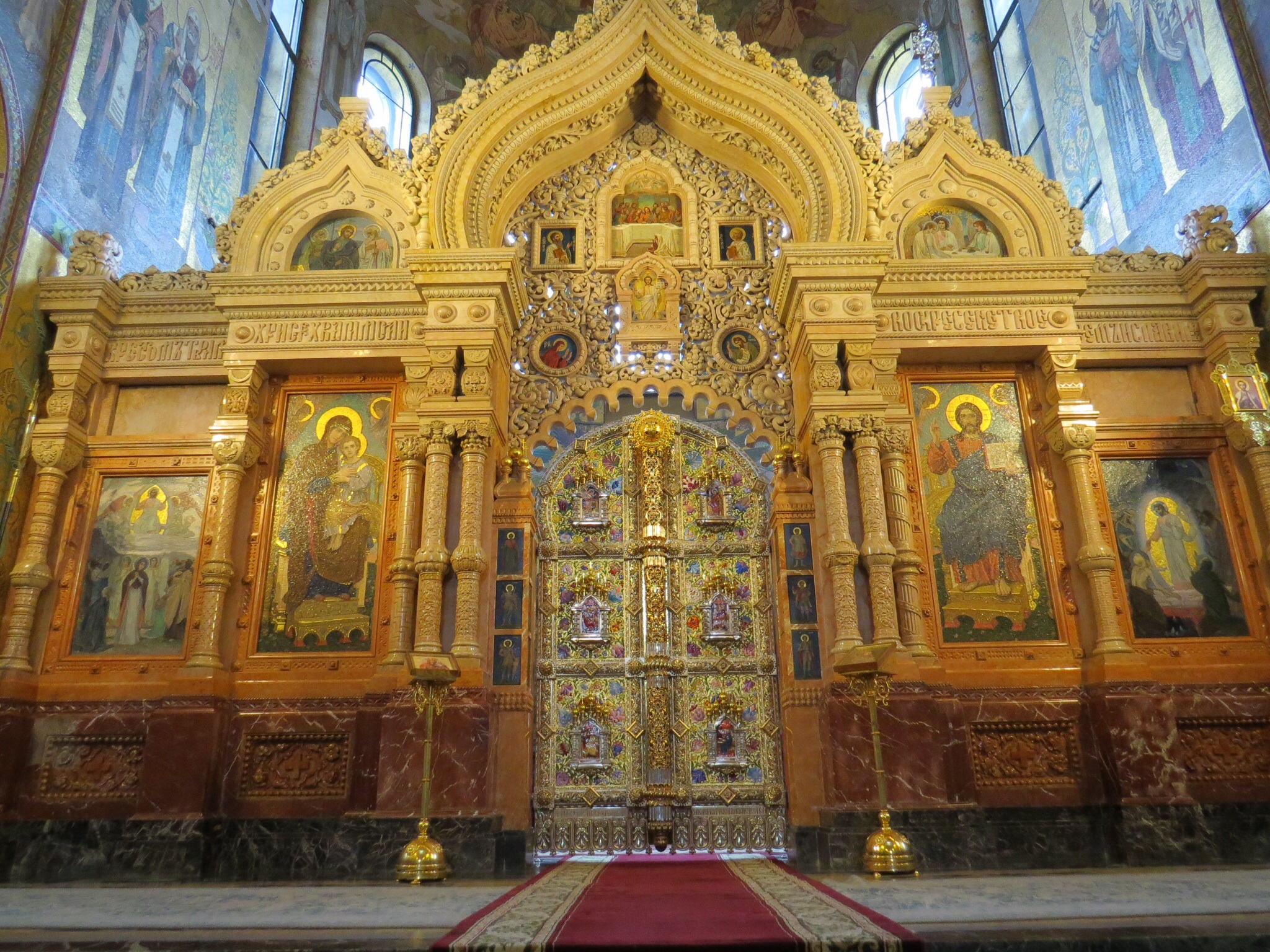
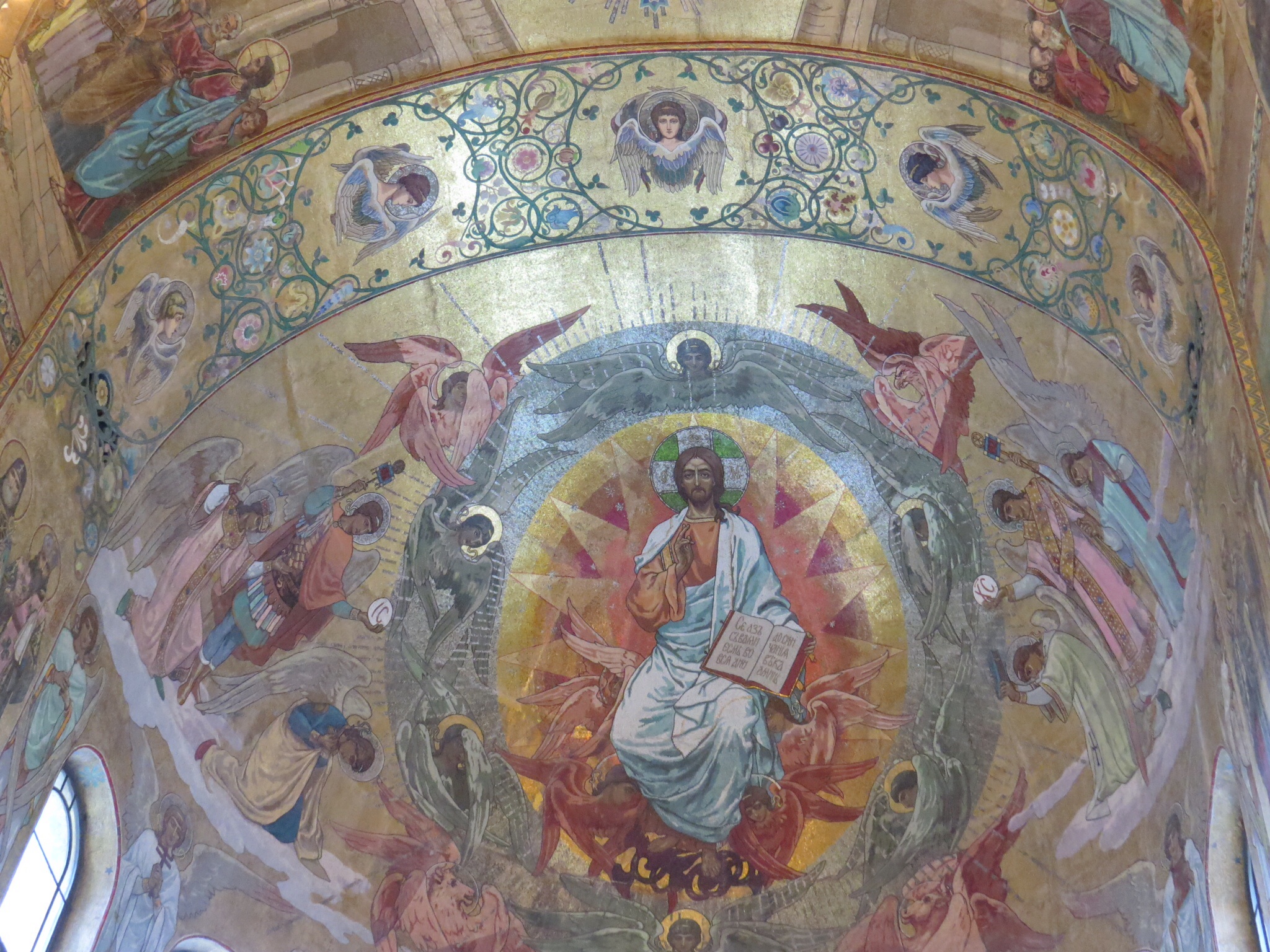
It would not have seemed possible for the interior to exceed the beauty and marvel of its exterior, and yet it did. Every wall, pillar, and towering ceilings were covered in minutely-tiled, blue, red and gold mosaics depicting Biblical scenes. The exact spot where the assassination occurred was marked by a stunning marble canopy. We spent a long time here, marvelling at the beautiful mosaics, made even more compelling with the 30-year reconstruction of the mosaics after the Church was badly damaged in the war.

imageimageimageimageimageimageimage

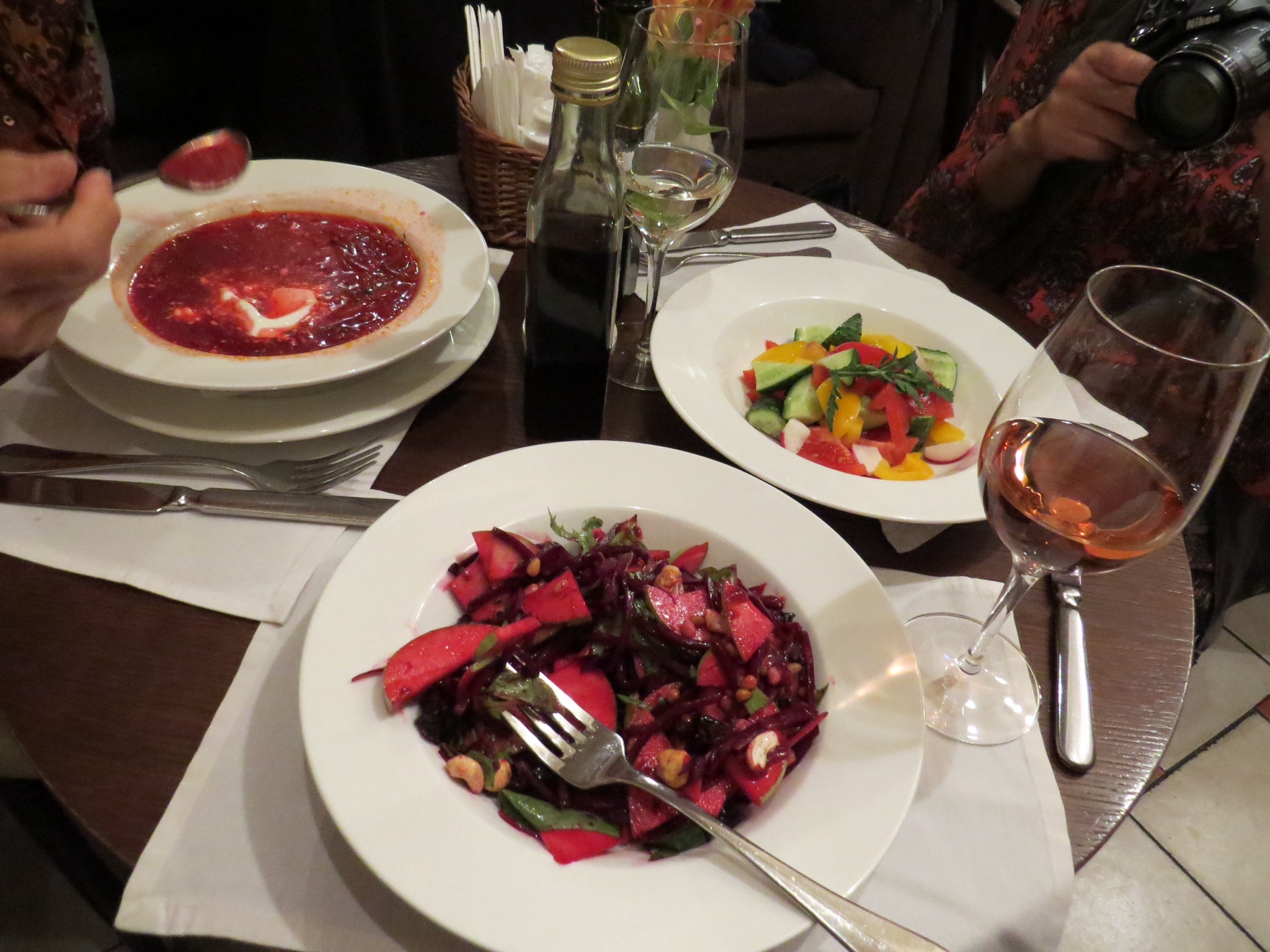
We exited the Church awestruck and in need of fortification. Time for Business Lunch! Shirley found a wonderful restaurant, Freeman’s, just off Nevsky Prospekt behind the Kazan Cathedral. We had another wonderful Russian meal with a twist: a dense berry juice, salad, borsch, parmesan risotto and rich desserts.

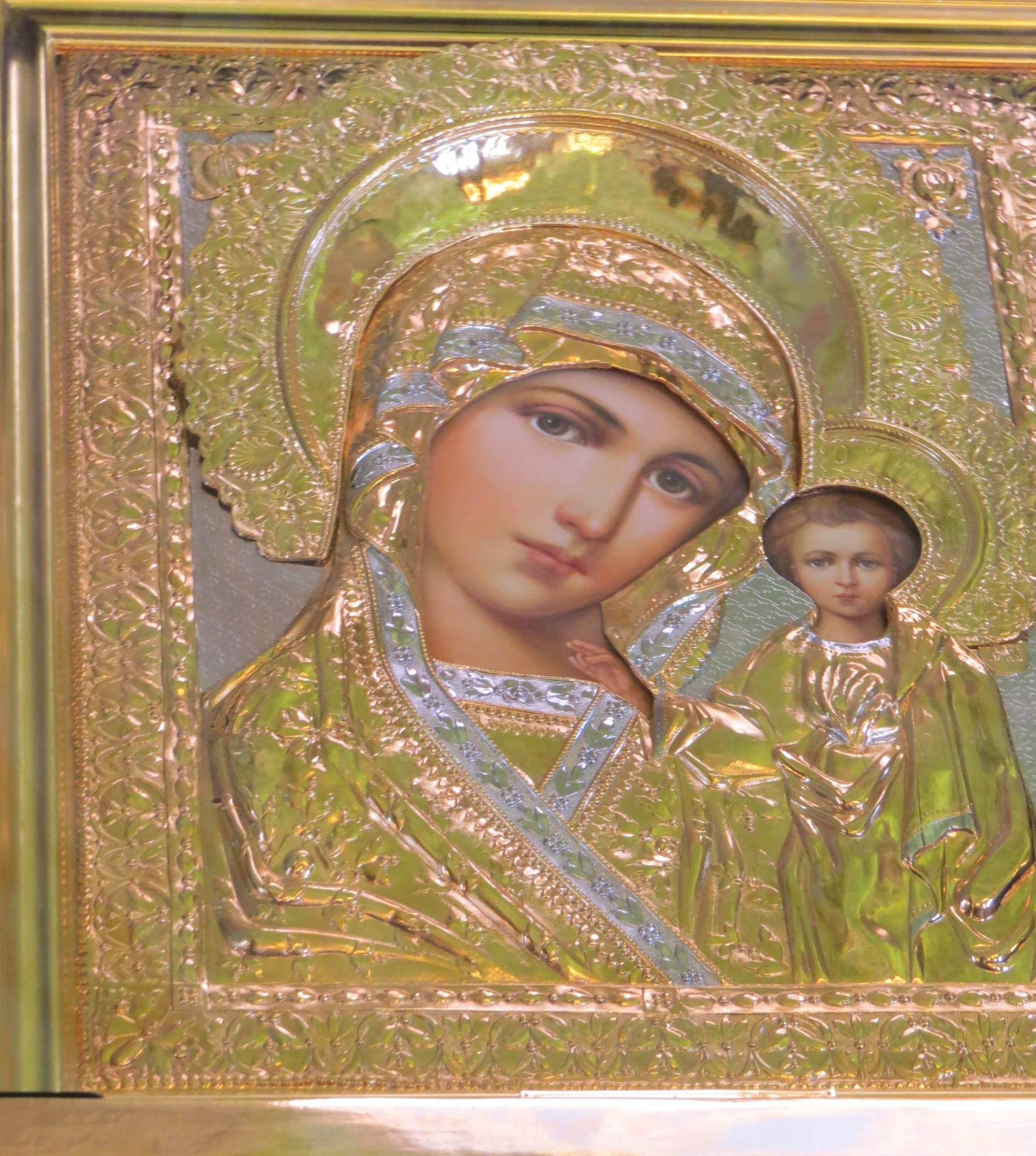
In order to save travel time and see as much as possible today, we availed ourselves of the wonderful Metro system, making our way to the Alexander Nevsky Monastery. This is one of the most important monastaries in Russia, having been instituted by Peter the Great in honour of Alexander Nevsky, considered to be the father of the Russian Orthodox Church in the 11th Century. Our first stop was the necropolis where we visited the graves of Dostoevsky, Tchaichovsky and other great Russian artists, poets and writers. Then we visited the Cathedral, another uniquely beautiful Church. Tradition applied here and we covered our heads and took no photographs of the interior. The many devout pilgrims’ acts of genuflexion were touching: they crossed themselves, bowed deeply, lit candles and kissed or tenderly touched their foreheads to their venerated icons.

imageimage

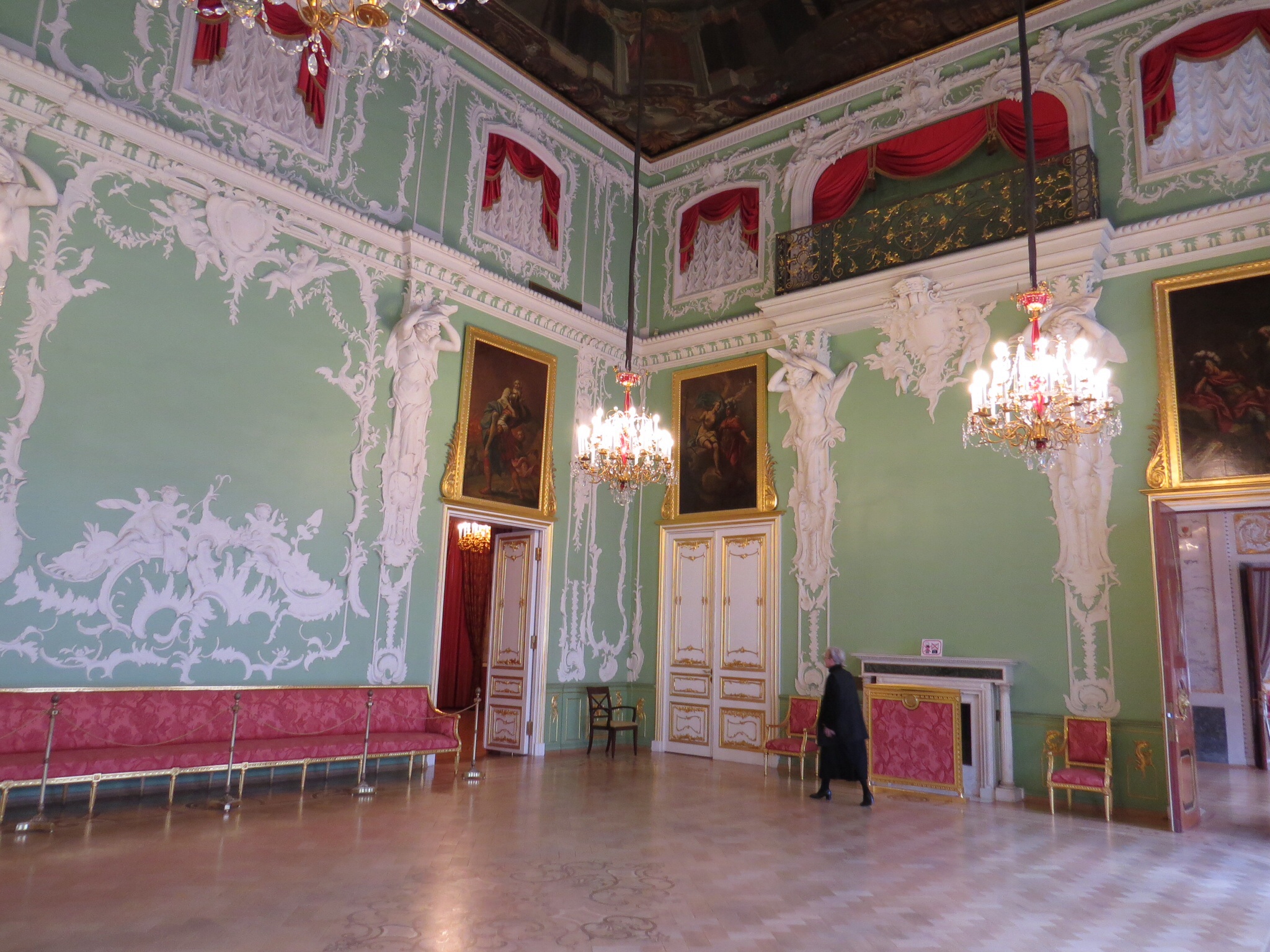
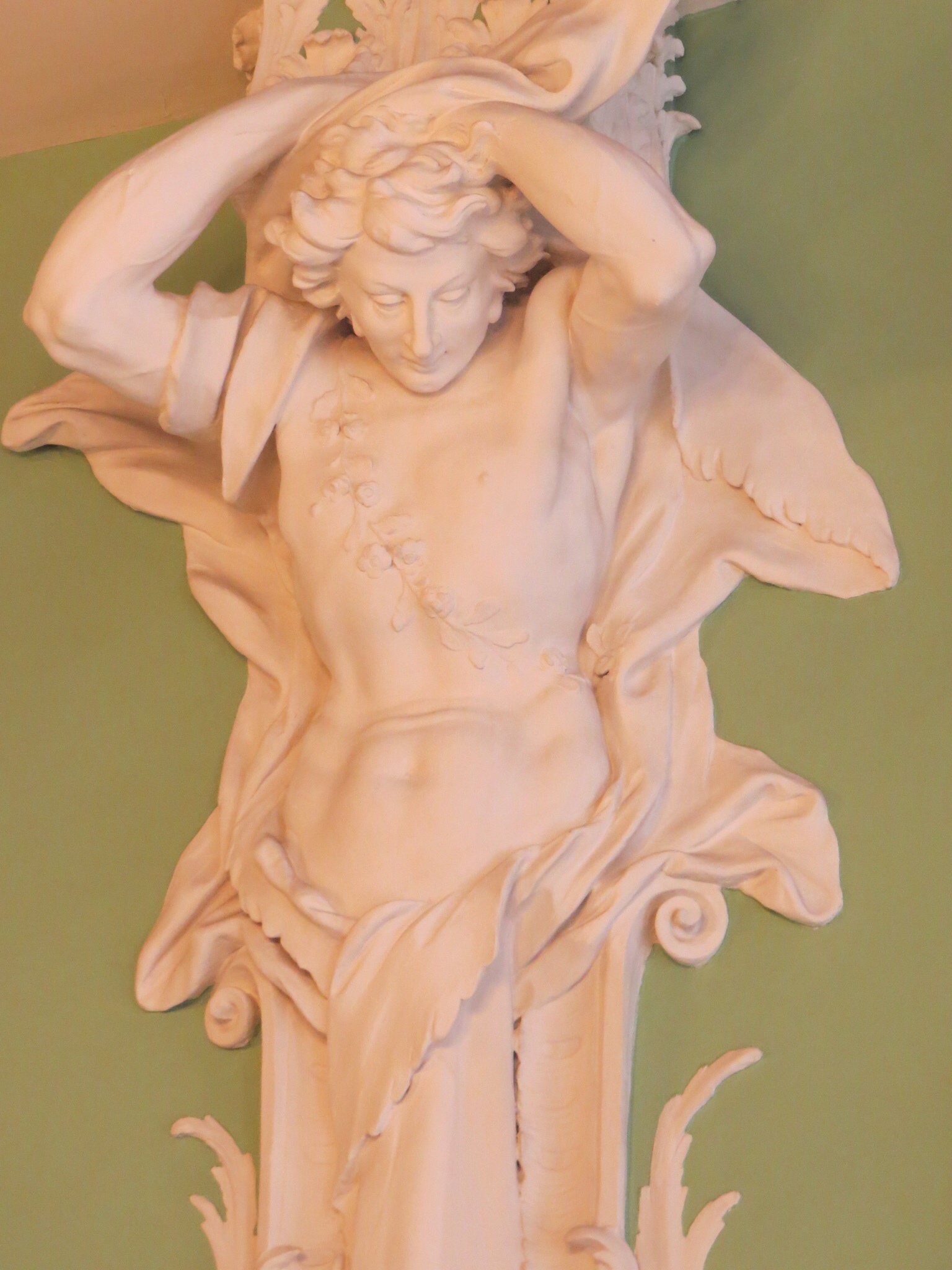
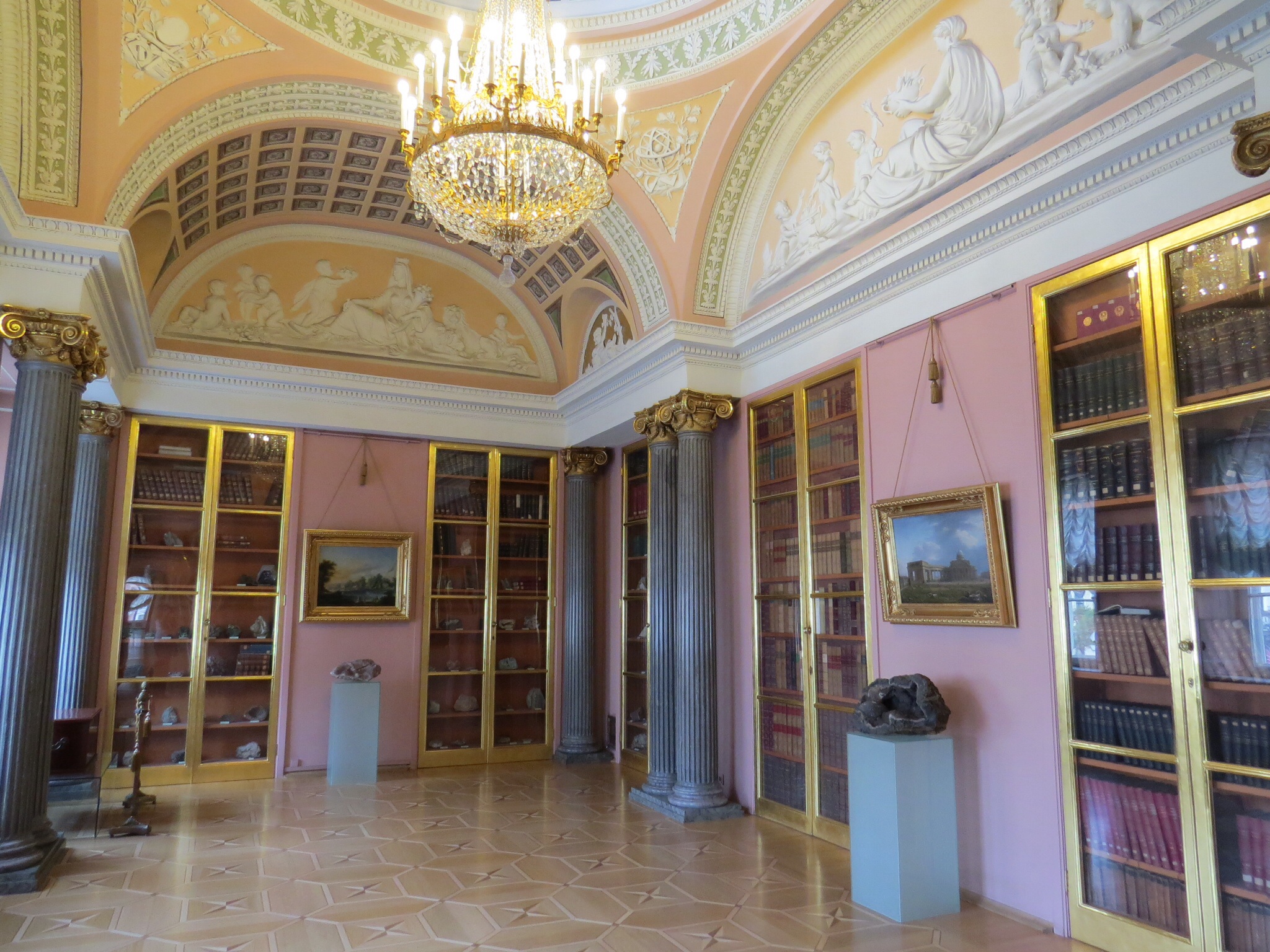
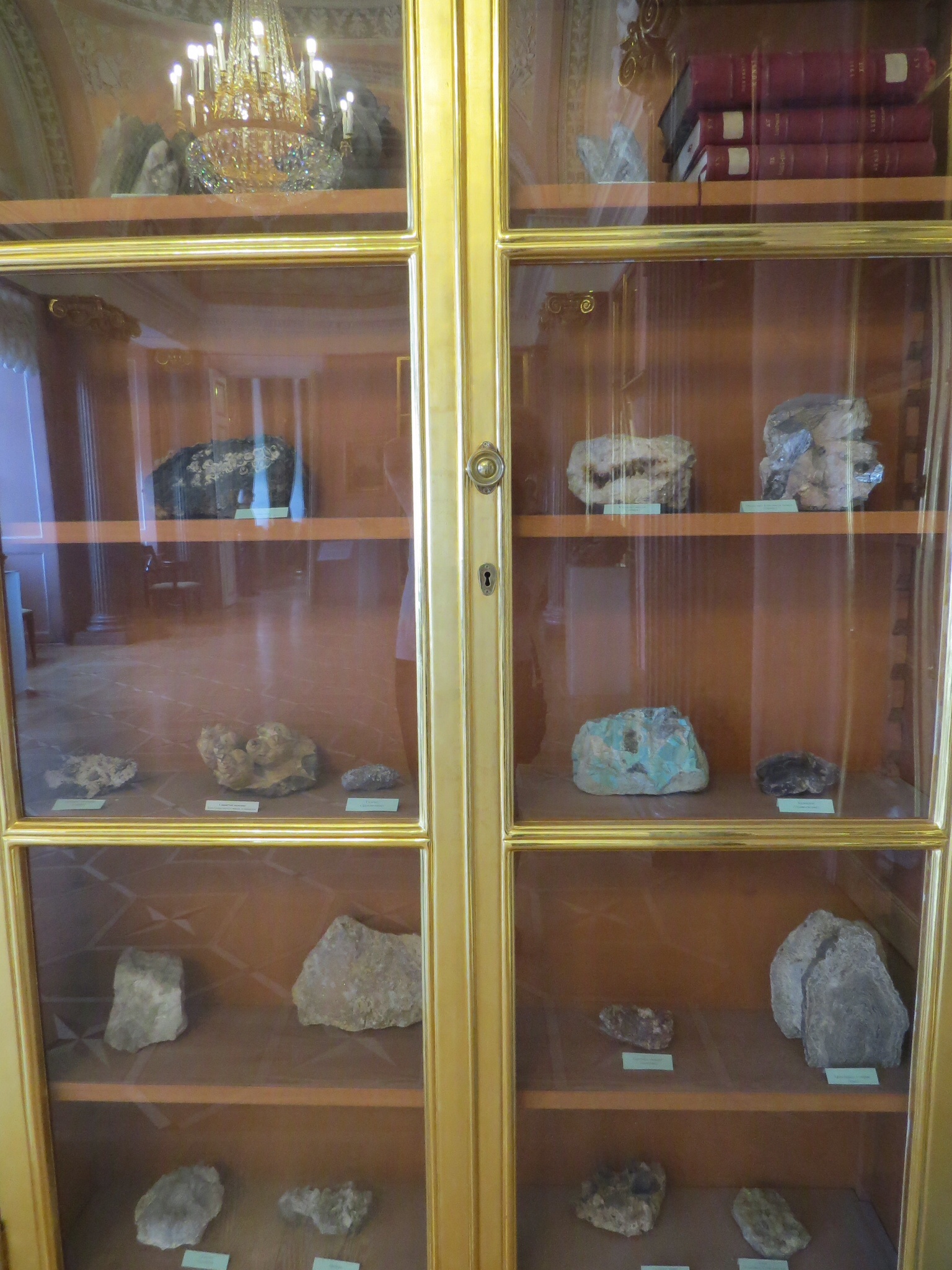
We raced back to the city centre where we visited the Stroganov Palace (yes, Beef Stroganoff is named after this aristocratic St. Petersburg family). The senior Mr. Stroganov was interested in science and had an impressive mineral collection. The rooms of the palace were beautiful and the family had a stunning art collection. Like Peter the Great, Count Stroganov recognized and supported talent. He recognized artistic talent in a serf, Veronikhin, from the Urals, freed him from serfdom and educated him. Veronikhin won an award for his work as an art student, and became an architect. He designed, of course, the Stroganov Palace, and went on to design the gorgeous Kazan Cathedral, the collonade at Peterhof, and the Lantern Study and Rose Pavillion at Pavlovsk Palace. All this could have been lost to a less philanthropic serf owner, and I thought about the millions of serfs in Russian history forced to work the land, whose immense talents may have been passed over.

imageimageimageimage

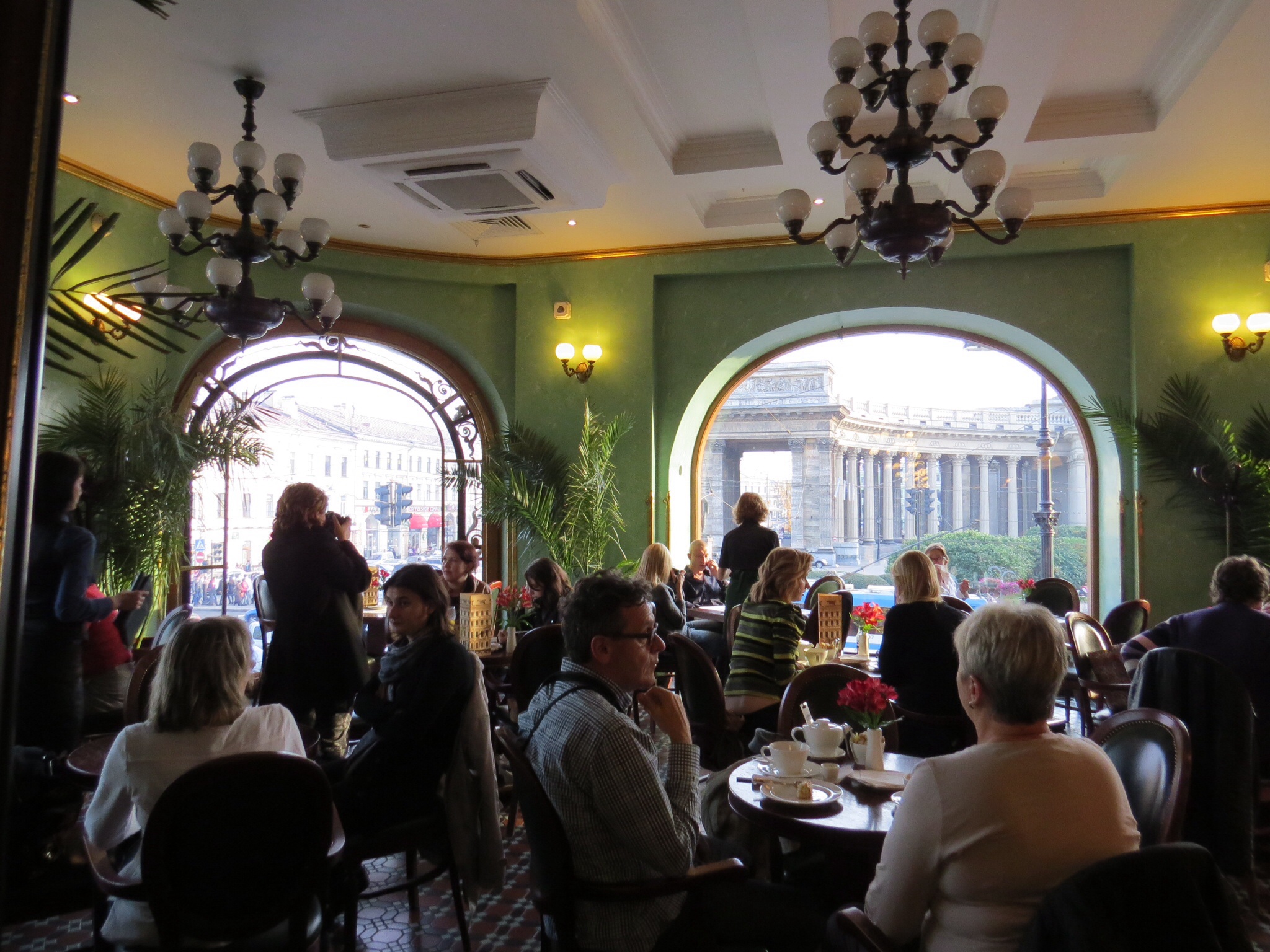
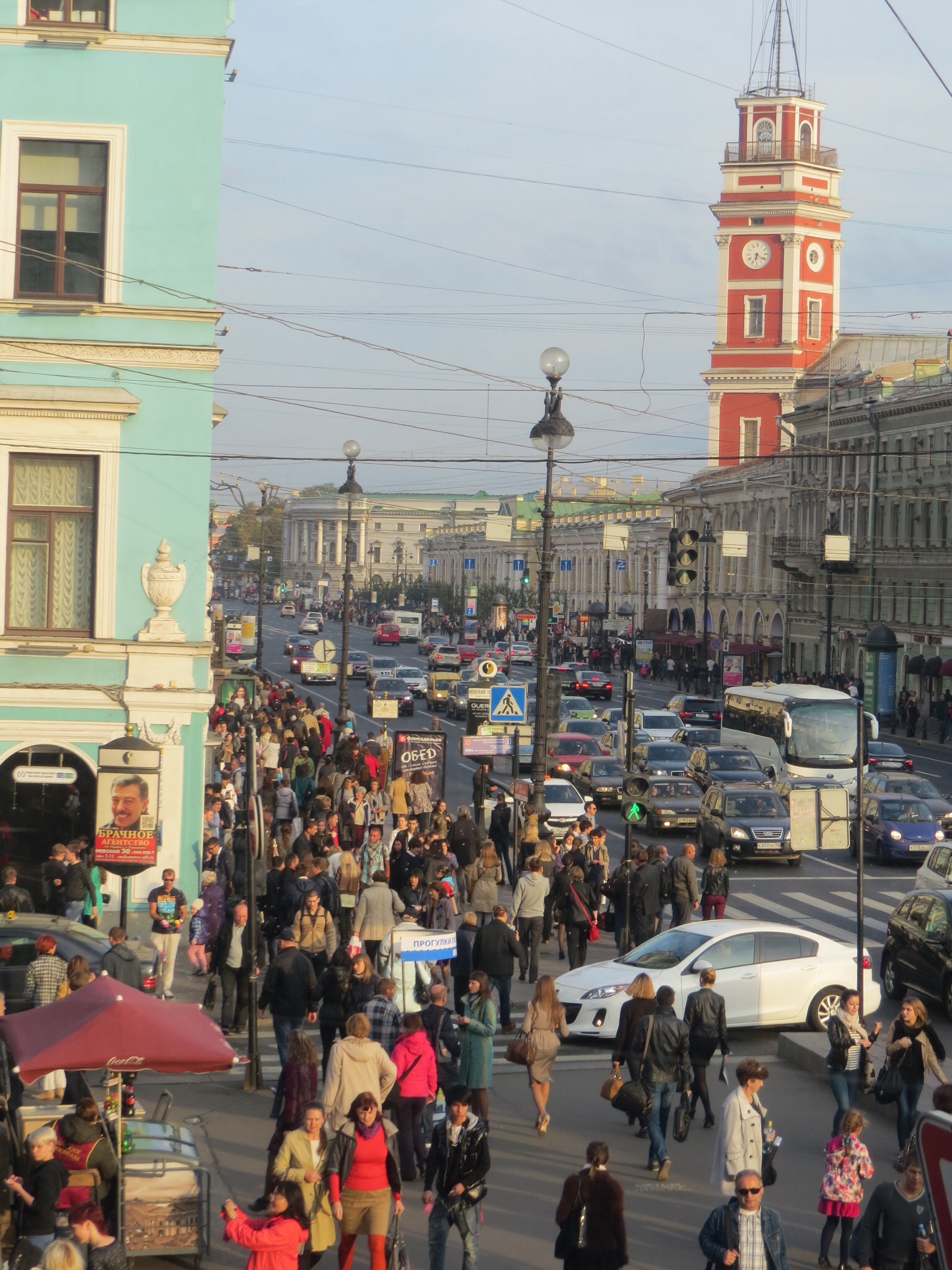
All this thinking made me hungry again, and we hadn’t yet visited the famous Singer Cafe (yes, formerly the site of a Singer sewing machine factory). We got the rock star table, and had a view overlooking the bustling Nevsky Prospekt, a delightful jumble of Metro takers, pedestrians, tourists, food carts and 8 lanes of traffic.

imageimageimage

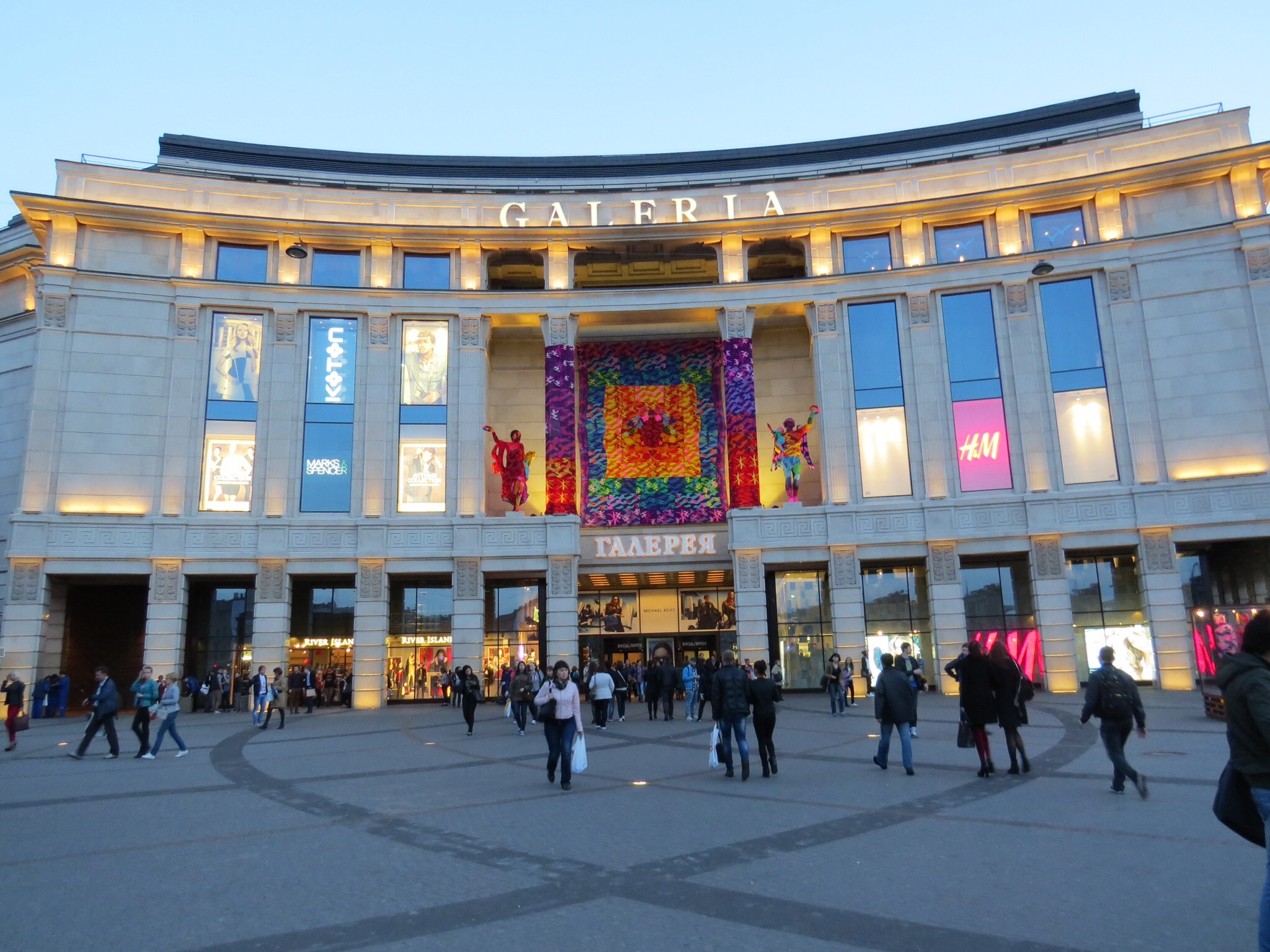
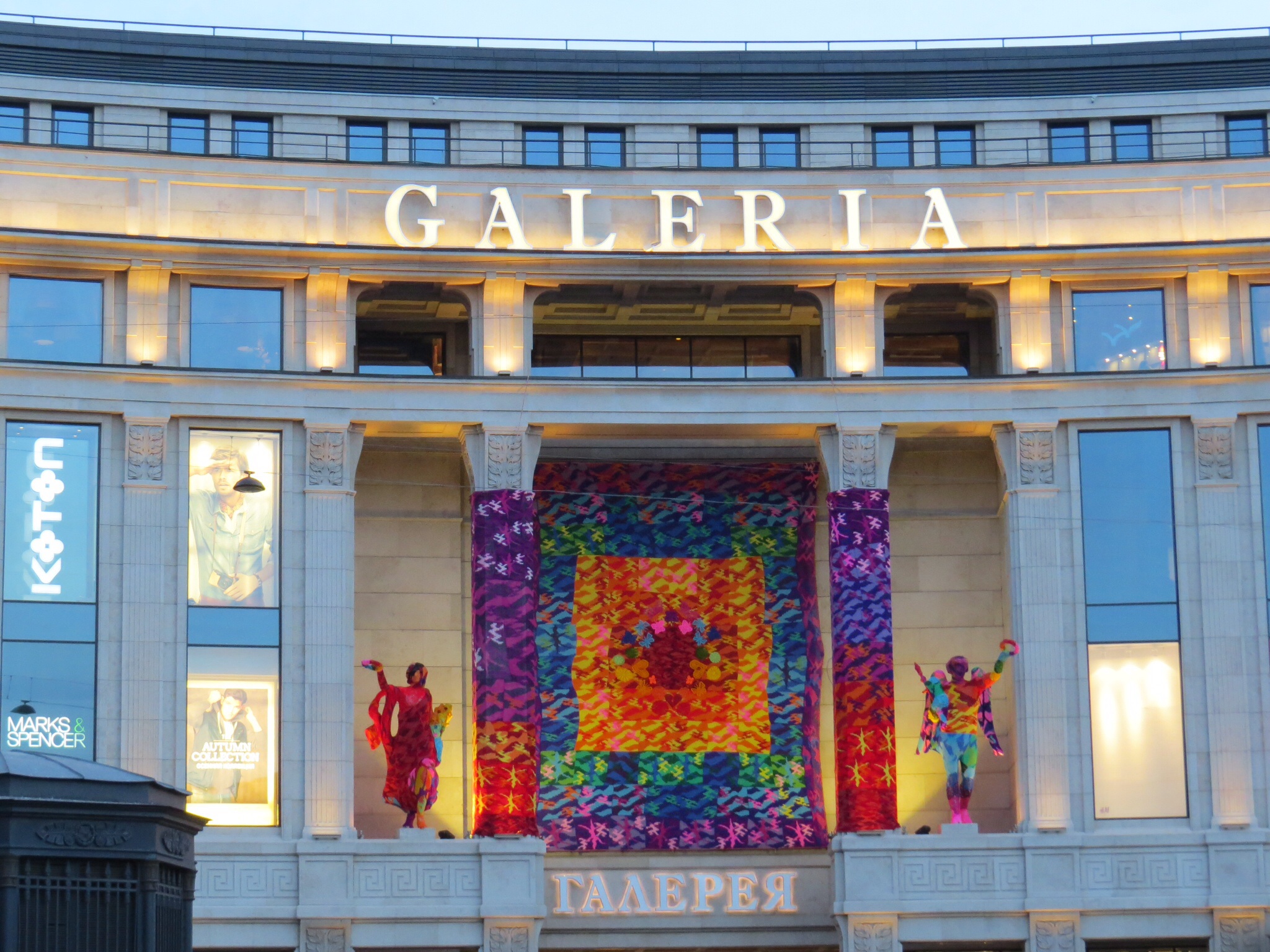
Hopped back on the Metro one more time in order to introduce me to Galeria, an amazing shopping mall Shirley had found. Six floors of gorgeous stores containing beautiful clothes and we realized this is where all the beautifully-dressed St. Petersburgers shopped. The winter season had started, and we were reminded that we were in Russia by all the woollens, furs, fur-lined boots and cozy clothes one would need to survive winter here. With the balmy days and evenings we had experienced it was hard to believe that -20 C was a winter norm.

imageimage

I imagined what the stores, if they could even be called such, carried during soviet days and see by contrast that capitalism is thriving in this post-communist city. Certainly a more socialist system than Mr. Putin would ever endorse would benefit more Russians, but really their economy is in its infancy when you recall that it took the first decade for people to figure out how to make a living and in that gap period organized crime took over and had to be reined in. (There was still evidence of its existence in the many beefy drivers/body guards we saw standing around, and one taxi driver pointed out a couple of Maseratis which he said were owned by “Administration,” meaning government officials.) To guide your own career, and personal ownership, are other individual freedoms only recently gained here. While capitalism is far from perfect and doesn’t benefit everyone evenly, the people here take great pride in their cars, jewelry and clothes, and one can see that they live much more comfortably than they did in the days of crowded communal apartments and no personal bank accounts.

We hadn’t planned our last day to carry the theme of freedom, but we seem to have explored it rather thoroughly today. Tonite I am watching on the news a lone male gay protester being dragged away from an Olympic Committee Sochi inspection. Such is Russian history….

A matter of honour and a revolution

With our days dwindling in this wonderful city, we started prioritizing and packing our days as much as we could.  While we could easily have done another day or two at the Hermitage, it would have been at the expense of so many other meaningful landmarks that we decided we had to leave that for next time…

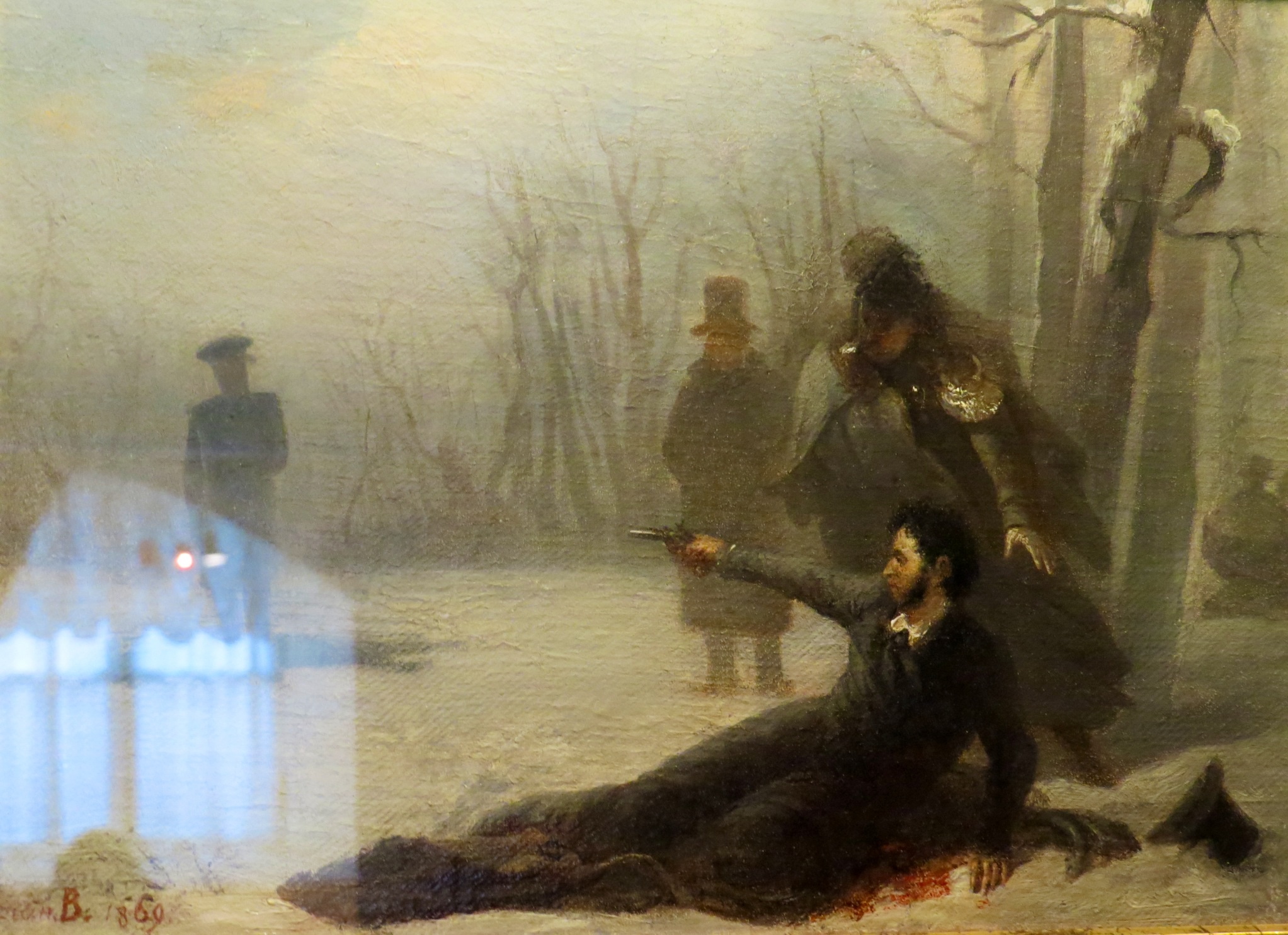
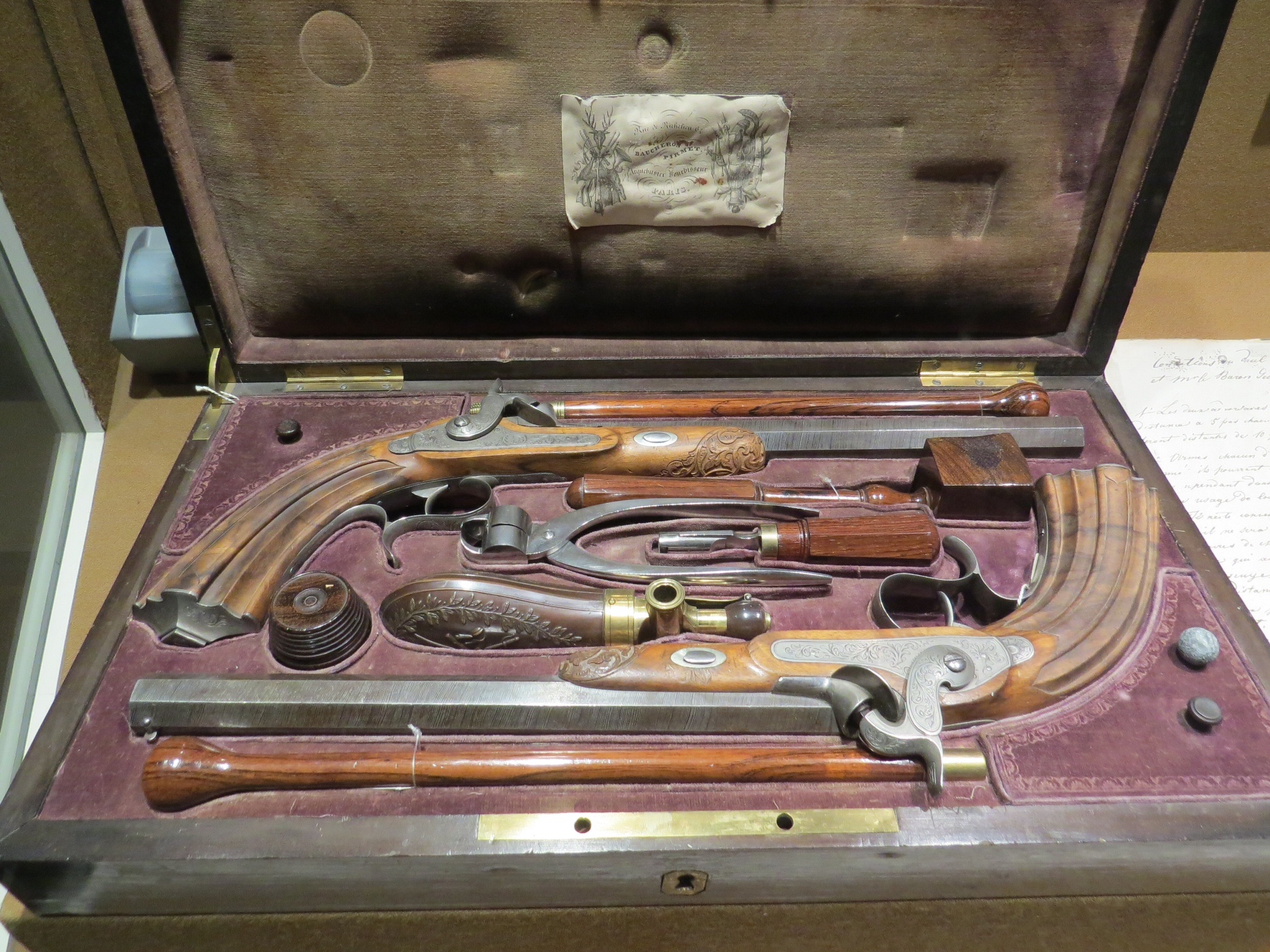
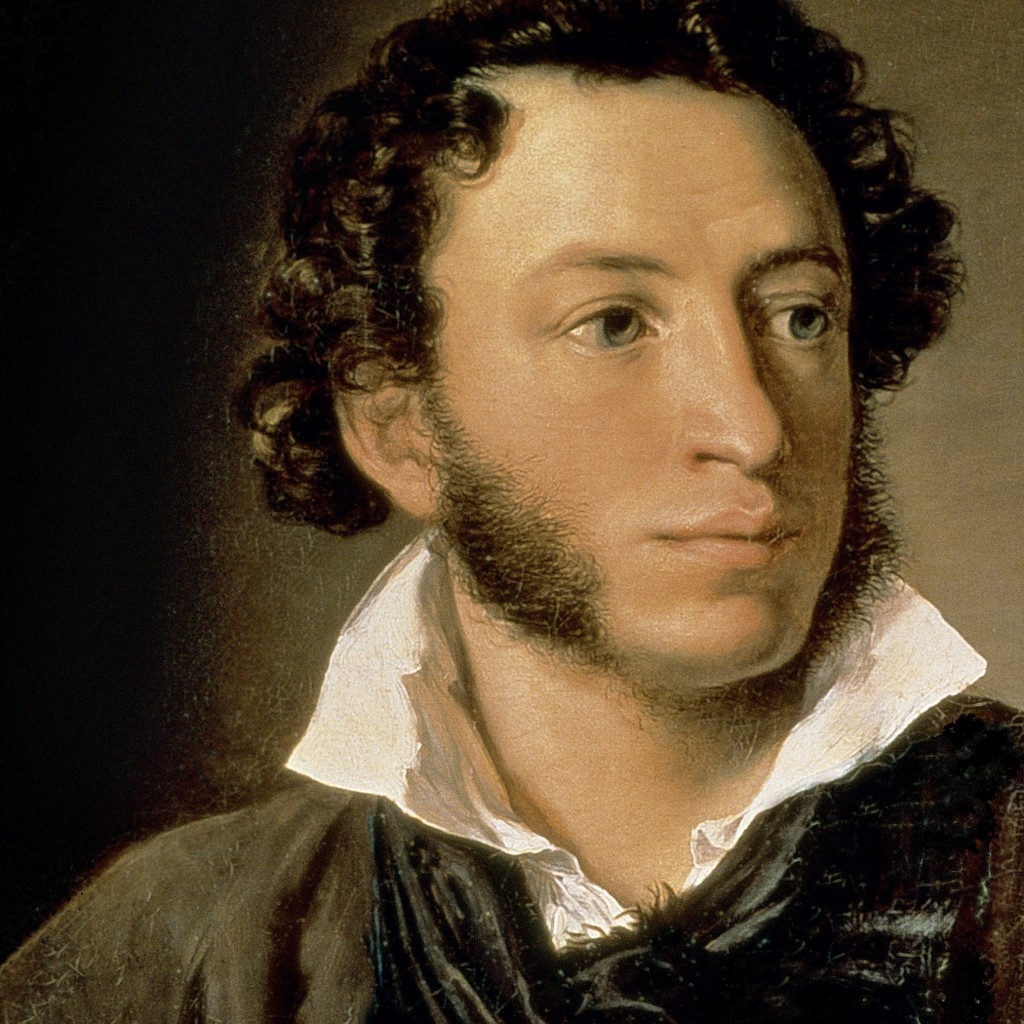
The apartment where the greatest Russian poet, Alexander Pushkin, had lived, and died, has been preserved as a museum.  Compared to Shakespeare, his novels in verse include Eugene Onegin and he wrote the short story The Queen of Spades, both adapted as operas by Tchaichovsky.  Prophetically, the action which propels the story of Eugene Onegin is the fighting of a duel.  Pushkin, as a young man, was a great lover of women and was constantly falling head over heels in love, with little regard for the woman’s marital status.  As a result, he himself was involved in several duels but none of those resulted in anyone’s death.  However, he had perhaps laid the groundwork that compelled him to act later in life when the roles were reversed.   His wife and the mother of his four children became the object of another man’s affections  – and, for the sake of his wife’s and his own honour and reputation, Pushkin challenged him to a duel.  Tragically, the man cheated and shot Pushkin before he had walked the full paces.  Pushkin was shot in the abdomen and was carried back to his home, the museum we visited, where he took an agonizing  24 hours to die.

image
image

The museum was filled with his manuscripts and some of the books from his 4,000-book library as well as many personal artifacts.  It was a moving visit, the more so having seen the opera The Queen of Spades earlier in the week.

Peter the Great, a few generations earlier,  had a connection to Pushkin, without which I wonder whether we would have Pushkin’s literature today:

Peter rewarded merit and dedication over nobility. “Ibrahim Hannibal was a black Abyssinian prince brought as a slave to Constantinople where he was bought and sent to Peter as a present. The Tsar set him free and made him his godson, sent him to Paris to be educated, and eventually promoted him to General of the Artillery. Later, Hannibal was the maternal grandfather of Alexander Pushkin and the central figure in Pushkin’s (unfinished) novel, The Negro of Peter the Great.'”

image

(If you are interested in more on Pushkin you might like to read Dostoevsky’s famous speech advocating that Pushkin was the founding father of Russian literature. The full text is at http://www.linda-goodman.com/ubb/Forum7/HTML/010678.html)

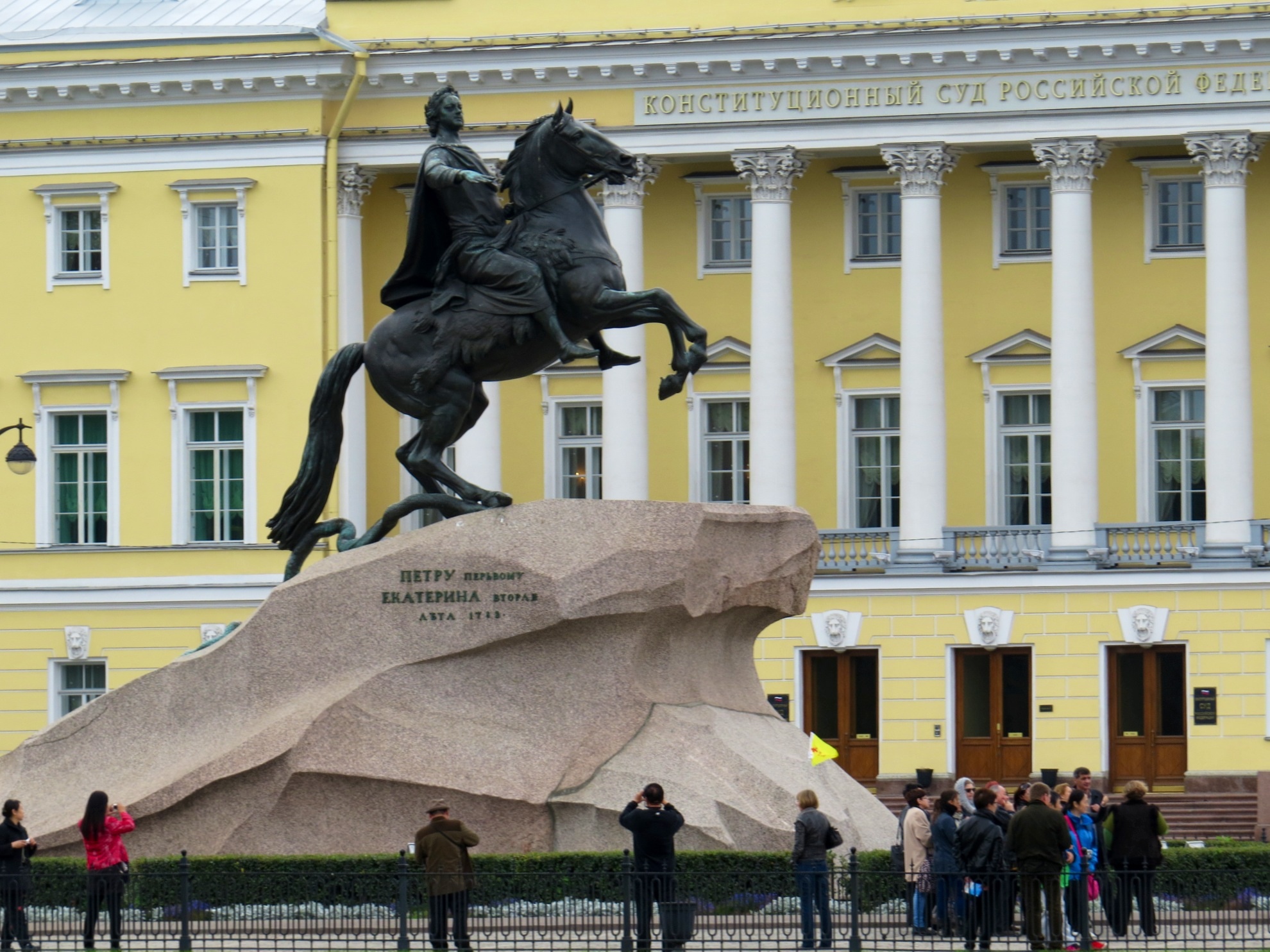
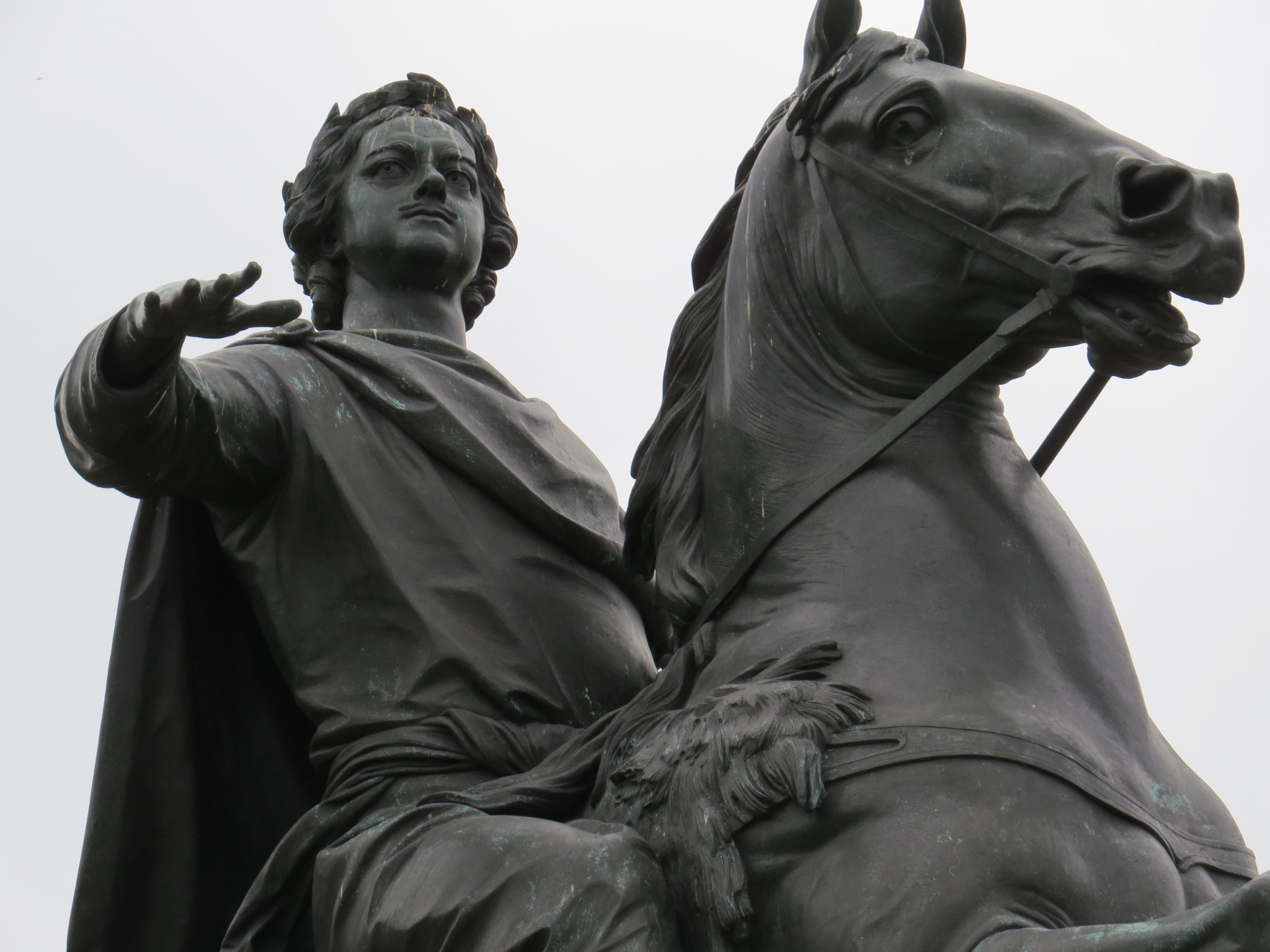
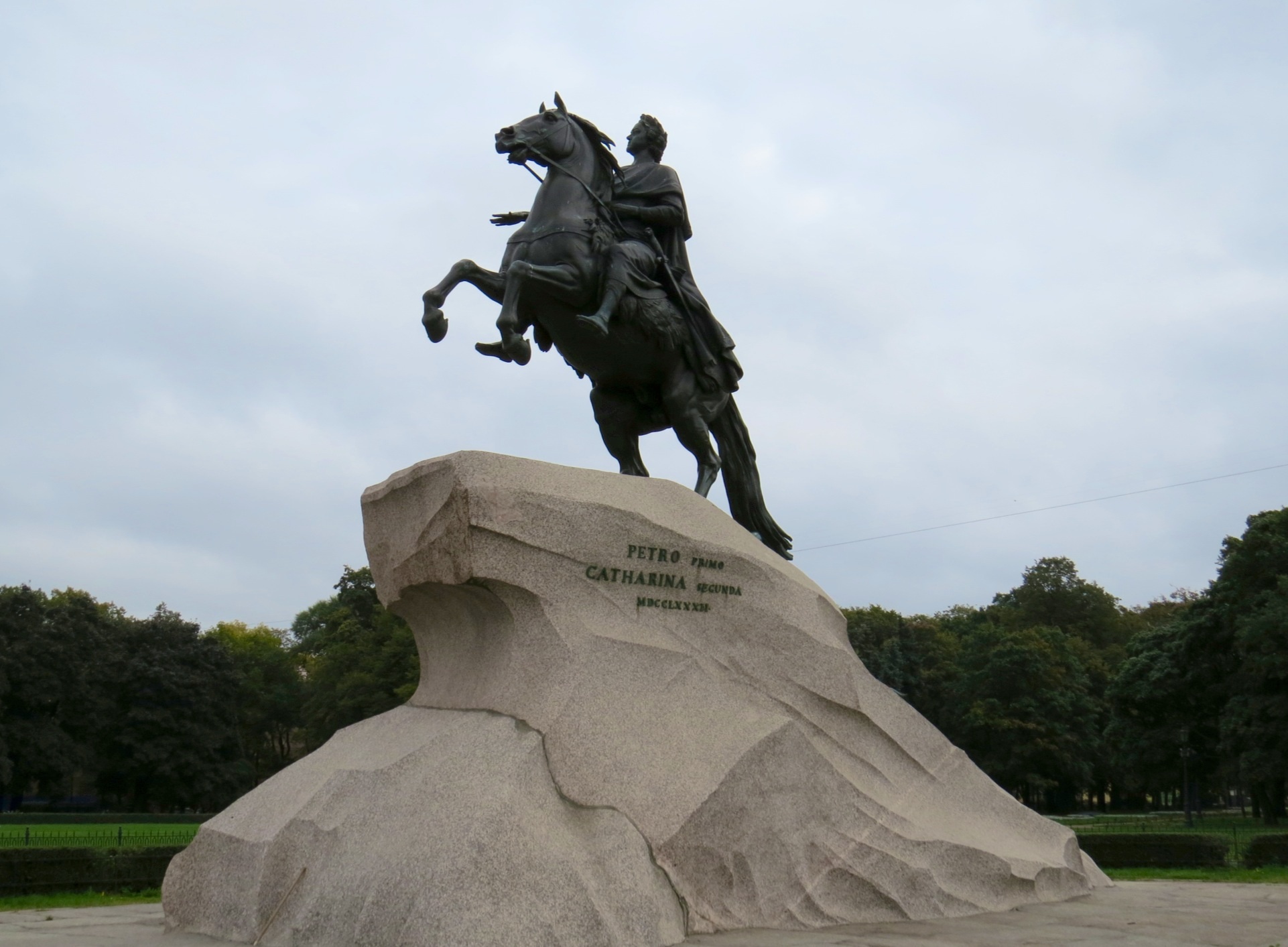
Our next stop at The Bronze Horseman (itself the subject of a Pushkin poem) was no less moving for us, as both Shirley and I had read Robert Massie’s biography of Catherine the Great and were familiar with the magnificent bronze monument she had built to Peter the Great.  Along the palace embankment, this sculpture is the single most beautiful and striking monument I have ever seen. Its design seems modern; it is hard for me to believe it was constructed so long ago, and the lines of the horse and rider so follow the shape of the rock that it seems they have been captured, frozen in time for only the briefest second and will spring back into motion instantly.

It was commissioned by Catherine the Great, perhaps to identify herself with Peter the Great and the Romanov dynasty, because she was only a relative by marriage. The Bronze Horseman depicts Peter the Great, his steed stomping on a serpent, his hand outstretched gesturing as a leader to the Peter and Paul Fortress and Europe beyond. (We noticed later in Moscow that earlier monuments of earlier Romanov Tsars held the same pose, so Catherine no doubt had that in mind.) Robert K. Massie states that “Catherine was Peter’s equal – his only equal – in vision, strength of purpose, and achievement during the centuries that Russia was ruled by tsars, emperors and empresses.”

The Base of the Monument

“While the collosal statue was being moulded, the sculptor and his patron (Catherine) were trying to find a base on which to mount the work. Prospectors searching in nearby Finnish Karelia for granite for the new Neva quays had discovered an enormous, monolithic rock, deeply embedded in marsh. When unearthed, it was twenty-two feet high, forty-two feet long, and thirty-four feet wide. Its weight, experts calculated, was fifteen hundred tons. Catherine decided that this Ice Age boulder must serve as the pedestal for her statue. To bring it to St. Petersburg, a system was worked out that in itself was an engineering feat…. It took captains, pulleys, and a thousand men to inch the stone along, a hundred yards a day.”

imageimage
image

“The Image with an arm flung wide,
Sat on his brazen horse astride…
Him, Who moveless and aloft and dim
Our city by the sea had founded,
Whose will was Fate. Appalling there,
He sat, begirt with mist and air,
What thoughts engrave his brow!
What hidden Power and Authority He claims!
Proud charger, whither art thou ridden
Where leapest thou? And where, on whom
Wilt plant they hoof?”

– Pushkin
———-

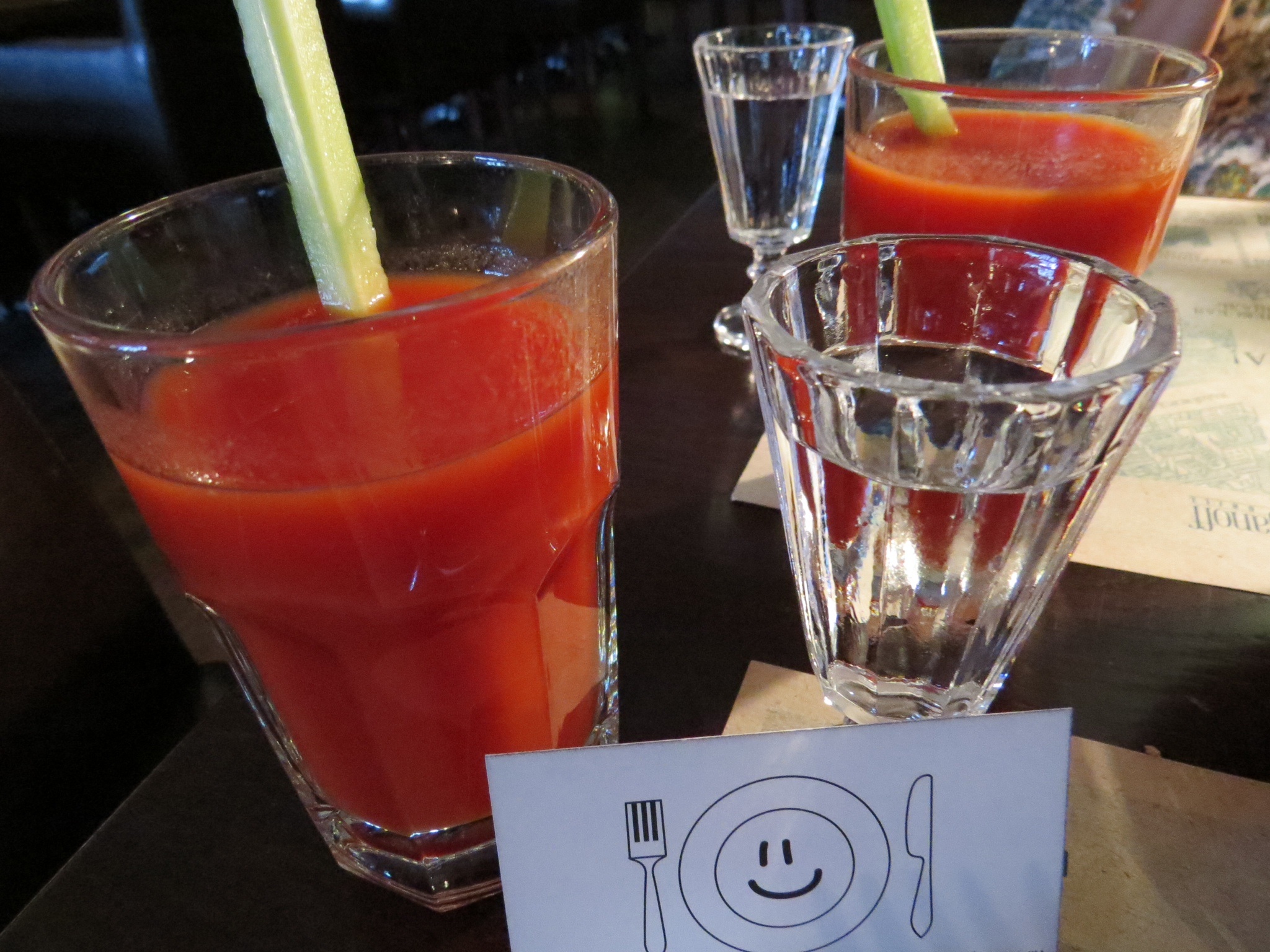
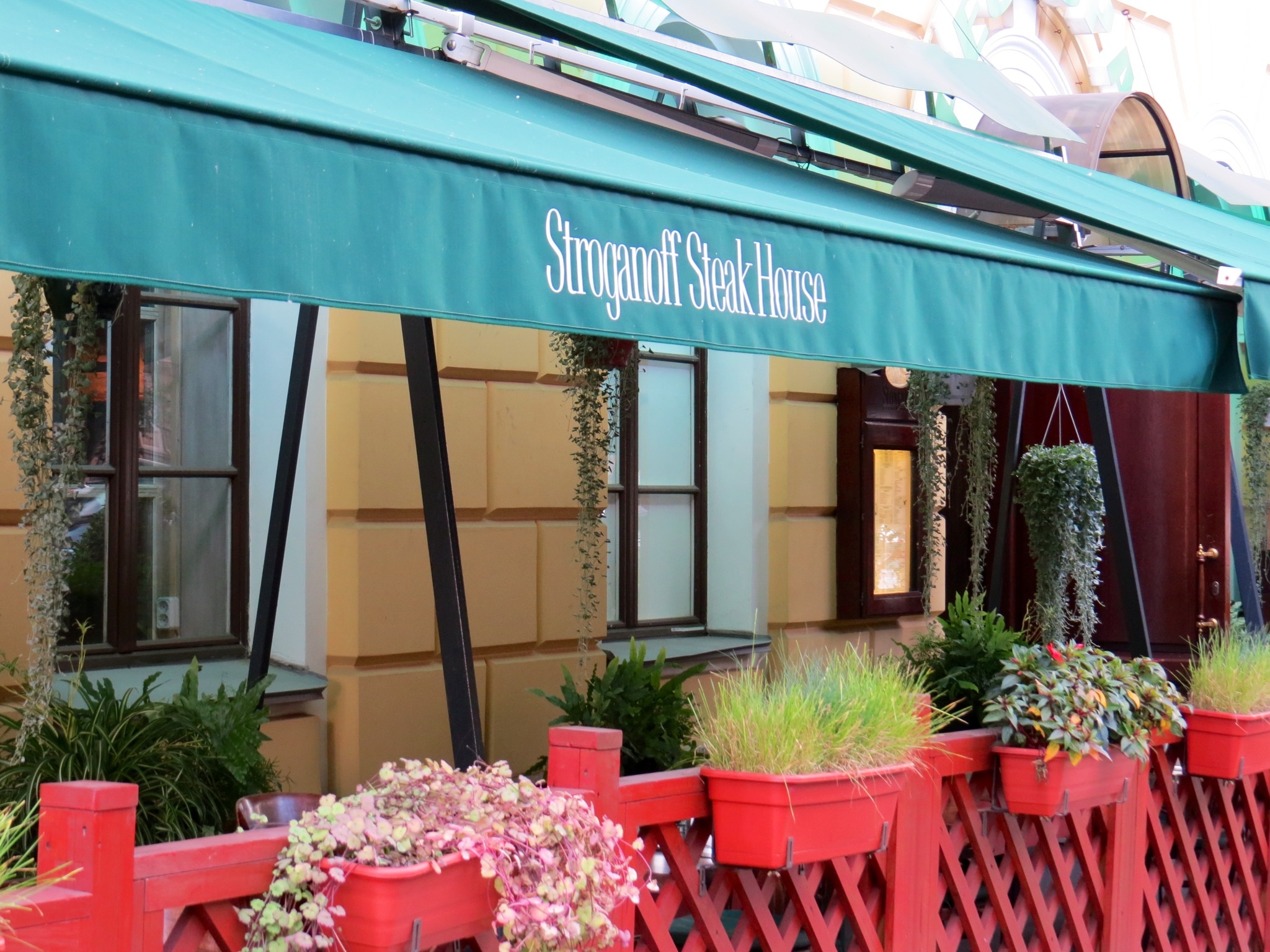
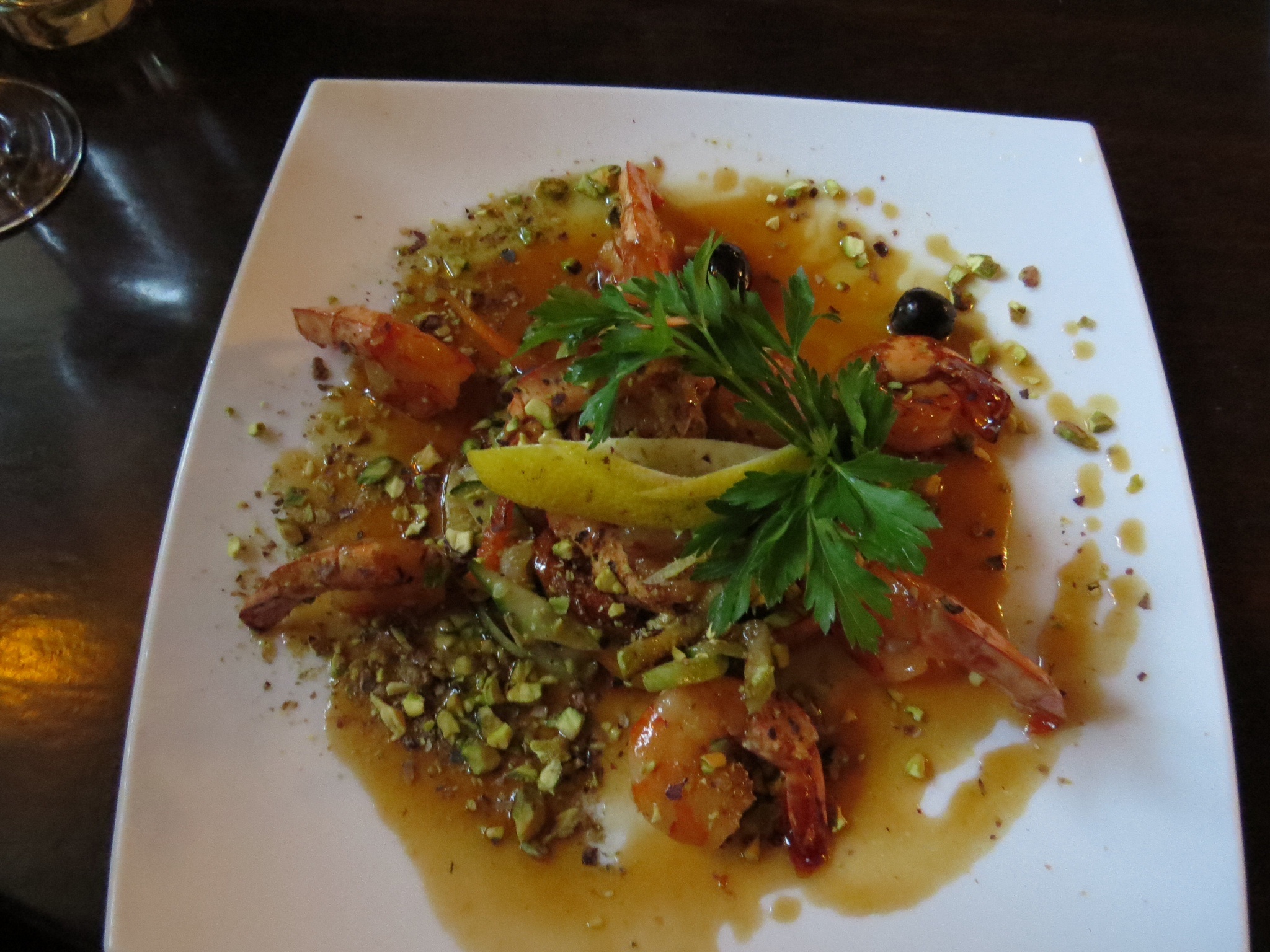
The meaningful morning called for an appropriate feast and celebration.  Shirley had discovered “The Business Lunch,” a fixed price, many coursed meal offered at many restaurants at very reasonable prices.  The Stroganoff Steak House boasted the best Beef Stroganoff in town and so we were off.  We sampled the best Russian vodka on offer which I was unable to down in a single shot in the traditional way, but it was delicious to sip.   The Stroganoff lived up to its claim, it was fabulous, arriving hot on a griddle next to mashed potatoes with crispy onion rings.  Salads and yummy desserts completed the feast.

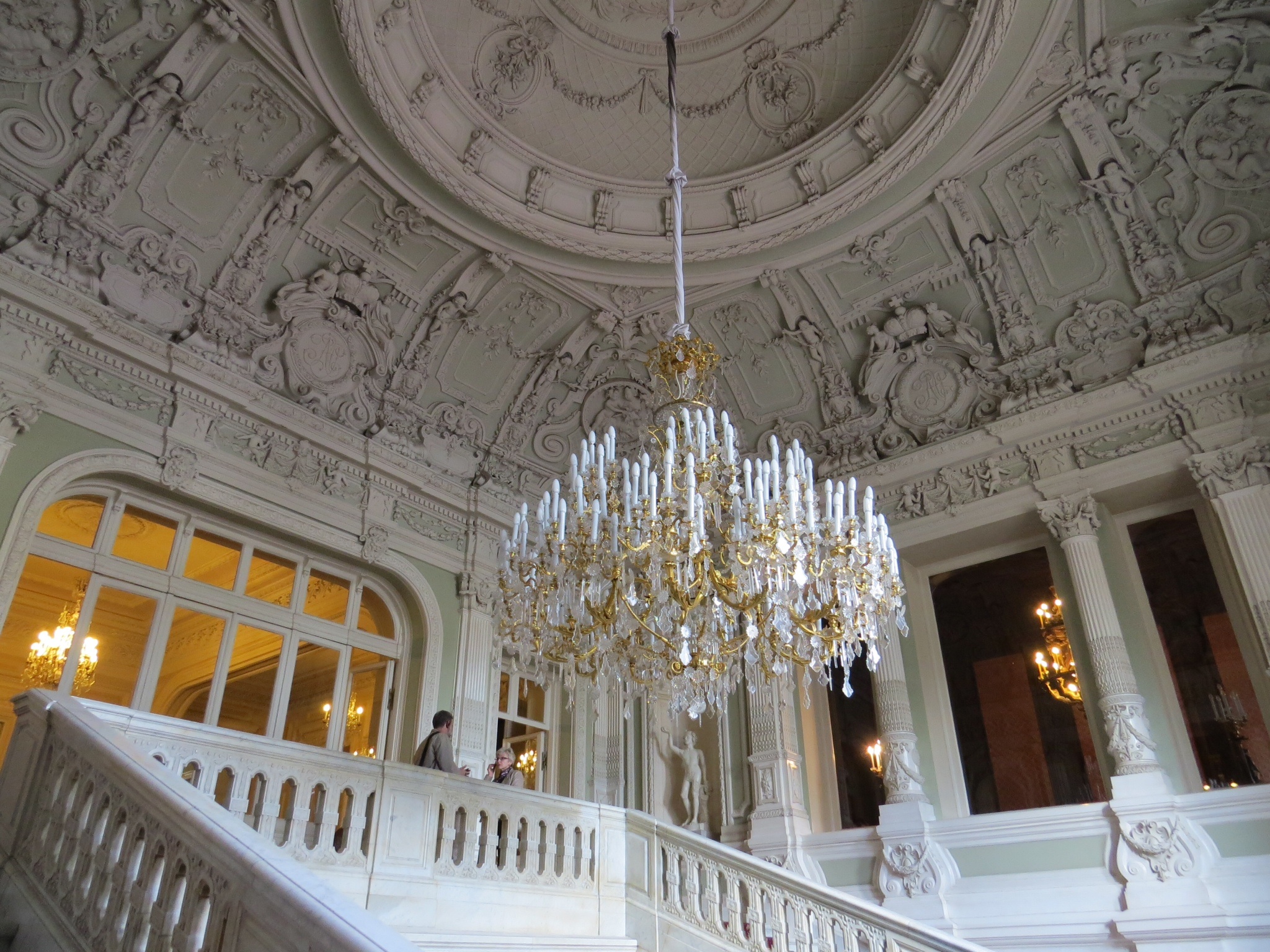
Next we headed to our next-most important palace, the Yusopov.  Another aristocratic Russian family built and lived in this magnificent Baroque palace.  Room after sumptuous room unfolded before us, and more clandestine photographs could not be resisted.  An interesting sidebar to this palace’s history is that in this palace Yusopov, with the help of his fellow noblemen, masterminded and carried out the murder of Rasputin, a mystic monk and social activist who had claimed to have cured the Emperor’s son of hemophelia.  He was an activist leader who threatened the aristocracy, and his murder set into play a 1905 revolution and stirred the unrest that ultimately led to the 1917 great revolution of Russia.

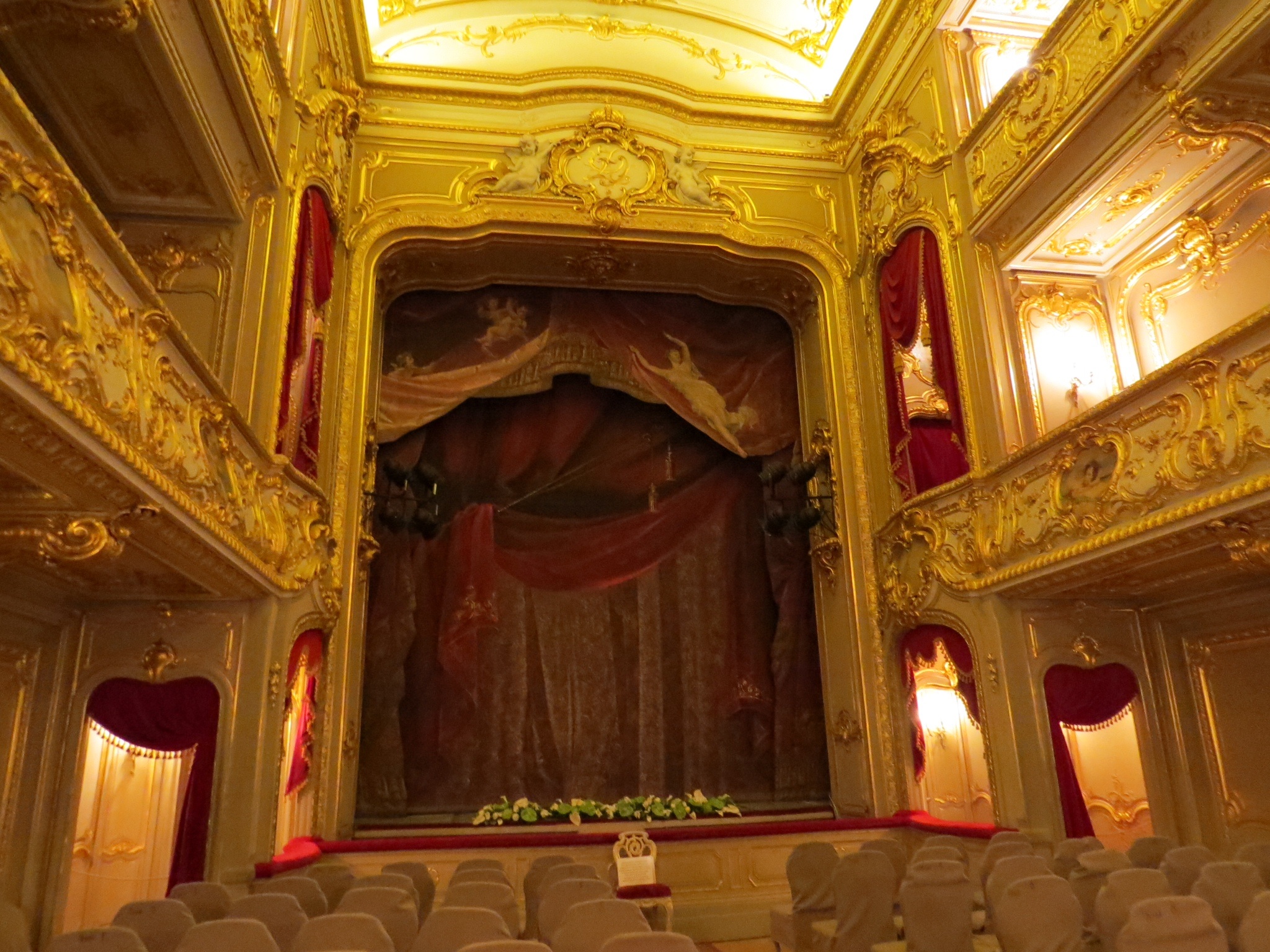
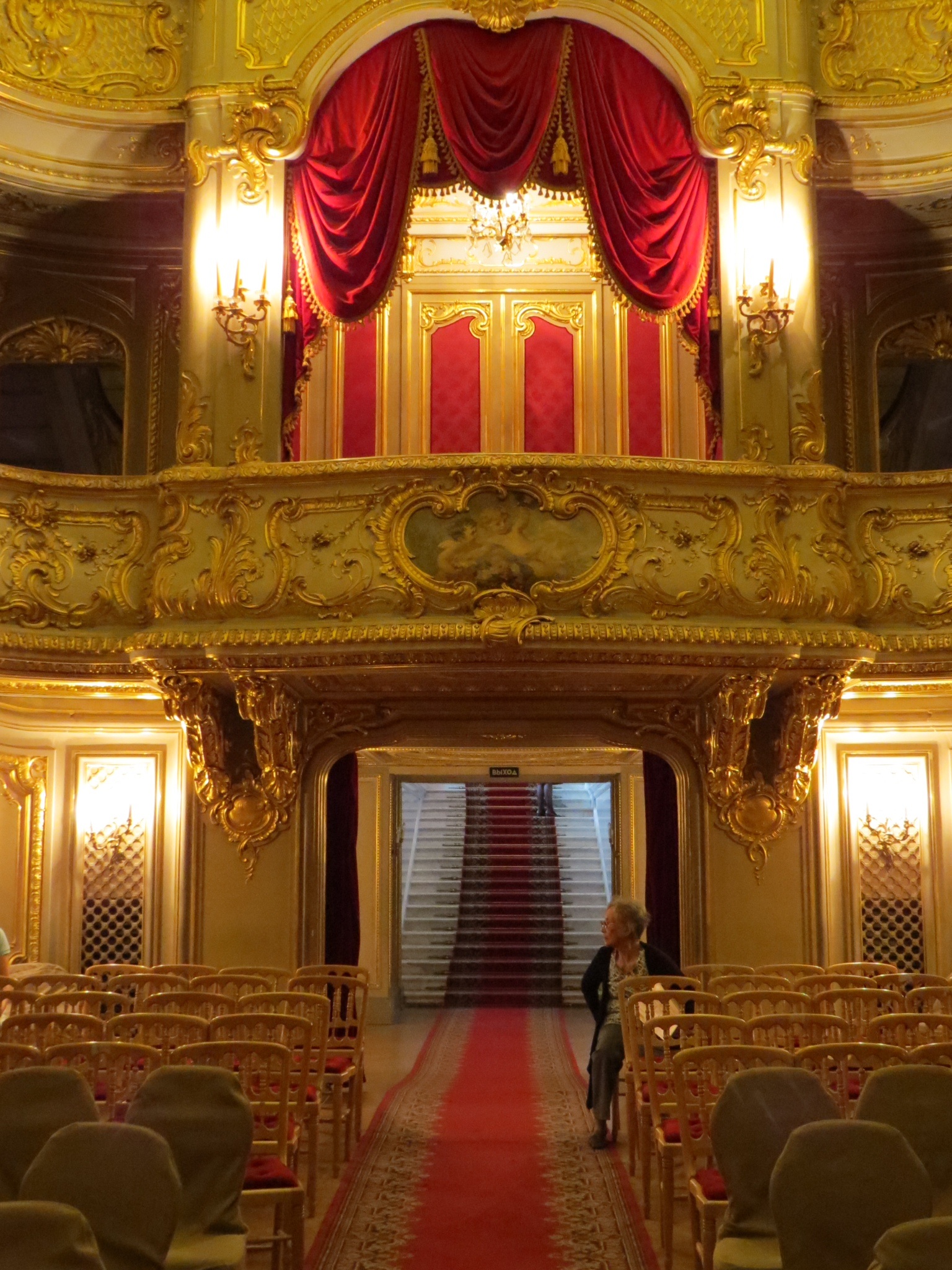
Each palace has its special something, and in the Yusopov palace it was a small, elegant private theatre with seating for 180 guests.  Filled with gold ornamentation and red velvet, it was beautiful and we lingered here.  Before our trip we had watched a PBS Great Performances special (which is available on the pbs website) in which Renee Fleming performed opera favourites in several St. Petersburg palace theatres, and the Yusopov was one of these theatres. It was easy to imagine sitting here in a silk gown listening to a rich Tchaichovsky opera sung by a Russian mezzosoprano while sipping champagne and nibbling on caviar.  Ahhhhh……

image
image
imageimageimageimage

Love Means Nothing

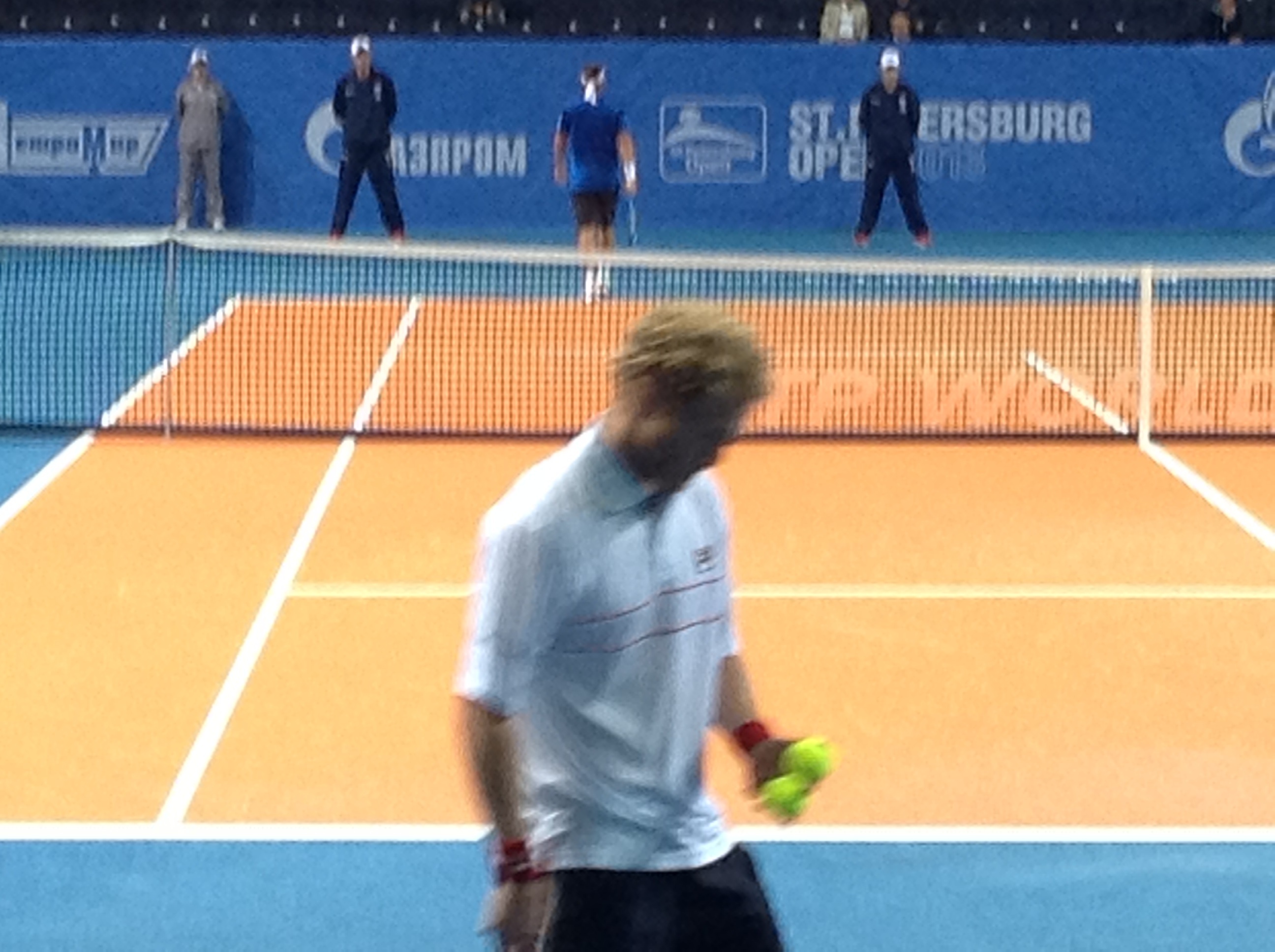
Today we took a break from being tourists and treated ourselves to a terrific day of tennis at the St, Petersburg Open.  Leaving cameras at home, we Metro’d to the stadium and got second row seats to some great tennis.  Being a relatively small tournament, players wandered around the grounds freely and we walked past some great pro tennis players Shirley and I know well – Verdasco, Baghdatis, Tipsarevic and others.  We saw several matches and watched the great Mikhail Youzhniy, whom I had just watched play so well at the US Open a week ago, in a doubles match against fellow Russian Tursonov.

I did manage a few bad photographs on my ipad.

It was great fun to be away from the tourist spots and mix with regular Petersburgers, who rarely speak English.  Much air tennis was played in trying to describe where we were wanting to go, with marginal success.  A great day, and so different than all our others!

Jan
imageimage

From red dirt to the heavens

I am a few days behind on my posts but will now have time to catch up a bit.  This post is highlights of our day on Sunday, Sep 15th.

After chugging along Nevsky Prospekt for some shopping, we made our way to St. Isaac’s Square where a free, public tennis match on a clay outdoor court was put in the for the day, between Russia’s #1 Mikhael Youzhny and Dmitri Tursokov.  It was a public event to promote the St. Petersburg Open and was a light-hearted and fun match and we got to see a couple of Russian players up close.

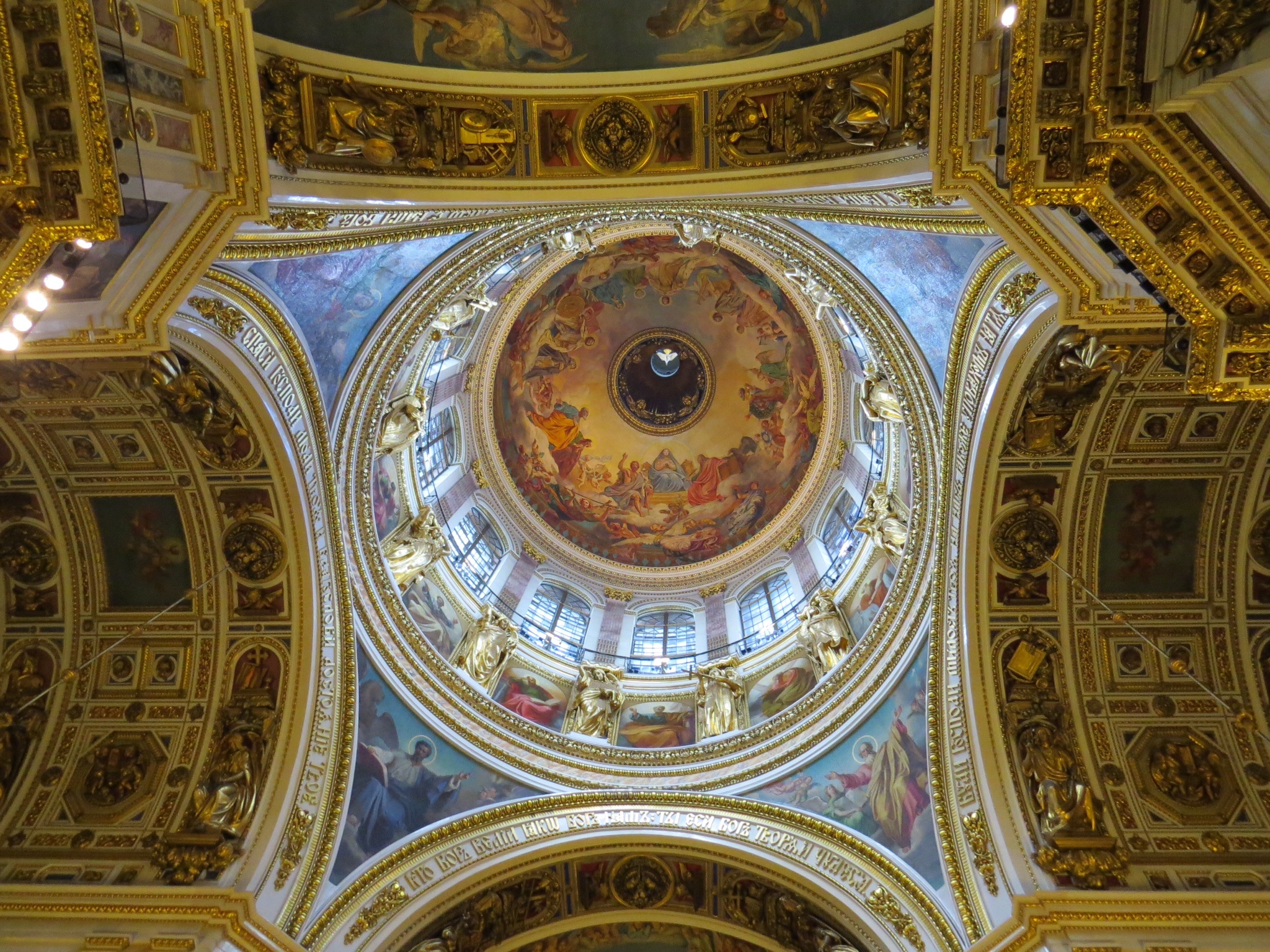
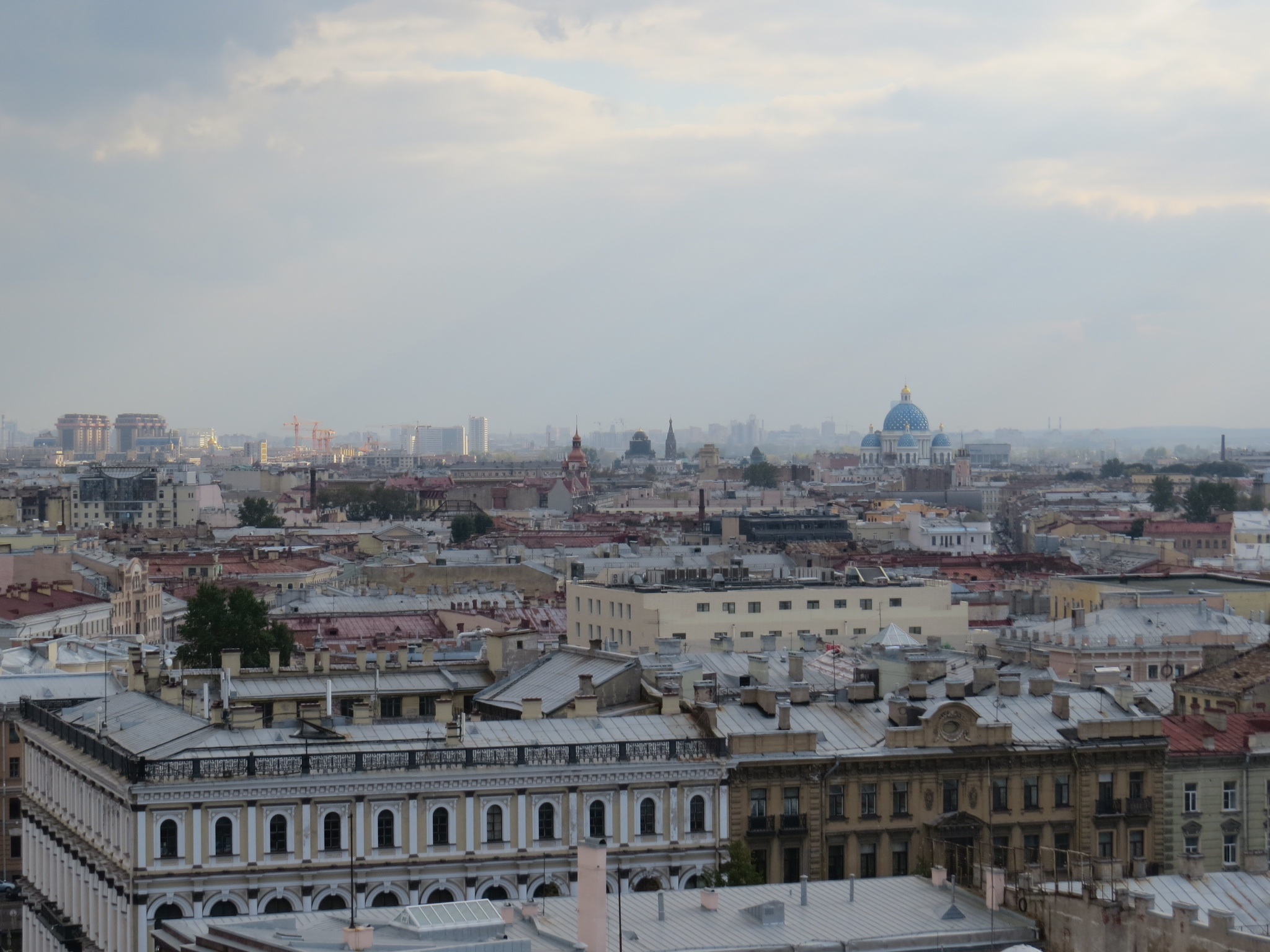
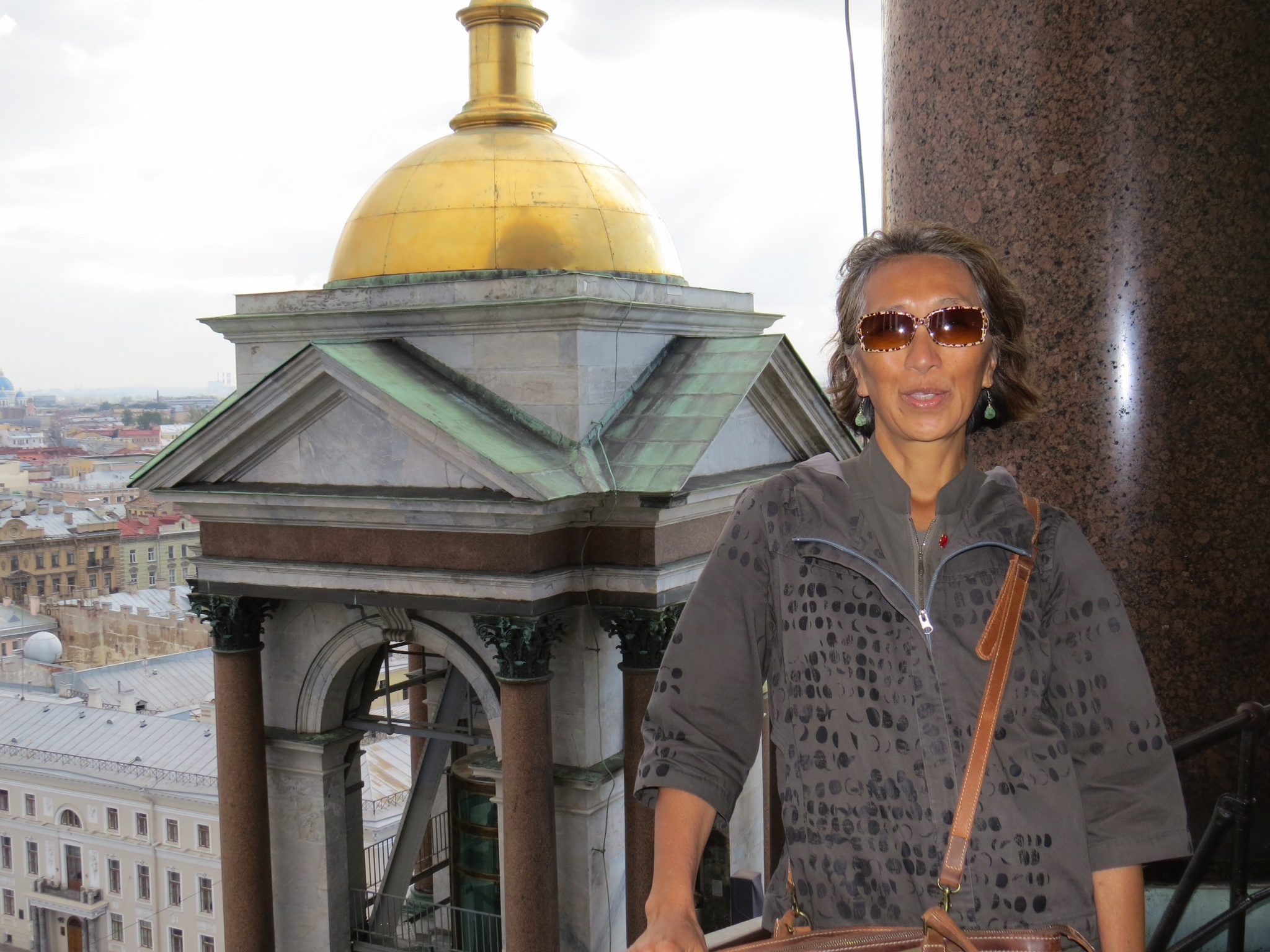
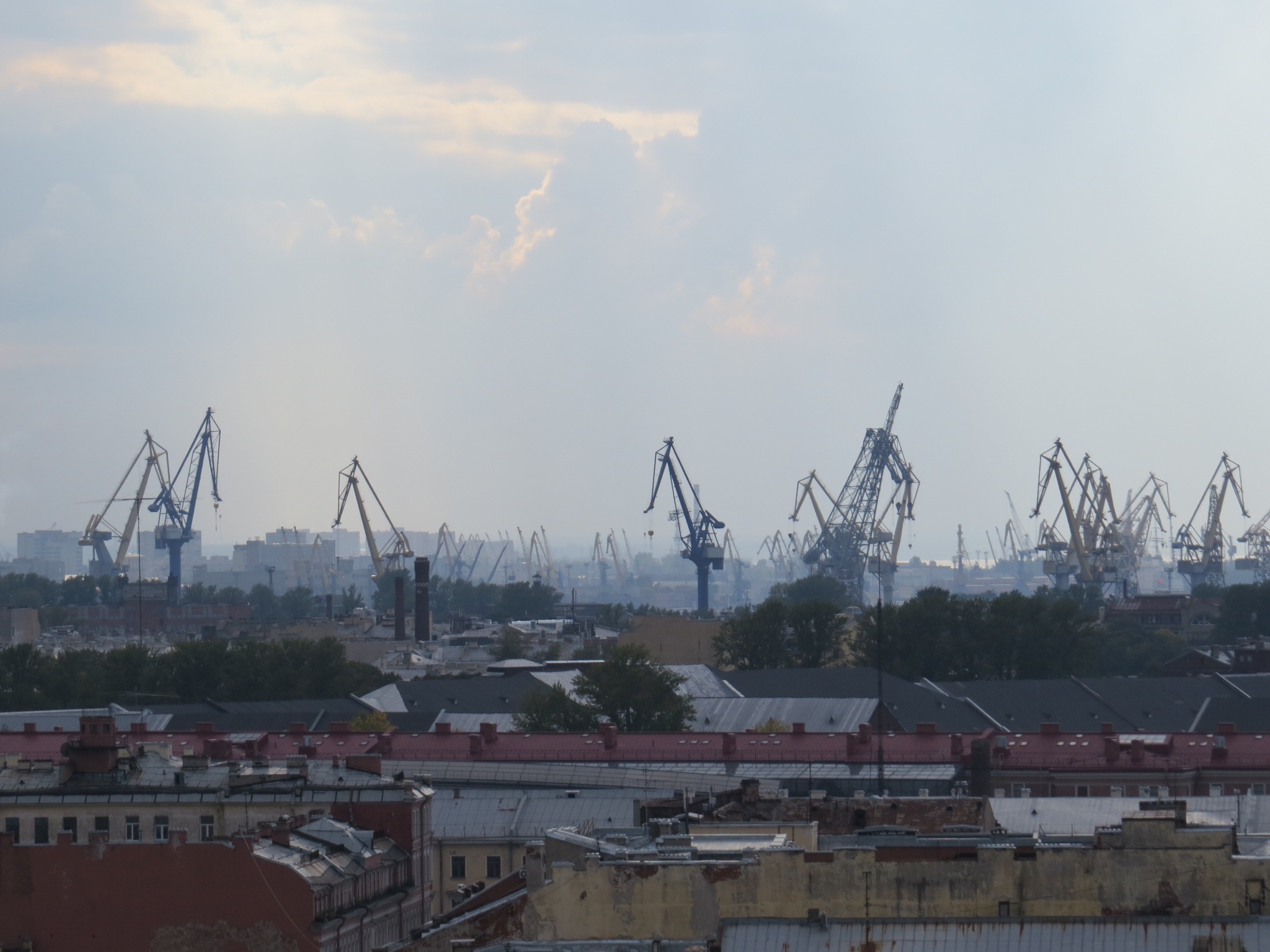
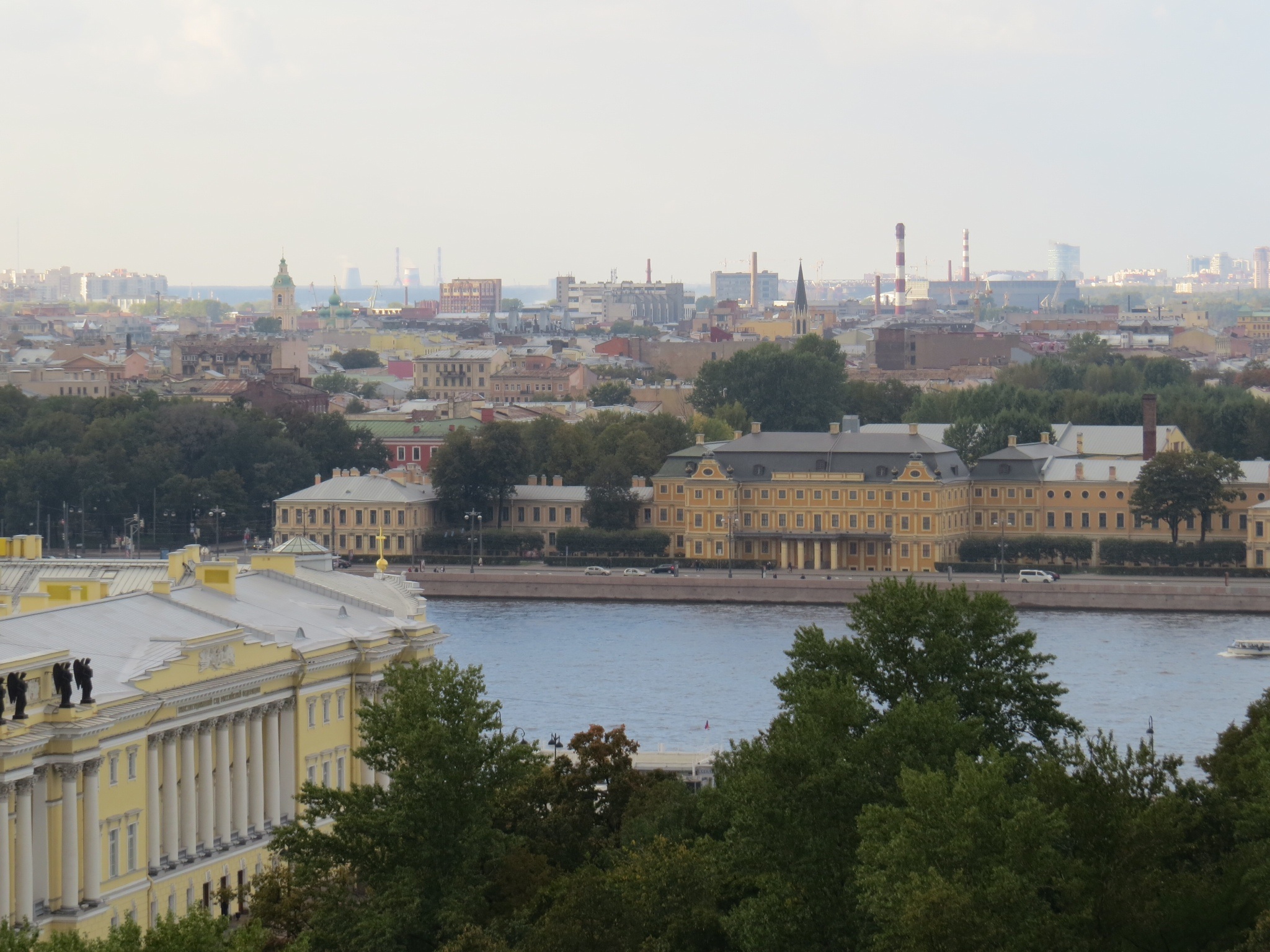
Being at St. Isaac’s Square it was time to visit St. Isaac’s Cathedral which was high on our list of must-do’s.  The first thing we did was head up the several hundred steps of the tower for a fabulous 360 degree view of St. Petersburg.

Next we went into the spectacular cathedral filled with marble and gold.  As in so many Russian Orthodox churches we have visited, there was a long line of the pious at particular icons holding personal meaning, usually to visit their namesake saint, sometimes on their name day (comparable to a birthday).

After touring the cathedral, we went to the ironically-named Idiot (for Dostoevsky’s novel of the same name), where the city’s intellectuals and British ex-pats were reputed to gather.  We saw neither but it was a wonderfully cosy spot another great Russian meal!

imageimage imageimageimage
image
image
image
image
imageimageimageimage

Depth of Russian Culture

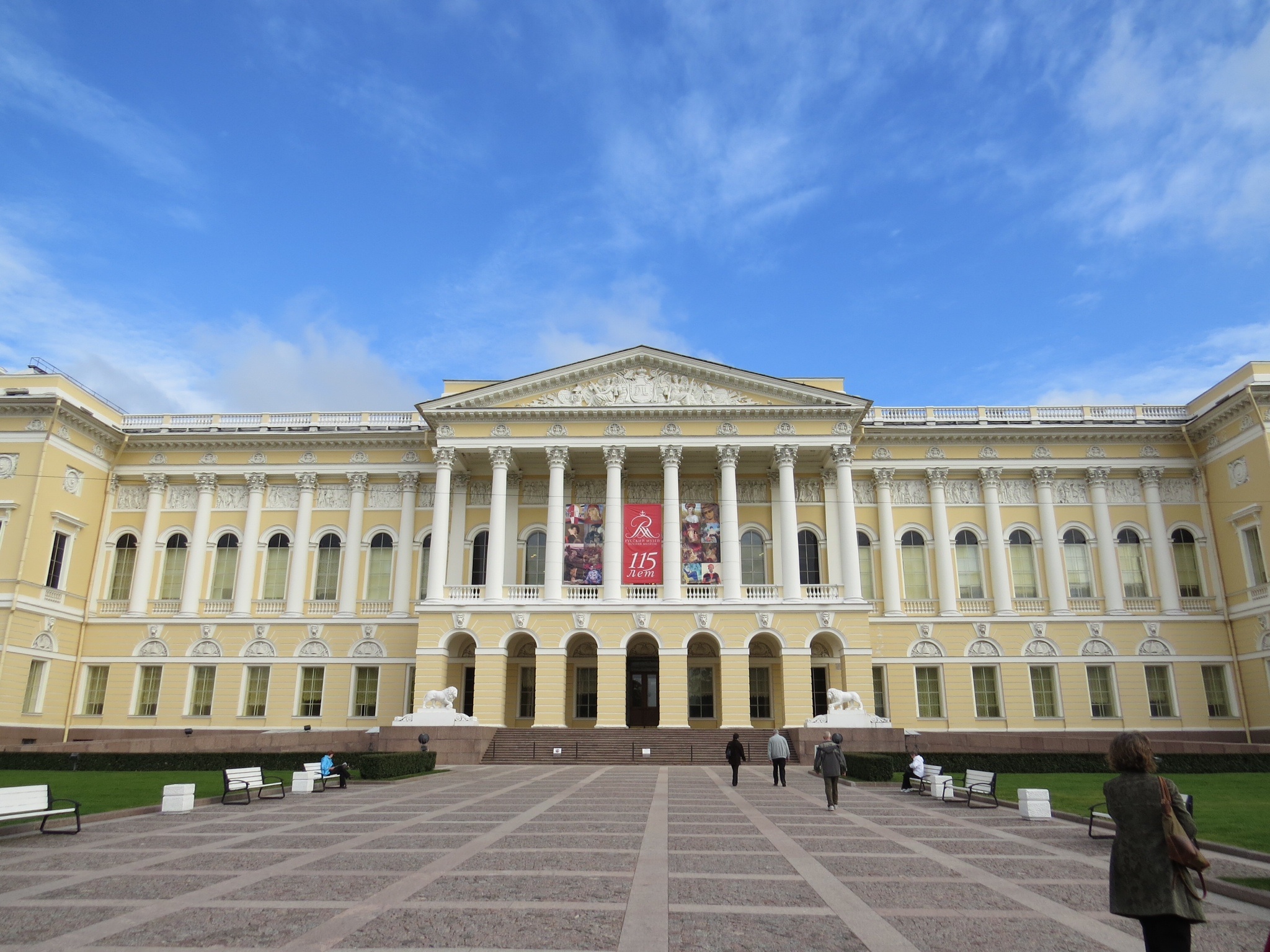
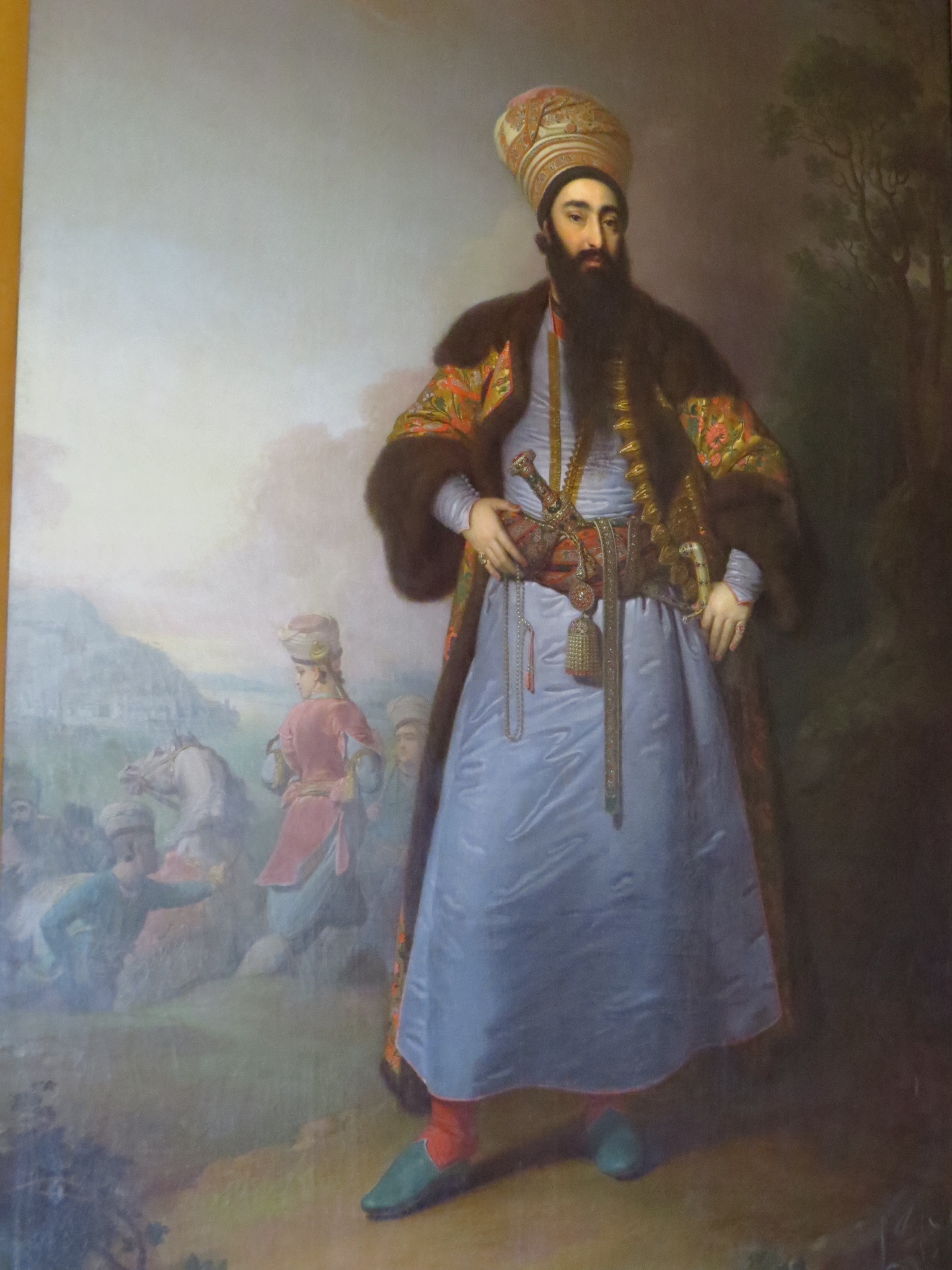
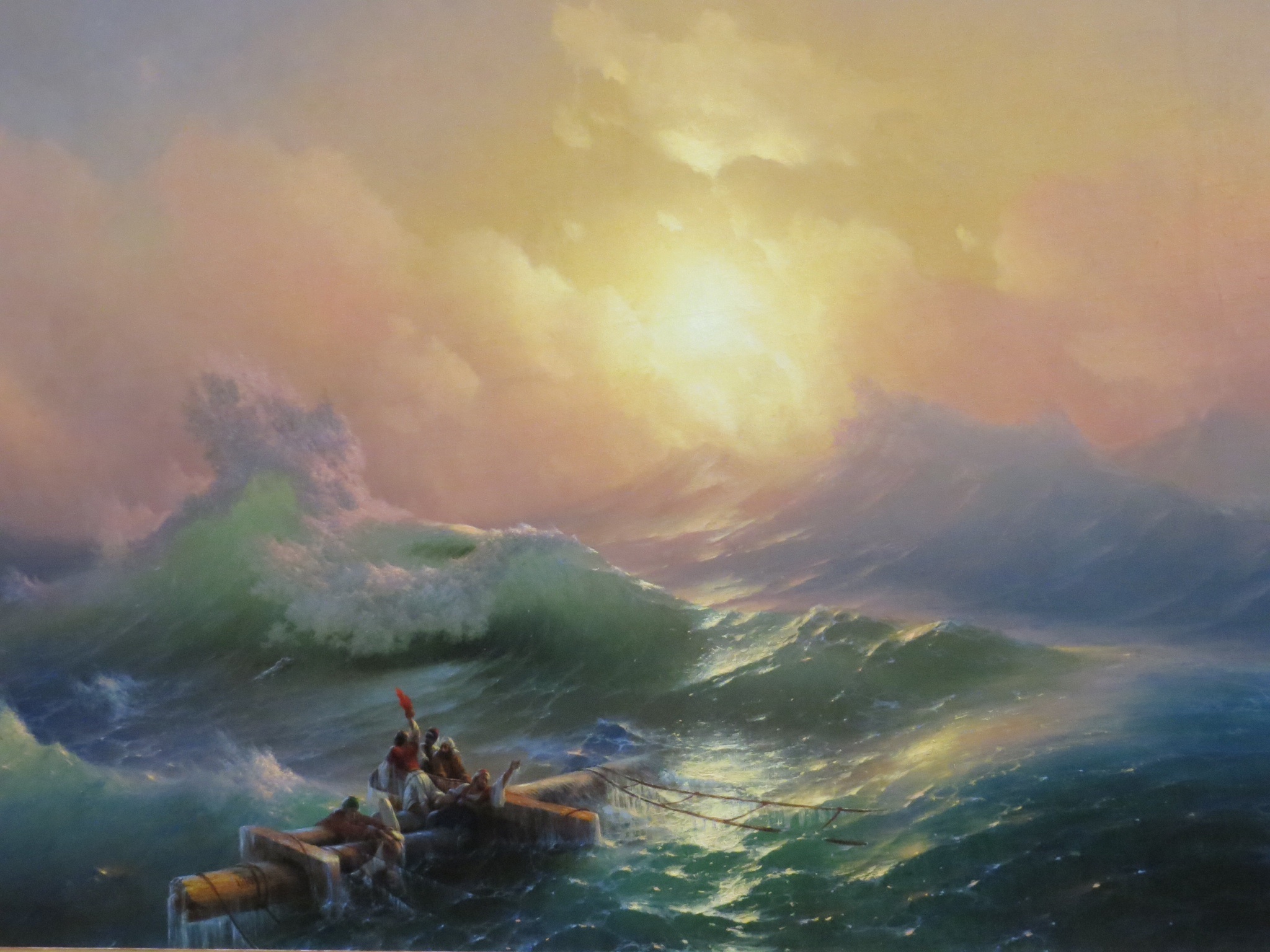
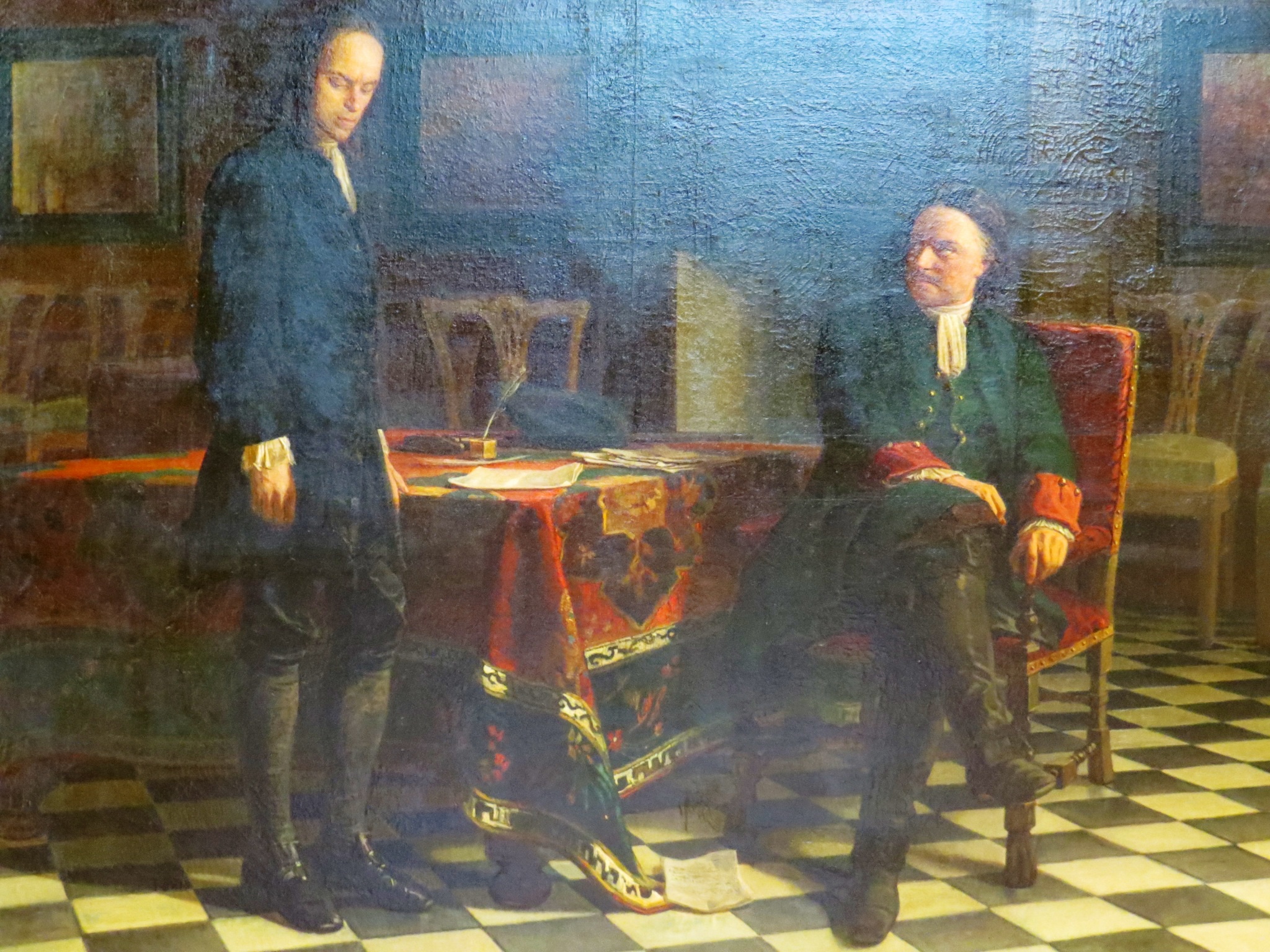
Having seen so many European masterpieces at the Hermitage, I wondered how the Russian Museum, an art museum dedicated to Russian artists, would compare.   Set in the gorgeous Mikhailovskiy Palace, it was evident that the Russian culture runs not only wide, but very deep.  From minutely-detailed small paintings to grand murals and sculptures, the talent was impressive and easily matched the European artists.  The collection included many original paintings I had run across in print before arriving, including the very telling painting of Peter the Great confronting his treasonous son.  It was great to learn more Russian history through art and see pictures depicting what I had read and could only imagine, such as the dramatic portrait of an Ottoman prince, and a painting of Peter the Great’s Tsar father with his boyars dressed in the old Russian-style caftans and beards, which P the G worked so hard to modernize.   We spent many hours here and left quite dumb-founded and in need of a good meal.

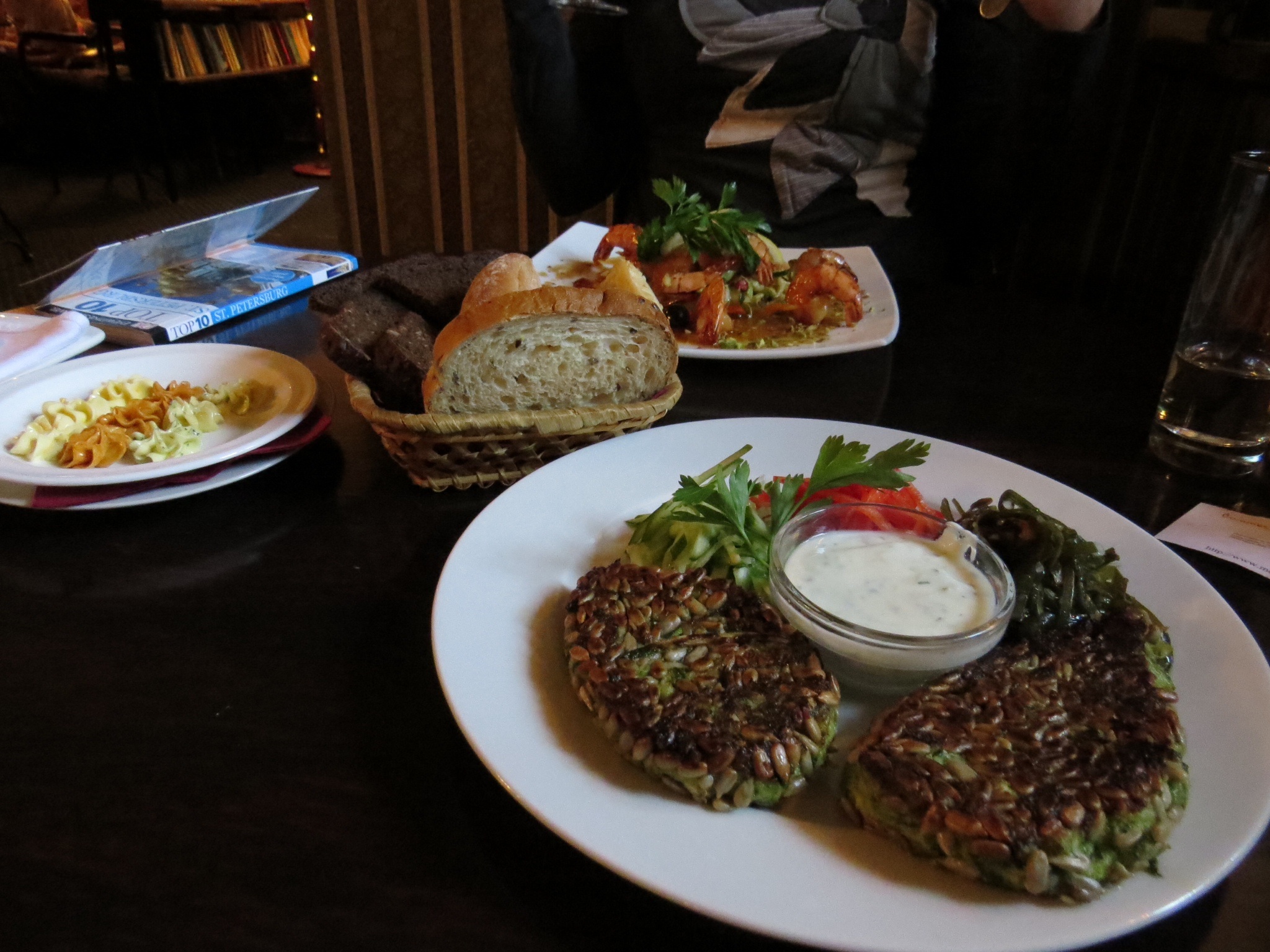
Heading back to Nevsky Prospekt we happened on the Romanov restaurant which was really a covered, heated patio in a square.  There we ordered more traditional Russian food and were not disappointed with Borsch, cabbage rolls and dumplings.  Delish!

Now we had only to wait until midnite, when we were scheduled to take a boat tour along the Fontanka, Moike and Neva Rivers.   After a rest we re-fortified with coffee and our first Pavlova, the famous Russian dessert.  We had heard repeatedly how necessary a midnite boat ride was, but encountered many roadblocks to our attempts to book the trip.  No, midnite ride is in Russian for Russians.  We don’t care, we don’t need commentary, here is our money, please give us tickets.  Ok, shrug shrug.  When we got there, there were many tourists just like us.   We were joined by only a small group of 3 or 4 Russians who lived up to their reputation and were well on their way toward a marvellous party on the boat.  Naturally they took up residence next to me and insisted we join them in a drink, which of course we did not.   “English – Canada I do not know, near Liverpool?”   Happily, they went indoors but for one who konked out cold across several chairs not to be heard from again until docking.

The evening was clear and balmy and the half-moon shone over all the now-becoming-familiar landmarks.   It was a beautiful way to see the city and to experience the famed raising of the bridges, which occurs after 1 am each night, on some of the 300+ bridges in the city, allowing larger ships to pass.  It was a very special evening and one of the highlights of our visit.

imageimageimageimageimageimageimageimageimageimage
image
image
image
image

Tsarskoye Selo

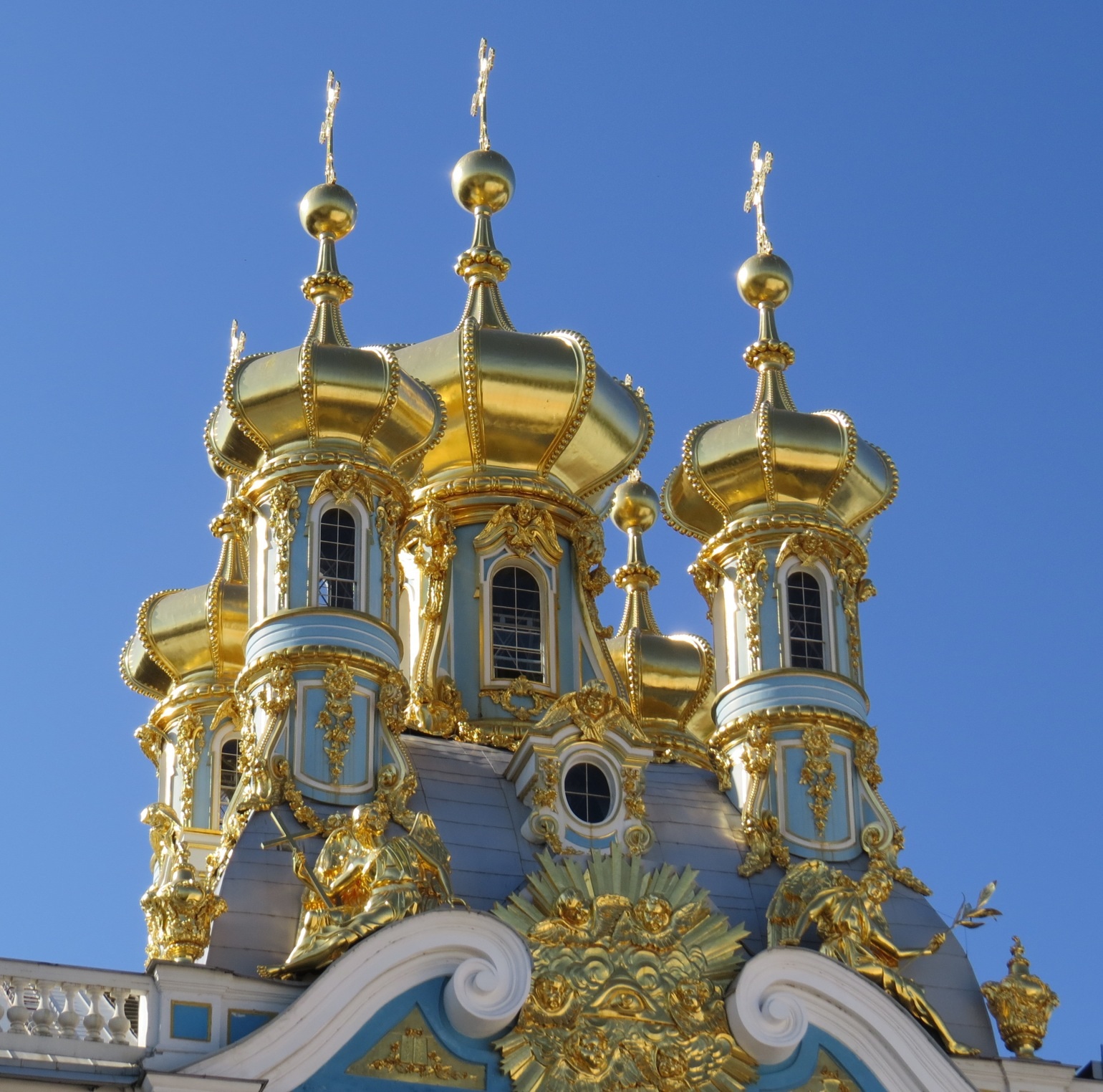
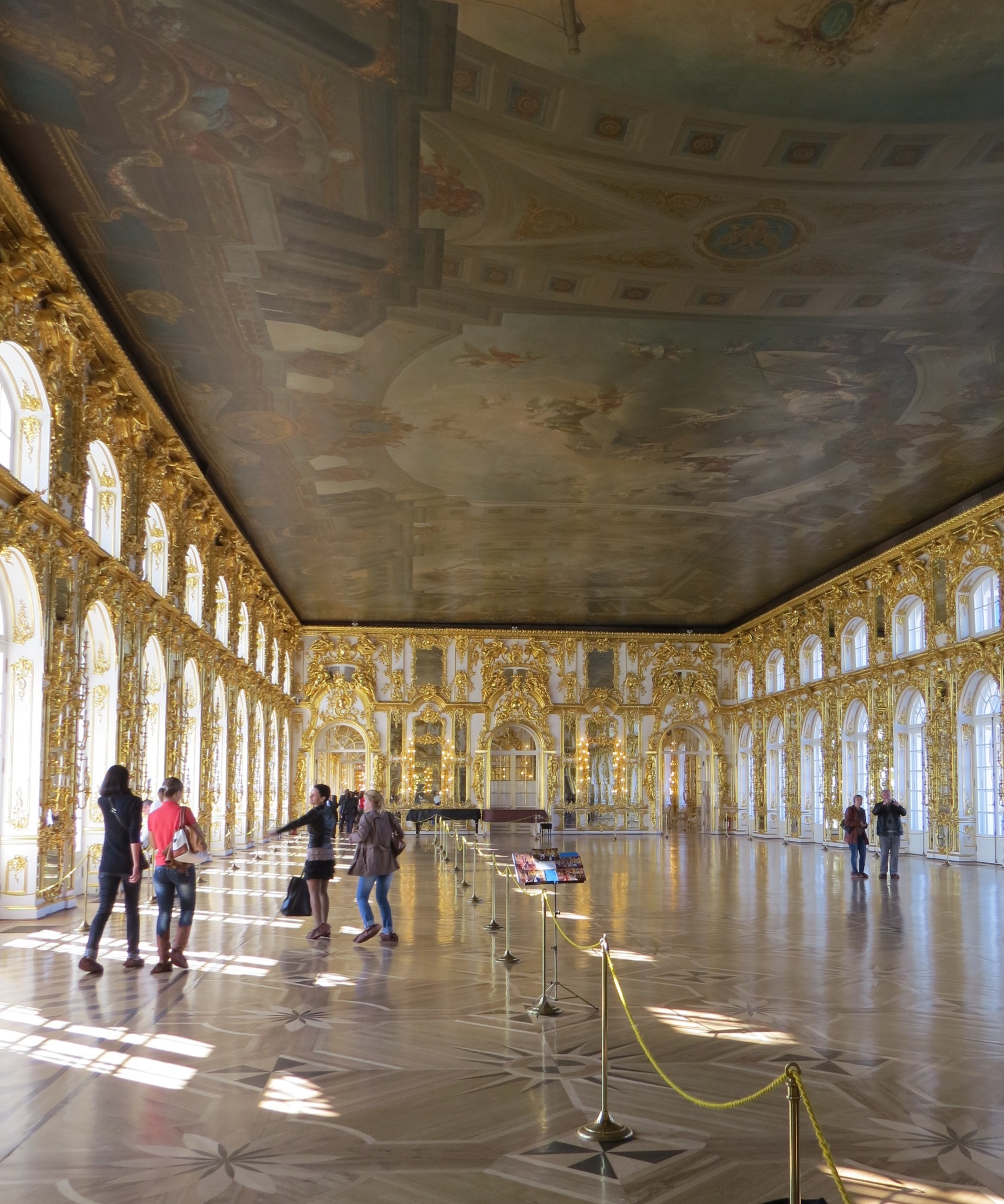
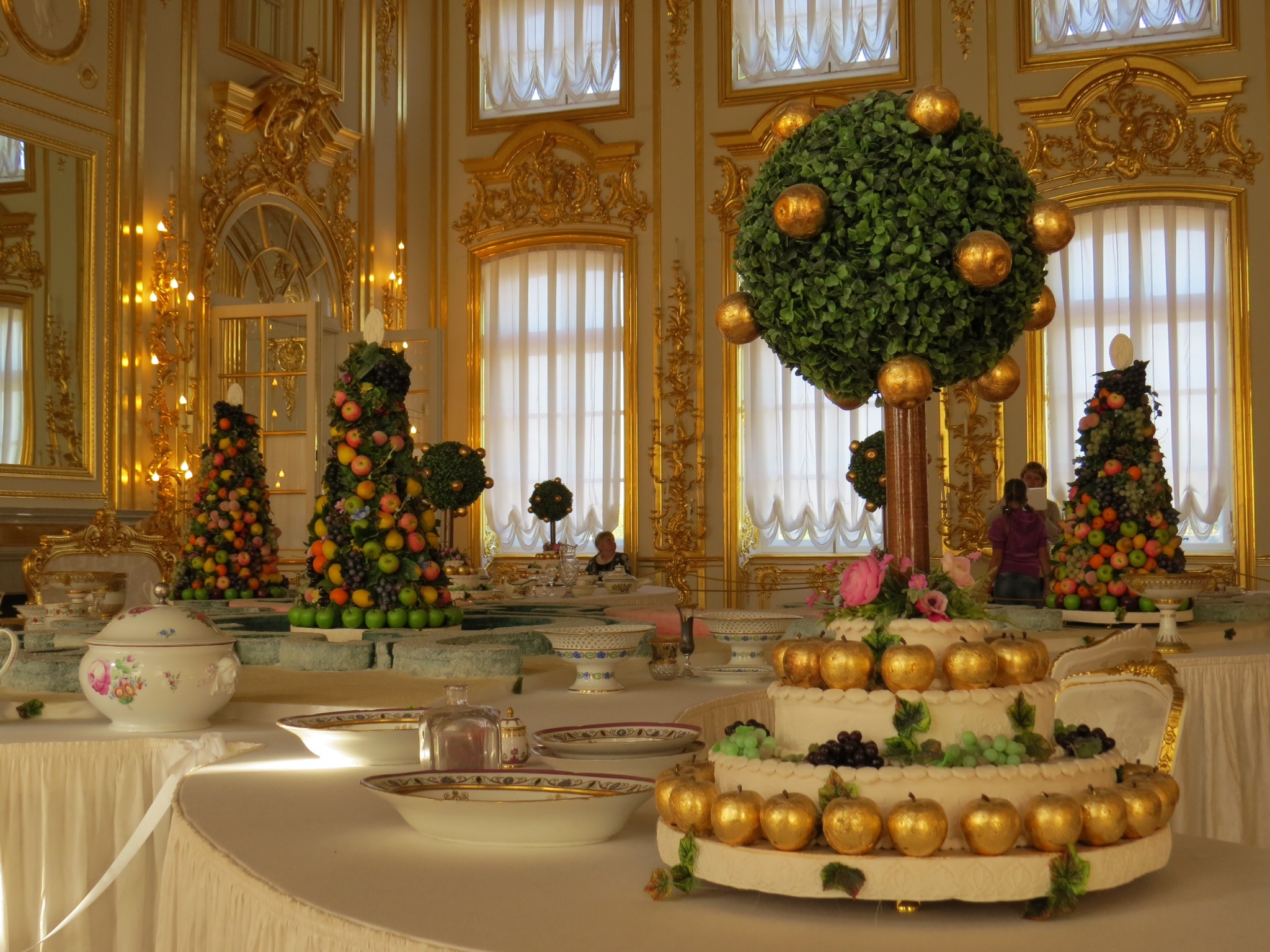
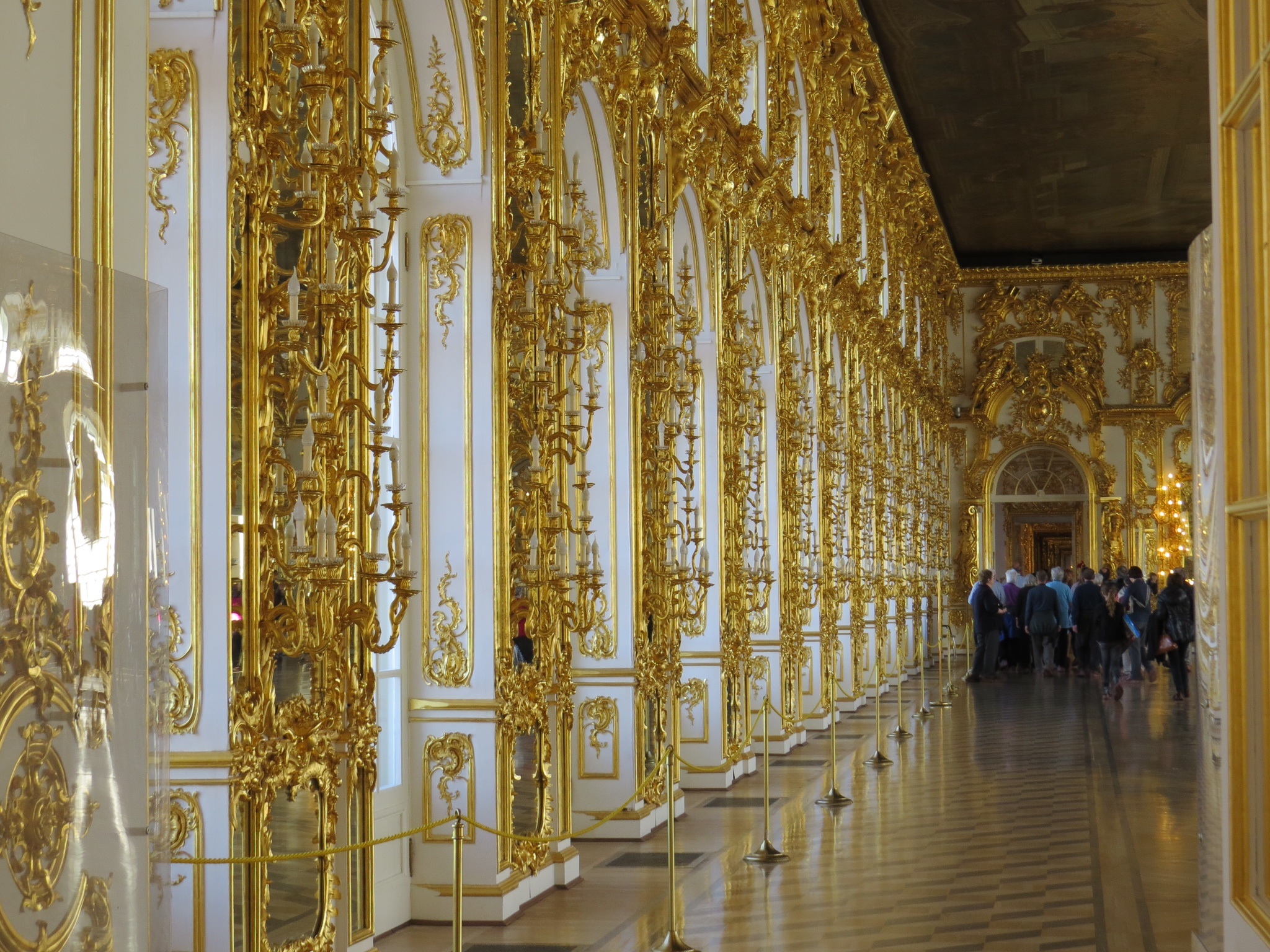
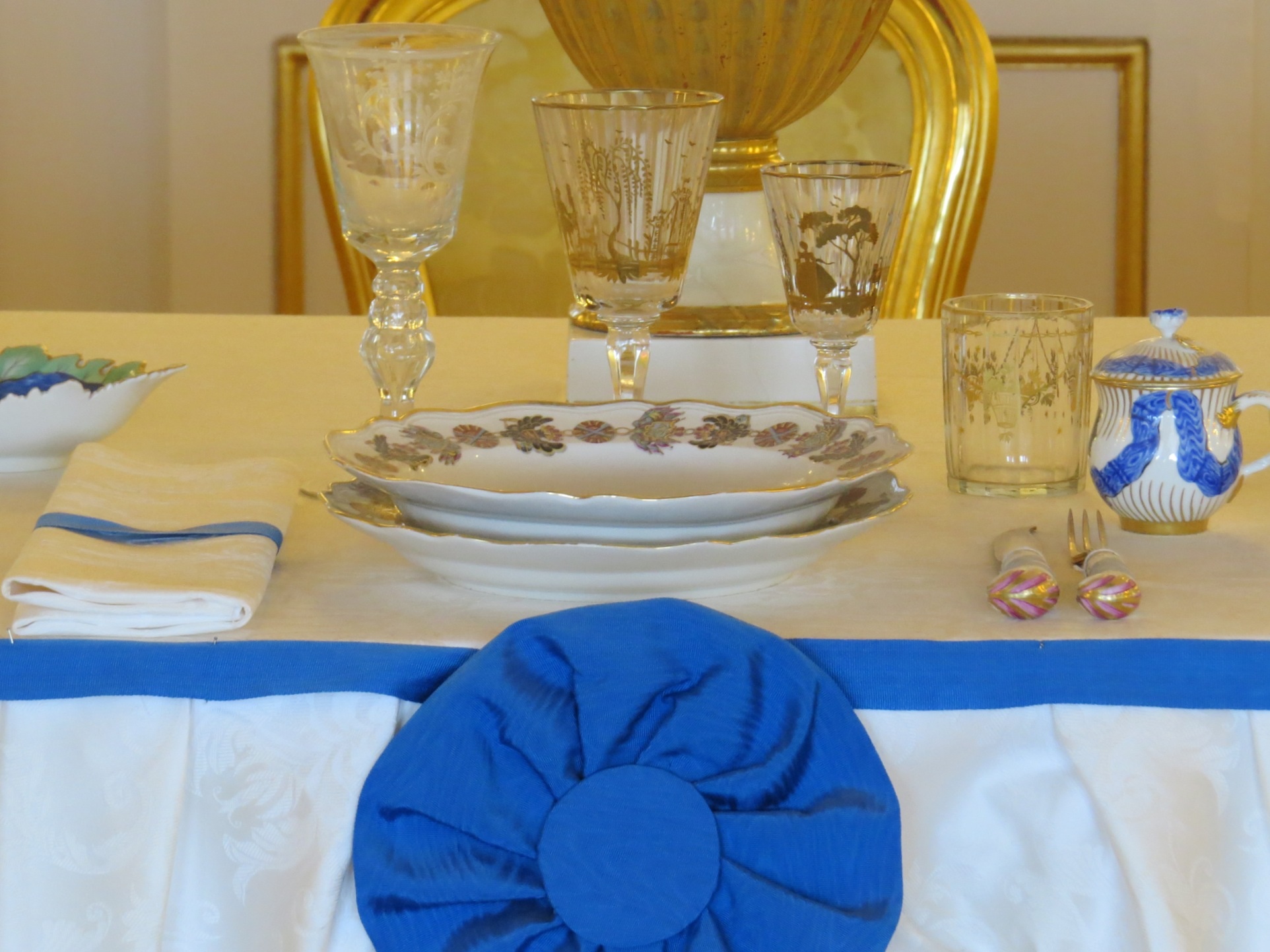
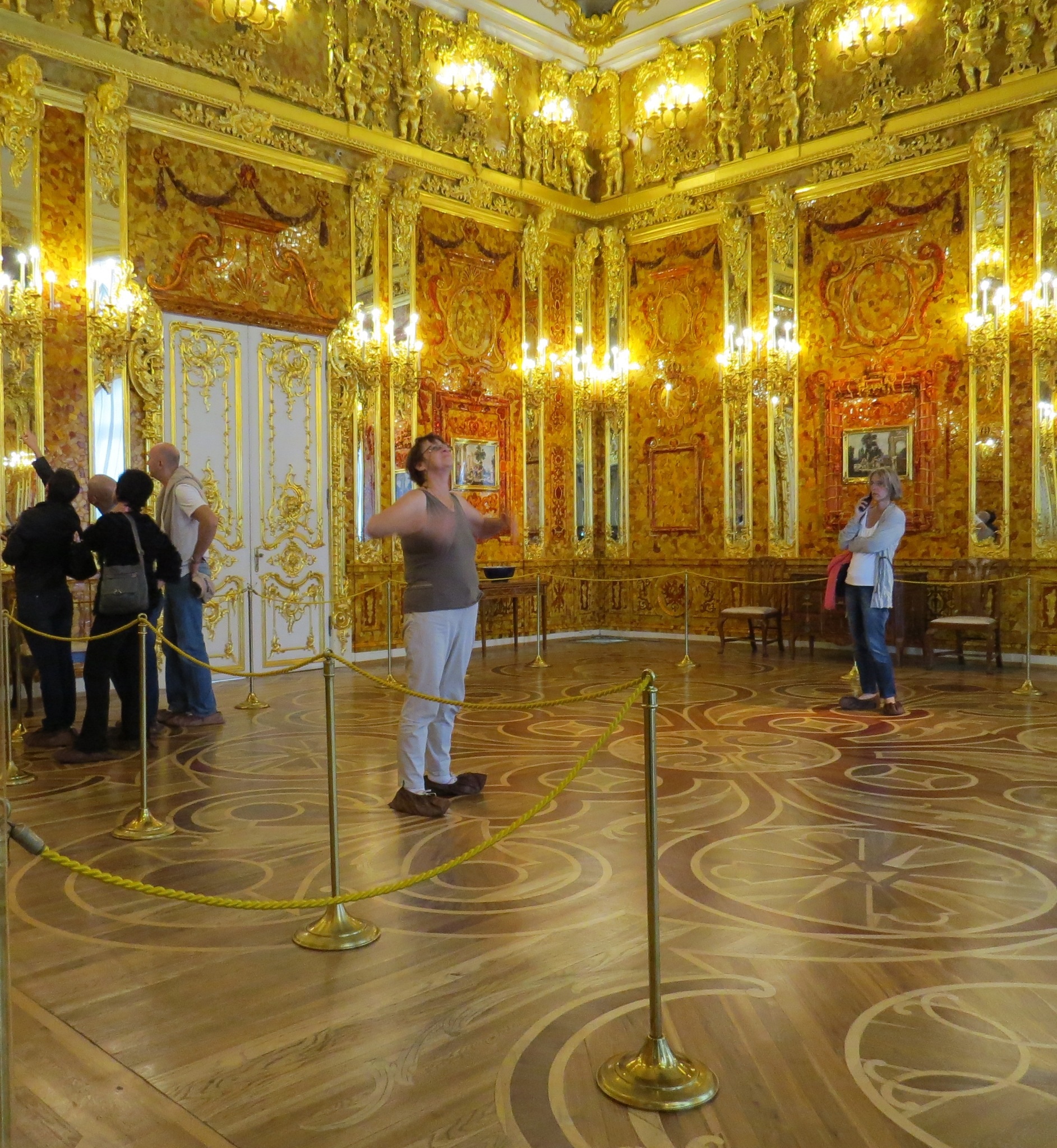
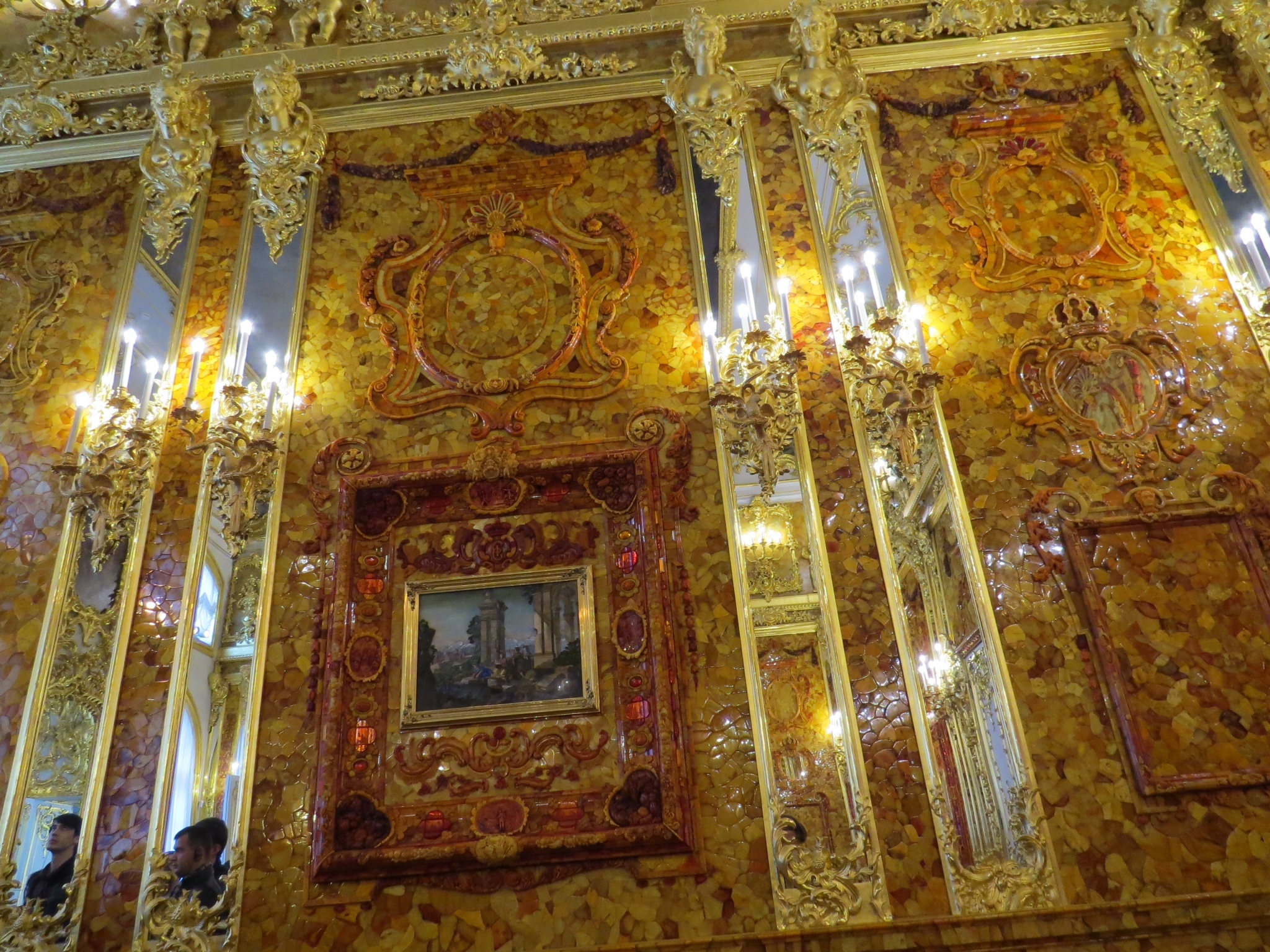
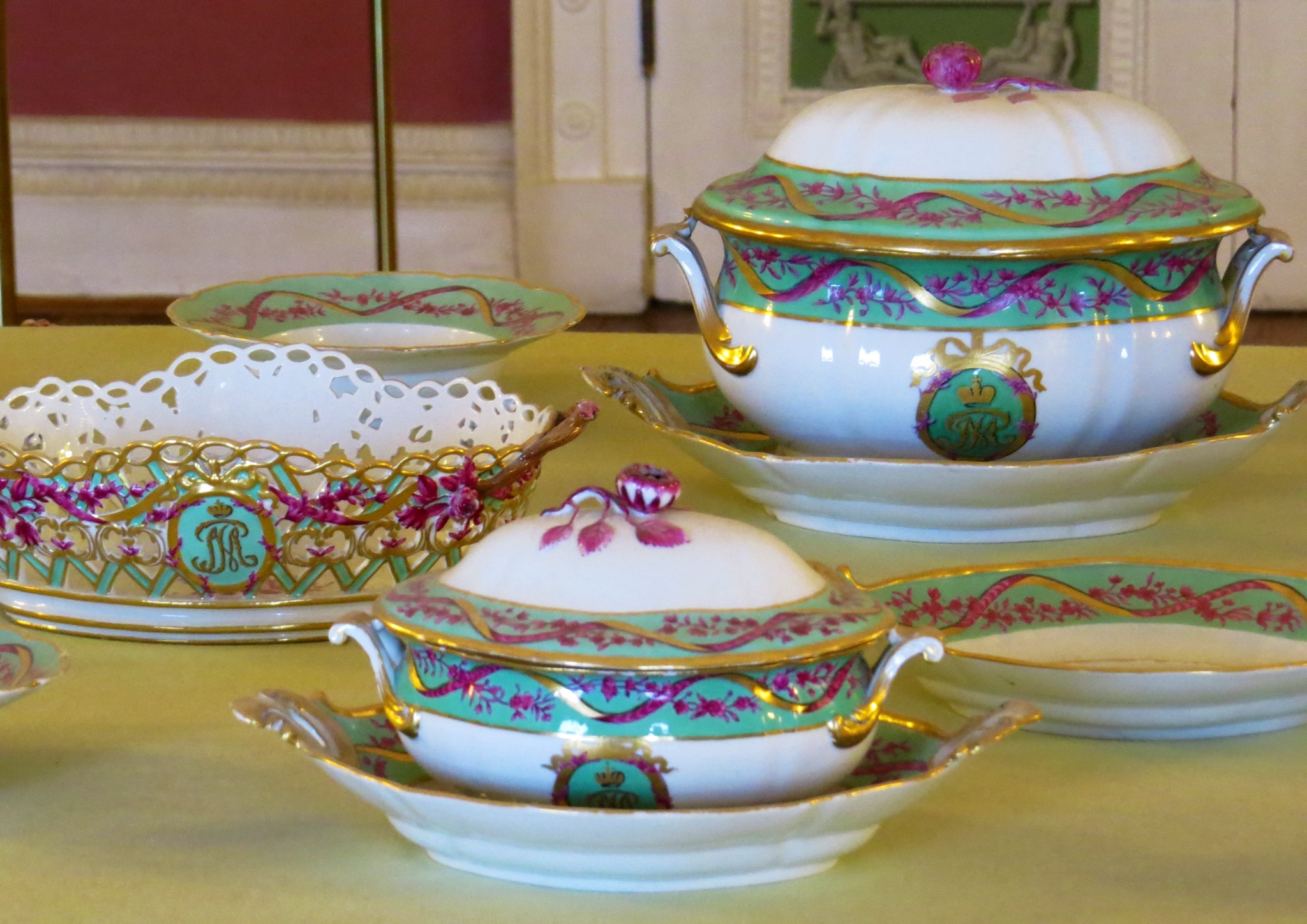
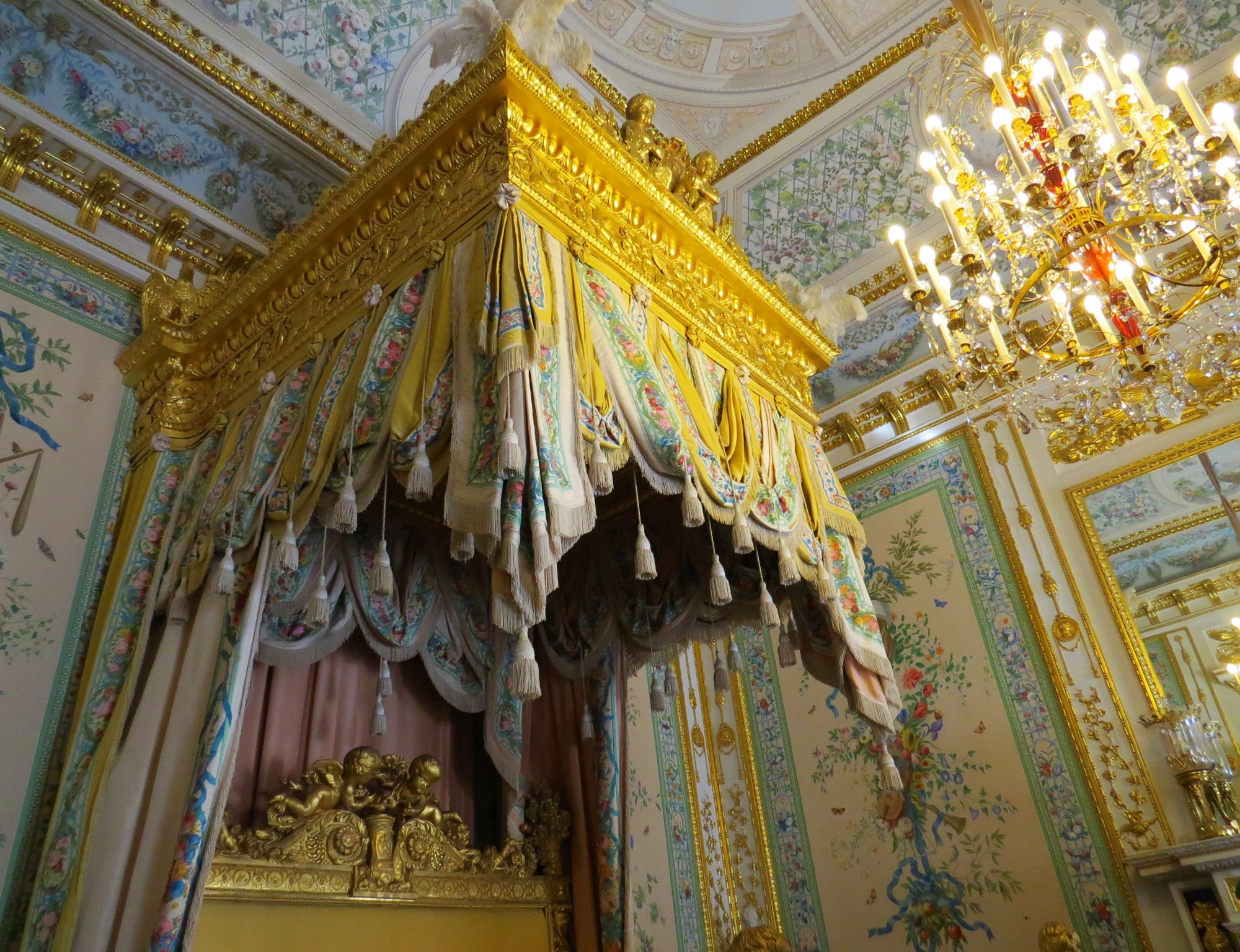
Today we visited the 3rd and last Rastrelli-designed palace of the Tsars. The massive Russian baroque palace (nearly 1 km in circumference) was built to impress. Set in the town of Tsarskoye Selo, this palace was used mainly in spring and fall. It was from here that Catherine staged the coup and seized the throne from her husband. The outside is covered in decoration and the interior was even more over-the-top than Peterhof. Many of the original furnishings and paintings remain. There were at least 3 dining rooms and place settings have been retained. The ballroom has been designed in the manner of the Hall of Mirrors at Versailles. The most unique room in this palace is the “amber room,” a room literally lined with amber mosaic. The room was gifted to Peter the Great by Prussia, sent to him in panels after he admired the room in Prussia. During WWII, the amber was not removed but the room was covered in plywood. The nazis did discover the amber beneath and the amber was stolen. Many rumours about its reappearance have circulated, but its whereabouts remain a mystery. The reconstruction, finding the amber pieces and fitting them into the shapes, took 30 years to complete.

Apologies, lots of my photos here were taken clandestinedly from roughly the perspective of my pancreas.

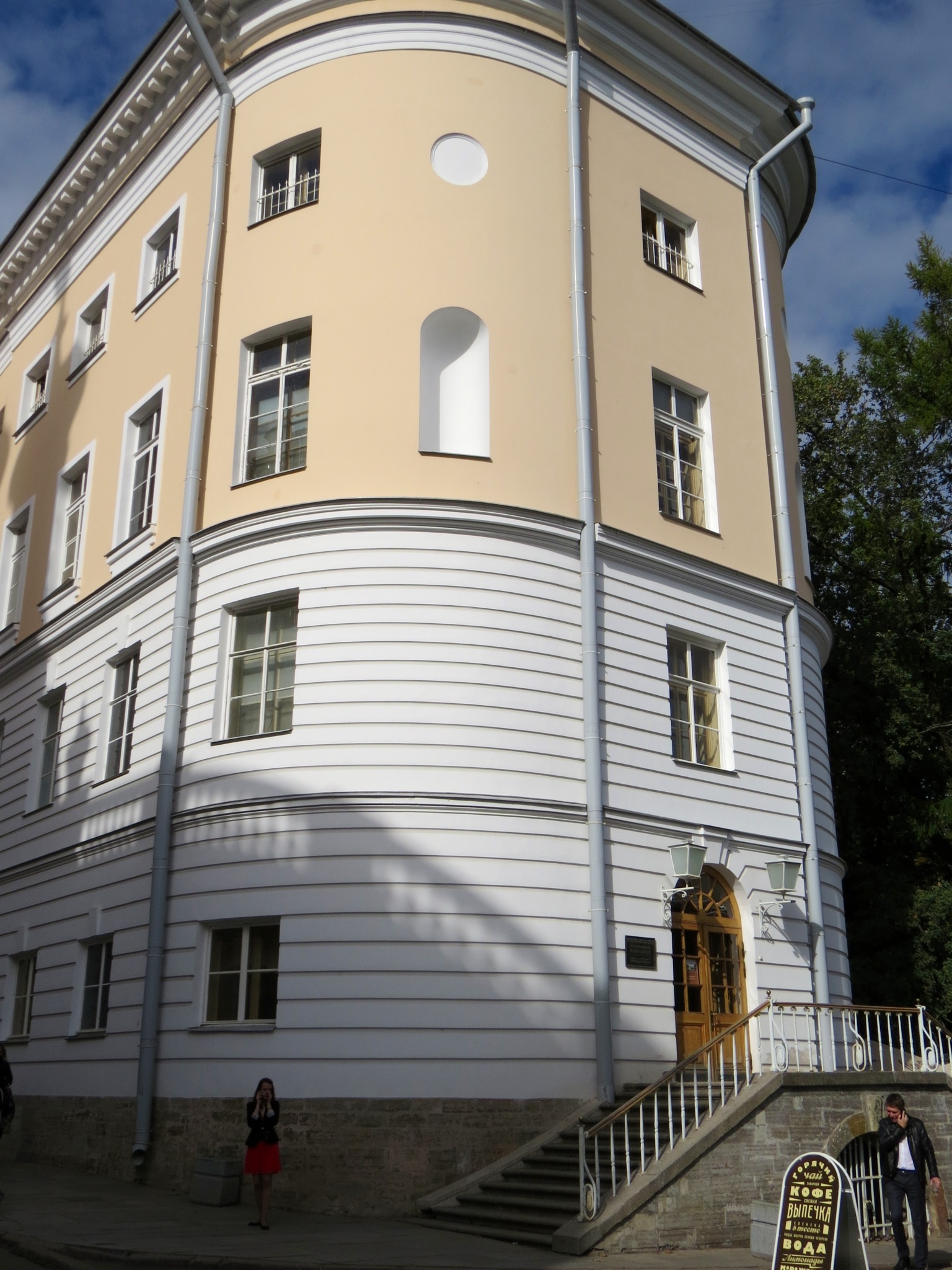
The rather drab cream structure is the Lyceum, the palace school, where Pushkin attended for six years and was the first graduate.

We visited a second palace today in Tsarskoye Selo, Pavlovsk. This was a gift to Catherine’s son who briefly succeded her as Emperor of Russia. The exterior was unimpressive but the interior was beautiful. Paul’s wife was an artist and her artistic sense is evident in the beautiful rooms and furnishings at Pavlovsk. Much of the artwork she painted herself, between having and raising 10 children. Paul married several of his daughters to European kings, following the pattern of Maria Theresa of the Hapsburg Empire who succeeded in peacefully taking power of many countries through strategic marriages of her 16 children, who included Marie Antoinette and her marriage to Louis XVI.

Sadly, this was our last evening with Willie as her visa was expiring and she had to head home. Another lovely feast at the Georgian restaurant near our hotel made for a fitting farewell evening.

Jan
imageimageimageimageimageimageimageimageimageimageimageimageimageimageimageimageimage

St. Petersburg Impressions and Peter and Paul Fortress

Although we have kept busy with touring and covering the must-sees, we have walked around enough to become familiar with this gorgeous city. Walking here is like walking around inside the Empress’s jewellery box: a new gem around every corner. The entire city has been built in the “Russian Baroque” style which is essentially french but a bit more so. Because it was mostly constructed all at once, there is a uniformity of style which other cities lack. While it is called “Venice of the North,” I feel it is more like a combination of Paris and Venice. The city has a lightness and airiness from its broad avenues (where canals form the central boulevard down almost every street) like Paris. The city is surrounded by water but doesn’t have the dark, claustrophobic alleyways of Venice.

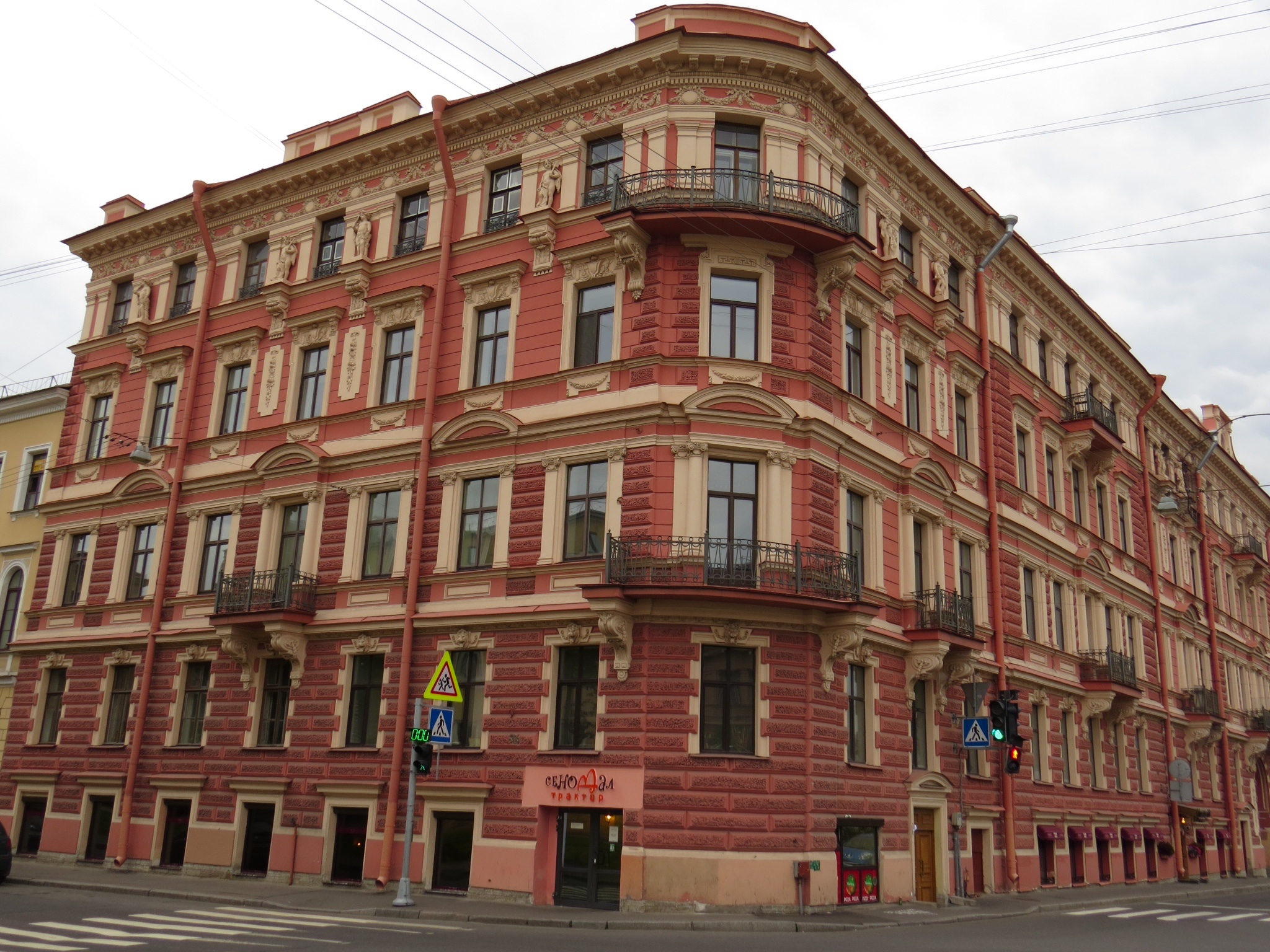
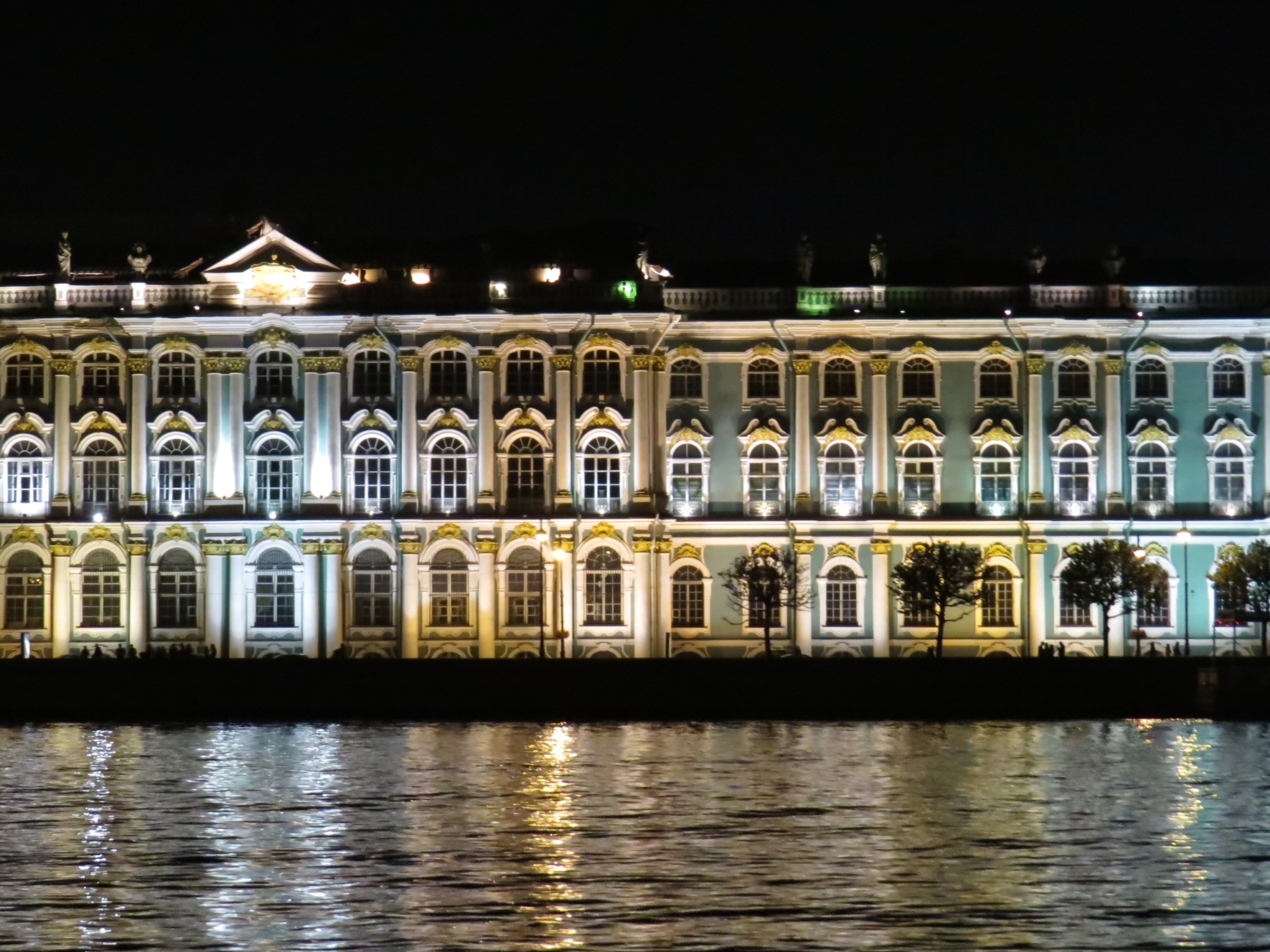
We are in a lovely area of the old city, on the Moike River, and the streets are lined with mansions and embassies painted in various pastel colours.

The people are much more modern and fashion-conscious than I expected. There are still the older generation oversized, square-jawed slightly scary women I envisioned, but the young (male and female) are as thin and beautiful as Parisians. The women plod around on cobblestones in 6″ stilettoes with 3″ platforms. Most of the beautiful young women seem to be with thick-necked Mafioso-looking types many years their senior. And of course, everyone here is staring down at a very small screen. Drivers are crazy and would quite happily mow down a pedestrian, especially one with a camera round its neck, given half a chance.

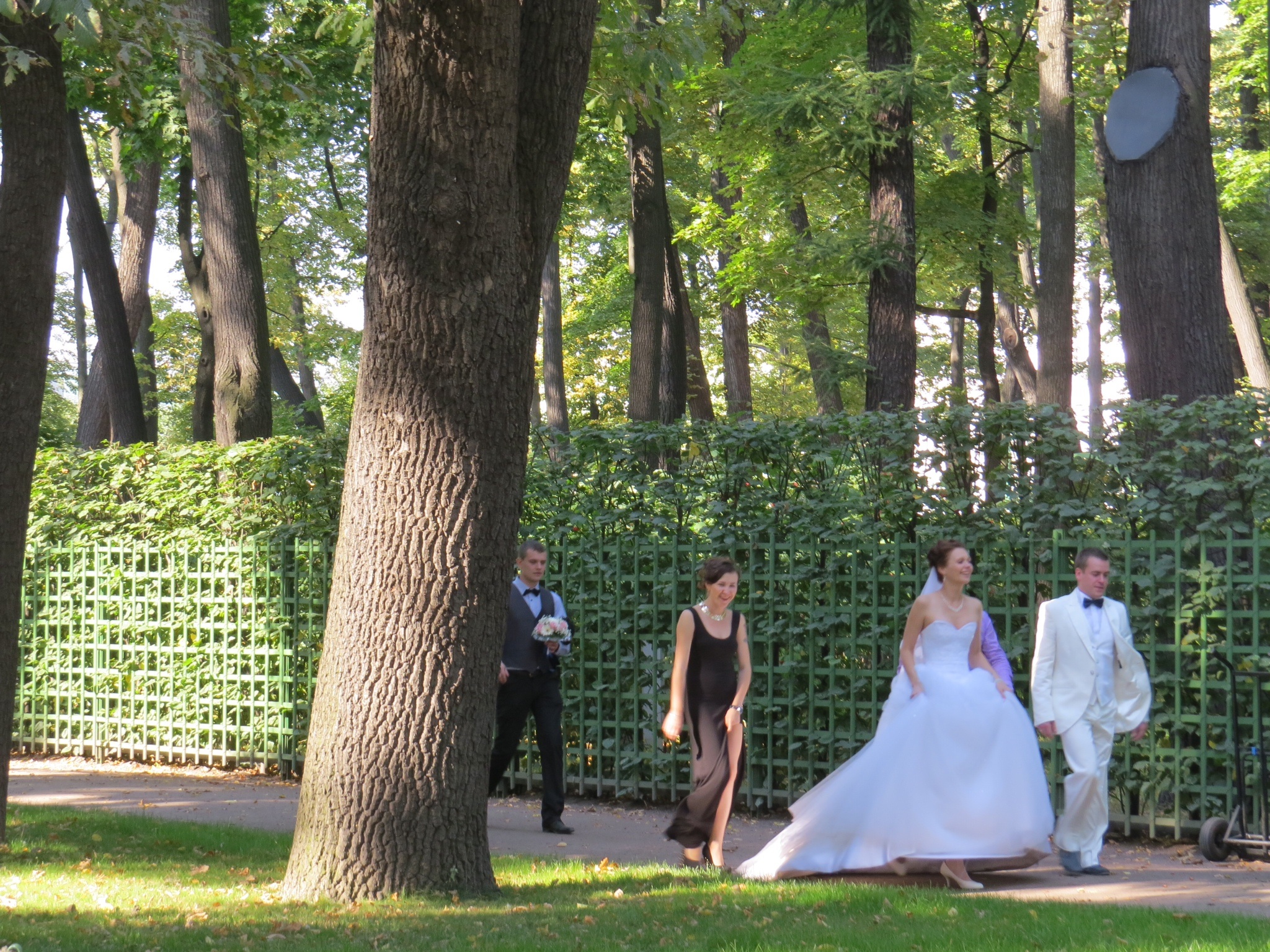
There are brides everywhere and on any given day of the week! It is a tradition here for the bride, groom and wedding party to travel from landmark to landmark posing for photographs at all the famous sites.

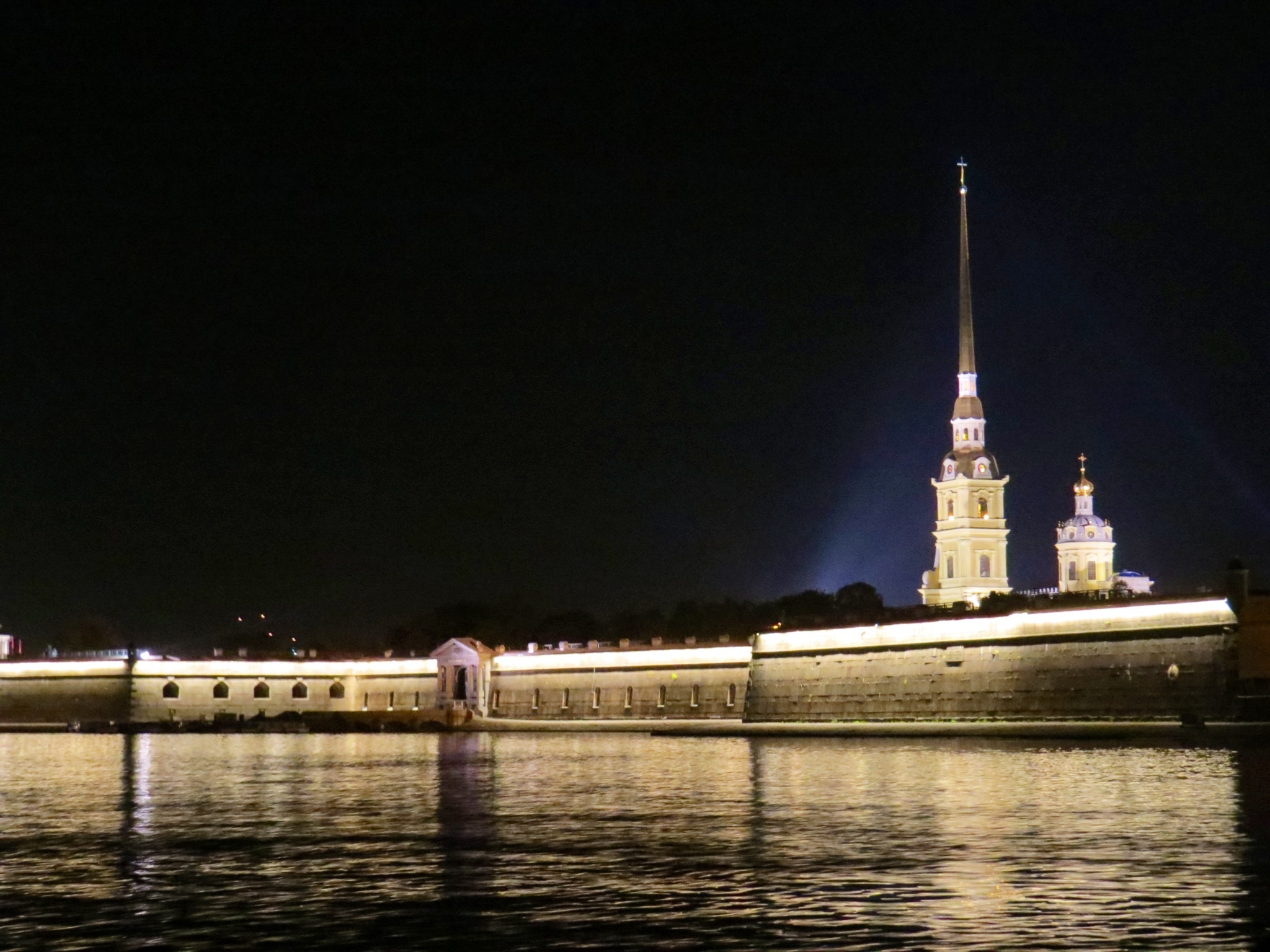
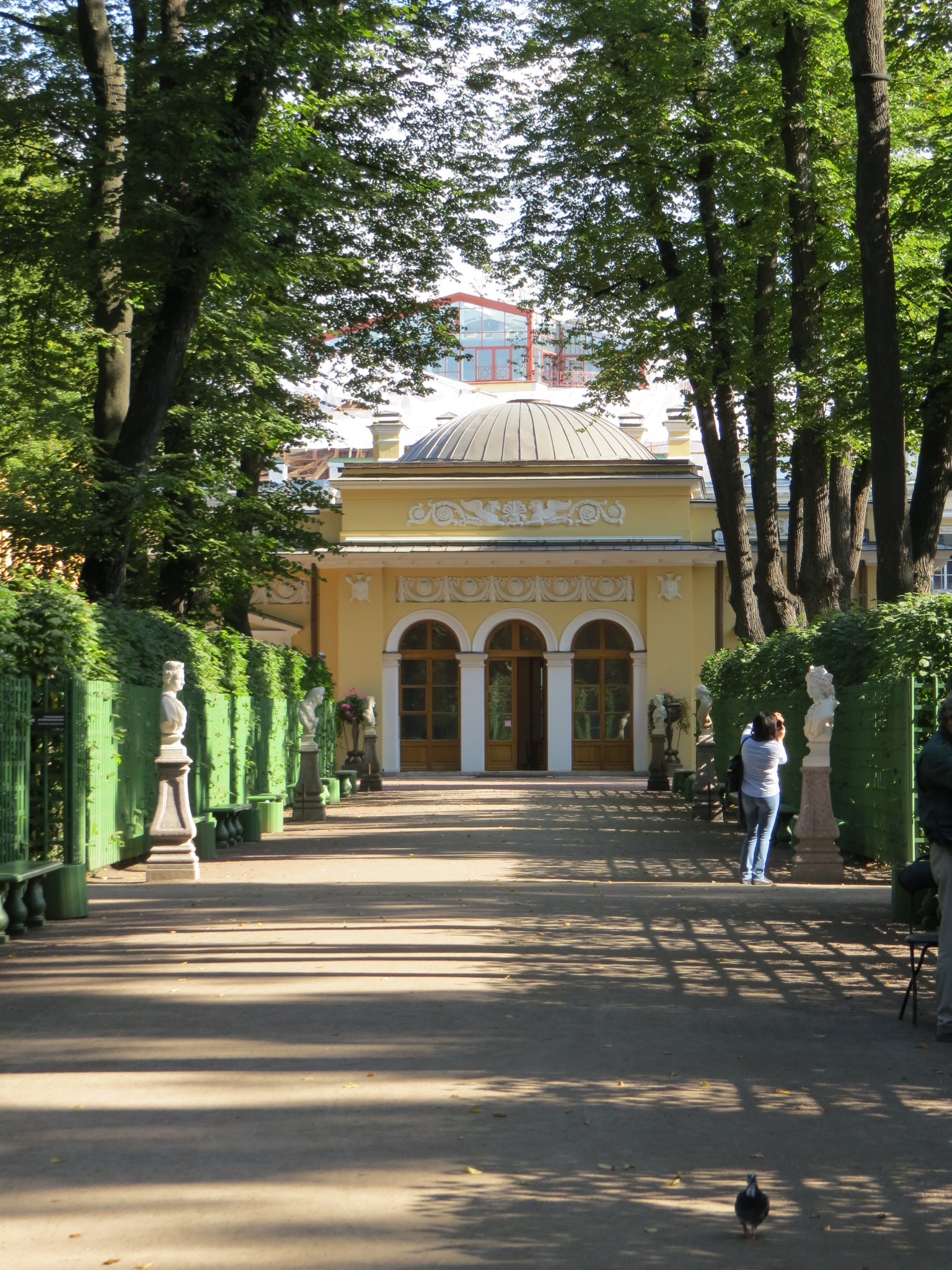
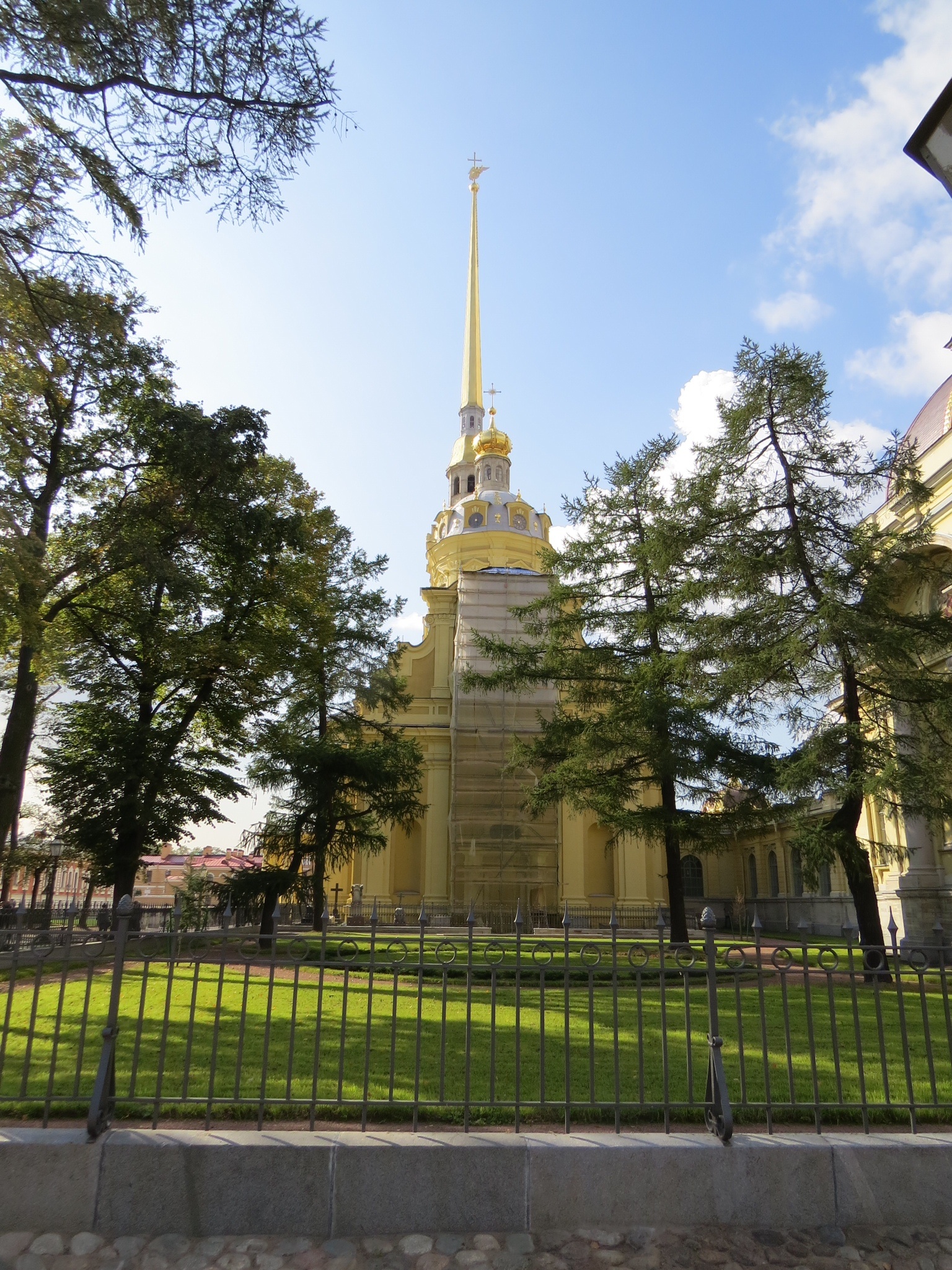
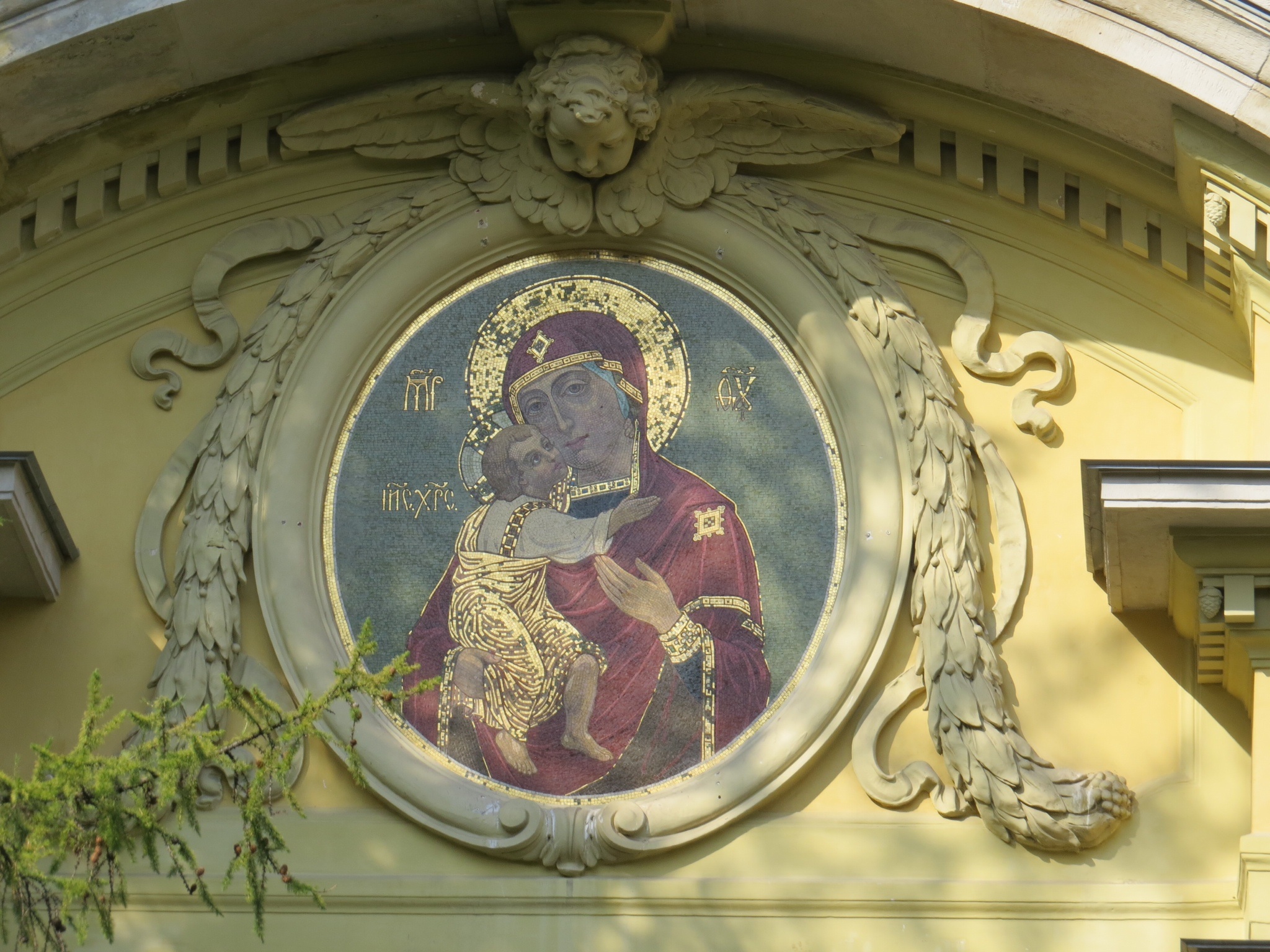
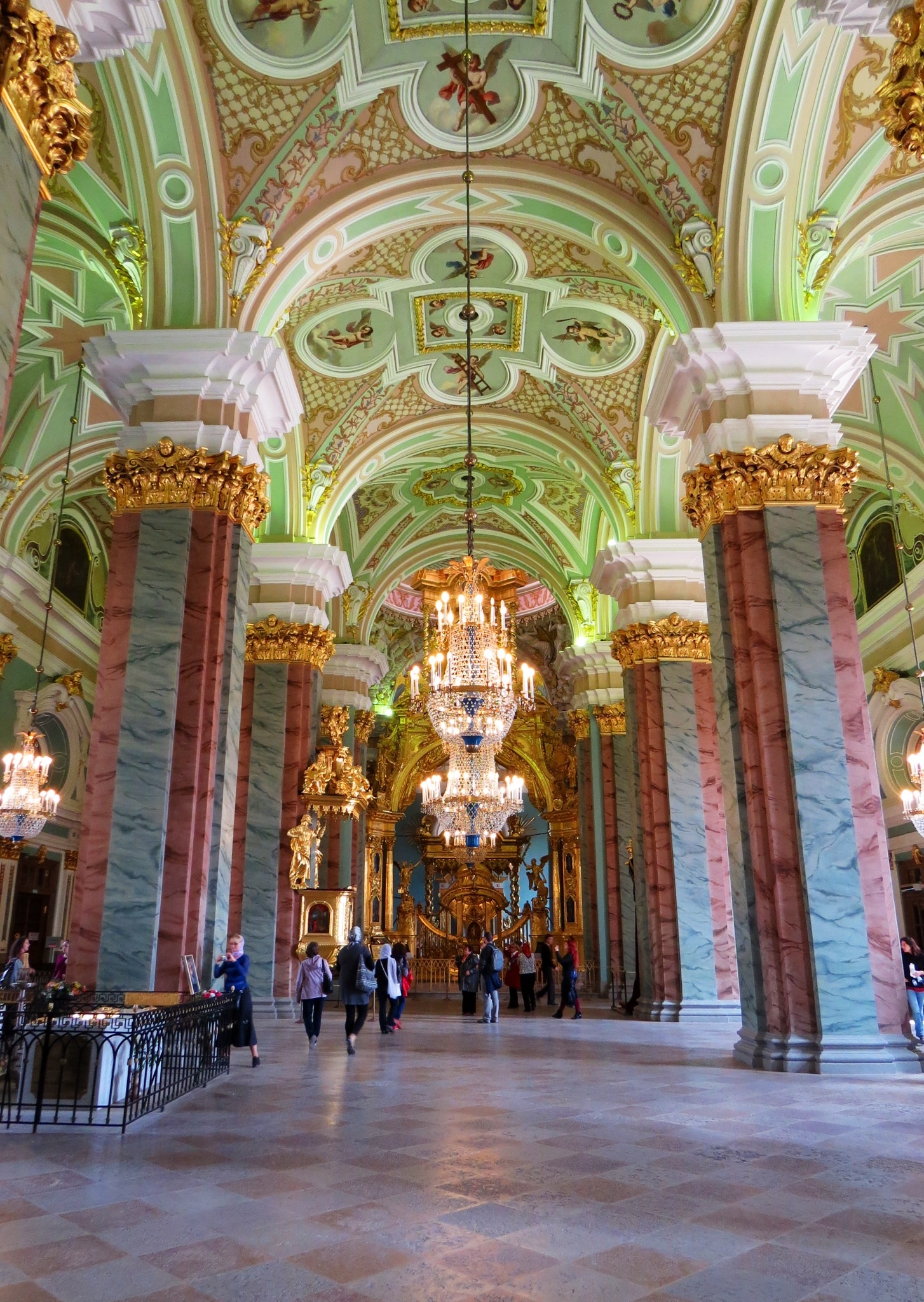
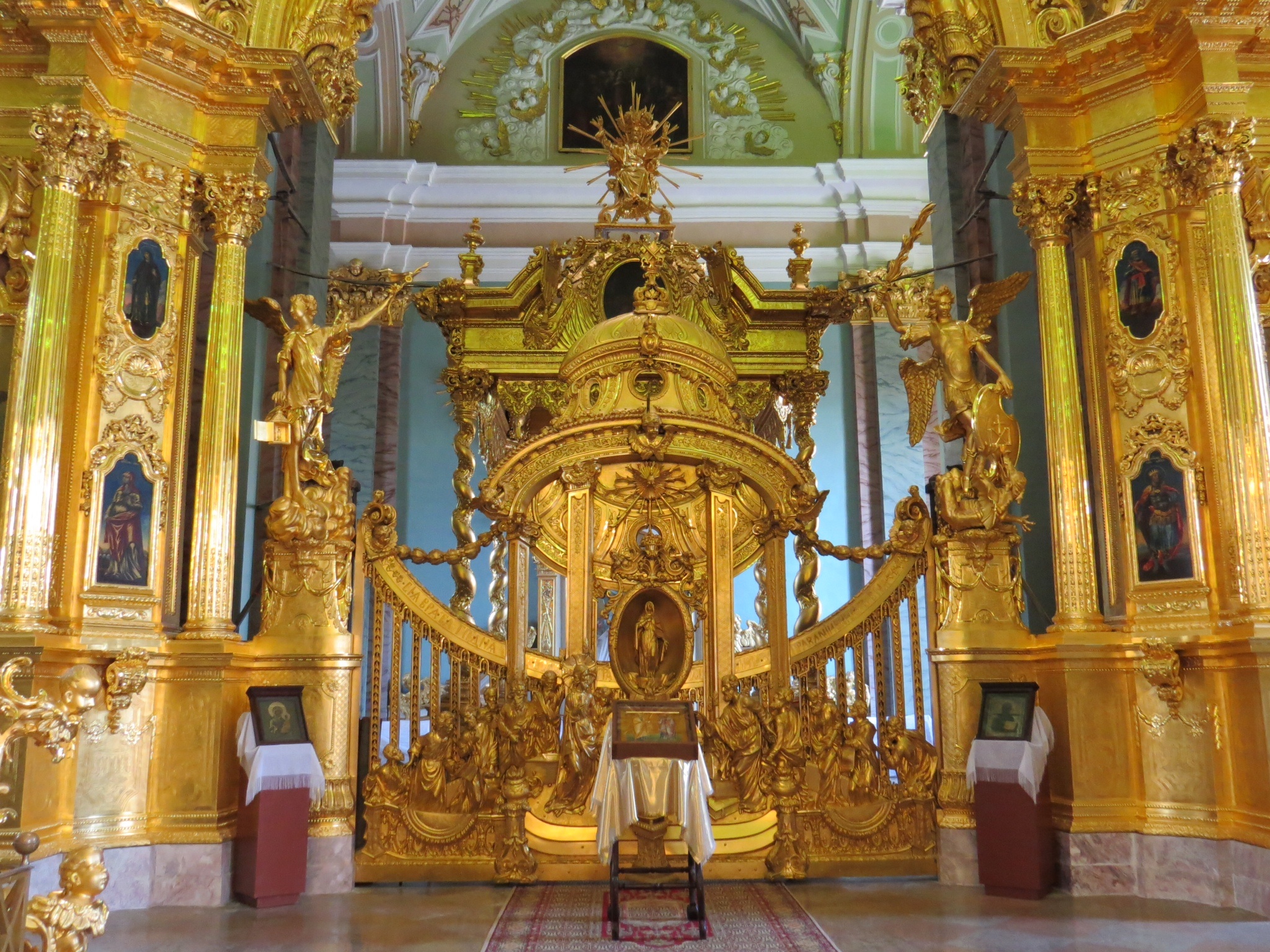
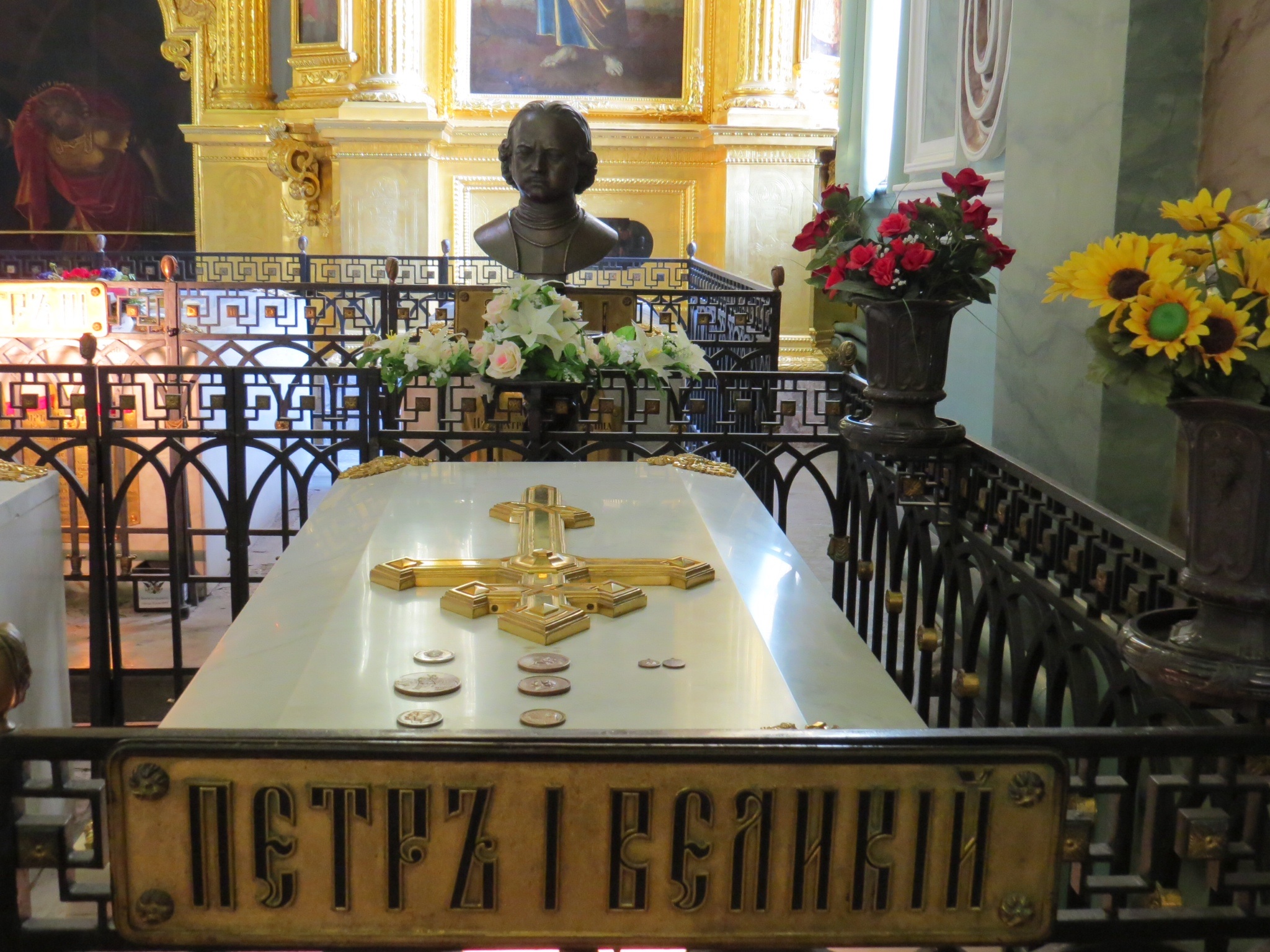
Today we followed another walking tour Willie had found and walked through the Summer Garden then over the Trinity Bridge to the Peter and Paul Fortress. Once again our jaws were dropping, when we stepped inside the Peter and Paul Cathedral. Being the oldest area of the city I was expecting a simple, modest, humble little wooden church. Instead it was filled with gold, iconography, and beautiful murals. The marble tombs of all the emperors and empresses were here including Peter the Great and Catherine the Great.

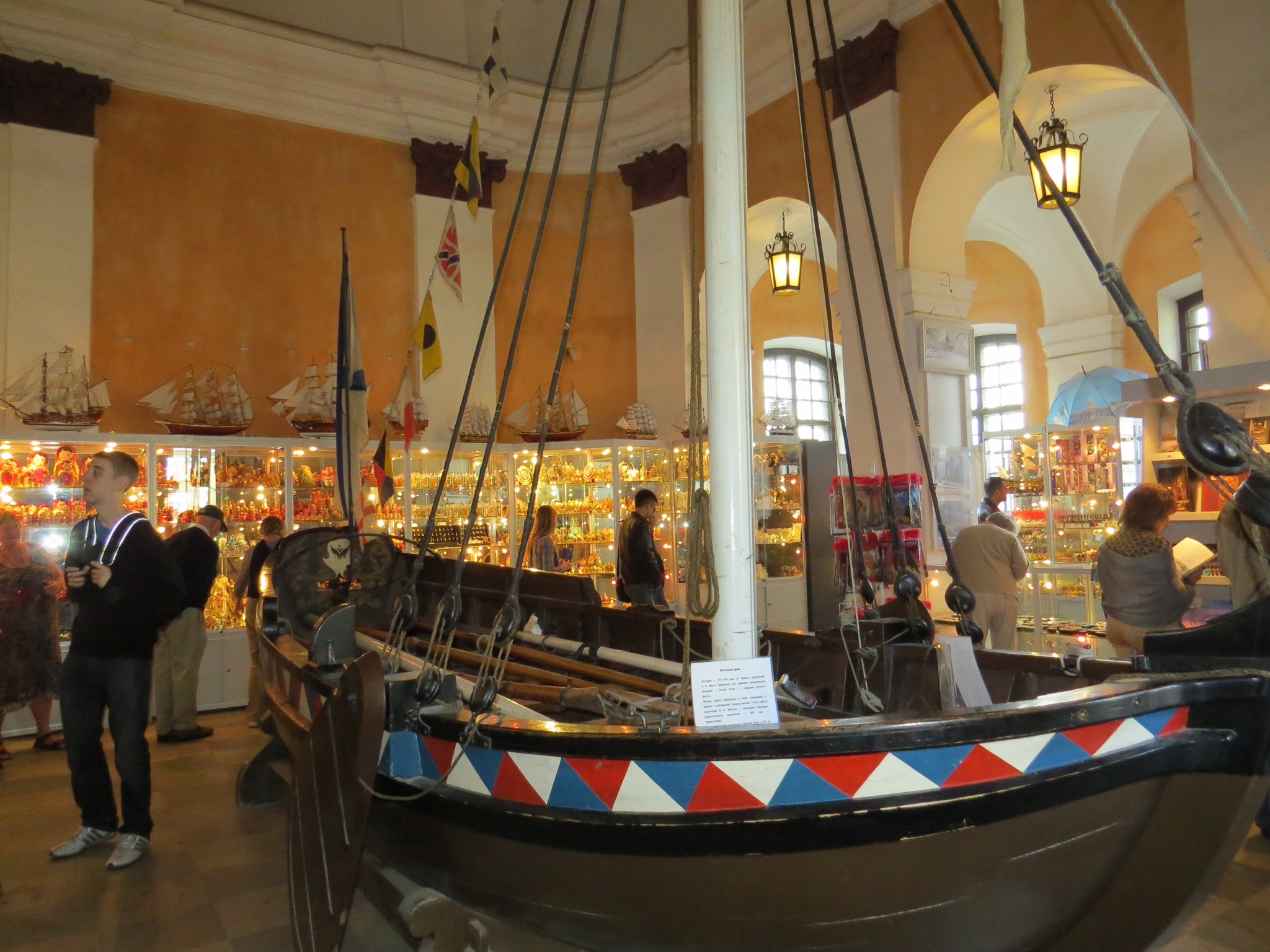
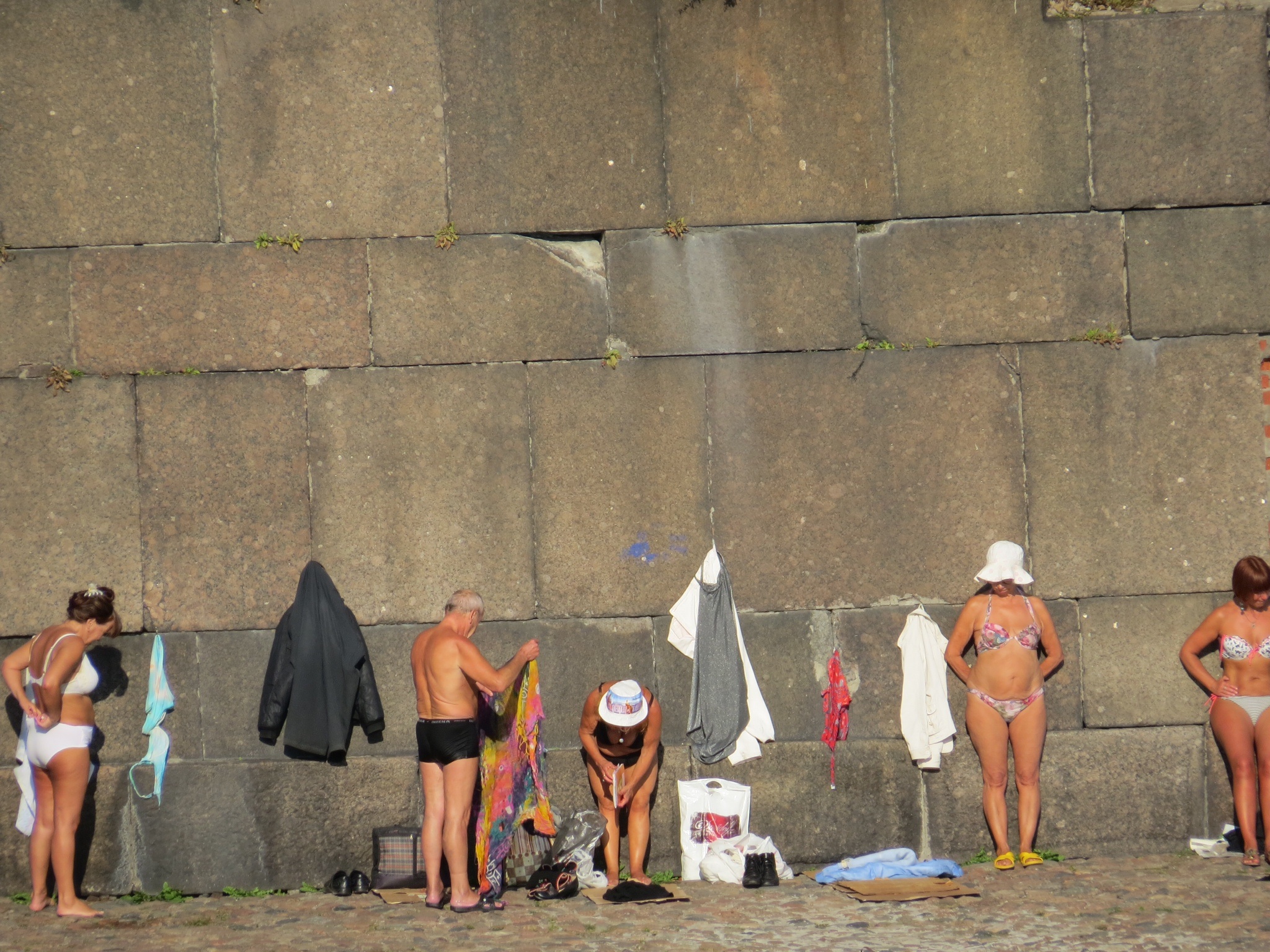
The rest of the fortress was a museum of St. Petersburg’s history and we saw one of the boats P the G built by his own hand. We visited the bastion and then climbed the fortress wall to walk along the rooftops for spectacular views of the city. It was fun, too, to see the vertical sunbathers who perch along the wall and swim in the Neva.

Tonite we had our first Beef Strogie! A funky, happening little restaurant had been recommended. Our go-go-go was catching up with me, and it was a good night to tuck in early.

Jan
image


image

imageimageimageimageimageimageimageimageimageimageimage

An Emperor and a Queen

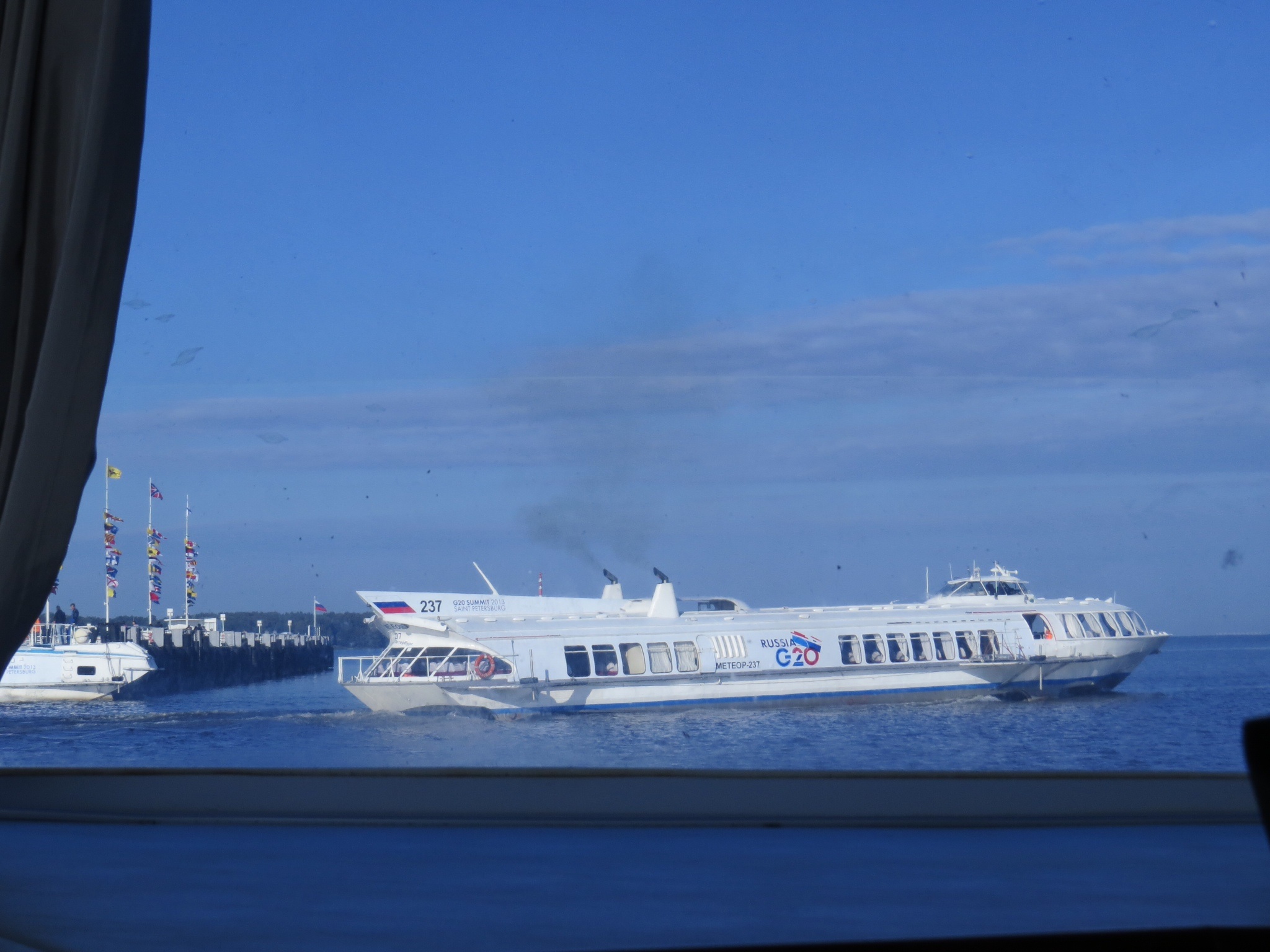
Took off early today to catch the hydrofoil to Peterhof, the summer palace of the Tsars. The hydrofoil took us out onto the broad Neva River for about a half hour trip. We arrived just in time to hear patriotic Russian music and witness the ceremonial setting of the fountains for the day. A long canal feeds the fountains which are powered by gravity. Talk about curb appeal!
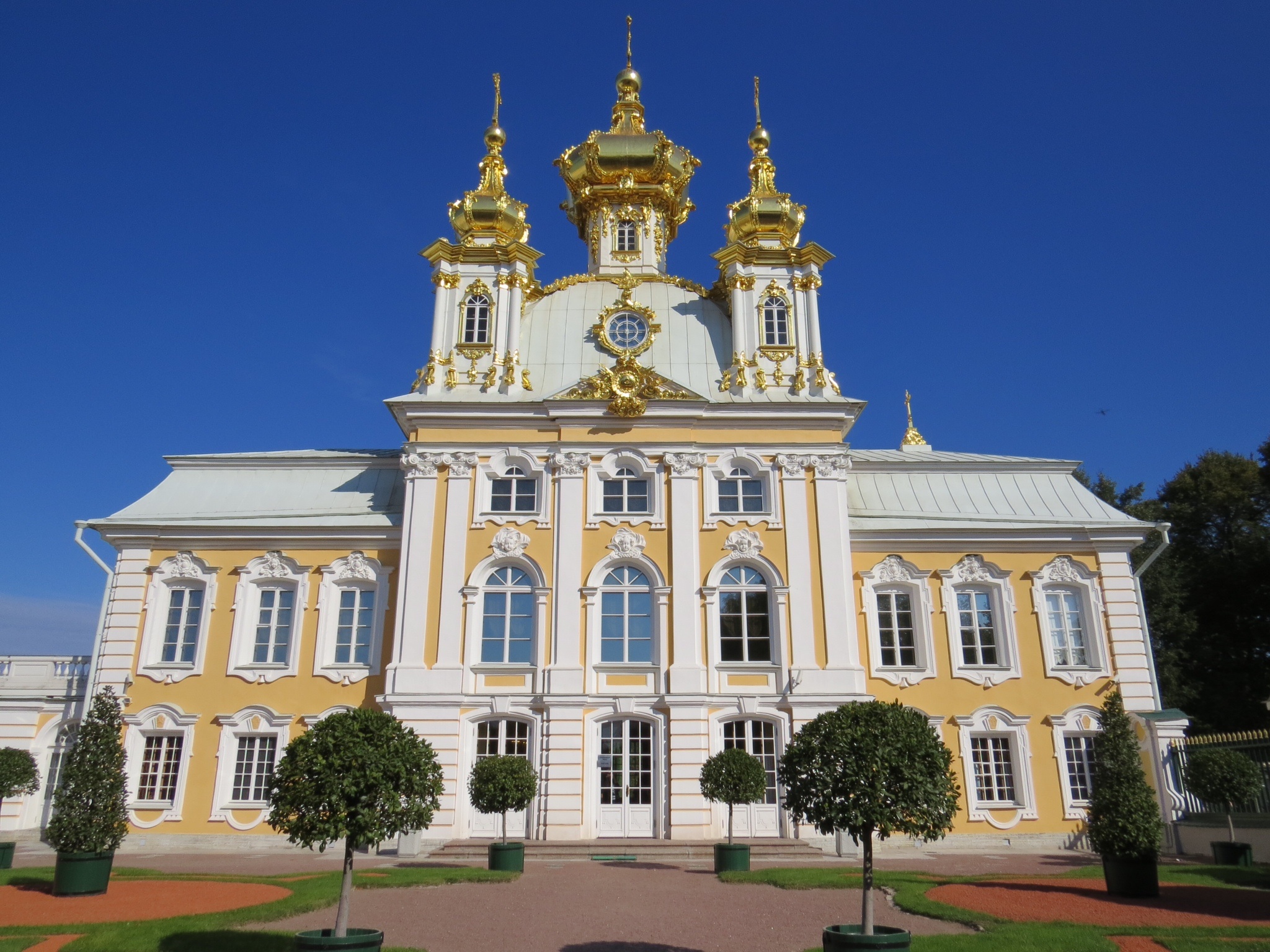
Inside, the palace sparkles in gold, silver, and every other precious stone or metal you can think of (no photos were permitted inside). The main staircase and ballroom are white but covered with gold leaf moulding in various shapes, and all of the doorframes in the palace are intricately carved and dressed in gold leaf. To the point of being gaudy. One can imagine the message of power and wealth communicated by these walls, but I thought they also communicated a sense of insecurity and an attempt to keep up (or surpass) big brother (Western Europe). Many other rooms had walls and furniture decorated with gorgeous silk, paintings on the walls, and mirrors on the ceilings. All in all Willie was quite correct, this palace exceeded even the magnificance of the The Winter Palace.
The former soviet landladies who used to spy and snitch on tenants have all been seconded to work in the museums, ensuring with dogged determination and sharp elbows that we didn’t take photos, wore our booties, checked our coats and kept moving.

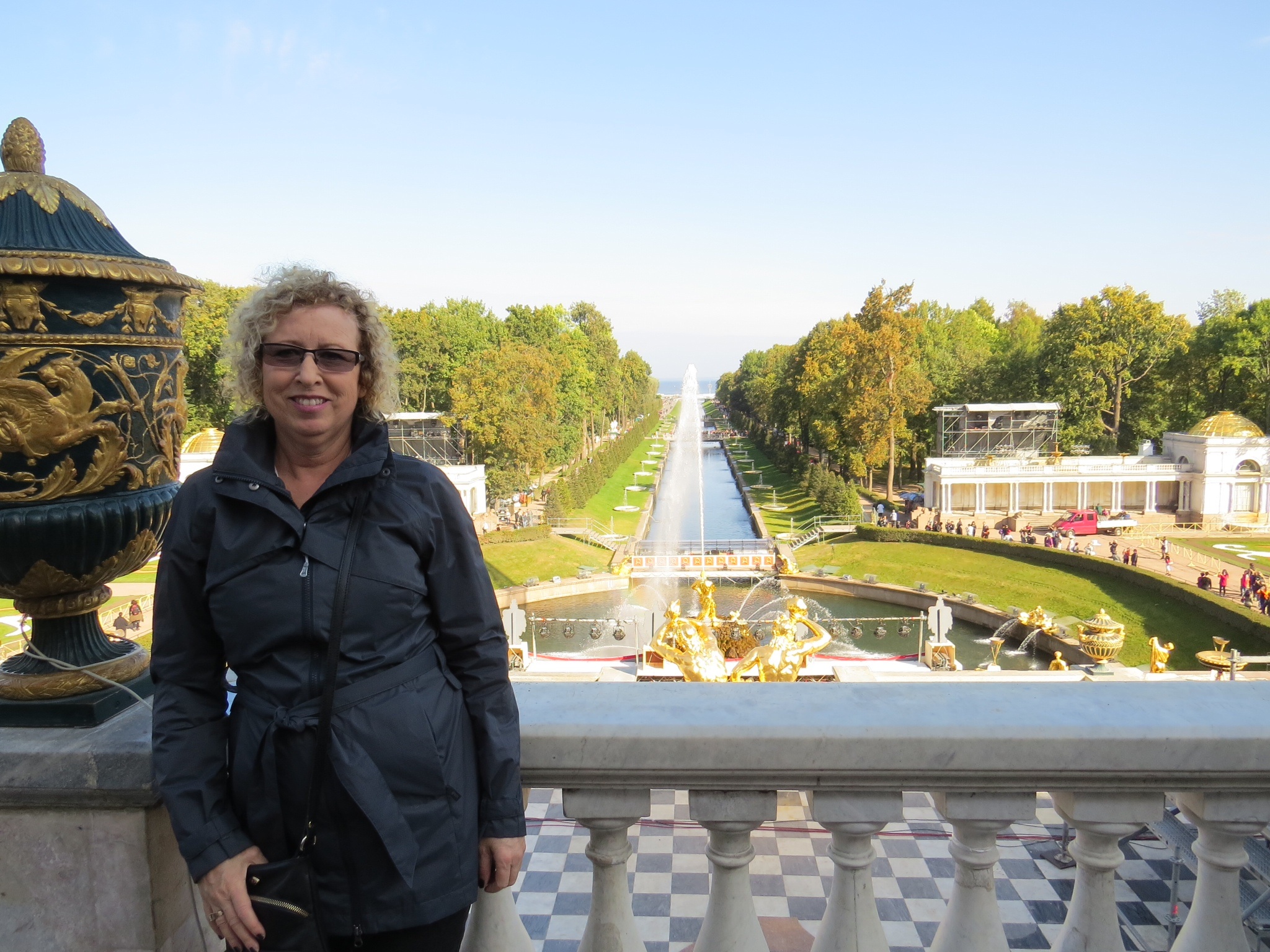
The grounds are incredibly beautiful as well with formal gardens and fountains in every direction.

Peter the Great was a humble man and despite his tall stature (6’5″ when most Russian men were about 5’9), he always preferred small, humble surroundings. Peterhof was built to impress (and to please his wife Catherine I who came to Russia as a peasant slave and later rose to Empress – she loved glamour and glitz and they usually had their own separate living spaces). He built “Mon Plaisir,” a small house built in the Dutch manner (the red brick building in the photo below), but it was directly on the Baltic with breathtaking views and had its own elegance.

We lunched on salmon/cream cheese filled crepes followed by chocolate ice cream cones before returning to the boat which dropped us a short walk from our hotel.

image

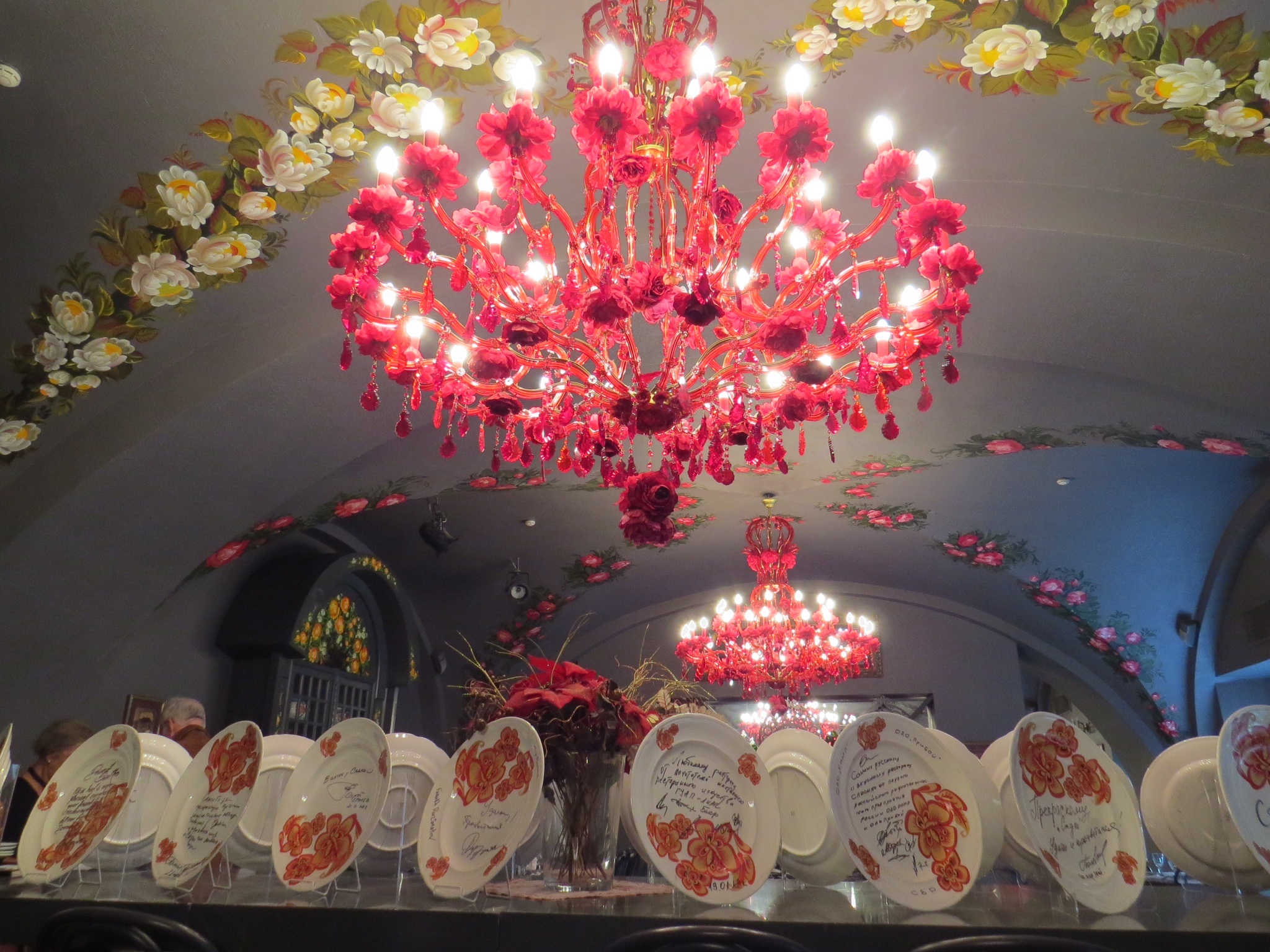
Shirley and I dressed for dinner and headed for a restaurant recommended to us near the Mariinsky Theatre. Traffic is crazy here so we didn’t have time for a full meal but the place was really fun (red chandeliers) and we will return. We crossed the street to the sumptuous Mariinsky Theatre where we caught up with Wilie to see the opera The Queen of Spades. Tchaikovsky composed the music and his brother wrote the libretto based on a Pushkin short story, and the opera is widely considered to reflect the quintessential Russian sensibility. The theatre is the most ornate and beautiful I have seen (except perhaps for the the Chagall on the Palais Garnier ceiling). There were at least 5 set changes and the largest chorus I have ever seen along with some magnificent opera stars. The music filled my soul and has lingered with me for days.

Jan
imageimageimageimageimageimageimageimage