Tag Archives: History

Mother City


72356668-24D2-4B6D-A09C-2B87D21EC787

Cape Town is the founding city of South Africa and was established in 1652 as a refueling station for Dutch ships bound for the East (the Spice Route).    Dutch settlers were sent here to supply the ships of the Dutch East India Company.  The city is often referred to as the Mother of South Africa because it gave birth to the nation.

We visited “The Captain’s  Garden” on the site of the original garden where the first Dutch settlers grew their vegetables.  Now a botanical garden with an amazing array of trees, many of them came as gifts from countries around the world since it is located at the presidential palace.  A medicinal garden has been planted in tribute to  the first garden here, and a white rose HIV memorial garden has been added.    At the cafe, we had delicious red cappuccinos, made from rooibos tea.


On leaving the garden, we saw Archbishop Desmond Tutu’s home cathedral.  Next to it, a memorial to him was erected two years ago, known fondly as, “The Arch’s Arch.”


Fusion

E7FF8000-3BA6-4D83-B541-8A9D7C2BF79A

Spices were imported from Indonesia in bulk and brought huge profits due to the efforts and risks involved and seemingly insatiable demand.  The fusion of influences between Indonesia and the Netherlands is still present today in both the Netherlands and in Indonesia, especially in fusion of cuisines.  Similarly,  Indonesians came to Cape Town off Dutch ships as slaves, and their descendants are now known as “Cape Malay.” From their colourful enclaves, they have also influenced Cape Town’s cuisine, further discussed here

We visited the Cape Malay district and visited the Atlas Trading Store’s spice shop where fragrant bags of spices still roll in today.


We walked around the colourful neighbourhood, and were told the fashion industry often does photo shoots here.  We looked up, and…


Glamour

“CAPE Town is South Africa’s Los Angeles
to Johannesburg’s New York — the glitzy,
gorgeous, self-obsessed foil to its grittier,
more serious and more powerful big sister.
Which is not to say that it lacks a serious
side. Cape Town holds its own with
Johannesburg as a locus of South Africa’s
liberation struggle, and no other African
city combines heart-stopping beauty and
historical gravitas so effortlessly.”

                                                                             – New York Times

The legislative capital of South Africa, the city is known for its harbour, its natural setting in the Cape Floristic Region and for landmarks such as Table Mountain and Cape Point. It is one of the most multicultural cities in the world, reflecting its role as a major destination for immigrants and expatriates to South Africa.  The city was named the World Design Capital for 2014 and was named the best place in the world to visit by both The New York Times and The Daily Telegraph.  There are few better places to saunter aimlessly – and get a thrill out of it – than Cape Town. A fascinating blend of African, European and Malay influences, this wonderful city has emerged as the cosmopolitan heart of South Africa.

A Christo-sized Table Cloth

303D52E6-4319-4840-8602-0CA1EF9E228C

The name Table Mountain is self-evident, but the mountain itself is unsurpassed as a dramatic backdrop to the gorgeous city sprawling below.   Yesterday, we hoped to take a cable car to the top for spectacular views, but our tour description was “weather permitting” – the flat top of the mountain is often covered by orographic clouds, formed when a south-easterly wind is directed up the mountain’s slopes into colder air, where the moisture condenses to form the so-called “table cloth” of cloud. Legend attributes this phenomenon to a smoking contest between the Devil and a local pirate called Van Hunks.  When the table cloth is seen, it symbolizes the contest.

14941DBB-06D4-4D5C-992E-FD8CD9ABA1C9


We saw the table cloth for ourselves yesterday, but the forecast looked more promising more promising for today..

Instead, we went up Signal Hill for fabulous views of Robben Island and the city.


This morning was gloriously clear, and we made our way to the Table Mountain gondola to the peak for spectacular views of the city.  The wildflowers were spectacular, too.

The V & A

018321F6-A647-48B6-928F-4E94DC5BF4B9

DB2C881C-F773-4DB6-8798-ED29B7CB58A5


The V & A Waterfront refers not to Queen Victoria and her beloved Albert like the museum in London, but to Queen Victoria and her second son, Prince Alfred, who inaugurated the V&A Waterfront’s construction as a 16-year old midshipman in the Royal Navy in 1860. He returned 10 years later for the official opening of the completed works in July 1870. The area had electricity 10 years before the rest of Cape Town. 


The Waterfront has had a modern renewal and has become South Africa’s most-visited tourist destination.  We are staying in this  area comprised of a busy working harbour and with shops and restaurants, The Watershed, a beautiful and vibrant market for ceramics, textiles, furniture, fashion and jewellery. Also at the V & A are Africa’s premiere modern art gallery, the MOCAA, the South African Maritime Museum and an aquarium.  I am going shopping!


Another contribution from the New York Times, a blossoming love story from New York to Cape Town:

Capetonians have an expression that captures the atmosphere – “Moenie worry nie” – relax and enjoy.

Best,

Jan


PS. This is off-topic but I just discovered this incredible website for van Gogh lovers – “Unravel van Gogh” by the van Gogh Museum:    https://ontrafel.vangogh.nl/en
Anne

EAC0B206-2859-4EDE-9E9B-B8273B702889

 📕Think of all the beauty still left around you and be happy.”

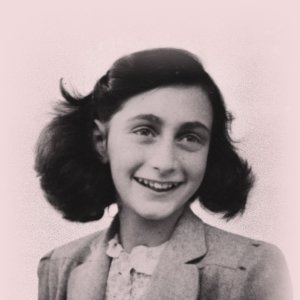
On 4 August 1944, after more than two years in hiding, Anne Frank and the other people hiding in “the Secret Annex” in Amsterdam were discovered and arrested.    Anne’s father, Otto, later described the moment.  “I was upstairs with the Van Pels family in Peter’s room, helping him with his schoolwork. Suddenly someone came running up the stairs and then the door opened and there was a man right in front of us with a pistol in his hand. Downstairs they were all gathered. My wife, the children, and the Van Pels family all stood there with their hands up in air.”  The families were sent to concentration camps and by February 1945, Anne was dead.  Only a few months later, the war ended and the concentration camp prisoners were released.  Anne’s father, Otto, was the only survivor.
             📘How wonderful it is that nobody need wait a single moment
before starting to improve the world.”

Anne’s diaries, by a miracle, did survive.  When the family was arrested, the contents of a briefcase were dumped on the floor to make room for seized valuables.   Two employees in the main building retrieved the diaries from the floor and gave them to her father after the war.   Otto was startled by what he read, calling it, “a revelation. There was revealed a completely different Anne to the child that I had lost. I had no idea of the depths of her thoughts and feelings.”  This reflected Anne’s own admitted difficulty; she wrote that she struggled to fully express herself within her family.

E281D266-28ED-46C9-A0FB-B75240D66C9D

📙“I can’t imagine having to live like Mother,
Mrs. van Pels and all the women who go
about their work and are then forgotten.
I need to have something besides a husband
and children to devote myself to! I don’t
want to have lived in vain like most people.”

7255FAF9-6EAB-467E-839D-B281E47484D9

📕“I can shake off everything as I write;
my sorrows disappear, my courage is reborn.”

Anne had little difficulty expressing herself on paper, and it is clear she wrote for a larger audience than herself.  It was her dream to write a book and have it published and she wanted to become a journalist and writer.  Perhaps the years trapped in hiding caused a torrent of feelings to pour out of her through her pen.

📗People can tell you to keep your mouth shut,
but that doesn’t stop you from having your own opinion.”

Anne’s diary reveals an insightful, confident and direct young woman.   She was honest in her writing , expressing intimate teenage things that women were discouraged from speaking about.  She also wrote outspokenly about ethics and humanity.  These were radical acts that made her an inspiration and a role model for girls.

📘“….  Women should be respected as well! Generally speaking,
men are held in great esteem in all parts of the world, so why
shouldn’t women have their share? Soldiers and war heroes are
honored and commemorated, explorers are granted immortal
fame, martyrs are revered, but how many people look upon
women too as soldiers?…Women, who struggle and suffer pain
to ensure the continuation of the human race, make much
tougher and more courageous soldiers than all those
big-mouthed freedom-fighting heroes put together!”

Anne’s last diary entry was made on Aug. 1, 1944.  But her legacy lives on.  By 1947, knowing she wanted them published, her father had the diaries published.   Through Anne’s diaries, people began to learn about the Second World War and the Holocaust, and they read about how it is to be excluded and persecuted. It was a direct, honest entry into a life of persecution that couldn’t be denied.  Anne Frank is well-known and has become almost a sanctified figure.  Today, several organizations do humanitarian work on her behalf.

📙“I still believe, in spite of everything,
that people are truly good at heart.”

Today, I visited Anne Frank House.  There is such an immediacy about being in the place where these people lived, going from room to room and imagining their constant fear and tension.   Anne and her mother had to constantly admonish her father for not whispering or stepping too heavily lest any of the workers in the warehouse below should hear them.  They imposed a “no plumbing after 8pm” rule.  It is hard to imagine a 14 year old keeping her spirits up for so long under such conditions.   It was impossible to stay cheerful just experiencing it for an hour. Her notes and diaries were here, and her handwriting is so impeccable and mature.  It gave me a chill to know Anne died of typhoid at Auschwitz.  It was so easy for me to visit the travel clinic and get a typhoid shot before I came here.  

Even in her uniquely horrible existence, confined for over two years in the Secret Annex, trapped with her family, this angsty teen found joy in the clear blue sky and reminded us to find our happiness.   Her voice, like a bullet,  direct and piercing, shot over the heads of her oppressors. Through her writing, she revealed the hideous truths of those who voraciously burned books.  She gave girls a voice and inspired women.  She understood the power of the pen, and used it.  And, she was vindicated.  She didn’t want hers to be a life lived in vain – certainly it was not.  In fact, she became one of the most important writers of the 20th century.

I recently read that now, after 70 years in a bank vault, the diary of “the Polish Anne Frank” has been published.   You can click on the link for more info.

Best,

Jan

Olé!

🇪🇸 Did someone say Seville?  By request, this is our next stop on our armchair travel around the world.  When I was there a year ago, I wrote that once Seville is in your heart, you feel it will never leave.  A year later, and especially during the pandemic, I remember Seville wistfully and wonder when I can return.  With its friendly people, a culture all its own, and sprawling orange tree-lined plazas and boulevards, I recommend it as a Spanish destination second only, perhaps, to Barcelona.  The scent of orange blossoms hang in the air, as redolent as the scent of leather in Florence, Italy.

So grab yourself a Death in the Afternoon and spend a second-time visit to Seville as I re-post my time spent among the matadors and Flamenco dancers.

Regardless of my position on the treatment of animals, I admit a romanticized appeal to the idea of the bullfight – the macho toreador, the connection between man and bull, the perfection and elegance of the movement, the danger.   And nowhere is more evocative of these themes than Seville with its magnificent-looking bullring, the Plaza de Toros.

F3979EDB-B21C-4226-BB2E-6A7F756558B3

Ernest Hemingway also springs to mind when I think about bullfighting in Seville, especially his novel The Sun Also Rises and a non-fiction treatise on bullfighting called Death in the Afternoon.  The latter also contains a deeper contemplation on the nature of fear and courage, a theme running through many of his novels and one he frequently tested in his own life.   Being one of those unfortunates who carry a gene that often leads to suicide, I have to think his curiosity about bullfighting was more personal than intellectual.

Hemingway created a cocktail called Death in the Afternoon, which, laden with Absinthe, may be related to such contemplations about bullfighting and life and death.  But doesn’t it look lovely?

INGREDIENTS

    • 7.5 ml Absinthe
    • 15 ml Freshly squeezed lemon juice
    • 7.5 ml Sugar syrup (2 sugar to 1 water)
    • Brut Champagne

4A91731F-E632-4720-AB73-B08719115704

We are in Seville, a former Moorish city-state (“Taifa”) that rose in 1023.  Abu al-Qasin was the first king of Seville; his son, Al-Mu’tadid, succeded him.  Al-Mu’tadid was a great poet, and was friends with another renowned poet, Abu Bakr Muhammad ibn al-Ammar, whose claim to fame was having beaten Castilian king Alfonso VI at chess.  Al-Mu’tadid was also the lover of the married future queen Itimad.

Seville Cathedral

Later, after the Reconquista, Seville became an important Catholic centre and construction began of a magnificent Cathedral in 1401 that was completed in 1507.  The Catedral de Sevilla quite spectacularly succeeded in fulfilling the design team’s original aim to make something “so beautiful and so magnificent that those who see it will think we are mad.”

There are countless beautiful depictions of Mary:

A sliver of the 7,500 pipe organ:

7ECADD1F-6292-478C-99CB-564410F2A36F

In death, as in life, the higher the ranking, the more pillows under the head.  This is the tomb of a cardinal:

6920075F-0114-43AB-89D0-B812CF9647AF

1FDB6D8A-B40A-4B4A-9939-C233F1E471A6

Cristóbal Colón (Christopher Columbus) is entombed here.

DE3B2B02-19A8-446C-9291-64E8F3A11651

The local thinking is that, even by his standards, Colón travelled more in death than in life. When he died near Madrid, one of his sons was governor of Santo Domingo in the Dominican Republic. The son had his father’s body buried on the Caribbean island (Colón had asked to be buried in the Americas), then his remains were transferred to Cuba and ultimately, in 1898, back to Spain.  Santo Domingo officials still believe he is buried there.  In 2006, DNA testing on the bones in Seville was compared the DNA to that of his brother, also interred in the Seville Cathedral, and they were a match.  Santo Domingo, however, dismisses the Seville tests.

Alcazar

After a sangria break, we toured the beautiful Seville Alcazar.

61583924-303B-407D-A189-FE6B6D02395B

Mudéjar (/muːˈdeɪhɑːr/, Arabic: مدجن‎ ) literally meaning ‘tamed; domesticated’, refers to an architecture and decoration style in (post-Moorish) Christian Iberia that was strongly influenced by Moorish taste and workmanship.  The Seville Alcazar is considered to be the finest and most beautiful example in the world.

As sometime home of King Ferdinand and Queen Isabella, Cristóbal Colón planned three of his four trips to America, depicted in this tapestry, at the Alcazar Palace.

043F3BD9-8AAF-4FAD-8C04-08BE46155C29

The castle, a UNESCO world heritage site, was also the birthplace of Marie Antoinette.   The Alcazar was used as a set for “Lawrence of Arabia” and “Game of Thrones.”   A private section is still the royal family’s official residence in Seville.

Plaza de Espana

This complex was constructed for a 1929 World Fair which, because of the stock market crash, never happened.  The city has a lovely legacy, though, and locals can rent rowboats and float past on a diversion from the Guadalquivir River.

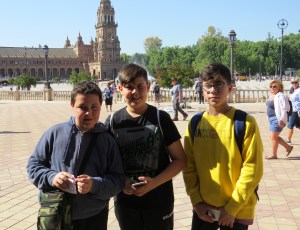
These three little boys were brave, they had a page and a half of questions they had to ask someone at the Plaza in English and they were very serious about their project.  They wanted a photo of me, and they returned the favour.

76D5E5B4-15CC-4168-A3E8-54A040F49B05

And this pretty young girl celebrated her first communion:

61207BB2-4DF2-499B-B0A3-7DD8FD076281

A few images from our wanderings around Seville, where the scent of oranges hung in the air:

Las Setas

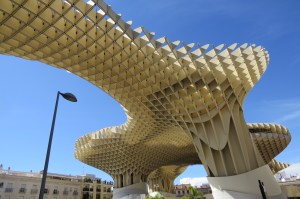
Seville does not stand by relying on its historical architecture.   One of its finest examples of modern architecture and becoming famous in its own right is the wooden Metropol Parasol designed by German architect Jurgen Mayer.  One can see why the structure is nicknamed by locals “the Mushroom.”

F93C65A4-2BE5-4894-84BB-5F7A3DD91E4C

Flamenco

I have previously elaborated extensively on the dance, but it is hard not to think of Flamenco when you think of Seville.  And of course, we were seeing Flamenco tonight and it was amazing: the guitar players played beautifully, the singers were passionate and the five dancers were mezmerizing; steam seemed to rise up from the stage.  Here’s a sample from youtube.

We had a fabulous meal of many courses before the show:

What a perfect way to end the evening, a nightcap on the roof patio of our hotel, in a balmy breeze, watching the sun go down.  The only tower in Seville was in front of us, which the locals have dubbed “the Lipstick.”


No me ha dejado”—“It has not forsaken me

Seville’s motto is so appropriate:  once the captivating Seville is in your heart, you feel it will never leave.

Best,

Jan