Some masterful military strategies, some not so much

We left Istanbul this morning and headed out into the countryside towards the city of Canikkale.  En route we will climb into the mountains and stop at Gallipoli, just a stone’s throw from the ancient site of Troy.  

Appropriately, wild red poppies dot the landscape.


We stopped for a delightful lunch at an oceanside restaurant where we selected our fish from a case of the catch of the day at the pretty seaside town of Gelibolu. Gelibolu was the birthplace of Piri Reis, a famous cartographer whose 1513 map of the world included America (“the Piri Reis Map”).


———————

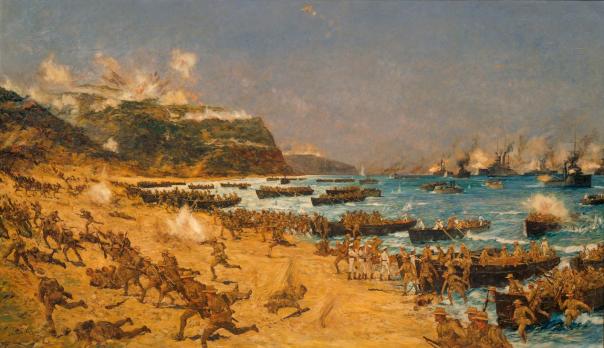
“Anzac,the Landing, April 25, 1915,” by Charles Dixon:
9DFCE1CF-5D32-4EA3-A152-842CF7632402

From the muddy WWI trenches of the drab Flanders fields, Gallipoli had provided a splash of colour. The battle took classically educated Allied officers to a romantic country, familiar to them from the pages of Homer.  The Allied troops believed they were fighting for democracy, but many of the Turk soldiers were locals, defending their own homes, families and their Muslim faith.

Both sides dug in for months, eventually someone had to make a move.  Mustafa Kemal, the Turkish commander, describes the night of August 10, 1915:

“The British forces of 20,000 settled into their trenches where they had spent days digging in and waiting for the moment to attack….  Dawn was about to break when I called the commander of the 8th Division and other forces.   I told them that I have total faith in us and that we will defeat the enemy.  However, don’t hurry, firstly I will go forward and when I raise my whip to give the action sign, you will all attack together.   I walked through to the enemy silently 20-30 metres.  There was absolutely no sound where there were thousands of soldiers lips praying quietly in the hot night.  I paused, lifted my whip over my head and rotating it before bringing it down rapidly.  Bedlam broke loose at 4:30 a.m….  Shrapnels and bullets drop like rain rained from the sky and a piece of shrapnel suddenly hit me over my heart…. The pocket watch which was over my heart had been shattered….  As a result of this attack, the English withdrew completely, leaving thousands of dead behind and fully understanding the Canakkkale straits could not be passable.”


Meanwhile, the battle raged on.  It was disastrous for the Allies – in the first month, over 45,000 Allied soldiers were lost.  After nine months, 250,000 casualties were amassed and the remaining Allied troops were evacuated.  

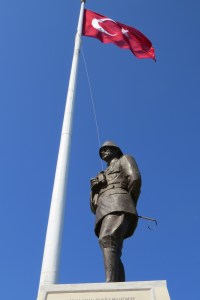
Gallipopli was the most important battle in Turkish history as it founded the nation.  The annual celebration, similar to an Independence Day, is taking place this weekend.  There are Turkish flags and images of Ataturk hung all over Turkey.  The Turkish flag 🇹🇷, adopts the traditional symbol around the eastern Mediterranean, the crescent moon and the star.  The flag symbolizes the scene at Golipolli that fateful night:  the red blood of Turkish soldiers that flowed on the ground reflecting the crescent moon and the stars.

As a result of the success of the Mustafa Kemal, he became known as Ataturk and was installed as the first and most beloved leader of the modern Republic of Turkey.   The course of Turkish history might have been very different, were it not for that one gold pocket watch.
7C2F32F0-7F8C-4CDE-A250-E3DBEA0FD550

A touching example of his leadership met us at a memorial for ANZAC (Australian and New Zealand) soldiers who were his enemies during the war:

“Those heroes that shed their blood and lost their lives, you are now living in the soil of a friendly country, therefore rest in peace.  There is no experience between the johnnies and the mehmets to us where they lie side by side in this country of ours.  You, the mothers who sent their sons from far away countries, wipe away your tears.  Your sons are now lying in our bosom and are in peace.  After having lost their lives on this land, they have become our sons as well.”
— Ataturk, 1934

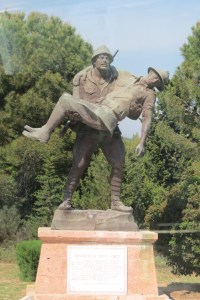
Statue of a Turkish soldier rescuing a wounded Allied soldier:
02E6DD00-3073-40B2-AD50-360F3FB0C2D1

We joined an Austrialian group at Ari Burnhu, an Allied cemetery:


Lone Pine Cemetery, where the names of all known ANZAC soldiers  lost are recorded with the inscription, “their names liveth for evermore.”
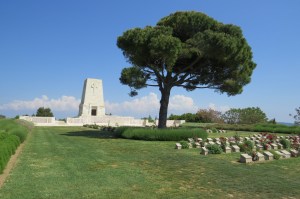
96DA7F17-2725-40A0-98FC-1A9F92EE7C21

A Turkish monument site with the remaining trenches largely filled in by sand over time.


Things did not go quite as well for Winston Churchill, whose idea it had been to seize control of the Ottoman Empire and gain control of the strategic waterways linking the Black Sea in the east to the Mediterranean Sea in the west.  A young politician, Churchill liked to think of himself as a military strategist. 

“I have it in me to be a successful soldier.
I can visualize great movements and combinations.”

Although at least some of the blame was on the shoulders of the military leaders, following the defeat, Churchill was demoted to a minor portfolio in the government.  Displaying the gritty determination that would one day give him the moniker “the English Bulldog”, he resigned and headed to the front lines in France as an infantry officer. After several brushes with death, he returned to politics in 1917.  

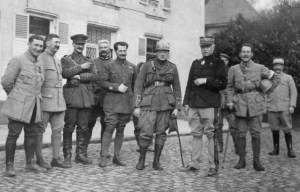
Major Winston Churchill, wearing a French steel shrapnel helmet, stands with General Emile Fayolle and other officers including Captain Edward Spears (third from left) at the headquarters of XXXIII Corps, French Army, while visiting the French front line on 15 December 1915:
D5AE8C0A-B5FD-4B1E-ABD0-16B96E7C4CF4

By 1940, the world was again embroiled in war and Churchill became prime minister of England.

“All my past life had been a preparation for this hour and for this trial.”

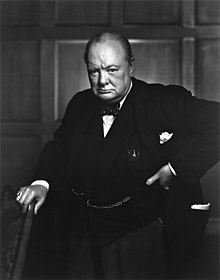
The Roaring Lion, an iconic portrait by the great Canadian portrait photographer, Yousuf Karsh, taken at the Canadian Parliament, December 1941:
14D97275-BB3F-474C-A2C8-823CAB8E68E9

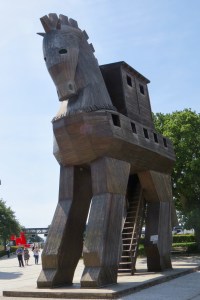
Although Churchill would redeem himself during WWII, at Gallipoli, he would have done well to consult history for inspiration.  After all, he was only kilometres away from the site of one of the most ingenious military strategies ever conceived.   The Greeks had the city of Troy under seige for months with no success at penetrating the city.  Not giving up, the leader Epeius commanded his soldiers to build a wooden horse, which they did within three days.   The plan called for one man to remain outside the horse; he would act as though the Greeks had abandoned him, leaving the horse as a gift for the Trojans.  The Trojuns wheeled the gift into the city, and we all know what happened next.  In the morning, we are heading to Troy.
FAB2CB7F-C6A9-444E-B157-1C5AF84AEA8C

Best,

Jan


From the Gateway to the East


A few weeks before heading to Istanbul, a city perched on the borders of both Europe and Asia, it was appropriate to see and hear Montreal-based Kiya Tabassian and his ensemble, Constantinople, perform Dalla Porta D’oriente (“From the Gateway to the East”) on their early musical instruments at in Victoria.  Here’s a sample.

https://youtu.be/Jdgz19rFuy8

Earlier this year, at International Guitar Night, Cenk Erdogan played a fretless guitar.  While we have only two semitones in western music – sharp and flat – Turkish music incorporates 12 tones which are achieved with the fretless guitar.

https://youtu.be/LBsrPx-sWoU

I’ve just arrived in Istanbul from Barcelona, and was immediately struck by how modern the city is, the vast amount of construction taking place, and the extensive green spaces being used by all ages.  When we got to the hotel, what a view – the Aya Sofia and Blue Mosques:


When I saw the itinerary, I didn’t know how we could see all the main buildings in one day, not realizing that they are all on one central square, Sultanahmet Square. The city has a long and complex history, so we dug in, beginning with the Museum of Archaeology.

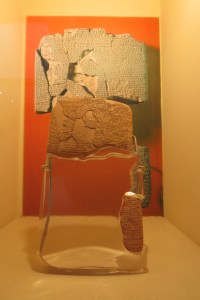
Most important in the collection are two fragments from the Kadesh Treaty, the earliest known peace treaty, formed between Ramses II of Egypt and the Hittite King Hattusilis III made in 1269 BCE and discovered in Kadesh, Syria.

“Now I have established good brotherhood
and good peace between us forever.  In order
to establish good peace and good brotherhood
in the relationship between the land of Egypt
with the Hatti land forever.”

                                                                  – Ramses II, Egypt

98C80D96-9C77-4B1B-8BE9-26302D6554D6

The Ishtar Gate was the eighth gate to the inner city of Babylon. It was constructed in about 575 BCE by order of King Nebuchadnezzar II on the north side of the city. It was part of a grand walled processional way leading into the city. The gate, being part of the Walls of Babylon, was considered one of the original Seven Wonders of the World. Once per year, the Ishtar Gate and connecting Processional Way were used for a New Year’s procession celebrating the beginning of the agricultural year.  It lasted 12 days starting at about March 21st, our first day of spring.   I had seen a large portion of the gate at the Pergamon Museum in Berlin, but Istanbul’s Museum of Archaeology has the lions, dragons, and bulls.


We also saw the beautiful Roman “Columned Sarcophagi of Anatolia” dating from 140 to 260 AD.

B5D10942-4A00-439E-B112-7867E966B210


Topkapi Palace

The Ottomans became an independent state at the beginning of the 15th Century (around the same time as the Renaissance in Florence).  There was swift development in politics and culture and a rapid expansion of territory.  In 1453, they took Istanbul, in 1517, they took Egypt and in 1526, they entered Hungary.  By the time of the reign of Suleyman I (1520-66) the Ottoman state was a vast and powerful empire including large parts of Asia, Africa and Europe. 

Constructed in 1459 by the Ottoman emperor Mehmed the Conqueror, the palace complex consists of four main courtyards and many smaller buildings. Female members of the Sultan’s family lived in the harem, and leading state officials, including the Grand vizier, held meetings in the Imperial Council building.

During Ottoman times the Second Courtyard was used as a gathering place for courtiers and would have been full of peacocks and gazelles.  The Sultan, seated on the gold-plated Bayram throne, held audiences here. The French ambassador Philippe du Fresne-Canaye, wrote an account about an audience:  Extrait des Lettres et Ambassade.  

We visited the library.  The inscription over the door reads:

“My friend, take learning seriously and declare,
O my lord increase me in knowledge.”
–    Surah al-ta-fa, 20:114

There was also a surprise.


E6BF4B3E-E9CD-4675-B23E-0CEE4370CBD2

The kitchens were interesting.  Whenever the Sultan travelled, the kitchen was packed up and travelled with him.


Eventually the many wars and battles the Ottomans engaged in depressed the economy.  The Palace fell into disuse in the 1800’s but the Treasury and a few other functions remained.  At the end of the first world war, the empire suffered a complete economic collapse.   In 1923, when a new independent Republic of Turkey was formed, the palace was converted into a museum.

Time Out

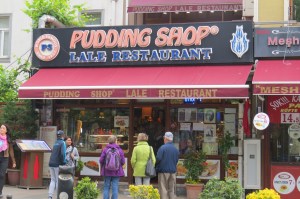
We had a delicious lunch at The Pudding Shop – a delightful restaurant having nothing to do with pudding now but has been in business for 60 years.  In the 1960’s when all the hippies were on their spiritual quest from London to Kathmandu, they could get a good meal and have their mail forwarded to its address – the mail would be held for them for months.

5FF21101-E773-453D-B2FE-12CEF280C23E

Hajia Sophia

The Church of Holy Wisdom (Hajia Sophia), built by Byzantine Emperor Justinian I in 537 AD, is a UNESCO World Heritage Site best known for its beautiful mosiacs.  After the Ottoman conquest, the cathedral was converted into a mosque.  Even though the mosaics depicted Christ and other human depictions, thankfully most of the mosiacs were preserved.  Since the rise of Ataturk, the building has been a secularized museum.

DE617842-B361-4821-B4DD-9F52383A2807

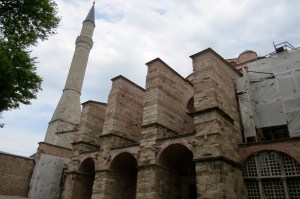
Flying buttresses support the roof of the mosque.

F9DB4794-A05C-4B15-9965-4A96A2081B00

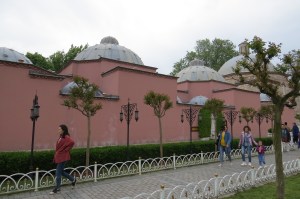
The baths are next to the mosque.

92F650CD-5695-4ECC-8C97-B5ECE0214E23

The vast interior is difficult to capture in a photograph, especially ith parts of it under restoration.

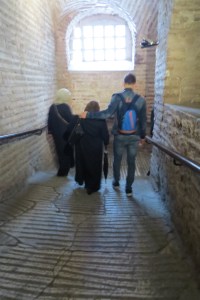
Most of the glowing Byzantine mosaics are seen from the upper galleries reached by a series of stone ramps.

Having ensured his mother got to see the mosaics up close, a son lovingly helped her back down all the ramps.

FC7E056C-D004-4D0B-9A76-48B07EB6523B

Blue Mosque

Sultan Ahmet I was just 13 years old when he was enthroned in Istanbul, a city that spans Asia, Europe and Africa.  Despite his lack of military, political or administrative skills, he managed to leave a legacy in the form of one of the finest mosques in the heart of Istanbul.

Despite an untimely death by typhus at age 27, he left behind two wives, 9 sons and 5 daughters.  Seven of the sons were murdered, eliminated as a threat to the throne or on the throne; three of the murdered sons had taken the throne and two of them were responsible for the murders of their brothers.

The Sultan Ahmet Mosque, better known as the Blue Mosque, was completed in 1617.  It has six minarets which at the time matched the main mosque at Mecca.  (In response, a seventh minaret was added to the mosque at Mecca.). It faces its rival, the Hajia Sophia, once a Byzantine cathedral, creating one of the most magical city skylines in the world.

The nickname of the Blue Mosque came from its interior.  Sultan Ahmet had ordered the use of traditional motifs on its tiles, including cypress trees, tulips, roses, and fruits to evoke visions of a bountiful paradise. The lavish use of tile decoration on the interior was a first in Imperial Ottoman mosque architecture.   Unfortunately for us, the interior was lined with scaffolding and netting, but I am always grateful that such important historical monuments are being protected and restored.  Here are views from the net.


New Rome

In 334, when Constantine became emperor, the Roman Empire was vast and difficult to govern from Rome. There were many incursions by Persians in the East and the Emperor needed to be close by to diffuse them.  His predecessor had declared that the capital of the Empire was wherever the Emperor was, but Constantine wanted a new permanent capital and headquarter for the Christian faith.

Constantine found a perfect site in a thousand year old Greek colony halfway between the Western and Eastern parts of the Empire.  Located on the trade route between the Black Sea and the Mediterranean, there was trade in amber, wood, oil, grain and spices.  It had a deep water harbour and, surrounded by water, was defensible on three sides.  Constantine declared this “New Rome,” but the people called this city “Constantinople.”

Hippodrome and Obelisk

Construction began at breakneck speed – the whole city was built in six years.  There were baths, a university, a forum, a new Senate House, a new palace, mansions for the rich and a vast hippodrome.  At the Hippodrome, bread, clothing and money were given to spectators.  There were lavish chariot races and circusses with gymnasts and high wire acts.  There is nothing left of the Hippodrome, only the vast open area where it once stood.  This is known because of the record of the obelisk installed in the centre.  An ancient Egyptian obelisk from Pharoh Thutmose III, the Obelisk of Theodosius, was shipped down the Nile from Karnak Temple at Luxor and Constantine had it installed at the hippodrome.


Yerebatan Sarnici (“Cistern sinking into ground”)

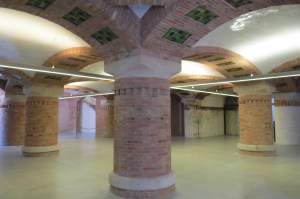
The Yerebatan Cistern is the largest of hundreds of ancient underground cisterns in Istanbul.  The enlarged cistern provided a water filtration system for the Great Palace of Constantinople, the Topkapı Palace was used into modern times. Constructed by Byzantine Emperor Justinianus I in 527 AD, it covers 980 square metres with walls 13 feet thick.  The ceiing is supported by marble columns.  It was featured in the 1963 Bond film, To Russia with Love, the Dan Brown book and film, Inferno, and the Assassin’s Creed:  Revelations video game.  Because of Inferno, I found the cistern pretty creepy, especially with the sound of dripping water and the occasional large drop falling on me from who knows where.  The creepiness wasn’t alleviated by use of a huge broken-off marble fragment from another site – an upside-down “Medusa” – as a sturdy base.   As you can imagine, it wasn’t easy to photograph down here.


I can’t resist including this marginally-related final bit of music to end the day.  😄

https://youtu.be/6g8eRnks9bM

Best,

Jan

Epilogue

Since we would be seeing La Traviata on our final night at the Palau de Musica Catalana – a stunning Art Nouveau theatre built by architect Lluis Dominech i Montaner – we decided to visit another of his designs, Sant Pau Hospital Museum, built between 1902 and 1930.  It is hard to believe that this gem of Catalan Modernisme and UNESCO world heritage site was a fully functioning hospital up until the 1990’s.   When construction of a new hospital was complete in 2009, Sant Pau was converted into a museum.


The underground Hippostyle Hall supporting the building above was used as an emergency department.

DD06C6A9-D1B4-4144-A0F5-61A9E59FC276

Who else has ever conceived of an operating theatre flooded with natural light?


There are 27 buildings in the complex, with beautiful gardens in the courtyard.


Some of them were open for us to explore their interiors.


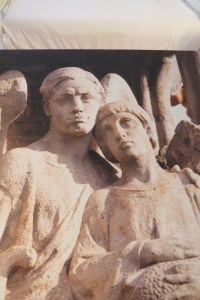
In 1915 during the construction of the Sant Rafael Pavilion, one of Dominech i Montaner’s 8 children, Ricard, aged 23, died of bronchopneumonia in 1915 having just completed an education in pharmacy.  Dominech had the sculptor Arnau represent Sant Rafael  with the face of Ricard.

4D4112A1-AB1B-4E62-87A1-89C016FF6BDA

The architect, throughout his life:

1FF53ED3-26ED-4D39-85F9-0C77F267EB64

The theatre was equally ornate and beautiful:


4476DA1F-0E83-45E5-A9B5-3212CFD2E1F9


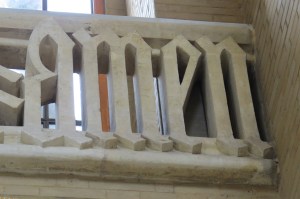
The stone balustrade in the Sant Pau chapel spells out a prayer in large gothic letters:  “Succour, Lord, the benefactors and the inmates of this Holy House here on earth and in Heaven and inspire sentiments of charity towards it.  Amen.”

In Barcelona we frequently found ourselves saying, “there can be nothing like this building anywhere else in the world.”  There seems no better way to sign off from beautiful Barcelona – than to say Amen.

0BBFB534-ECBF-48EF-AFFB-35432041E7FA

Off to Byzantium on my magic carpet!

Best,

Jan

Barcelona

Just a few highlights of Barcelona where my sister, Bonnie, joined me for a fabulous week.   There are further posts below made 4 years ago during a previous trip to Spain, but Barcelona is one of my favourite cities in the world and I couldn’t stop myself from taking more photos.

One observation:  four years ago, Catalan independence flags hung from almost every balcony.  Since then there was a failed attempt to separate by referendum in which the supporters of an independent Catalonia believed police brutality intimidated voters leading to the failed result.  Most of the party leadership were jailed for treason and Carles Puigdemont, the leader, is in exile in Belgium.  Recently, there were failed talks to resolve the issue of Catalan autonomy which in part led to a new election.  The result of that election was a minority re-election of the governing party (and a rise of the new populist party, Vox).  We saw far fewer Catalan flags this trip, suggesting either that Catalonians have given up hope for independence or that they are intimidated.  We did see many yellow ribbons which symbolize support for the jailed leadership, in the hope the charges against them will be dropped.

421528D1-A738-4EE0-895E-0B7441B909A2

Miro Foundation

Joan Miro is one of Barcelona’s most beloved artists and a man who led the way for a modern expression through art.  We visited the Miro Foundation on Mt. Monjuic.

Barcelona Cathedral

Since the “martyrdom” (torture and killing) of 13-year-old St. Eulalia for her refusal to denounce Jesus, the nuns in the cloister have kept 13 geese.

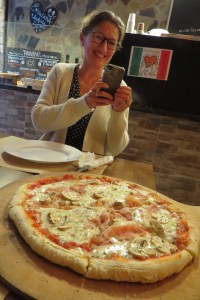
At the end of the day in the narrow streets of the El Born district, we managed to find a little pizza place with NO fish (so Bonnie could eat there).  However, try as we did, we never found it again.

B4A60938-C879-40A3-BCFA-B8F8AA18DEC6

Barceloneta

On a gorgeous day, we headed to Barceloneta, Barcelona’s beautiful beach and neighbourhood.  On the beach we saw Frank Gehry’s fish sculpture created for the 1992 Barcelona Olympic Games.  We took a cable car up Montjuic where we had a glass of cava and enjoyed the views.

Museo Picasso

We visited the Museo Picasso and saw “Science and Charity”, the original painting that was in an earlier post – the painting that launched Picasso’s art career at age 16 and caused his father to abandon his paints.   There were early portraits of Picasso and his father.  Another painting made at age 20, “The Prisoner,” is powerful.   We also saw his renditions of the city’s Columbus statue and Velazquez’s Las Meninas.

Bodega 1900

This was one of two highlights of the week.  We had watched the show “Somebody Feed Phil” (Barcelona episode – linked below).  Phil was the writer and inspiration for the tv show “Everybody Loves Raymond” and he is now doing a foodie show.  He mentioned the restaurant “Tickets” and the bar across the street, “Bodega 1900.”  The two are owned by the former chef/owner of El Bulli, the restaurant voted best in the world for 10 years straight.  

We headed for Bogeda 1900 knowing there would be too much seafood on the menu at Tickets for Bonnie’s allergy.   On arrival at Bodega 1900 we learned reservations are booked 2 months in advance.  I asked if we could just have a drink and the delightful waiter (who did a little Charlie Chaplin jump of delight every time he went in the restaurant door) said “Outside?”  Okay!  Once we were ensconced in our little outdoor table, the food started to arrive (“yes, Madam, we know all about food alergia and cross-contamination”).   

The olives weren’t really olives, but some sort of shell with a burst of intense olive flavour inside.   We ordered roasted white asparagus with lemon mayo and it was one of the most delicious things I have ever tasted.  We immediately ordered more.  Then came artichokes with Iberian jamon (like prosciutto), which arrived looking like roses.  We finished with perfectly caramelized Creme Caramel.  Spectacular!  The whole evening was made more fun by the camaraderie with fellow diners from Chicago and L.A who had also come here after watching SFP.  The power of the media!  

Opera

The other highlight of the week was going to the opera, Verdi’s Il Traviata, at the spectacular Palau de la Musica de Catalonia, with Yasuko and Bonnie.  The singers were superb and the orchestra was very good.  The setting was incredible (more to come) and it was a delightful way to spend our last evening in Barcelona.

Antoni Gaudi Buildings:

Since this was Bonnie’s first visit to Barcelona, we covered as many Gaudi constructions as we could.    I enjoyed seeing some of them again, and it was fabulous to see the progress on the Sagrada Familia.  The goal is to complete the cathedral, with 8 spires, by 2026, the 100th anniversary of Gaudi’s death. 

Casa Batlio

Casa Batlio is a Passeig de Garcia mansion Gaudi built that is available to tour.  The stunning blue tiles lining the central courtyard and the visit to the roof were highlights.

La Pedrera is much more accessible to the public than it had been.  We were able to walk in the door and do our own tour of this condo building during the day when the light was best.  The chimney pots and vents on the roof inspired George Lucas’s stormtroopers in the Star Wars series.  Lunch in the Cafe de la Pedrera, whose interior was also designed by Gaudi, was a must.

Park Guell

We taxied to Park Guell as it was quite far from our hotel and an uphill climb.  The magnificent park was conceived by Gaudi as an upscale neighbourhood, and there are several occupied large homes on the vast property.  There are two small Gaudi buildings open to the public but the most impressive sight is the “serpent bench” which winds around a square;  it makes a poignant setting for the many Catalan protests and demonstrations which occur here.  Afterward, we wandered down through some little streets and white Sangria to be served on a downward slope awaited us.

Sagrada Familia

The Sagrada Familia  is the most beautiful building I have ever seen, so breathtaking that it almost makes me feel religious.  The light inside glows from the sunlight pouring in the stained-glass windows.  They are hard at work on the exterior, especially on the remaining 4 spires to be completed.    Every attempt is being made to adhere to Gaudi’s vision for the cathedral.

Girona

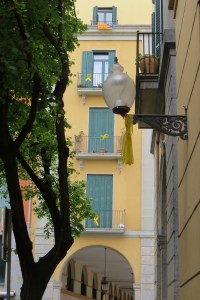
We took a side trip to the charming town of Girona, where an annual flower festival was in full swing.  Set along the river, it  evokes an image of the city of Florence, Italy, along the Arno.  The narrow streets and squares are delightful, the shopping looks fabulous, and this would be a fantastic place to return to for a few days.

The possibilities in Barcelona are endless, and what a variety of experiences we had this week – great food, important art, poking through the narrow streets of El Born and the gothic quarter, the beach, the architecture, the music – there is every reason to return and return and return to Barcelona.

Best,

Jan

Surreal

I’ve fallen a bit behind on posting due to slow wifi and busy having fun with my sister, Bonnie who joined me in Barcelona.  I’m back in business tonite from Canakkale, Turkey!  We spent a week in Barcelona and took a day trip to Figueres where Salvador Dali was born.

🦞Each morning when I awake,
I experience again a supreme pleasure
that of being Salvador Dali.🦞

Today we headed to Figueres, where Salvador Felipe Jacinto Dalí y Domenech, was born on May 11, 1904, in the heart of Catalan country just 16 miles from the French border.  Here, he was baptized, received his first communion, and in 1989, died.

716AD88C-5C6E-4D4A-80D0-2D709E8963CB                                         TeatroMuseo Dalí in Figueres

Dali was born into a quasi-surreal existence. His brother, also named Salvador, died nine months before Dali’s birth. At age five, hIs parents told him while standing at his brother’s grave he was the reincarnation of his older brother.   He would later say:  

💧We resembled each other
like two drops of water, but
we had different reflections.💧

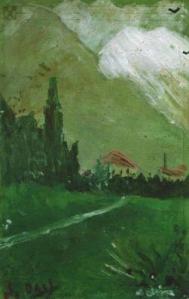
Like Picasso, Dalí produced highly sophisticated drawings at an early age.  His parents strongly encouraged him, even building him an art studio before he entered art school.  He painted this at age 6. 

58229A4E-5D7D-4774-B550-FF8EAF8ADF85

He was devasted at age 16 by the loss of his mother to breast cancer.  His father married his mother’s sister.  While at art school, he dabbled in cubism.   He was twice expelled from the Real Academia de Bellas Artes de San Fernando art school because he refused to submit to an oral exam, telling them, 

🐜I am infinitely more intelligent than these three professors,
and I therefore refuse to be examined by them.
I know this subject much too well.🐜

8E410F8E-22D8-45BB-9B3D-FD856AA542B8

In the 1920s, he went to Paris and began interacting with artists such as Picasso, Magritte and Miró, which led to Dalí’s first Surrealist phase.  There, he also attended the salons of Gertrude Stein and met Ernest Hemingway, F. Scott Fitzgerald and the other artists across disciplines seeking a new language to express their post-Great War age.  He also read and was influenced by Freud.  At just age 27, he painted his most iconic surrealist painting, The Persistence of Memory (now at MOMA).

0F7DAA3A-07E2-4BBE-836D-1CEFC09501A1

E85DA6A2-A128-46BC-96E4-47CED0105F6E
Dali and Gala

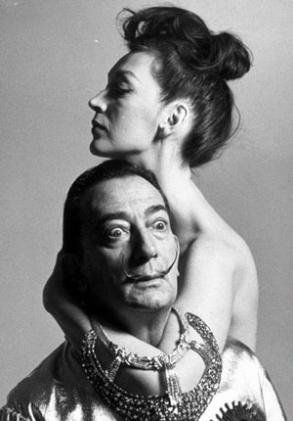
In 1934, Dali married Gala Diakonova.  She became his lifelong muse, portrait model, and business manager. He even signed his paintings with both of their names.


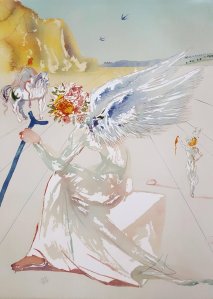
Dali was obsessed with Helen of Troy from childhood and saw his wife Gala Dalí and the surrealist character Gradiva as the embodiments of Helen. He dedicates his autobiography Diary of a Genius to

💋my genius Gala Gradiva,
Helen of Troy, Saint Helen,
Gala Galatea Placida💋

126E130E-F39B-4B42-85B1-E6F48FFE59C1                                                     Helen of Troy, by Dali

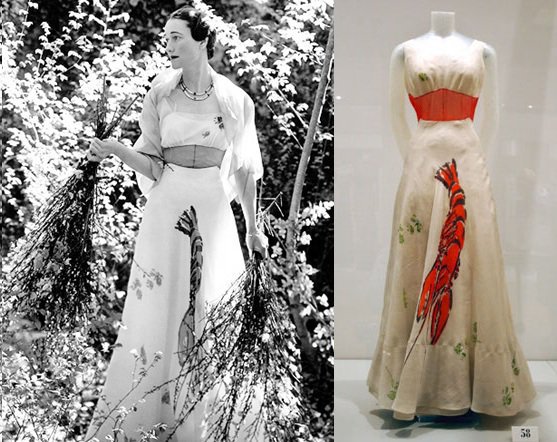
Dali experimented in many other media and genres and the avant-garde.  In 1937, he paired with Italian fashion designer Elsa Schiaparelli to create “the lobster dress,” worn by Wallis Simpson in a Vogue photoshoot.  (Dalí regularly put lobsters in his paintings, often using them to represent his fear of castration.)

2D0B1EA3-CE9F-45AC-8E90-40DBEF0B590C

He also designed a dream sequence for Alfred Hitchcock’s thriller, Spellbound, and worked with Walt Disney to create an animated short, but the project was shelved for financial reasons.  Several years later, Walt Disney’s nephew made the 6 minute film based on Dali’s storyboards, and it’s rather lovely.

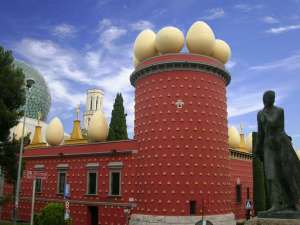
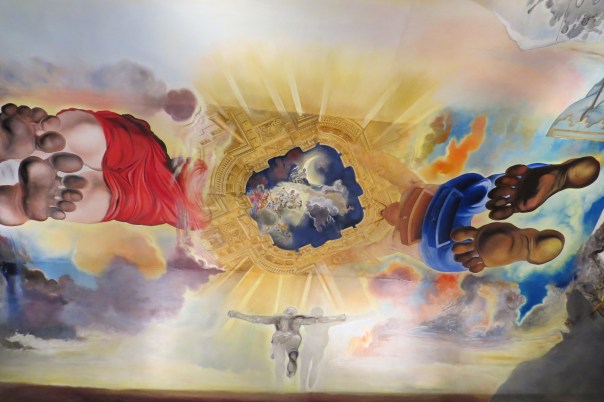
In the 1960s, the mayor of Figueres, Spain—Dalí’s hometown—asked the artist to donate a piece to the city’s art museum, Museu de l’Empordà. Instead, he declared he would donate an entire museum. He began refurbishing the Figueres Municipal Theatre, which was almost entirely destroyed during the Spanish Civil War, and turned it into the Salvador Dalí Theatre-Museum. The museum, with its Dalí-designed facade decorated with sculptures of giant eggs and bread rolls, officially opened in 1974, but Dalí continued to expand it up until his death.

He played with optical illusions – this depiction of Abraham Lincoln doesn’t appear at all looking at the painting, only a painting of a naked woman shows, but is clear in the photograph.

The arrangement of furniture only clearly becomes a portrait of Mae West when you climb some stairs and look through a convex magnifying glass.

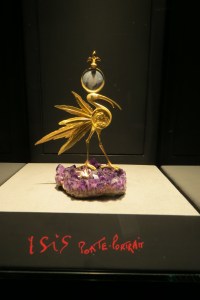
He did some beautiful work in many different media, such as this treasure:

747A5F02-67B2-46FF-9FA6-34789206F5EC

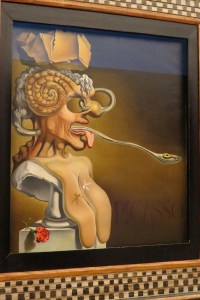
Make what you will of his 1947 portrait of Picasso “Portrait of Pablo Picasso in the Twenty-First Century” – the painting was part of a series of portraits of genuises:

6753A458-D820-4D3B-B35B-E2C41E3B9C3F

After the love his life, Gala, died, he made this painting of their reunion in heaven:

95E9738C-89B5-48A5-BAE2-CFDB6F182E86

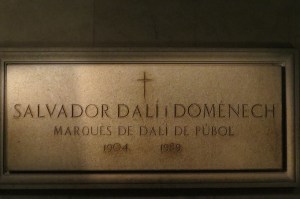
The 1980’s were cruel to Dali; he developed a palsy and could no longer paint, and then his beloved Gala died.  Later, he was badly burned in an electrical fire and ended up in a wheelchair.  He died in 1989 and was buried under the theatre stage here in Figueres.

9C857672-6150-40B6-8456-527947D7B247

But he still had one more display of surrealism to come.

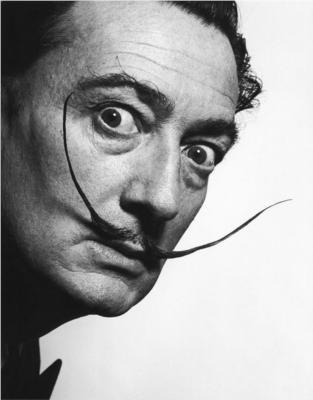
In July 2017, Dalí’s body was exhumed as part of a paternity suit brought by a woman who claimed to be his daughter. The exhumation proved the woman wrong, but it did yield one unexpected discovery:  according to the forensic experts who saw the body, his trademark waxed moustache has remained intact since his 1989 death. “The mustache preserved its classic 10-past-10 position,” Lluís Peñuelas of the Gala-Salvador Dalí Foundation told a Spanish newspaper. The doctor who embalmed Dalí in 1989 called it “a miracle.”  That’s some serious Pomade!

EC1EC414-7767-46CC-9CEB-6C59583F4826

Best,

Jan

Granero

Valencia, on Spain’s east coast on the Med, and its surrounding fertile farmland, is Spain’s breadbasket.  All of the foods above, introduced by the Moors, are grown here.  The locals grow Bomba, the best rice for Paella.  Spain’s national dish began here as a filling midday meal for farm workers who were growing rice, tomatoes and saffron.  Surprisingly, especially for a seaside city, the classic Paella from Valencia includes rabbit, chicken, two or three types of fresh, local beans, and snails or a sprig of rosemary.  No seafood, no chorizo!

It’s all about the rice and getting as much flavour into that little grain as possible.  Don’t stir it, the rice is meant to be dry, not creamy.  And a little browning on the bottom is nice, like a gratin in reverse.

Here is a link to a recipe for a classic Paella Valenciana:

Paella Valenciana Recipe -The Traditional Paella Valenciana

7D5696A6-B954-4248-8449-CBB3D03C1FAA
La Tomatina

And hey!  If you’re going to be in Valencia on August 28, 2019, consider swinging by La Tomatina, the festival celebrating the tomato harvest with all the merriment of a giant tomato food fight.  And yes, you have to pay to do this.  To tour companies with names like “rad season” and “stoke travel.”   Go for it!

I’ll be at the Mercado Central instead, where the parrot weather vane reminds you that if you want to catch up with the latest gossip, you should visit the central market!

Agua Valencia is the local heady concoction of locally made orange liqueur and cava, which had to be sampled.  Absolutely delicious, but would definitely lower your resolve if you went shopping afterward. 

Our hotel is centrally located and directly across a lane from this wonderful Rococo building, formerly the mansion of the Marquis and Marquessa Martí, which houses a ceramics museum.   

The ceramics collection was well-organized chronologically with ceramics from the 10th century to the present, including a small collection of Picasso pieces.

CE9D67D3-C084-4D33-9200-BAA9FEA45AFB

Even more spectacular were the carriages and living quarters of the Marquis and Marquessa.  The kitchen had a colourful backsplash; there were walls covered with embroidered silk and the rooms were undeniably Rococo, that over-the-top period of the late Baroque.

Another unexpected feature of Valencia was the importance of the silk trade.  The local park was filled with mulberry trees and there was a museum we didn’t have time to visit.  We did visit the site of the medieval silk market and maritime courtroom.

Each March 19 in Valencia, Las Fallas (“the fires”) Festival is held and all the women, men and children dress in the classic medieval “silk suits” and parade through the city.  Then, the burning of the ninots” – nearly 400 fireworks are lit and everyone in the city burns about 800 papier-mâché figurines, all with firefighters standing at the ready.  The festival lasts for several days and is taken very seriously by the Valencians.

This generates a significant silk industry even today.   A more fulsome description of the festival is here:

https://www.pri.org/stories/2018-03-15/meet-dress-history-expert-outfitting-valencia-las-fallas-festival

There is much more to see and do in this lovely city on the eastern shore of the peninsula.  For now, we head to Barcelona.

Best,

Jan


Moving Parts


We shape our buildings and afterwards our buildings shape us…”

                                                – Winston Churchill (May 10, 1941)


The magnificent buildings pictured above, “the city of arts and sciences,” – opera house, performing arts centre, science museum, planetarium, oceanographic park, suspension bridge and sculpture garden – were built for the City of Valencia by home-grown talent, architect Santiago Calatrava.

We had a tour of the science museum today.   I was sorry the opera house was dark tonite.

In 1981, Calatrava was awarded a doctorate in the department of architecture
Eidgenössische Technische Hochschule in Zurich, Switzerland, after completing his thesis on “The Pliability of three-dimensional structures.”  Calatrava explained that he was particularly influenced by the work of the early 20th century Swiss engineer Robert Maillart, which taught him that, “with an adequate combination of force and mass, you can create emotion.”

He says that “movement gives an added dimension to form. It makes form a living thing. Instead of thinking of a building as something mineral, like a rock, we can start to compare a building to the sea, which has waves that move, or to a flower whose petals open in the morning. This is a new, more poetic understanding of architecture.”

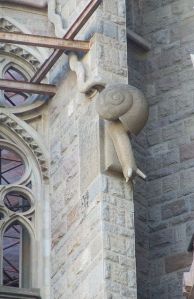
New, yes, but perhaps with a nod to Antoni Gaudi, whose nearby Barcelona architecture relies so heavily on nature as its inspiration.  On the side of a cathedral, a slug with its slime trail, by Gaudi,

27B098C5-8B3F-4C54-B9CB-2D627BF59C81

or a locust, as in this Calatrava building, the Palais des expositions et des congrès de Oviedo, I had seen previously in Oviedo, Spain.


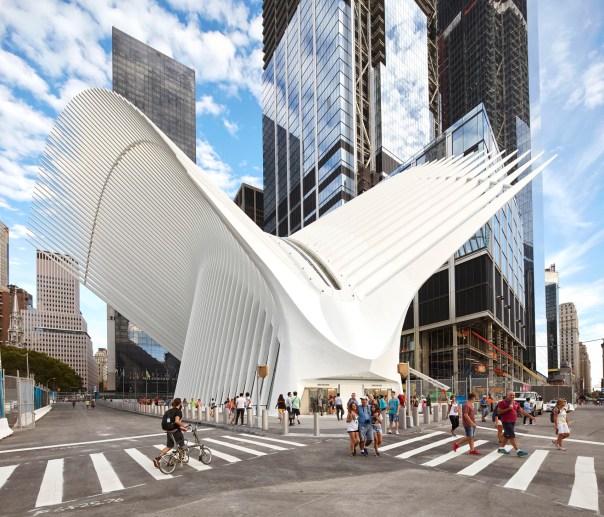
Calatrava is not without his critics, or detractors, or lawsuits.  His epic project delays and cost overruns are notorious, matched only by his awards and honours (Wiki lists 22 honourary degrees from around the world).  Reaction to the Oculus transportation hub in lower Manhattan exemplifies the dichotomy.

Jimmy Stamp of The Guardian wrote: “I despised the new World Trade Center transportation hub before I even saw it. It’s $2bn over budget, had construction problems and design compromises, it’s seven years late and still incomplete…but when I was standing on the marble floors in its enormous, gleaming central concourse two stories below street level, staring up at a clear blue sky between bone-white ribs vaulting 160ft over my head, I, like Jonah in the whale, repented – at least for the moment….The Oculus presents a more optimistic vision, one based less on present realities and more on future possibilities. Less Blade Runner, more Star Trek. By the time we get to that future, whichever one it may be, the delays and the cost and the controversies will be forgotten, but we will be left with a luminous great hall in the heart of downtown New York.”

If your city needs to be lifted up, and NYC at the World Trade Centre site certainly did after 911, do you choose cost-saving concrete, or soaring inspiration and vision?

7D354713-F1C3-429D-A924-5CD3BF3660E8

99E67ECA-E7FE-45E6-8C46-9B7BFD9F24DDThe Oculus transportation hub, NYC

Best,

Jan

The Red

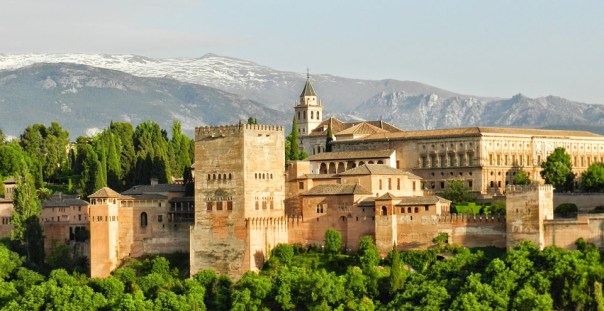
For seven centuries the Moors had ruled al-Andalus.   The Christians in the north, though, had persistently fought for more and more territory to the south, and al-Andalus had devolved into a series of taifas (city states).  By 1236, King Ferdinand III of Castille had taken Seville, and looked hungrily at Cordoba, the most powerful Moorish territory in al-Andalusian history.  In order to gain Cordoba, Ferdinand traded Granada in an alliance with Ibn Ahmar Nasr, a successful muslim general.  Nasrid helped him take Cordoba, and, under the king’s protection, the Nasrid family went on to rule Granada for 250 years.

It was the first Nasrid who began construction of the magnificent fortress high in the Sierra Nevada on the site of what had been referred to as the “old red fort,” so named because of the red earthen walls.  The name Alhambra (“the red”), survives to today.

AED3225A-782A-4271-A737-DE039EEC97BC

Eventually, Granada was the only Moorish territory remaining.

D2ECDAB2-E1CB-4095-8223-8706A6A6154D

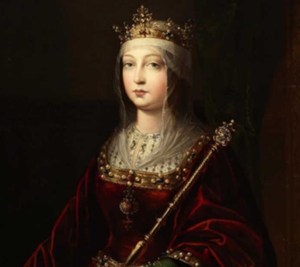
In 1469, in an astute political manoevre that belied her youth, Isabella, heir to the throne of Castille, married Ferdinand, heir to the throne of Aragon.   Eventually they consolidated power, unifying a new single Catholic state, Castille, and in 1491, they set their sights on Granada.   It was clear to them that no-one would be able to penetrate the Alhambra militarily, and after a one-year seige on the city, Isabella came up with a diplomatic strategy.

“Their highnesses and their successors
will ever afterwards allow [Granadians]
to live in their own religion, and not permit
the Mosques to be taken from them, nor
their minarets nor their muezzins, nor will
they interfere with the pious foundations
or endowments, which they have for such
purposes, nor will they disturb the uses
and customs which they observe.”  

                             –  Chapter 6, Agreements of Capitulation of the City of Granada

With this agreement and “the Moors’ last sigh,” the last Nasrid, Muhammad XI, fled Granada.  His mother remarked under her breath that he should not cry like a woman for a place he would not defend like a man.

So it was that Isabella and Ferdinand and their entourage, dressed in Arab finery, swept up the hill and into Alhambra, declaring it their new “casa real”, marking their total and final rule of the entire Castillian empire.   

24601775-94DF-4311-8282-75D24F5CCE2B

Despite the “capitulation,” within months, the Jews were expelled from Castille and within the next few years, over 300,000 Muslims were also banished.  Not long after, over a million Muslim texts, including Cordoba’s entire royal library, were destroyed.

Whatever we may think about Ferdinand and Isabella’s treatment of non-catholics, their takeover of all of Spain was just one of a seemingly endless chain of usurpations of the fabulous Iberian peninsula (making the case for the “one damn thing after another” view of history), one that lasted until Franco seized power in 1939.  Isabella and Ferdinand’s consolidation of power and territory in 1492 marked the end of the middle ages and ushered in the Spanish Golden Age.  

The beloved Alhambra was preserved, untouched.

Nights from the Alhambra by Loreena McKennitt; short sample, the full album is on youtube.

My impressions of these spectacular buildings and gardens:

Later, we visited the Albaicin district of Granada, the medieval Moorish quarter outside the city wall:

This is where my look at Muslim rule in southern Spain leaves off; shortly, I’ll look at Christian domination of the east in roughly the same time period.  But first, a little more España!

Best,

Jan

(If you’re interested, this is how the beautiful, ornate plasterwork in Alhambra is made and restored:)


Costa del Sol

C1B0562E-E5BF-412D-A73F-C1FCAE2C3FBA
Sun Coast

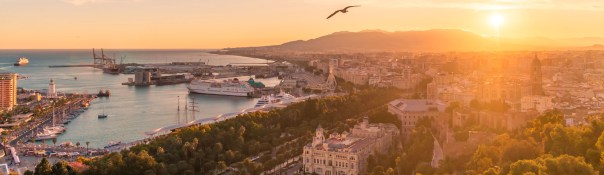
We have a free day in Malaga, a gem of a city of about half a million people on Spain’s sunny, southern coast.

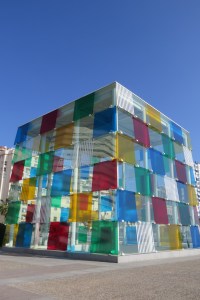
This cultural hub has 30 museums, including outposts of the Centre Pompidou of Paris, the Russian Museum of St. Petersburg and the Thyssen Museum of Madrid.  Perhaps not surprisingly, there are two museums in this birthplace of one of the most famous artists in modern history.

“I was born of a white father
and a small glass of Andalusian eau de vie
I was born to a mother the daughter
of a fifteen year-old girl born in the Percheles of Málaga
the handsome bull who sired me with his forehead
crowned with jasmine”. Pablo Picasso. 4 May 1936.

                                                                                 – Translated from: Picasso: Écrits, 1989

Pablo Diego José Francisco de Paula Juan Nepomuceno María de los Remedios Cipriano de la Santísima Trinidad Ruiz y Picasso was born on October 25, 1881  and lived here with his family until 1891 when the family moved to Galicia, and a few years later, to Barcelona.

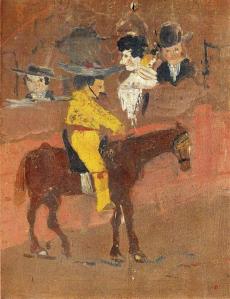
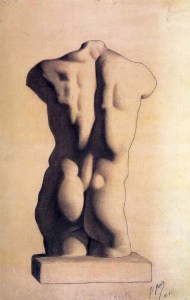
Pablo Picasso’s father, Ruiz, was himself a painter and art teacher who specialized in naturalistic depictions of birds and other game. Picasso showed a passion and a skill for drawing from an early age. According to his mother, his first words were “piz, piz”, for lápiz, the Spanish word for “pencil”.  From the age of seven, Picasso received formal artistic training from his father in figure drawing and oil painting. Ruiz believed that proper training required disciplined copying of the masters, and drawing the human body from plaster casts and live models. His son became preoccupied with art to the detriment of his classwork.

Painted at age 9:
70922F31-4557-4D70-B96E-C0D96D6EFA4E

Pencil drawing at age 11:

D0FB1ADA-32B6-4DB5-9832-980F43244289

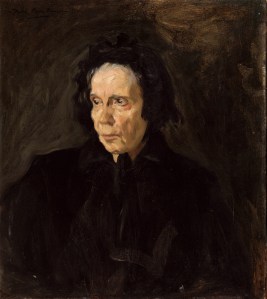
This, at age 15, Aunt Pepa, in Malaga:
MPB 110010 0036

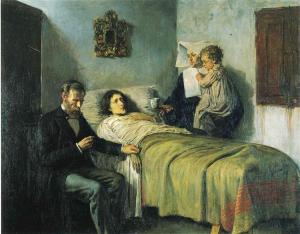
It was this painting (and most                                                                                                                     notably, the delicacy of the hands),
made in Barcelona at age 15, that got
him into the Madrid Real Academia
de Belles Artes and prompted his
father to give all his paints to his son,
abandoning painting forever,
Science and Charity:

D686F236-1169-4C3D-8201-930B703D7A62


Picasso:  It took me four years to paint like Raphael, but a lifetime to paint like a child.


His transformative piece, made at age 26,
is thought to be this, in which he uses the
mask as a symbol for the first time,
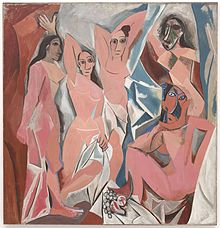
Les Demoiselles d’Avignon:
75839B2F-2764-4752-9E8A-9B6719B1266A                It was received with shock and revulsion.

The recent film, Never Look Away, is a fascinating look at the development of an emerging modern artist (in that case, Gerhard Richter). The trailer:

There is so much more to Malaga and the stunning Costa del Sol!

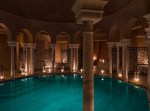
I packed a lot into our free day here, starting with a visit to the gorgeous Hammam Al-Andalus, in a building with all the tile work and intricate woodwork of a Moorish alcazar.  I had a salt scrub and massage followed by the steam room and the pools.  Here is just one of the four pools, each at a different temperature.

784AD789-11A8-4D0F-99B2-0C156D51B738

Nearby was the Thyssen Museum which had stunning paintings from the Spanish Romantic period, intricately detailing the clothing of flamenco dancers and matadors.  Bejarano was my favourite artist.

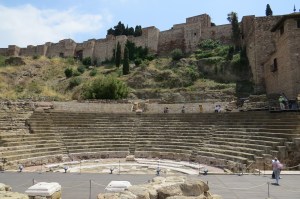
I wandered the narrow streets and shops as I headed toward the Roman amphitheatre.

9FC3D35B-313E-459B-A97F-6C8C640E3863

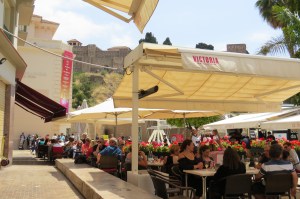
I knew there was a popular restaurant nearby and by this time I was hungry.  It was at the amphitheatre and Alcazaba, which towers above on the hillside.

9FE3C68C-AD25-4E15-B24C-1E7CDEFD302D

Look who’s coming to the Cervantes Theatre on June 29th:

The Picasso museum was right around the corner, and I spent quite a bit of time there.  They have an impressive collection from most periods of his life and work and an exhibit about his poor wife, Olga.

I strolled back toward the hotel as I still wanted to visit the Pompidou museum and the beach.  The Pompidou is a cultural landmark at the entrance to the harbour, literally steps from our hotel.  The gallery is laid out thematically and there were quite a few important modern artists represented, including a brilliant mural by Miro, “homage to the Catalan people” made by Sauro during Franco’s rule, Chagall’s “The Fall of Icarus”, and a Kandinsky painting made just after he left the Bauhaus school and Germany preceding the second world war.

50BB0837-6C48-47D3-8BB7-68FA366004FB

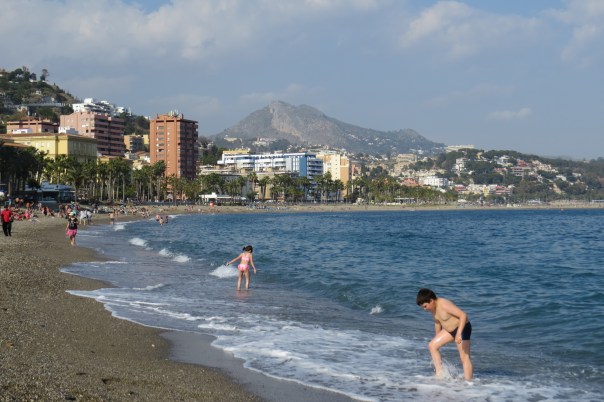
The beach, “Malagueta,” was only a steps from the gallery, and dipping my feet in it transported me back to the spa where I started my day.  I stood in the Med for awhile and then sat on the beach enjoying the view and the people-watching.

96111884-B685-44D5-B5AB-192461056AC9

I ran into new friends in time for a fun dinner.  I really could not have asked for a more perfect day.

A few more images of this stunning, very walkable resort town.

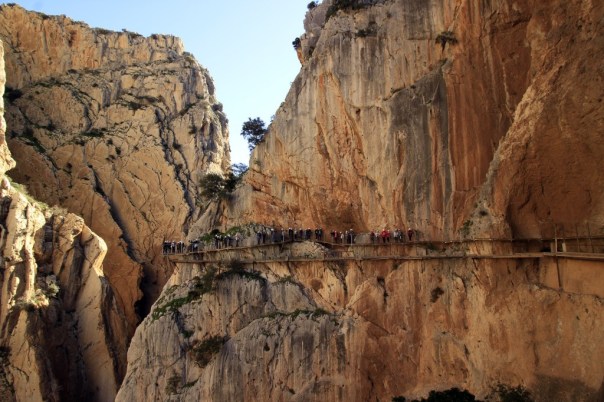
With a little more time (and I hope I will have the chance to return), I would do this spectacular hike.

28B6204A-D3FB-4344-95BA-5563FB196DAE
Carmelita del Rei

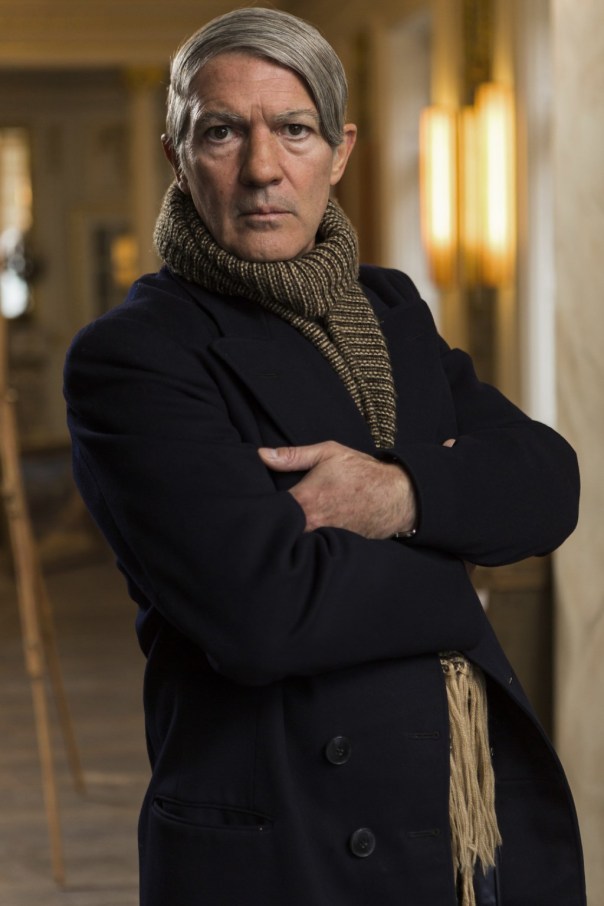
Another claim to fame for Malaga:  Antonio Banderas was born here.

0CCA92DB-6A62-4D4E-91DA-D821968C2C4B
Picasso, played by Antonio Banderas for the series Genius

Best,

Jan

The Rock

In the worlds of military strategy, diplomacy and trade, treaties often hinge on one small point or another and agreements and accommodations are made which do not necessarily take into account the future.   Often little slips of land, especially those that seem to fall off the edge of a continent, are conceded.   Some citizens of those little slips of land are proud and devoted to their unique homeland, some are there to be “away”, others are there for their peninsula’s strategic value.

9D5FA73D-54D1-499F-B4DD-0A79C58061F8

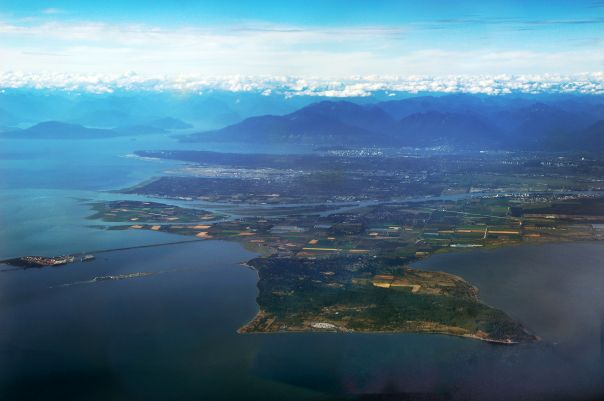
Point Roberts comes to mind, next door to Tsawwassan, B.C., created when the U.K.  and the U.S. settled a border dispute  in the mid-19th century with the Oregon Treaty.  They agreed the 49th parallel would delineate both countries’ territories, but they overlooked the small peninsula, Point Roberts (south of the 49th parallel).  The only way to get there by land is through Canada.

C89ECB1A-C5AC-4DC1-A874-EA1519F495C4

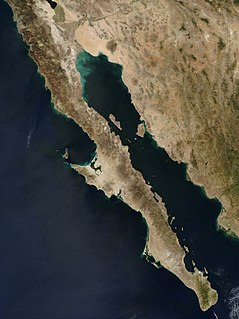
The land of California existed as a myth among European explorers before it was discovered. In 1510, the idea of California was described as being “very close to the side of the Terrestrial Paradise; and it is peopled by black women, without any man among them, for they live in the manner of Amazons”.  In 1804, the Spanish colonial Viceroyalty of New Spain divided the Baja peninsula into Alta (upper) and Baja (lower) California.  After 1848, the Baja California Peninsula again became a Mexican territory when Alta California was ceded to the U.S. The only way to get to the Mexican Baja by land is through the U.S.
528EF3D5-F386-47A3-90F8-04295B786A4B

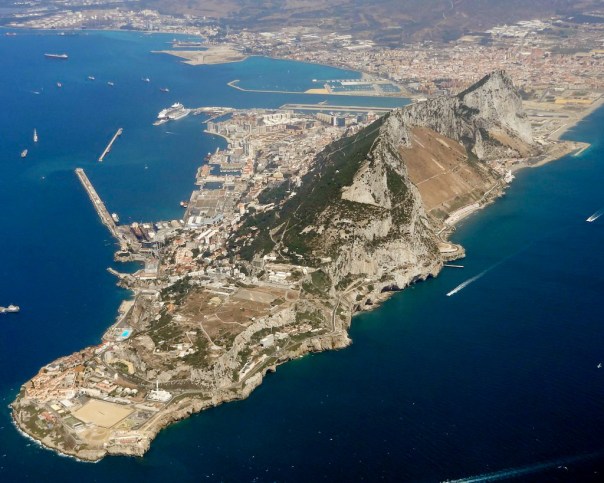
Mons Calpe, now Gibralter, or “Gib” as our tour guide called it, was considered by the ancient Greeks and Romans as one of the Pillars of Hercules.  When Hercules had to perform twelve labours; one of them (the tenth) was to fetch the Cattle of Geryon of the far West and bring them to Eurystheus; this marked the westward extent of his travels.   It was thought that beyond this was the land of Unknown, the underworld.

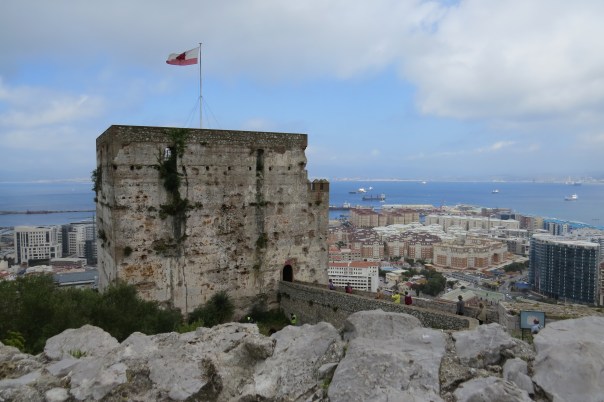
A moorish castle was constructed in 1333.  The flag of Gibralter now flies above it.

03D2506E-EEB2-4E96-AD3C-4BA7754E1023

In 1462, Gibraltar became part of Spain and remained so until 1704. It was captured during the War of the Spanish Succession by an Anglo-Dutch fleet.  At war’s end, Spain ceded the territory to Britain under the terms of the Treaty of Utrecht of 1713 and the peninsula became a key British possession in the Mediterranean.  The only way to get to Gibralter by land is through Spain.
6600A13C-2588-4137-B559-8451B89E24ED

In an attempt to recapture Gibralter by Spain and France during the American Revolutionary War, a number of sieges were attempted. It was the fourteenth and final siege of Gibraltar, which lasted from July 1779 to February 1783, when the siege tunnels were constructed through the limestone rock by the British. During the siege, British and Spanish forces faced each other only 1 km apart, but the British held their ground.

Gibralter’s strategic value increased with the opening of the Suez Canal.  A large British naval base was constructed there at great expense at the end of the 19th century and became the backbone of Gibraltar’s economy.  

One of the most densely populated territories in the world, Gibralter has a population of over 32,000, two-thirds Roman Catholic.   Land is at such a premium that the single runway for landings and takeoffs to and from Britain is shared with motorists, cyclists and foot passengers, with a railway crossing barrier lowering when the runway is needed.

In a 2002 referendum, Gibraltarians rejected by 99% a proposal of shared sovereignty on which Spain and Britain had reached “broad agreement”.  The British government has committed itself to respecting the Gibraltarians’ wishes.

After rambling the upper reaches of The Rock, I went in search of Moroccan food, only slightly off the beaten fish ‘n’ chips path.

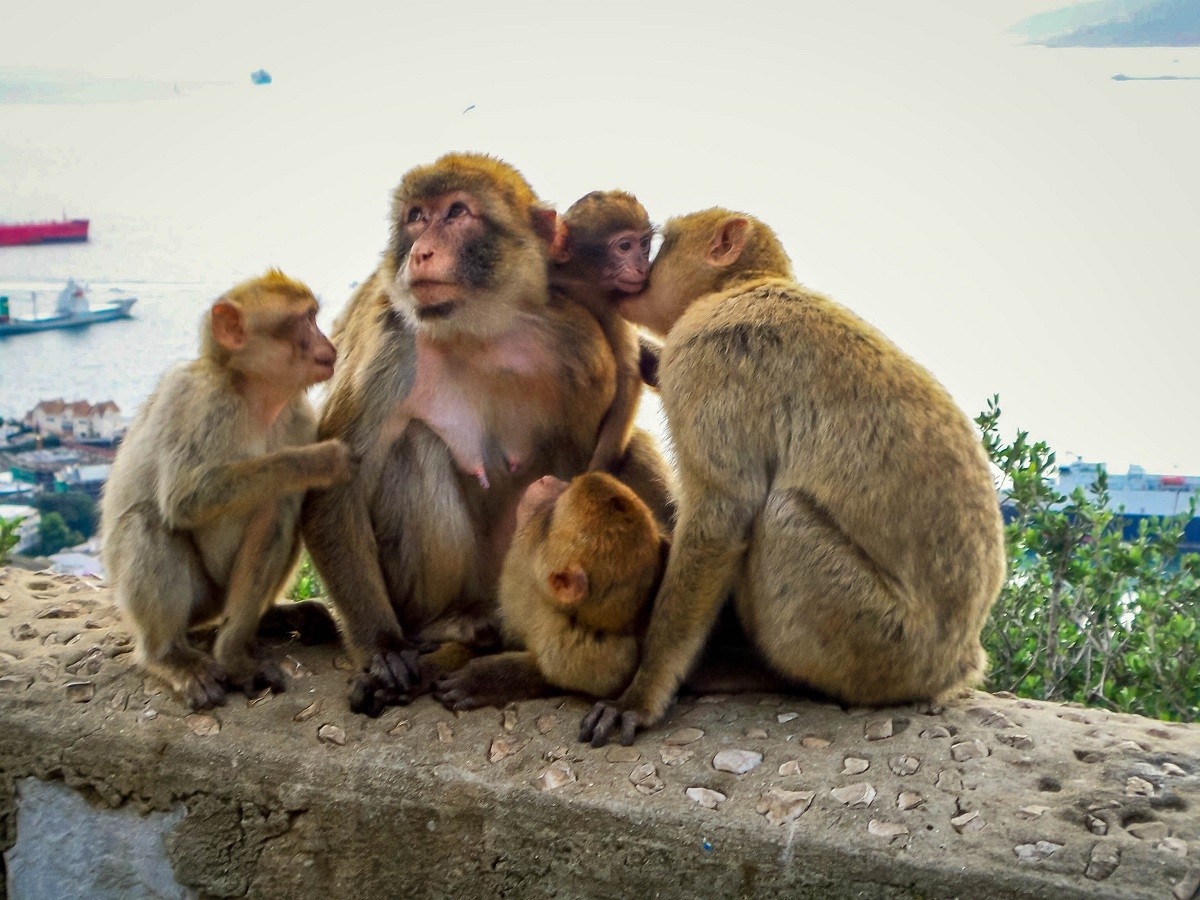
Barbery Macaques

“Rock Apes. Births: To Phyllis, wife of Tony,

at the Upper Rock, on 30th June 1942— a child. Both doing well.”

Gibralter Chronicle

E5877A85-25A1-4C83-8A90-11955B664A82

Folklore suggests that when the Macaques leave Gibralter, so will Britain.  The only monkeys in Europe, their numbers dwindled to just 7 animals before Winston Churchill sent a message in 1944 to the Colonial Secretary requesting that something be done about the situation; the military were put in charge.  Today there are 300 Macaques in Gibralter organized in several “troops.”   In the Brexit referendum,  96% of Gibraltarians voted to remain in the E.U. on an 82% turnout.  It is unknown whether the Macaques were consulted.

BB2696C3-AC11-4DED-8BF0-FDBA082527B3

Best,

Jan