Only a few more hours until my eyes will be on the pyramids….
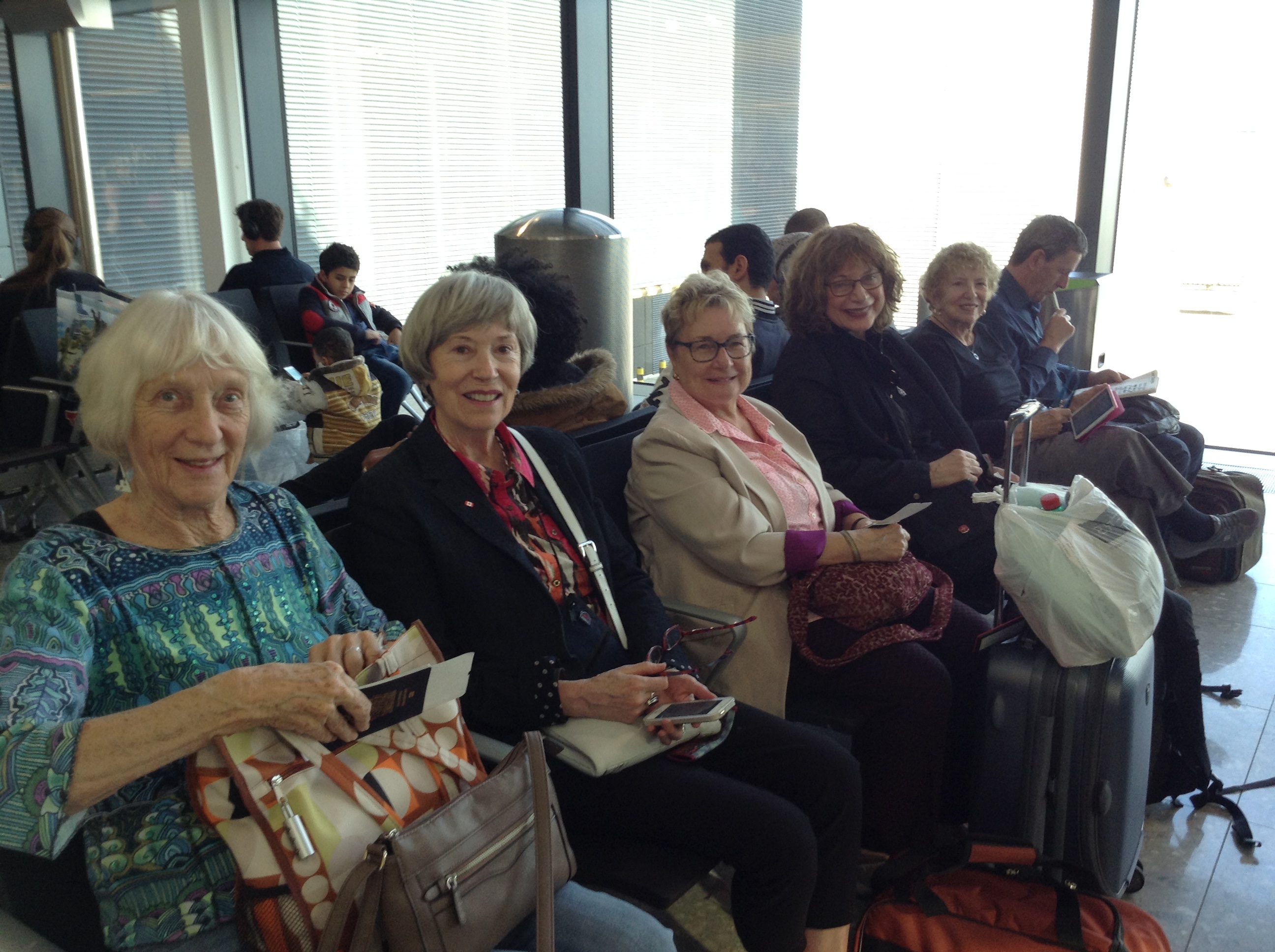
The group, at Heathrow, boarding for Cairo in 5 minutes. :))
Jan
Only a few more hours until my eyes will be on the pyramids….
The group, at Heathrow, boarding for Cairo in 5 minutes. :))
Jan
First steps on another journey, this time to one of the most mystical, magical places on Earth. Home to the only remaining intact wonder of the ancient world, the pyramids will fall on my gaze as soon as tomorrow nite. From the fascinating, teeming culture of Cairo, the awe of Alexander the Great in Alexandria to the tombs of some of the most powerful leaders the world has ever known, I am restless with anticipation.
The plan is to travel by air, camel, fallucca sailboat, horse and buggy and more.
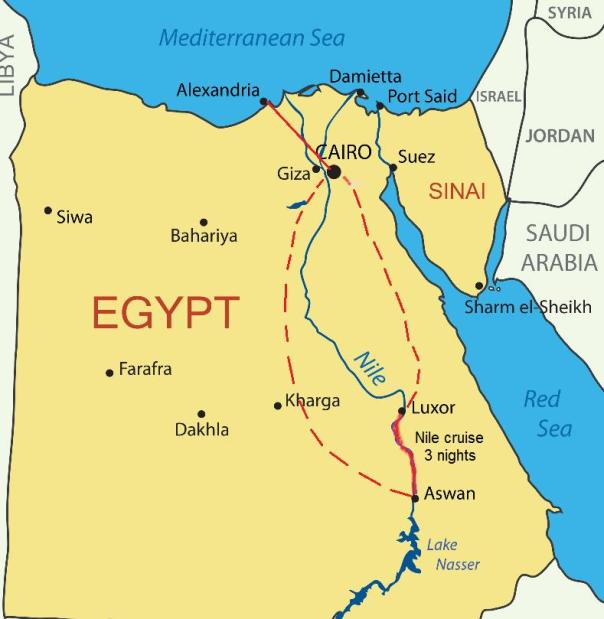
From Hatshepsut to Cleopatra, I am looking forward to immediate, tactile impressions of powerful women in Egypt’s history. Off I go!

Have a great couple of weeks! C U soon!
Jan
Our travels on the islands were busy and we had little to no wifi access so I am just starting to catch up. Starting out, as we flew our little puddle jump from Victoria to Vancouver, looking down at the gulf islands glistening in sunlight, I wondered, do I really need leave these islands to go to some other islands?
Paros
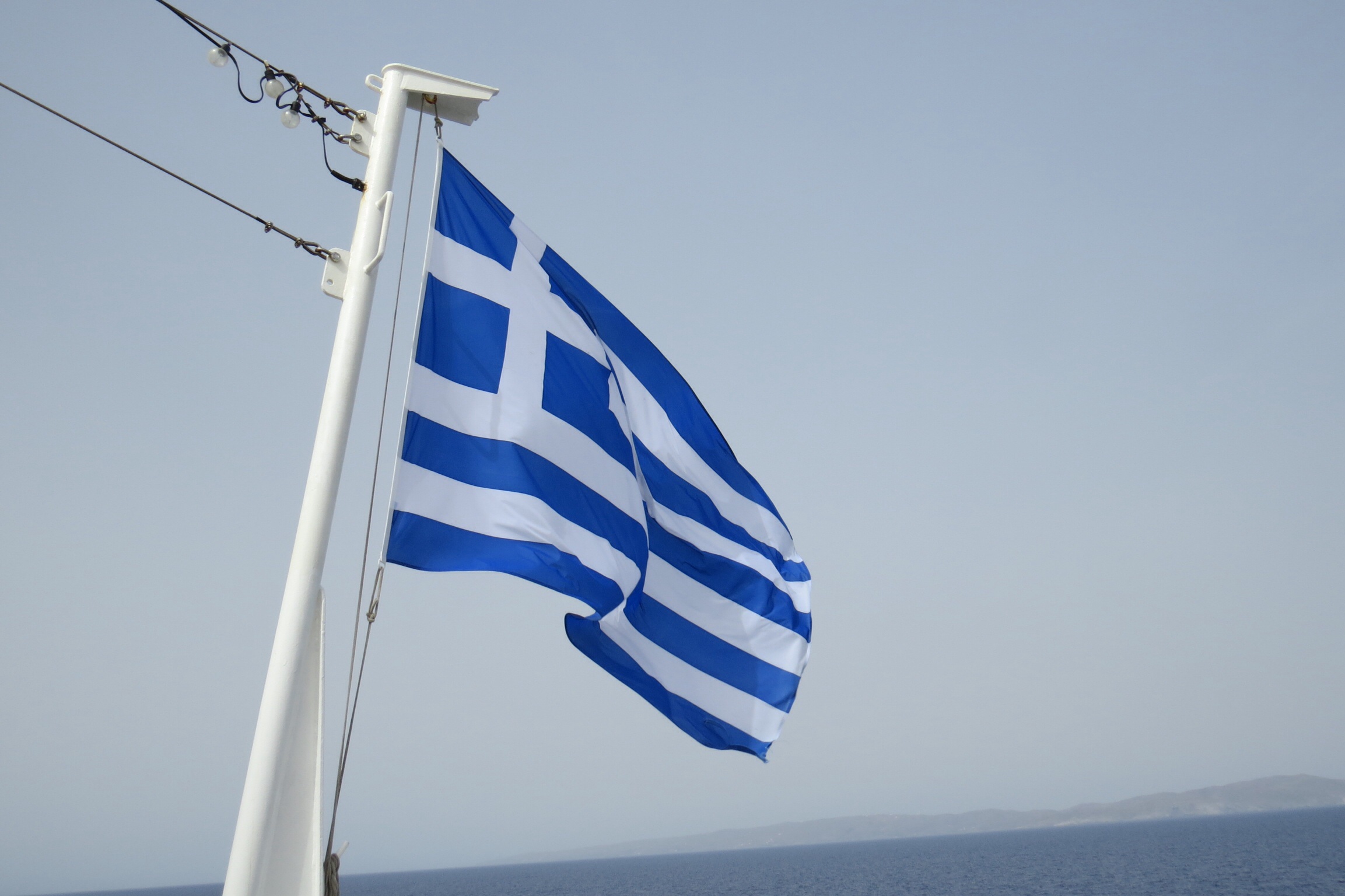
After our flights and an overnight stop in Athens, we boarded a Blue Star ferry bound for our first destination, the island of Paros.

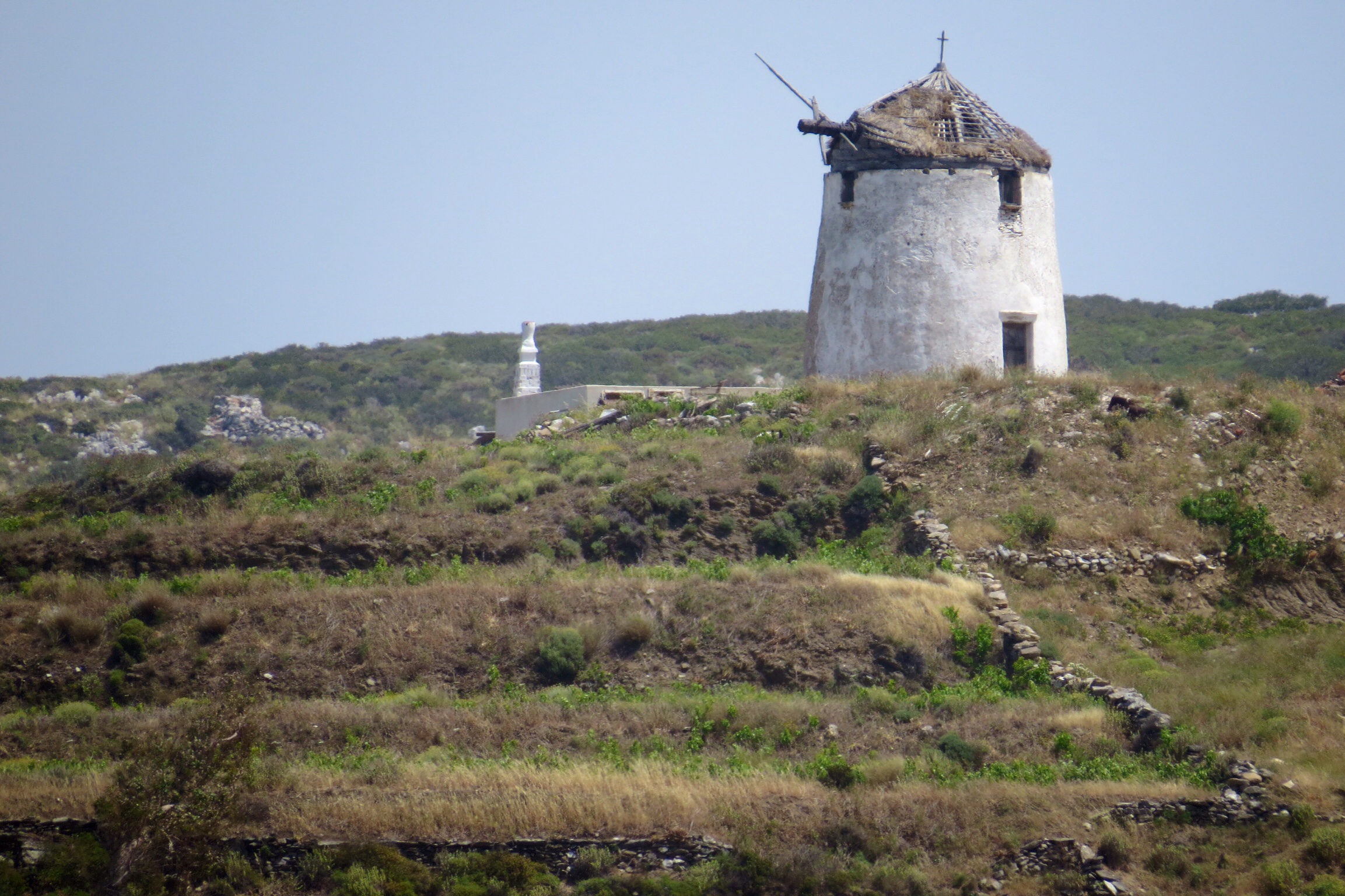
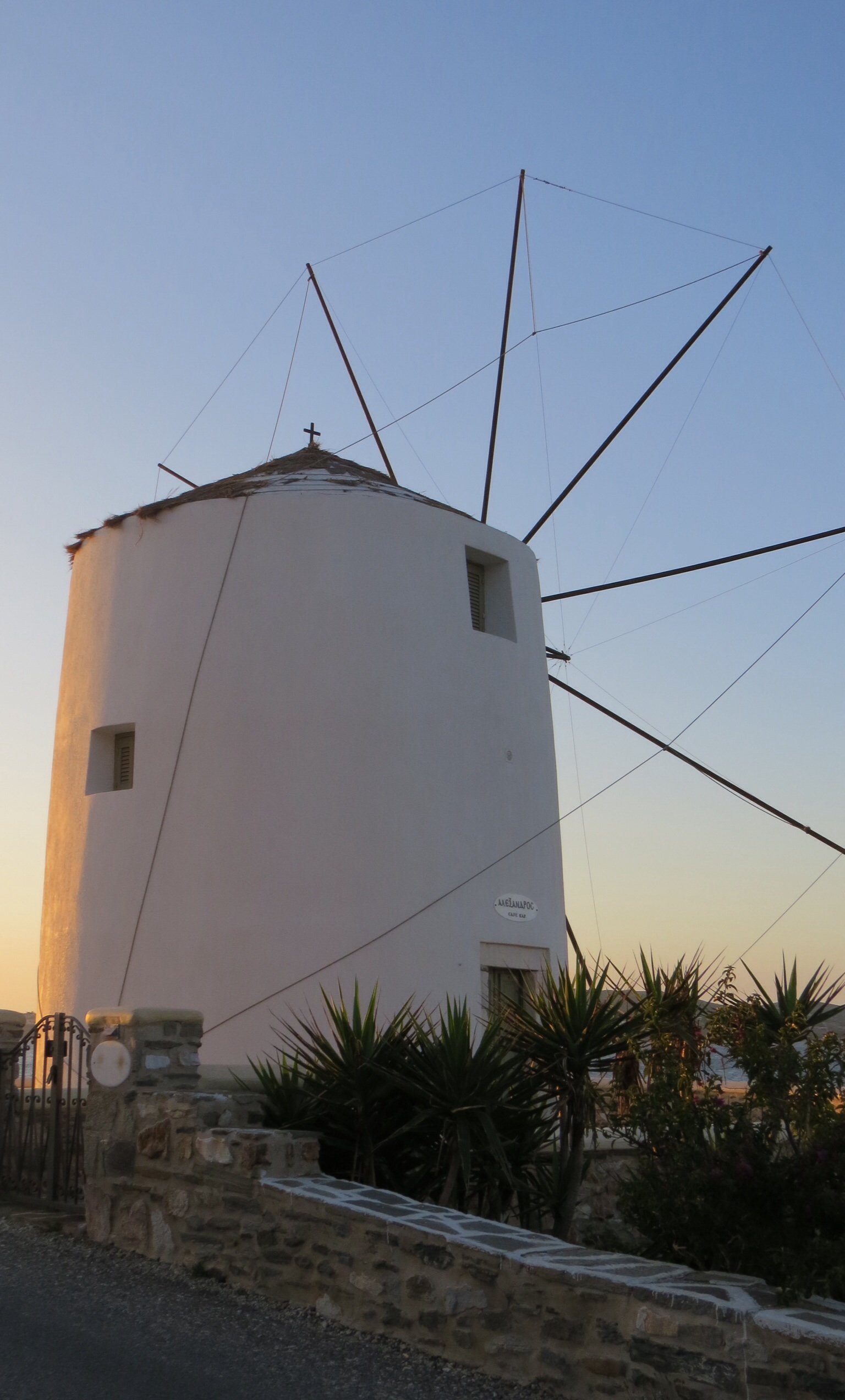
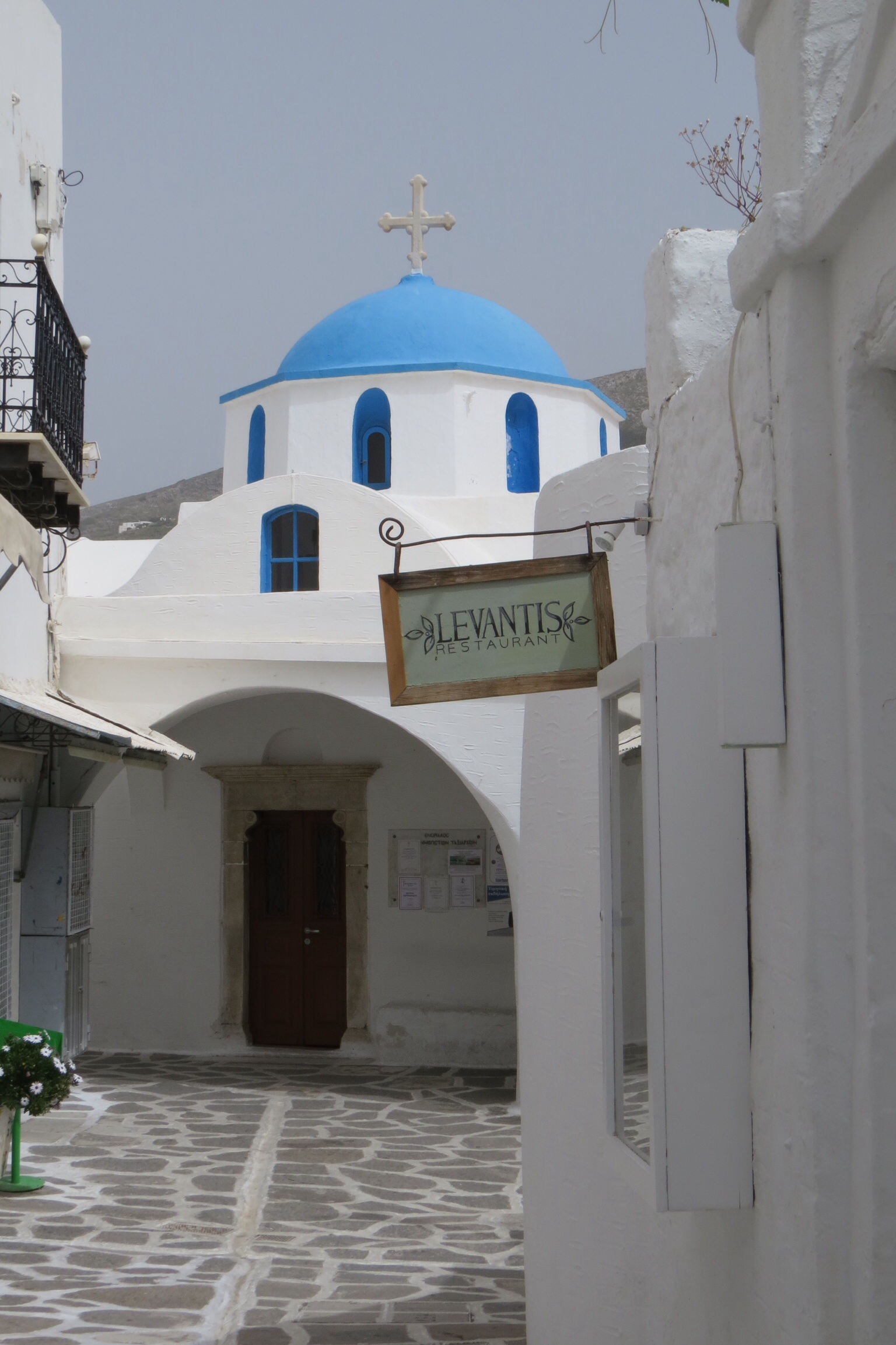
The island is dotted with windmills and the familiar blue domes of countless churches and family chapels on the Cycladic islands.

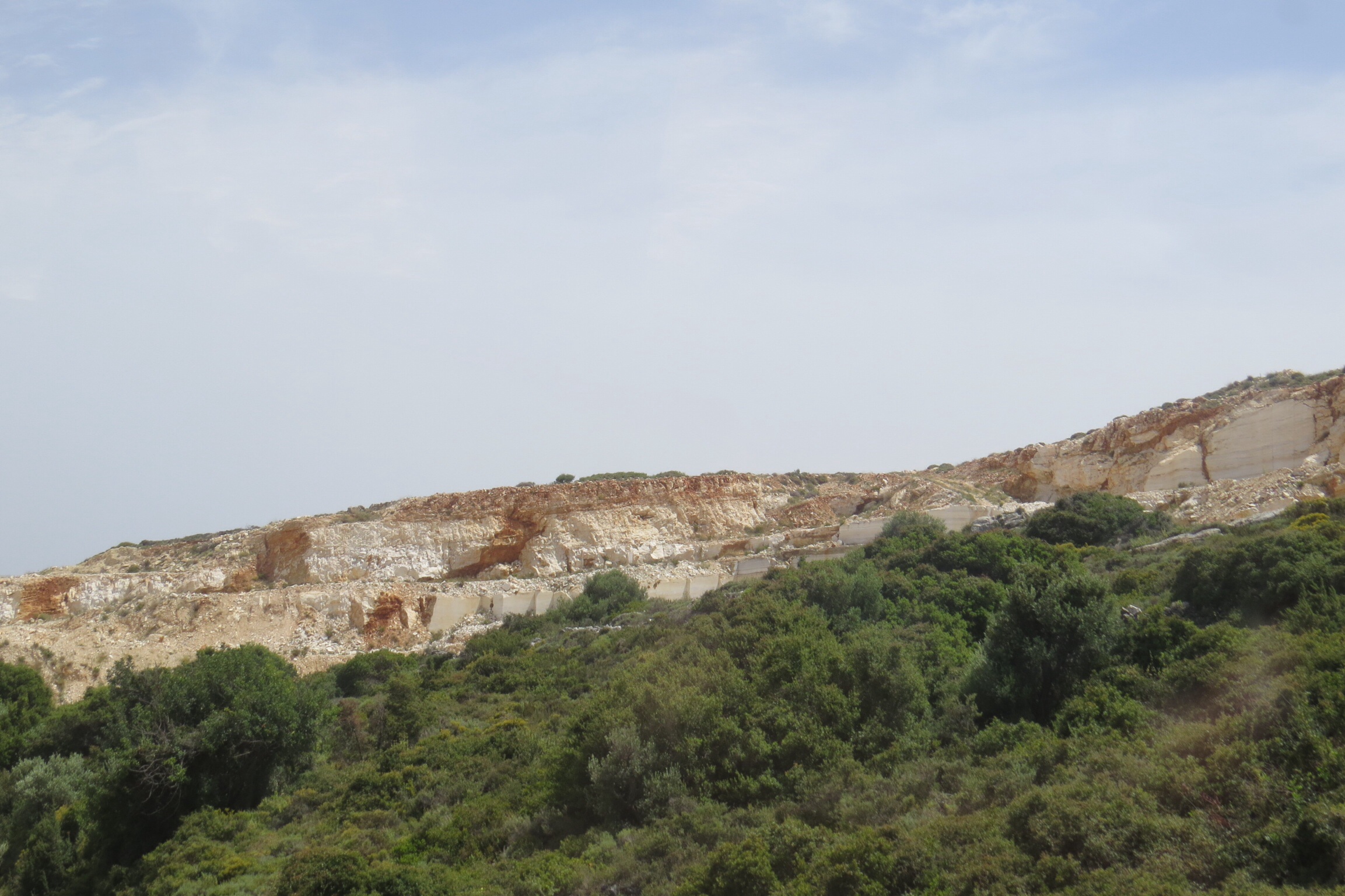
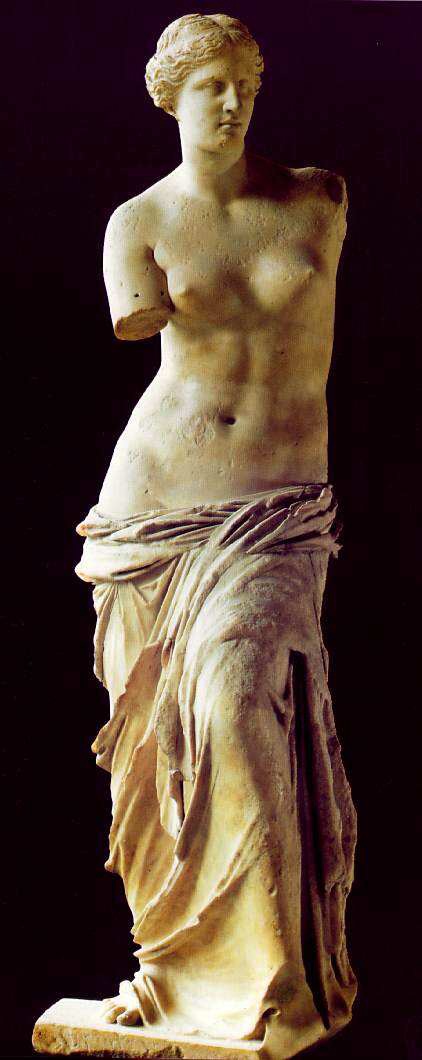
Filled with marble, the island has quarries, ancient and modern. The Venus de Milo, discovered here, was carved of marble from this island.
Parikia, the capital and main port of the island became our home base for the four days we were here.
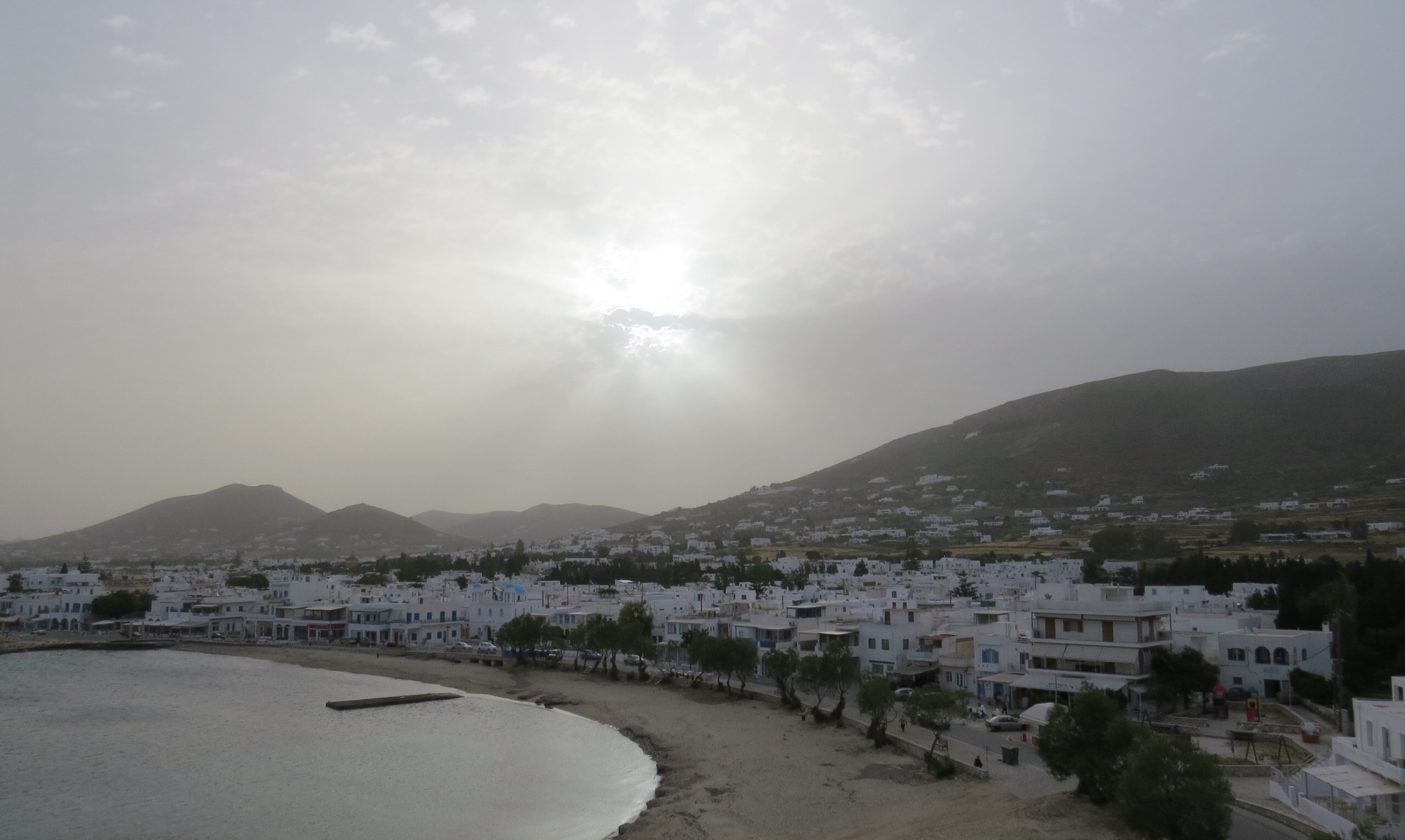
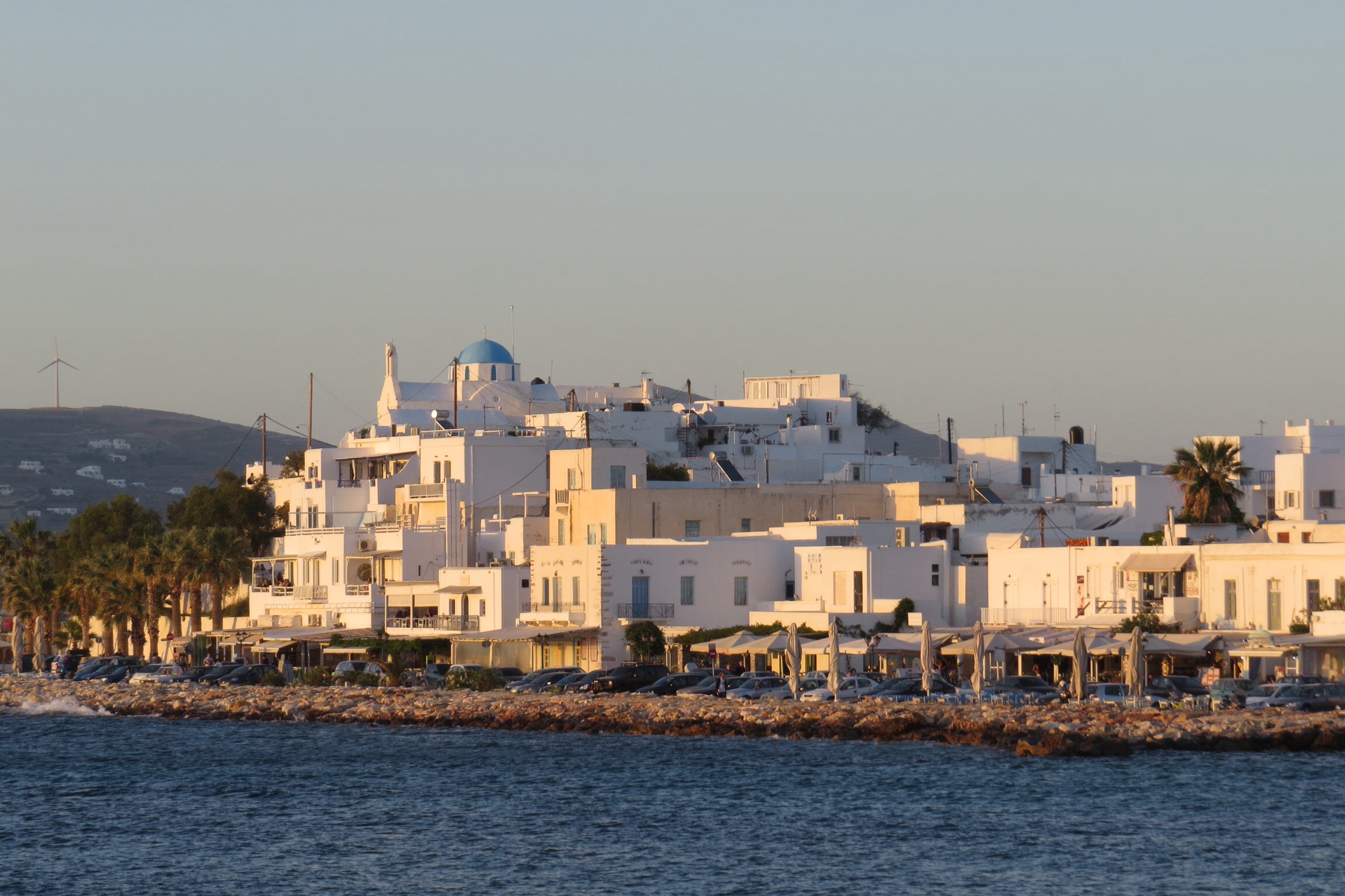
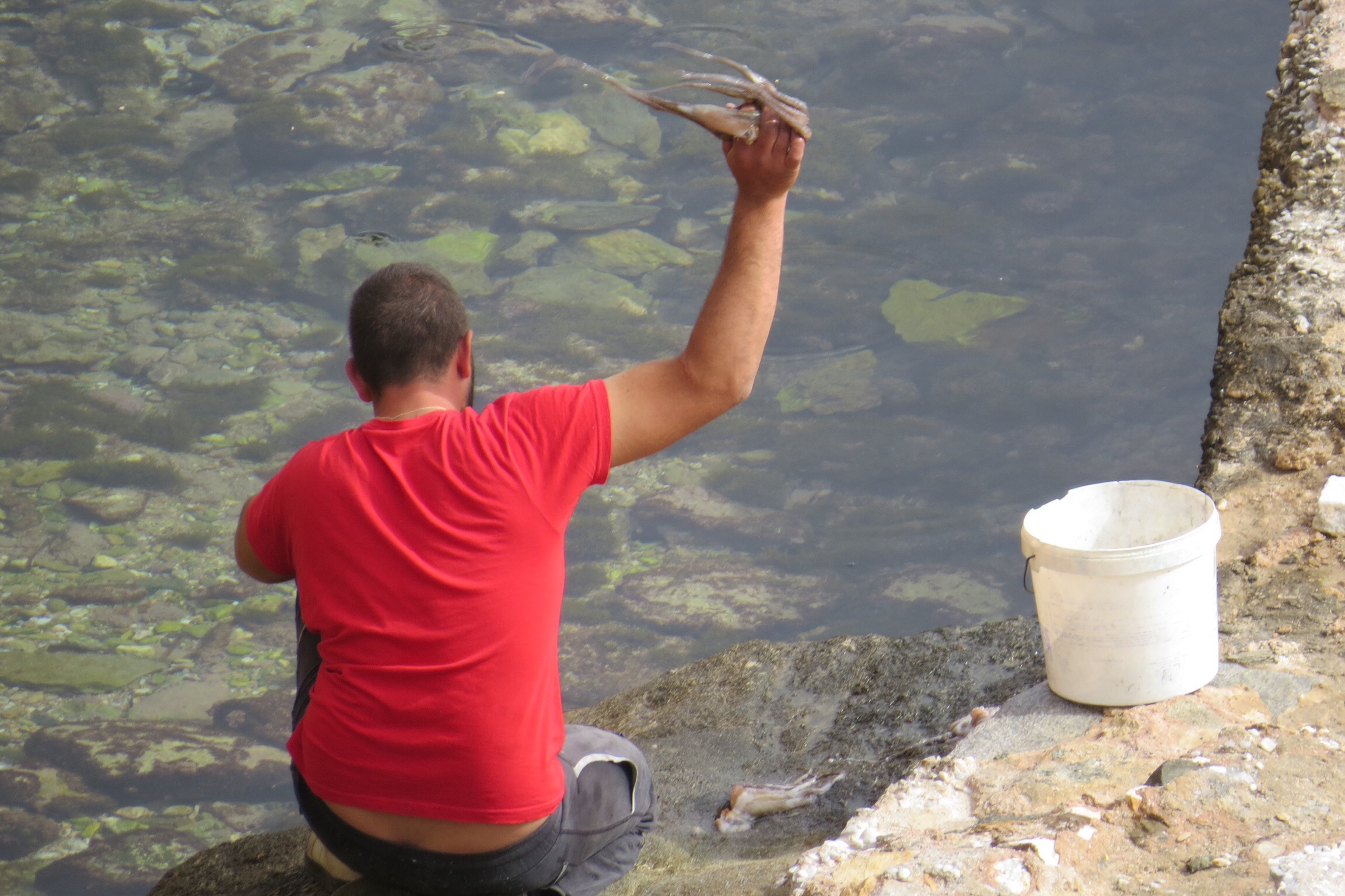
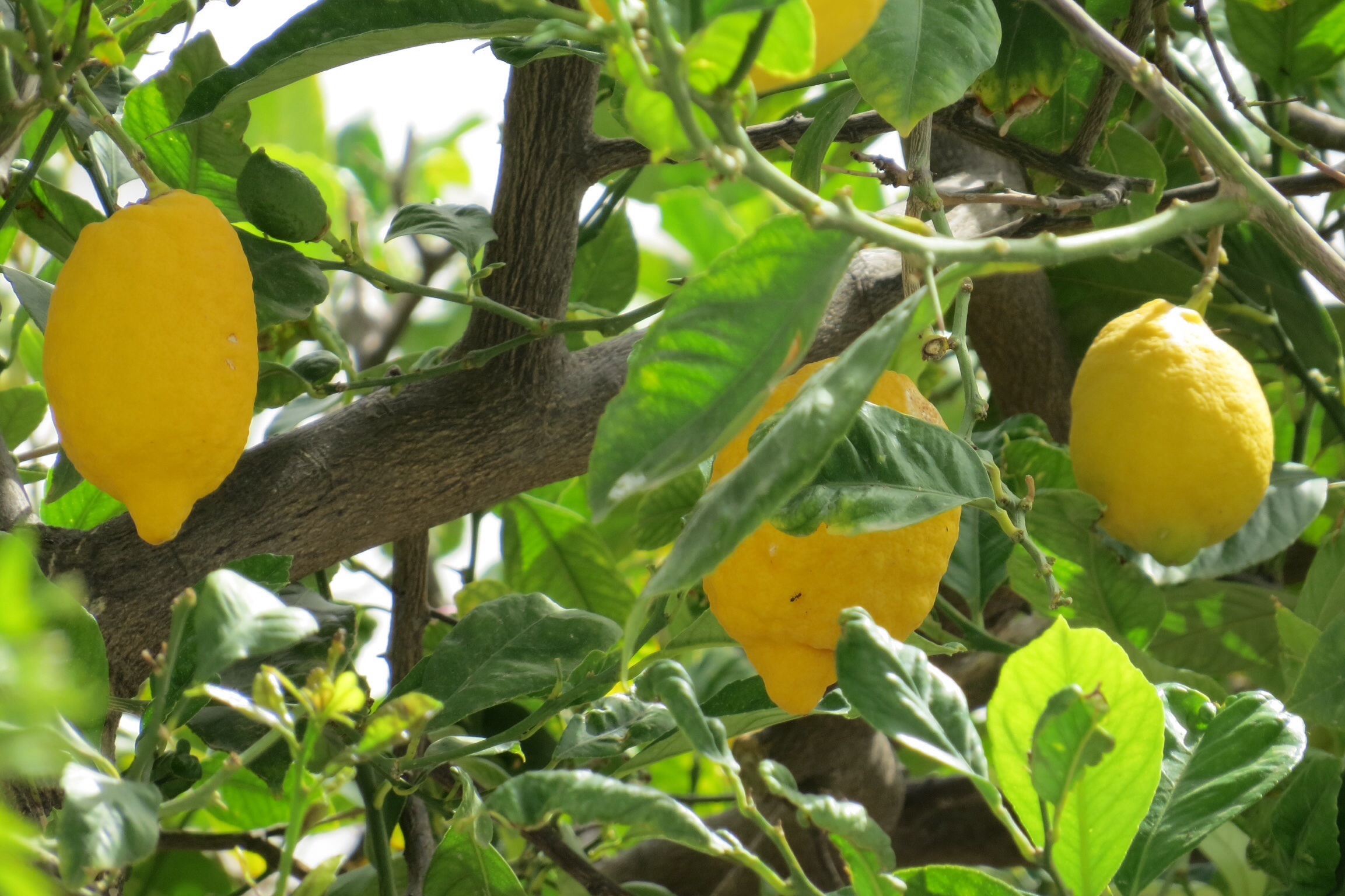
The Pandrossos Hotel was beautifully situated for throwing open the azure shutters to my balcony in the morning, to watch muscled greek men tenderizing octopus on the rocks below. Temperatures ranged from balmy to hot, moderated by warm breezes. Lemons and oranges dangle voluptuously from glossy green shrubs.

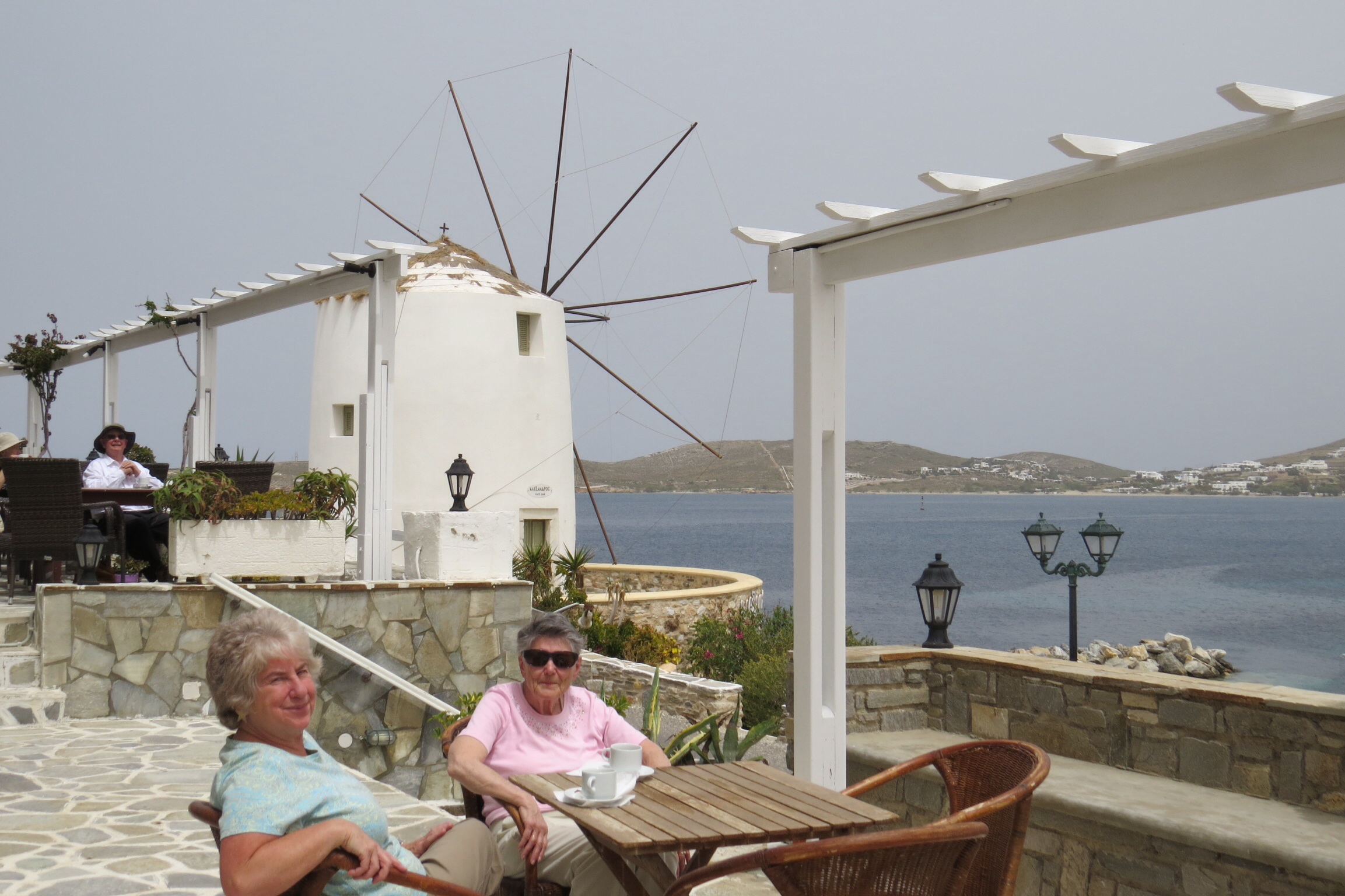

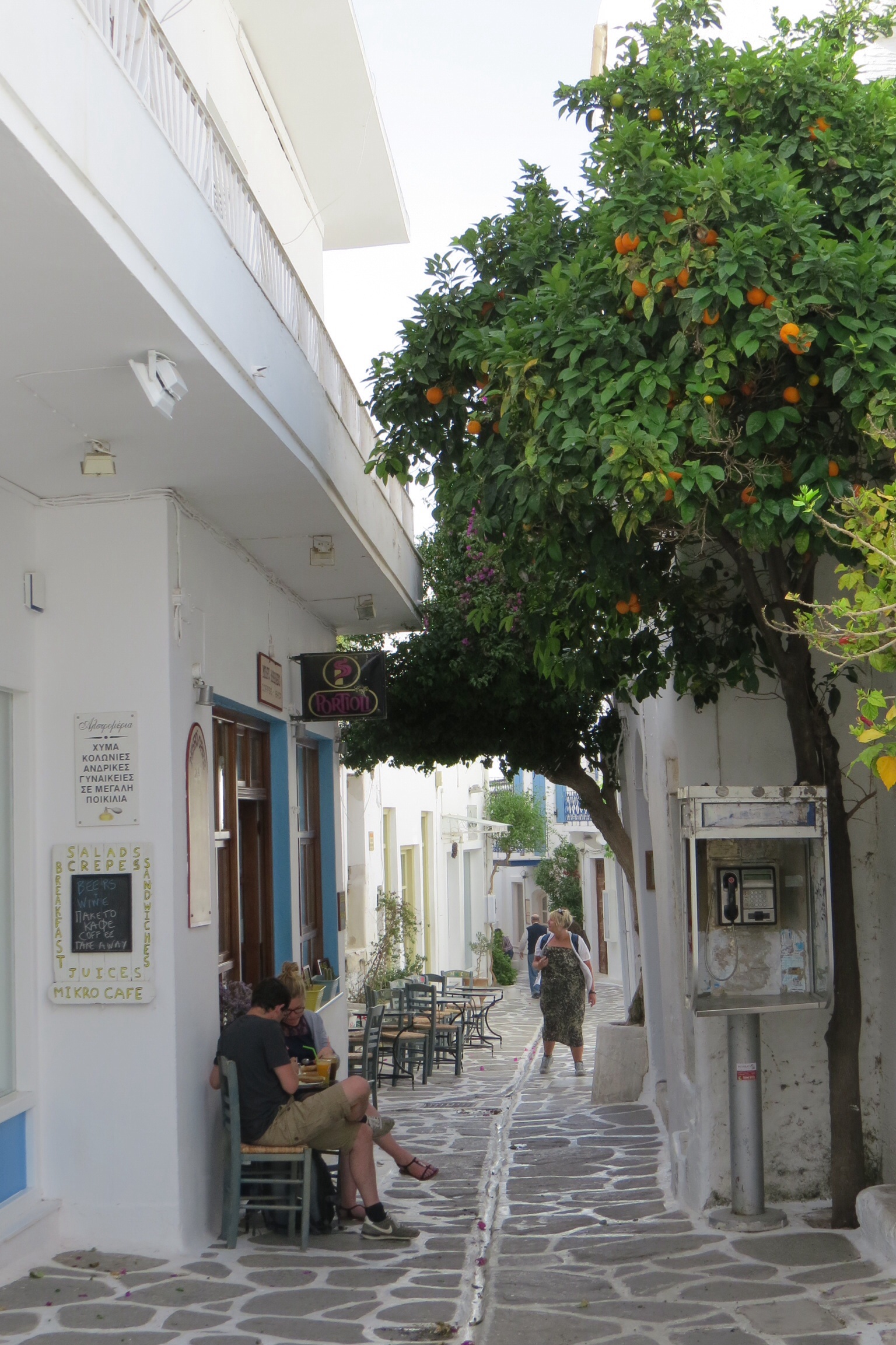
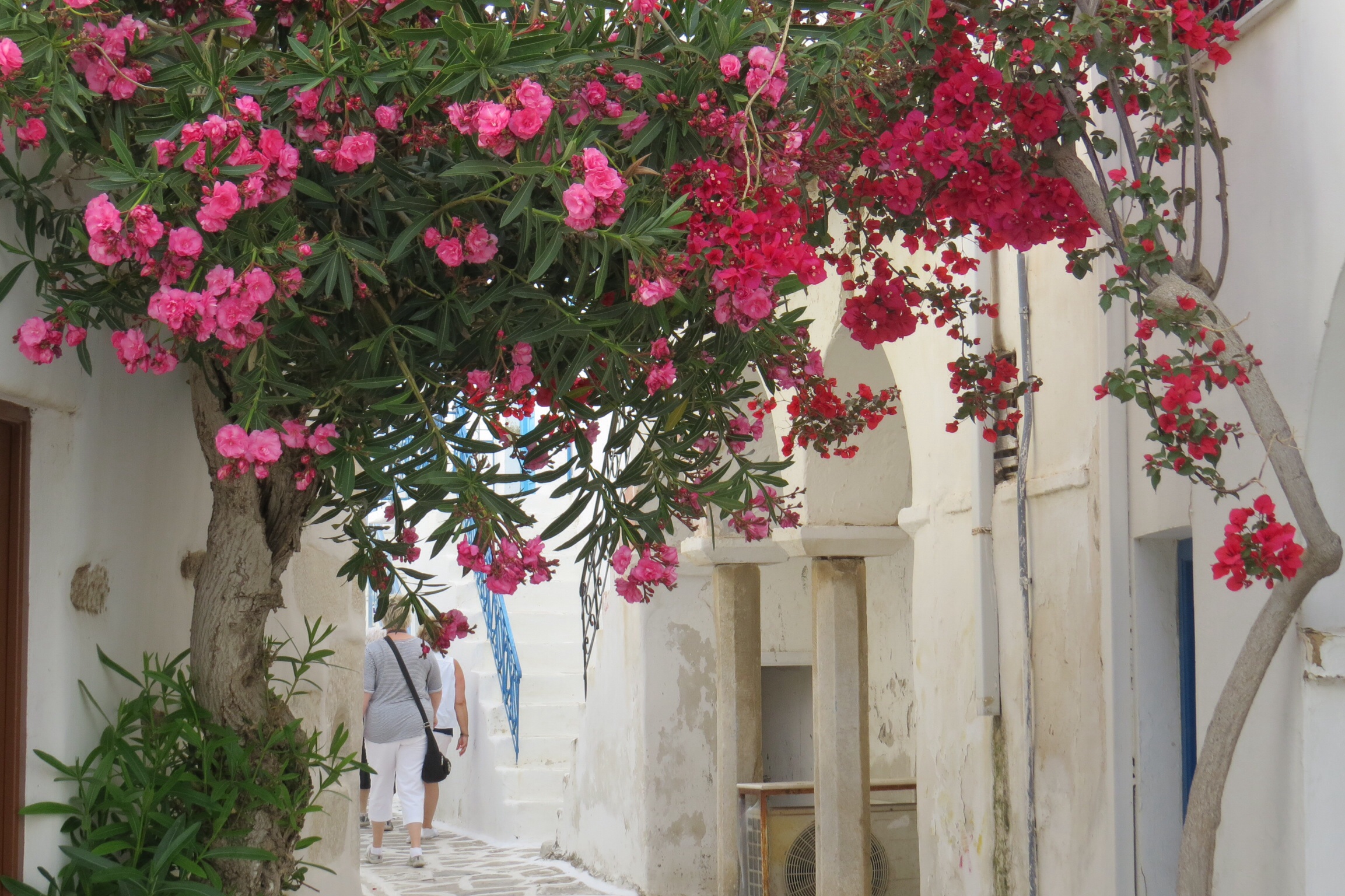
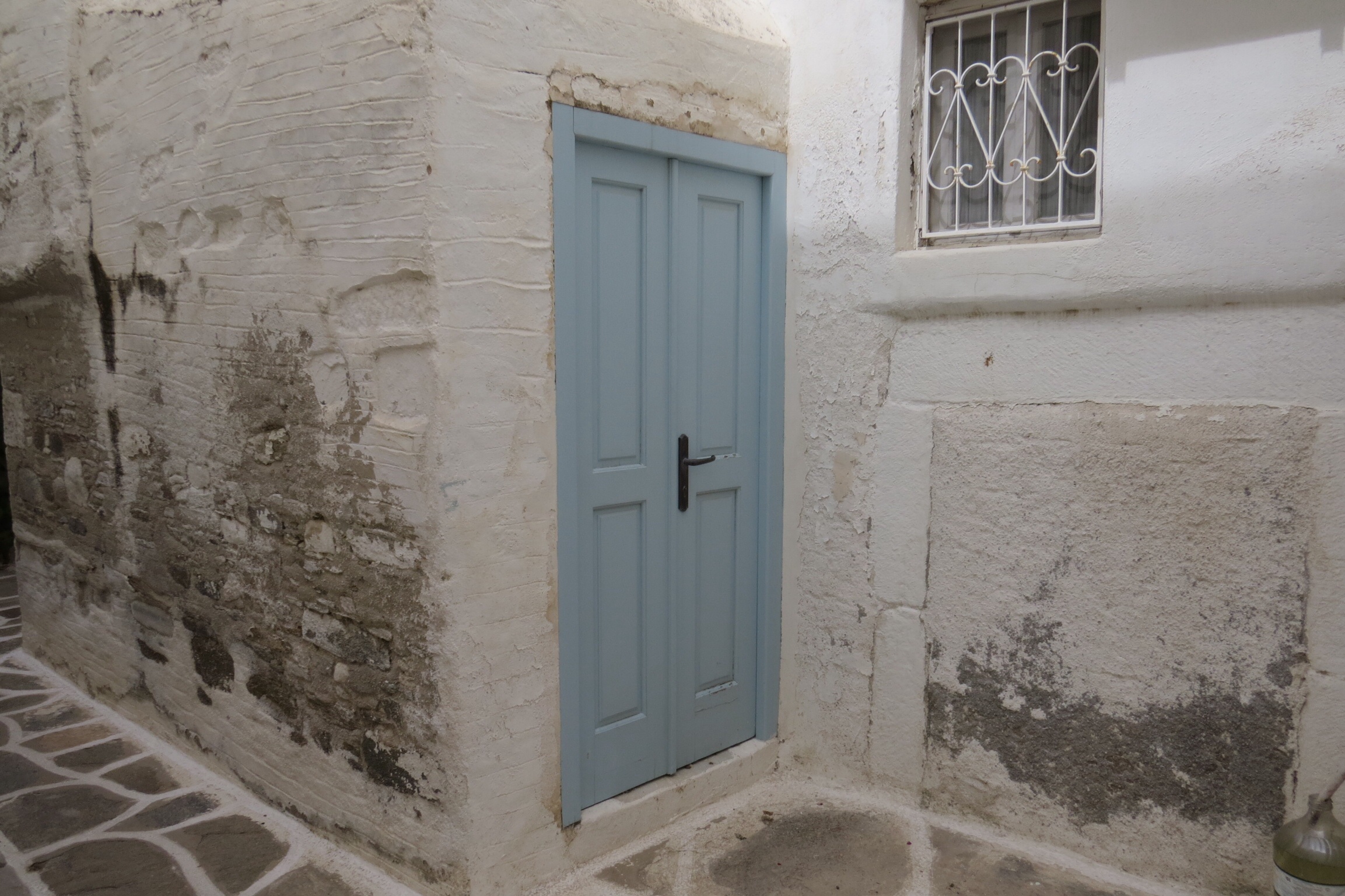
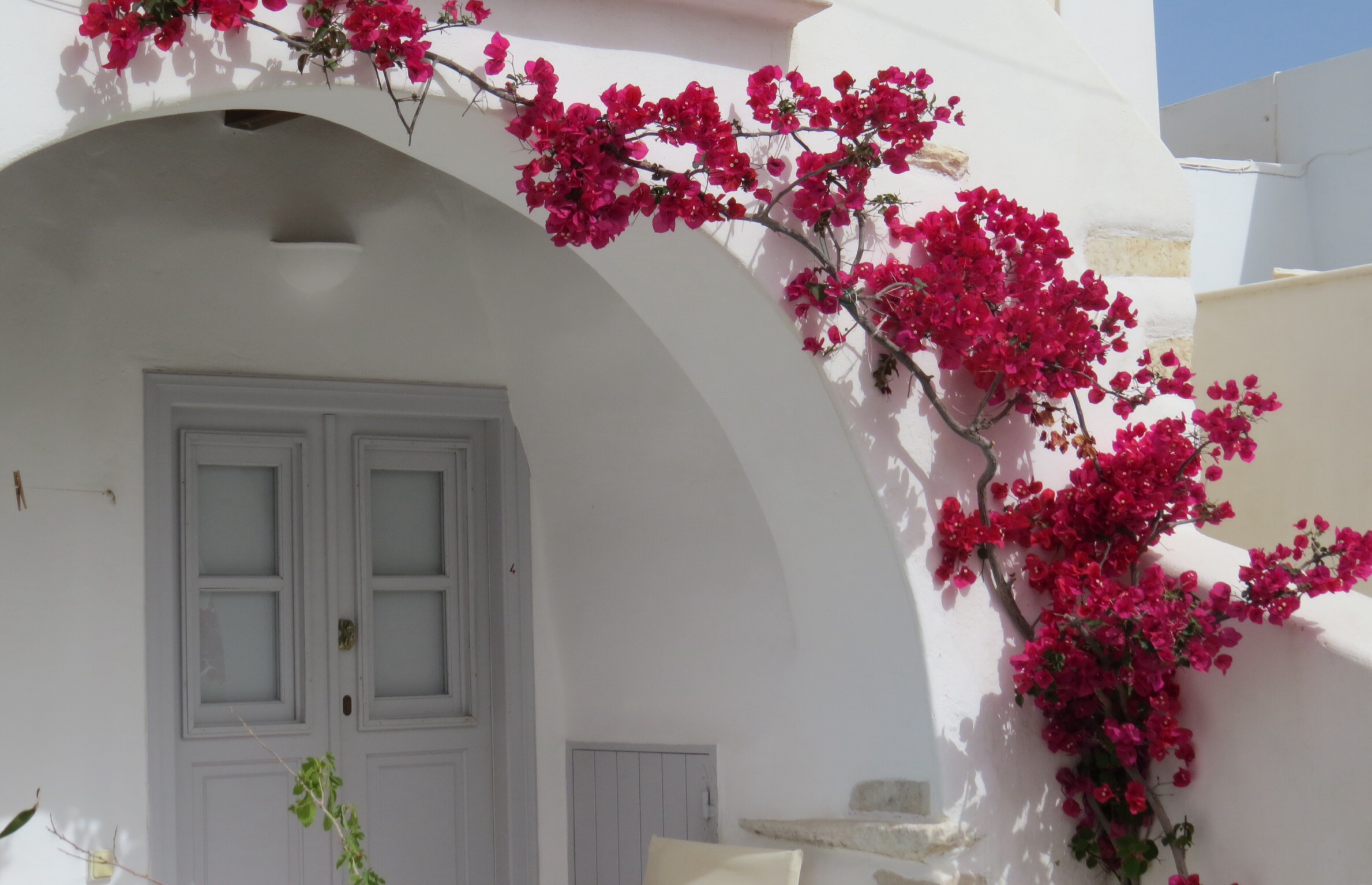
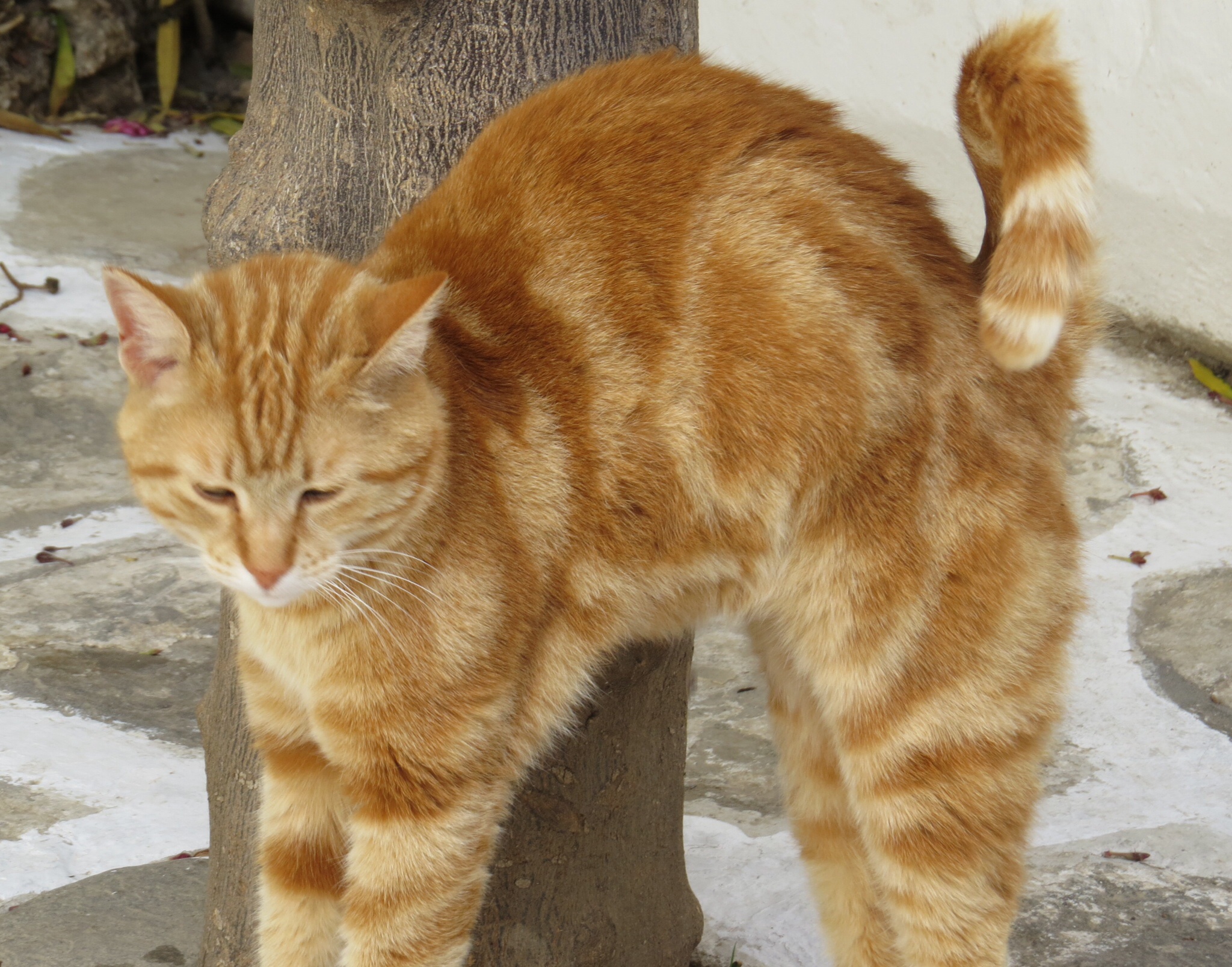
A walking tour of the town took us through a maze of charming, narrow streets, providing refuge from scorching afternoons, cool and muffled with gleaming whitewashed walls and cool aqua wooden doors providing gentle light in contrast to the hot colours of bougainvillia and oleander. Cleopatran cats licked their paws nonchalantly or stretched after a pleasant nap.


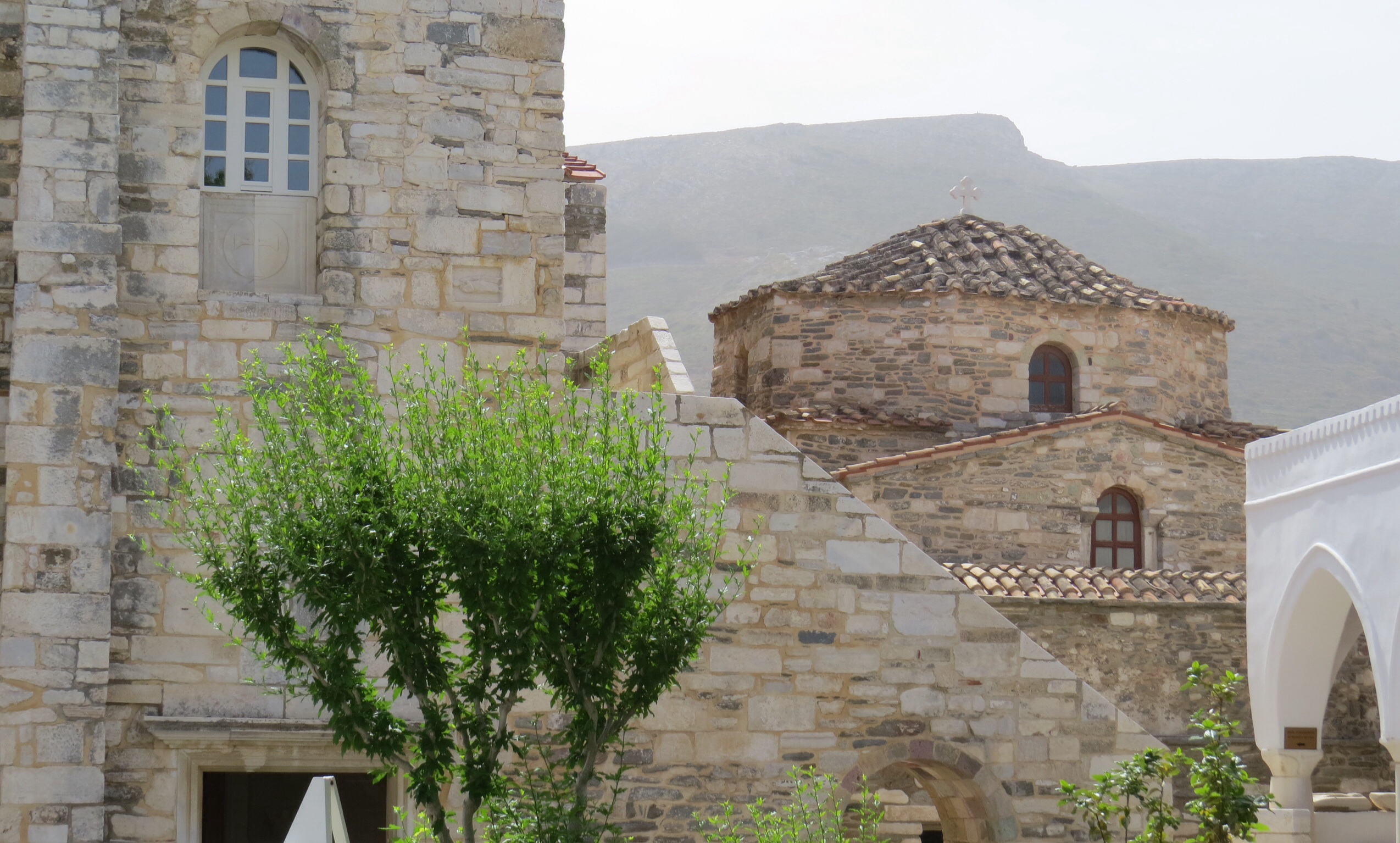
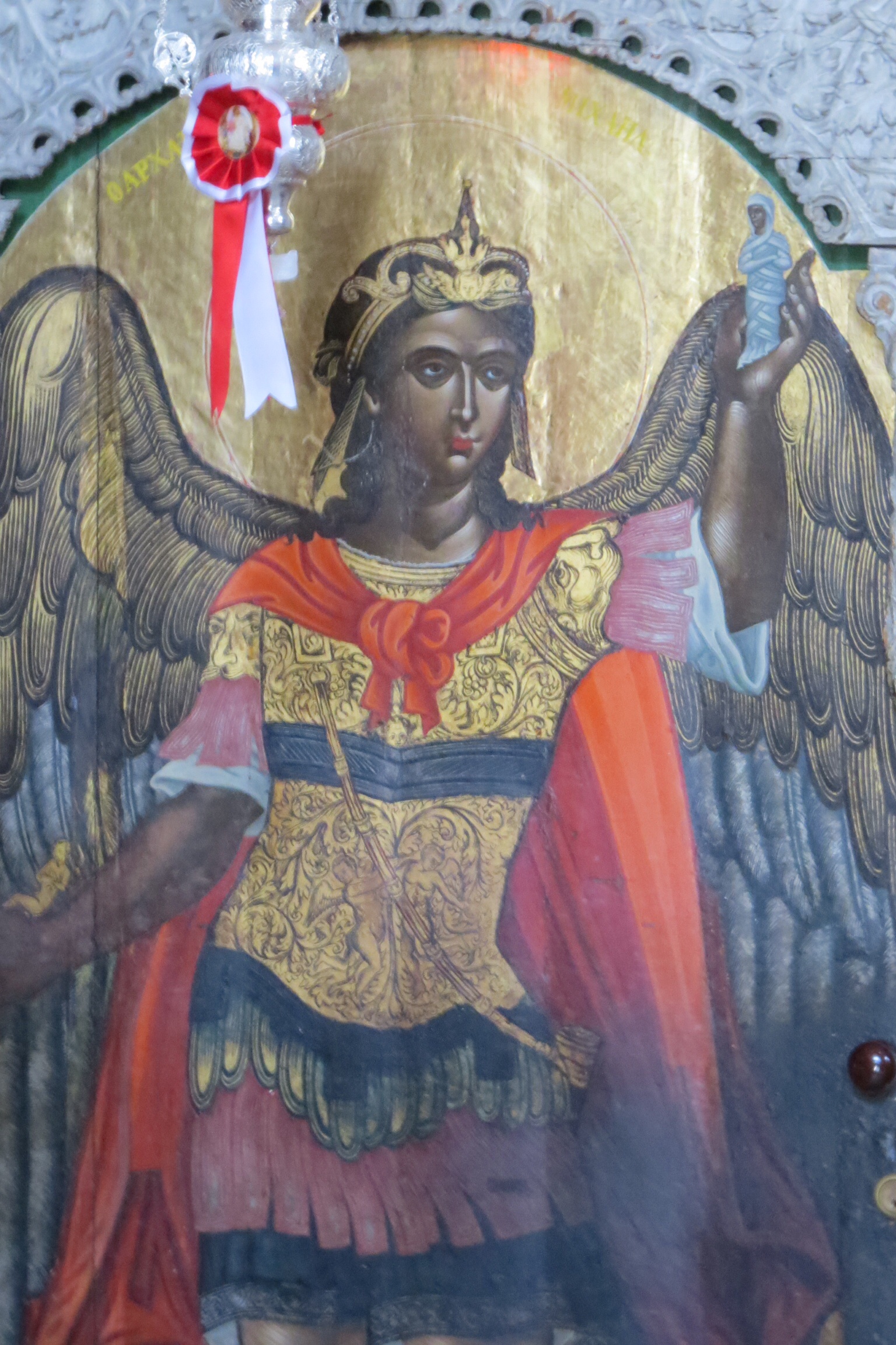
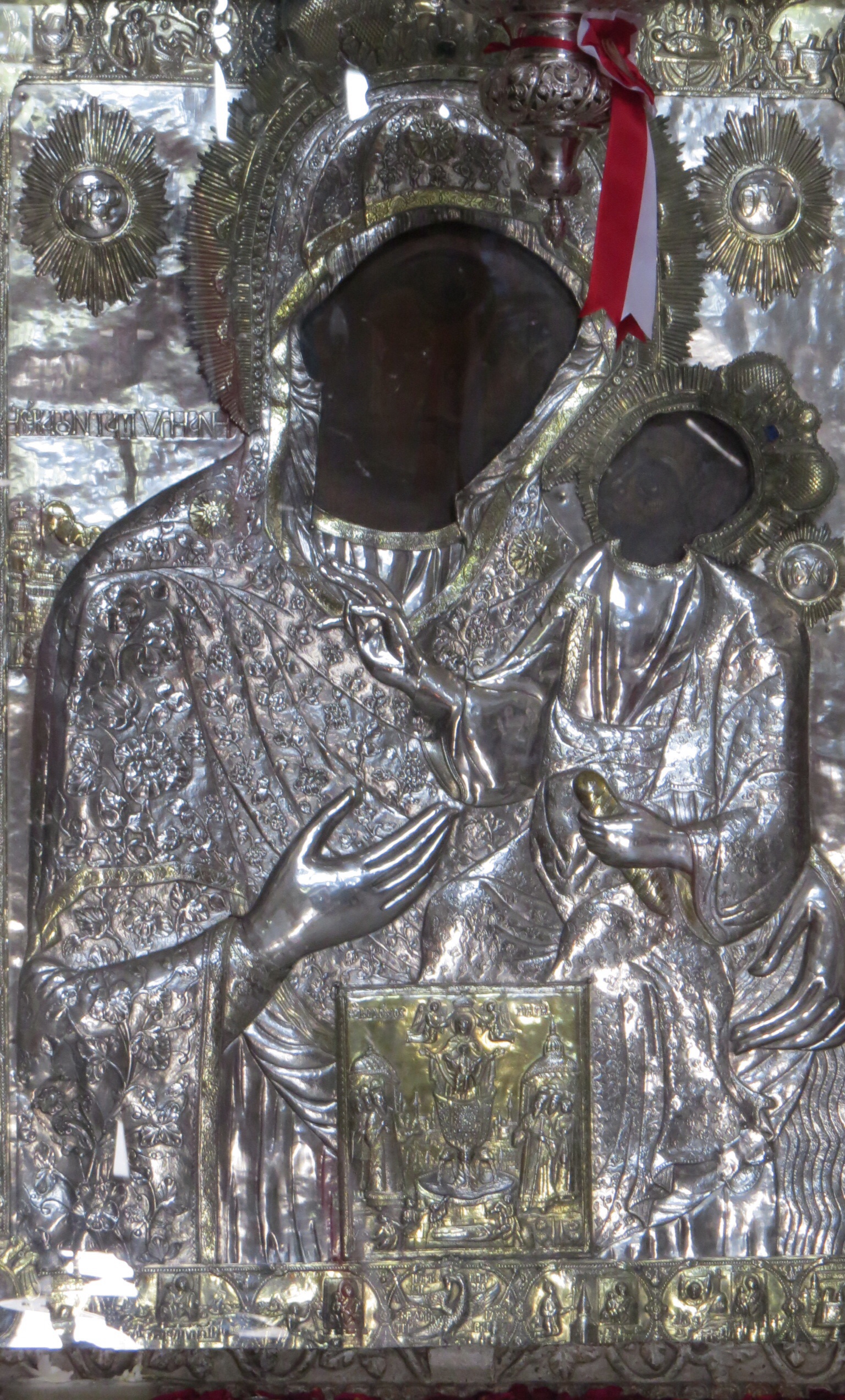
At the elegant 326 AD cathedral, Our Lady of 100 Gates (which does not in fact have 100 gates), the Greek Orthodox devout kissed mystical icons. The medieval 13th century castle here was built atop an ancient Temple of Athena.

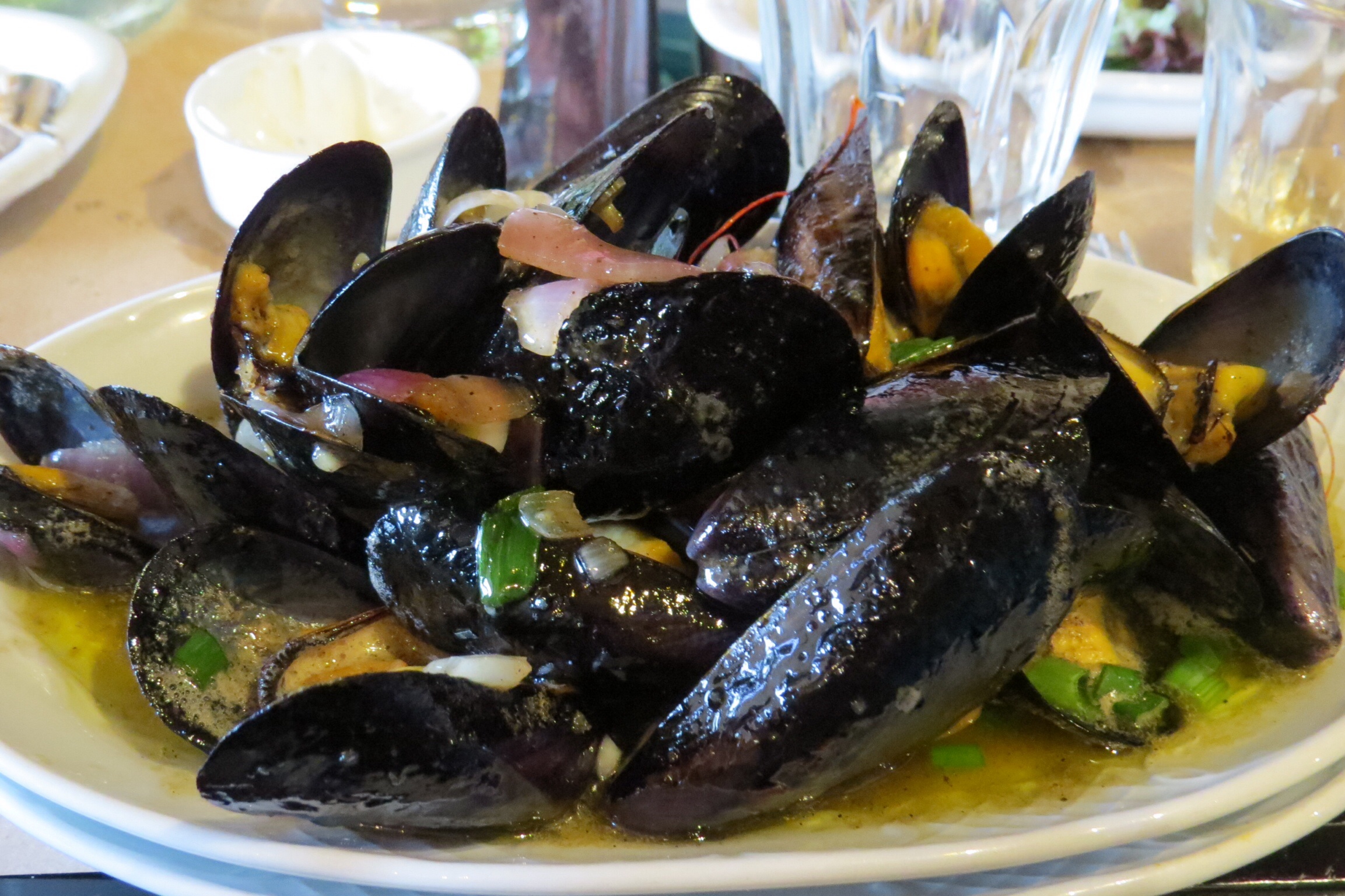
The fields of wild oregano, thyme and rosemary flavoured the succulent lamb, fresh seafood and grilled peppers eaten al fresco in the shade of ancient olive trees.

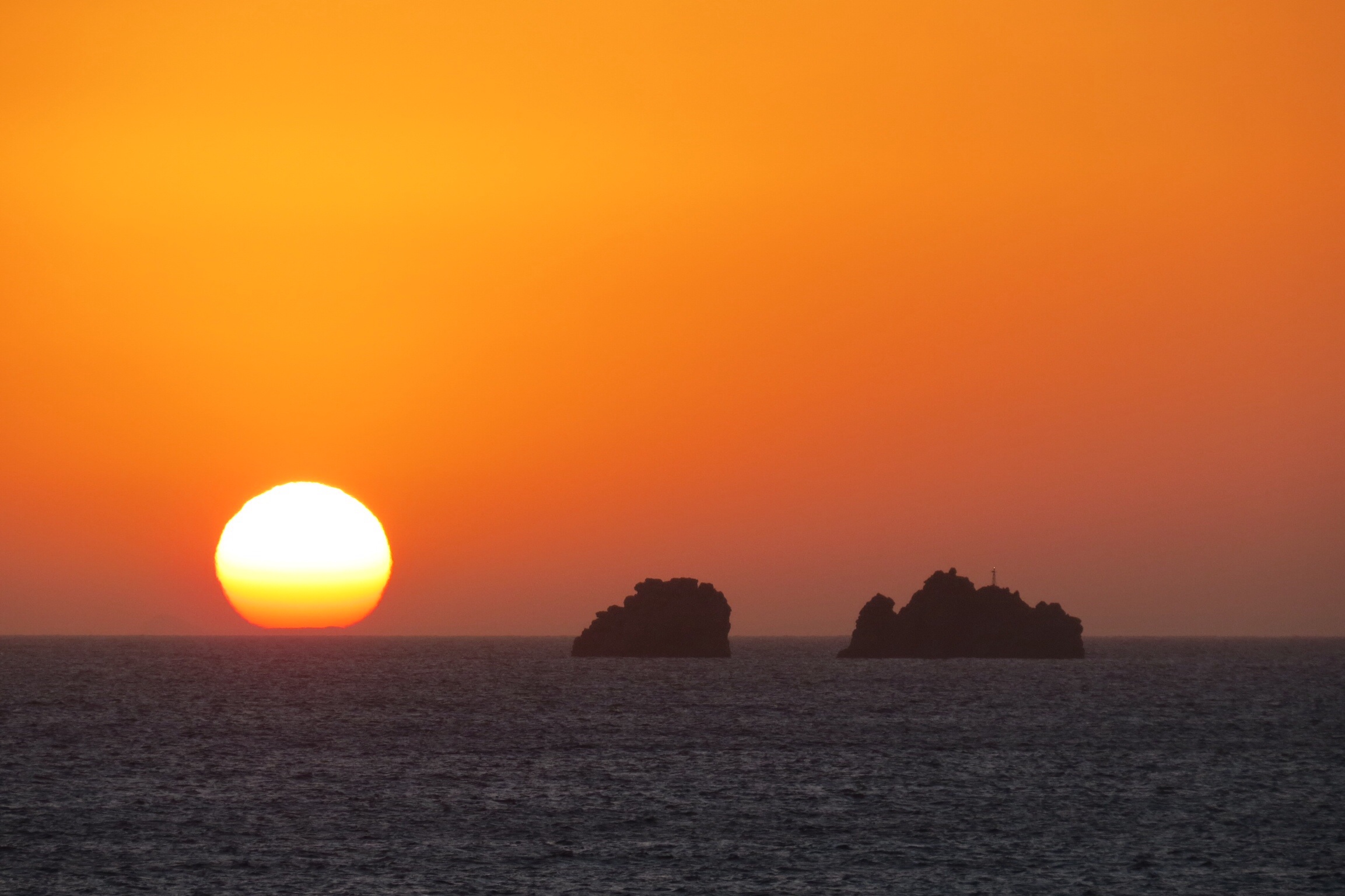
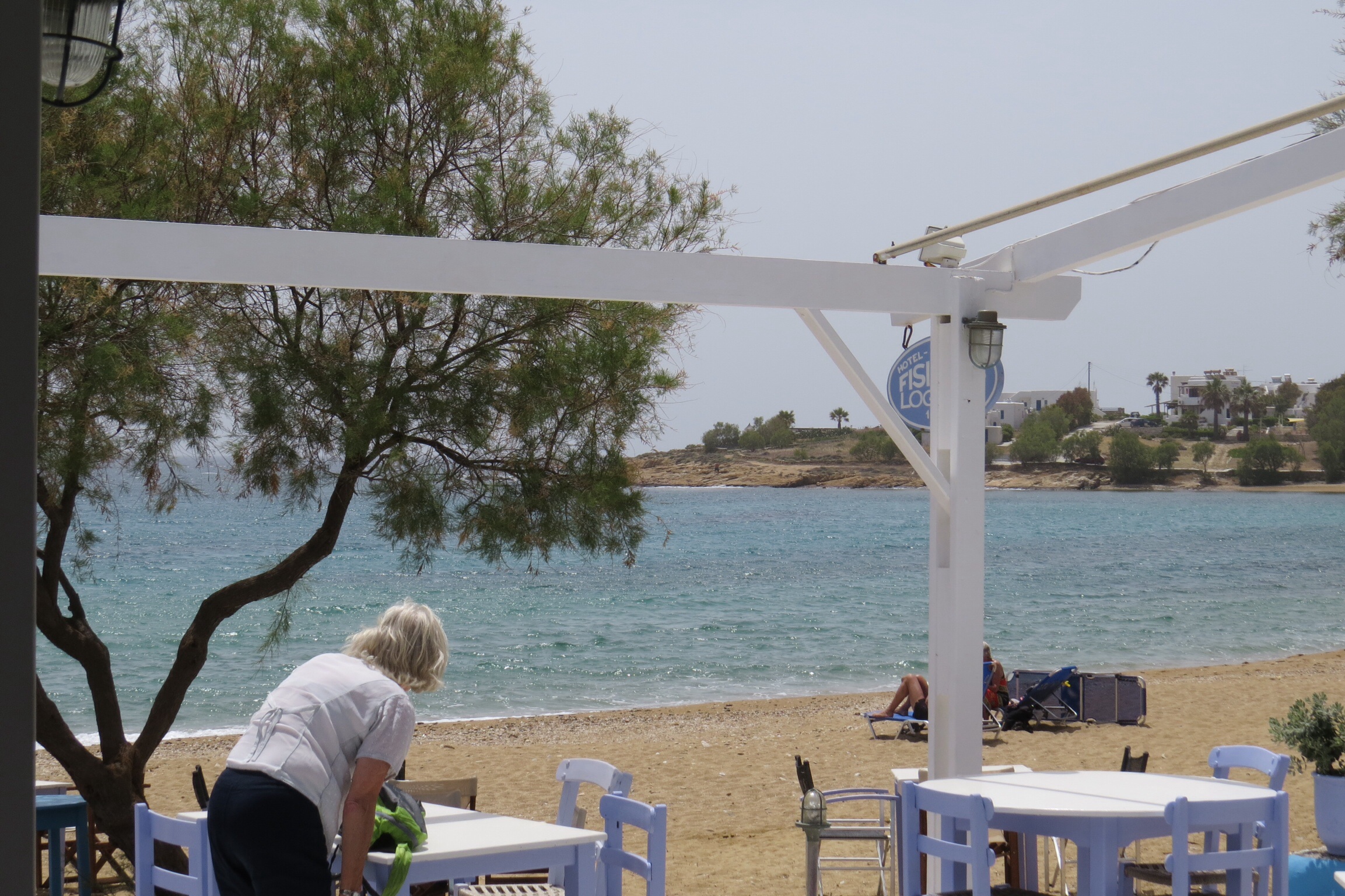
Our tour of the Island took us to a seaside village for a fabulous lunch and around Paros to the pretty port town of Naousa, where restaurants were preparing luscious meals for much later in the day (Greeks go for dinner at about 11:00 p.m. They like to take things slow, until they get behind the wheel, that is, then they drive like there is no tomorrow.)

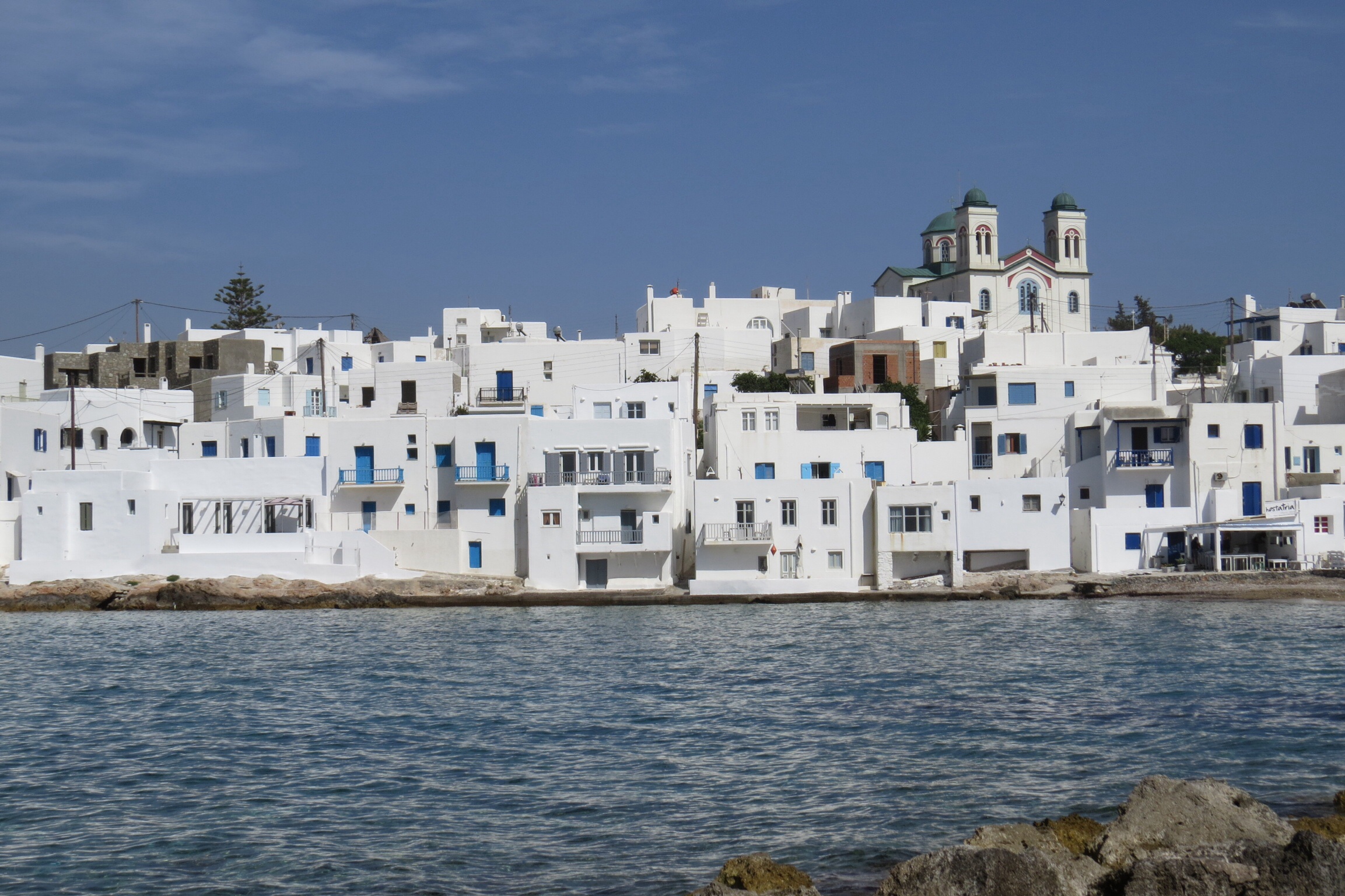
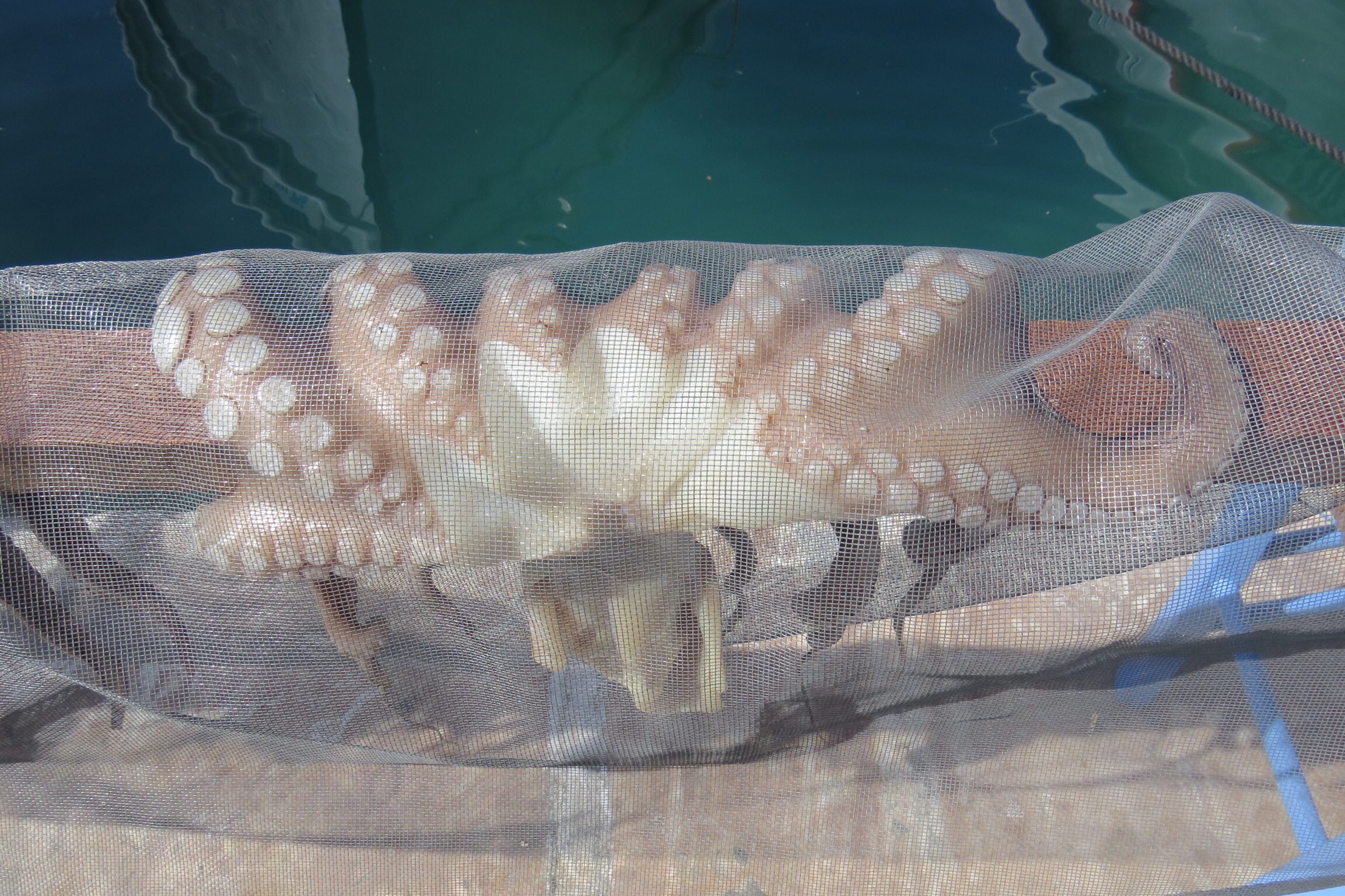
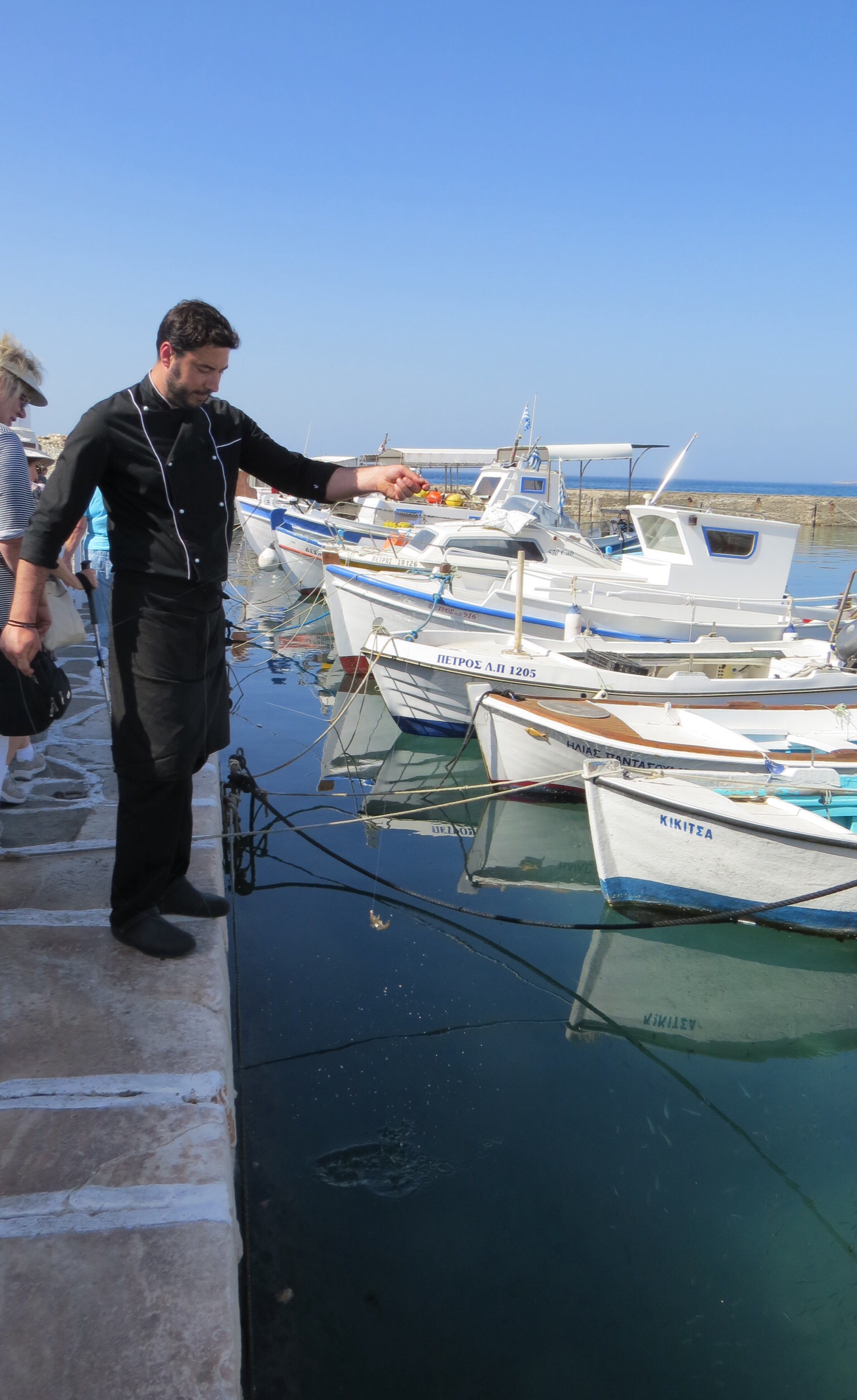
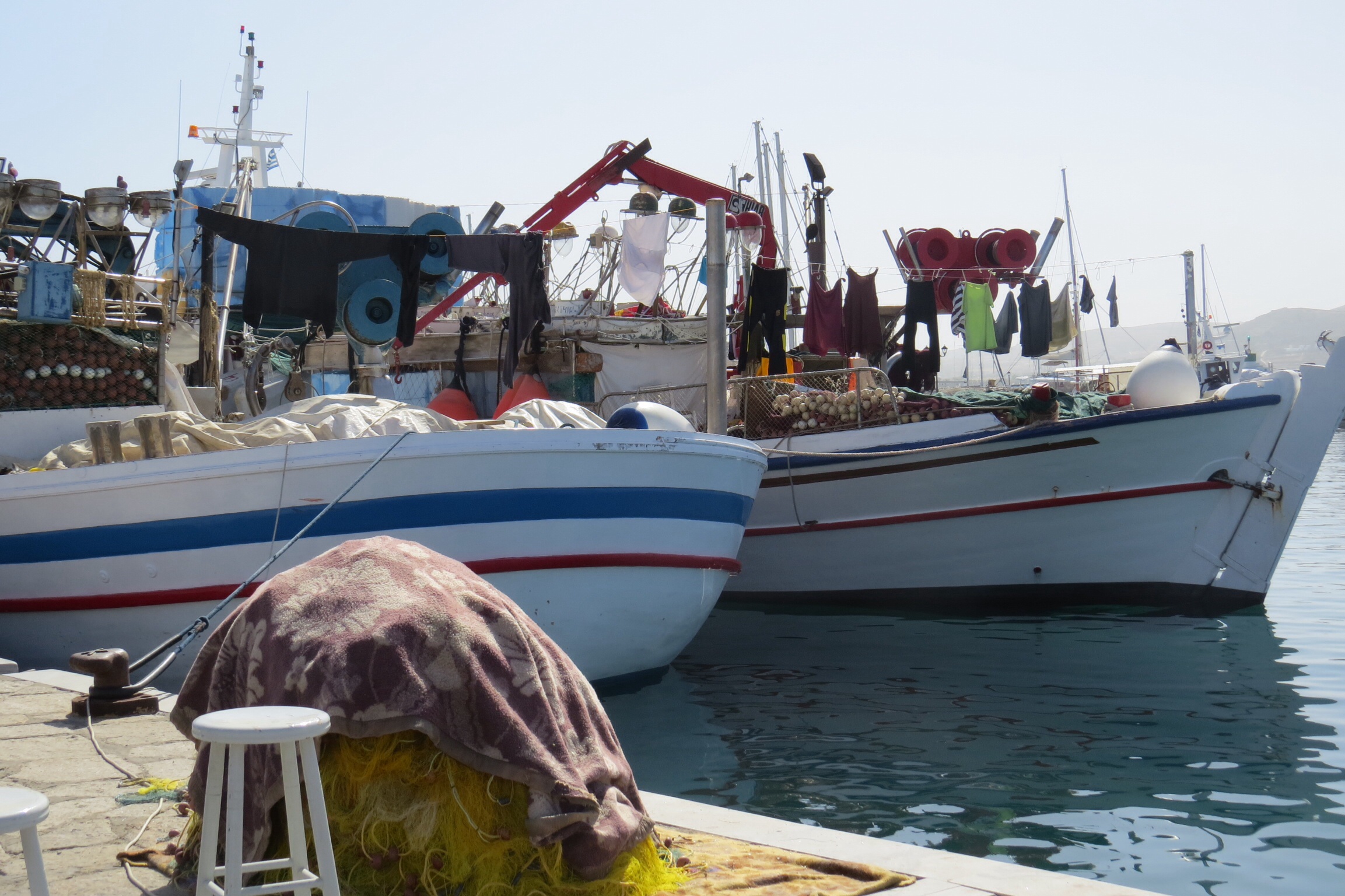
After visiting only one island, I am SO glad I came!
Jan

The journey is the thing
— Homer
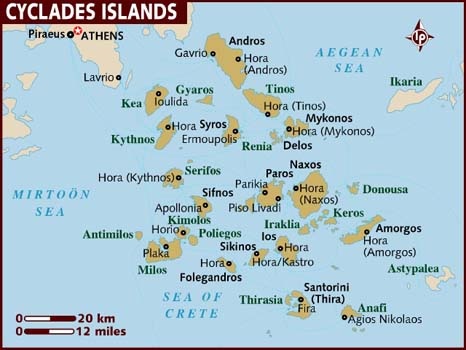
The first half of our Odyssey will begin by ferry, with U. Vic. archaeologist, Chris Mundigler, from Athens to the Cycladic Islands of Greece: Paros, Delos, Naxos, Mykonos and Santorini; and then, on to Crete.
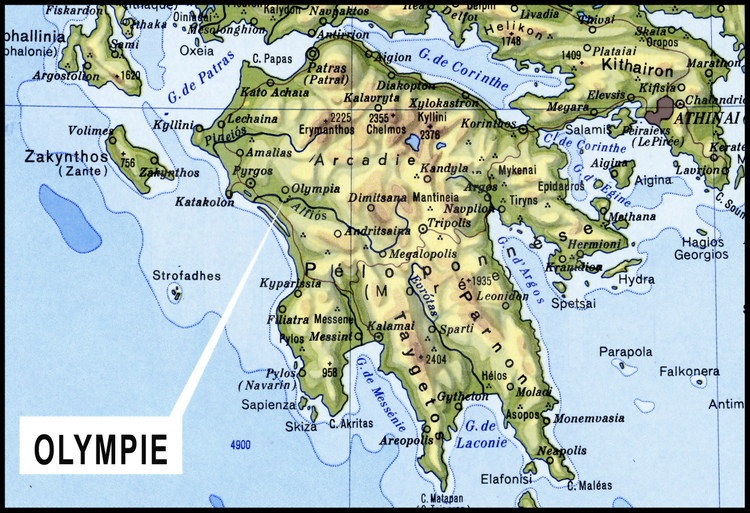
The second half of our Odyssey takes us to the Peloponnese peninsula for a week in a private villa followed by a road trip around the peninsula.
That said, this trip will be less about place and more about time. We will travel backward through the empires of the Ottomans, Venetians, Byzantines and the Romans, past Caesar, Cleopatra and Alexander the Great, to the Greek Golden era where democracy, theatre, arts, sports, science, mathematics, astronomy and western civilization began. Even further back through the Trojan War, a volcanic eruption that changed the world, past the ancient cultures of the Mycenaeans of 1600 BC, and the Minoans of 3,000 BC, even back to Noah’s flood around 5,000 BC.
For now, though, “three Greek sisters” head for the airport.

Jan
Spain, a country of fiery love and passionate emotion.
If you don’t fall in love here, you might fall in love with love.
Feast of Sant Jordi
You can see Saint George, the dragon slayer, in many places around Barcelona. Like here on the facade of Modernist house Casa Amatller on Passeig de Gracia. Sant Jordi is the legend that inspired the giving of roses and he is the patron saint of Catalonia.
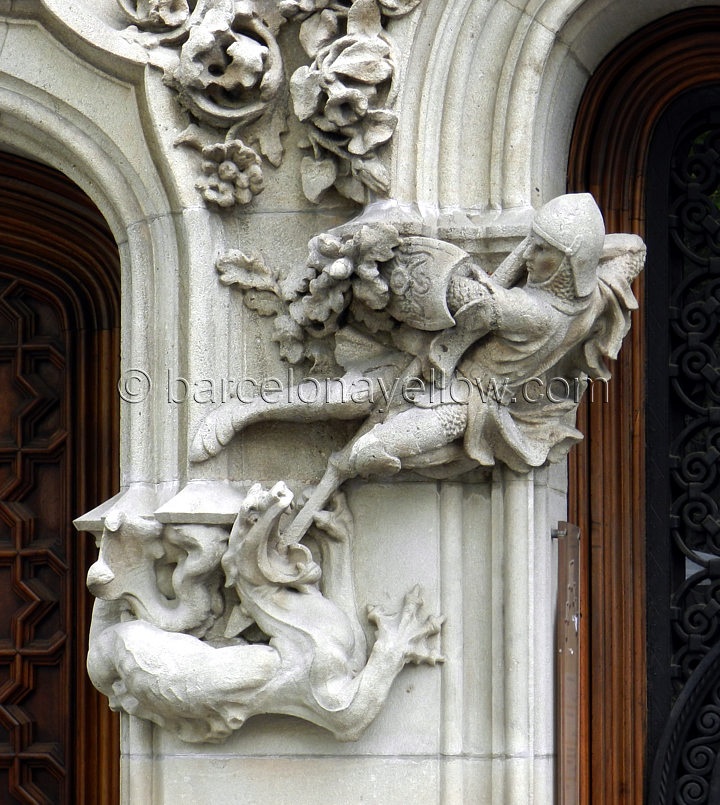
Did you know St. George didn’t marry the woman whom he saved by slaying the dragon? Nonetheless, he is regarded as the protector of lovers.
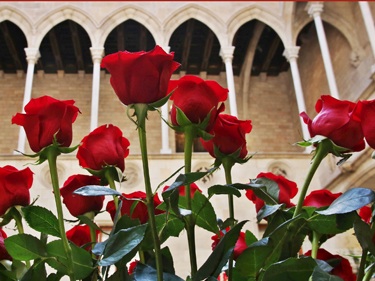
This is why the annual festival devoted to his name is Barcelona’s version of Valentine’s Day. Each year on April 23rd, which coincides with the date on which both Cervantes and Shakespeare died, the men give a single rose to all the women in their lives and the women gift their men a book. There are book readings, flower markets and signings throughout the city.


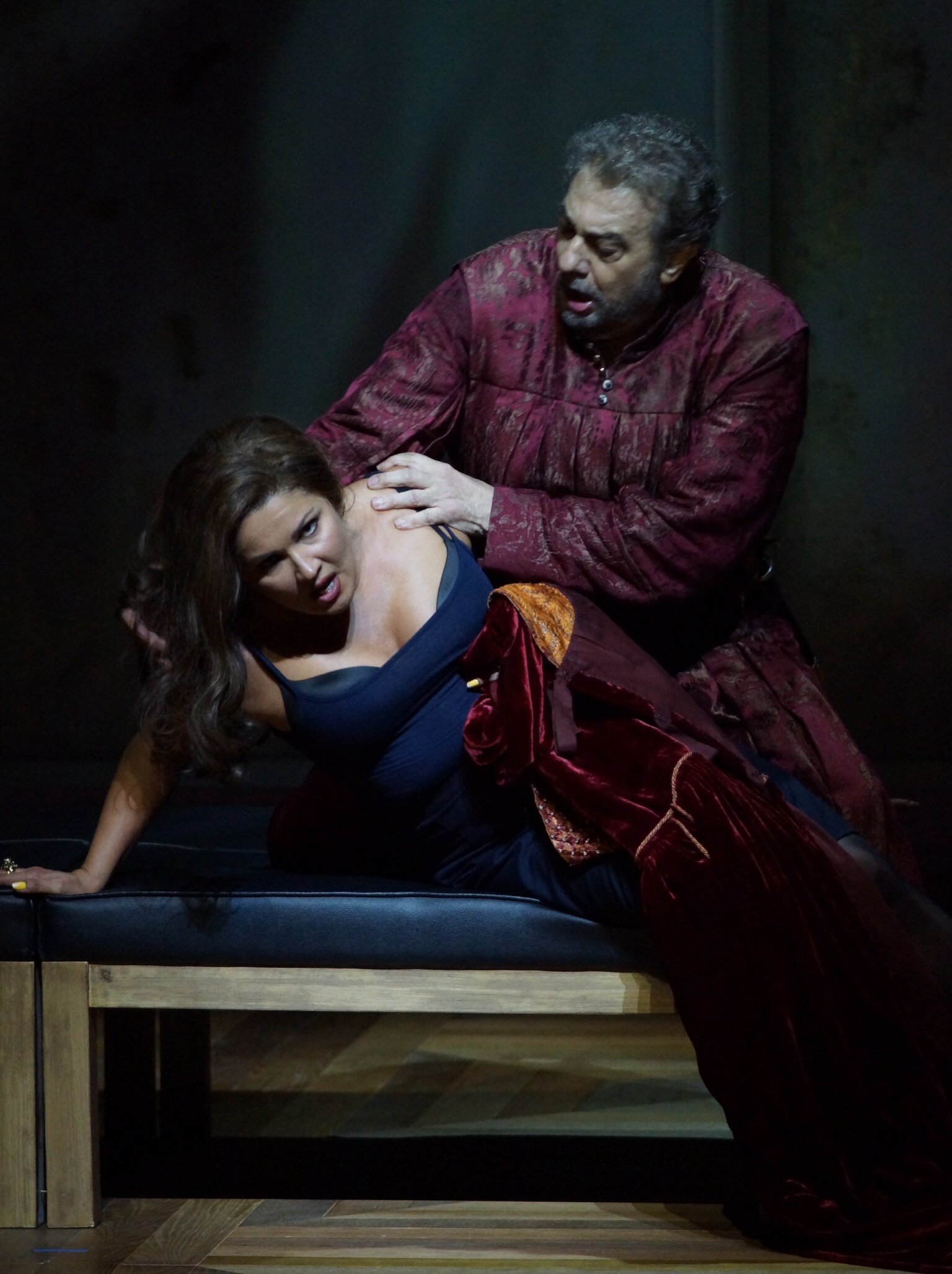
Il Travatore
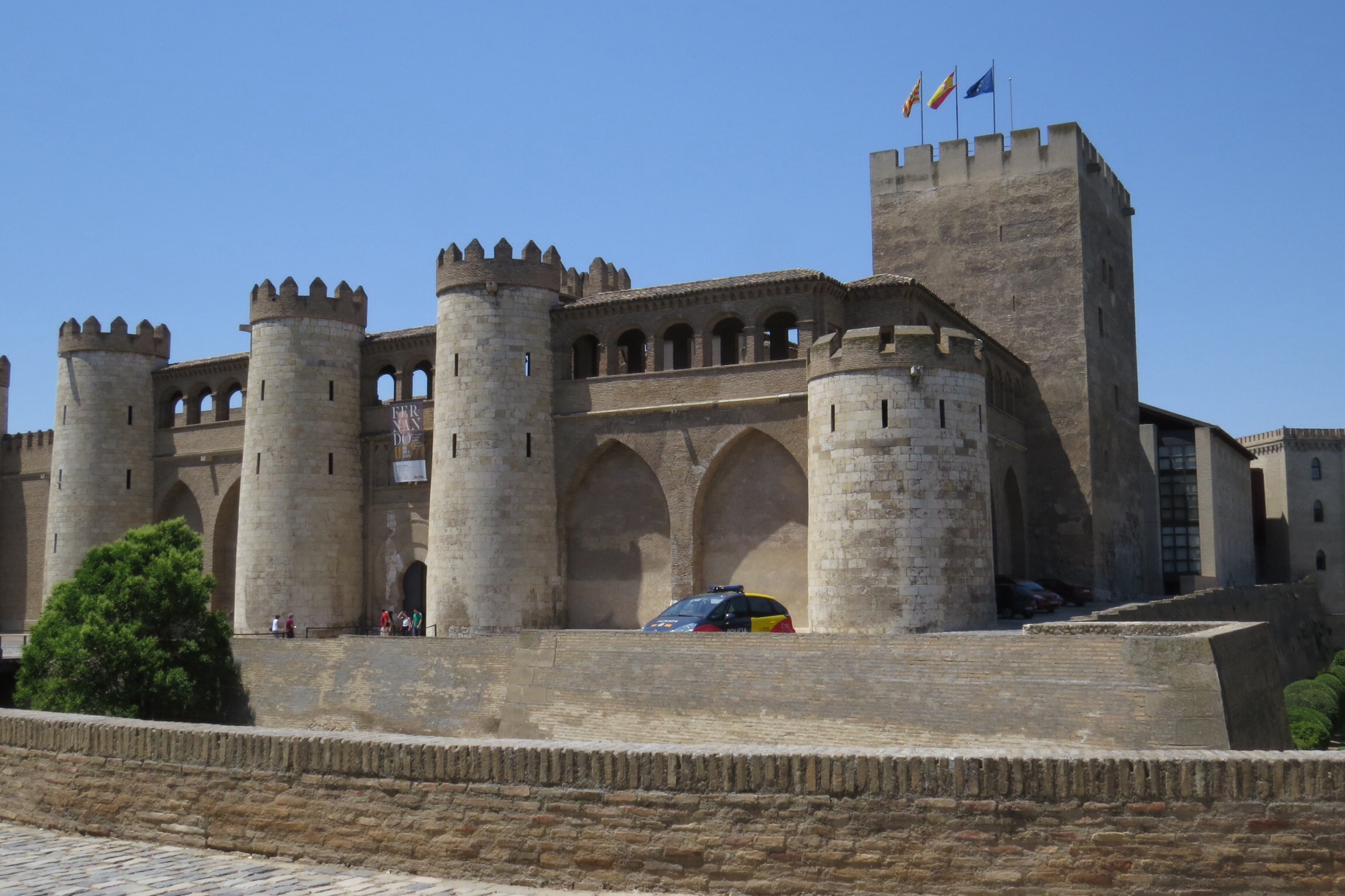
In 15th century Zaragoza, the troubadour Manrico falls in love with Leonora, a woman adored by the Count di Luna. In an effort to keep them apart, Manrico is imprisoned and sentenced to death. Leonora takes a poison and confronts di Luna, offering herself in exchange for Manrico’s release. When di Luna discovers her deception, Manrico is executed at the beautiful Islamic Medieval palace, Aljaferia, and Leonora dies by poison. Their love story is the basis for Verdi’s famous opera, Il Travatore.
Duende
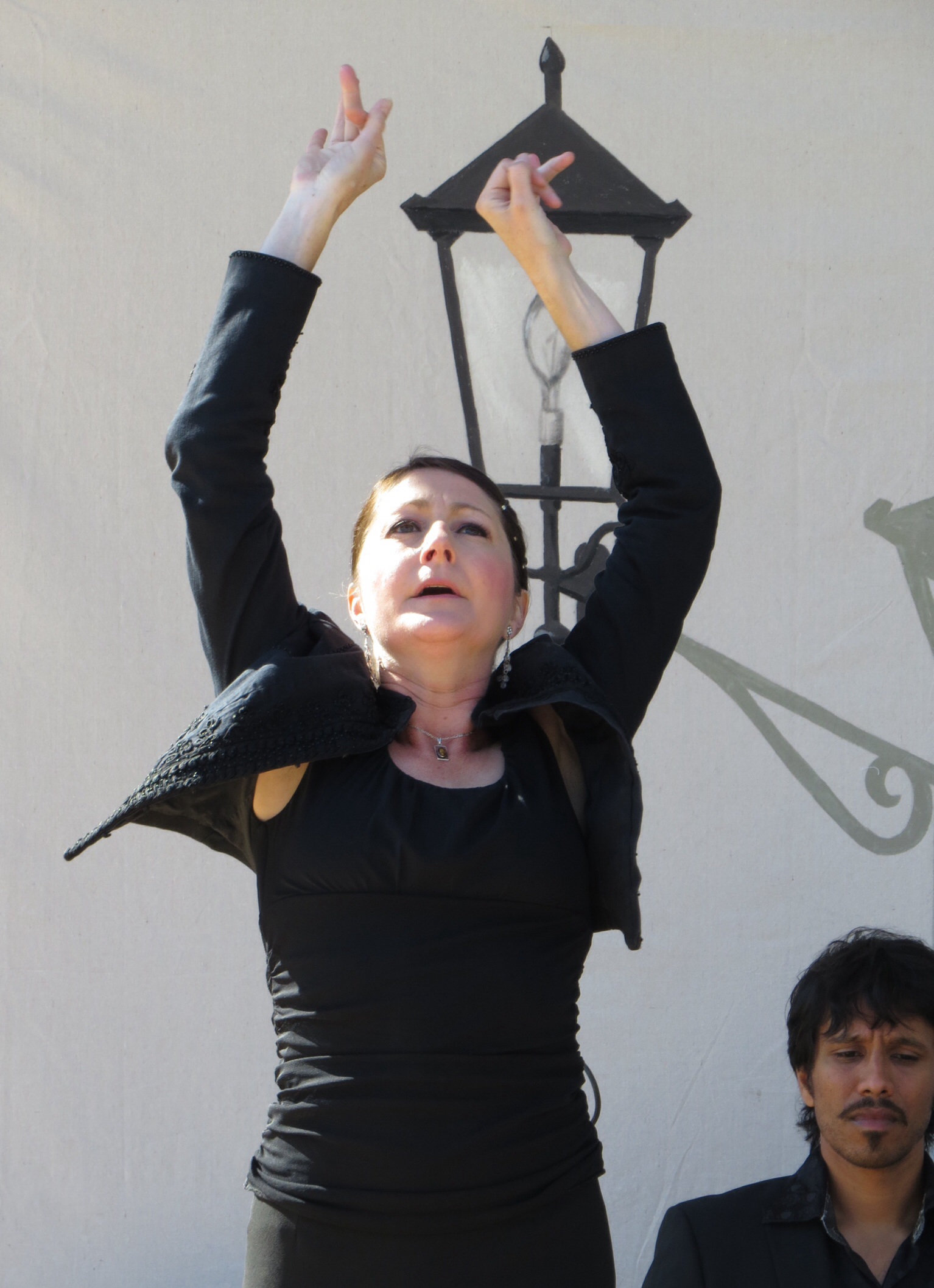
In Spain, the state of passion has a name: “duende.” Bullfighting and flamenco have the same roots, and both the torero and the flamenco dancer are said to receive the state of bliss. Thought to be mystical, inspirational, almost magical, it is a higher state of consciousness, transcendence. For the matador, it lies in the moment between life and death, the moment when he steps out of his own skin to meet the soul of the bull. For the flamenco dancer, it is a moment of artistic realization.
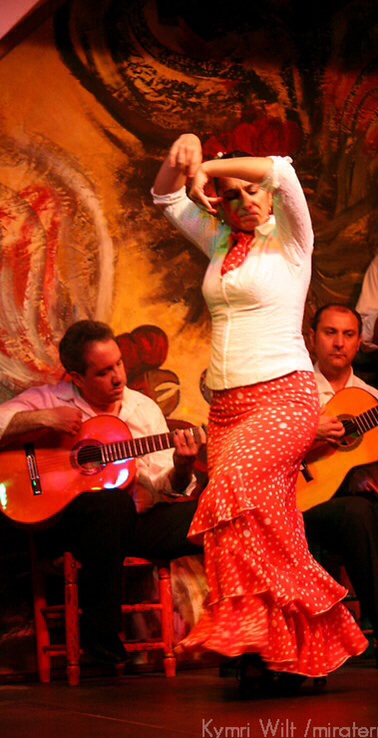

Perhaps duende comes from the deep, archaic suffering that is part of the Spanish soul: the early persecution of the Romani, the Muslims and the Jews in southern Spain that coincides with the emergence of flamenco. It is said that a woman shouldn’t dance until she is in her 30’s – she won’t have suffered enough, lived life enough, to convey the passion of flamenco.

Ahem
Why, we even saw the passion of Spain first-hand. For example, our lovely, trusted and trustworthy driver who shall remain nameless if not faceless. He spent two weeks on the road with us, always immaculately dressed, and he packed better than we did – he travelled with a garment bag. Somehow we learned (gossip travels fast on the Nap Machine) that he allegedly, perhaps, may have two families – a wife and children in one large Spanish city, and a wife and children just outside the same large Spanish city. And apparently, everyone is okay with that. A Spanish man of passion!

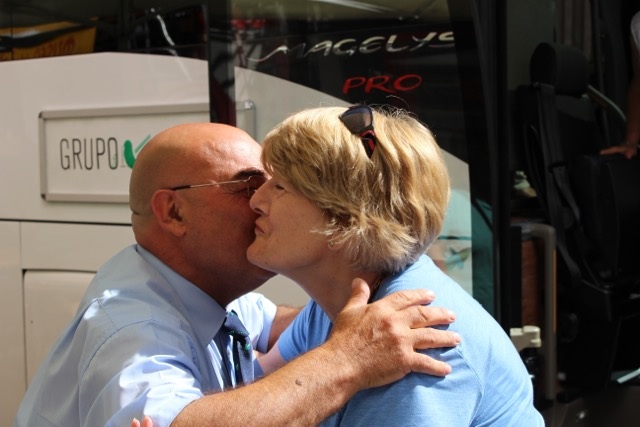
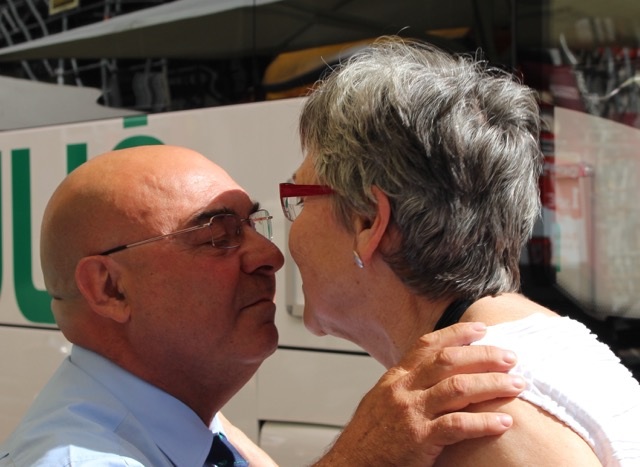
The affection in Spain was infectious and as we learned, sighed, ate and laughed our way across northern Spain in the Nap Machine, indelible memories and warm friendships were born.
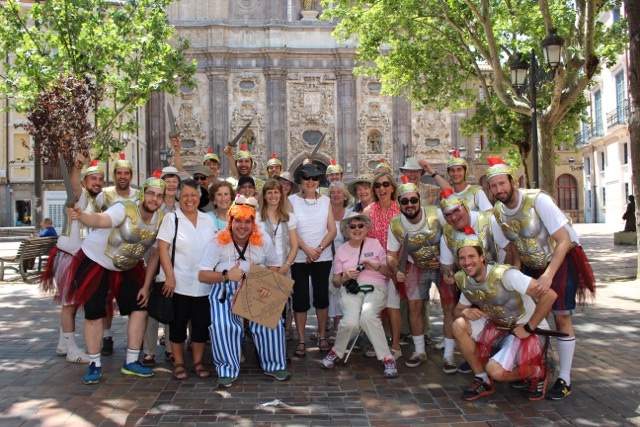

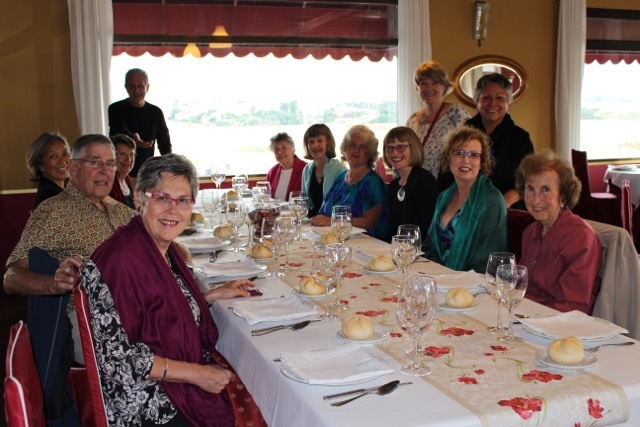
Rosa and Chrissie were the heart, soul and brains of the operation, the most generous, most accommodating, most cheerful, fun and most fabulous instructors, Rosa Stewart and Christine Forster – MUCHAS GRACIAS!

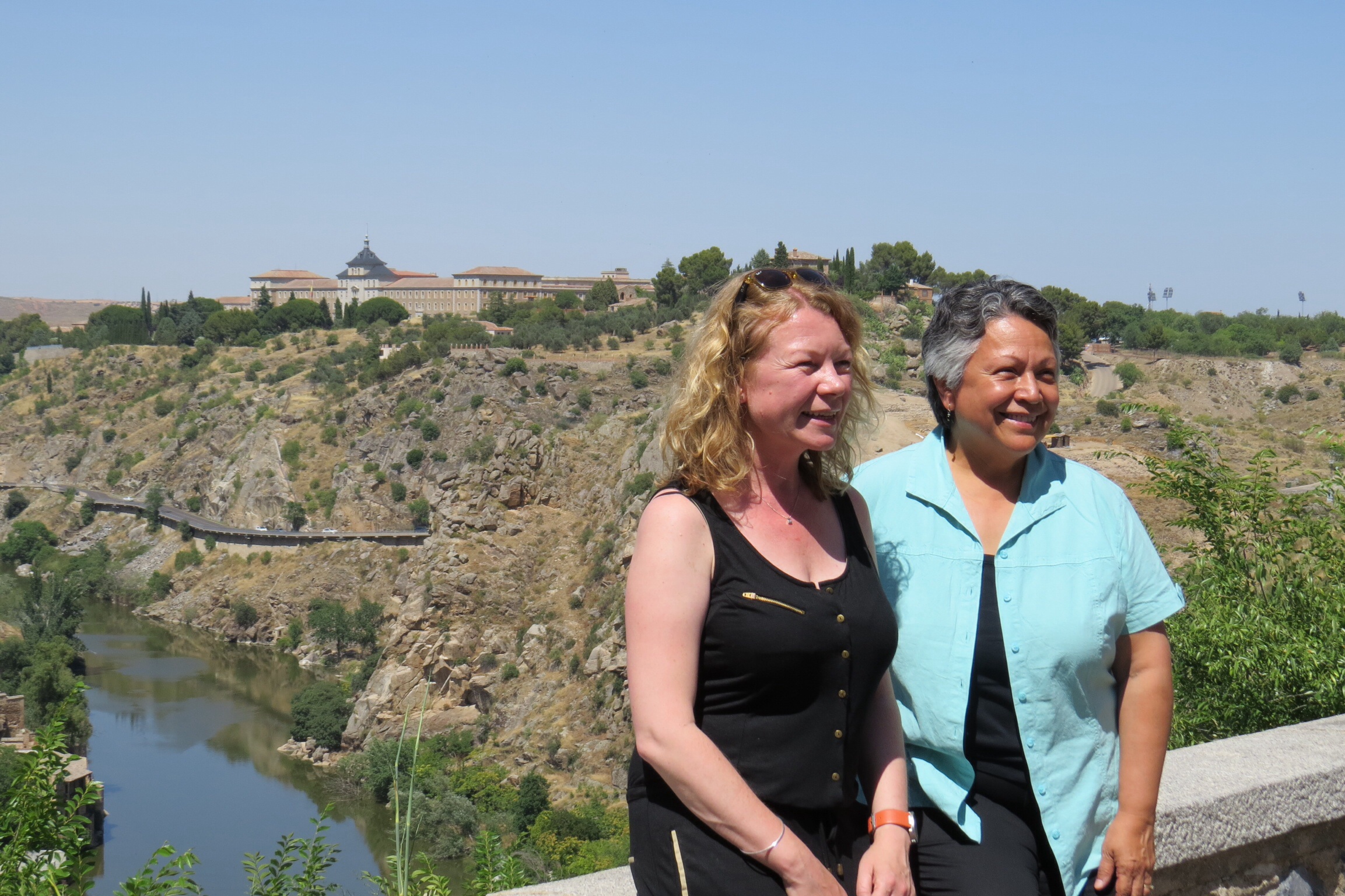
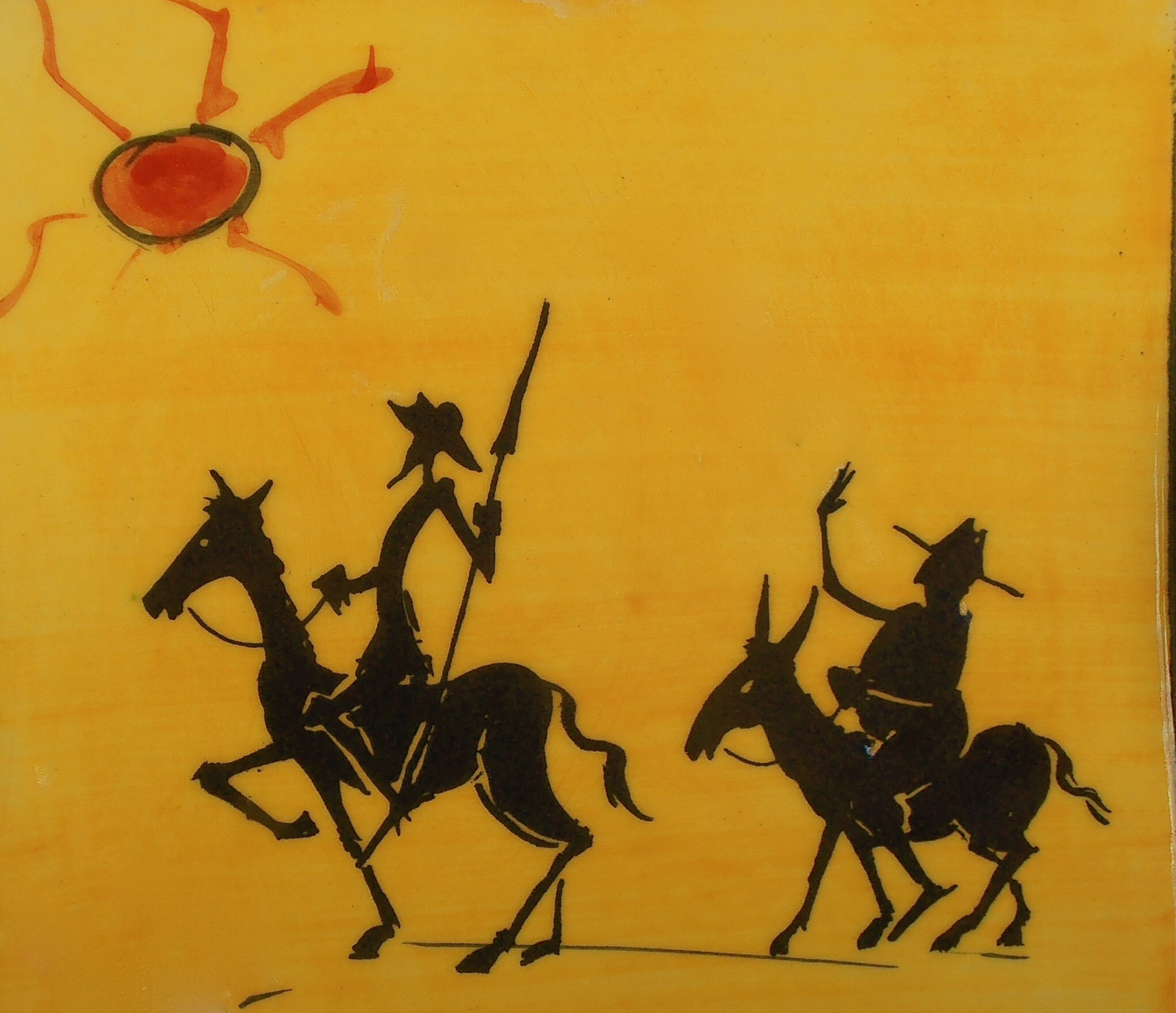
Just like Don Q and Sancho, inevitably, we turn toward home.
We really do, just as our tour guide Rene Garcia instructed, go with happiness….
Jan
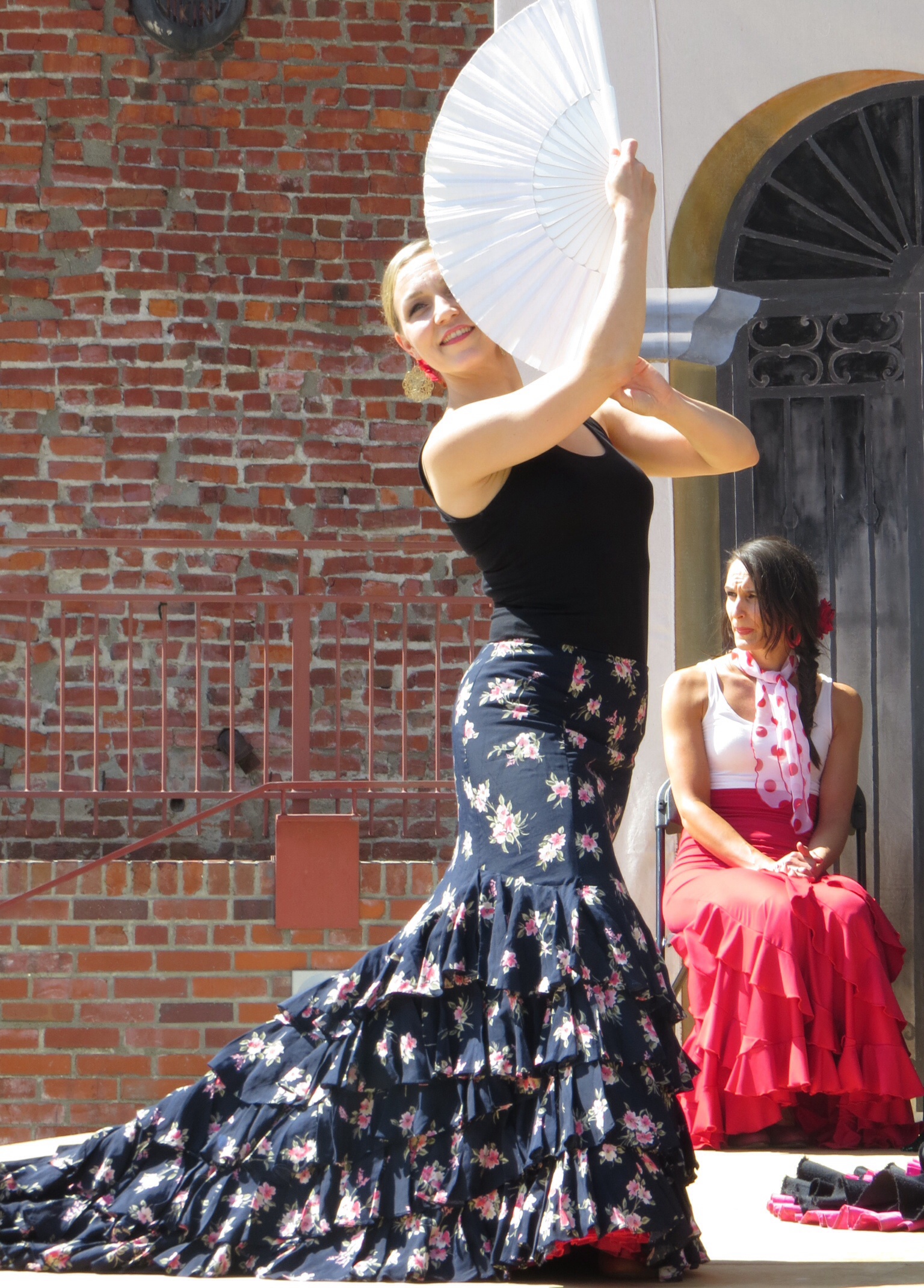
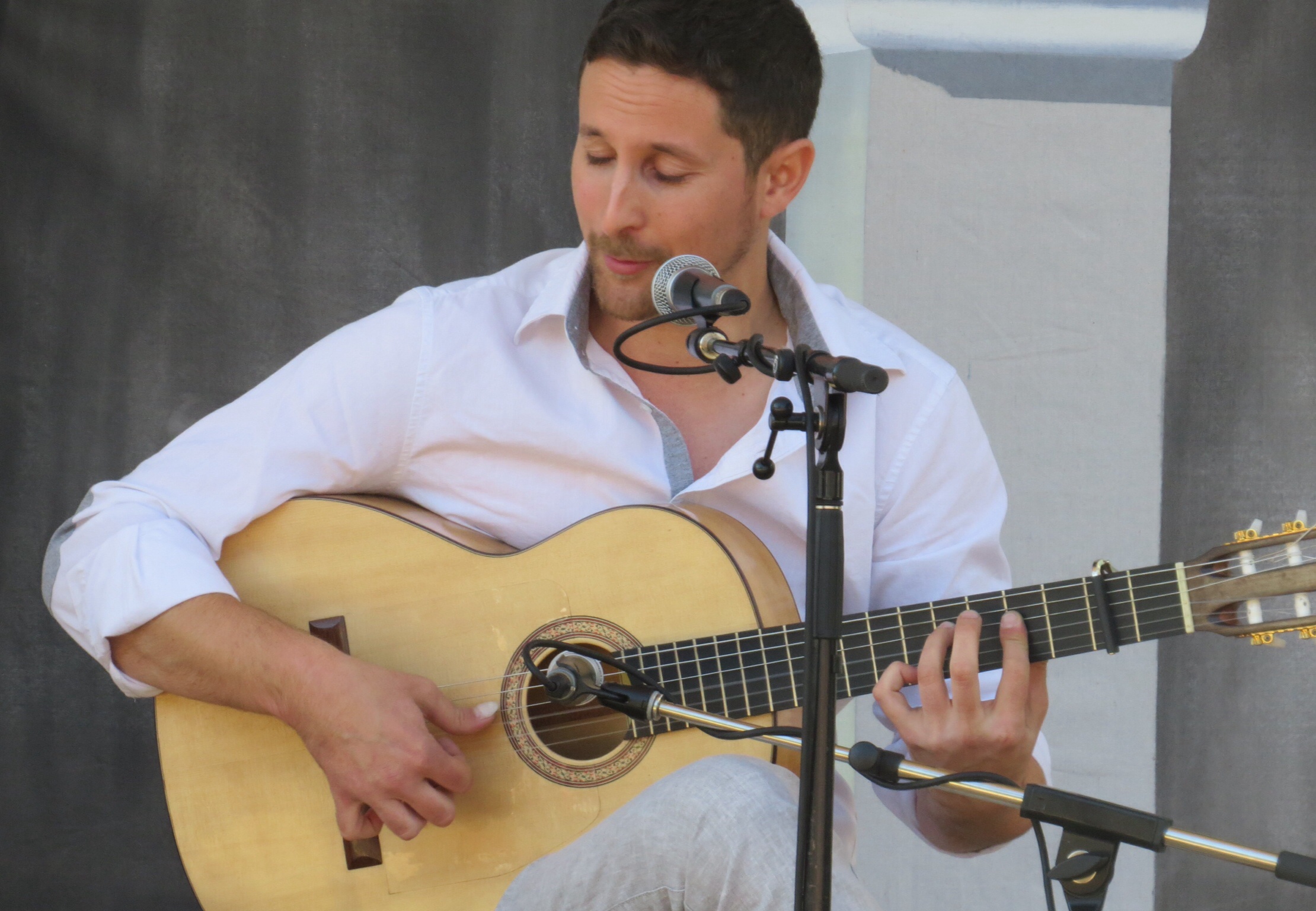
Back in Victoria, the 2015 Flamenco Festival:
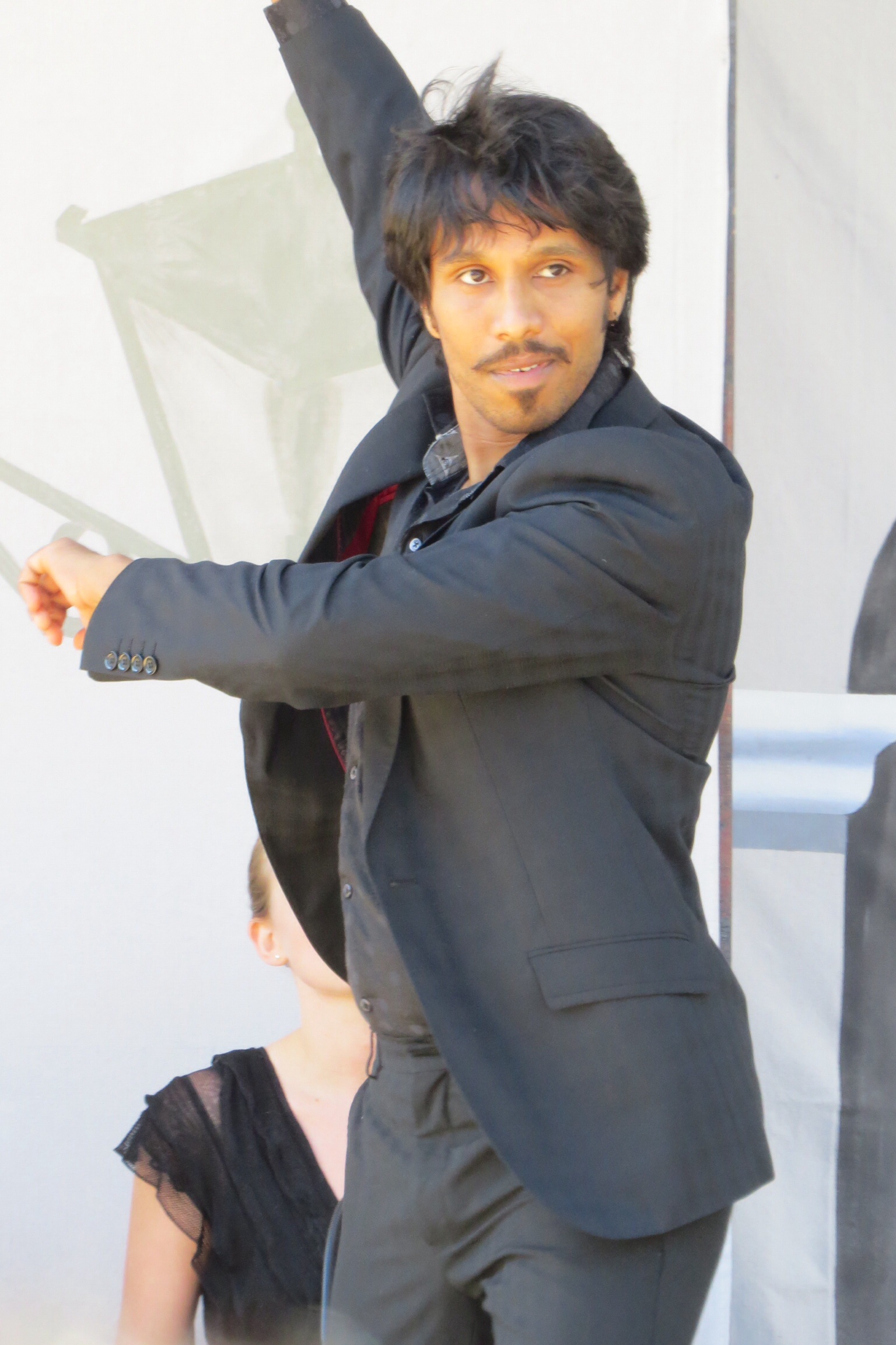
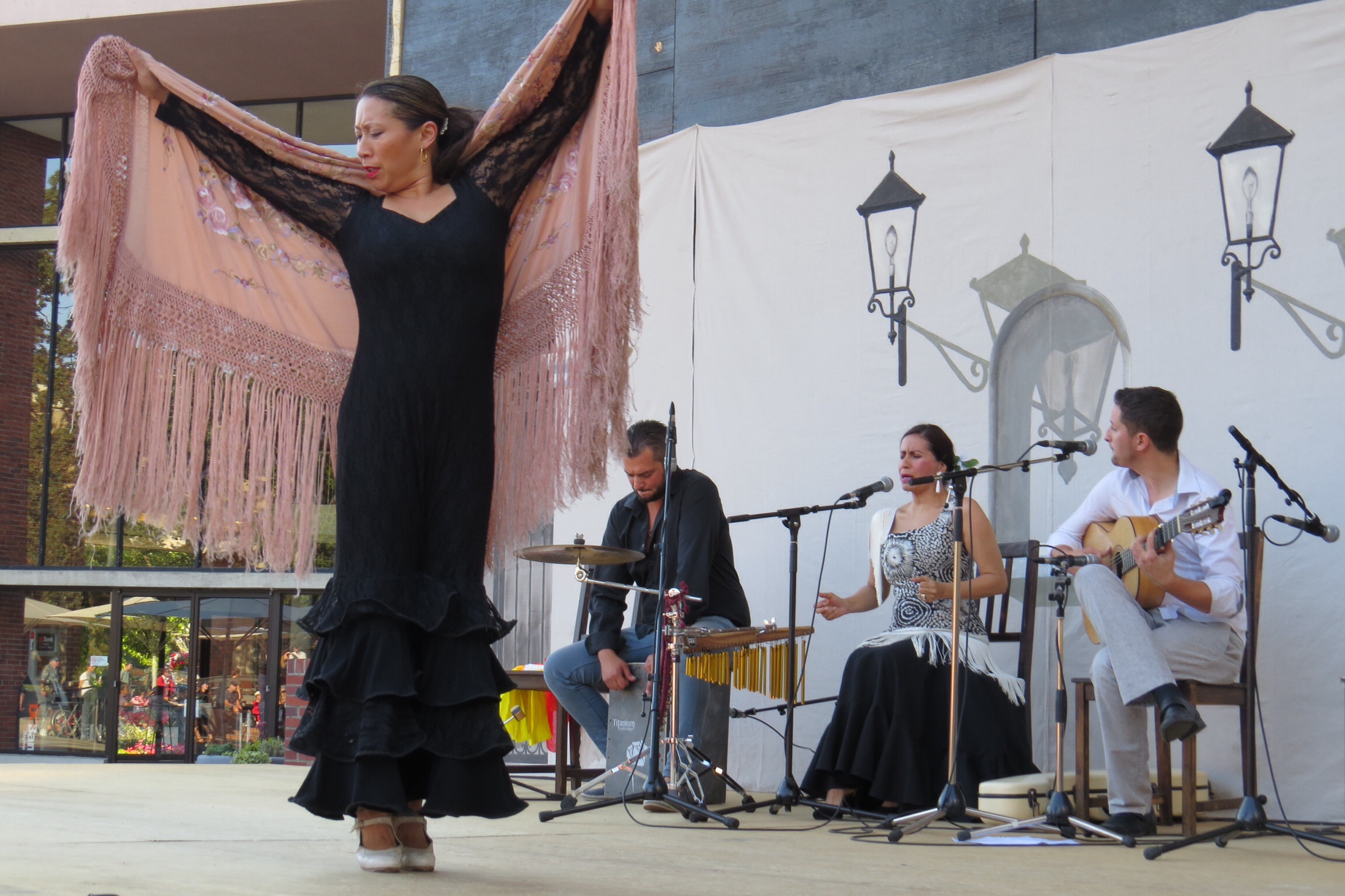
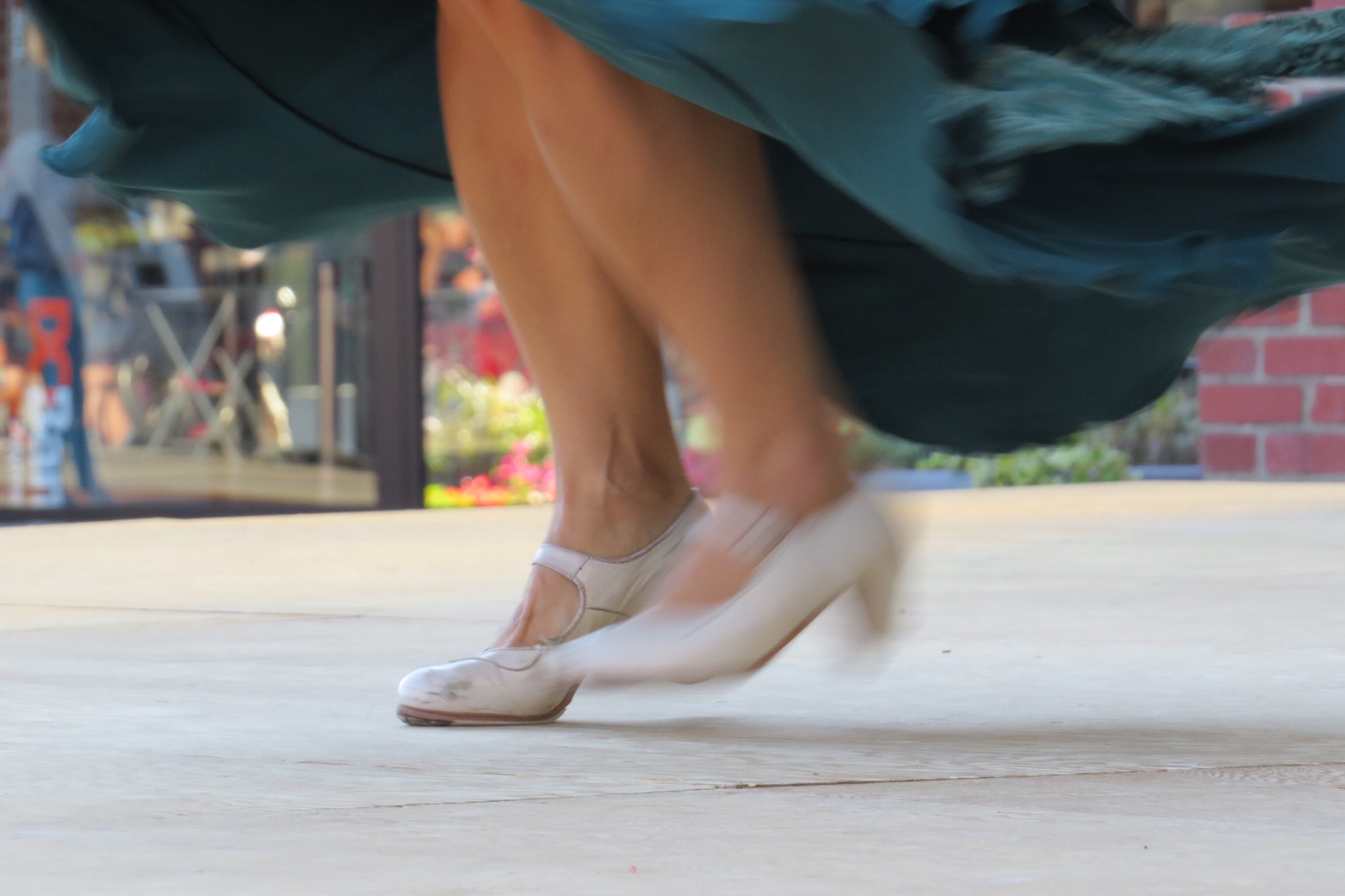
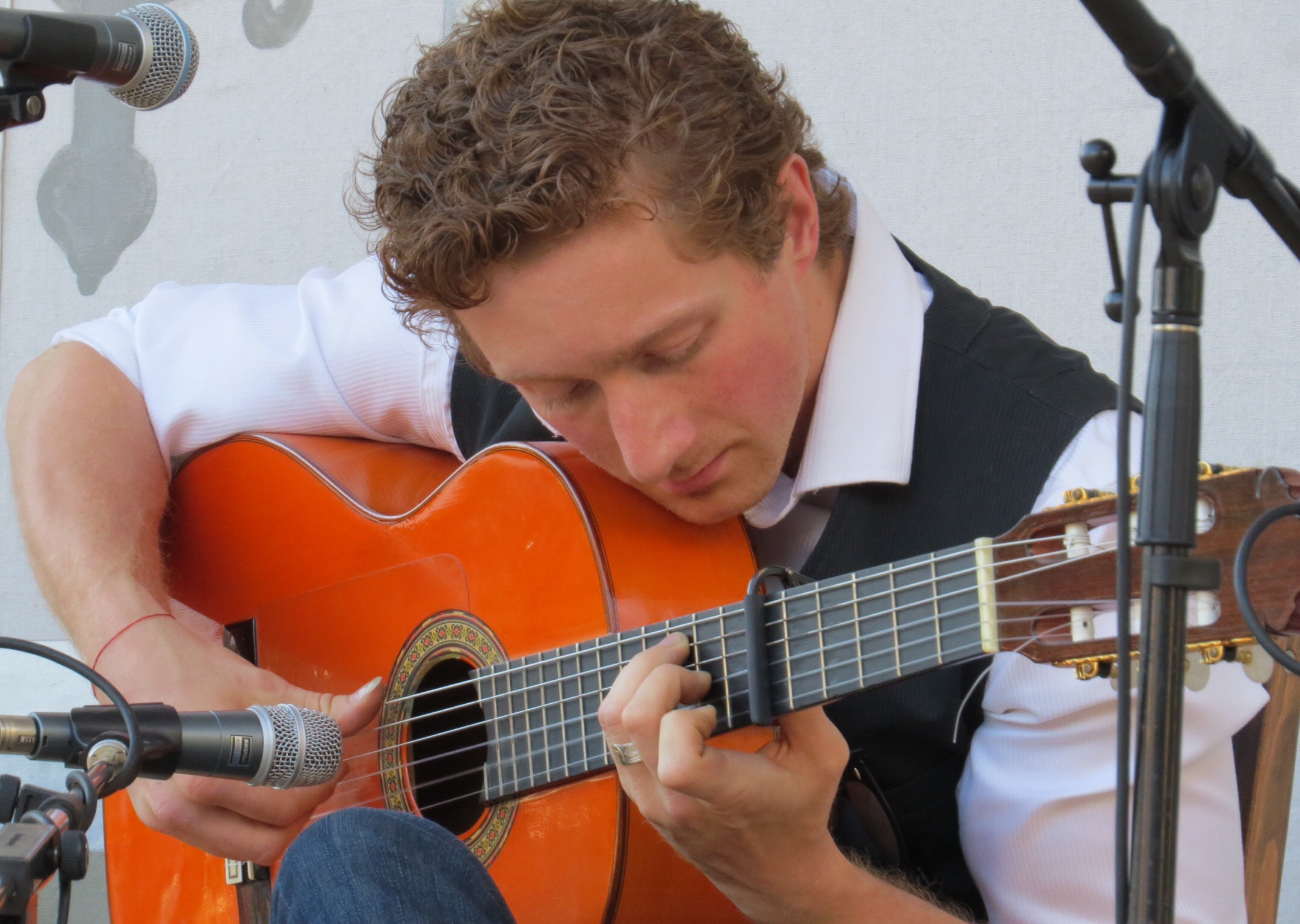
επόμενος?
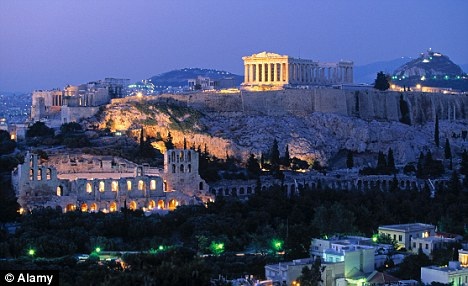
Spain has had its turmoils from within and without, and its economic struggles within the EU, but the post-Franco period has been relatively calm.
Juan Carlos I reigned over Spain from 1975 until 2014.
The Transition
On November 22, 1975, two days after dictator Francisco Franco died, Juan Carlos I took the throne, as arranged by Franco.
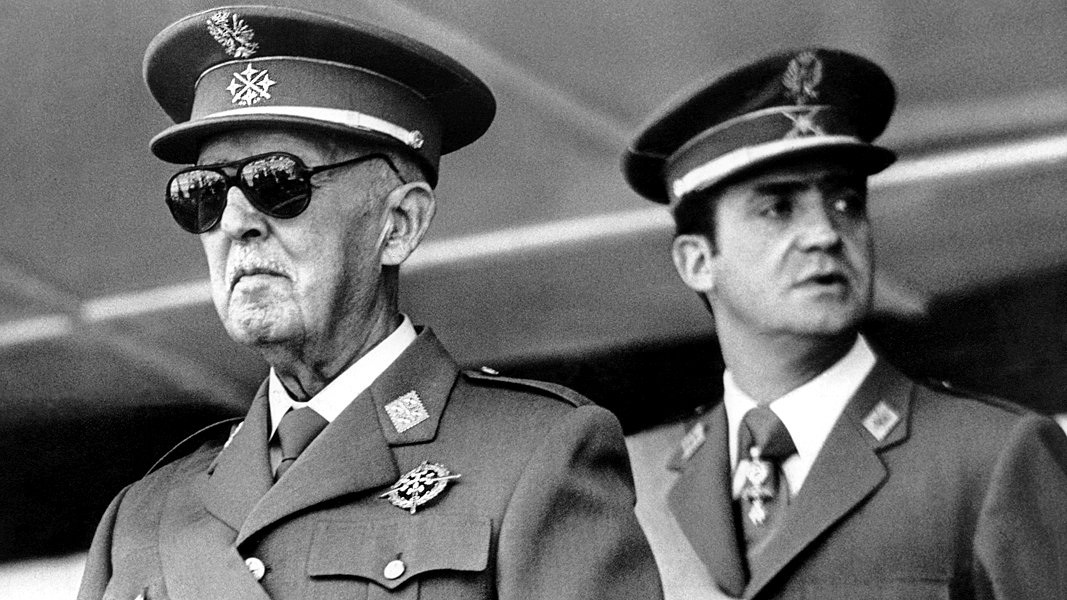
He immediately reinstated the first constitutional monarchy since 1931.
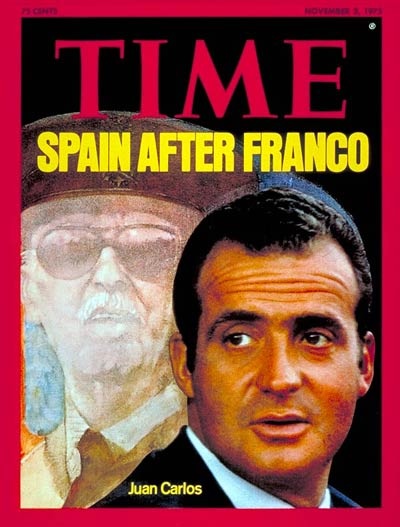
He appointed Adolpho Suarez to run the country, who was confirmed as leader in democratic elections.
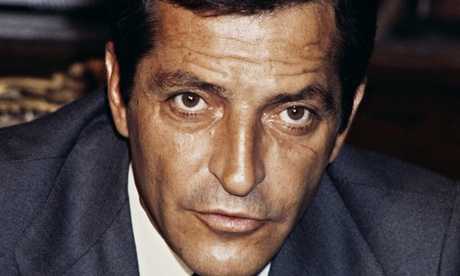
Always agitating just below the surface were former Franco supporters, who staged a military coup in 1981. It was Juan Carlos I who intervened to suppress the coup. He endeared the nation who had suffered the Franco years and went on to reign until 2014.
The Decline
Such a long rule leads almost inevitably to decline. In 2012, the King broke his hip while hunting elephant in Botswana. This was not seen kindly (the hunting of elephants) by Spain or other countries around the world, including the organization he patronized, the World Wildlife Fund. Once the whiff of scandal was in the air, it grew. Juan Carlos’s son-in-law was accused and charged of corruption. Juan Carlos, and Spain, needed an exit strategy.
The Abdication
Juan Carlos, grandson of Alphonso XIII, in advancing age and having had five surgeries in the past two years including a hip replacement leaving him walking with difficulty, announced his decision to abdicate on June 2, 2014, saying he was stepping aside to allow for younger royal blood to rally the country that is still trying to shrug off a double-dip recession and a 26 percent jobless rate. He would attend the gorgeous Congress to formally transfer power to his son, Felipe.
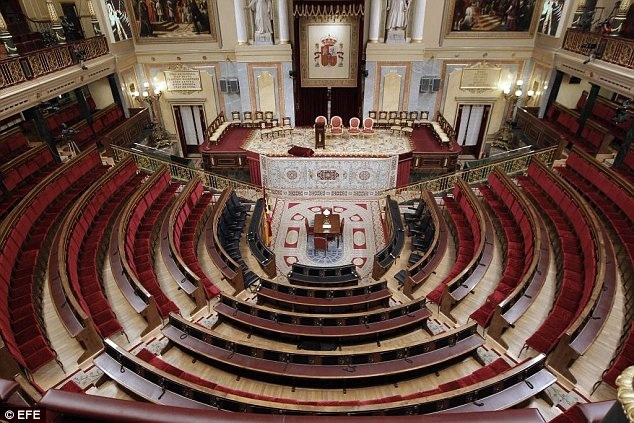
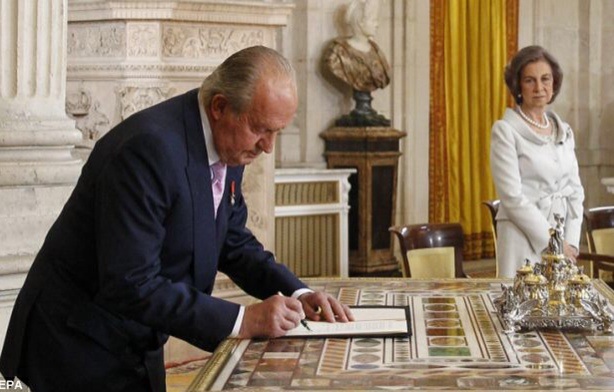
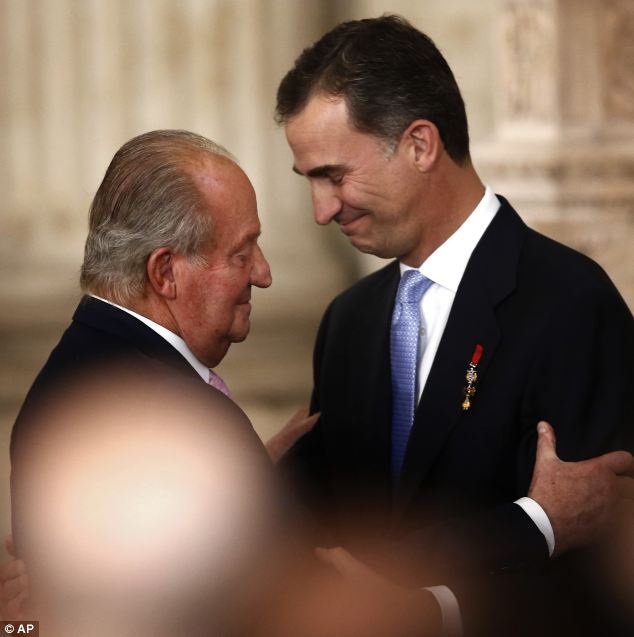
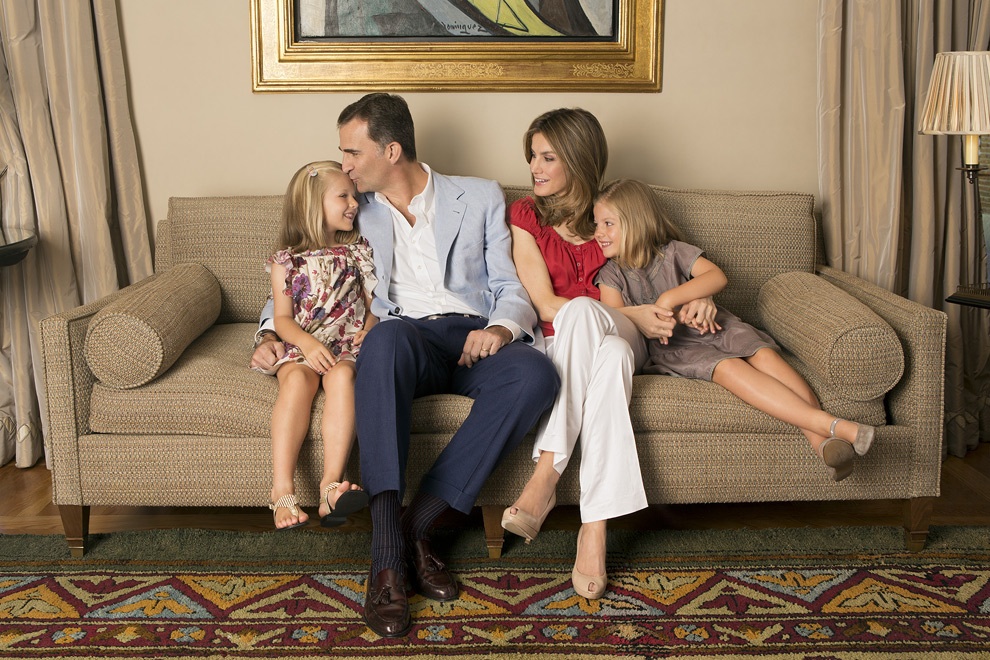
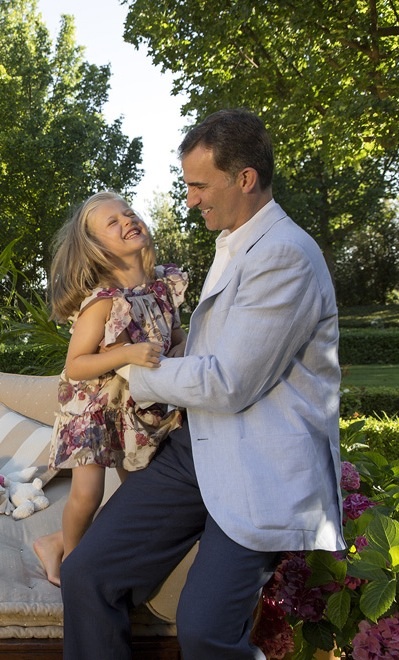
Felip VI and Queen Consort Letizia
The palace acknowledged that the customary pomp had been eliminated ‘in keeping with the criteria of austerity that the times recommend.”
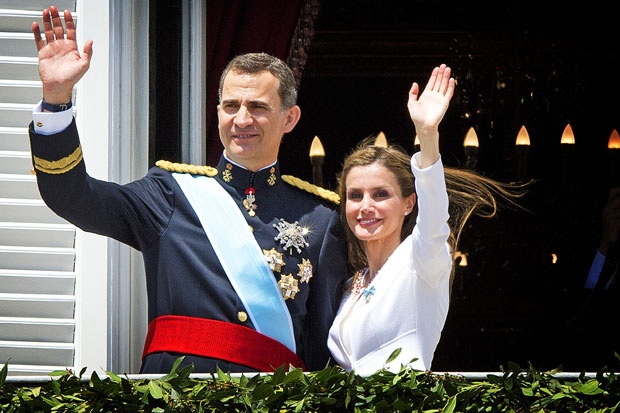
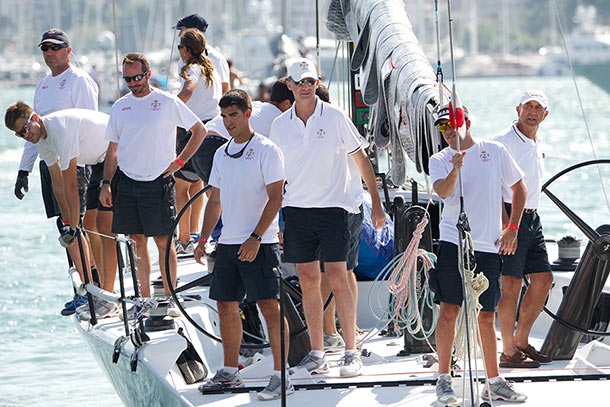
Felipe VI was educated at Lakefield College, yes, in Lakefield, Ontario (what, if any, mark did Ontario and Canada make on him?) and he holds a law degree from Madrid’s Autonomous University and obtained a Master’s in International Relations from Georgetown University in Washington. He is also, like his mother, an Olympic sailor.
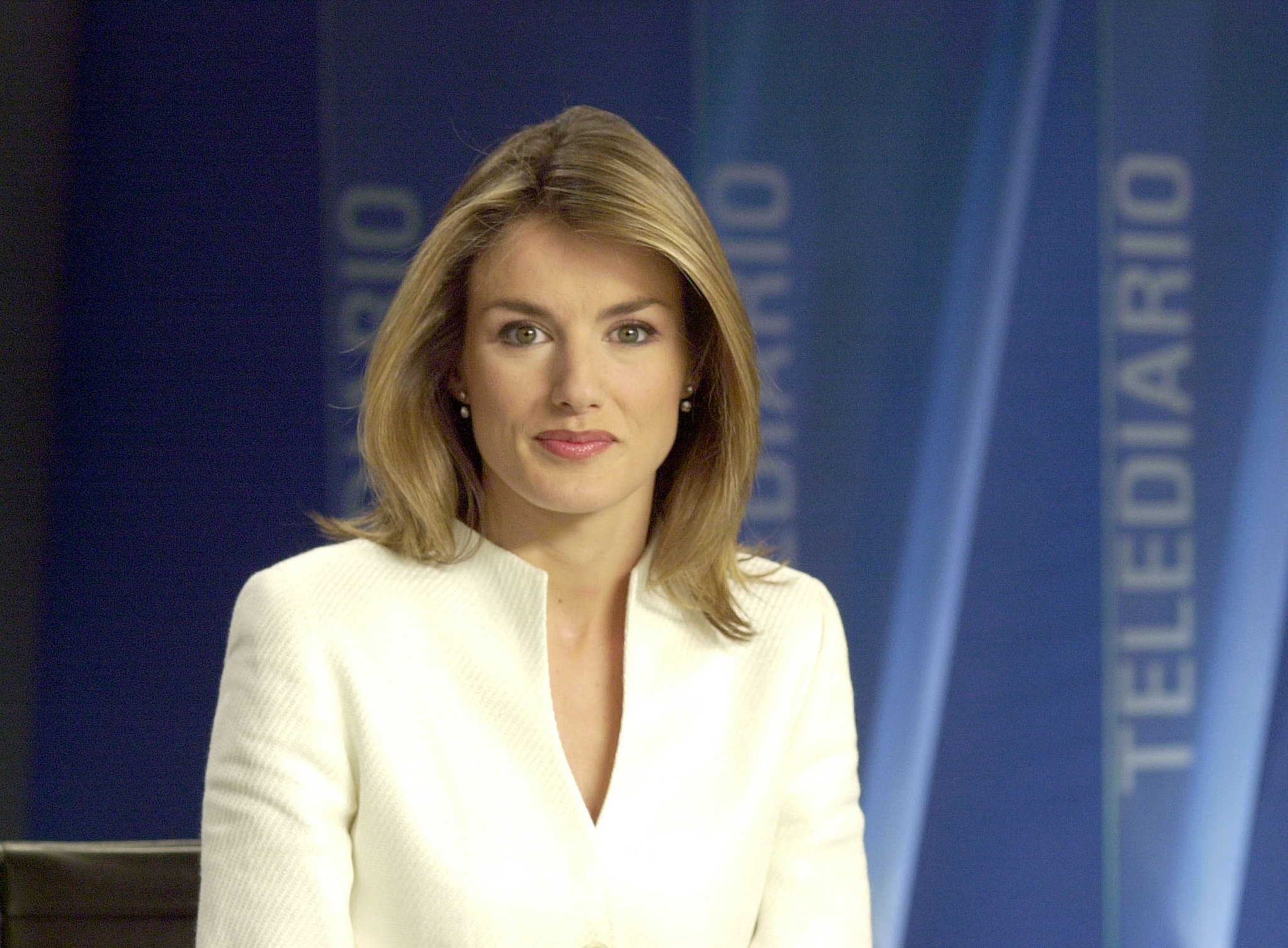
Queen Letizia was, when they married, the CNN anchor who had reported live to Spain from 9/11.
They have two sweet daughters.
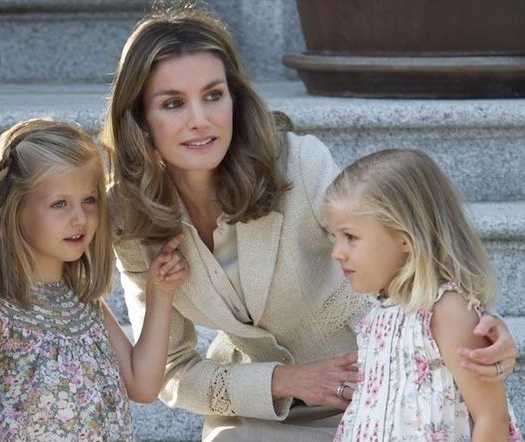
The family doesn’t live in the grand but formidable Palacio Real de Madrid.
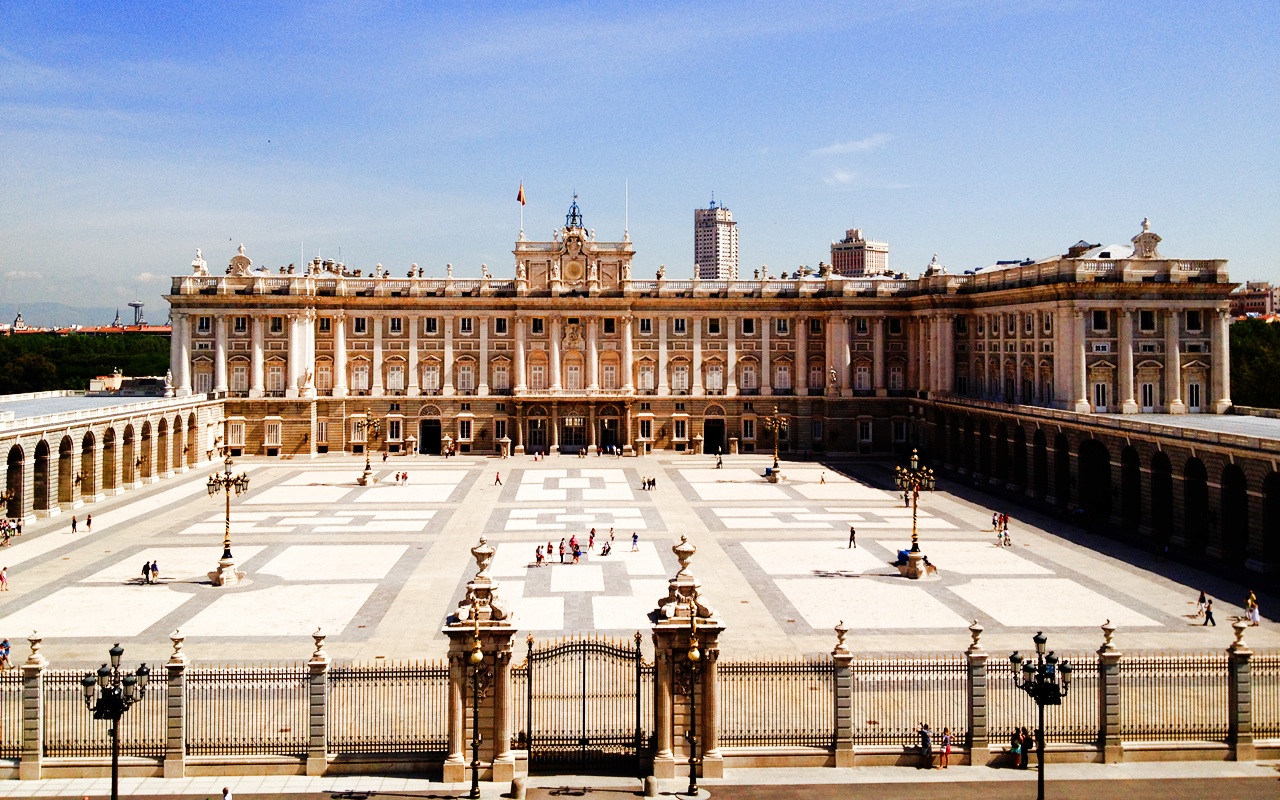
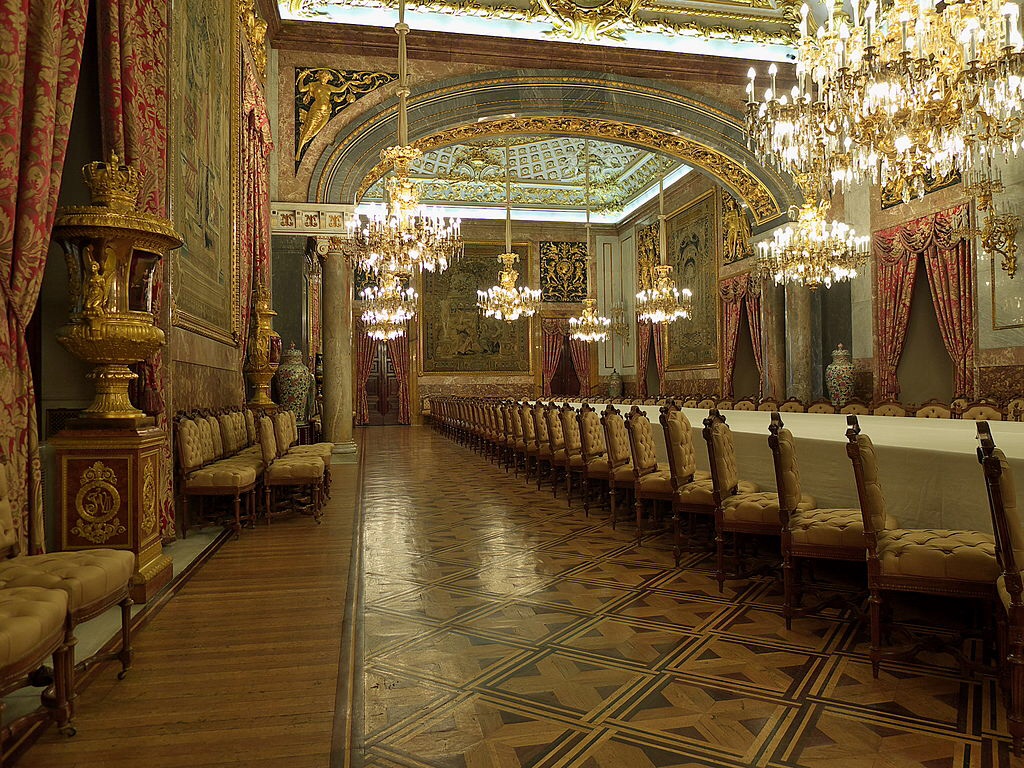
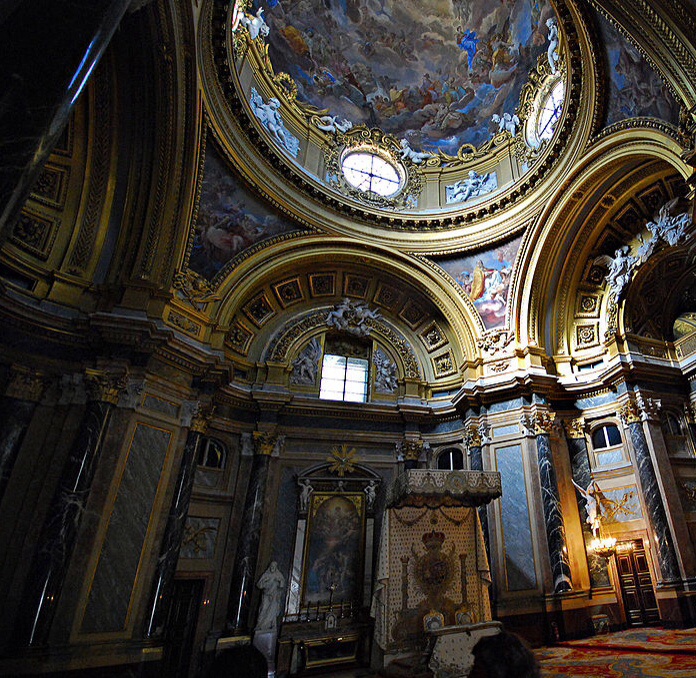
They have a lovely private home on the grounds of the Palacio de la Zarzuela on the city’s outskirts.
While we were in Spain, Spanish-speaking fellow traveller Maria Luisa translated the enticing news in the daily newspapers and we were in Spain when King Felipe VI revoked the title of “Duchess of Palma de Mallorca” from his sister, the now criminally-charged Princess Cristina.
Recent media polls have shown that a majority of Spaniards now believe the monarchy is crucial in times of constitutional crisis. A heavy burden in a country whose constitution has been so battered, and restored so tenuously. Only time is its ally. Will the monarchy meet the challenges of democracy, economy and autonomy? What challenges will face Leonor, Princess of Asturia and heir apparent to the Spanish throne, when her father looks to her to lead the country?
Jan
I don’t quite know what to do with Madrid.
Virtually our whole trip involved regions whose people are proud, culturally unique and desperate to individuate themselves from Spain. Some fought civil war for independence and lost (Catalans). Some died and killed protesting for independence (Basques, from both sides of the French/Spanish border). Another was first an independent kingdom (Galicia) and since 1931, has autonomous status.
No wonder when we arrived in Madrid, it was like entering a foreign country.
Would a visit to Madrid make more sense after touring southern Spain?
Perhaps, but here we are: plunge in.
The third largest city in the EU after London and Berlin, Madrid has the third-largest GDP in the European Union and its influences in politics, education, entertainment, environment, media, fashion, science, culture, and the arts all contribute to its stature as one of the world’s major global cities. Due to its economic output, high standard of living, and market size, Madrid is considered the major financial centre of Southern Europe.
Downtown, such as in the Puerta del Sol (“Gate of the Sun”) Square, the shopping district in the heart of Madrid, teems with a casual, happy combination of tourists and a good portion of the city’s six million local residents. Air-conditioned stores are an oasis from searing temperatures, and the street cafes send a cooling mist over their patrons to beat the heat.
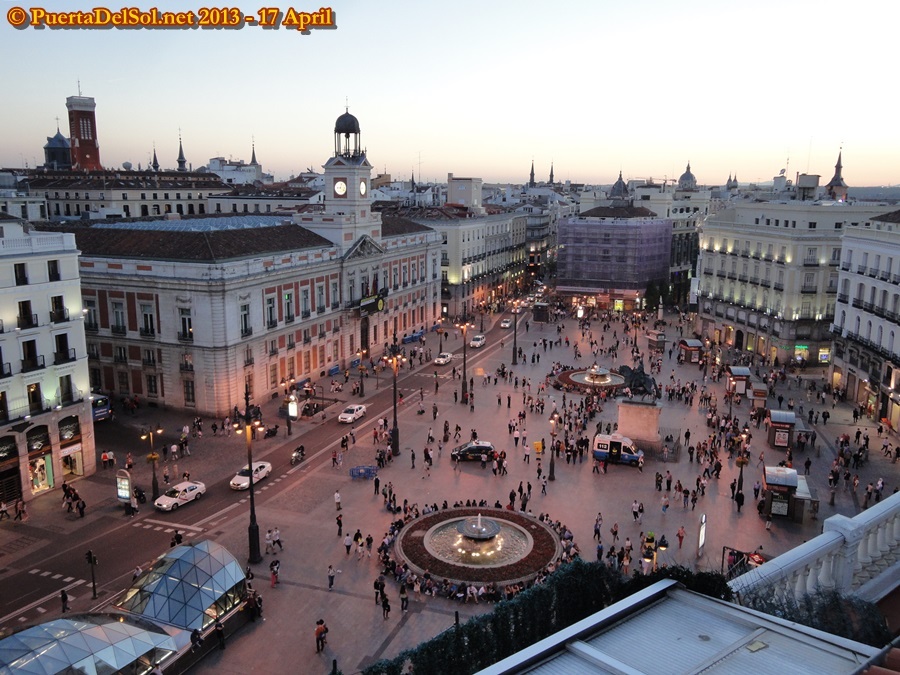
Across from our hotel, busloads of children from across Spain depart, first posing for a group photo and a school song, from a Broadway-style theatre showing The Lion King.
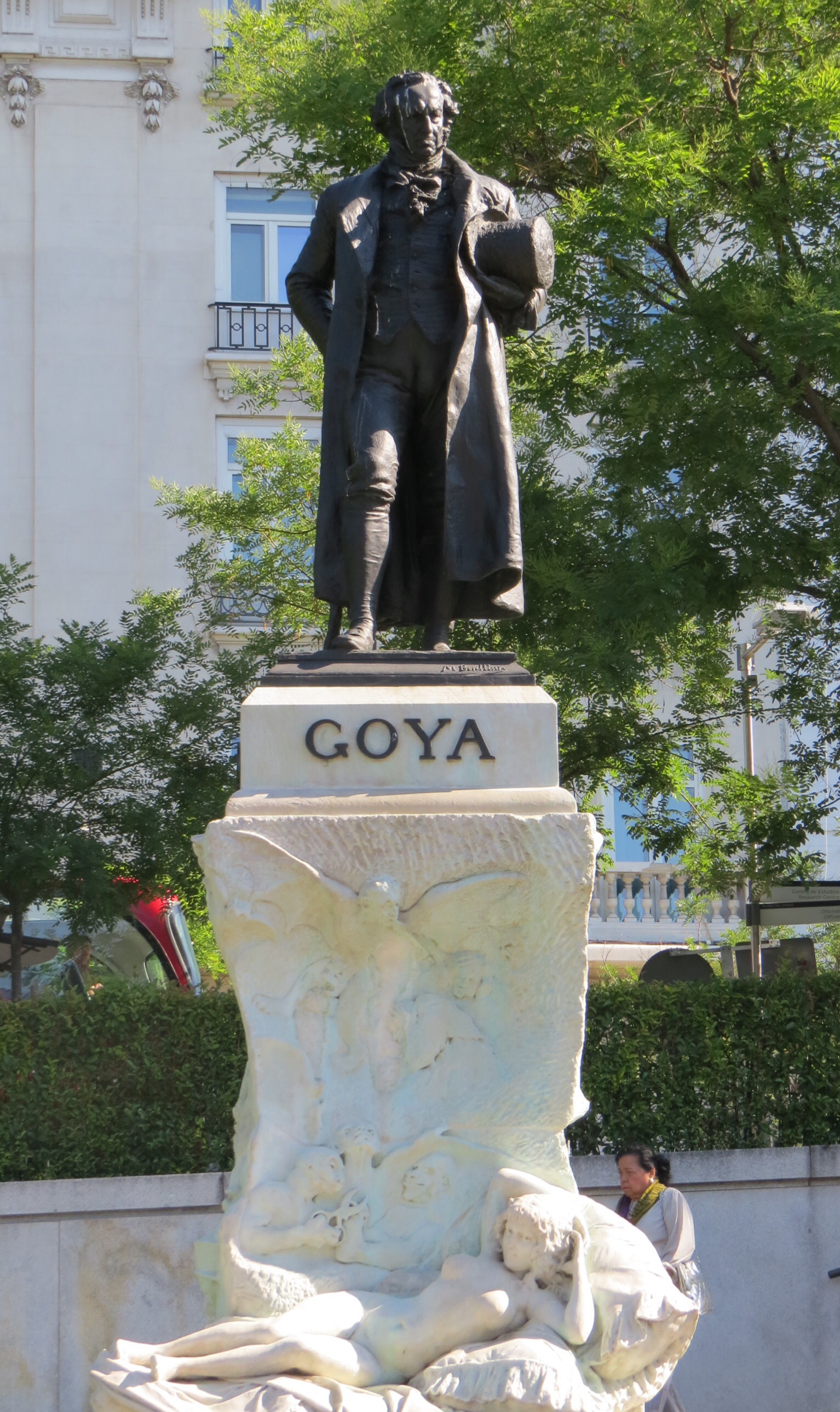
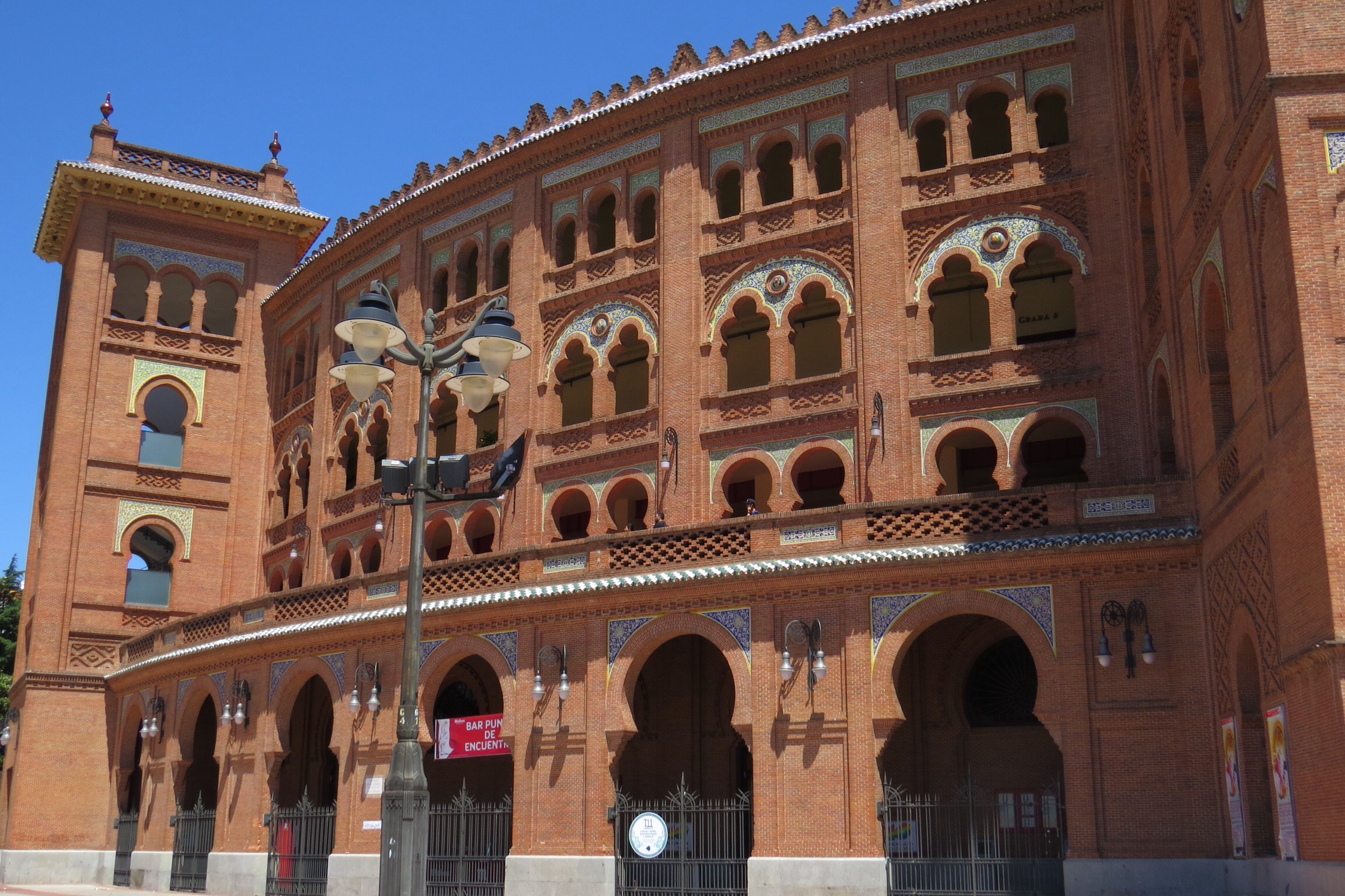
On our city tour, we saw the famous bullring, El Prado museum with its impressive statues of Velazquez and Goya outside, and some of the city’s most beautiful squares and parks.


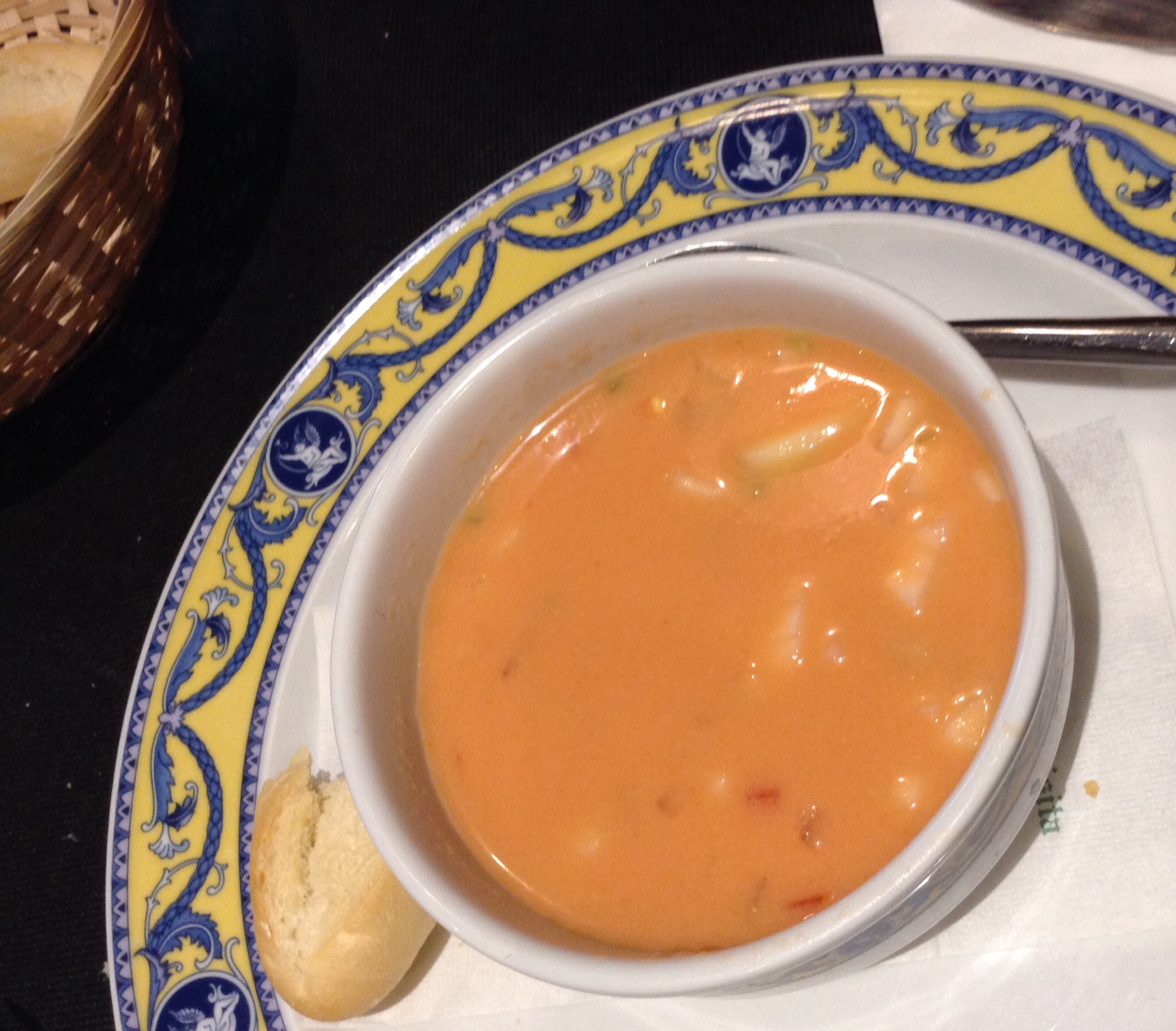
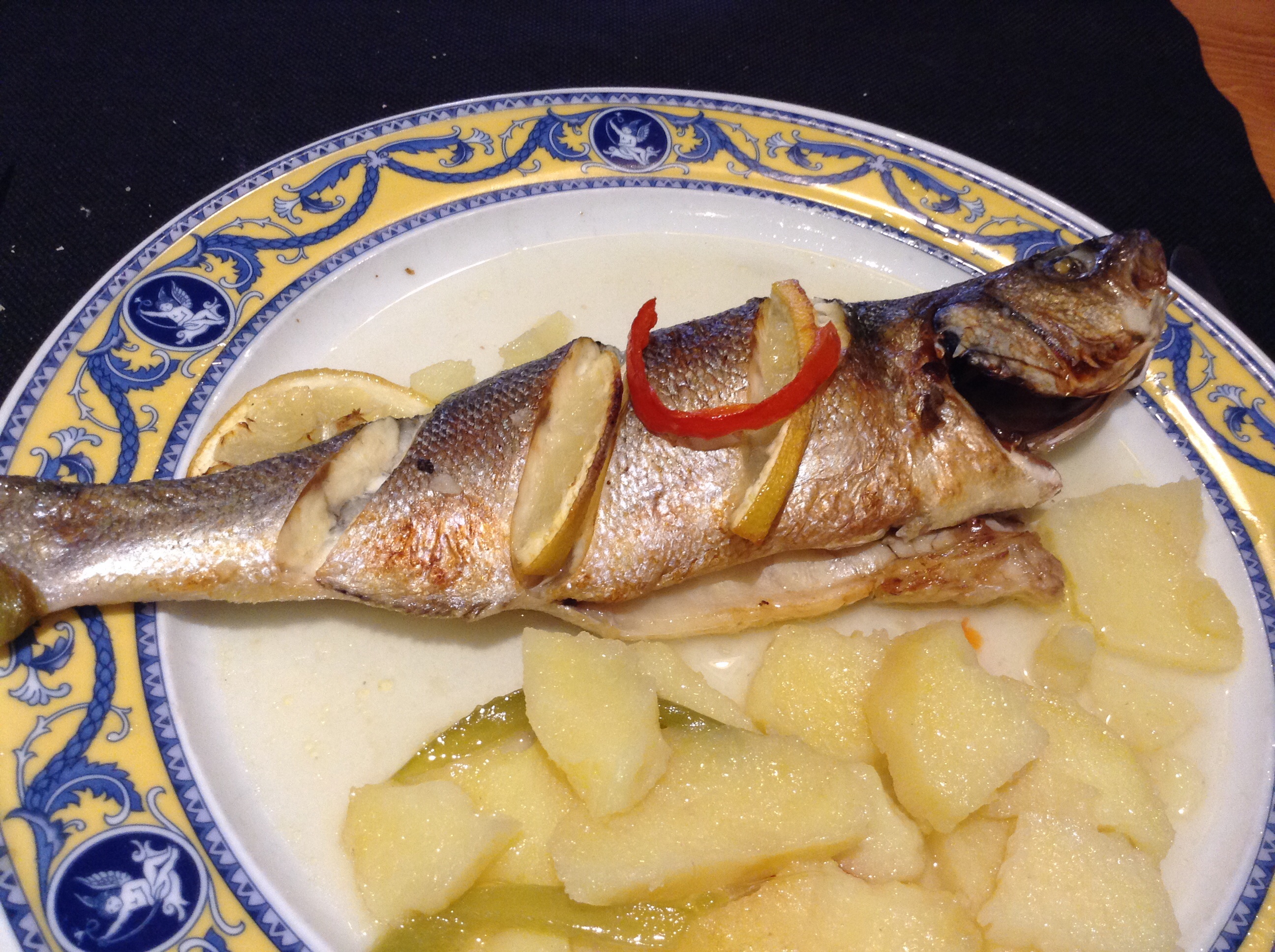
We didn’t really have time to explore the city’s cuisine, but we did have some wonderful meals, pans of seafood-laced paella so big an extra table had to be added to hold them, meals with endless courses from sampler-sized glasses of gazpacho through to liqueurs and chocolate, and dinner served al fresco at midnight. My very last meal – lunch – in Spain has to include gazpacho and buttery, melt-in-your-mouth fish.
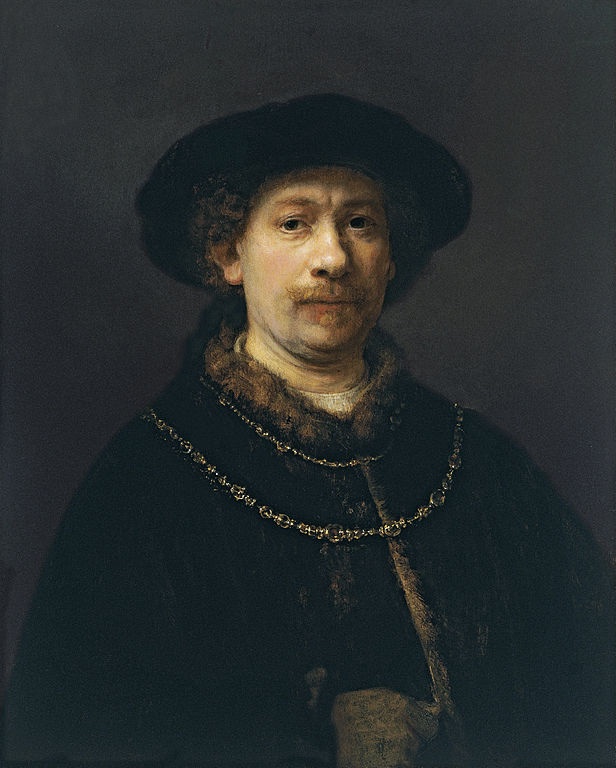
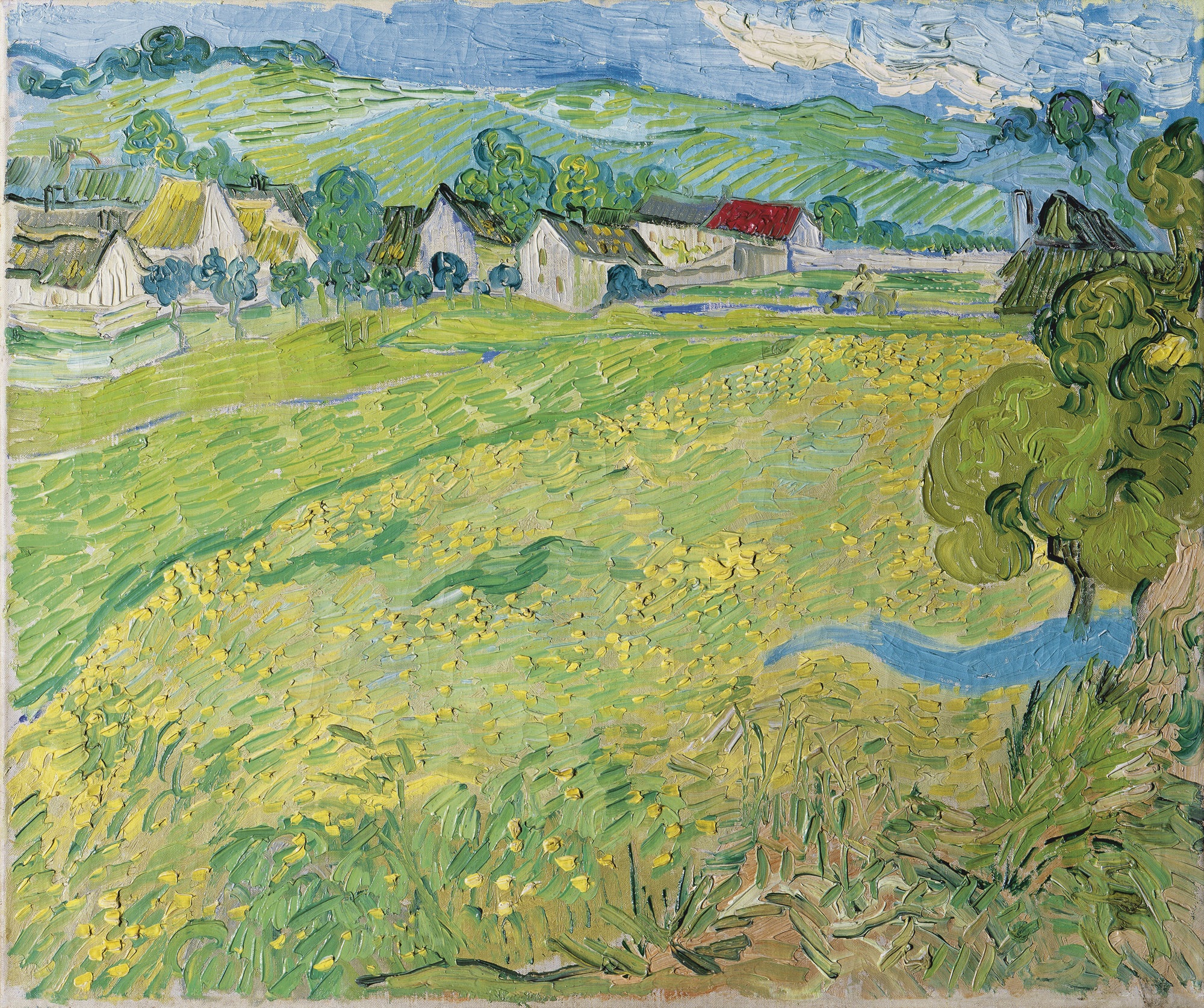
I think what makes Madrid really stand out from other cities its size is the art. I had been to the two major public museums, El Prado and the Reina Sofia, and on my last day I visited a wonderful private collection at the Thyssen-Bornemisza Museum.
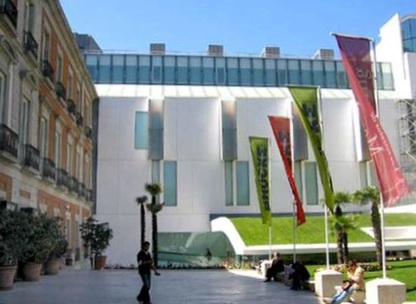

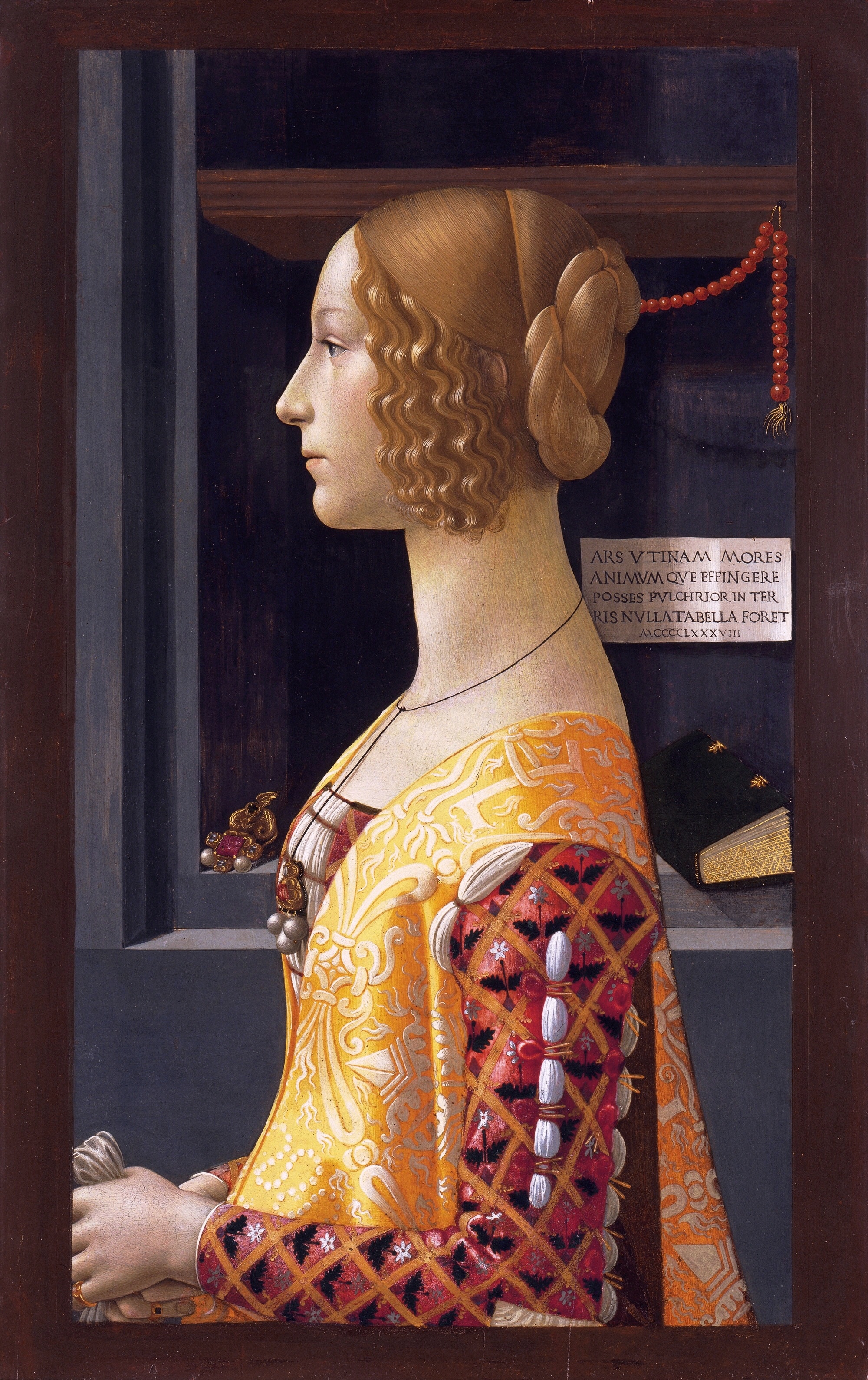
This museum, housing the private collection of the Thysson-Bornemisza family, includes classical masterpieces, such as the work of Michaelangelo’s master, Ghirlandaio, as well as an impressive array of art from genres not found in the public museums, such as Impressionism, 19th Century American art, Fauvism and even pop art.


Of course, no trip to Spain would be complete without an evening of Flamenco. Passionate, steamy Flamenco. So intense was one of the dancers that afterward we were searching under our table for her earring. I came across an interpretation of the dance in the article on the page at the top, “Flamenco: Tempo de Amor.”

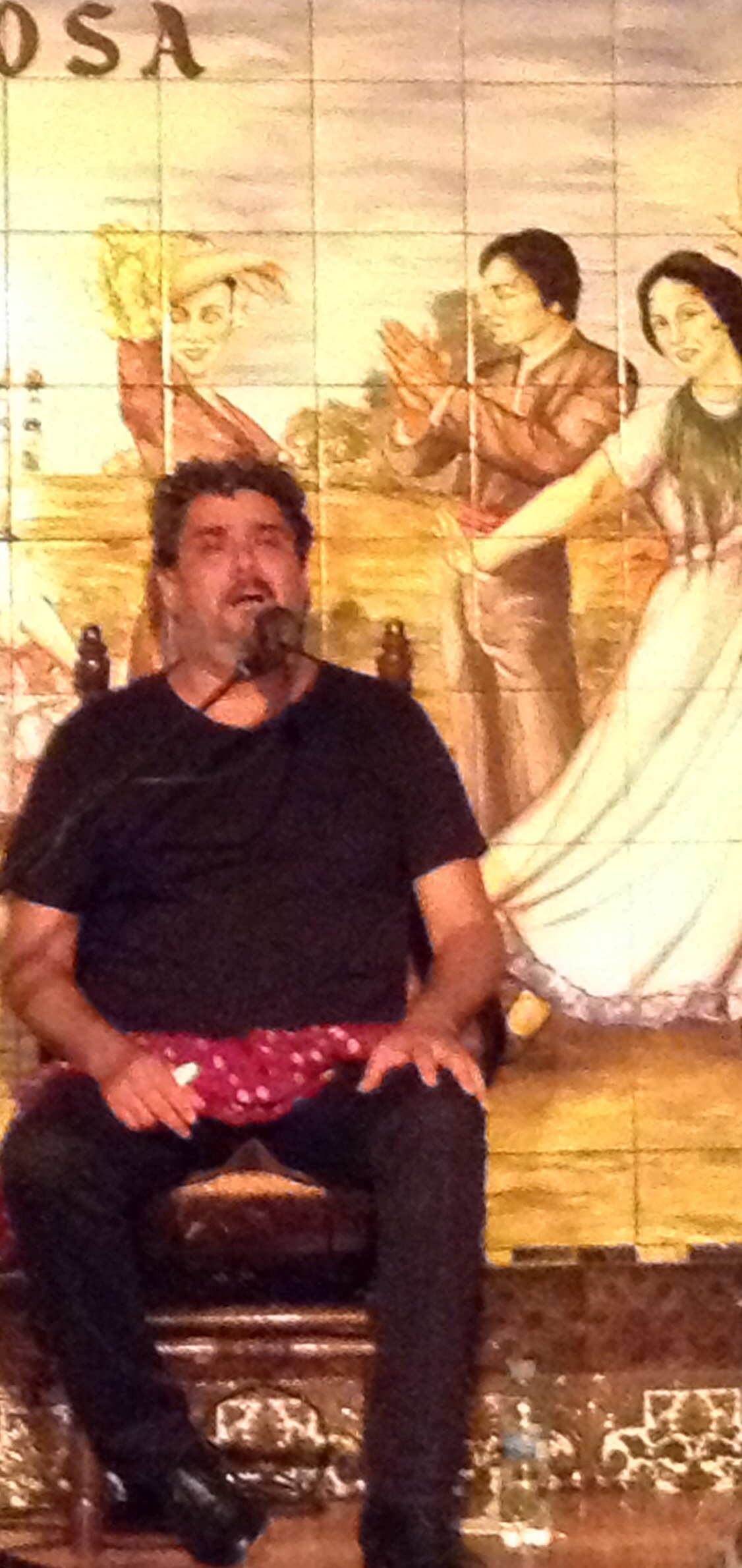
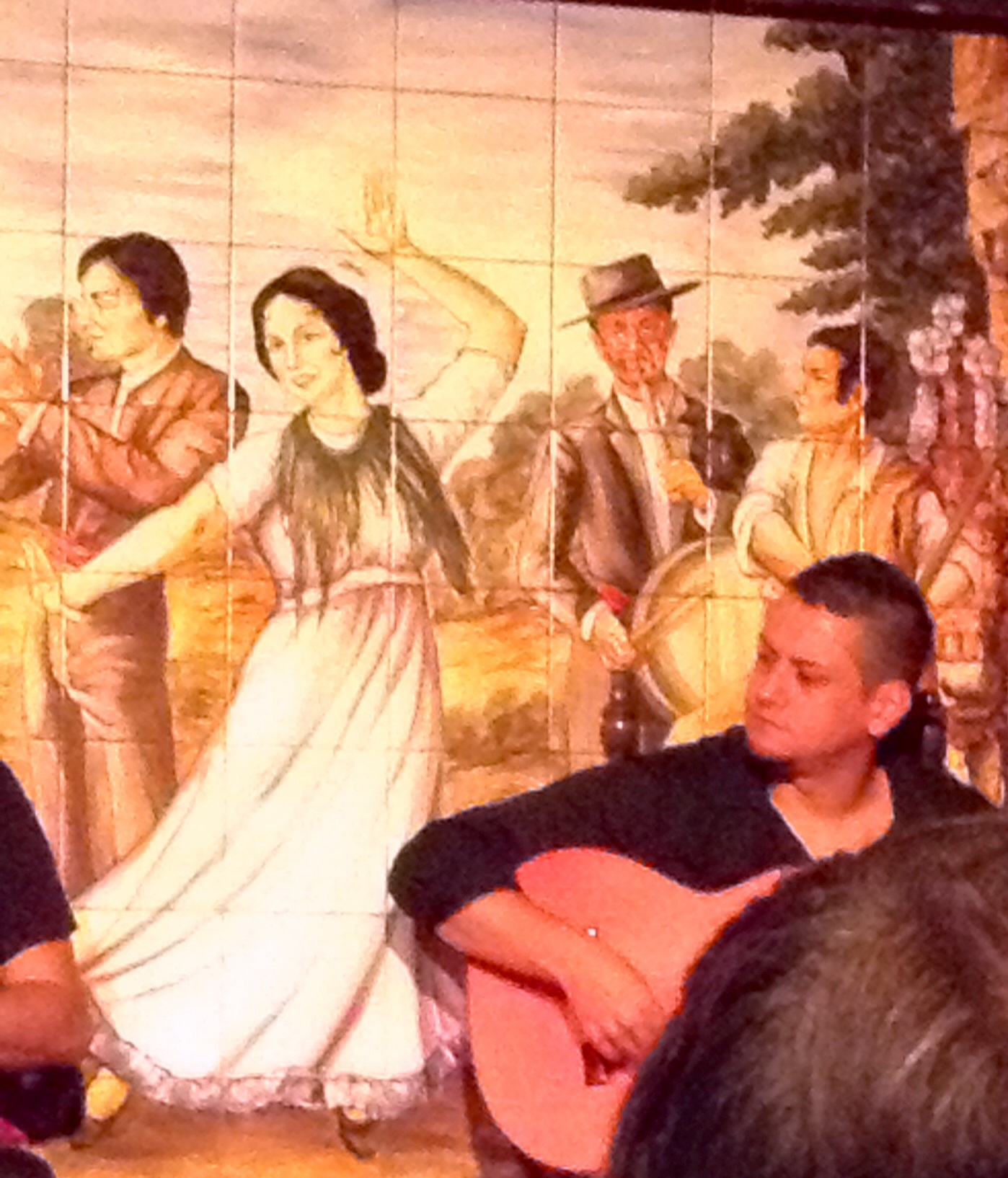
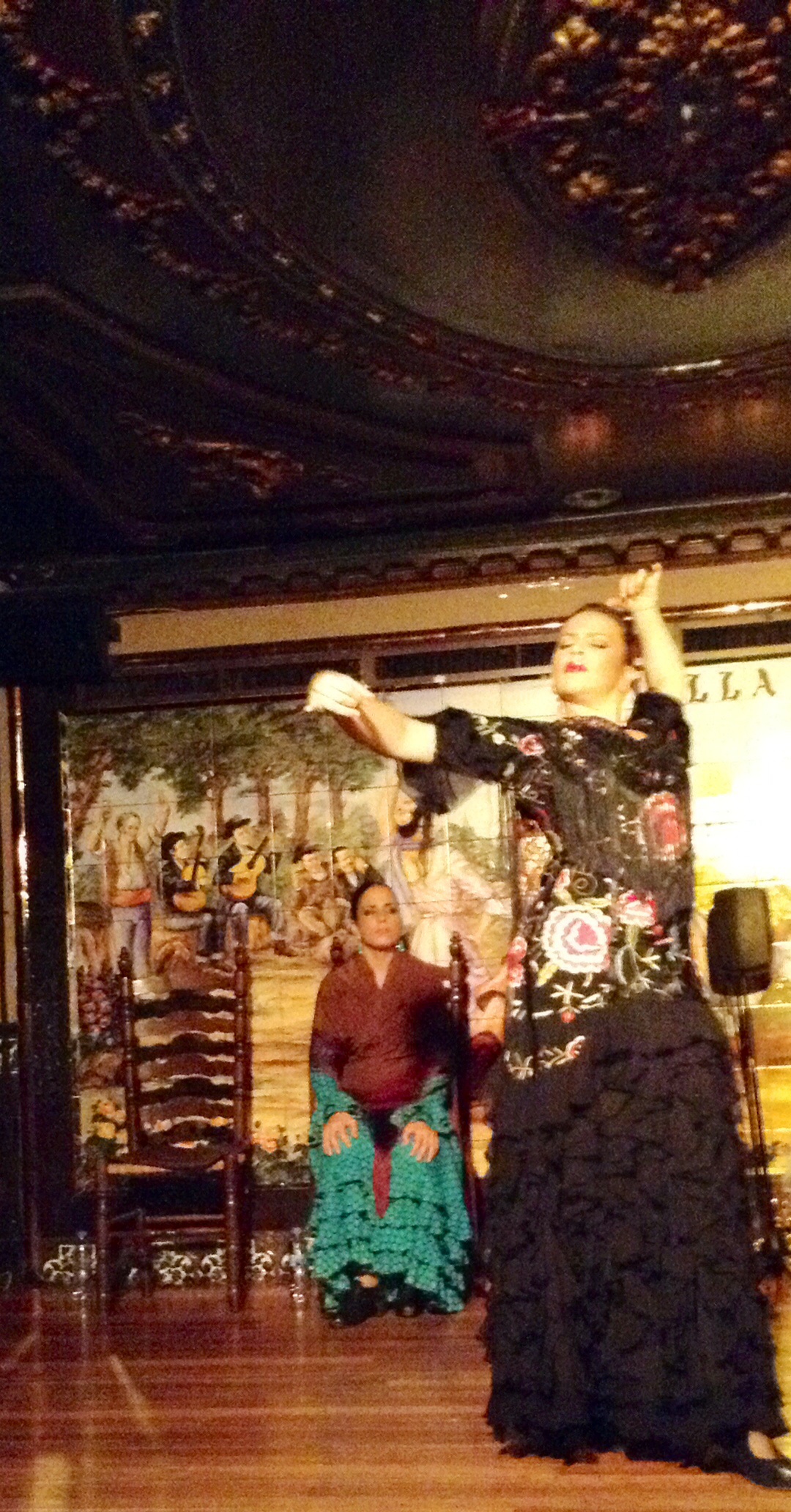
Flamenco at Tablao Villa Rosa
For me, Barcelona had an edgier appeal than Madrid, but there is much more to explore here, and much more to ponder. Another trip to Spain is definitely in order, don’t you think?
Jan
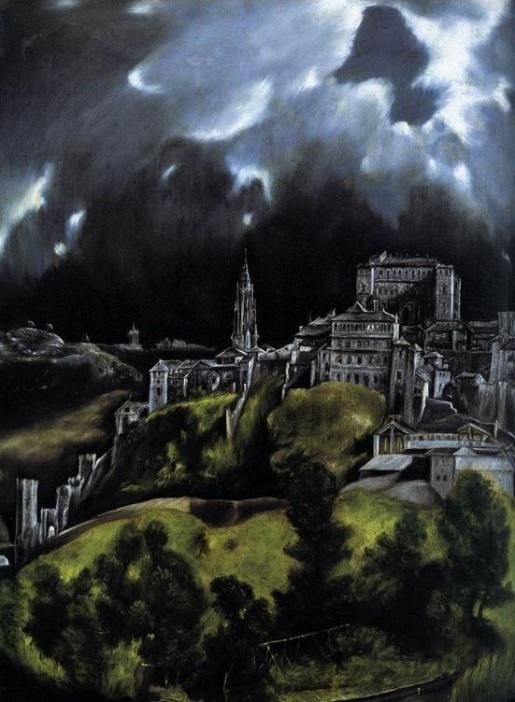
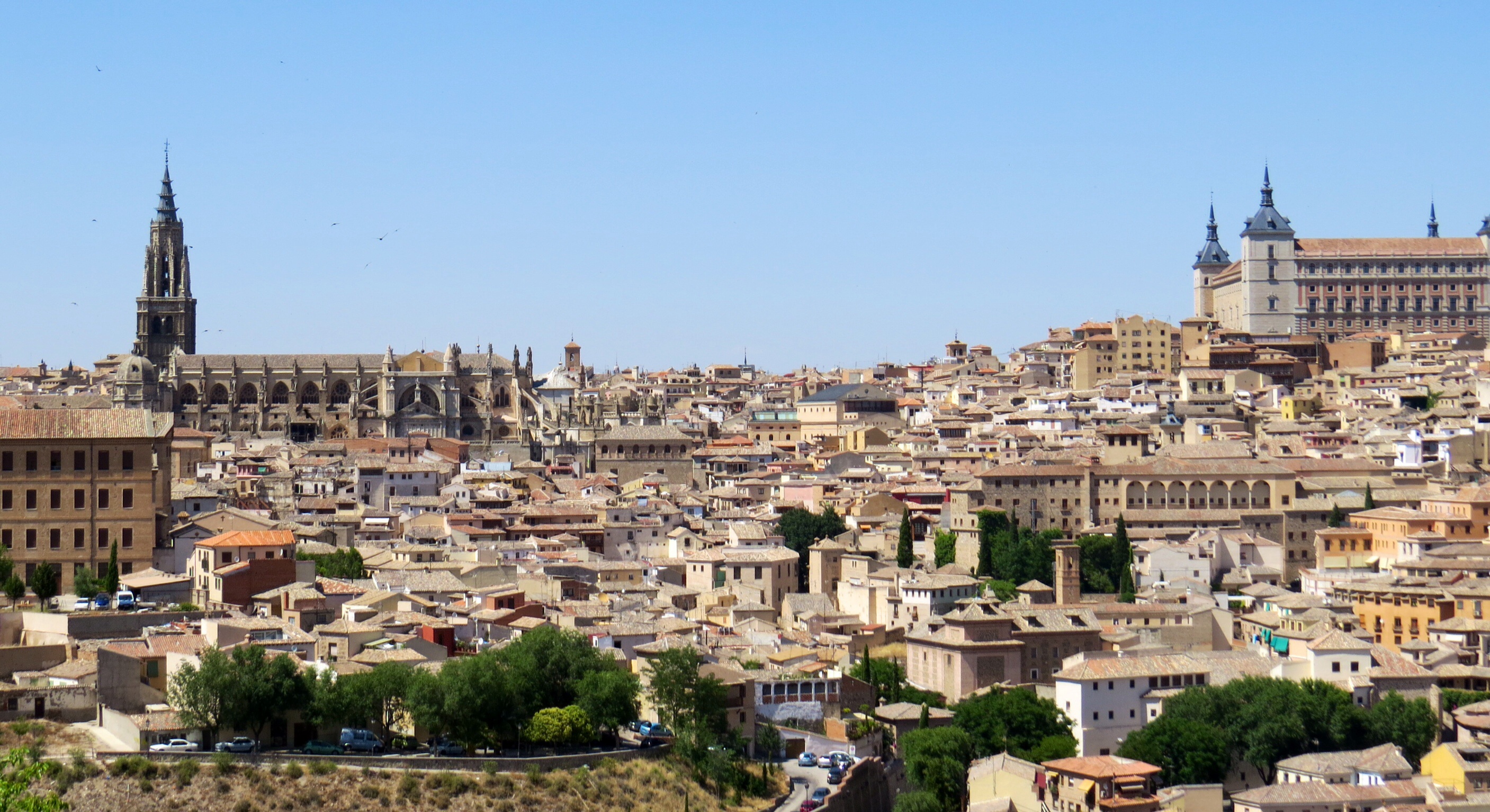
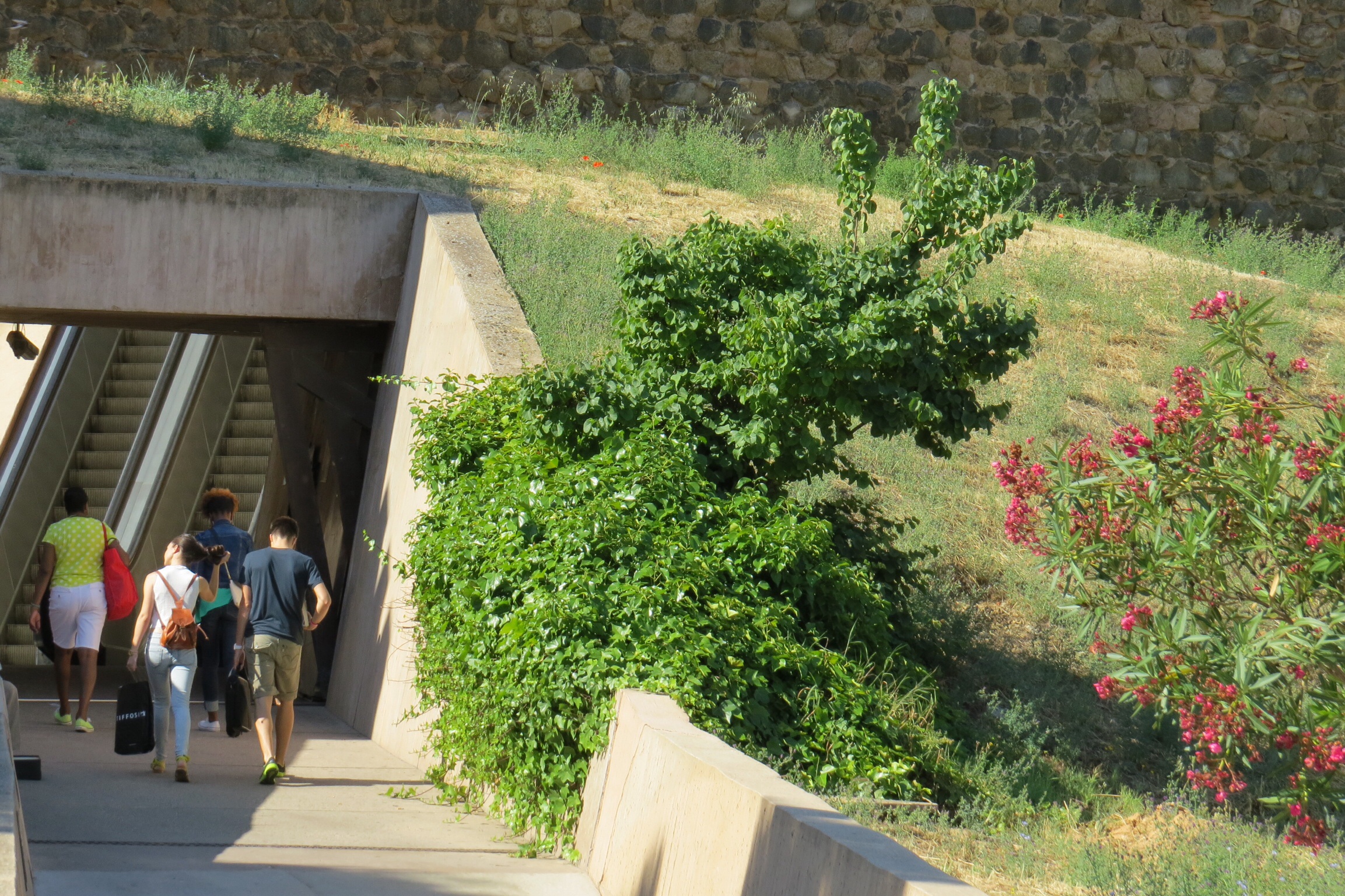
A UNESCO world heritage site with the Alcazar, former palace of Toledo, and the Cathedral, which have loomed over this city for centuries. Built on jutting rocks, I expected to climb up to the city by ancient stairs or a funicular.

Located in the heart and geographical centre of Spain, Toledo developed into a strategically important city for the Romans (Toletum) and later, for the Visigoths (Catholic) who moved their capital from Seville to Toledo. Such was the Visigoths’ thirst for power that constant wars seeking to extend their reach left the city vulnerable, and Muslims were quick to conquer Toledo in 711. Under Muslim, and later Arab rule, this city of tolerance was a centre of learning and the arts in Spain.
The most beautiful aspect of Toledo’s history is that, at a time when the city was the centre of power in Spain, the trilogy of Catholics, Jews and Muslims cohabited in peace. All three cultures arrived in Toledo at around the same time, between the 4th and 6th centuries. This history is reflected in the city’s architecture, albeit construction of the surviving buildings didn’t start until long after the cultures established themselves in Toledo.
Muslim
We didn’t have a chance to see the Mosque of Cristo de la Luz, built in 999, the only remaining mosque of ten built during the Moorish period. Then known as Mezquita Bab-al-Mardum, deriving its name from the city gate Bab al-Mardum, the mosque is located near the Puerta del Sol in an area of the city once called Medina where wealthy Muslims used to live. The atmospheric interior is graced by the trademark horseshoe-shaped arches introduced to Spain by the Moors.
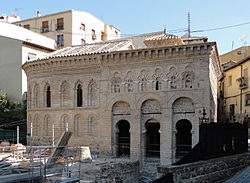
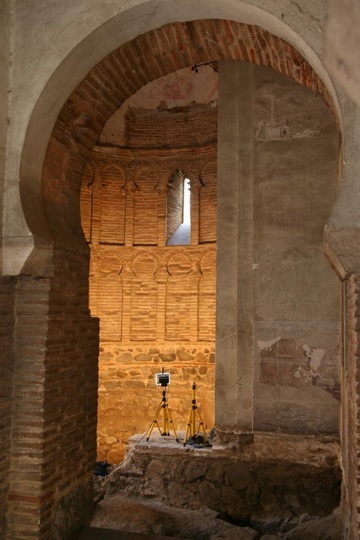
The Moors’ defeat of Spain is central to Toledo’s history. The stuff of legend, the last Visigoth King Rodrigo gazes out the window of his Toledo palace and sees the beautiful Florinda bathing in the river. Whether he rapes her or she tempts him (as she stated) remains as debatable as the story of Adam and Eve. Florinda’s father, Julian, is in Mauritania when he learns of the loss of his daughter’s purity at the hands of the King. Enraged, he gathers together an army of Moors and crosses into Spain at Gibralter. It is said that Julian paved the way for the Moors to conquer Spain at Toledo and go on to rule the Iberian peninsula for 700 years.
Jewish
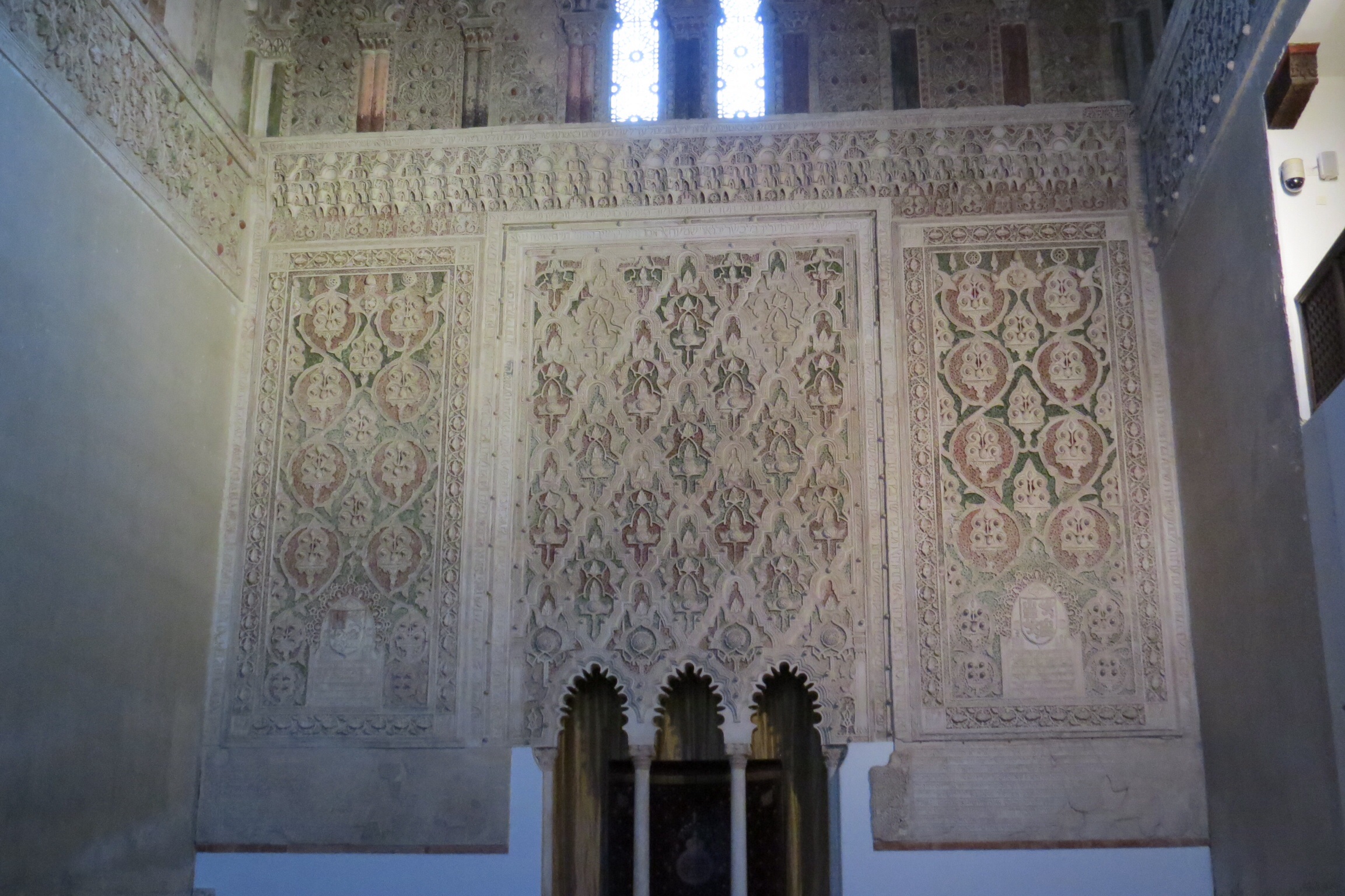
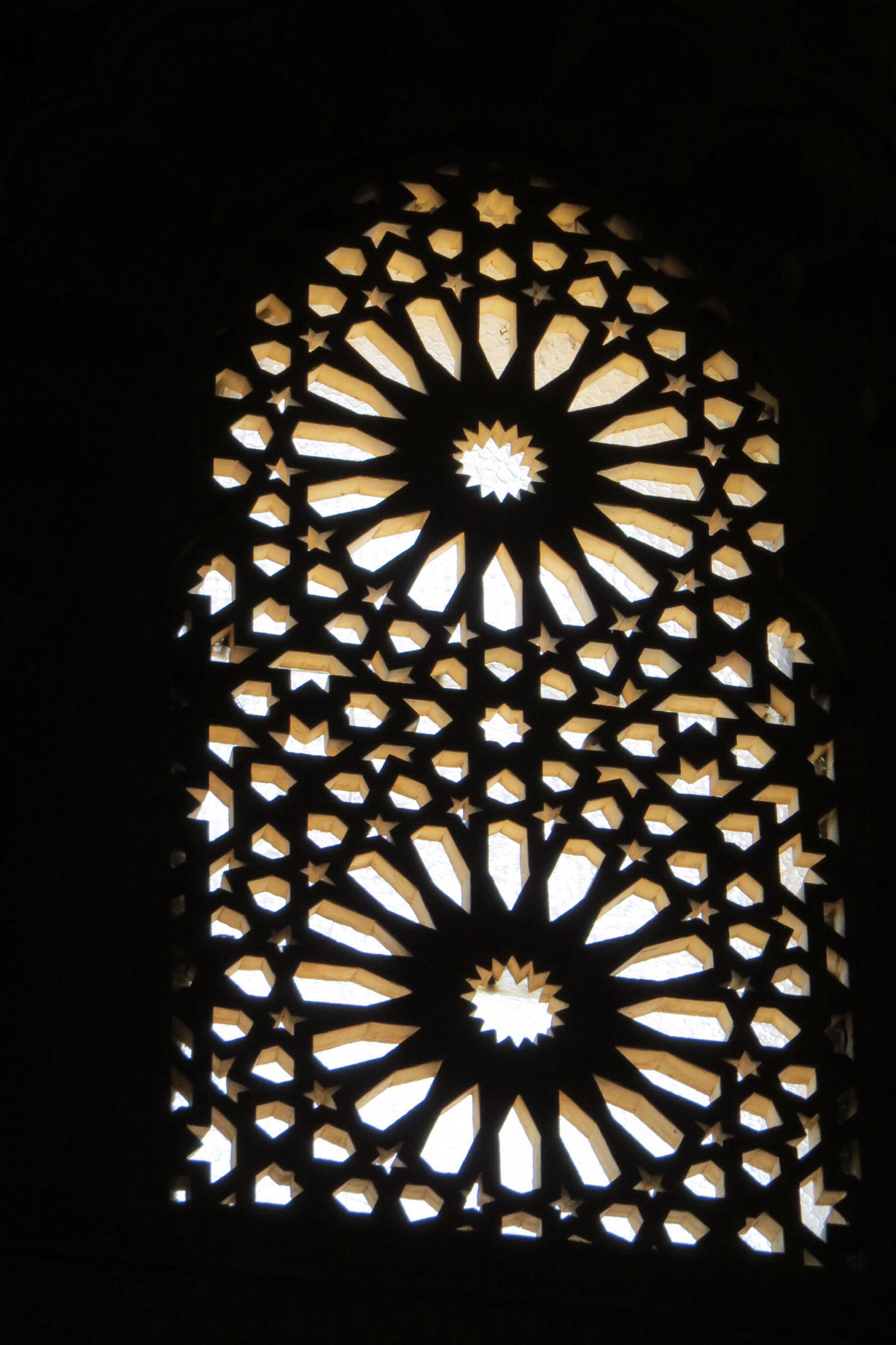
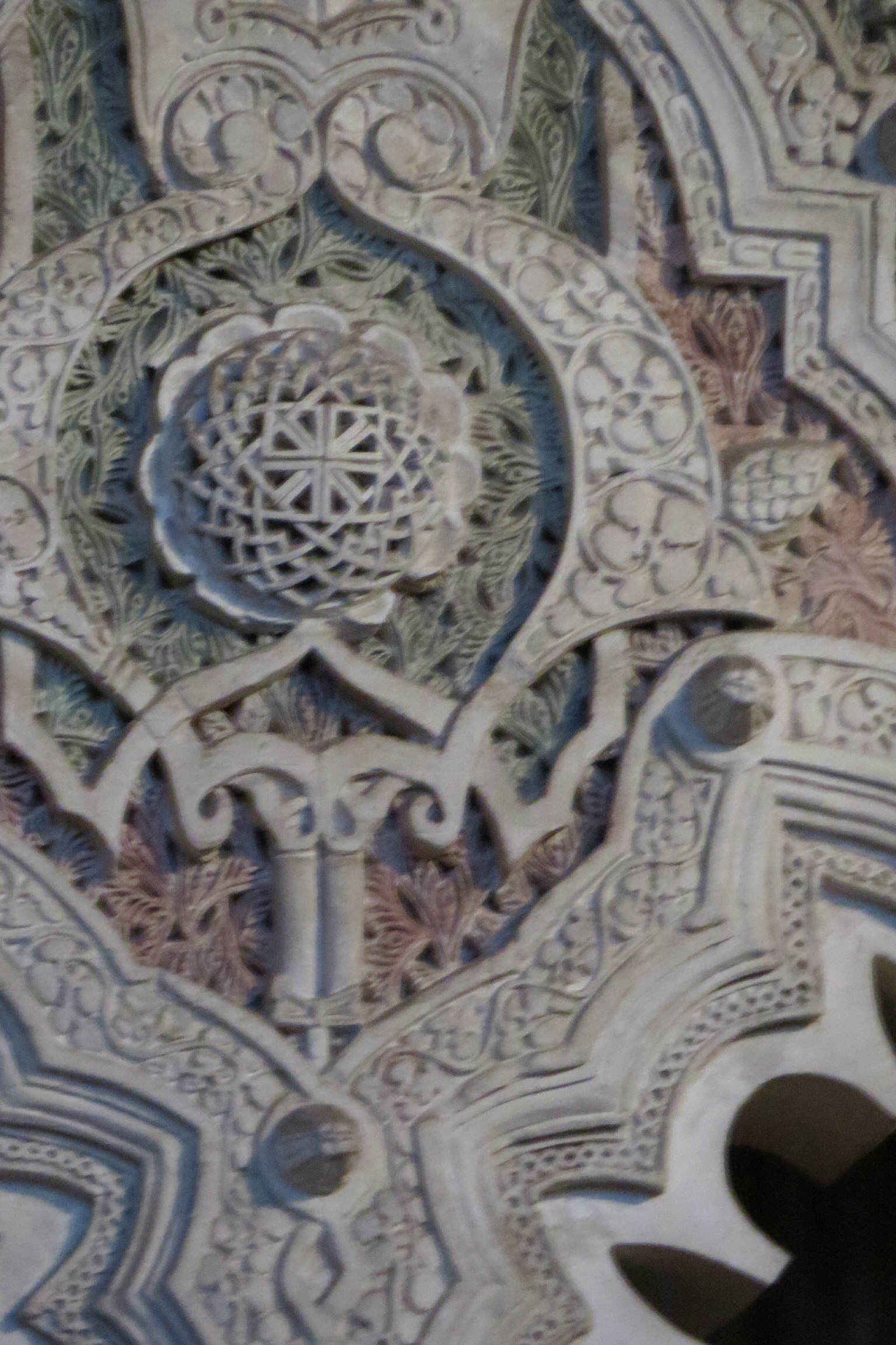
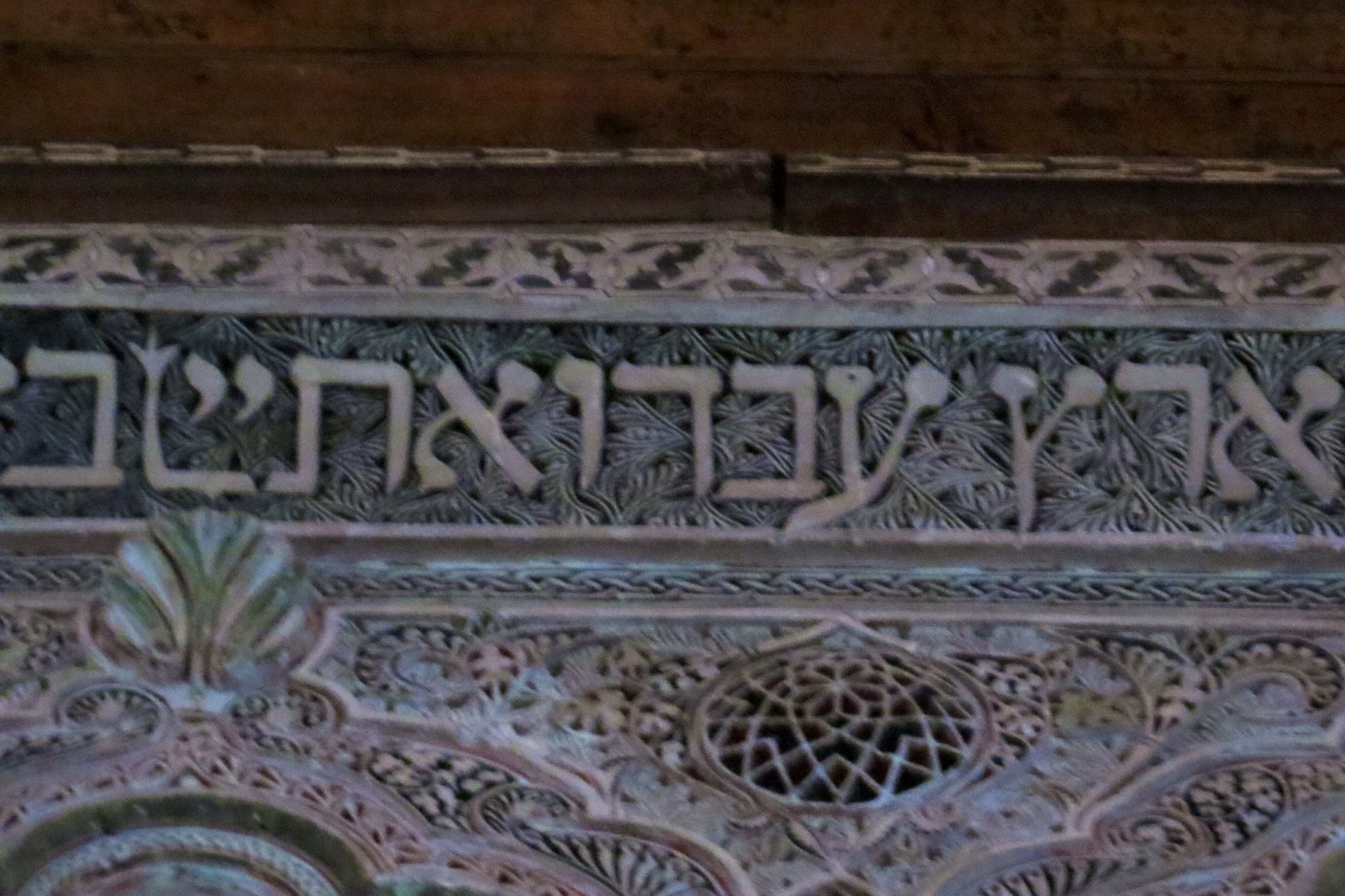
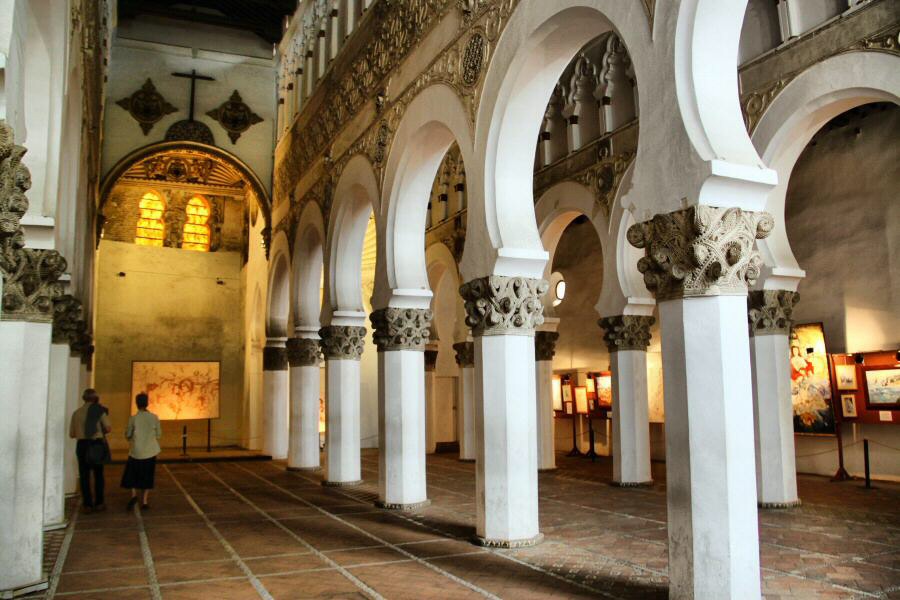
We visited the exquisitely decorated Sinagoga del Tránsito. Construction of the 14th century synagogue was financed by Samuel Ha-Levi, treasurer to the king, Pedro el Cruel (Peter the Cruel). Modest on the outside, the inside consists of a simple rectangular room, although beautifully decorated. The central panel around the three arches is surrounded by inscriptions in praise of God, the King, and Ha-Levi himself. The women’s balcony above may have the best view of the interior decoration of the synagogue. We only had time for a brief peek at the small Sephardic museum and library attached to the synagogue.

Catholic
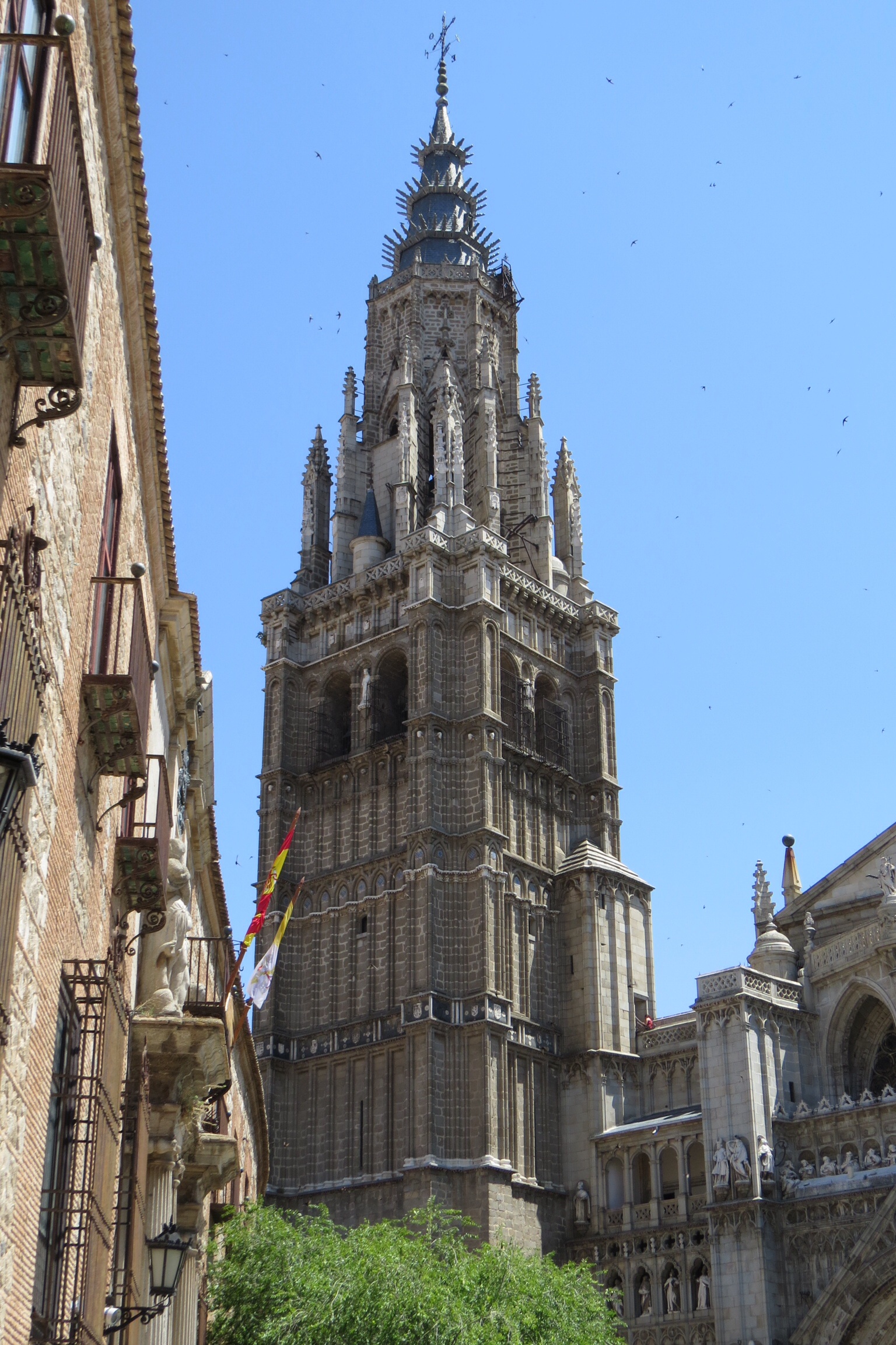
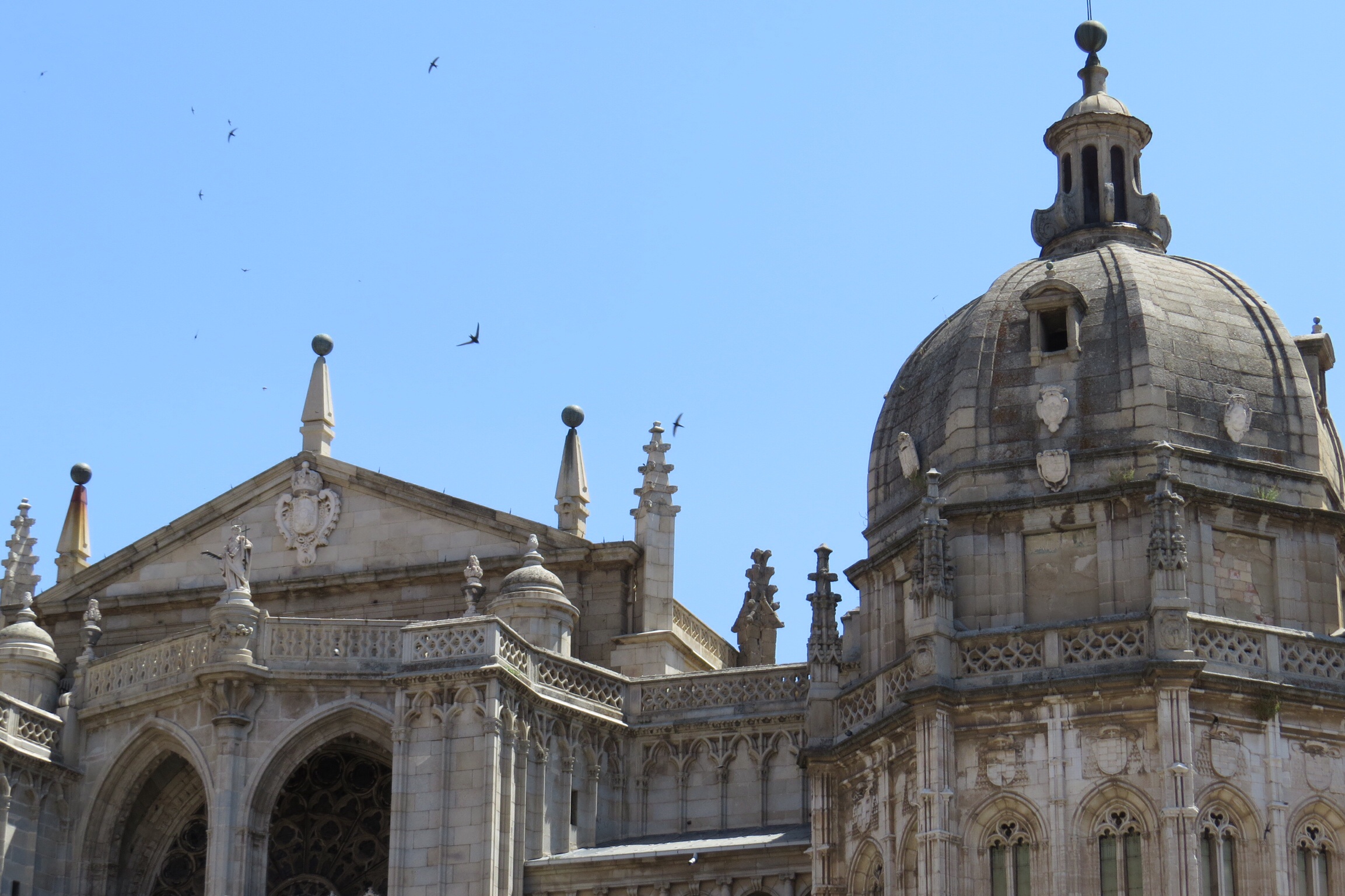
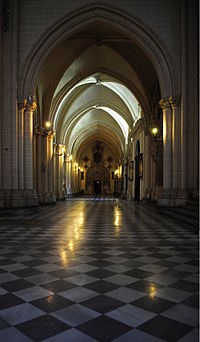
In 1085, as part of the Reconquista, Toledo was seized by Alfonso VI and the Vatican recognized the city as the seat of the Church in Spain. Construction of the magnificent Toledo Cathedral began in 1227 and was completed in 1493, just one year after Isabella and Ferdinand united Spain. By this time, the years of pride and tolerance were swept aside in Toledo and Muslims and Jews were forced to convert to Catholicism or be expelled. In 1561, Phillip V moved the Spanish capital to Madrid, but Toledo’s landscape would forever be dominated by the stunning Gothic cathedral.
The building’s interior is equally impressive.
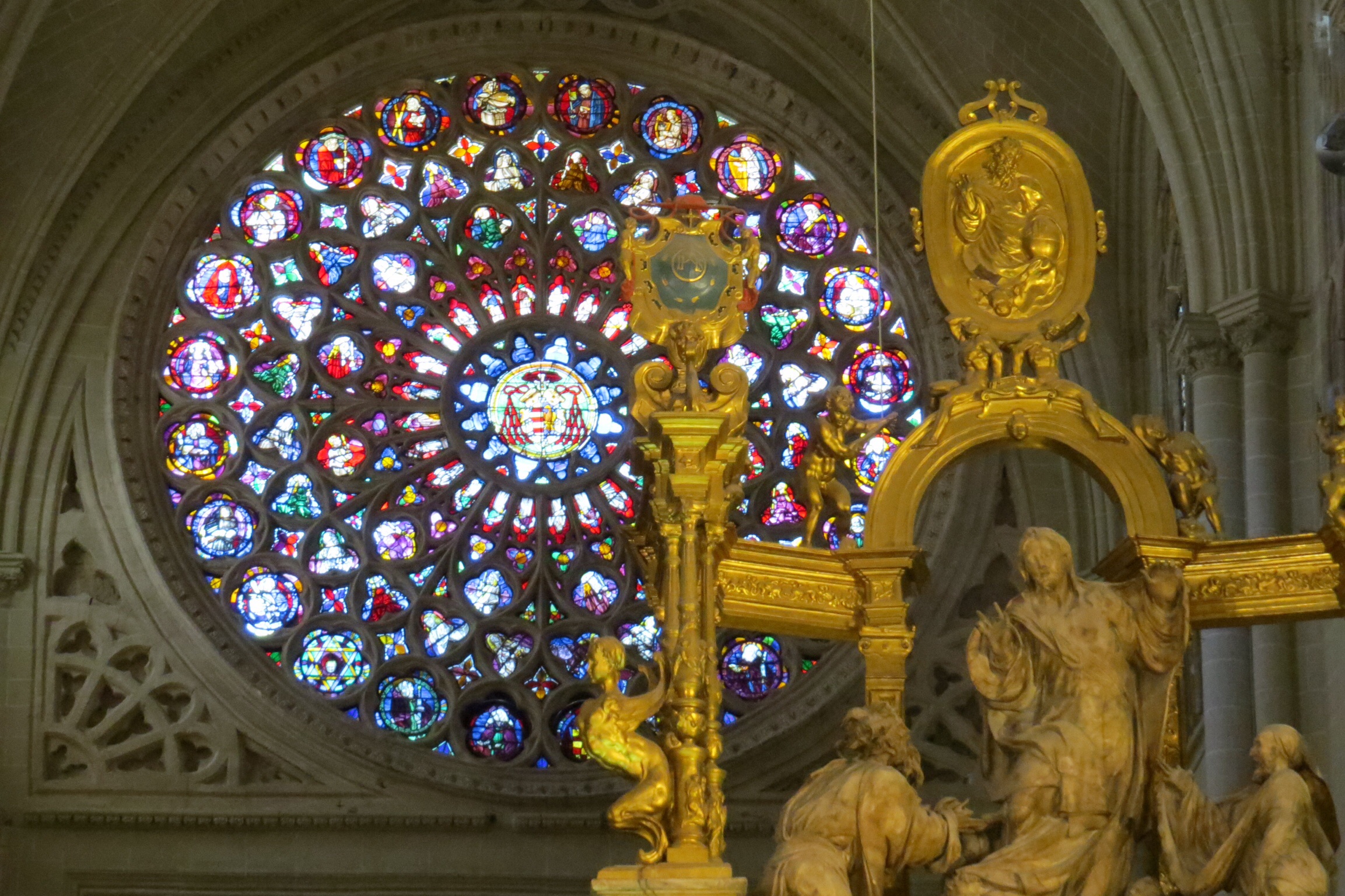
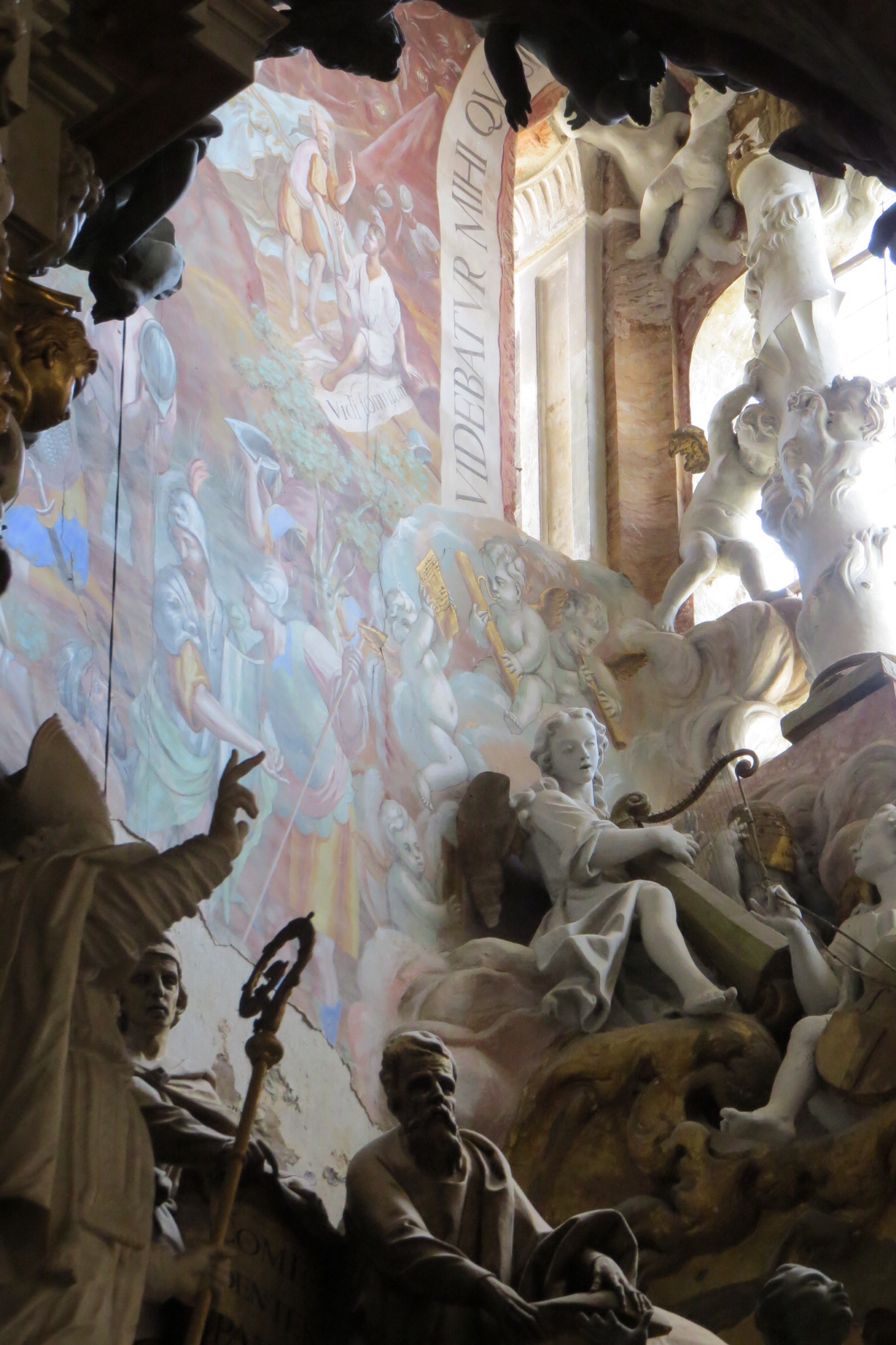
Behind the high altar is a smaller baroque alter of marble, bronze and alabaster. Because of the dim light in the area, an aperture, known as the Transparente, was carved out of the dome above to illuminate the altar. Sculpted figures, looking down, rim the edge of the dome, while painted biblical scenes cover the dome itself.
The choir stalls have wonderful, detailed carvings in walnut, the lower tier depicting the conquest of the kingdom of Granada, the upper tier celebrating Biblical figures.


Graves of cardinals are marked by their galeros hanging above them.

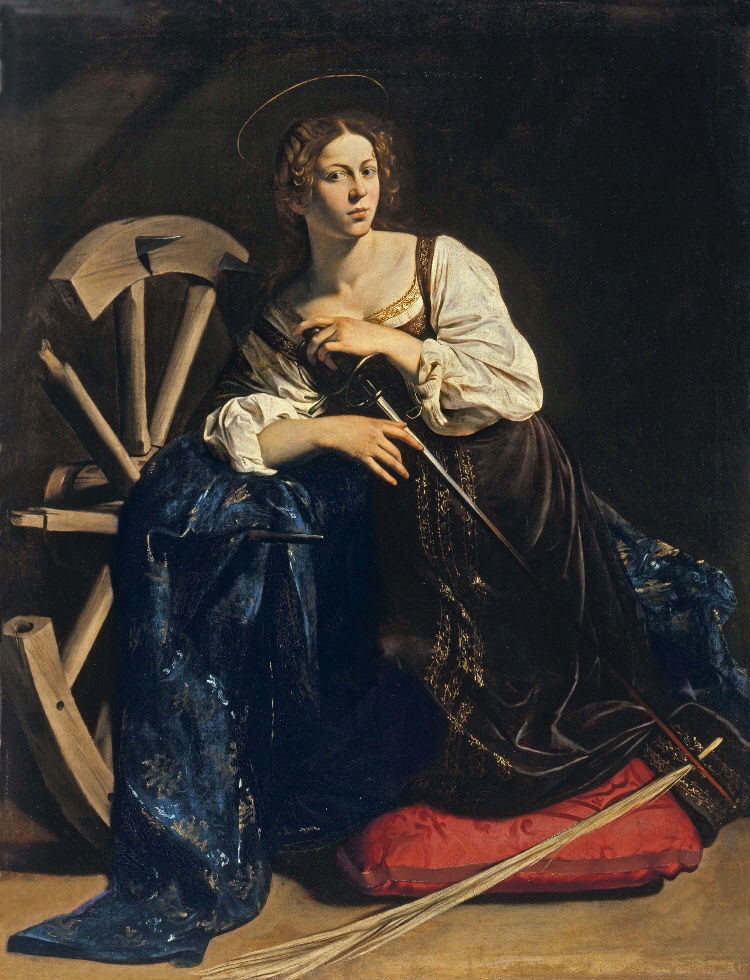
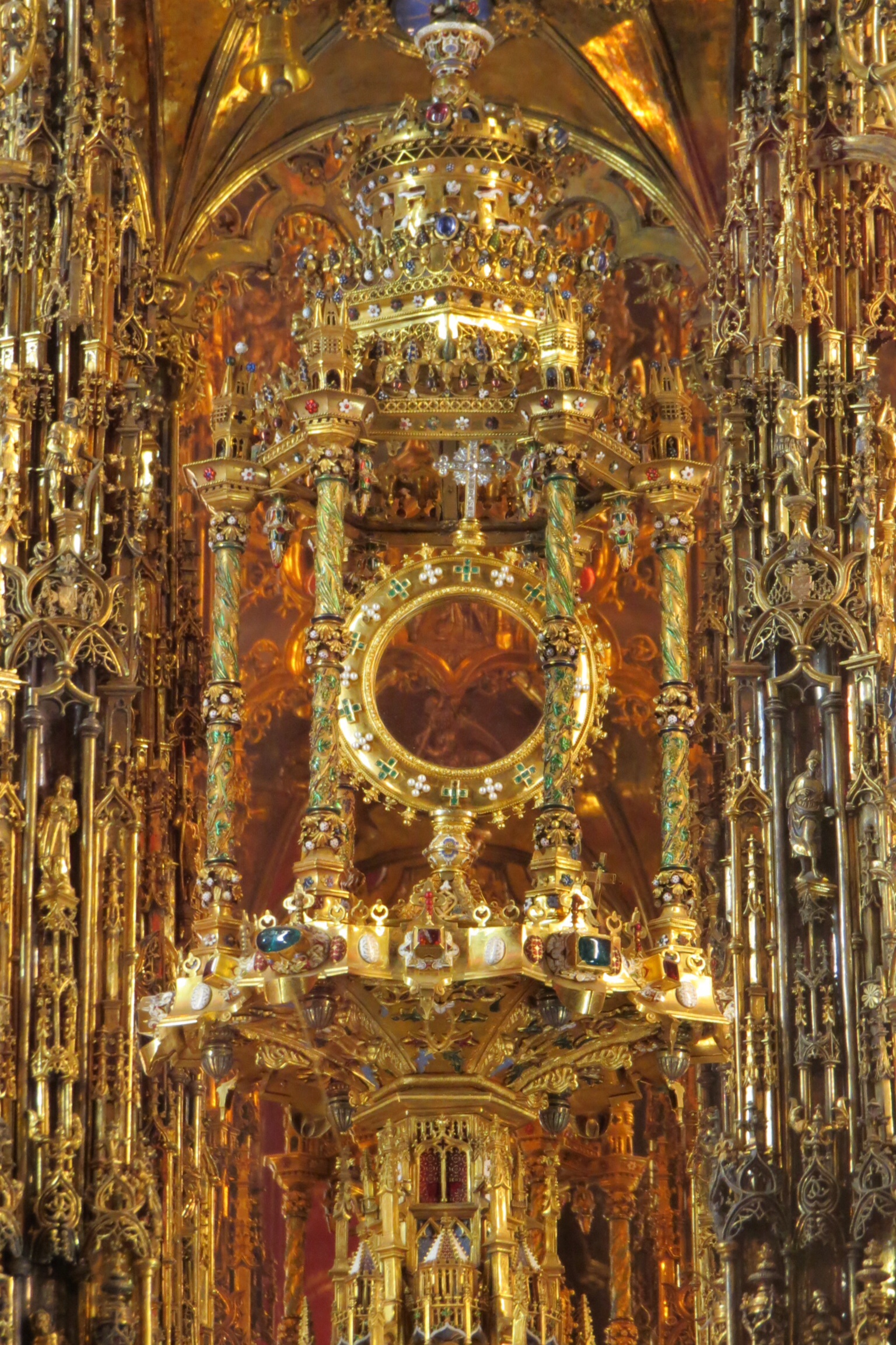
Considered the richest cathedral in Spain, the Sacristy has paintings by El Greco, Caravaggio, Raphael, Titian, Reubens, Velázquez and Goya. The treasury boasts the great Monstrance of Arfe, also known as La Gran Ostensoria de Toledo. Made of the finest, laciest silver and gold and bejeweled with gems, it measures over ten feet tall. The monstrance graces the famous annual feast of Corpus Christi of Toledo.
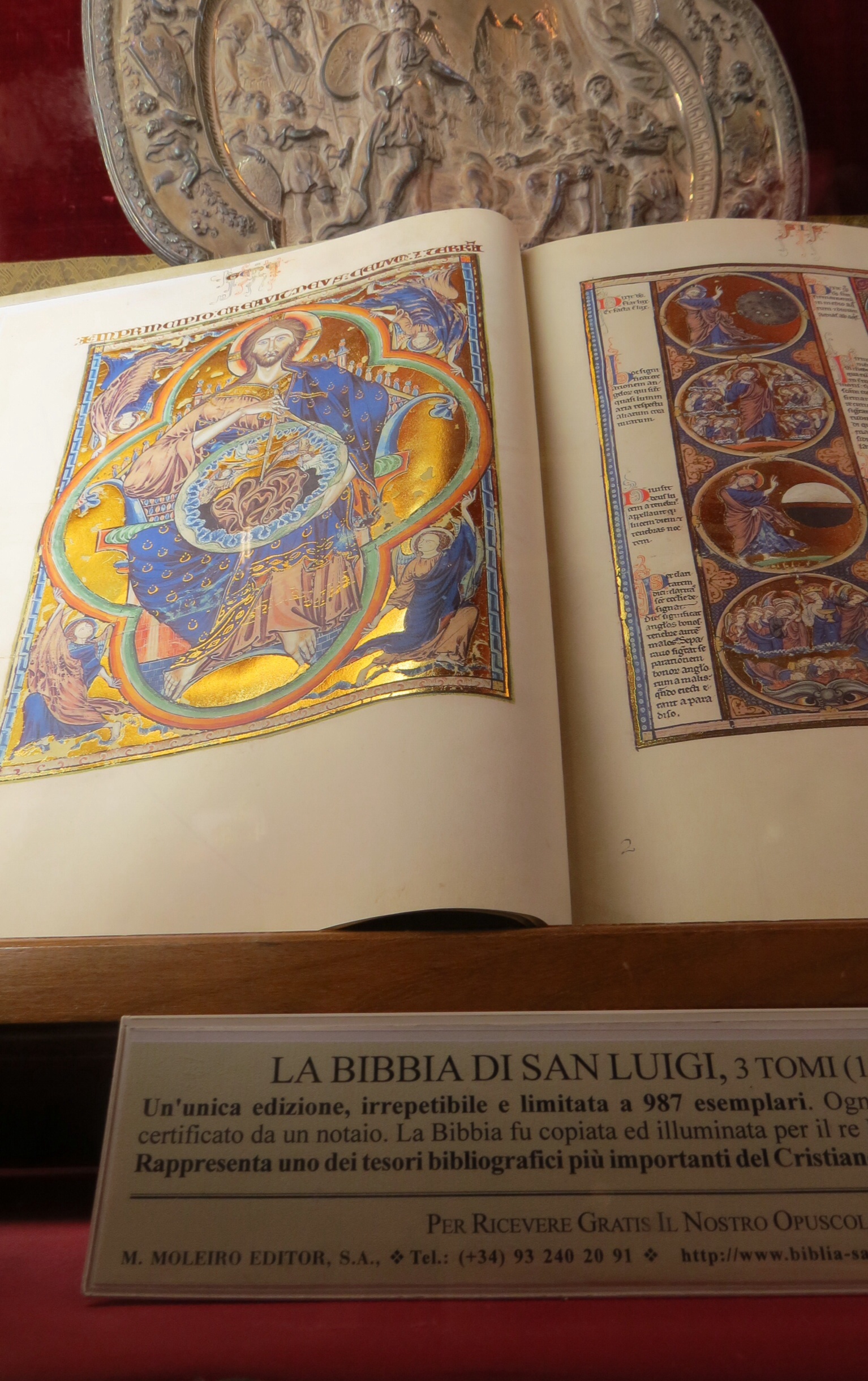
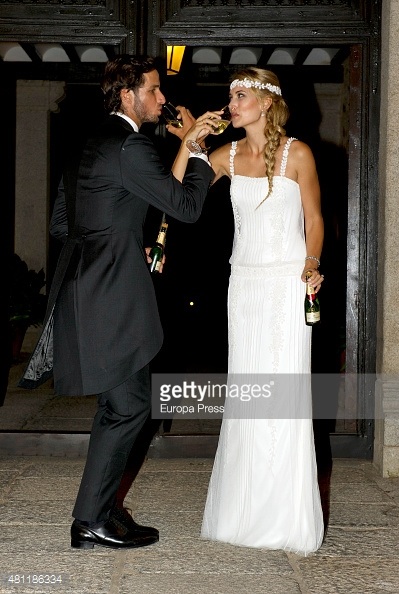
World #19 tennis star Feliciano Lopez was married just days ago in his home town of Toledo, at the gorgeous Toledo Cathedral.
The Spanish Renaissance
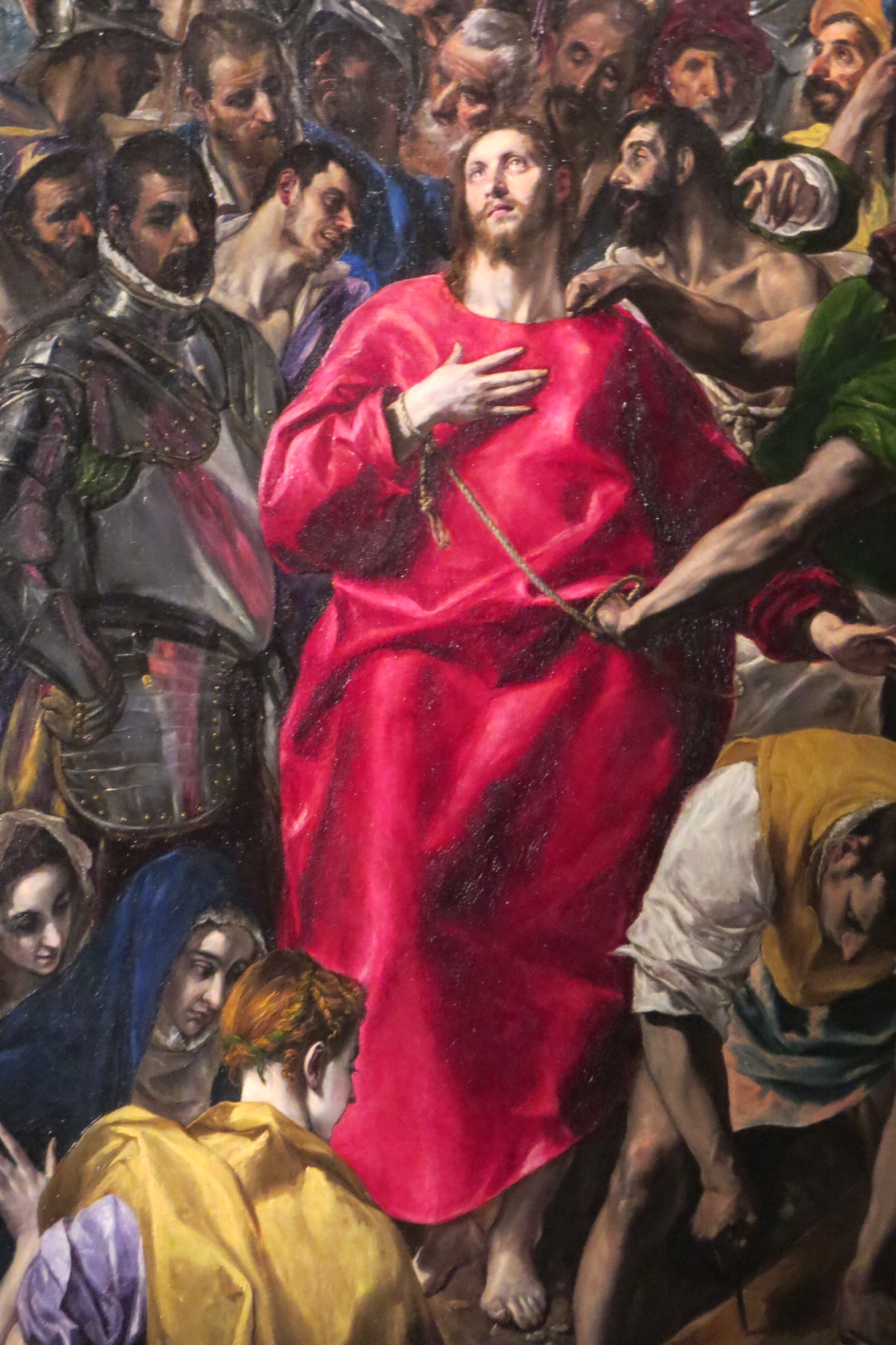
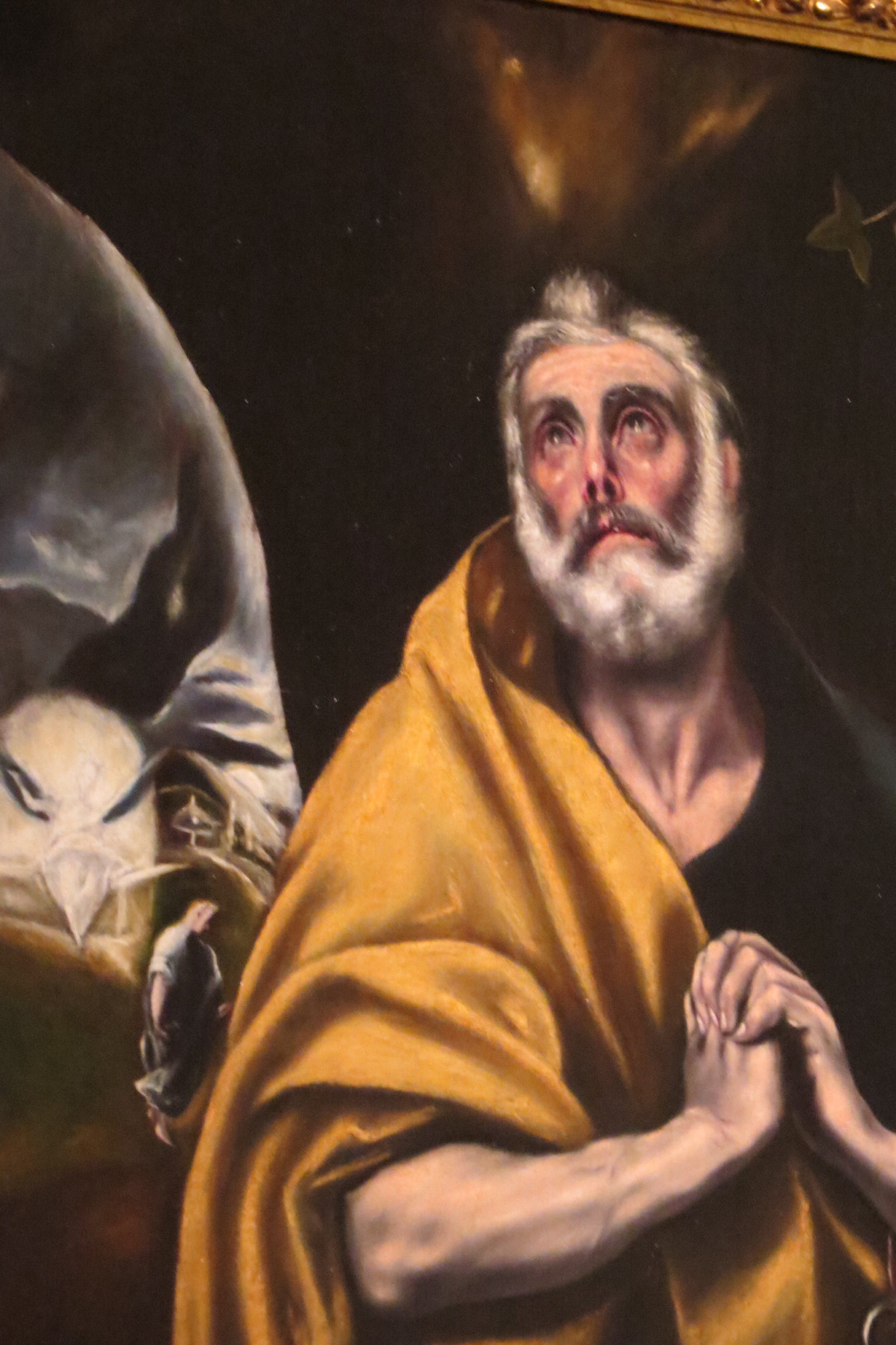
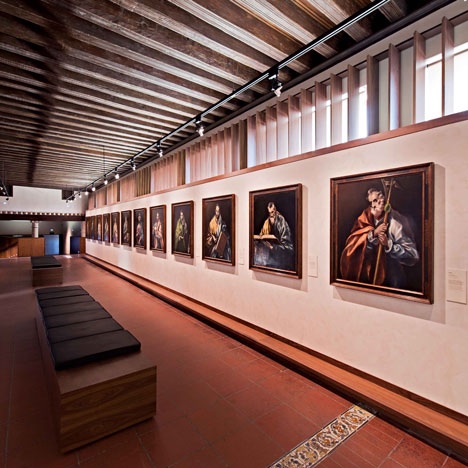
Toledo was the centre for art, philosophy, mathematics and economics. Its most famous representative is El Greco.
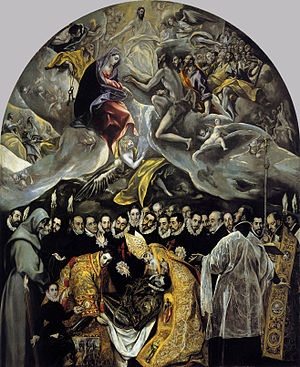
Italianate painters developed eclectic and mannerist styles in Spain. It was only toward the end of the 16th century that a genius appeared who truly incarnated the dark, mystical Spanish idiom [think St. John of the Cross] – El Greco. With roots in Greece and Venice, and in his own version of mannerism, El Greco merged Italian Renaissance painting with his own incandescent vision. In 1577, he moved from Rome to Toledo, where he lived and worked until his death.
El Greco’s style may not have been fully appreciated until the 20th century. His work is now regarded as foundational to both the Expressionism and Cubism movements. Clearly influenced by Botticelli and his elongated figures, he also borrowed the surreally rich colours of Byzantine.
Other Delights
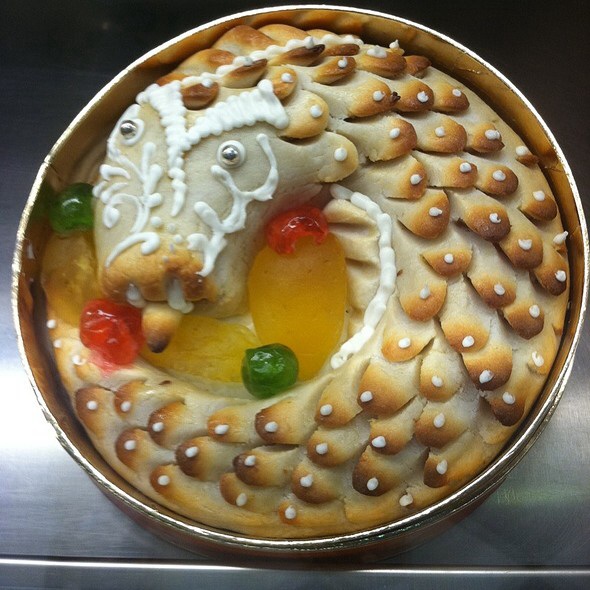
Naturally, we managed to fit in a little eating and shopping in Toledo. The world-famous marzipan lived up to its reputation – rich, buttery almond paste contrasted with apricot jam – the dragon makes a special treat and great souvenir for my family of marzipan devotees.

A marvellous, authentic fixed lunch was had at the aptly-named Restaurante Dragos.
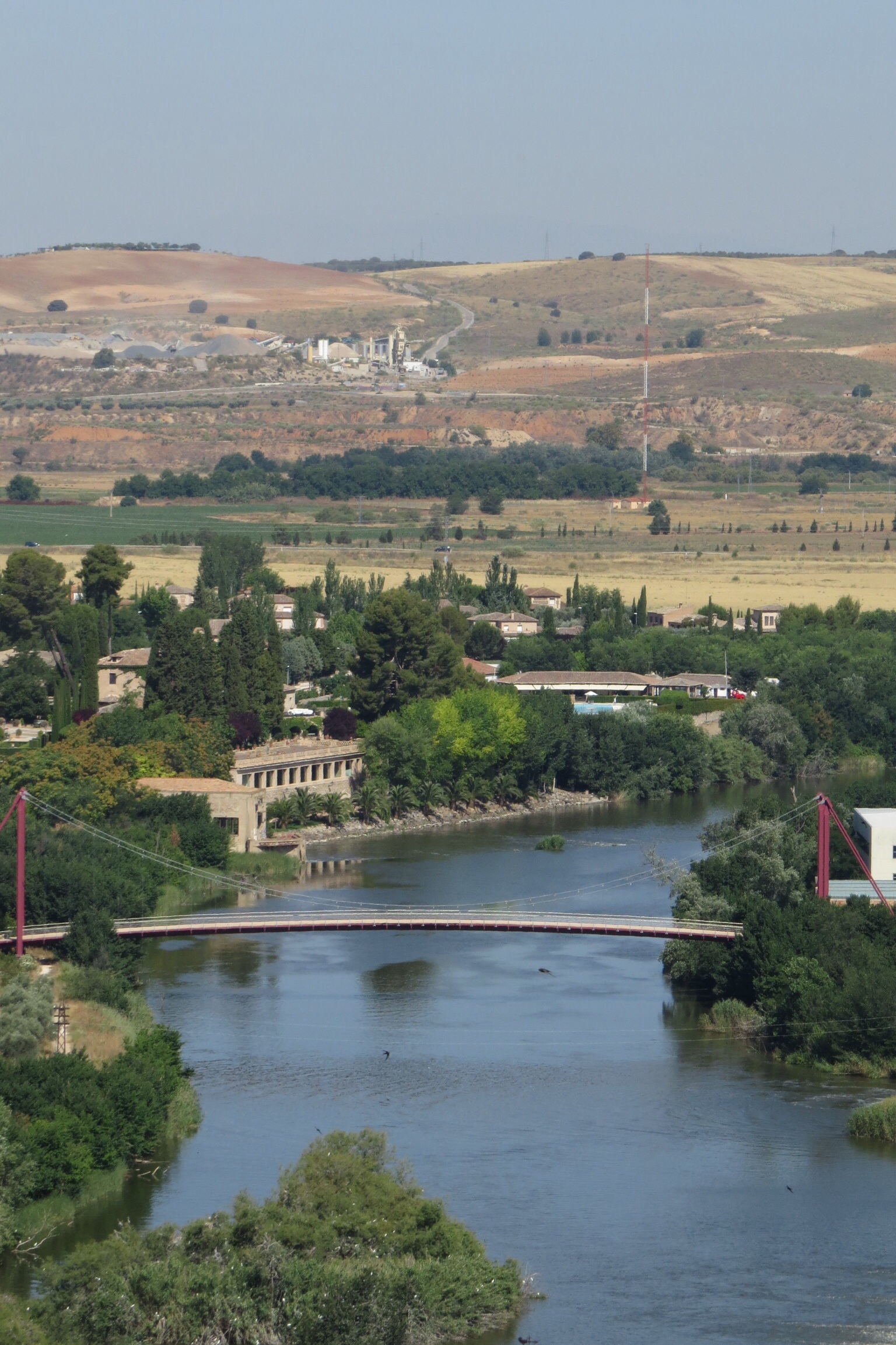
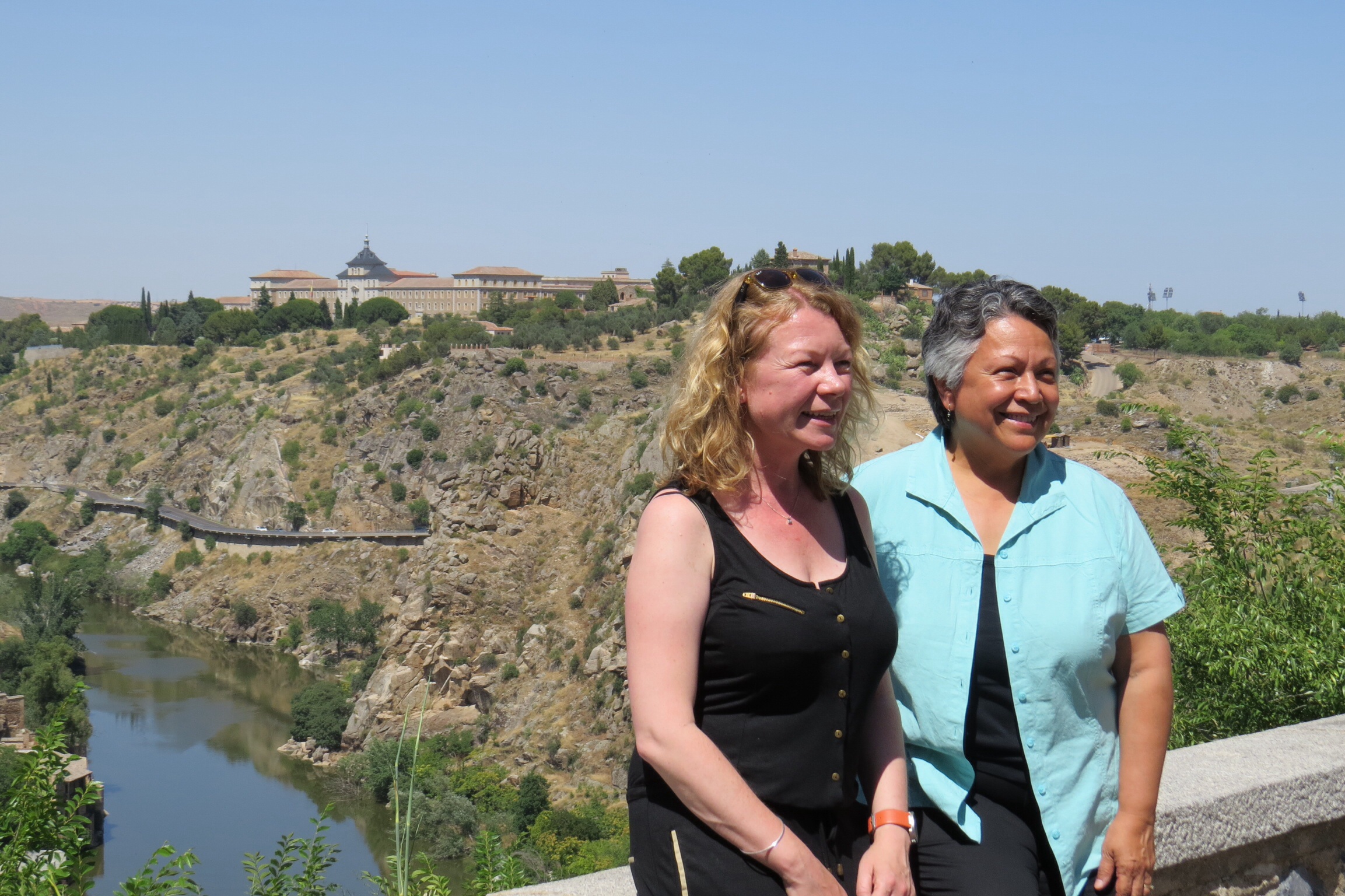
View from Toledo
We spent a wonderful day in Toledo, but there is much more to see next time. A few days could easily be passed here in this rich, timeless city.
Jan
Other Toledo sights (downloaded):

Although I’ve been lucky enough to see some of the greatest Western art housed in the some of the greatest art museums on the planet, it wasn’t until I got to Madrid that I cast my eyes on two of the greatest paintings ever painted – one classical, one modern.
But don’t take my word for it.
Las Meninas – The Greatest Painting Ever Created?
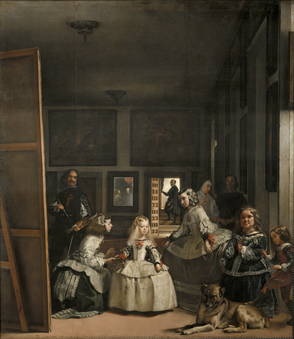
Is it a work of realism? Every person depicted in the picture, including the King and Queen reflected in the mirror, is a real person of recorded history painted in almost photographic detail. The large canvas with its effects in perspective seems to make the King and Queen, also the viewer, life-sized, part of the picture, dissolving the canvas between them. Or does the intellectual Velazquez seek to answer the artist’s question, once and for all, is painting merely craft, or art? Is the artist’s place in society functionary, or noble?
“Apparently spontaneous but in the highest degree worked out, it is both Velázquez’s most complex essay in portraiture and an expression of the high claims he made for the dignity of his art. Luca Giordano called it ‘the Theology of Painting’ because ‘just as theology is superior to all other branches of knowledge, so is this the greatest example of painting’. Posterity has endorsed his verdict, for in a poll of artists and critics in The Illustrated London News in August 1985, Las Meninas was voted – by some margin – ‘the world’s greatest painting’.”
– From http://www.wga.hu/tours/spain/velazqu1.html
The Web Gallery of Art
“…Velázquez – a painter, albeit one with favour at court, who had the gall to photobomb a royal portrait. Velázquez has made the painting but also lives in the world of the painting; he is on our side looking in, but also in the painting looking out. Never before in western art had an artist depicted himself as the equal of princes, but Velázquez must have been so confident in the endurance of Las Meninas that he was ready to turn a royal commission into a self-portrait. Philip IV, anyway, seems to have approved. As Hapsburg Spain collapsed around him, he kept Las Meninas in his personal study, and no-one was permitted to gaze upon it except the man so slightly depicted in the mirror at rear. In 1659, Velázquez was inducted into the Order of Santiago, and when the artist died the next year Philip ordered a revision to Las Meninas – adding to the painter’s chest a grand red cross.”
– Jason Farago, BBC
http://www.bbc.com/culture/story/20150320-the-worlds-first-photobomb
You could also check out my Northern Spain Reading and Watch List at the top for a youtube video of Sister Wendy on Las Meninas.
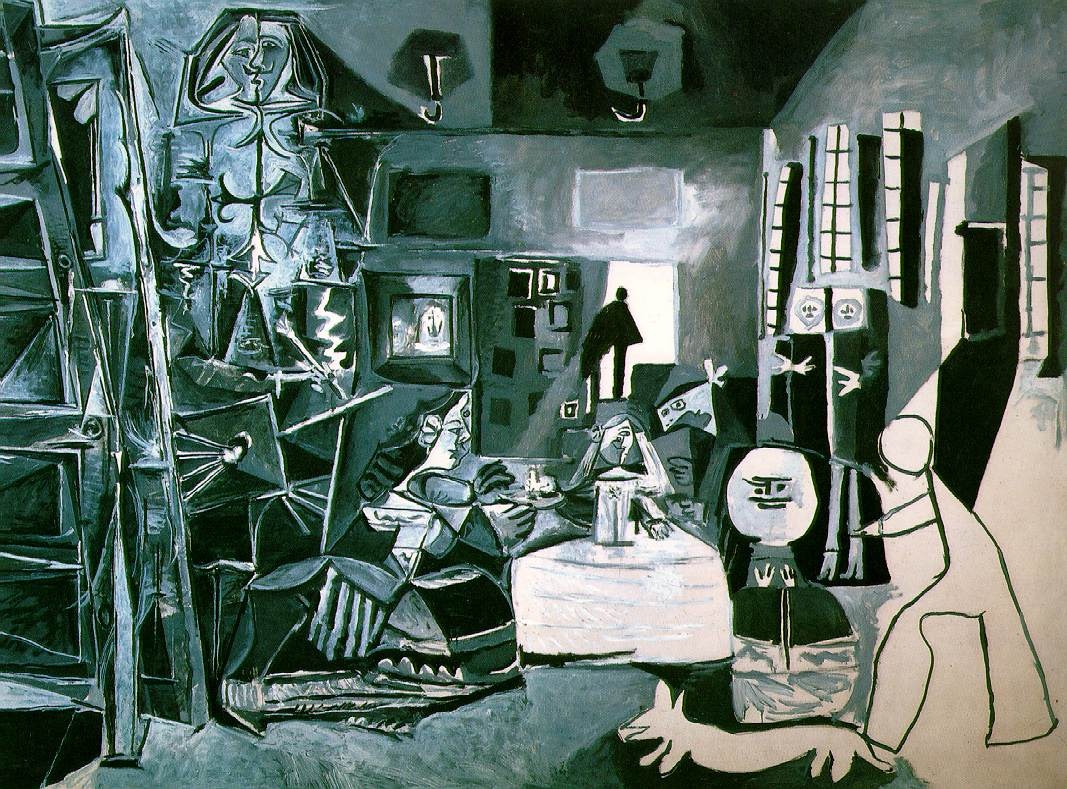
Picasso, too, opined on the painting. He made no less than 58 paintings based on the Velazquez work, one of them painted on December 30, 1957.
A wealth of other masterpieces are in the Prado’s collection, including:
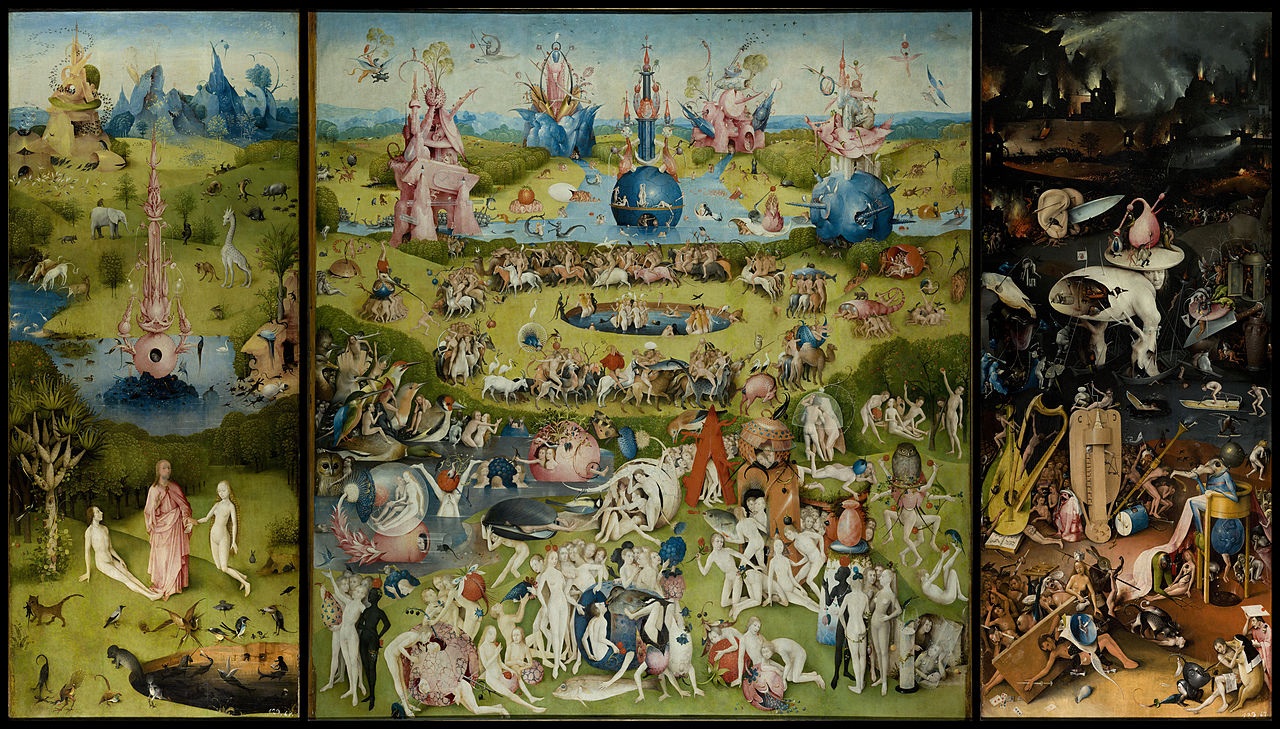

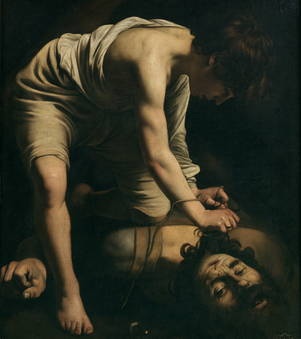

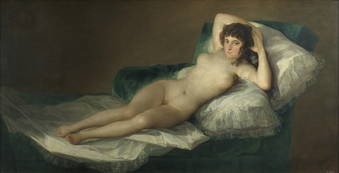
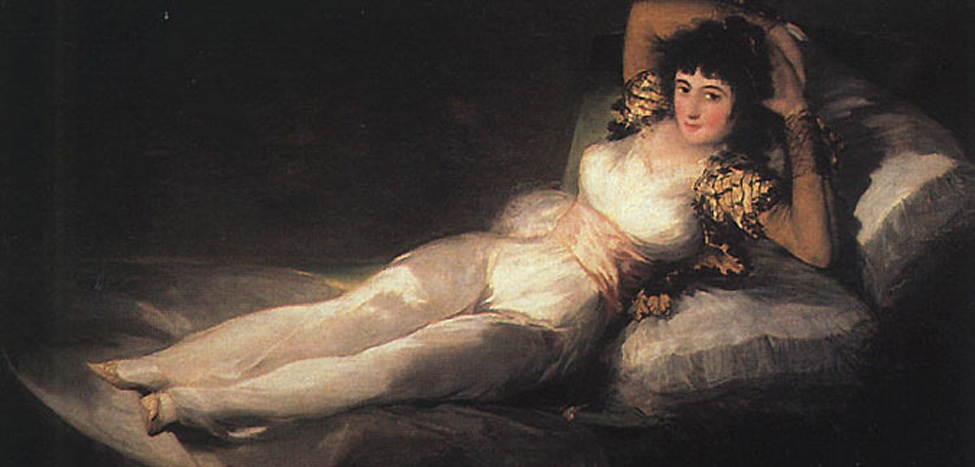
Goya’s nude was the first depiction of a nude woman, all previous depictions were mythological goddesses. The two hang side-by-side at the Prado.
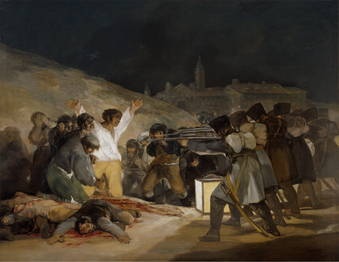
Guernica – A Call to Arms?

“Guernica, the most ancient town of the Basques and the centre of their cultural tradition, was completely destroyed yesterday afternoon by insurgent air raiders. The bombardment of this open town far behind the lines occupied precisely three hours and a quarter, during which a powerful fleet of aeroplanes consisting of three types of German types, Junkers and Heinkel bombers, did not cease unloading on the town bombs weighing from 1,000 lbs. downwards and, it is calculated, more than 3,000 two-pounder aluminium incendiary projectiles. The fighters, meanwhile, plunged low from above the centre of the town to machinegun those of the civilian population who had taken refuge in the fields.” For a full account, see the page at the top, April 28, 1937 New York Times article on the Bombing of Guernica.
In January 1937, the Spanish Republican government commissioned Picasso to create a large mural for the Spanish display at the Exposition Internationale des Arts et Techniques dans la Vie Moderne at the 1937 World’s Fair in Paris. At the time, Picasso was living in Paris, where he had been named Honorary Director-in-Exile of the Prado Museum. He had last visited Spain in 1934 and never returned. However, it was only on May 1, having read George Steer’s eyewitness account of the bombing of Guernica (originally published in the April 28th, 1937 article), that he abandoned his initial project and started sketching a series of preliminary drawings for Guernica, and which he would finish in early June 1937.
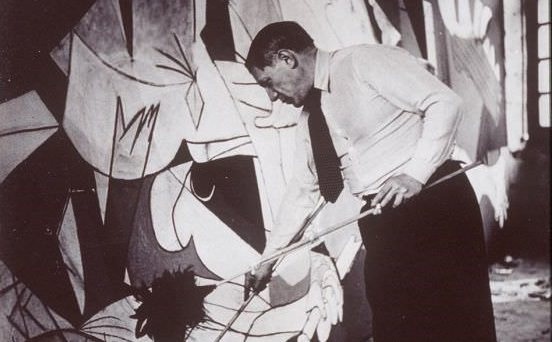
The German Luftwaffe’s Condor Legion did the bombing at the request of Gen. Francisco Franco, who led a military rebellion against Spain’s democratically elected government. Franco enlisted the help of Adolf Hitler and Benito Mussolini, who were eager to practice modern techniques of warfare on the defenceless citizens of Spain. The bombing of Guernica was the first complete destruction by aerial bombardment of a civilian city in European history. While homes and shops were destroyed, several arms-manufacturing facilities, along with a key bridge and the rail line, were left intact.
PIcasso’s masterpiece depicts the horrors of war, etched into the faces of the people and the animals on the canvas. It would not prove to be the worst attack during the Spanish Civil War, but it became the most famous, through the power of art.
Franco himself recognized the significance of Picasso’s silent protest. Madrid sent propaganda posters to Paris, insisting they be hung outside the pavilion.
Picasso’s mural showed the world Spain’s fate under Franco’s regime. Artists from across Europe (including, of course, the brazen Ernest Hemingway) went to Spain and took up arms in support of the Republicans. There can be little doubt that Republicans themselves took up arms after word spread of Guernica, the bombing, and Guernica, the mural.
I prefer this view: Franco started the Spanish Civil War. Guernica inspired the courage to stop him. Unfortunately, it took 38 years to stop him, and another five years for Picasso’s Guernica to return to Spain. In the meantime, Picasso, in 1944, joined the French Communist Party. He attended an international peace conference in Poland, and in 1950 received the Stalin Peace Prize from the Soviet government, but party criticism of a portrait of Stalin as insufficiently realistic cooled Picasso’s interest in Soviet politics.
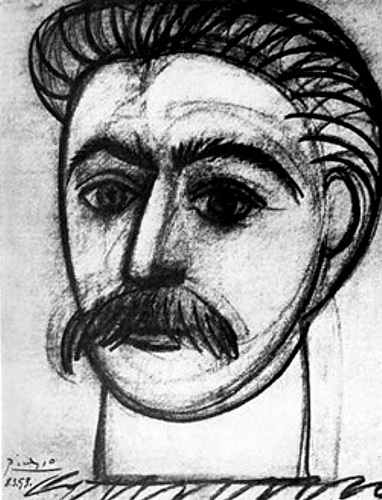
Picasso, an unceasing voice against Franco and fascism, died in 1973, just three years before Franco died and democracy was restored to Spain. Although Guernica returned to Spain, Picasso was never able to return to his homeland himself.
Where does Guernica belong?
On September 10, 1981, Spanish artist Pablo Picasso’s monumental anti-war mural Guernica is received by Spain after four decades of refugee existence. In 1939 at the outset of World War II, Picasso gave the painting to New York’s Museum of Modern Art on an extended loan and decreed that it not be returned to Spain until democratic liberties were restored in the country. Its eventual return to Spain in 1981–eight years after Picasso’s death–was celebrated as a moral endorsement of Spain’s young democracy.
The painting was occasionally lent to European museums at the request of Picasso, and there are original letters at the gallery showing MOMA’s extreme reluctance to loan Guernica, doing so only with the intervention of Picasso himself.
On September 10, 1981, Guernica arrived in Madrid under heavy guard. The painting was to be housed in a new annex of the Prado Museum, only two blocks from the Spanish parliament, which had been the scene of an abortive military coup in February 1981. King Juan Carlos defused the revolt by convincing military commanders to remain loyal to Spain’s democratic constitution. The mural was hung behind thick bulletproof glass.
A number of groups in Spain, particularly Basque nationalists objected strongly to Guernica‘s permanent exhibition in Madrid. Complaints escalated after the painting was relocated to the new Centro de Arte Reina Sofía in Madrid in 1992. Since the 1997 opening of the Guggenheim Bilbao Museo, Basque nationalists have been calling for its transfer there.
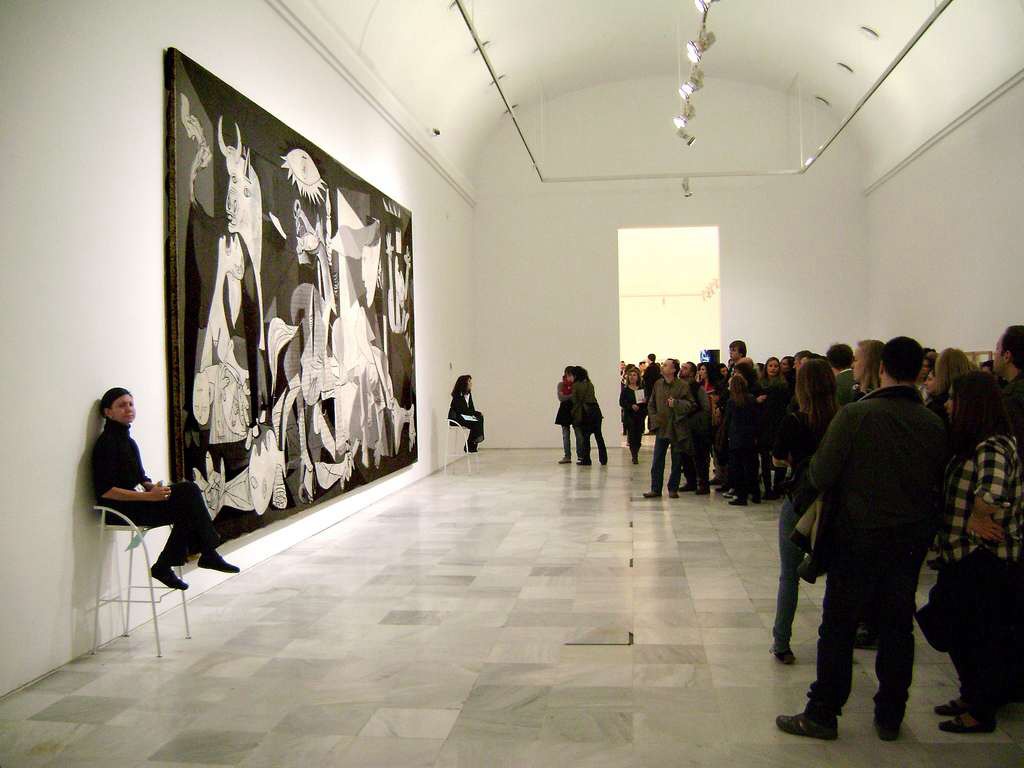
I can’t do the huge mural (11.5 feet by 25.5 feet) justice with these small images. You will have to see it for yourself, at the lovely Reina Sofia. They have said for the protection of the canvas it will never be moved again. But perhaps you should confirm its location before you go…..
(Source: history.com)
Does Guernica endure?
Guernica is to painting what Beethoven’s Ninth Symphony (“Ode to Joy”) is to music [and, it could be added, what Beethoven’s opera, Fidelio is to freedom]: a cultural icon that speaks to mankind not only against war but also of hope and peace. It is a reference when speaking about genocide from El Salvador to Bosnia. Alejandro Escalona, on the 75th anniversary of the painting’s creation. said Guernica has become a universal and powerful symbol warning humanity against the suffering and devastation of war. Moreover, the fact that there are no obvious references to the specific attack has contributed to making its message universal and timeless.
“Some works of art…even in reproduction, won’t stay ‘uninvolved’. Although some people are turned off by its cubist composition or its cartoon-like images, ‘Guernica’ persists in reminding us about horrendous events that happen outside the museum. Rather than remaining a memorial specifically intended to recall the bombing of ‘Guernica’ in 1937, it has become a ‘picture of all bombed cities.’ At first, it was a powerful symbol representing the Loyalist cause during the Spanish Civil War and then the Allies during WWII, but the international Communist Party also took it up and, in the late 60’s, it was used by American artists opposing the Viet Nam War. It was an emblem of the international Peace movement, appearing, among other places, on postage stamps of the late Czechoslovakia and the United Republic of Cameroon in Africa. Basque separatists and even the survivors of the attack on the World Trade Center used it. Most recently, it has been a symbol of the anti-Iraq War movement. It has become a universal allegory about the massacre of innocents. It is archetypal and iconic.”
– (Leo Segedin)
Perhaps a question for us now, is, what artist will make a work of art so powerful that it will inspire ISIS to stop destroying humanity’s precious cultural monuments?
Other powerful art at the Reina Sofia:
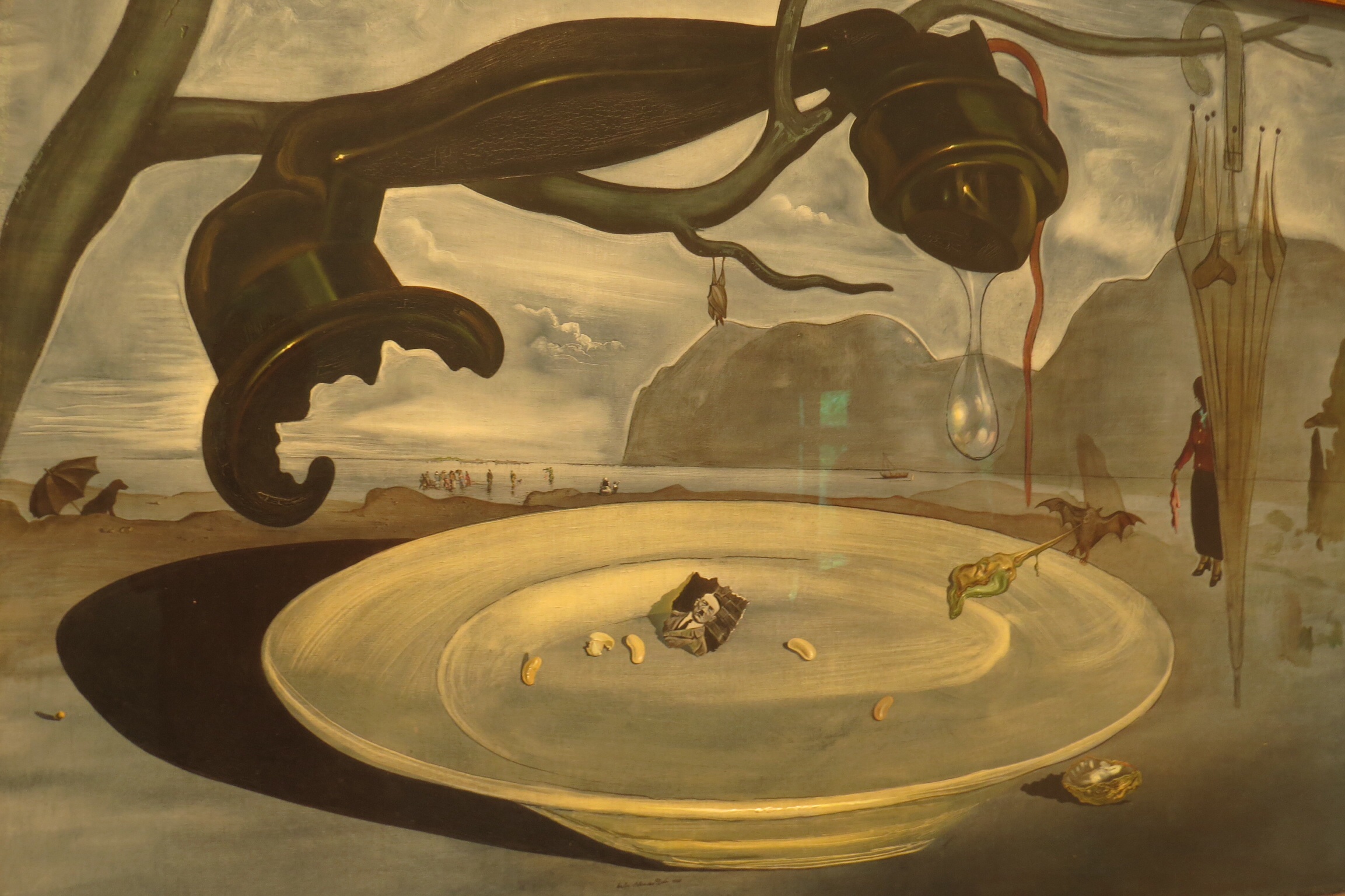
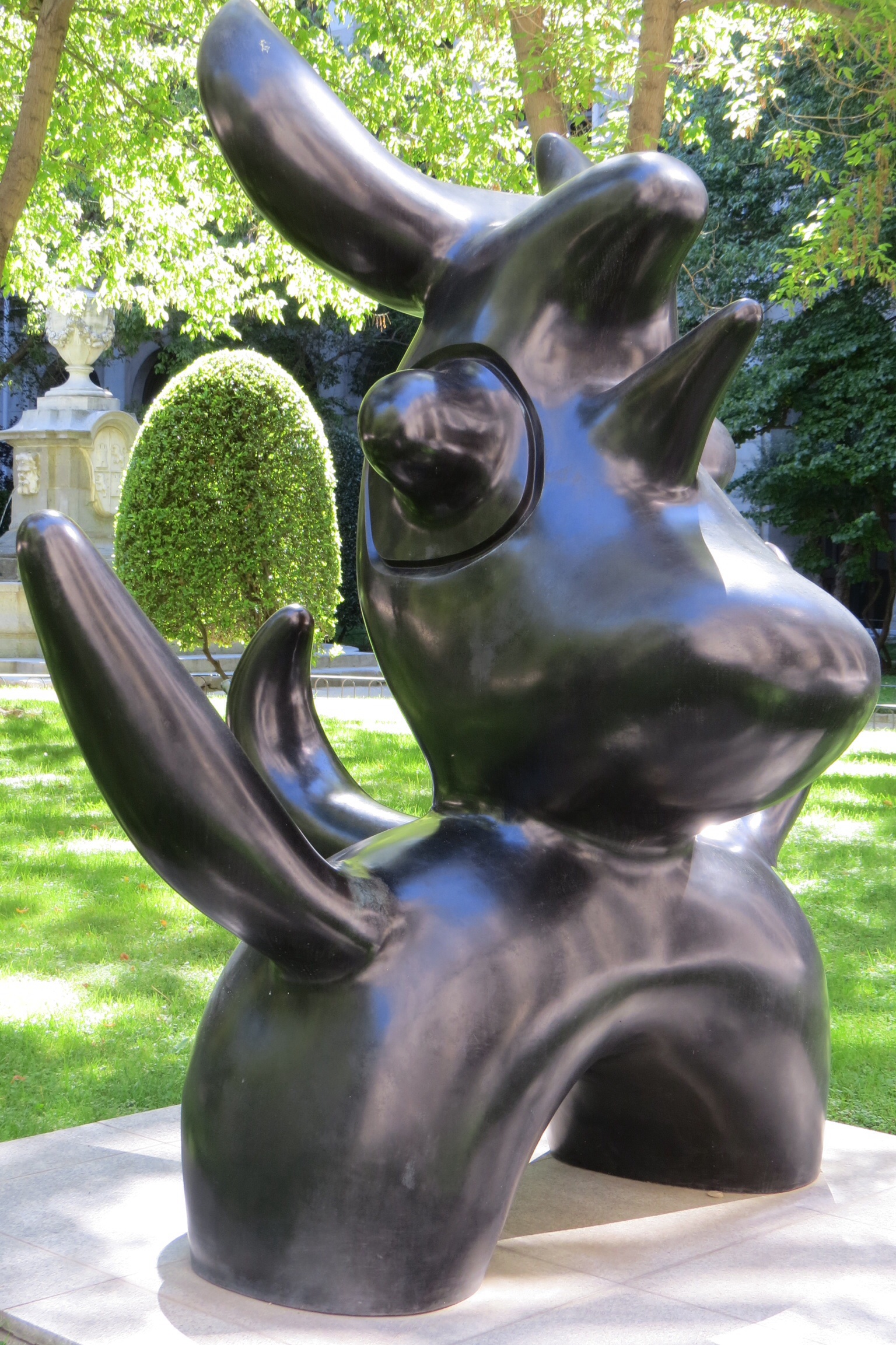
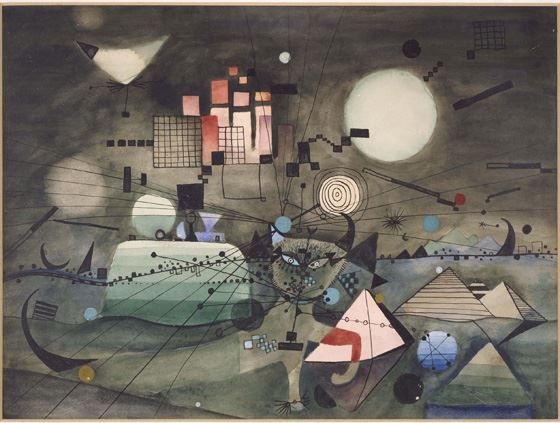
Jan
From the surreal Valley of the Fallen we drove on to Madrid. This evening, Shirley and I had tickets for an opera at the gorgeous Teatro Real opera house, Beethoven’s “Fidelio.” We could not have imagined how fitting this opera would be, following on the heels of a visit to the tomb of the dictator who had sentenced countless Spaniards to prison based on their political beliefs.
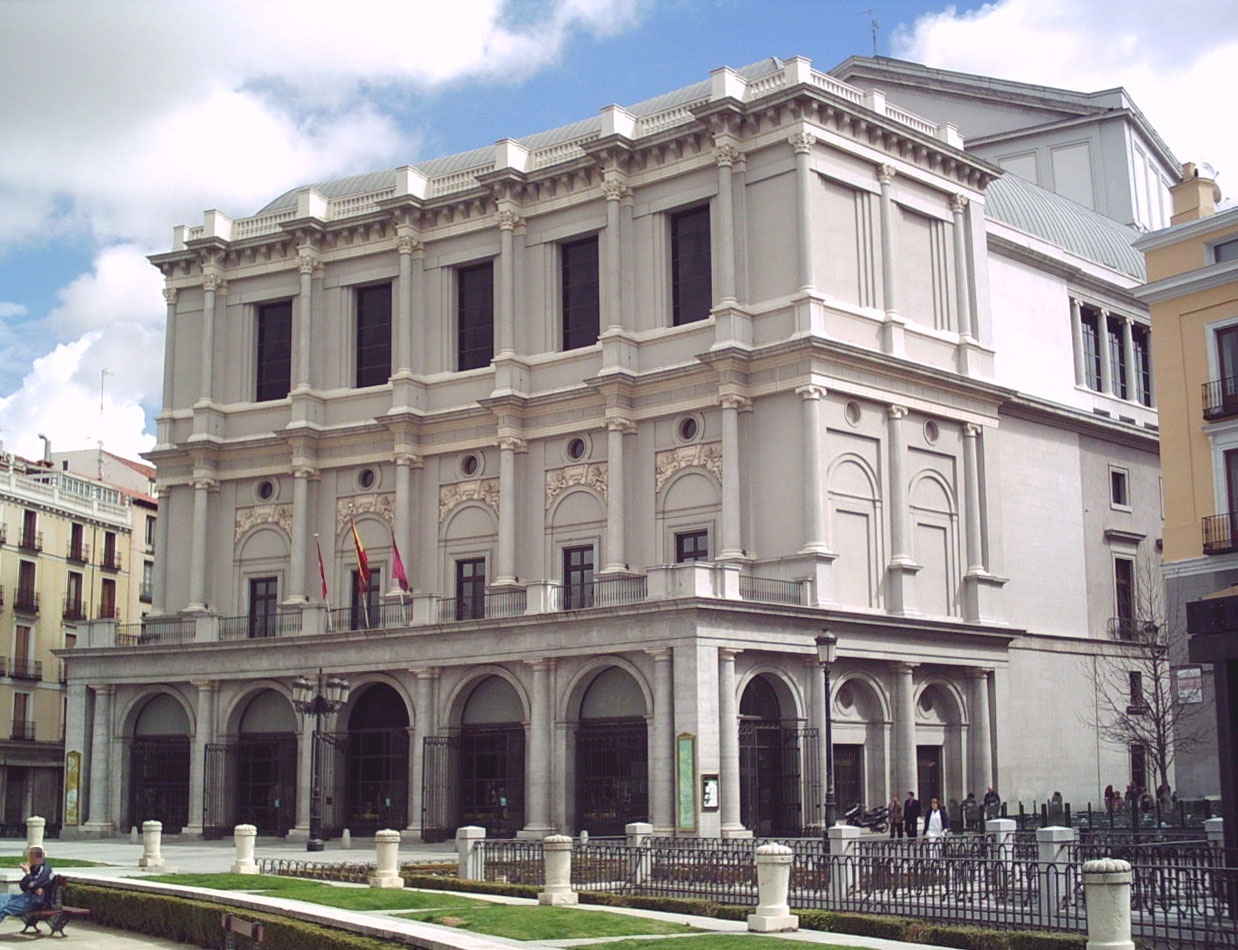
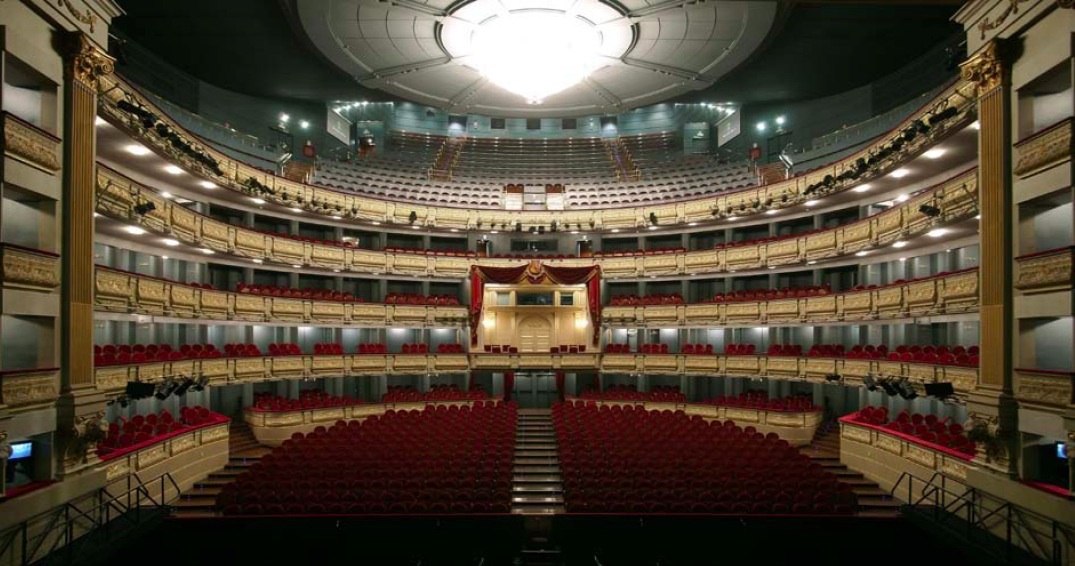
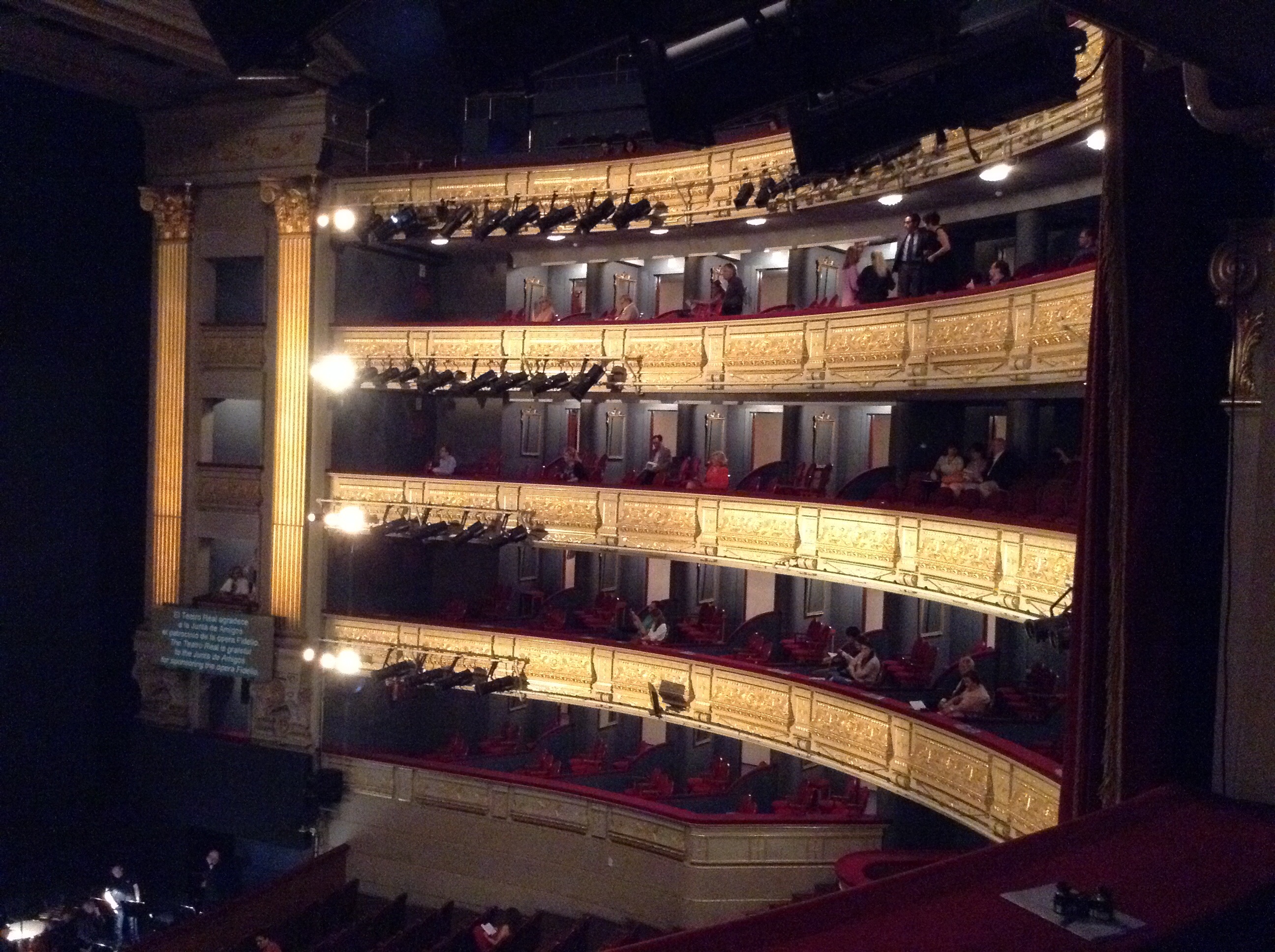
Teatro Real, Madrid
The opera’s protagonist, Leonore, disguised as a prison guard named “Fidelio,” enters the prison and holds the warden at gunpoint to rescue her husband Florestan from death in a political prison. Most operas end in tragedy; this opera ends with the arrival of the newly-appointed governor who declares Leonore and Florestan heroes and releases all of the prisoners.
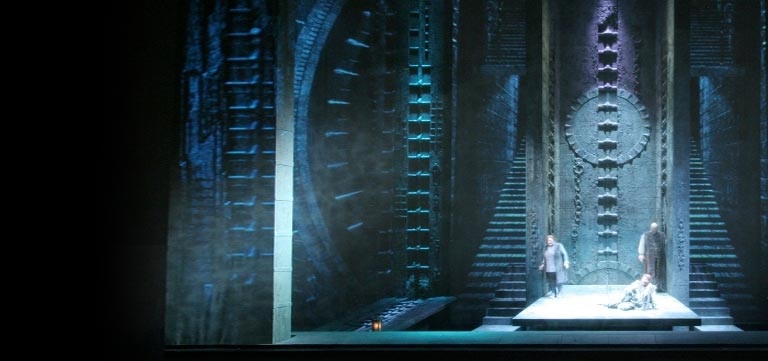
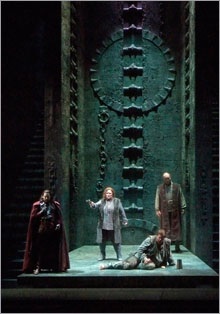
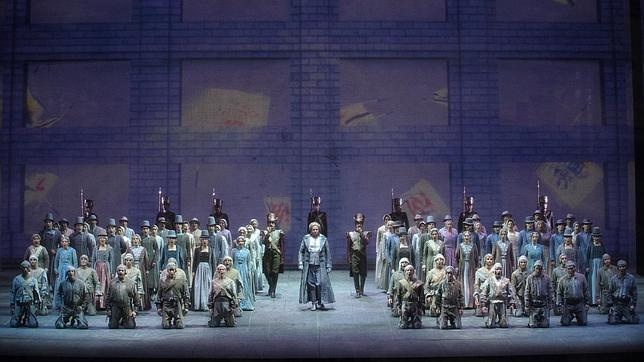
Fidelio was the first opera performed in Berlin after the end of World War II, with the Deutsche Oper staging it at the only undamaged theatre, the Theater des Westens, in September 1945. At the time, Thomas Mann remarked: “What amount of apathy was needed [by musicians and audiences] to listen to Fidelio in Himmler’s Germany without covering their faces and rushing out of the hall!”
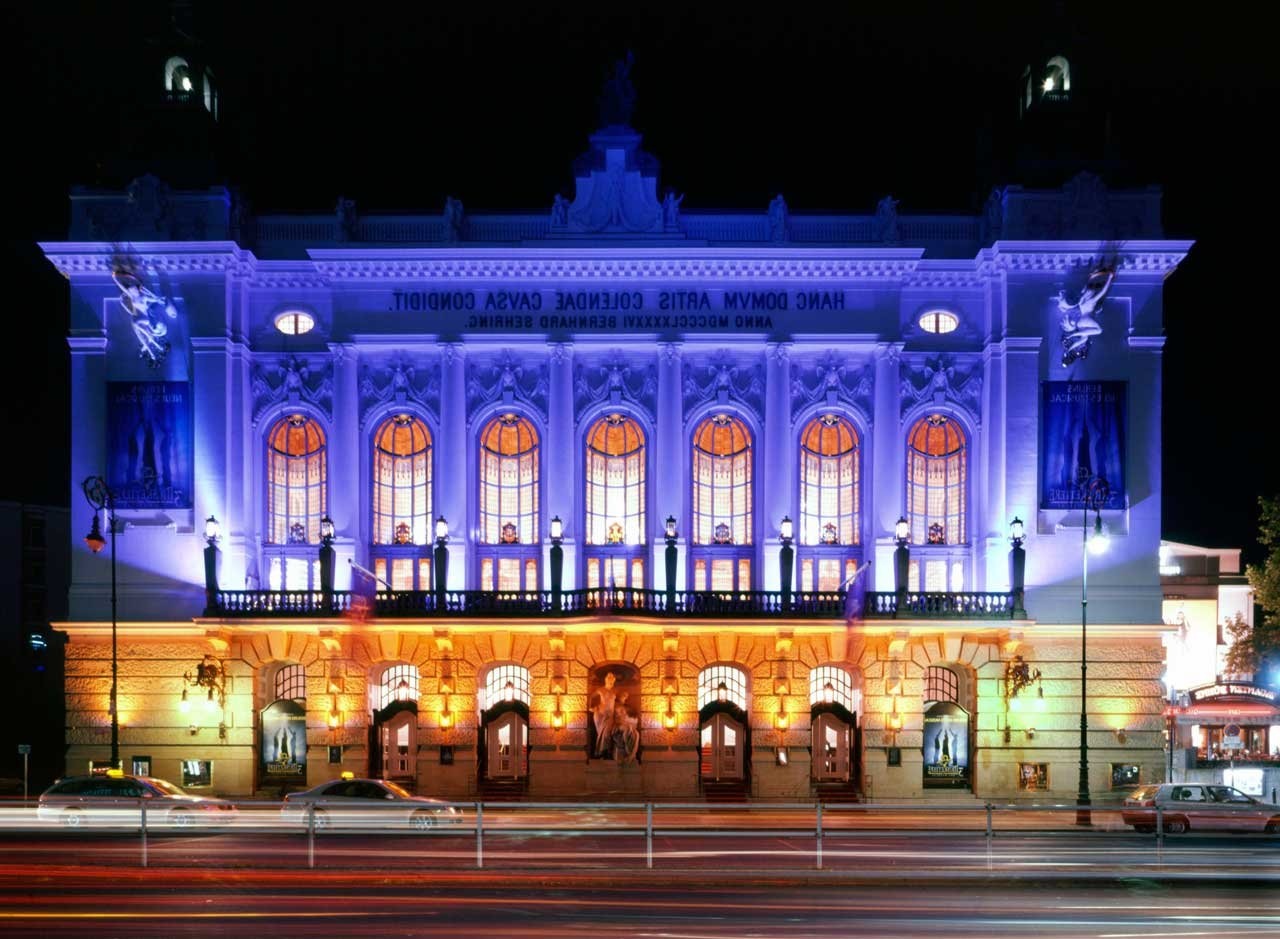
Theatre des Westens
Not long after the end of World War II and the fall of Nazism, conductor Wilhelm Furtwängler remarked in Salzburg:
“The conjugal love of Leonore appears, to the modern individual armed with realism and psychology, irremediably abstract and theoretical…. Now that political events in Germany have restored to the concepts of human dignity and liberty their original significance, this is the opera which, thanks to the music of Beethoven, gives us comfort and courage…. Certainly, Fidelio is not an opera in the sense we are used to, nor is Beethoven a musician for the theater, or a dramaturgist. He is quite a bit more, a whole musician, and beyond that, a saint and a visionary. That which disturbs us is not a material effect, nor the fact of the ‘imprisonment’; any film could create the same effect. No, it is the music, it is Beethoven himself. It is this ‘nostalgia of liberty’ he feels, or better, makes us feel; this is what moves us to tears. His Fidelio has more of the Mass than of the Opera to it; the sentiments it expresses come from the sphere of the sacred, and preach a ‘religion of humanity’ which we never found so beautiful or necessary as we do today, after all we have lived through. Herein lies the singular power of this unique opera…. Independent of any historical consideration … the flaming message of Fidelio touches deeply.”
On November 5, 1955, the Vienna State Opera was re-opened with Fidelio, conducted by Karl Böhm. This performance was the first live television broadcast by ORF at a time when there were about 800 television sets in Austria.

Vienna State Opera
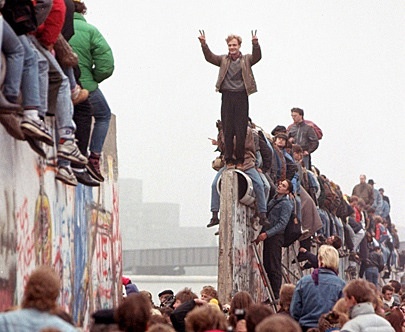
The first night of Fidelio at the Semperoper in Dresden on 7 October 1989 on the occasion of the 40th anniversary of the DDR (East Germany) coincided with violent demonstrations at the city’s main train station. The applause after the “Prisoners’ Chorus” interrupted the performance for considerable time, and the production by Christine Mielitz had the chorus appear in normal street clothes at the end, signifying their role as representatives of the audience. Four weeks later, on 9 November 1989, the fall of the Berlin Wall signalled the end of East Germany’s regime.

Semperoper, Dresden
In case you should feel so inclined, another production’s finale of Fidelio:
For us, Beethoven’s soaring music and the contrast between the dark, claustrophobic first act and the joyous exuberance and light of the second allowed us to shake off Franco, and turn towards the glorious art we are about to see in Madrid.
Jan
Some context:
– Beethoven had written to his brothers in despair about his increasing hearing loss in 1802 (“the Heiligenstadt Testament”). He composed Fidelio, his only opera, in 1805; it was a work in progress until 1814. The final version was first performed in Vienna on May 23, 1814. The 17-year-old Franz Schubert was in the audience, having sold his school books to obtain a ticket. The increasingly deaf Beethoven led the performance, “assisted” by Michael Umlauf. This version of the opera was a great success, and Fidelio has been part of the operatic repertory ever since.
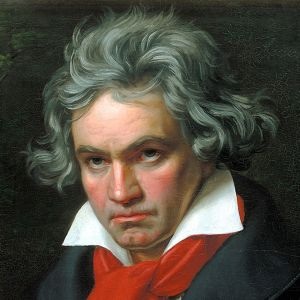
Beethoven

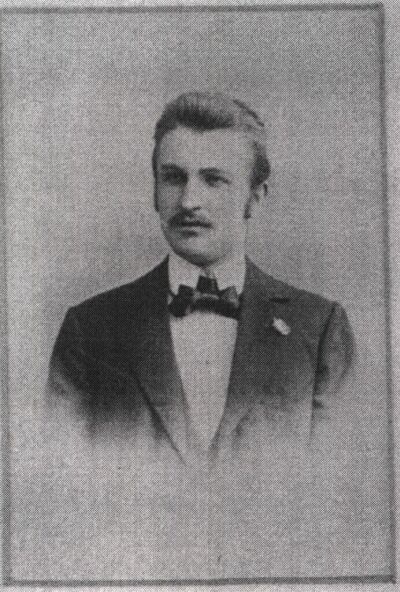
Schubert Umlauf
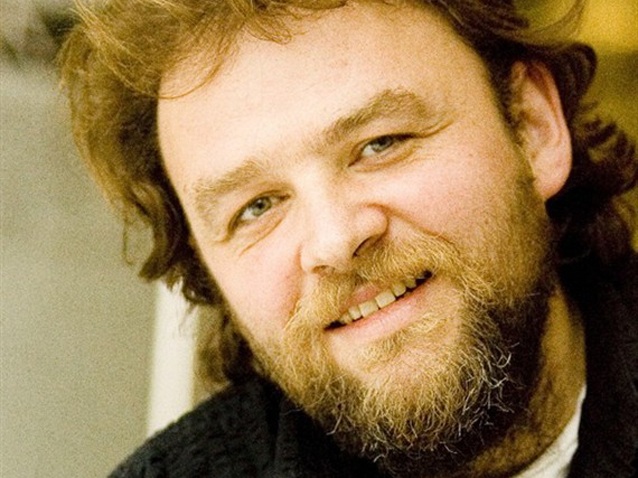
– While researching this production of Fidelio with a view to seeing an opera in Madrid, I read that German-Canadian opera tenor Michael Konig was to star, playing the role of Florestan. Hmmm. On further digging, I learned that Konig, a renowned tenor who sings in all the great opera houses of Europe, lives with his wife and four daughters on Haida Gwaii. Whaaaaaat? I popped him an email saying we BC-ers were going to the performance, and he responded immediately, “maybe we could meet.” We didn’t connect, but what a fabulous performance he gave on closing night, and we felt as if we knew him.
 Carpe diem