Category Archives: Uncategorized

The 20th Century: Weathering Storms

This afternoon we lurched into the 20th century, possibly the most brutal period in Spanish history.

The century started with a weak monarch, Alfonso XIII, who kept Spain out of World War I (officially neutral) and domestically deepened the country’s economic crisis. Ultimately, he fell to a military “coup” (to which the King consented) and the country fell under the dictatorship of Primo de Rivera between 1923 and 1930. Primo de Rivera declared a state of war, abolished the Constitution and replaced local governments and police with military.
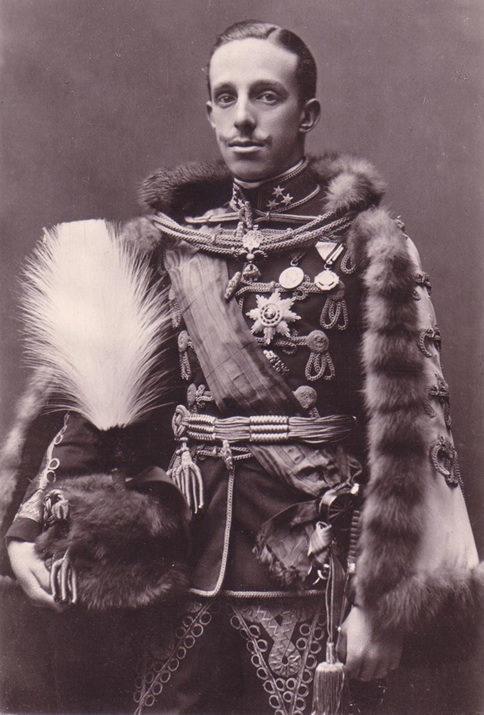
image image
Alfonso XIII                                         Miguel Primo de Rivera

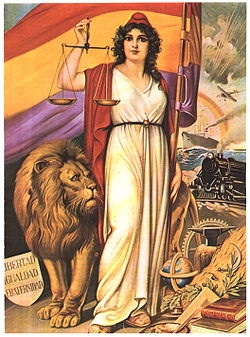
The country was deeply polarized, with the Communist party gaining strength even as conservative factions, in whom you would have thought Primo de Rivera might have found support, were a growing opposition party. In 1931, King Alfonso forced Primo de Rivero to step down and a “Second Republic” was declared and a new Constitution invoked. The people were deeply unhappy with the social and economic mess Rivero left in his wake.
image
Allegory of the Second Republic

By 1936 the tension in Spain was palpable and ordinary people lived in fear. The streets emptied, the shops were shuttered. The leftist Republicans, led by the Popular Front, mainly educated middle class and poor farm workers, were in power (supported by Russia) and the conservative Nationalists, mostly Catholic landowners and business leaders led by the Felange party (supported by Italy and Nazi Germany who eventually supplied them with munitions and soldiers) were in deep dissent. On the 12th of July, 1936, a group of Republican generals declared in Parliament a “pronunciamiento” – essentially a coup. The following day, Calvo Sotelo, a Nationalist leader, was assassinated, triggering the long-fomenting Spanish Civil War.

image
J
ose Calvo Sotelo

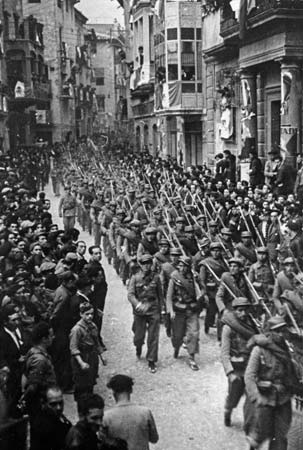
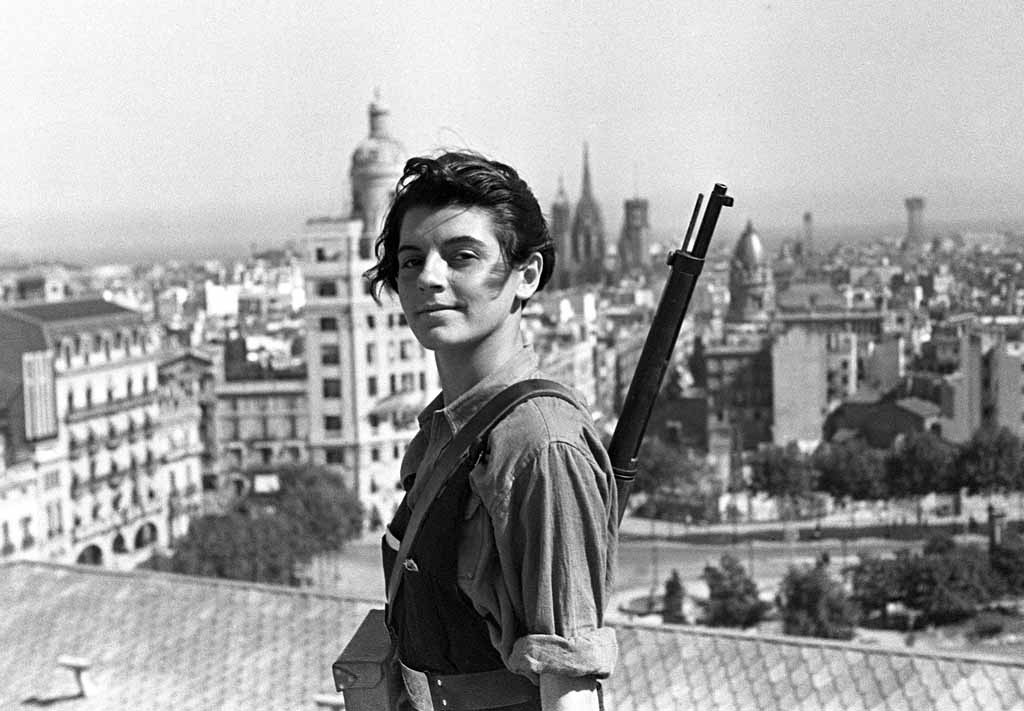
The war dragged on for over two years with as many as half a million killed and another half million fleeing the country.  It was a war of ideologies, a war against fascism.  The losers were the people of Spain, ordinary people struggling to live ordinary lives.
image
Mexican Auxiliary Battalion in Barcelona
image
Marina Ginesta, 17-year-old communist
militant, overlooking Barcelona

image
E
rnest Hemingway with photojournalist
Joris Ivens and two soldiers (John F. Kennedy
Presidential Library)

(For a fascinating sidebar on the Spanish Civil War, read the New York Times review linked at the top, The Mexican Suitcase, about the only four photojournalists reporting on the war from the front, getting news out of the country to the world.  After sending their negatives out of Europe via the underground, the films disappeared for decades….  I happened to see this fascinating exhibit in New York in 2010 at the International Centre for Photography.)

With Musollini in Italy and Hitler gaining power in Germany, the war against fascism spread across Europe and ultimately engaged most of the world. Spain, too, had a dictator in General Franco, and he was sympathetic to Germany, even though Spain was officially neutral in WWII. Franco repaid Germany and Italy for their aid in the Spanish Civil War with “volunteer” soldiers and civilian “volunteers.”   While the rest of the world trounced fascism and reshaped Europe and the Middle East, Spain was left with Franco.

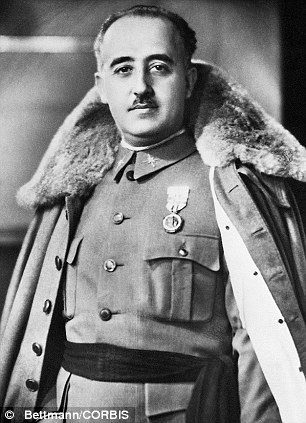
General Francisco Franco had emerged as Nationalist leader late in the civil war. He was a strategist and opportunist who stepped in at the right time (for him), just as the Nationalists won the war. In 1939, he seized control of power and his dictatorship began. Republican soldiers were jailed or worse.
image

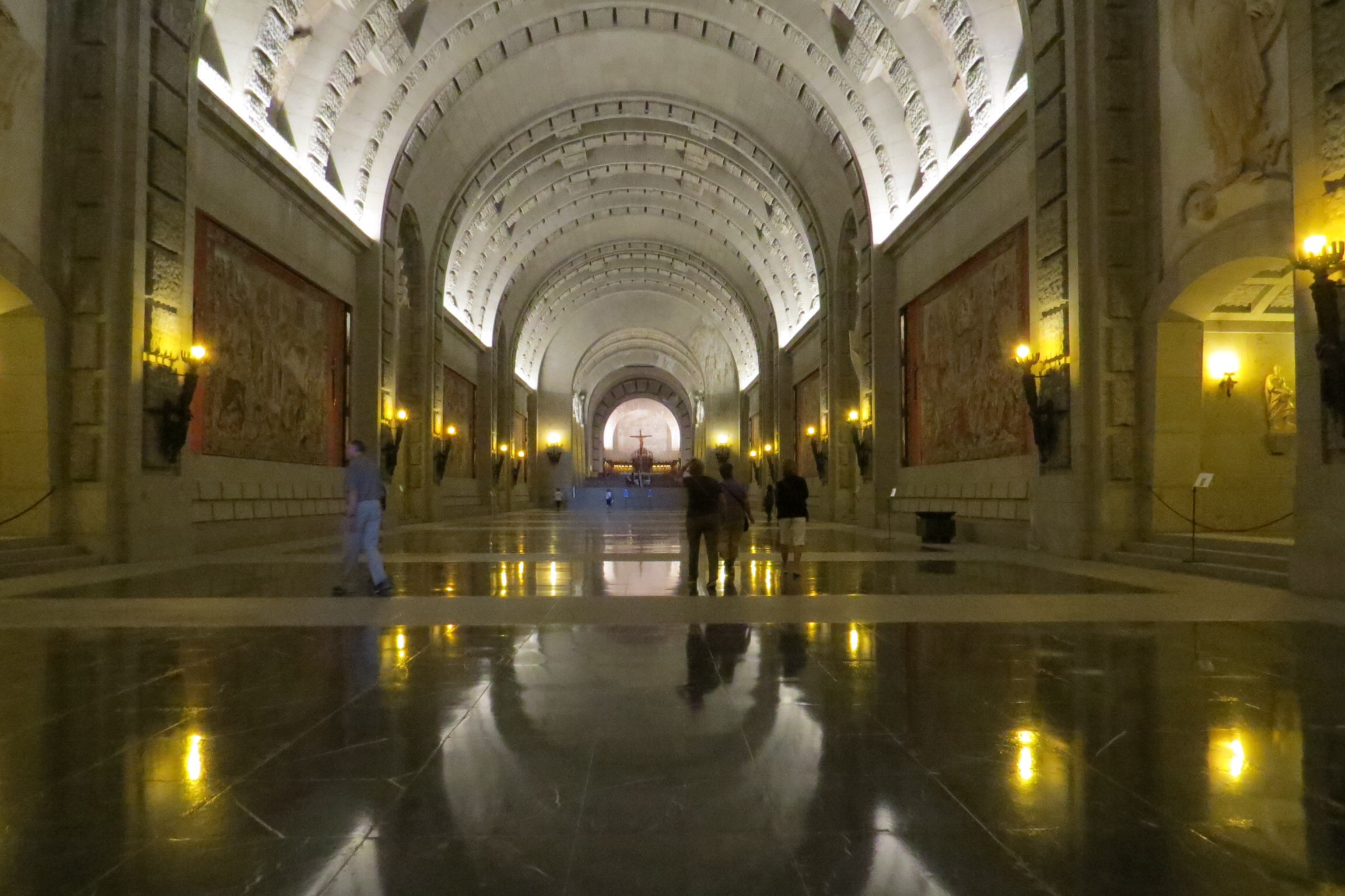
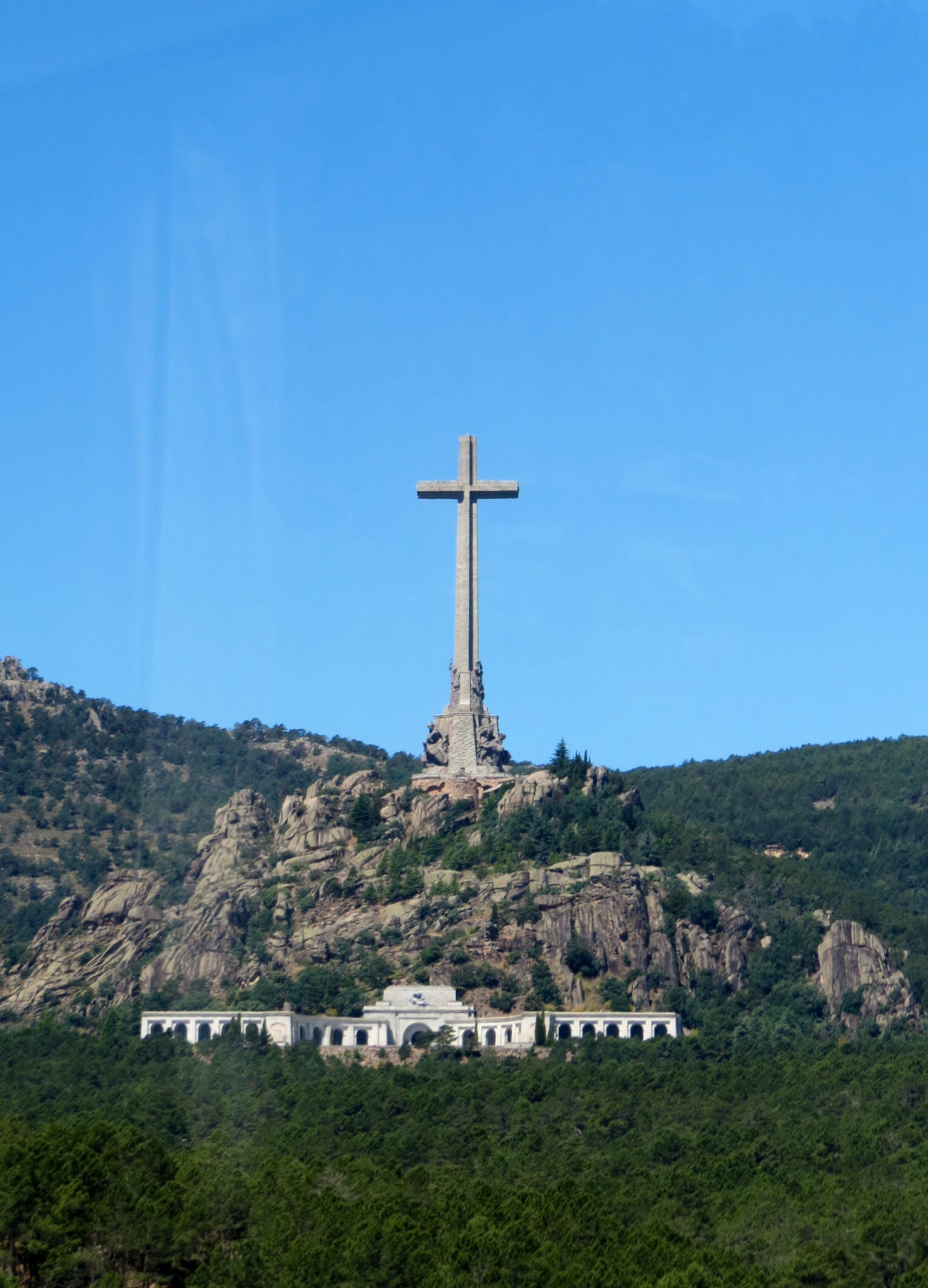
Which brings me to the Valley of the Fallen. In 1940, Franco, now in power, tried to rewrite history. He didn’t have the big personality of the other European dictators so he put his propagandists to work. He built a huge monument which he named The Valley of the Fallen, and to show how magnanimous a leader he was, he had all of the bodies of both Nationalists and Republicans moved to this unfathomably vast grave site (he knew only too well where all the bodies of the Republicans were originally located). He did this without the consent of the families and he used imprisoned Republicans as slaves to build the monument.
image
The monument dominates the landscape

image
S
taggeringly huge crypt at The Valley of the Fallen

Franco led Spain, and the Spanish people endured austerity and domination, until he died in 1975 (they simply could not face another civil war).  He arranged that his body would be buried at the Valley of the Fallen.

Among the 40,000 bodies at the Valley of the Fallen, the only person buried there who wasn’t killed in the civil war is Franco himself.

In 1976, democracy in Spain was restored. It is interesting that the Second Spanish Republic, as a government-in-exile, had an embassy in Mexico City from 1931 until 1976.

In 2007, the Historical Memory Law was passed by the Spanish Socialist Workers’ Party government. The law recognizes the victims on both sides of the Spanish Civil War, gives rights to the victims and the descendants of victims of the Civil War and the subsequent dictatorship of General Francisco Franco, and formally condemns the Franco Regime.

On May 25th, 2015, just days before we arrived in Spain, local and regional election results were startling.  The traditional parties, the incumbent conservative People’s Party and the opposing Socialist party resoundingly lost the elections; Spain voted for new parties, mainly of the Podemos movement who campaigned  against government corruption and austerity measures.  It will be very interesting to see what happens in the November general elections.

Imagine, with all that history, stepping into that box, a Spaniard, and picking up the pencil and marking an X.

Jan
 

Superpower

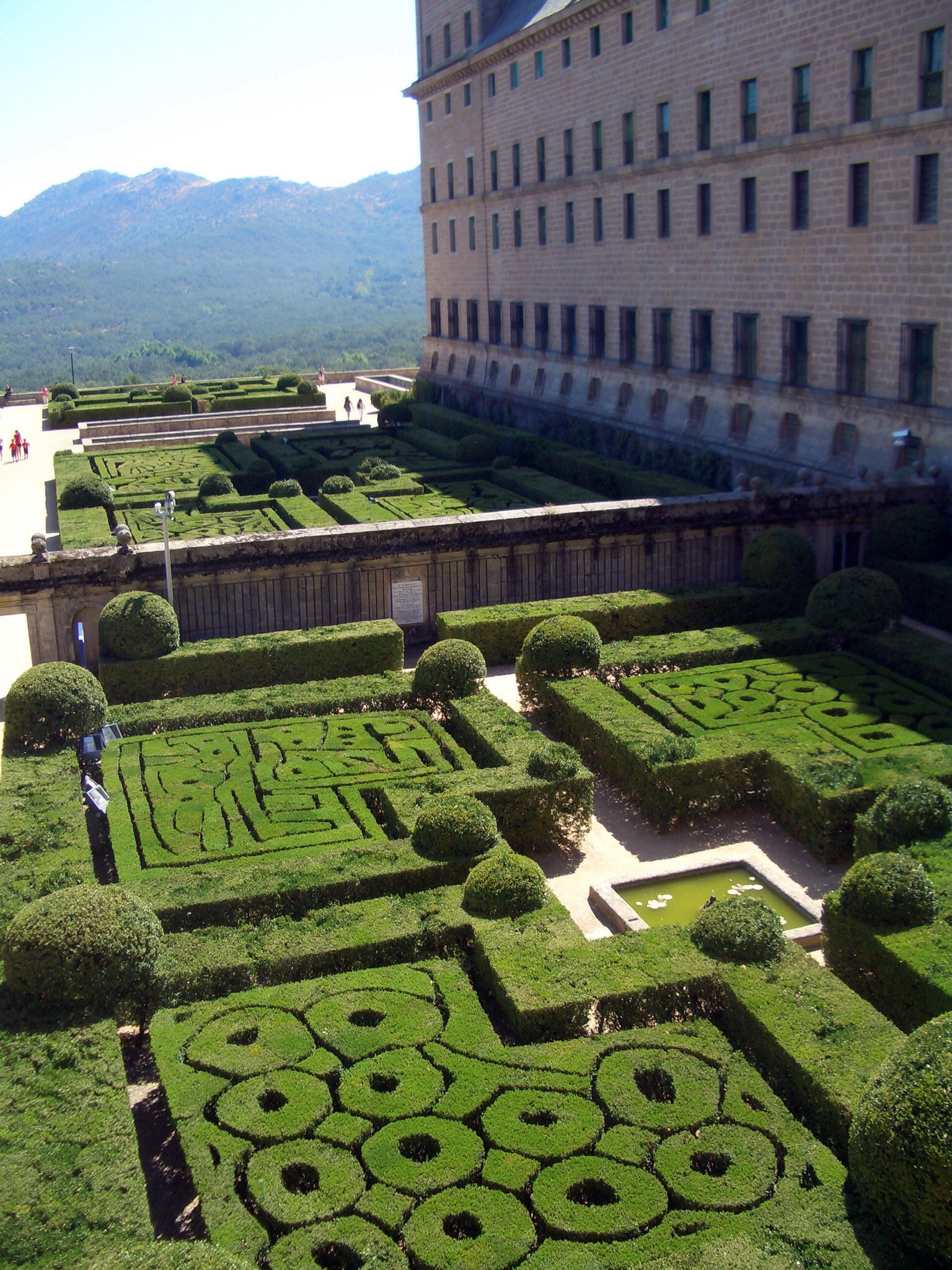
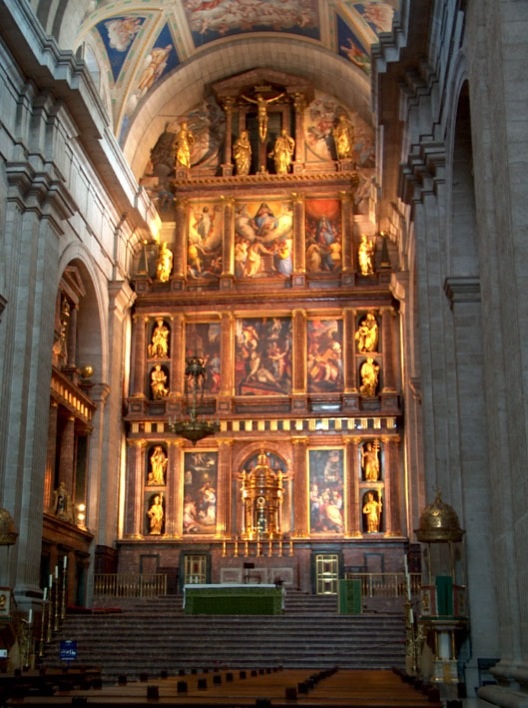
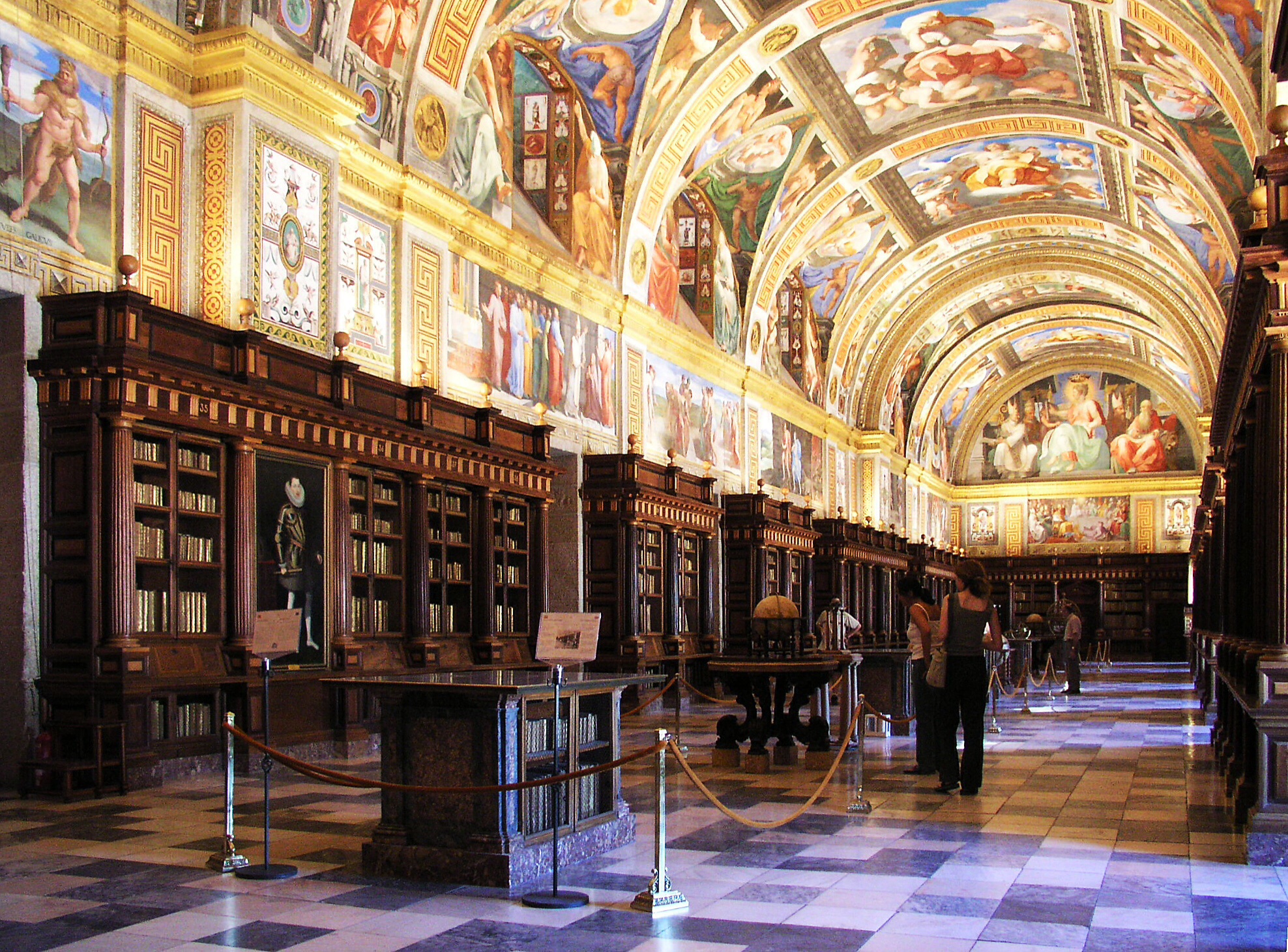
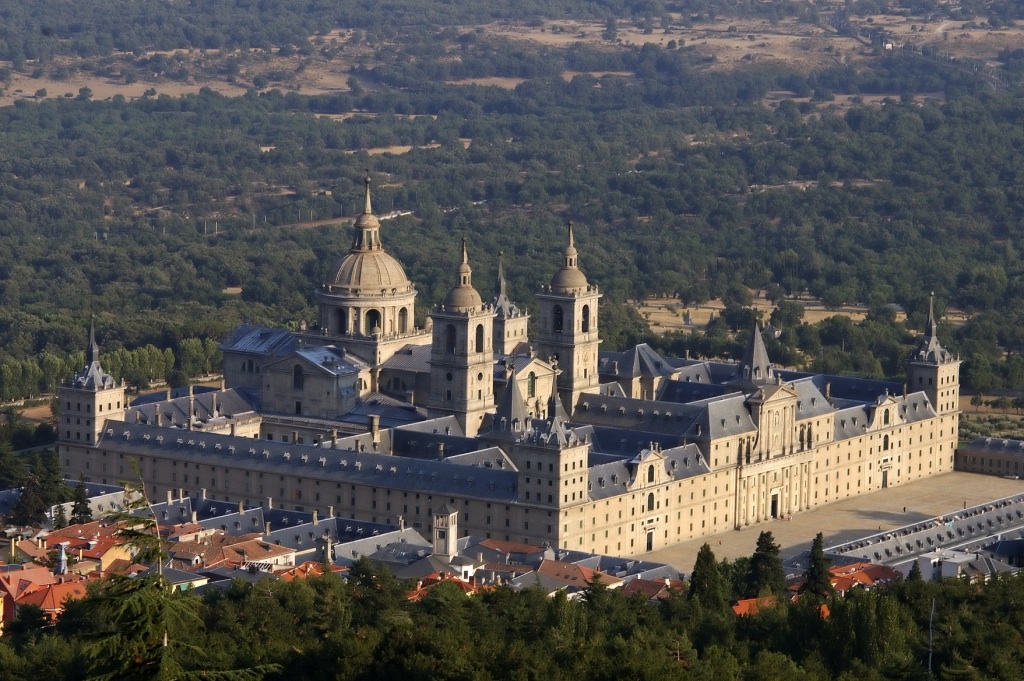
Stopping briefly today at El Escorial, we visited the massive palace built by Philip II from where he ruled from 1584 to his death in 1598. Designed by Juan Bautista de Toledo, the enclave includes a monastery, basilica, and a stunning library.

image image image image

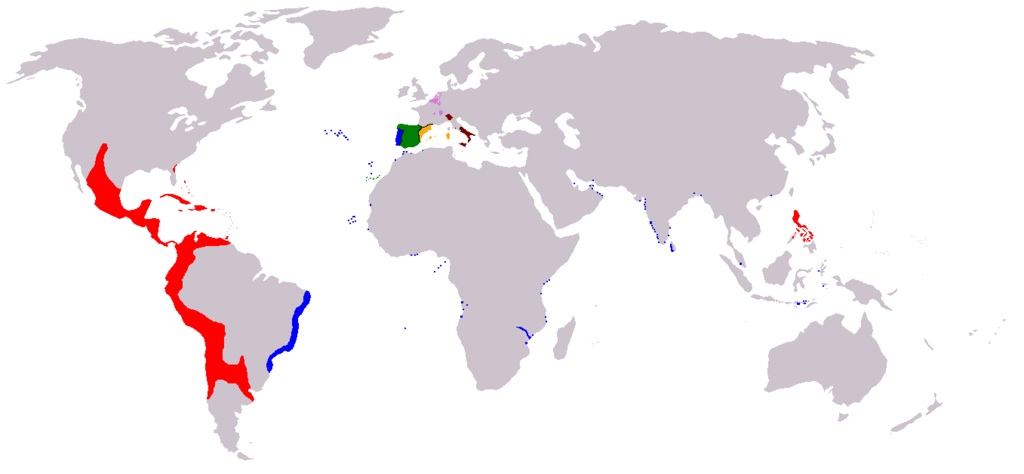
Philip II was perhaps the most powerful ruler in Spain’s history at a time when Spain was a world superpower.

In 1584, his title read: “Philip, by the grace of God second of his name, king of Castille, Leon, Aragon, Portugal, Navarre, Naples, Sicily, Jerusalem, Majorca, Sardinia, and the islands, Indies, and terra firma of the Ocean Sea; archduke of Austria; duke of Burgundy, Lothier, Brabant, Limbourg, Luxembourg, Guelders, and Milan; Count of Habsburg, Flanders, Artois, and Burgundy; Count Palatine of Hainault, Holland and Zeeland, Namur, Drenthe, Zutphen; prince of “Zvuanem”; marquis of the Holy Roman Empire; lord of Frisia, Salland, Mechelen, and of the cities, towns, and lands of Utrecht, Overissel, and Groningen; master of Asia and Africa.”

He was also King of England and Ireland upon his marriage to Mary I of England in 1554 (having first met her two days earlier) until she died in 1558.

The Phillipines are named for him.

image
S
panish Territories

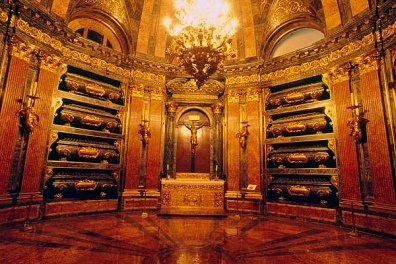
The most memorable and historically important part of our visit was to the Pantheons of Kings and Princes where almost all the Spanish monarchs, their consorts and (sadly) the infant heirs to the throne are buried. Gruesomely, the remains go first to the pudridero (“decaying chamber”) for 20 to 30 years; only then are they interred in the tombs. I wonder if this tradition started with the Hapsburgs, who for some reason buried the organs of their monarchs in St. Stephen’s Cathedral and their empty bodies in the Capuchin Imperial Crypt  in Vienna.

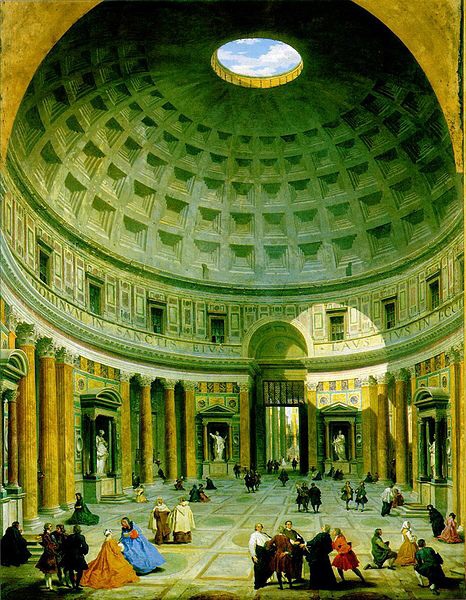
The Spanish Pantheon is gorgeous, with walls and crypts of marble decorated with gold-coated bronze. It reminded me of the Pantheon in Rome and the Medici crypt in Florence.

image
Pantheon of Kings, El Escorial

image
Medici Chapel, Florence

image
Interior of the Pantheon, Rome,
by Giovanni Paolo Pannini

Philip II is interred here; he died of cancer in 1598 and was succeeded by his son, crowned Philip III.

For more information, and for information about all Spain’s monarchs, this is a great website:

Spanish Royal Burial Sites

Jan

Note:  The images in this post are not mine.

Oh, Segovia!

Itinerary:
– tour of Segovia
– Lunch: Restaurante El Hidalgo
– Royal Palace of Granja

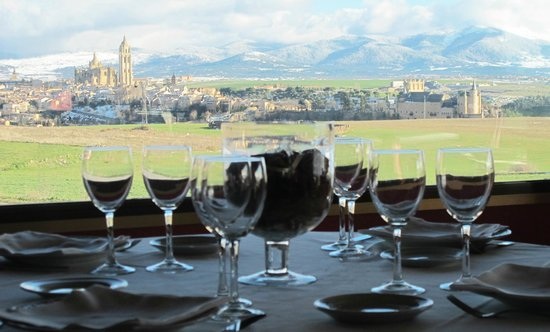
So this was our view from our hotel room:

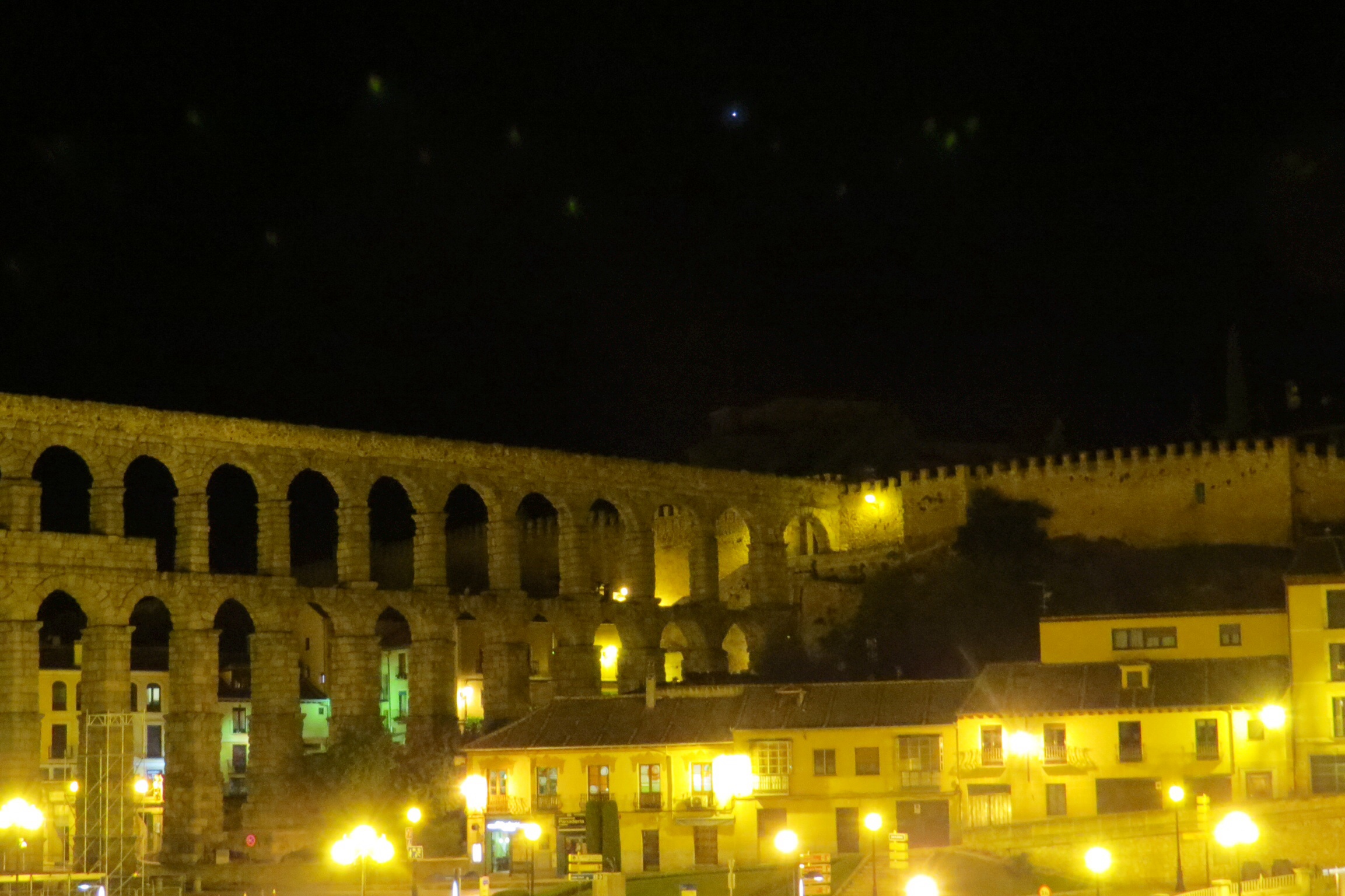
image image

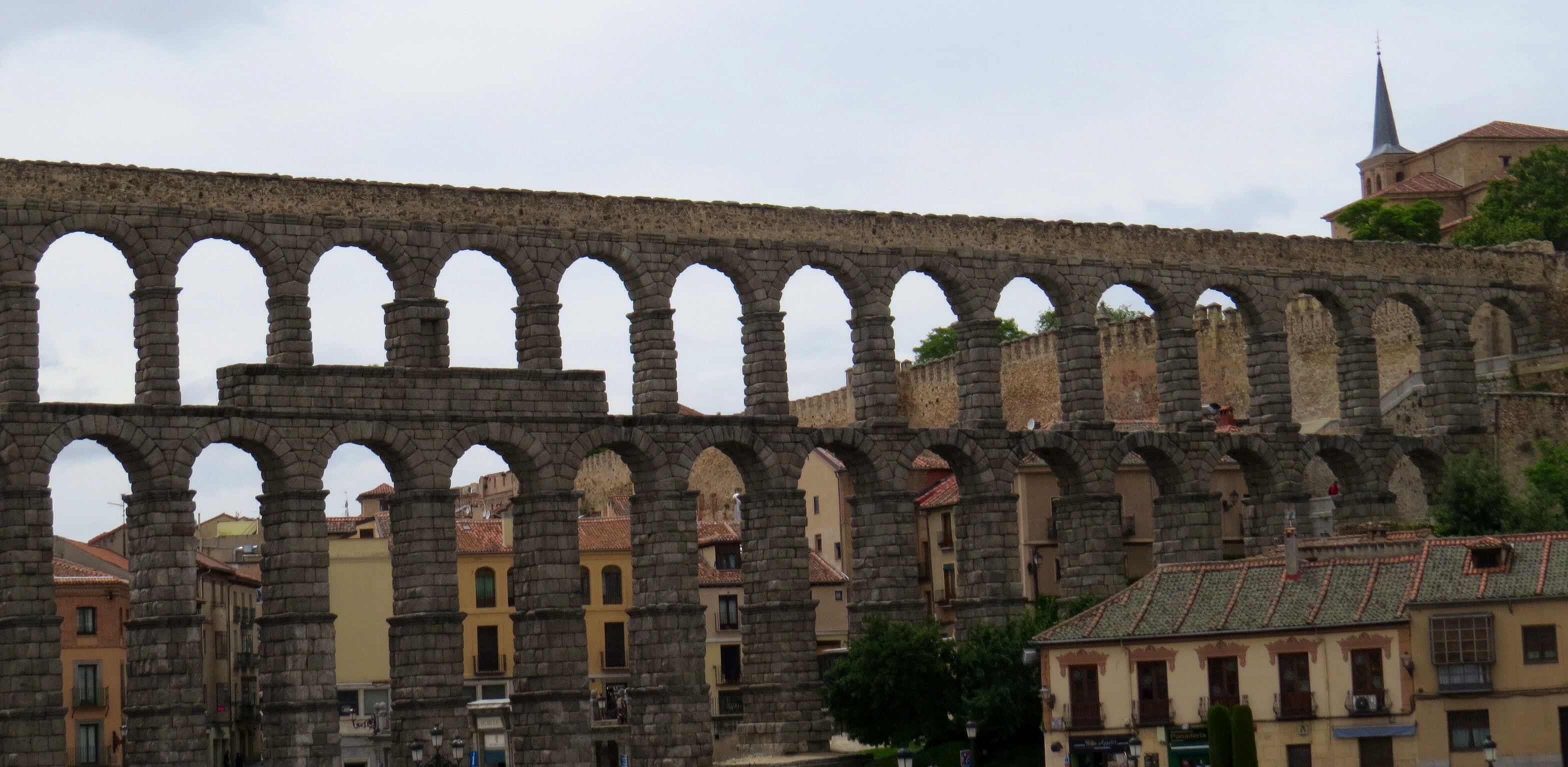
Aquaduct: (Civil Engineering) a conduit used to convey water over a long distance, either by tunnel or more usually by a bridge supporting the weight above it.

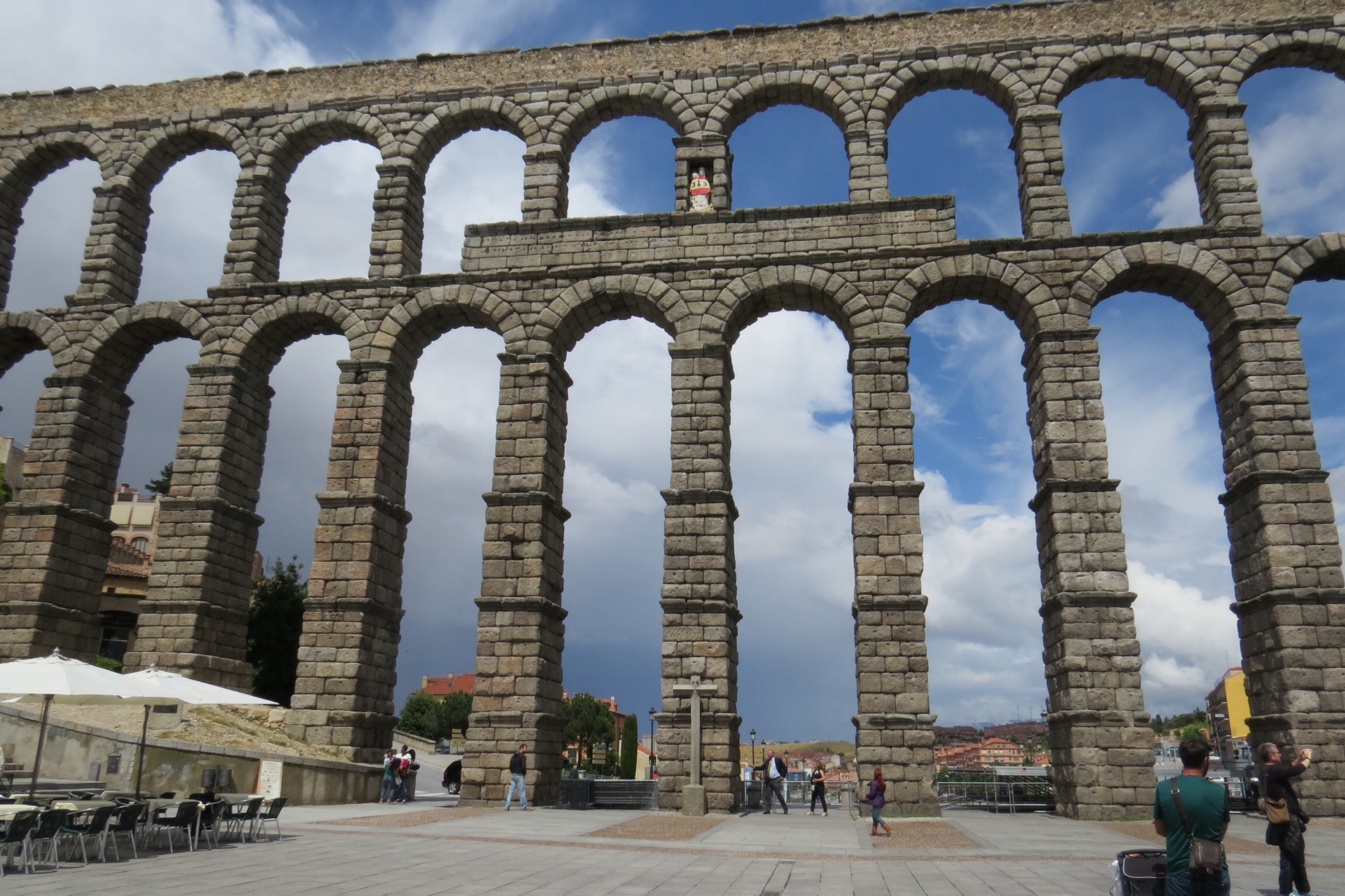
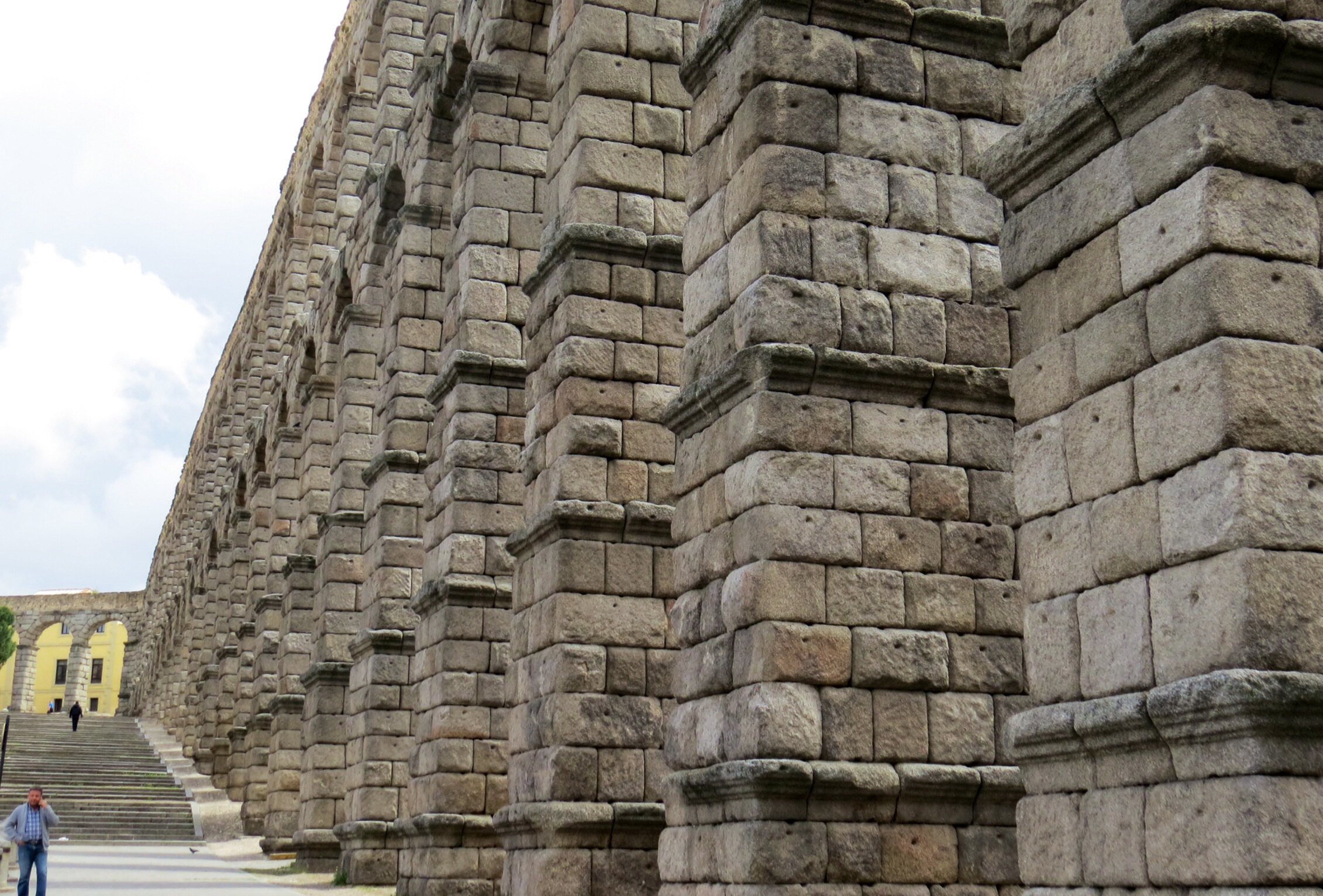
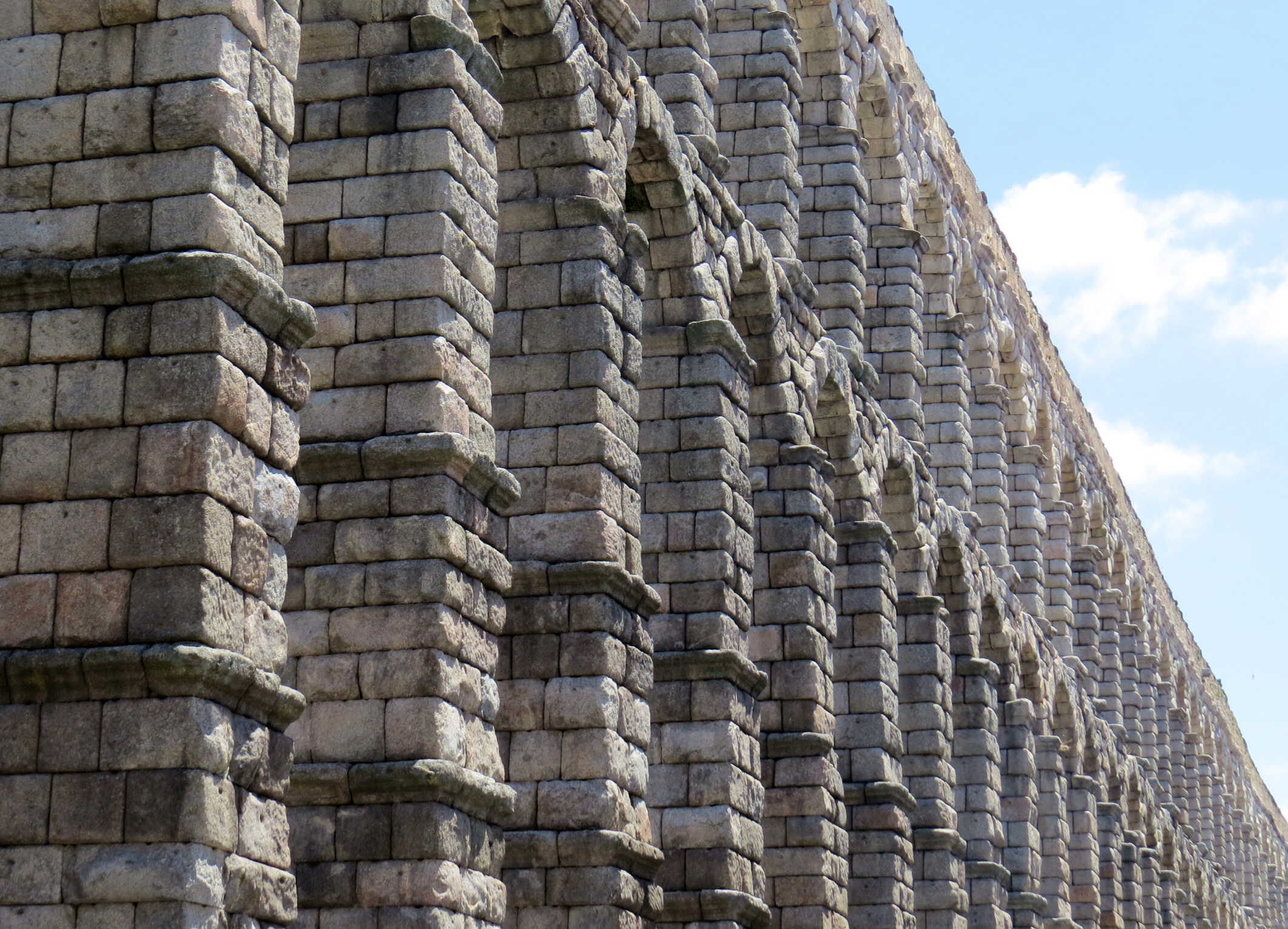
The stunning Roman acueducto is intact, its 900-metre length commanding against soft historical architecture in this modern city. Built to impress for political advantage, the structure remains a marvel today – constructed of granite, it extends 2-3 metres underground. The water channel starts at Cold River, travels over 14 kilometres including through the city via the acueducto and goes underground to El Alcazar, the Medieval palace at the opposite end of town.

Perhaps most amazingly, the acueducto was in use from the 1st century AD until 1929.

image image image image
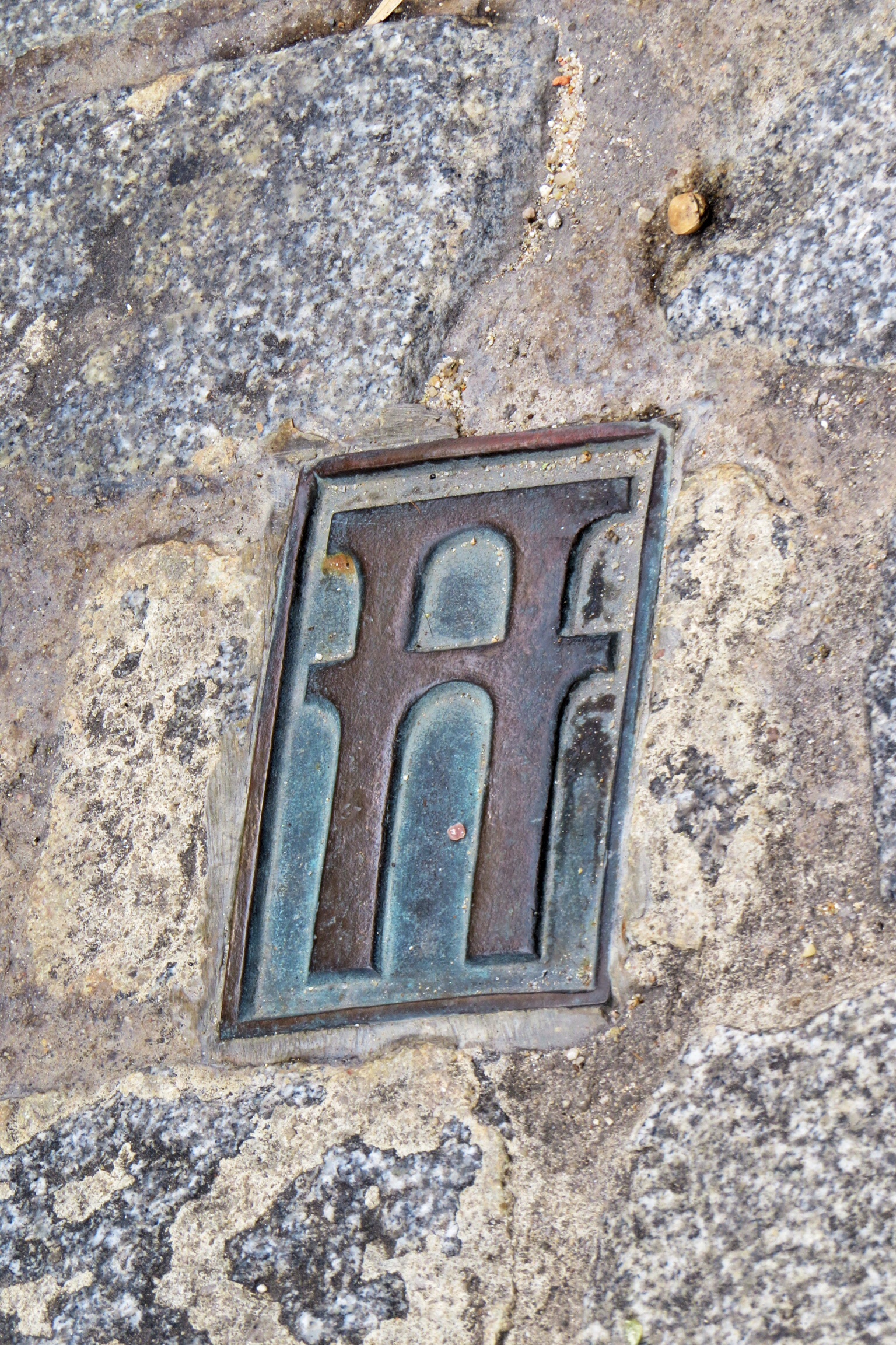
Channel underground marker

Segovia. The capital of the province of the same name, both the city and the famous Roman structure within it are UNESCO World Heritage Sites.

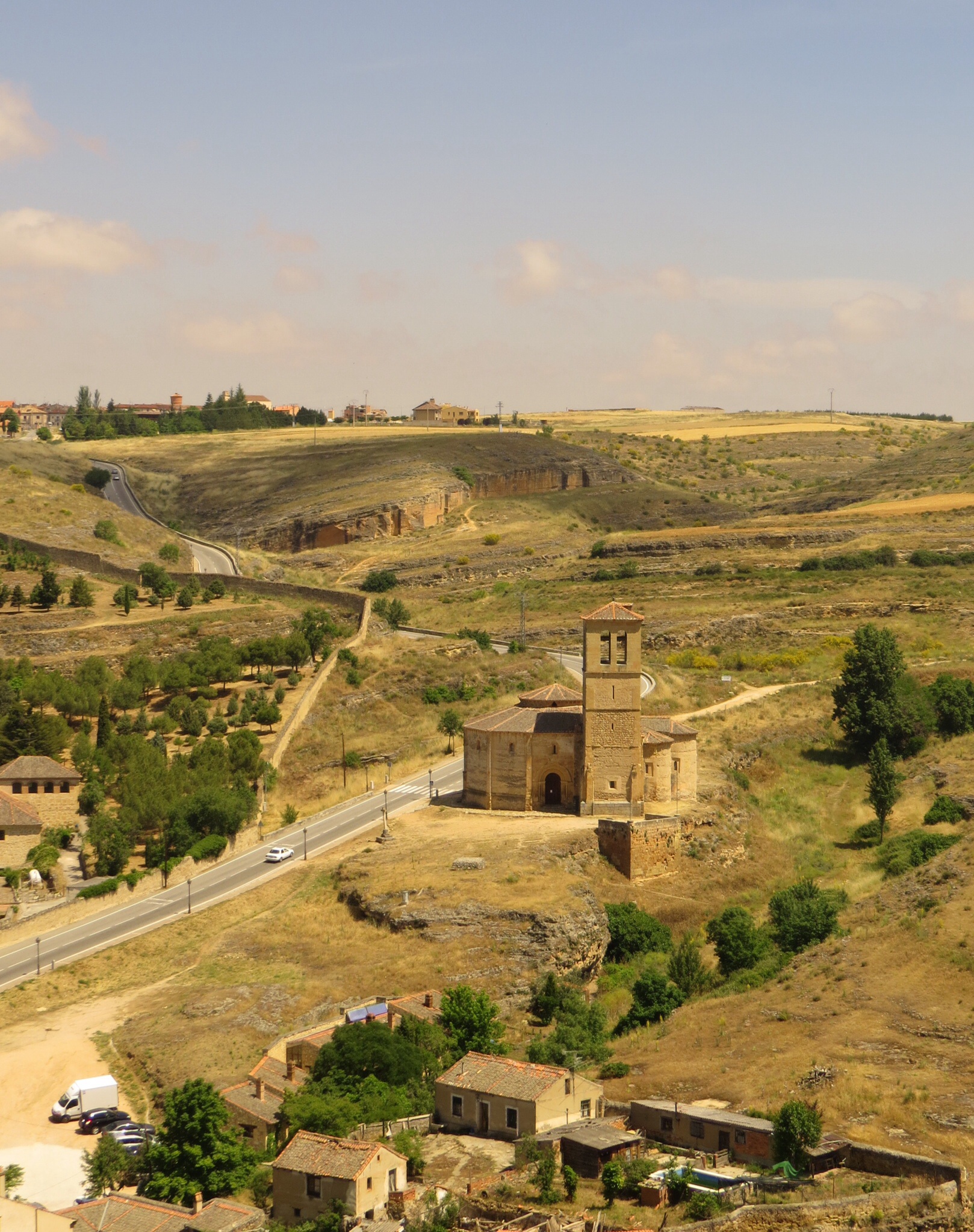
Rich in history, Celtic in origin, the city was later conquered by Rome. Did Noah’s son found the town? Did Hercules? These are the legends, but later, in real life, the first running of the bulls took place here in the 12th century. In the more recent legendary archive, Walt Disney’s inspiration for the Sleeping Beauty palace and the film set for Snow White was El Alcazar, and Arnold Schwarzenegger’s Conan the Barbarian was set in the beautiful hillside around the city.

image

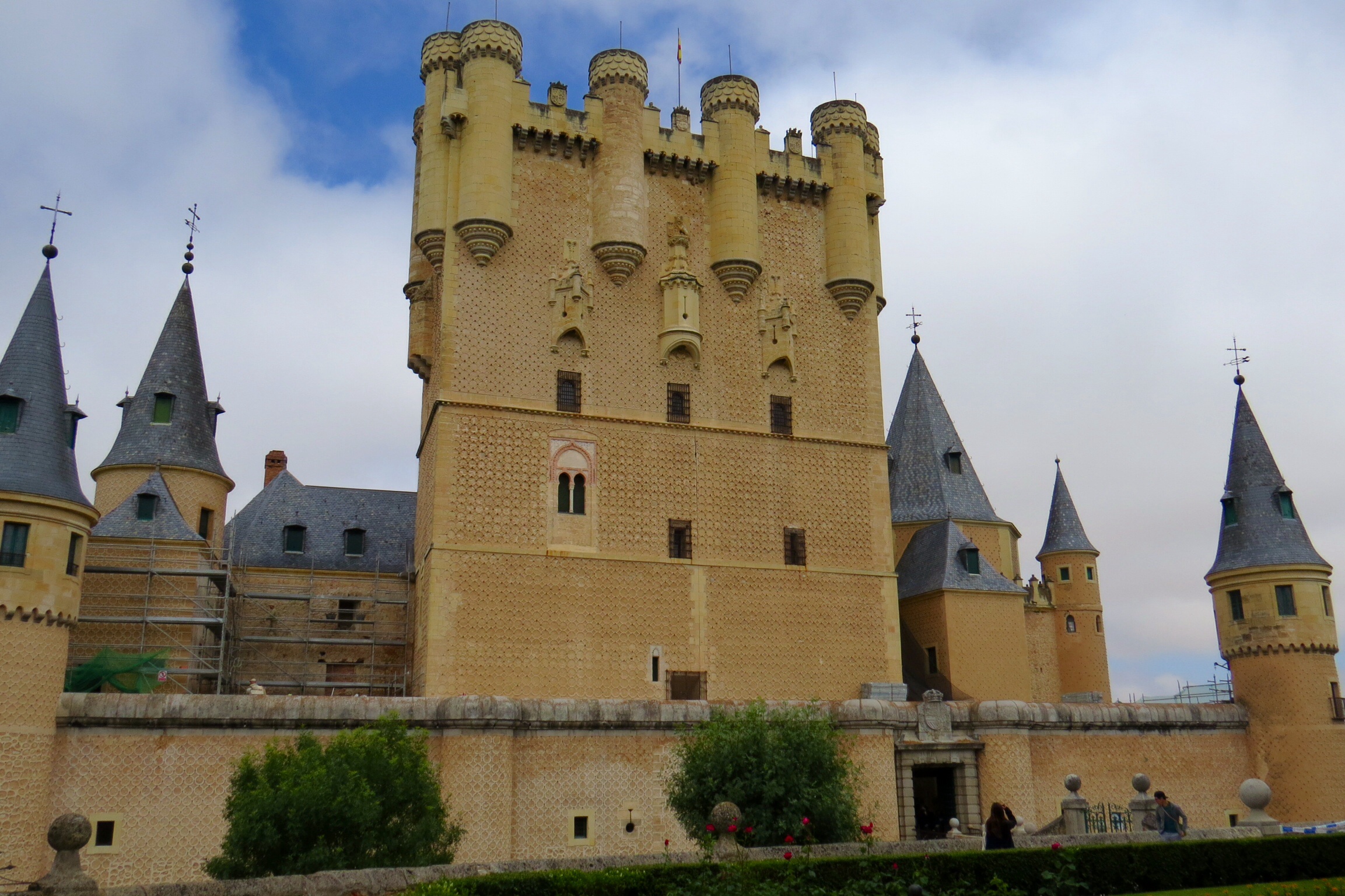
The foundation of El Alcazar was Roman, but the medieval palace was built of limestone in the 13th century. It has the kind of honest, simple, dramatic elegance that stares down the many guilded Baroque palaces of Europe and I recalled the similar rugged beauty of Prague Castle.

image image

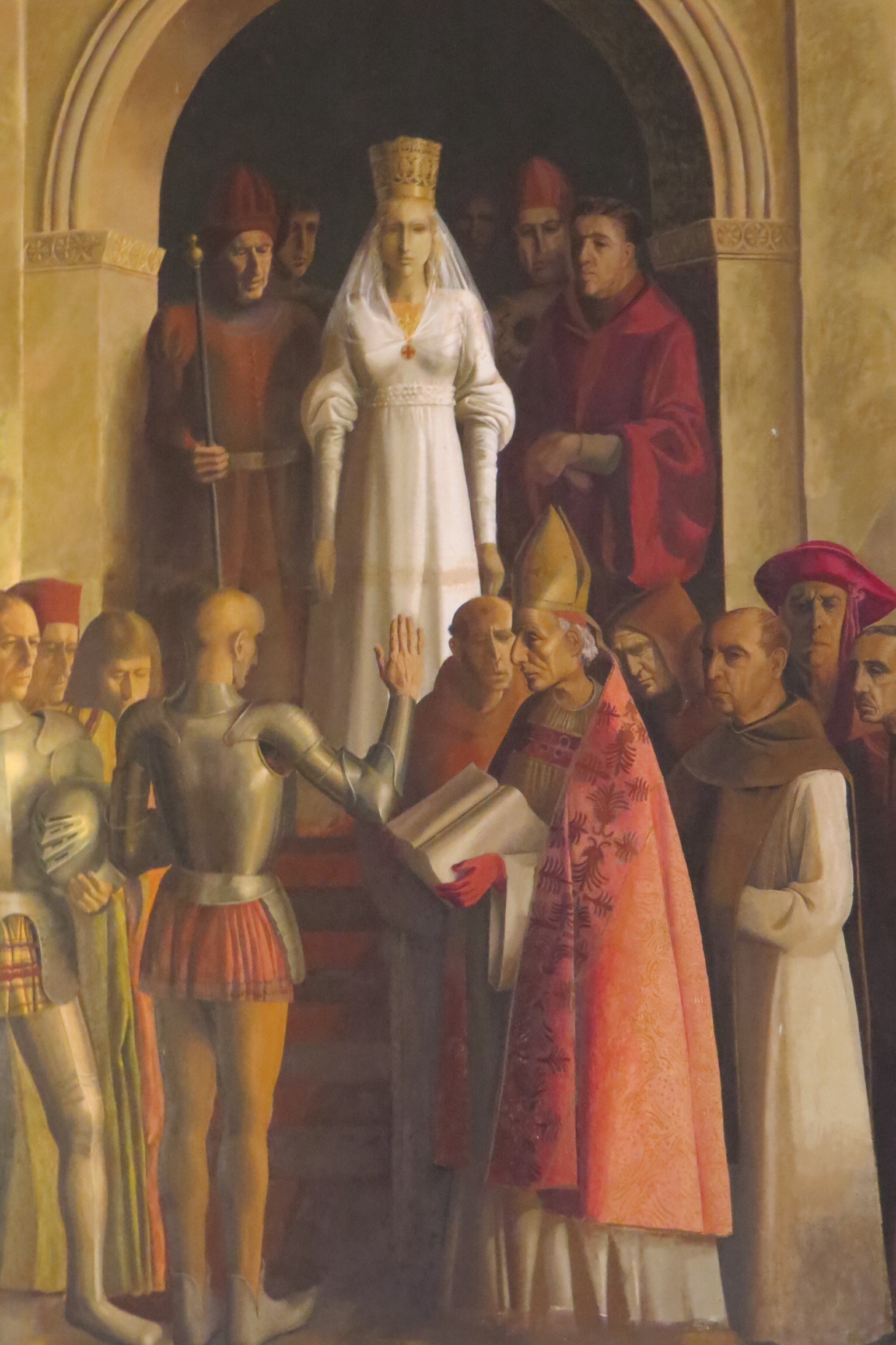
El Alcazar was the dramatic backdrop for one of the juiciest romances and marital power struggles ever told. Isabella was one half of the marriage that united Spain as we know it today. At age 6, Isabella was betrothed to Ferdinand, but that carried little weight. After a gnarly path of political promises, betrothals and deaths, Isabella’s own will led her back, ultimately, to Ferdinand. They wed on October 19, 1469.

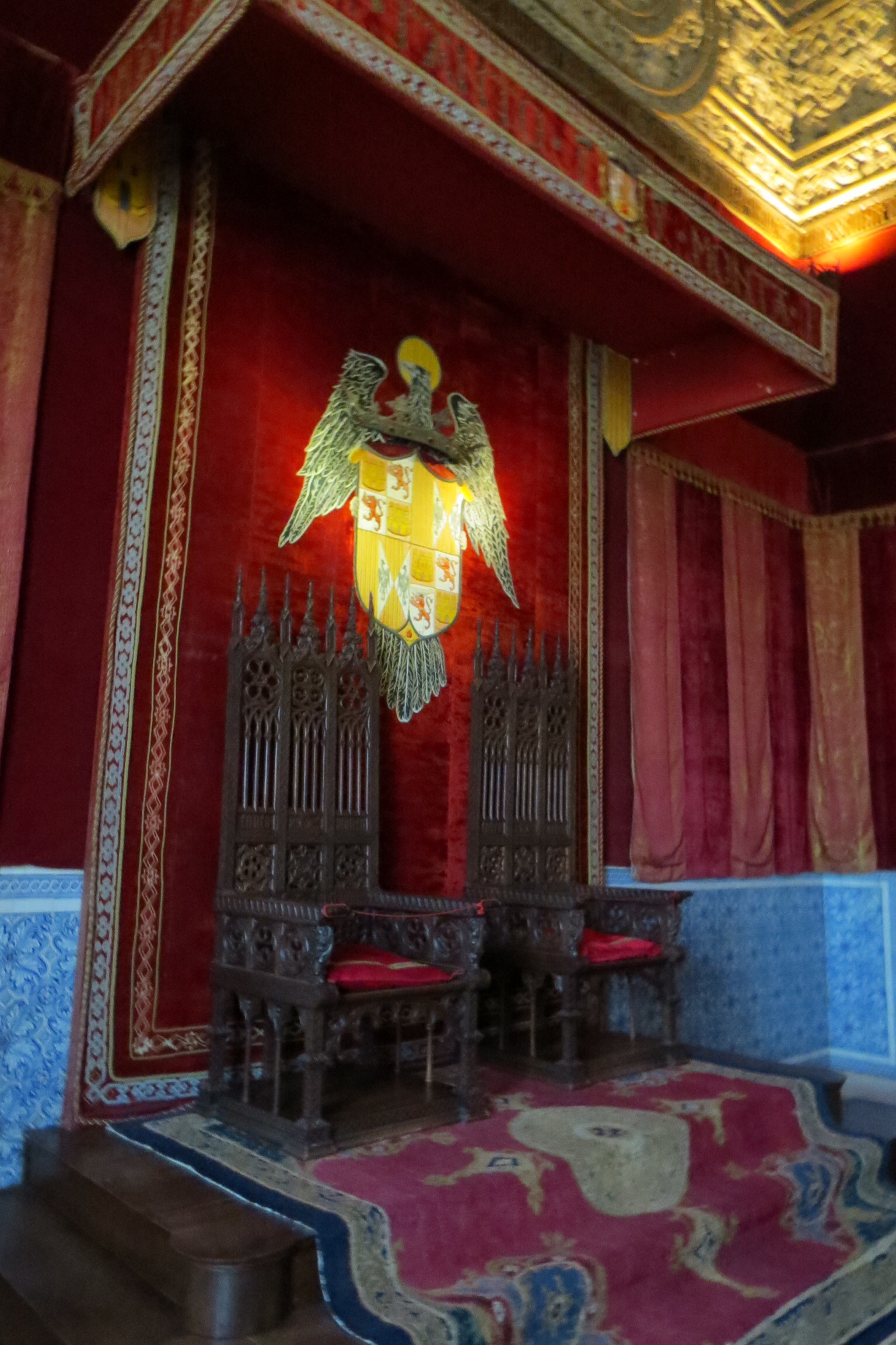
In December, 1474, Ferdinand was away in Zaragoza. Isabella was at home at El Alcazar in Segovia. Toward midnite on December 11 in Madrid, King Enrique, Isabella’s half brother, died. He had dithered about his succession and left no specific heir to the throne. Isabella’s supporters – the nobility, judges and the Church – knew haste was crucial to ward off real threats to her accession to the Crown. Isabella seized the day and and a coronation ceremony in El Alcazar (and the transmission of news of the coronation) solidified her position as the new Queen of Castile and Leon.

image

Ferdinand was furious to learn that Isabella had seized power while he was away, denying him the opportunity to be crowned King Regent. She had written to him of Enrique’s death without mentioning her coronation. It wasn’t until he read a December 21st account of her coronation ceremony that he realized she was Queen. “I never heard of a Queen who usurped male privilege,” he whined. Isabella pulled out all the stops in pageantry on his return to Segovia, including kneeling dignitaries and a celebratory mass, but Ferdinand was not convinced and threatened to leave her.

Isabella had to plead her case publicly, and based upon the marriage contract which negated any succession rights to the throne he might claim over her, Ferdinand relented. The couple adopted a new official motto: “one is equal to the other, equally Isabella, equally Ferdinand.”

image

Isabella introduced great reforms to her country (perhaps she was an inspiration to the well-read Catherine II of Russia), reorganizing government, lowering the crime rate and relieving her nation of a legacy of debt left behind by her half brother. And, of course, she was to become the “Mother of the Americas,” financing and endorsing Christopher Columbus, making Spain a world power for generations.

It must not be forgotten, on the other hand, that Isabella and Ferdinand instituted the Spanish Inquisition and expelled Jews and Muslims from Spain.

Well, we fanned ourselves prodigiously after this visit and lunch was imperative.

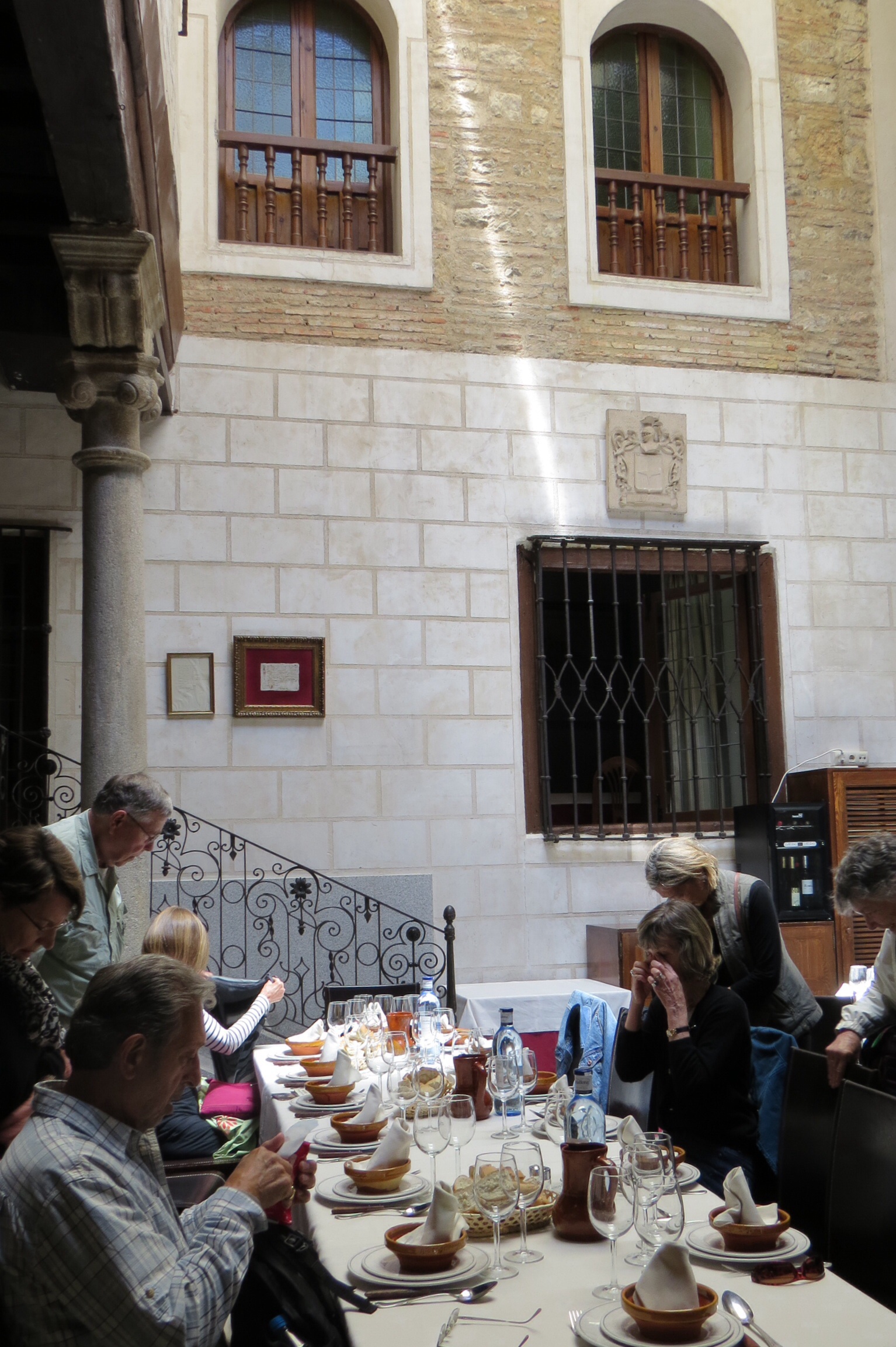
We had seen the interior courtyards of several aristocratic mansions in Spain, and today we would experience the hushed atmosphere of a meal taken surrounded by cool stone walls with the warmth of sun and light streaming in from above.

image

The meal here was impressive as well, gazpacho drizzled with golden olive oil, and duck.

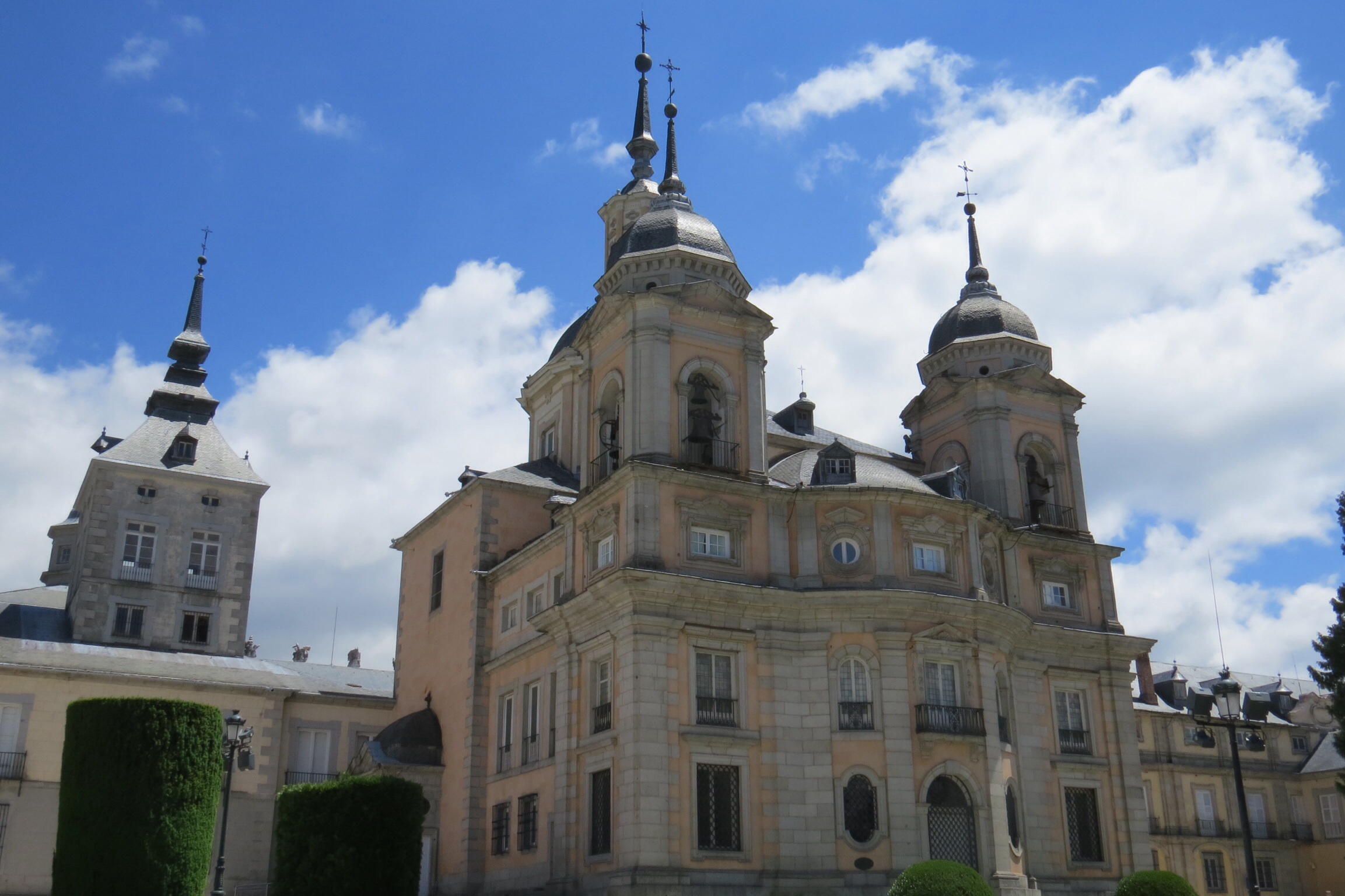
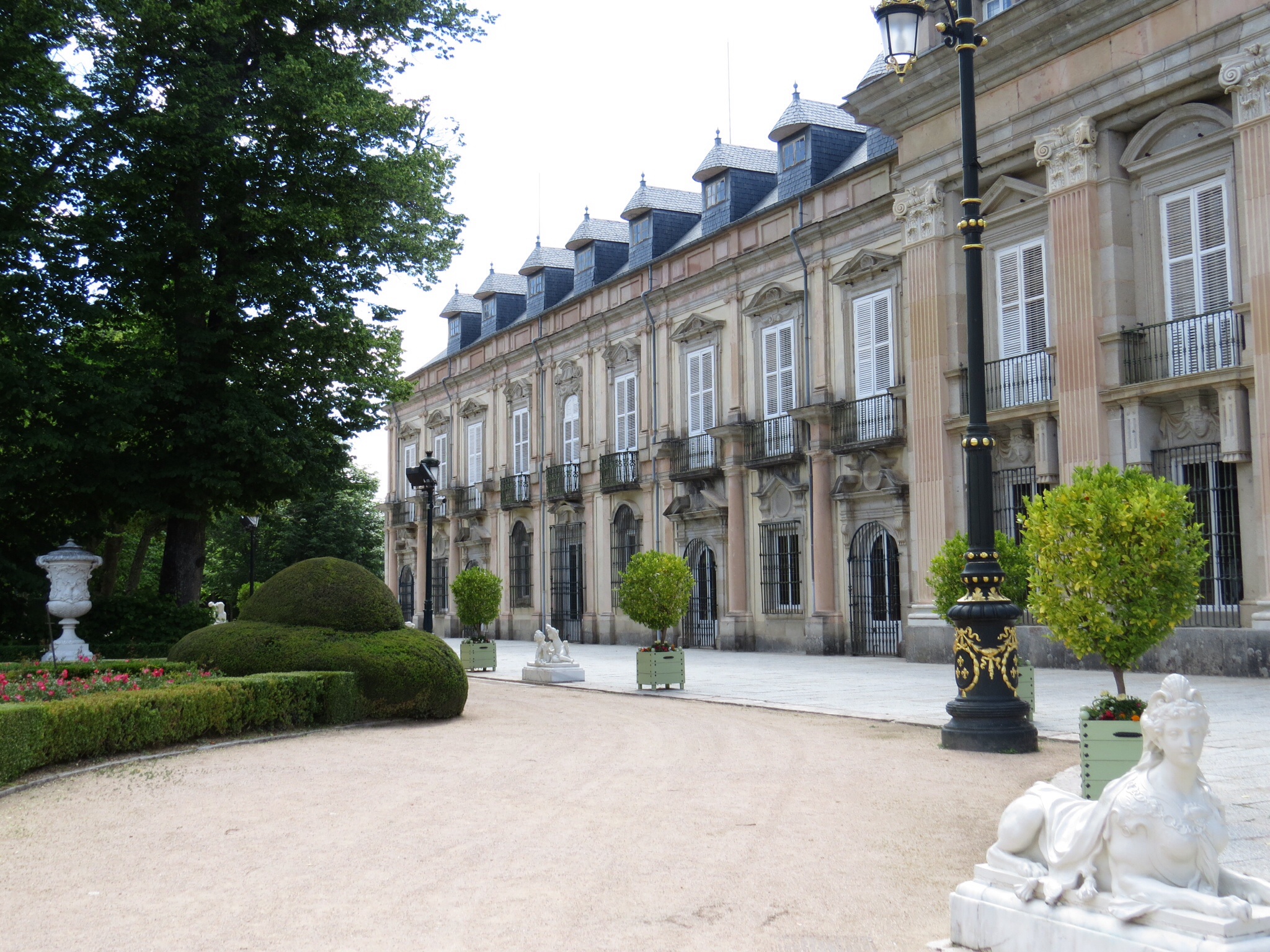
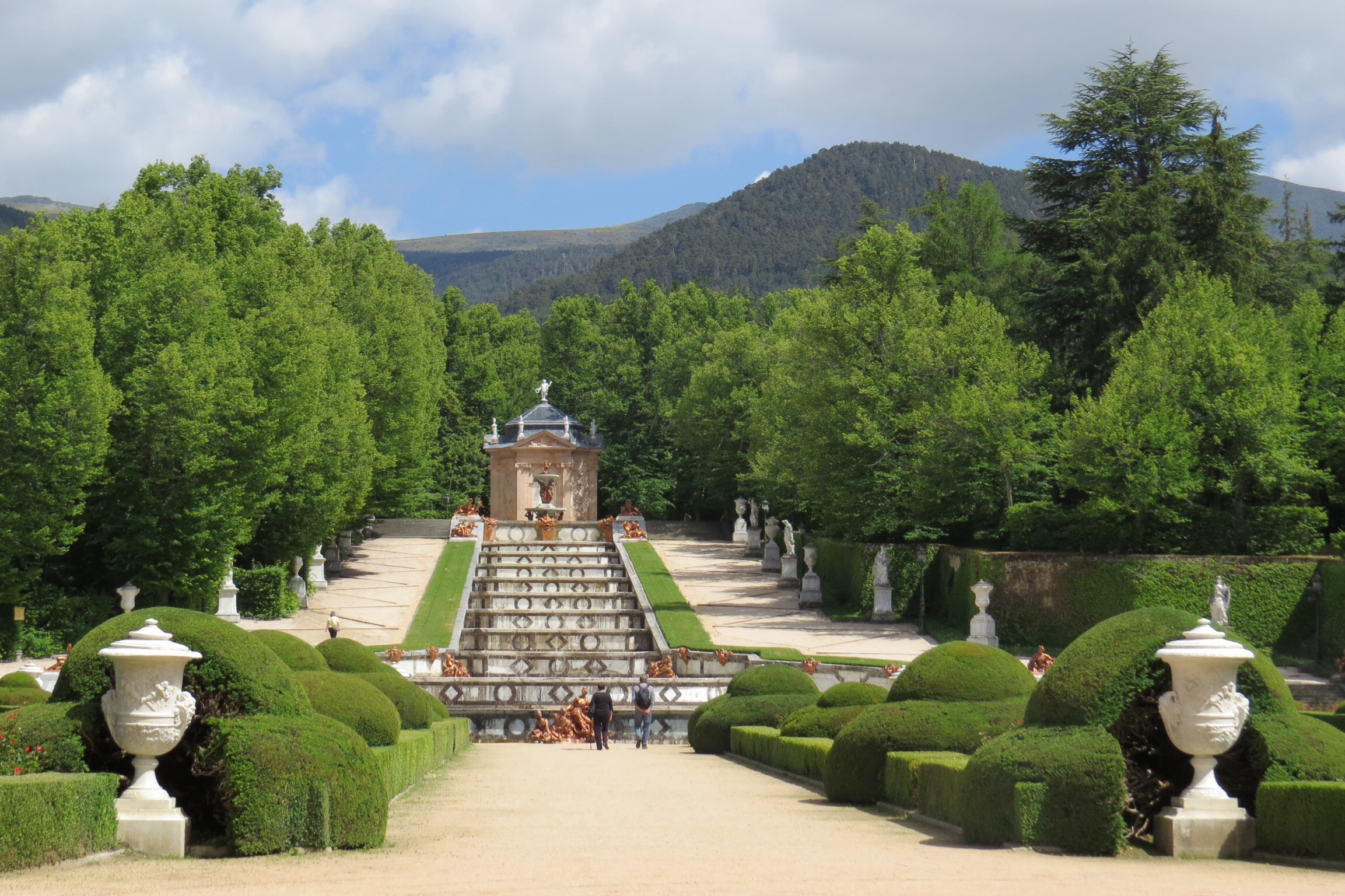
Next, we happily climbed once again into our 12-metre Nap Machine and then jumped ahead about 226 years to the reign of Felipe V, who built the spectacular Baroque palace La Granja in the foothills outside of Segovia. Such is the incestry of European royals, that Felipe was the French grandson of Louis Quatorze and the King of Napoli when he became the King of Spain in 1700. Felipe was nostalgic (who wouldn’t be?) for his childhood home outside Paris; this palace evokes memories of the beautiful Palace Versailles. The gardens were particularly stunning.

image image image

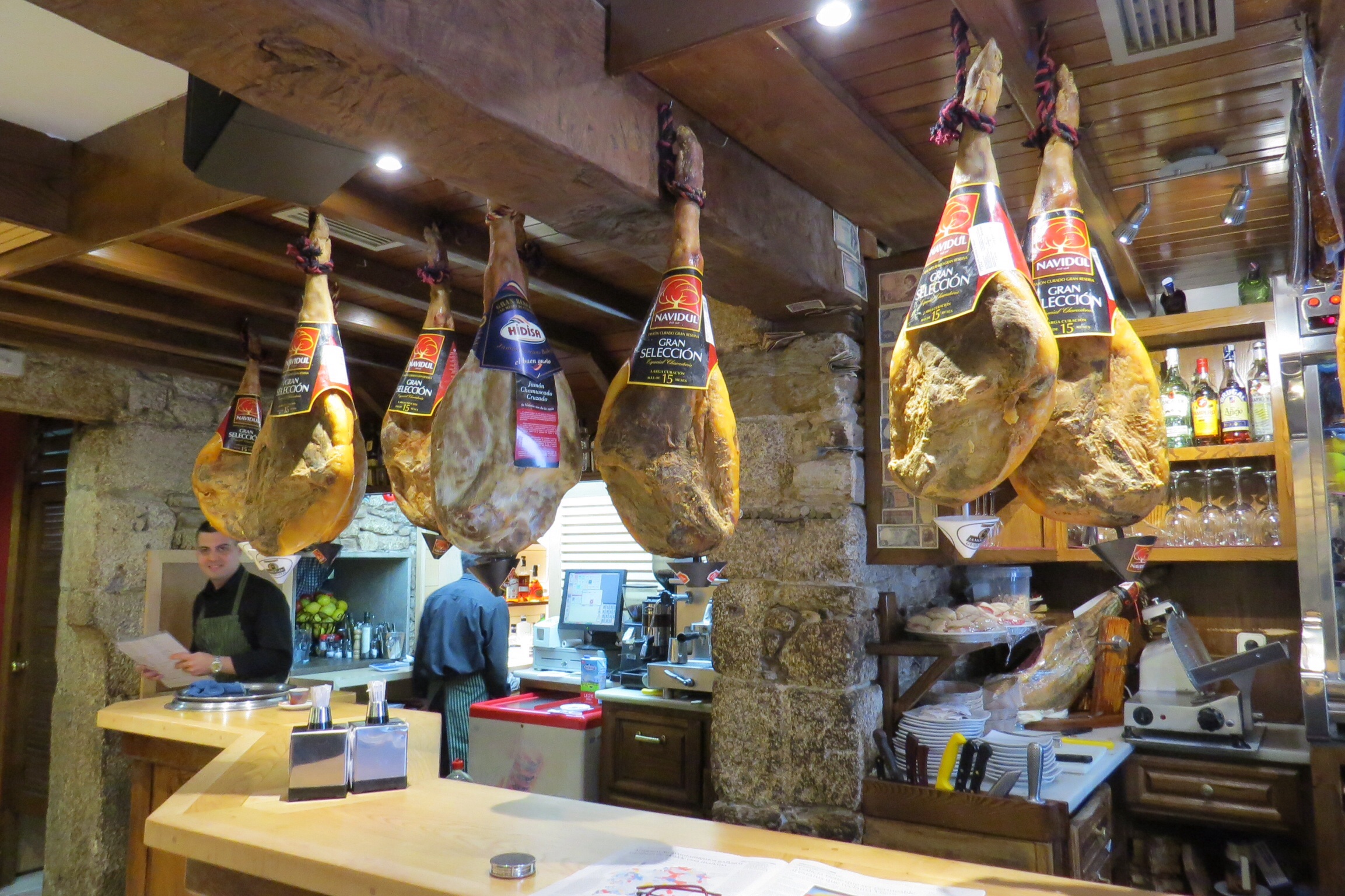
Deposited nicely back in Segovia at 6:00 p.m. there was time to shop, and a lovely little wine, meat and cheese shop made for a wonderful, spontaneous and rather boisterous pot luck buffet back at our hotel lobby to end the day.

Jan
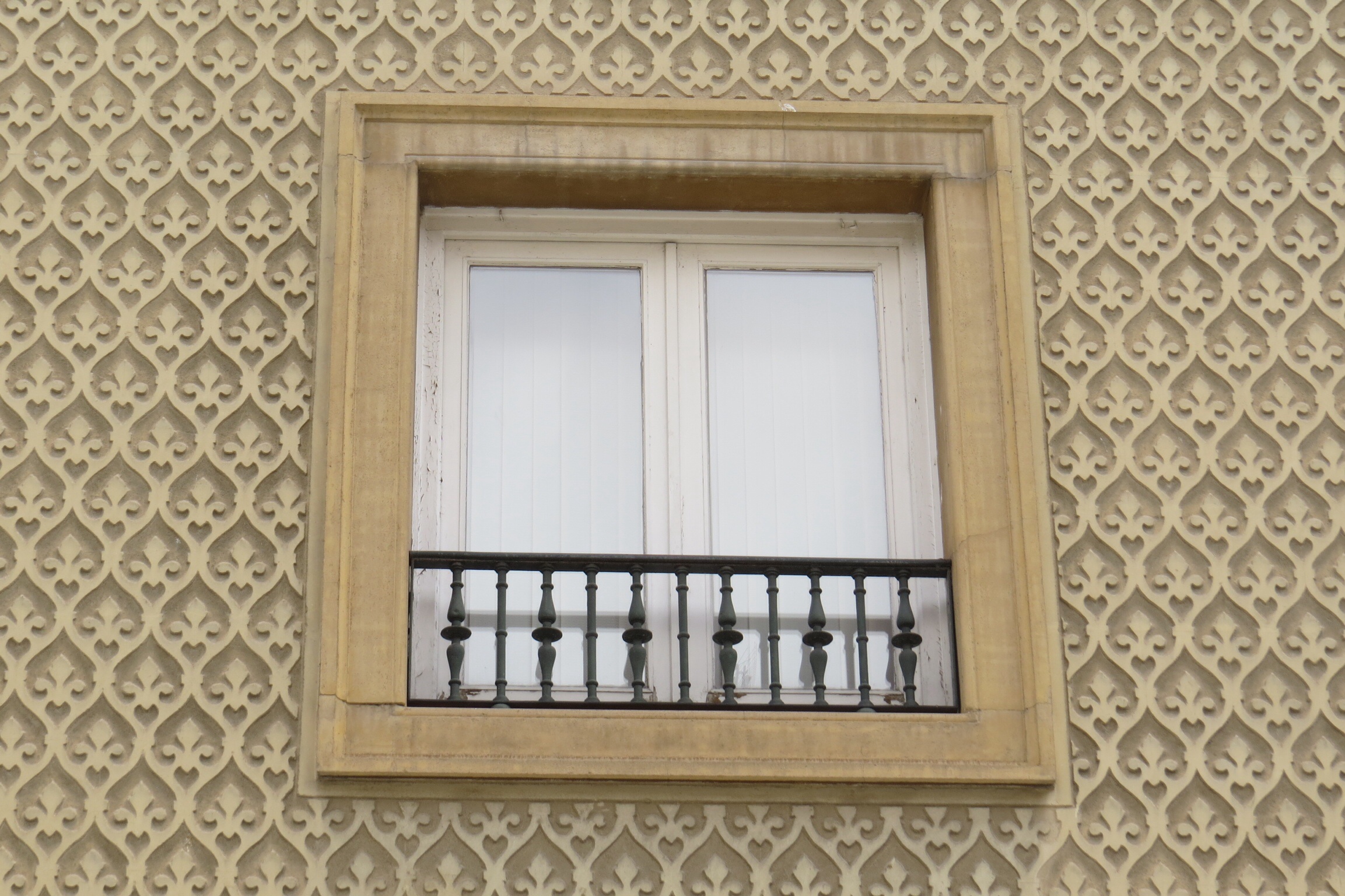
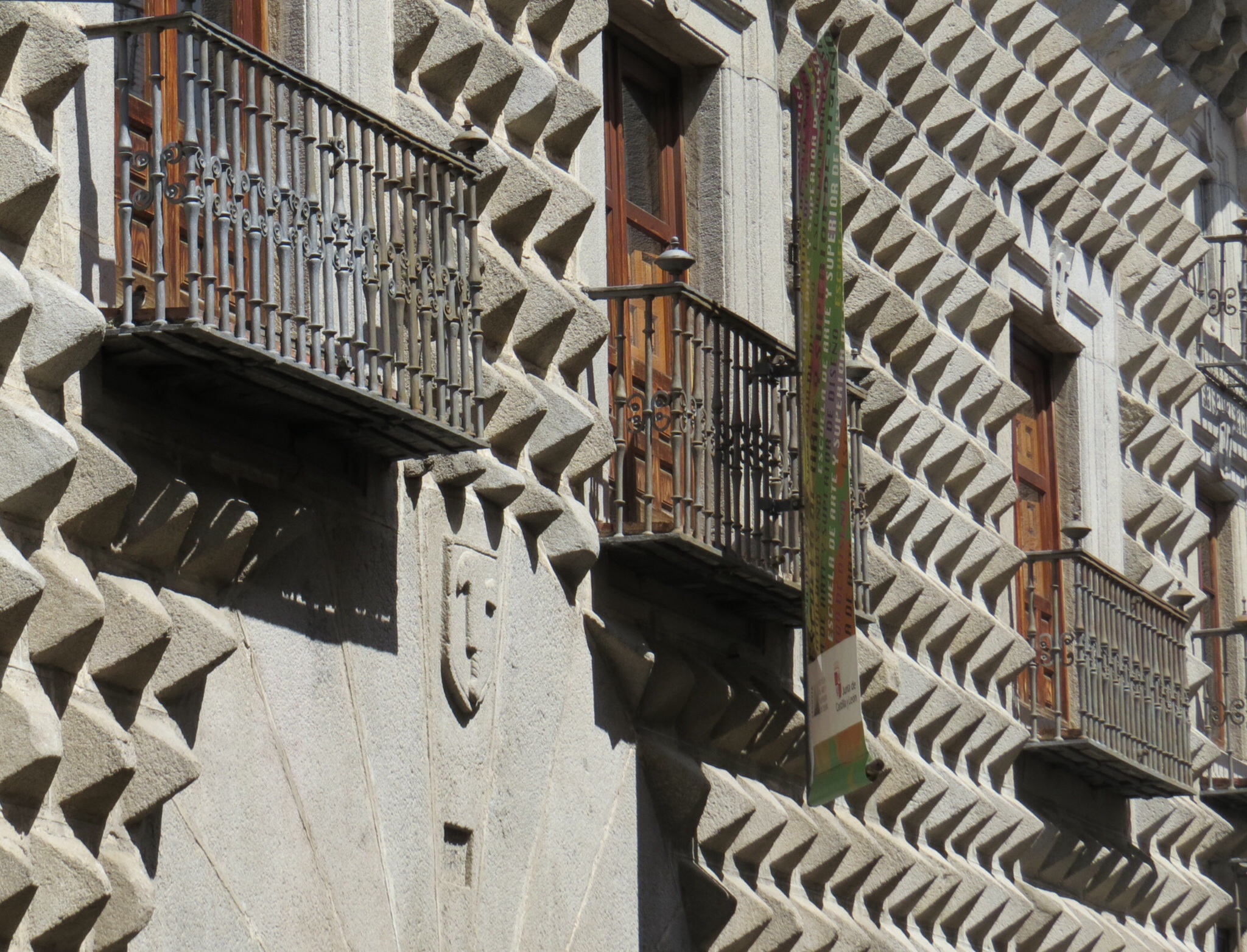
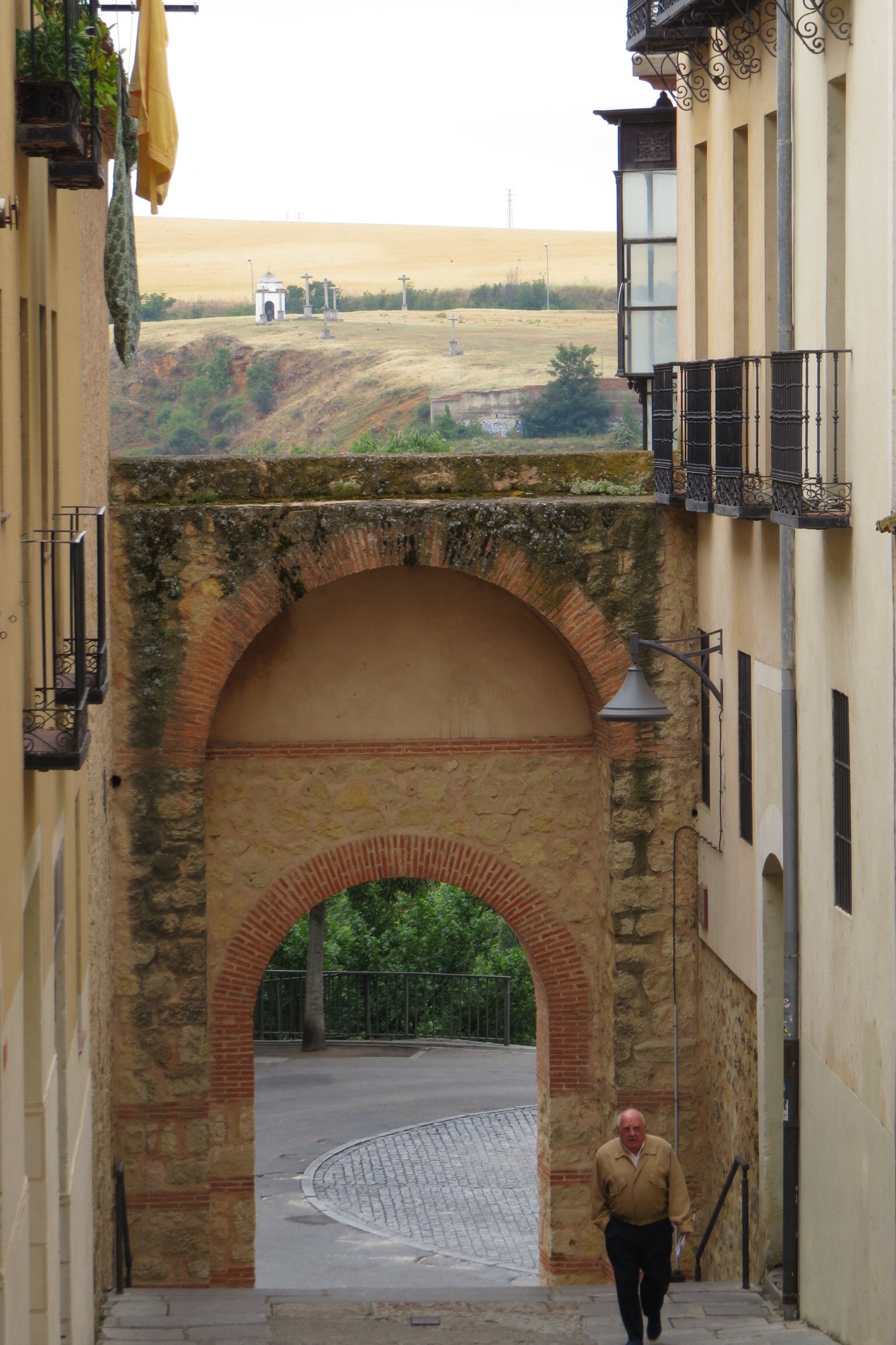
Textures of Segovia
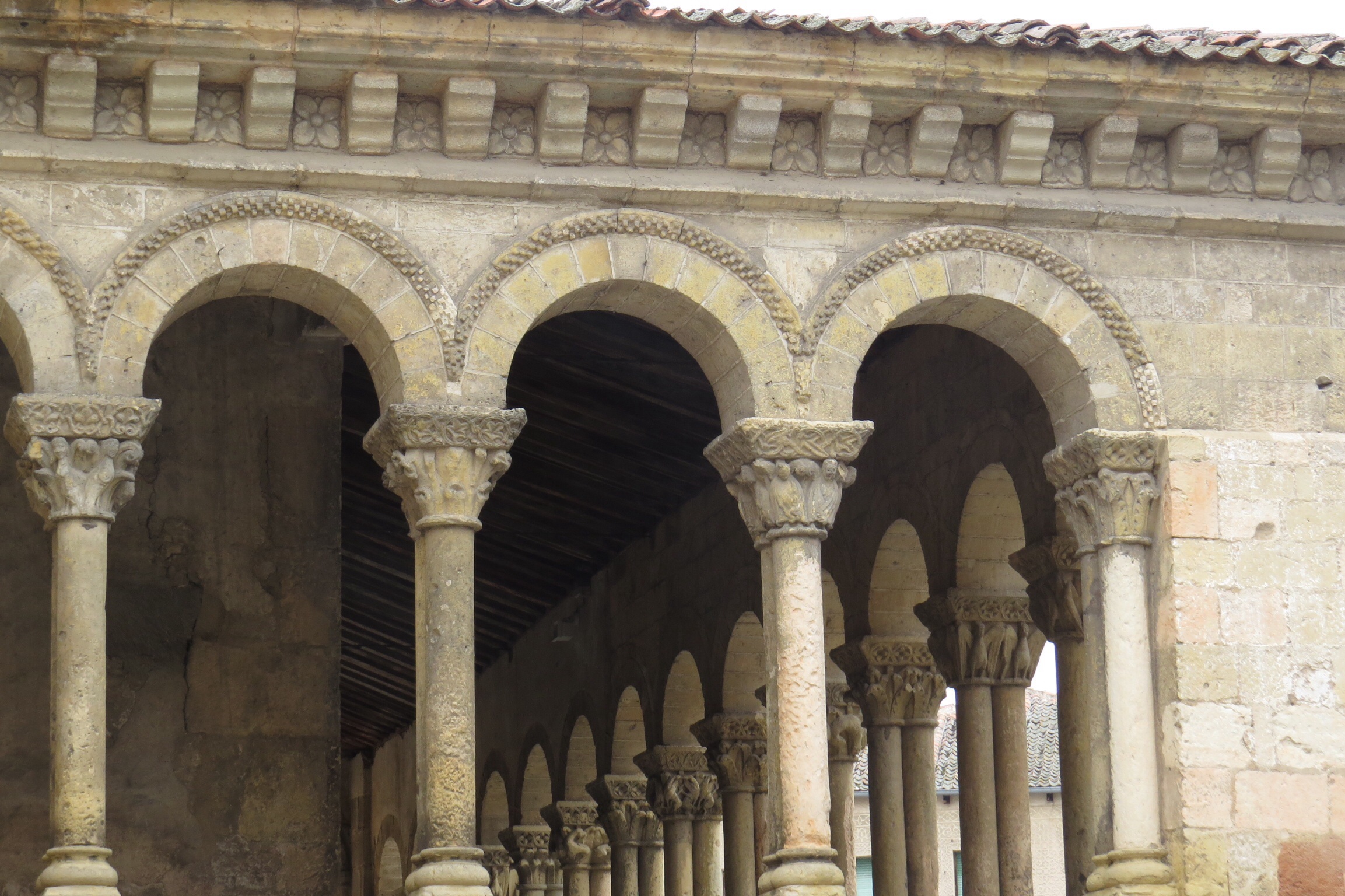
imageimageimageimage
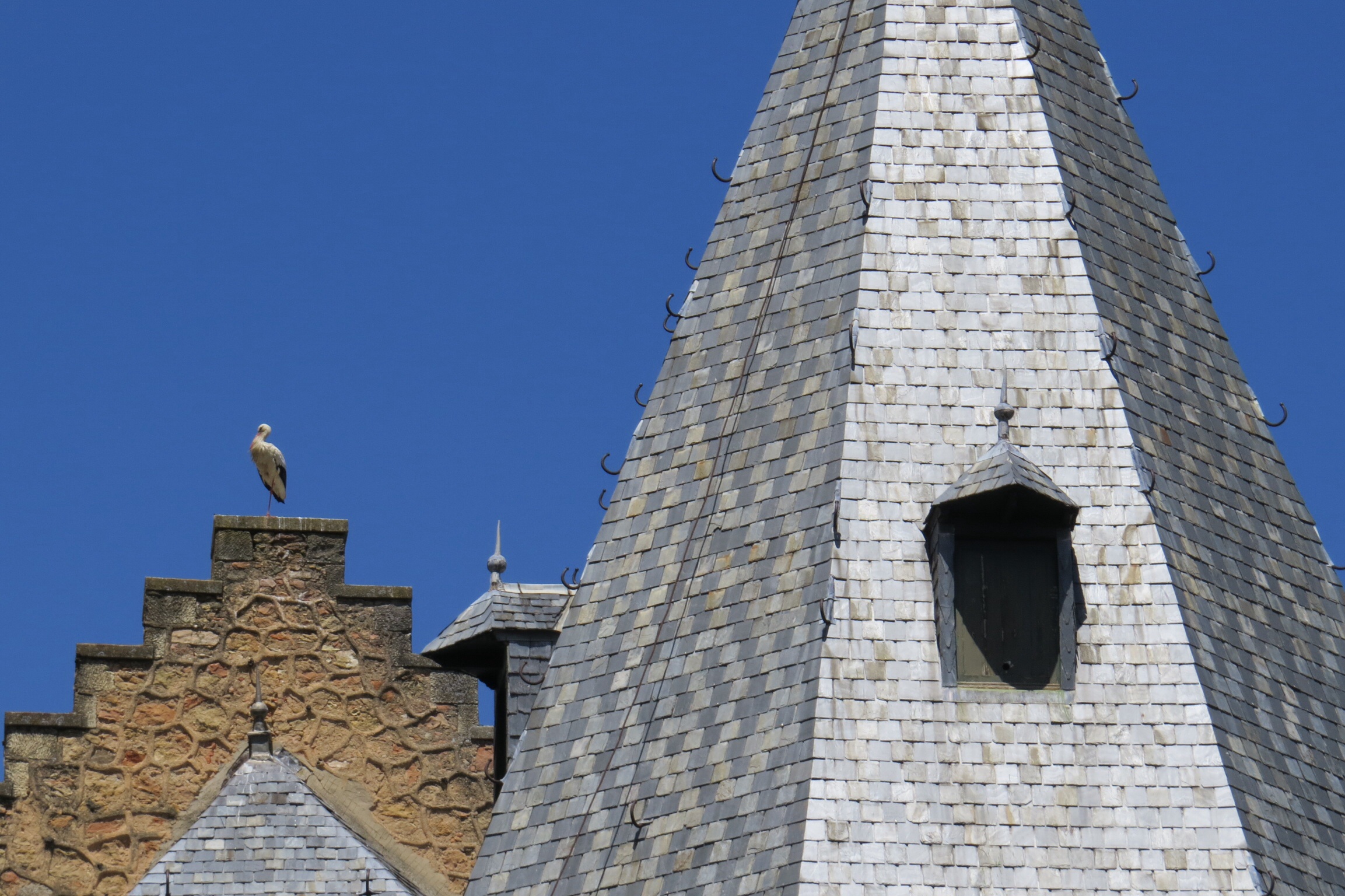
Stork

image image
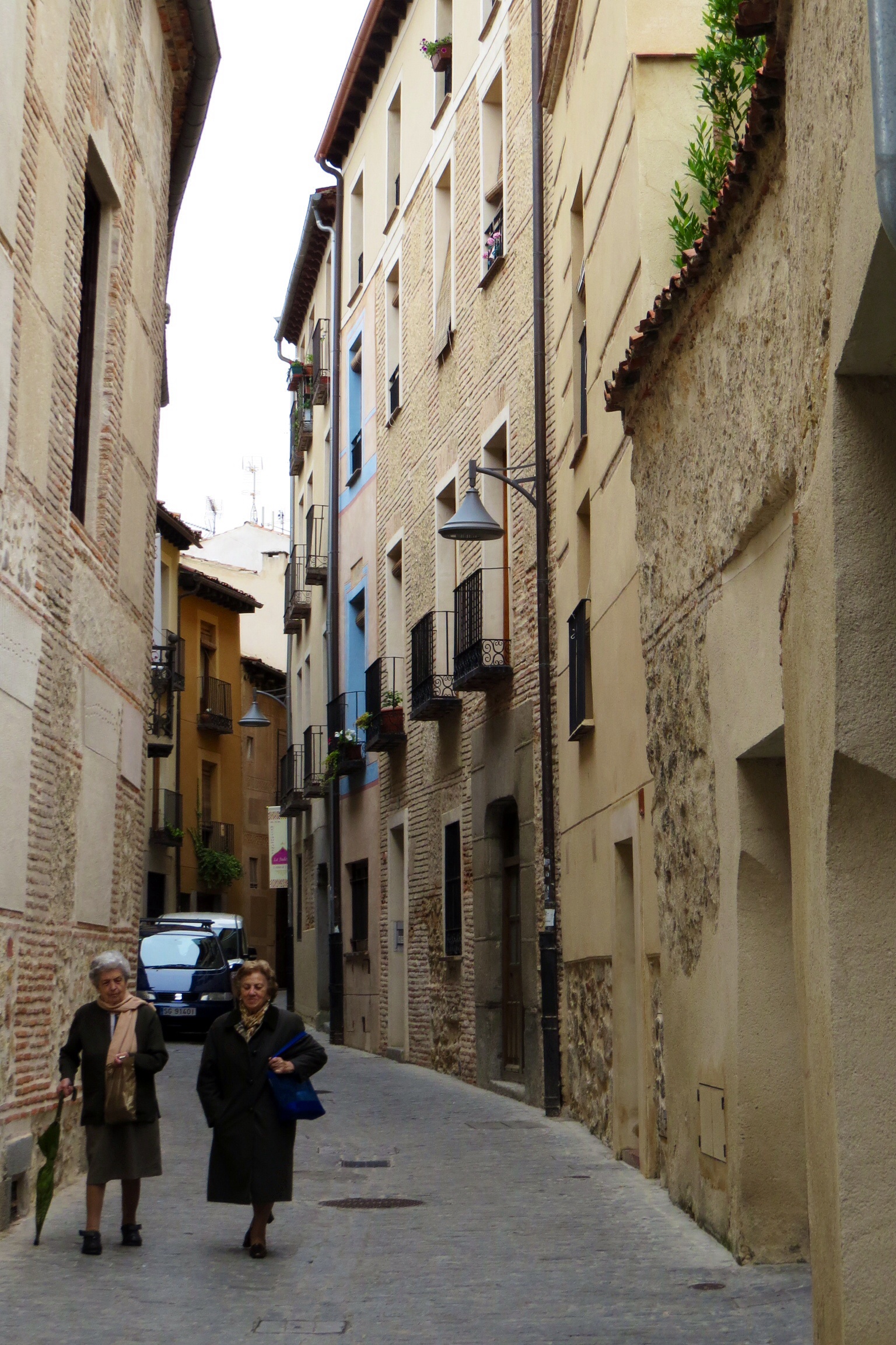
Historic Jewish Quarter

image
Our tour guide, Penelope Cruz

image
San Fructos, 8th century saint, patron saint of Segovia
As the clock strikes 12 Midnite on October 24th, the Paso de la Hoja (Turn of the Page) procession culminates at this statue where he turns a page each year – it is said that when he turns the final page of his Book of Life, the world will end.

Proof!

I don’t take selfies, so thanks, Margaret, for the memories you have passed on!   I really am in Spain!

image
Bliss in San Sebastian
(shopping AND feet in ocean)

image
An aperitif with Chrissie
image
N
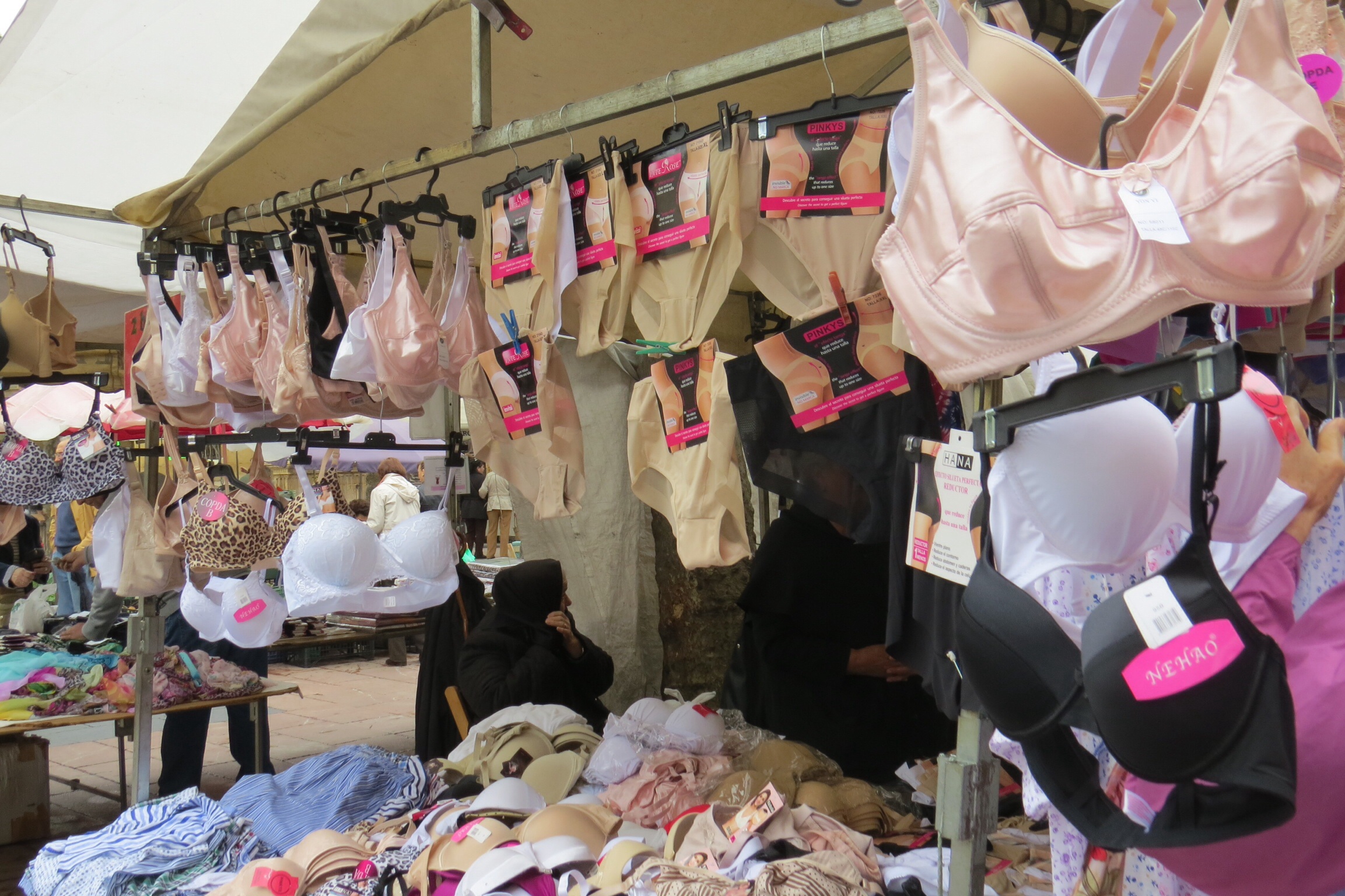
egotiating the language and the cash
at the Oviedo market

Jan
Stones and Saints, bulls, pigs and other creatures

Itinerary:
– travel to Avila
– walking tour of Avila
– travel to Segovia
– Dinner at La Postal

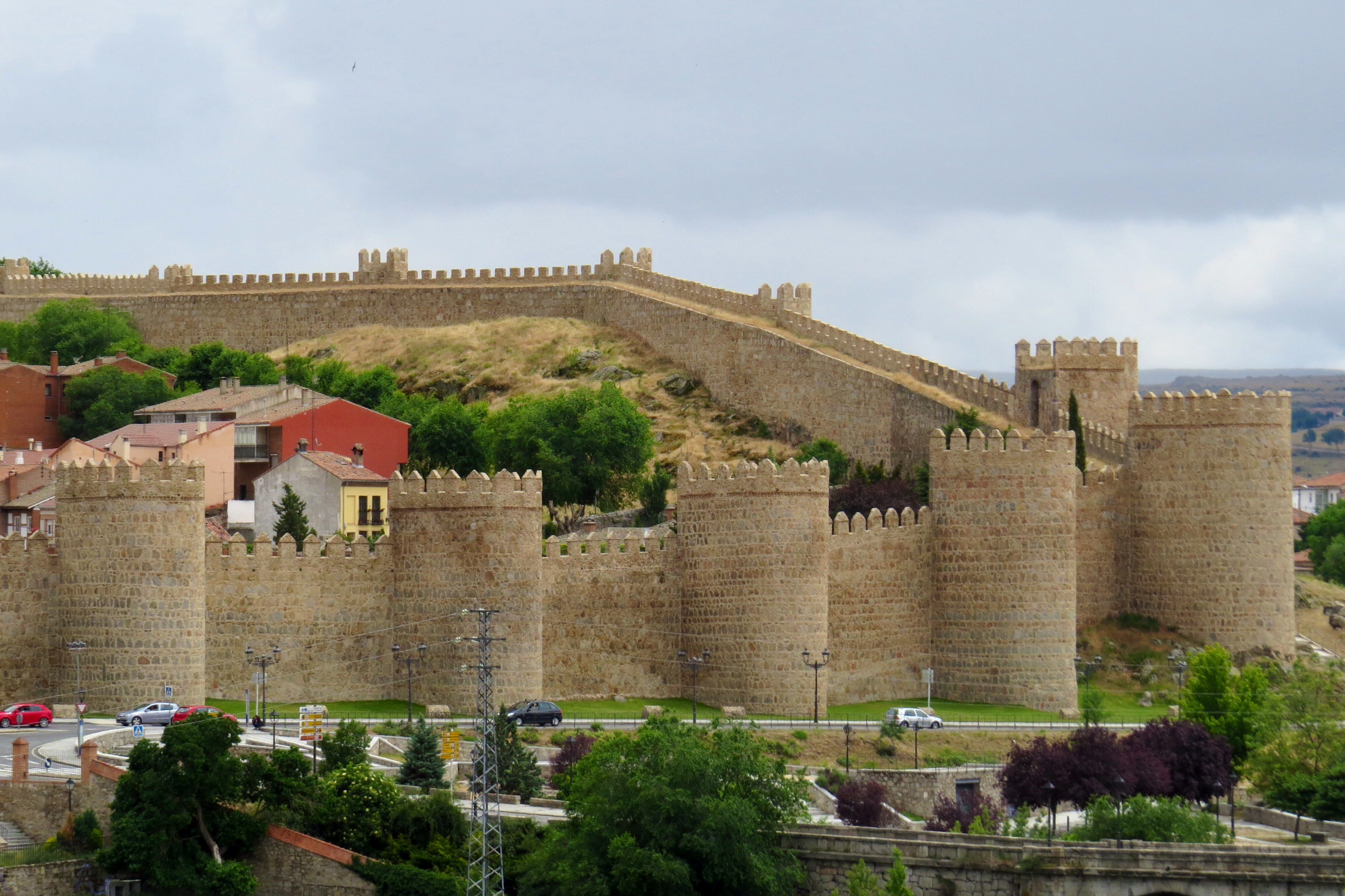
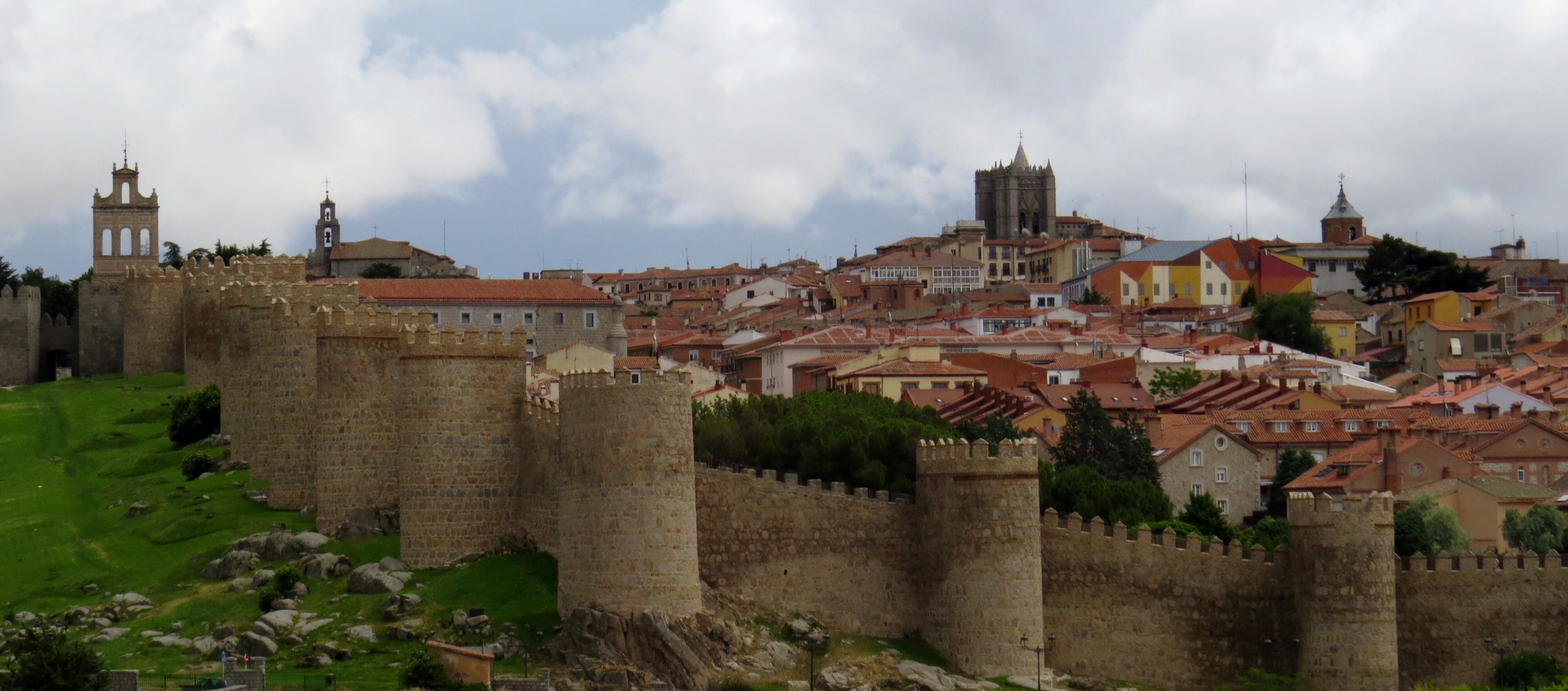
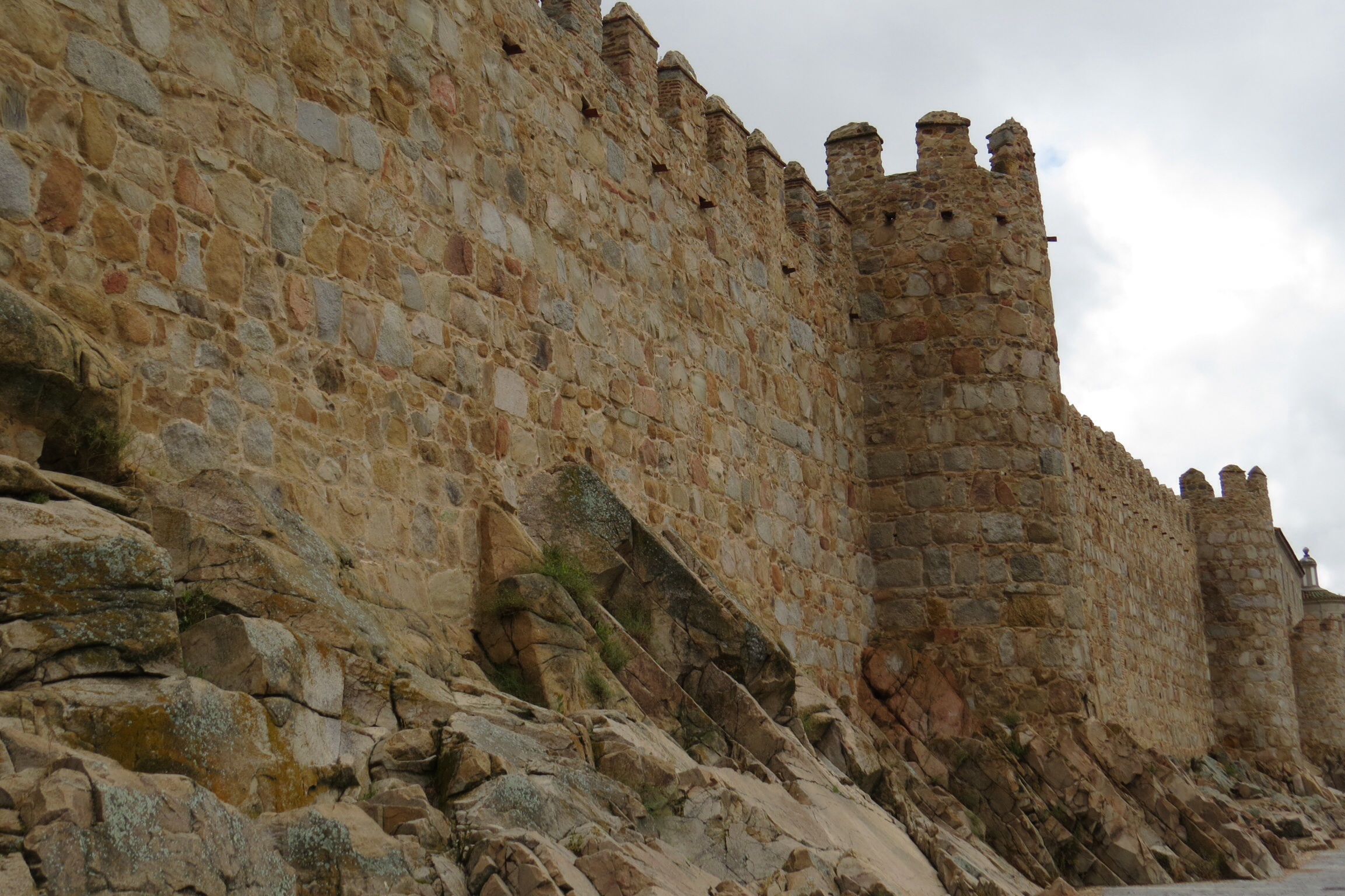
We set off early this morning, but not for long. We were scheduled for a 3-hour stop at Avila.  A UNESCO world heritage site, Avila has one of the few intact surrounding medieval walls. Construction started in 1090 and there are 2,516 metres of walled defence, 3 metres thick. In some areas, the rock for the walls was cut from the stone in situ, forming the base for the impervious structure.

imageimage image

Other important stone can also be found at Avila – the “toros de Guisando” (bulls on hill Guisando) and the “verracos de piedra” (pigs of stone). These ancient sculptures are Celtic (pre-Roman) dating from approximately the 2nd century BCE.   Were these stone creatures the source of inspiration for bullfighting and the bull as the national symbol of Spain?

image image

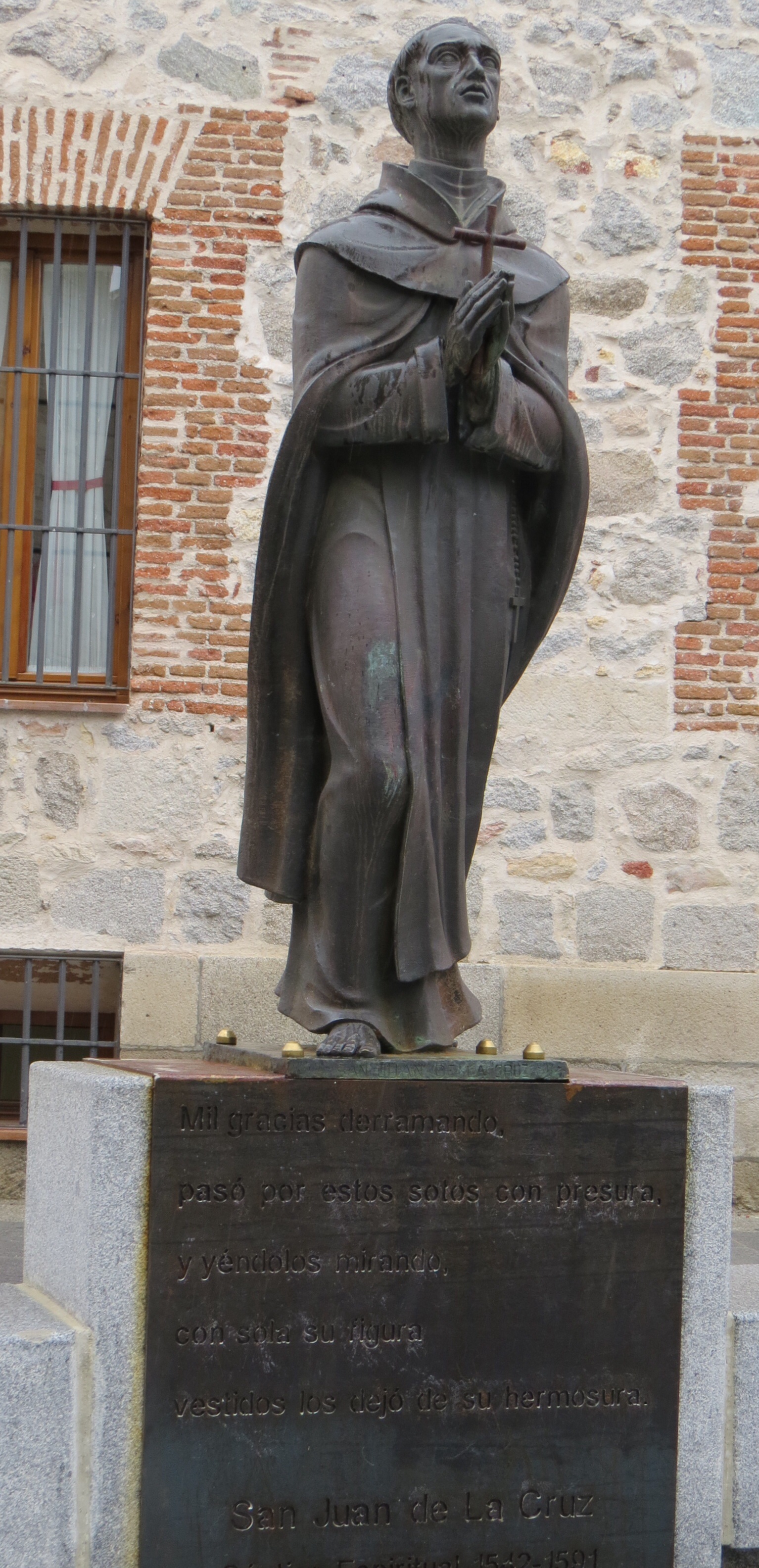
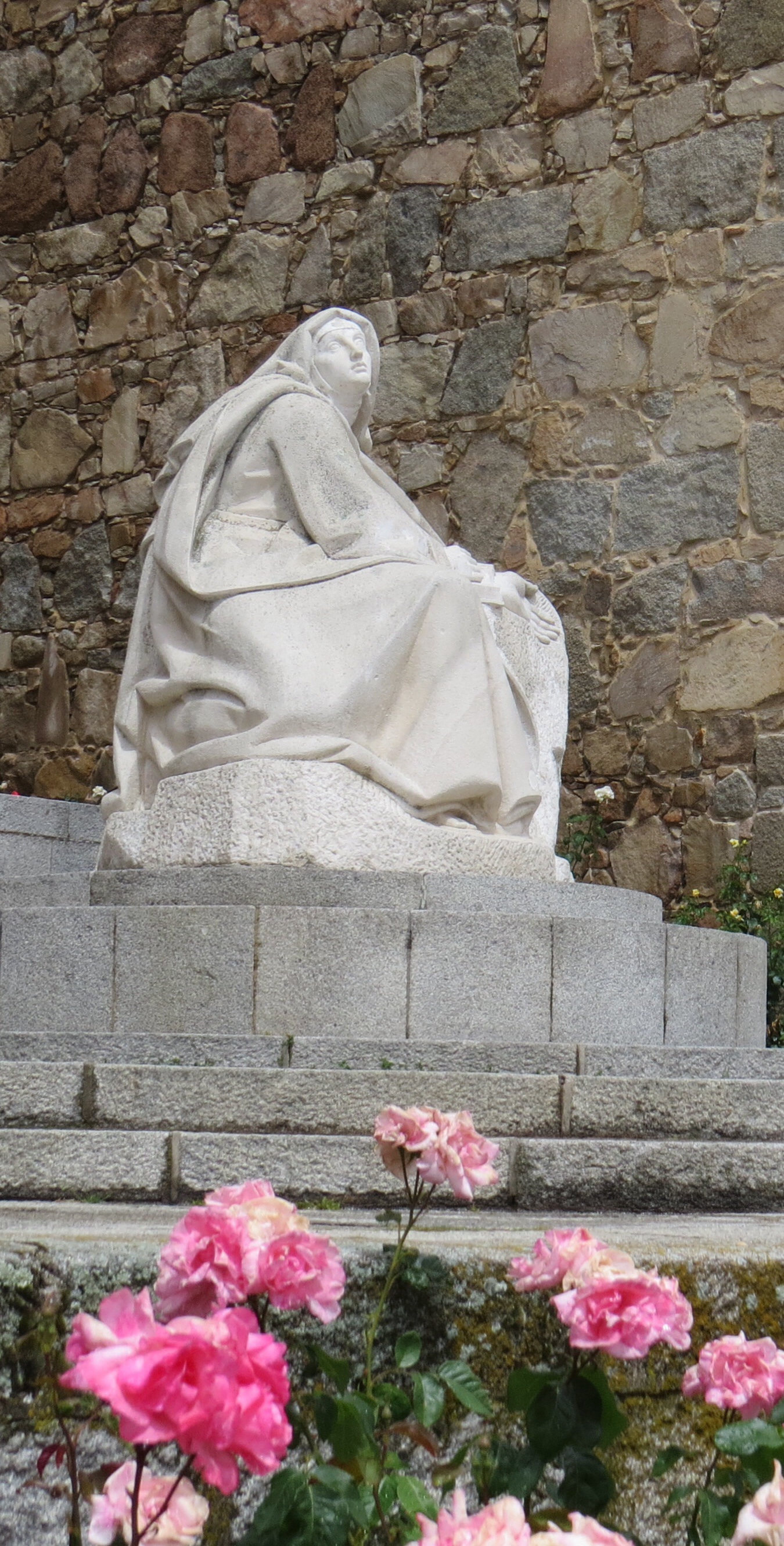
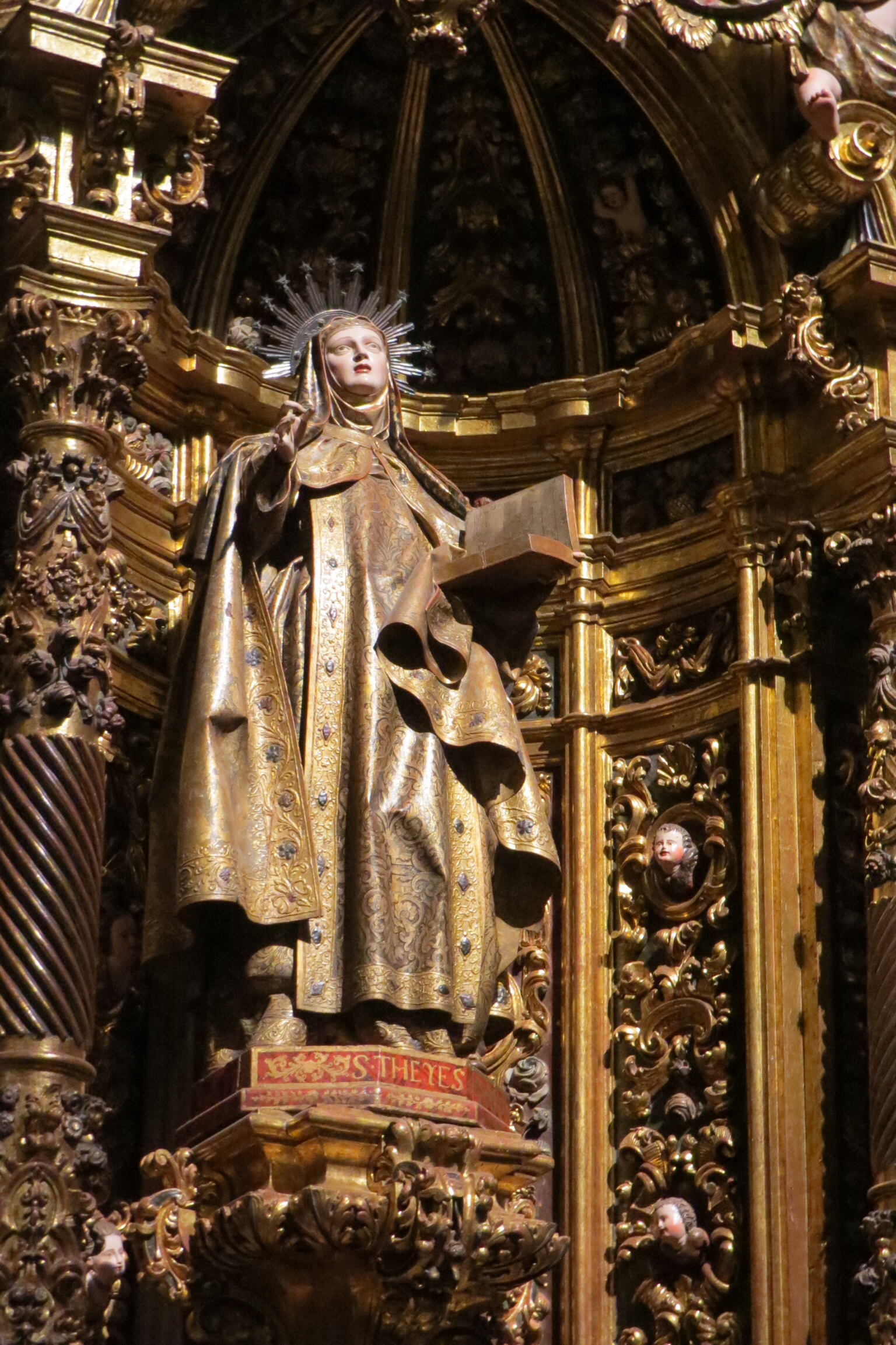
This explains the “Stones” part of the nickname for Aliva, and the Saints are easily answered as well.  Two saints emerged from this town in the 16th century, both Christian mystics and co-founders of the Discalced (“shoeless”) Carmelite order of priests and nuns:  St. John of the Cross and St. Theresa.  Both wrote extensively and their writing has influenced the  Catholic liturgy to this day.

St. John of the Cross wrote Dark Night of the Soul, my favourite poem from a humanities course I took at U. Vic. several years ago.  I am not religious, but the humanity of this poem resonates, and countless versions of the journey from darkness into light can be found in novels written today (a Canadian example is Margaret Laurence’s The Stone Angel).   The eroticism of the poem could be read in one sense as an offensive play in the Counter-Reformation.

“Songs of the soul rejoicing at having achieved the high state of perfection, the Union with God, by way of spiritual negation.

“Once in the dark of night,
Inflamed with love and wanting, I arose
(O coming of delight!)
And went, as no one knows,
When all my house lay long in deep repose.

“I stayed there to forget.
There on my lover, face to face, I lay.
All ended, and I let
My cares all fall away
Forgotten in the lilies on that day.”

—St. John of the Cross,
translated by A.Z. Foreman

The full text is on a separate page at the top of the blog.

Loreena McKennitt brought the poem into the popular culture:

St. Theresa wrote the “Camino de Perfeccion” (Way to Perfection) to teach her nuns how to progress through prayer and Christian meditation. It has sage advice for life, as well:

“Let nothing disturb you.
Let nothing make you afraid.
All things are passing.
God alone never changes.
Patience gains all things.
If you have God you will want for nothing.
God alone suffices.”

image image
St. John                            St. Theresa

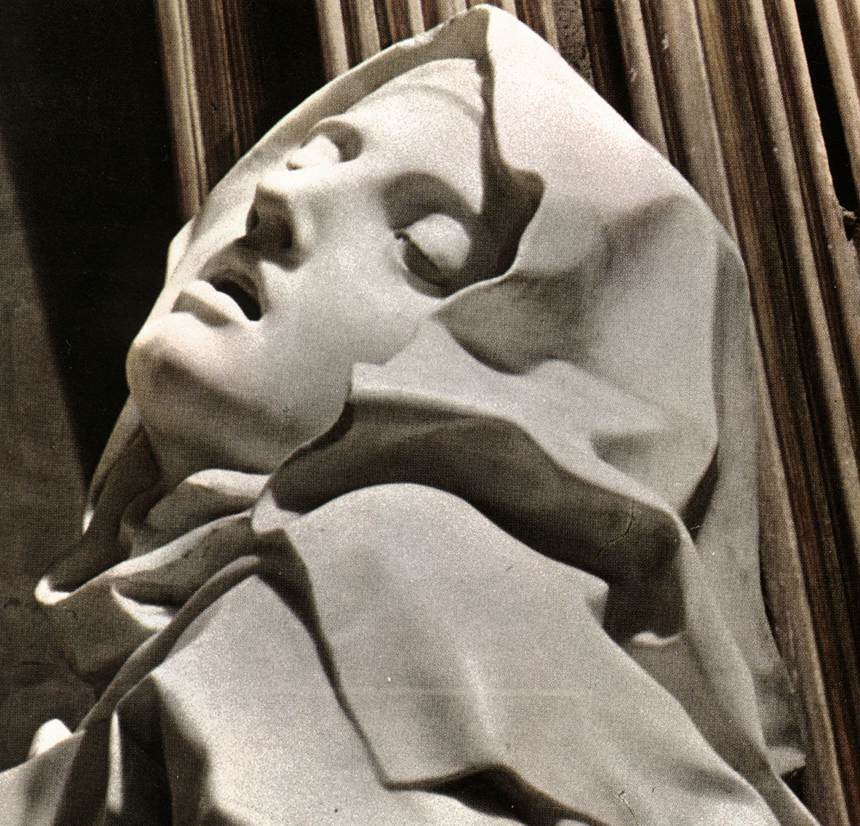
Another beautiful rendition of Theresa is found in Rome in the Cornaro Chapel in the Church of Santa Maria della Vittorio, Rome: Bernini’s “Ecstasy of St. Theresa.”

When Theresa had the first of many visions starting at age 40, she described in her autobiography the union of body and soul: “A rapture came over me, so suddenly that it almost lifted me out of myself. There was no doubt about it because it was very obvious. That was the first time that the Lord gave me the favour of a rapture. I heard these words, ‘Now I want you to speak not with men but with angels’.”

The passionate art historian, Simon Schama wrote in The Guardian of Bernini’s rendering,

“It was said that, every so often over his long career, Bernini could be found at the Cornaro Chapel, kneeling in prayer before what he called the ‘least bad thing I have ever done.’ …[When confronted with the sculpture] we stare and stare … as we stare at no other sculpture ever made. Perhaps the force of the spell comes from the realisation that Bernini has used the power of art to achieve the most difficult thing in the world: the visualisation of bliss.”

imageimage

The full text of Schama’s study on the sculpture and its creator is here:

http://www.theguardian.com/artanddesign/2006/sep/16/art

As you may have gathered by now, relics are an important feature of Catholic belief, used as “proof” that the mythology is true.  St. Theresa’s 16th century finger was on display here; fortunately for you, photographs were not allowed.

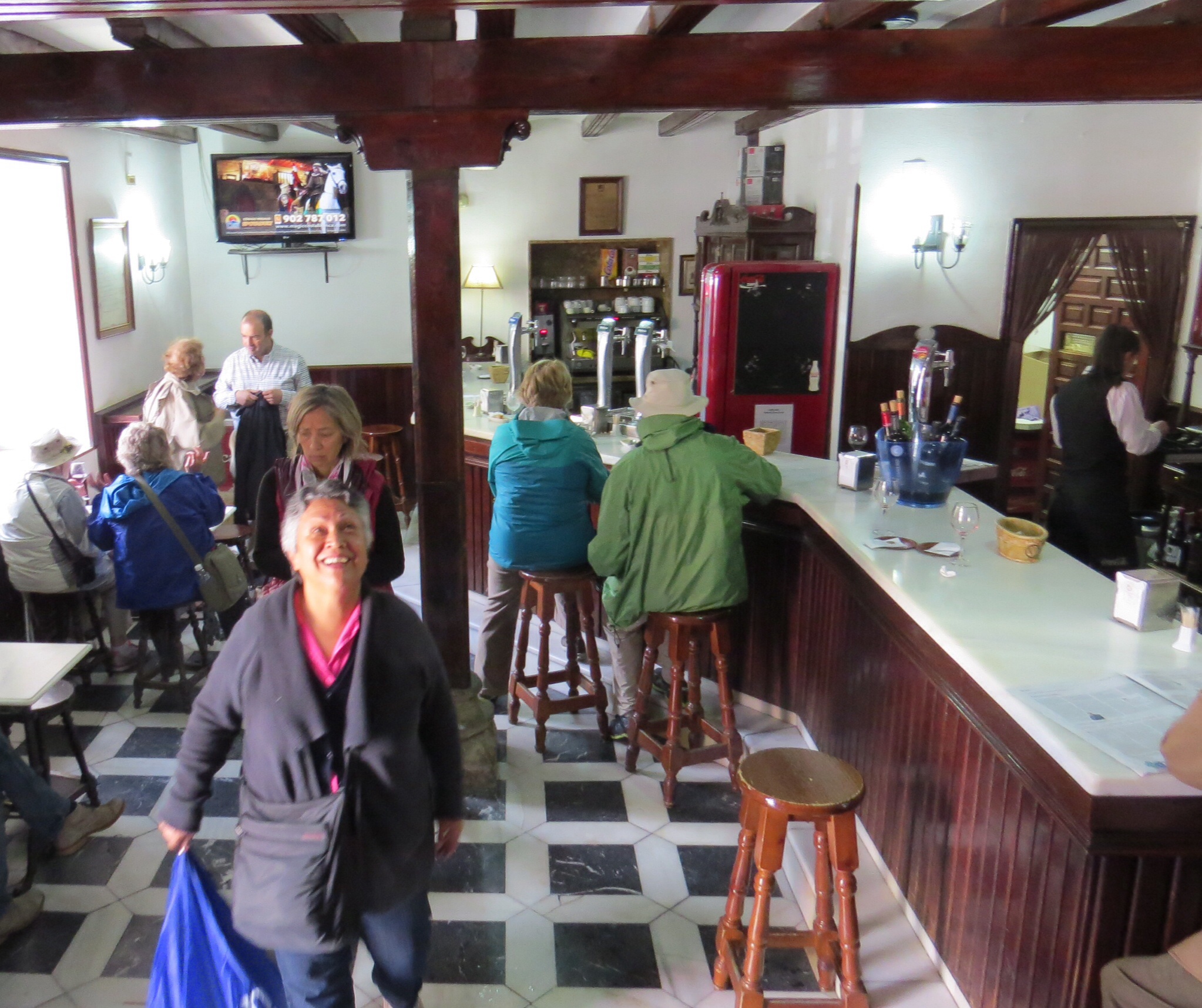
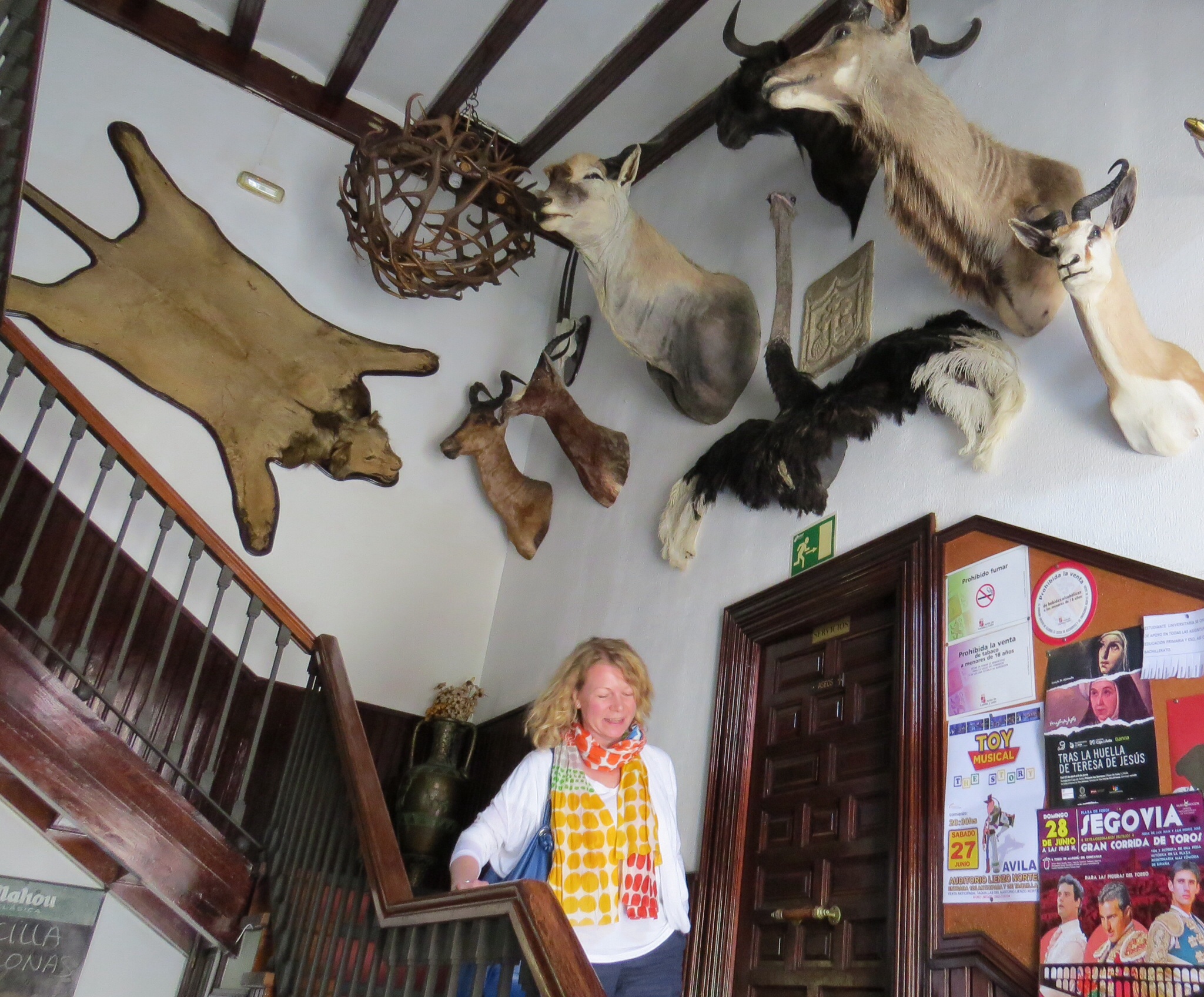
At one point during our walking tour, things took a decidedly comical twist.   Curiously, our guide said, not once, but both before the late-morning coffee break and before lunch,  “don’t worry, we will stop for a glass of wine soon.”  As it turns out, our Spanish guides had forwarded on word that “this group really likes its wine.”   Well!  The guide then ensured we stop for a glass of wine, and no-one turned it down; it came with a wonderful free tapa composed of beans and roast suckling pig, in this somewhat surprising bar:

imageimage

(On the wall opposite Chrissie was also a ginormous stuffed giraffe. I wondered if Ernest Hemingway had a hand in this operation?)

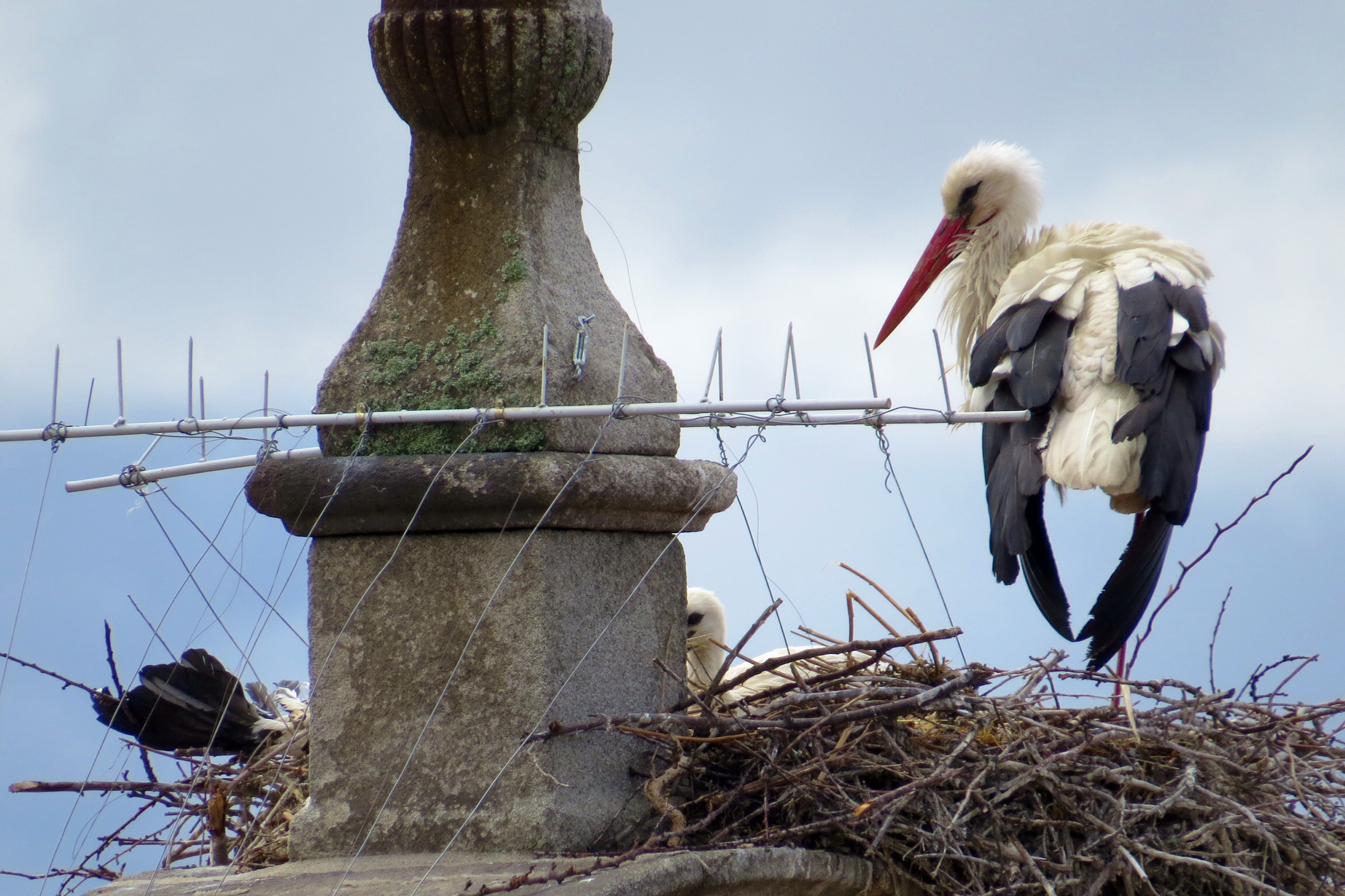
Another adaptive stork family on the horizon:

image

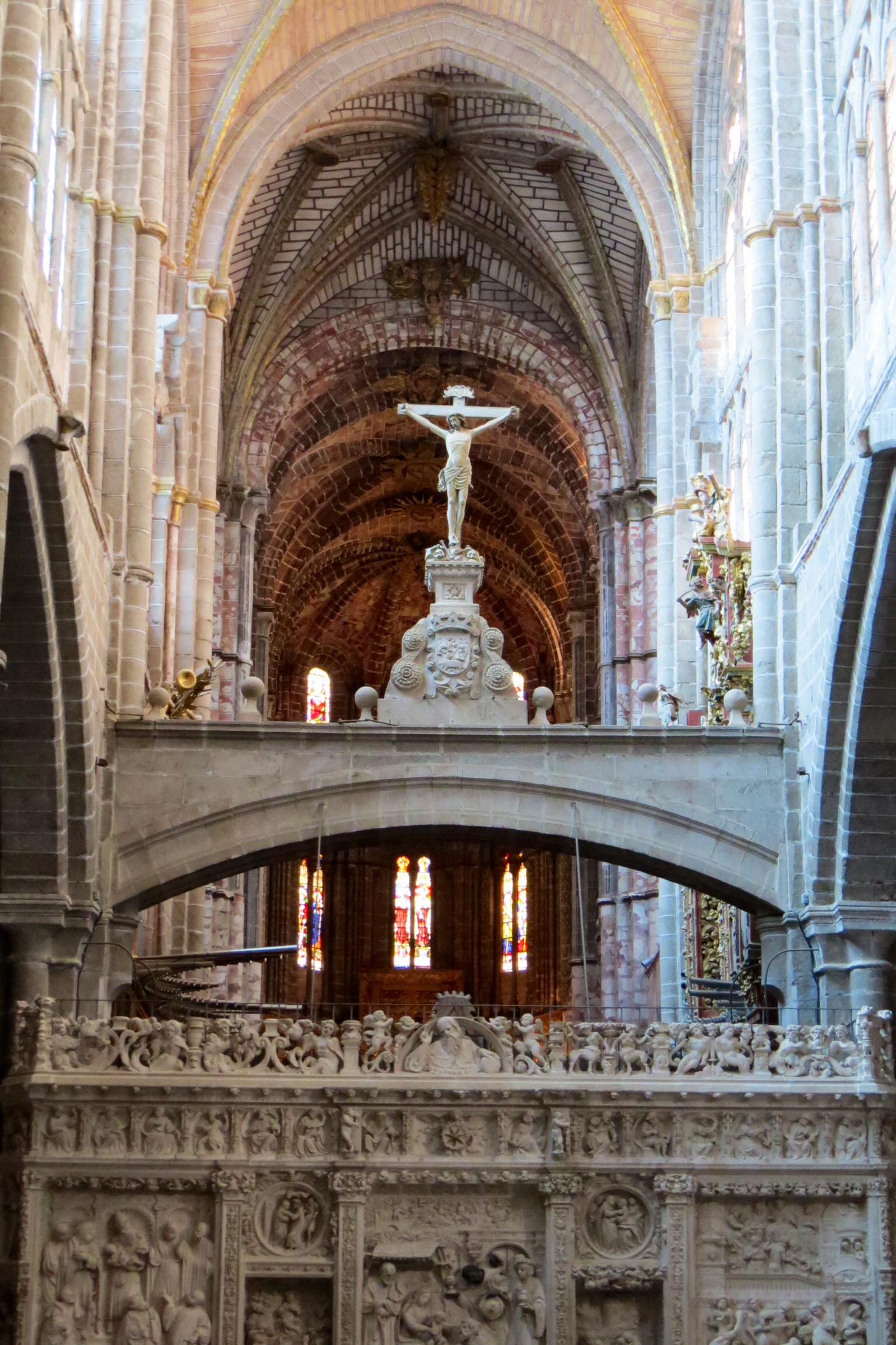
Our tour included a visit to the Avila Cathedral, one of the first Gothic Cathedrals built in Spain.  Constructed in the 12th century, it had also been used as a fortress and a palace.

imageimageimage

Rosa introduced us to Avila’s famous confection, the Yemas de San Teresa, made by nuns from egg yolks lightly cooked by the heat from a sugary syrup, and tossed with more sugar.  Yum!

image

From Avila, we drove on to Segovia, got settled into our rooms and headed by bus into the Spanish countryside for what was unanimously our favourite meal in Spain at the beautiful restaurant, La Postal (The Postcard).  Gorgeously set overlooking the historical town of Segovia, the restaurant, normally dark on Mondays, opened especially for us.  One of the chefs and his wife, friends of Rosa’s, spoke to us about the food and joined us for a glass of wine.

image
(downloaded from net)

The meal began with two velvetty soups:  gazpacho and avocado, followed by a marvellous selection of house-dried meats, and the piece de resistance, Roast Suckling Pig.  In case it wasn’t immediately obvious from your years of hearing the expression, the Suckling part may be important.  The piglets came to table in a variety of parts, here a tiny hoof, there a little ear, and in my case, delicious, meaty, succulent ribs.

On the bus back to town, the group began to explore in a dissective way the various parts of the pig each of us had eaten until I had to implore, “please do not attempt to reconstruct the baby piglets!”  It seems more palatable at the end of the day to think of it simply as pork, but I like that the Spanish acknowledge and respect their food from its source. I couldn’t help but think back to our Celtic stone pig at Avila and wonder at the origins and tradition of the pig in Spain.

Rosa not only picked the location but arranged the menu, and it was a magical evening and another day made so special by Rosa.

Jan
Contemplation

Itinerary:
– Travel to Salamanca
– tour of Salamanca, town of Spain’s oldest university
– walking tour of the old town including the Cathedral of Salamanca

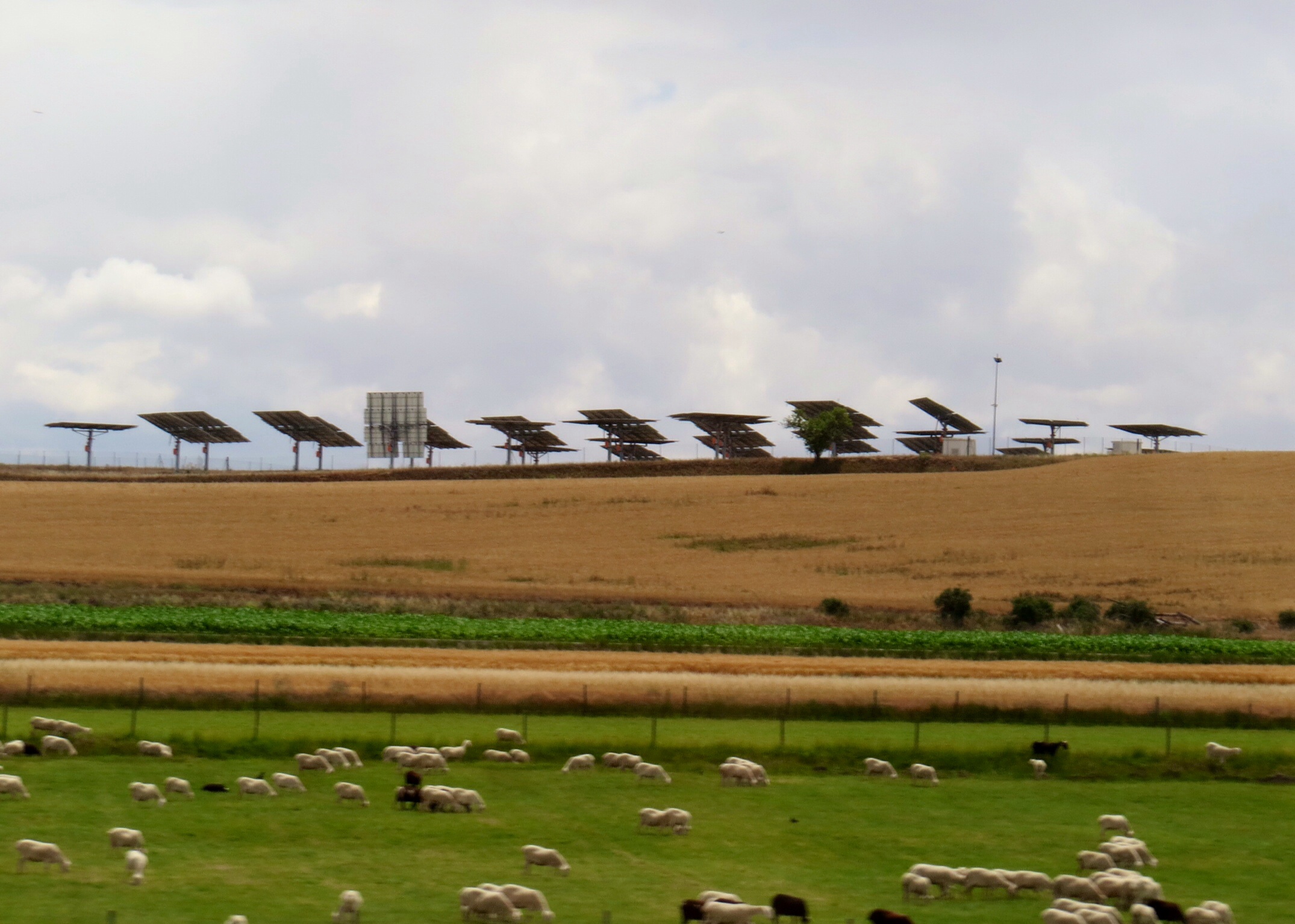
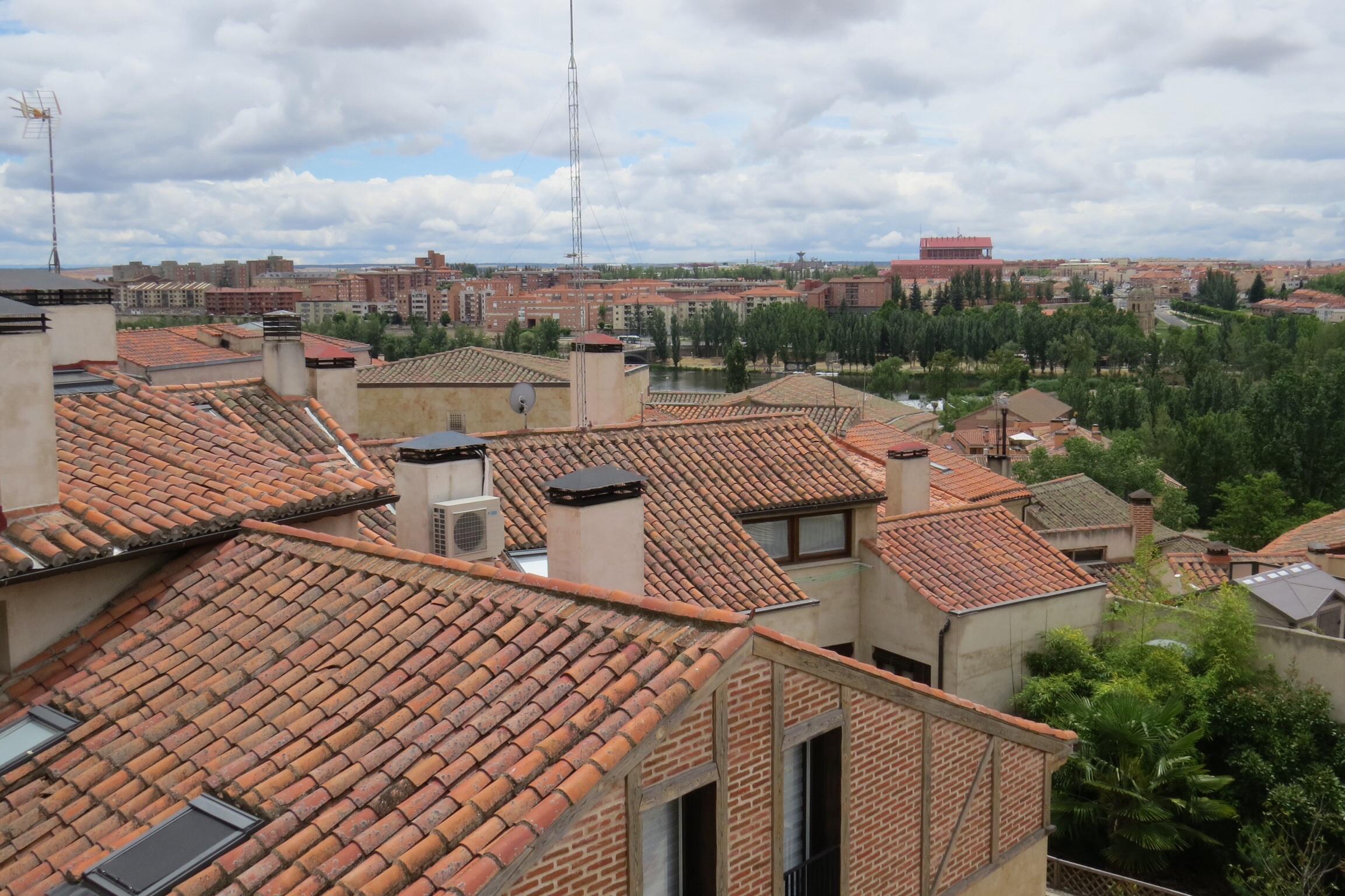
A pretty drive through the countryside causes me to reflect on the current economic crisis in Spain. The highways are tolled, boulevard-divided, perfect runways lined with windmills and solar panels in a country looking for alternatives to traditional sources of energy. The cities are sparkling clean and the art galleries magnificent. I am not sure about the country’s social programs but I think they are slightly better than ours.  The long-term conservative government was routed just days before we arrived, and it will be interesting to see whether spending will increase (not that I am against social spending) even as Spain, and Greece, seem on the brink of financial collapse.
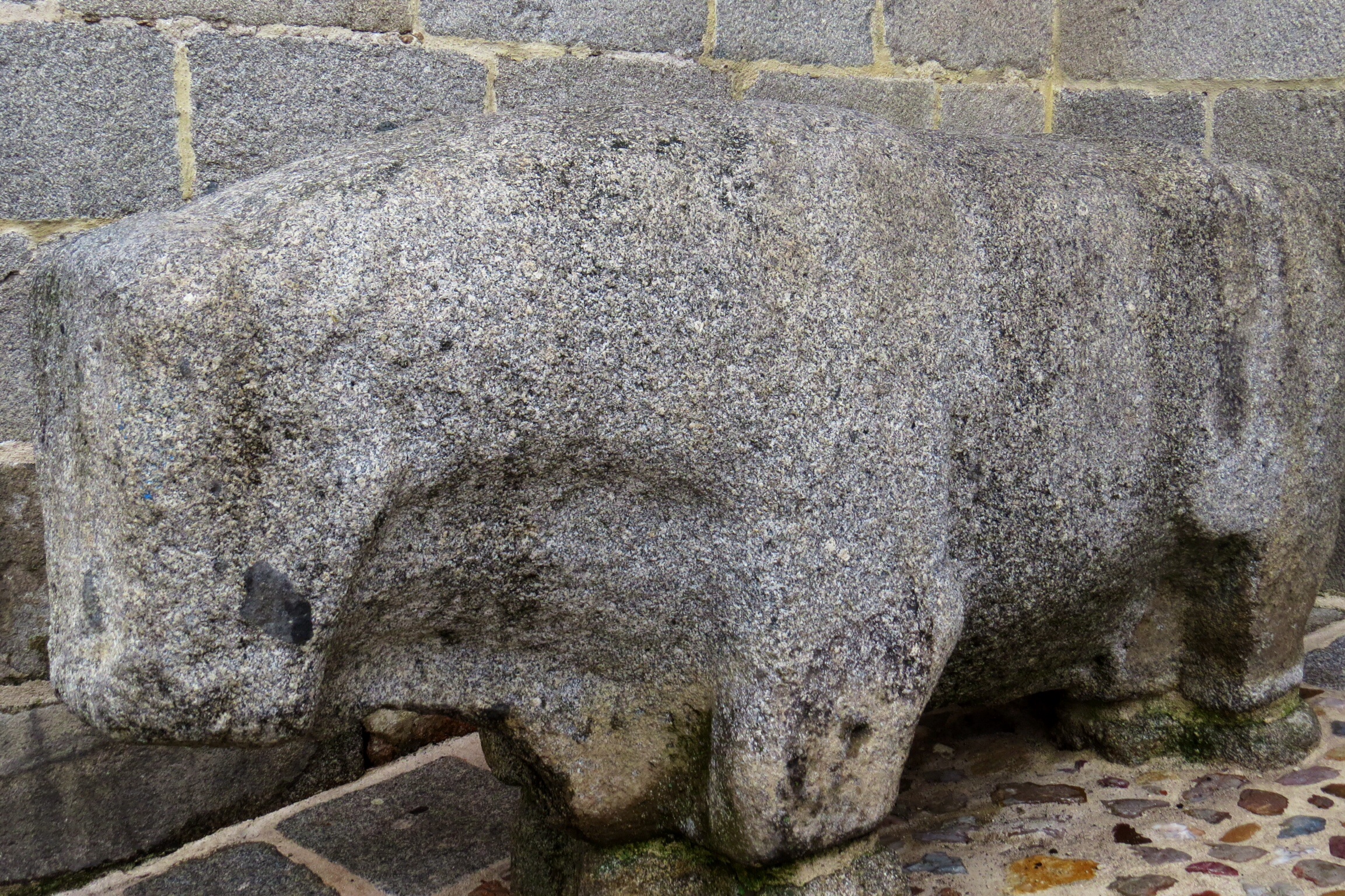
image image image image

Salamanca is a university town. Founded in 1134, the University is the best in Spain and everyone from Cervantes to St. John of the Cross to Franco have attended here. The river is dotted with sculls and the town is a warm golden colour, sandstone enriched with age, strikingly similar to Cambridge and Oxford.

imageimage

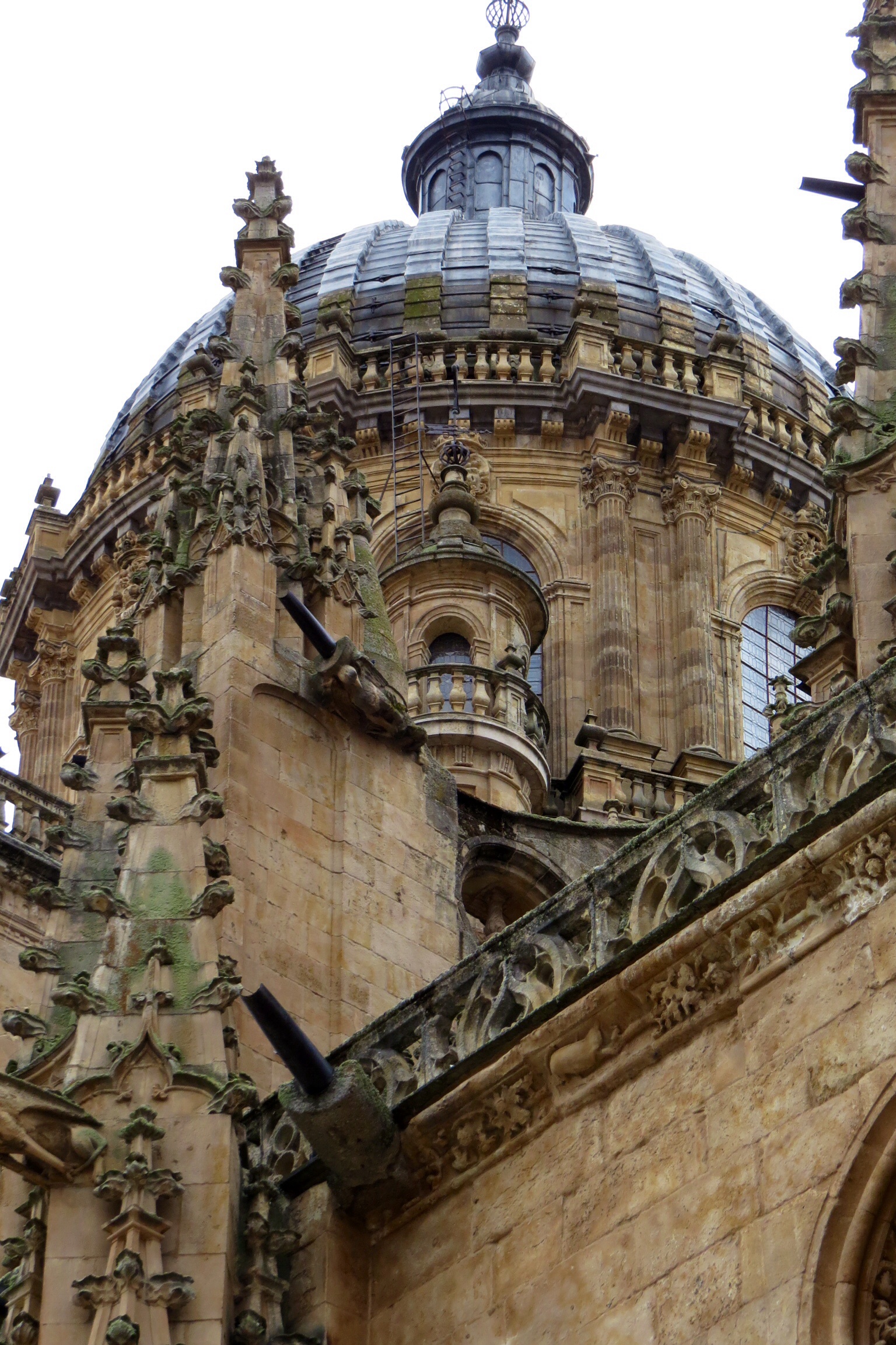
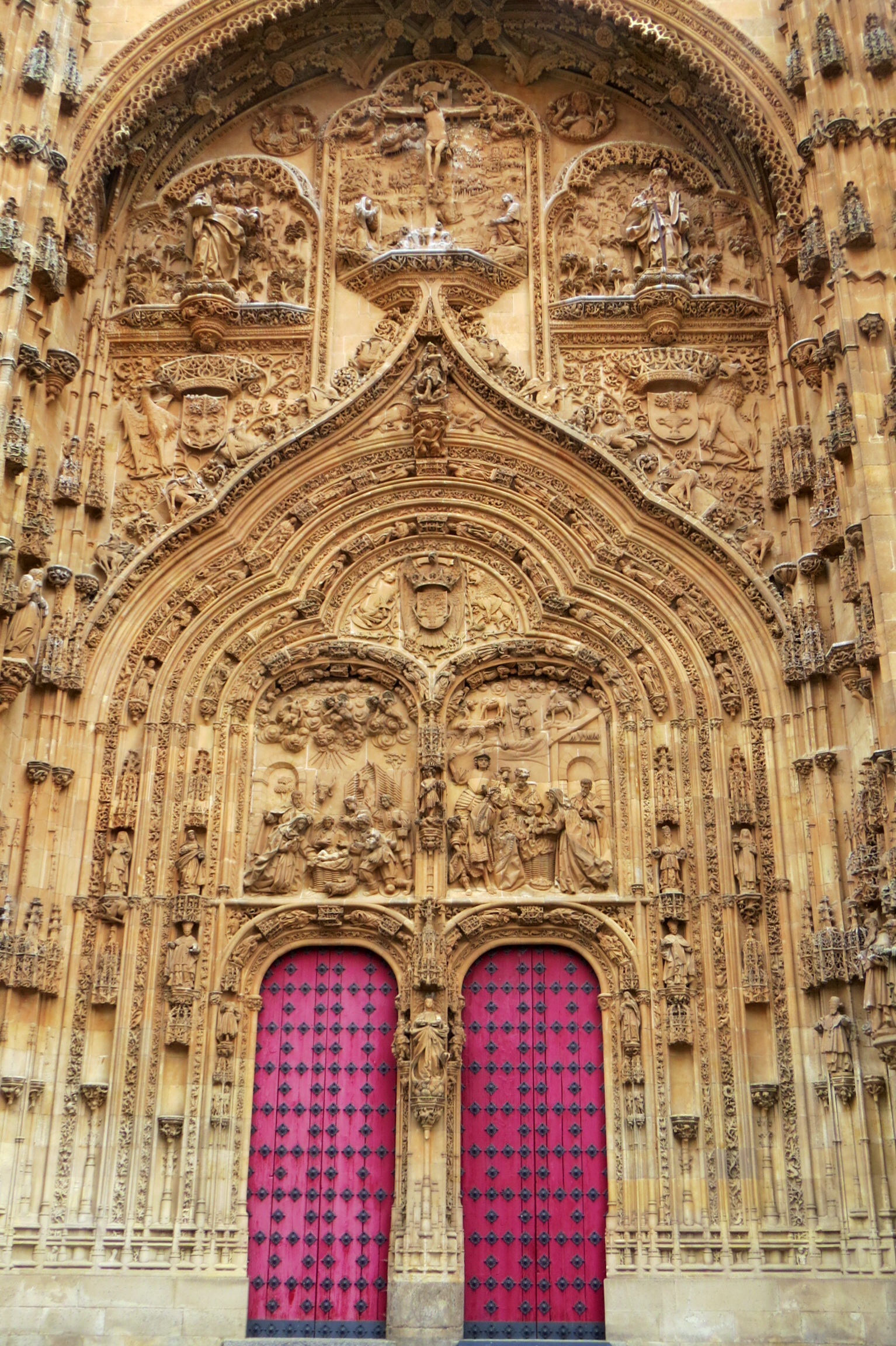
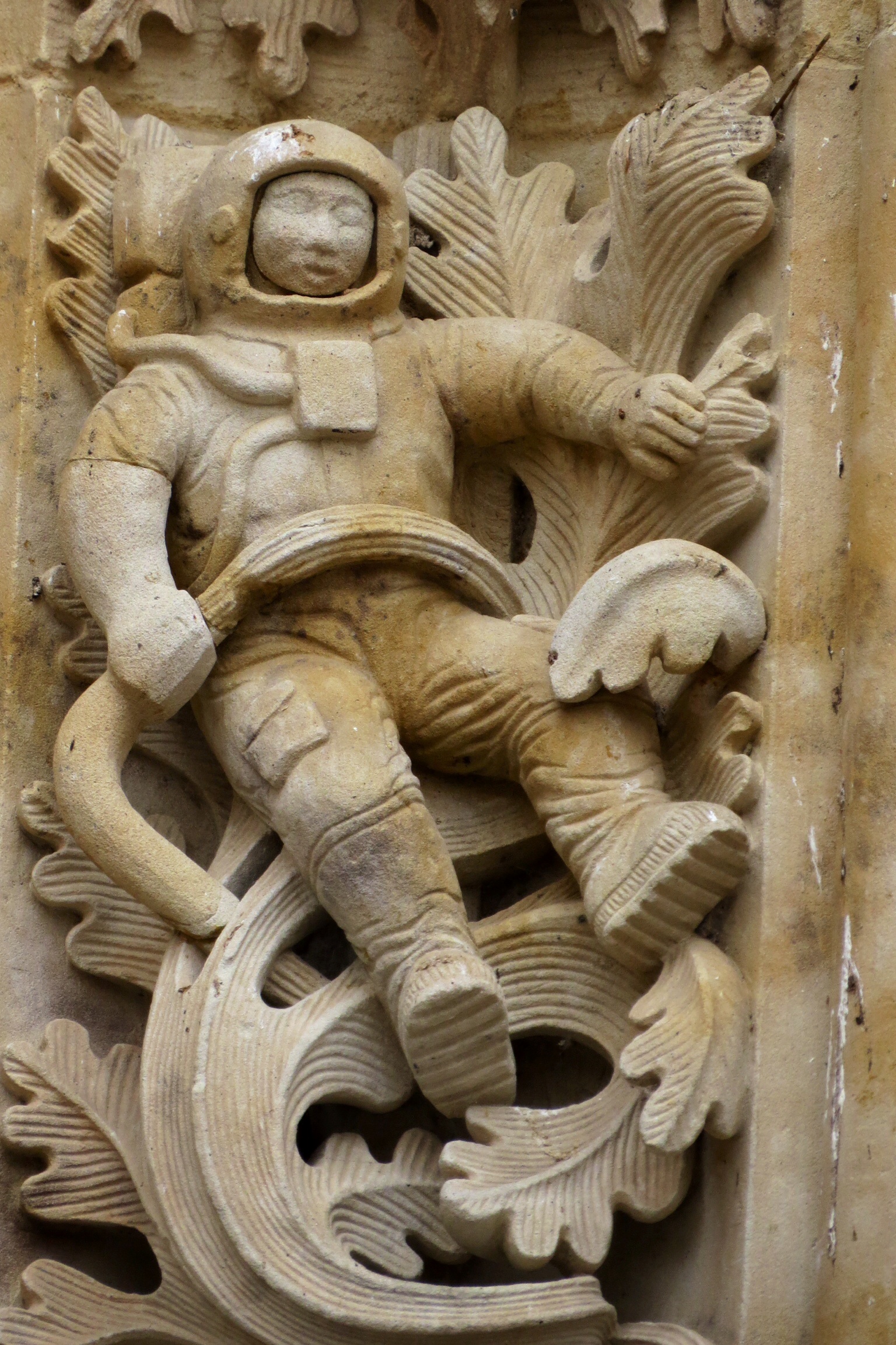
The magnificent cathedral was right across from our hotel and our visit began with a tour of the cathedral. Actually two cathedrals, one old, one new. You may recognize the entrance to the new by one of the carvings around the doorway.

image imageimage


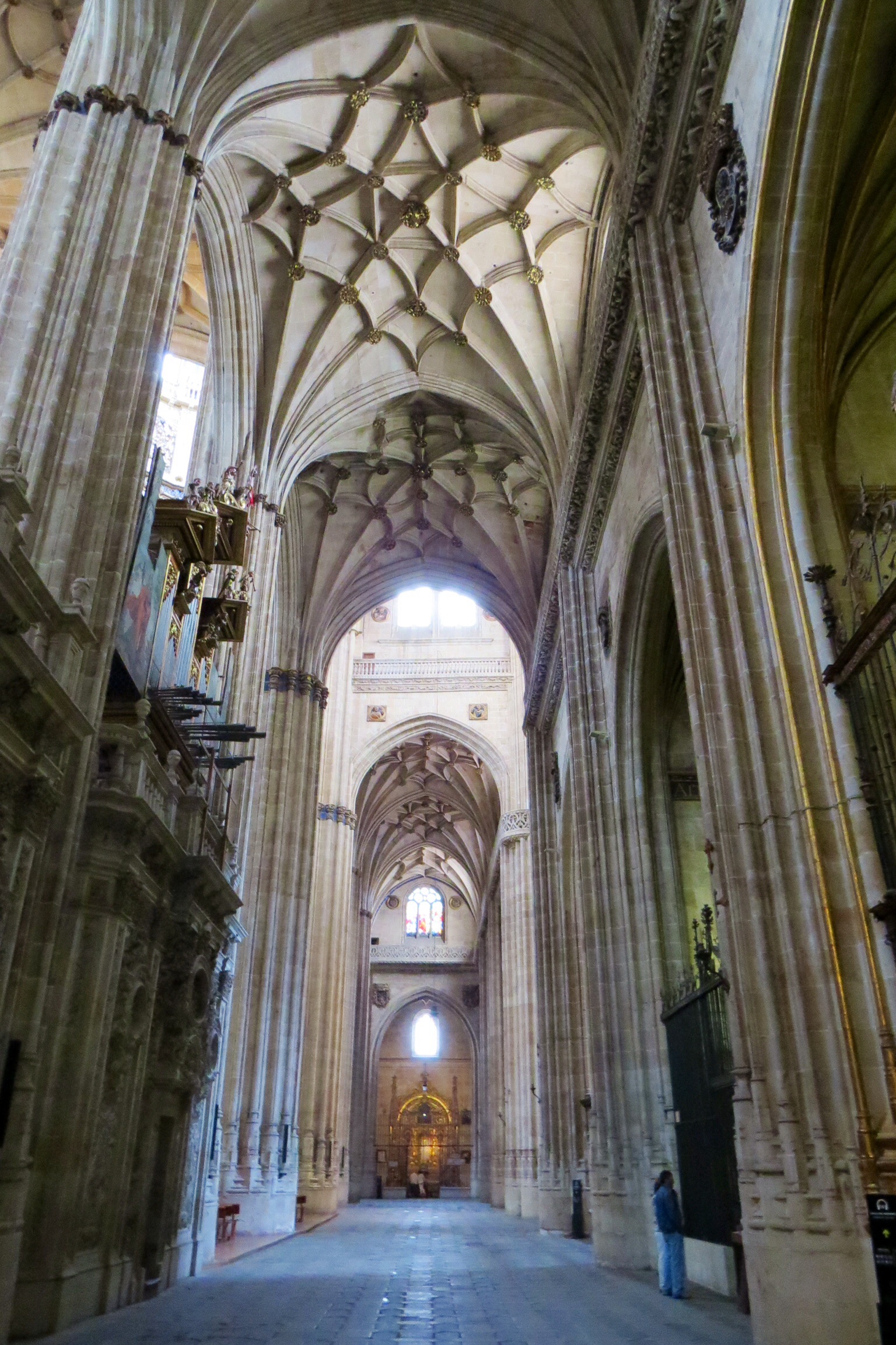
The interiors are equally rich:

image image image image image

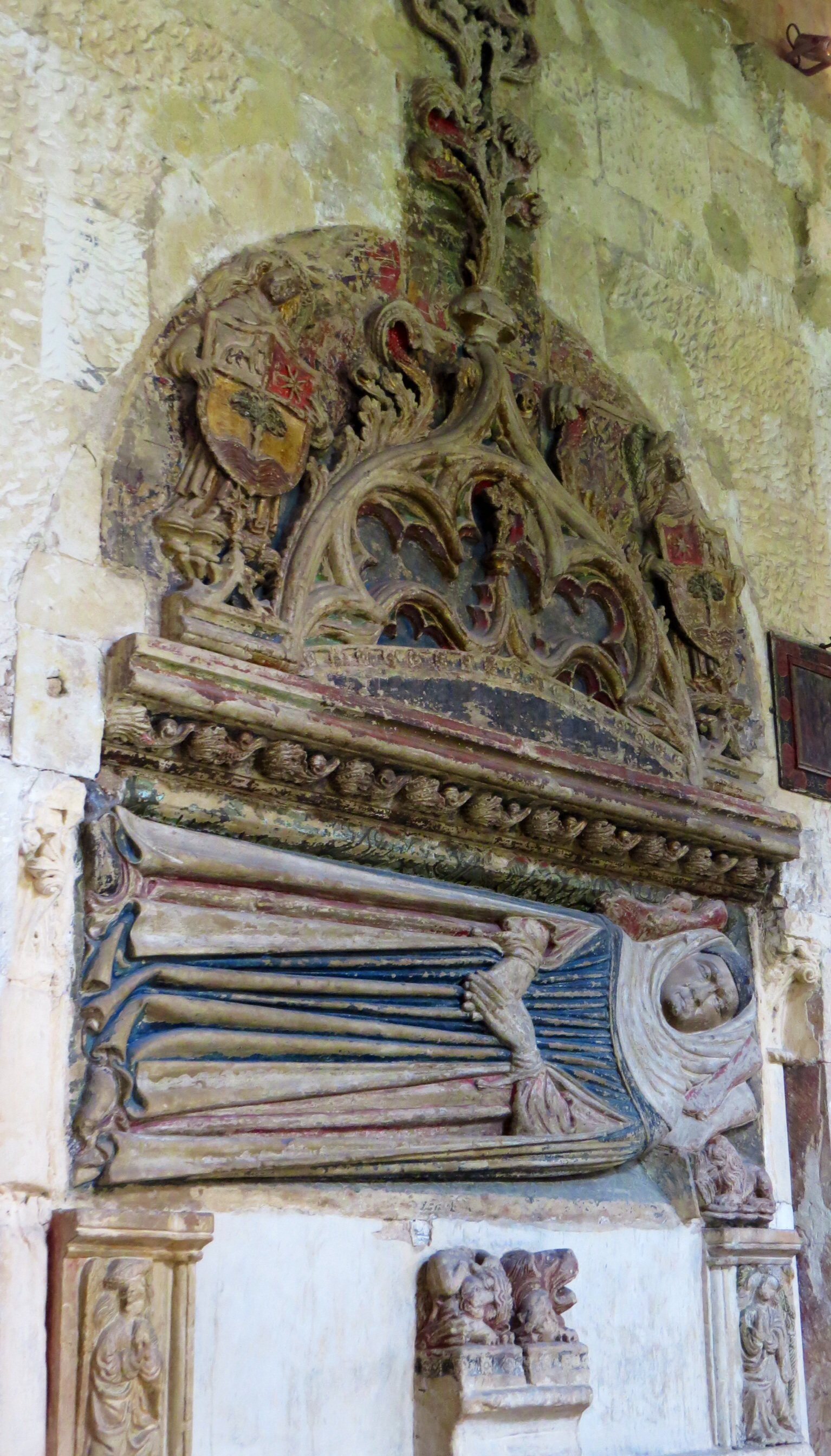
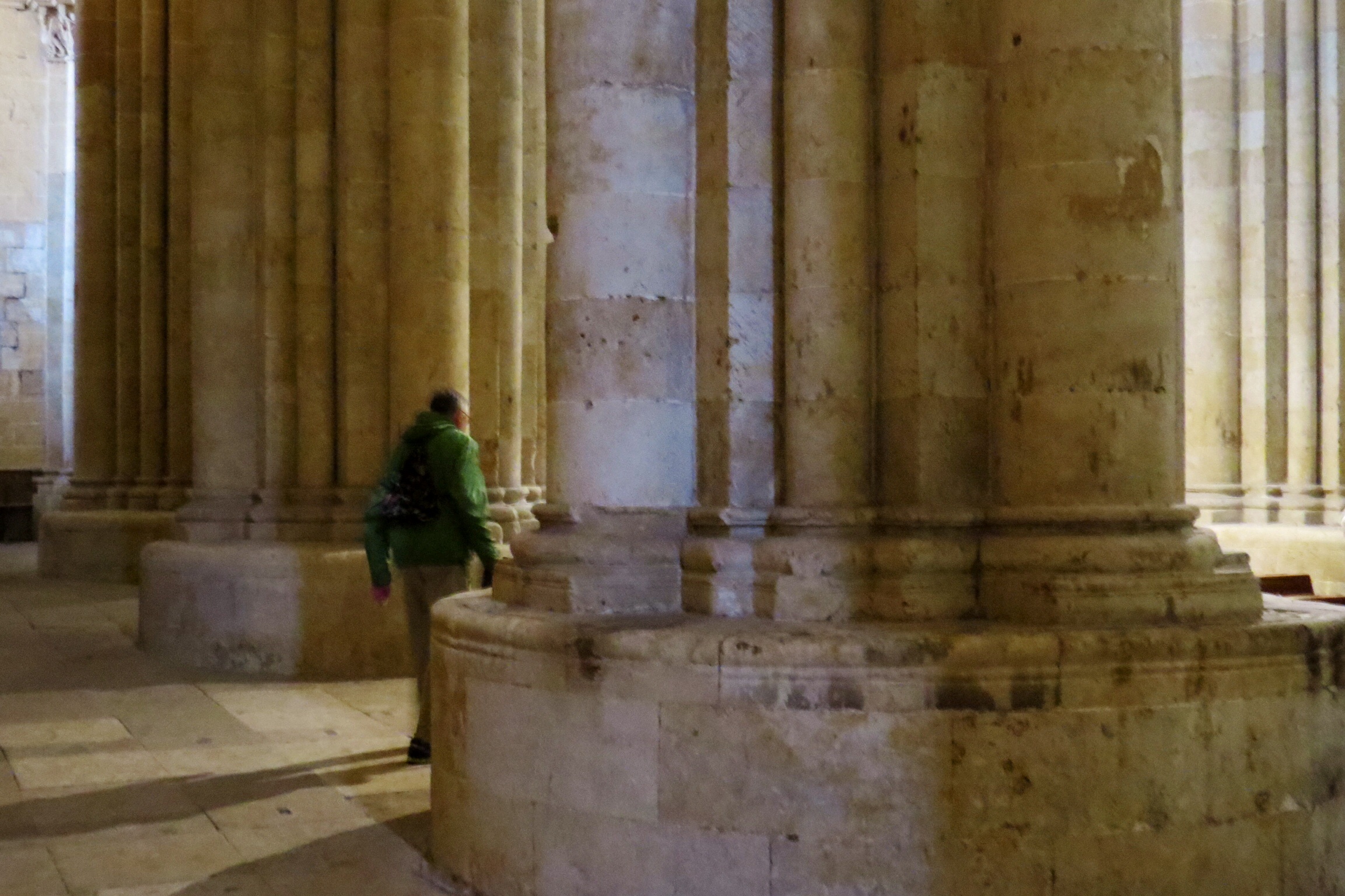
The students used to have to write exams in the crypts of the cathedral, with a deceased bishop and a stern professor looking on.

image

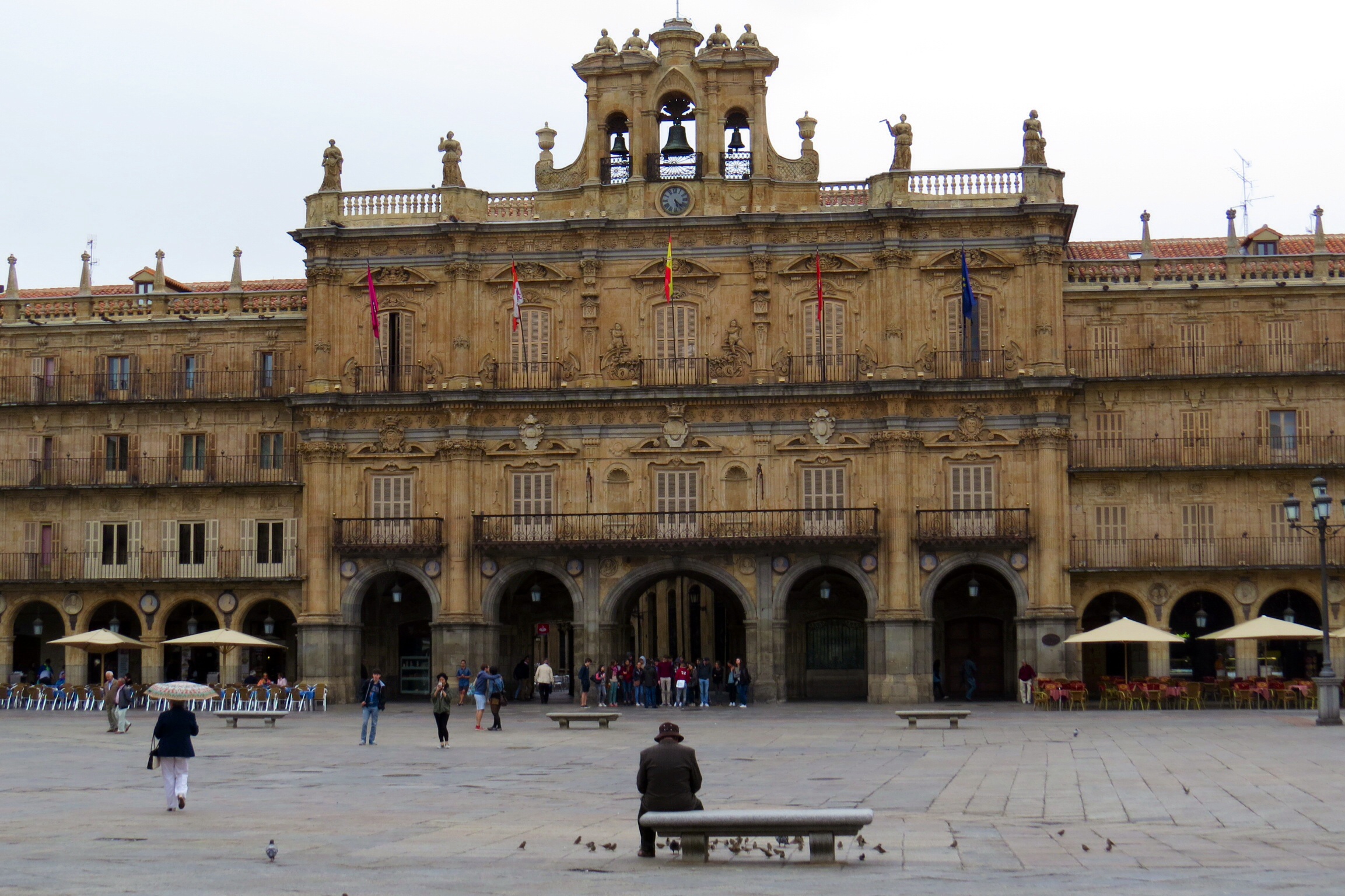
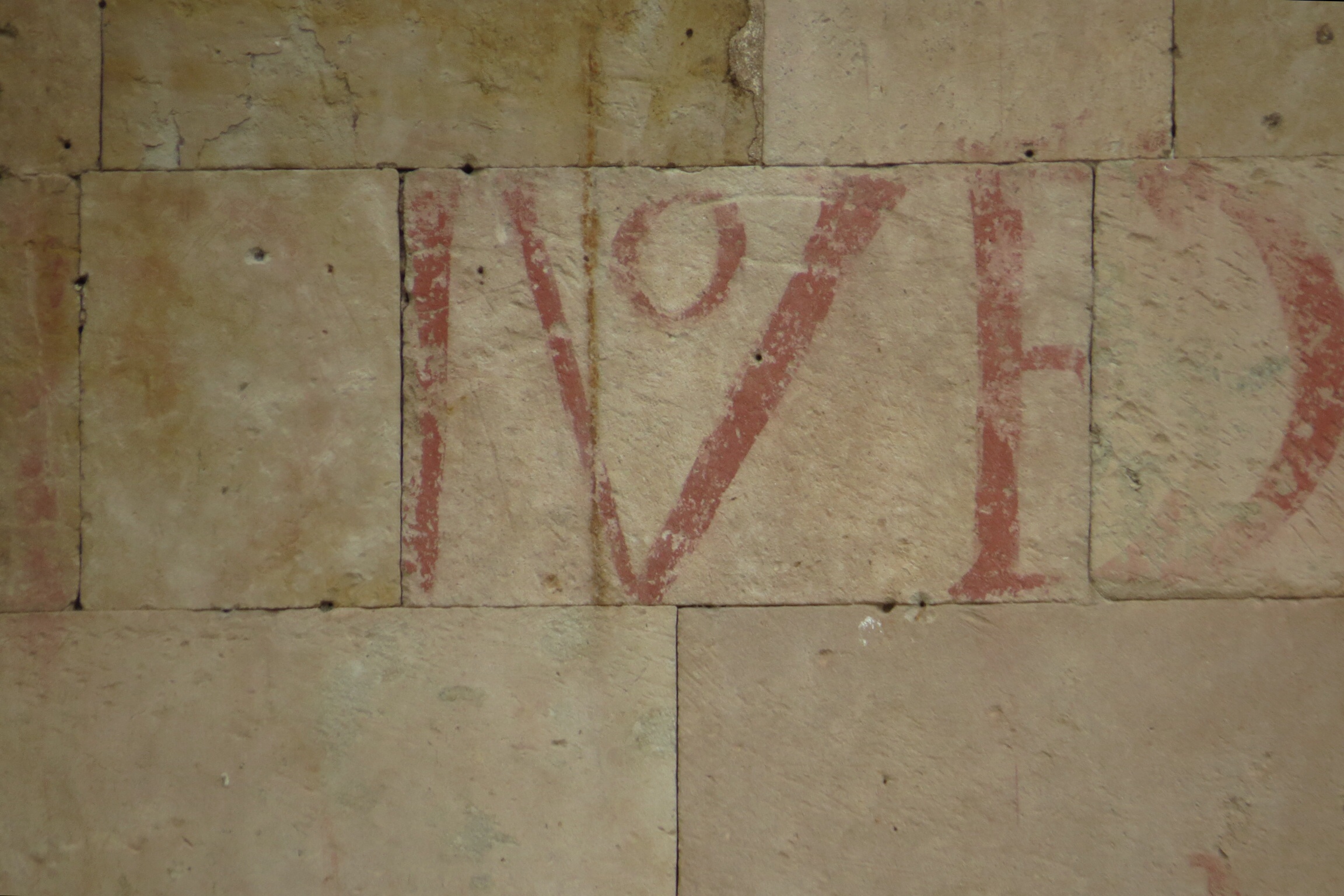
The town is completely devoted to the university and has a beautiful, sprawling plaza mayor, restaurants and bars populating its circumference, the town hall dominating the skyline. The students used the blood from bulls at bull fights in the square to paint their name and the symbol for Victorious on the walls when they passed their final exams.

image

image

image

image

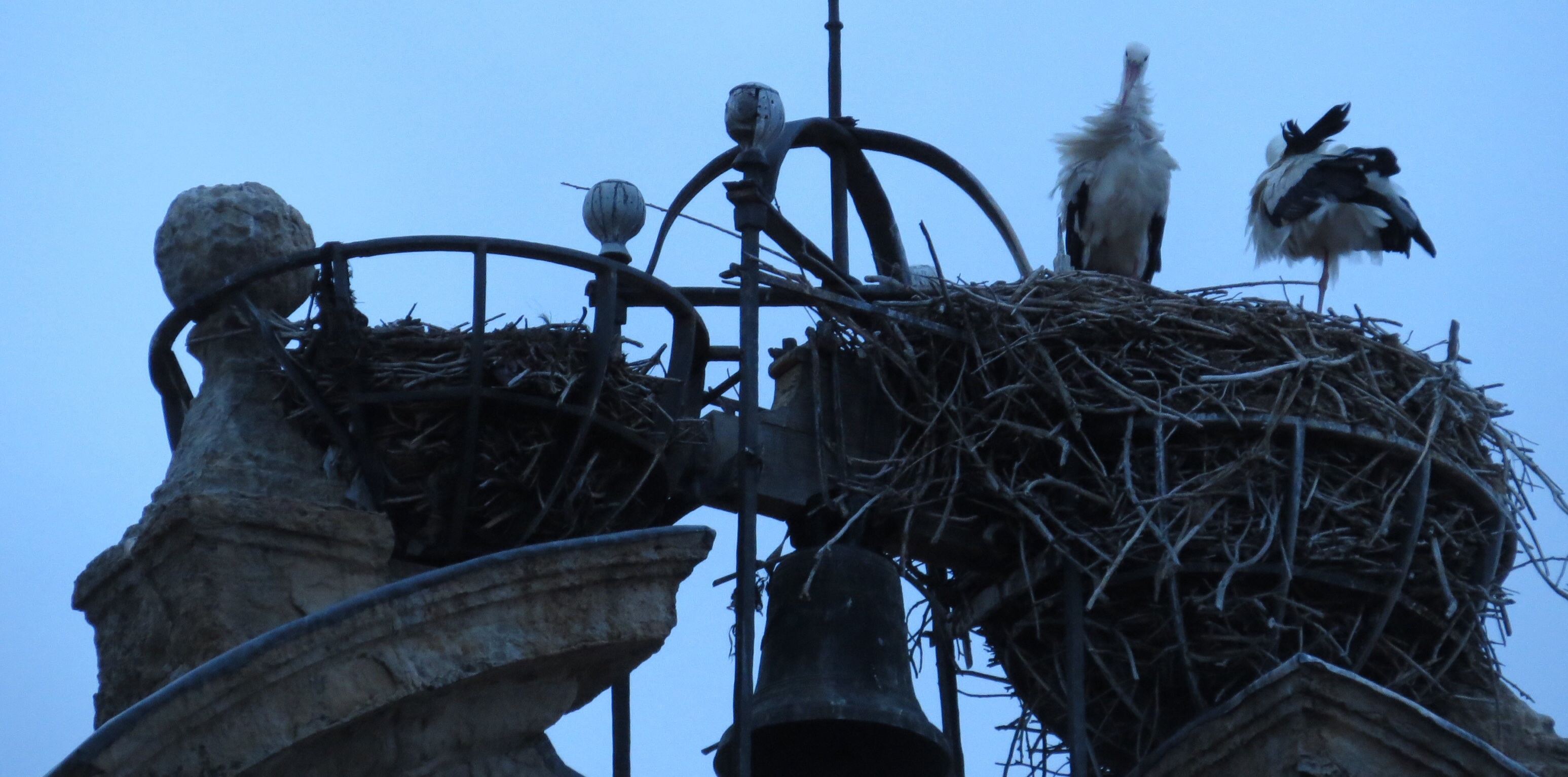
We had our first (of many) stork sightings today – they make our eagles and osprey look tiny!

image

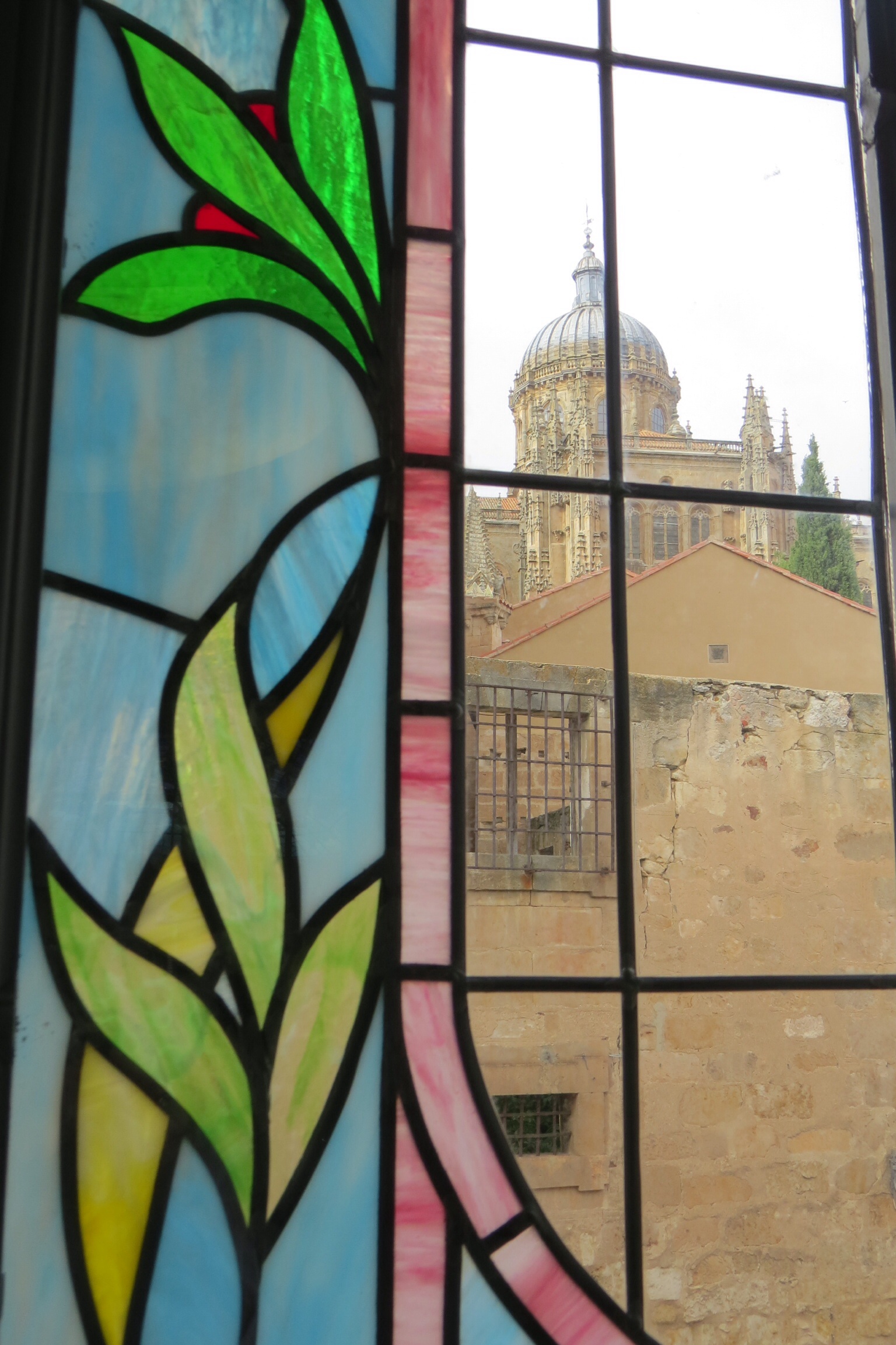
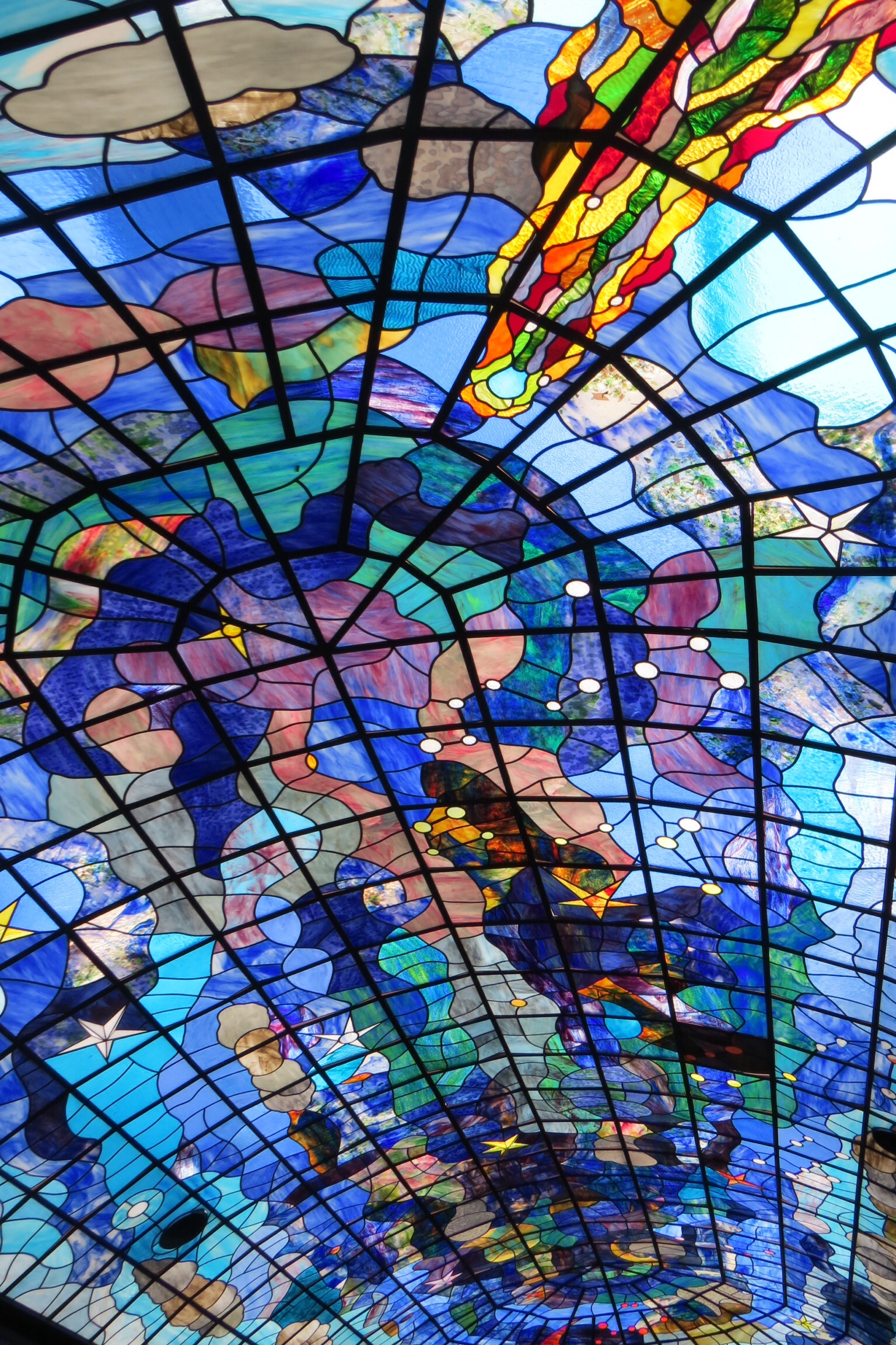
Shirley had discovered a wonderful little Arte Nouveau museum with Lalique jewelry (collector’s items similar to Faberge eggs) and we spent a couple of hours wandering under stunning stained glass looking at bronzes, lalique jewelry and crystal, Faberge eggs, and an excellent Coco Chanel exhibition.

image image image

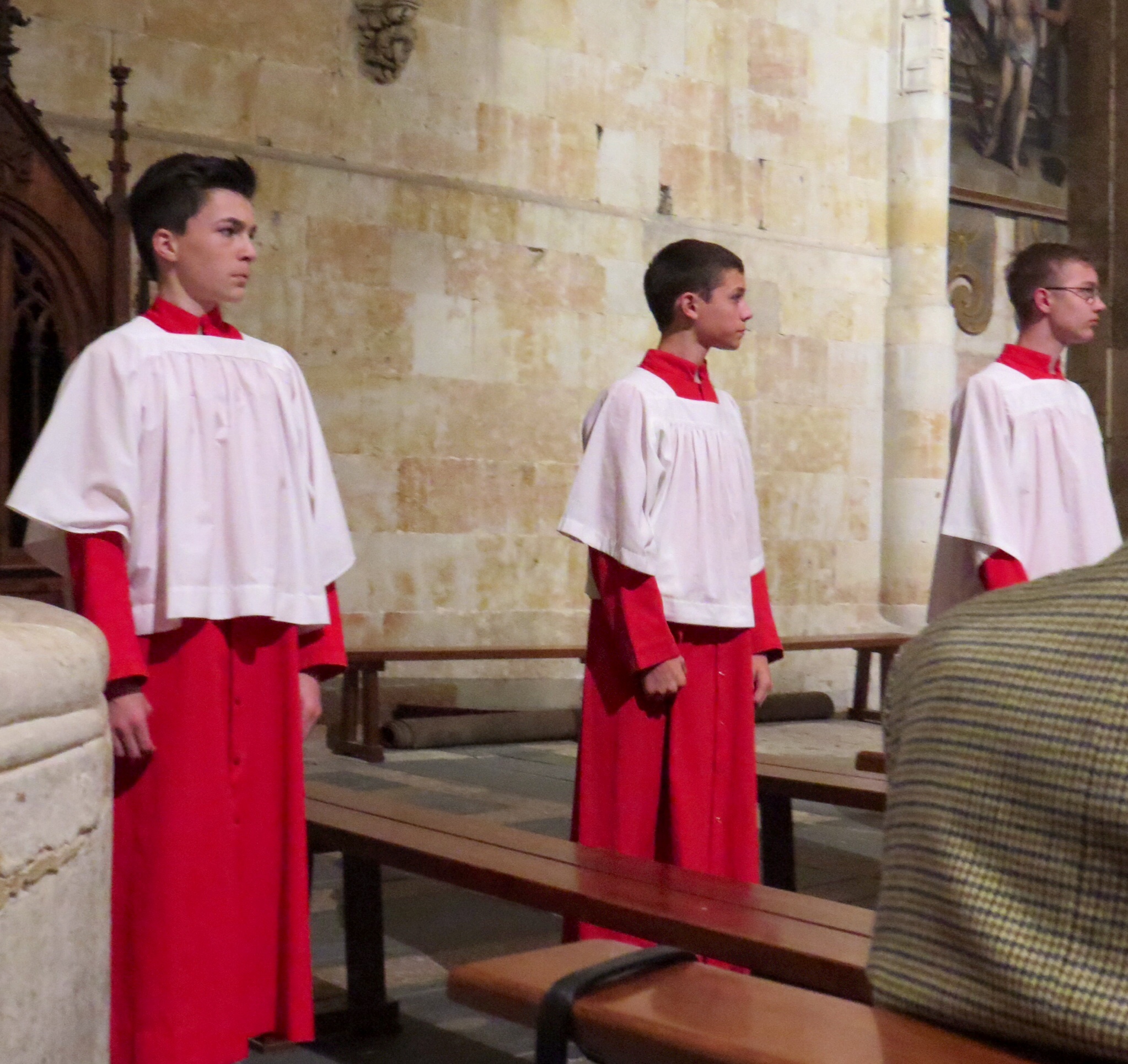
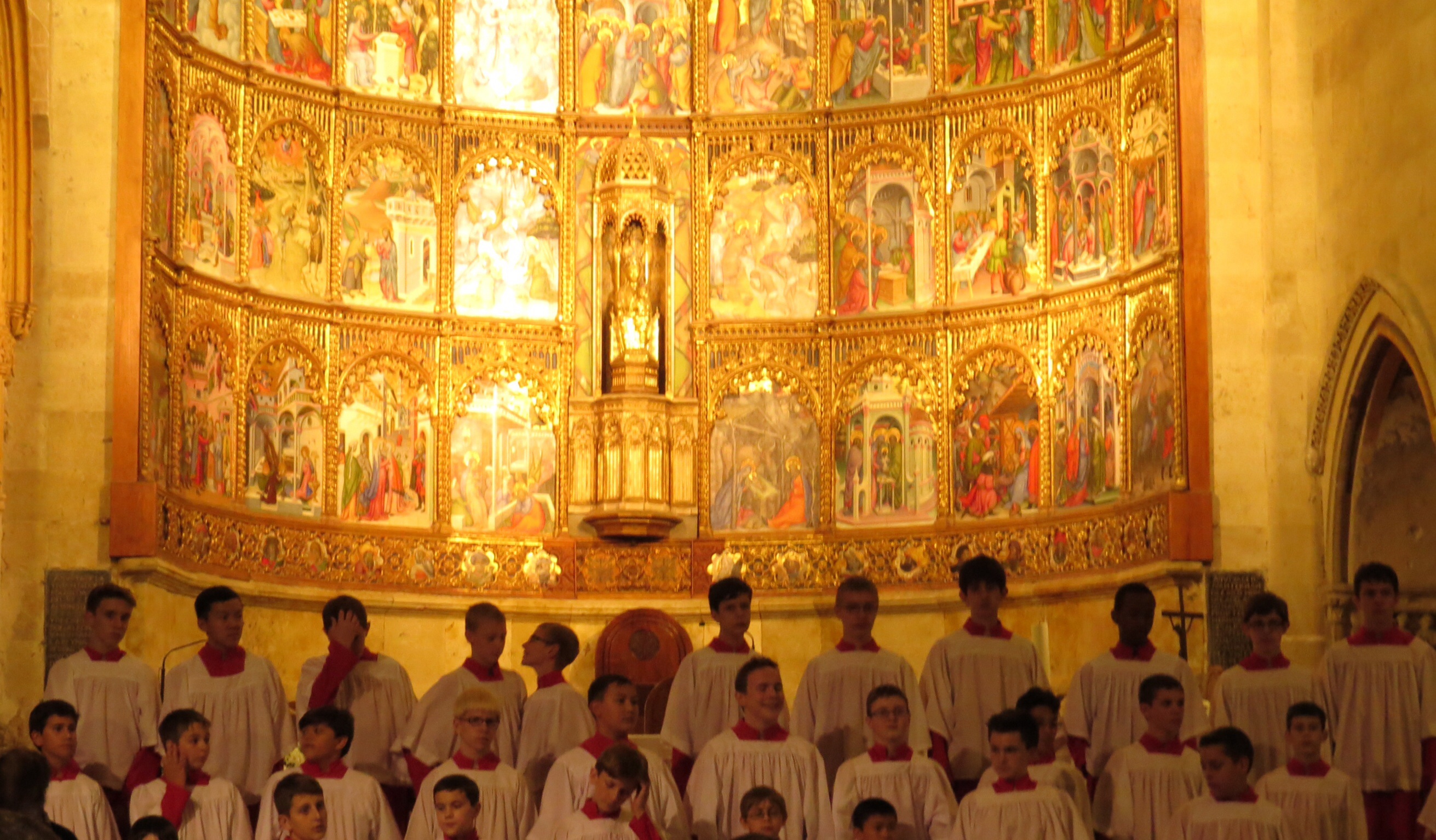
One of our group observed that the Phoenix Boys Choir, led by a former director of the Vienna Boys Choir, would be performing in the old cathedral, and many of us attended. The acoustics were absolutely amazing and the first and last songs were sung with the boys surrounding the audience. It was magical in the gorgeous setting.

image image

We had only one night here, but we had managed to pack in as much as we could of this rich cultural centre.  A very light late supper at the hotel rounded out the day.

Jan
Santiago de Compostela: The City

After the Friday evening service followed a delicious dinner at our stone hotel of croquettes, grilled prawns, grilled squid and pinwheel salmon with, appropriately, a scallop in its centre. (The primero of scrambled eggs filled with literally hundreds of baby eels, the equivalent to me of a plate of one million tiny snakes, was my worst nightmare, and I could not muster the bravado to even sample them.)

image image image image


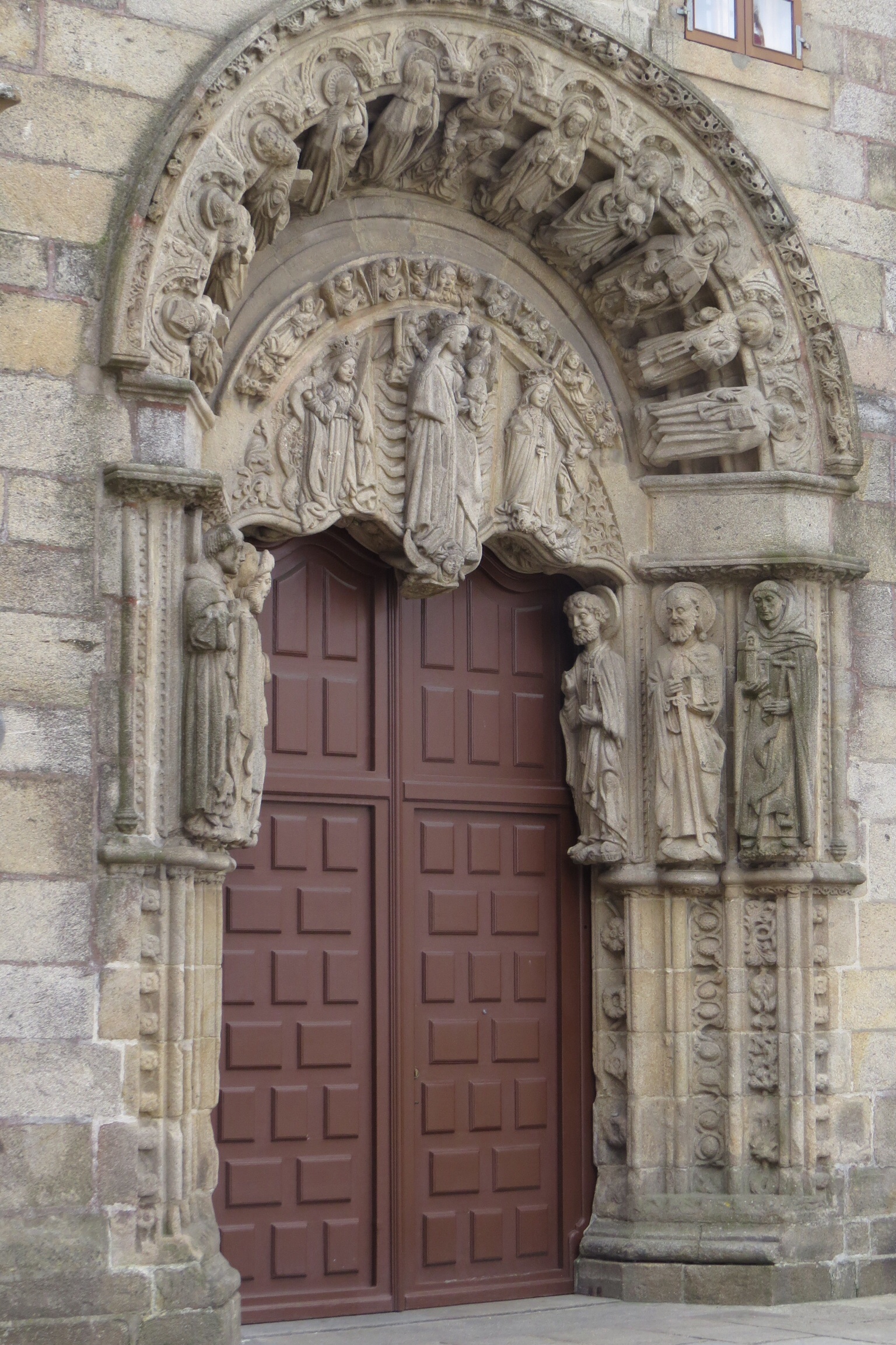
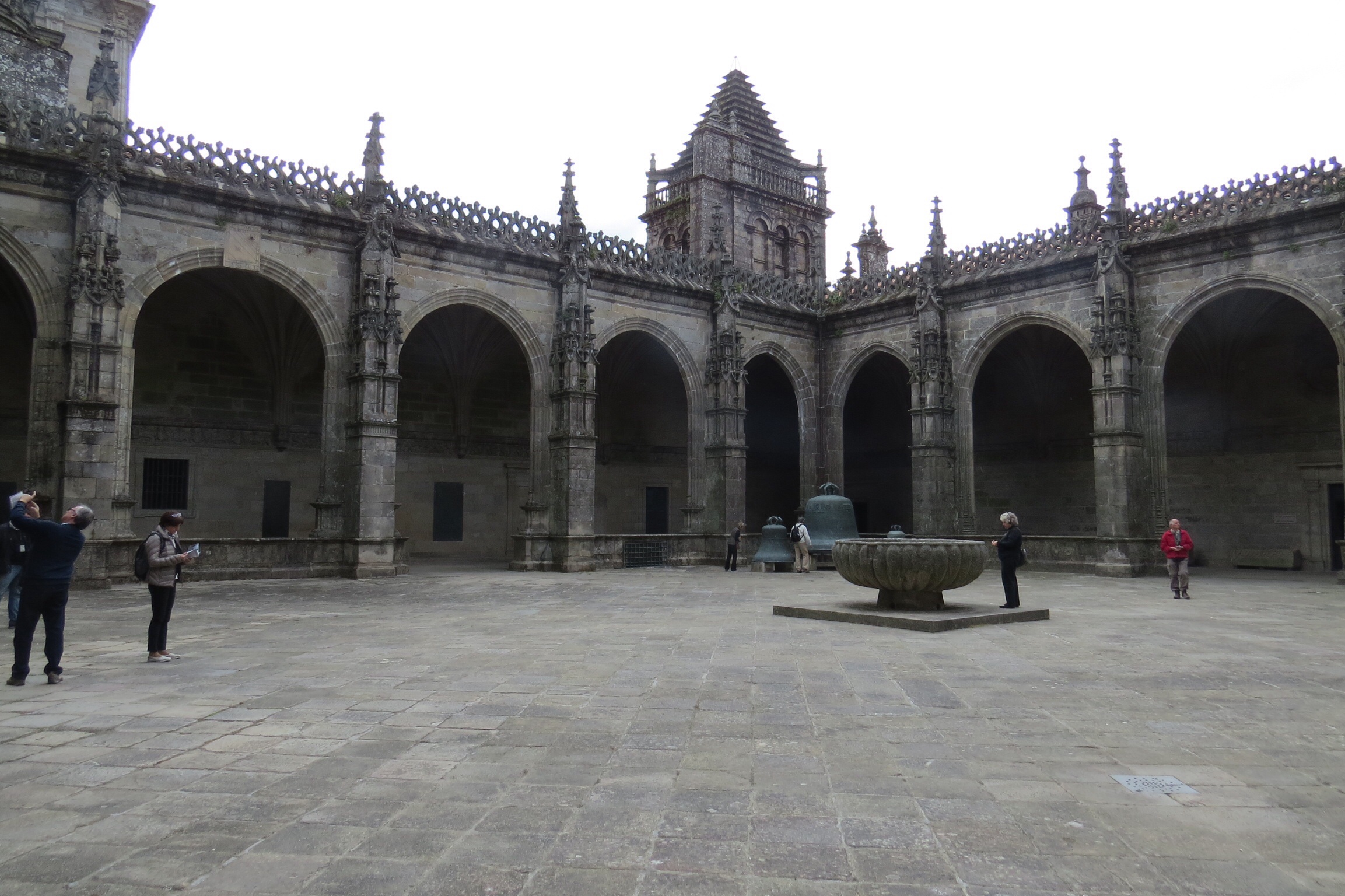
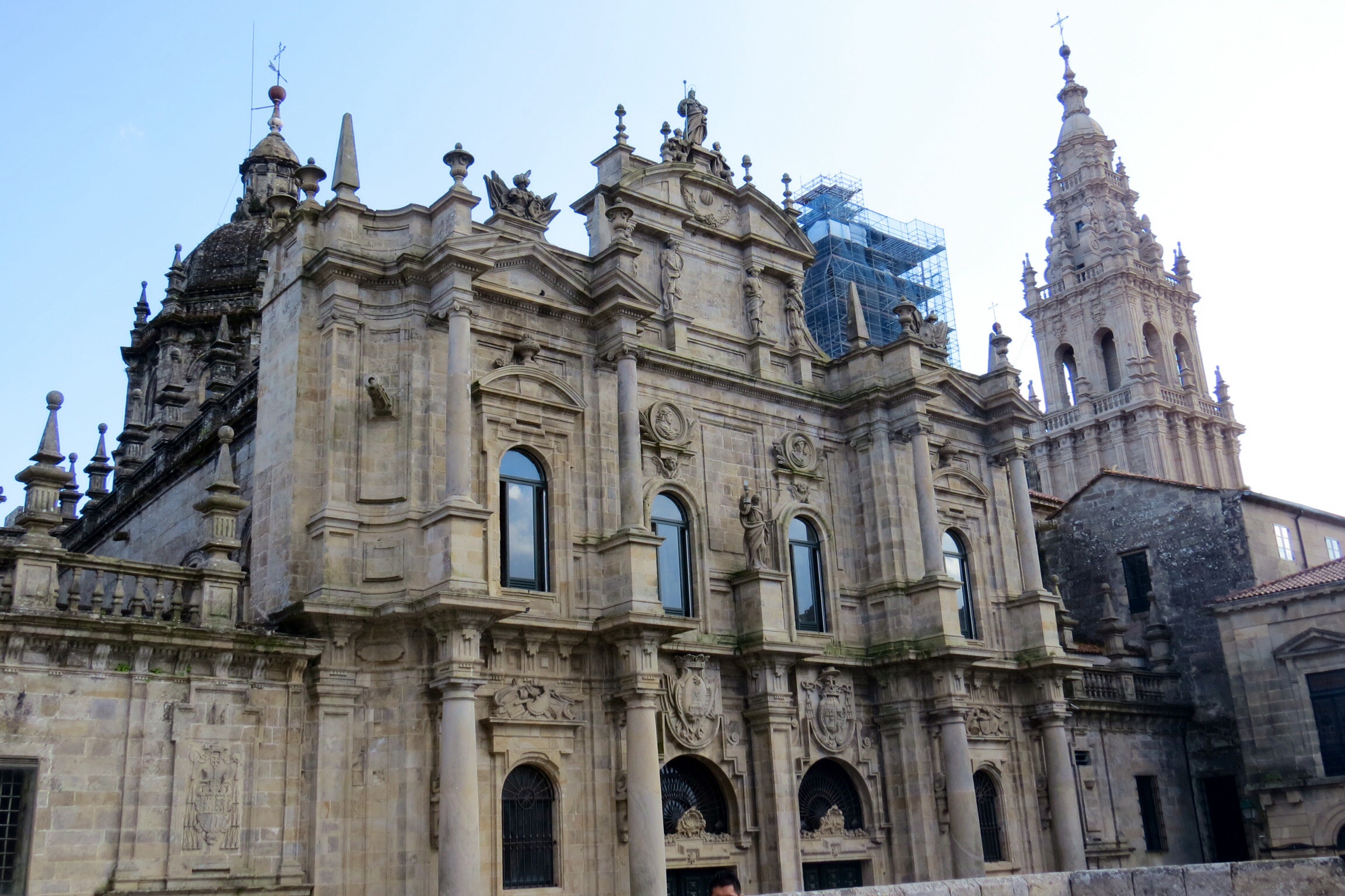
The next morning we had a walking tour of the old town, the market, the cathedral and the cathedral’s fascinating museum, cloisters and library. Manuel was one of our best guides and was recommended by Rick Steeves.

image image
Cervantes, author of Don            Manuel
Quixote

imageimage image

image image

image image image imageimageimageimage

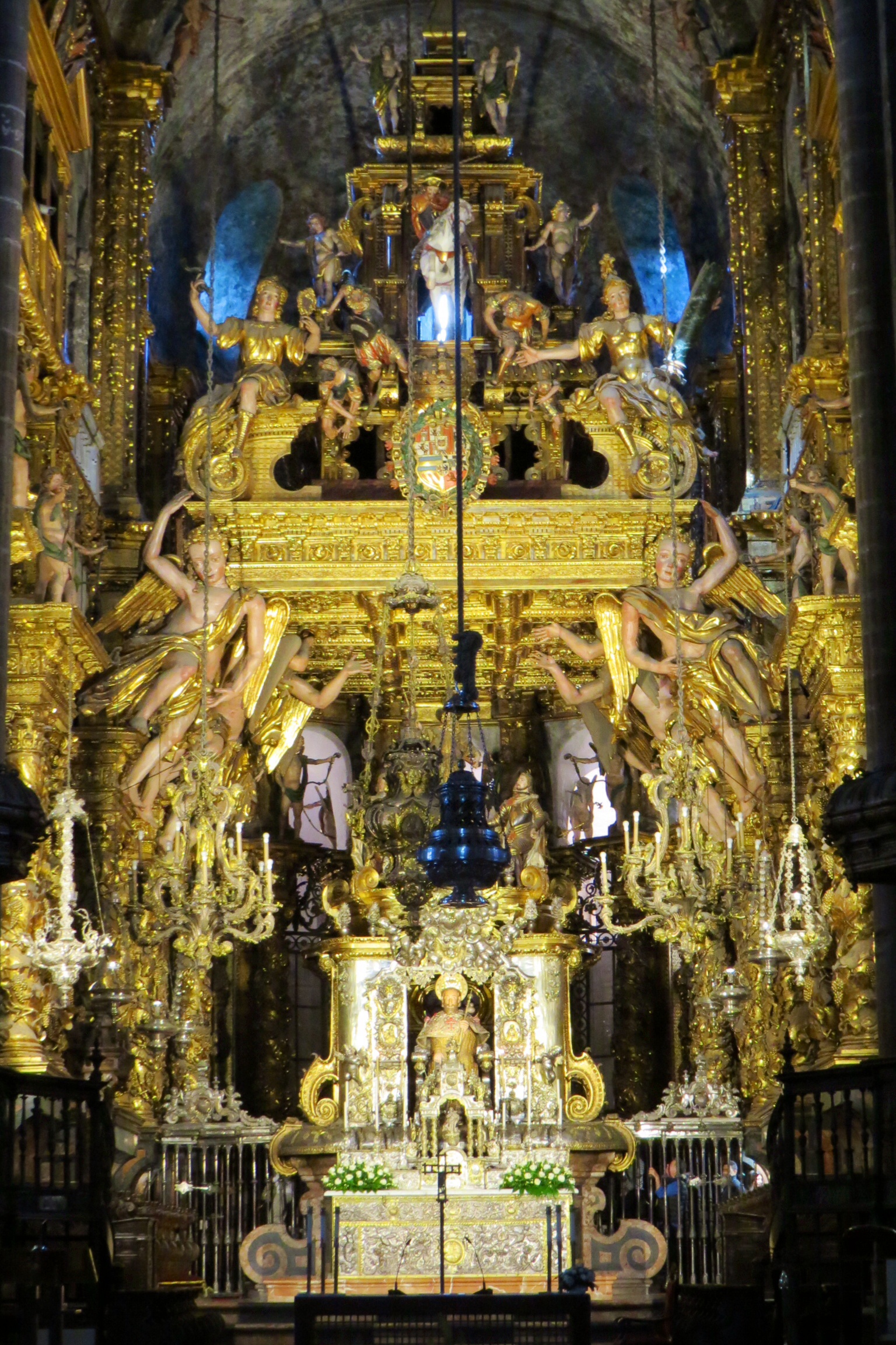
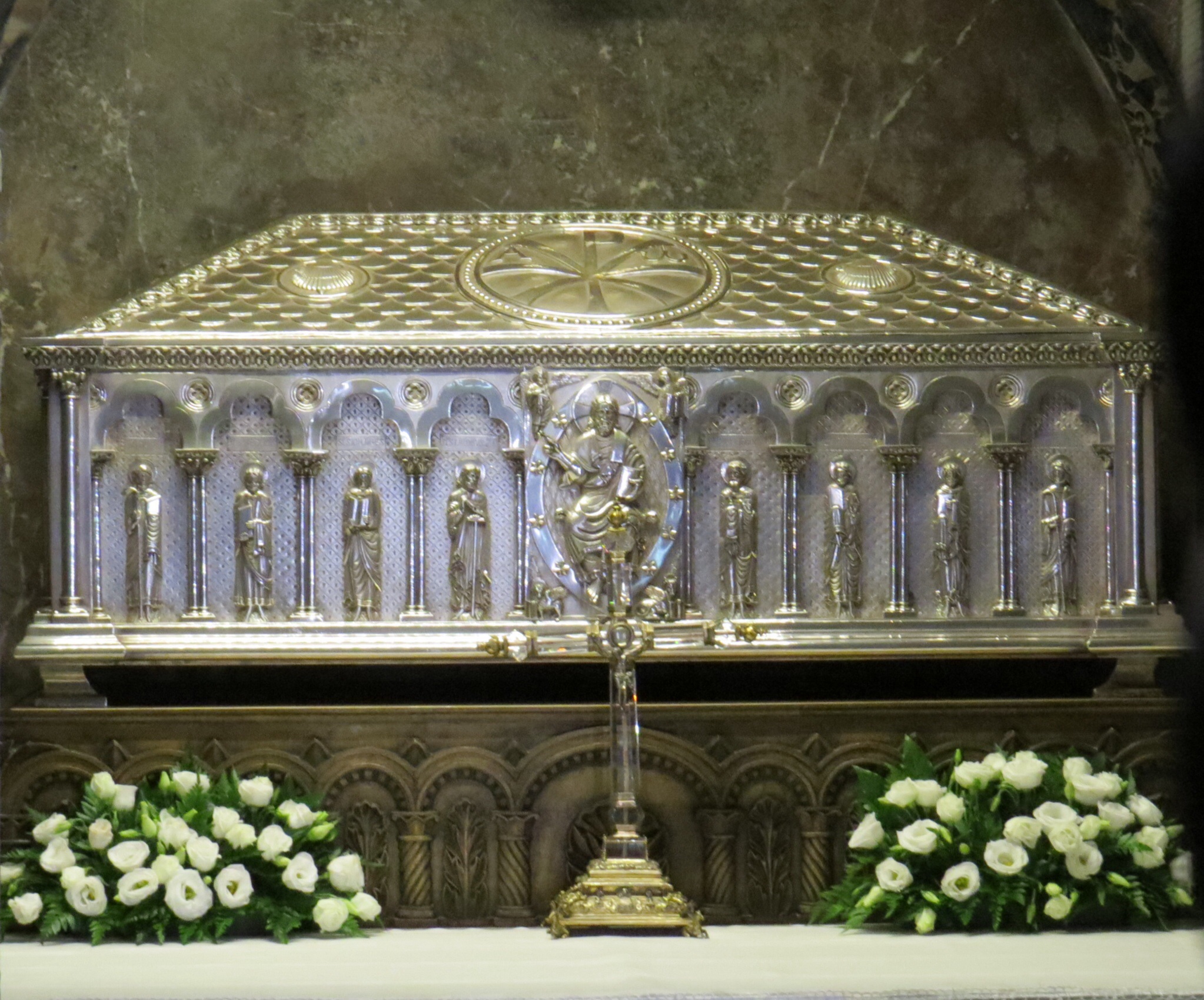
In the cathedral, we visited the reliquary where the bones of St. James are said to lie.

image

St. James, known in Spain as Santiago, was the fisherman disciple who died in Jerusalem in 44 AD. It was for centuries rumoured that his bones were carried to northern Spain and they were eventually discovered near this site in the 9th century. At that time, power in Spain was centralized in Toledo politicallty, religiously and militarily. In Toledo, Moors (muslims), Christians and Jews lived in a comfortable alliance. Alphonso II, using the example of Charlemagne’s rule in France, realized that if he was to seize power of this region, he would need the power of the Catholic church. He learned of the discovery of the bones of St. James and seized on this political opportunity to herald the discovery, move to militarily protect the pilgrims of the day on the Camino, and declare the Toledo Christians heretical.

Following the tour, we had lunch, shopped and wandered the pretty town, followed by the best hot chocolate I have ever tasted.. We left the old town – it has been fascinating to leave the touristic areas and wander the streets and grocery stores where ordinary Spaniards live. (The grocery stores have much the same junk food our grocery stores do – oreo cookies, spongebob squarepants crackers, etc.)

imageimageimageimage

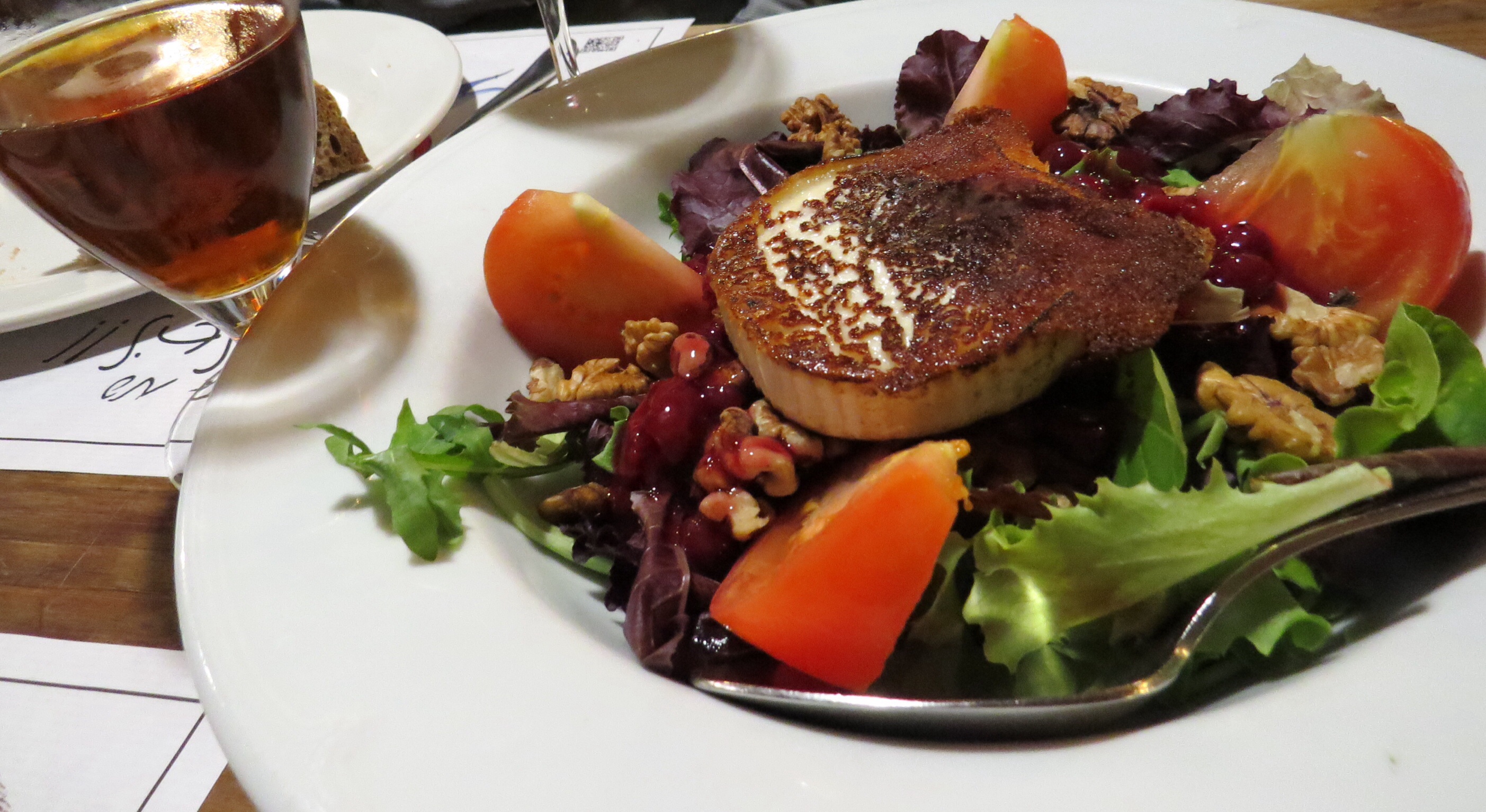
For a late dinner, we went to the Manuel-recommended No. 16 Restaurant, which did not disappoint. In an atmospheric stone-lined basement we started with a gorgeous walnut and goat cheese green salad with a cherry sauce, and I had my first entrecote, a perfectly medium-rare grilled steak the size of two New York strips. As usual, I managed my portions as best I could by eating only half of what was put before me. A delightful day shared with friends, old and new.

image

Jan
The End of the Earth

Well.

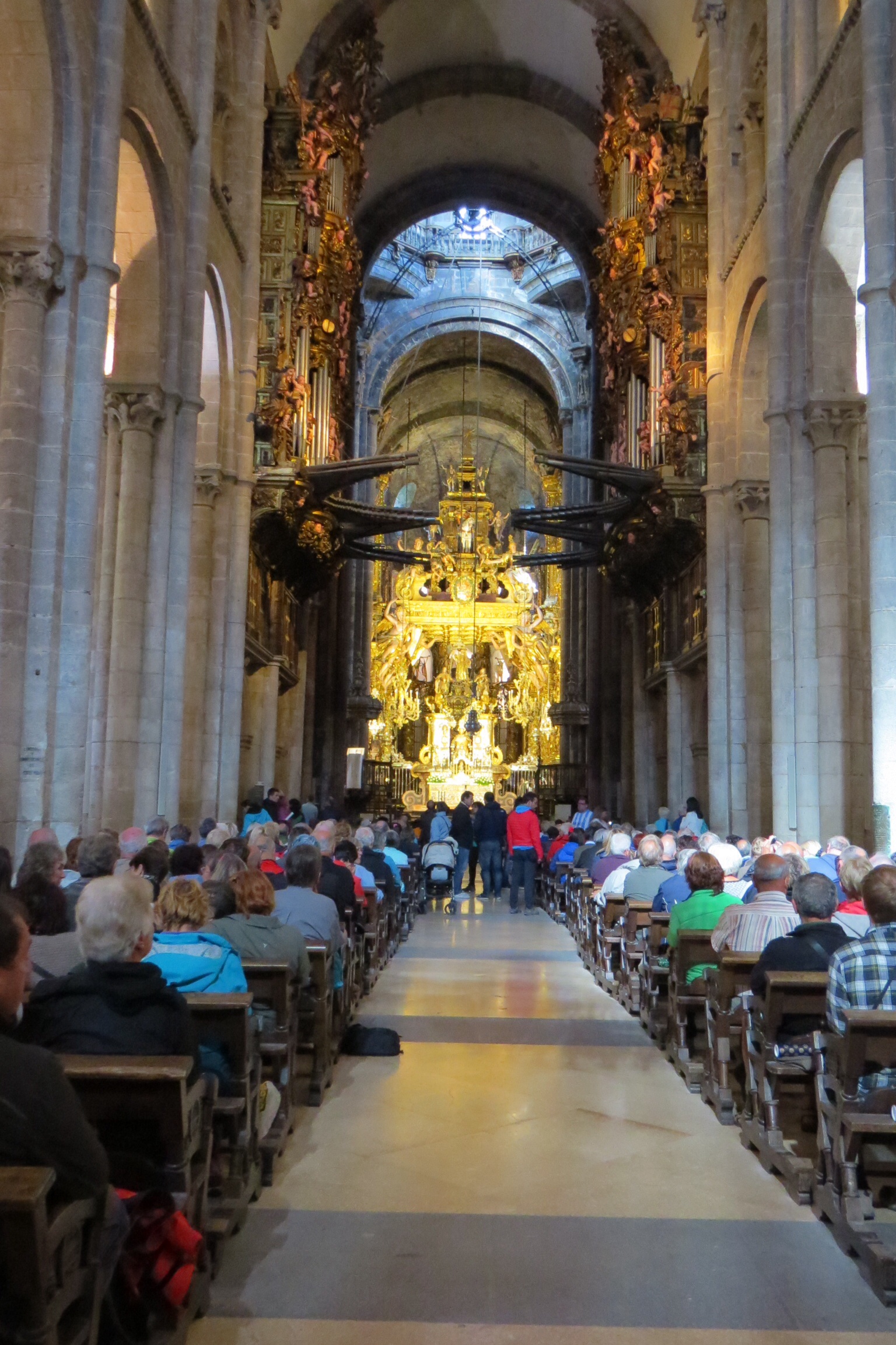
The culmination of the 800-km El Camino pilgrimage is the Catholic service at St. James Cathedral in Santiago de Compostela. The pilgrims metaphorically and literally go from the darkness into the light, entering the Cathedral by the north entrance and leaving by the south. In earlier times, Benedictine monks would be positioned at the north entrance with a fresh set of clothes and the hikers would turn in their by then worn-out, filthy clothes to be burned.

imageimageimage

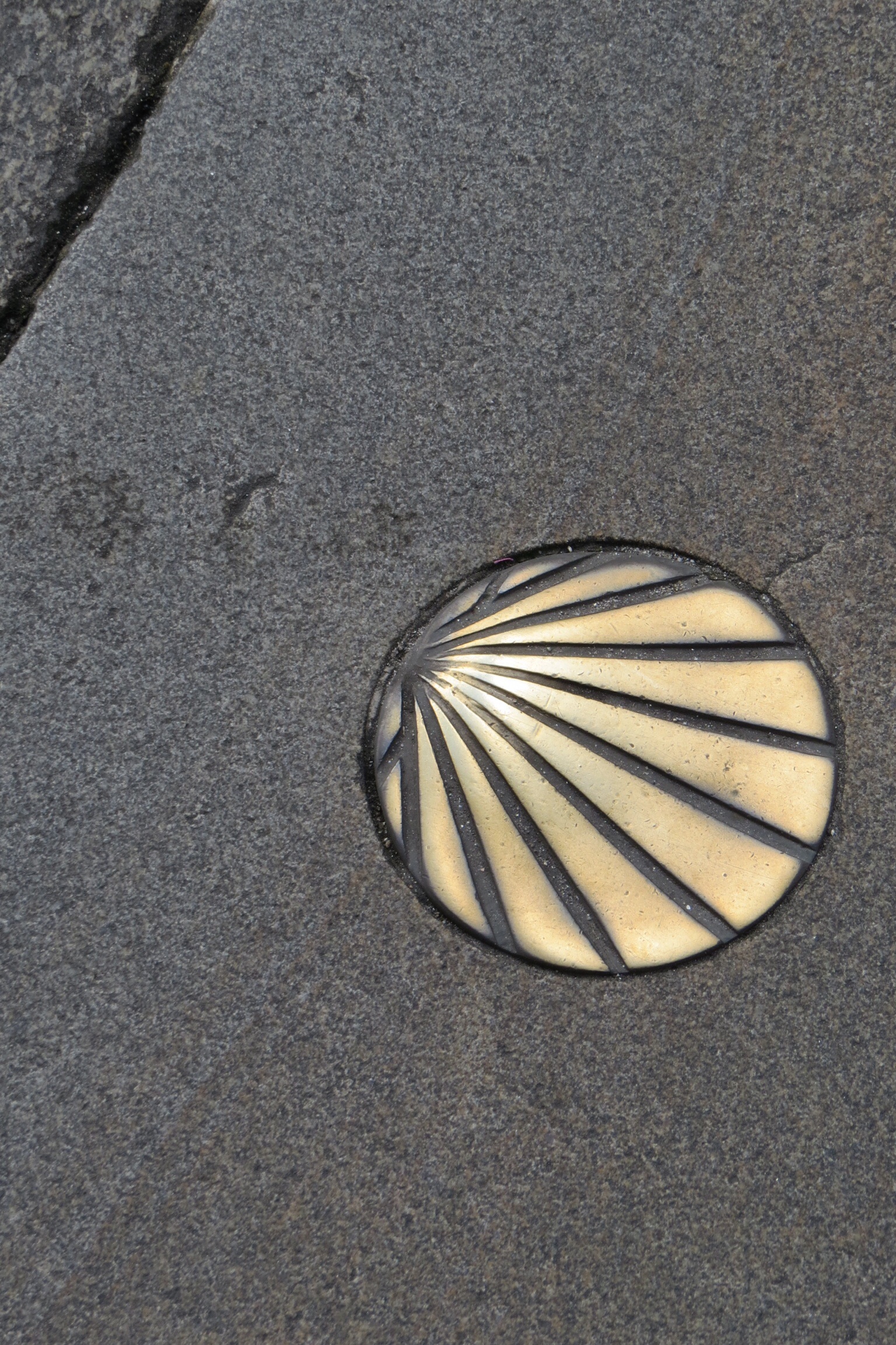
We had been on many portions of the Camino and had become accustomed to the familiar scallop shell symbol denoting the route to Santiago de Compostela in Pamplona, San Sebastian, Oviedo, etc.  There are many routes, starting in the Pyrenees of southern France, ending here at the westernmost tip of Europe at what — from at least Roman times until Columbus discovered the Americas — had been thought to be the end of the flat planet Earth. Imagine pilgrims making their way from all over Catholic Europe walking toward what was literally thought to be the end of the world.

There are many routes to Santiago de Compostela, some shorter than others, and many choose their route according to the magnificent cathedrals they want to pray in along the way. Others make the journey for self-discovery or physical challenge, but whatever the reason, the 7:30 p.m. Friday mass held at the St. James cathedral, filled with hikers from all over the world, weary faces, messed up, blistered or bandaged feet, some hobbling, others hugging or crying, was a spiritual, moving and inspirational experience.

imageimage image image

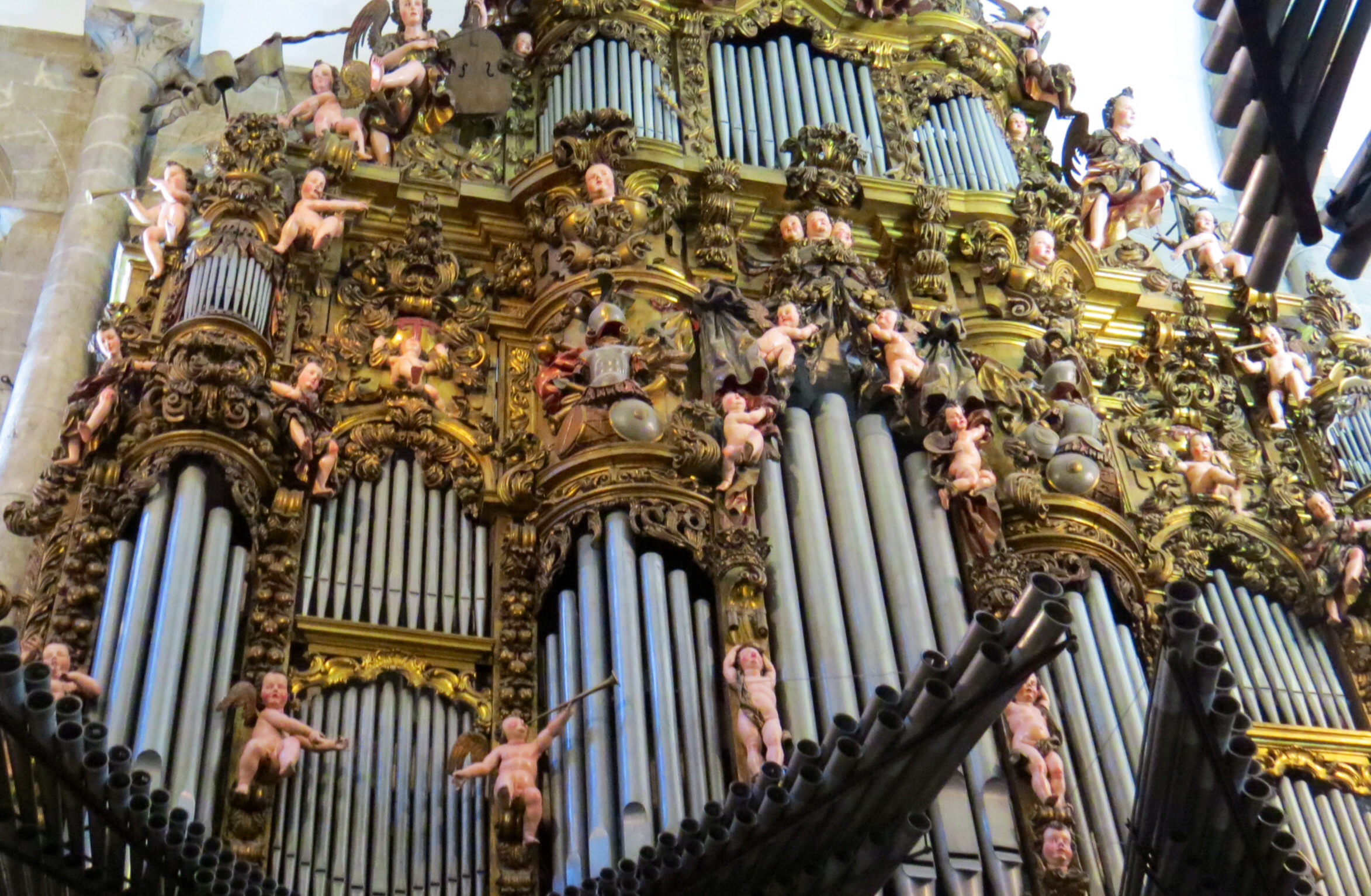
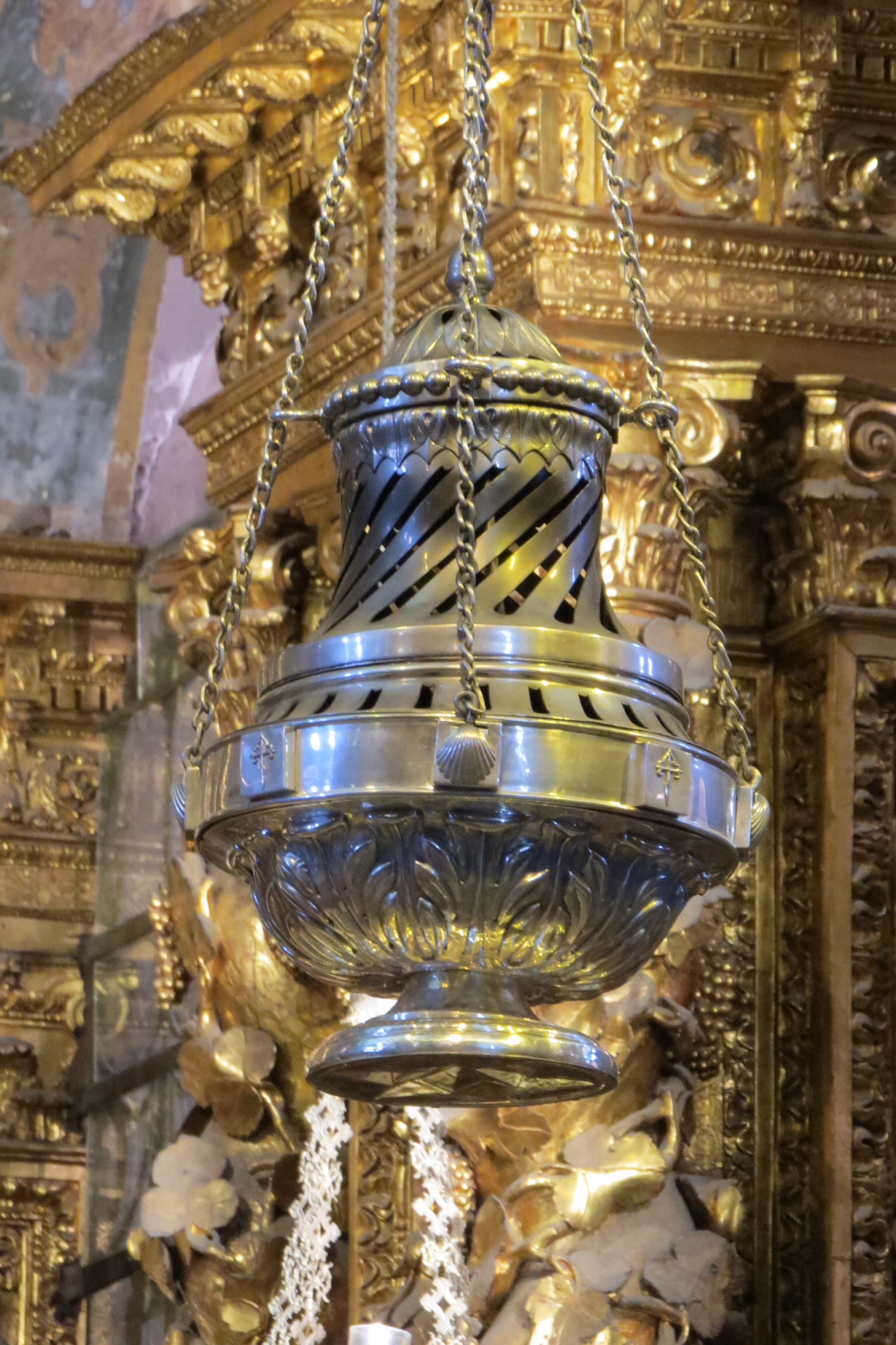
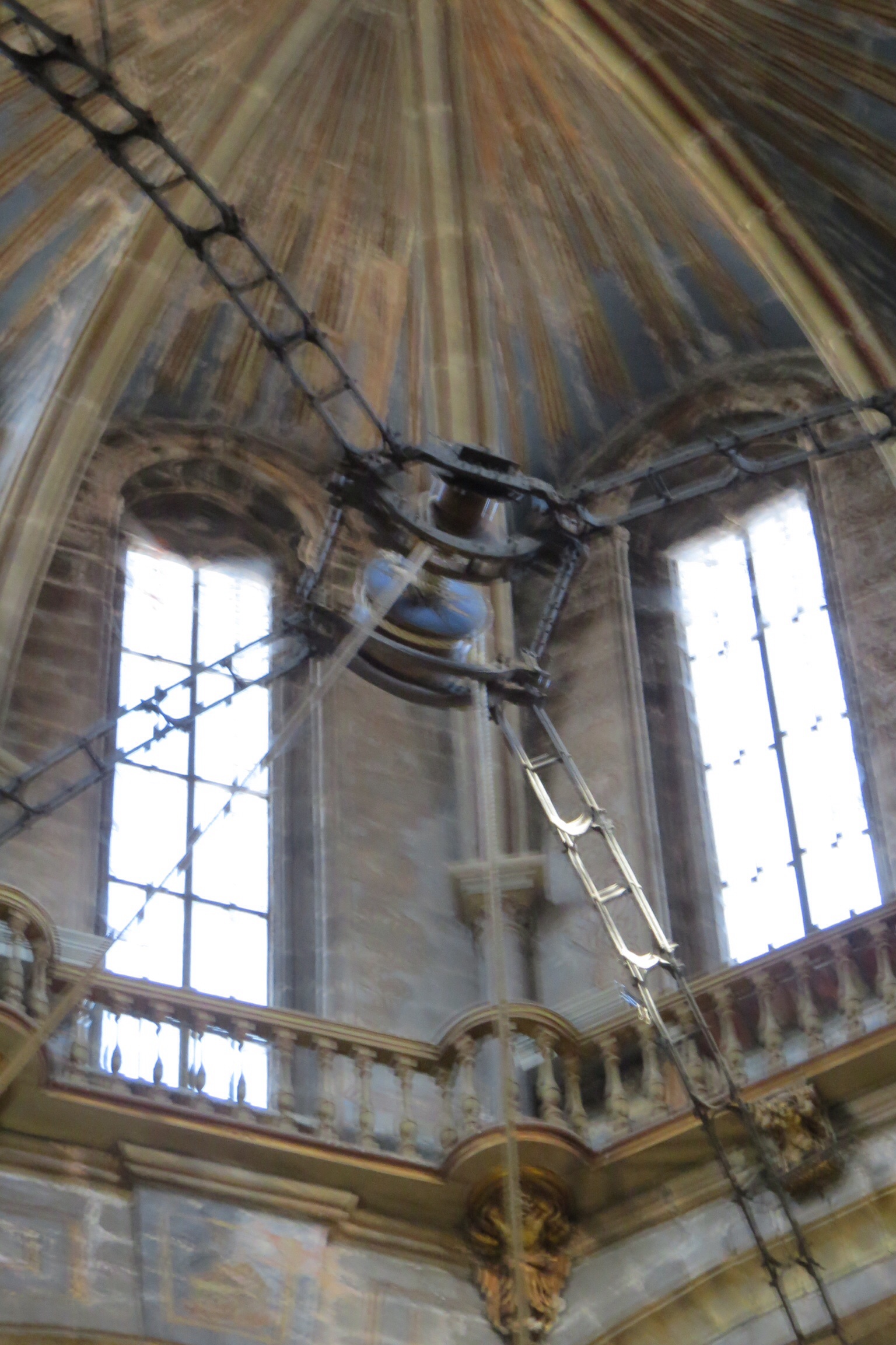
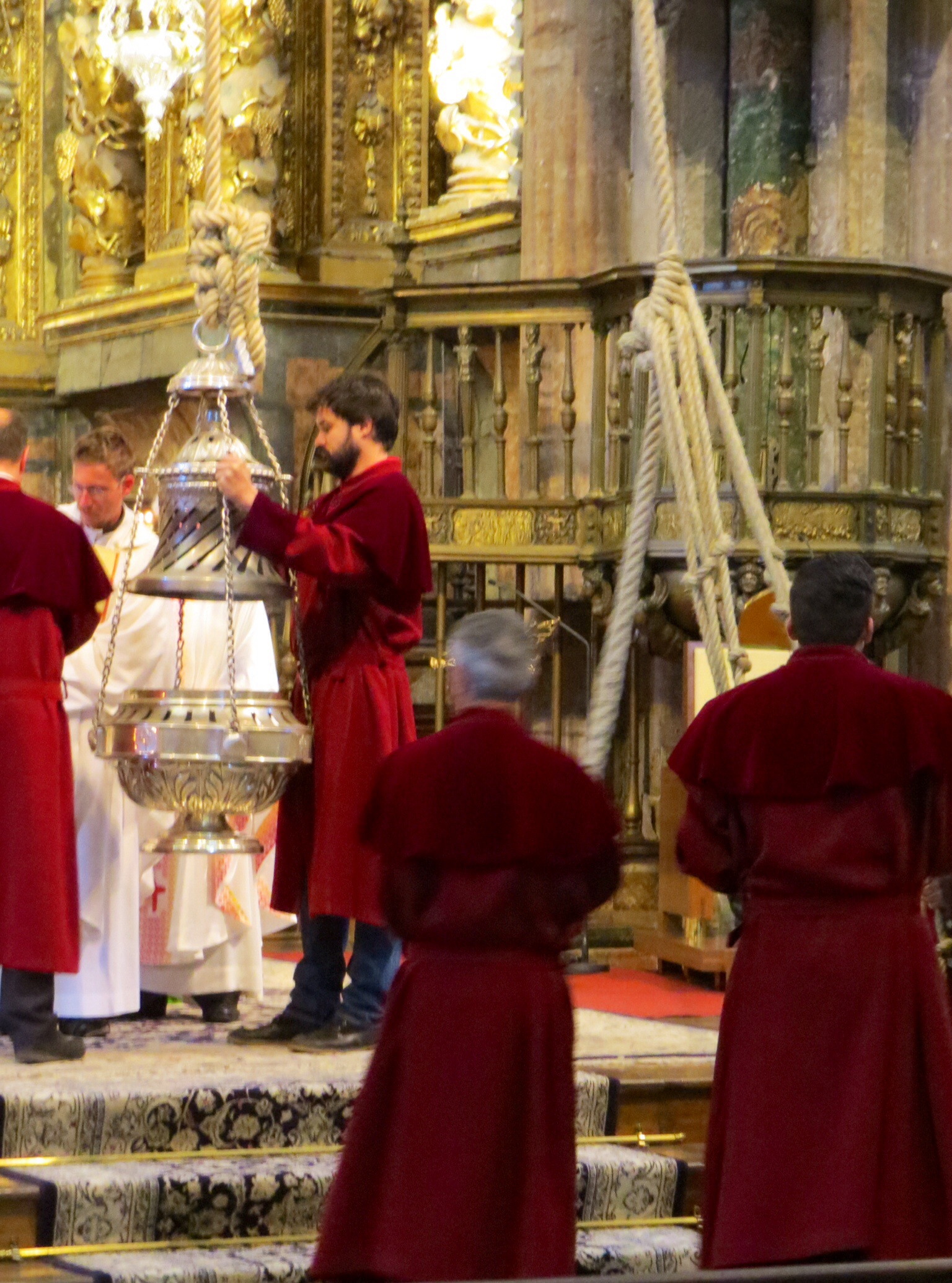
We stood for an hour waiting for the hour-long service to begin and watched as the pilgrims lined up to receive communion. They smiled, shook our hands, and said in English, “Peace be with you.” The service culminated with the Butafumaria. I snapped some still shots but used the rest of the time to absorb the experience. You can link to the YouTube video of this incredible event on my Reading and Watch List page above.

image image image image image

In the 1960’s there were, on average, 60 pilgrims walking El Camino; in 2014, 260,000 participated in the long journey toward this magnificent cathedral.

I was merely a hitchhiker on this path, but it was a privilege to breathe in the incense, and the spirit, of these seekers as they completed their amazing journey.


Jan
A bonus: A Caruna

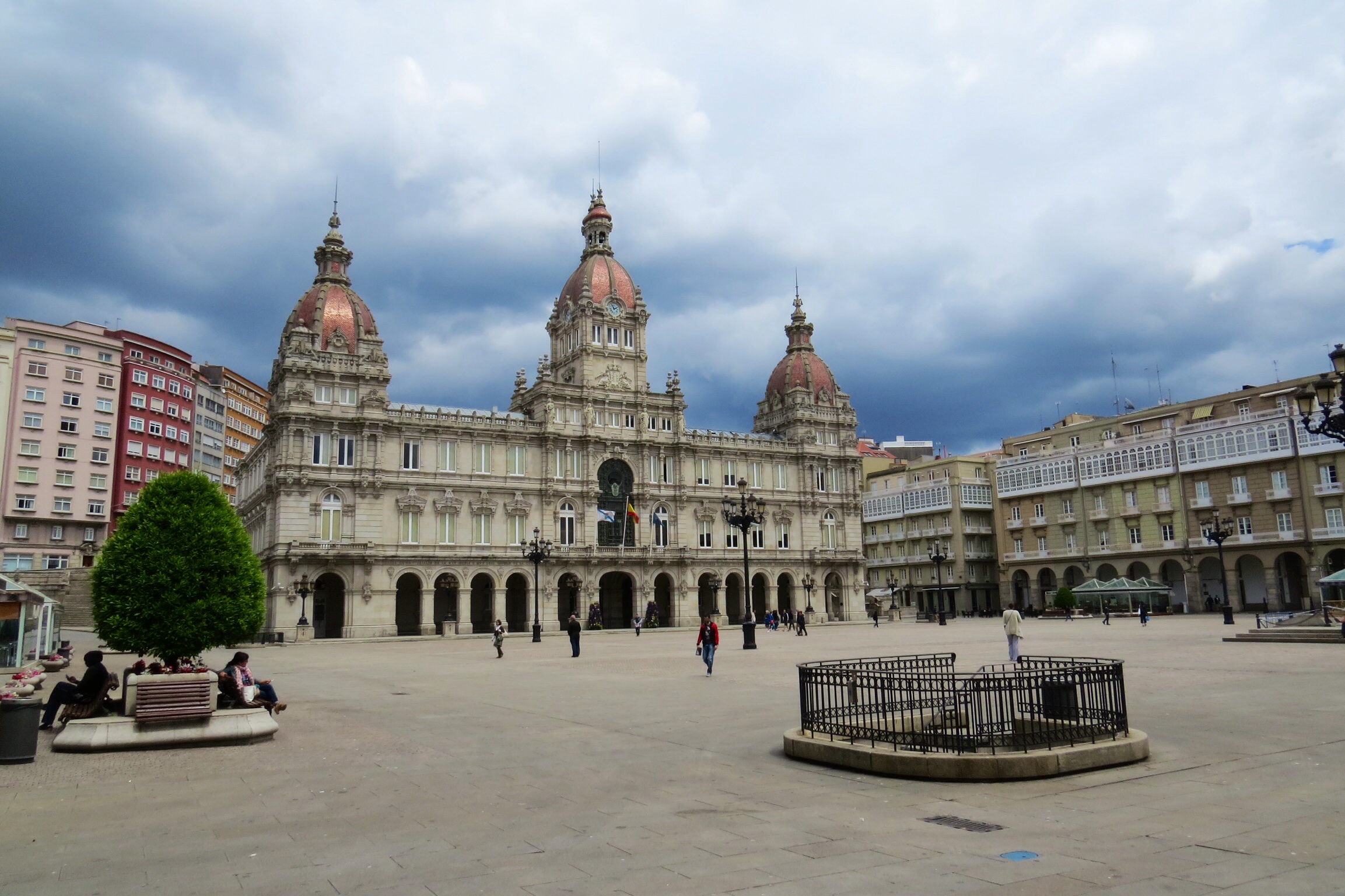
En route to Santiago de Compostela today; a slight change in schedule allowed us time for a stop in A Coruna in the Galicia region. This coastal town has a major port for shipping and cruise ships. The town sparkles with white buildings and expansive squares. A gorgeous cathedral lines the Plaza Mayor. Here we stopped for the healthiest lunch I have had so far – a delicious broth that is a local specialty followed by a salad of artichoke, white asparagus, tuna, hard boiled egg and greens.

image

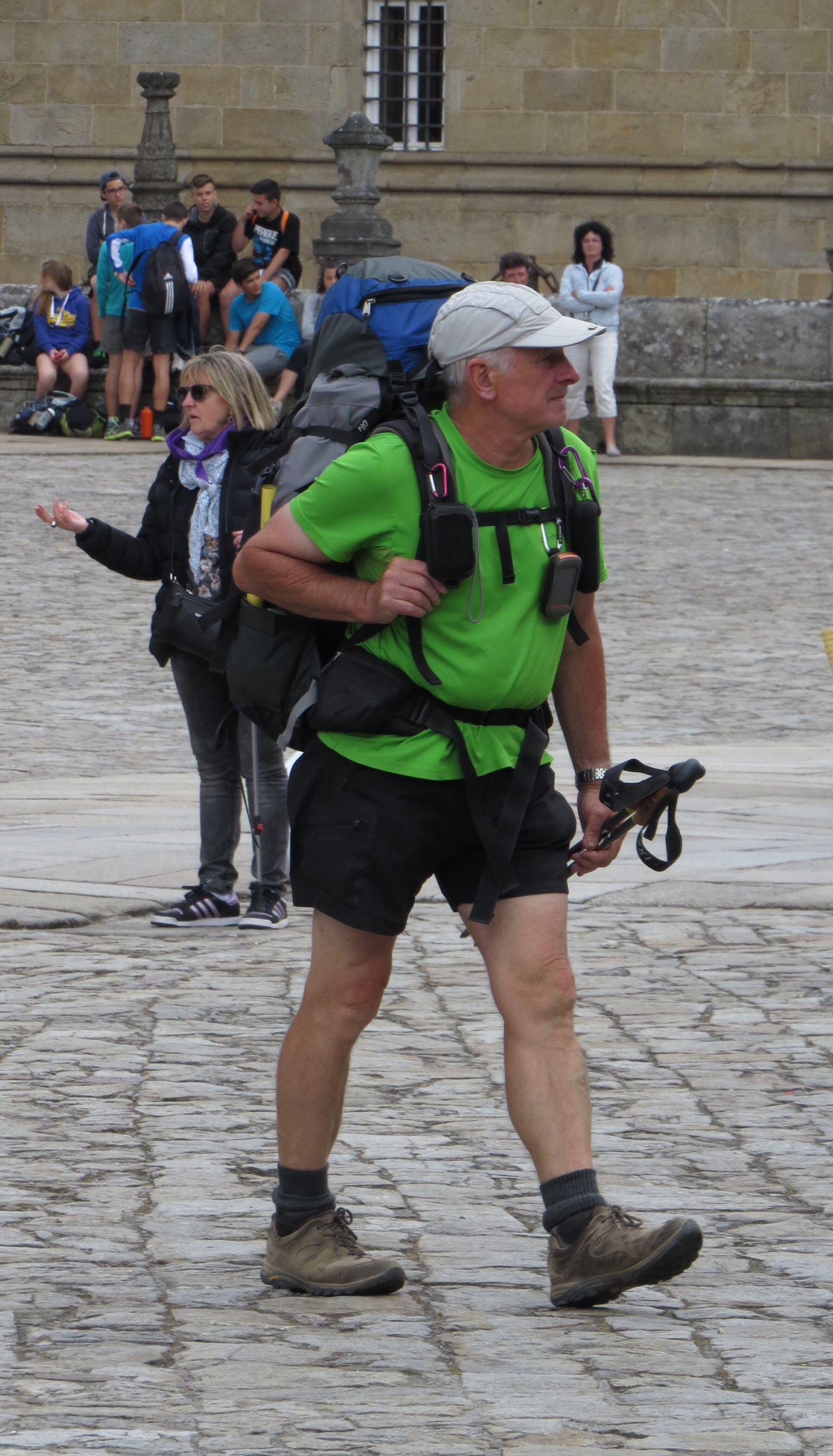
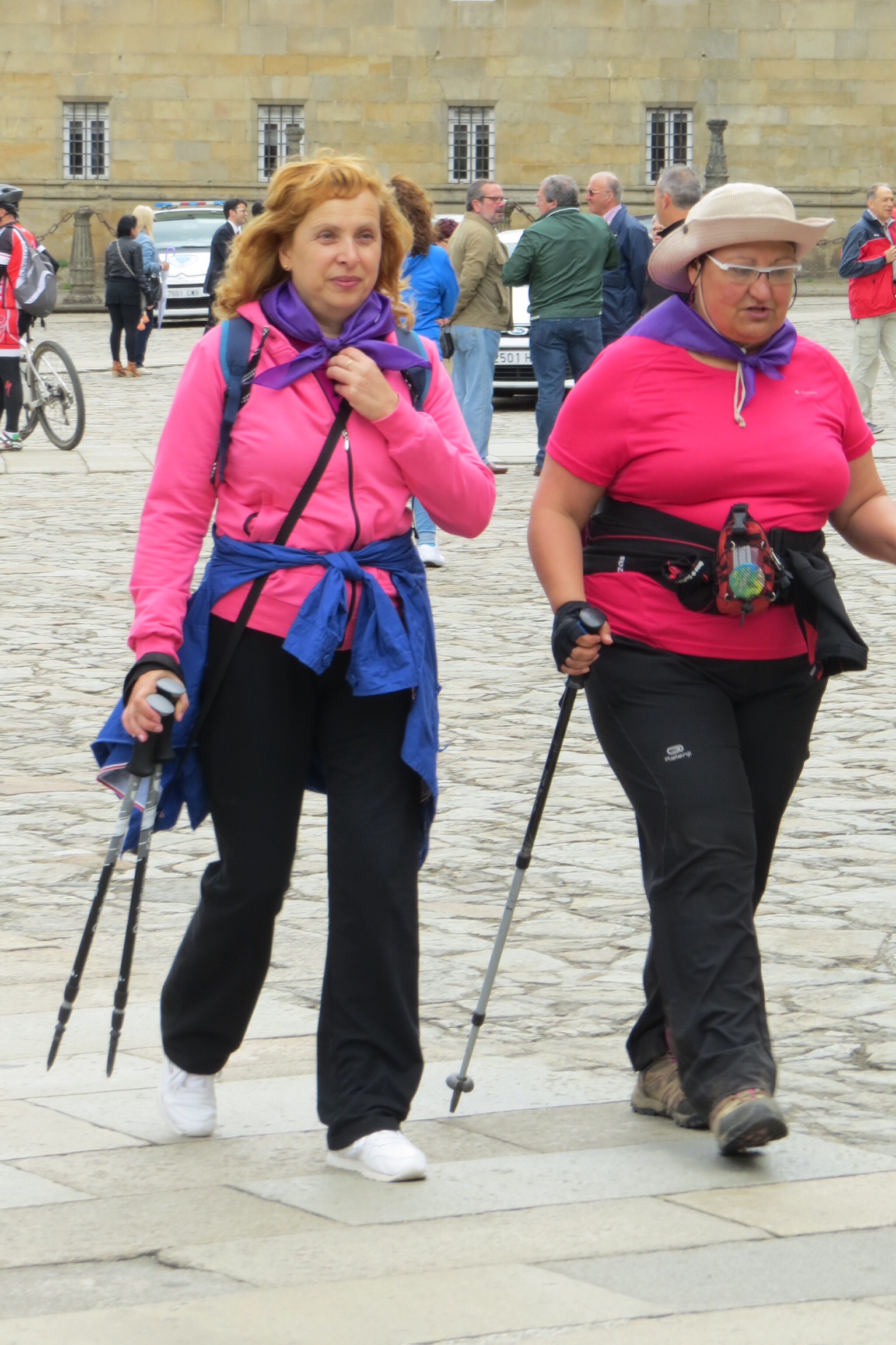
The city is on one of the many routes of the Camino pilgrimage, and we saw walkers with their backpacks and walking sticks, including a triple amputee using prosthetics.

The Galician area of Spain is another fiercely independent “nation.” Tucked into the northwest corner of Spain bordering on Portugal, the Galicians’ unique language sounds like a blend of Portuguese and Castillian. They have their own cuisine and a proud history that predates the 1492 union of Spain.
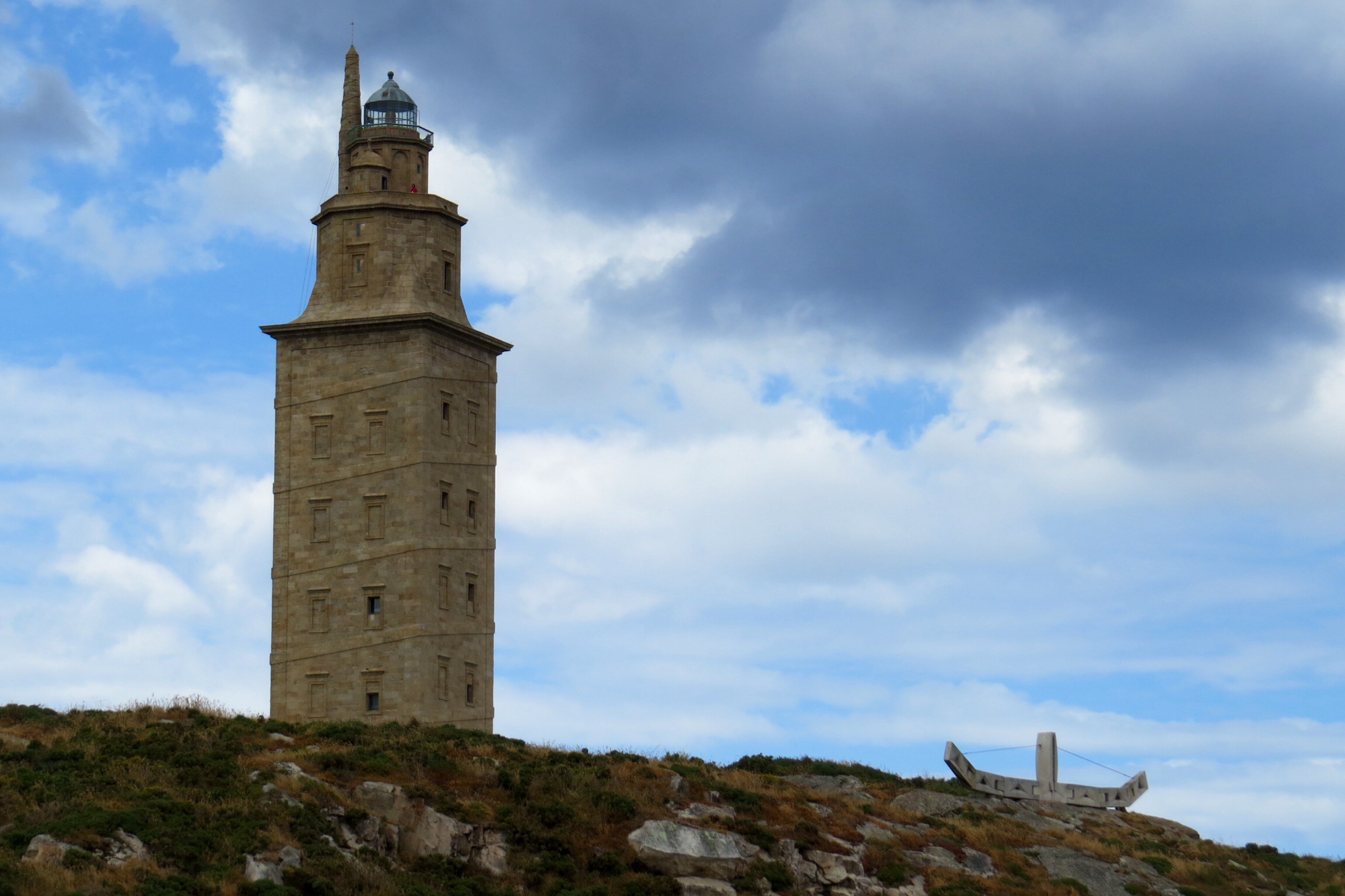
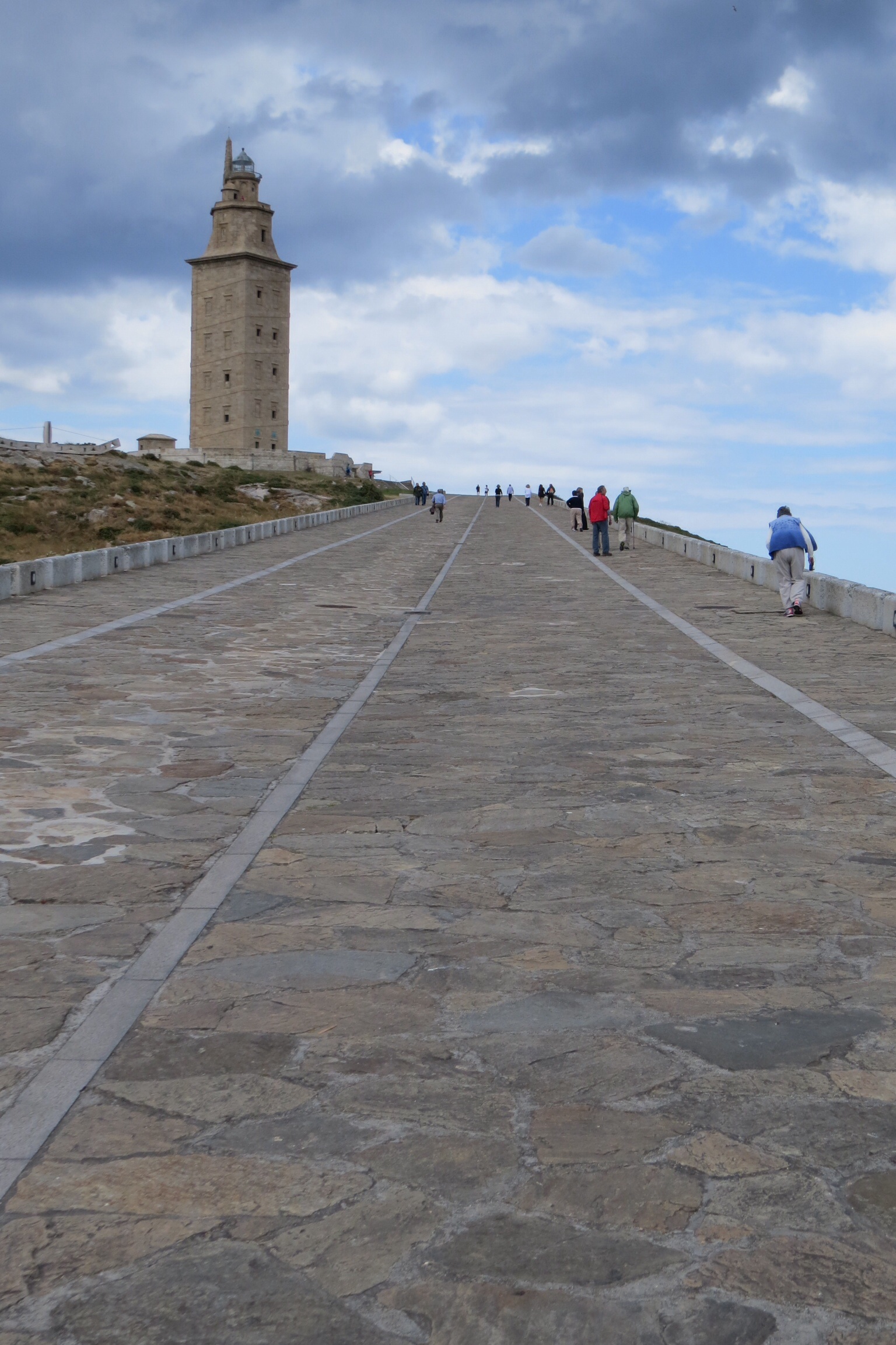
After lunch we had a side tour of the city including a stop at the UNESCO world heritage site: the Roman tower of Hercules. It was built by at least the 2nd Century AD, modelled on the lighthouse at Alexandria.

imageimageimage

Most tours have tightly controlled regimes which don’t deviate – one of the things making this trip so special is the spontaneity and local knowledge of Rosa and Chrissy. There seem to be new surprises every day!

Jan

imageimage

Eating Light

We started our day with a bus/walking tour of Oviedo, again led by Rene. He said, repeatedly, with a perfectly straight face, “c’mon, I show you the next place — we go with happiness.”

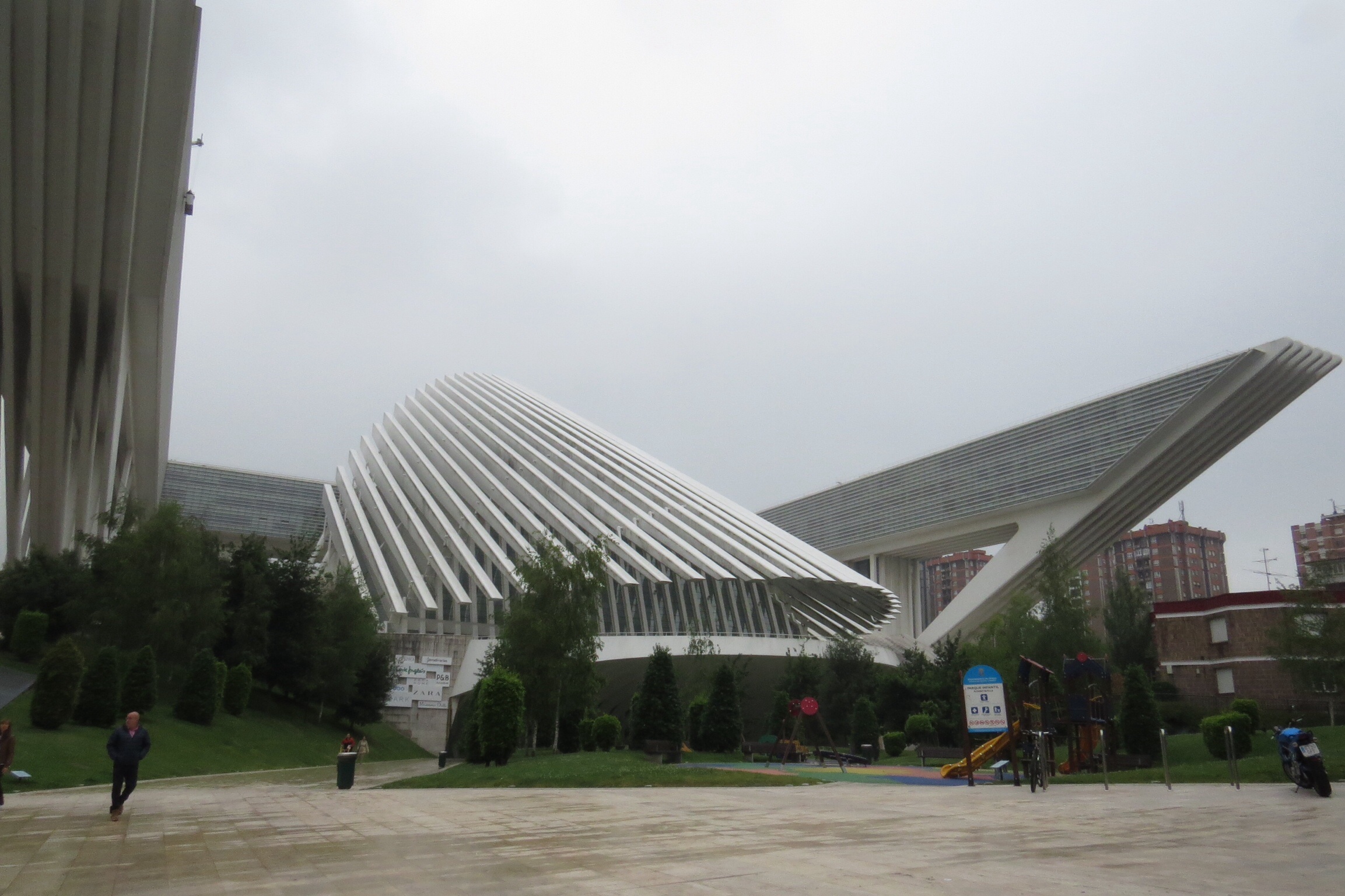
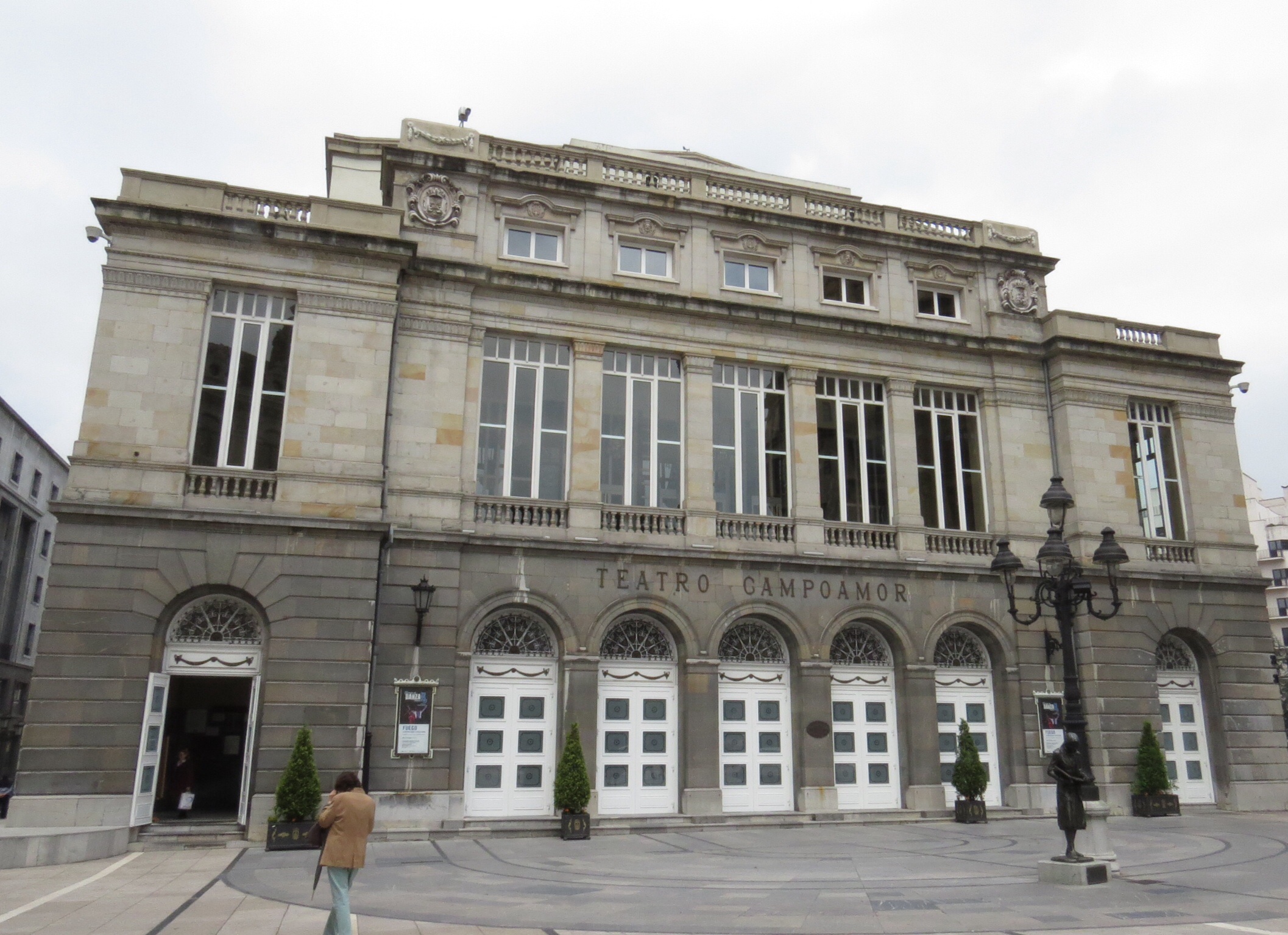
At Chrissy’s request we were taken for a photo opp of the modern architecture of famed Spanish architect Santiago Calatrava.

image image

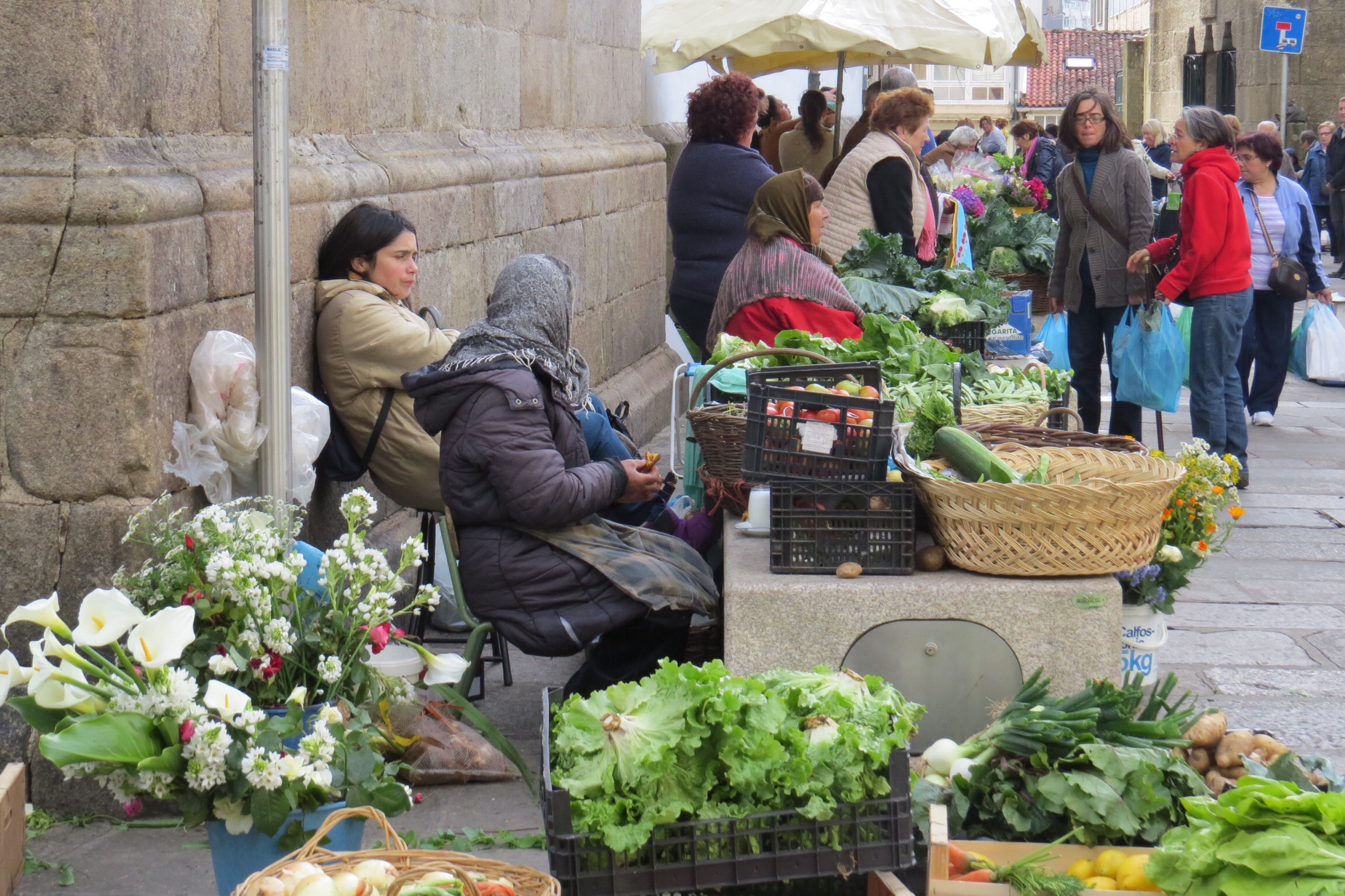
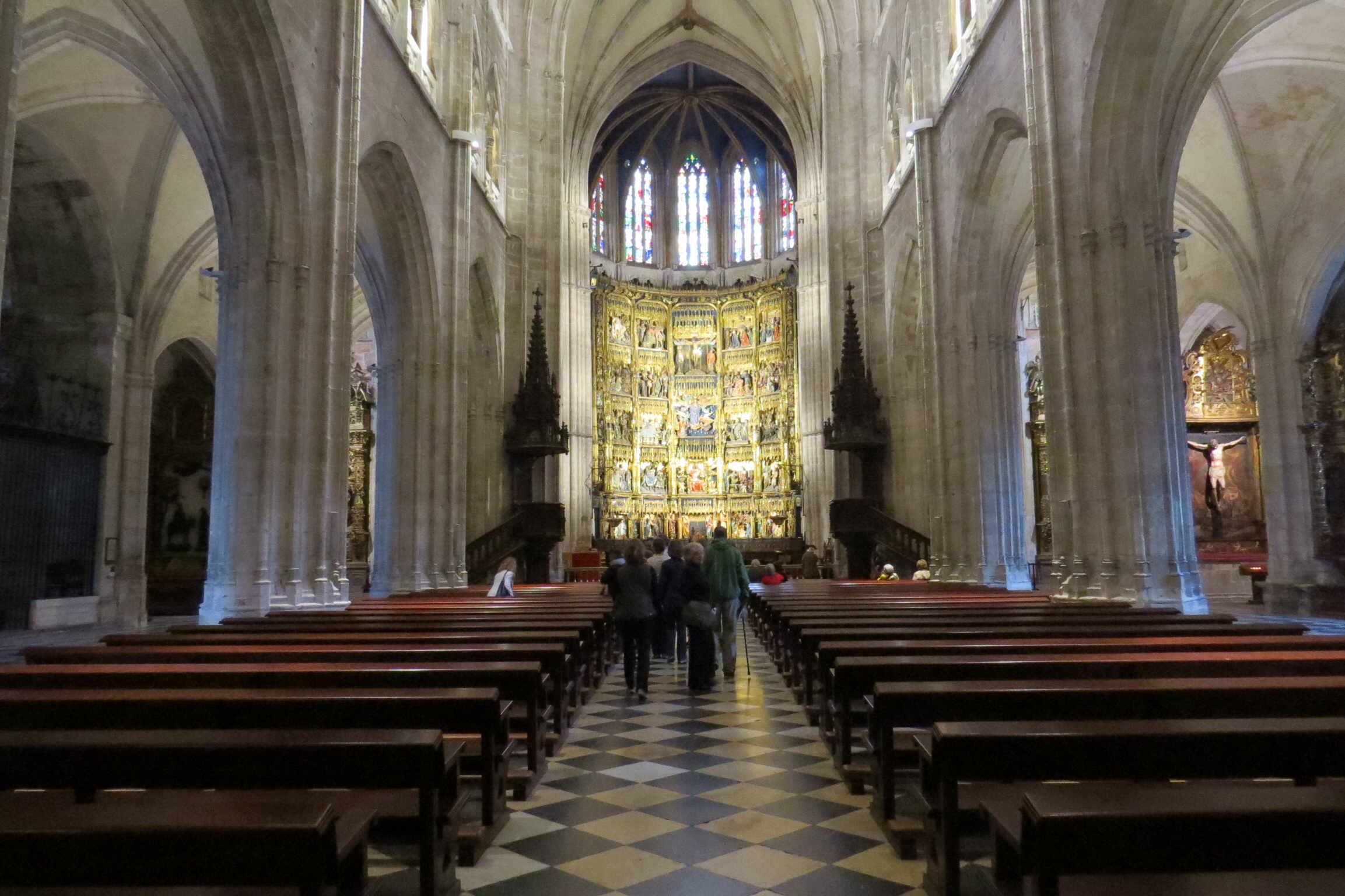
After visiting this dramatic grasshopper of a building, we walked to the old town. We visited the beautiful Cathedral of San Salvador and a fantastic market full of fish, meats and cheeses. We had decided to “skip” dinner tonite and everyone picked up items from the market for an 8:00 pm casual get together.

image image image

image

image image image
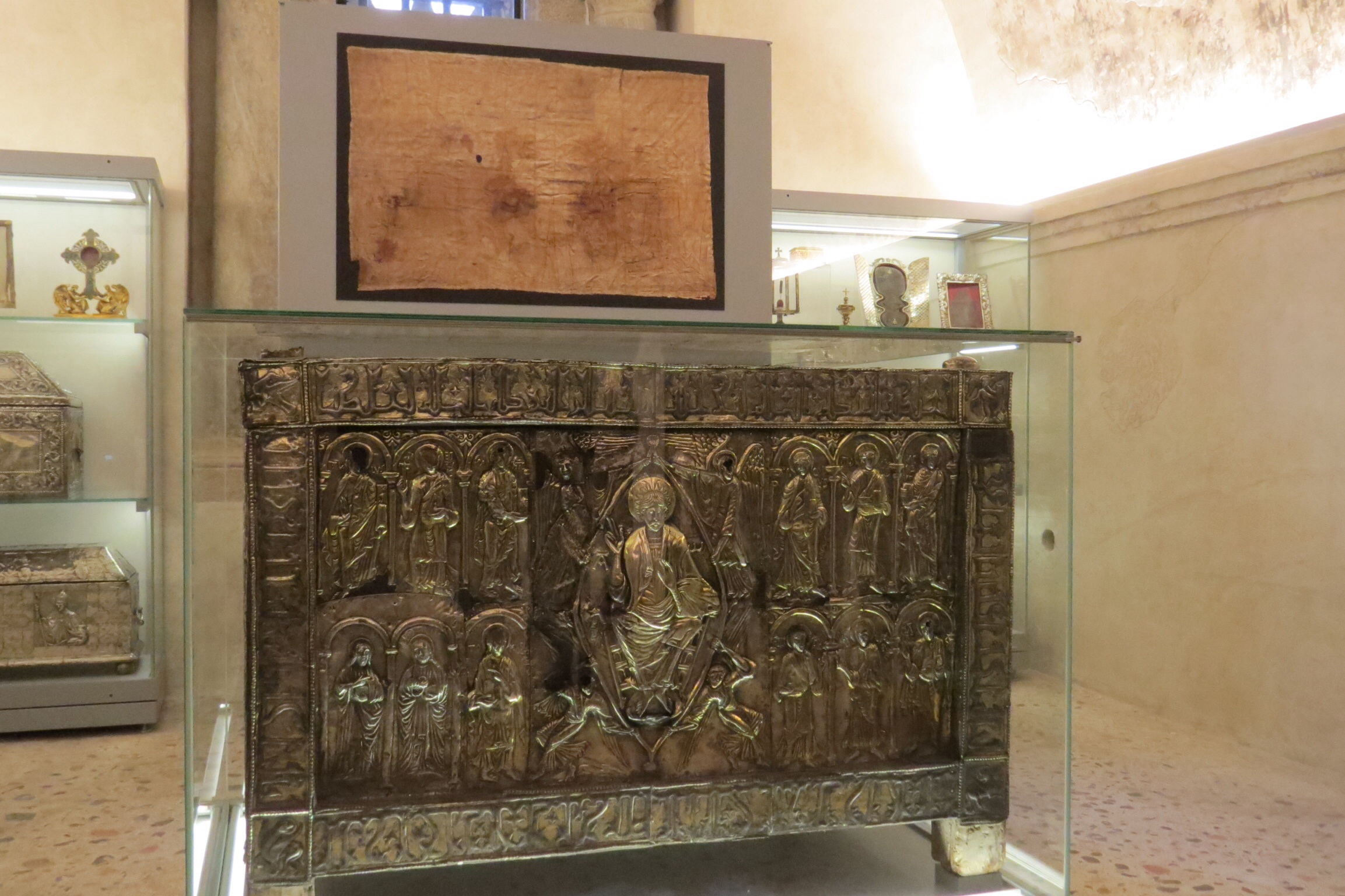
The shroud, which gave purpose to this cathedral

imageimageimage

In the meantime, lunch was necessary. Our menu lunch included the best starter yet, large, sweet onions stuffed with tuna and baked. It was good enough to warrant licking the bowl; luckily we had bread to keep us polite. Of course we had to have more local sidre to fill out the meal. The onions were a hard act to follow and the stuffed sole wasn’t my favourite, but overall, I haven’t had a meal I haven’t loved in Spain.

imageimage

More shopping and visits to both art galleries rounded out the day.  We continue to find the markers showing we are still following the Camino, the long route the pilgrims take to Santiago de Compostela.

image

Chrissy arranged for us to use the breakfast room for our evening “meeting,” which involved a pot luck feast of gorgeous cheeses, bread, chorizo, sweets, red and white wines, sidre, and dessert wine from our winery visit. “No dinner,” indeed.

Jan