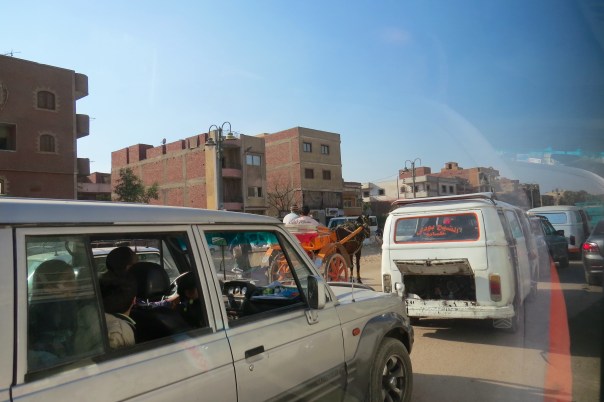
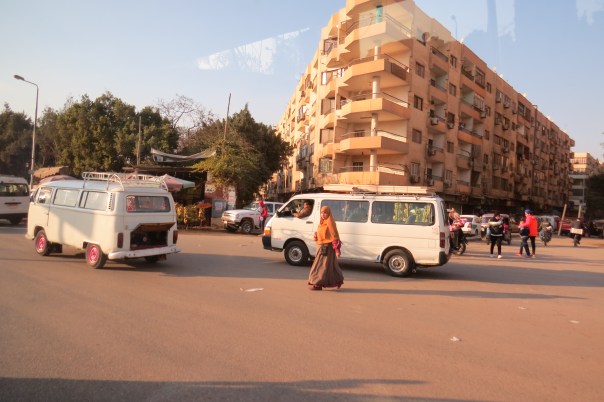
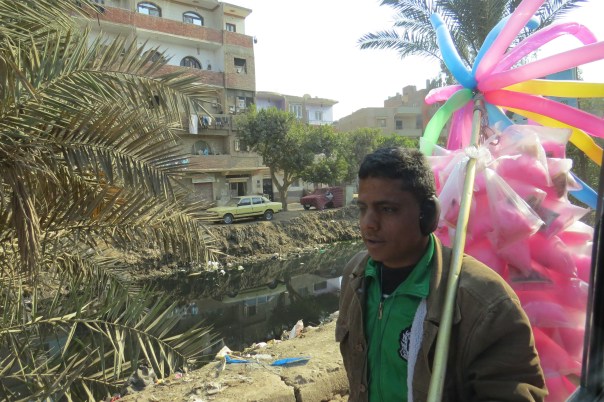
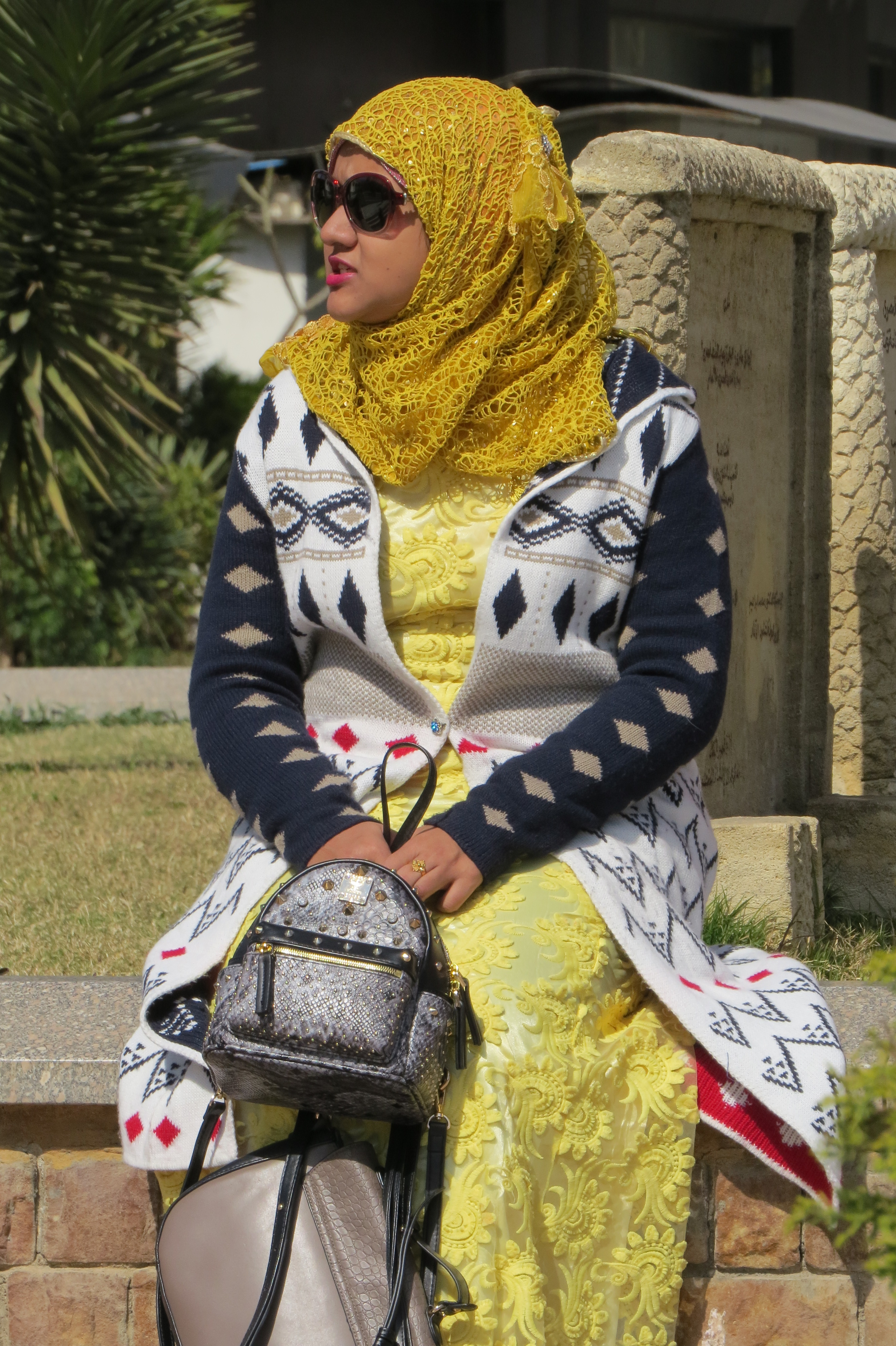
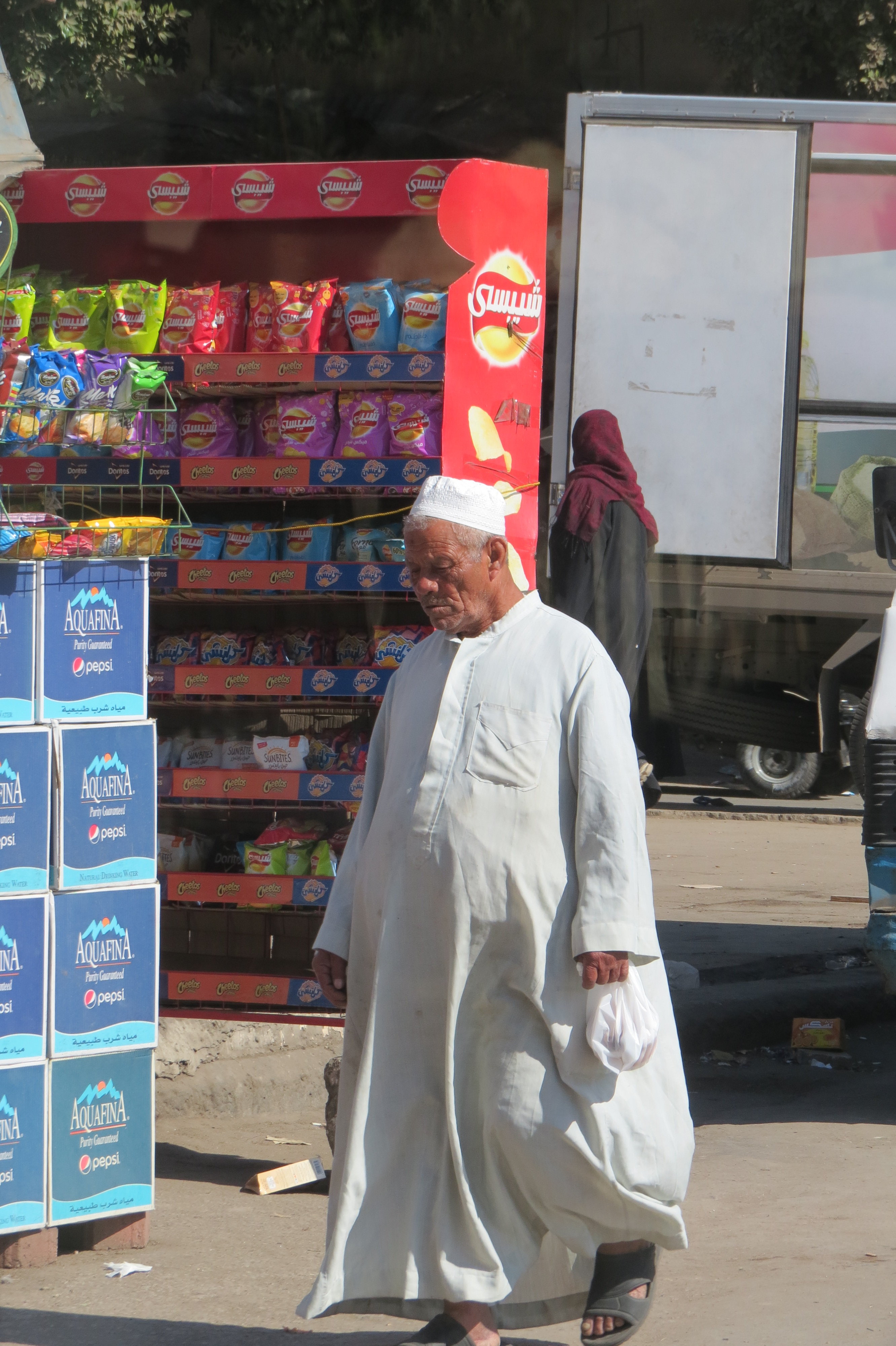
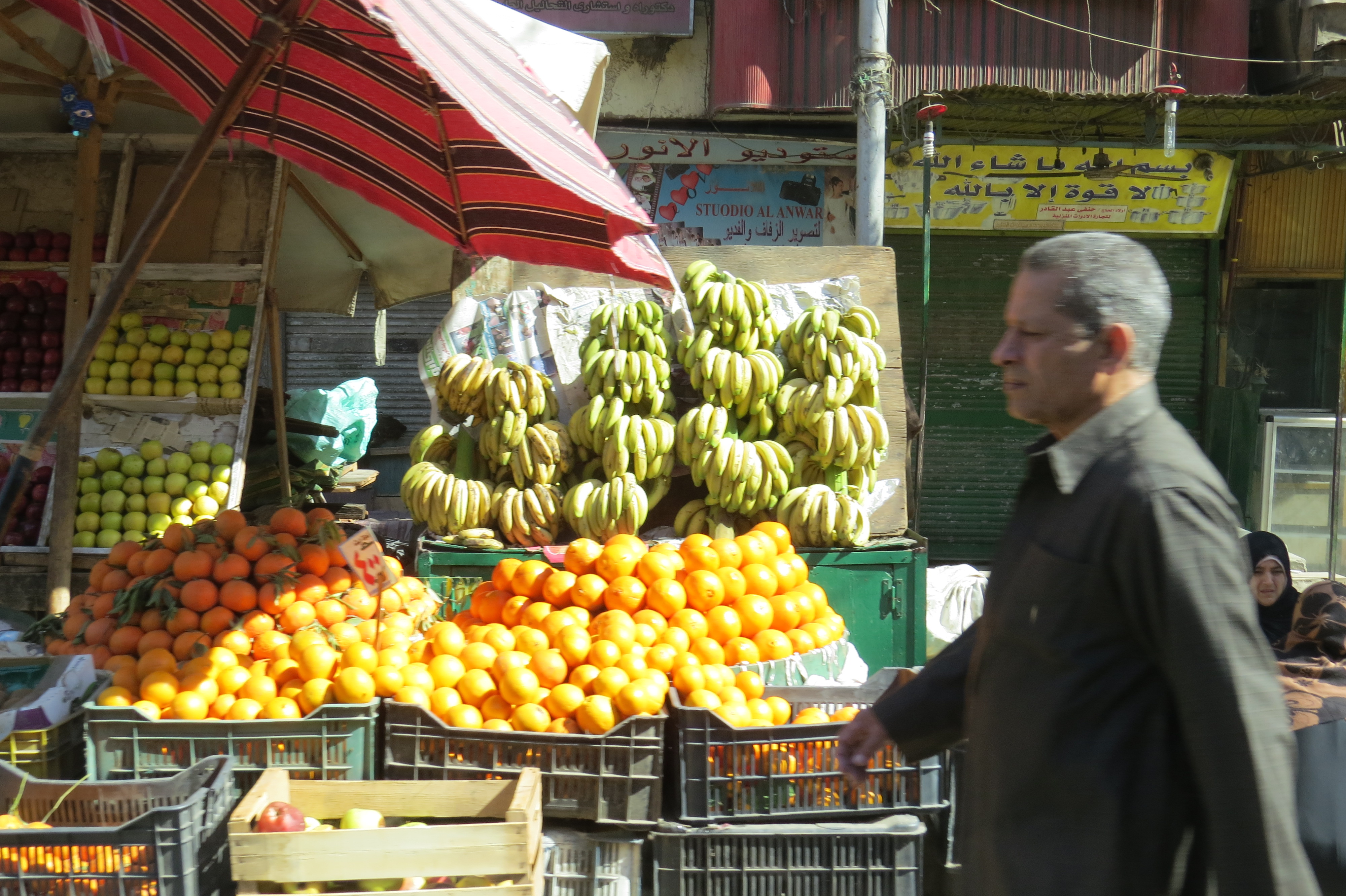
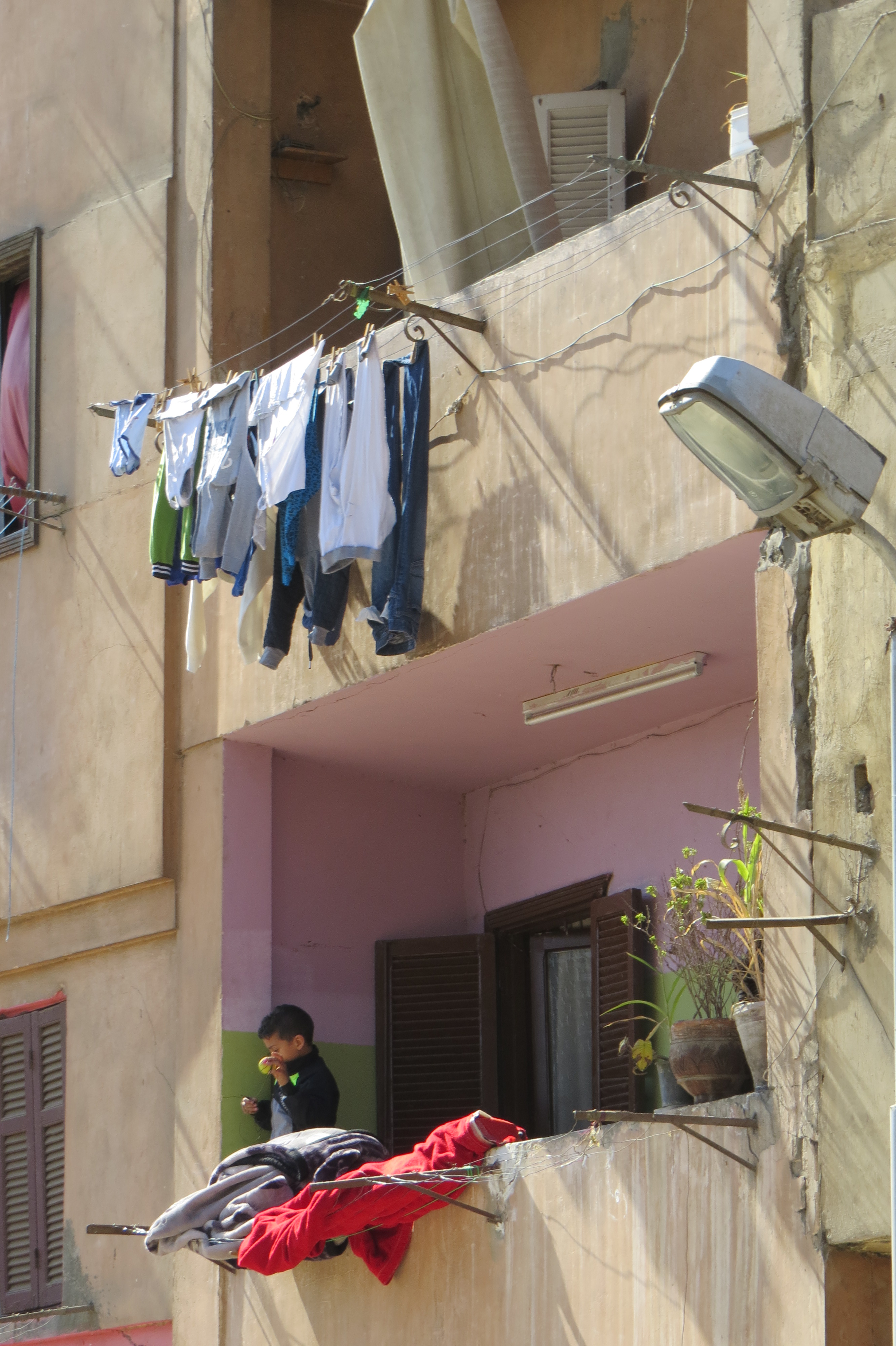
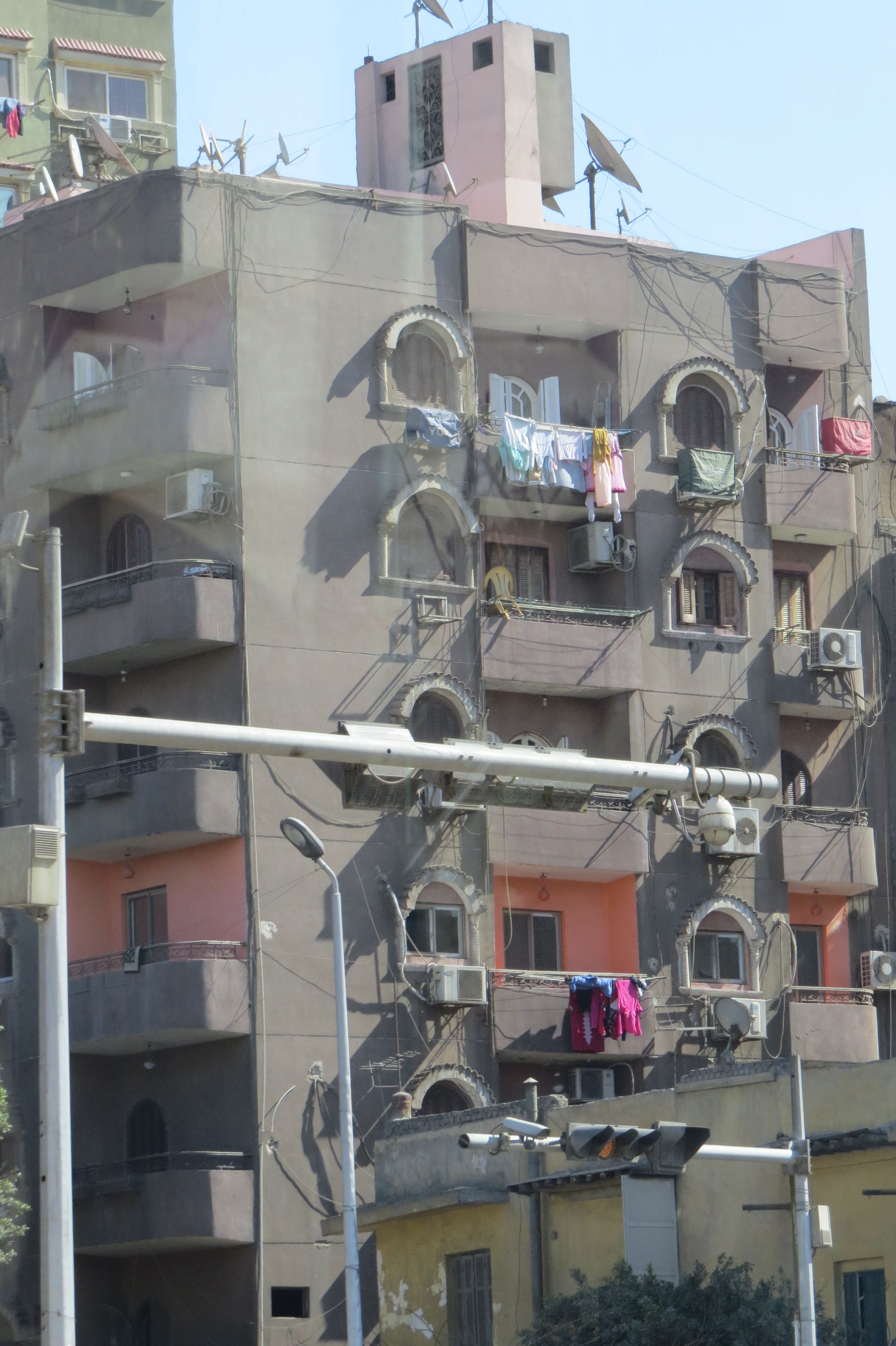
…but only from the perspective of the millions of the poor cars consigned to drive in Cairo. No lanes? No problem – just honk! 10 lanes across, and every car, from beaters to antique to luxury, have dents and sidescrapes. I don’t think there are auto body shops here – what would be the point? However, there don’t seem to be major accidents, likely becauseno-one can travel fast enough! We had dinner at a restaurant on the 14th storey of a building and could still hear the cars and trucks honking below. But they are not the familiar annoyed, impatient honks of Canada, they are friendly little toots that are used to alert one another. Hey! I’m squeezing in! Hey! I’m comin’! Hey! I’m passing you! And alongside the cars are donkey wagons, water buffalo, horses, scooters with 5 people on them, tuk-tuks and just about anything else you could imagine.
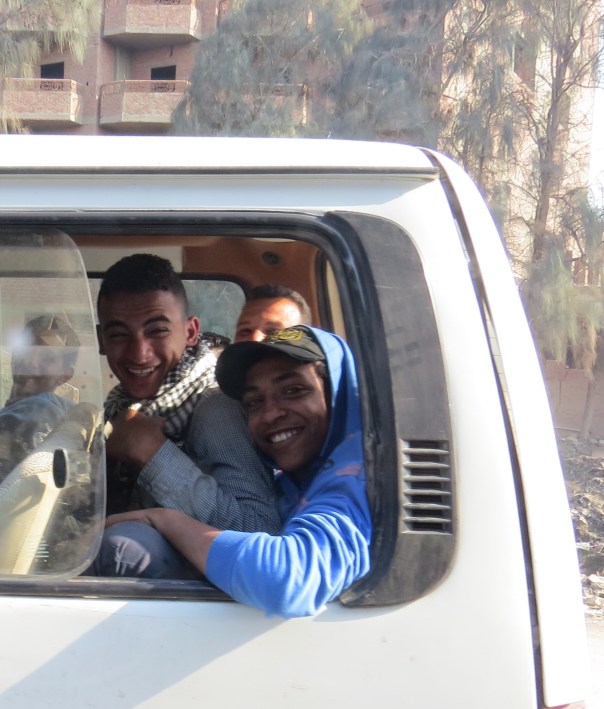
In the traffic jams we have been having a blast with the children crammed into school vans like anchovies, they have beautiful smiles and the teens hold up air cameras, click, click, take a photo of me!
Everyone asks, why Egypt, is it safe? It is as safe here as almost anywhere else in the world right now, 5 years post-Arab spring and with a stabilized government in place. And security is incredible here, precautions are being taken and our safety is assured.
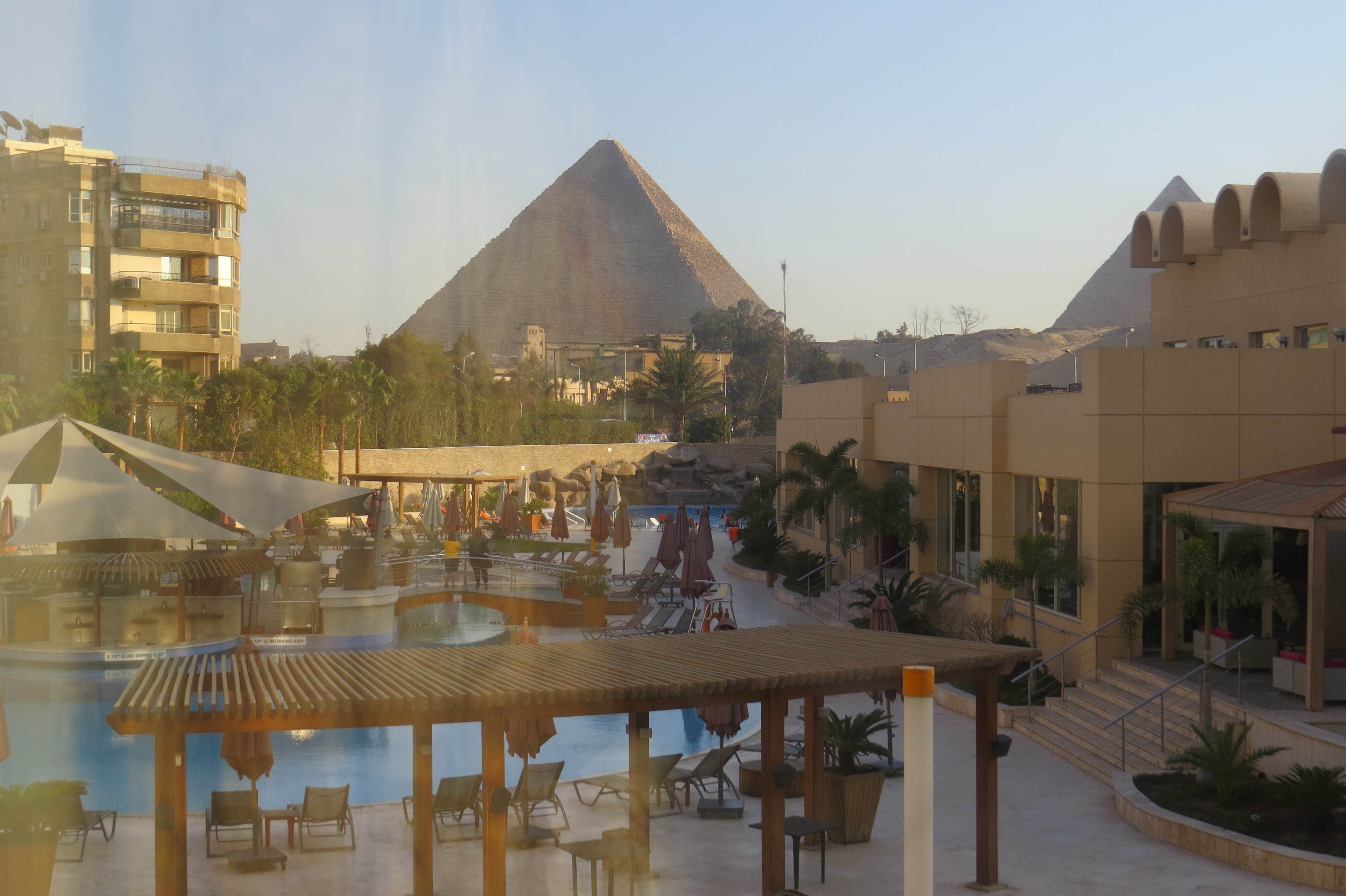
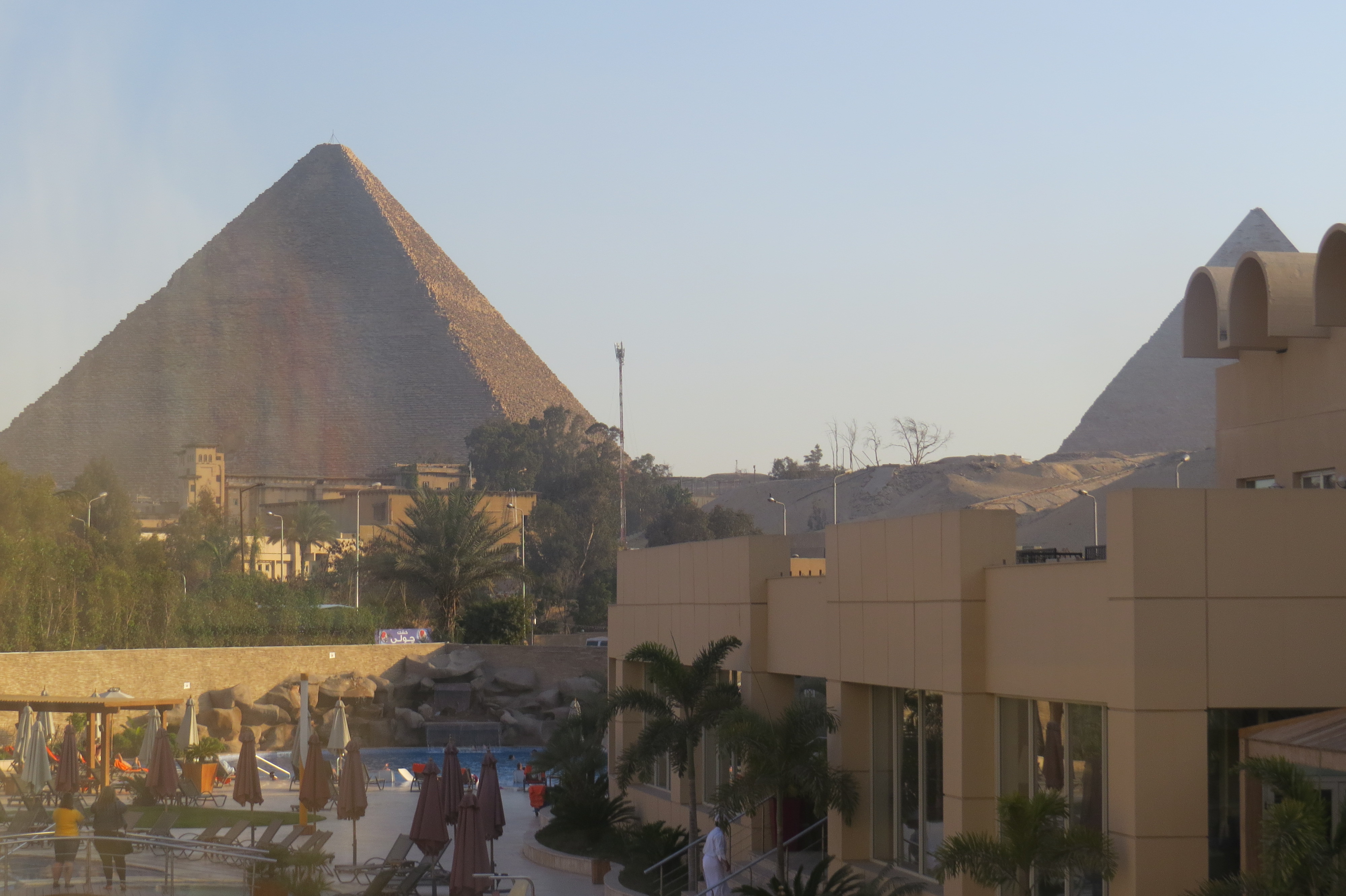
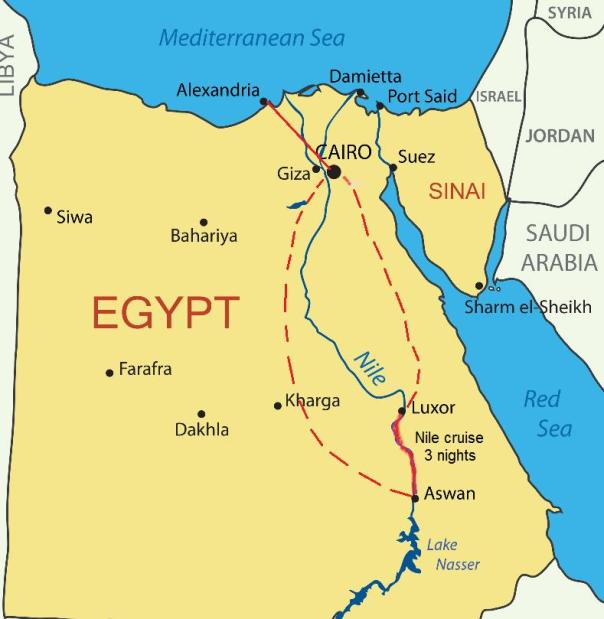
First steps on another journey, this time to one of the most mystical, magical places on Earth. Home to the only remaining intact wonder of the ancient world, the pyramids will fall on my gaze as soon as tomorrow nite. From the fascinating, teeming culture of Cairo, the awe of Alexander the Great in Alexandria to the tombs of some of the most powerful leaders the world has ever known, I am restless with anticipation.
The plan is to travel by air, camel, fallucca sailboat, horse and buggy and more.
From Hatshepsut to Cleopatra, I am looking forward to immediate, tactile impressions of powerful women in Egypt’s history. Off I go!
Our travels on the islands were busy and we had little to no wifi access so I am just starting to catch up. Starting out, as we flew our little puddle jump from Victoria to Vancouver, looking down at the gulf islands glistening in sunlight, I wondered, do I really need leave these islands to go to some other islands?
Paros
After our flights and an overnight stop in Athens, we boarded a Blue Star ferry bound for our first destination, the island of Paros.
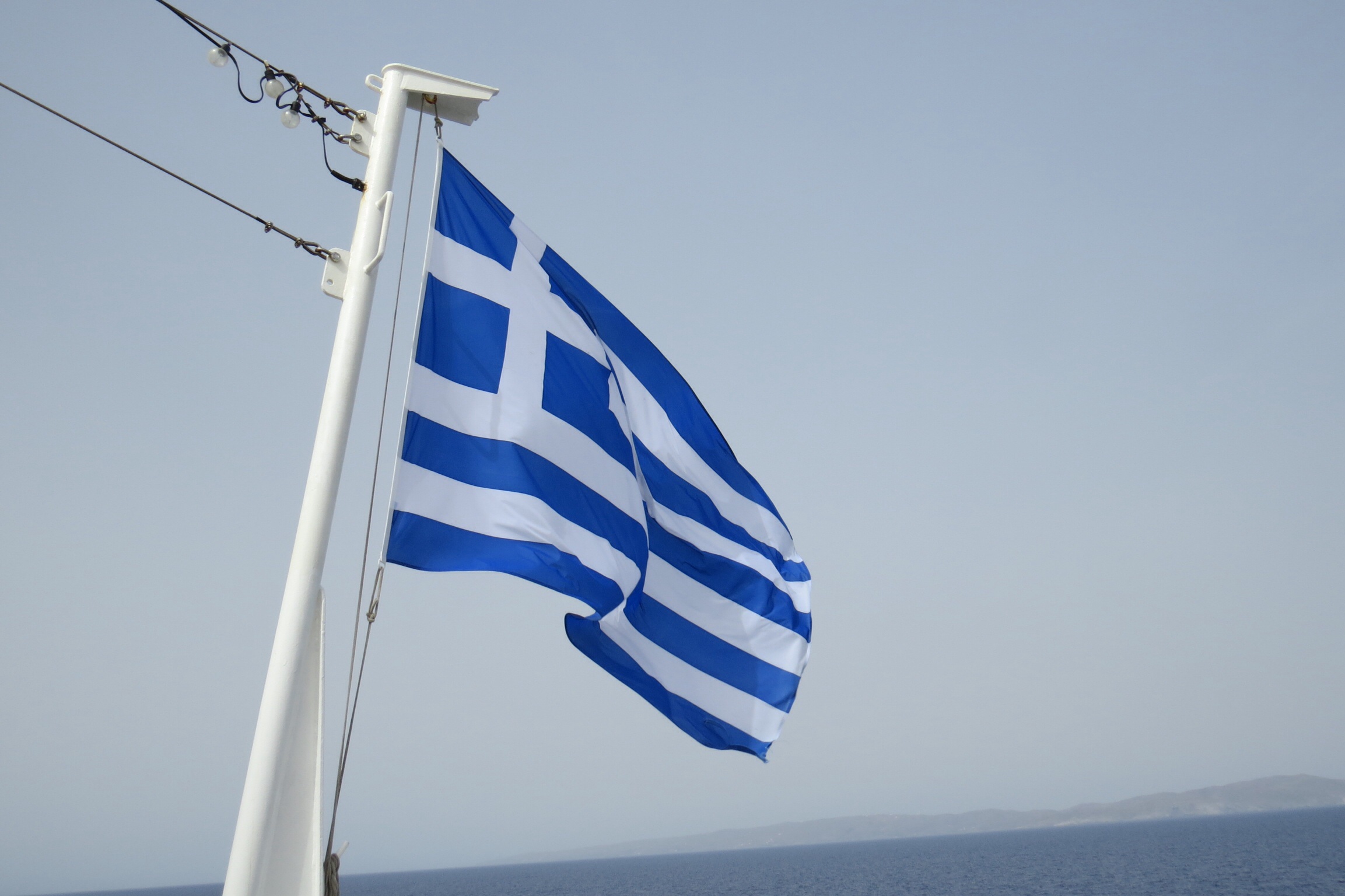
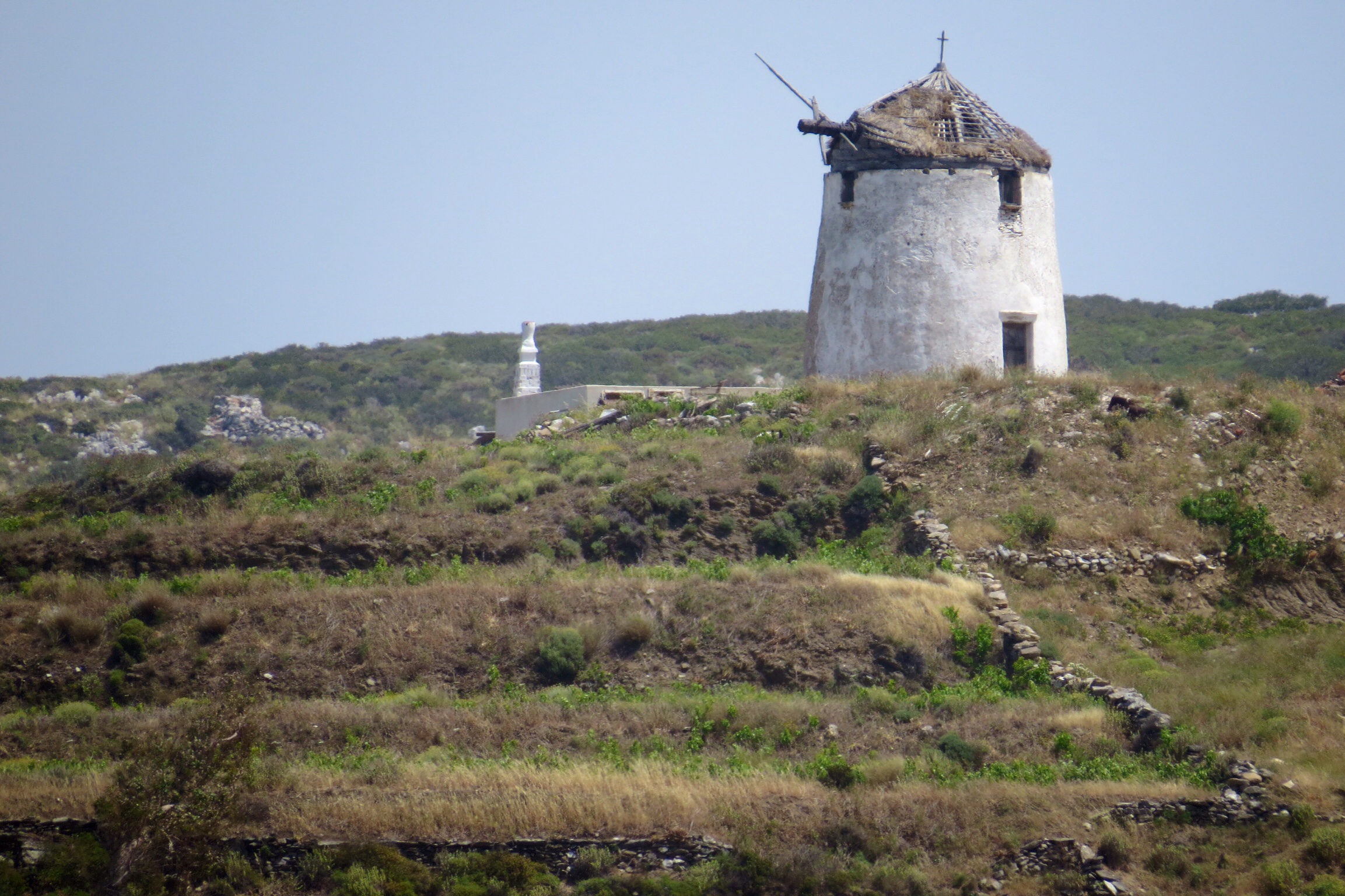
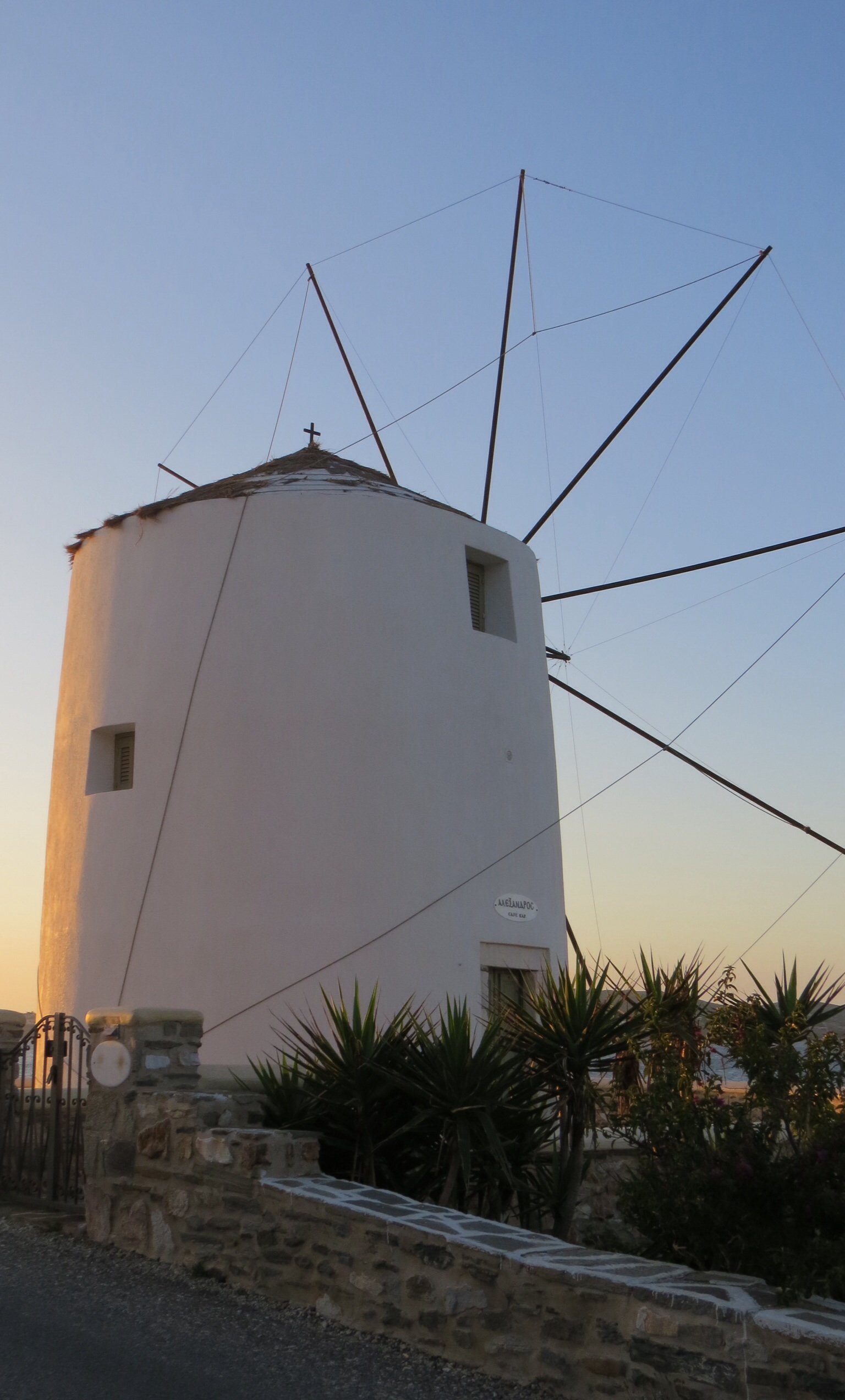
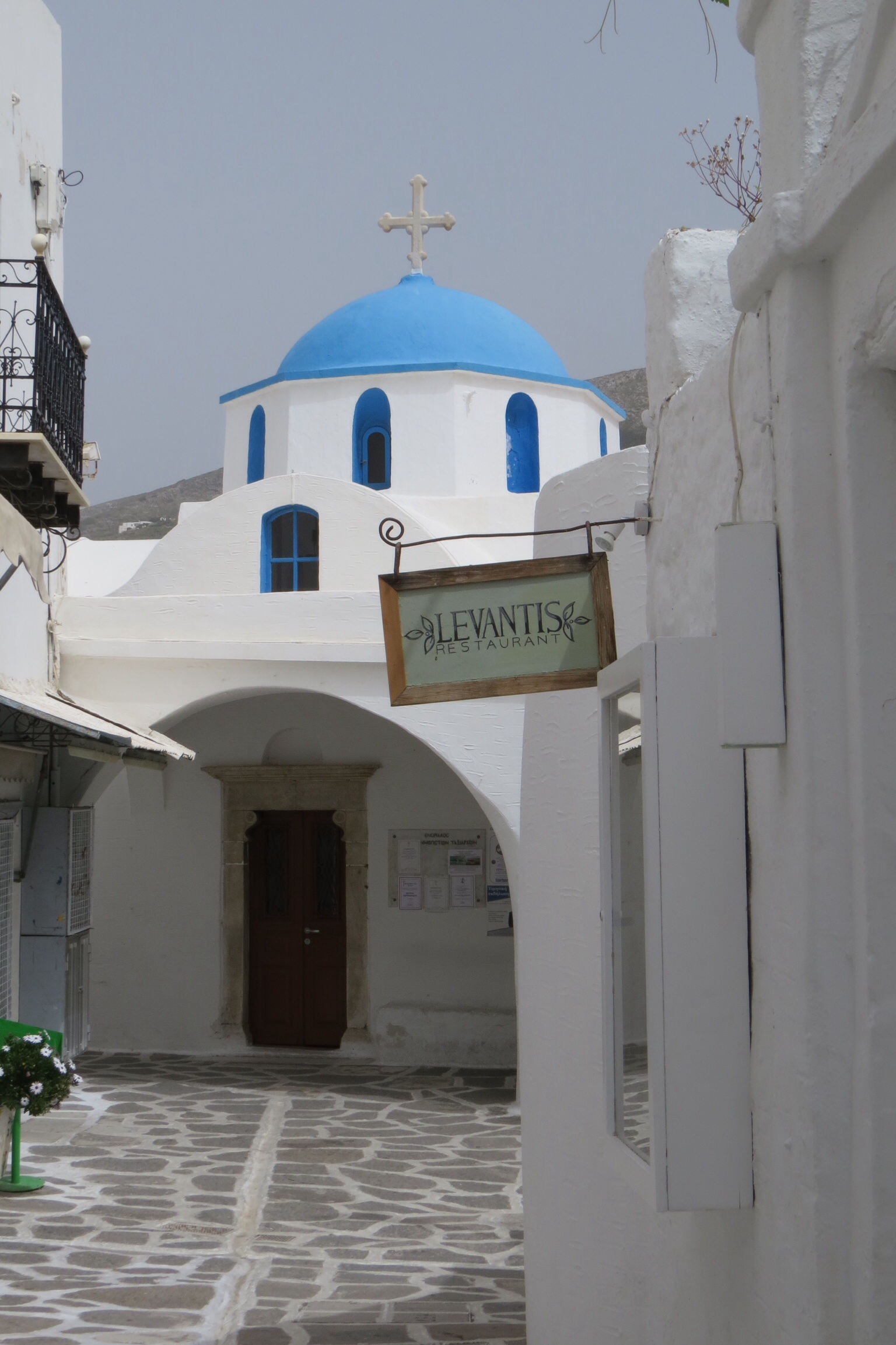
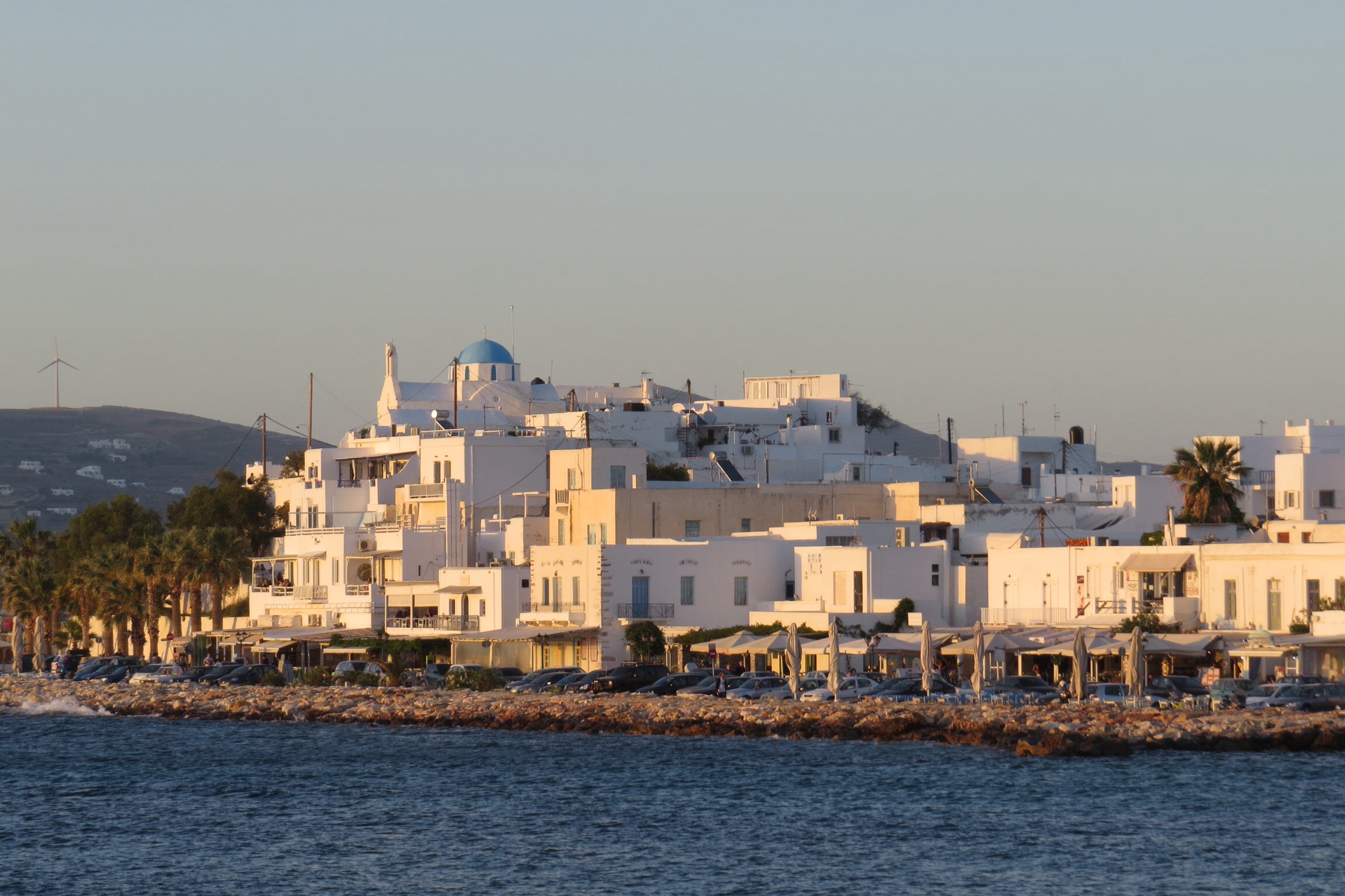
The island is dotted with windmills and the familiar blue domes of countless churches and family chapels on the Cycladic islands.
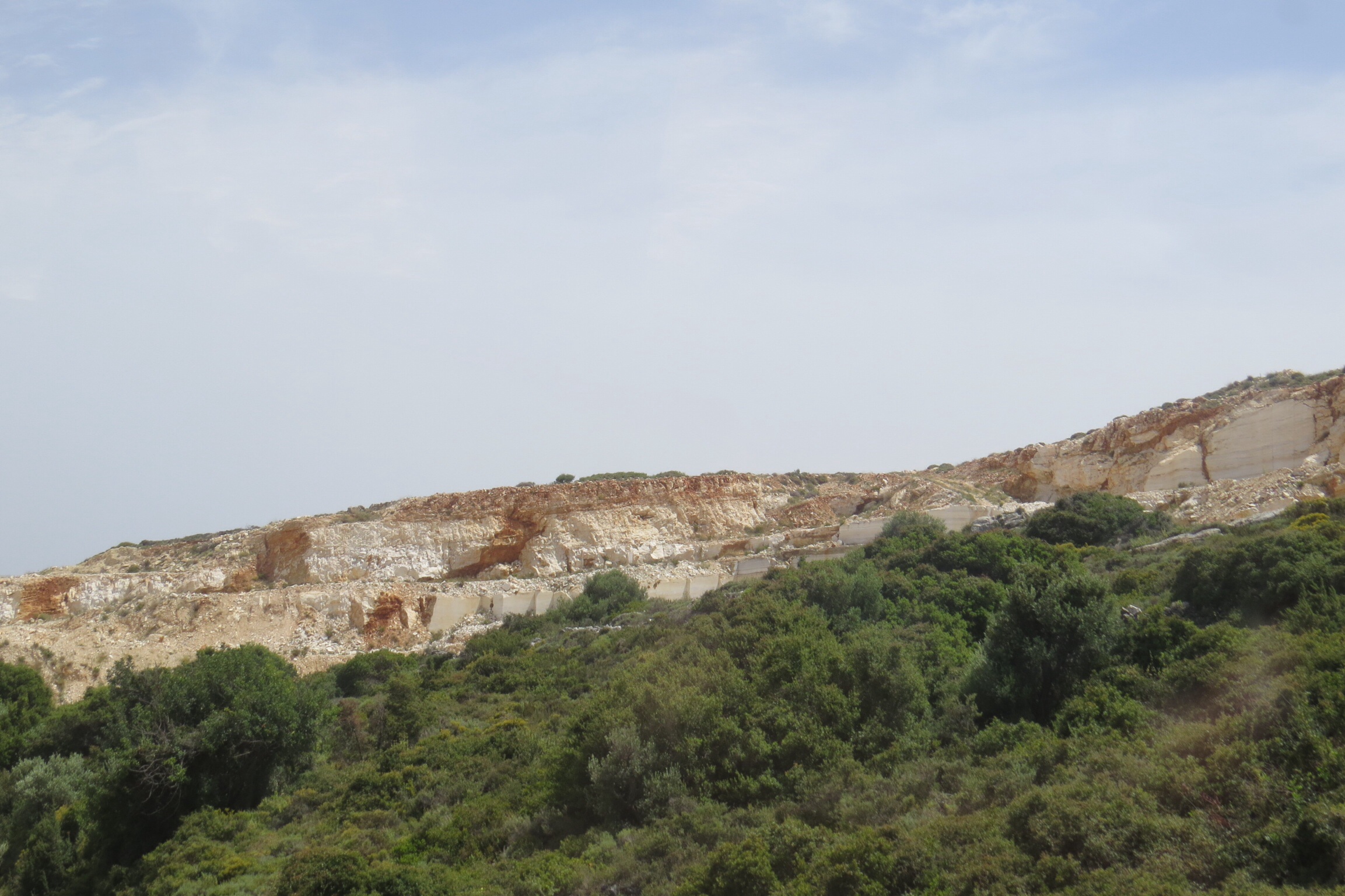
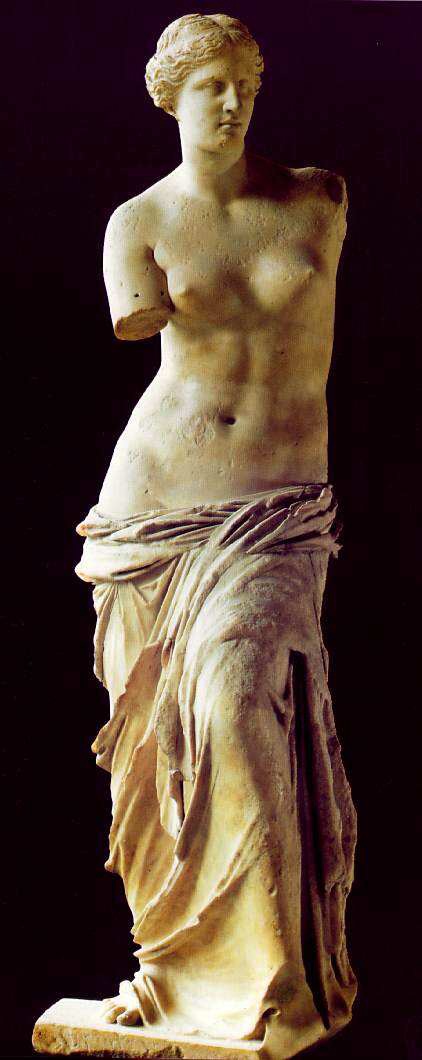
Filled with marble, the island has quarries, ancient and modern. The Venus de Milo, discovered here, was carved of marble from this island.
Venus de Milo
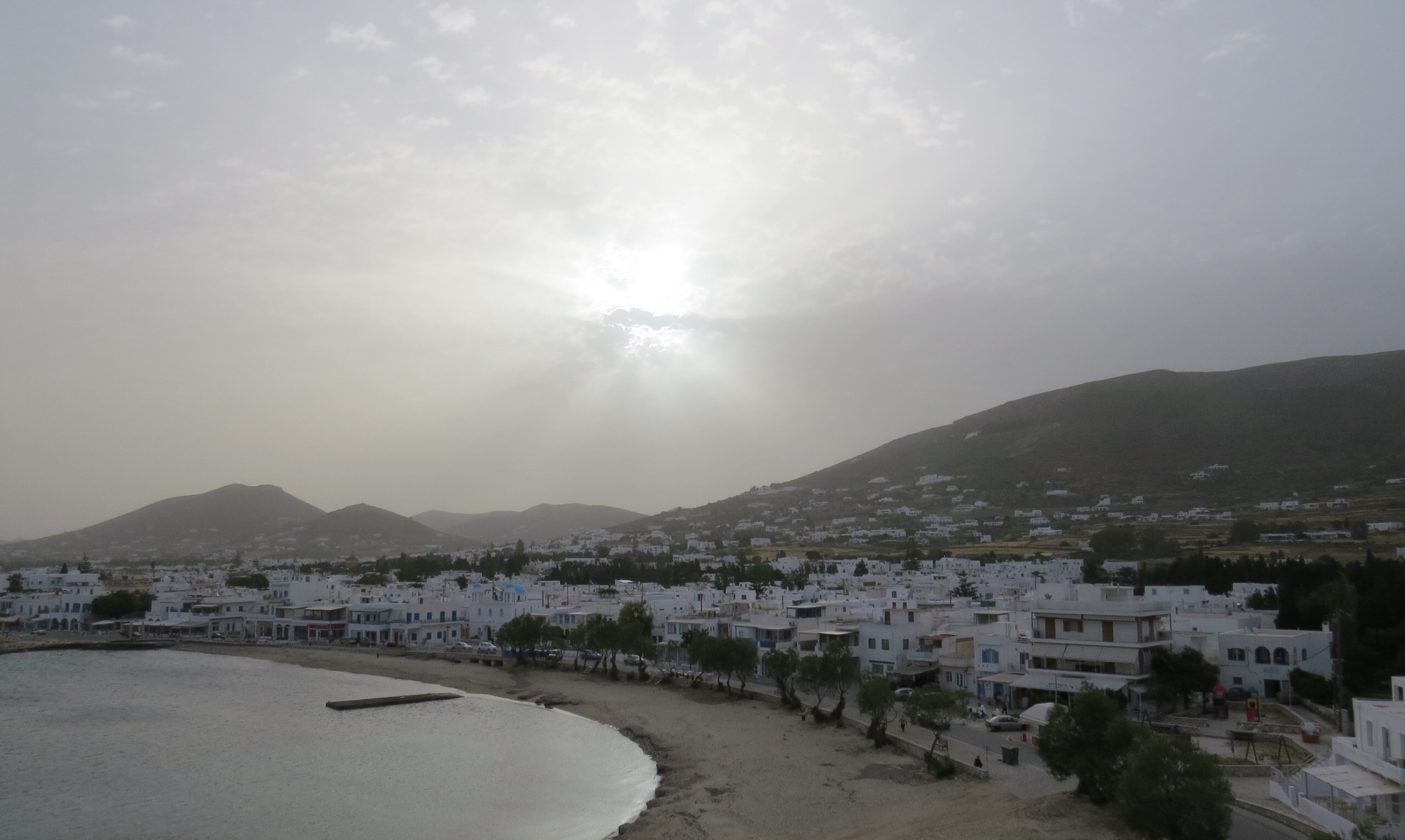
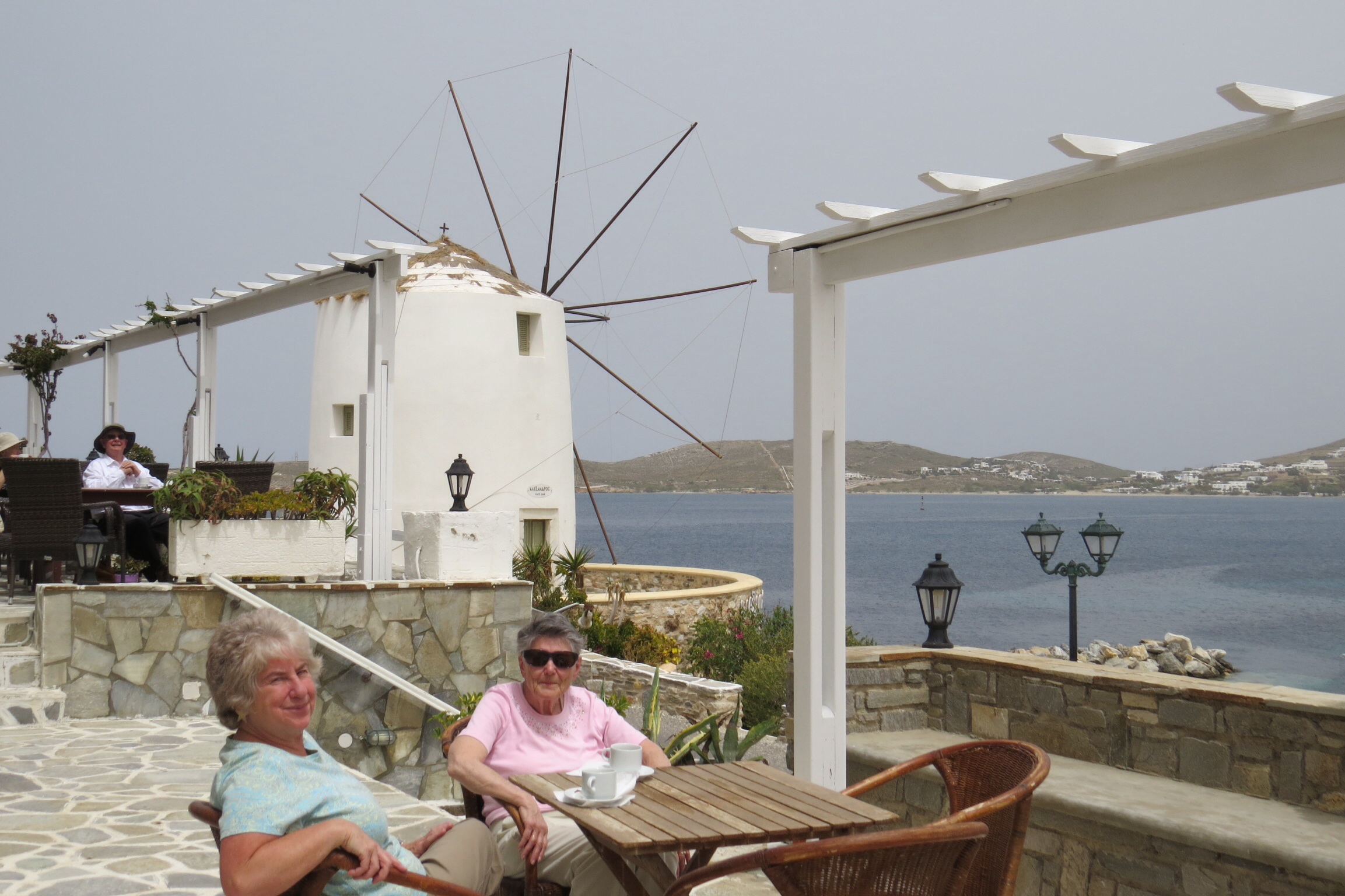
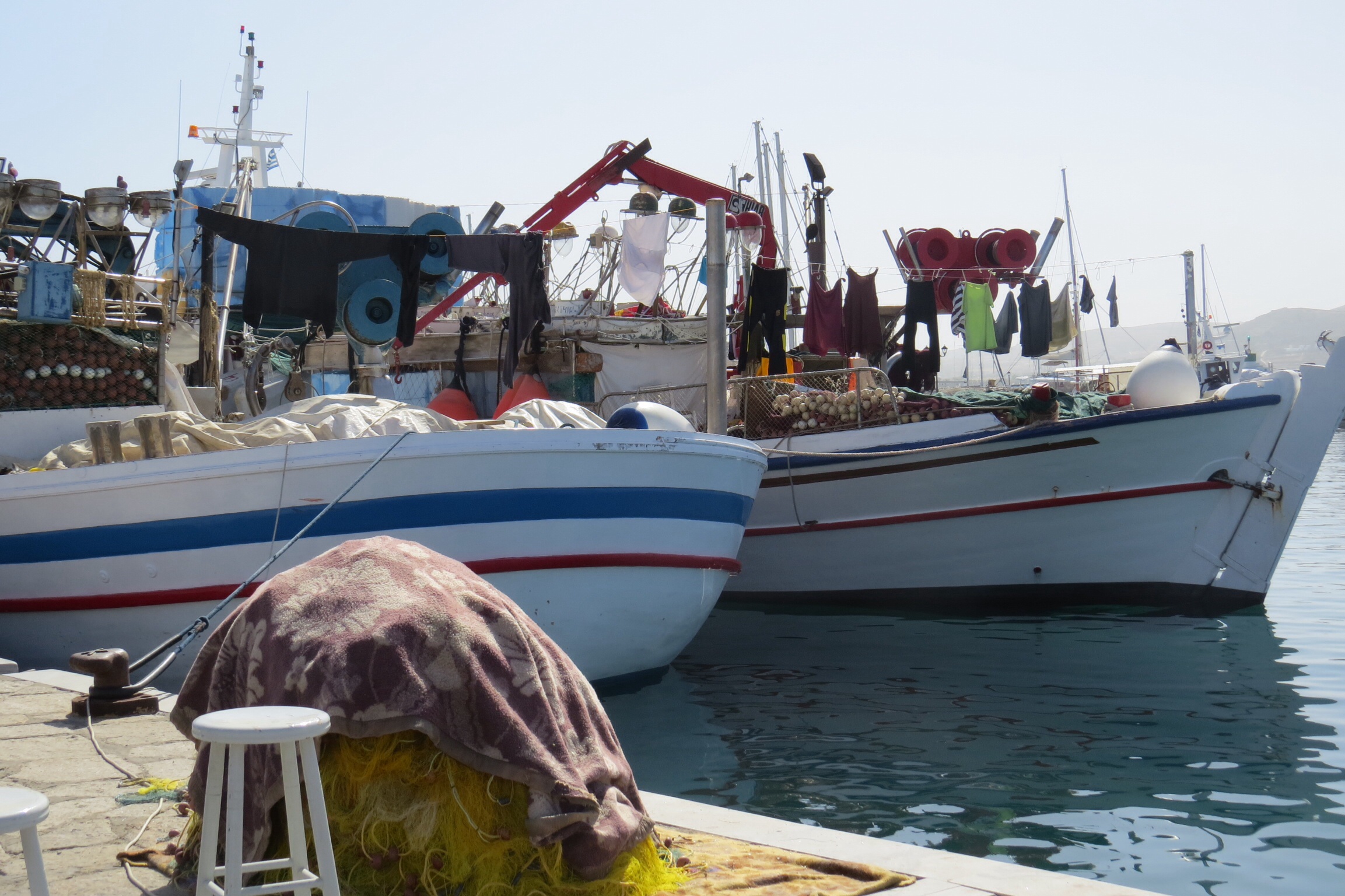
Parikia, the capital and main port of the island became our home base for the four days we were here.
Morning light, Parikia
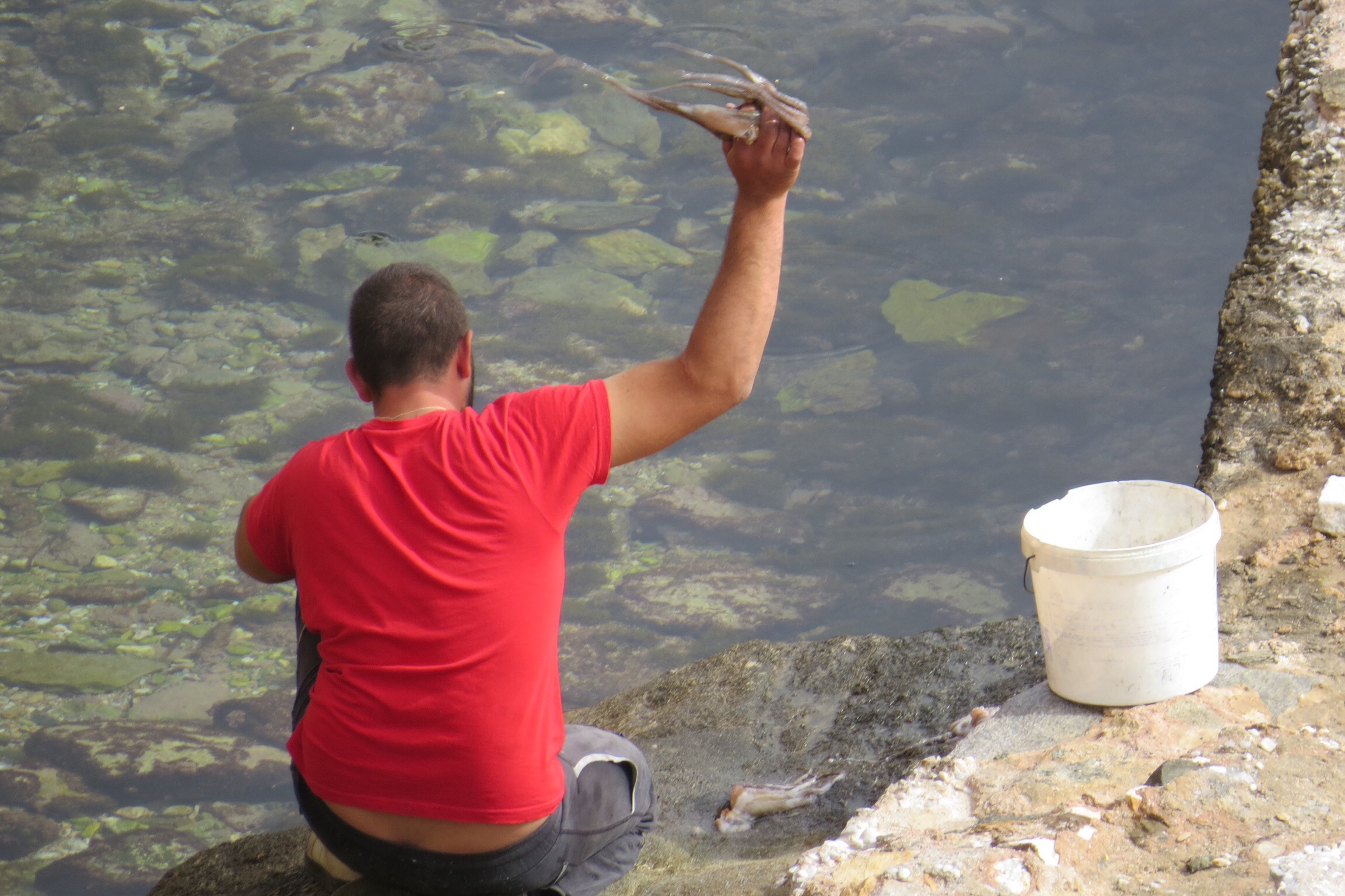
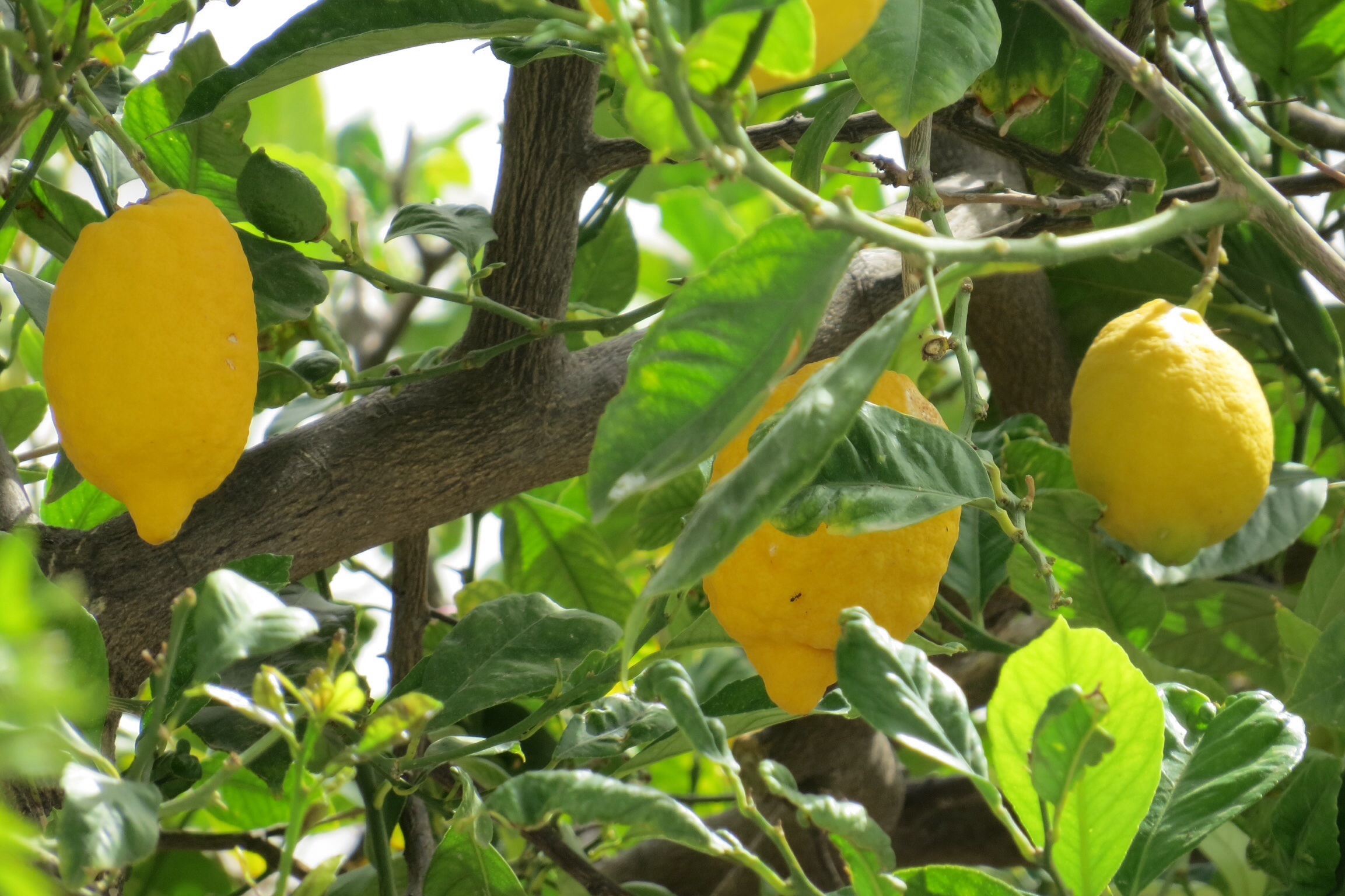
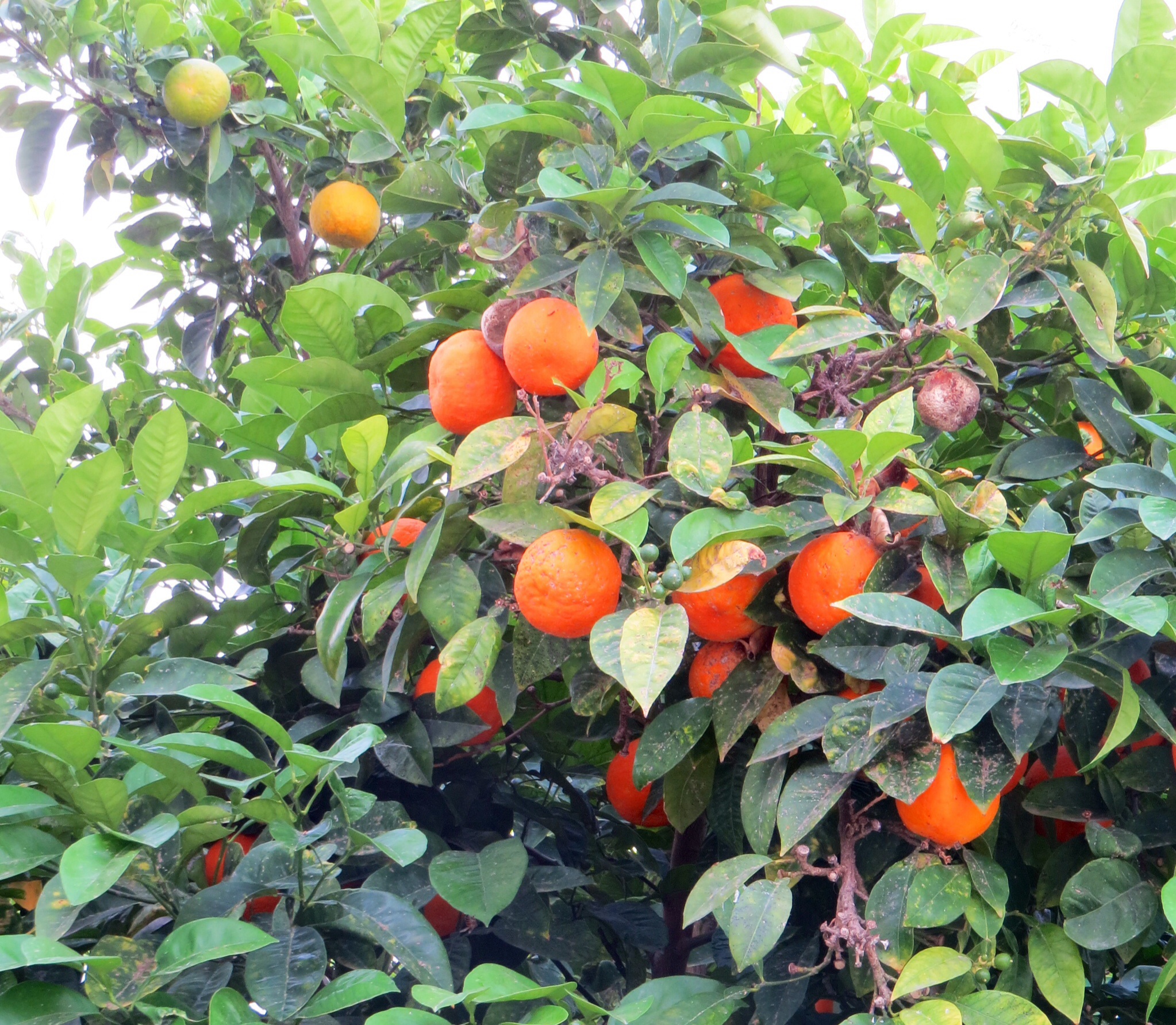
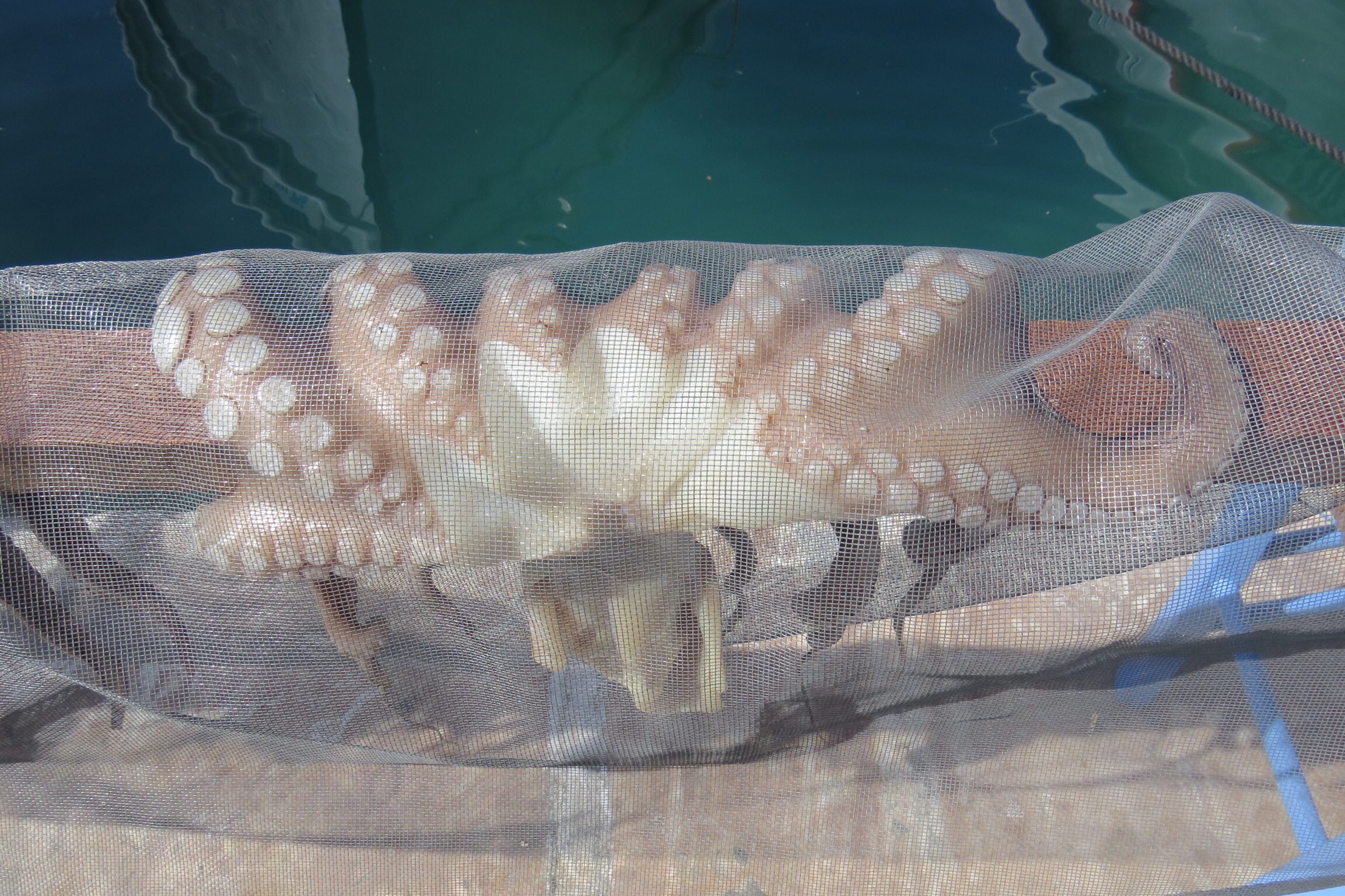
The Pandrossos Hotel was beautifully situated for throwing open the azure shutters to my balcony in the morning, to watch muscled greek men tenderizing octopus on the rocks below. Temperatures ranged from balmy to hot, moderated by warm breezes. Lemons and oranges dangle voluptuously from glossy green shrubs.
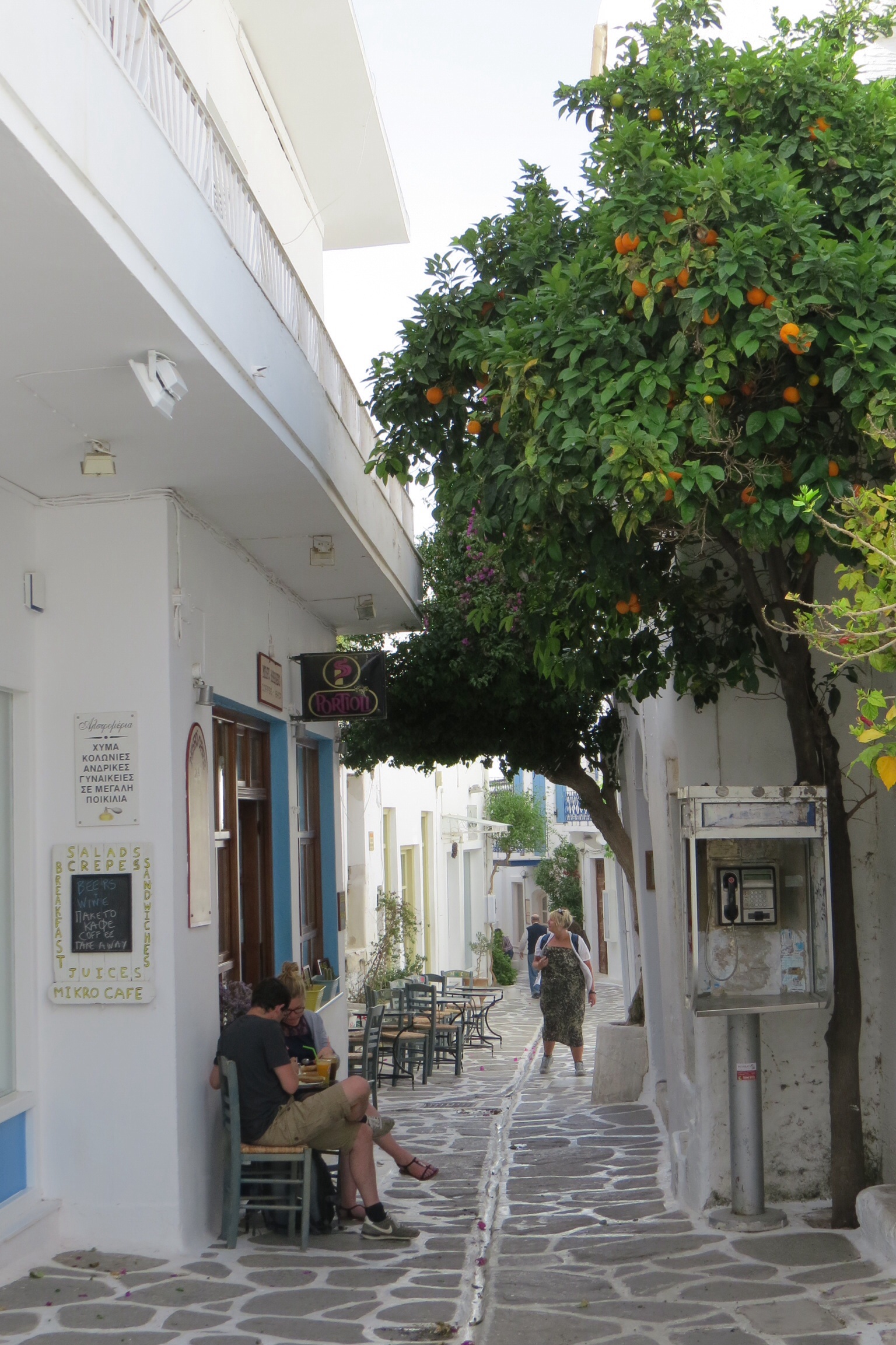
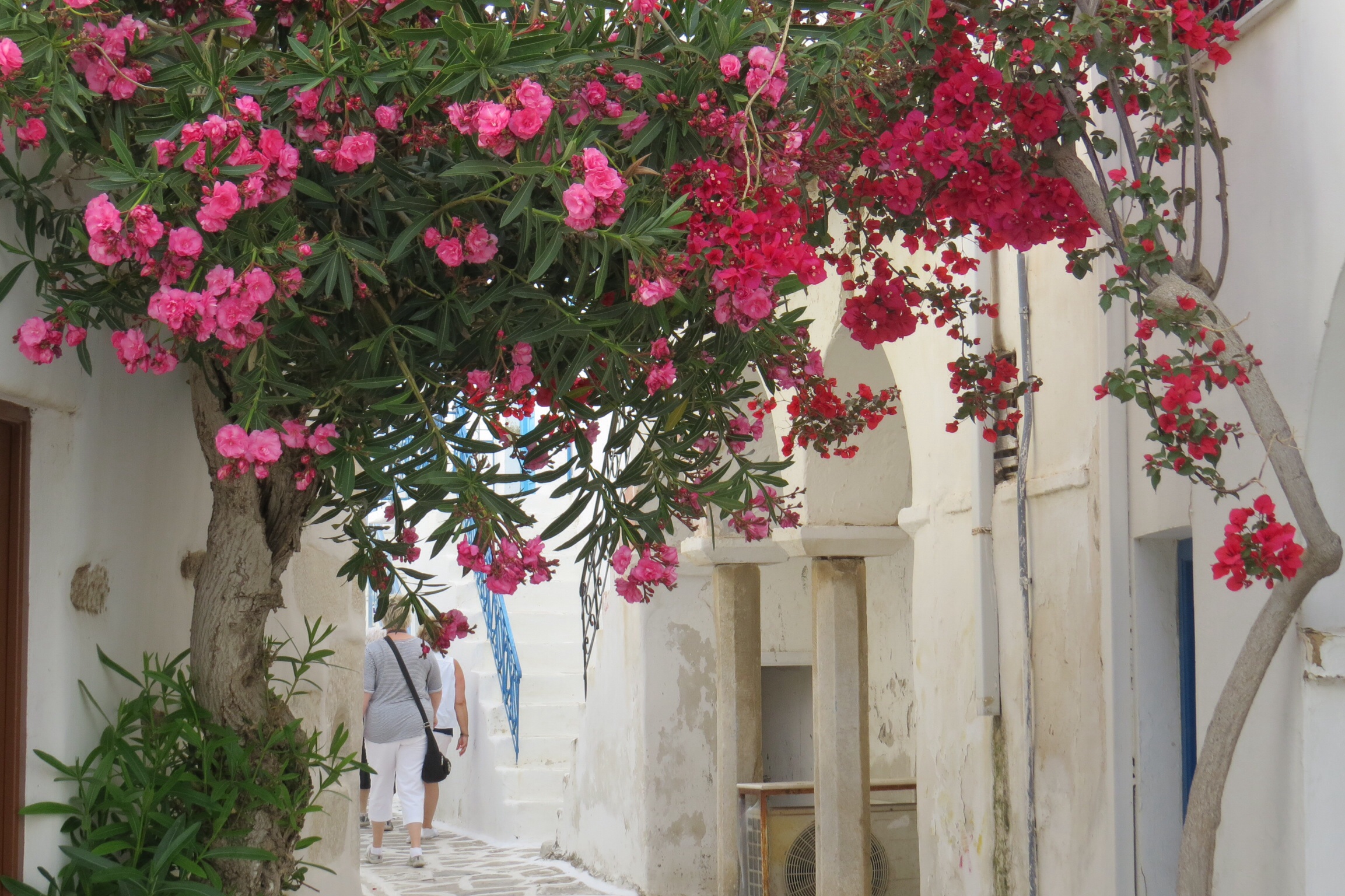
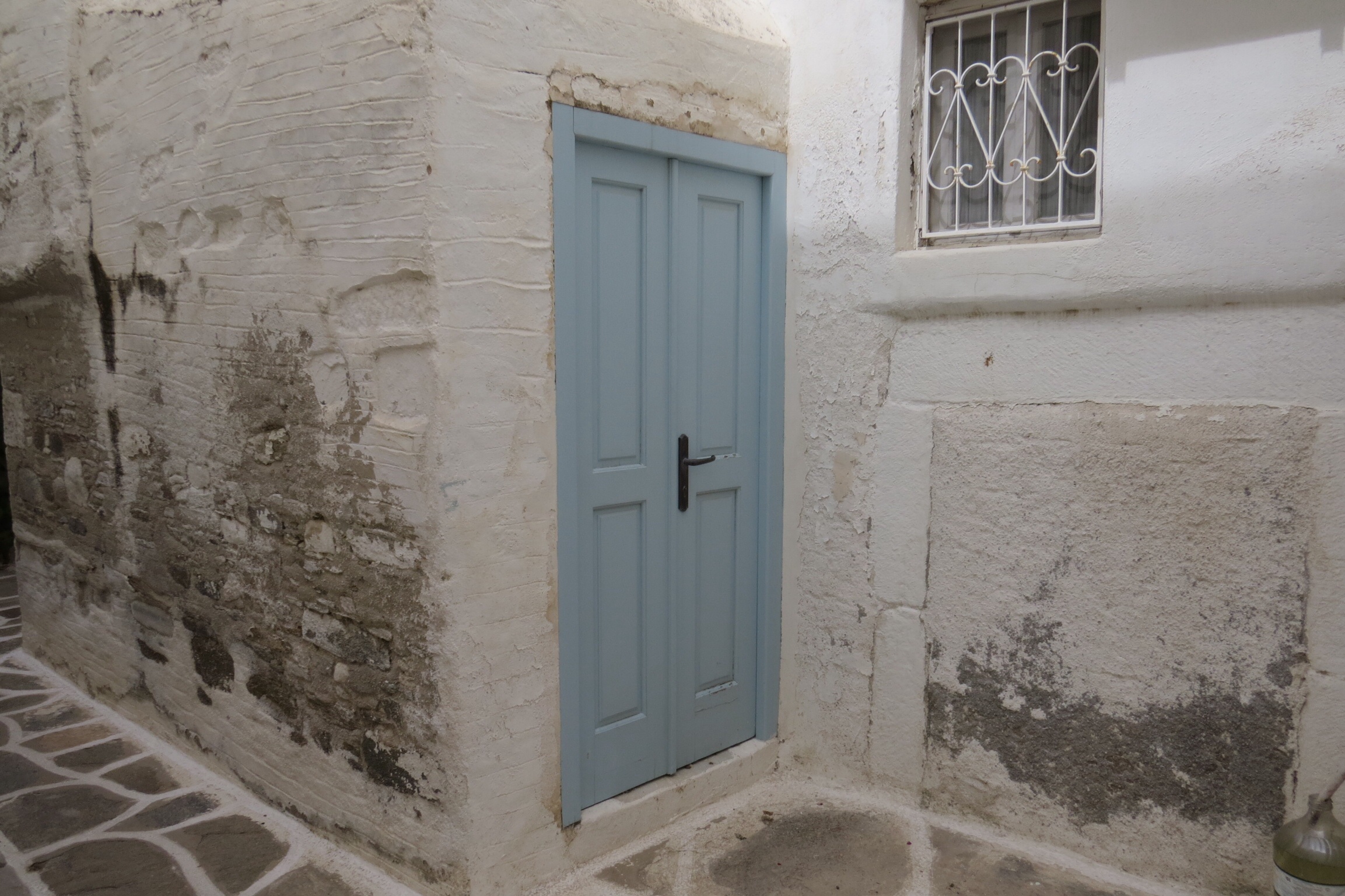
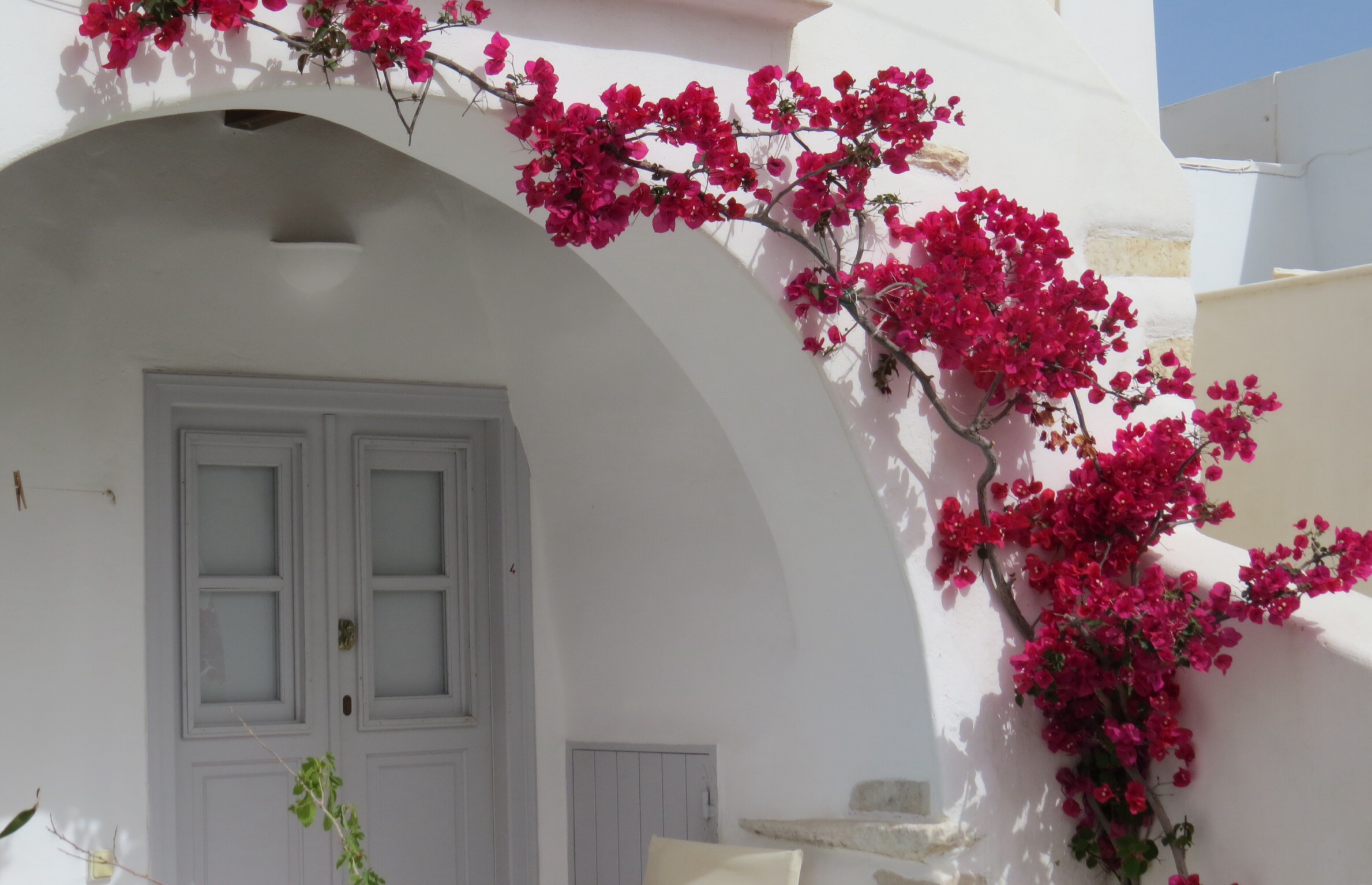
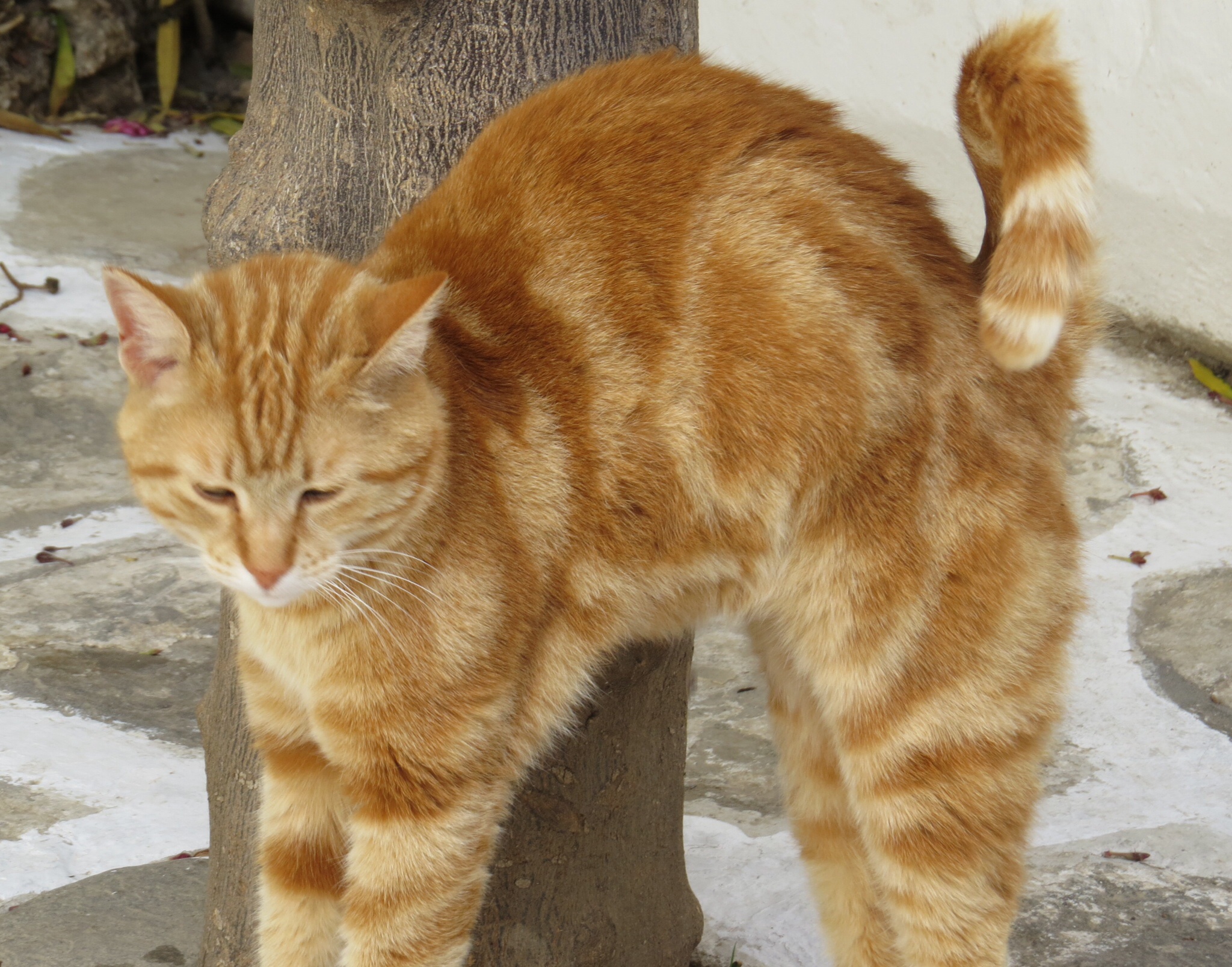
A walking tour of the town took us through a maze of charming, narrow streets, providing refuge from scorching afternoons, cool and muffled with gleaming whitewashed walls and cool aqua wooden doors providing gentle light in contrast to the hot colours of bougainvillia and oleander. Cleopatran cats licked their paws nonchalantly or stretched after a pleasant nap.
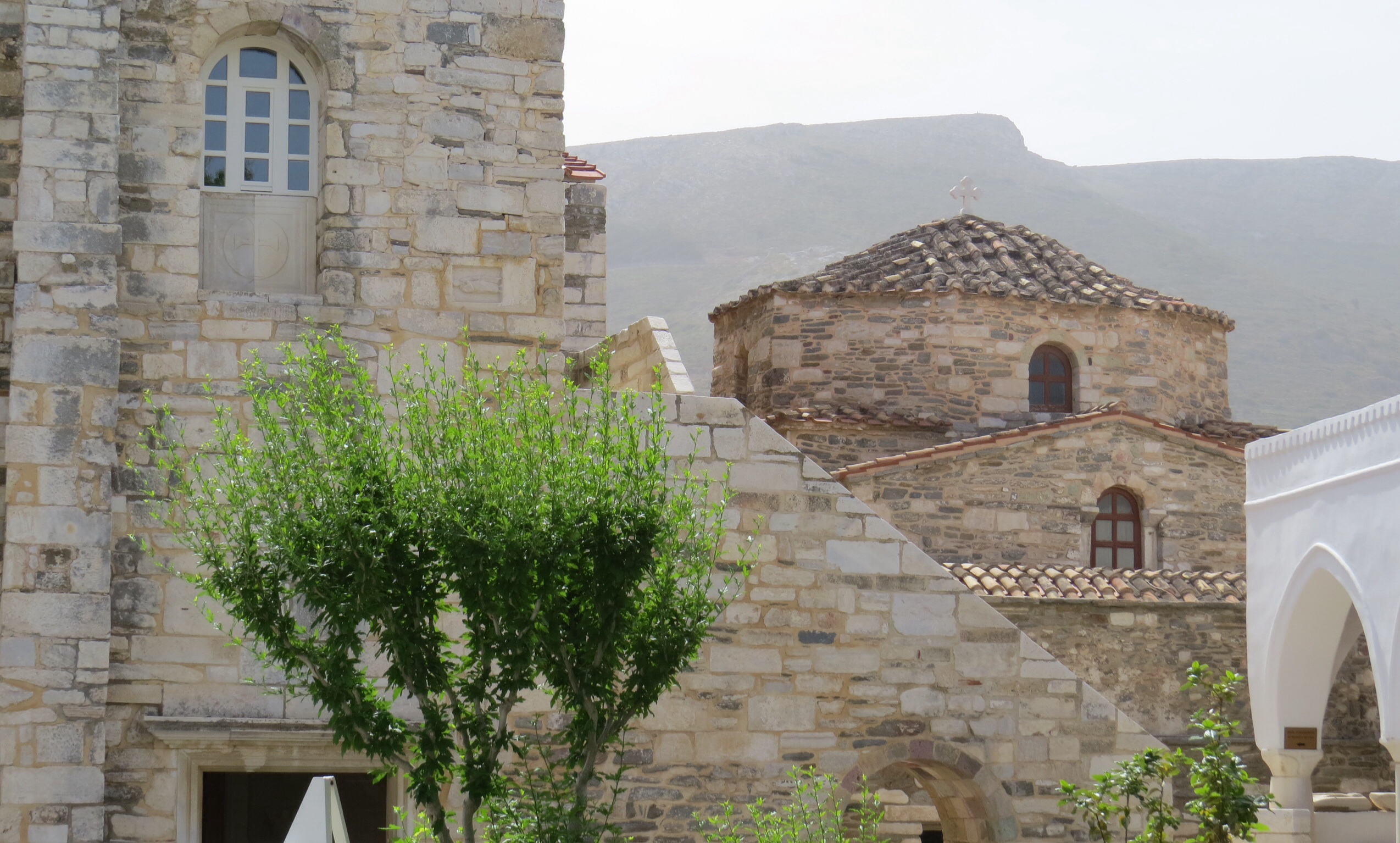
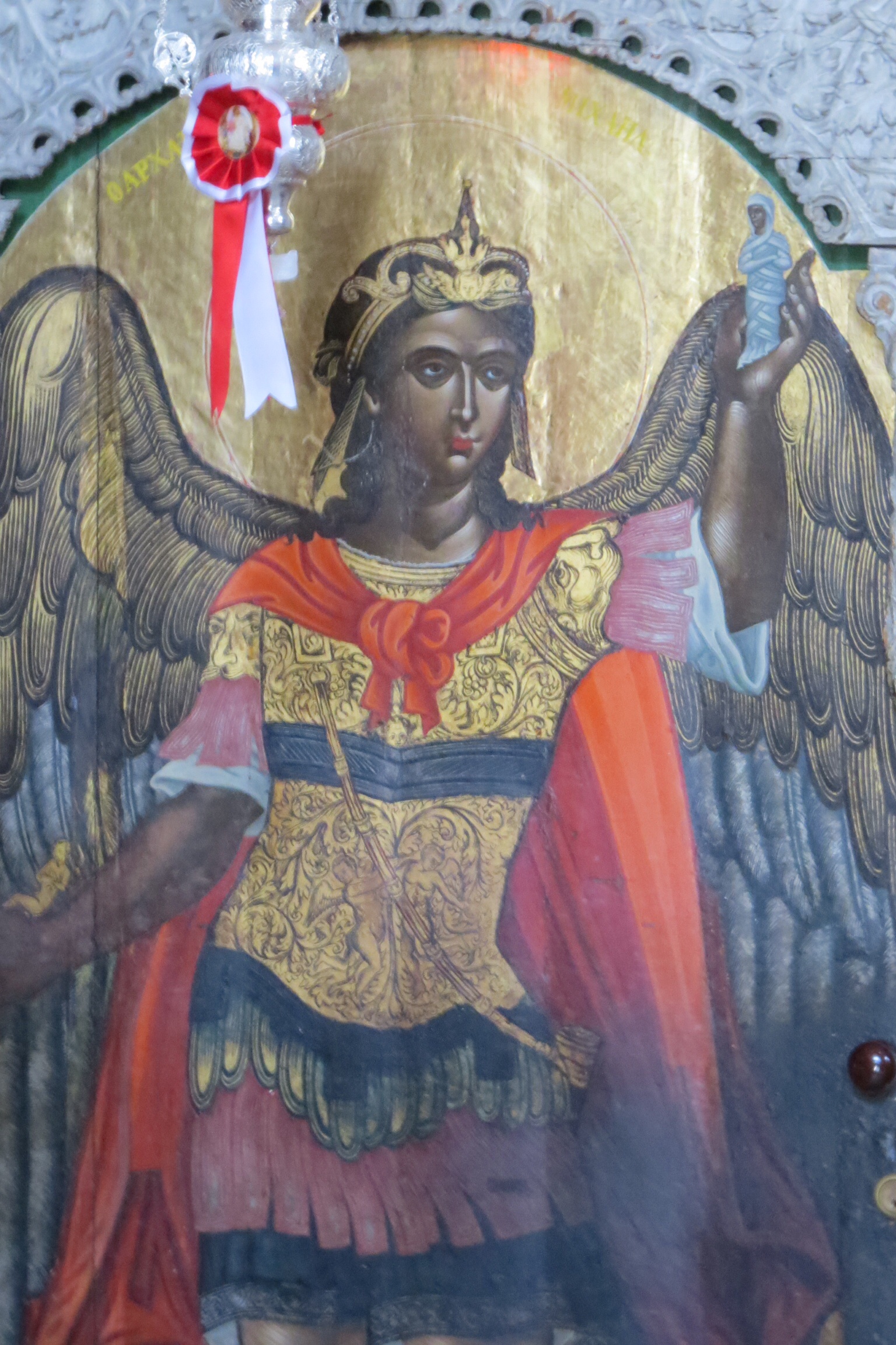
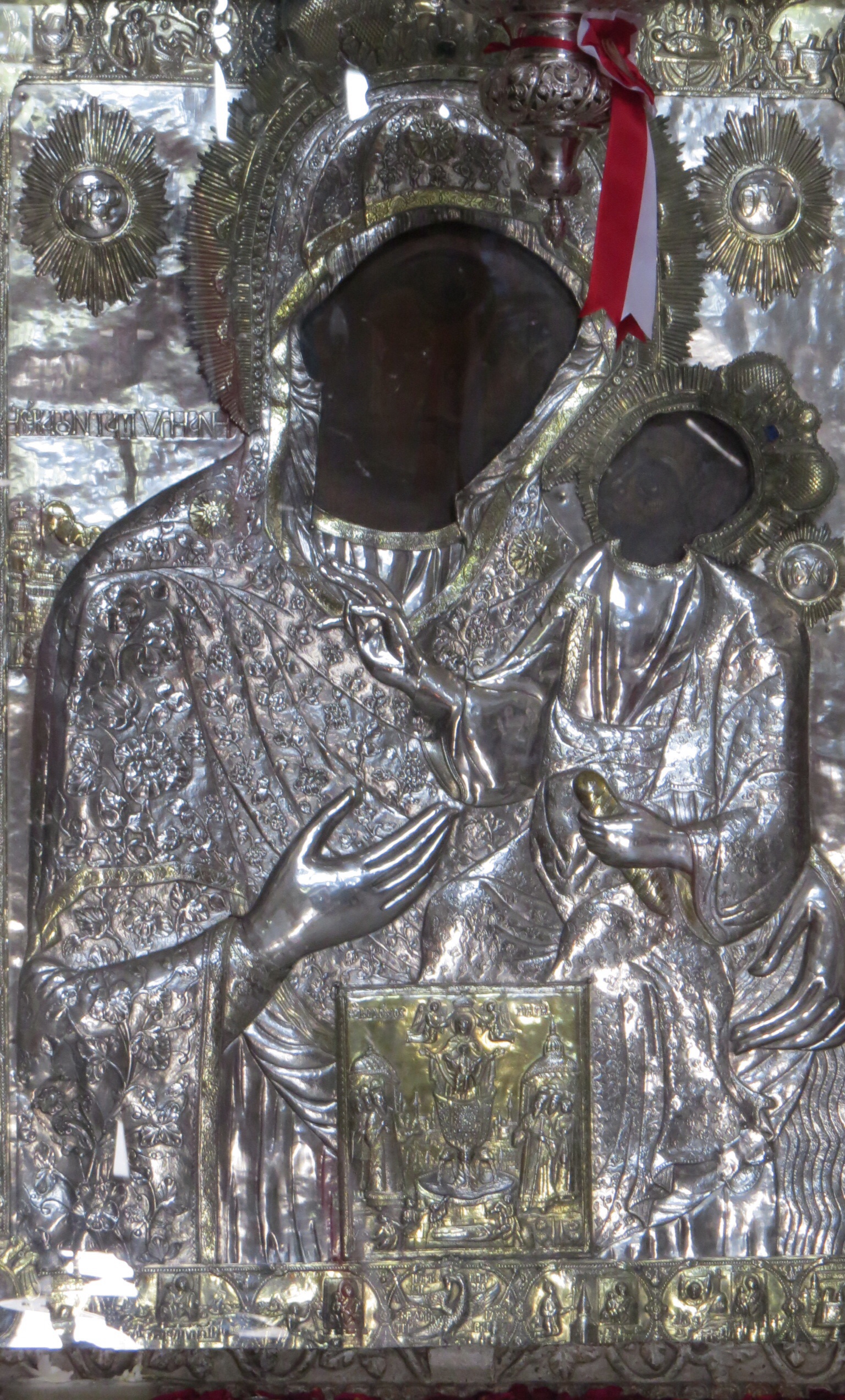
At the elegant 326 AD cathedral, Our Lady of 100 Gates (which does not in fact have 100 gates), the Greek Orthodox devout kissed mystical icons. The medieval 13th century castle here was built atop an ancient Temple of Athena.
Our Lady of 100 GatesThe Baptistry
The fields of wild oregano, thyme and rosemary flavoured the succulent lamb, fresh seafood and grilled peppers eaten al fresco in the shade of ancient olive trees.
Sunset dinner at the Pandrossos Hotel
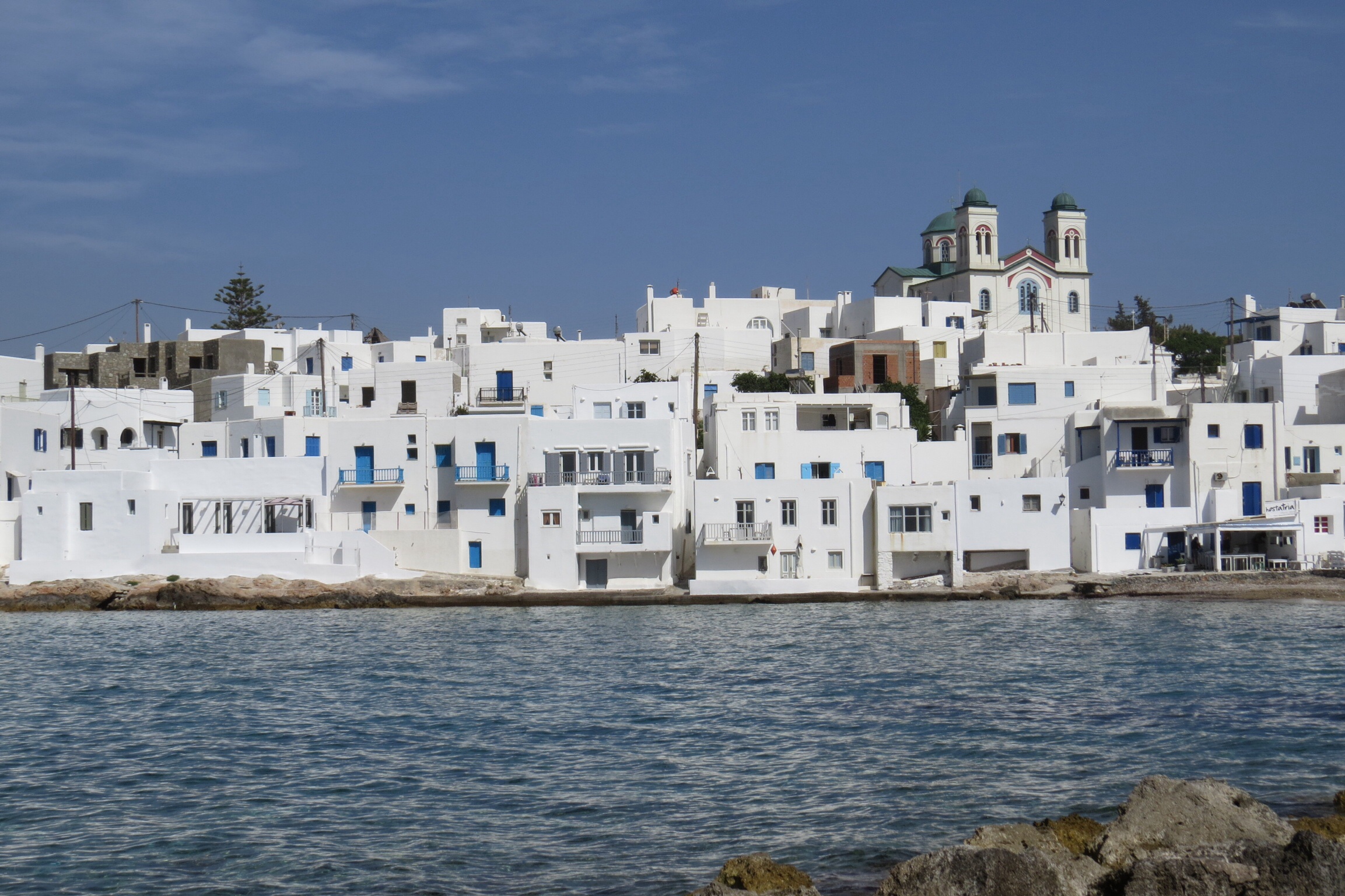
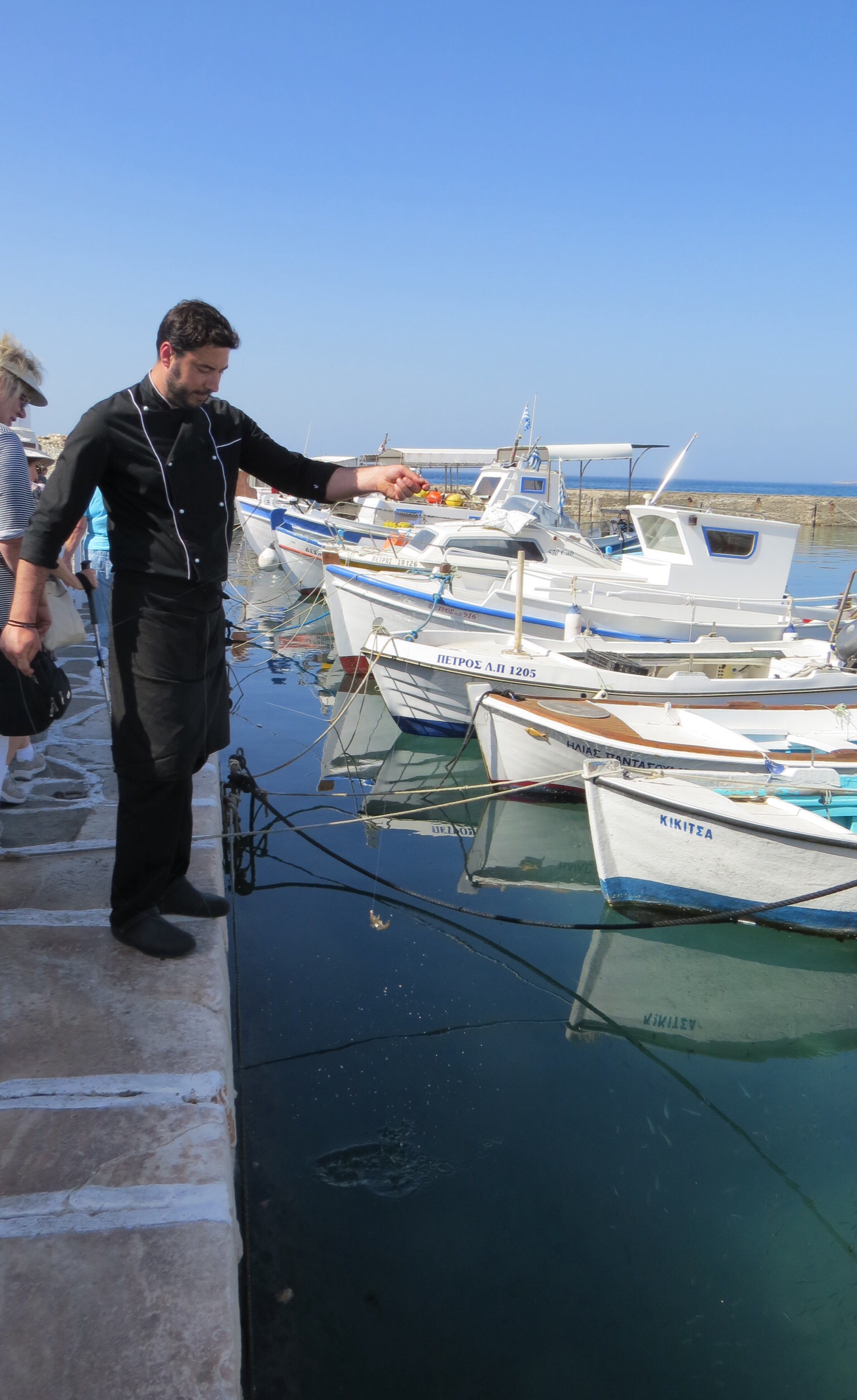
Our tour of the Island took us to a seaside village for a fabulous lunch and around Paros to the pretty port town of Naousa, where restaurants were preparing luscious meals for much later in the day (Greeks go for dinner at about 11:00 p.m. They like to take things slow, until they get behind the wheel, that is, then they drive like there is no tomorrow.)
Naousa
After visiting only one island, I am SO glad I came!
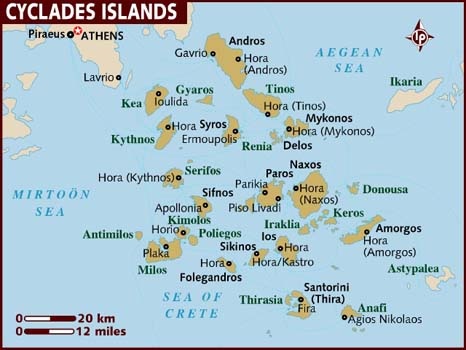
The first half of our Odyssey will begin by ferry, with U. Vic. archaeologist, Chris Mundigler, from Athens to the Cycladic Islands of Greece: Paros, Delos, Naxos, Mykonos and Santorini; and then, on to Crete.
Map of the Cycladic islands of Greece
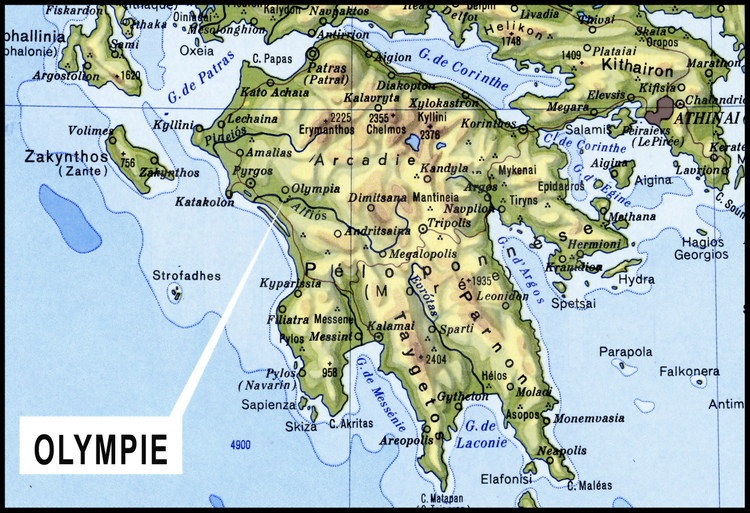
The second half of our Odyssey takes us to the Peloponnese peninsula for a week in a private villa followed by a road trip around the peninsula.
Map of the Peloponnese Peninsula
That said, this trip will be less about place and more about time. We will travel backward through the empires of the Ottomans, Venetians, Byzantines and the Romans, past Caesar, Cleopatra and Alexander the Great, to the Greek Golden era where democracy, theatre, arts, sports, science, mathematics, astronomy and western civilization began. Even further back through the Trojan War, a volcanic eruption that changed the world, past the ancient cultures of the Mycenaeans of 1600 BC, and the Minoans of 3,000 BC, even back to Noah’s flood around 5,000 BC.
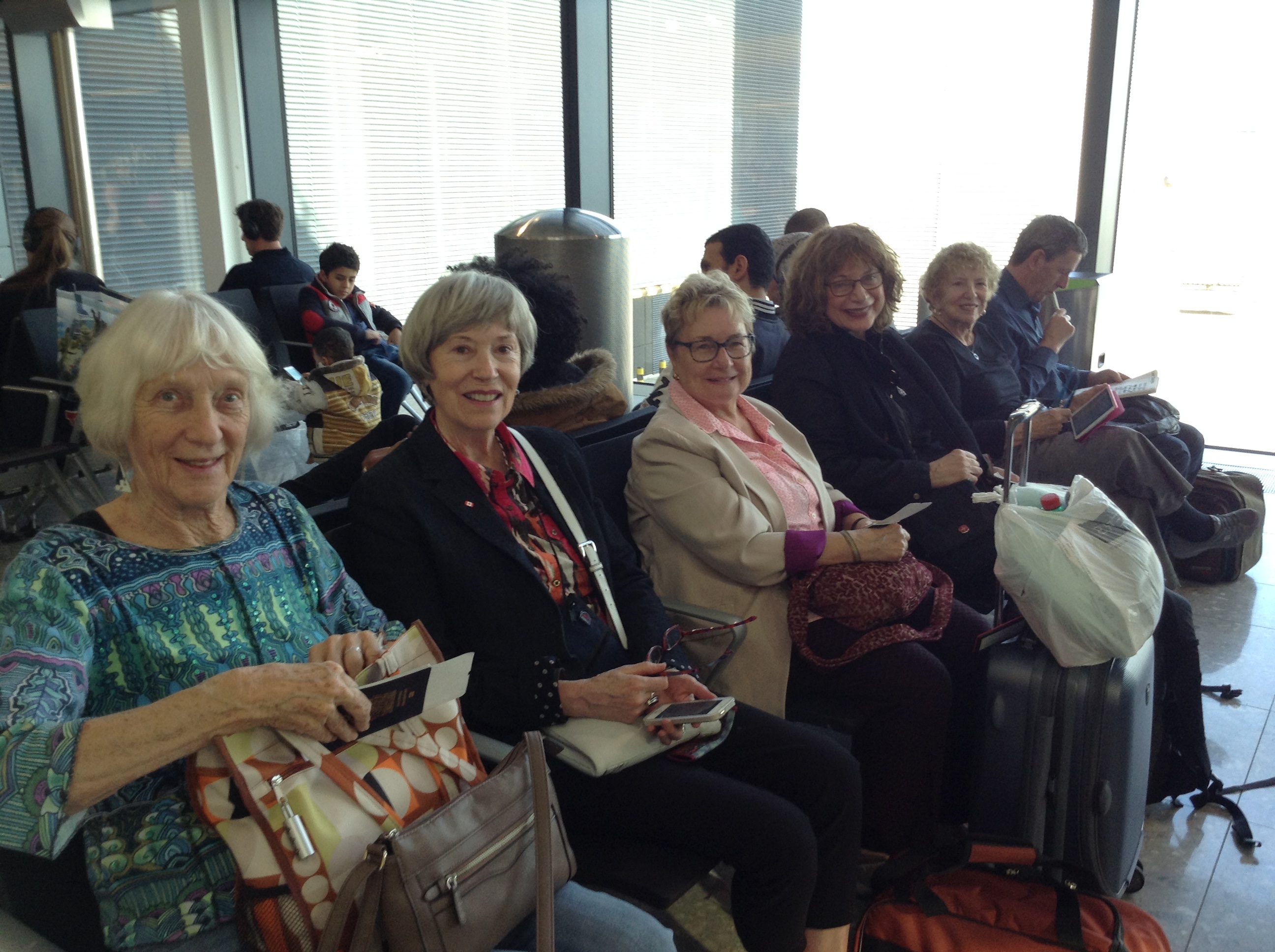
For now, though, “three Greek sisters” head for the airport.
Spain, a country of fiery love and passionate emotion.
If you don’t fall in love here, you might fall in love with love.
Feast of Sant Jordi
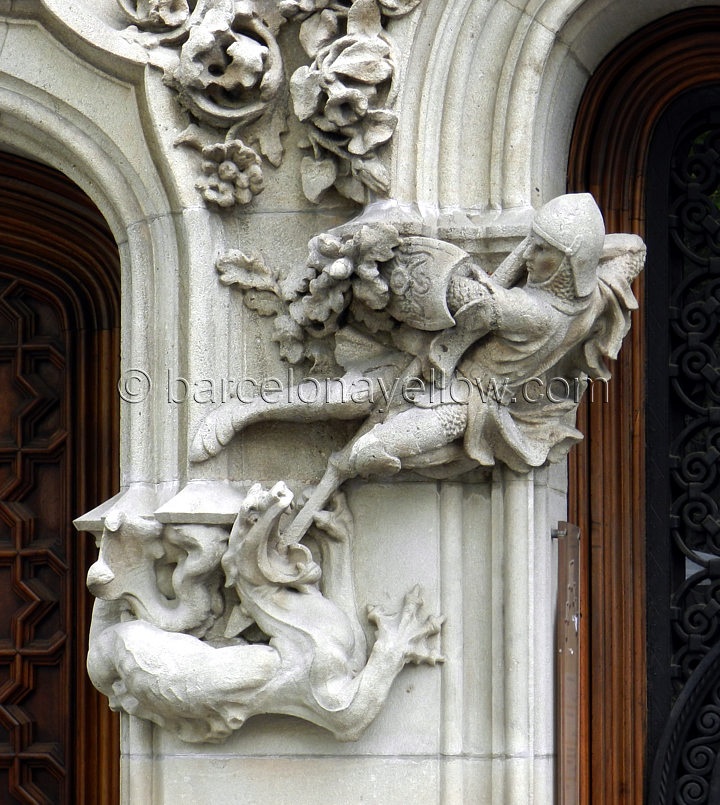
You can see Saint George, the dragon slayer, in many places around Barcelona. Like here on the facade of Modernist house Casa Amatller on Passeig de Gracia. Sant Jordi is the legend that inspired the giving of roses and he is the patron saint of Catalonia.
Did you know St. George didn’t marry the woman whom he saved by slaying the dragon? Nonetheless, he is regarded as the protector of lovers.
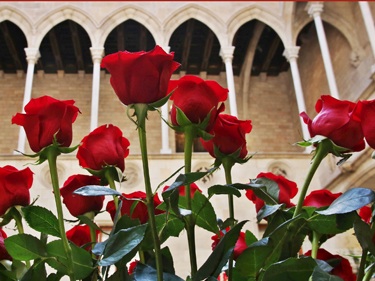
This is why the annual festival devoted to his name is Barcelona’s version of Valentine’s Day. Each year on April 23rd, which coincides with the date on which both Cervantes and Shakespeare died, the men give a single rose to all the women in their lives and the women gift their men a book. There are book readings, flower markets and signings throughout the city.
Las Ramblas on the Feast of Sant JordiThe Book MarketThe rose market on April 23rd at the palau de la generalitat, the Catalan Parliament
Il Travatore
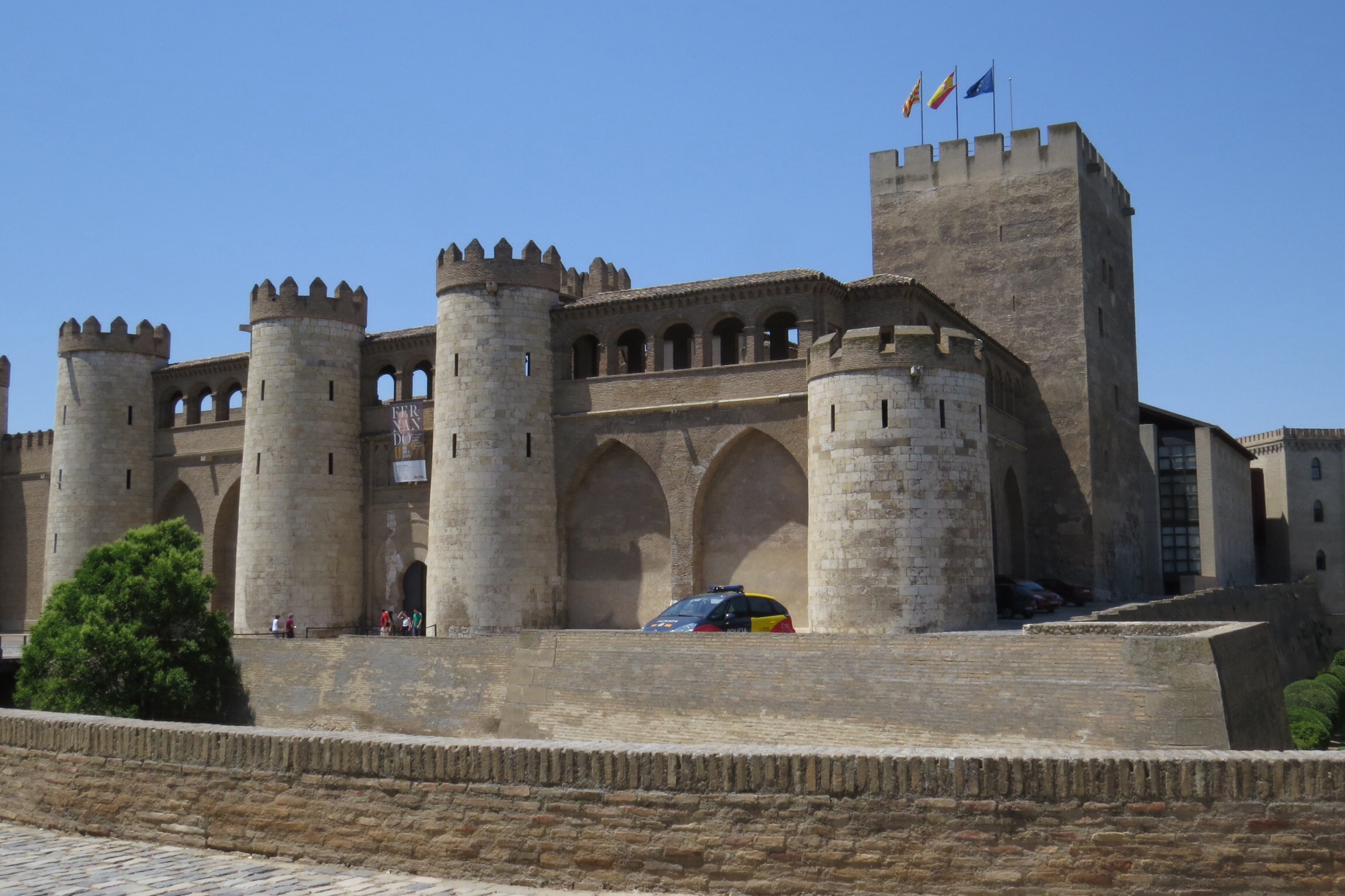
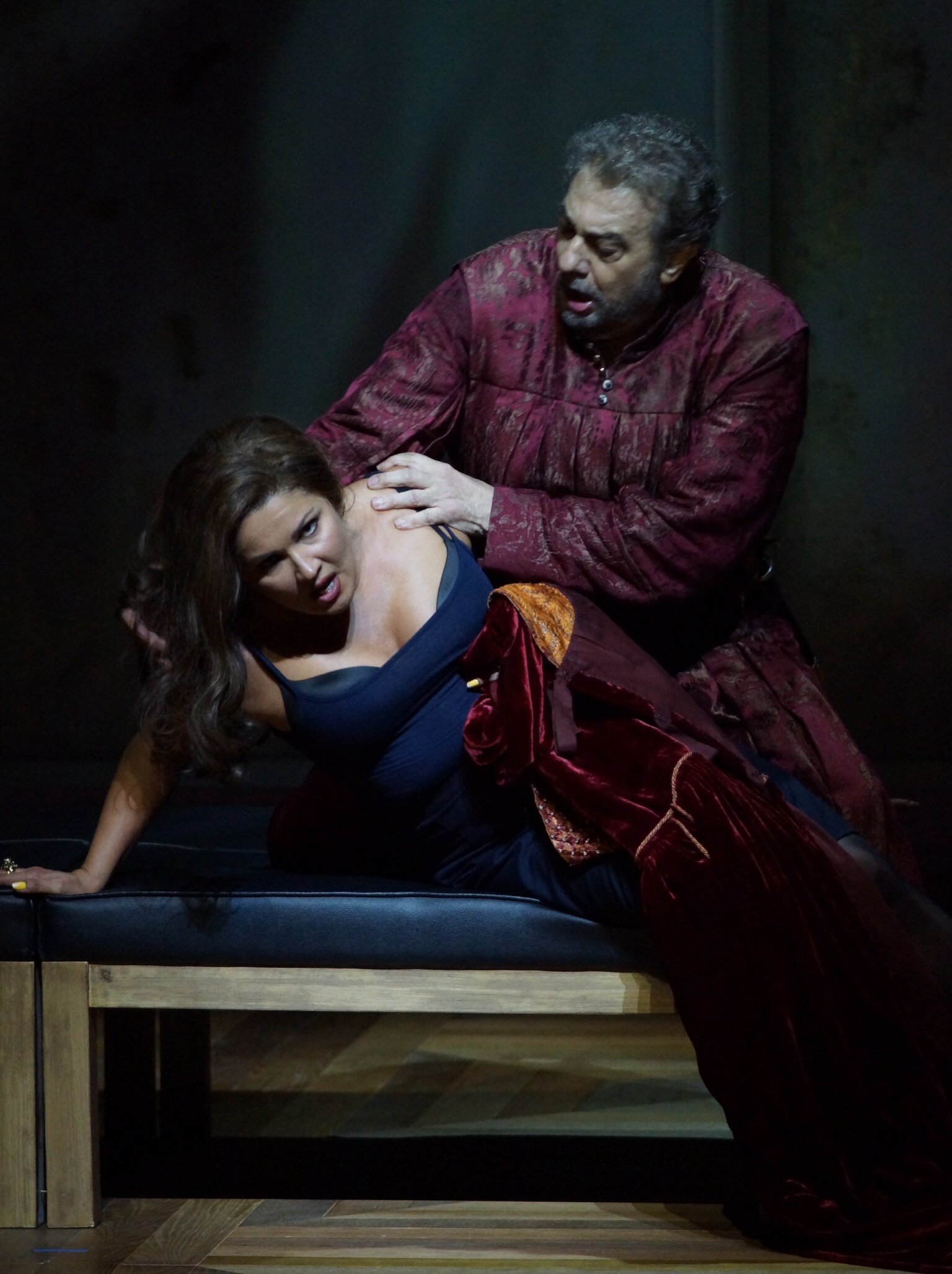
In 15th century Zaragoza, the troubadour Manrico falls in love with Leonora, a woman adored by the Count di Luna. In an effort to keep them apart, Manrico is imprisoned and sentenced to death. Leonora takes a poison and confronts di Luna, offering herself in exchange for Manrico’s release. When di Luna discovers her deception, Manrico is executed at the beautiful Islamic Medieval palace, Aljaferia, and Leonora dies by poison. Their love story is the basis for Verdi’s famous opera, Il Travatore.
AljeferiaAnna Natrebko and Placido Domingo in Il Travatore
Duende
In Spain, the state of passion has a name: “duende.” Bullfighting and flamenco have the same roots, and both the torero and the flamenco dancer are said to receive the state of bliss. Thought to be mystical, inspirational, almost magical, it is a higher state of consciousness, transcendence. For the matador, it lies in the moment between life and death, the moment when he steps out of his own skin to meet the soul of the bull. For the flamenco dancer, it is a moment of artistic realization.
Perhaps duende comes from the deep, archaic suffering that is part of the Spanish soul: the early persecution of the Romani, the Muslims and the Jews in southern Spain that coincides with the emergence of flamenco. It is said that a woman shouldn’t dance until she is in her 30’s – she won’t have suffered enough, lived life enough, to convey the passion of flamenco.
Ahem
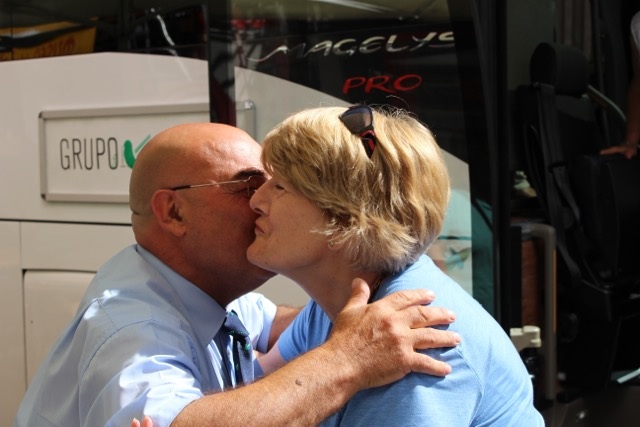
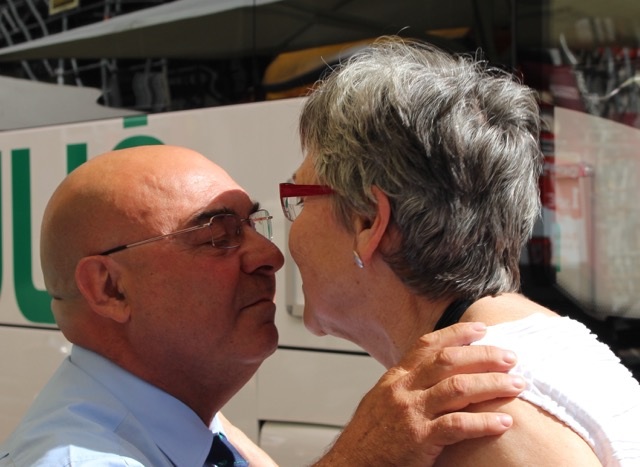
Why, we even saw the passion of Spain first-hand. For example, our lovely, trusted and trustworthy driver who shall remain nameless if not faceless. He spent two weeks on the road with us, always immaculately dressed, and he packed better than we did – he travelled with a garment bag. Somehow we learned (gossip travels fast on the Nap Machine) that he allegedly, perhaps, may have two families – a wife and children in one large Spanish city, and a wife and children just outside the same large Spanish city. And apparently, everyone is okay with that. A Spanish man of passion!
The affection in Spain was infectious and as we learned, sighed, ate and laughed our way across northern Spain in the Nap Machine, indelible memories and warm friendships were born.
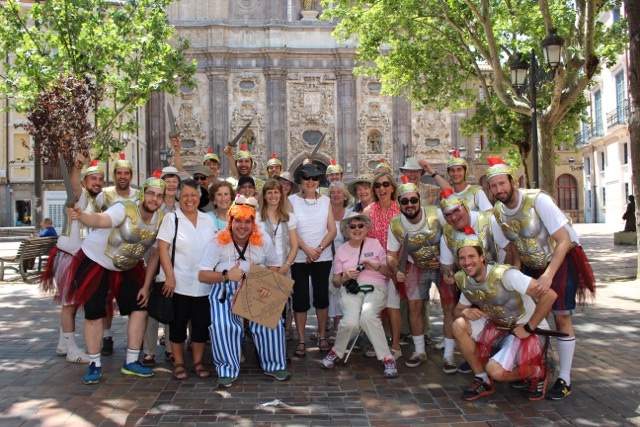
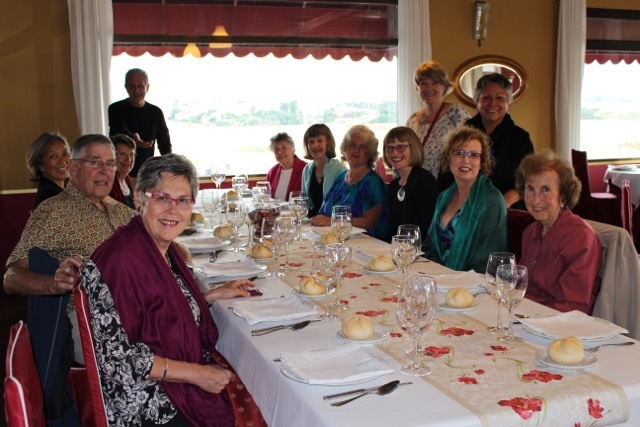
In Zaragoza with a bridegroom and his Roman entourageWith Manuel Ruzo in Santiago de CompostelaDinner at La Postal
Rosa and Chrissie were the heart, soul and brains of the operation, the most generous, most accommodating, most cheerful, fun and most fabulous instructors, Rosa Stewart and Christine Forster – MUCHAS GRACIAS!
AvilaToledo
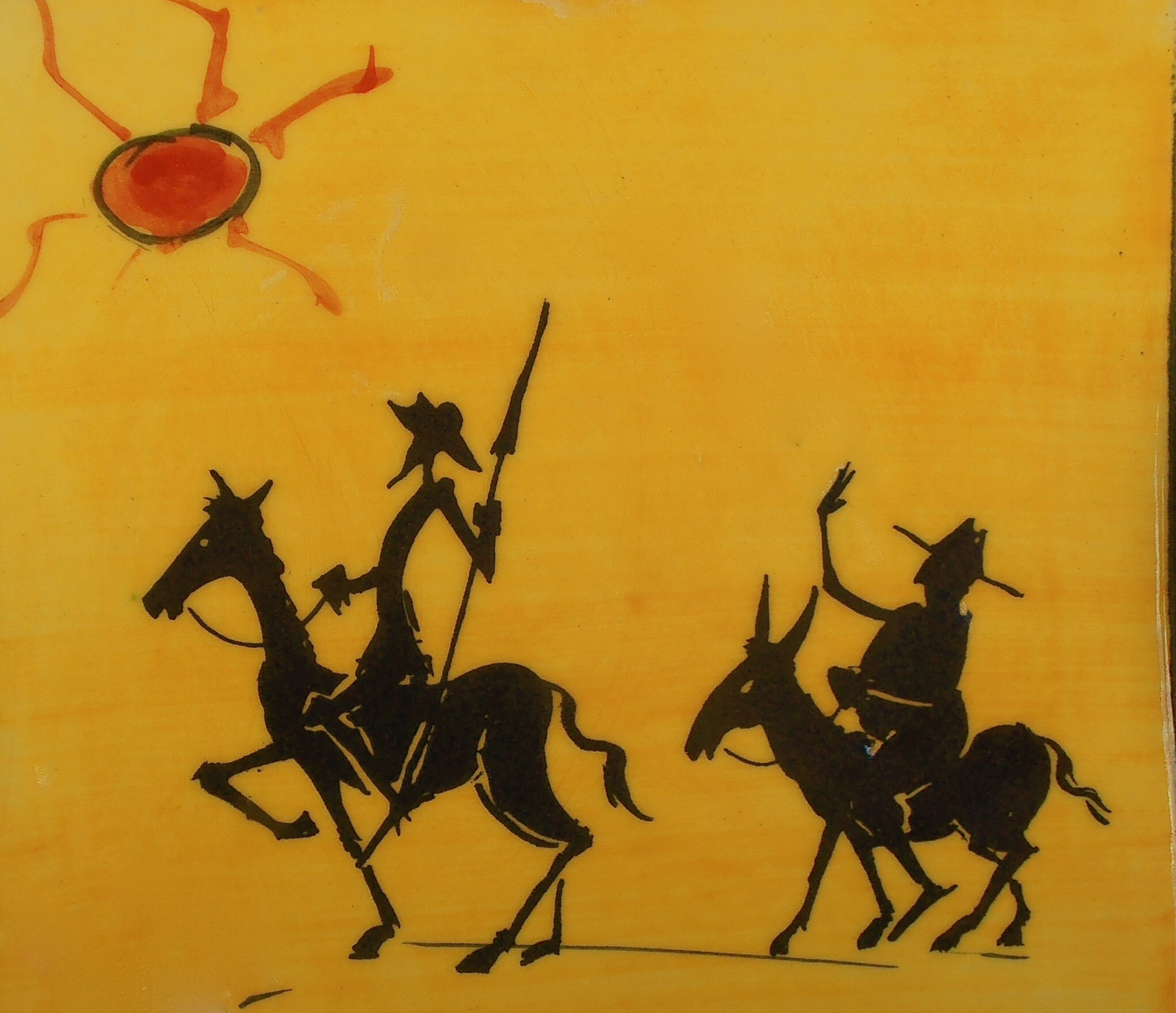
Just like Don Q and Sancho, inevitably, we turn toward home.
We really do, just as our tour guide Rene Garcia instructed, go with happiness….
Spain has had its turmoils from within and without, and its economic struggles within the EU, but the post-Franco period has been relatively calm.
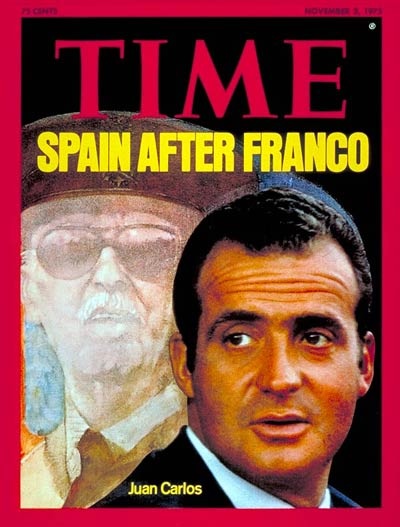
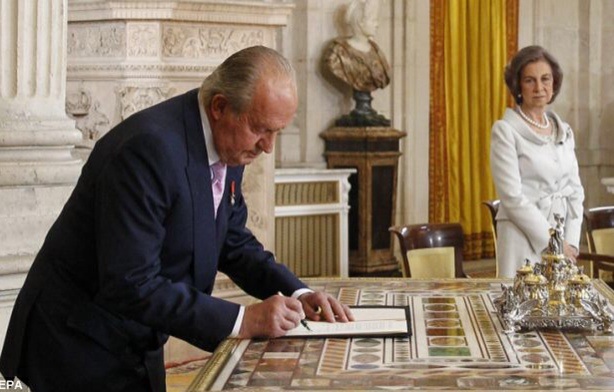
Juan Carlos I reigned over Spain from 1975 until 2014.
The Transition
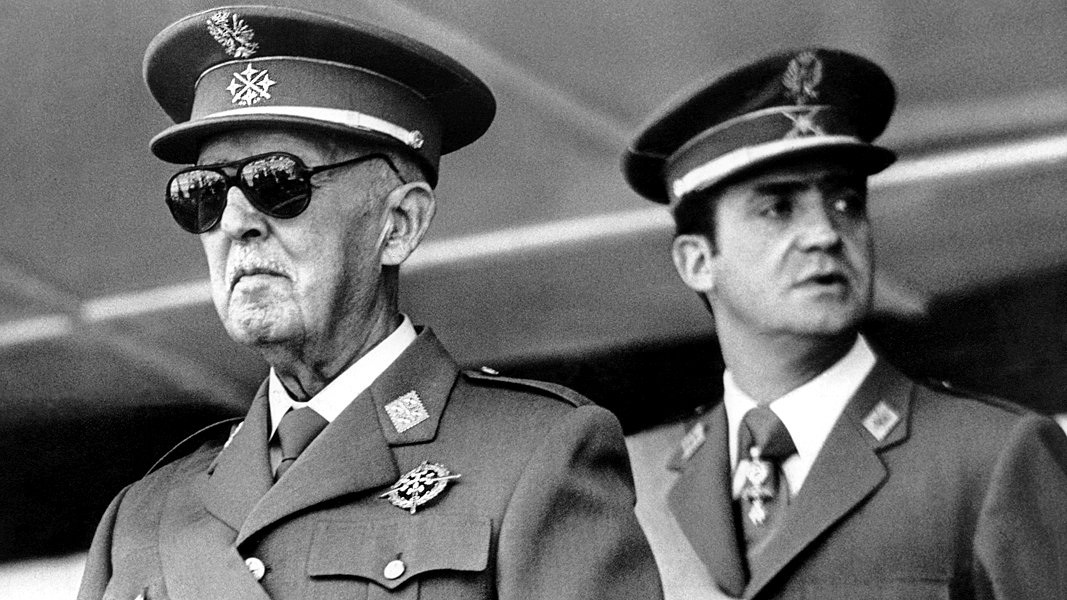
On November 22, 1975, two days after dictator Francisco Franco died, Juan Carlos I took the throne, as arranged by Franco.
Franco, with Juan Carlos looking left.
He immediately reinstated the first constitutional monarchy since 1931.
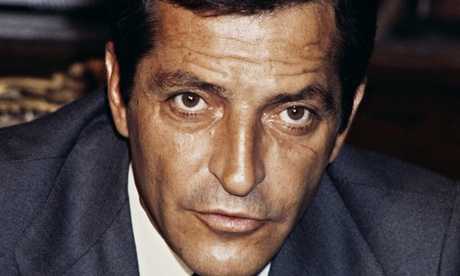
He appointed Adolpho Suarez to run the country, who was confirmed as leader in democratic elections.
Adolpho Suarez
Always agitating just below the surface were former Franco supporters, who staged a military coup in 1981. It was Juan Carlos I who intervened to suppress the coup. He endeared the nation who had suffered the Franco years and went on to reign until 2014.
The Decline
Such a long rule leads almost inevitably to decline. In 2012, the King broke his hip while hunting elephant in Botswana. This was not seen kindly (the hunting of elephants) by Spain or other countries around the world, including the organization he patronized, the World Wildlife Fund. Once the whiff of scandal was in the air, it grew. Juan Carlos’s son-in-law was accused and charged of corruption. Juan Carlos, and Spain, needed an exit strategy.
The Abdication
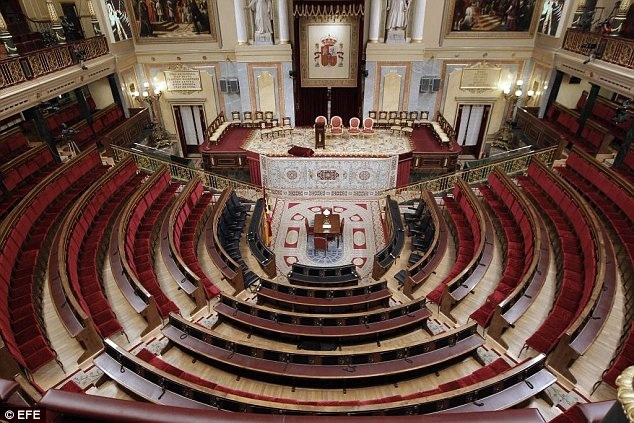
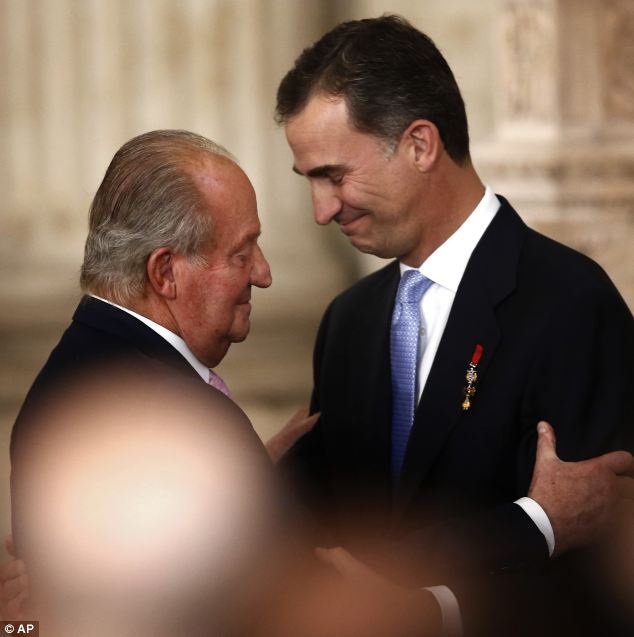
Juan Carlos, grandson of Alphonso XIII, in advancing age and having had five surgeries in the past two years including a hip replacement leaving him walking with difficulty, announced his decision to abdicate on June 2, 2014, saying he was stepping aside to allow for younger royal blood to rally the country that is still trying to shrug off a double-dip recession and a 26 percent jobless rate. He would attend the gorgeous Congress to formally transfer power to his son, Felipe.
Congress
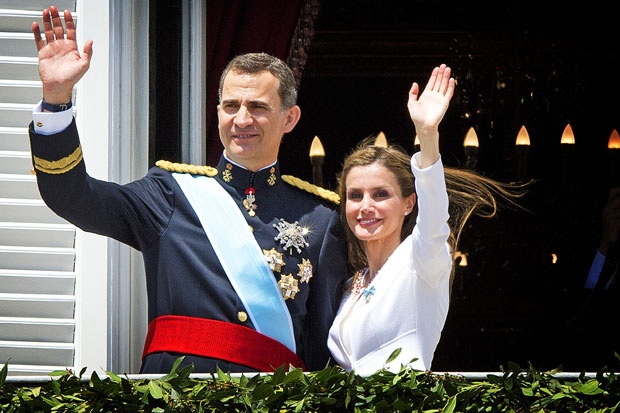
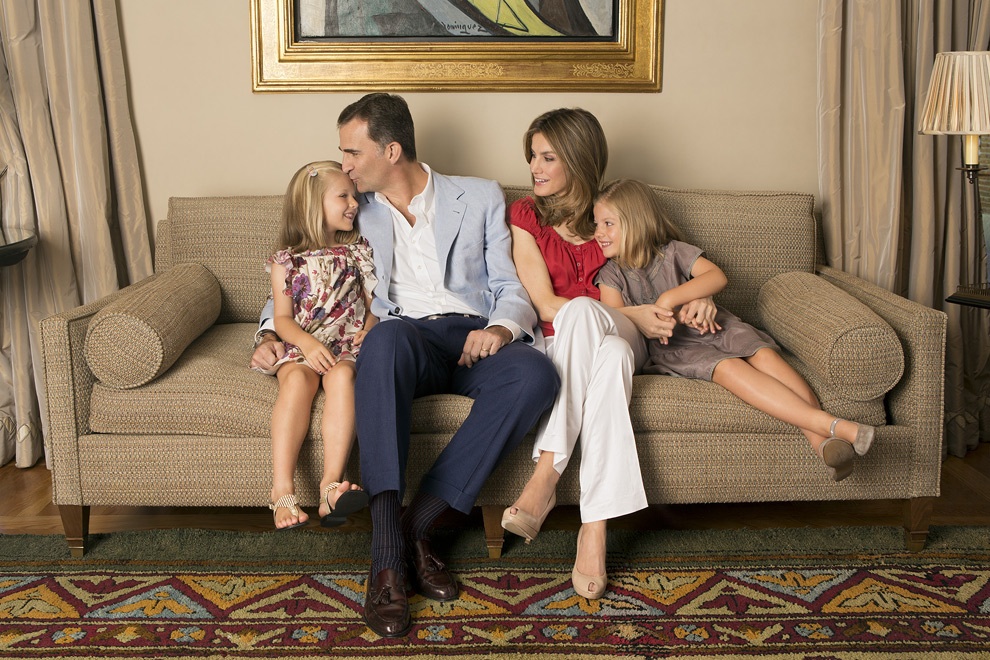
Felip VI and Queen Consort Letizia
The palace acknowledged that the customary pomp had been eliminated ‘in keeping with the criteria of austerity that the times recommend.”
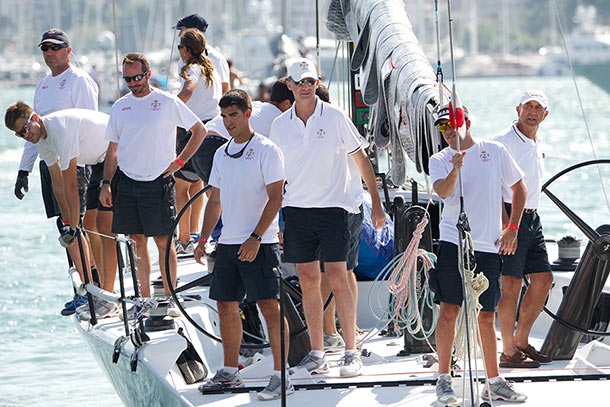
Felipe VI was educated at Lakefield College, yes, in Lakefield, Ontario (what, if any, mark did Ontario and Canada make on him?) and he holds a law degree from Madrid’s Autonomous University and obtained a Master’s in International Relations from Georgetown University in Washington. He is also, like his mother, an Olympic sailor.
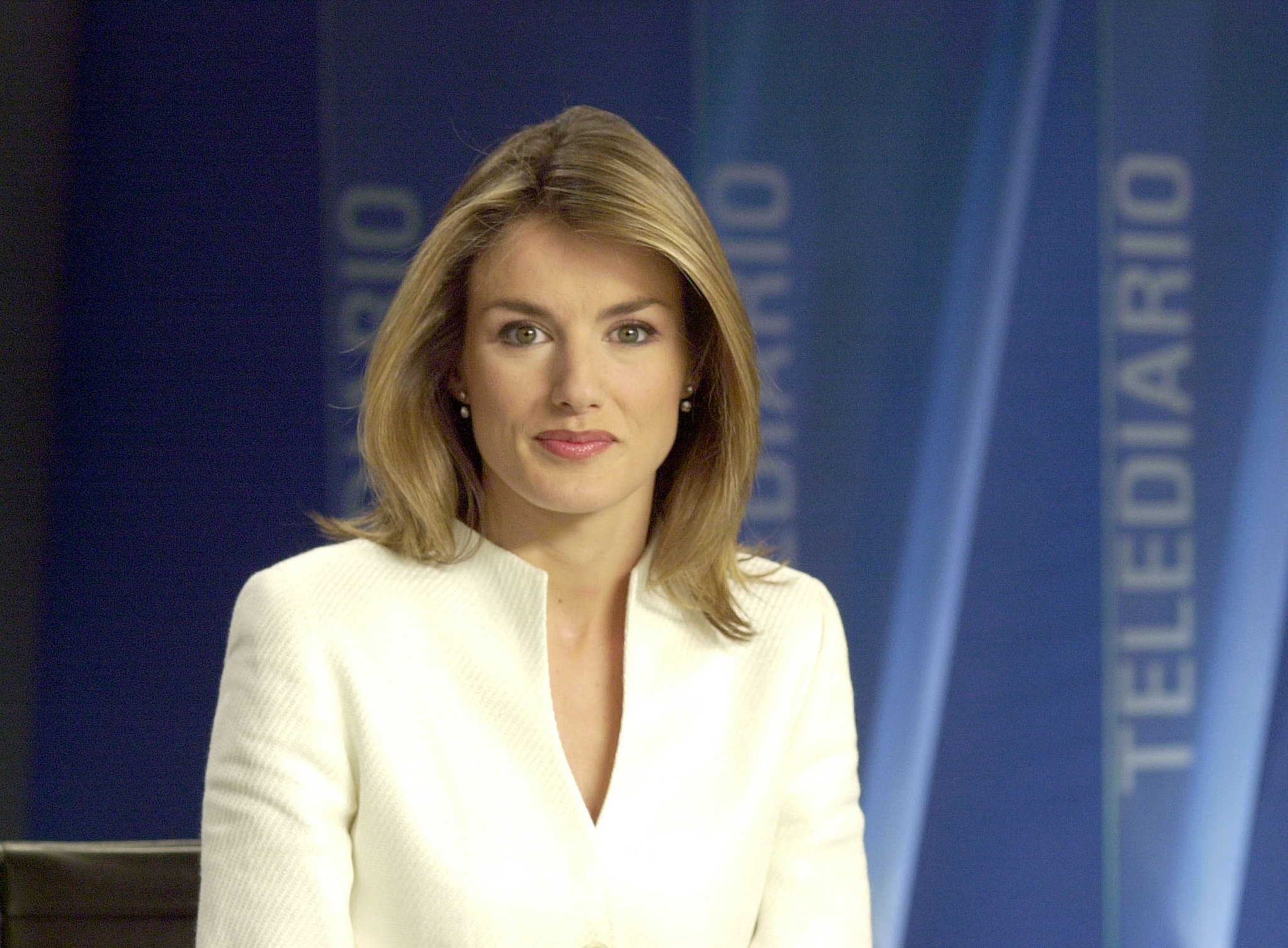
Queen Letizia was, when they married, the CNN anchor who had reported live to Spain from 9/11.
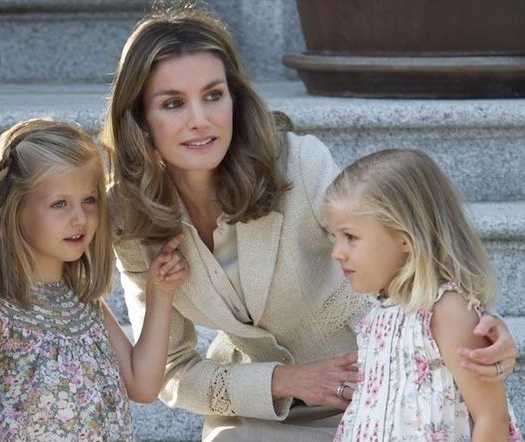
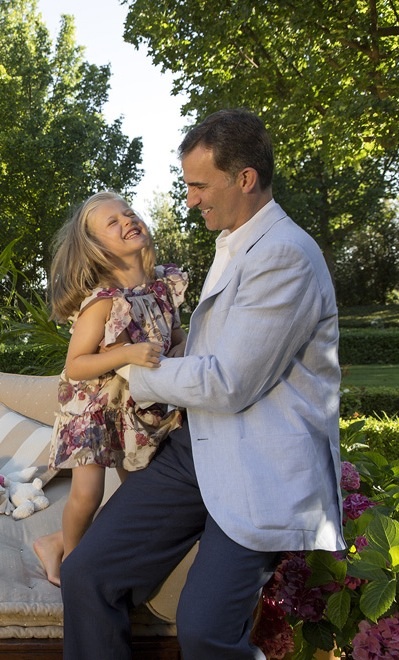
They have two sweet daughters.
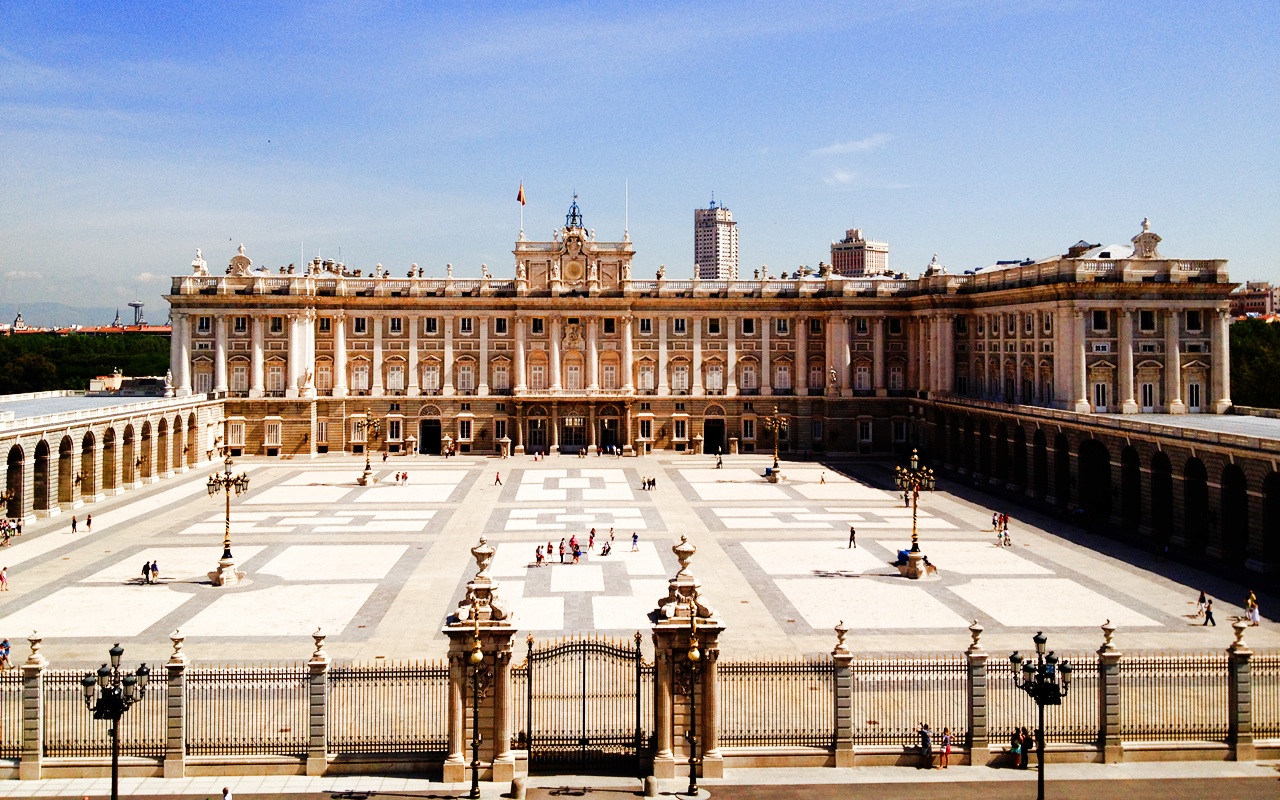
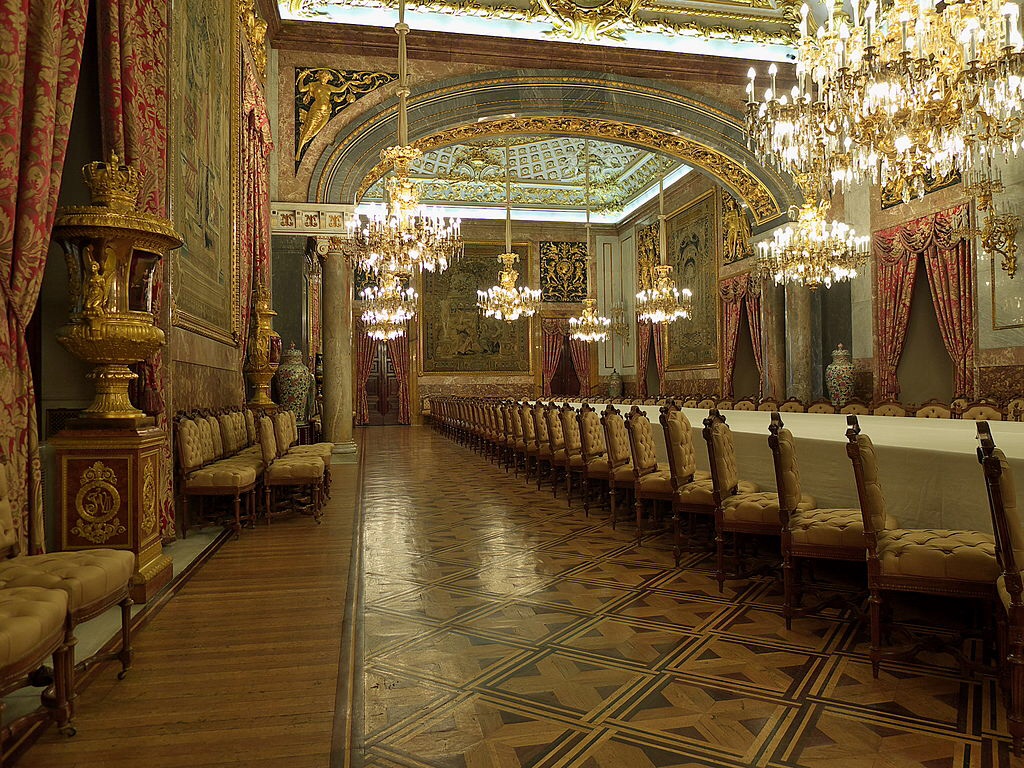
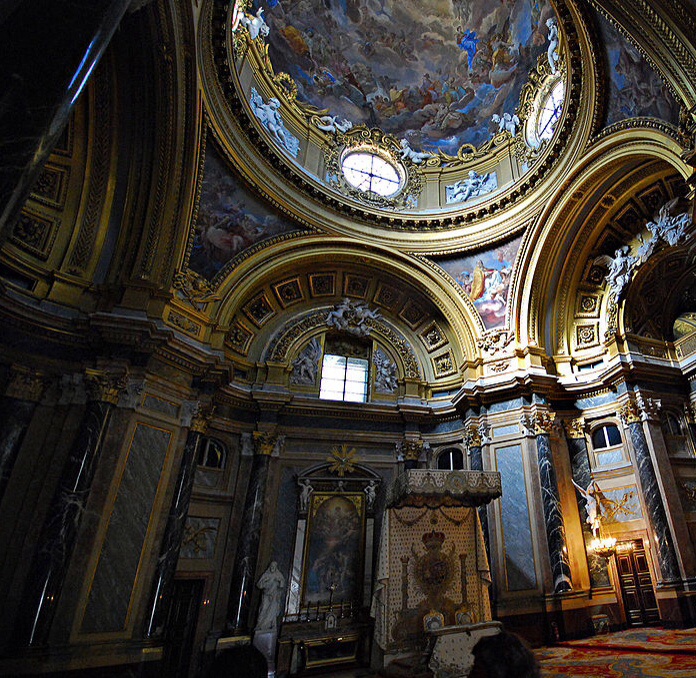
The family doesn’t live in the grand but formidable Palacio Real de Madrid.
They have a lovely private home on the grounds of the Palacio de la Zarzuela on the city’s outskirts.
While we were in Spain, Spanish-speaking fellow traveller Maria Luisa translated the enticing news in the daily newspapers and we were in Spain when King Felipe VI revoked the title of “Duchess of Palma de Mallorca” from his sister, the now criminally-charged Princess Cristina.
Recent media polls have shown that a majority of Spaniards now believe the monarchy is crucial in times of constitutional crisis. A heavy burden in a country whose constitution has been so battered, and restored so tenuously. Only time is its ally. Will the monarchy meet the challenges of democracy, economy and autonomy? What challenges will face Leonor, Princess of Asturia and heir apparent to the Spanish throne, when her father looks to her to lead the country?
Virtually our whole trip involved regions whose people are proud, culturally unique and desperate to individuate themselves from Spain. Some fought civil war for independence and lost (Catalans). Some died and killed protesting for independence (Basques, from both sides of the French/Spanish border). Another was first an independent kingdom (Galicia) and since 1931, has autonomous status.
No wonder when we arrived in Madrid, it was like entering a foreign country.
Would a visit to Madrid make more sense after touring southern Spain?
Perhaps, but here we are: plunge in.
The third largest city in the EU after London and Berlin, Madrid has the third-largest GDP in the European Union and its influences in politics, education, entertainment, environment, media, fashion, science, culture, and the arts all contribute to its stature as one of the world’s major global cities. Due to its economic output, high standard of living, and market size, Madrid is considered the major financial centre of Southern Europe.
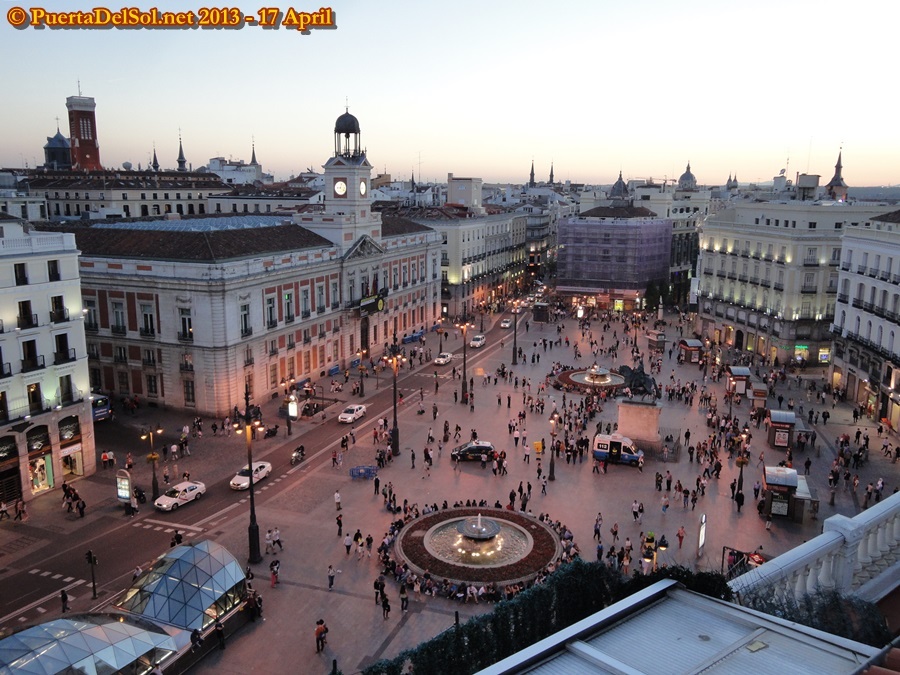
Downtown, such as in the Puerta del Sol (“Gate of the Sun”) Square, the shopping district in the heart of Madrid, teems with a casual, happy combination of tourists and a good portion of the city’s six million local residents. Air-conditioned stores are an oasis from searing temperatures, and the street cafes send a cooling mist over their patrons to beat the heat.
Puerto del Sol
Across from our hotel, busloads of children from across Spain depart, first posing for a group photo and a school song, from a Broadway-style theatre showing The Lion King.
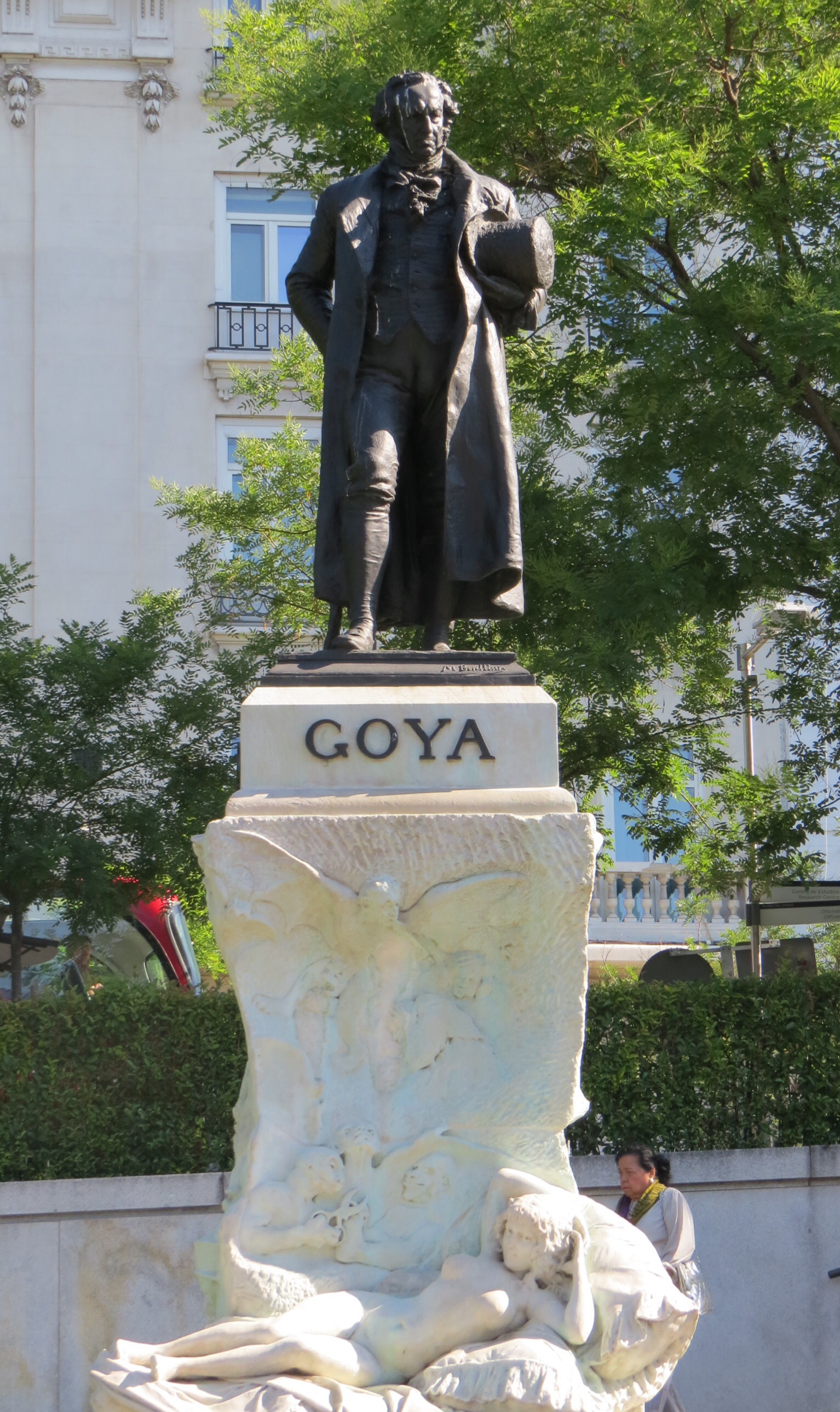
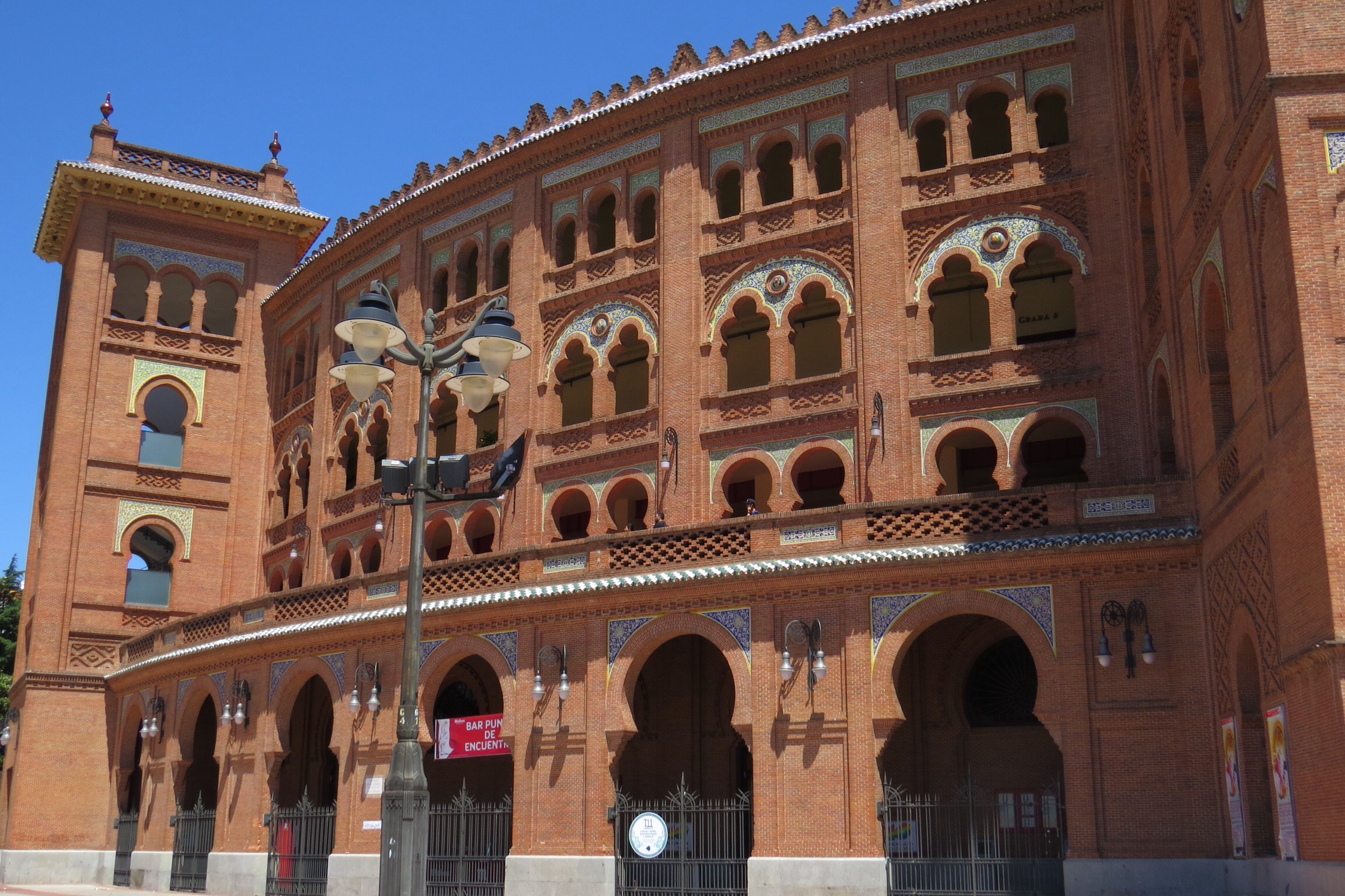
On our city tour, we saw the famous bullring, El Prado museum with its impressive statues of Velazquez and Goya outside, and some of the city’s most beautiful squares and parks.
VelazquezGoya
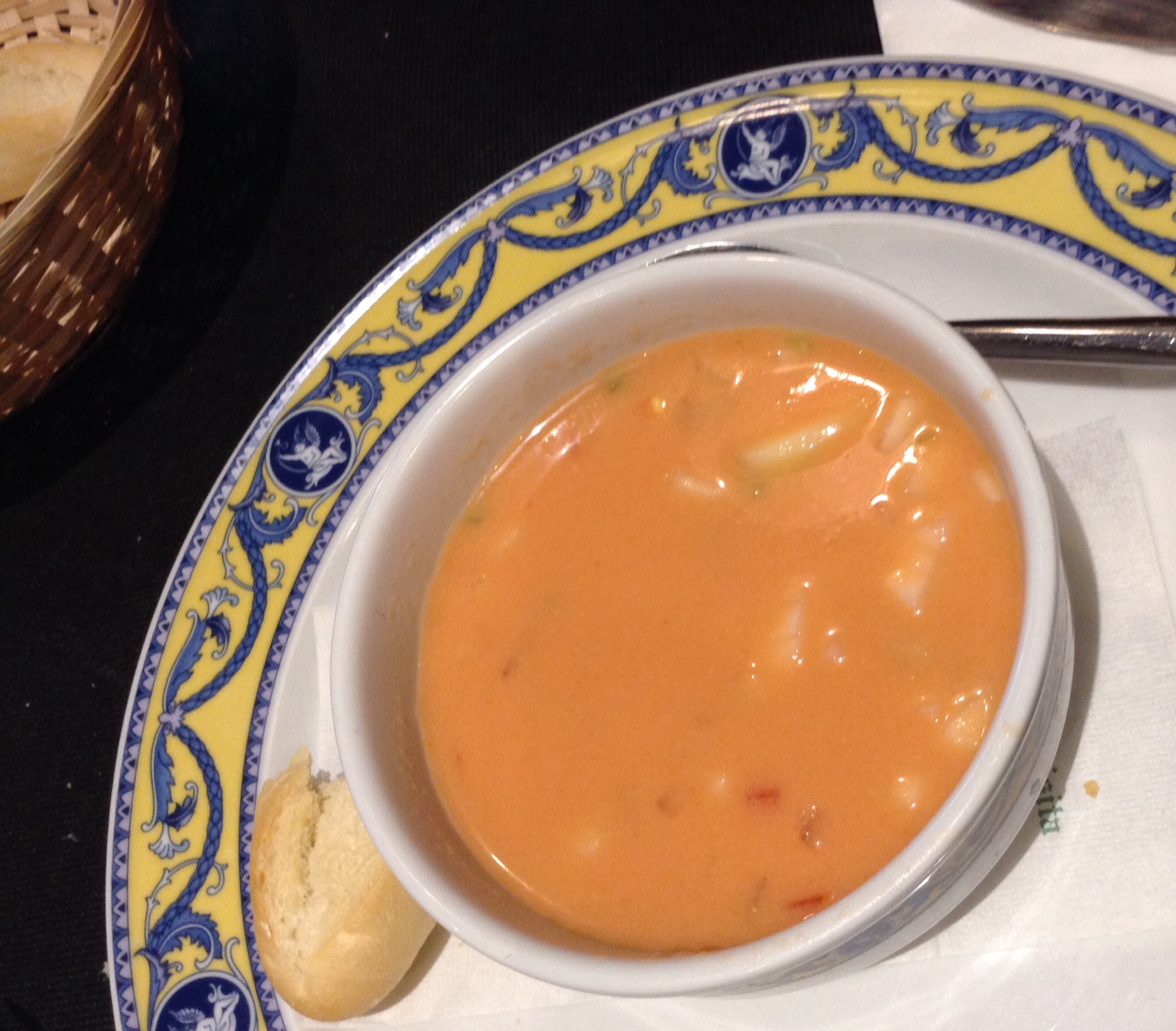
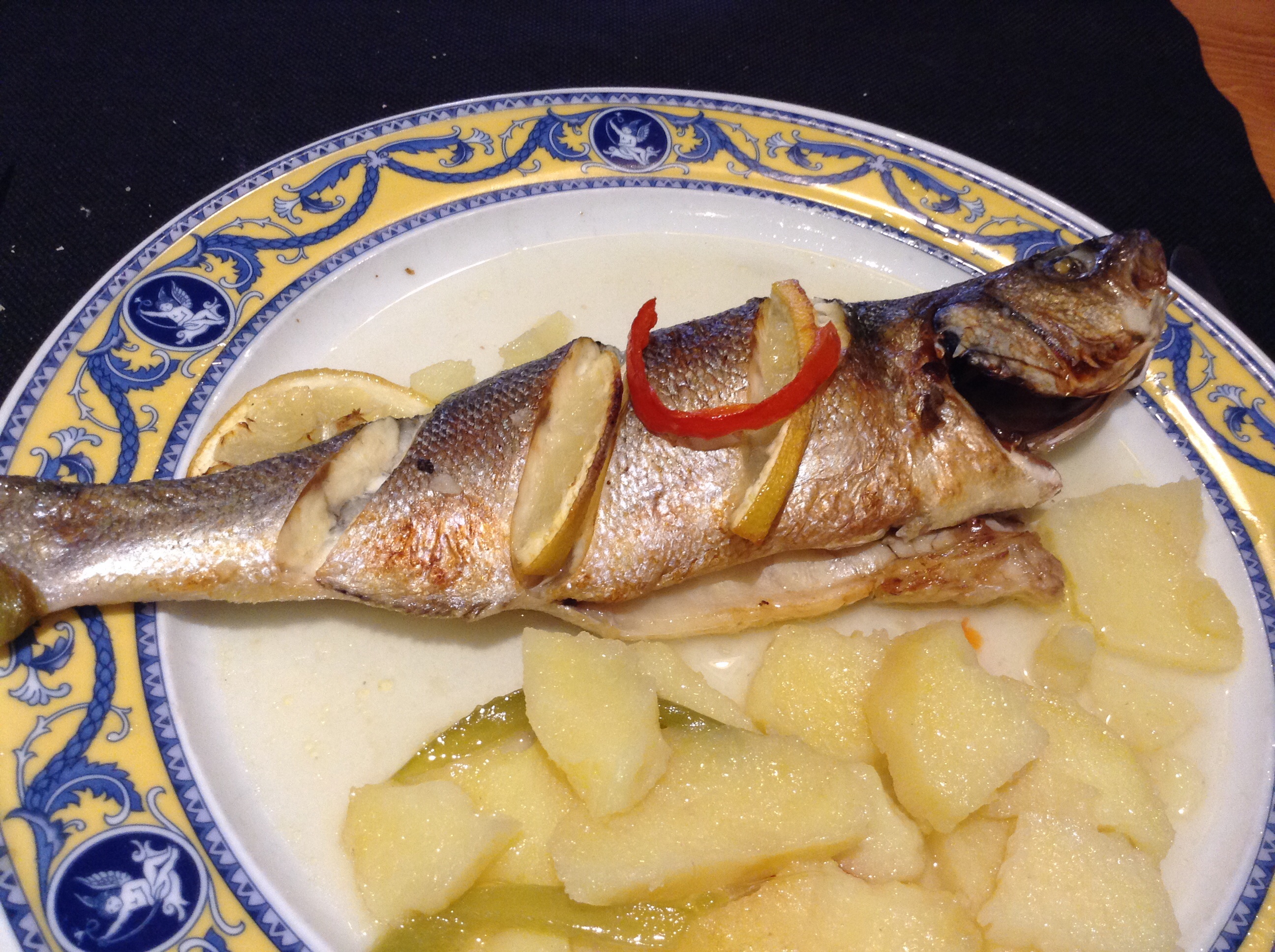
We didn’t really have time to explore the city’s cuisine, but we did have some wonderful meals, pans of seafood-laced paella so big an extra table had to be added to hold them, meals with endless courses from sampler-sized glasses of gazpacho through to liqueurs and chocolate, and dinner served al fresco at midnight. My very last meal – lunch – in Spain has to include gazpacho and buttery, melt-in-your-mouth fish.
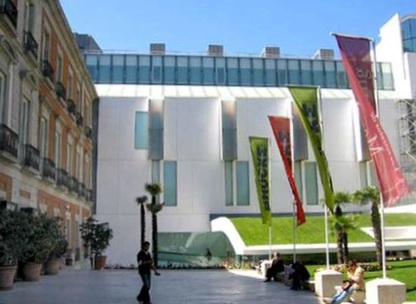
I think what makes Madrid really stand out from other cities its size is the art. I had been to the two major public museums, El Prado and the Reina Sofia, and on my last day I visited a wonderful private collection at the Thyssen-Bornemisza Museum.
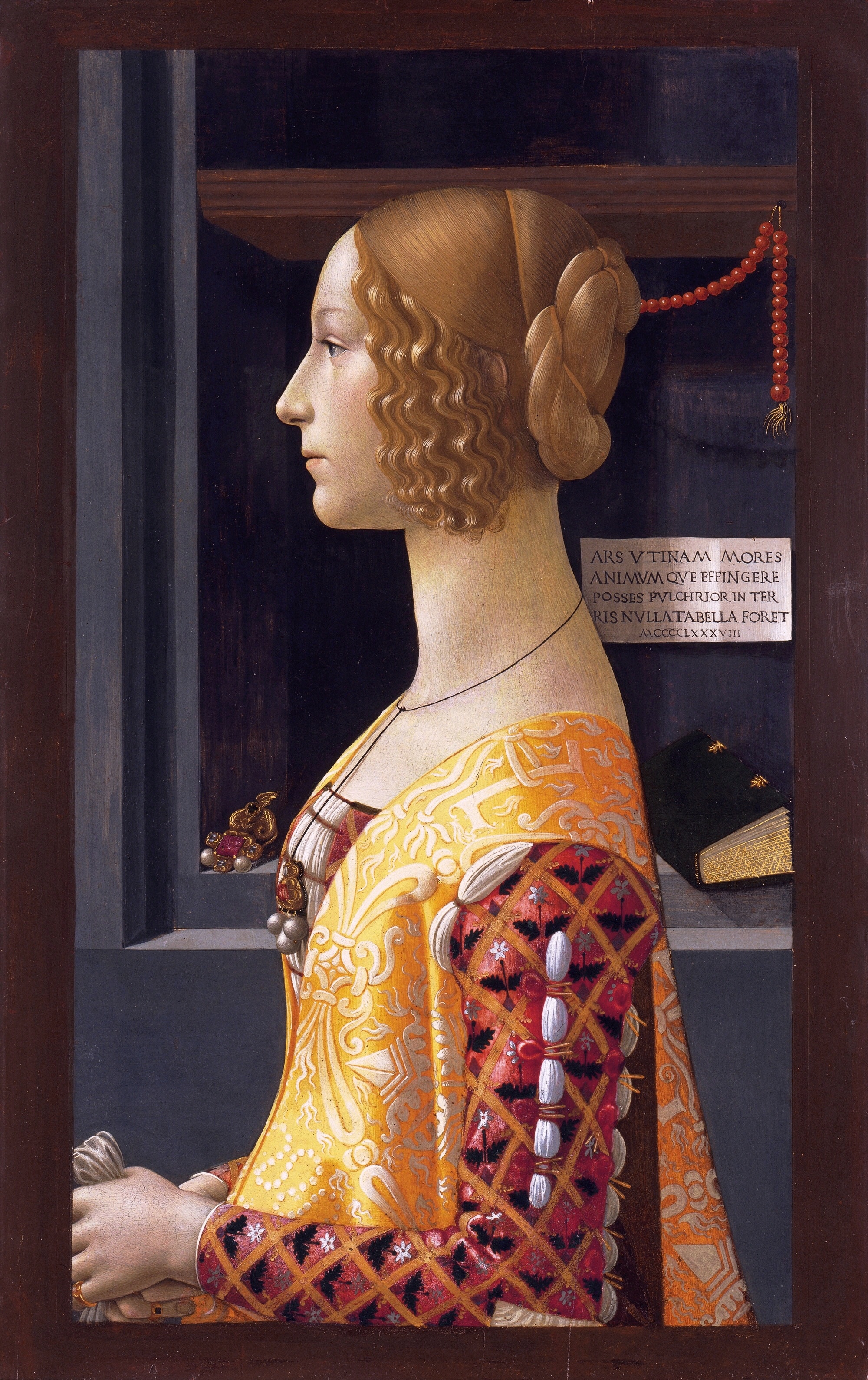
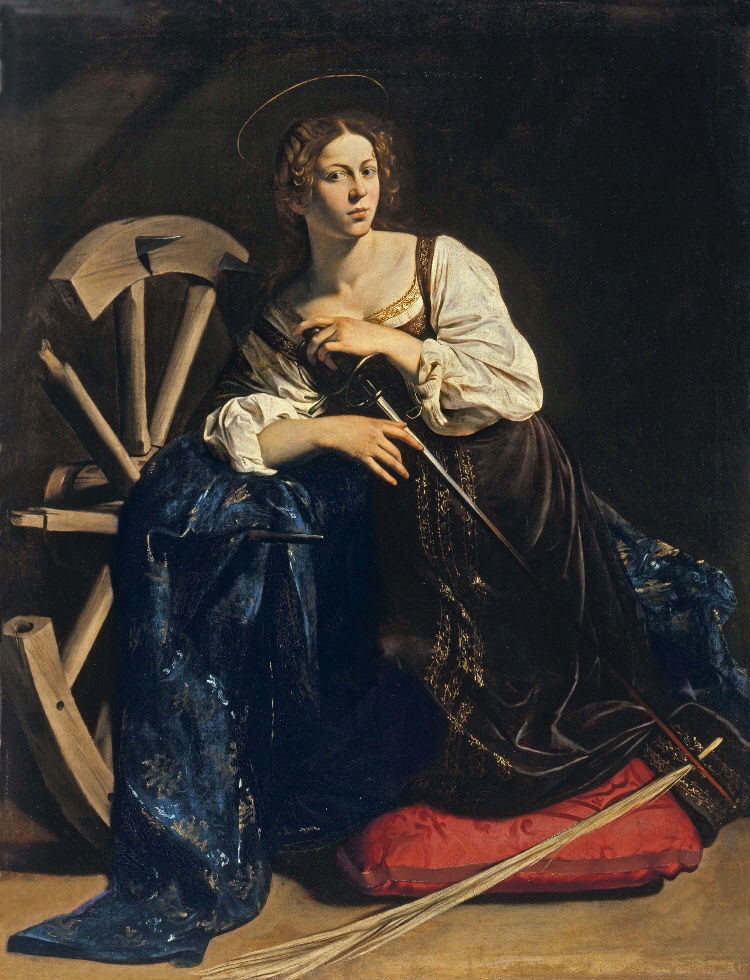
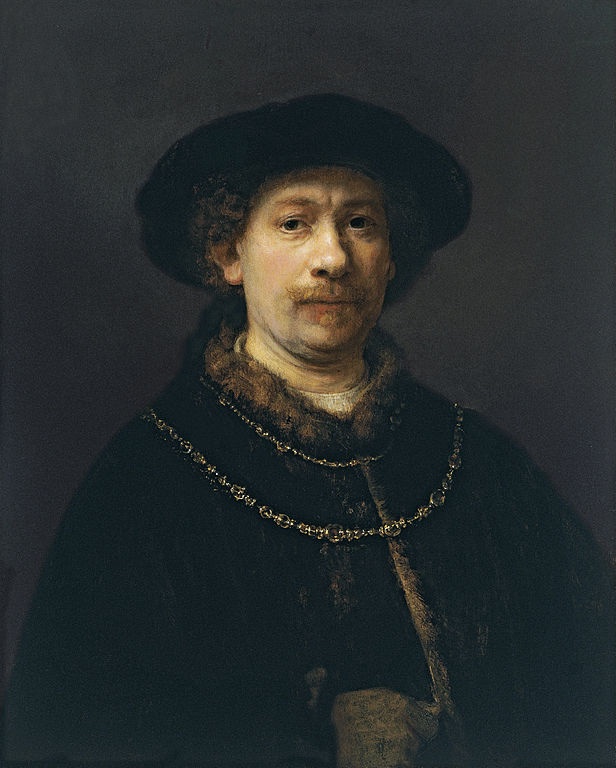
This museum, housing the private collection of the Thysson-Bornemisza family, includes classical masterpieces, such as the work of Michaelangelo’s master, Ghirlandaio, as well as an impressive array of art from genres not found in the public museums, such as Impressionism, 19th Century American art, Fauvism and even pop art.
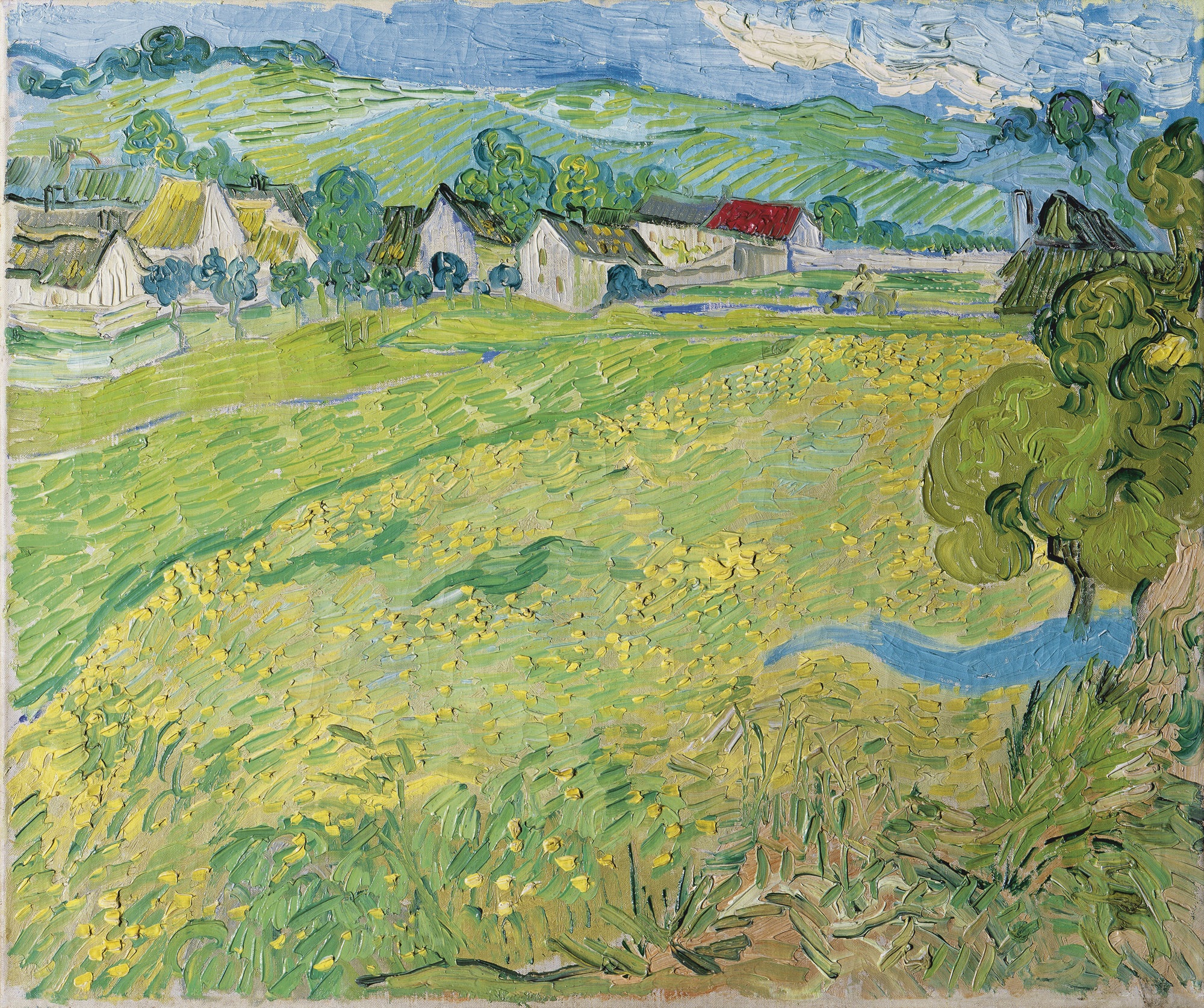
Portrait of Giovanna Tournabuoini, Ghirlandaio, 1488Saint Catherine of Alexandria, Caravaggio, 1598Self-Portrait Wearing a Hat and Two Chains. Rembrandt, 1642Woman with a Parasol in a Garden, Renoir, 1875Les Vessenots, van Gogh, 1890Woman in Bath, Lichtenstein, 1963
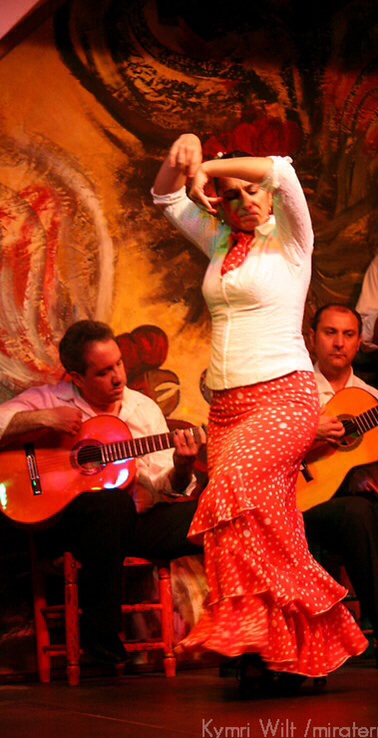
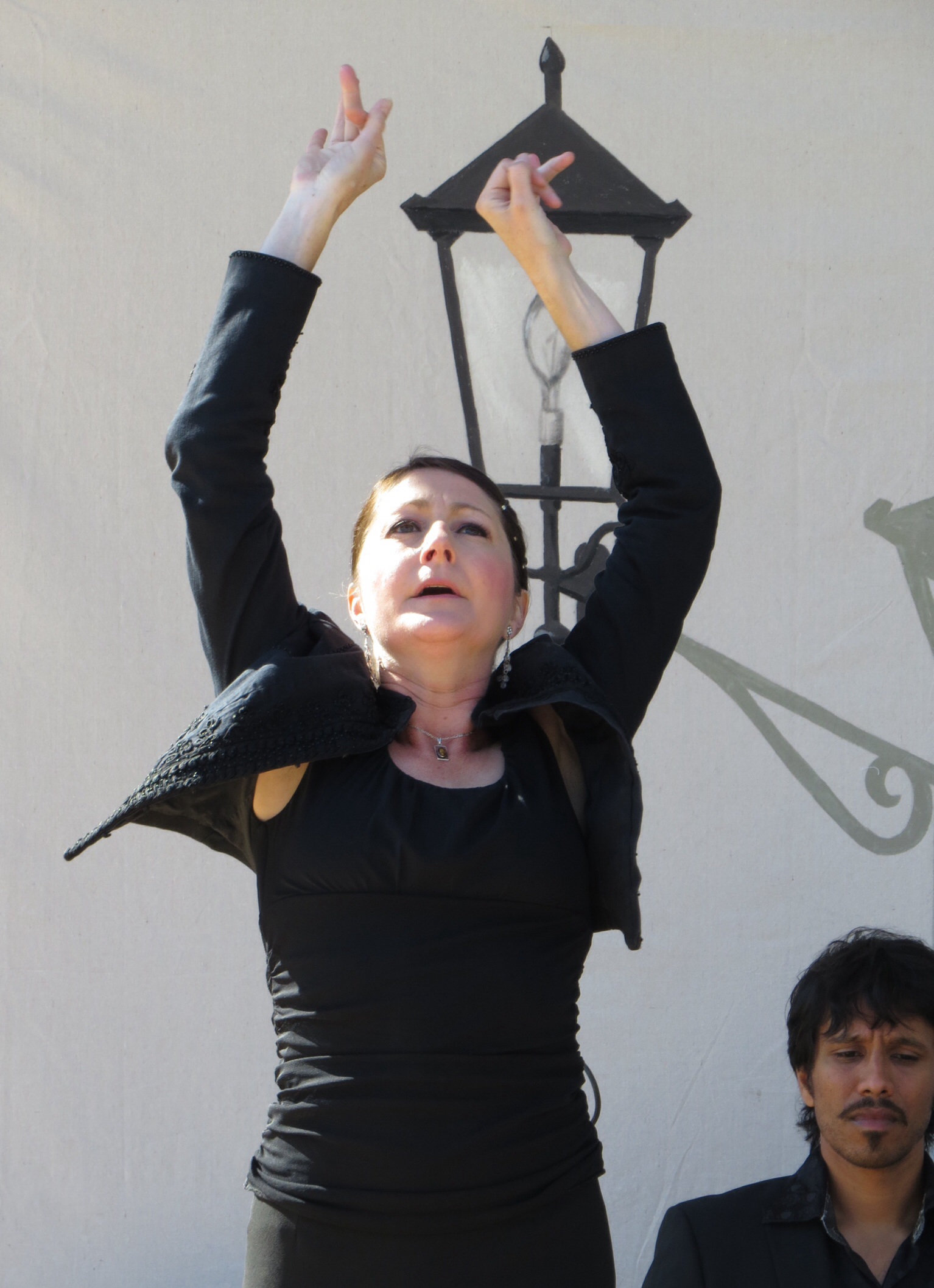
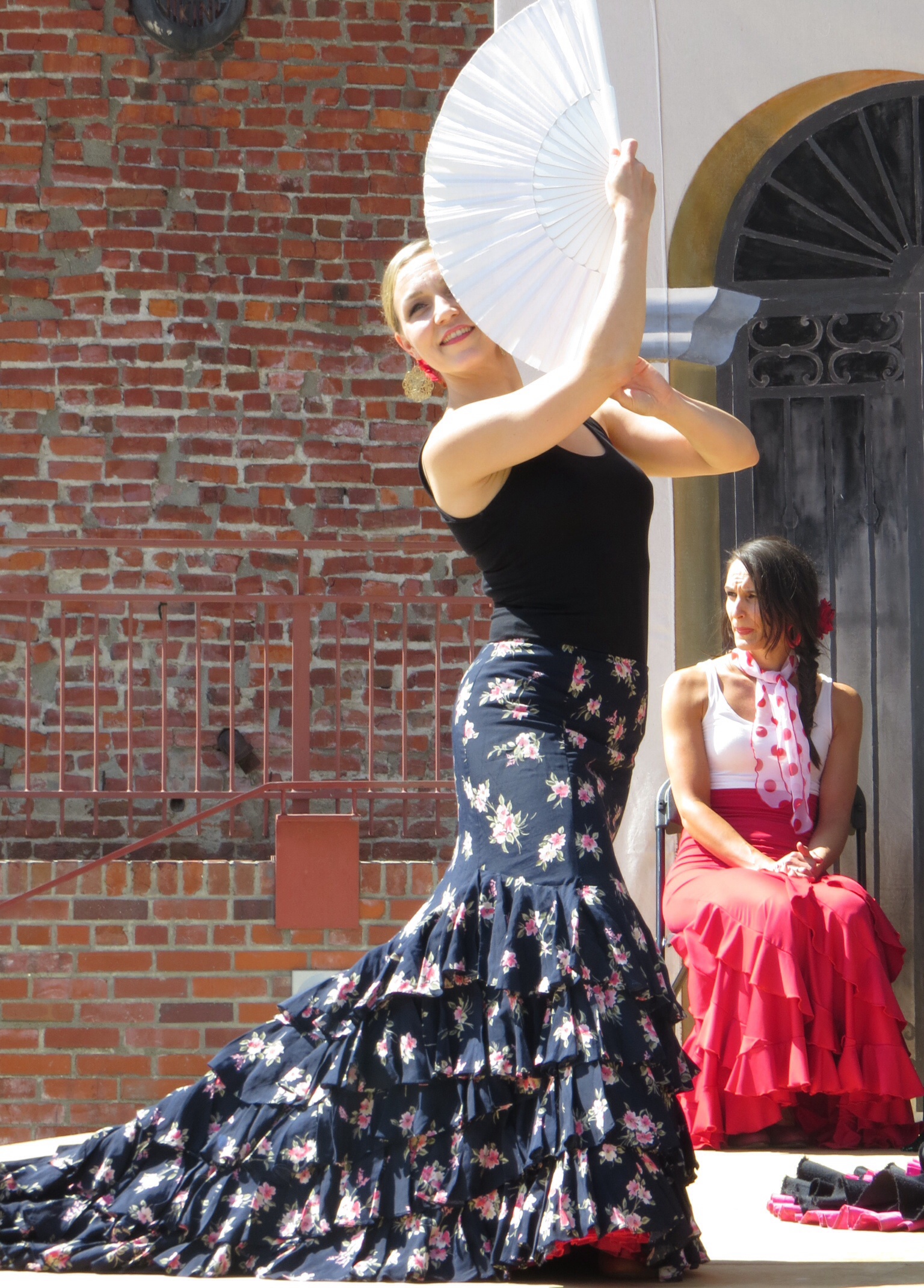
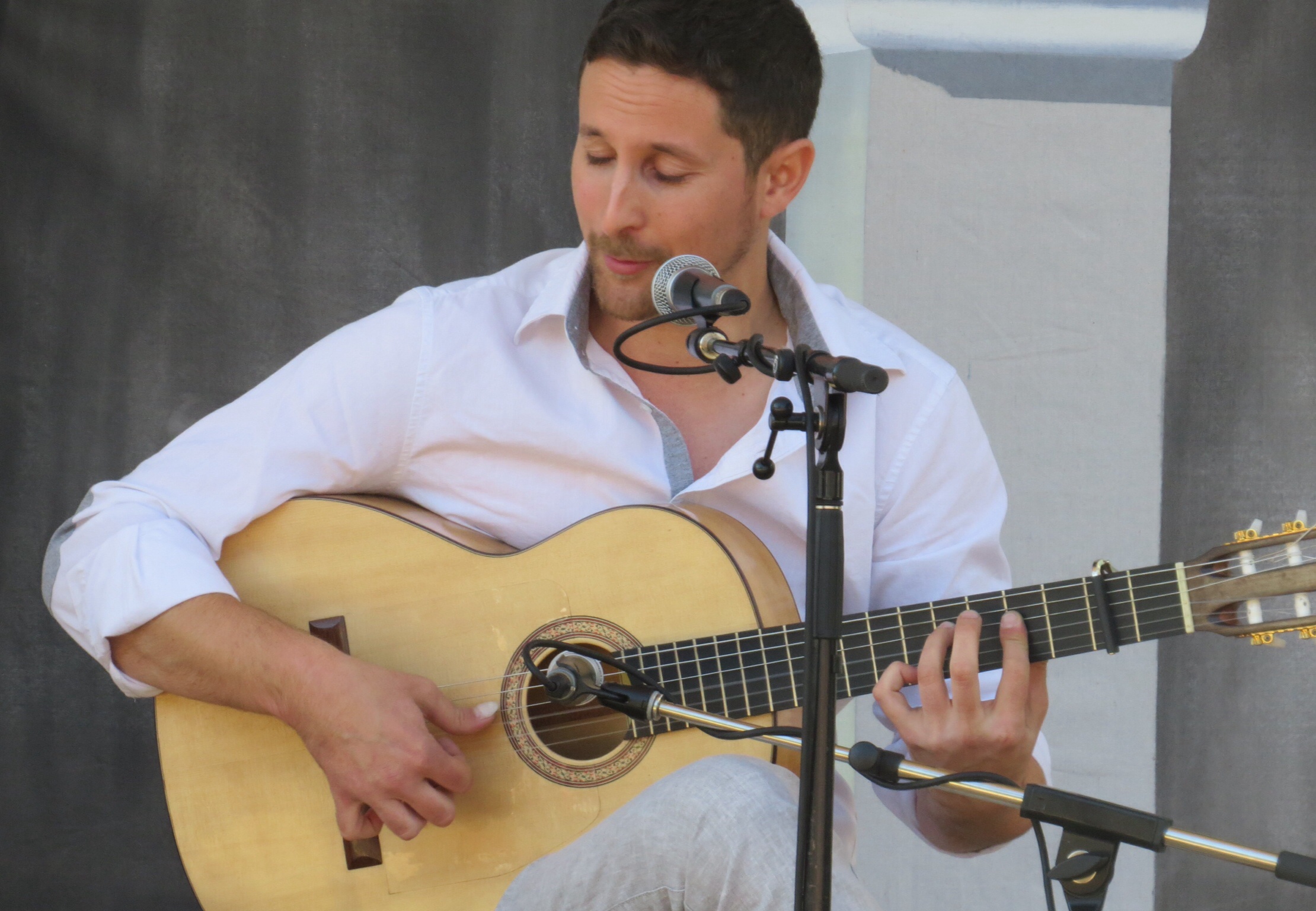
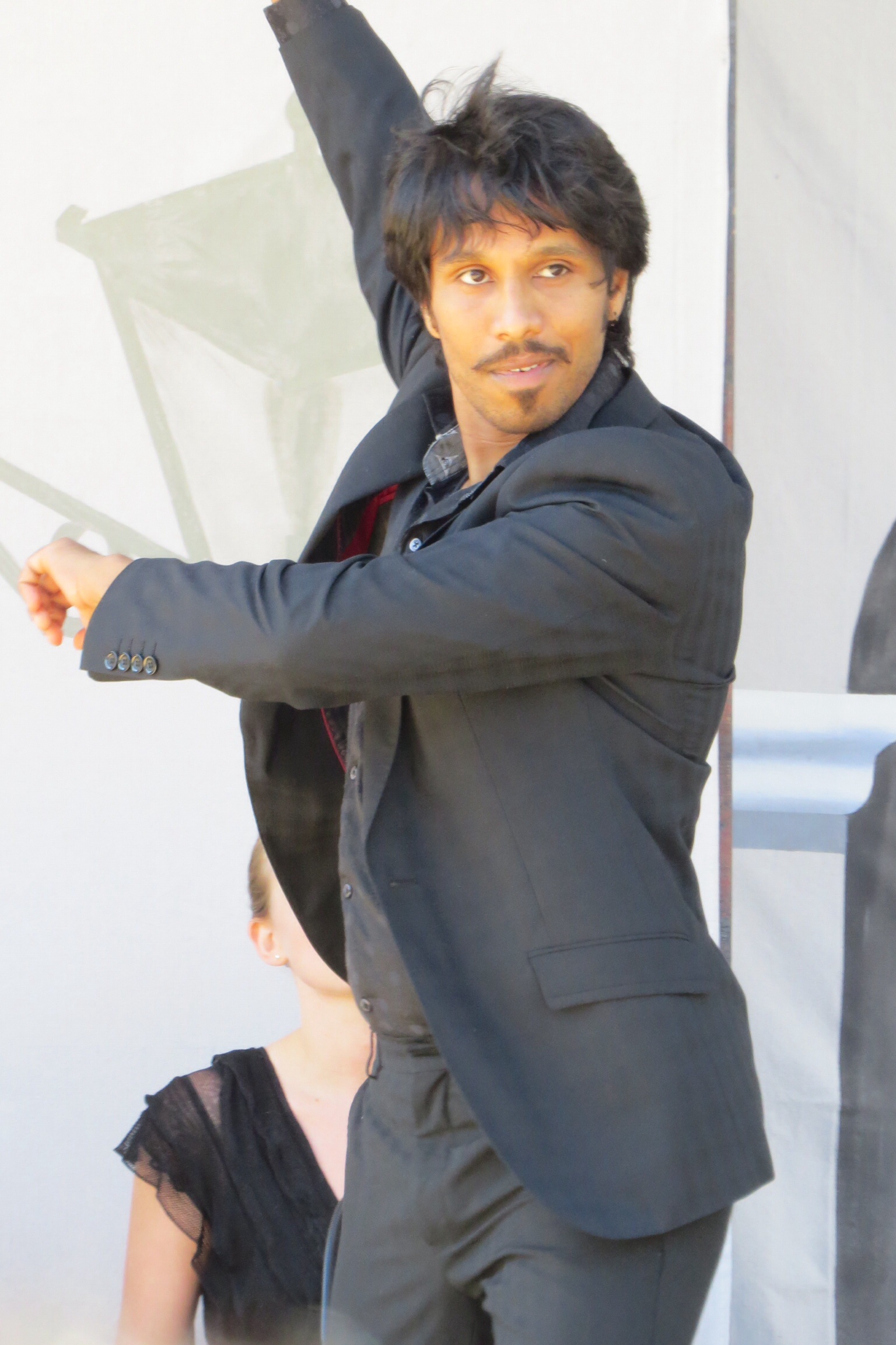
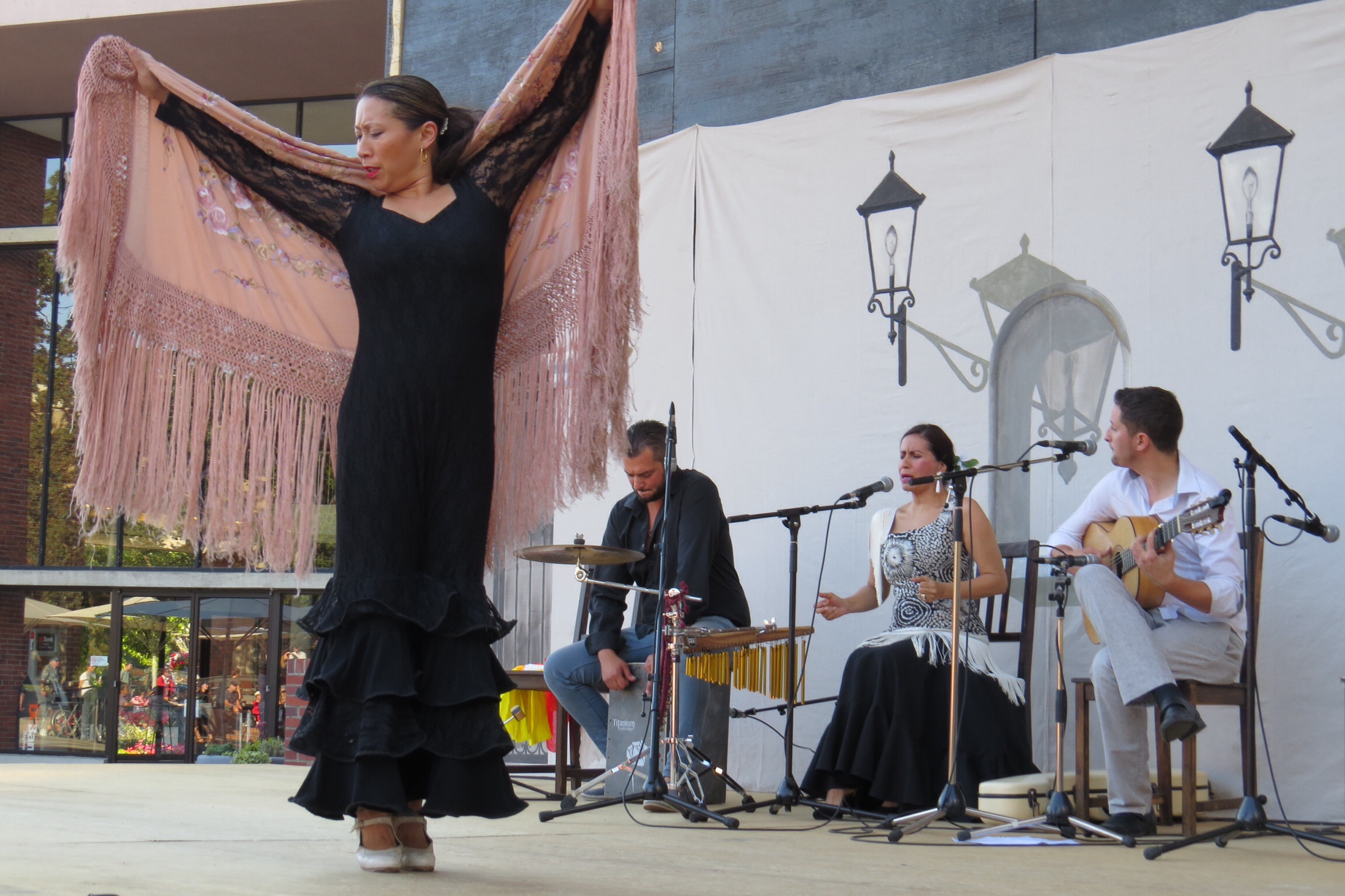
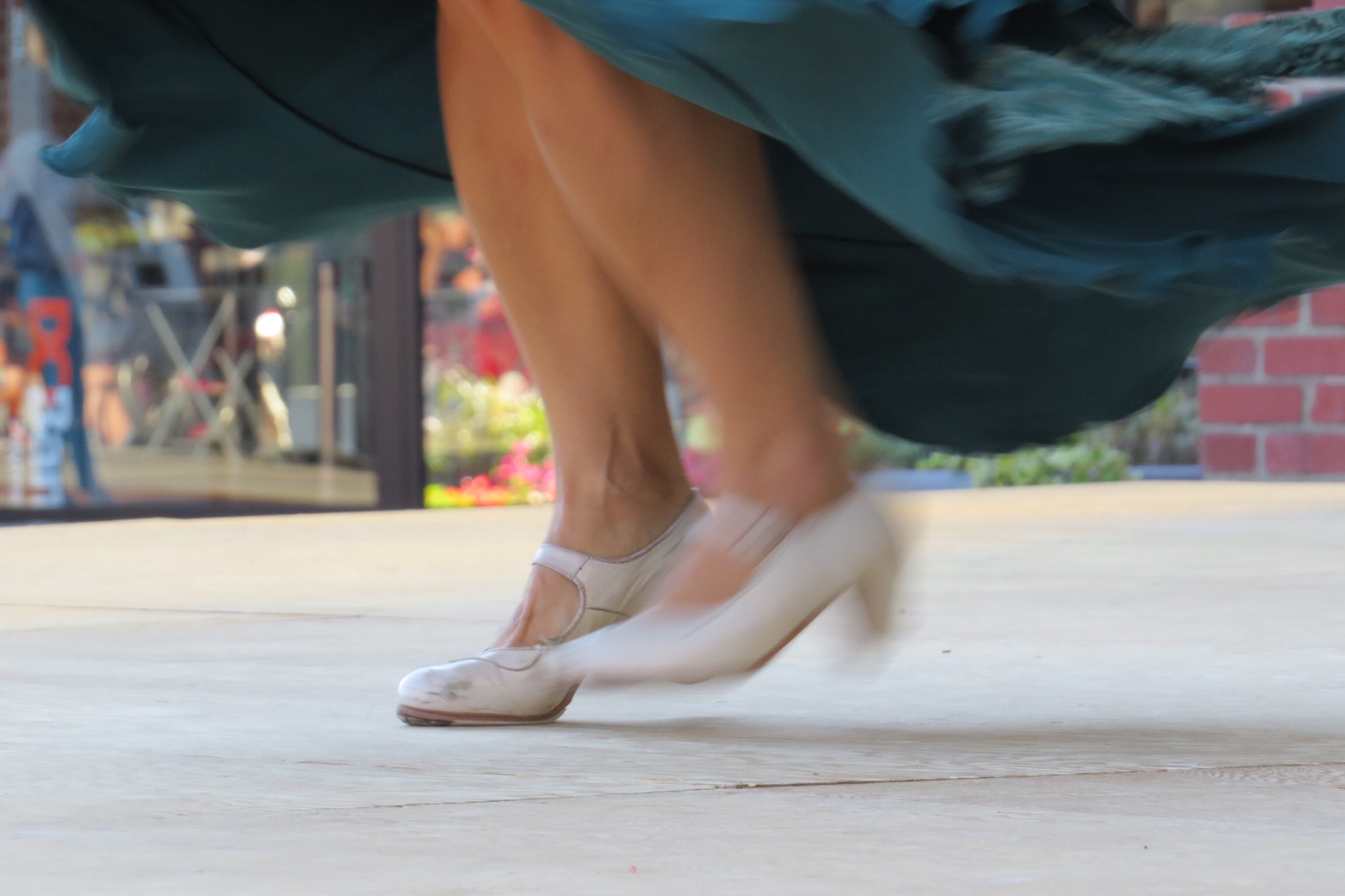
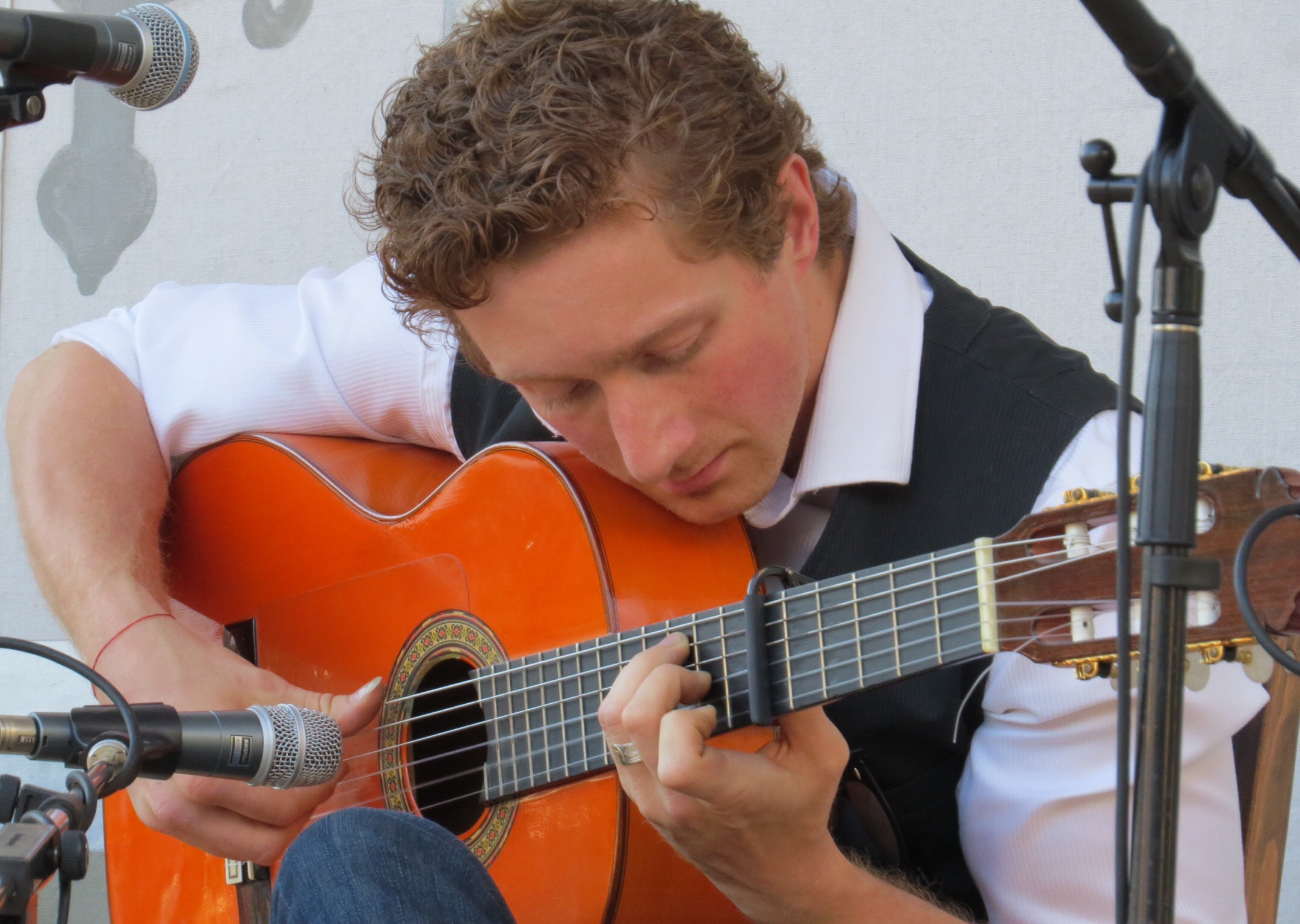
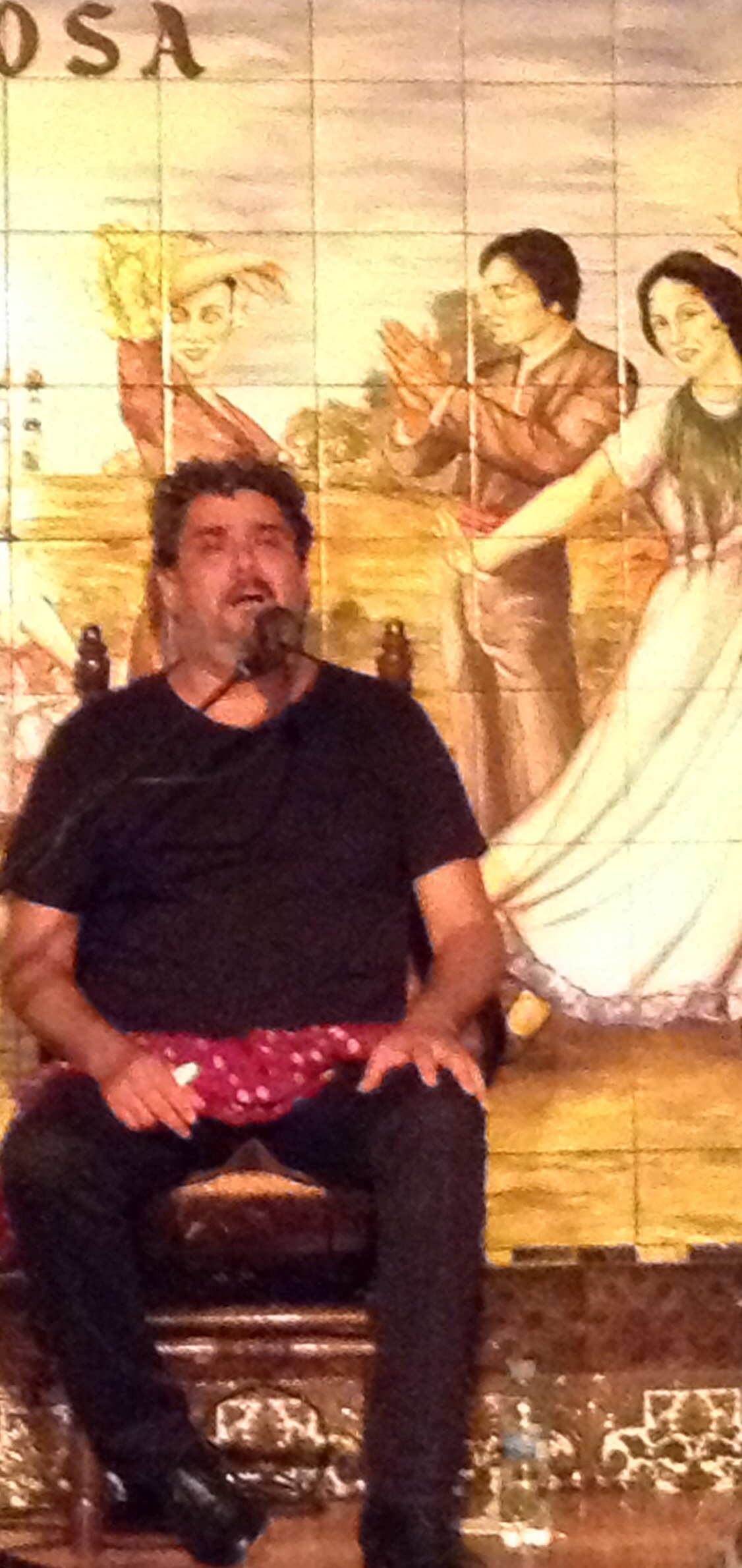
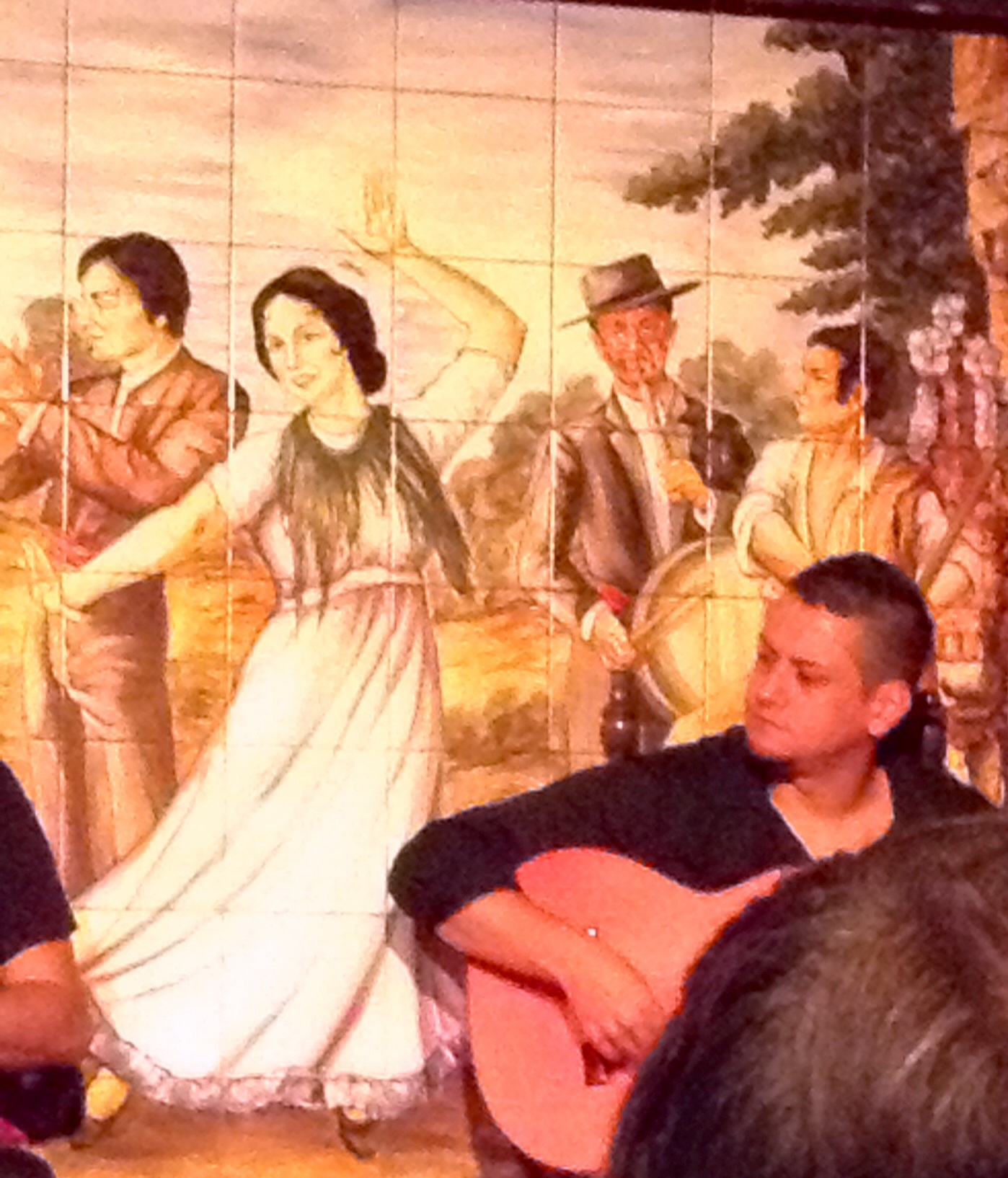
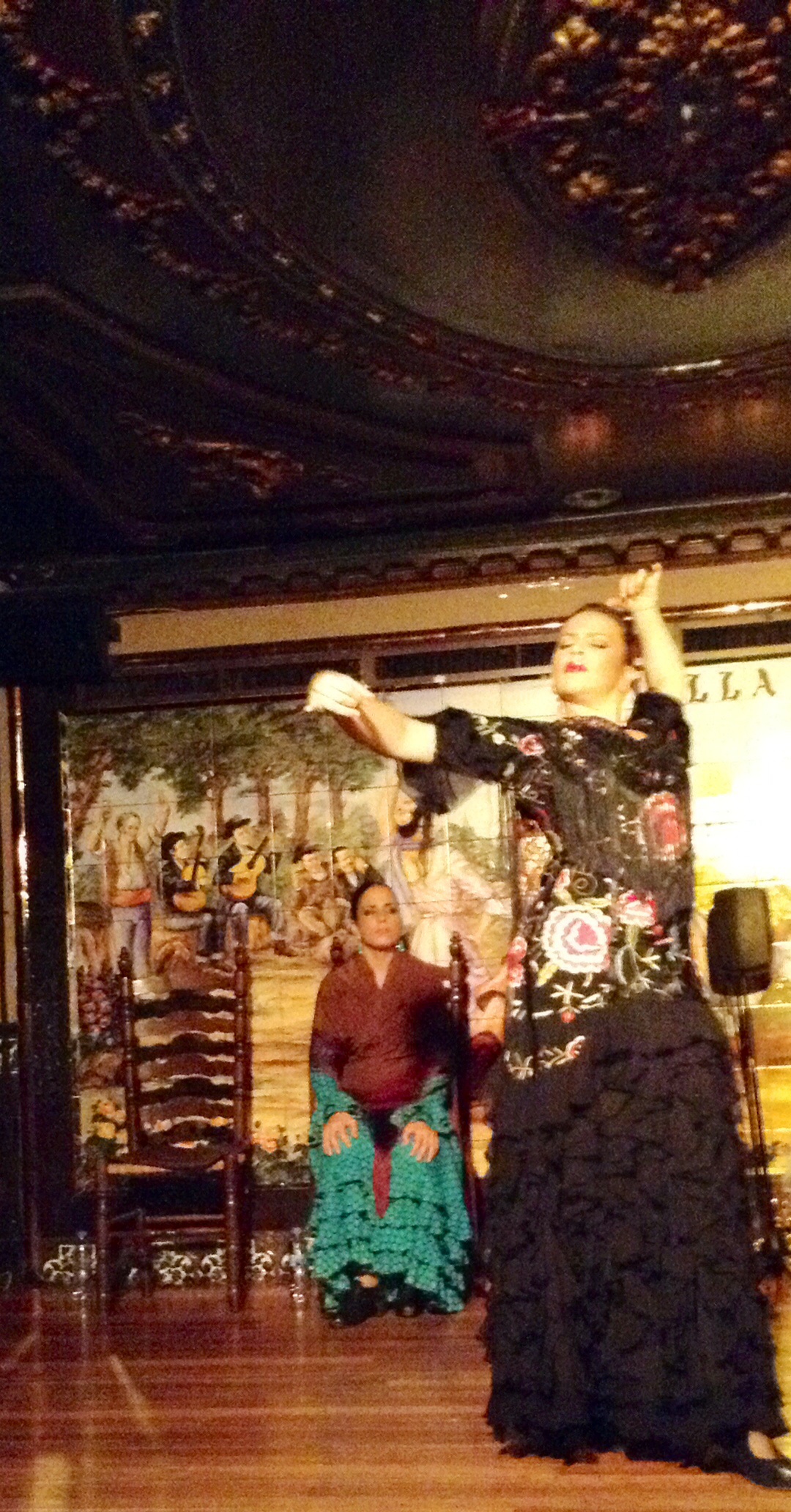
Of course, no trip to Spain would be complete without an evening of Flamenco. Passionate, steamy Flamenco. So intense was one of the dancers that afterward we were searching under our table for her earring. I came across an interpretation of the dance in the article on the page at the top, “Flamenco: Tempo de Amor.”
Flamenco at Tablao Villa Rosa
For me, Barcelona had an edgier appeal than Madrid, but there is much more to explore here, and much more to ponder. Another trip to Spain is definitely in order, don’t you think?
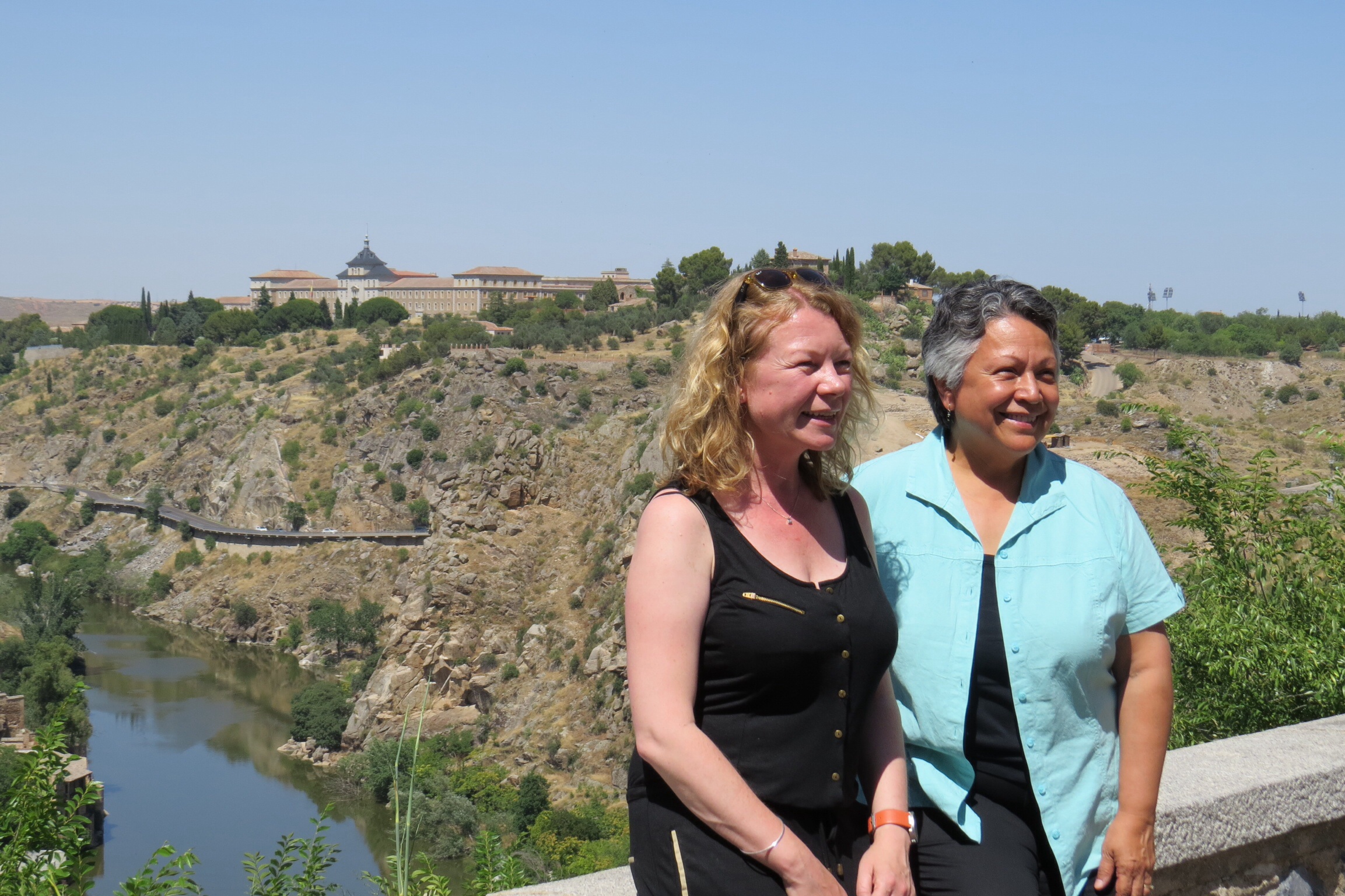
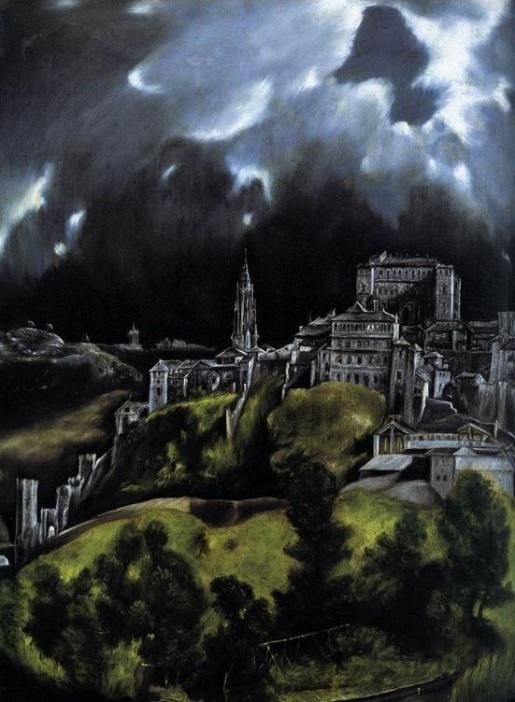
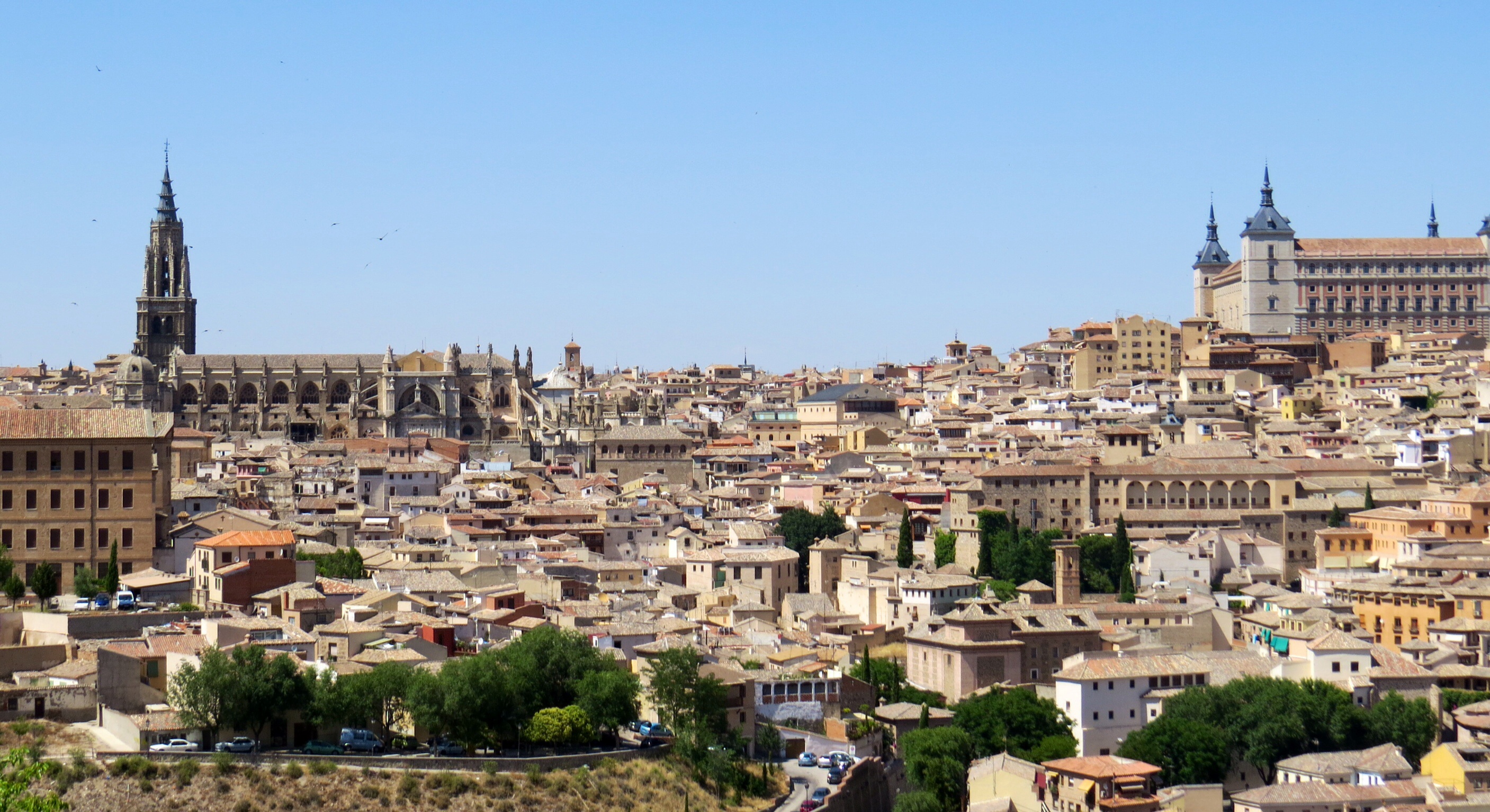
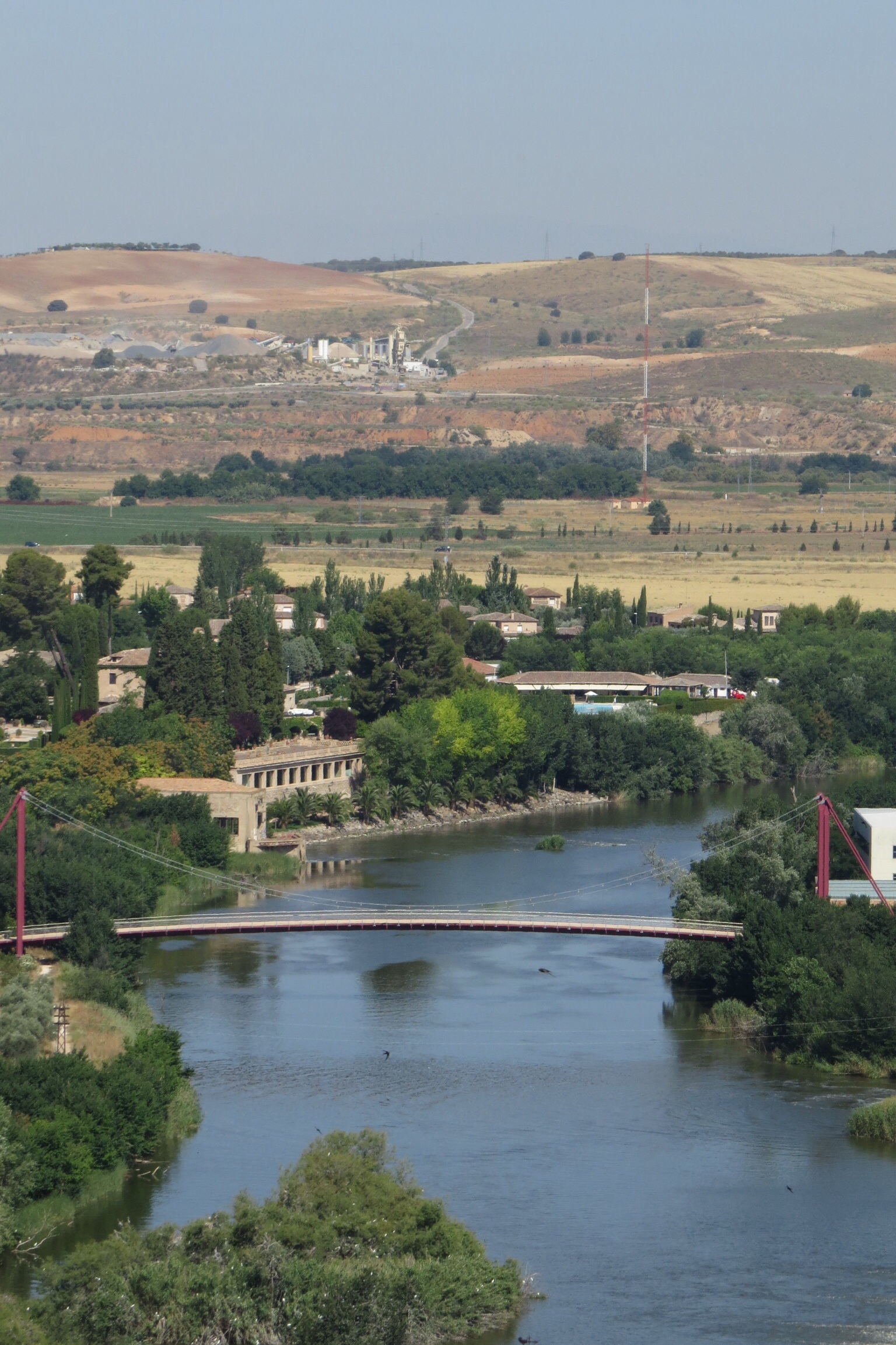
View of Toledo made iconic by the great Spanish Renaissance painter, El GrecoView of the walled city Toledo today
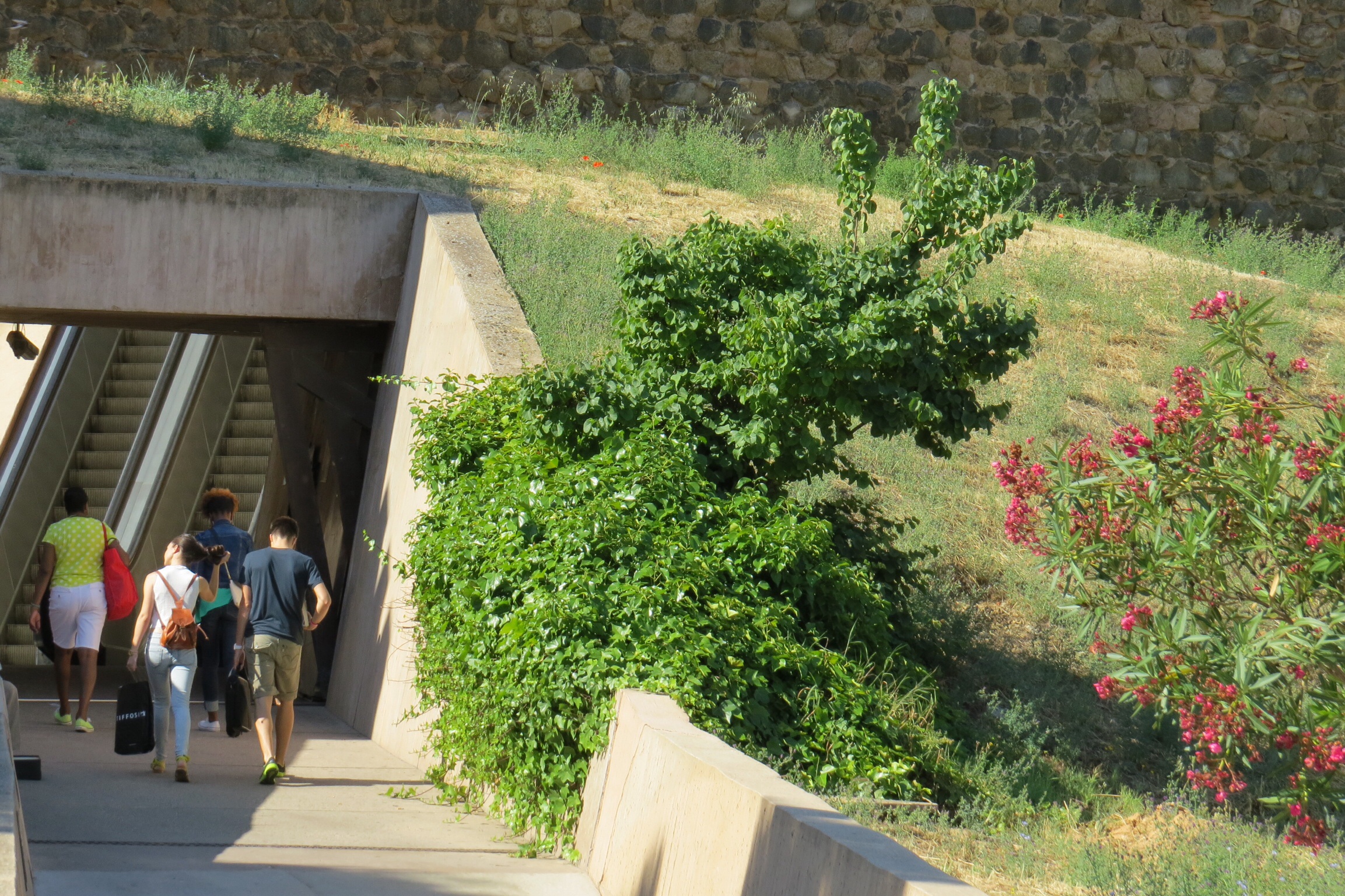
A UNESCO world heritage site with the Alcazar, former palace of Toledo, and the Cathedral, which have loomed over this city for centuries. Built on jutting rocks, I expected to climb up to the city by ancient stairs or a funicular.
Escalators to Toledo
Located in the heart and geographical centre of Spain, Toledo developed into a strategically important city for the Romans (Toletum) and later, for the Visigoths (Catholic) who moved their capital from Seville to Toledo. Such was the Visigoths’ thirst for power that constant wars seeking to extend their reach left the city vulnerable, and Muslims were quick to conquer Toledo in 711. Under Muslim, and later Arab rule, this city of tolerance was a centre of learning and the arts in Spain.
The most beautiful aspect of Toledo’s history is that, at a time when the city was the centre of power in Spain, the trilogy of Catholics, Jews and Muslims cohabited in peace. All three cultures arrived in Toledo at around the same time, between the 4th and 6th centuries. This history is reflected in the city’s architecture, albeit construction of the surviving buildings didn’t start until long after the cultures established themselves in Toledo.
Muslim
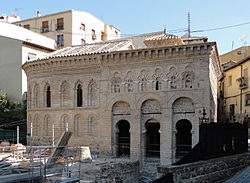
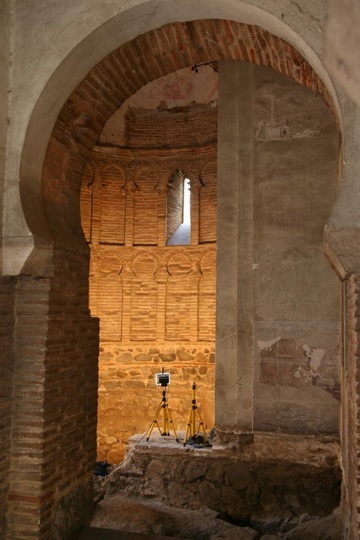
We didn’t have a chance to see the Mosque of Cristo de la Luz, built in 999, the only remaining mosque of ten built during the Moorish period. Then known as Mezquita Bab-al-Mardum, deriving its name from the city gate Bab al-Mardum, the mosque is located near the Puerta del Sol in an area of the city once called Medina where wealthy Muslims used to live. The atmospheric interior is graced by the trademark horseshoe-shaped arches introduced to Spain by the Moors.
The Moors’ defeat of Spain is central to Toledo’s history. The stuff of legend, the last Visigoth King Rodrigo gazes out the window of his Toledo palace and sees the beautiful Florinda bathing in the river. Whether he rapes her or she tempts him (as she stated) remains as debatable as the story of Adam and Eve. Florinda’s father, Julian, is in Mauritania when he learns of the loss of his daughter’s purity at the hands of the King. Enraged, he gathers together an army of Moors and crosses into Spain at Gibralter. It is said that Julian paved the way for the Moors to conquer Spain at Toledo and go on to rule the Iberian peninsula for 700 years.
Jewish
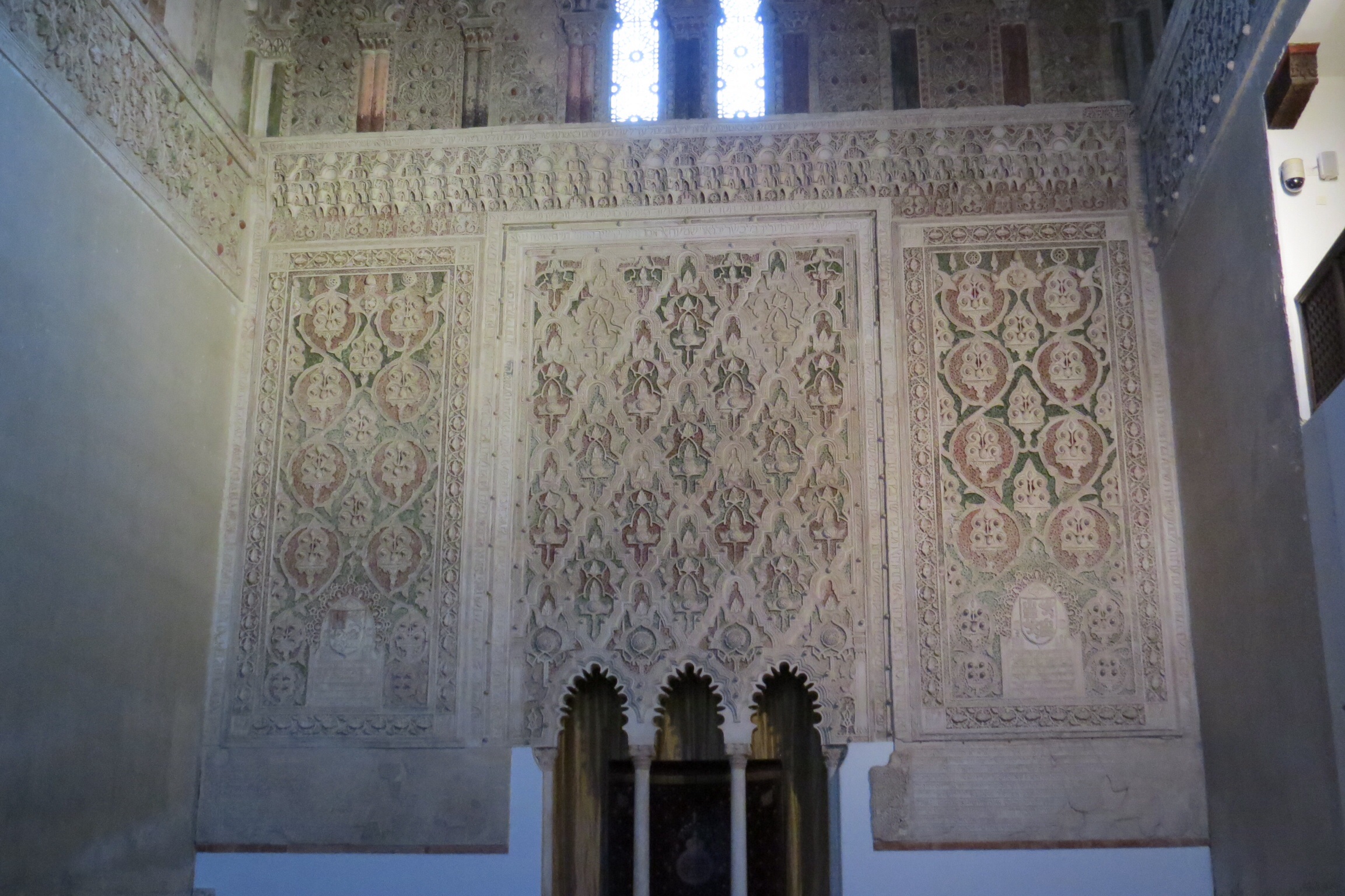
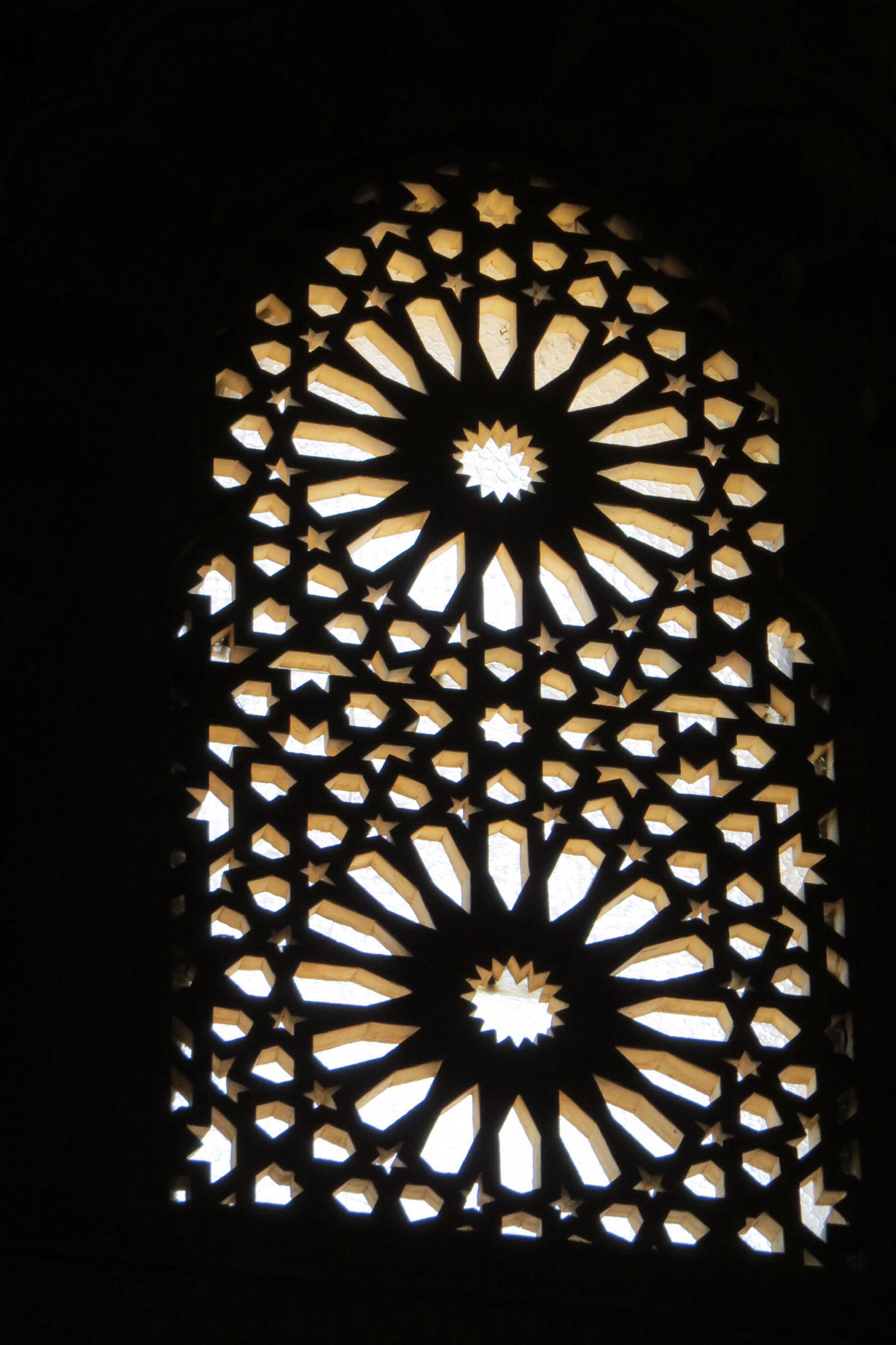
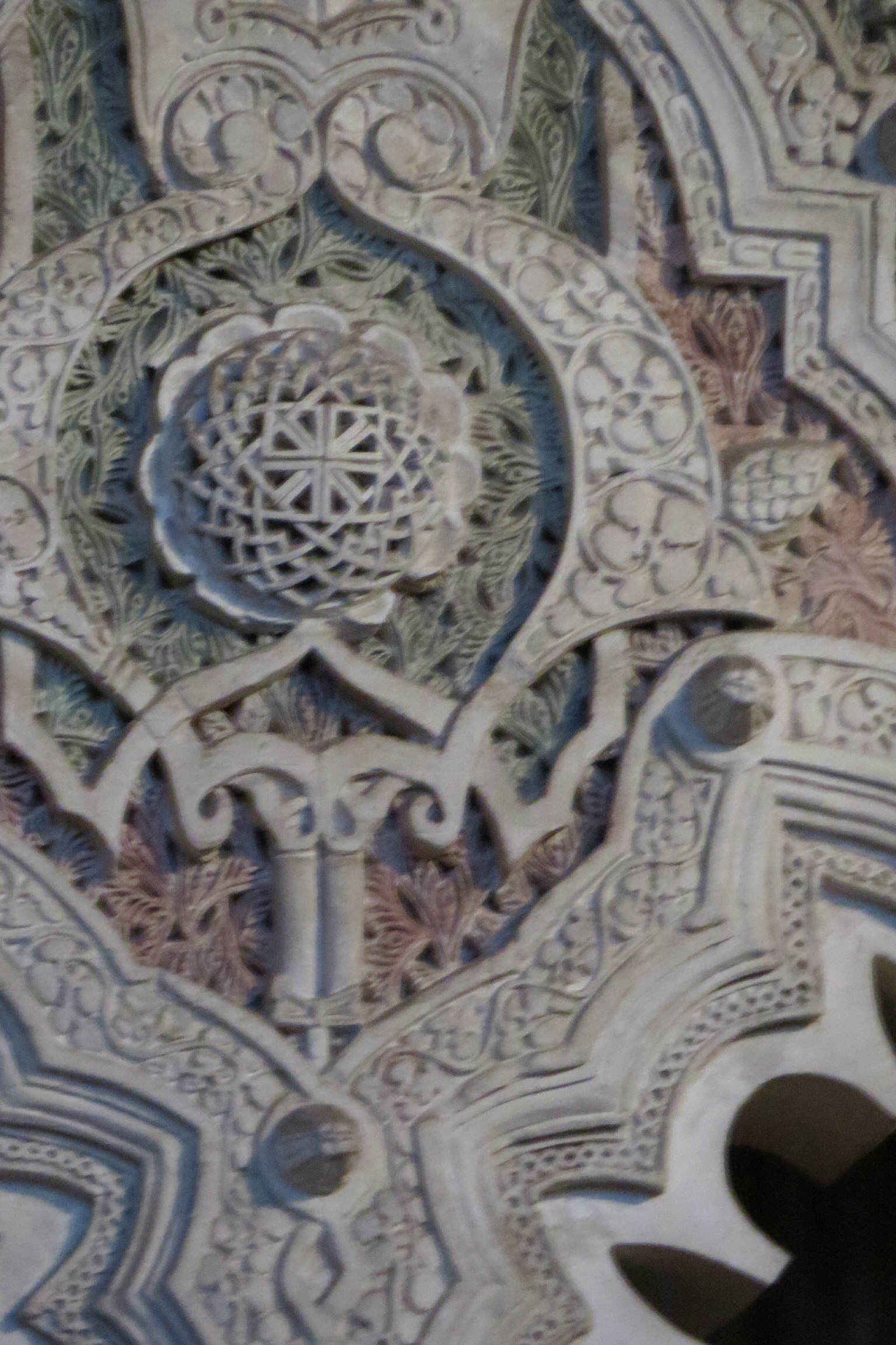
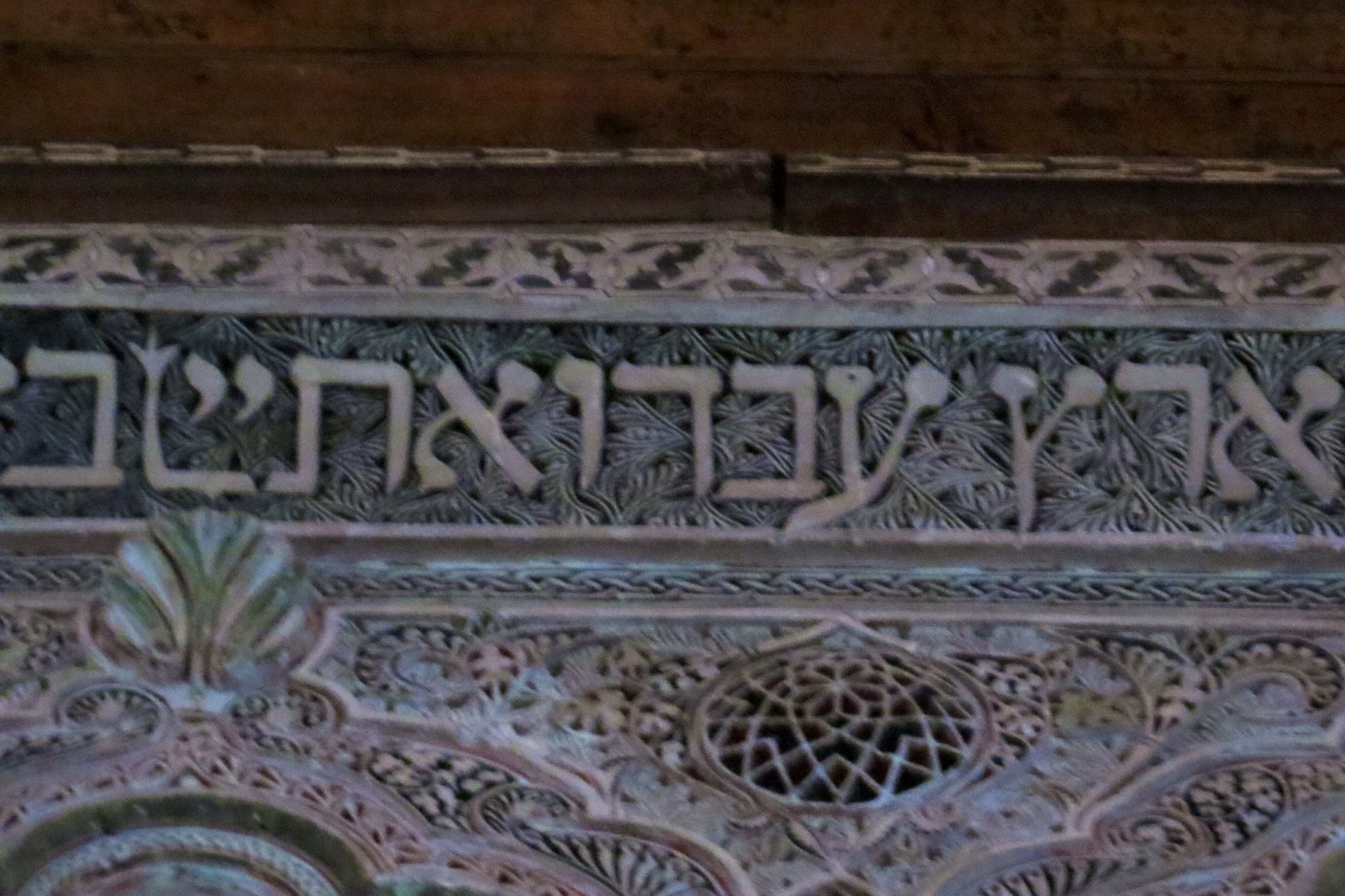
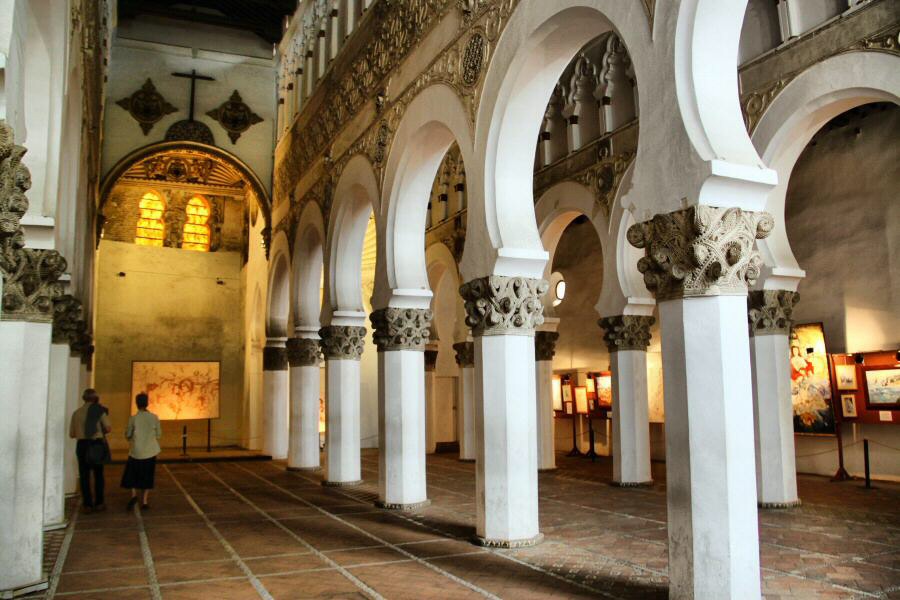
We visited the exquisitely decorated Sinagoga del Tránsito. Construction of the 14th century synagogue was financed by Samuel Ha-Levi, treasurer to the king, Pedro el Cruel (Peter the Cruel). Modest on the outside, the inside consists of a simple rectangular room, although beautifully decorated. The central panel around the three arches is surrounded by inscriptions in praise of God, the King, and Ha-Levi himself. The women’s balcony above may have the best view of the interior decoration of the synagogue. We only had time for a brief peek at the small Sephardic museum and library attached to the synagogue.
Catholic
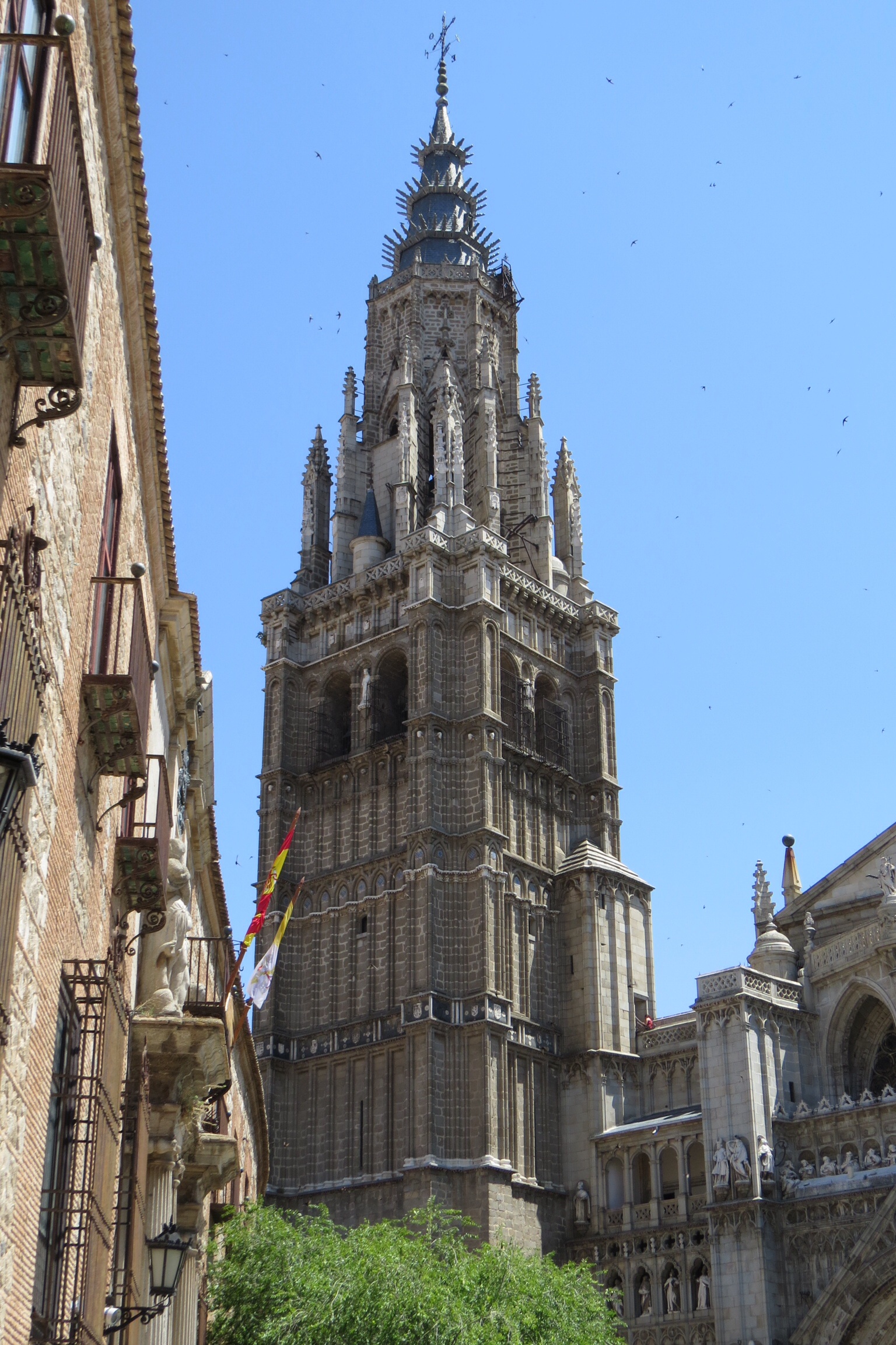
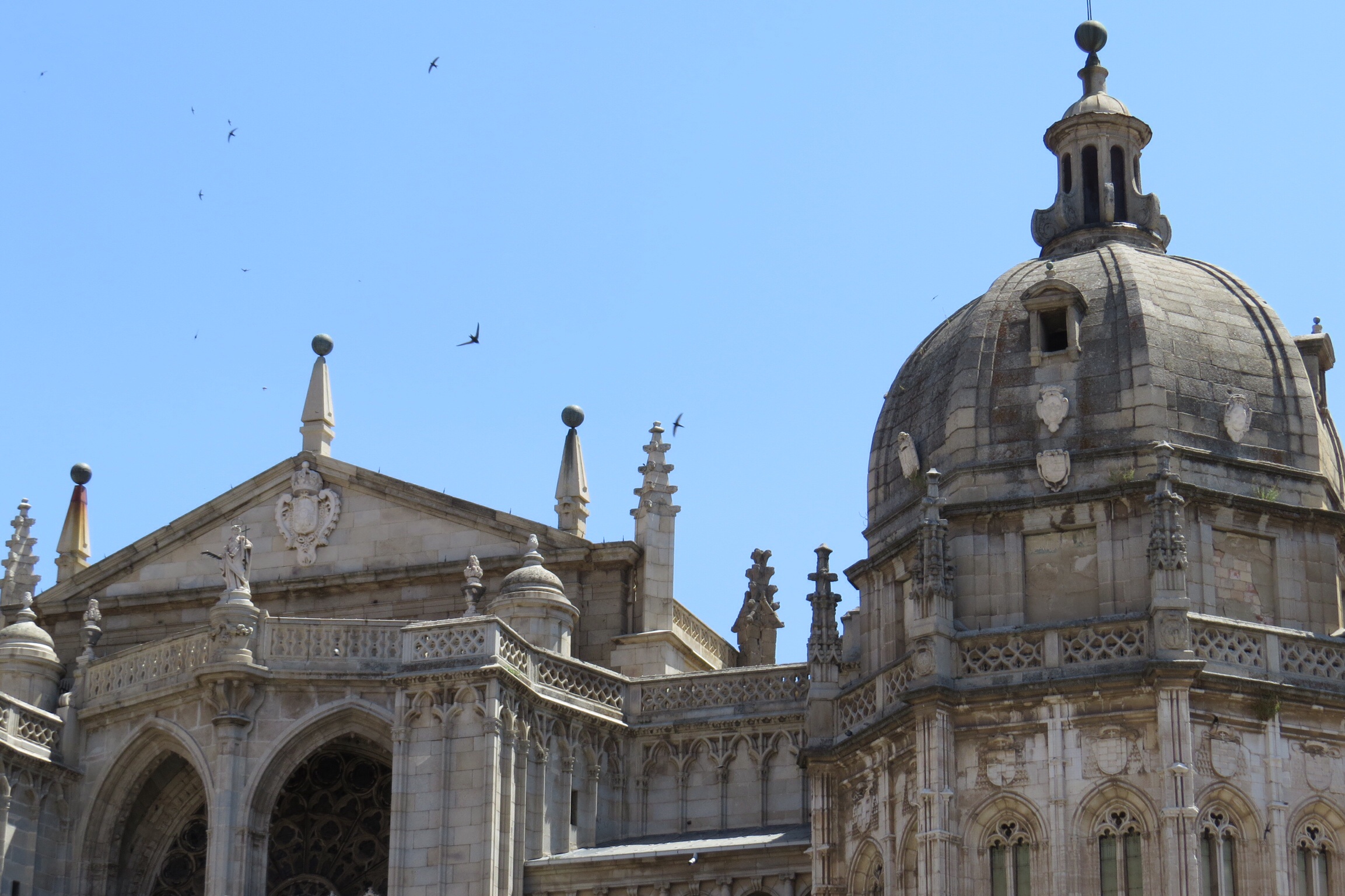
In 1085, as part of the Reconquista, Toledo was seized by Alfonso VI and the Vatican recognized the city as the seat of the Church in Spain. Construction of the magnificent Toledo Cathedral began in 1227 and was completed in 1493, just one year after Isabella and Ferdinand united Spain. By this time, the years of pride and tolerance were swept aside in Toledo and Muslims and Jews were forced to convert to Catholicism or be expelled. In 1561, Phillip V moved the Spanish capital to Madrid, but Toledo’s landscape would forever be dominated by the stunning Gothic cathedral.
The building’s interior is equally impressive.
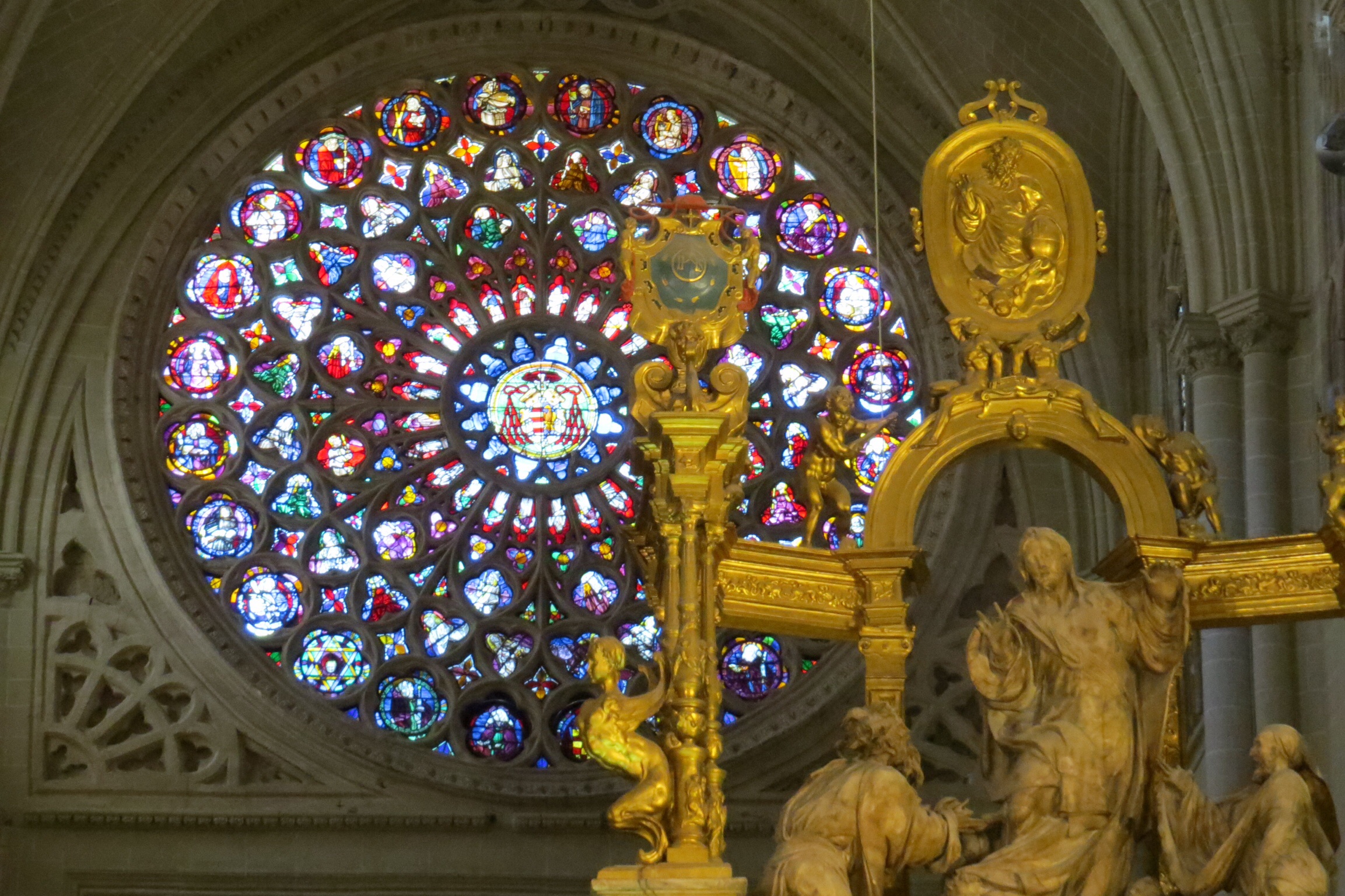
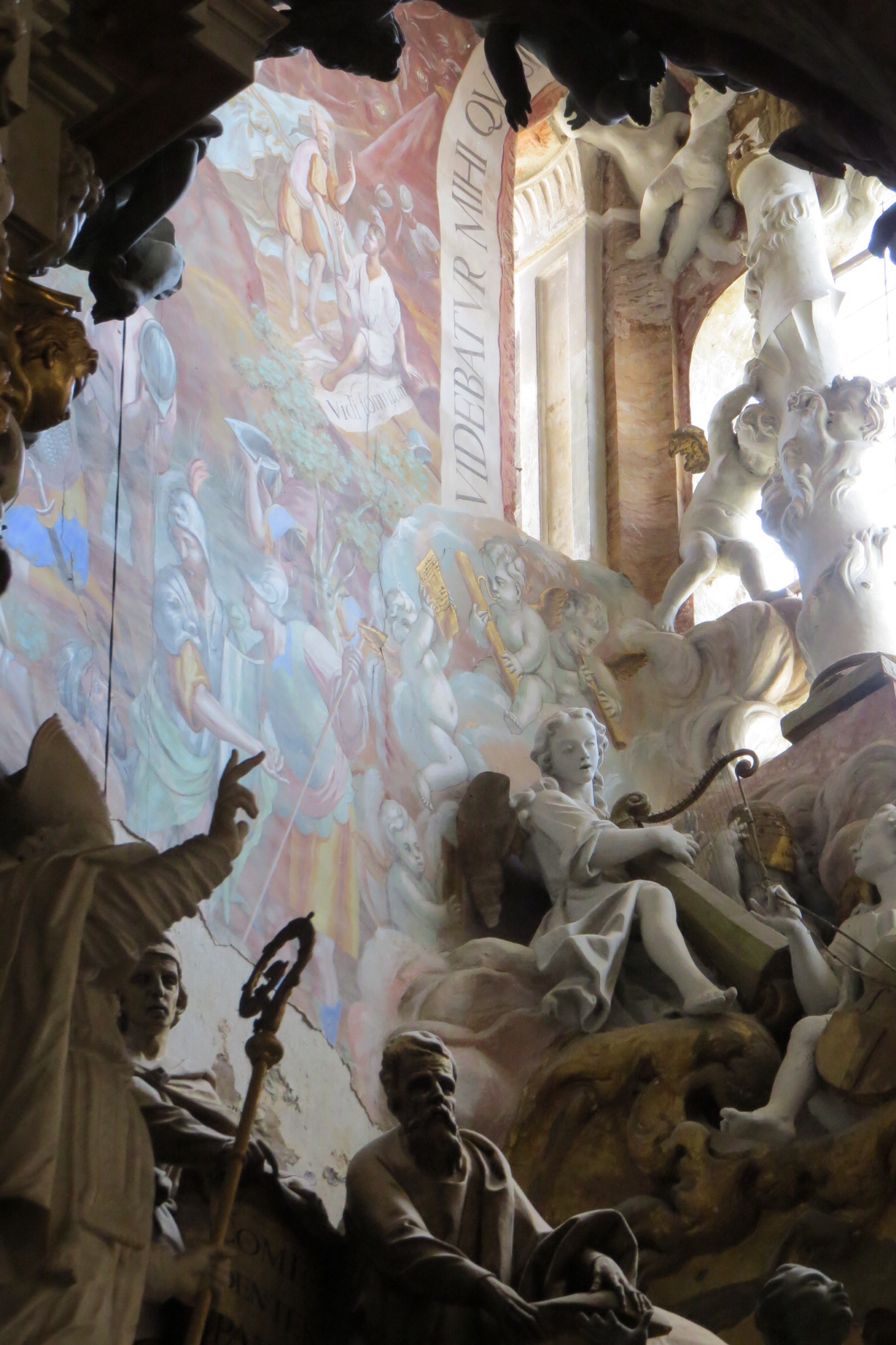
Behind the high altar is a smaller baroque alter of marble, bronze and alabaster. Because of the dim light in the area, an aperture, known as the Transparente, was carved out of the dome above to illuminate the altar. Sculpted figures, looking down, rim the edge of the dome, while painted biblical scenes cover the dome itself.
The choir stalls have wonderful, detailed carvings in walnut, the lower tier depicting the conquest of the kingdom of Granada, the upper tier celebrating Biblical figures.
Graves of cardinals are marked by their galeros hanging above them.
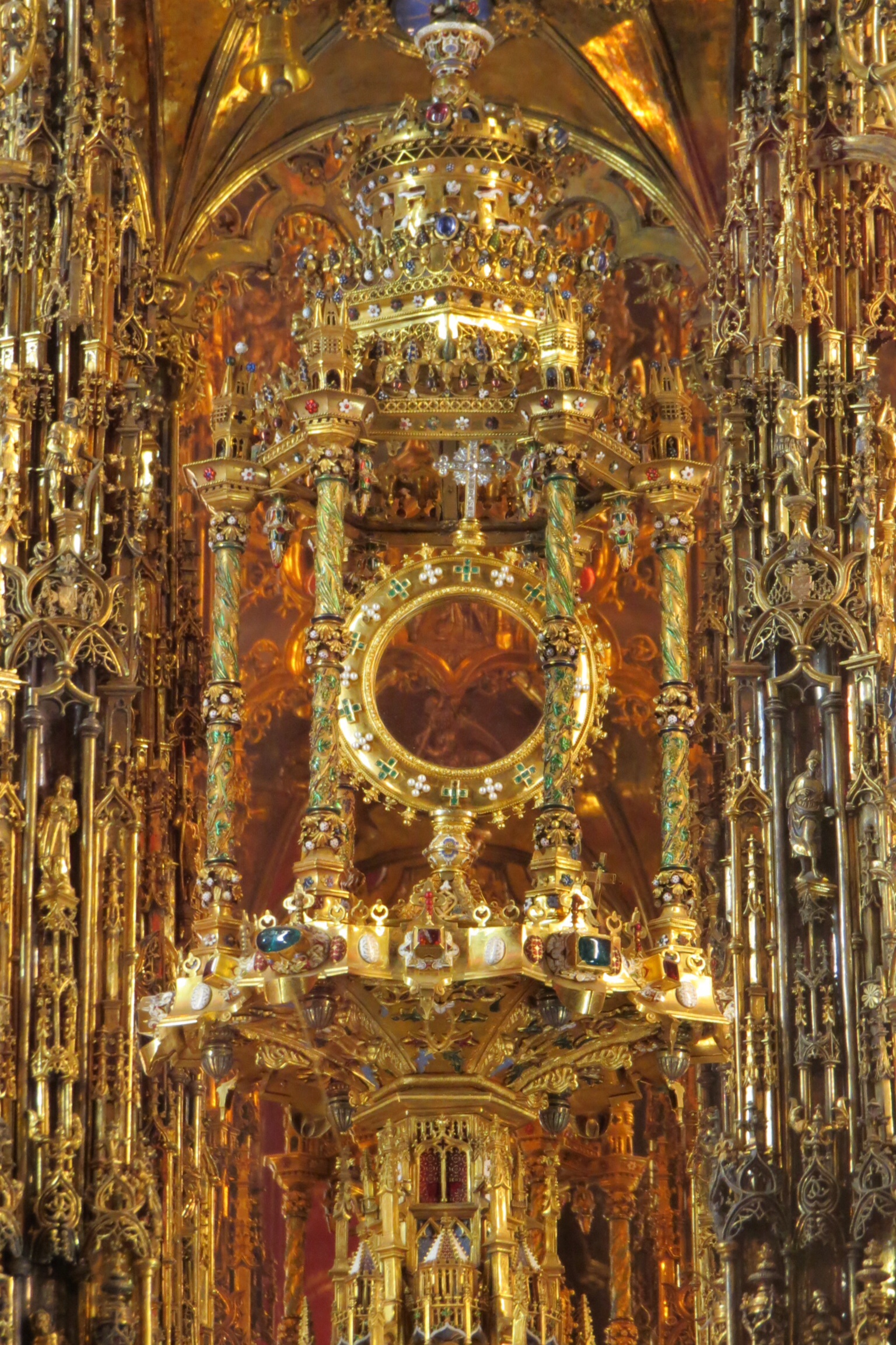
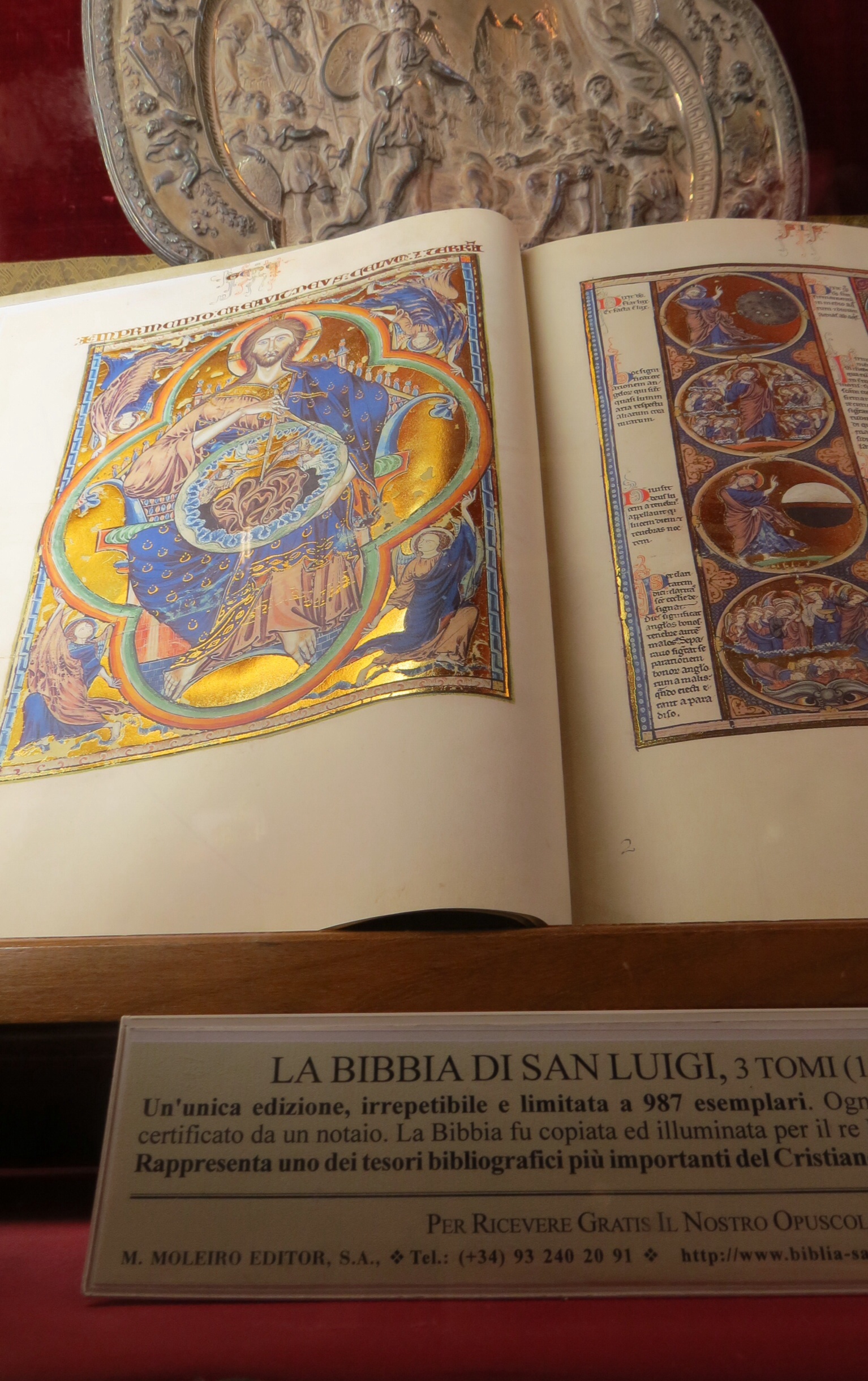
Considered the richest cathedral in Spain, the Sacristy has paintings by El Greco, Caravaggio, Raphael, Titian, Reubens, Velázquez and Goya. The treasury boasts the great Monstrance of Arfe, also known as La Gran Ostensoria de Toledo. Made of the finest, laciest silver and gold and bejeweled with gems, it measures over ten feet tall. The monstrance graces the famous annual feast of Corpus Christi of Toledo.
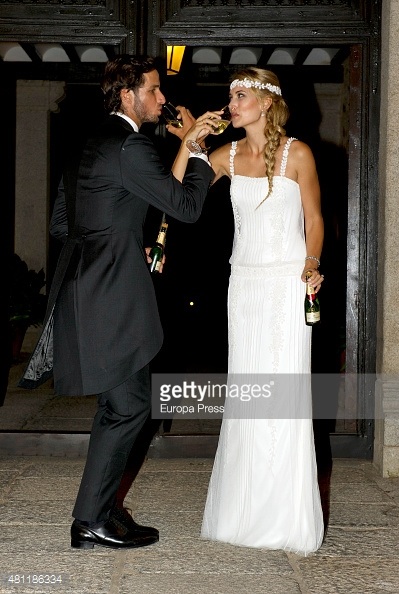
World #19 tennis star Feliciano Lopez was married just days ago in his home town of Toledo, at the gorgeous Toledo Cathedral.
Feliciano Lopez and Alba Carrillo
The Spanish Renaissance
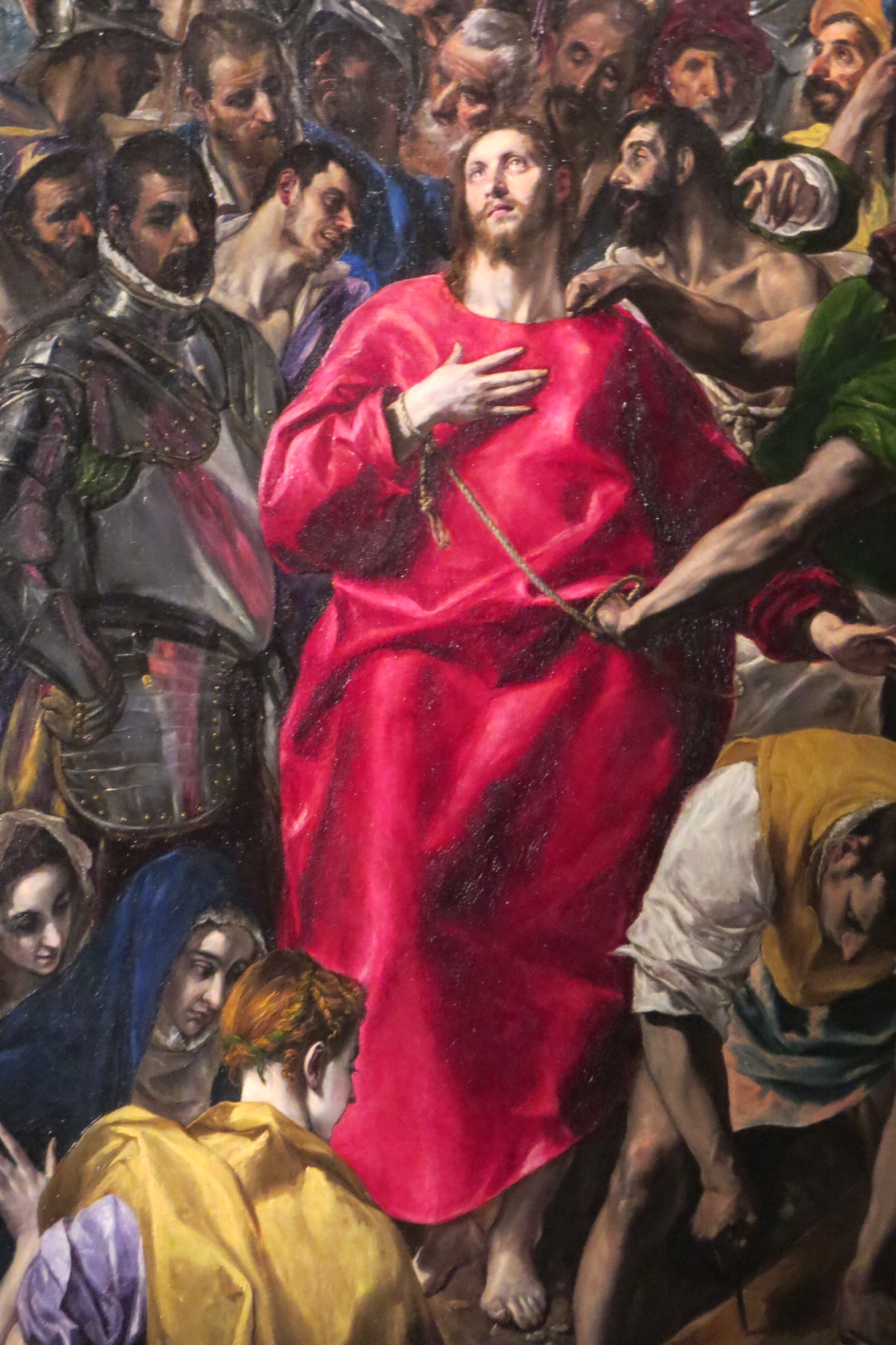
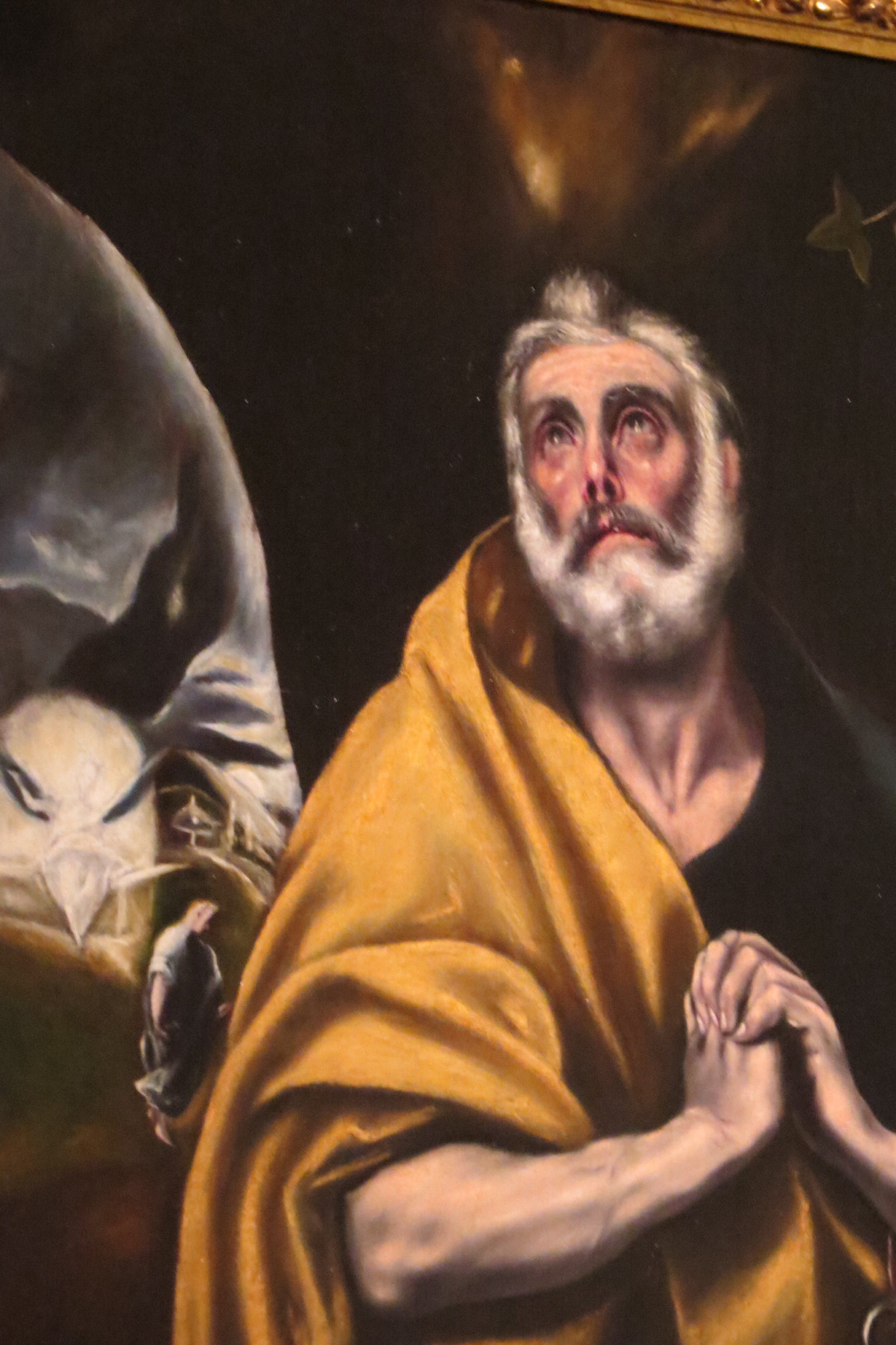
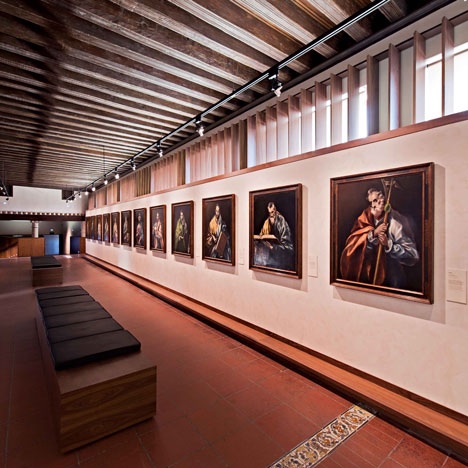
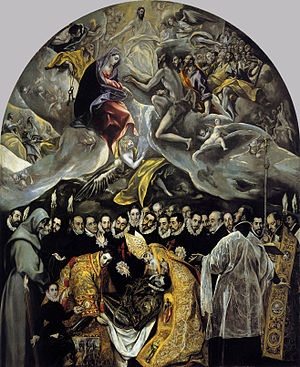
Toledo was the centre for art, philosophy, mathematics and economics. Its most famous representative is El Greco.
Italianate painters developed eclectic and mannerist styles in Spain. It was only toward the end of the 16th century that a genius appeared who truly incarnated the dark, mystical Spanish idiom [think St. John of the Cross] – El Greco. With roots in Greece and Venice, and in his own version of mannerism, El Greco merged Italian Renaissance painting with his own incandescent vision. In 1577, he moved from Rome to Toledo, where he lived and worked until his death.
El Greco’s style may not have been fully appreciated until the 20th century. His work is now regarded as foundational to both the Expressionism and Cubism movements. Clearly influenced by Botticelli and his elongated figures, he also borrowed the surreally rich colours of Byzantine.
Other Delights
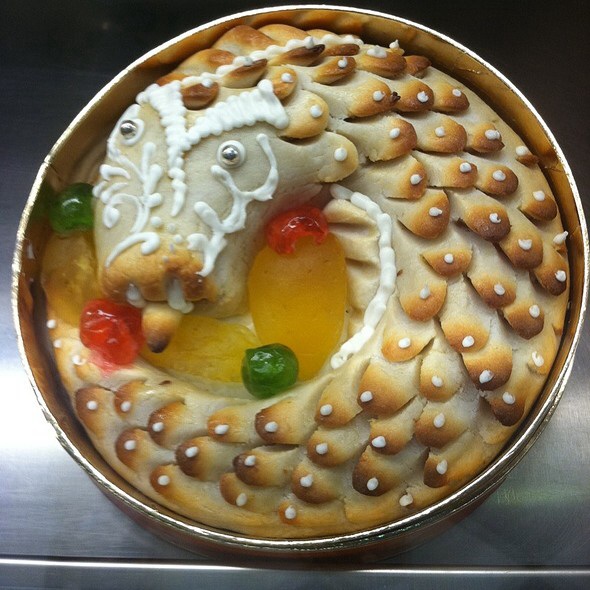
Naturally, we managed to fit in a little eating and shopping in Toledo. The world-famous marzipan lived up to its reputation – rich, buttery almond paste contrasted with apricot jam – the dragon makes a special treat and great souvenir for my family of marzipan devotees.
Arte en Ceramica – Casa Especializada en Reproducciones Antiguas
A marvellous, authentic fixed lunch was had at the aptly-named Restaurante Dragos.

































 Carpe diem