I fell in love with the City immediately, and managed to squeeze in a few things other than museums. Well, one extra museum too! I had a fairly quick visit to the Hermitage and the exhibition of jewelry of the Czars. It included jewelry, treasures, clothing and portraits of women wearing the jewelry, including a portrait of Catherine the Great in her later years. The jewely with what appears to be cameos are actually exquisite papier-mache. I want the purple dress (and the waistline)!
Jewels!
Bicycles!
I must have seen a million bicycles, all ages ride them. Brilliant! Even a packed bicycle parkade.
Canal Ride
I would say a boat ride on Amsterdam’s canals is the quintessential experience, but others might think the red light district, beer culture or pot cafes are quintessential. There is something for everyone!
The shopping is great, too.
I lucked out with the weather, making this a good time to come, still lots of tourists around but not as crowded at the main sites as it would be other times of year. The weather was predicted to be part sun, part cloud, but the sun was kind of like the vermouth in my Dad’s martini, just a spritz of the thinnest possible sun – but I didn’t get caught in any rain, either. I could come here over and over and still have more to see – I think it’s the Barcelona of the north!
One of the world’s great art museums, the Rijksmuseum was built in 1885. It closed for massive restoration from 2003 to 2013. The massive entryway is now saturated with light.
Still Life
I remember being floored at the Louvres’ collection of Dutch still life.The paintings, reflect the wealth and power in Amsterdam In the 17th century.They also sometimes contained subterfuge, showing the contrast between the wealthy and the needy.They often honoured nature and represented scientific accuracy in some of the most beautiful paintings ever painted.The still life rose in popularity, expressing both objects of beauty and the philosophical climate of the times through carefully composed arrangements and groupings.
Breakfast with Crab, Willem Claeszoon Heda
The still life in the Netherlands in this period became a source of competition for artists and their patrons and inevitably, several subcategories emerged.An ‘ontbijtje’, or small breakfast, became a particular genre as were flower pieces, banquets, paintings featuring the results of the hunt, and Vanitas paintings. The Vanitas were paintings that reminded the rich burghers of the Netherlands that everything – including their wealth – was transient.The peeled lemon here symbolises deceptive appearance: beautiful on the outside, sour within. Beware the beautiful looking man or woman, they may not be as sweet as they appear. There was a tension that developed in this period between the new Protestant religion that devalued objects of wealth that had previously been used to display the power of the Catholic church and therising nouveau riches who commissioned paintings that demonstrated their ostentation.
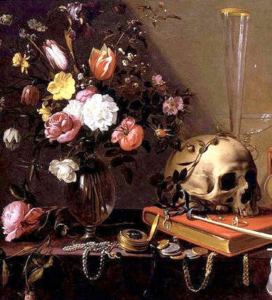
Still Life with Bouquet and Skull, Adriaen van Utrecht
Some versions of the Vanitas are less opaque, like this one at the Rijksmuseum, Still Life with Bouquet and Skull, Adriaen van Utrecht
A couple more stood out in my visit today – Pieter Claesz’ Still Life with a Turkey Pie – complete with turkey:
And de Heem’s Festoon of Fruit and Flowers:
Rembrandt (1606-1669)
“I can’t paint the way they want me to paint and they know that too. Of course you will say
that I ought to be practical and ought to try
and paint the way they want me to paint.
Well, I will tell you a secret.
I have tried and I have tried very hard,
but I can’t do it. I just can’t do it!
And that is why I am just a little crazy.”
– Rembrandt
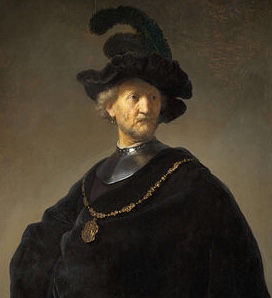
Old Man with a Gold Chain
During the Dutch Golden Age, portraiture rose in popularity.Members of the new merchant class enjoyed commissioning imaginative likenesses of their selves to display in their homes, and companies and other professional organizations would also acquire group portraits. Rembrandt was one of the greatest portraitists of this time, known for his impeccable capturing of his subjects’ distinct personalities and emotional idiosyncrasies.
The Original Selfie
When Rembrandt wasn’t being paid to paint other people’s portraits, he used himself as a study.His extensive self-portraits provide a unique visual biography of the artist.It would be a mistake to assume the vanity that exhibits itself in today’s selfies; Rembrant’s self-portraits are candid, vulnerable and inward-gazing.
Selfportrait when young *oil on panel *22.6 × 18.7 cm *
Rembrandt wasn’t the only painter who made self-portraits.
“I paint self-portraits because I am so often alone, because I am the person I know best. ”
– Van Gogh
Frida Kahlo, the artist from Mexico whom we’ll be seeing much more of next spring, used her self-portraits to express fundamental truths: what it was to be a woman, what it was to be Mexican, what it was to be an individual and lastly, what it was to be her.
Etchings
Rembrandt also made important contributions to the development of art, surpassing even the inventiveness of Titian and Velazquez with his progressive handling of paint, making it as much a subject in the composition of a painting as his figures. Variations of brush stroke between loose and rough, or the manipulation of textures through scratching or with a palette knife, would all contribute greatly to a radically new signature style that would influence generations to come.He also raised the etching process to an art form and arguably remains the greatest of all at creating etchings.
The Night Watch
“Rembrandt goes so deep into the mysterious that he says things for which there are no words
in any language. It is with justice that they call
Rembrandt ‘magician’ – that’s no easy occupation.”
– Van Gogh
Rembrandt’s monumental masterpiece The Night Watch is considered by many to be the pinnacle of Golden Age Dutch painting. Formally titled “Militia Company of District II under the Command of Captain Frans Banninck Cocq” the dramatically rendered military group portrait has an epic history all its own.Rembrandt’s innovative decision to depict the military in a moment of action rather than a traditional composed group portrait, as well as the work’s nearly life-sized scale made the painting a triumph of 17th Century Dutch art.At the time he made it, Rembrandt was at the height of his creative powers.The subtle use of texture, shadow and light seem to reveal truths about his subjects that they may be unaware of themselves. His greatest influence was Caravaggio, who took darkness and light to extreme.
David with the Head of Goliath, Caravaggio
Franz Hal’s The Meagre Company is a more typical posed Guard portrait of the day:
The Night Watch fame has only been heightened by its storied and indeed dramatic history. The painting has been subject to attack on three separate occasions — the last, an attack by knife, leaving the painting in need of extensive restoration.It is under restoration now, too, but the museum has drawn the public into the process by keeping the piece on view with high-tech equipment and restorers working on the painting in plain sight. The restoration work can be followed around the world online live each day in a project called “Operation Night Watch,” here.
Each portrait is a masterpiece within it – here are a few:
Vermeer (1632-1675)
Until more recently, so little was known about Vermeer’s life, he was referred to as “The Sphinx of Delft.”Well-known and moderately successful within Delft, he never left the city and was devoted exclusively to his art.
Vermeer specialized in scenes of domestic bliss, the type of bliss which evaded him in his own life.He worked slowly and with great care, which is why he was not prolific, having painted about 50 known paintings (compare that to van Gogh’s output!), of which only 34 survive.There is no other 17th-century artist who employed the exorbitantly expensive pigment lapis lazuli (natural ultramarine) either so lavishly or so early in his career and this later would perhaps contribute to his financial ruin.
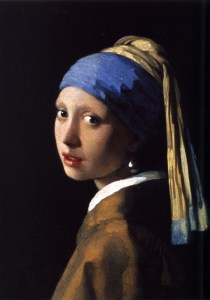
He is particularly renowned for his masterly treatment and use of light in his work, for example, the glint, in the eyes and pearl of the Girl with the Pearl Earring (at The Hague Museum), the appearance of wetness to her eyes and mouth, and the warm light captured in his Dutch interiors, so much so, that he became known as “the Master of Light.”His primary influence was Leonardo da Vinci.
The Milkmaid
In Dutch literature and paintings of Vermeer’s time, maids were often depicted as subjects of male desire—dangerous women threatening the honor and security of the home, the center of Dutch life—Vermeer’s painting is one of the rare examples of a maid treated in an empathetic and dignified way, although established amorous symbols in this work, like the Cupid tile and the foot warmer on the floor, still exemplify the tradition.
Vermeer certainly meant for the sophisticated viewer to recall earlier paintings of comely milkmaids and kitchen maids, and the reputation of milkmaids in particular for sexual availability. In real life, their impromptu suitors were often “proper” gentlemen, not social equals, and of course the intended viewer of this painting (and those by Dou) was not a servant but a man of society and a connoisseur. Compared with the sort of ideal women we see in Young Woman with a Water Pitcher and other mature works by Vermeer, his “Milkmaid” exudes a very earthy appeal, with her pushed-up sleeves (revealing pale skin normally covered), her ample form (similar to that of women in slightly earlier works by Rubens), and her faint smile. For a male viewer of the time (in this case, Vermeer’s patron Pieter van Ruijven), the hints of sexuality would have given the painting an element of fantasy as subtle as the shadows on the whitewashed walls.
The painting has much more depth and richness seeing it first-hand, but here are my impressions of it:
Eventually Vermeer’s lack of productivity and extravant spending forced him into bankruptcy and he was barely able to support his wife and seven children.In December 1675, at age 42, Vermeer died after a short illness. In a petition to her creditors, his wife later described his death as follows:
“…during the ruinous war with France he not only was unable to sell any of his art but also, to his great detriment, was left sitting
with the paintings of other masters that he was dealing in. As a
result and owing to the great burden of his children having no
means of his own, he lapsed into such decay and decadence,
which he had so taken to heart that, as if he had fallen into
a frenzy, in a day and a half he went from being healthy
to being dead.”
I found at the following link a compelling video, a debate about who is the greater artist, Rembrandt or Vermeer, between the charismatic art critic and BBC favourite, Simon Schama, and the author of the novel which became the Scarlett Johannsen film, Girl with a Pearl Earring, Tracy Chevalier.In reality, one doesn’t have to choose, but their insights into both artists are fascinating.
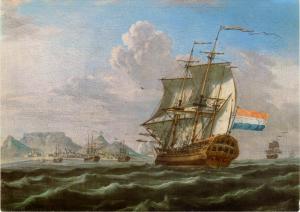
Serendipitously, my brief stopover in Amsterdam which led me to the Dutch Golden Age, was en route to the City of Cape Town, the founding city of South Africa. Cape Town was originally a Dutch outpost of the Dutch Golden Age, when Dutch settlers were sent to grow fresh fruits and vegetables for the ships of the Dutch East India Company on their trade route. I’m headed there next, on a 12-hour KLM flight.
Best,
Jan
PS Rembrandt was born Rembrant Harmenszoon van Rijn in 1606.He added the silent ‘d’ to his signature for reasons unknown, in 1633.
7-course Chef’s Table lunch at The Rijks – oh yes, the museum’s Michelin-starred restaurant. Where pictures speak louder than words.
I KNOW!!! Amazing. And delicious. Of course.
Best,
Jan
PS. They take their chicken very seriously here, it is a rarity because there isn’t enough land for the chicken to run. This chicken is not on their regular menu because the supplier can’t tell them when they will be ready, he just knows and shows up with a few every few weeks. I had wondered the night before at a dinner menu on which the chicken was priced higher than the halibut.
Florence had the Renaissance, Vienna had its Classical Period, Paris had its Belle Epoch and the salons of the 1920’s, and New York was a hotbed of modern art in the World War II and post-war period. Amsterdam in the 17th century was one of those cities that experienced a moment in time, attracting artists who inspired and influenced one another, creating new and original art forms.
Simon Jacobszoon de Vlieger, The Flagship Aemilia Fires a Salute for Admiral Maerten Harpertszoon Tromp
The movement that sprang up in Amsterdam arose from the economic success borne of the 80 Years’ War.Strategically located, the nation controlled access to the Baltic Sea and charged hefty duty to foreign ships passing through.They established their own marine silk trade routes. The Dutch nation became one of the wealthiest and most powerful in the world, dominating international trade and creating a vast colonial empire. Tne upper middle class surged in the strong economy and it was at this time the Dutch built their world-famous canal system, so impressing Russian Czar Peter I that he patterned his new capital, St. Petersburg, after it.You see it as soon as you arrive in “Peter” – canals (which absorbed the wet lowlands) down the centre of lovely mansion-lined streets.
Still Life with Flowers, Willem van Aelst, 1665
With all the new-found money and painters arriving in Amsterdam, it was little wonder the Dutch Golden Age of painting was just around the corner.
The Netherlands’ religion changed too, and this had a powerful effect on the art world.The Netherlands declared independence from the Catholic Hapsburg Empire and the protestant religion took its place. With the end of Catholicism, a new and unprecedented freedom replaced the genre of religious art with several different styles.Landscapes, portraiture, “genre painting” (simple domestic bliss), and still life blossomed.Some of the most famous artists of all time painted during the Dutch Golden Age, including Rembrandt and Vermeer.
Still Life with Dog, Monkey and Parrot, Adriaen van Utrecht
My day was so packed today, I’m posting in two parts. The Dutch state museum, the Rijksmuseum houses Rembrandt’s most famous painting known as The Night Watch.I spent much of the day at the Rijk, taking a guided tour. And, although much later in history, one cannot overlook perhaps Amsterdam’s most famous citizen, Vincent van Gogh.I visited the Van Gogh Museum first, the largest collection of his work in the world, housing some of his most famous and important paintings.
Van Gogh (1853-1890)
“Real painters do not paint things as they are… they paint them as they themselves feel them to be.“
– Vincent van Gogh
What more needs to be said about the iconic tortured artist, Vincent Van Gogh?I’ve seen “Starry Night” at MOMA which is so representative of his luscious, flowing, late work, but since my teens reading the book, Lust for Life, by Irving Stone (one of my favourite reads of all time), I have wanted to go to Amsterdam to see his early work, The Potato Eaters. He was in a state of fervent activity, young, poor, but compelled to reproduce everything he saw, producing many sketches per day. The farm labourers in the Netherlands, achingly depicted in the resulting painting, were almost caricatures. He expressed in this painting the connection of the poor peasants to the land, their work-weary hands central to the picture. But when he sent the work to his brother Theo, the art dealer said, no, you have to come to Paris and see what Monet, Gaugin and the others are doing with colour and light, you need to start again! In the end, it was not long in Paris before his fellow painters influenced him and he started using colour and light in new ways too. I still love this one, though, the faces tell the whole story of the people.
In addition to seeing his paintings, some of the best ways to capture how van Gogh strove to convey his emotional and spiritual state in each of his paintings came in recent films. The visually beautiful animated film Loving Vincent (on Netflix)
“His post-Impressionist style, canvases with densely laden, visible brushstrokes rendered in a bright, opulent palette
emphasize Van Gogh’s personal expression brought to life
in paint. Each painting provides a direct sense of how the
artist viewed each scene, interpreted through his eyes,
mind, and heart, just as he intended. This radically
idiosyncratic, emotionally evocative style has continued
to affect artists and movements throughout the 20th
century and up to the present day, guaranteeing Van Gogh’s
importance far into the future.”
It’s amazing to be reminded that van Gogh only painted for about seven years, and in that time he created about 2,100 artworks, including around 860 oil paintings, most of which date from the last two years of his life. The gallery also houses one of his five Sunflower paintings, his Vase with Irises and his Bedroom at Arles, to name a few.
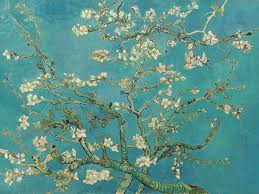
No photography is permitted here, but here is an image of his Almond Blossom – you can see his love of Japanese art here. He painted this as a gift for his brother and sister-in-law on the arrival of their first child. The couple named him Vincent after his uncle.
Vincent – the nephew – eventually inherited the van Gogh estate from his mother and he almost immediately began negotiations with the Dutch government to subsidise a foundation to purchase and house the entire collection. He participated in planning the project in the hope that the works would be exhibited under the best possible conditions. The project began in 1963; architect Gerrit Rietveld was commissioned to design it, and after the architect’s death in 1964, Kisho Kurokawa took charge. Work progressed throughout the 1960s, with 1972 as the target for its grand opening.
The Van Gogh Museum opened in the Museumplein in Amsterdam in 1973. It quickly became the second most popular museum in the Netherlands, after the Rijksmuseum, regularly receiving more than 1.5 million visitors a year.
📕“Think of all the beauty still left around you and be happy.”
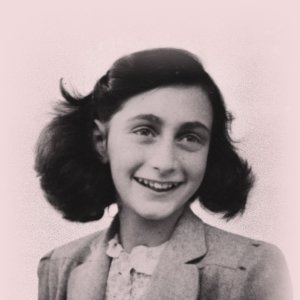
On 4 August 1944, after more than two years in hiding, Anne Frank and the other people hiding in “the Secret Annex” in Amsterdam were discovered and arrested.Anne’s father, Otto, later described the moment.“I was upstairs with the Van Pels family in Peter’s room, helping him with his schoolwork. Suddenly someone came running up the stairs and then the door opened and there was a man right in front of us with a pistol in his hand. Downstairs they were all gathered. My wife, the children, and the Van Pels family all stood there with their hands up in air.”The families were sent to concentration camps and by February 1945, Anne was dead. Only a few months later, the war ended and the concentration camp prisoners were released.Anne’s father, Otto, was the only survivor.
📘“How wonderful it is that nobody need wait a single moment
before starting to improve the world.”
Anne’s diaries, by a miracle, did survive.When the family was arrested, the contents of a briefcase were dumped on the floor to make room for seized valuables. Two employees in the main building retrieved the diaries from the floor and gave them to her father after the war. Otto was startled by what he read, calling it, “a revelation. There was revealed a completely different Anne to the child that I had lost. I had no idea of the depths of her thoughts and feelings.”This reflected Anne’s own admitted difficulty; she wrote that she struggled to fully express herself within her family.
📙“I can’t imagine having to live like Mother,
Mrs. van Pels and all the women who go
about their work and are then forgotten.
I need to have something besides a husband
and children to devote myself to! I don’t
want to have lived in vain like most people.”
📕“I can shake off everything as I write;
my sorrows disappear, my courage is reborn.”
Anne had little difficulty expressing herself on paper, and it is clear she wrote for a larger audience than herself.It was her dream to write a book and have it published and she wanted to become a journalist and writer.Perhaps the years trapped in hiding caused a torrent of feelings to pour out of her through her pen.
📗“People can tell you to keep your mouth shut,
but that doesn’t stop you from having your own opinion.”
Anne’s diary reveals an insightful, confident and direct young woman. She was honest in her writing , expressing intimate teenage things that women were discouraged from speaking about.She also wrote outspokenly about ethics and humanity.These were radical acts that made her an inspiration and a role model for girls.
📘“….Women should be respected as well! Generally speaking,
men are held in great esteem in all parts of the world, so why
shouldn’t women have their share? Soldiers and war heroes are
honored and commemorated, explorers are granted immortal
fame, martyrs are revered, but how many people look upon
women too as soldiers?…Women, who struggle and suffer pain
to ensure the continuation of the human race, make much
tougher and more courageous soldiers than all those
big-mouthed freedom-fighting heroes put together!”
Anne’s last diary entry was made on Aug. 1, 1944.But her legacy lives on.By 1947, knowing she wanted them published, her father had the diaries published. Through Anne’s diaries, people began to learn about the Second World War and the Holocaust, and they read about how it is to be excluded and persecuted. It was a direct, honestentry into a life of persecution that couldn’t be denied.Anne Frank is well-known and has become almost a sanctified figure.Today, several organizations do humanitarian work on her behalf.
📙“I still believe, in spite of everything,
that people are truly good at heart.”
Today, I visited Anne Frank House. There is such an immediacy about being in the place where these people lived, going from room to room and imagining their constant fear and tension. Anne and her mother had to constantly admonish her father for not whispering or stepping too heavily lest any of the workers in the warehouse below should hear them. They imposed a “no plumbing after 8pm” rule. It is hard to imagine a 14 year old keeping her spirits up for so long under such conditions. It was impossible to stay cheerful just experiencing it for an hour. Her notes and diaries were here, and her handwriting is so impeccable and mature. It gave me a chill to know Anne died of typhoid at Auschwitz. It was so easy for me to visit the travel clinic and get a typhoid shot before I came here.
Even in her uniquely horrible existence, confined for over two years in the Secret Annex, trapped with her family, this angsty teen found joy in the clear blue sky and reminded us to find our happiness. Her voice, like a bullet, direct and piercing, shot over the heads of her oppressors. Through her writing, she revealed the hideous truths of those who voraciously burned books. She gave girls a voice and inspired women. She understood the power of the pen, and used it. And, she was vindicated. She didn’t want hers to be a life lived in vain – certainly it was not. In fact, she became one of the most important writers of the 20th century.
I recently read that now, after 70 years in a bank vault, the diary of “the Polish Anne Frank” has been published. You can click on the link for more info.
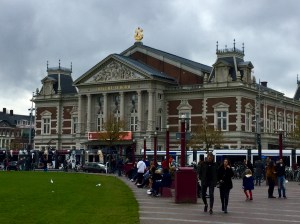
Researching my trip to Central Europe several years ago, I came across the article in the journal Gramaphone U.K., World’s Greatest Orchestras, and resolved that if I ever got to Amsterdam, I wouldattend a concert by the world’s premier orchestra, the Royal Concertgebouw Orchestra.
The opportunity finally arrived when I needed a stopover in Europe before the second long flight from Europe to Cape Town.I had to hope my flights would be on time, since my arrival at Schiphol airport was at 10:05 a.m. and the concert began at 2:15 p.m. No problem! Thank you, KLM!! I even had time for lunch and a glass of wine before the concert, and why not?
The program was Beethoven’s Symphony No. 4 in B flat major and Shostakovich’s Symphony No. 10 in E minor, with guest conductor Tugan Sokhiev, who, among other things, is the musical director of the Bolshoi Theatre and a Russian specialist, conducting the Royal Concertgebouw Orchestra.
Beethoven wrote the Fourth during the late summer and fall of 1806, while staying in the palace of Count Franz von Oppersdorff in upper Silesia, to whom it was eventually dedicated.A critic at the time said,“the first Allegro is very beautiful, fiery and rich in harmony, and the minuet and trio also have a distinct, original character.”Later, another critic stated that “there are no words to describe the deep, powerful spirit of this work from his earlier and most beautiful period.” If you like, listen to an excerpt from Beethoven’s Symphony No. 4 played by the Concertgebouw orchestra directed by Carlos Kleiber.
That was the starter; now, on to the main course.Though Shostakovich wrote this piece after the death of Stalin, it is speculated that he conceived of it during the last tyrannical years of Stalin, when, in an atmosphere of fear for one’s life, Shostakovic was heard saying, “even if they chop my hands off, I will continue to compose music – even if I have to hold the pen between my teeth.” The beautiful piece expresses the mood, from dark and dreary to angry (the second movement has 50 crescendos) to ultimately optimistic.This is an excerpt from Shostakovich’s Symphony No. 10 played by the World No. 2 Berlin Philharmonic conducted by Sir Simon Rattle:
The musicians were so nuanced in their playing and what stood out for me was they were constantly adjusting the volume from very soft and trilling up to very loud but every single instrument played at exactly the same level, it was amazing. They did a lot of that, too, which was very effective, that may have been the influence of Tugan Sokhiev. He had his back to us, of course, but at the end of one very heavy duty ending of a movement, he had his arms outstretched and he lowered them very, very slowly, and you could have heard a pin drop. At the end of the piece there was a great sudden, great crescendo and a final note that ended abruptly, all the strings played the last note on the upswing and pointed their bows to the sky in a flourish. It was so dramatic! Of course the ovations were amazing, Europeans absolutely love and appreciate their musicians.
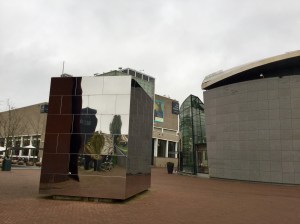
I fell in love with Amsterdam immediately. There are bicycles and beautiful separated bike paths everywhere. The leafy streets are lined with brick townhouses until the road opens up and a magnificent example of modern architecture reveals itself.
This is my street:
After a sleepless overnight flight, early to bed tonight in my cosy single room at the gorgeous boutique hotel Bilderberg Jan Luyken (named for the Amsterdam engraving artist), located steps from the concert hall, the Van Gogh Museum and the Rijksmuseum.
➡️In a zig, ↘️a zag, and then ⬆️a zog, this will start out as one trip, turn, and end as another.
Of course, this complicates packing.
Winter in the Netherlands
In Amsterdam, I’ll continue exploring my western ancestry, looking through the windows that open in art, music and history.I hope to compare what Beethoven says about exquisite beauty to what Shostakovich says about the power of finding beauty amid the ugly. And I expect I will learn more about beauty, ugliness and their intersection through the mature insights of the young Anne Frank.I’ll also explore the Dutch Golden Age, and intend to gaze in awe at Rembrandt’s “Militia Company of District II under the Command of Captain Frans Banninck Cocq,” – the “Night Watch” – and Vermeer’s “The Milkmaid“, and then I’ll die in front of the most stunning still lifes ever painted.
In Cape Town, South Africa, where spring will just be easing into summer, I’ll witness the birthplace of a nation that sprang from the Dutch Golden Age when farmers from the Netherlands colonized to supply fresh produce to the ships of the Dutch East Indies Company on its marine silk road.We’ll hang out on the V & A waterfront, gondola up Table Mountain, and take a couple of day trips to the Cape of Good Hope for, among other things, penguin viewing, and to Cape Winelands for, obviously, wine tasting.And again, here in Cape Town, I will be shown how to counter the ugly with beauty and humanity through the extraordinary life of Nelson Mandela.
Rain Jacket, umbrella, cardigan, shirts, black jeans, runners.
Summer in the Southern African Desert – Namibia & Botswana & Victoria Falls
From Cape Town, we’ll be flying a couple of hours north to Windhoek, the capital of Namibia.After Windhoek, no cathedrals, concert halls or art museums. We won’t be seeing the world through filters, it will be nature, unplugged. Animals in their habitat – striped, spotted, long-necked, maned, trunked. Animals I never imagined I would see in “person.”Nature will also have stories to tell about beauty and ugliness that I will have to interpret for myself.This is a vast country with only about 2 million inhabitants.We’ll spend the better part of three weeks here before heading east through Botswana to Zimbabwe and Victoria Falls.Namibia is a place described as a good entry point for a first trip to Africa and a great place for families.Africa, for babies.I’ll take it!
I needn’t have worried, everything Murat and Norman had done in planning this trip should have led me to the fact that they planned our last day perfectly, and ensured we had enough time to fall in love with Istanbul.
We drove in from Ankara and before we even reached our hotel, we boarded a boat for a sail down the Bosphorus. What a beautiful way to enter the city, the way it is meant to be seen. We boarded under a bridge and passed by stately waterfront homes and the naval academy (where Gadaffi once attended) and the compounds of the oil rich.
There was a somber moment passing the Reina nightclub where, on New Year’s 2017 at 1:15 a.m. an Al Qaeda operative used an AK-47 to kill 39, including 1 Canadian, and injure 79. It has been left untouched in memorium.
We went under the bridge and mosque which mark the passing from the Bosphorus into the Golden Horn, and from Asia into Europe.
We were getting into the downtown area of Istanbul, and passed by some of the most prestigious schools and hotels in Turkey, including the Canadian Four Seasons Hotel, where the fun thrum of Bollywood music floated across the water – we could hardly sit still – at what must have been an afternoon wedding for India’s (or Istanbul’s) rich and famous, judging by the luxe garb. We also passed the stunning Dolmabahce Palace, which could be visited.
I knew we were reaching our destination when we saw the now familiar skyline – the Aya Sofia and the Blue Mosque.
We disembarked and meandered through the fish market on the way to the hotel. It doesn’t come much fresher than this!
We still had 3 hours after checking in until dinner, plenty of time for the Grand Bazaar! Murat took us on the tram, showed us where to go, and went off to help others buy a rug. We wandered the shops and the streets of the bazaar, it was endless. There are over 4,000 shops and it has been going for centuries – construction started in 1455 AD. I had always had the impression that the vendors would drag you in and extract small fortunes from you in the bargaining process, but there was none of that. It was pleasant to walk around, almost too pleasant, and when I was buying something, they could not have been nicer. Apparently, after all those years, a stop has been put to the hassling. A shame, really…..
We took the convenient tram back to our hotel with the help of strangers, and met the group for our farewell dinner. We took a funicular to the top of a very San Francisco street and plunged into some narrow streets and alleyways that were full of buzzing bars, young folks, and a lot of backgammon playing. After a dizzying number of twists and turns we arrived at a lovely restaurant and were met by Murat’s whole family, his lovely wife, a daughter at university, a teenaged daughter and younger son. It was so sweet of them to come! We had a lovely final dinner together.
This idea of Norman and Julie’s to have dinner up here allowed us to wander down the hill back to the hotel. The streets were crowded with locals and tourists, the shops brightly lit and the atmosphere fantastic. The cobblestone streets were mostly pedestrian until someone hollered, “Scooter” or “Taksi.” We were in no hurry to get back to the hotel and get ready for the long travel hours ahead.
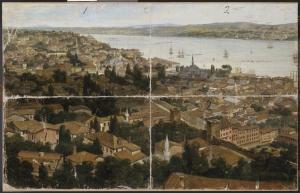
We passed by the Galata Tower, a romantic Romanesque tower built in 1348. From the top of the tower, the first French panorama painter, Pierre Prévost, drew his “Panorama de Constantinople” in 1818, which was composed of ten photos taken from the Galata Tower in the 1880s. It’s now at the Louvre.
Someone among us said, “well, I don’t think we can go before we’ve had Raki on the Roof!” Raki is an ouzo-like drink, licorice-based, clear but turns white when ice is added. The Roof was the roof of our hotel, a lovely bar with open windows and a view to die for. Oh, yes! Some of our group were already there, and it was a warm, festive way to end the trip, sharing what we loved about the trip and where our paths might cross in future travels.
We were here during the month of Ramadan, a one-month festival where fasting for 12 hours each day is required, and it is usually fireworks which indicate the all-clear to eat, and great festive banquets are spread for breaking the fast each night. As we gazed out at the stunning view, we saw the lights at the Blue Mosque spelling out the words “infak et mutlu ol”; our server explained the meaning, if you help others, you will be happy. It seemed appropriate, the people here could not be kinder; I hope they are happy.
I don’t know what the future holds for Turkey, but I left a little piece of my heart in Istanbul – and the only way to get it back – will be to return.
We were up early for a fairly long drive to our penultimate destination, Ankara.
En route we stopped off to have a look at Turkey’s largest salt lake.
On the outskirts of Ankara, this government town of 5.5 million people, there were the modern sky scrapers and endless new-looking 8-storey apartment buildings you would expect in a thriving city.
We stopped off for a visit to the Ataturk Mausoleum which turned out to be a masterpiece in propaganda. We first encountered an enormous square and hoards of children dressed in graduation caps and gowns.
I went inside for a look at the building housing Ataturk’s tomb, which was highly protected by the military.
There is a fabulous, unexpected museum encircling the square. An art gallery had floor-to-ceiling sized murals depicting the many battles won under Ataturk in the 1920’s leading to the creation of the new nation. There were many portraits of Ataturk. In the museum, there were many life-sized photographs of the former leader. To say Ataturk’s eyes were arresting is literally true, I stopped in my tracks. No wonder he was such a charismatic figure. No wonder his detractors referred to him as “that blue-eyed Greek.”
The current leader has tried to diminish the Ataturk effect by changing the names of government institutions in Ataturk’s name, but even he must know it would be folly to try to erase the man entirely from the national psyche. It became clear that Ataturk is at the heart of this country’s strong Turkish identity. It was his bravado and brilliance as a general that led to the establishment of the Turkish Republic. Under Ataturk’s direction, the country started out as an intentionally secular institution, today’s leadership is trying to make the country more religiously conservative and blur the lines between church and state. However, it doesn’t appear they have changed the hearts and minds of ordinary Turks. The fact that there were lots of graduating students from very young to university age and their families visiting here on their special day speaks for itself. Ataturk’s legacy isn’t going anywhere.
Our second stop in Ankara was at the Museum of Anatolian Civilization housed in the Grand Vizier’s Han built in about 1466.
The museum was awarded the European museum of the year in 1997. We were transported back through the eons. The museum houses an amazing collection of artifacts dating from the Early Paleolithic Period (the Stone Age).
We also saw, among other things, the advancement of the Hittite civilization, who developed principles of democracy and justice on which the Greek philosophers relied. Some tablets, said to be from the 17th to 19th centuries BCE, include a marriage certificate, divorce certificate and a credit card statement (“certificate of debt”):
It’s miraculous that pottery from the same timeframe has survived:
This gorgeous bronze caldron is from 8,000 BCE:
These bronzes date from 3,000 to 2,500 BCE:
There were 3,000 year old stone carving friezes showing chariots – and the invention of the wheel was attributed to the Hittites:
This was a fascinating collection, beautifully displayed and well worth a visit.
As we headed downtown to our hotel, Marut commented that “Ankara is still a village.” I saw what he meant. It was curious that what seemed so modern on the outskirts was a city centre that hasn’t caught up – it looked like a market..
It seemed that although the capital had moved to Ankara, Istanbul is still the real heart of this country. But I had only spent a day in Istanbul. The question that still remained for me nearing the end of our trip was, would I get to know the real Istanbul, beyond its monumental mosques and palaces?
In the mid-1700’s to the mid-1800’s, European explorers first came to Cappadocia. In 1744, Paul Lucas of France, declared that he had seen pyramid-formed strange houses that had charming doors, stairs and large windows to illuminate the rooms.The fairy chimneys reminded him of hooded priests and the rocks over them resembled the Virgin Maryholding the baby Christ.Perhaps he had seen one of Raphael’s triangular paintings showing Mary with the babies Jesus and John the Baptist, such as MadonnaoftheGoldfinch painted in 1505.
C. Texier stated that “nature had never showed itself to a foreigner’s eyes so extraordinarily.”Ainsworth said in 1837, “turning up a glen which led from the river inland, we found ourselves suddenly lost in a forest of cones of pillars and rock that rose around us in interminable confusion, like the ruins of some great and ancient city.”
The numerous attacks and changes in empire across the centuries would have made innocent victims of ordinary citizens, except that they were able to hide themselves:
12th – 6th C. BCE:Hittites 6th – 4th C. BCE:Persians
322 BCE:Hellenistic (Alexander the Great)
1st to 12th C. AD:Romans/Byzantines
13th C. AD:Ottoman
1923:Locals, mainly of Greek ancestry Greek dating back to the Hellenistic Period, were expelled to Greece in the Great Exchange instituted by Ataturk.
In the earliest times, several underground cities were created deep in the stone to hide and protect during attack.We visited one of the underground cities today, Kaymakli.
During the Roman Empire, this region became a famous underground (literally and figuratively) refuge where early Christians hid from persecution by the Romans.This continued through the Byzantine era when icons were banned, and later, Christians continued to practice their faith beyond the sight of the Ottoman Empire.St. Basil also used the area to bring many people in the hermitical practice together in apparent opposition to the concept – encouraging them to live their solitary lives within a supportive community.
It was in the first millennium AD that an extraordinary number of churches, monasteries and chapels were carved into the caves and rock beyond the reach of persecutors, and we were heading to the Zelve and Goreme open air museums to explore this unique culture.
Kaymakli
Up to 5,000 people at one time lived in these massive underground caves to avoid attack for months at a time.The caves go down as far as 50 metres below the surface; we reached 30 metres below.There was ventilation, food storage, a winery and wine storage, extensive kitchens.Large stones were carved to cover openings to prevent detection and avoid arrows or spears. I could imagine the fear, the hope, the silence, the sounds overhead and the praying. There were humble sleeping rooms (once lined with straw) and more expansive homes for the well-to-do; we saw one with a living room, dining room, separate bedrooms for adults and children, and a place to hang a cradle. The cities were interconnected by miles of tunnels.There were still Cappadocian Christians using these hideouts in the early 1900’s, to evade the Ottoman.
PigeonValley
We stopped off here for a photo of this town built into a hillside.
Zelve
At this open air museum, we were able to explore some of the churches and homes of Christians hidden in these mountains.Some decorations survive.
Goreme – “PaintedChurches”
This alien, bewildering landscape not only offered shelter but also mystified; it attracted those who were seeking a safe place in which they could express their faith and explore the nature of life. The community grew – eventually, there were 16 churches, monasteries and chapels here. I would see three of the most beautiful today, but there were more open to the public I didn’t get to. No photography was allowed inside the churches, but I have downloaded images of some of the murals.
St. BarbaraChapel
ElmaliKilise/AppleChurch
TokaliKilise/BuckleChurch
Thought to be the oldest rock-cut church in the region, this church contains the most beautiful frescoes, telling the story of Jesus’ life.
We had another lovely dinner back at the hotel, our pretty courtyard beckoned for a cool glass of white wine and we ate outside tonite, a traditional baked white bean dish served in its red clay baking dish.We called it an early night because it had been a long day and we were hitting the road again in the morning.


















 Carpe diem