Sherry (Spanish: Jerez [xeˈɾeθ]) is a fortified wine made from white grapes that are grown near the city of Jerez de la Frontera in Andalusia, Spain.
Like champagne in France, “Sherry” has protected designation of origin status, and under Spanish law, all wine labelled as “Sherry” must legally come from the Sherry Triangle, an area in the province of Cádiz between Jerez de la Frontera, Sanlúcar de Barrameda, and El Puerto de Santa Maria.
And, well, we’re passing right through, so…
Jerez has been a centre of viniculture since wine-making was introduced to Spain by the Phoenicians in 1100 BC. The practice was carried on by the Romans when they took control of Iberia around 200 BC. When the Moors arrived, they introduced distillation, which led to the development of brandy and fortified wine.Christopher Columbus brought sherry on his voyage to the New World and when Ferdinand Magellan prepared to sail around the world in 1519, he spent more on sherry than on weapons. We can understand why. Delicious!
EquestrianBallet
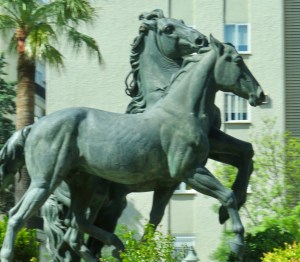
This afternoon, we were treated to ‘How the Andalusian Horses Dance,’ a show held at the Royal Andalusian School of Equestrian Art in the historic center of Jerez.We saw routines ranging from classical dressage to carriage driving and doma vaquera, which traces its roots to traditional cattle herding techniques.
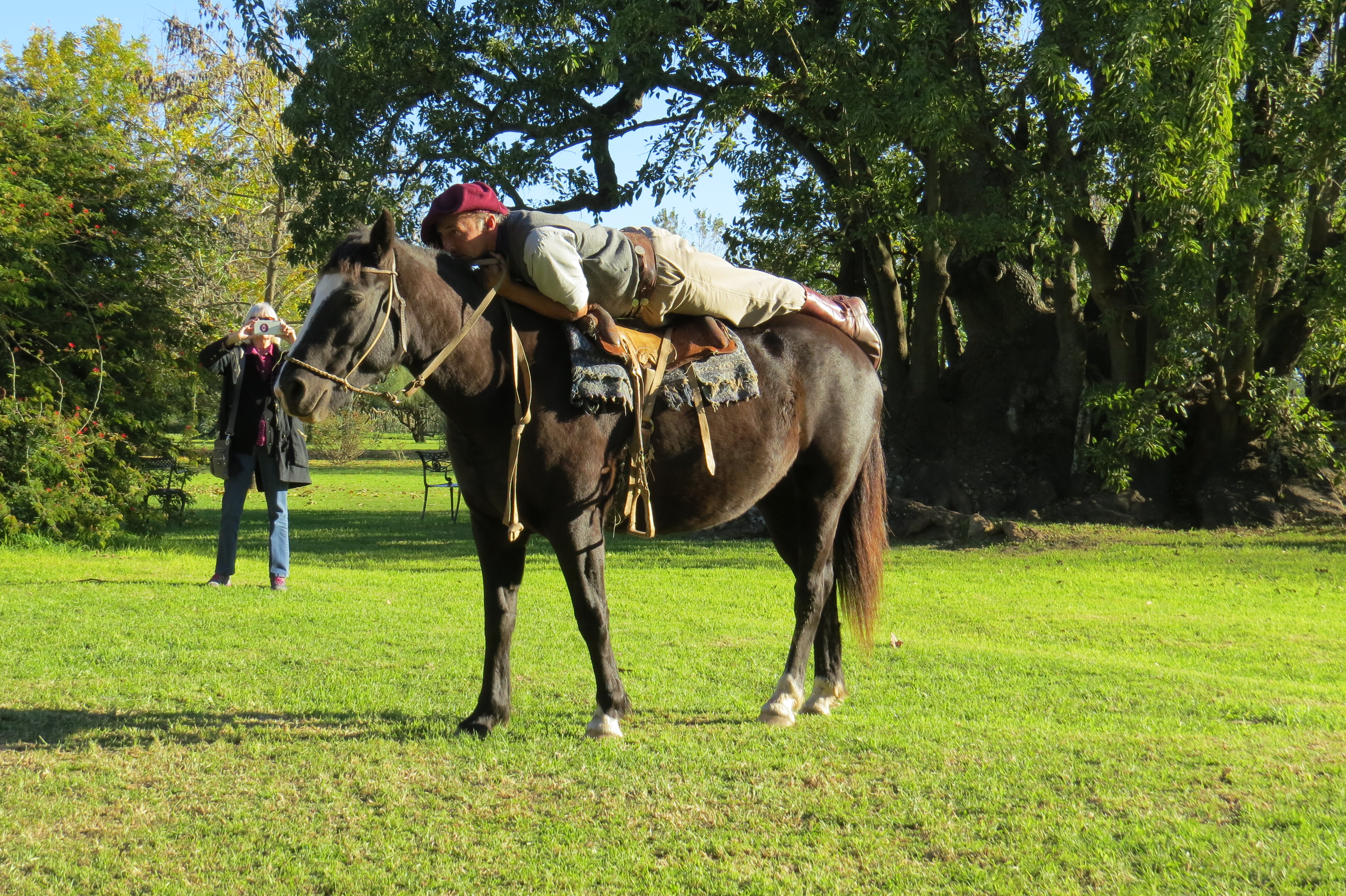
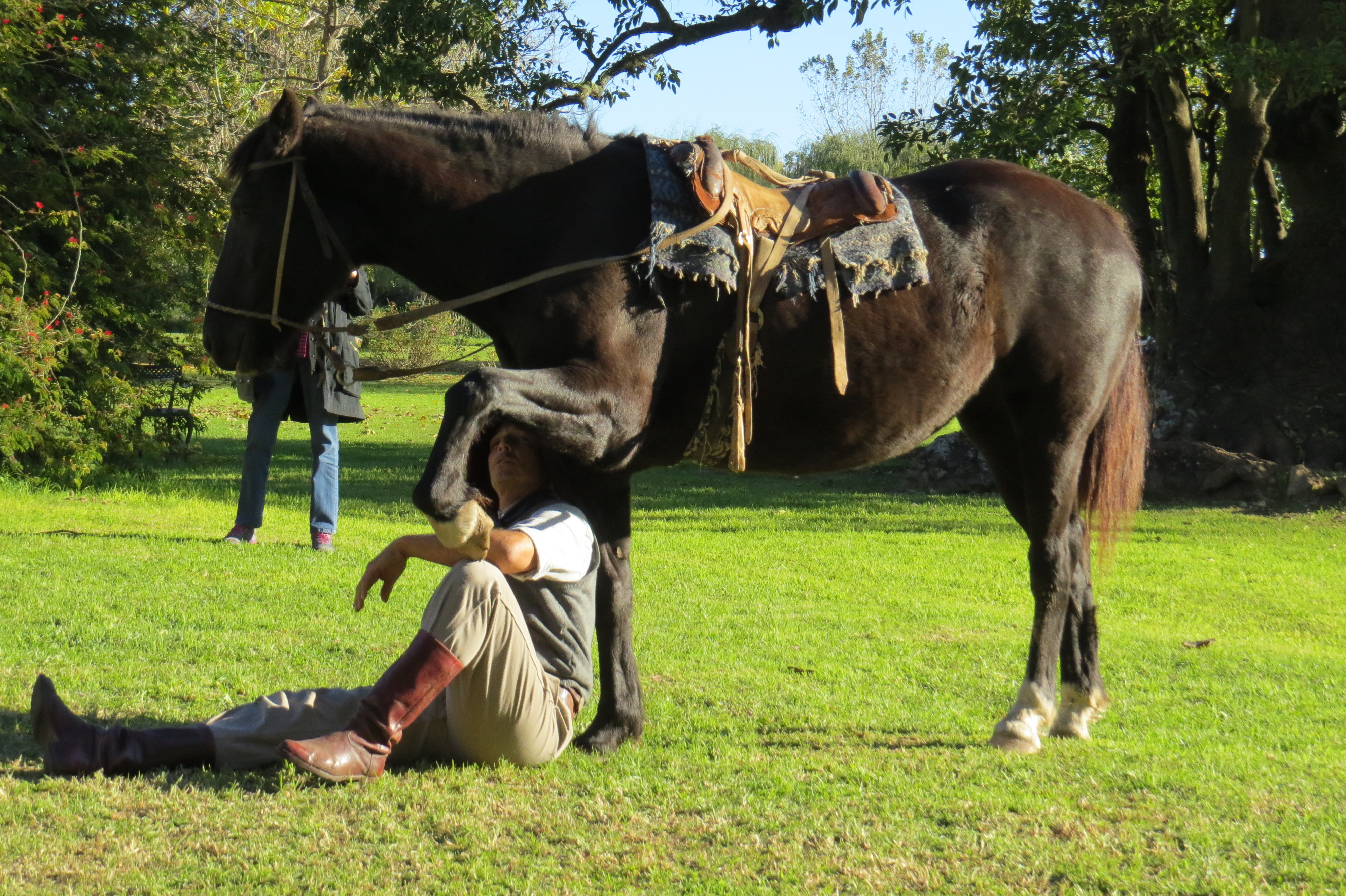
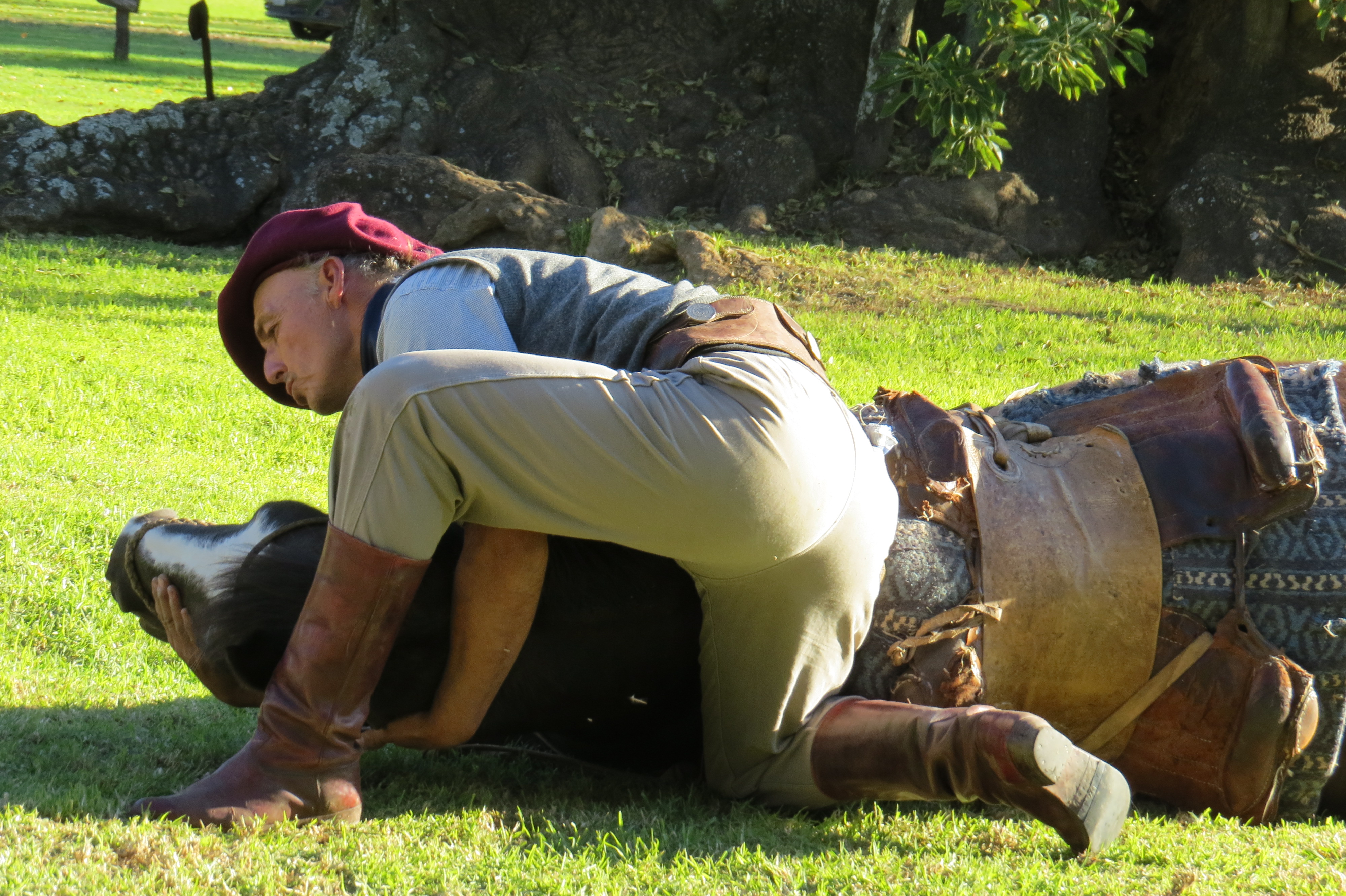
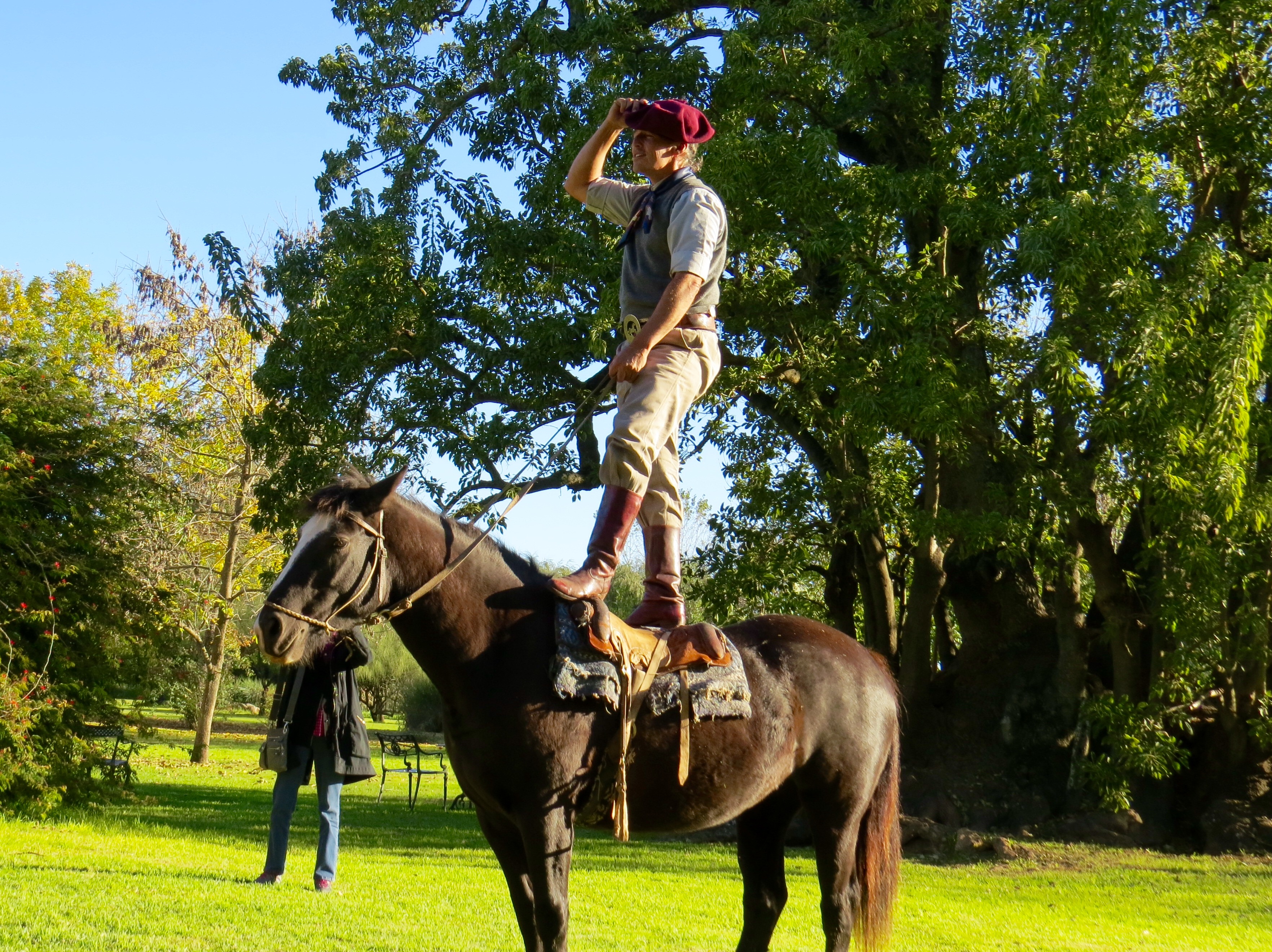
The relationship with the horse reminded me of the Gaucho and his horse in Argentina, an amazing communication between the person and the horse. Characteristics of these beautiful horses are:
Energetic temperament
Noble and docile
Good reactions and responses
Essentially rustic, sober and resistant
Adequate for all forms of dressage
Special predisposition for collection
Considerable extensions and elevations
Brilliant and energetic airs
Great aptitude for Haute École and airs above the ground
🇪🇸 Did someone say Seville? By request, this is our next stop on our armchair travel around the world. When I was there a year ago, I wrote that once Seville is in your heart, you feel it will never leave. A year later, and especially during the pandemic, I remember Seville wistfully and wonder when I can return. With its friendly people, a culture all its own, and sprawling orange tree-lined plazas and boulevards, I recommend it as a Spanish destination second only, perhaps, to Barcelona. The scent of orange blossoms hang in the air, as redolent as the scent of leather in Florence, Italy.
So grab yourself a Death in the Afternoon and spend a second-time visit to Seville as I re-post my time spent among the matadors and Flamenco dancers.
Regardless of my position on the treatment of animals, I admit a romanticized appeal to the idea of the bullfight – the macho toreador, the connection between man and bull, the perfection and elegance of the movement, the danger. And nowhere is more evocative of these themes than Seville with its magnificent-looking bullring, the Plaza de Toros.
Ernest Hemingway also springs to mind when I think about bullfighting in Seville, especially his novel The Sun Also Rises and a non-fiction treatise on bullfighting called Death in the Afternoon. The latter also contains a deeper contemplation on the nature of fear and courage, a theme running through many of his novels and one he frequently tested in his own life. Being one of those unfortunates who carry a gene that often leads to suicide, I have to think his curiosity about bullfighting was more personal than intellectual.
Hemingway created a cocktail called Death in the Afternoon, which, laden with Absinthe, may be related to such contemplations about bullfighting and life and death. But doesn’t it look lovely?
INGREDIENTS
7.5 ml Absinthe
15 ml Freshly squeezed lemon juice
7.5 ml Sugar syrup (2 sugar to 1 water)
Brut Champagne
We are in Seville, a former Moorish city-state (“Taifa”) that rose in 1023. Abu al-Qasin was the first king of Seville; his son, Al-Mu’tadid, succeded him. Al-Mu’tadid was a great poet, and was friends with another renowned poet, Abu Bakr Muhammad ibn al-Ammar, whose claim to fame was having beaten Castilian king Alfonso VI at chess. Al-Mu’tadid was also the lover of the married future queen Itimad.
SevilleCathedral
Later, after the Reconquista, Seville became an important Catholic centre and construction began of a magnificent Cathedral in 1401 that was completed in 1507. The Catedral de Sevilla quite spectacularly succeeded in fulfilling the design team’s original aim to make something “so beautiful and so magnificent that those who see it will think we are mad.”
There are countless beautiful depictions of Mary:
A sliver of the 7,500 pipe organ:
In death, as in life, the higher the ranking, the more pillows under the head. This is the tomb of a cardinal:
Cristóbal Colón (Christopher Columbus) is entombed here.
The local thinking is that, even by his standards, Colón travelled more in death than in life. When he died near Madrid, one of his sons was governor of Santo Domingo in the Dominican Republic. The son had his father’s body buried on the Caribbean island (Colón had asked to be buried in the Americas), then his remains were transferred to Cuba and ultimately, in 1898, back to Spain. Santo Domingo officials still believe he is buried there. In 2006, DNA testing on the bones in Seville was compared the DNA to that of his brother, also interred in the Seville Cathedral, and they were a match. Santo Domingo, however, dismisses the Seville tests.
Alcazar
After a sangria break, we toured the beautiful Seville Alcazar.
Mudéjar (/muːˈdeɪhɑːr/, Arabic: مدجن ) literally meaning ‘tamed; domesticated’, refers to an architecture and decoration style in (post-Moorish) Christian Iberia that was strongly influenced by Moorish taste and workmanship. The Seville Alcazar is considered to be the finest and most beautiful example in the world.
As sometime home of King Ferdinand and Queen Isabella, Cristóbal Colón planned three of his four trips to America, depicted in this tapestry, at the Alcazar Palace.
The castle, a UNESCO world heritage site, was also the birthplace of Marie Antoinette. The Alcazar was used as a set for “Lawrence of Arabia” and “Game of Thrones.” A private section is still the royal family’s official residence in Seville.
PlazadeEspana
This complex was constructed for a 1929 World Fair which, because of the stock market crash, never happened. The city has a lovely legacy, though, and locals can rent rowboats and float past on a diversion from the Guadalquivir River.
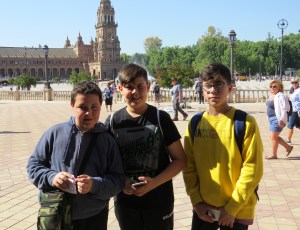
These three little boys were brave, they had a page and a half of questions they had to ask someone at the Plaza in English and they were very serious about their project. They wanted a photo of me, and they returned the favour.
And this pretty young girl celebrated her first communion:
A few images from our wanderings around Seville, where the scent of oranges hung in the air:
Las Setas
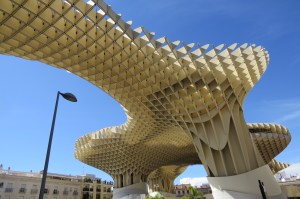
Seville does not stand by relying on its historical architecture. One of its finest examples of modern architecture and becoming famous in its own right is the wooden Metropol Parasol designed by German architect Jurgen Mayer. One can see why the structure is nicknamed by locals “the Mushroom.”
Flamenco
I have previously elaborated extensively on the dance, but it is hard not to think of Flamenco when you think of Seville. And of course, we were seeing Flamenco tonight and it was amazing: the guitar players played beautifully, the singers were passionate and the five dancers were mezmerizing; steam seemed to rise up from the stage. Here’s a sample from youtube.
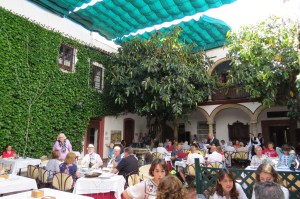
We had a fabulous meal of many courses before the show:
What a perfect way to end the evening, a nightcap on the roof patio of our hotel, in a balmy breeze, watching the sun go down. The only tower in Seville was in front of us, which the locals have dubbed “the Lipstick.”
“Nomehadejado”—“Ithasnotforsakenme”
Seville’s motto is so appropriate: once the captivating Seville is in your heart, you feel it will never leave.
It was a dark day in 750 A.D. in the Muslim city Damascus, Syria, for the once-ruling Umayyad dynasty and their young heir-apparent prince Abd al-Rahman.The family’s arch rivals, the Abbasids, seized power from the Umayyads and, to eliminate any threat to their rule, massacred the entire Umayyad family save Abd al-Rahman who fled Syria for Egypt.
The Abbasids moved the Muslim Caliphate to Baghdad and ultimately, the rich tapestry of the Arabian nights was woven and a Golden Age of Islam followed there.
Abd al-Rahman continued fleeing westward until he managed to cross the North African desert to his mother’s birthplace in northwestern Africa. He became aware of the land to the north where he saw competing Muslims, the Berbers, make incursions.He and his devoted military soon took Gibralter and within only eight years, had conquered most of Spain, naming his territory al-Andalus (“Land of the Vandals”).
(Music in transition from Damascus, Syria to Cordoba, Spain)
A western rival Golden Age of Islam was about to unfold in al-Andulus, described by a visiting Arab as“the highest of the high, the farthest of the far.”
From the 8th century came a period of extraordinary cross-cultural creativity known as La Convivencia (the, Coexistence).Christians, Jews and Romans were free to practice their own religion.As long as taxes were paid, everyone was able to carry on with their lives, and prosper.
My heart can take on any form:
A meadow for gazelles, a cloister for monks,
Sacred ground for idols, kaa’ba for the circling pilgrim,
The tables of the Torah, the scrolls of the Koran,
My creed is Love; wherever its caravans turn along the way,
That is my belief, my faith.
– Sufi mystic Ibn Arabi
The Muslims from the south introduced irrigation which revolutionized Spanish farming and with that came new foods, spices and textiles, just the first of many wonders of the Moorish world.
Córdoba
Córdoba was the first magnificant Moorish capital of al-Andalus.It was one of the most advanced cities in the world, and a great cultural, political, financial and economic centre.Homes had running water and streets were lit at night. A great period of scientific and mathematical advancement ensued (bringing with it Arabic numerals and terms like “algebra” and “algorithm”) while the rest of Europe was in the Dark Ages.Paper was introduced and there were some 80 libraries in the city including the largest library in the world with over 400,000 texts and 500 employees. There were medical centres and an educational system. Philosophy was studied and Arab translations of long-neglected Greek works of philosophy helped lay the foundations of the Renaissance.
We crossed a Roman bridge:
And had a quick lunch in a pretty courtyard.
Mezquita Mosque-Cathedral
Over one hundred mosques were built including the massive Great Mosque of Córdoba built by Abd al-Rahman to rival in magnificence those of Baghdad, Jerusalem, and Damascus.He took inspiration from his beloved mosque back in Damascus, the Amayyas Mosque pictured above.A famous Syrian architect made the plans for the Mosque. Leaving his own house on the edge of Córdoba, the Emir came to reside in the city, so that he might personally superintend the operations and offer proposals for the improvement of the designs. Abd al-Rahman moved about among the workers, directing them for several hours of every day. There are 856 columns of jasper, onyx, marble, granite and porphyry.
The Moors went on to rule most of Spain for over 700 years. Centuries later, after the Reconquista, the centre of the mosque was gutted and a cathedral was inserted.
Two of the domes:
And some security personnel were installed:
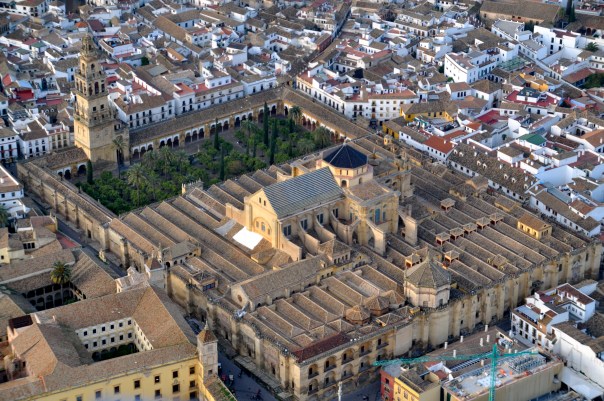
The exterior of the massive complex looks like this from the air:
After our tour, we drove on to Seville, and dined in a fitting ambience.
A brief history of two or three damn things sets the stage for our trip south to Andalusia.
RomanHispania
We will see many Roman structures and architecture, some still in use, in Spain.
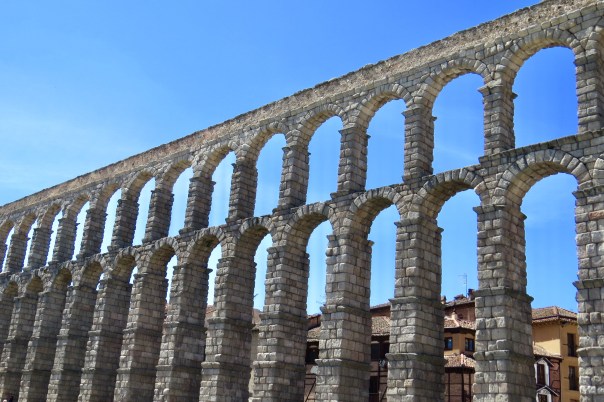
For example, the roman aquaduct we saw on a day trip to Segovia, about an hour’s drive from Madrid:
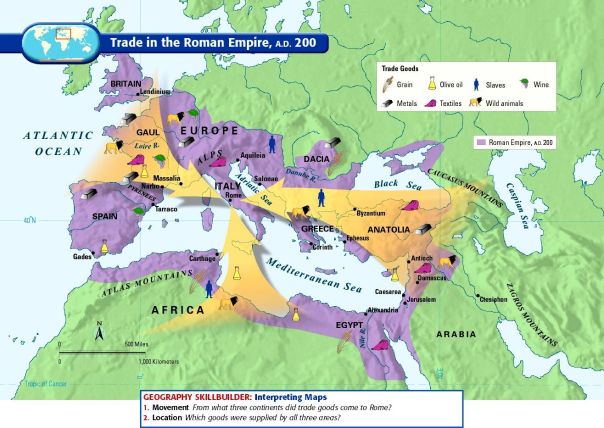
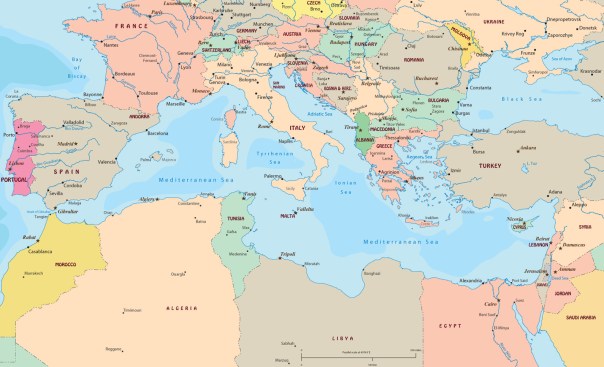
The location of southern Spain with Gibralter at its southernmost tip and Gibralter Strait just 7.7 nautical miles across to Africa made Spain a magnet for military strategists and trade throughout its recorded history.After the Greeks, Roman armies first invaded the Iberian peninsula in 218 BC and used it tactically against the Carthaginians (in Carthage in what is now Morocco).
Roman Hispania was for 500 years part of a cosmopolitan world empire bound together by law, language, and the Roman road. Hispania also had its influence on Romans – Caesar wrote that soldiers from the Second Legion regarded themselves as hispanici.Some of the peninsula’s population were admitted into the Roman aristocratic class and they participated in governing Hispania and the Roman empire.However, Jewish people came with the Romans, and they were treated appallingly badly, as little more than slaves.
Visigoths
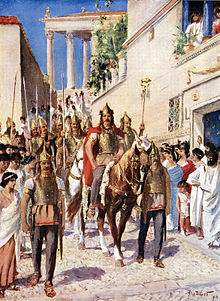
The Goths were a nomadic Germanic people who fought against Roman rule in the late 300s and early 400s A.D., helping to bring down the Roman Empire. The Visigoths were the tribes in the west.(The Orthogoths caused a good deal of trouble for the eastern Roman Empire in what is now Turkey.) Following the Visigoths’ sack of Rome in 410 A.D. was a terribly dark and violent period in European history after the vacuum created by the fall of the Roman Empire with Goths fighting the Vandals, the Huns, the Barberians and each other.The ascendancy of the Goths is said to have marked the beginning of the medieval period in Europe.
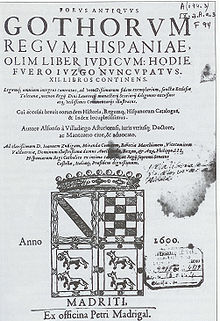
The Visigoths ruled Hispania starting in 475 under King Euric and eventually settled down in Spain and converted to Catholicism in the seventh century. In 643, Visigoth King Chindasuinth ordered the writing of the so-called Visigothic Code and it applied equally to the conquering Goths and the general population, most of whom had Roman roots and had lived under Roman laws. It effectively ended the distinction between the “gothi” and “romani” people in the eyes of the law, decreeing that all those residing within the Visigoth Kingdom were considered “hispani.”
The Visigothic Code also established rules for marriage and the inheritance of property. Women were allowed to inherit property and manage assets independently. They could also represent themselves in legal proceedings and arrange their own marriages.
Some elements of the Visigothic Code endured. It formed the basis of the laws established by the Moors following their conquering of the kingdom in the early 700s. Like the “romanis” during Gothic rule, Christians were allowed to live under their own laws, as long as they didn’t conflict with those of the conquering Africans.
Much of the Code is reflected in our law today in Canada.
And speaking of the arrival of the Moors, in 750 A.D. in far away Damascus, Syria, a completely foreign land and culture to the Hispani, a violent incident was to profoundly change the course of European history, starting with that little southern tip of the Iberian Peninsula, Gibralter. More to come.
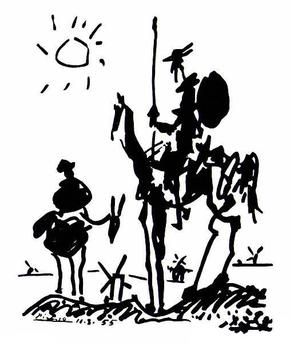
Andalusia, where we are headed, is the land of the second-most famous literary traveller of all time, Don Quixote.
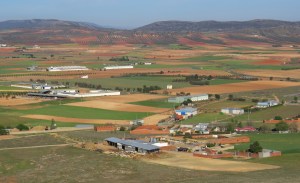
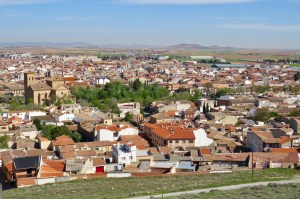
The valley and town of Consuegra are lovely.
We stopped to see where Quixote slayed the giants:
The journey theme serves as another connection between southern Spain and Turkey, the latter being the birthplace of the most famous literary traveller of all time, Homer, author of Odysseus and the Iliad.
TheJourney
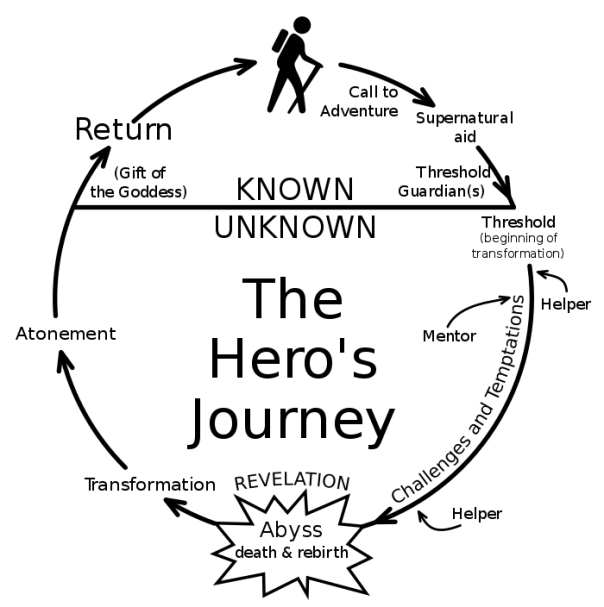
Long before Carl Jung and Joseph Campbell took on the physical journey as an archetypal metaphor for the journey through a struggle or a journey through life, the journey myth began.The hero heads out on a journey, has a struggle, overcomes it and comes back transformed, but scarred. It’s the story of Jacob in Genesis, of Moses, Christ and the Buddha.It’s also the story of Helen of Troy.
Our few days in Madrid and surrounds have been even better the second time around.Here are a few impressions.For more information about these areas, please scroll down to my previous trip to Northern Spain.
Madrid
Our brief tour of the city took us past the newly renovated modern art gallery, the Reina Sofia, which houses Picasso’s “Guernica,” a mural that triggered the Republican resistence in the Spanish Civil War.
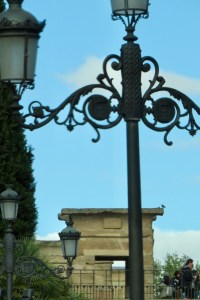
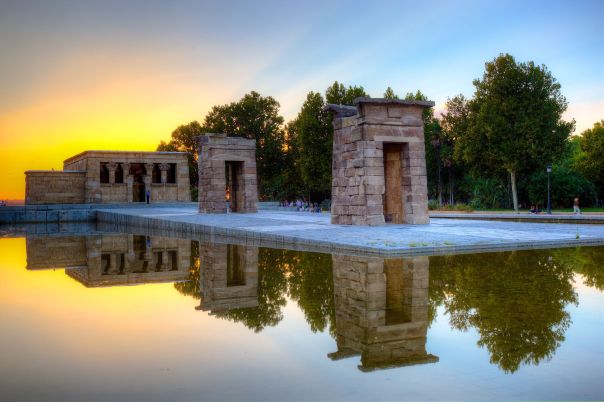
When Egypt built the huge dam at Aswan to power Cairo, a number of temples were going to sink under an artificial lake created by the dam.UNESCO made a call around the world to save the magnificent Abu Simbel temple.The temple was saved
and it took an engineering feat to move it to Egypt’s southern border with Sudan where it was re-assembled.Spain was the biggest donor and to show thanks, Egypt gave Spain the Debod temple.Spain erected it in a park.We only got a peekaboo view:
Here it is up close [not mine]:
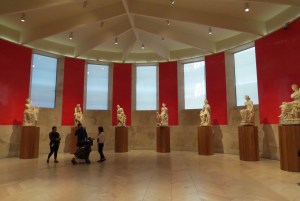
The sumptious cherry lobby in the Prado, one of the most important art galleries in the world:
Preparations were being made for the Madrid marathon taking place on Saturday.To spur on the runners along the 47 km route and to celebrate the Prado’s bicentennial, large reproductions of the best of the Prado’s collection were installed at each kilometer.
Of course the food was fabulous in Madrid, especially at La Catedral, just steps from our hotel.
Segovia
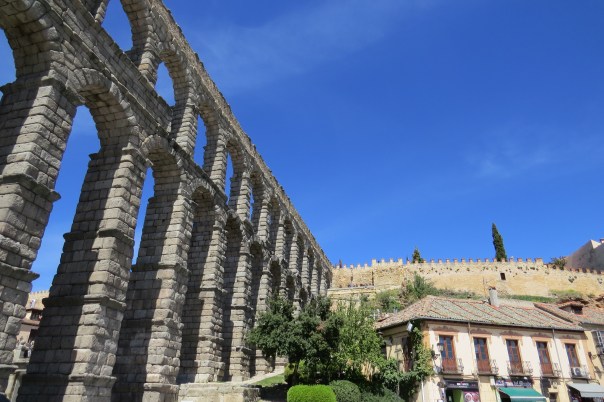
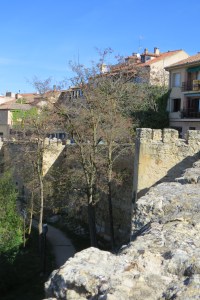
I went to Segovia again mainly because of the food, but I was pleasantly surprised to see things at a new angle. We stopped at a low spot to get a great shot looking up at the castle (“Alcazar”) in which Isabella was crowned Queen of Castille.
We walked along the medieval wall of the city, then toured the Alcazar.
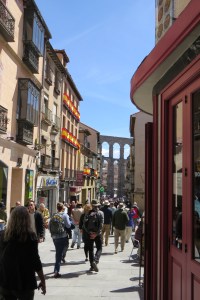
We walked down through the town to the Roman aquaduct.
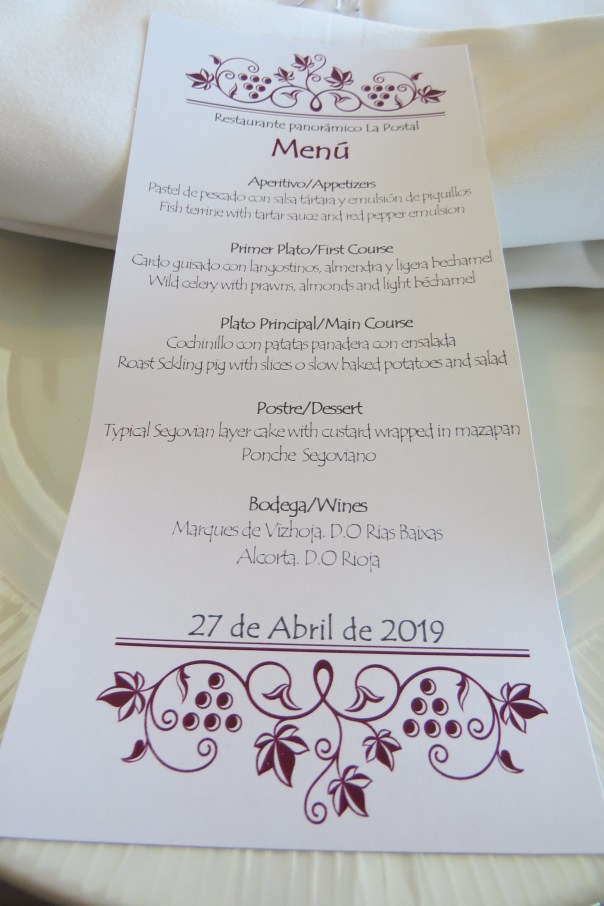
We went to what I anticipated would probably be the best meal of the trip, at La Postal (“the Post Card”) – here’s how it got its name.
We feasted:
Rosa cut the roast suckling pig in the traditional way (Bonnie, you may want to scroll past these images):
It is the tenderest meat I have ever tasted with a filo-thin crust of crackling.I was grateful not to get a hoof or a curly tail on my plate.
We toured the nearby Bourbon palace built by a king homesick for Versailles.Since I’d seen it before, I took a stroll in the gardens.
Segovia was a lovely getaway from the bustle of Madrid.
Toledo
On our free day, I decided to return to the historical city of Toledo, about20 minutes by train from Madrid, to see some of the things I wasn’t able to see on our first visit due to time constraints.I was meeting tour friends.who had left for Toledo earlier in the day.
Iglesia de Santo Tome
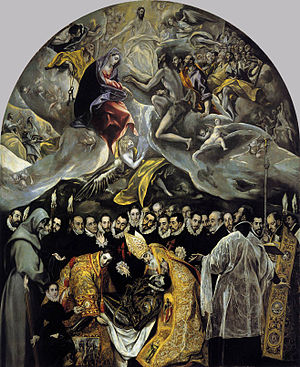
TheBurialoftheCountofOrgaz is a 1586 painting by the great artist and Toledo emigre,El Greco. Among his finest works, it has been called “one of the most truthful pages in the history of Spain”, as a masterpiece of Western Art and of late Mannerism, and as the epitome of Greco’s artistic style.
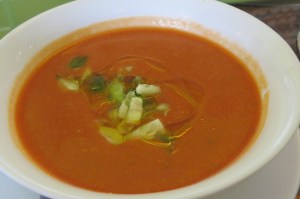
First gazpacho!
SynagogadelSantaMariadelBlanca
A quick trip back to Madrid, another delicious dinner, and the end to another magical day. Tomorrow, new ground. Vamos!
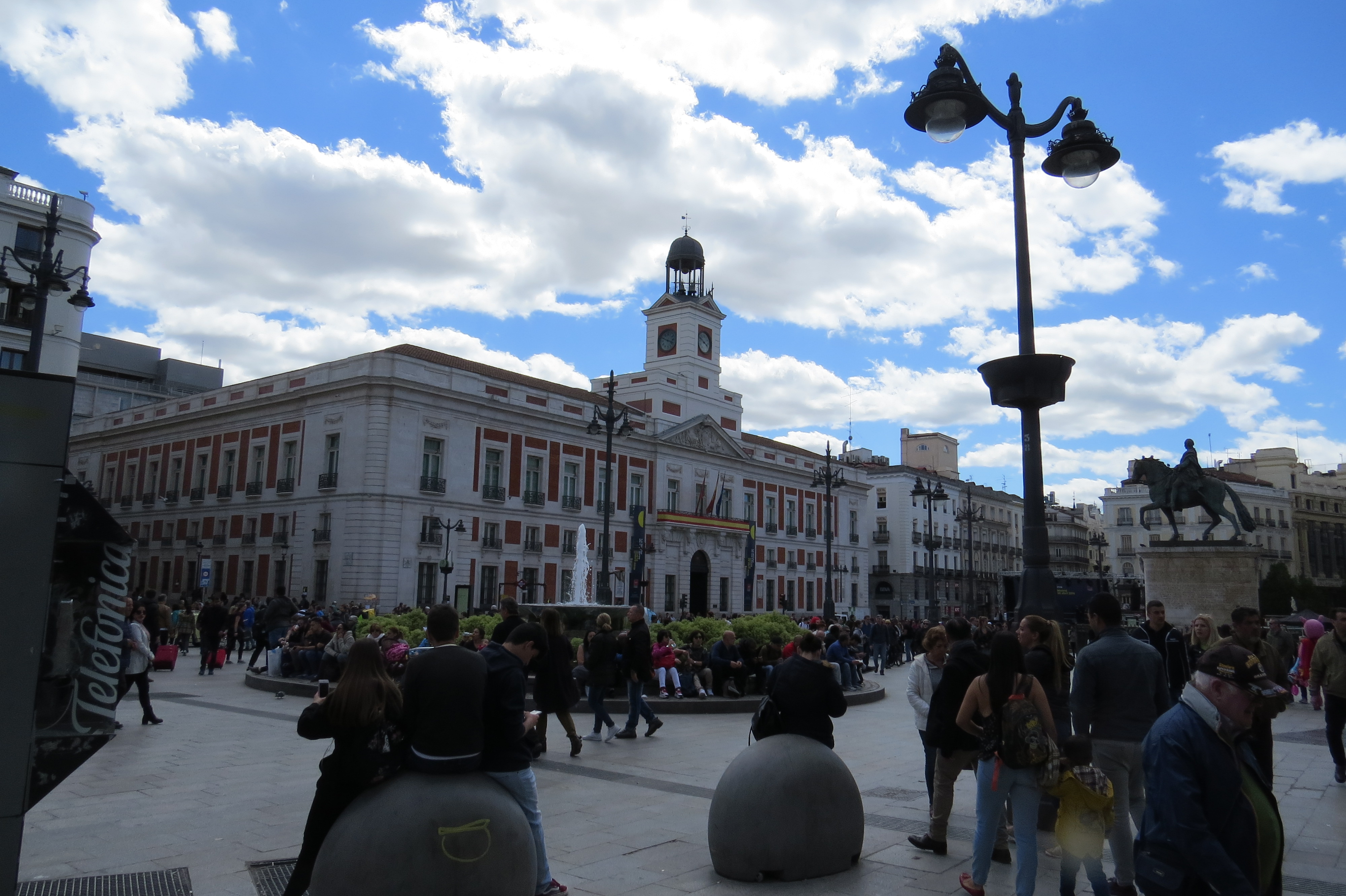
Our hotel is nearby the Puerta del Sol (Sun Gate), one of the best known landmarks in Madrid.
Puerto del Sol
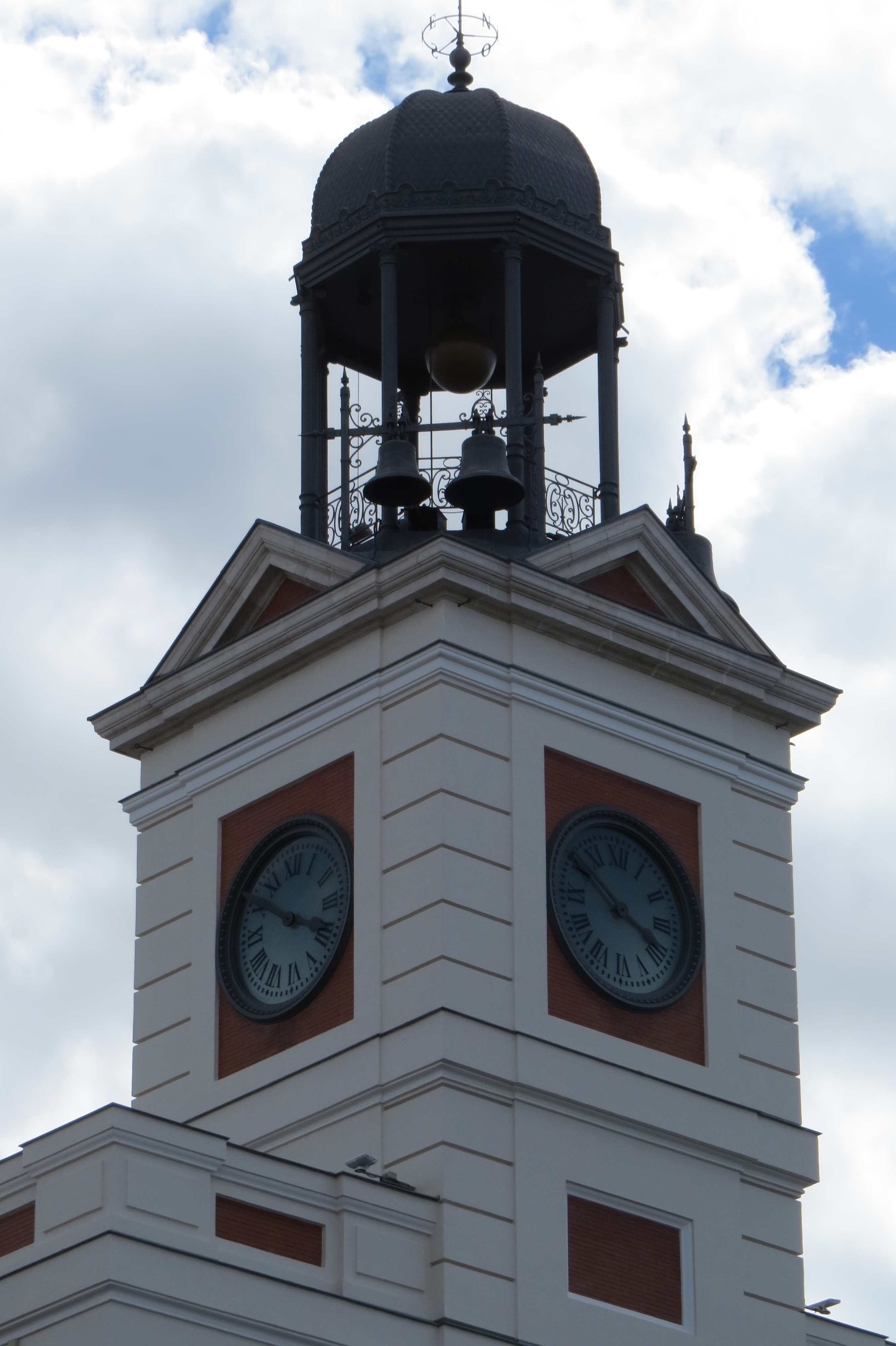
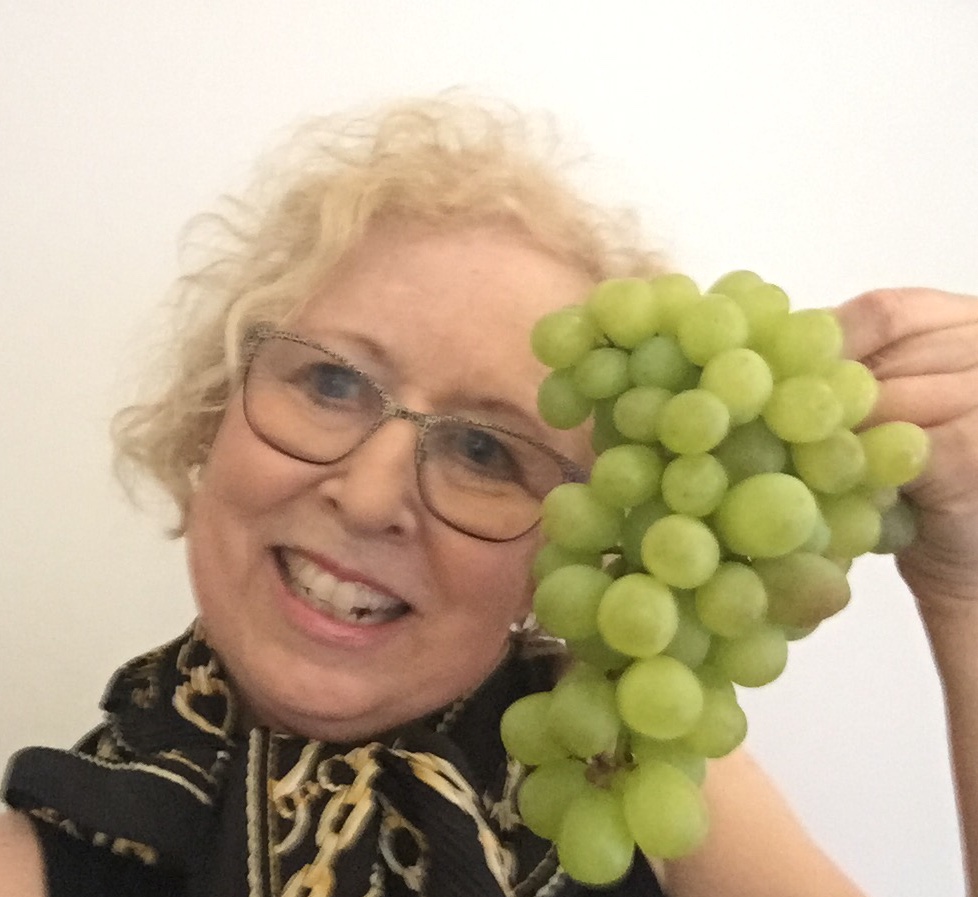
In the centre of the square is a tower clock – and Madrid’s version of the NYC Times Square New Year’s Eve ball drop.The clock, broadcast nationally, chimes 12 bells at midnight each December 31, and the Spanish eat 1 grape with each chime, leading to a year of prosperity.
Bring it!
Uh, wait. How does a person eat 12 grapes in 12 seconds? Like this:
Kind of takes the romance out of the midnight kiss 💋 , but I’m sure they find a way.
It will be interesting to see what happens in Sunday’s national snap election called after the leading party’s budget was voted down and a week after negotiations with Catalan separatists broke down. Another factor is the rise of Vox, a far right party advised by former Trump strategist Steve Bannon, who oppose any kind of dialogue with Catalan separatist supporters.(Catalan is the richest region in Spain and is crucial to Spain’s economy.)
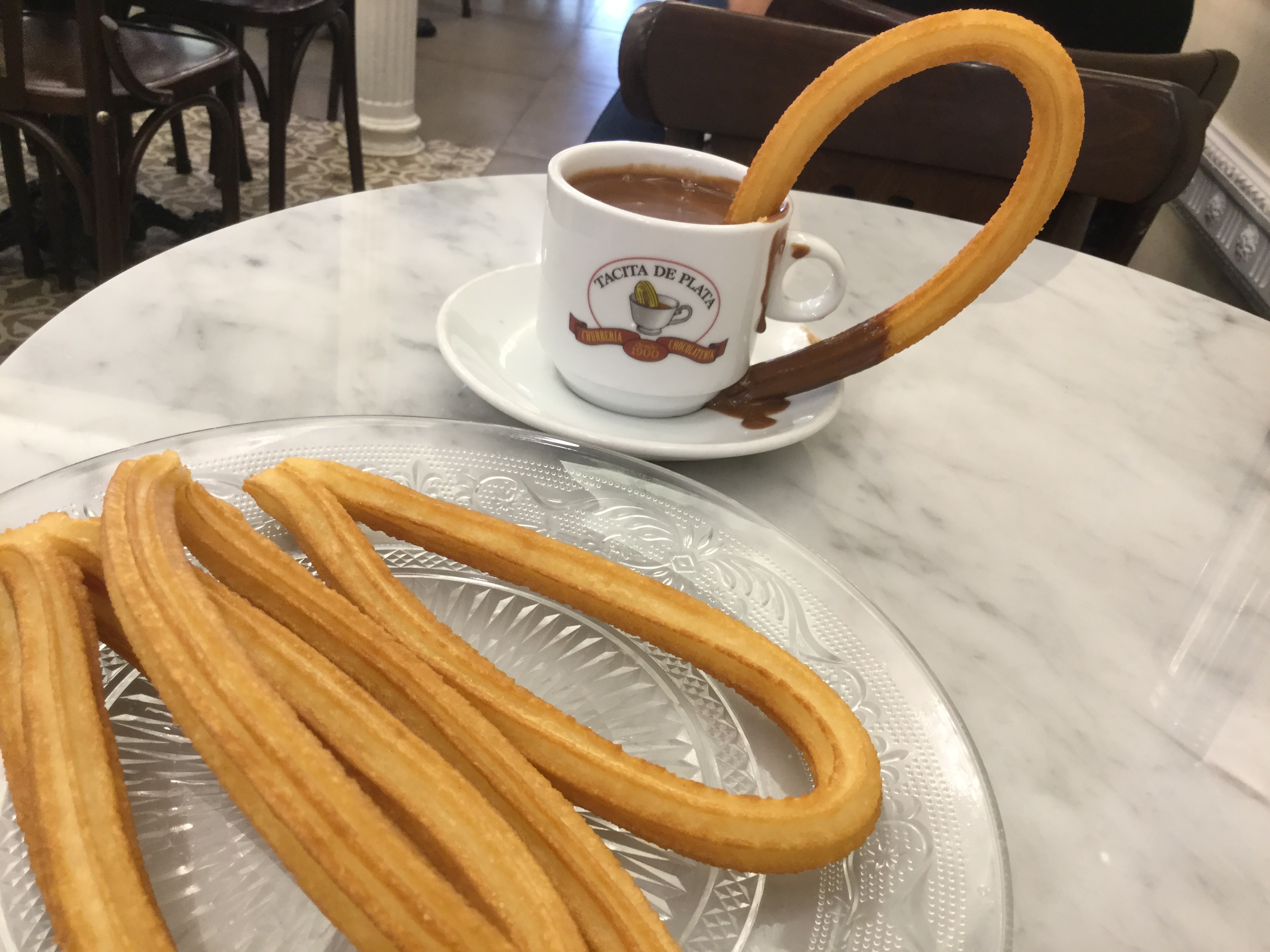
In Puerta del Sol, I had my first Churros e Chocolate, a Spanish classic. The hot chocolate is as thick as pudding.
This has little to do with my travels but en route I read this sad but moving and inspiring story I want to share:
In the first few days in Madrid, Segovia and Toledo there will be some repeats but I hope to dig deeper. We head to new ground (starting with Cordoba) on Monday.
After travelling to northern Spain on a U. Vic study tour in 2015, I was delighted to learn there would be an opportunity this year to see southern Spain with the two mujeres bonitas, Rosa and Chrissie (also the tour leaders on our South American tour last year), who were our leaders on the northern half. Booked!
Then, Royal Heights (whose tours I have been on to Greece and Egypt) posted a trip to Turkey starting 3 days after the Spain trip ends.A plan!
After 3 extra days in Barcelona to recharge, I fly to Istanbul.Even better, a new friend, Yasuko, from the South America trip decided to do the same thing, so I will have company. And Bonnie joining us in Barcelona, I’m excited!
Connections
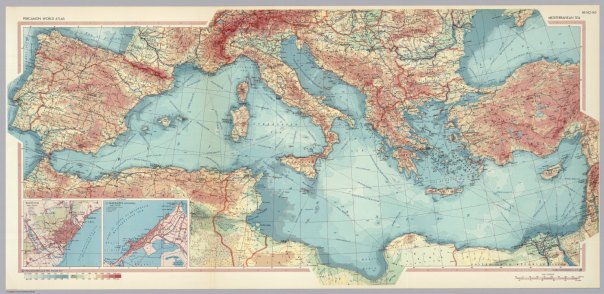
Southern Spain will be the perfect entree to Turkey, although the historical timelines of the two countries are inverted. It seems there is room in the world for at least two religious empires at once. The Moors (muslims from the east) occupied southern Spain in a glorious empire from about 711 AD to 1492, after which the Catholics, King Ferdinand and Queen Isabella, expelled anyone who wouldn’t convert to Catholicism and a new Spanish Golden Age soon began. The country today remains mainly Catholic.
Meanwhile, from about 330 AD to 1453, Constantinople and Byzantium were the true headquarters of the Roman Empire and Christianity while Rome was left behind as a backwater after the fall of the Empire there. At the crossroads of two trade routes and militarily defensible, glittering Byzantium had incredible wealth – architecture, gold, mosaics, spices and more. Then the Muslims invaded and the Ottoman Empire ruled in what is now Turkey from 1453 until 1923.
Turkey also closes the circle of the Medterranean for me on our ancient foundation and we will visit many Roman and Greek ruins including perhaps the most famous of all, Troy.
He who does not travel,
who does not read,
who does not listen to music,
who does not find grace in himself,
she who does not find grace in herself,
dies slowly.
Pablo Neruda
I am not questioning the great Neruda, his words were meant to incite change in a country that badly needed it, but now, from my perspective while considering my travels, I think of a more positive way to put it: Follow your curiosity, reach out, read, listen, travel if you can, and both challenge and accept yourself, and if you have paid attention, you will have lived life to its fullest and ignited a spark in someone else.
Likewise, when Violeta Parra wrote the most powerful song, Thanks to Life! (Gracias a la vida), it was a dirge written a year before her suicide. It motivated people to action when they were paralyzed. Mercedes Sosa revived the anthem, having had her share of political trials, but here is how she reinterpreted it much later in life, having come out the other side, and this is what I leave South America with.
Signing off, until next time, many thanks to our wonderful U. Vic. academics and tour guides, Chrissie Forster and Rosa Stewart.
A few blog out-takes courtesy of awesome travel-bud and dear friend, Margaret:
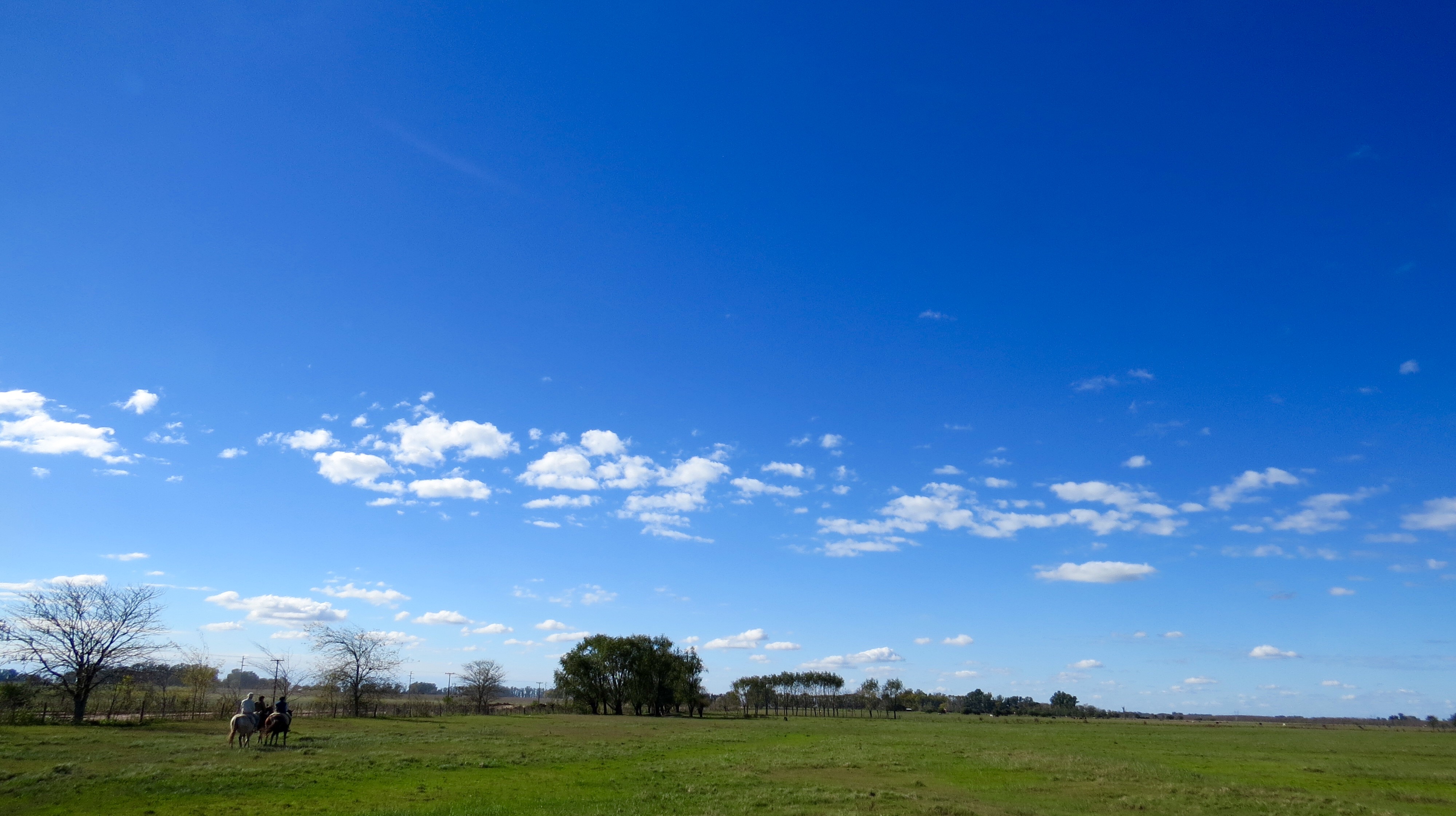
Today we headed out into the Pampas grasslands region southwest of Buenos Aires. Soon the city gave way to farms, ranches, and waves of Pampas grass silvery in the sun.
The Pampas region is big blue sky country like Alberta and Montana.
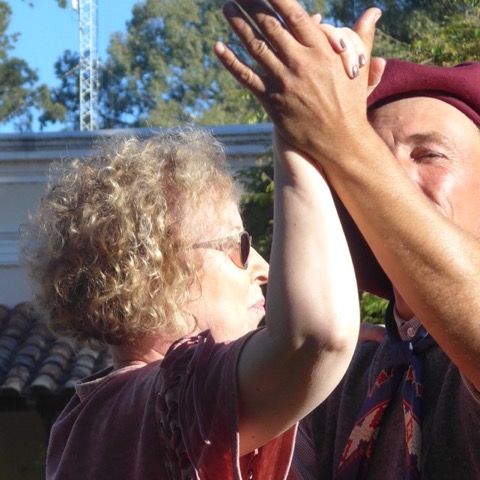
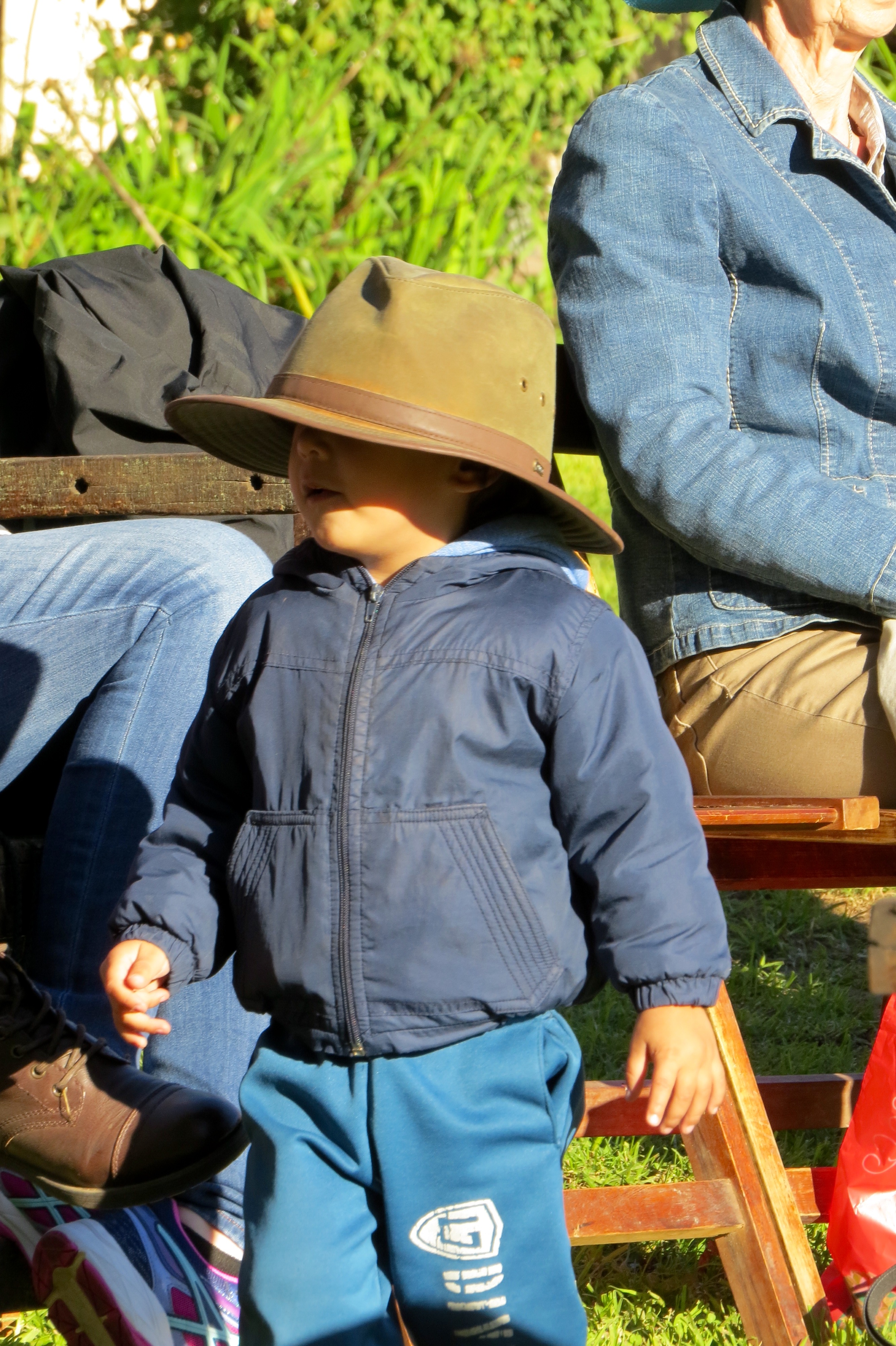
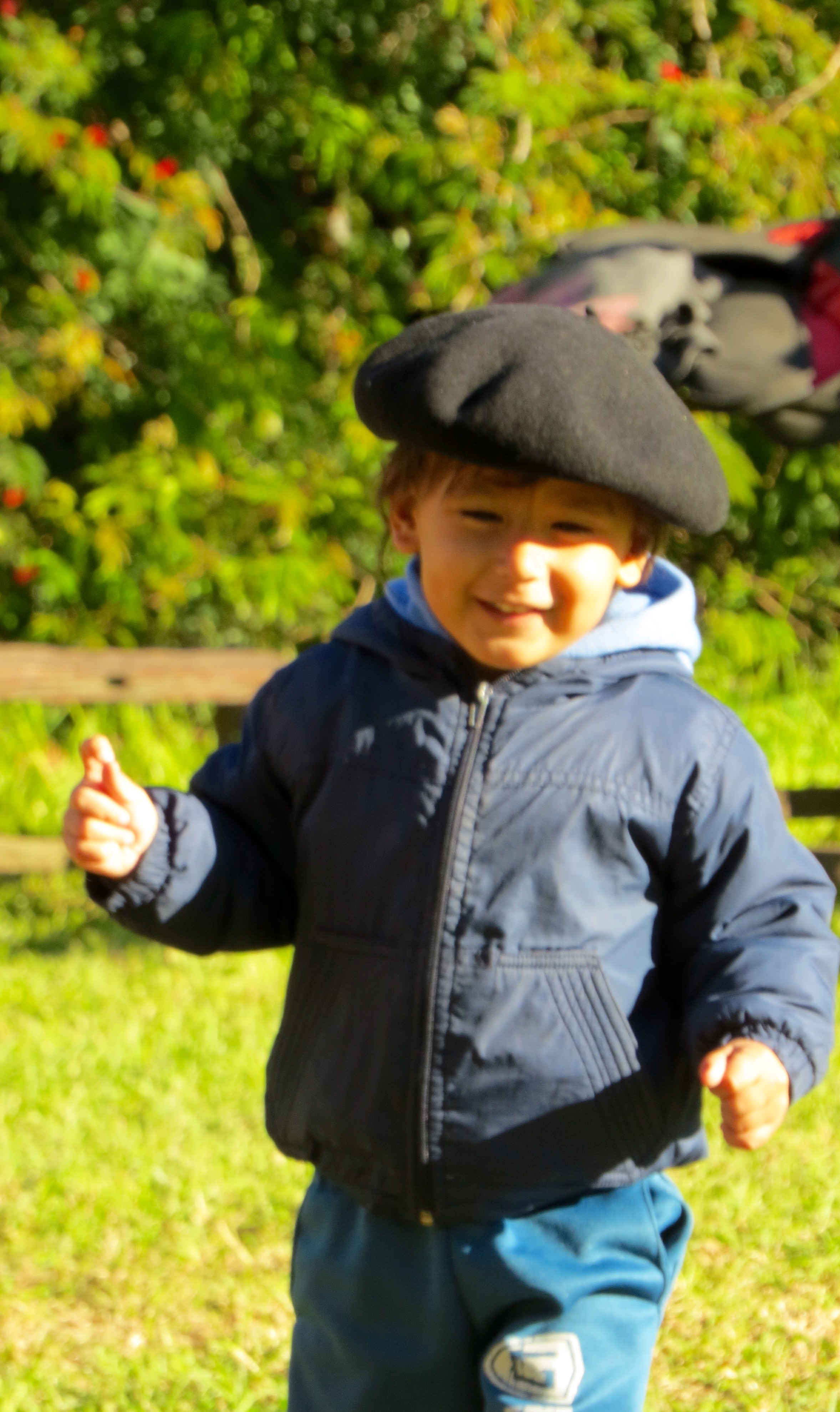
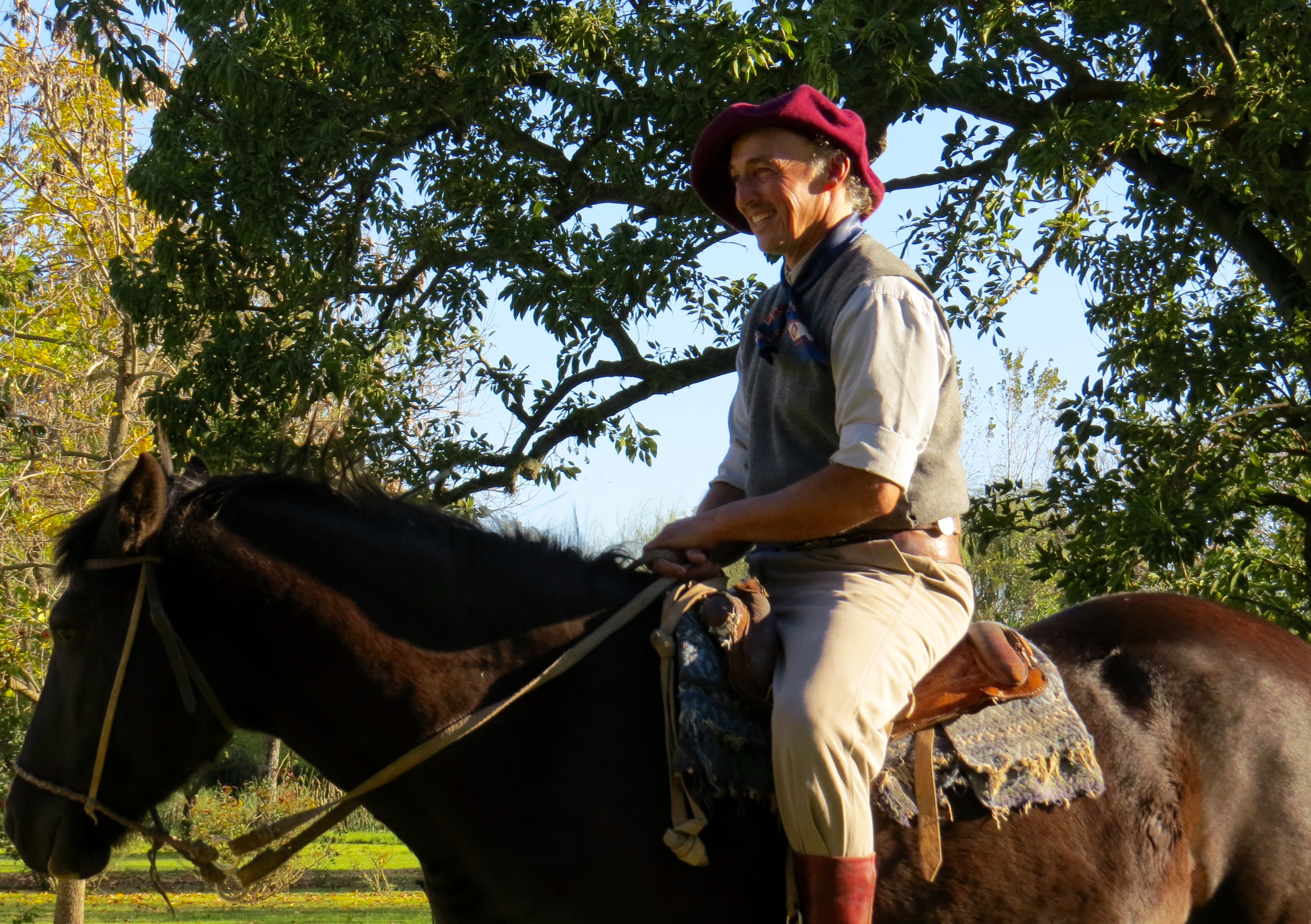
It also has its own breed of cowboy, the Gaucho, a man of fiercely independent spirit who lives a hard, sometimes violent life rewarded with self-determination. Because of their skills, gauchos were forced into the military and during the wars of the 19th century in the Southern Cone, the cavalries on all sides were composed almost entirely of gauchos. Because of the resentment arising from this, gauchos have become an important symbol of contemporary Argentine thinking and are part of Argentina’s folklore and literature.
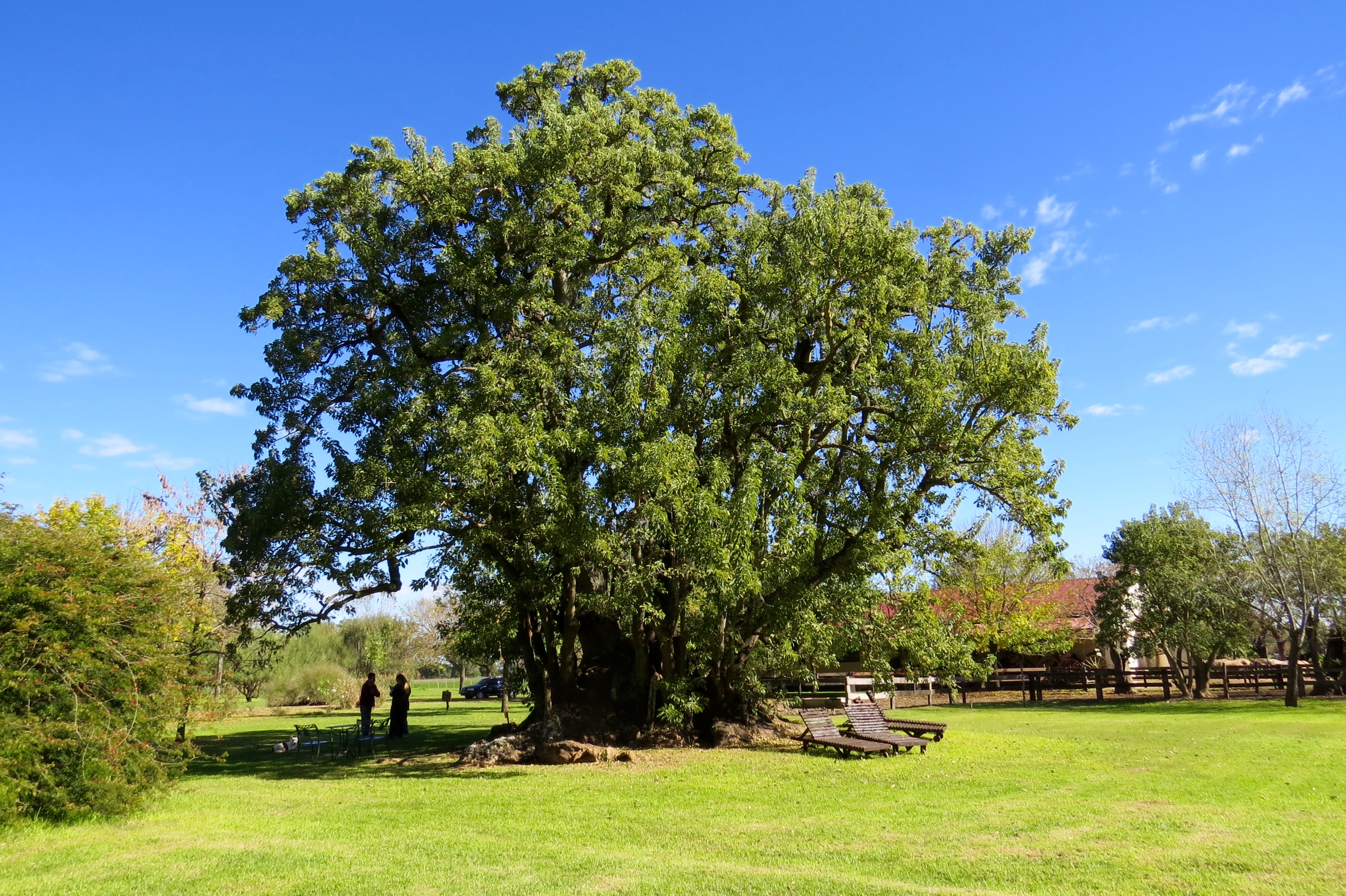
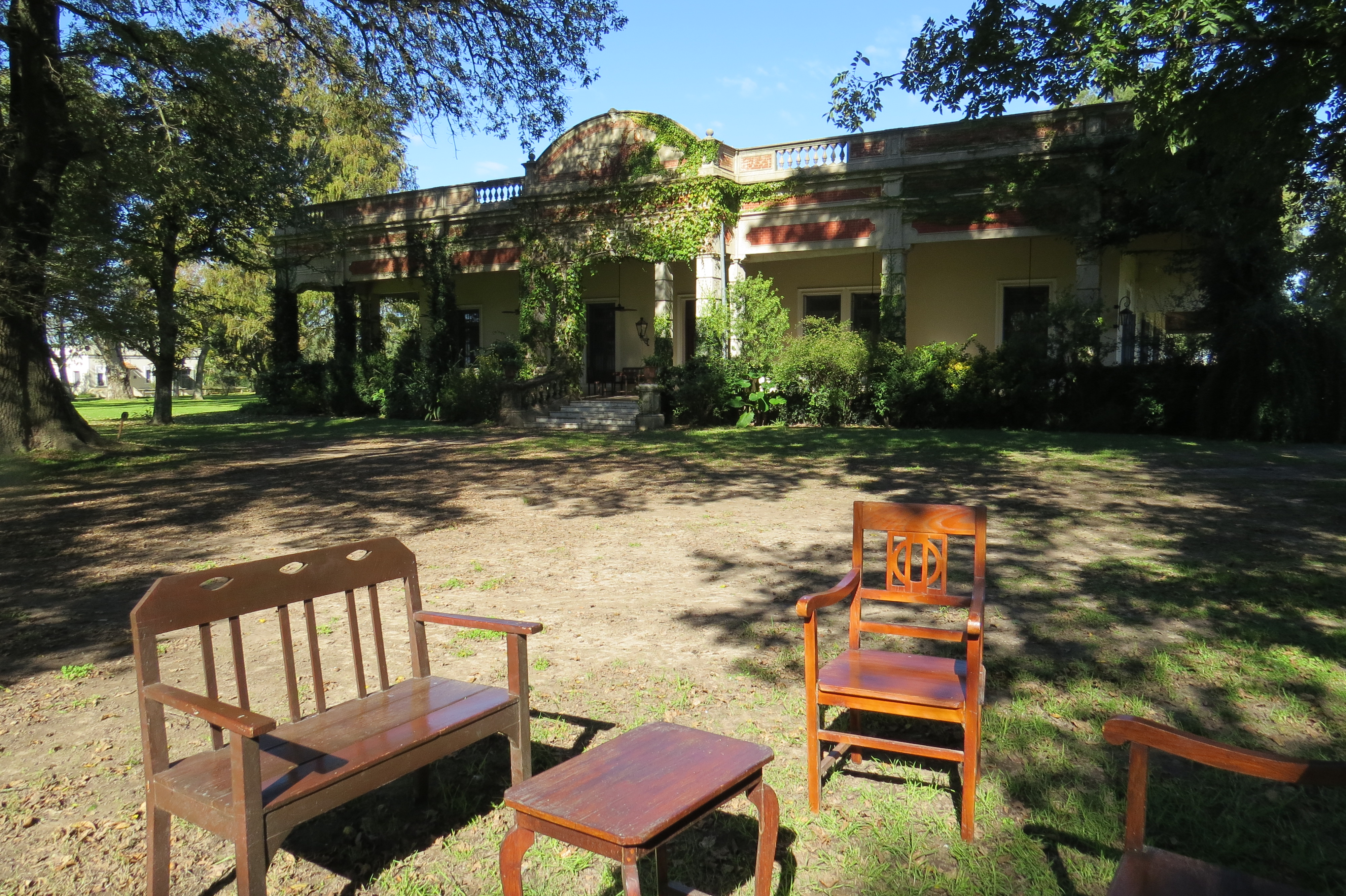
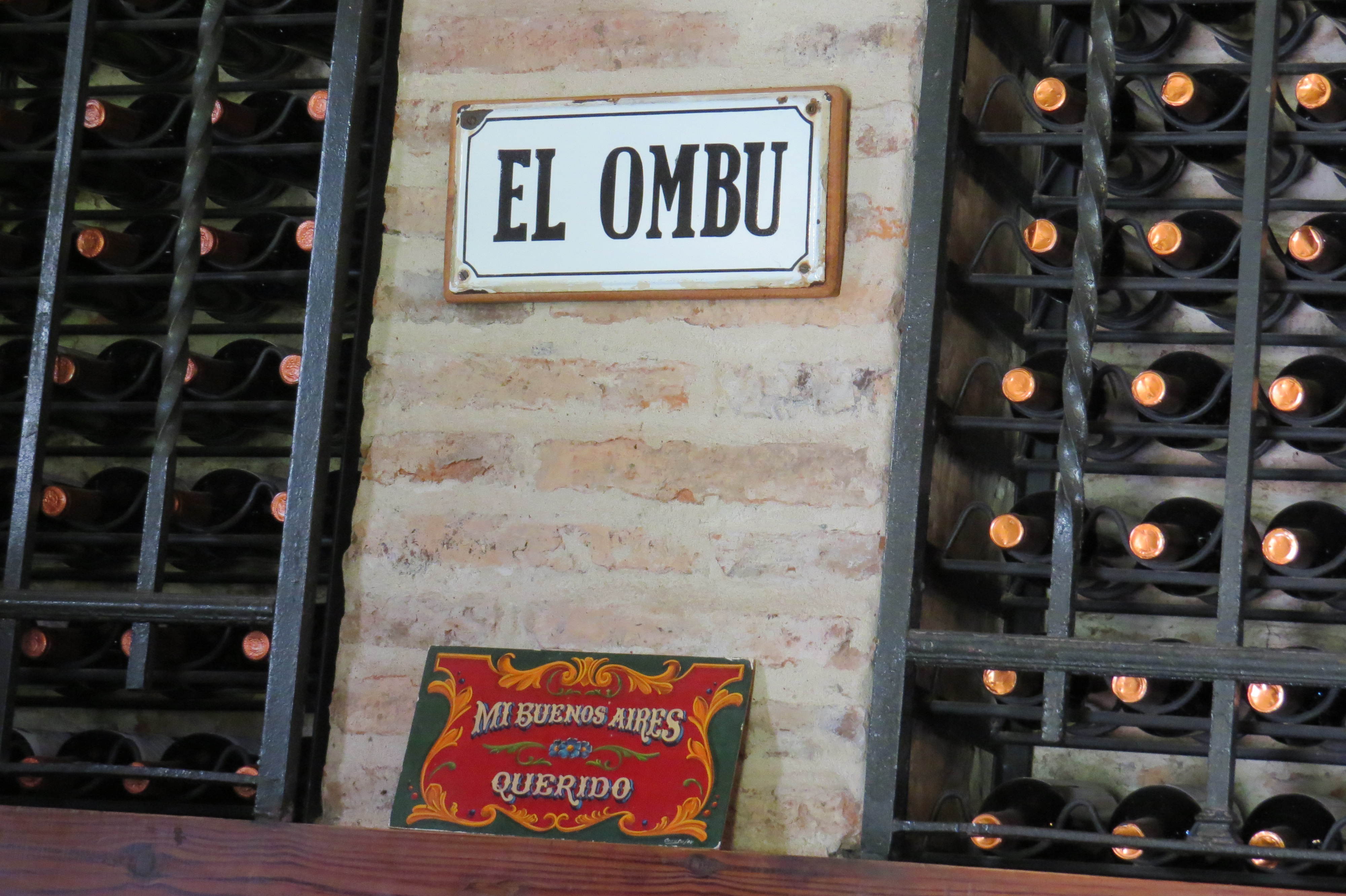
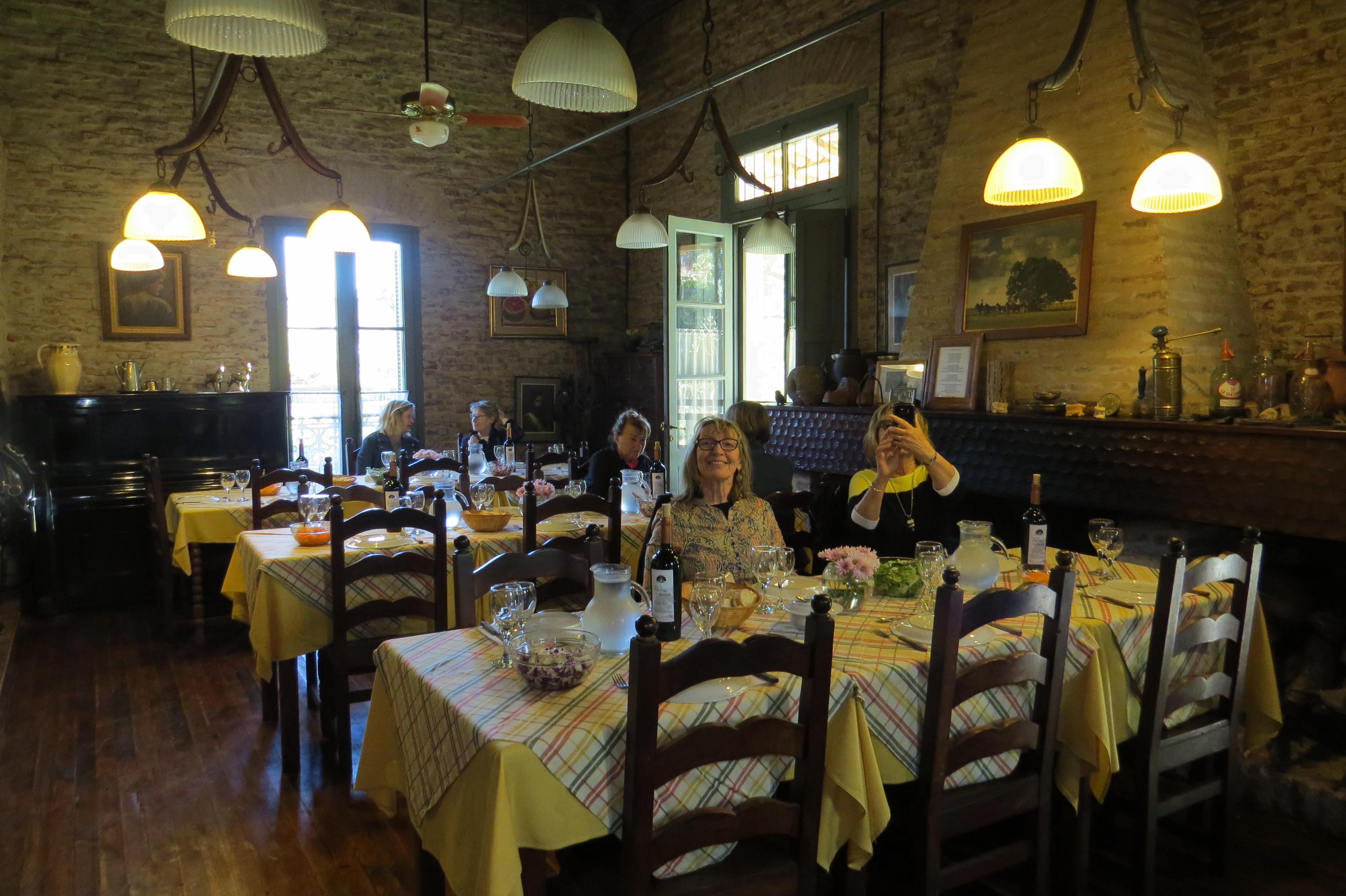
We were to learn all about their culture at El Ombu Ranch, named for the magnificent tree in the middle of the property.
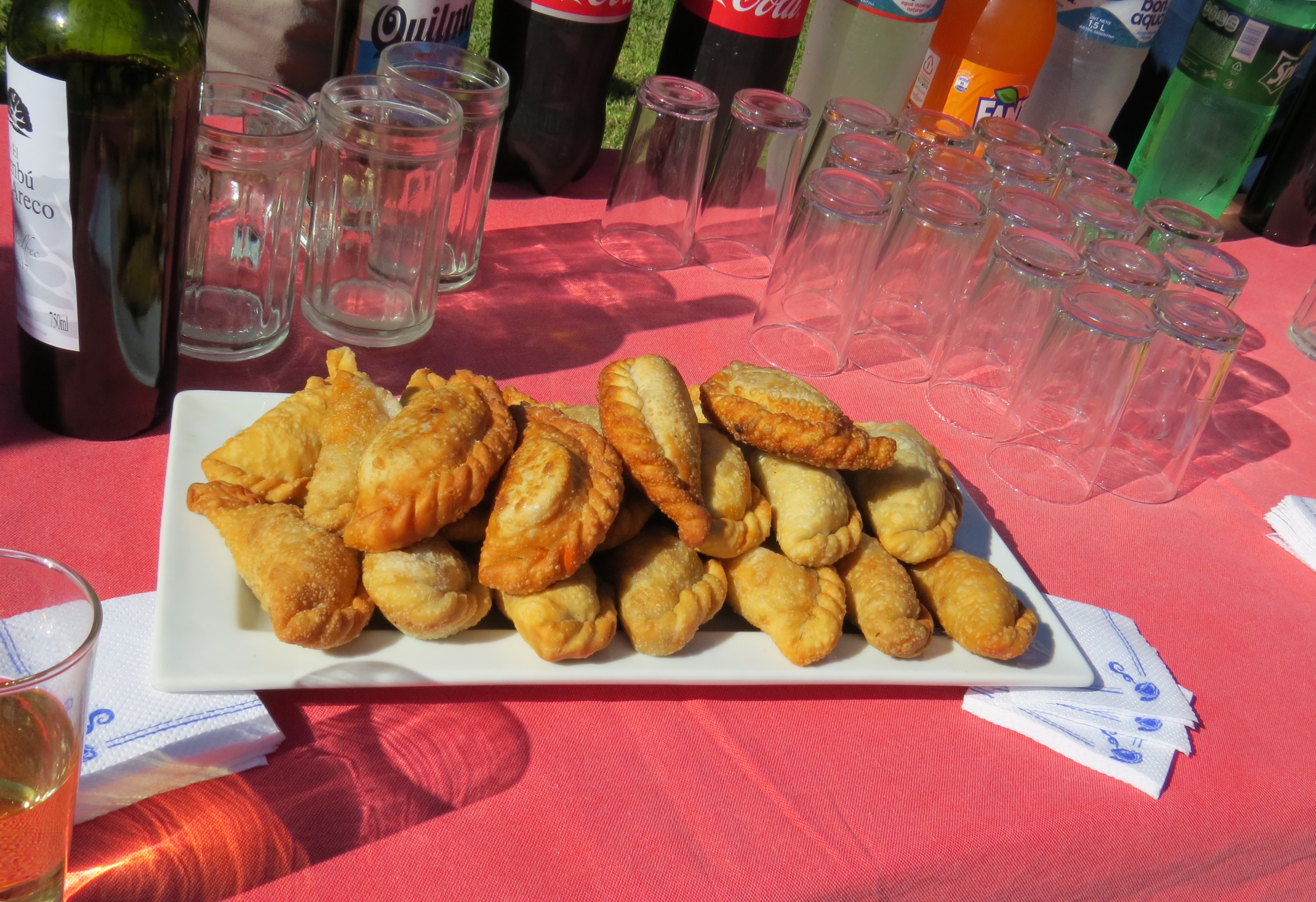
First, we were treated to some mouth-watering empanadas,
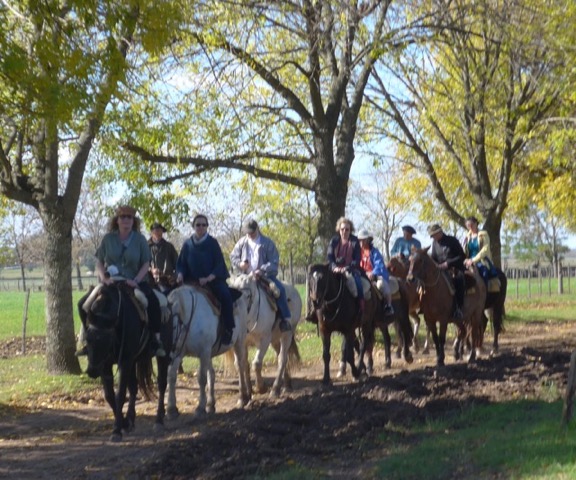
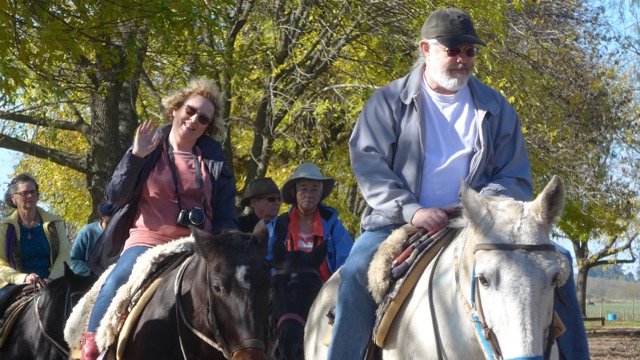
And then, some horseback riding.
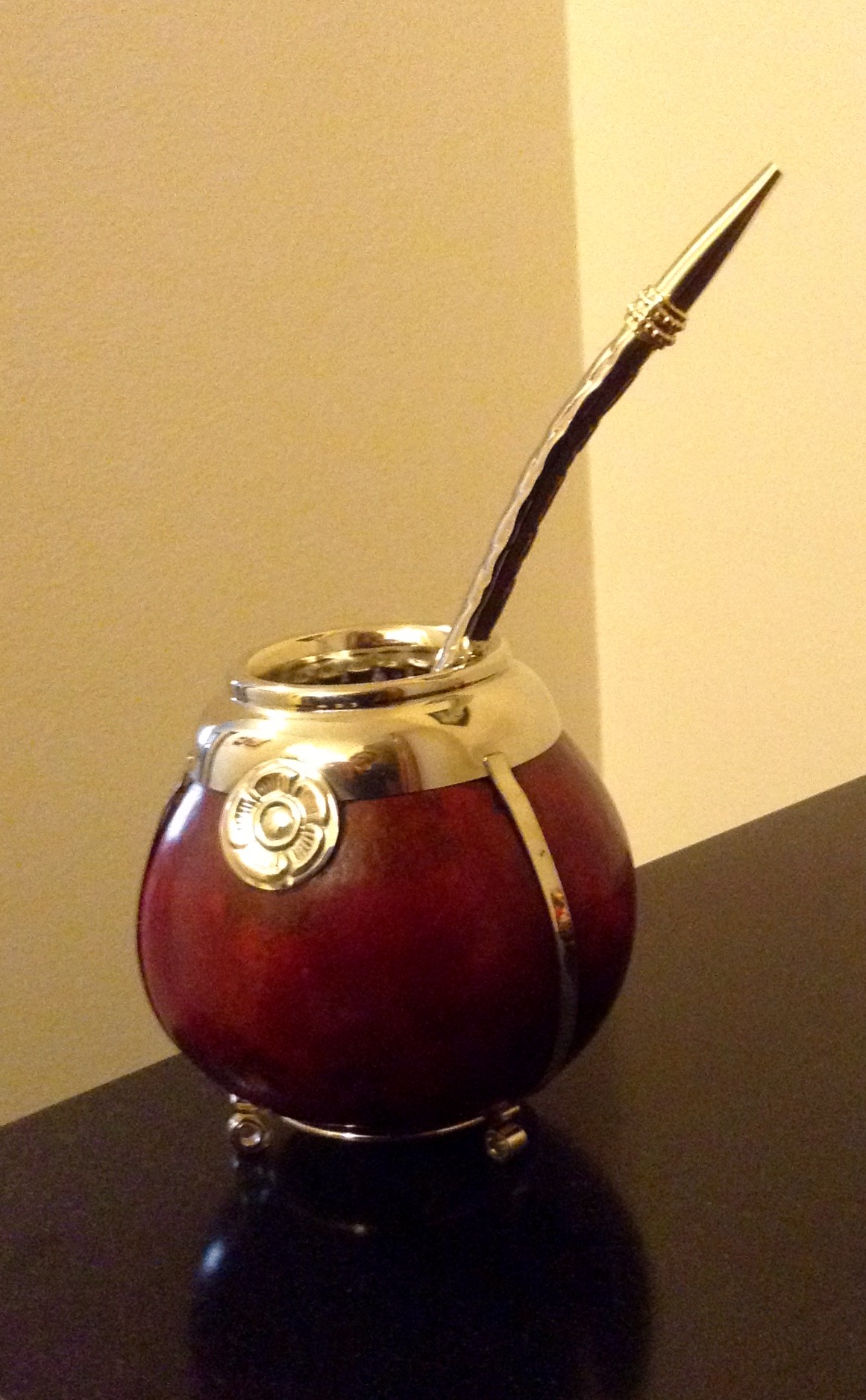
The gaucho diet was composed almost entirely of beef while on the range, supplemented by yerba mate, an herbal infusion made from the leaves of a South American tree, a type of holly rich in caffeine and nutrients, usually drunk from a gourd by a shared straw..
Mate cup & straw
At El Ombu, we were treated to considerably more, we were served the full asado – chorizo sausage, chicken, pork ribs, pork loin, flank steak, and filet mignon. Whoooa, doggie!
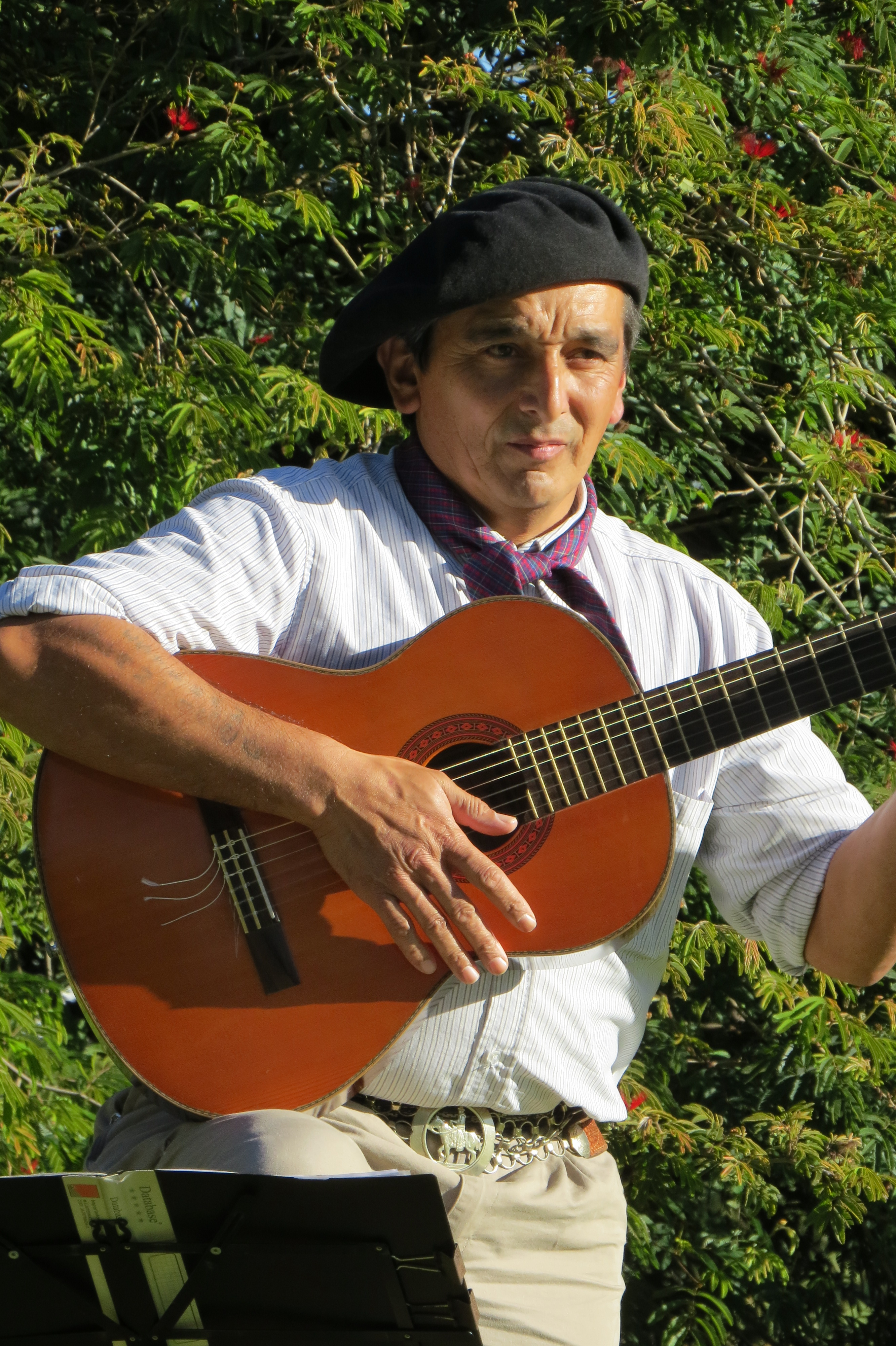
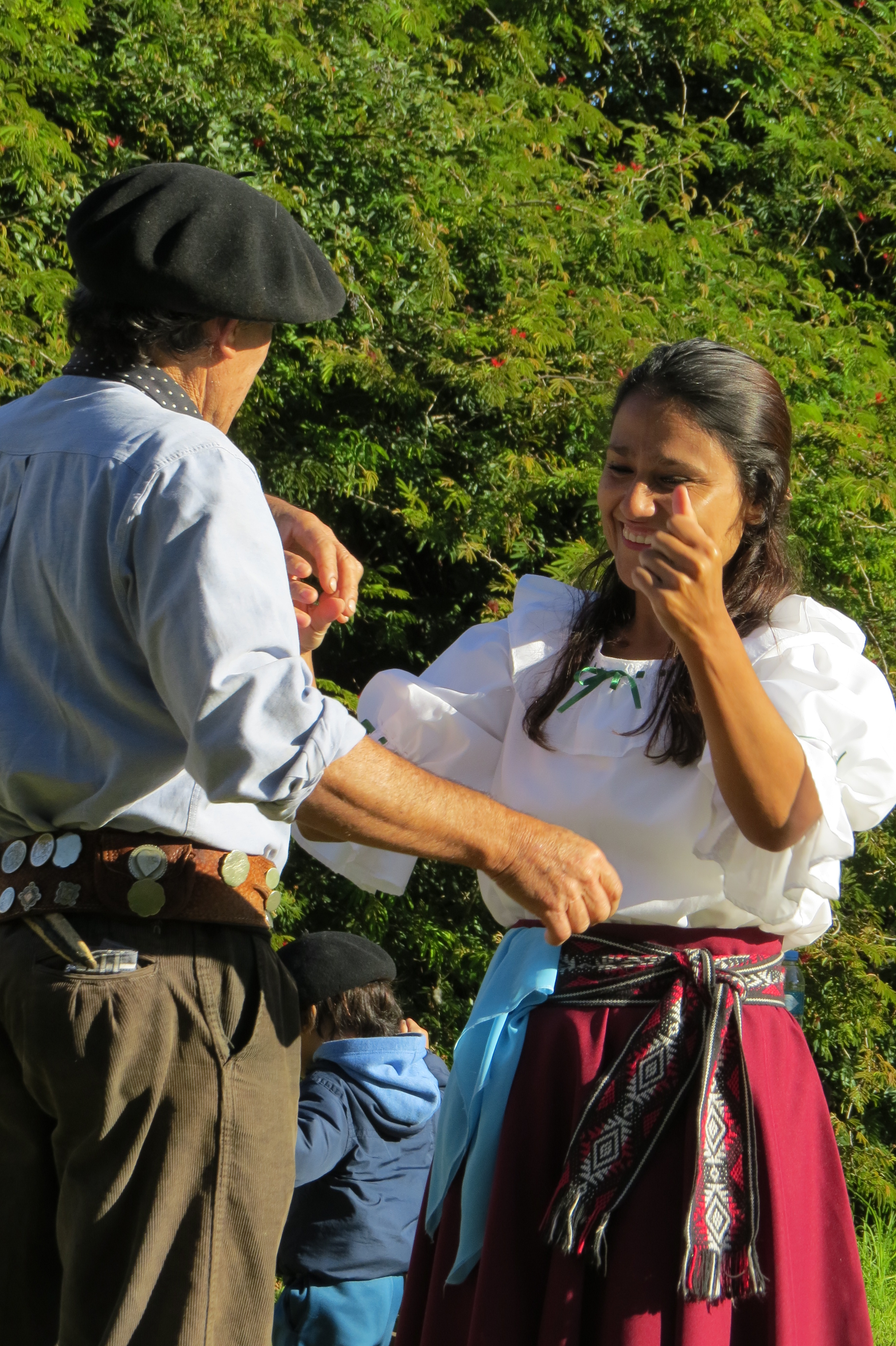
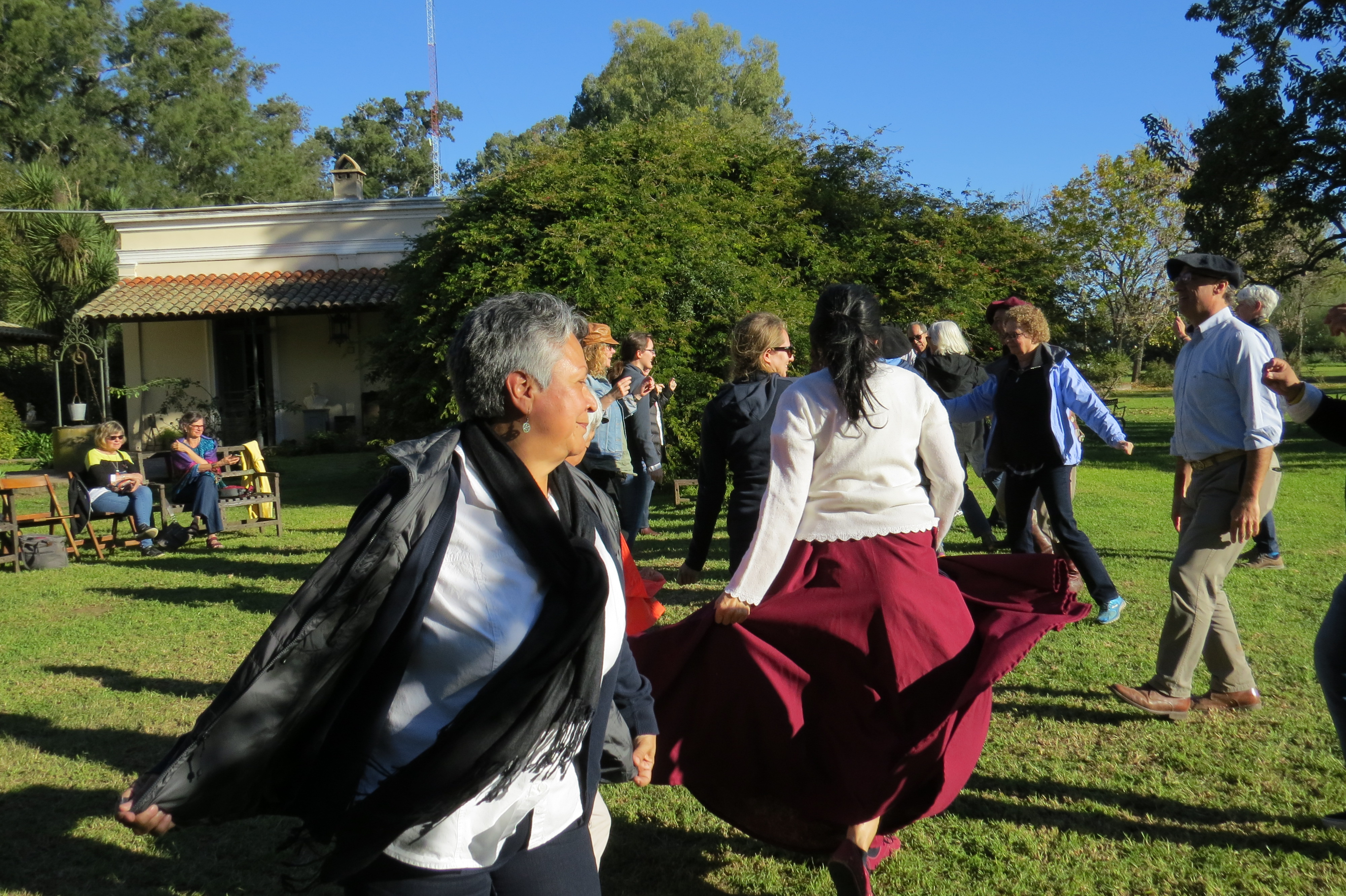
Of course, music became part of the tradition and the guitar a natural instrument for the same reason North American cowboys used it – its portability. The music, song and dance is passed on from generation to generation and was shared with us today.
An essential attribute of a gaucho was that he was a skilled horseman. “He has taken his first lessons in riding before he is well able to walk”. Without a horse the gaucho felt himself unmanned. The naturalist William Henry Hudson (who was born on the pampas of Buenos Aires province) recorded that the gauchos of his childhood used to say, a man without a horse was a man without legs. Richard W. Slatta, the author of a scholarly work about gauchos, notes that the gaucho used horses to collect, mark, drive or tame cattle; to draw fishing nets; to hunt ostriches; to snare partridges; to draw well water; and even − with the help of his friends − to ride to his own burial.
“The eagle lives in its nest,
the tiger in its jungle,
the fox in the cave of another,
and, in his uncertain destiny,
only the gaucho lives wandering
to wherever his fortune leads.”
– from Martin Fierro by Jose Hernandez,
Translated by Emily Stewart































 Carpe diem