Category Archives: Uncategorized

Co. Va. Dong. A.

Itinerary:
– travel to the village of Covadonga, in the Picos de Europa Mountains
– tour of the Holy Cave of Covadonga
– travel to Oviedo
– Dinner: Restaurante del Arco

We set out early this morning bound for the Holy Cave of Covadonga in the Picos de Europa. After a lovely drive into the mountains, our local guide joined the bus and repeated the cave’s name often so that we will never, ever forget it.

Another wealthy Spanish region, Asturia, is historically important and sometimes called the “cradle of the nation.” The Moors conquered Spain in 722 AD and ruled until 1492. However, they were never able to penetrate the mountains of the Pica de Europa. In 718, the nobleman Pelayo was the first to win a battle against the Moors in the Battle of Covadonga and subsequently ruled the Kingdom of Asturius. It took several hundred years for the success of the “Reconquista.” When Ferdinand and Isabella married in 1492, each leading different regions of Spain, they united the area that is Spain today. This was the same year that Isabella sent Columbus to explore the new world, changing Spain’s fortunes and expanding its empire.

image

The idea of a “Reconquista” is controversial – for propoganda purposes leaders, including Franco, chose to view the ousting of the Moors as a reconquest of land originally ruled by the Christian Visigoths. Others view the ousting of the Moors as the first step in founding a new nation – the Spain we know today.

Pelayo defended Asturius from a cave carved out of the mountain and the myth that a “little virgin” appeared to Pelayo there led to the Holy Cave of Covadonga – a place of pilgrimage for everyone from the region of Asturius. The sacred location was earlier a Celtic holy meeting place.
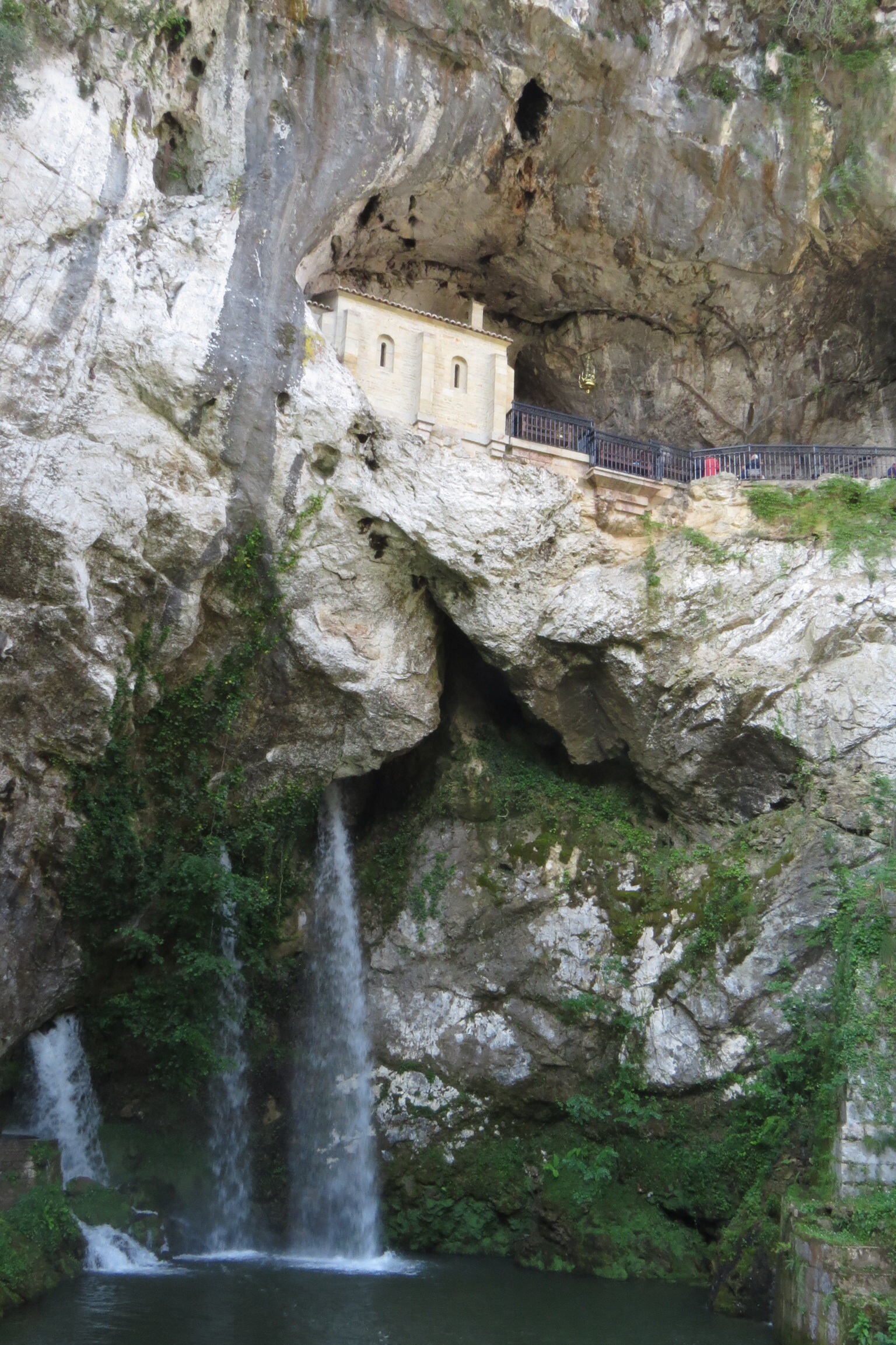
image image

The beautiful cathedral built entirely of pink marble gives the faithful a place to celebrate their heritage.
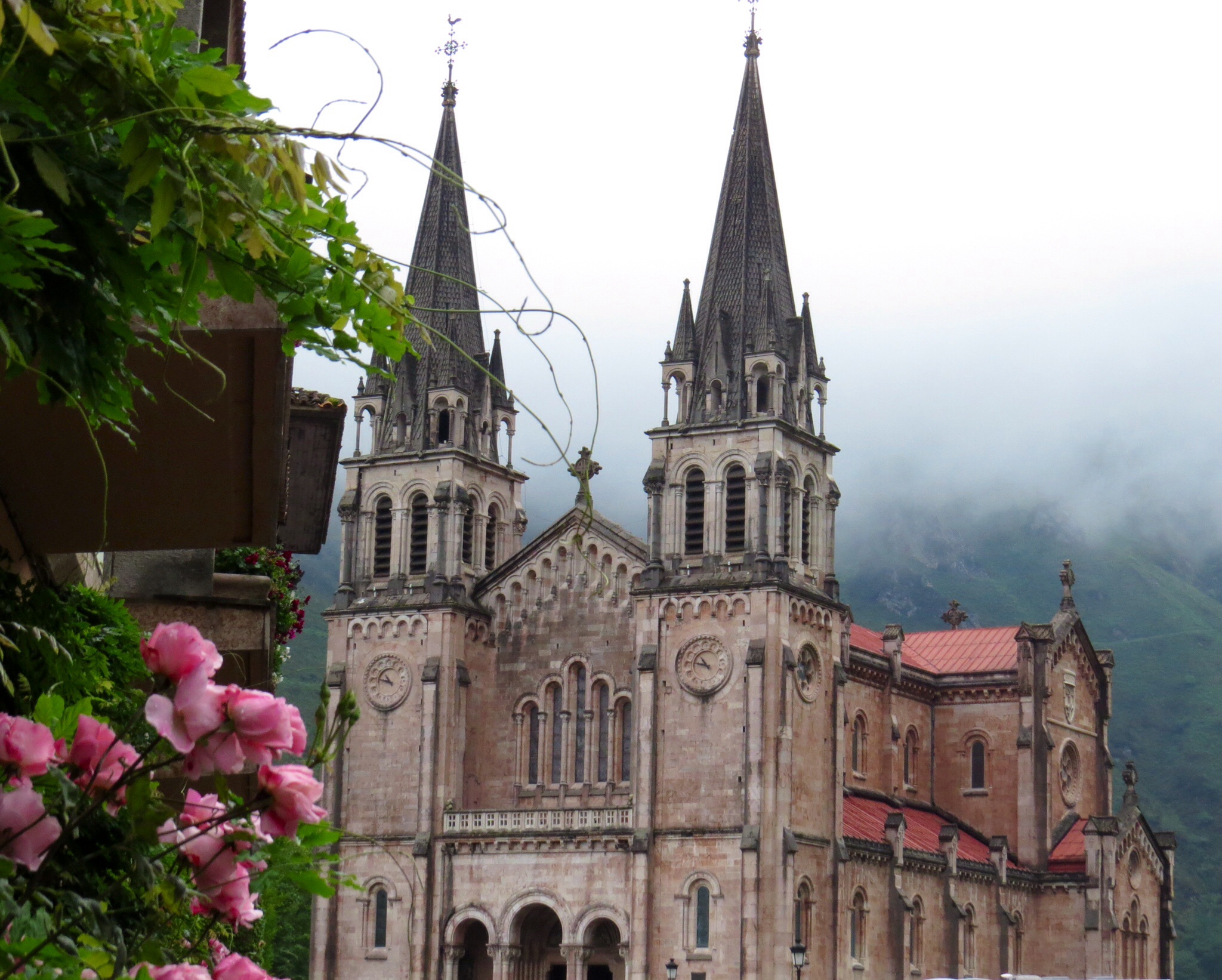
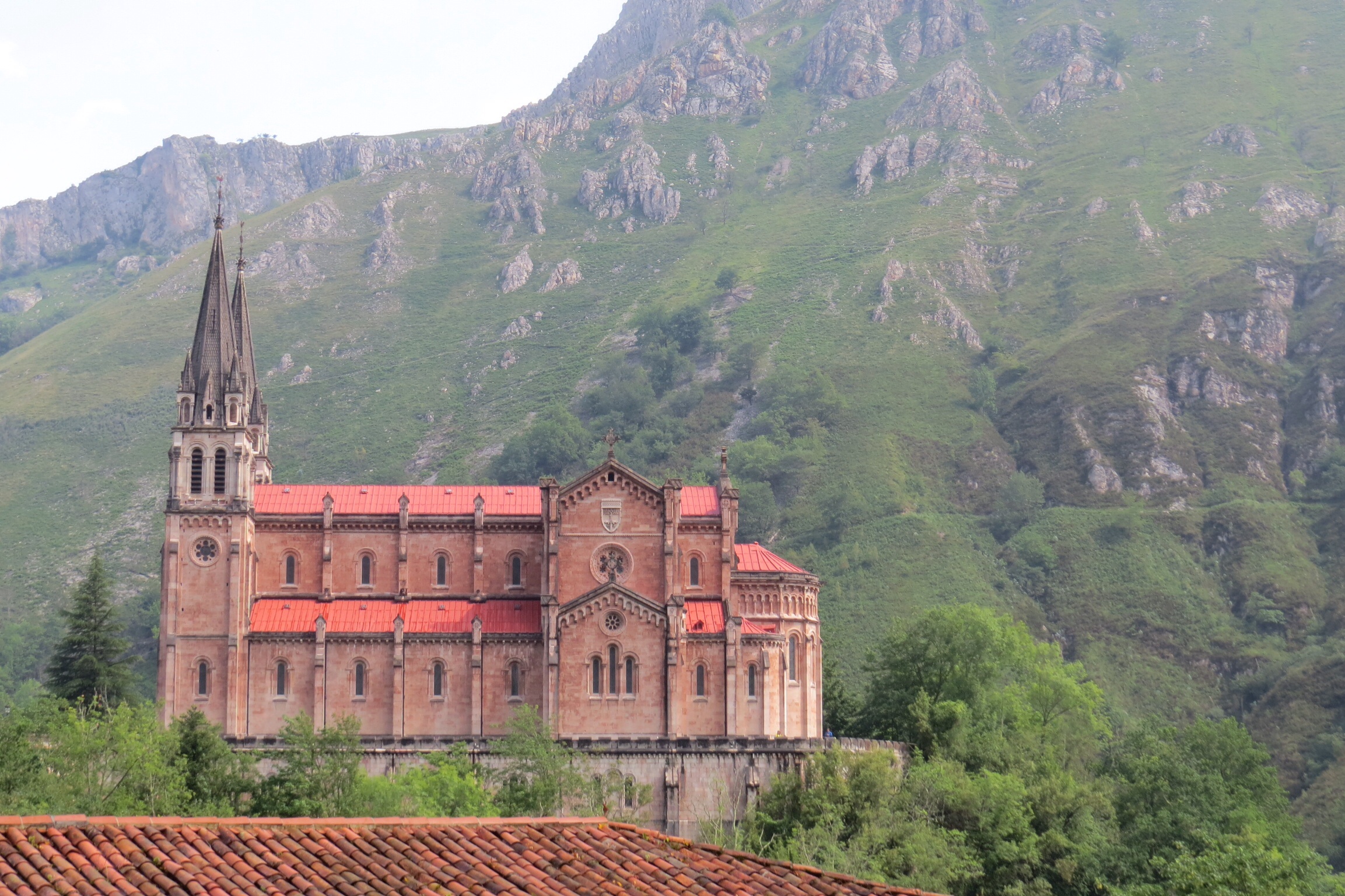
image image

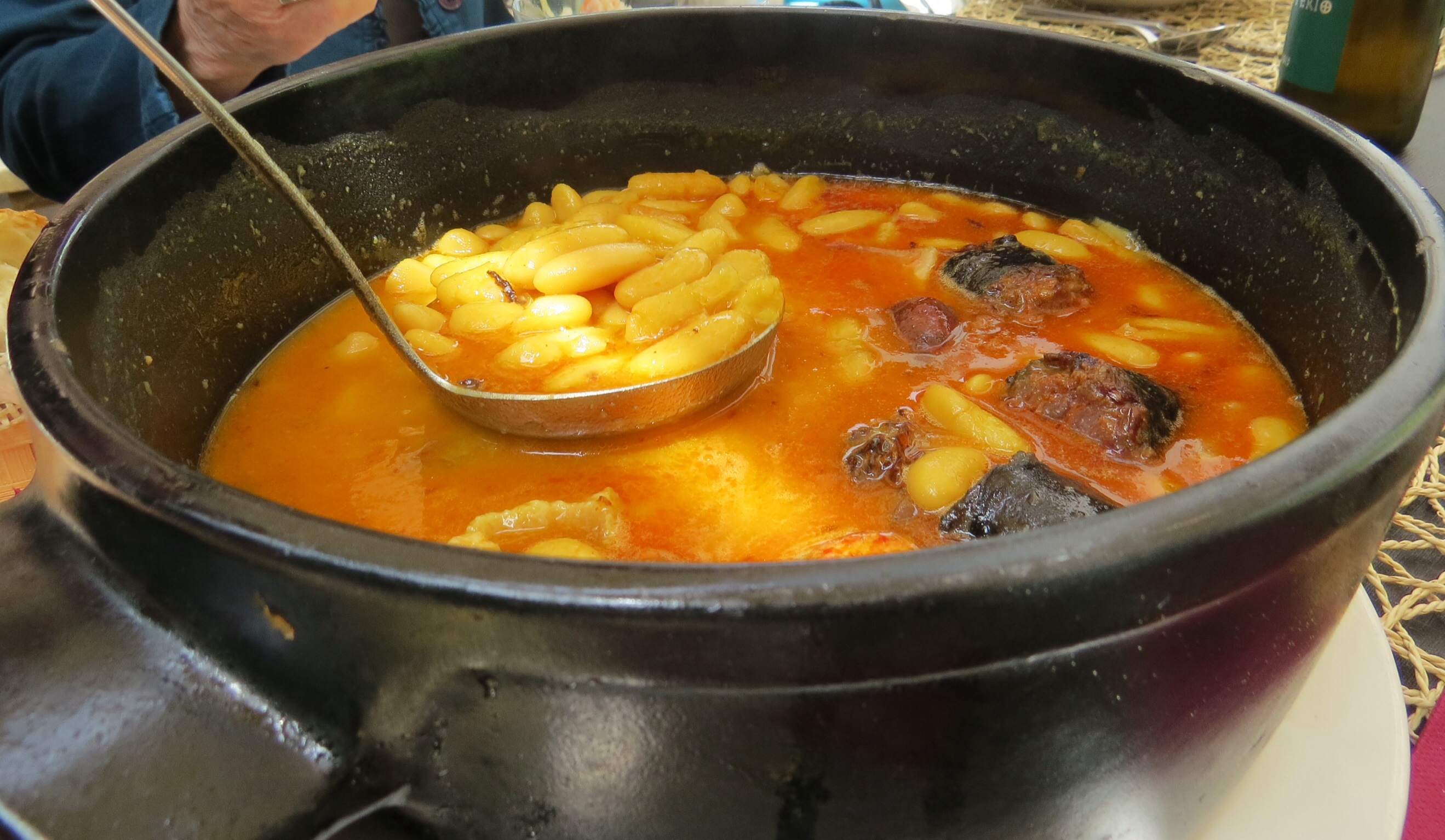
After visiting the cave, we visited the small town where Rene insisted that we try the local fare: apple sidre, and Fabada. Here, the cider is poured from a great height by waiters who never look at the glass held well below their sight lines. The fabulous local stew of faba beans and four meats — ham, bacon, chorizo and blood sausage — was only a starter, but was so delicious we couldn’t resist seconds. The main was melt-in-your-mouth baked chicken and frites which were deep-fried in something delicious. More sidre, which must be gulped in one swig, and we were in perfect form for a snooze on the bus.

image imageimage

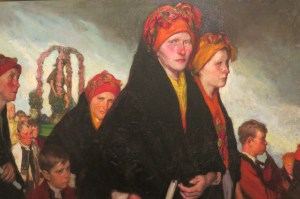
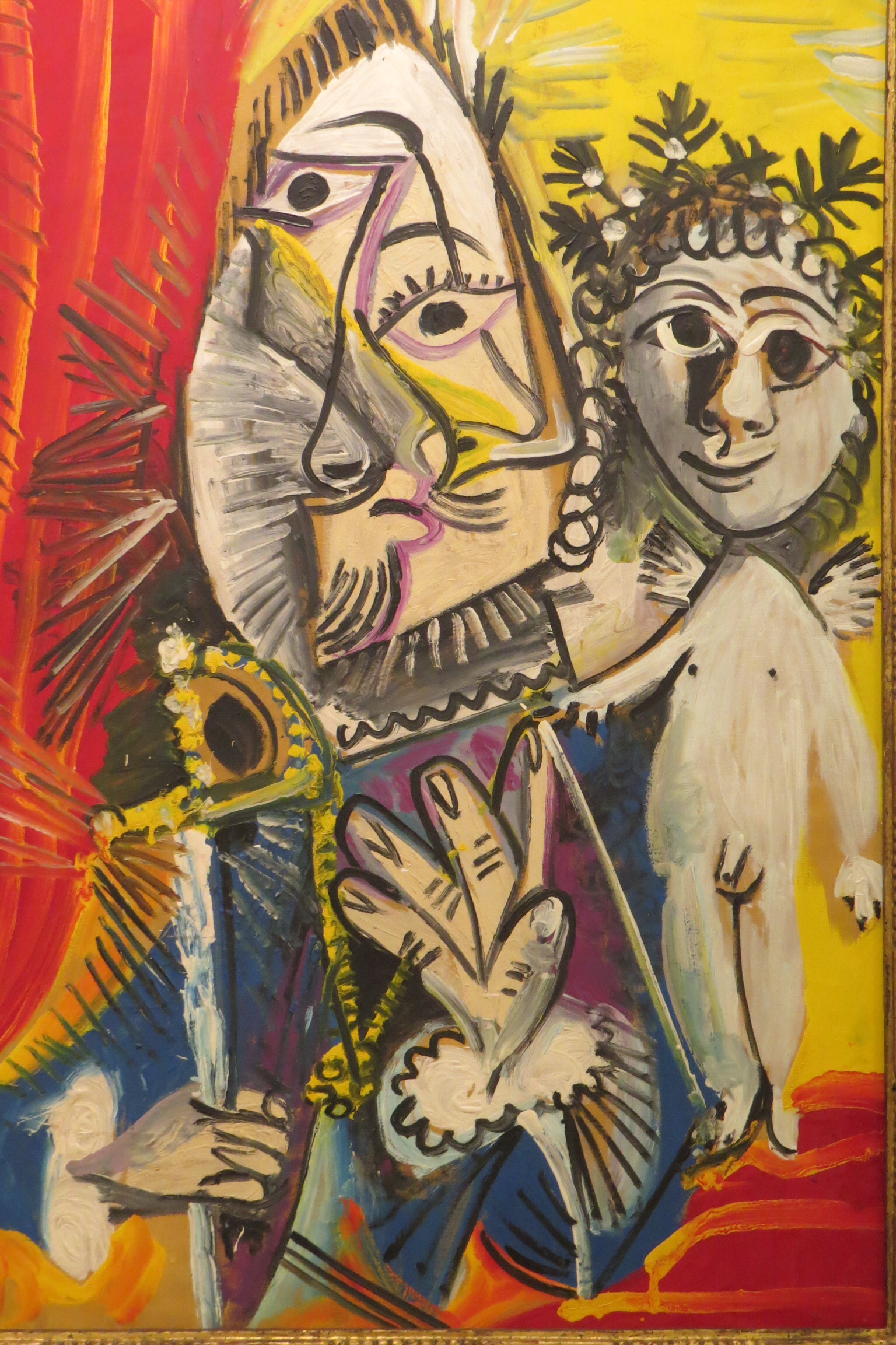
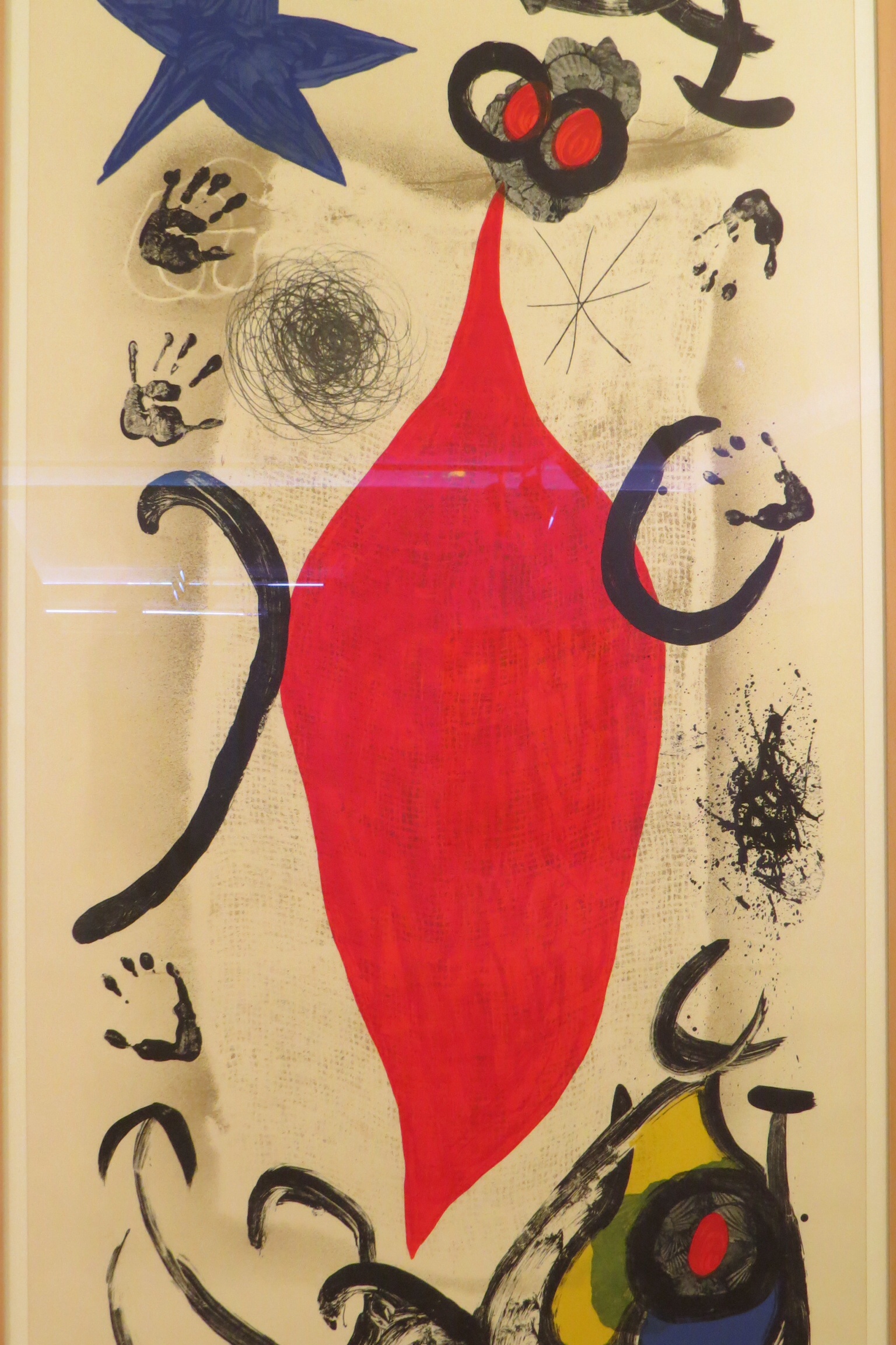
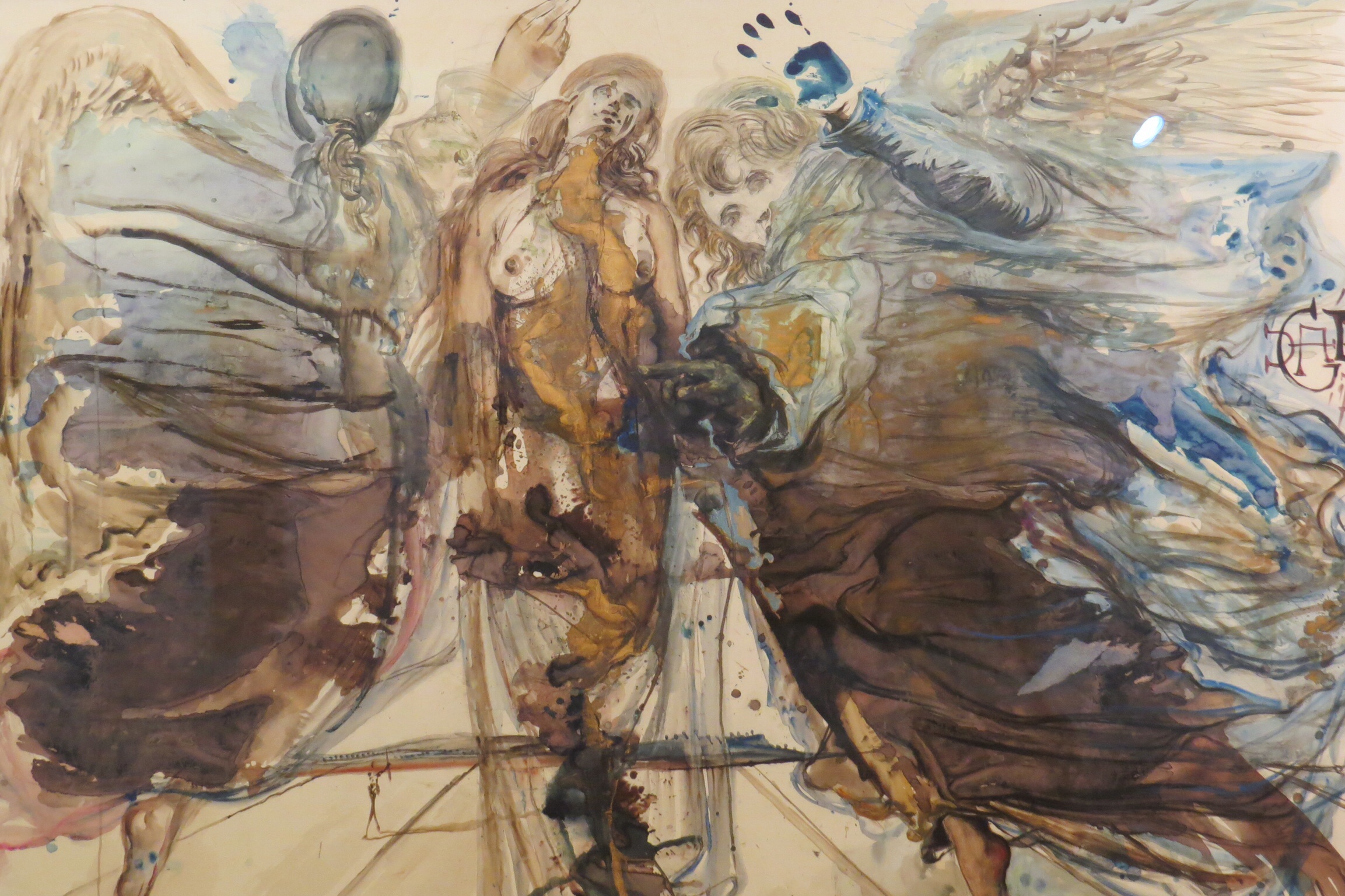
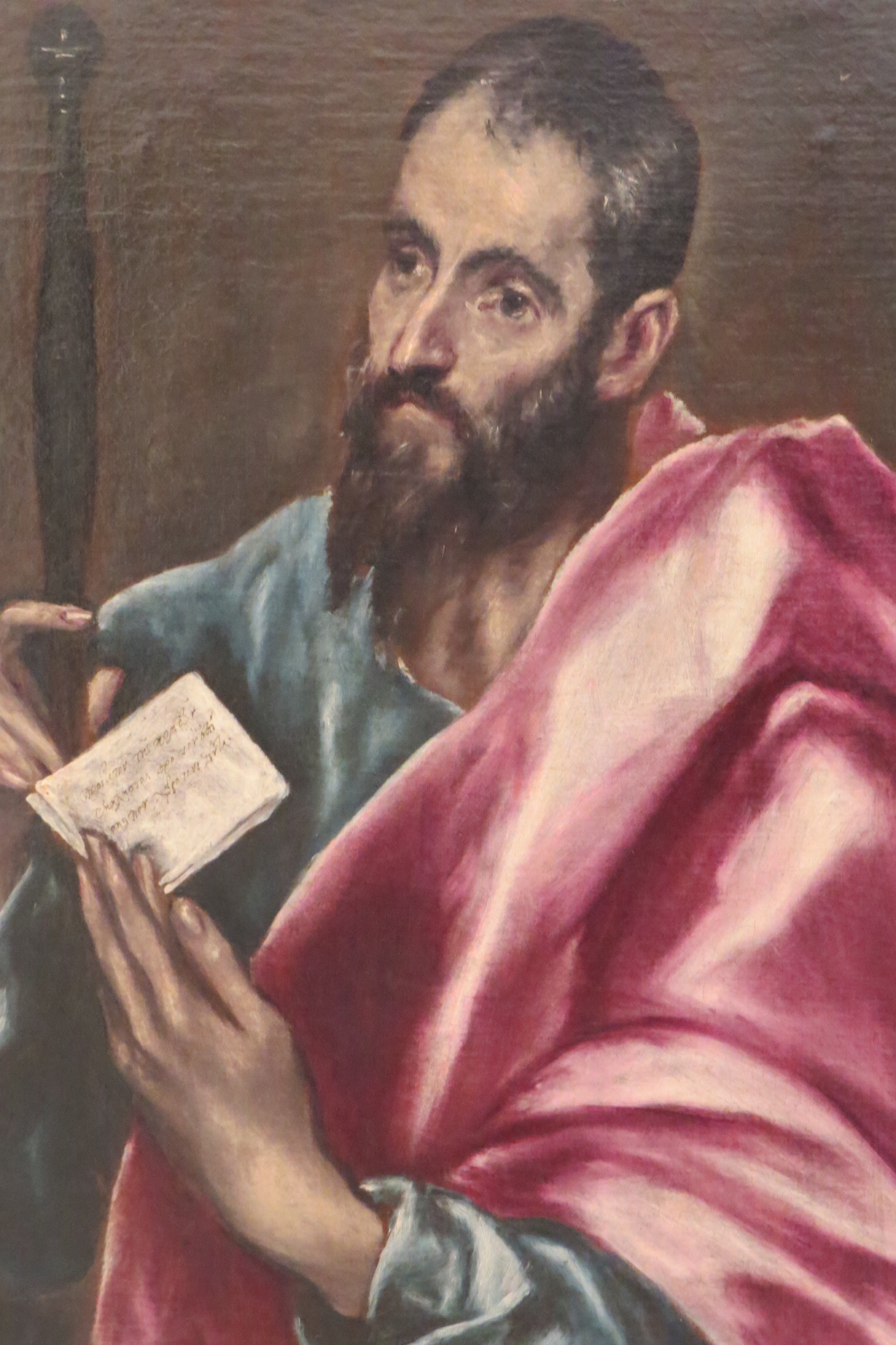
Our next stop was the lovely city of Oviedo. Another very wealthy city, Oviedo has two universities and a lively cultural life, with an opera theatre, symphony and ballet company. The city has two public art galleries, one classical and one modern, and admission is free in both. We saw works of many famous painters in both buildings, including Reubens, Goya, Picasso, Dali and a lovely collection of 12 El Greco portraits of the disciples. There was also a magnificent alterpiece, the 16th century Retablo de Santa Marina emblazened in gold and red.
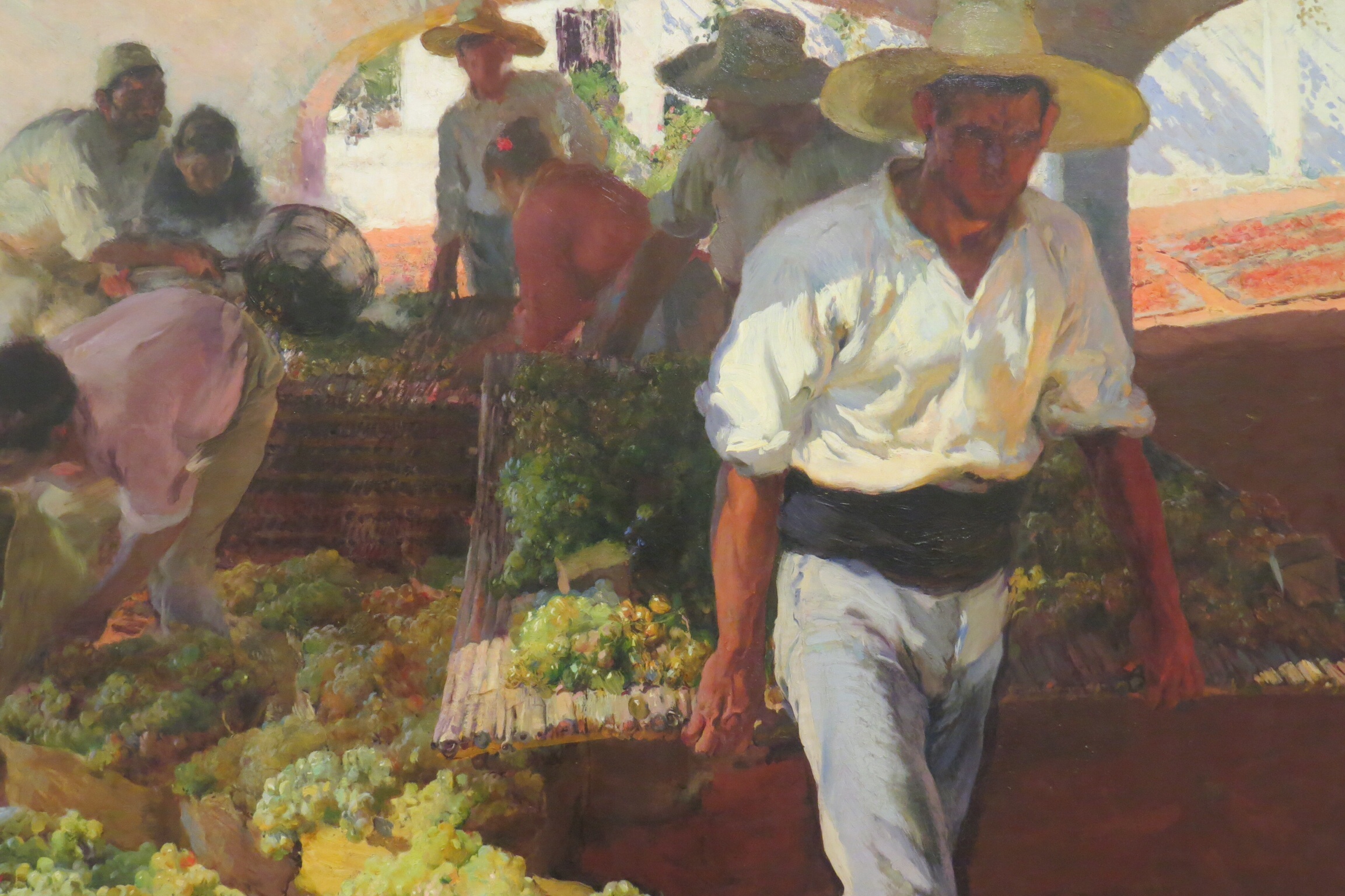
image<a
Hooked the Boat, Sorolla

image
Procesion de San Roque, Sotomayor

imageimageimage
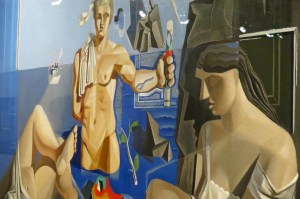
Picasso, Miro, Dali

image
St.Paul, El Greco

Oviedo also has wonderful shopping. 🙂

image
My closest Rafa sighting in Spain

On arrival, our first event was dinner. Yes, dinner, after our incredible lunch. The Spanish serve enormous portions of food, and I think it is only by smoking that Spanish women remain so thin. In an elegant restaurant (with the next table an affluent Spanish family enjoying celebratory champagne), we dined on the lightest croquettes we have had followed by hake, a tender, flaky whitefish and ample wine. It was all we could do to roll home to our hotel.  Spain beautifully melds the ancient with the contemporary.

imageimage

Jan

The Guggenheim at Bilbao, and Santander

Itinerary:
– Bilbao and the Guggenheim Museum designed by Canadian-American Frank Gehry
– travel to Santander
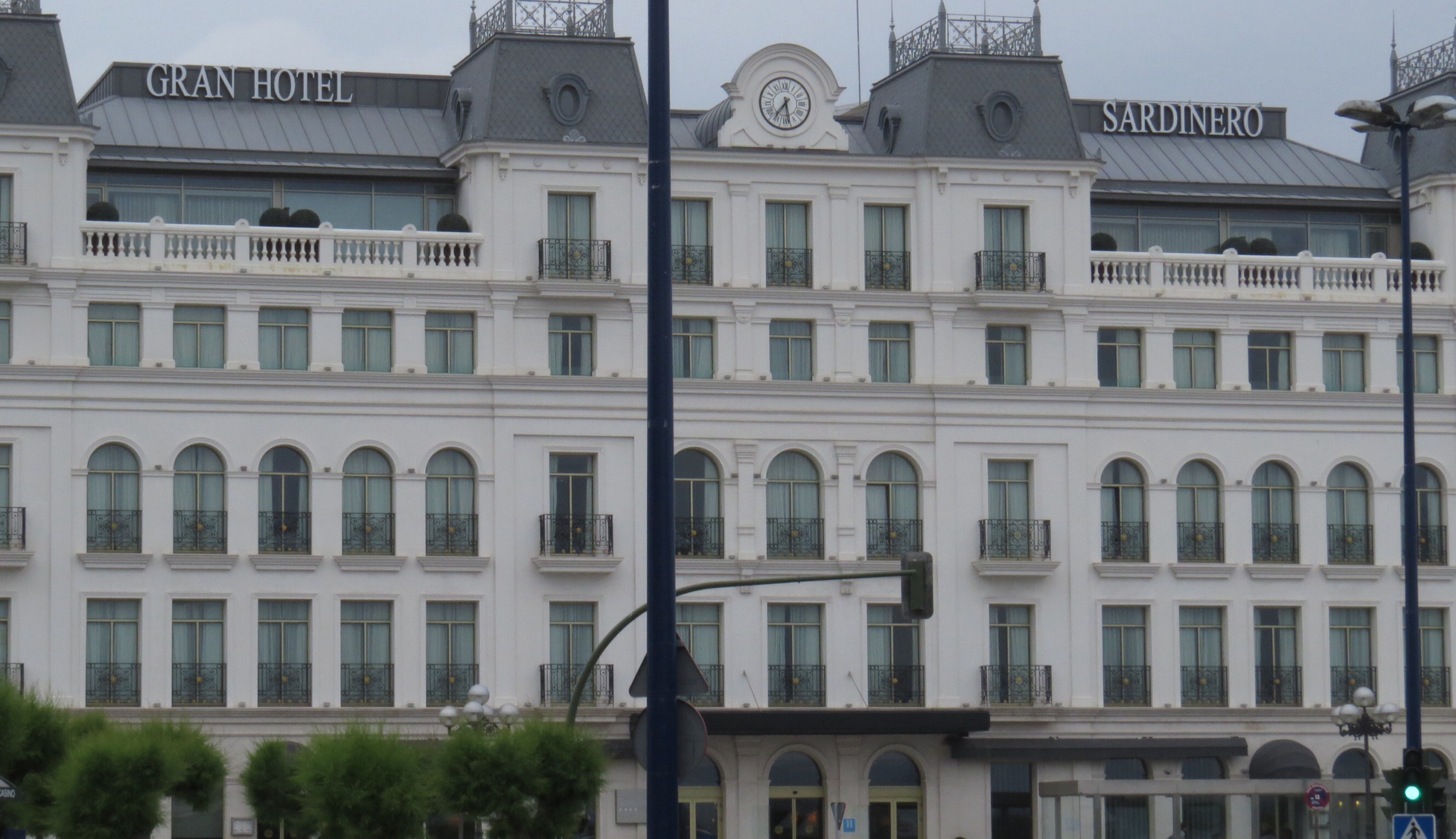
– Dinner at the Restaurant in Gran Hotel Sardinero

I woke before my alarm this morning, already buzzing with anticipation. This morning we were headed for the museum designed by Canadian Frank Gehry that I had for years longed to see.

The Town of Bilbao in the Basque region of Spain had at its heart a tired industrial centre. Badly in need of rejuvination, a number of ideas and plans were floated. The Guggenheim Foundation, an art collection of the wealthy New York Guggenheim family (housed mainly in the original Manhattan beehive-like structure designed by Frank Lloyd Wright), wanted another centre in Europe to showcase more of the collection. (There are Guggenheim museums in Berlin, Venice and Lithuania and planned museums in Helsinki and Abu Dhabi, in addition to other museums in North America: Guadelajara, Las Vegas and Soho.) Several European cities bid on it, but Bilbao won because it volunteered to pay the entire $133 million construction cost of the Frank Gehry design.

The Basque region is especially wealthy because of its industrial production. Within the first five years of the museum, the $133 million was earned back in entrance fees, but the building is extremely costly to maintain and a substantial amount of funding is carried by the Basque people.

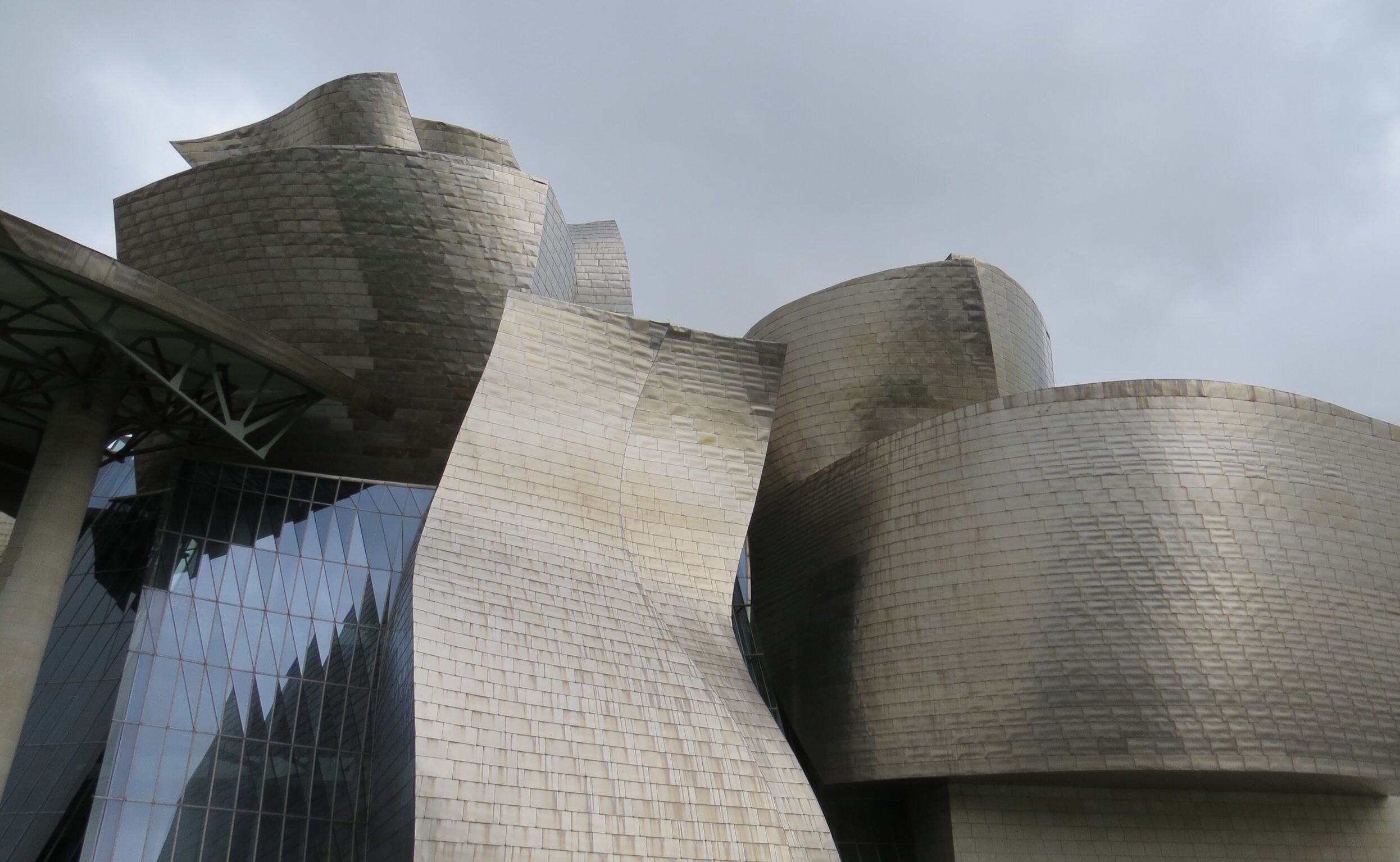
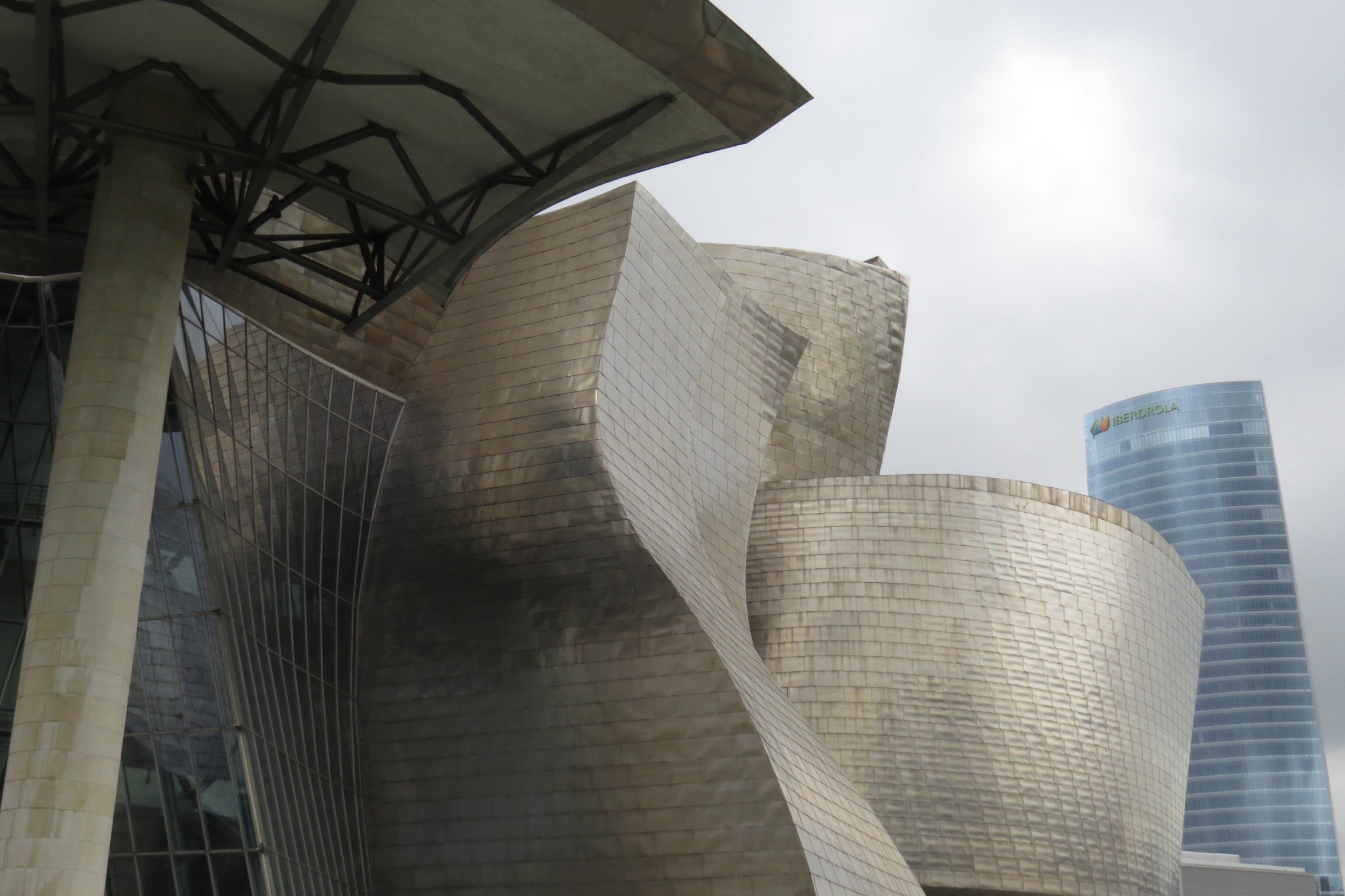
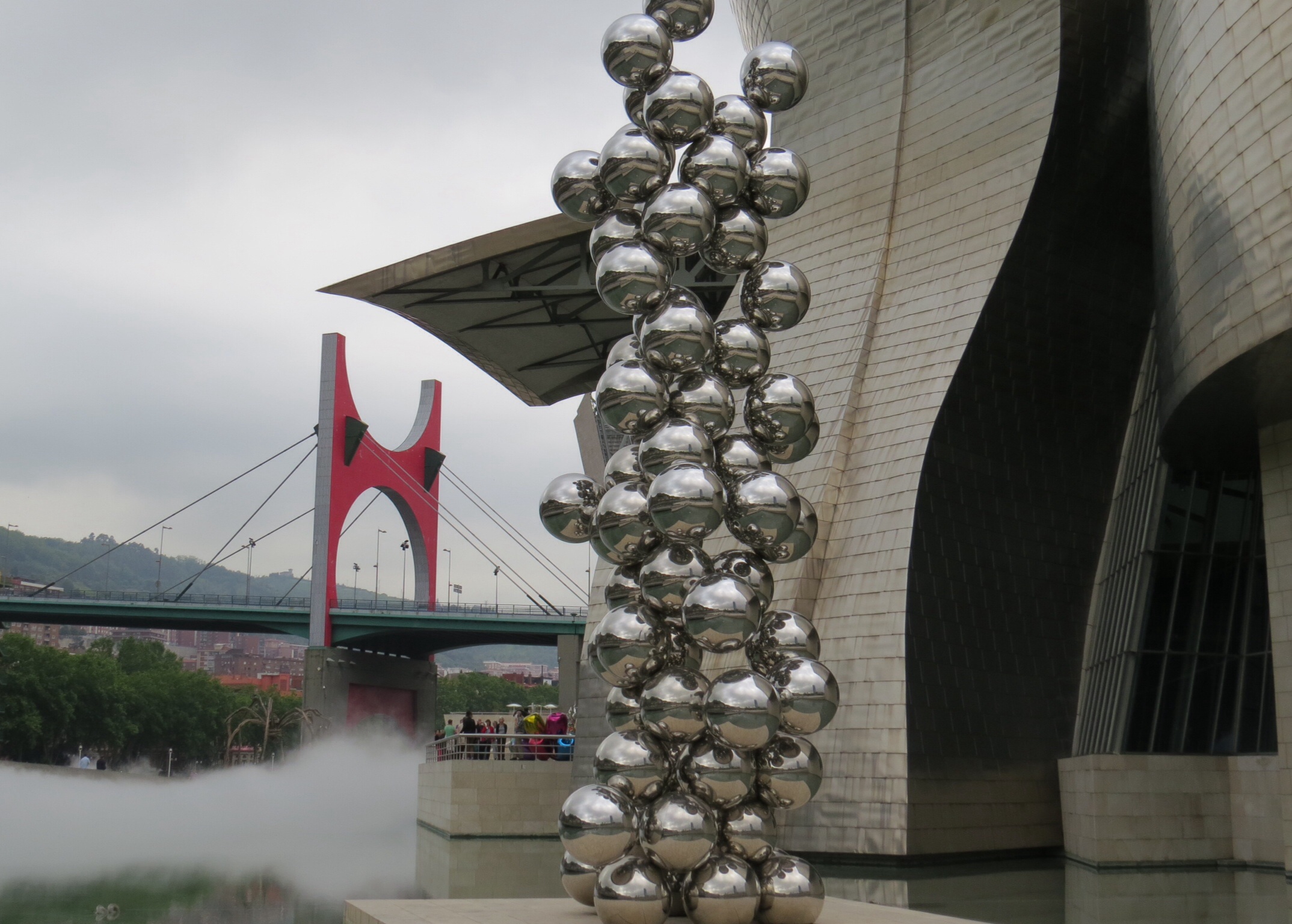
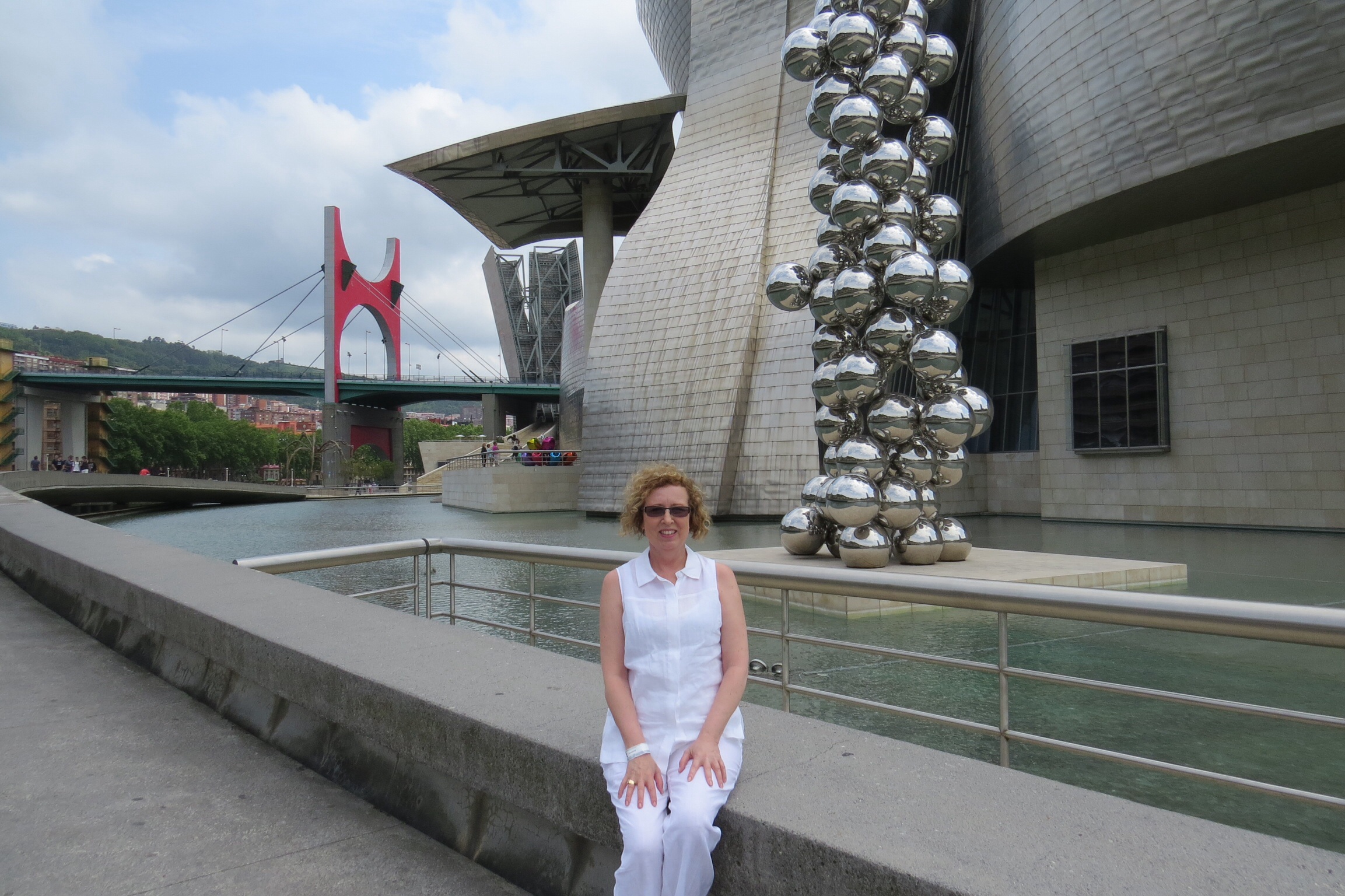
The City of Bilbao was transformed by the Guggenheim museum. Straddling the Nervion River, the modern boat-like structure cloaked mostly in stainless steel is a shining, swirling, writhing building that seems to burst from the river like a salmon jumping upstream. Glass bathes the interior with light and the building is ideal for large, modern art installations.

image imageimageimageimage

image

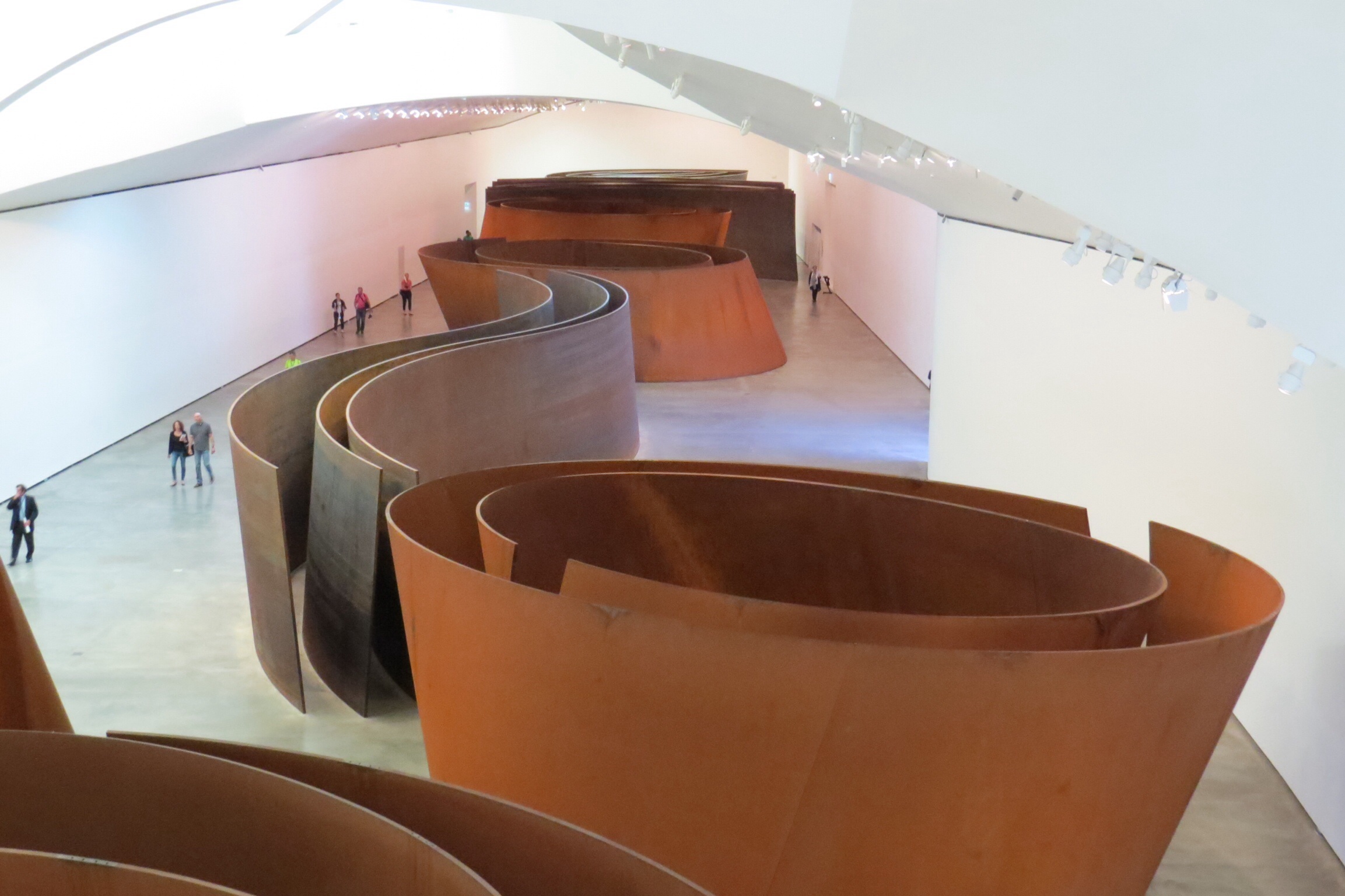
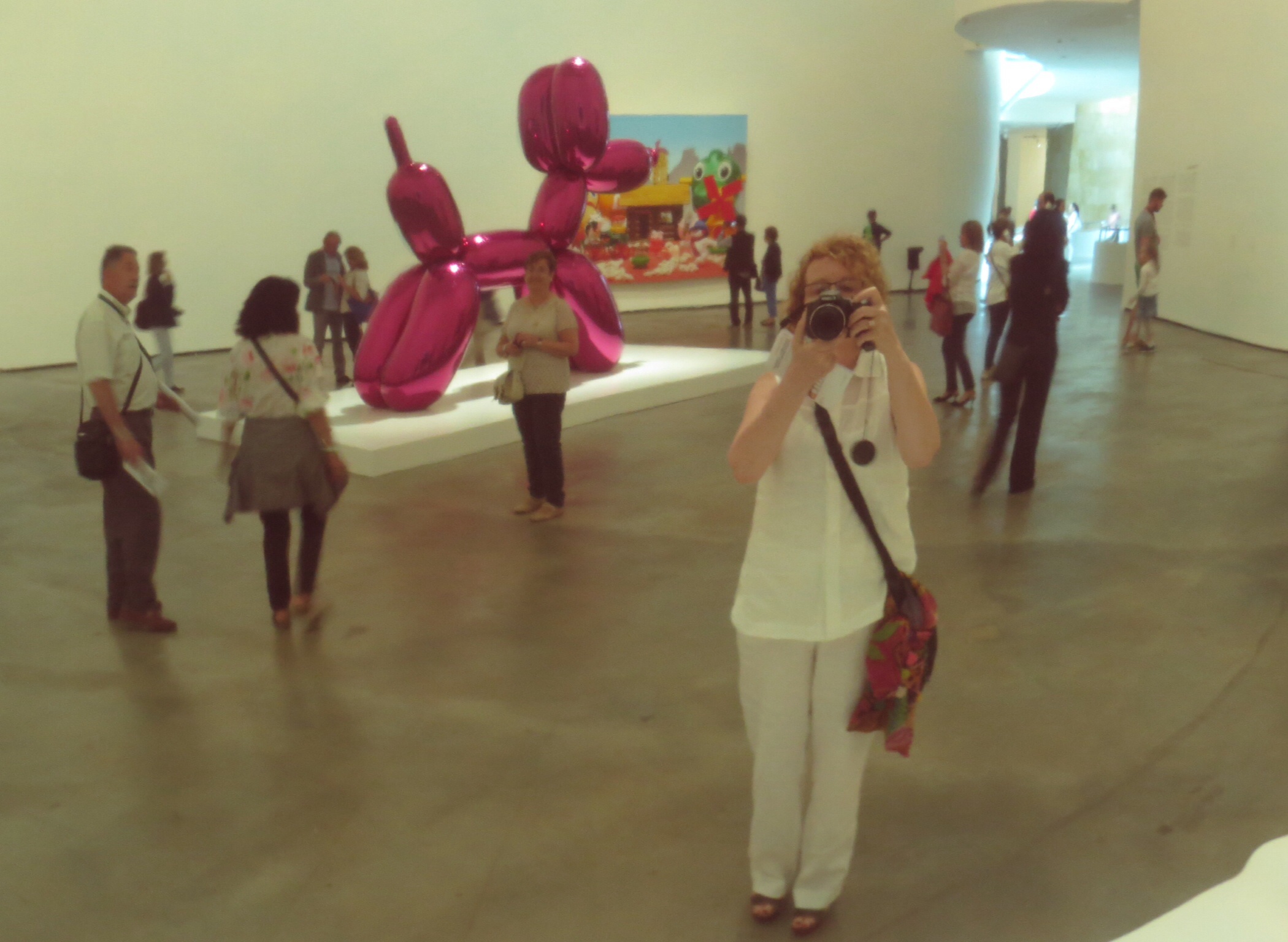
The permanent installations invite the viewer to explore, move through and touch the art. Walking through the exhibits allows you to receive the art more meaningfully; you are integral to the work and the work changes you. The exhibition of Jeff Koons’ work came with an insistence that his work be photographed. The “celebration” series is tinged with sadness – his beautiful, cartoon-like treatment of stainless steel was designed to ensure his young, estranged son knew his father loved him.

imageimage

After a Basque lunch of pintxos (like tapas) and gazpacho, we left the Basque Region bound for Santander, in the Cantabria region.

We moved into hillier country and with that, the weather cooled somewhat and clouded over.

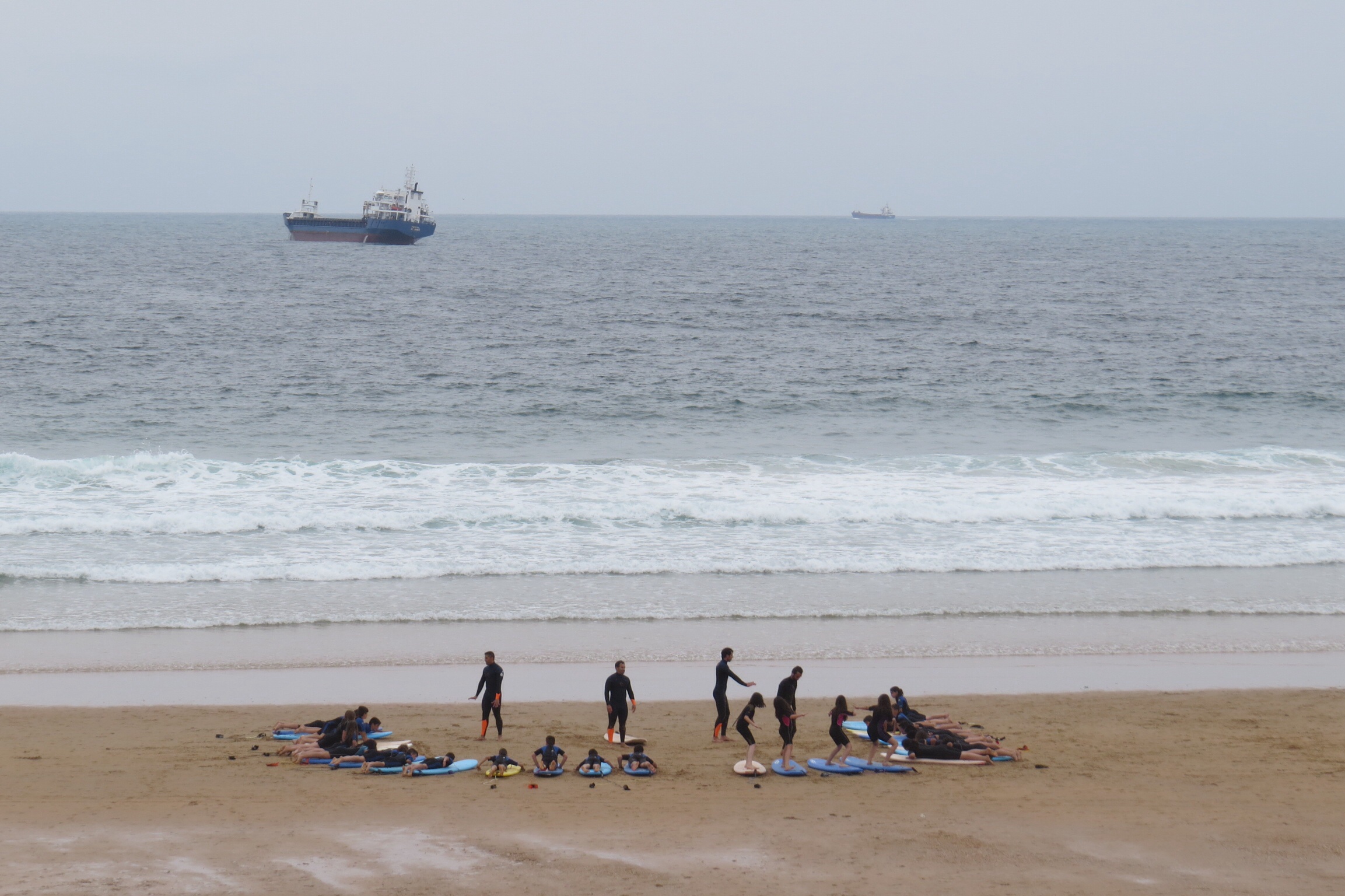
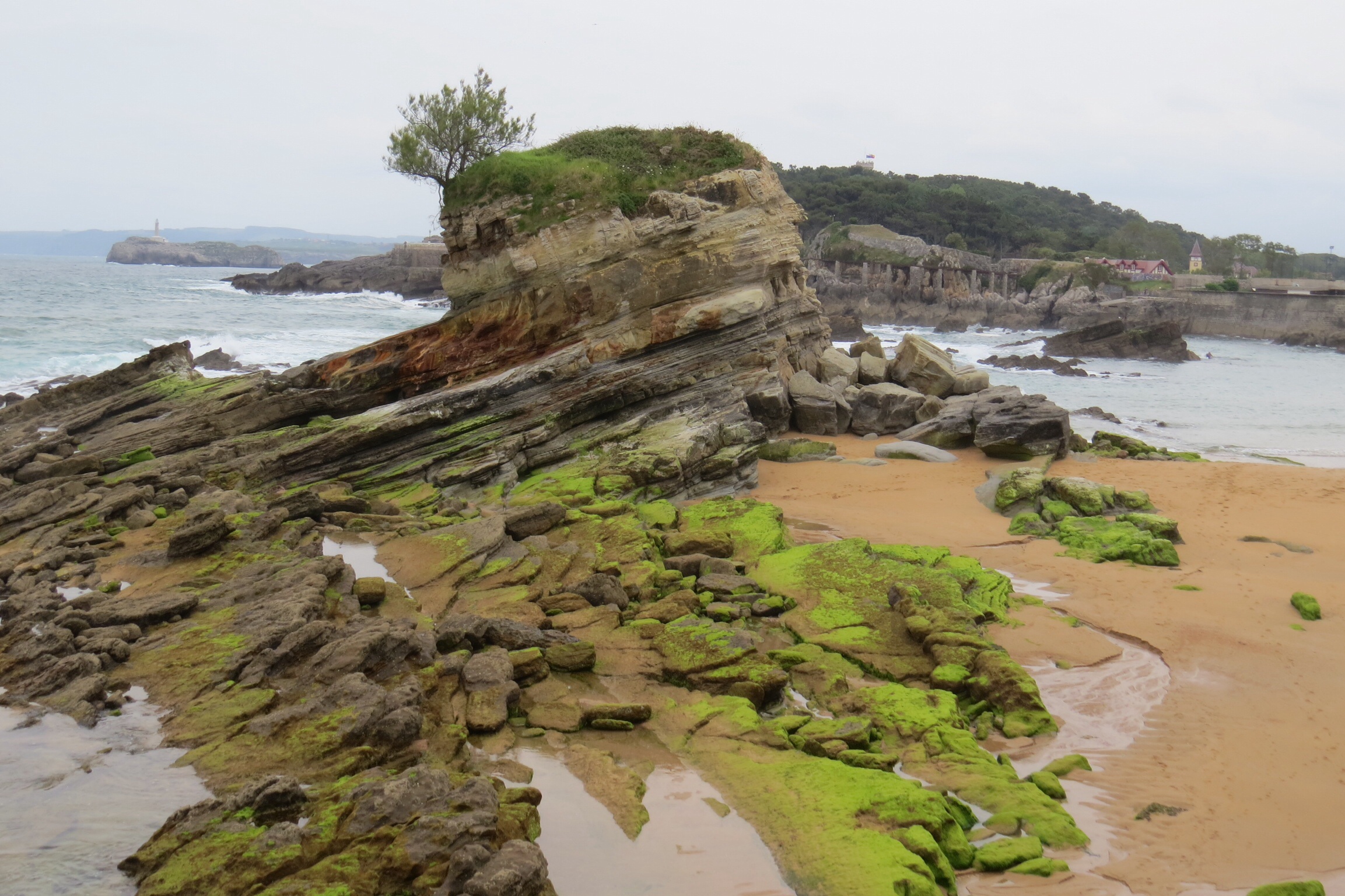
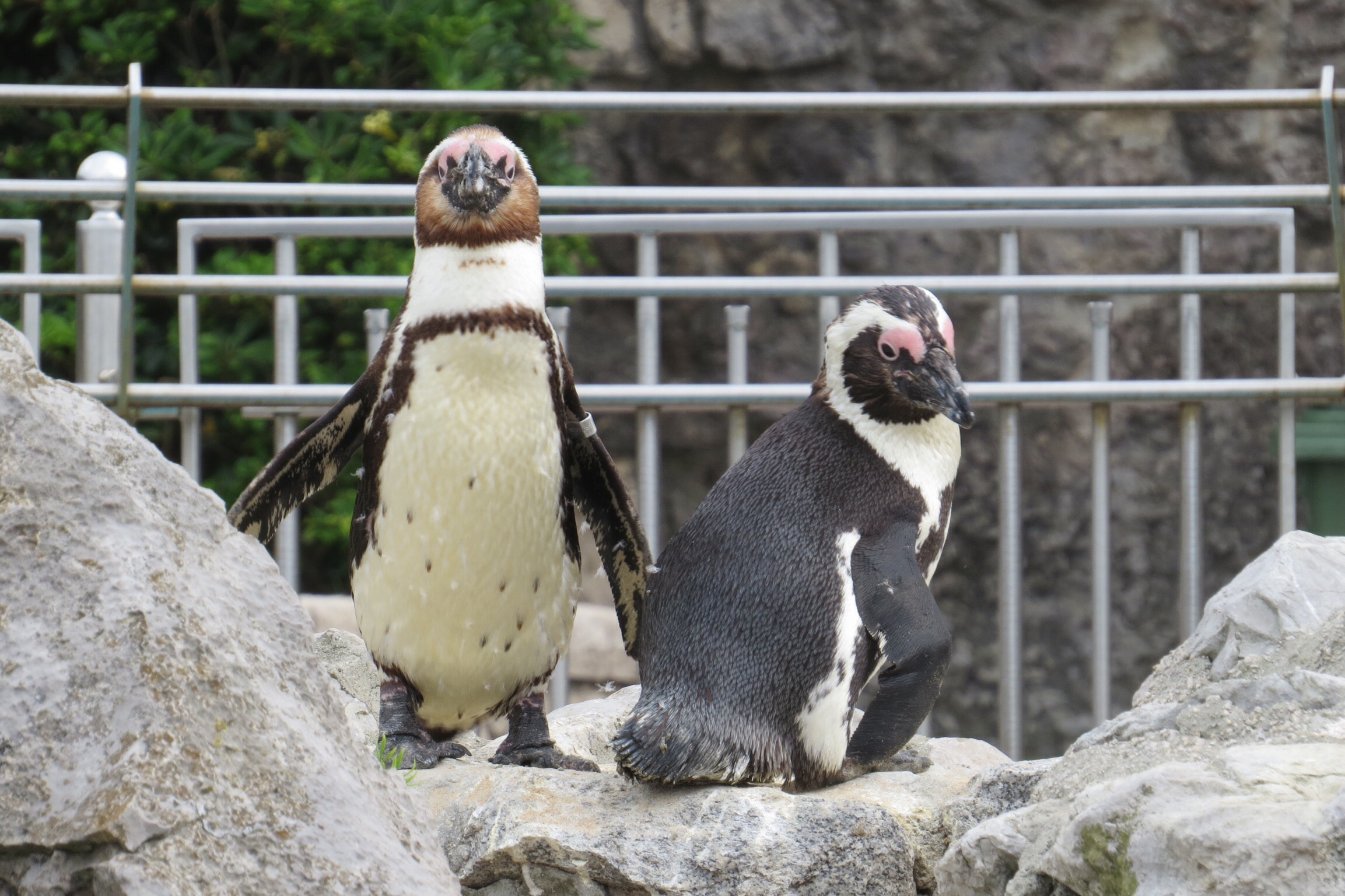
We arrived at the beachfront university and tourist town of Santander with time for a walk before dinner. The coastline is rugged here, the waves high, and in front of our hotel were schools of surfers taking first lessons on the beach. At one end were tiny islands causing currents and rough waters that looked just like the south end of Chesterman Beach at Tofino. A long promenade joined the city centre to the point. The Magdelena Peninsula has the Palacio de la Magdelena, a summer palace for the royal family built in 1908. It also has a public park and a small marine zoo that was home to seals, sea lions and penguins. I did not expect to see penguins in Spain!

imageimageimage imageimage

Another delicious meal completed our day: croquettes and delicious buttery pork tenderloin and vegetables. We have only a one-night stay in Santander in the lovely beachfront Gran Hotel Sardinero.

image

Jan

San Sebastian: Another kind of wonderful

Itinerary:
– Tour of San Sebastian

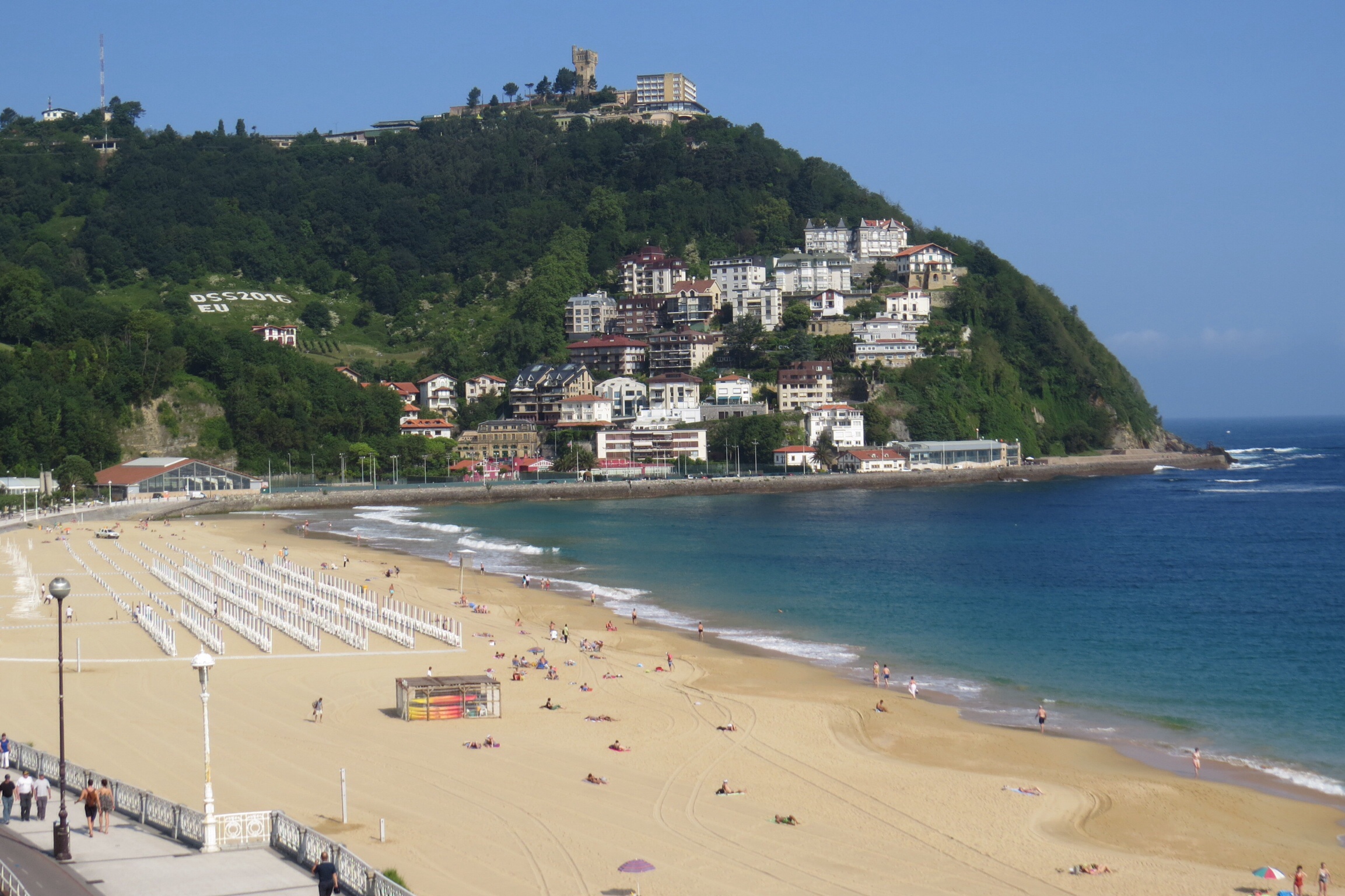
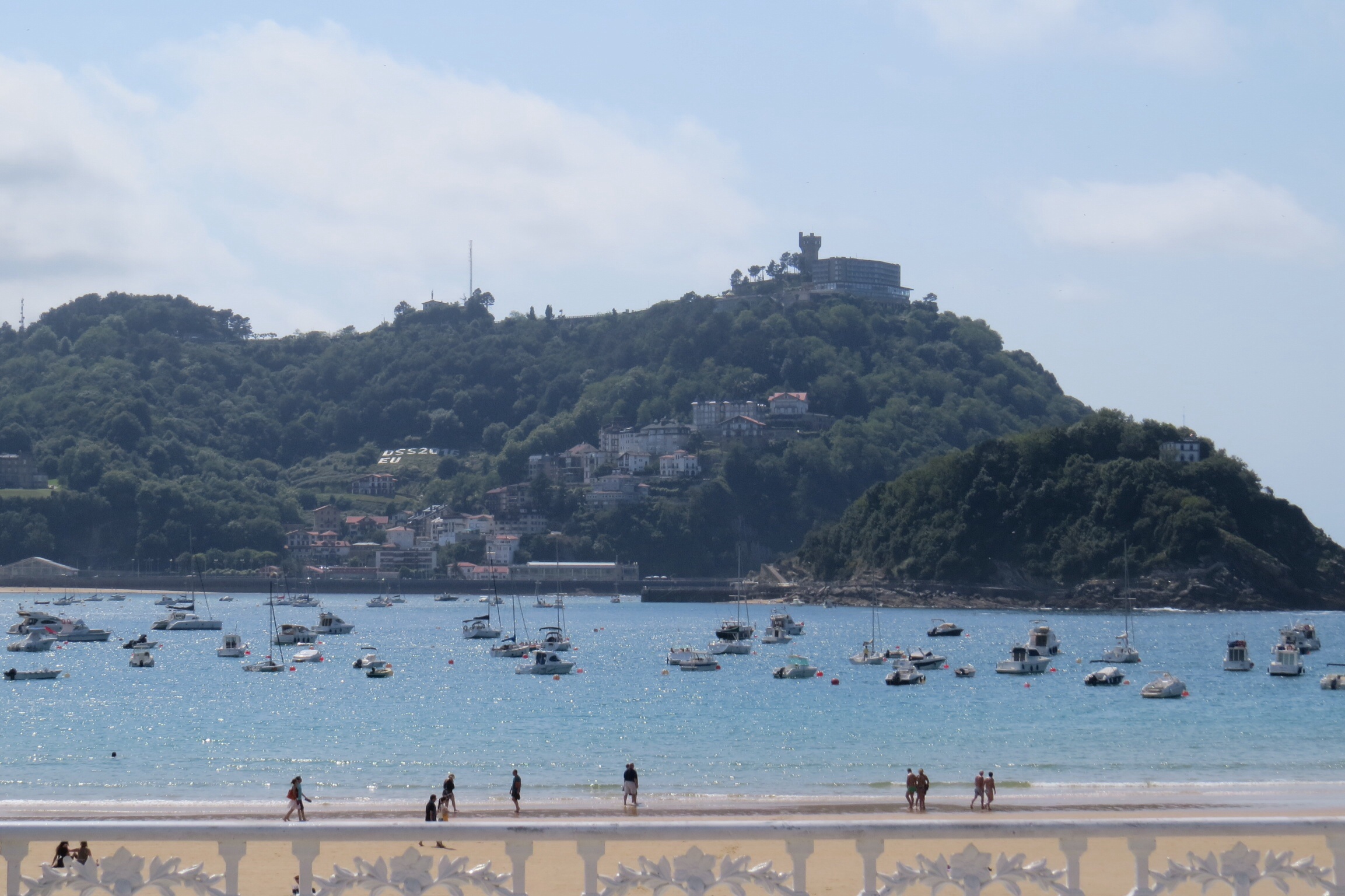
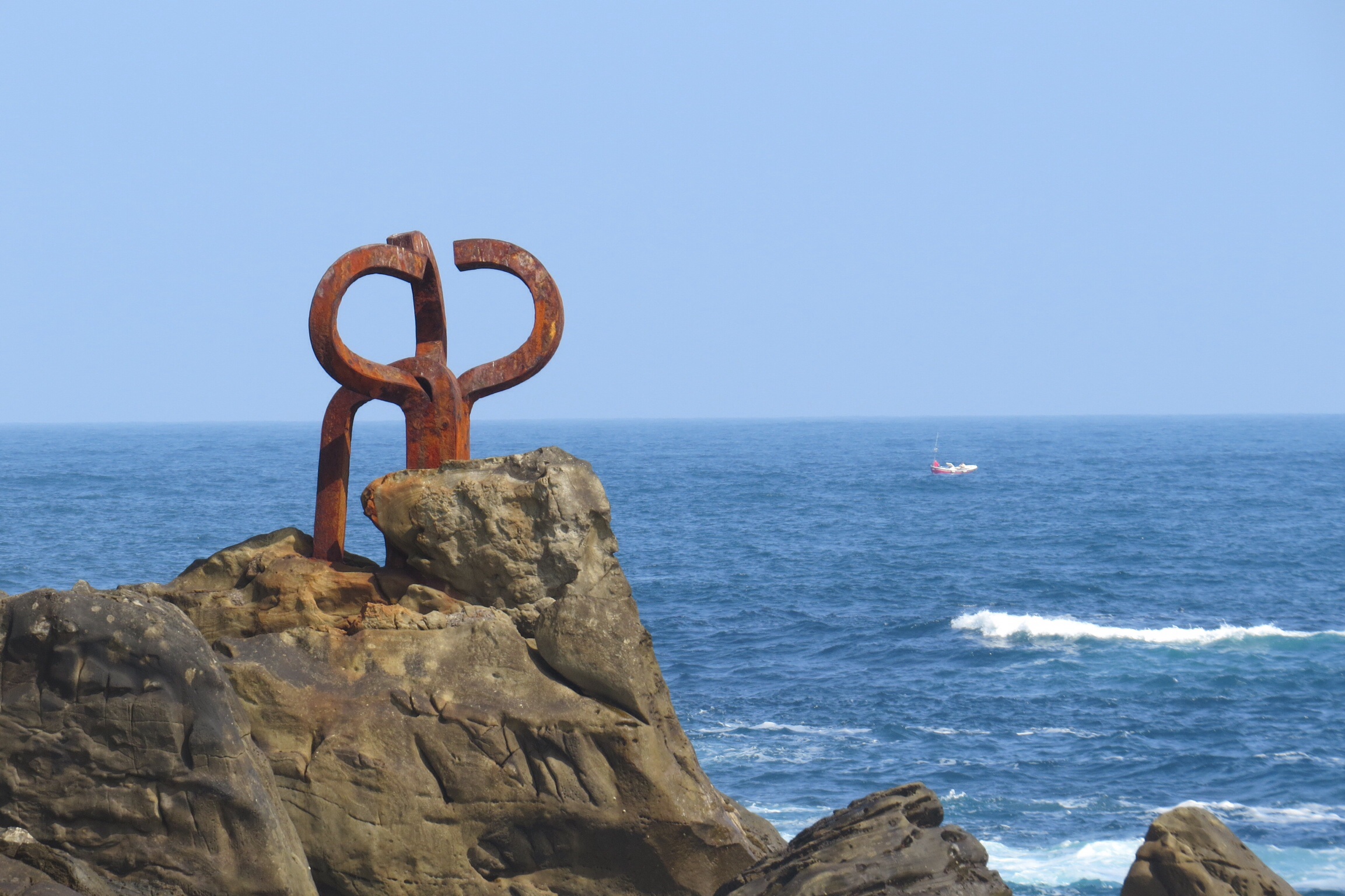
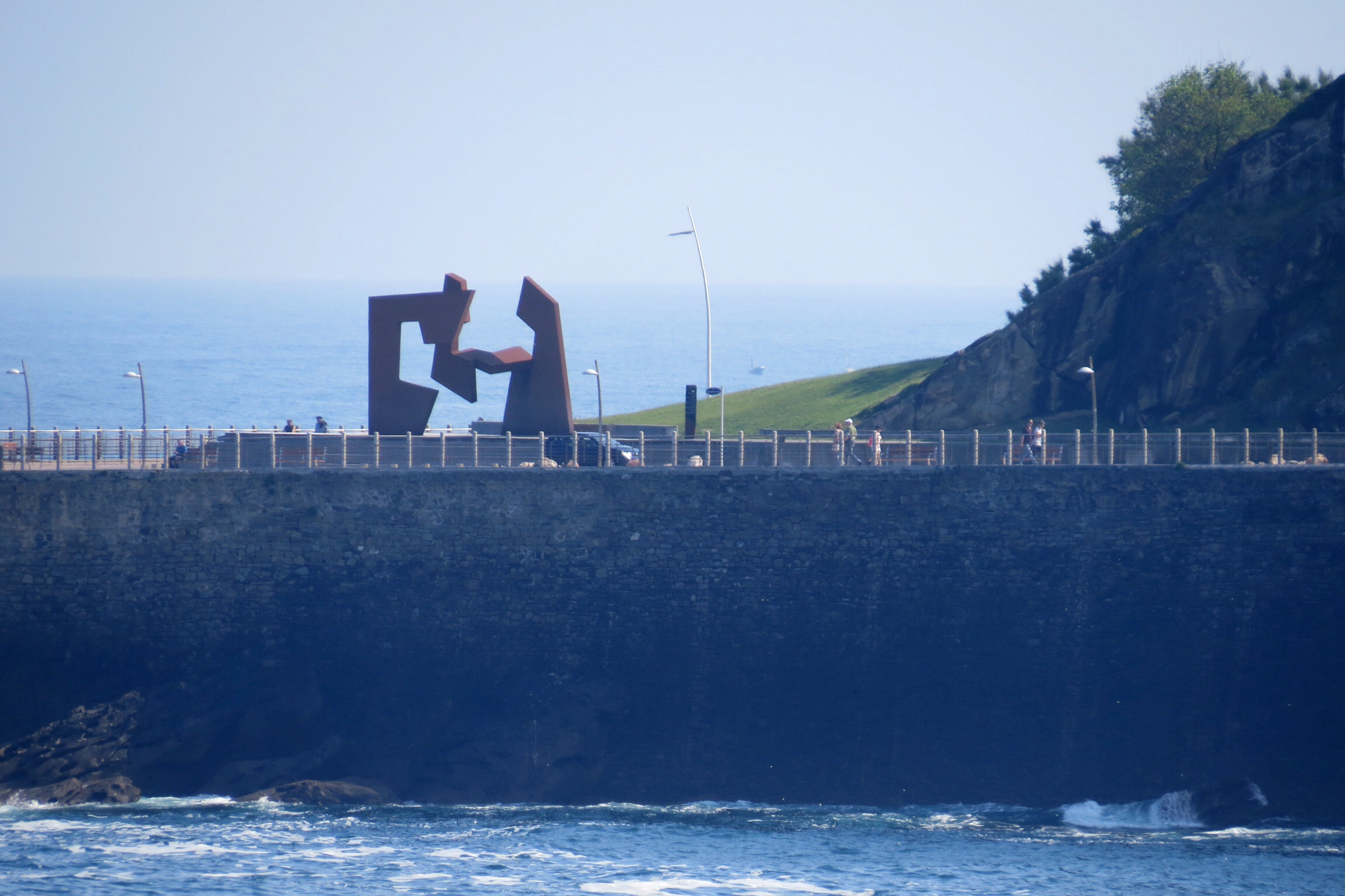
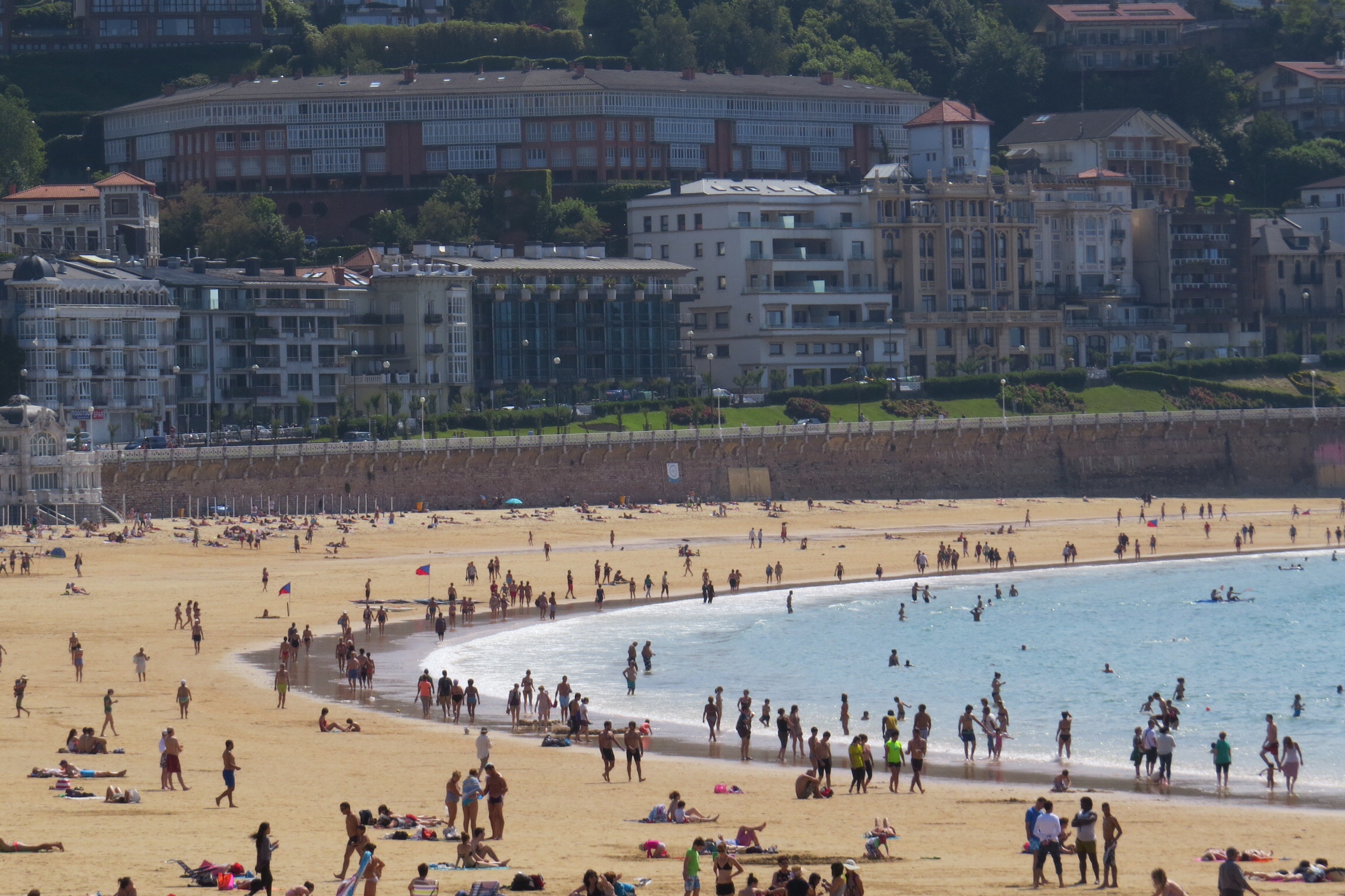
Our glorious, sunny day began with a bus and walking tour of San Sebastian. There are several beaches and coves around the town and a Positano-like view of the homes spilling down the hill at the point. At each of two points there are impressive iron sculptures from two competing artists, Eduardo Chillida and Jorge Oteiza.

image image imageimageimage

The town shows evidence of human occupation dating back to 24,000 BC, was occupied during Roman times and invaded by Napoleon. In 1813 the British captured and sacked the town, leaving virtually nothing standing. Reconstruction began in 1817.

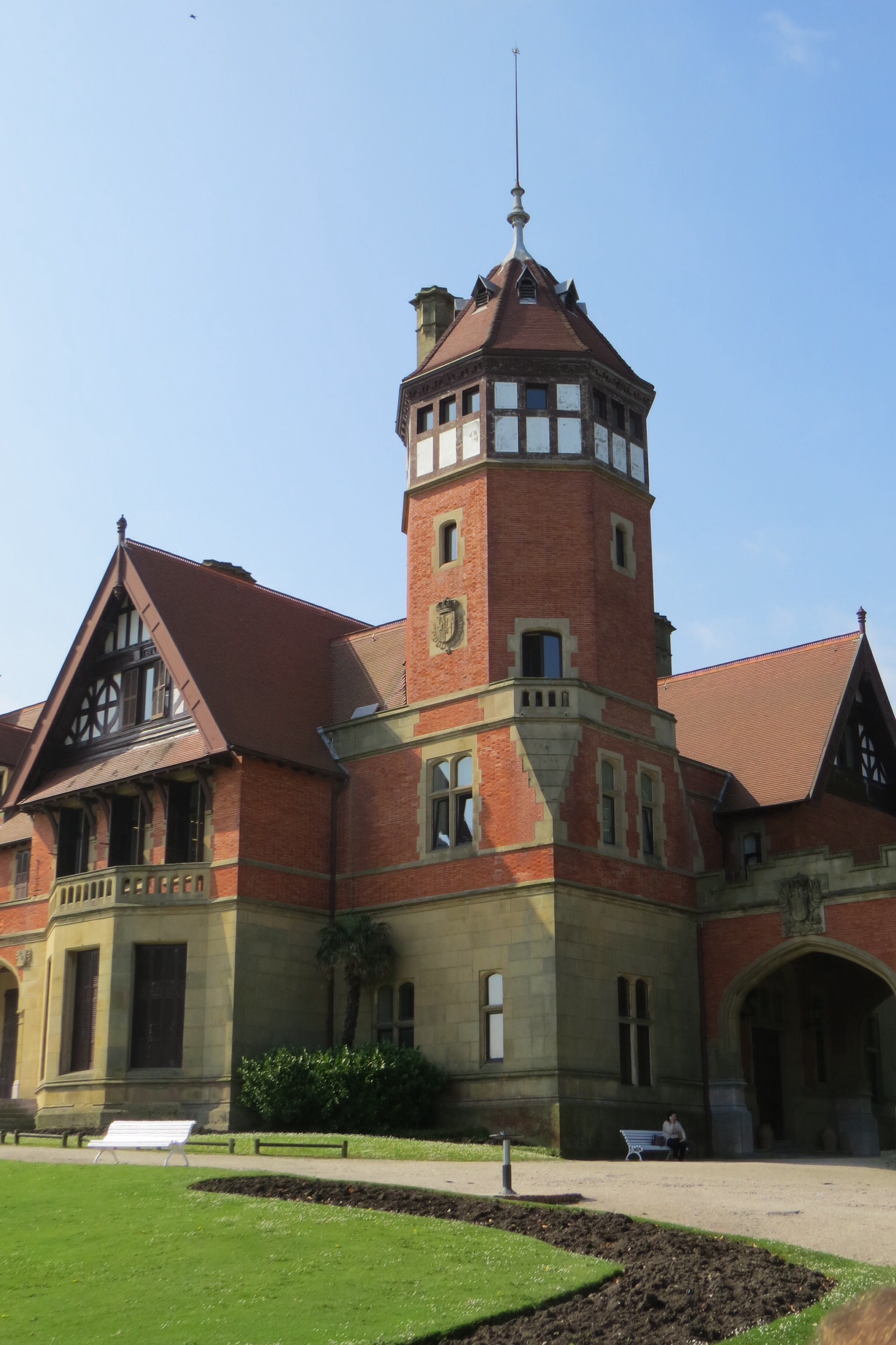
Historically, Spanish Royals have spent their summers here, and we saw one of the summer palaces overlooking the the whole span of the beach. Now it is used for cultural events and hosts a music school. Music drifted out the windows across the lawns.

image

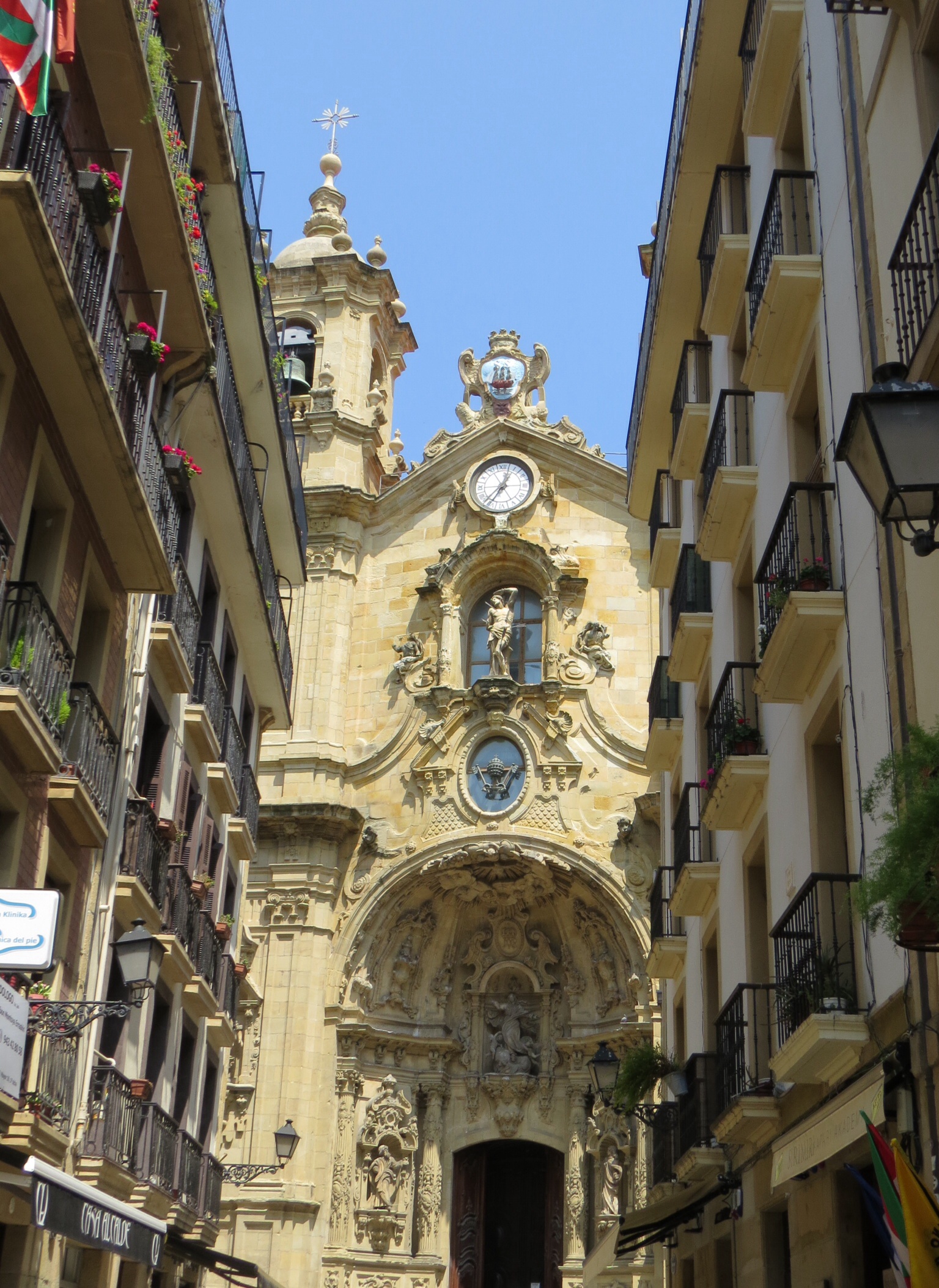
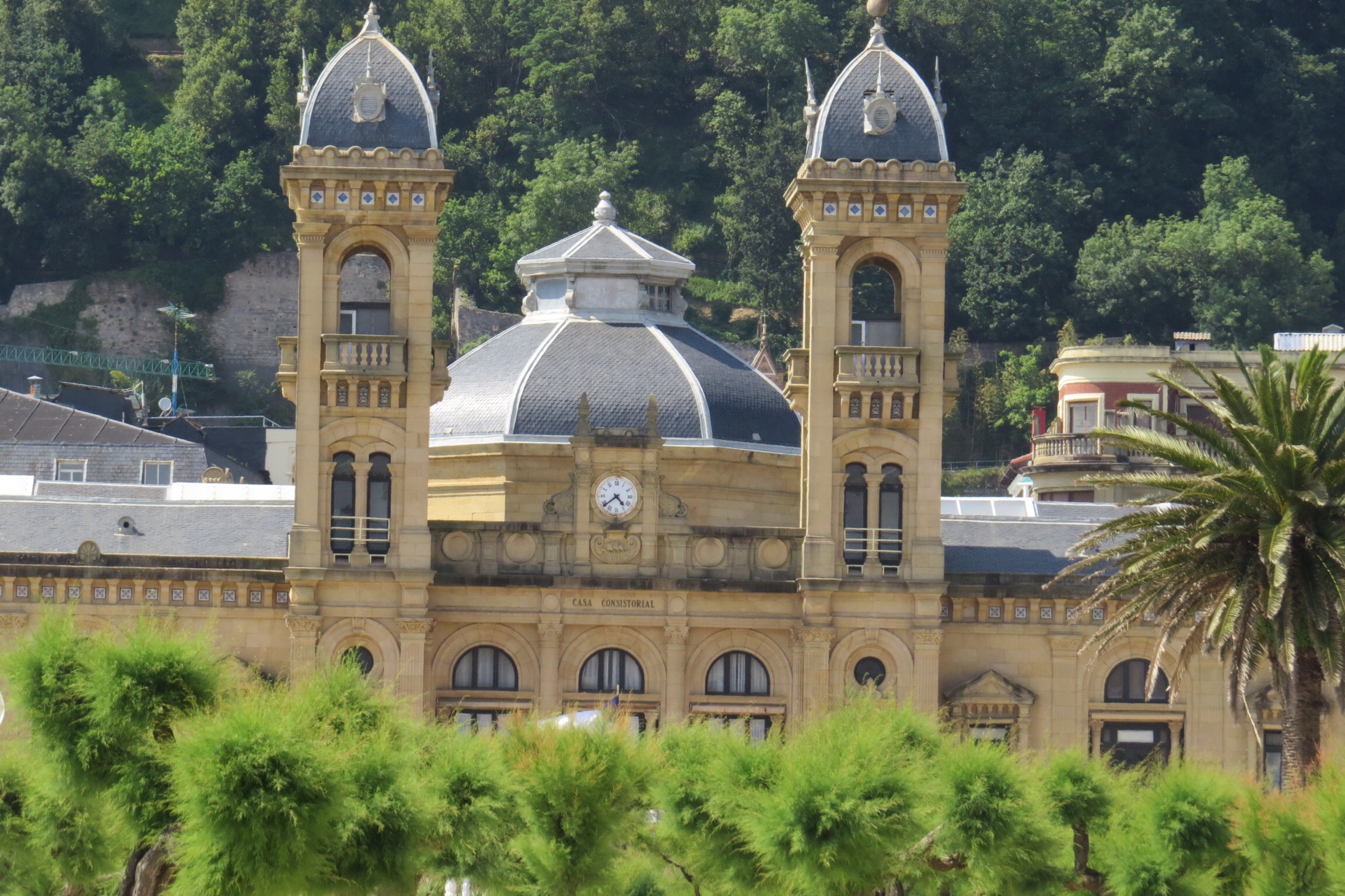
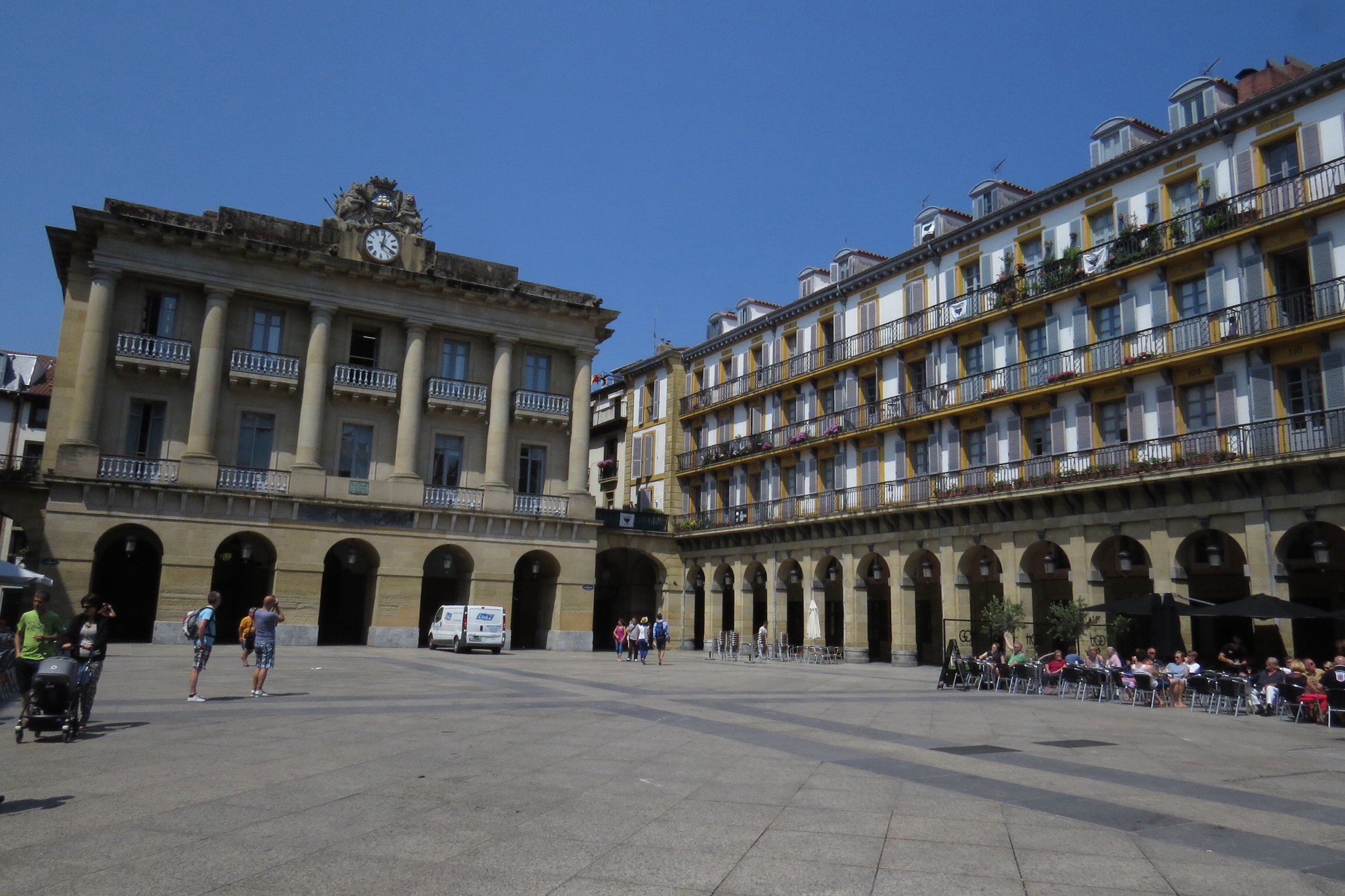
At the far end of the beach is the Old Town, with narrow, cobbled streets and pedestrian traffic only. At its heart, the beautiful Basilica of Santa Maria. There is also a stunning town hall which was originally built as a casino.

image image

Typical throughout Spain was the early practice of holding the bullfights in the town square, and doors were numbered so homeowners could rent out their balcony sections to the audience.

image

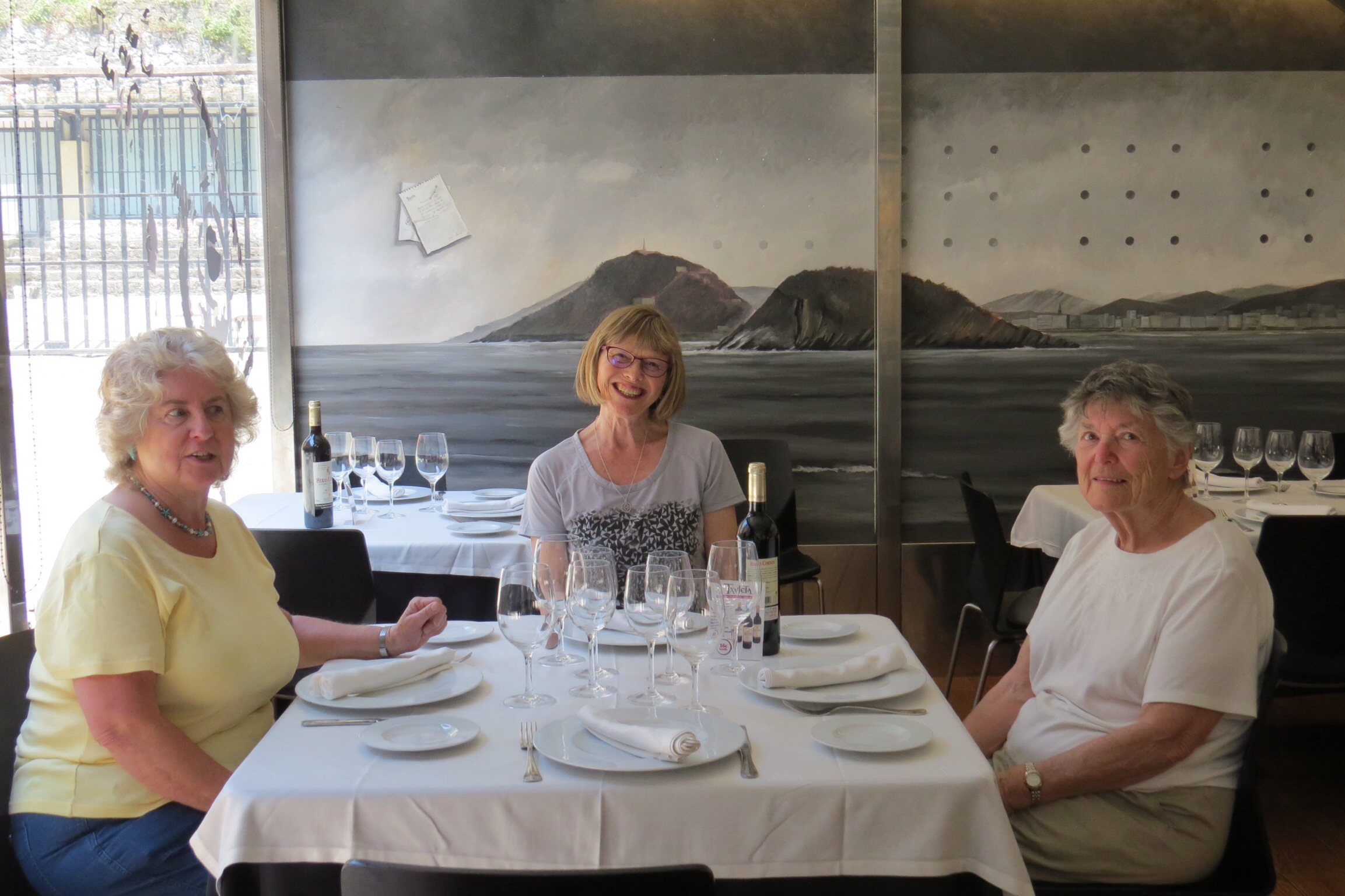
Basque country is famed for its gastronomy and San Sebastian has more Michelin starts than any country but Kyoto, Japan. Even our hotel restaurant has one Michelin star. At the annual festival of Saint Sebastian in January, townsfolk dress up as chefs and celebratory dinners are held in the best restaurants and gourmet dinner clubs. Our guide recommended a “menu” lunch at a particular restaurant and, as usual, it did not disappoint. The Spanish take advantage of their siesta, a four-hour break in the middle of the day, using at least half of it to eat the main meal of the day. The “menu” lunch consists of a starter, a main and a dessert, served with bottled water, wine and coffee. The coffee (in my case cafe con leche) is taken as a fourth course following dessert. A meal like this costs 10 to 15 euros.

image

We started with tender white asparagus with two sauces and a fabulous main course of monkfish, very similar in texture and flavour to lobster. A few days later, we would see a monkfish at the Oviedo market. How could such a hideous creature produce (near its tail) some of the best seafood I have ever tasted? Flan, similar to creme caramel, is the Spanish dessert choice.

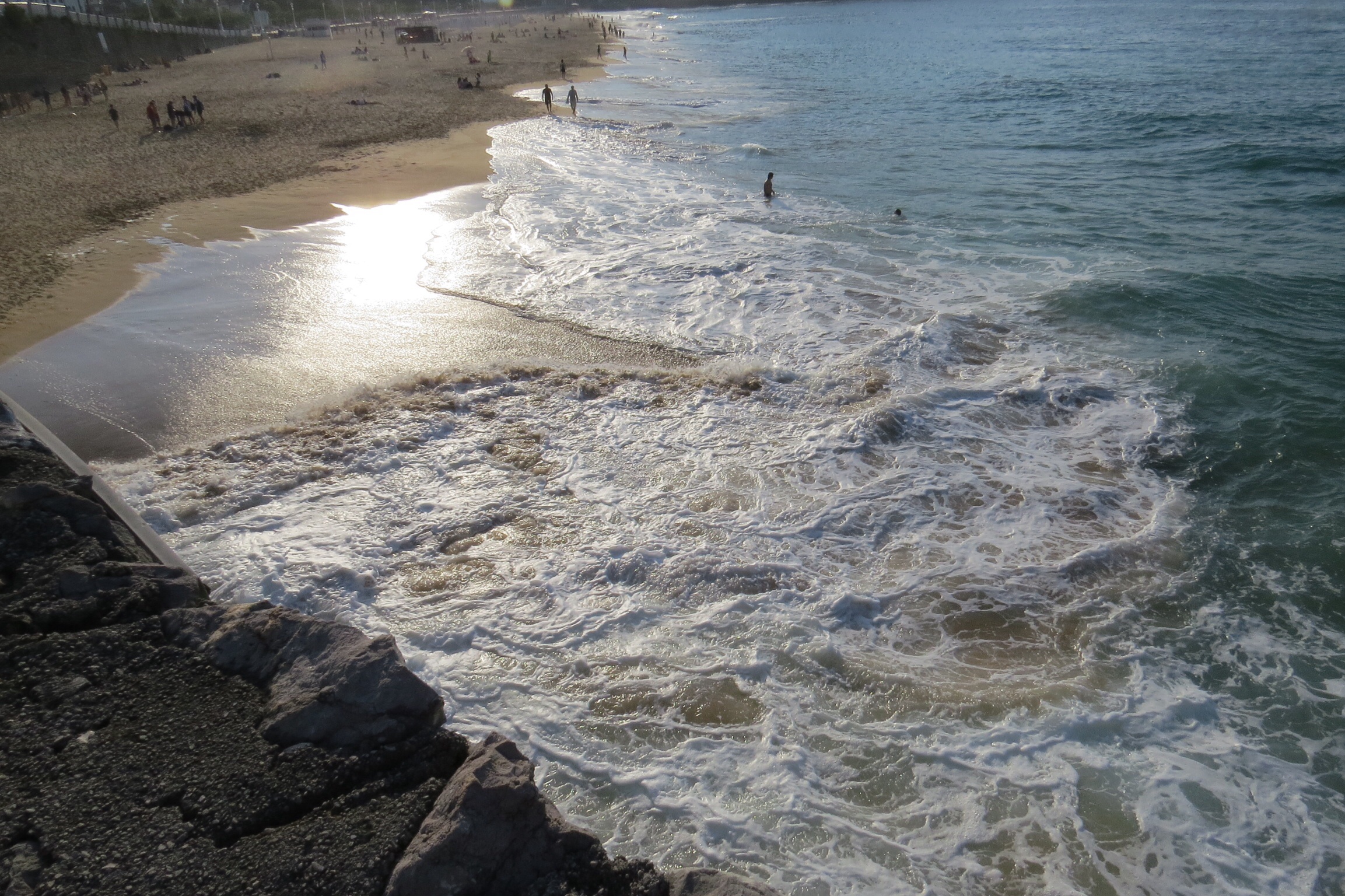
After this leisurely lunch we wandered the shops in the old town and meandered back toward our hotel via the beach, where we went into the Atlantic up to our knees. The water at the shoreline was warm and the sand soft. We stopped at one of the patios along the promenade for a refreshing beer.

image image

The rich and famous visit this town and their hotels line the beach. Ours was modern and very comfortable, a short walk up from the beach.

Still stuffed from lunch, we had a late salad at the hotel before gathering in the hotel’s sitting area for our recap of the day and a nightcap. Rosa has taken to testing our retention levels with a quiz based on the day’s tour. We generally achieve moderate success, but the quiz does help us to synthesize what we’ve learned.

Pamplona had held its own surprises for us, with the religious procession, music and El Camino pilgrims. San Sebastian was, by contrast, an oasis in our busy schedule to enjoy summer heat, sun and beach. Another unexpected, but no less delightful, day in our lovingly prepared itinerary.

Jan
Festival San Fermin

Itinerary:
– walking tour of Pamplona, home of the annual Running of the Bulls
– Lunch: Restaurante Irunazarra
– Arrive at San Sebastian on the Atlantic coast, summer playground of the rich and royal

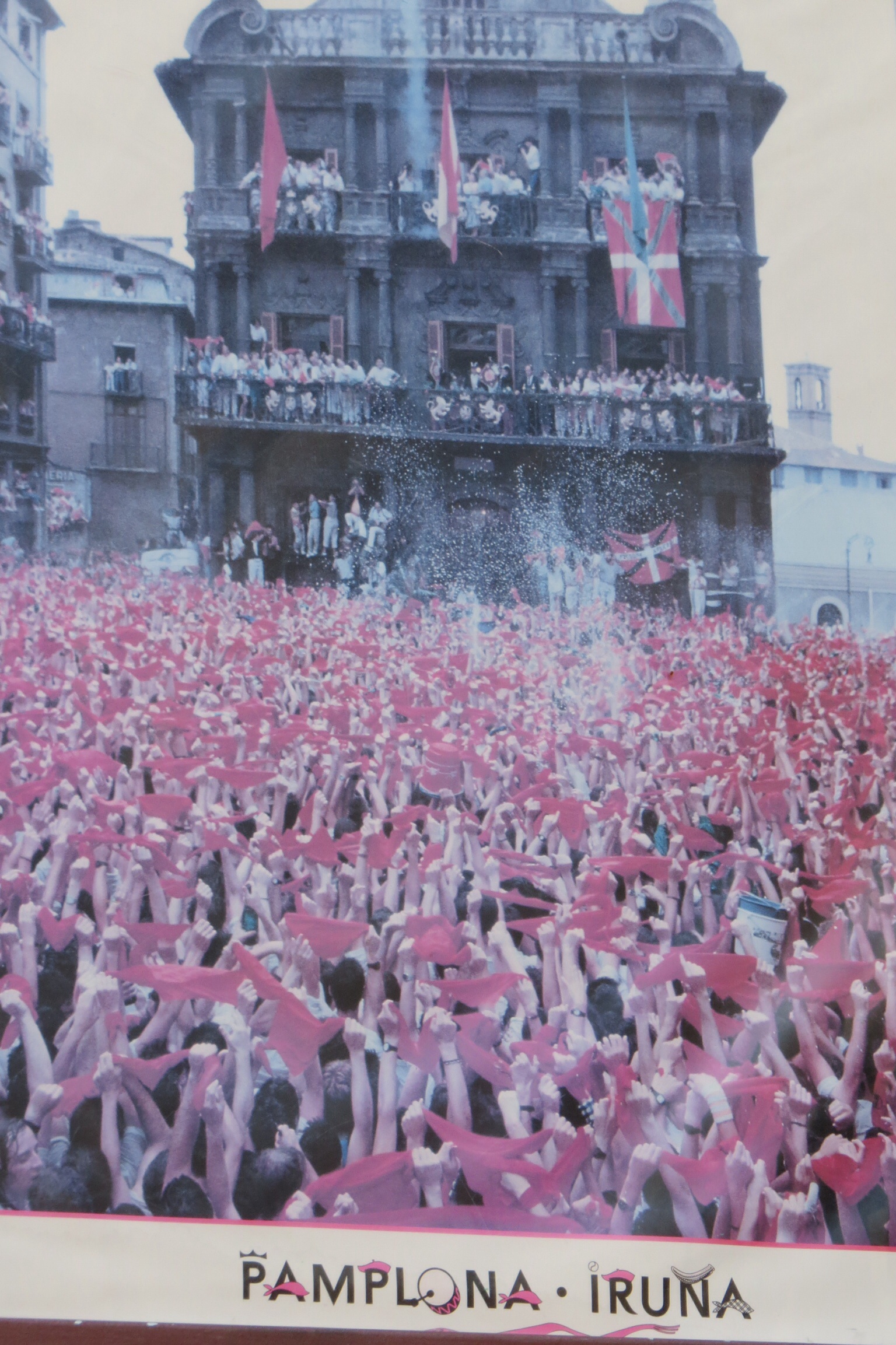
Our first stop today was at Pamplona, the city famed for the Running of the Bulls and Ernest Hemingway’s haunt and inspiration for The Sun Also Rises. Pamplona is also the capital of Navarra and a key stop along the Camino pilgrimage.

image


The population of 300,000 swells to 1,000,000 for the famous festival.

image

image
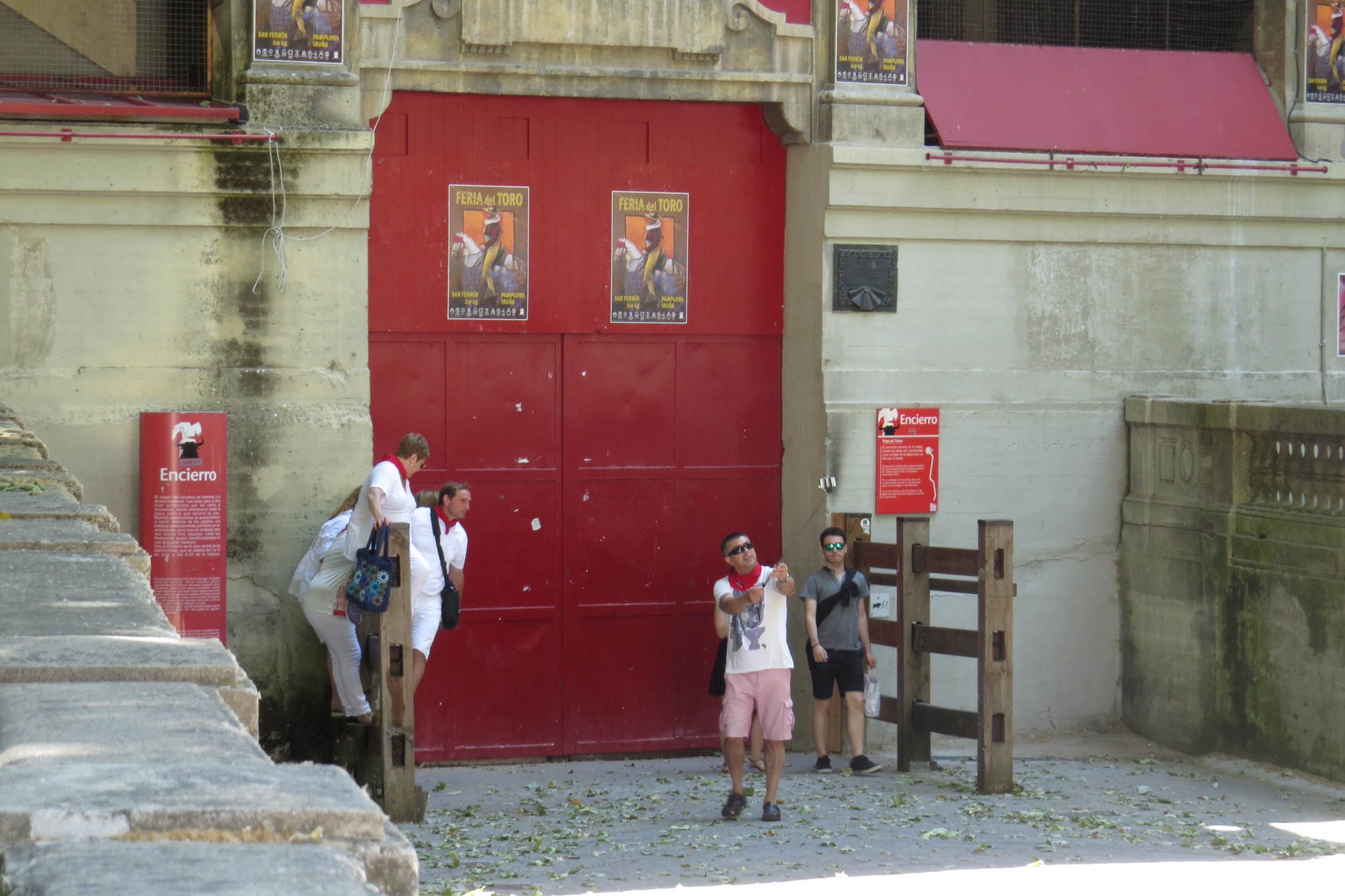
Festival dress at the doors to the bullring

image

image

Saint Fermin is the patron saint of Navarra, a Roman converted to Christianity who was beheaded in France for attempting to convert the French to Christianity. As the runners await the release of the penned bulls, the crowds chant San Fermin’s name, and the volunteers run for their lives at the release of the bulls. (Only 15 people have been killed in the race since record-keeping began in 1910.) The entire race to the bullring each day of the festival lasts about two minutes. The rest of the nearly 24-hour celebration takes place at the bullring, with thousands dressed in white with red bandannas in the seats, bringing picnics, music and joy to the stadium. The Running of the Bulls actually takes place in all regions of Spain and its purpose is twofold: a means to transfer the bulls from the farm to the bullring, and a celebration of the bull before it is slaughtered for its meat.

image

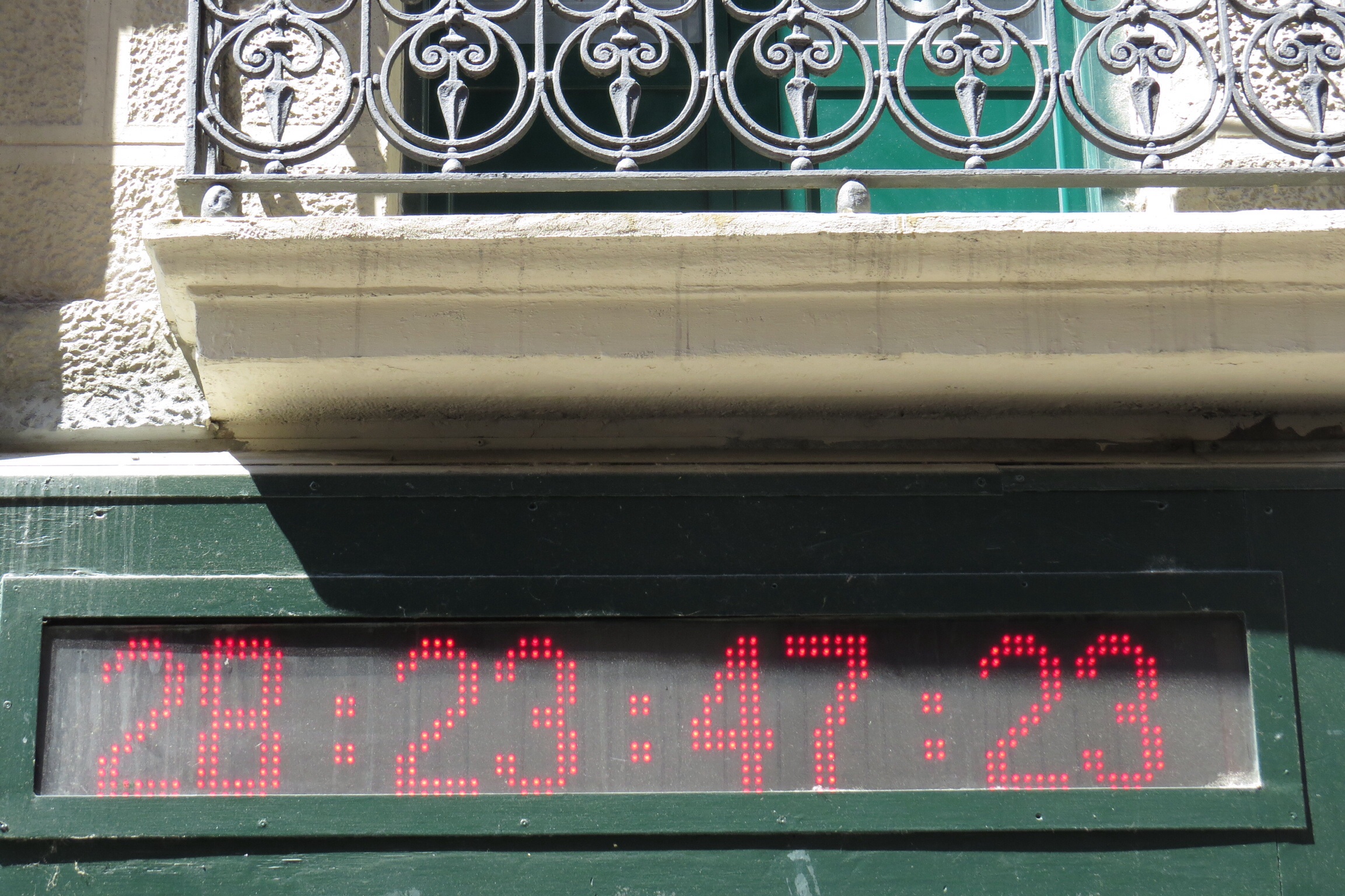
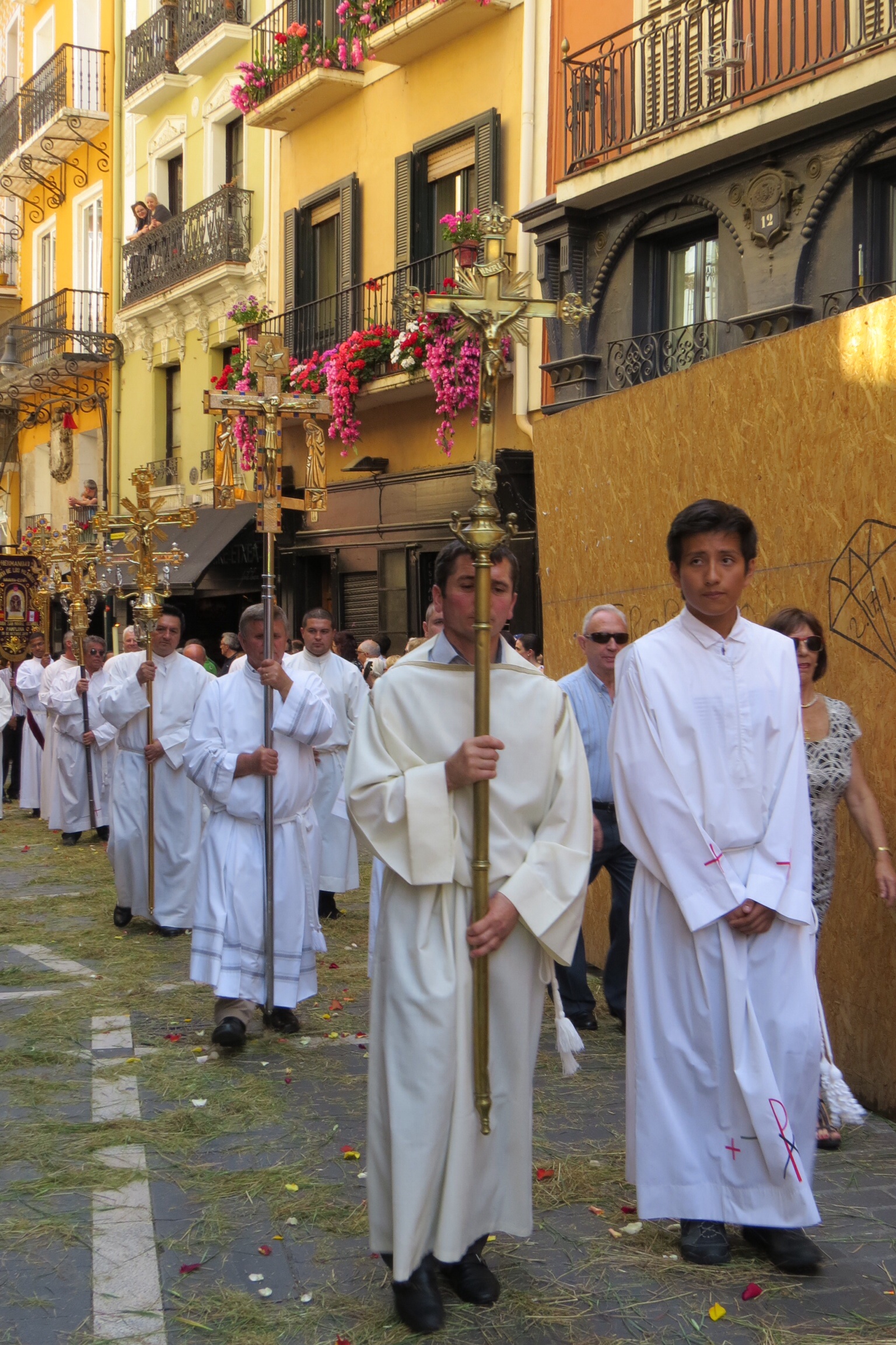
The countdown clock may be ticking for the Running of the Bulls, an annual festival running from July 6 to 14, but today Pamplona was full of festivities as it celebrated Corpus Christi with children from all the area parishes taking their first communion.

image image

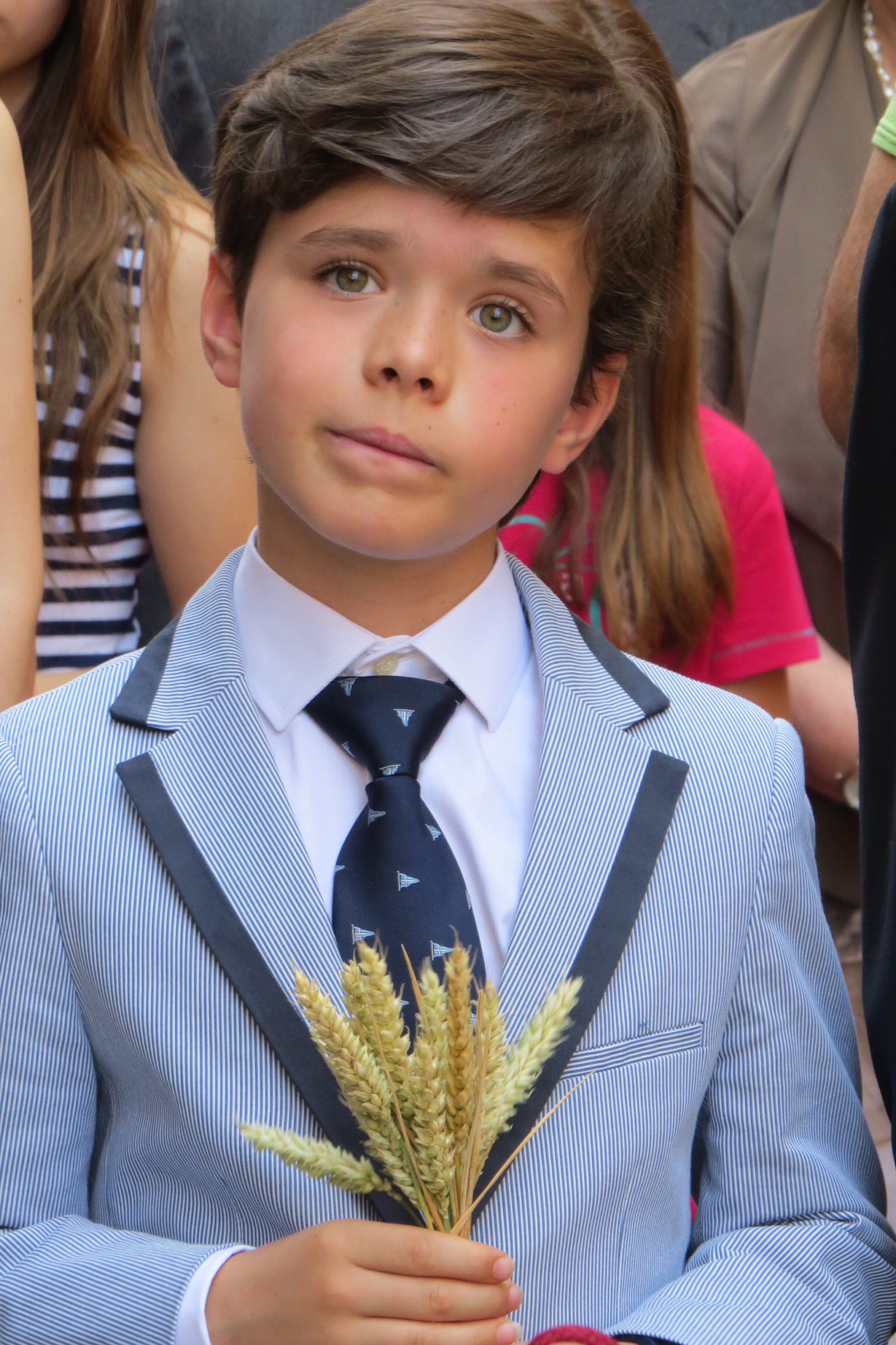
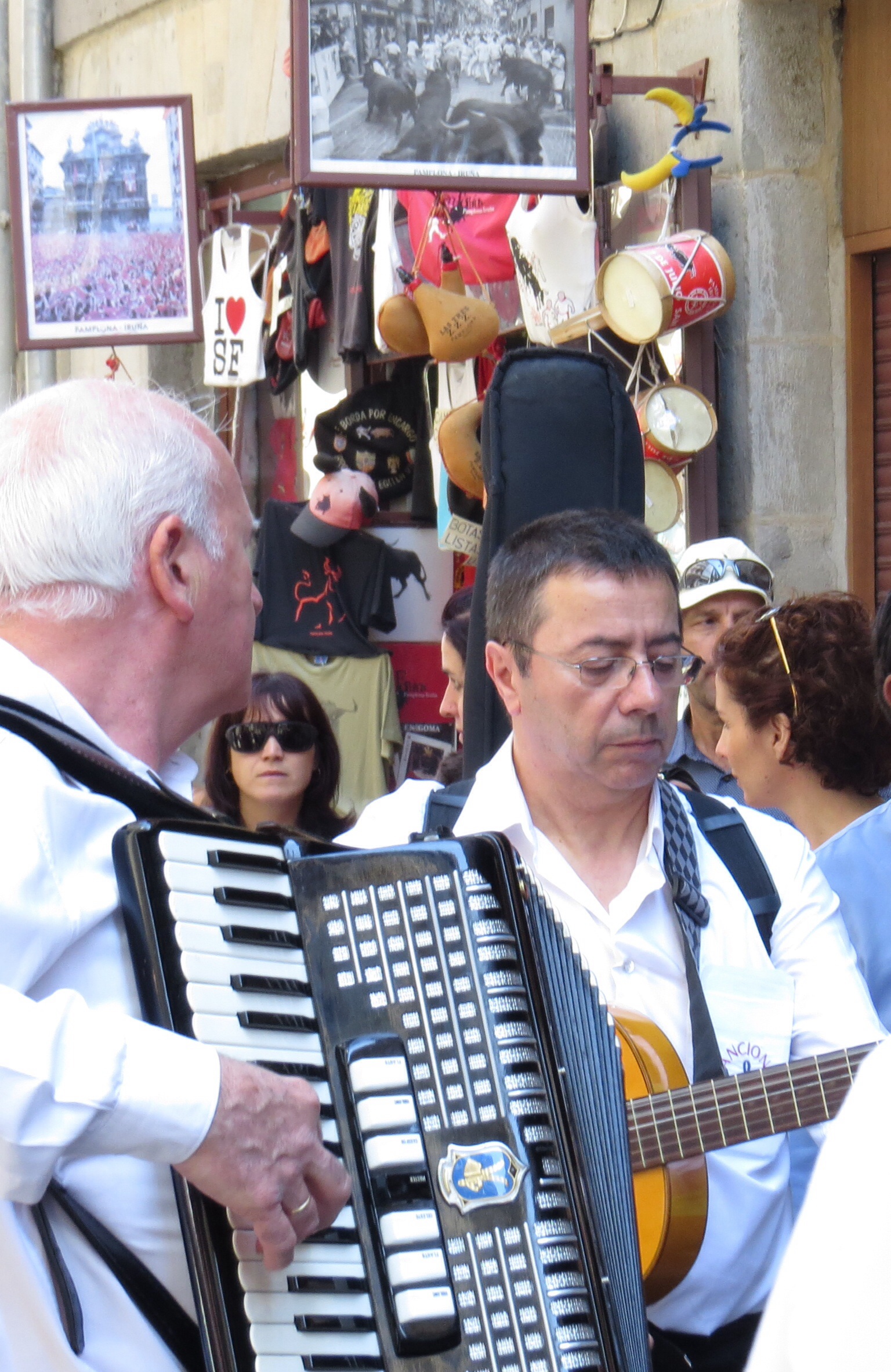
There was music and celebration everywhere.   Hundreds of children and their families walked in procession from the Catedral de Santa Maria to the Town Hall and back to the church again. Flower petals were strewn from above by guests who had booked hotel rooms along the procession’s route.

image image imageimage

Of course, the day would not have been complete without lunch. Our guide, Mikel–

image

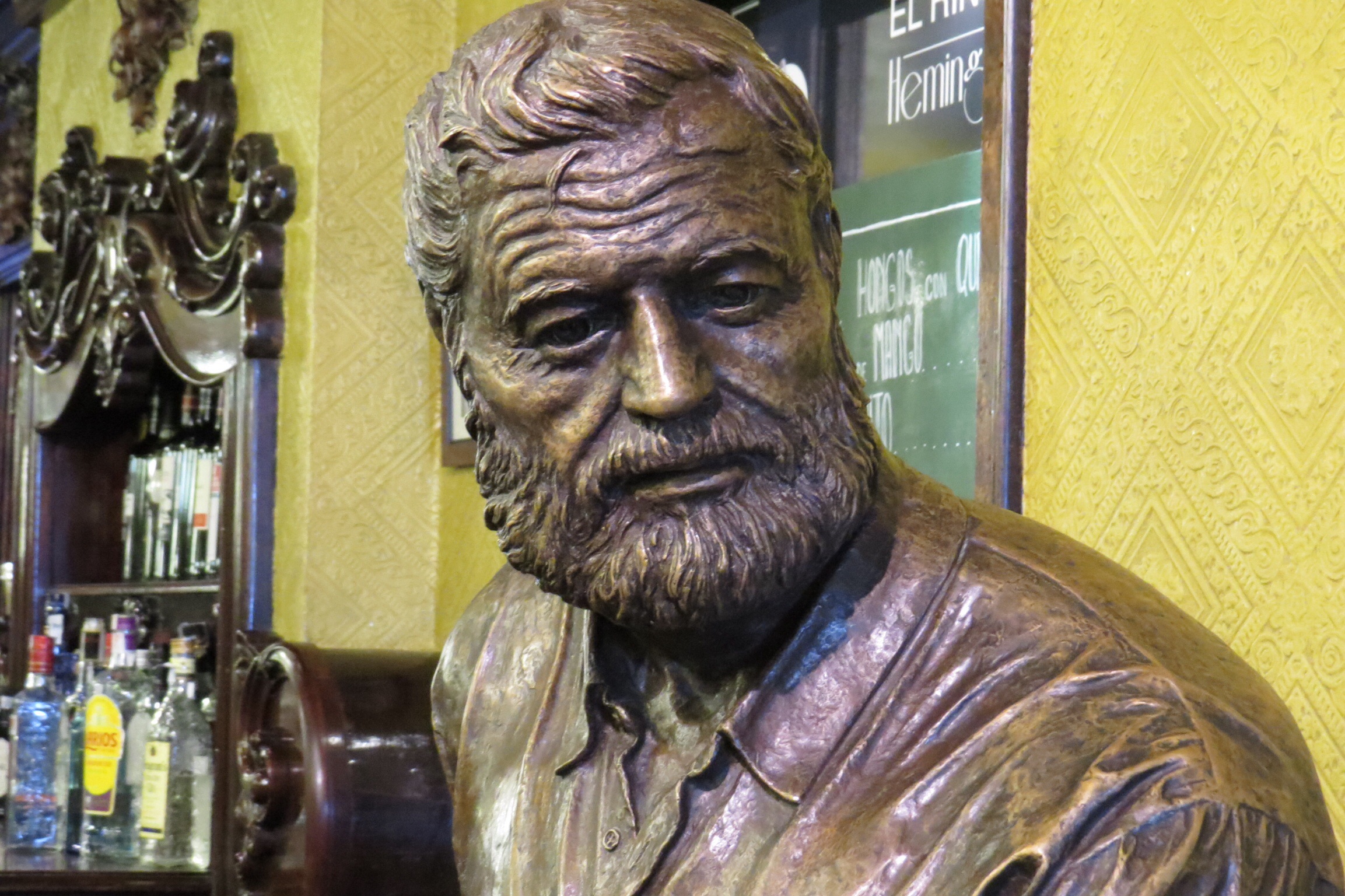
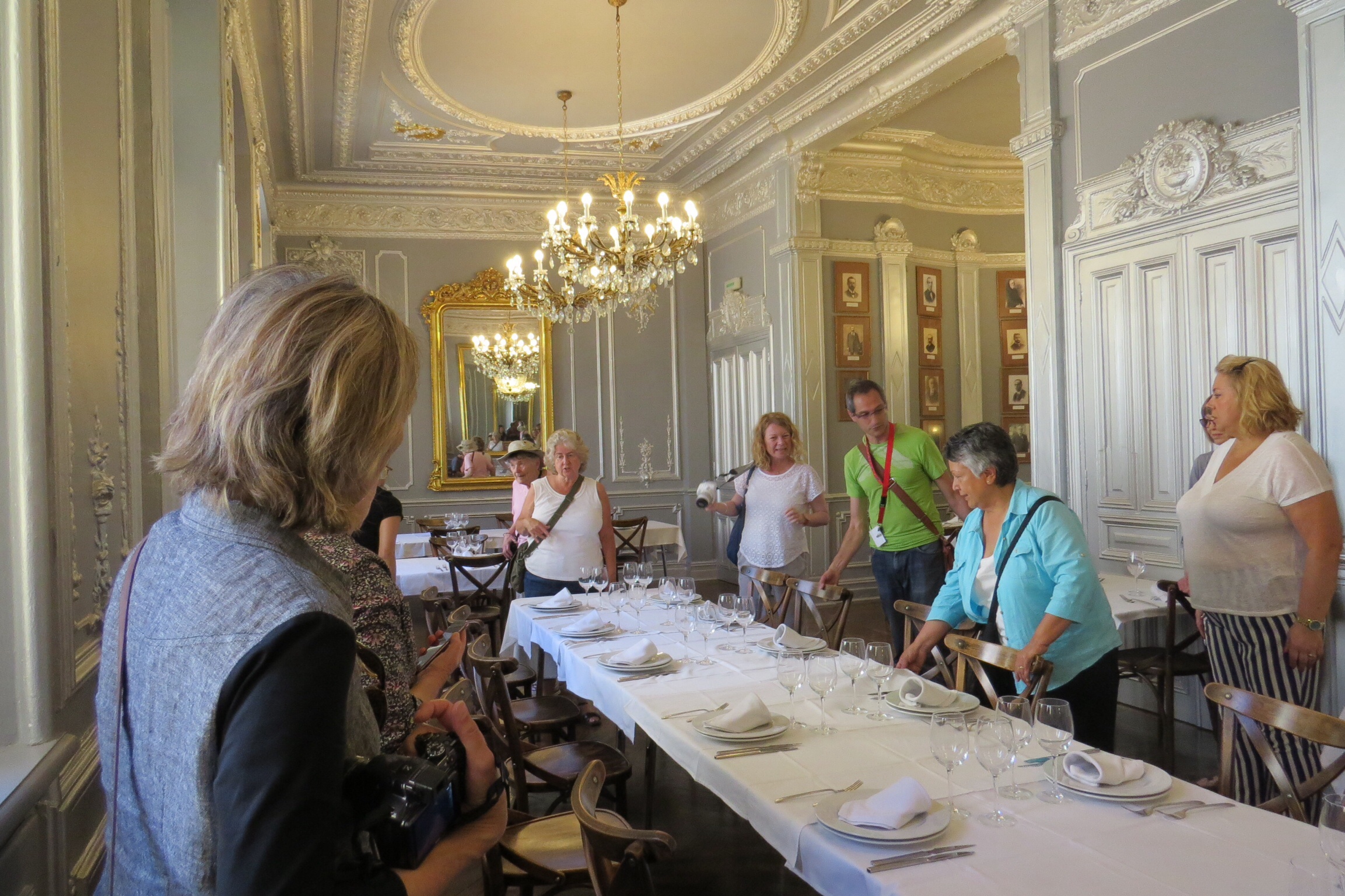
–took us to Iruna, the bar frequented by Ernest Hemingway, and above it, a beautiful private club where we dined on several courses including croquettes, roast suckling pig or Turbot, and copious amounts of wine.

image image

Siestas —

image

— were in order as we made our way from Pamplona to the glamourous and beautiful town of San Sebastian nestled in a bay on the Atlantic coast. We took a beautiful late afternoon stroll on the 7 km promenade, but we would learn much more about this Basque town on our walking tour scheduled for the following day.

Jan
Caesaraugusta

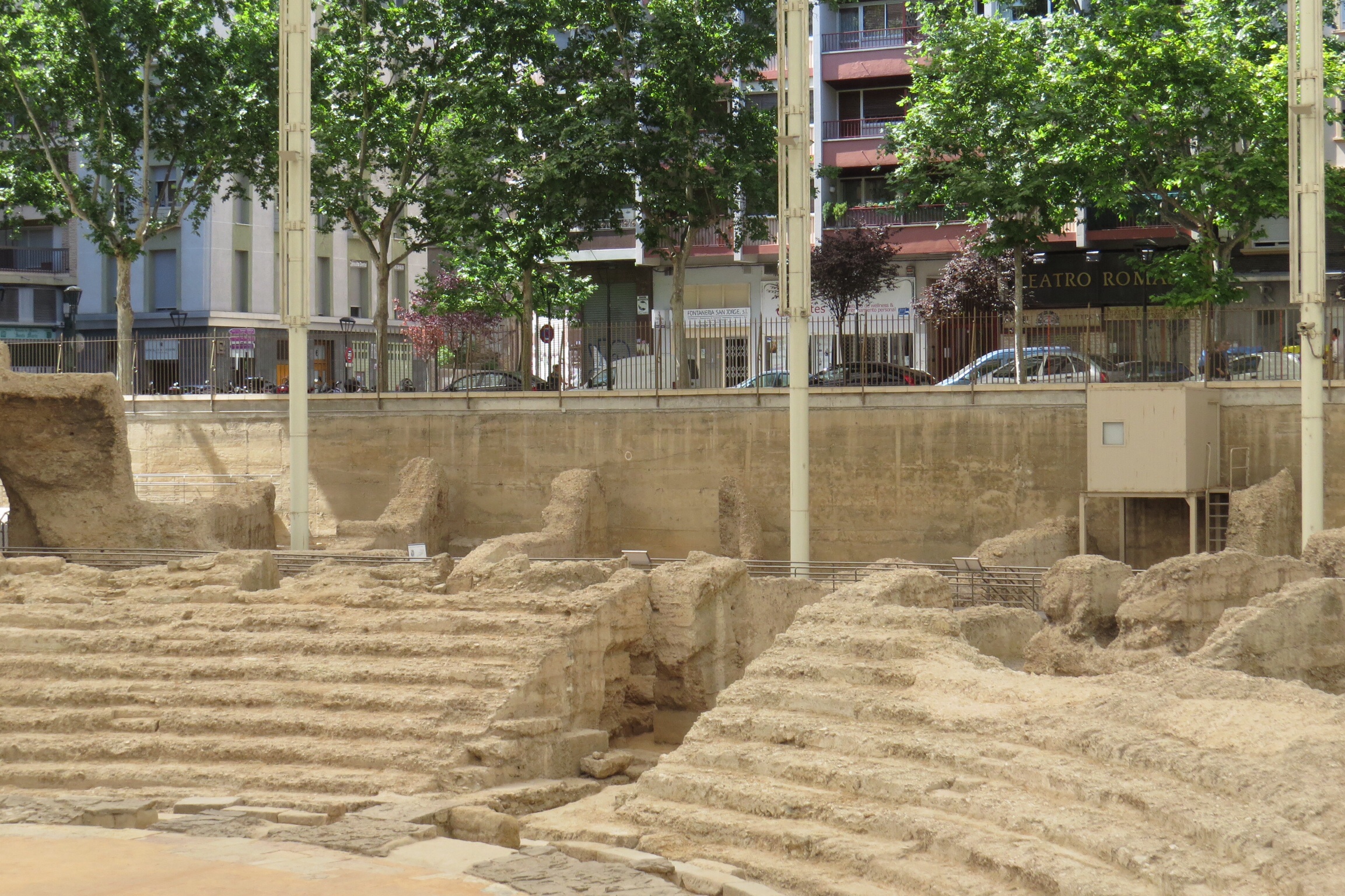
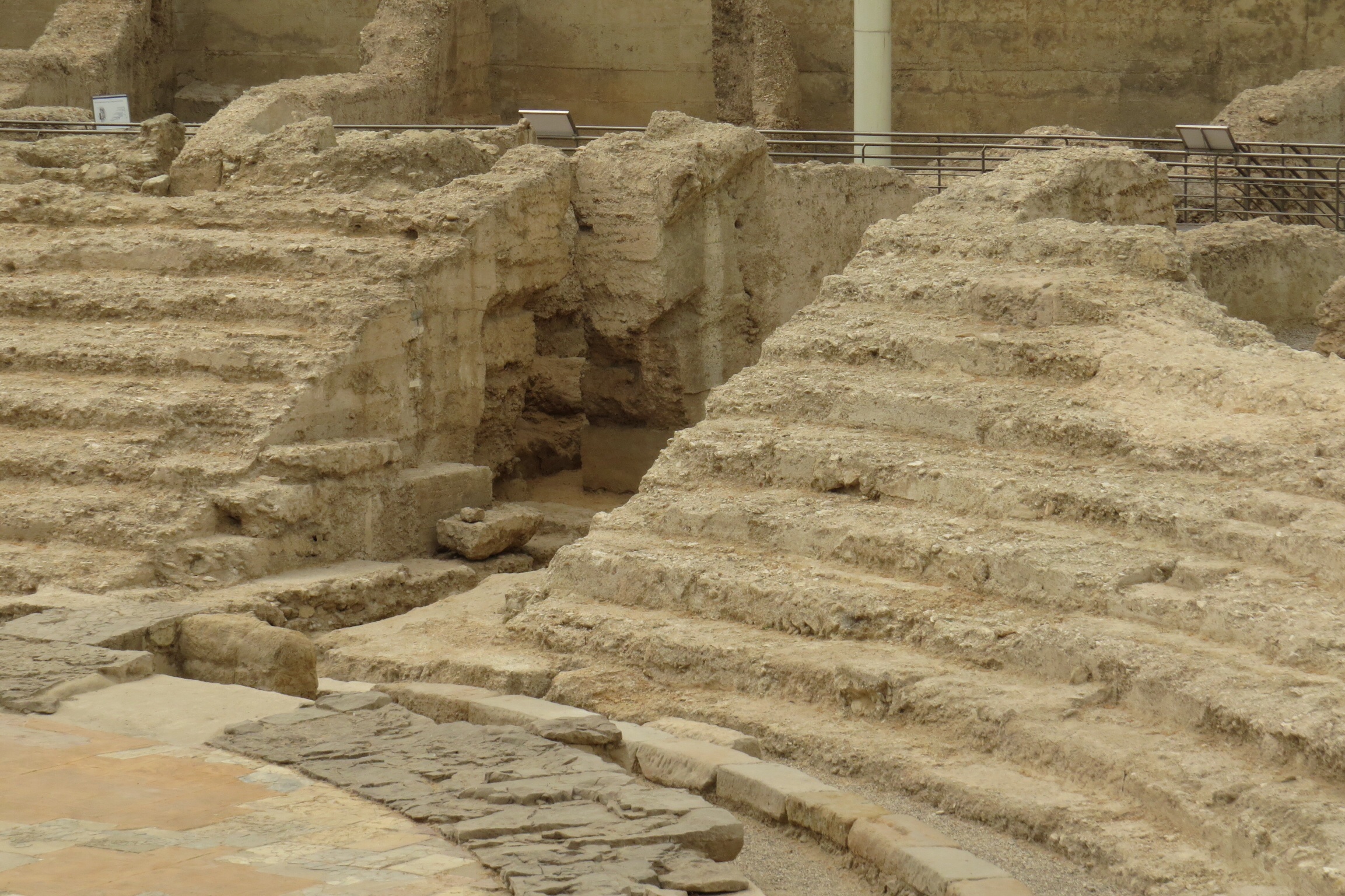
Who knew the name of our first stop outside Barcelona, Zaragoza, was a construct of the name of Caesaraugusta? Not I, and I was equally surprised to discover Roman ruins here, including an amphitheatre that at one time held 6,000 seats.

image
Caesar Augusta, a gift to the city from Mussilini.

image

image image

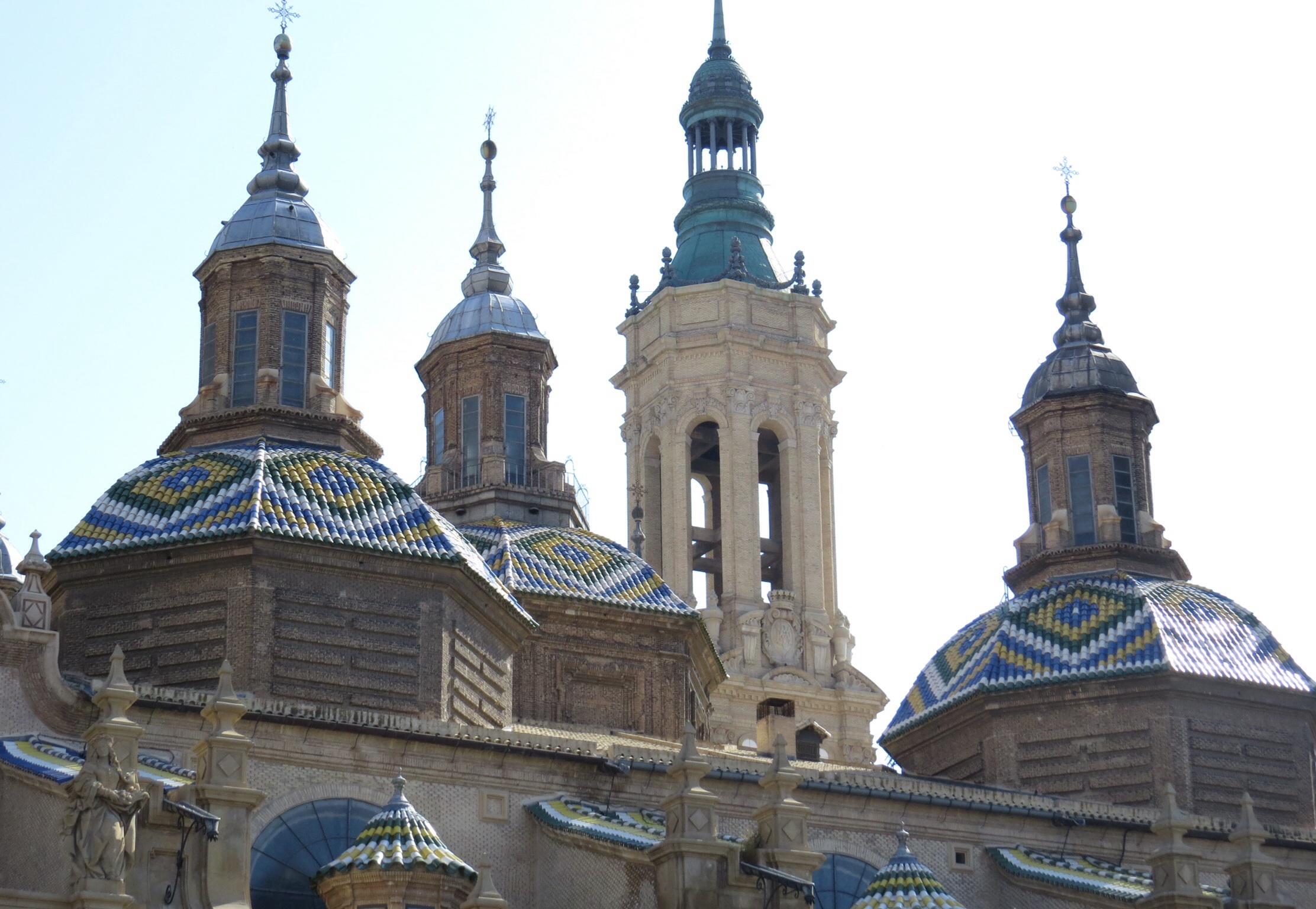
Zaragoza, along the Ebro River, is home to the Basilica de Nuestra Senora del Pilar with its colourful domes and many spires. Narrow cobblestone streets give way to gorgeous open squares. The broad main plaza houses the basilica, the city hall, at least two museums and several cafes.  image image

(BTW, we learned that a cathedral has a bishop, and a basilica has been blessed by a pope.)

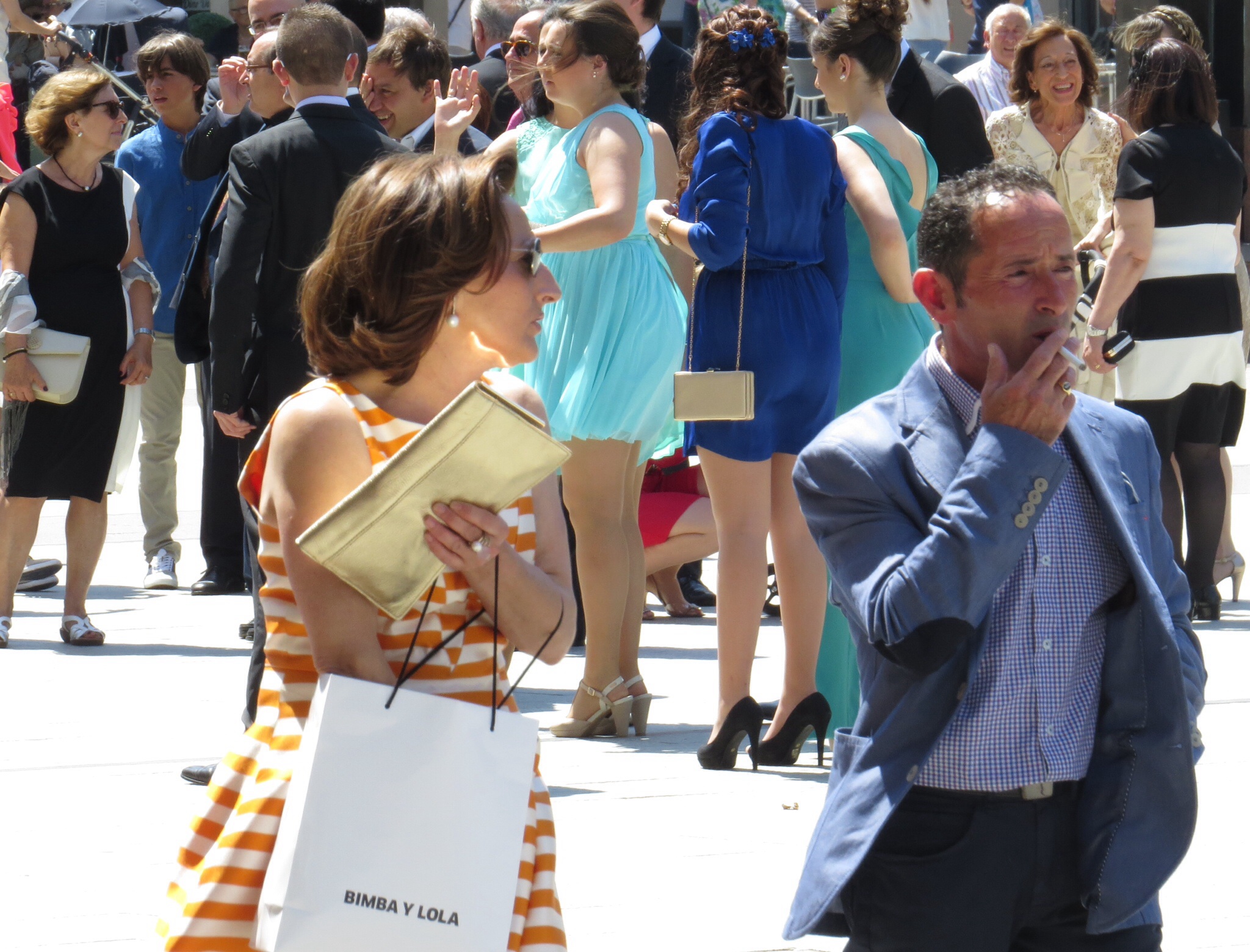
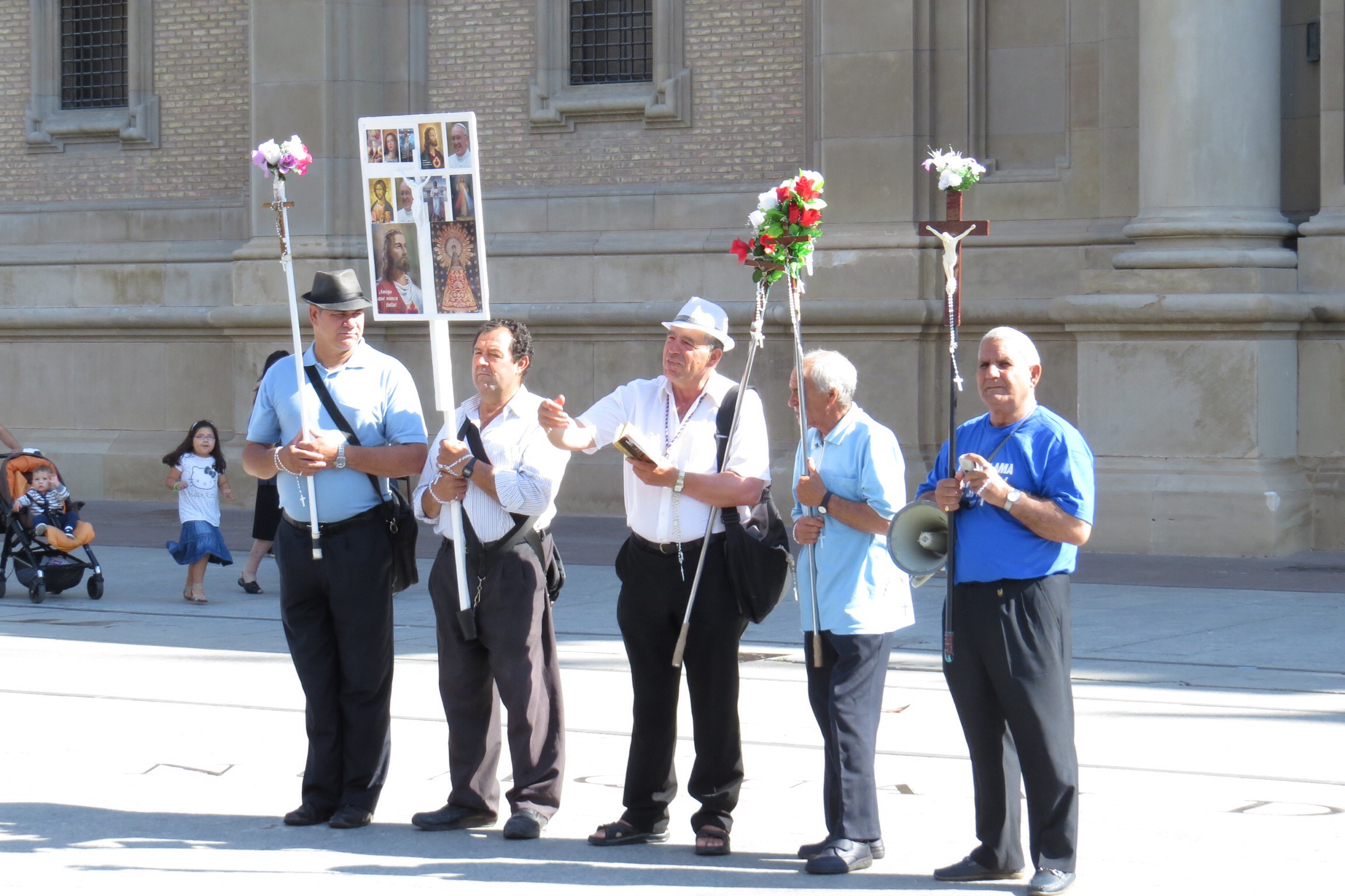
We started our visit with a tour which began on foot. We visited the spectacular basilica (partially decorated by Goya) where, on a Saturday, at least five services were conducted. A group of local men were singing in sweet harmony as we watched the faithful praying and lining up to kiss the pillar on which a vision of the Madonna was seen several centuries ago leading to the construction of the basilica. We saw many weddings and a christening taking place and the beautifully dressed, coiffed and fascinatored guests.

image

image image

Next, we hopped on a waiting bus for a tour of the greater city which included the modern architecture on the site of Expo 2008. Zaragoza is the regional capital of Aragon, the same Aragon from which Catherine of Aragon was sent to England to marry King Henry VIII. To this day, the Moorish Aljaferia Palace built in 800 AD houses the regional parliament.  So, somewhat older than the BC Legislature.

image

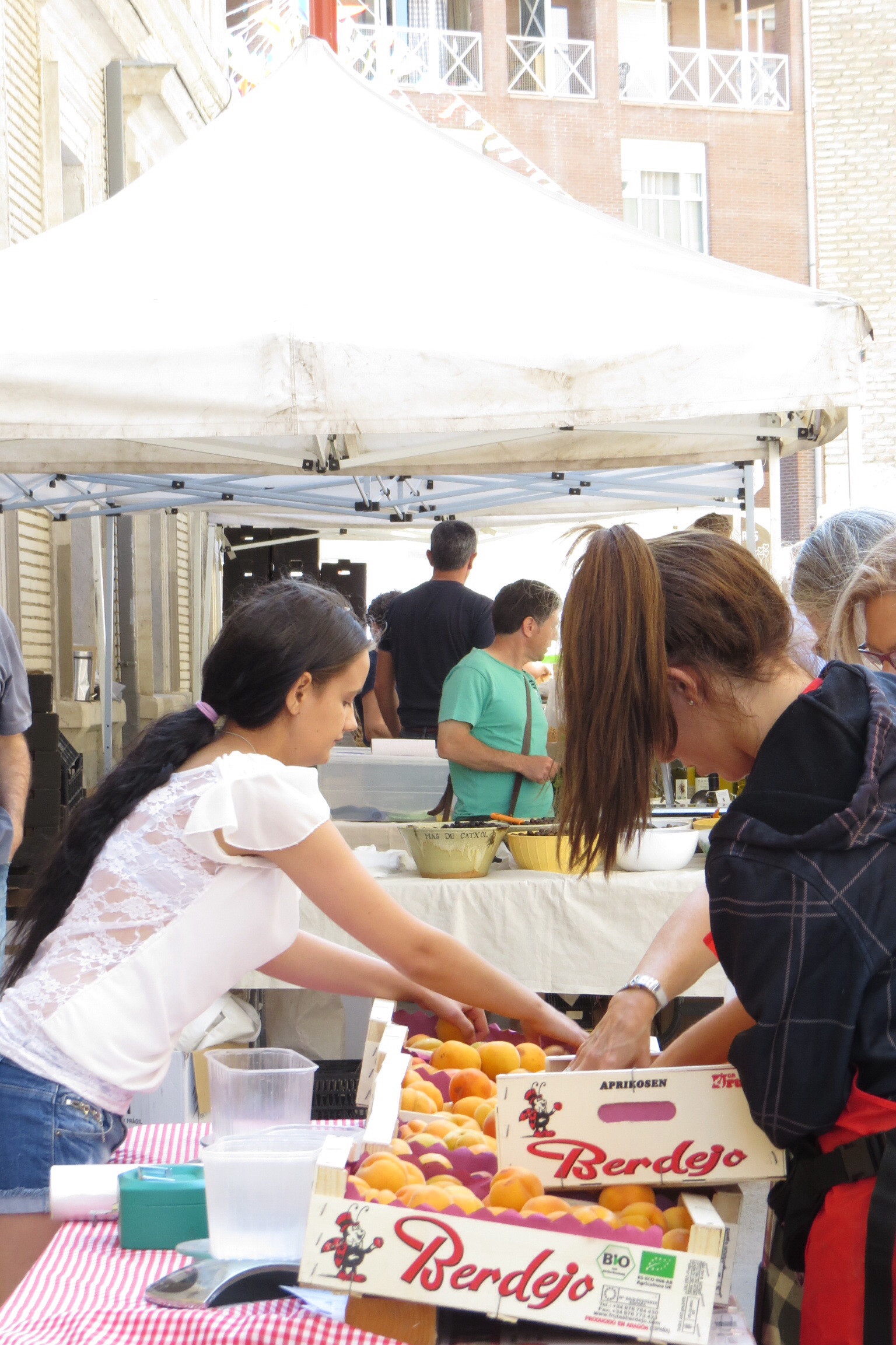
There is a sprawling indoor market with every conceivable cut of meat, slabs of fish, salted and fresh, cheeses and breads. On Saturdays, an outdoor market thrives just off the main plaza.

image image image

Speaking of food, at our scheduled group dinner, here is what I ate:
– Bread
– A salad of lettuces and large chunks of flaky tuna dressed with gorgeous Spanish olive oil
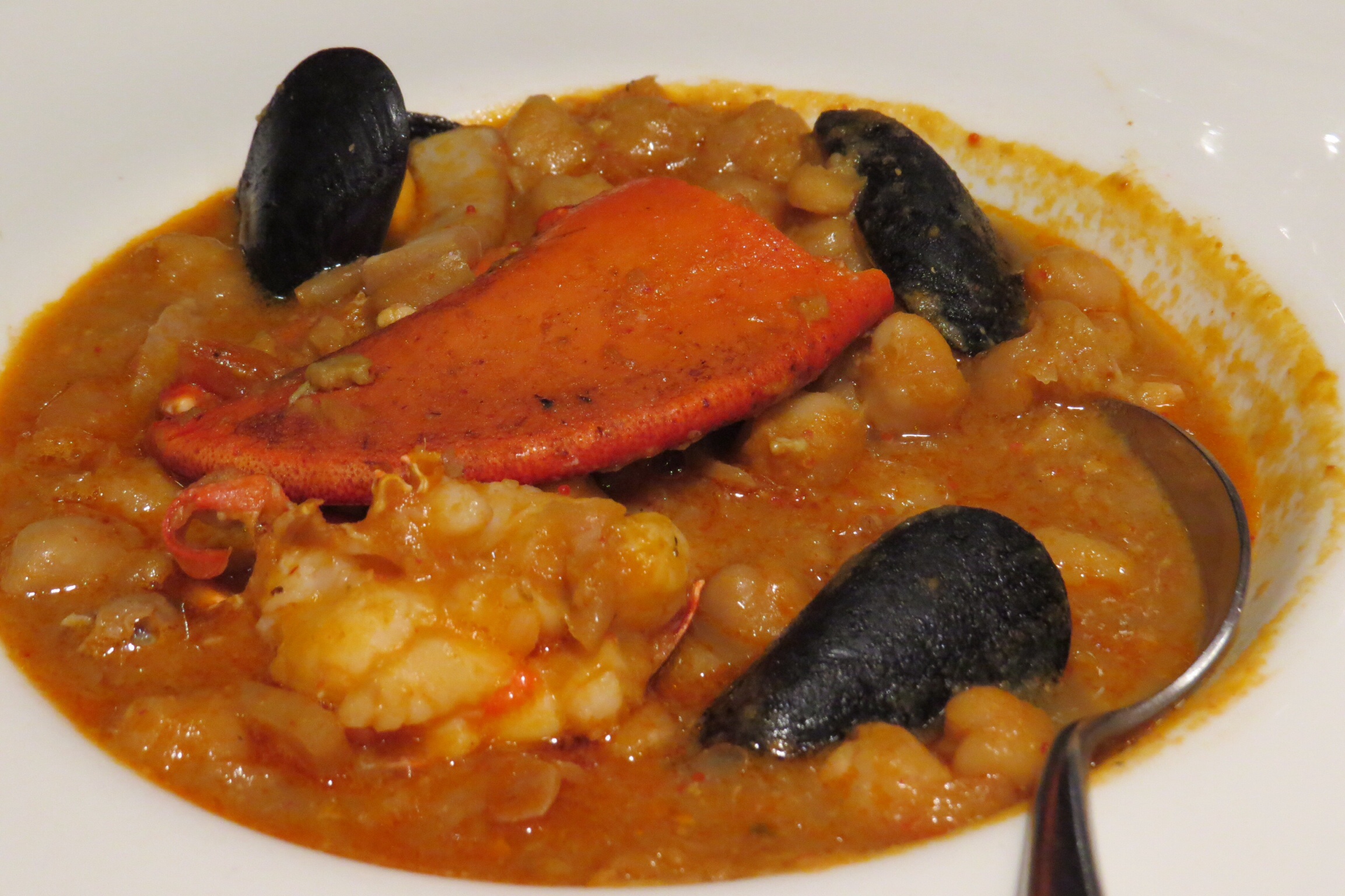
– A generous bowl of Chickpea and Lobster stew

image

– Buttery, melt in your mouth pork with patates and chiles
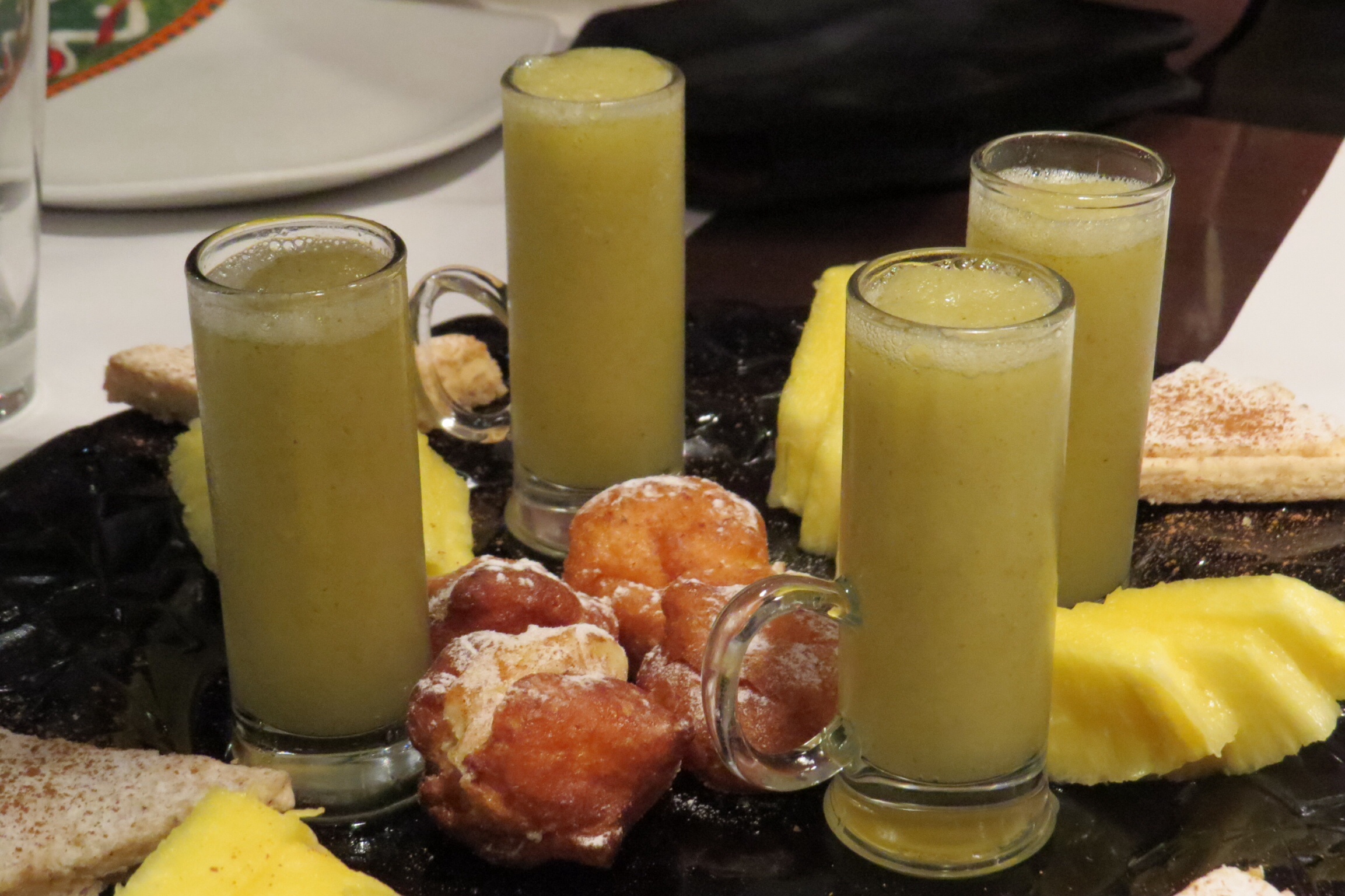
– Mojito sorbet, a profiterole and almond cake

image
– A shot of liqueur

A feast of Roman and Henrian proportion!

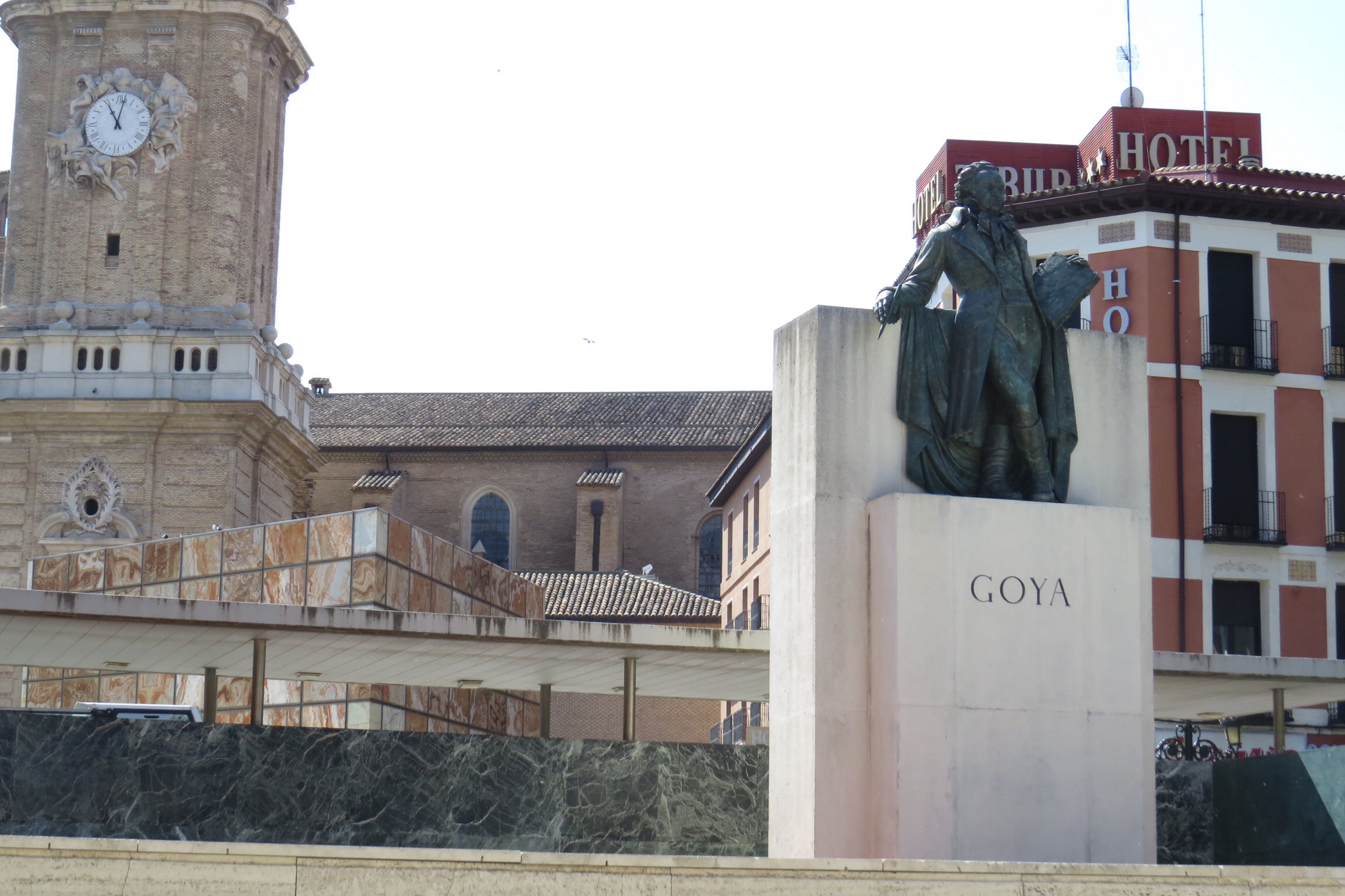
Zaragoza is filled with museums; we only had time for one. The Goya art museum was fascinating. In addition to seeing his paintings and portraits, we saw the work of his contemporaries and those who were later influenced by him. Born in 1746, he was influenced by the Renaissance and Baroque periods. Using the Gutenberg printing press, in the style of Charlie Hebdo, he satirized Spanish society in his published cartoons, skewering the nobility, the Church and the Inquisition, bullfighting, etc. Had he not already been a successful painter and Court portraitist, I imagine he would have been executed for his publication, too.

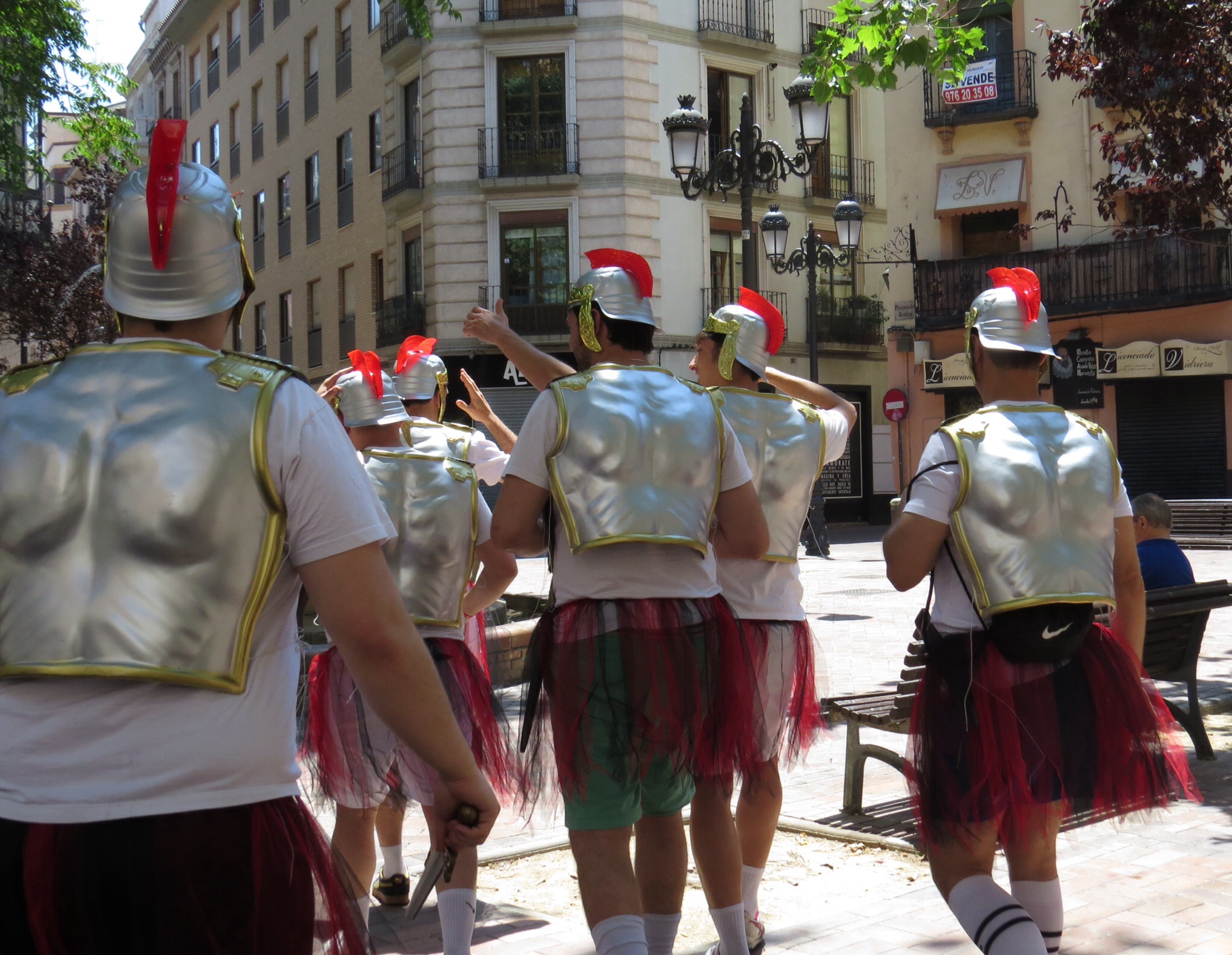
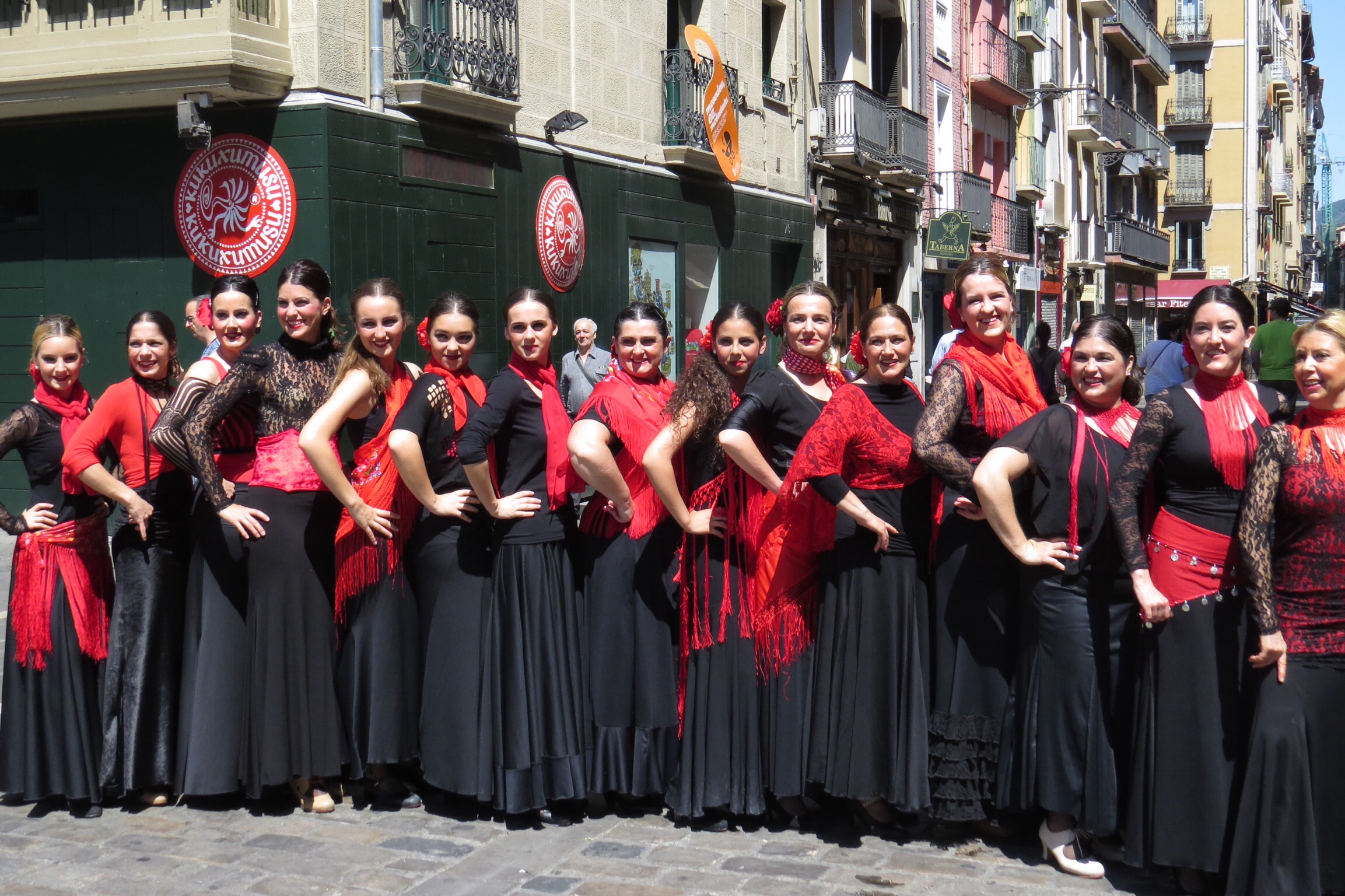
After Goya, Shirley and I sat sipping Sangria in the main plaza, people-watching and in particular watching the many stag and stagette parties go by in which the brides or grooms hire marching bands to promenade around the city competing for attention and popularity.

image

It was 36.5 degrees this afternoon, but not terribly humid so it was quite comfortable in the shade. However, I had no option but to buy a white linen suit to battle the warm temperatures. 😀

Other pretty sights on our walking tour today:

imageimageimageimageimage

image

Rosa maintains this is not the most beautiful city on our tour. Huh.

Next, off to Pamplona and San Sebastian on the Atlantic coast!

Jan

The Road to Zaragoza

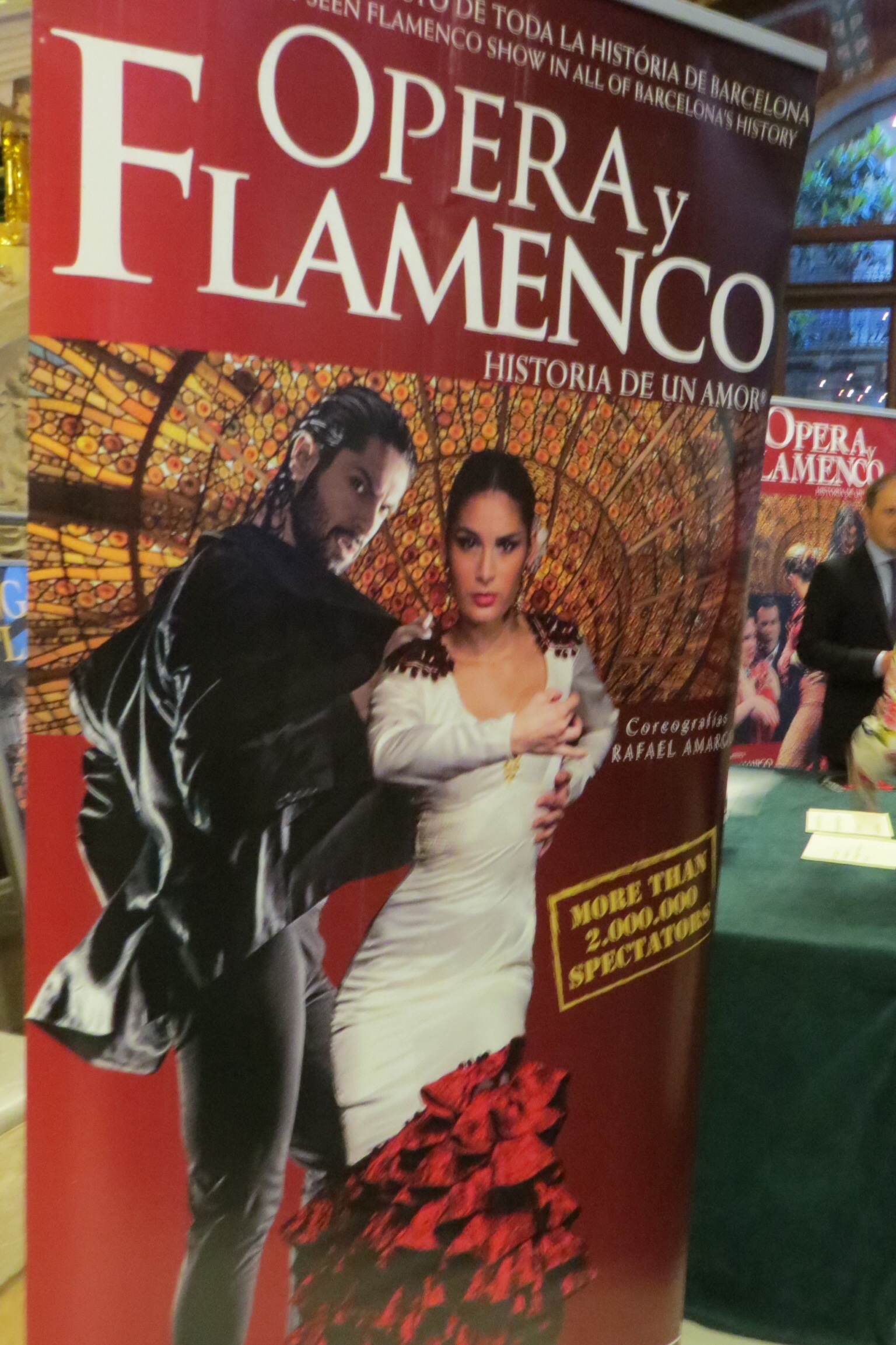
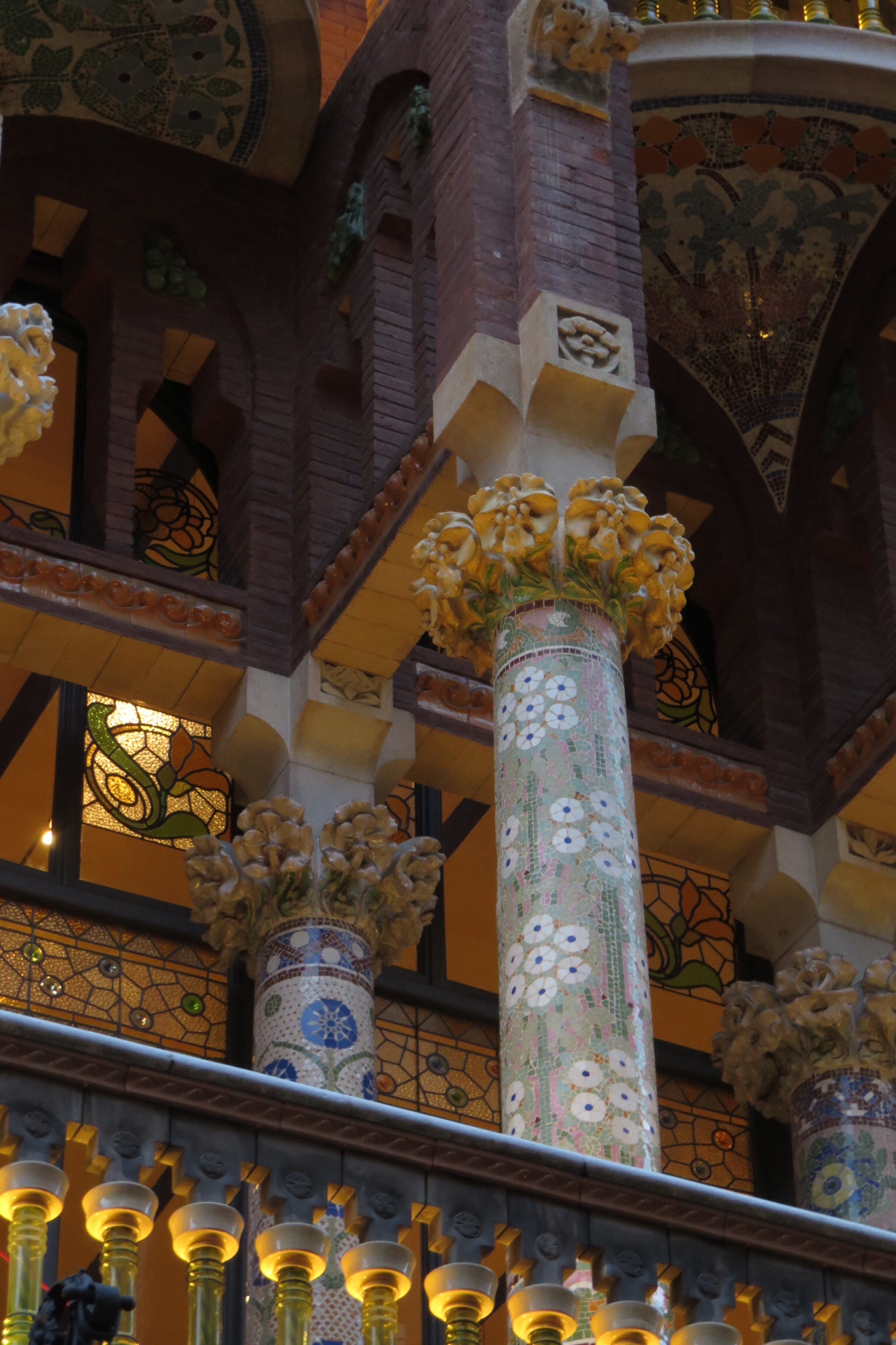
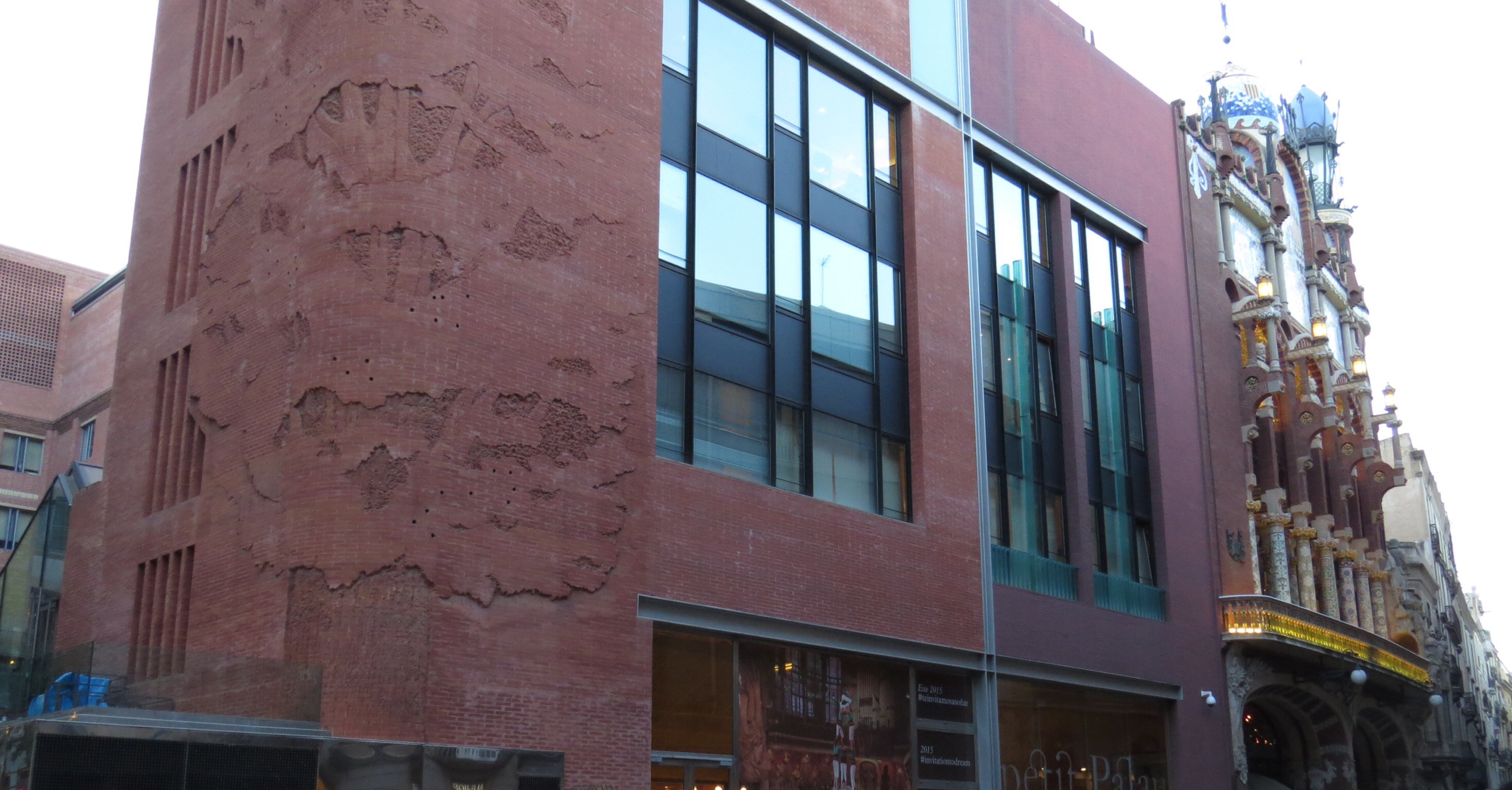
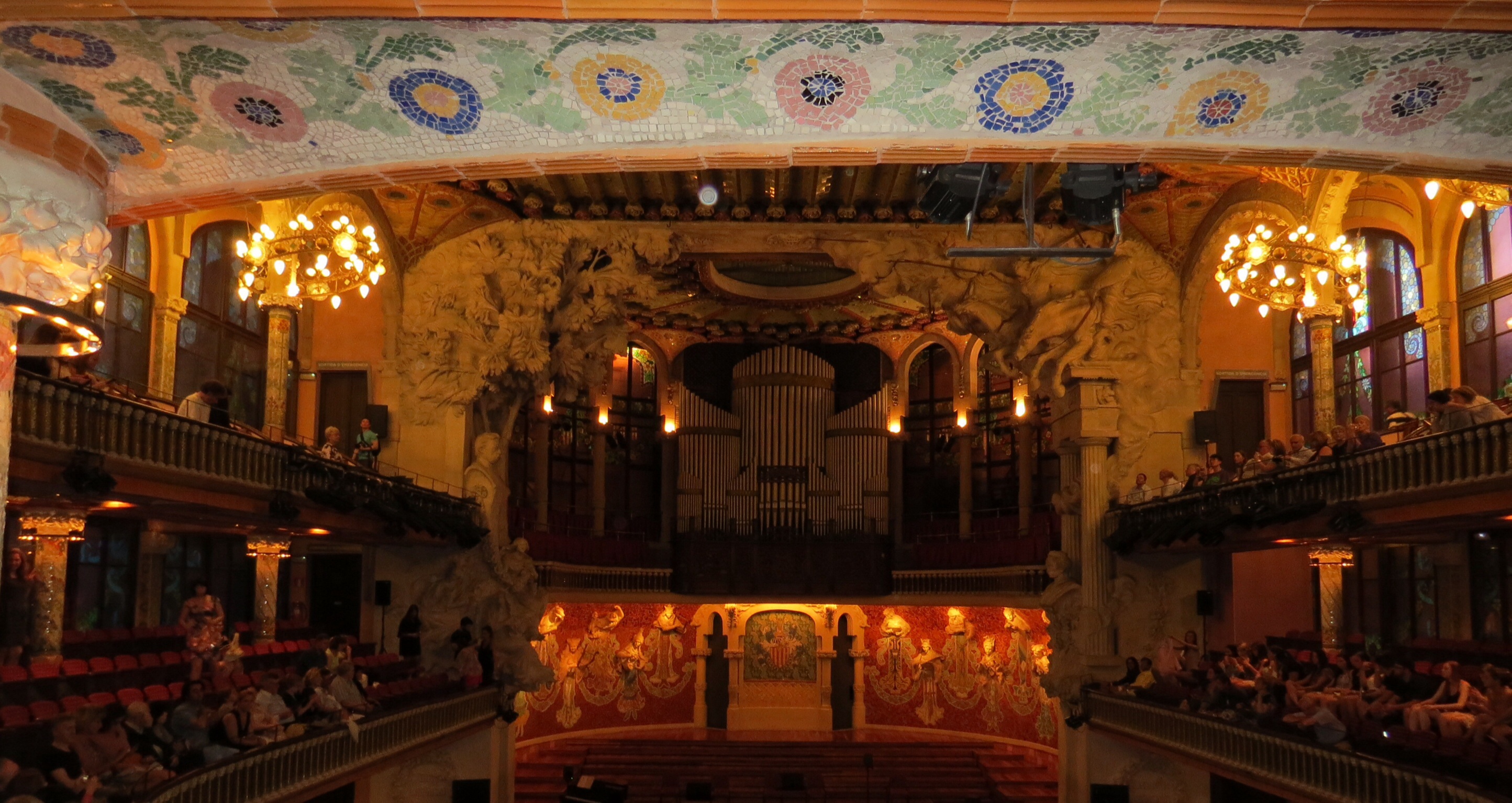
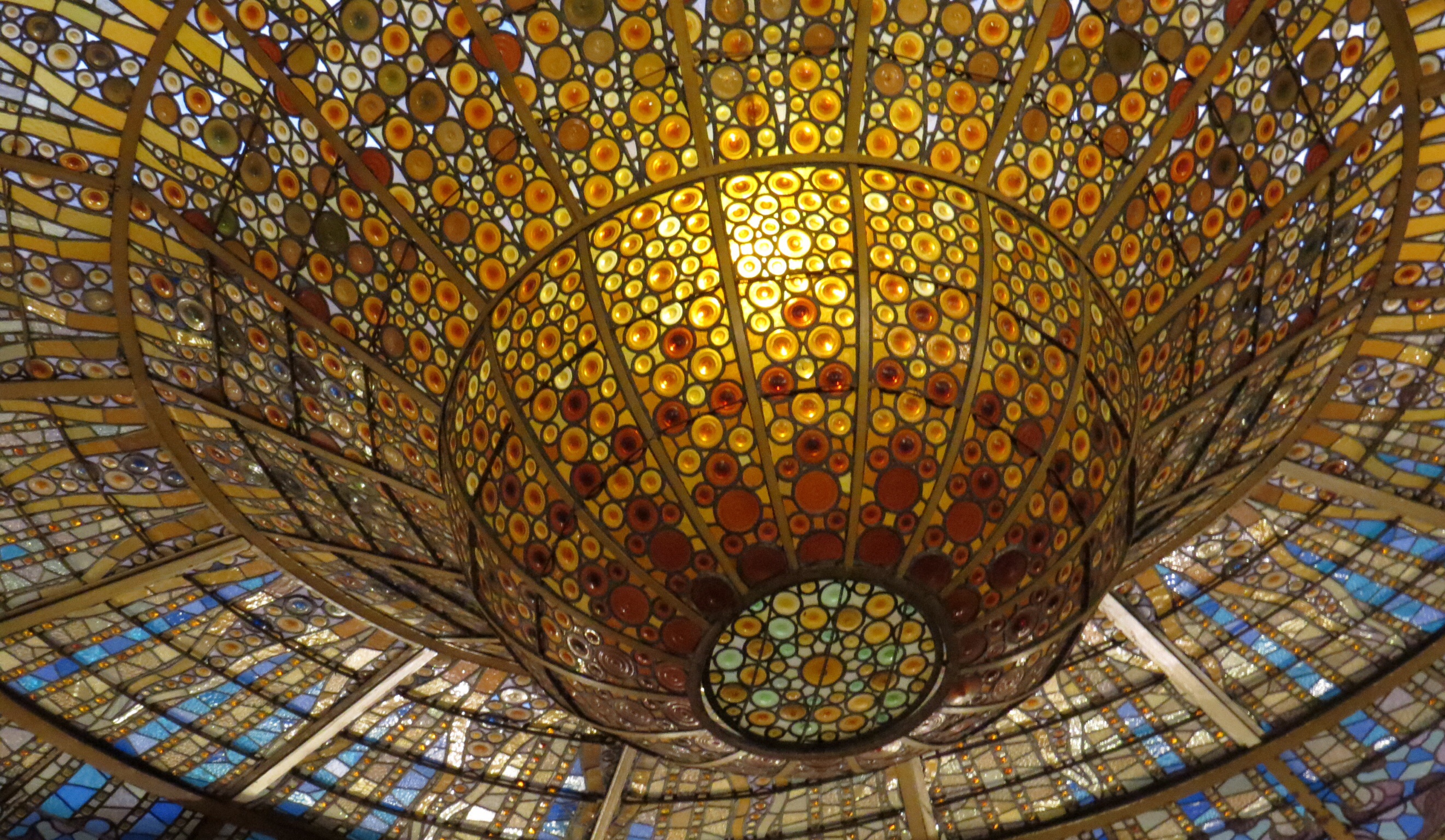
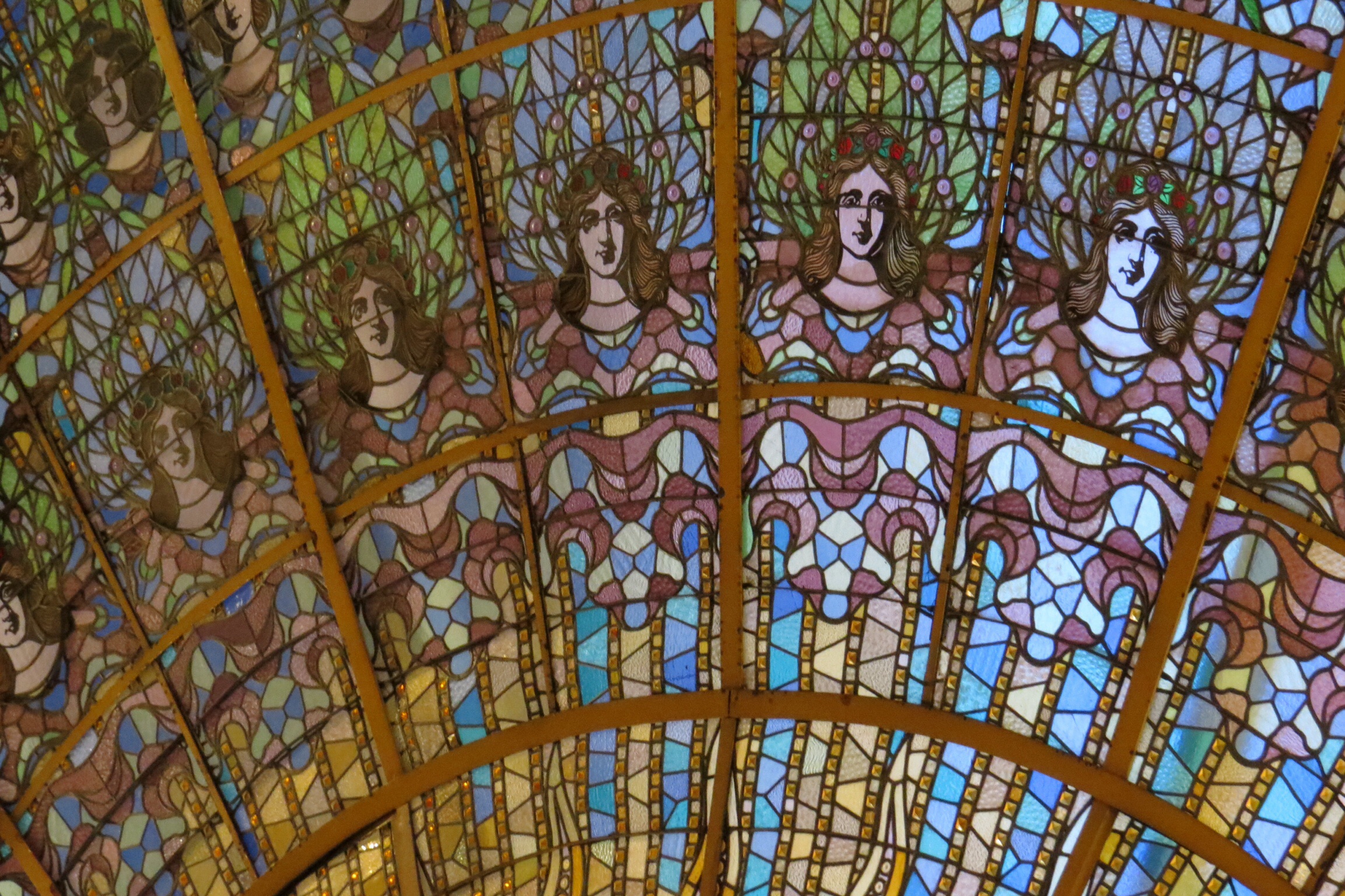
Just before we hit the road I have to jump back and mention that in Barcelona, we attended the Opera y Flamenco concert in the glowing Spanish art nouveau theatre, the Palau de la Musica.

image imageimage  image image image

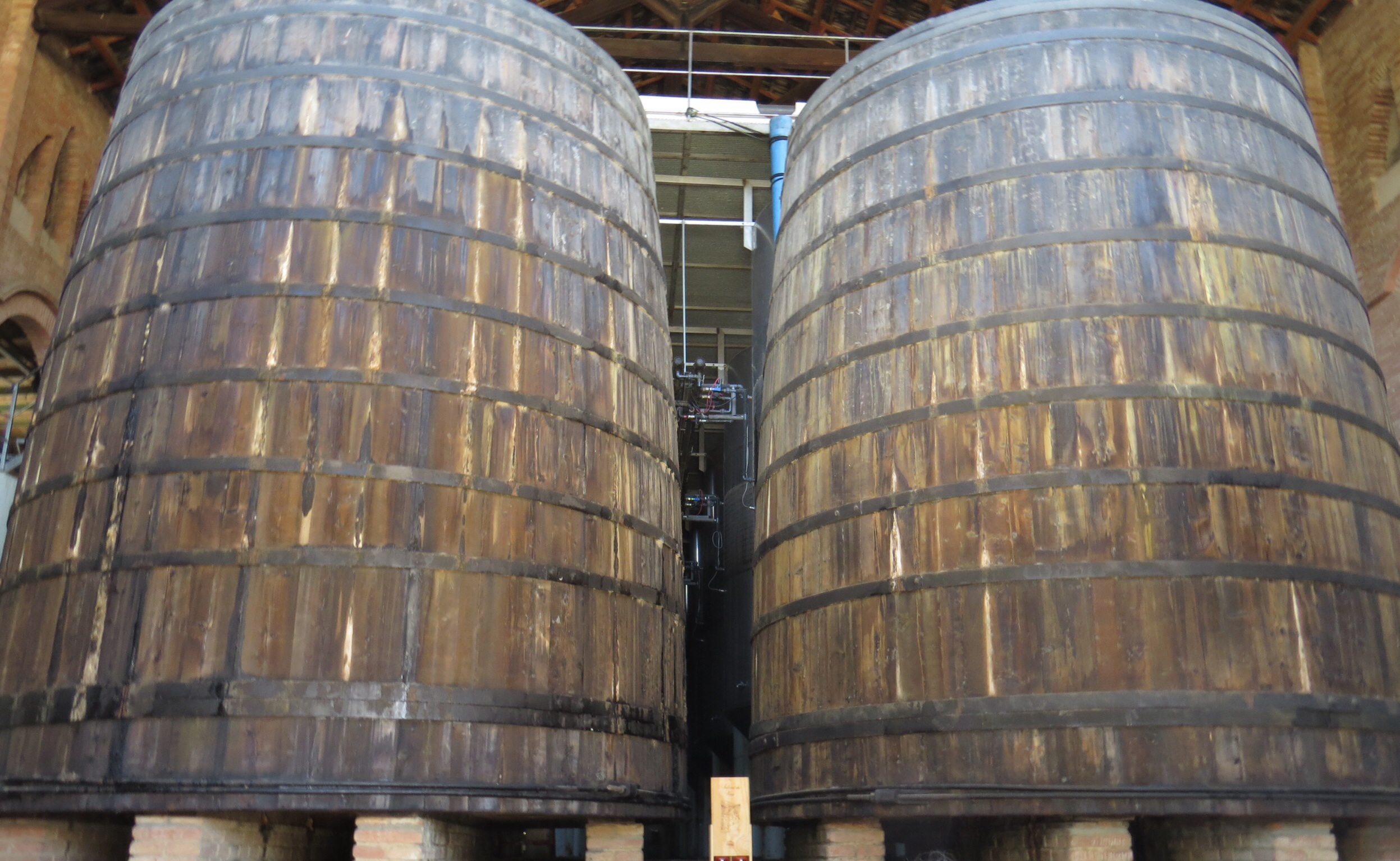
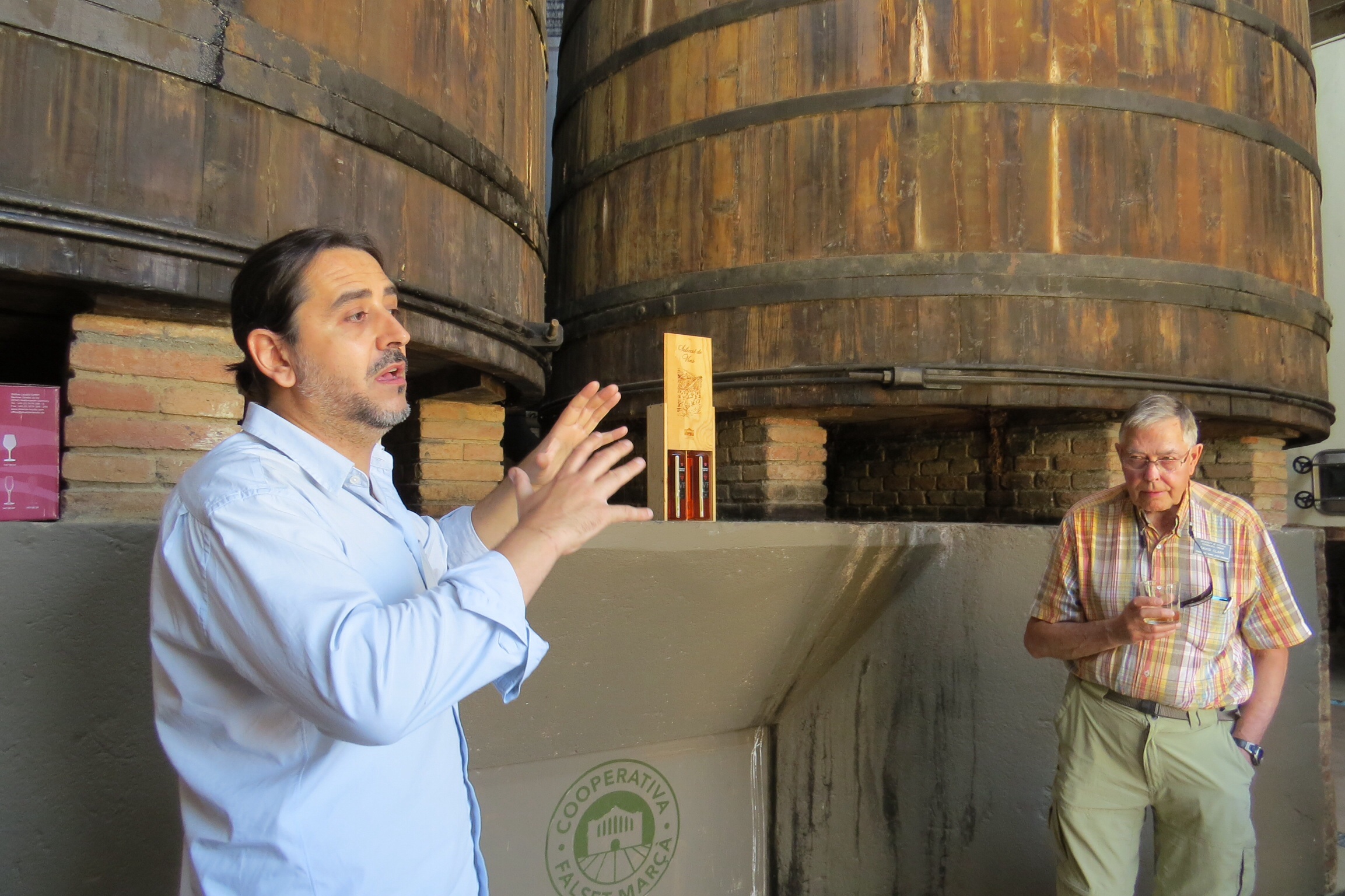
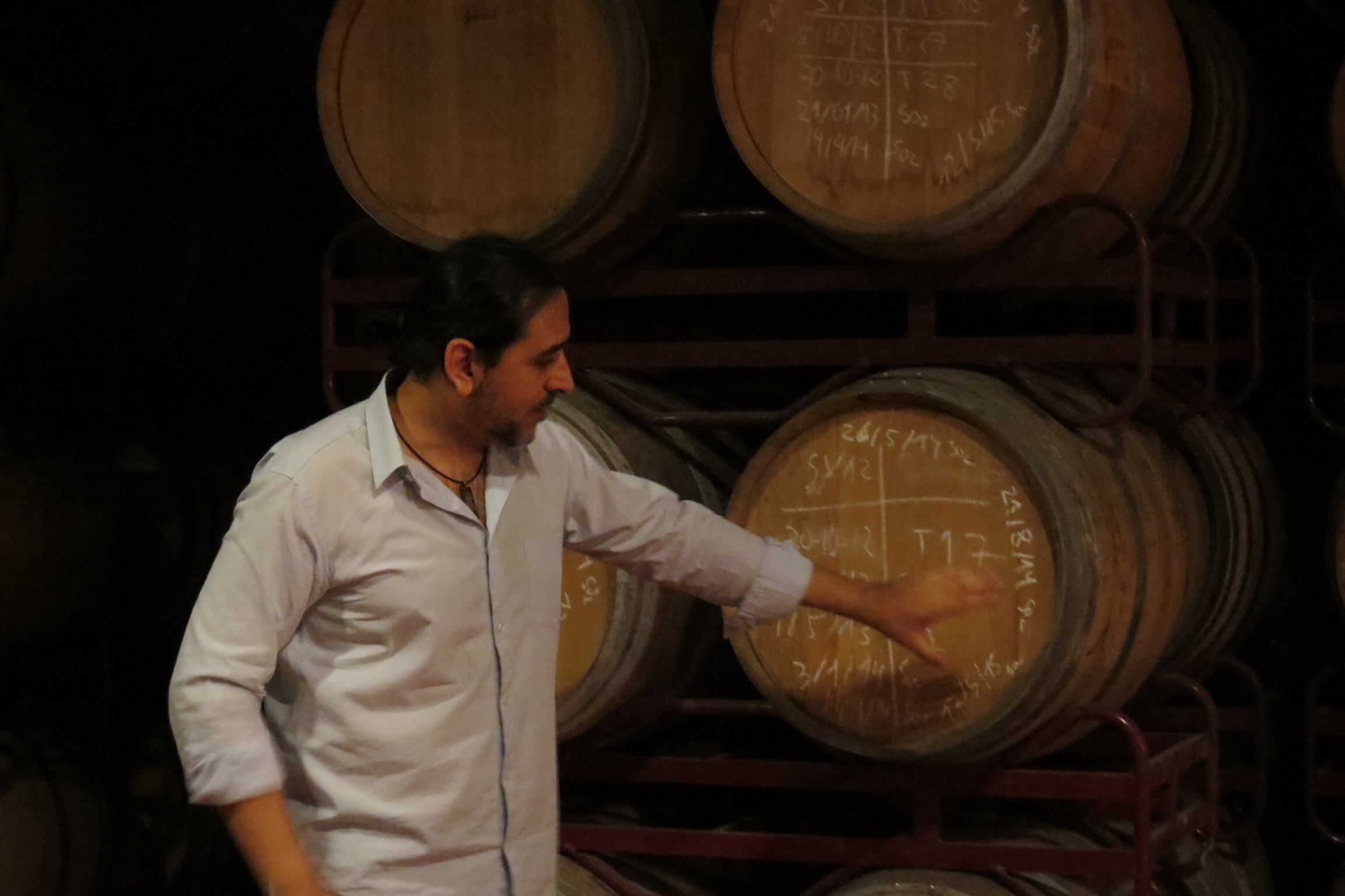
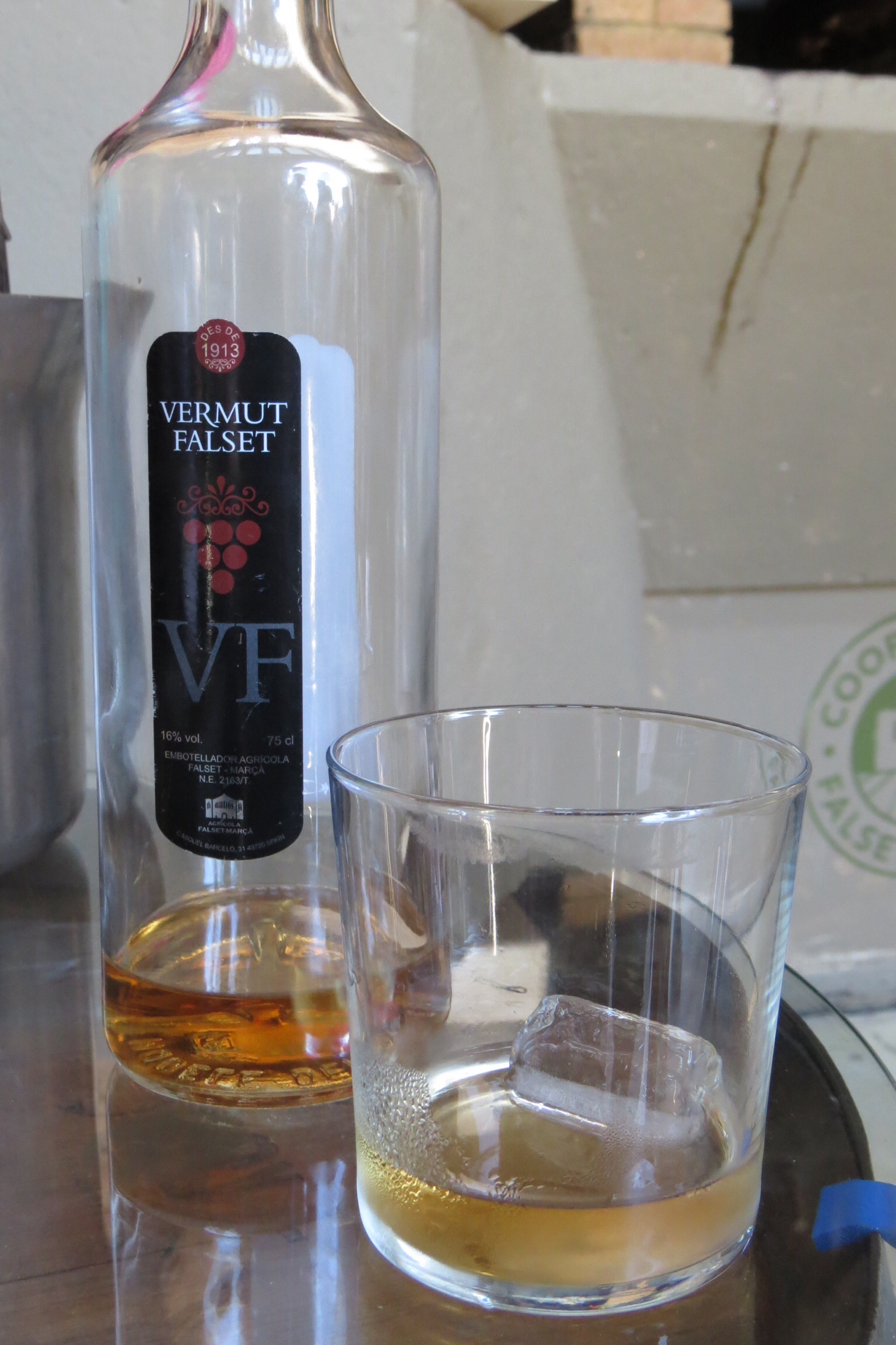
After setting out on our adventure to our first stop outside Barcelona, we popped in to a co-operative wine cellar for a tour, tasting, and lunch. Gerard punctuated his informative tour with many of his own gems.

“The monks originated all the great drinks – vermouth, benedictine, etc., because the priests knew you know God better if you drink something before you talk to him.”

“The Nationalist military refused to give soldiers a drink of wine, pity, because if they had given wine to both sides, civil war would have ended a lot sooner.”

image image image image image

After a great lunch, we headed for Zaragoza which was, for me, a complete unknown…


Gaudi

On June 10, 1926, a shabbily-dressed, small, elderly gentleman was struck and killed by a tram in Barcelona. The body was unidentified….

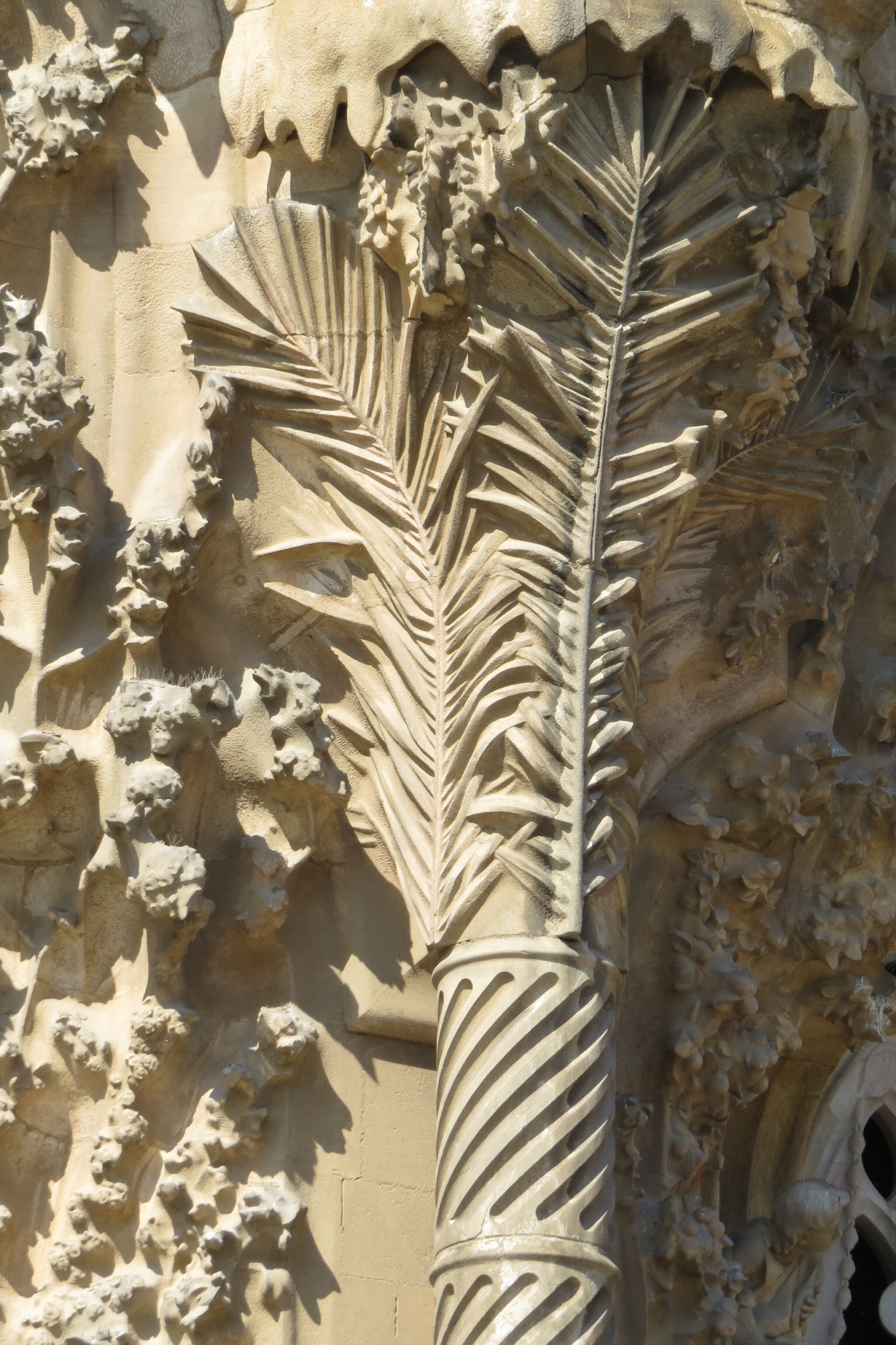
Antoni Gaudi, born June 25th, 1852, famed architect and founder of the Modernisme architectural movement, was emblematic of the soul of Barcelona and Catalonia. He drew his inspiration from nature, as is so evident in all of his buildings. No-one had ever constructed buildings like his and no-one has built them since, although elements of the Moderisme architecture were repeated throughout Barcelona.

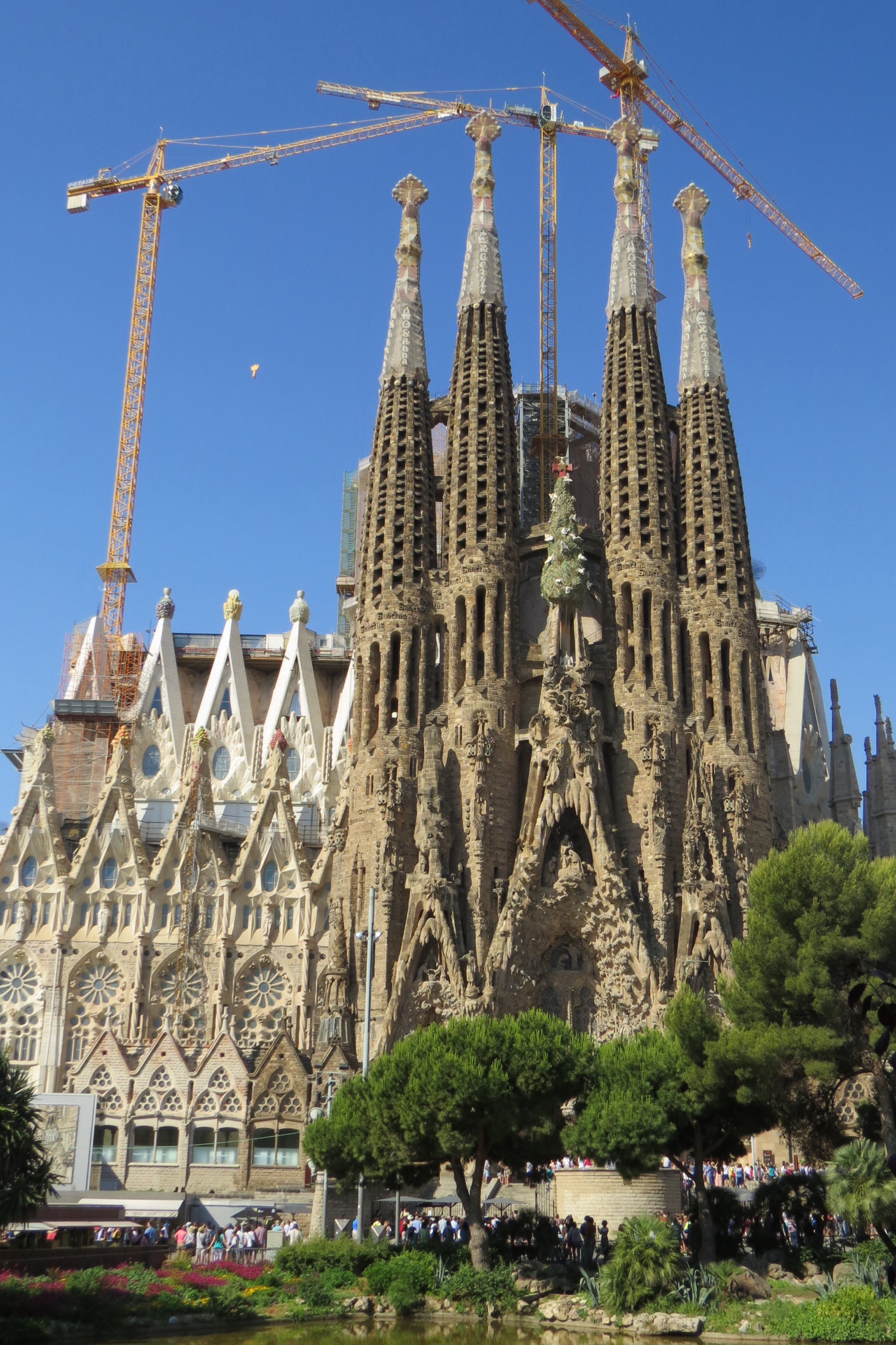
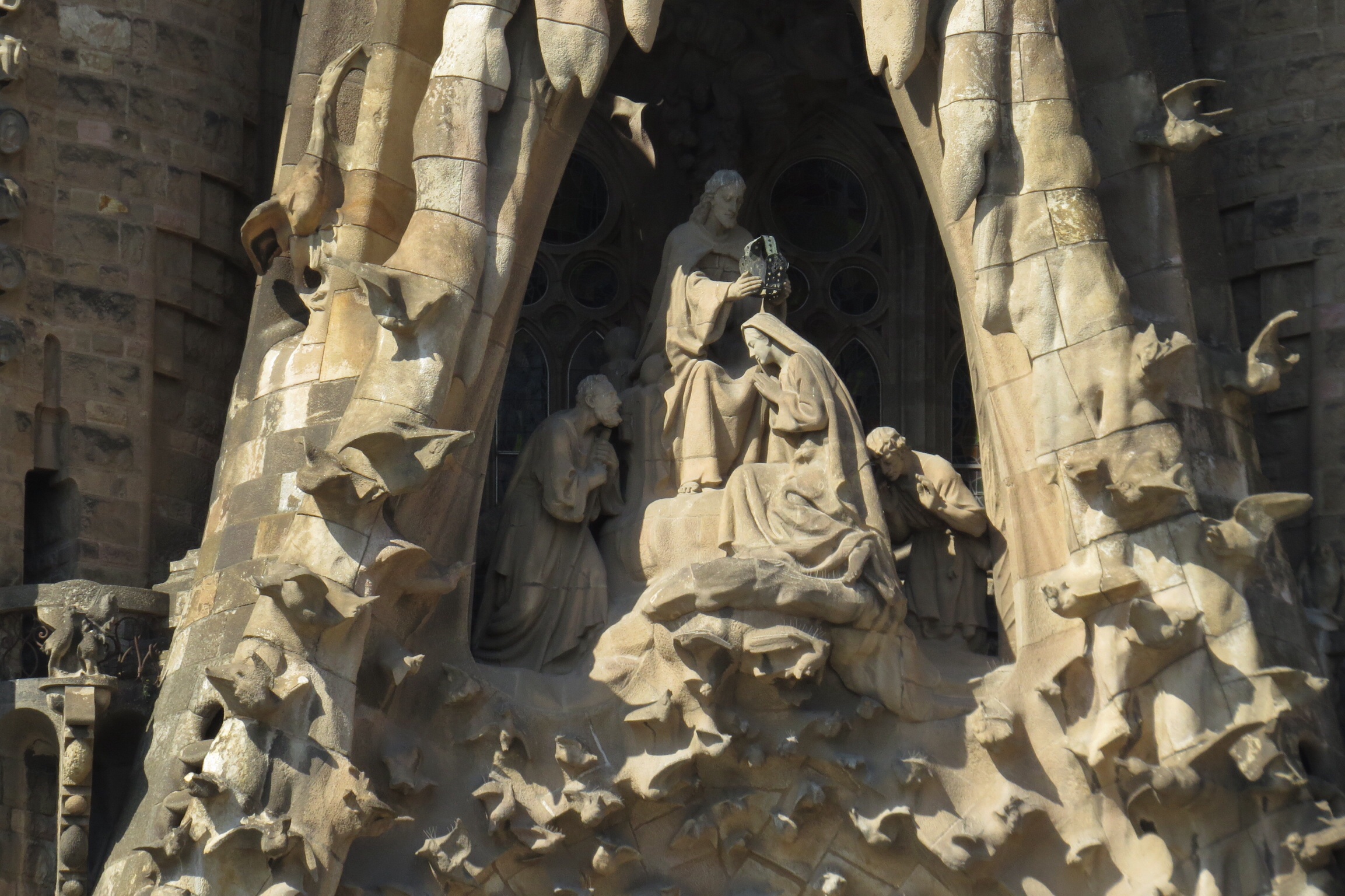
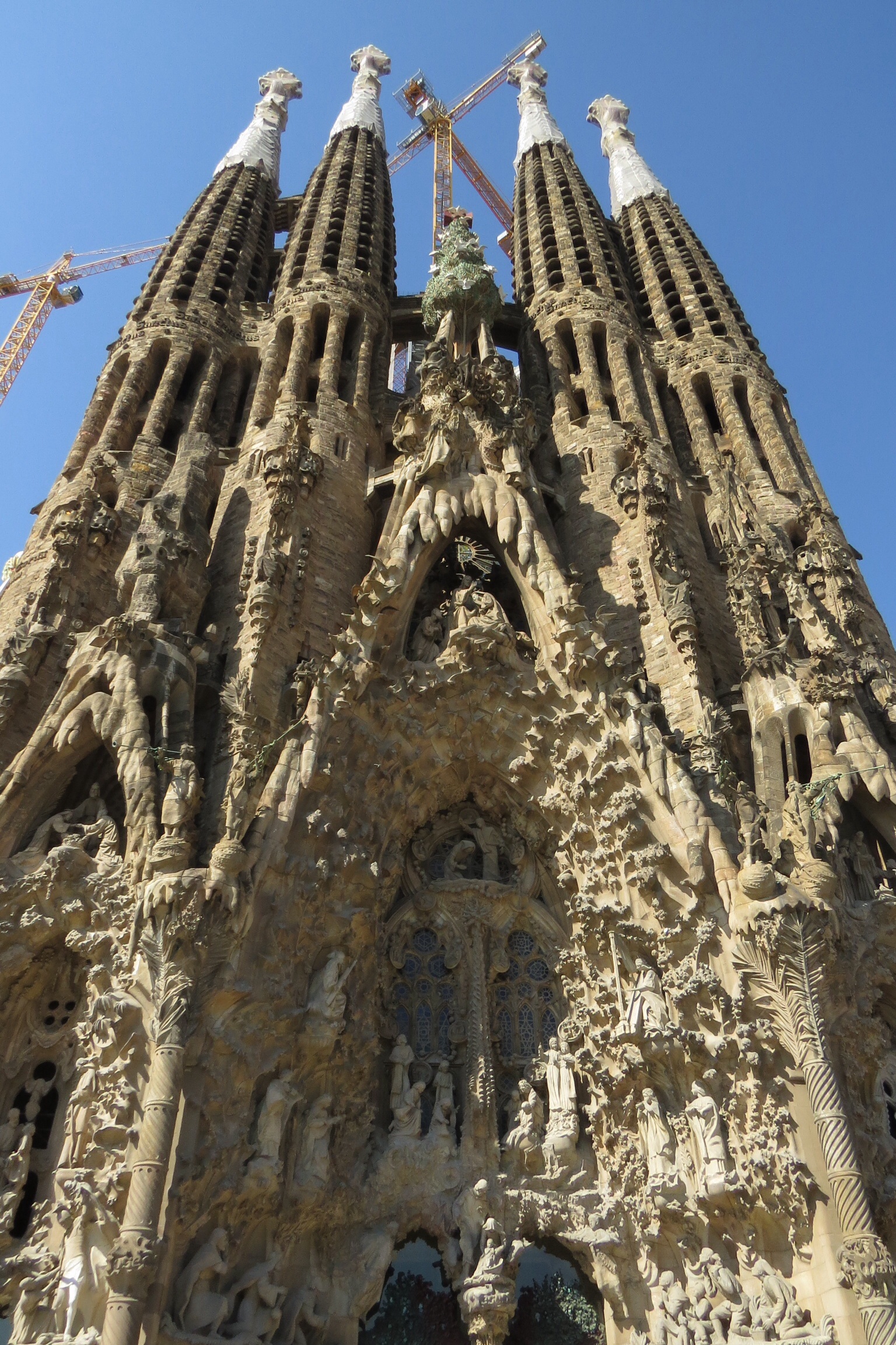
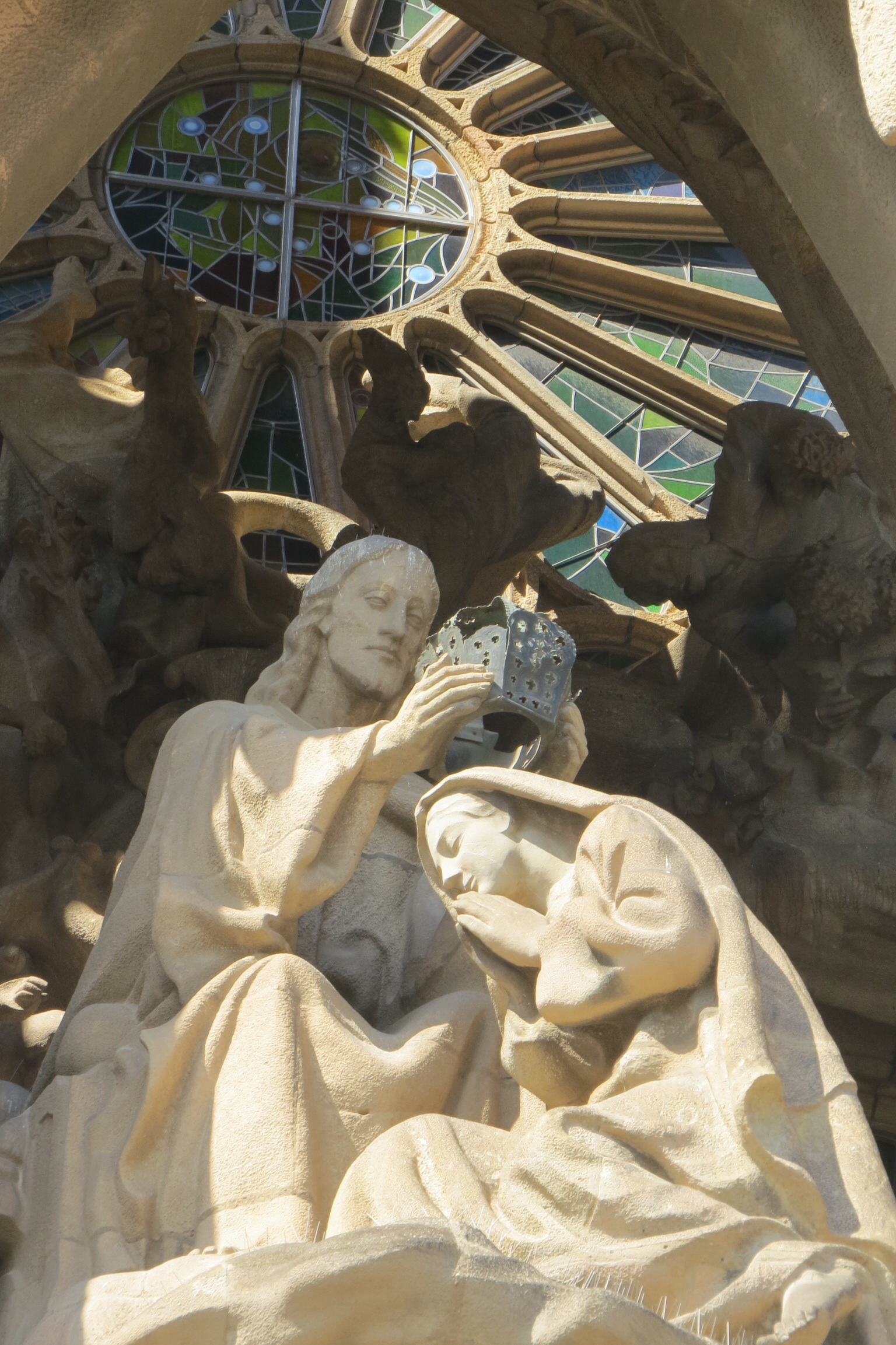
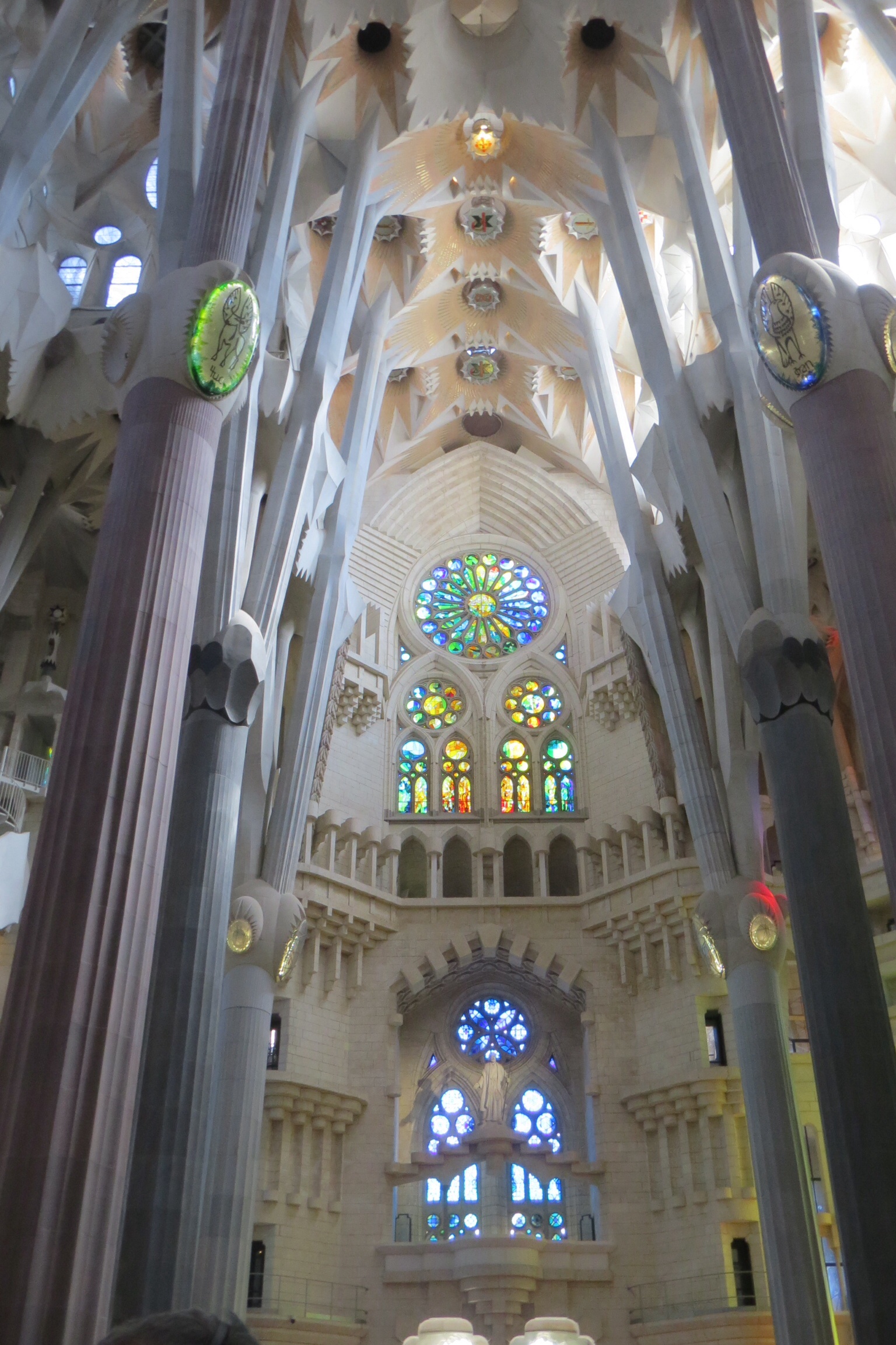
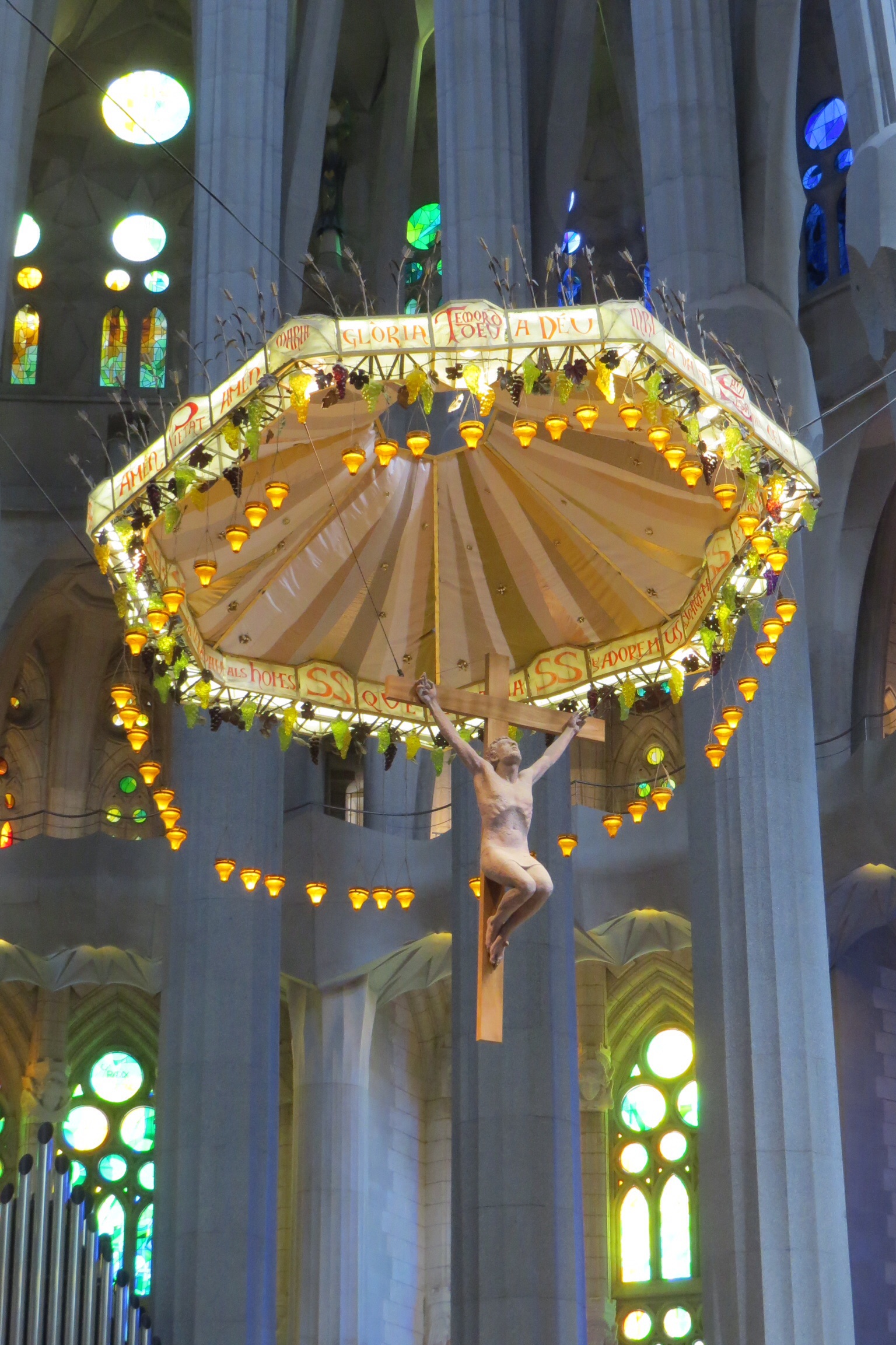
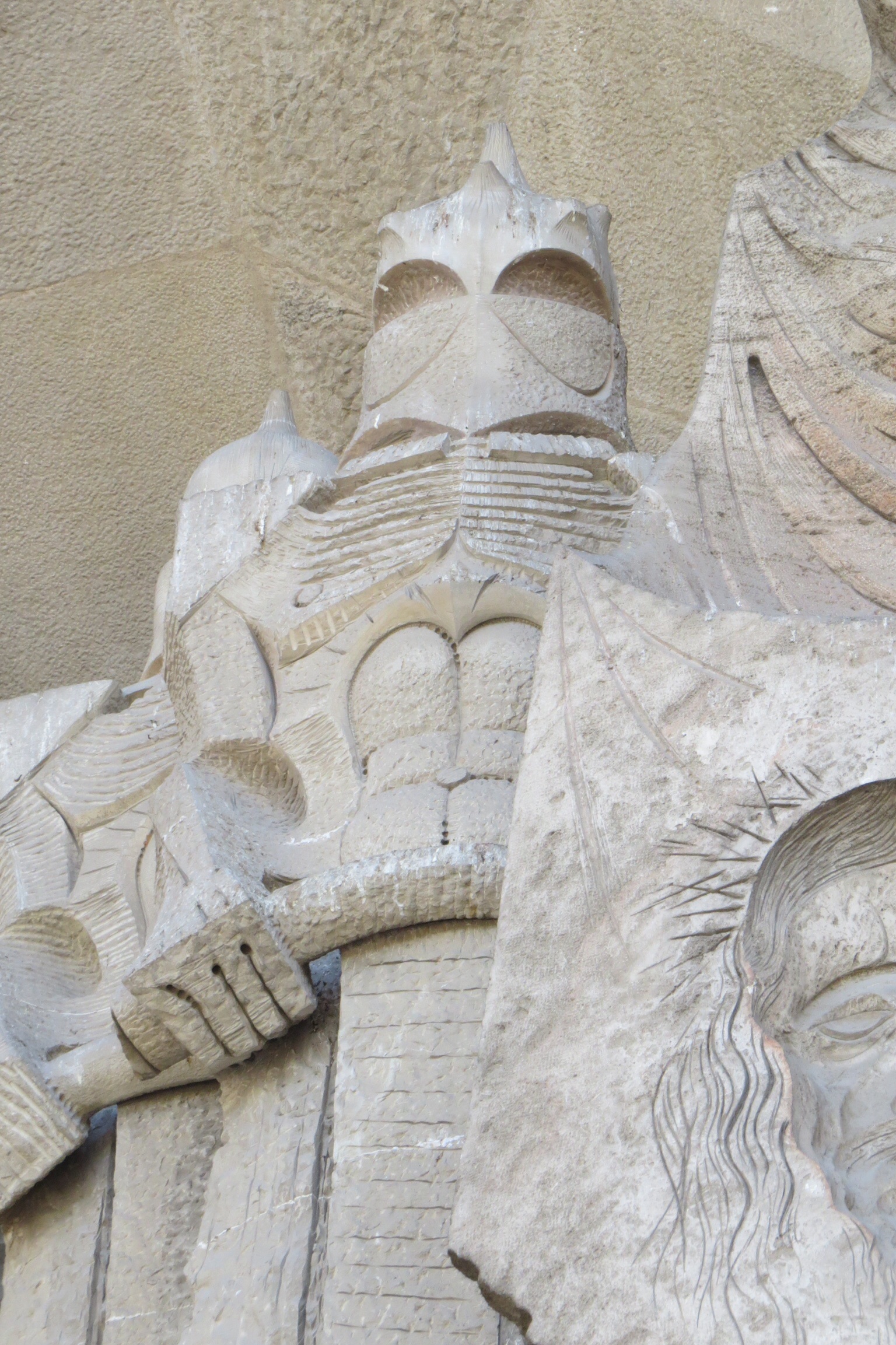
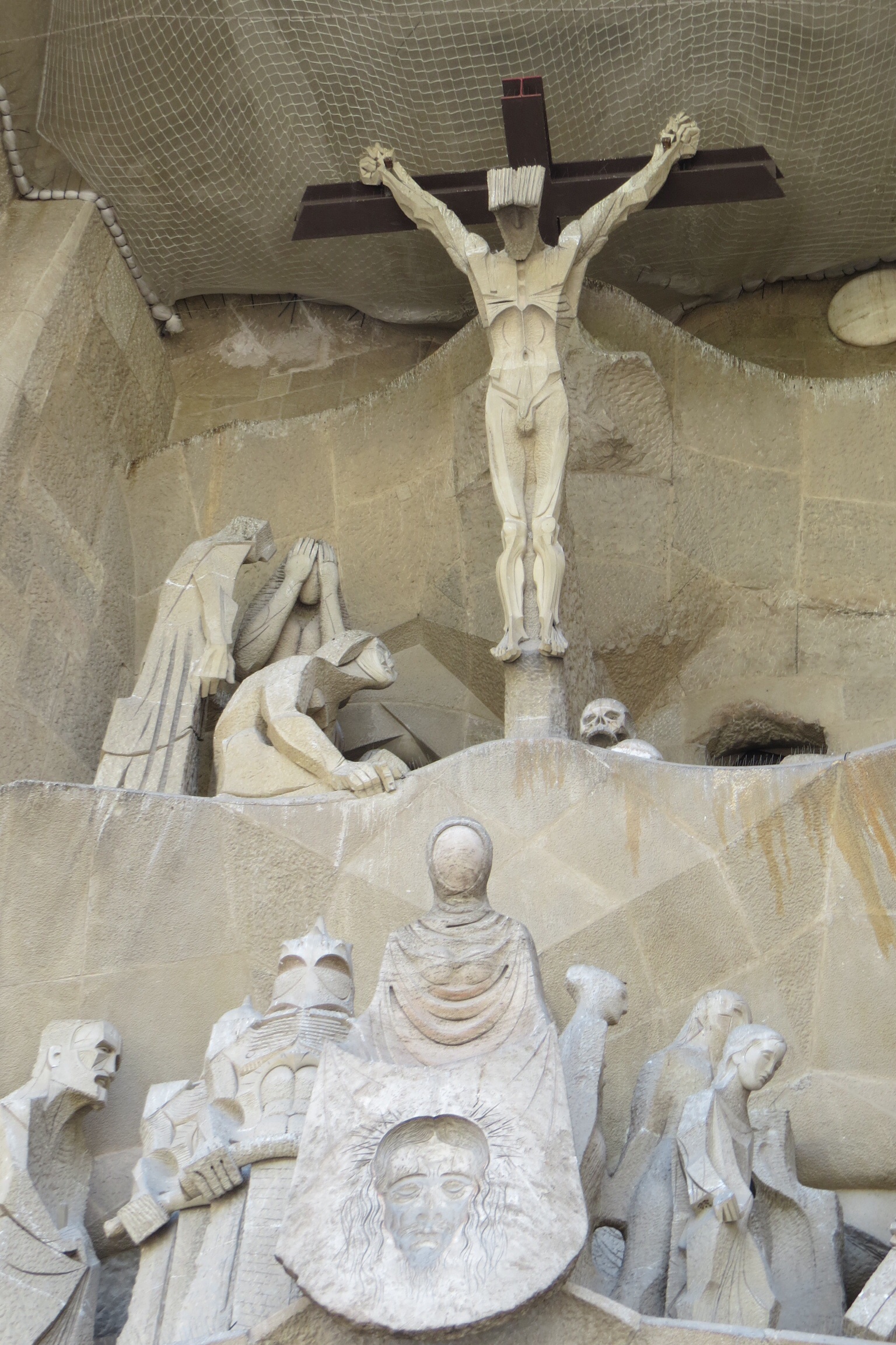
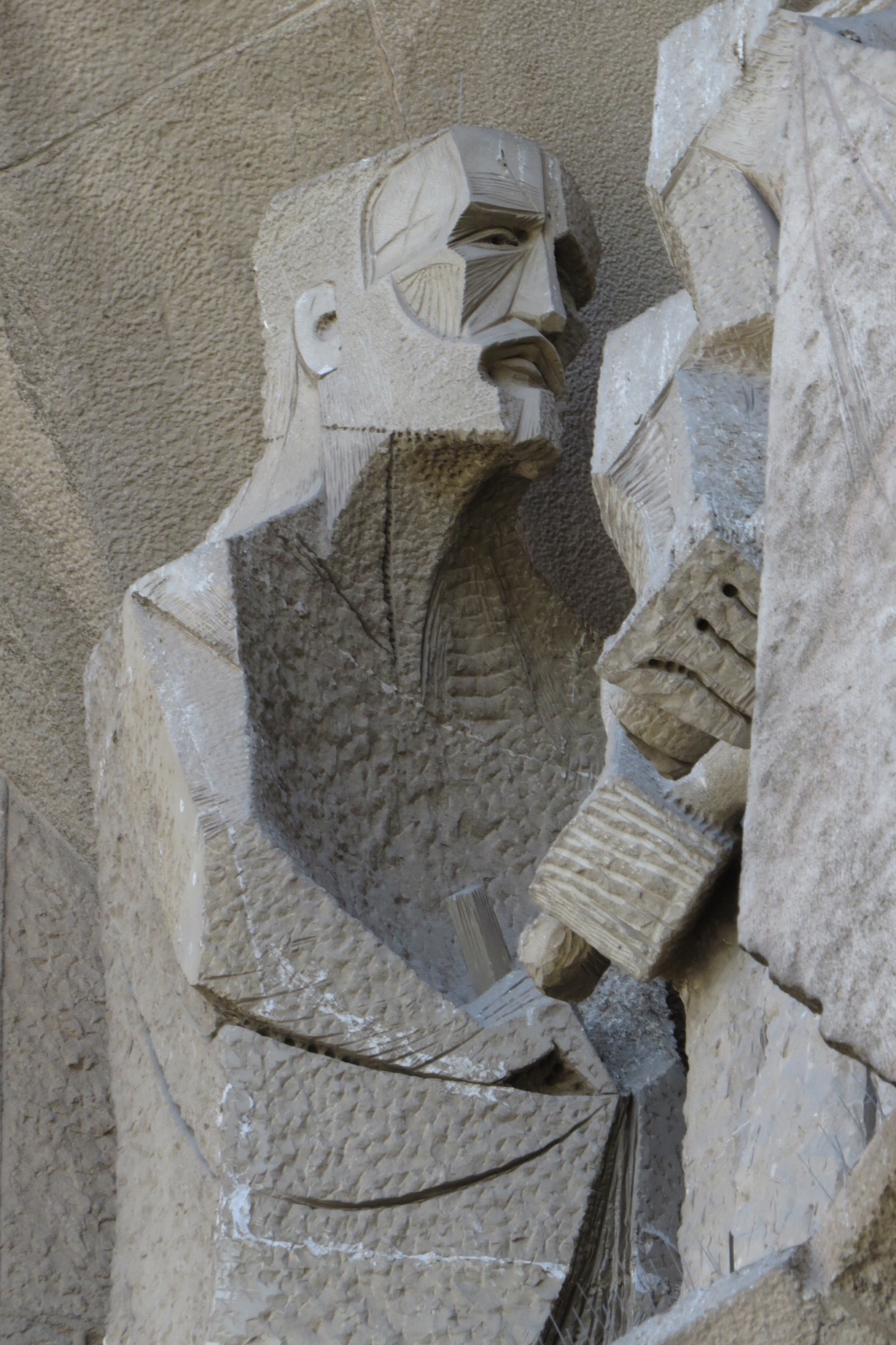
The Sagrada Familia (Sacred Family), an architectural jewel, was his challenge, his love, and ultimately, his obsession. The glorious church is never out of view as you move around Barcelona and it becomes impossible to separate your mental image of Barcelona from the Sagrada Familia.

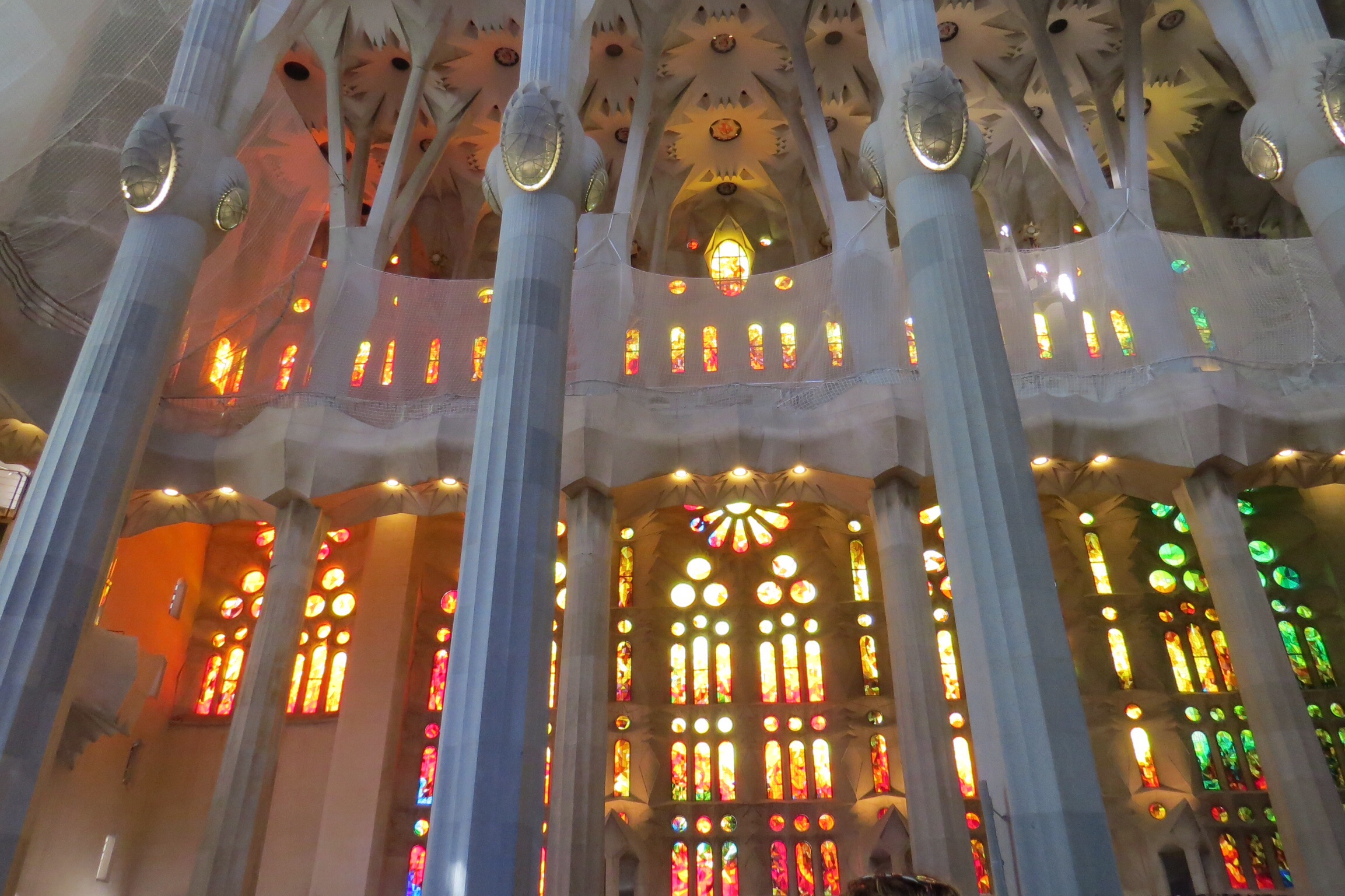
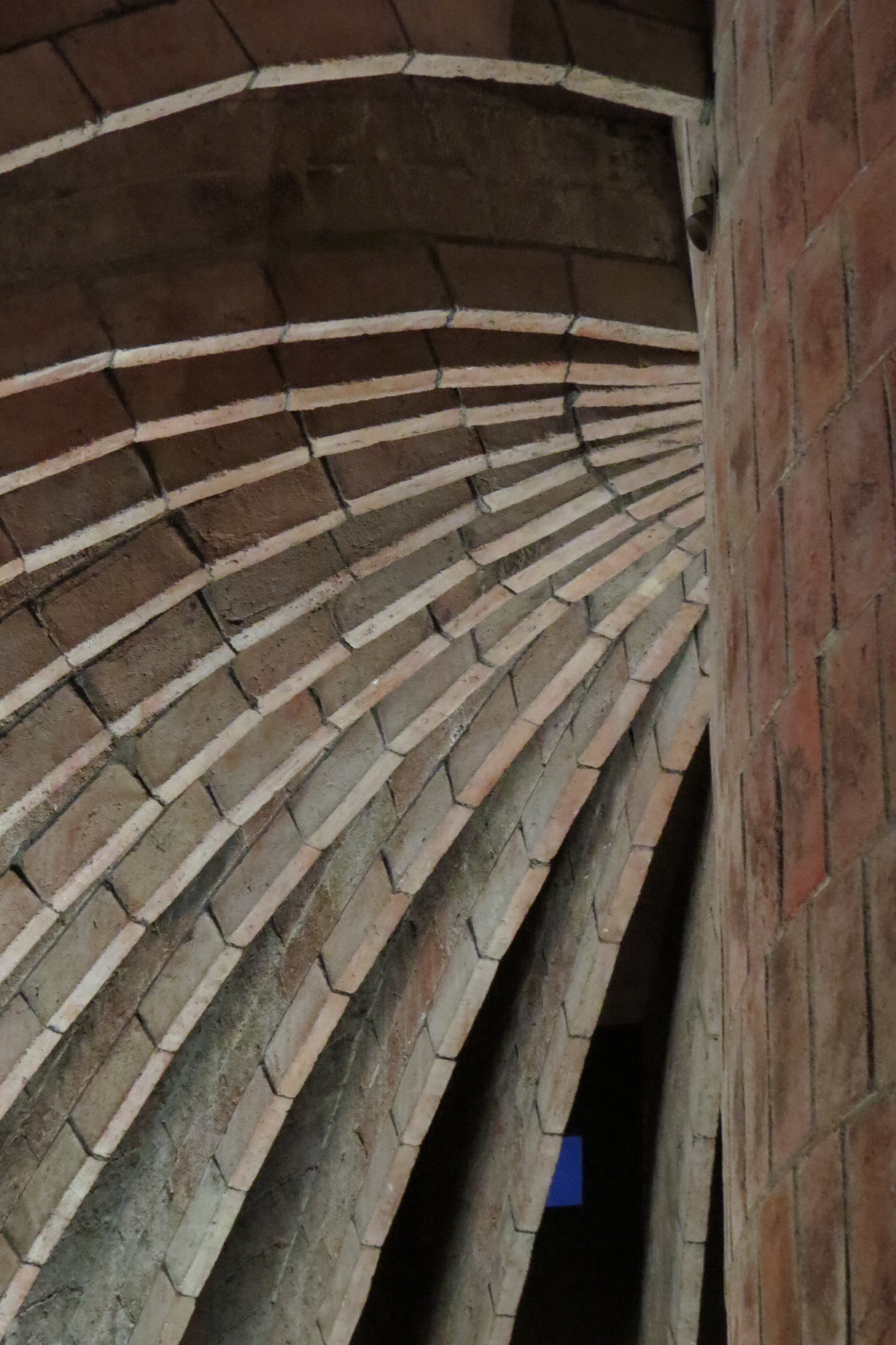
Gaudi’s architectural genius reveals itself in his design. He built a model using inverted arches to determine the weight and balance needed to support the roof allowing maximum, glorious light in the interior.

image image
Our guide explaining inverted arches

Begun in 1882, construction was ongoing when Gaudi died. It is still being completed today, with the roof finally being added in 2000, funded entirely by tourism. The goal for completion, when the church will have 12 spires rather than the four we see today, is the 100th anniversary of Gaudi’s death, in 2026.

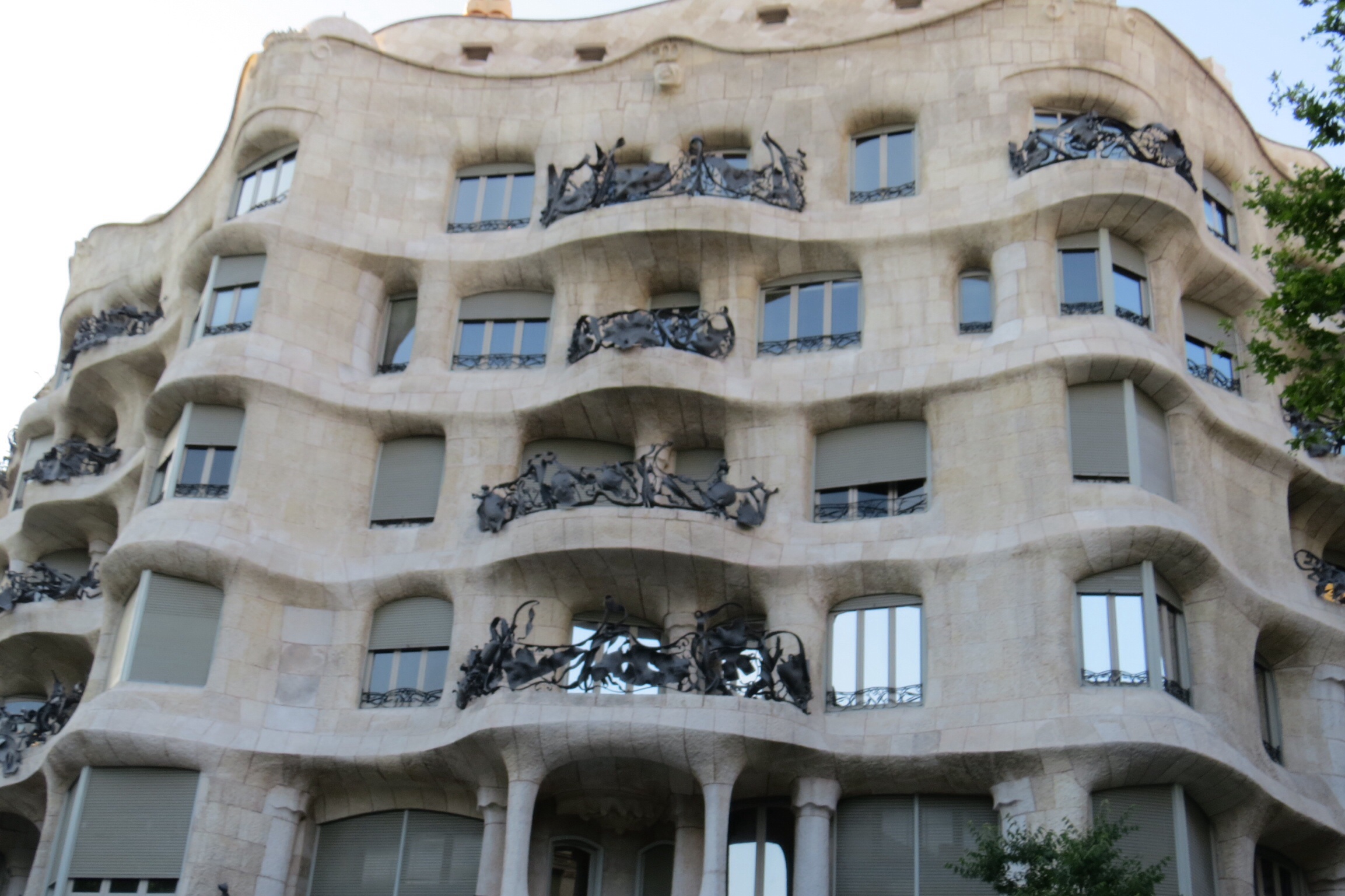
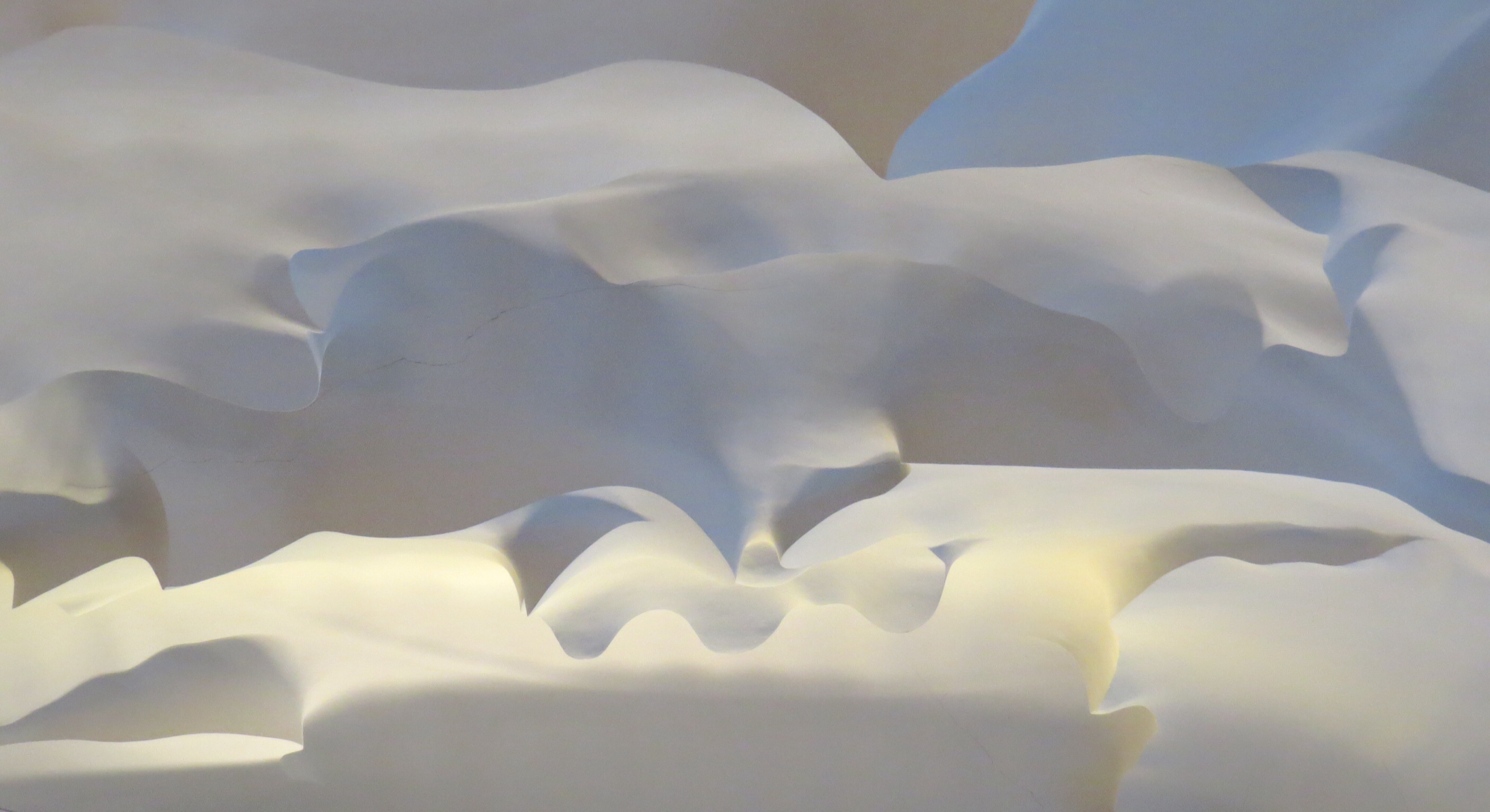
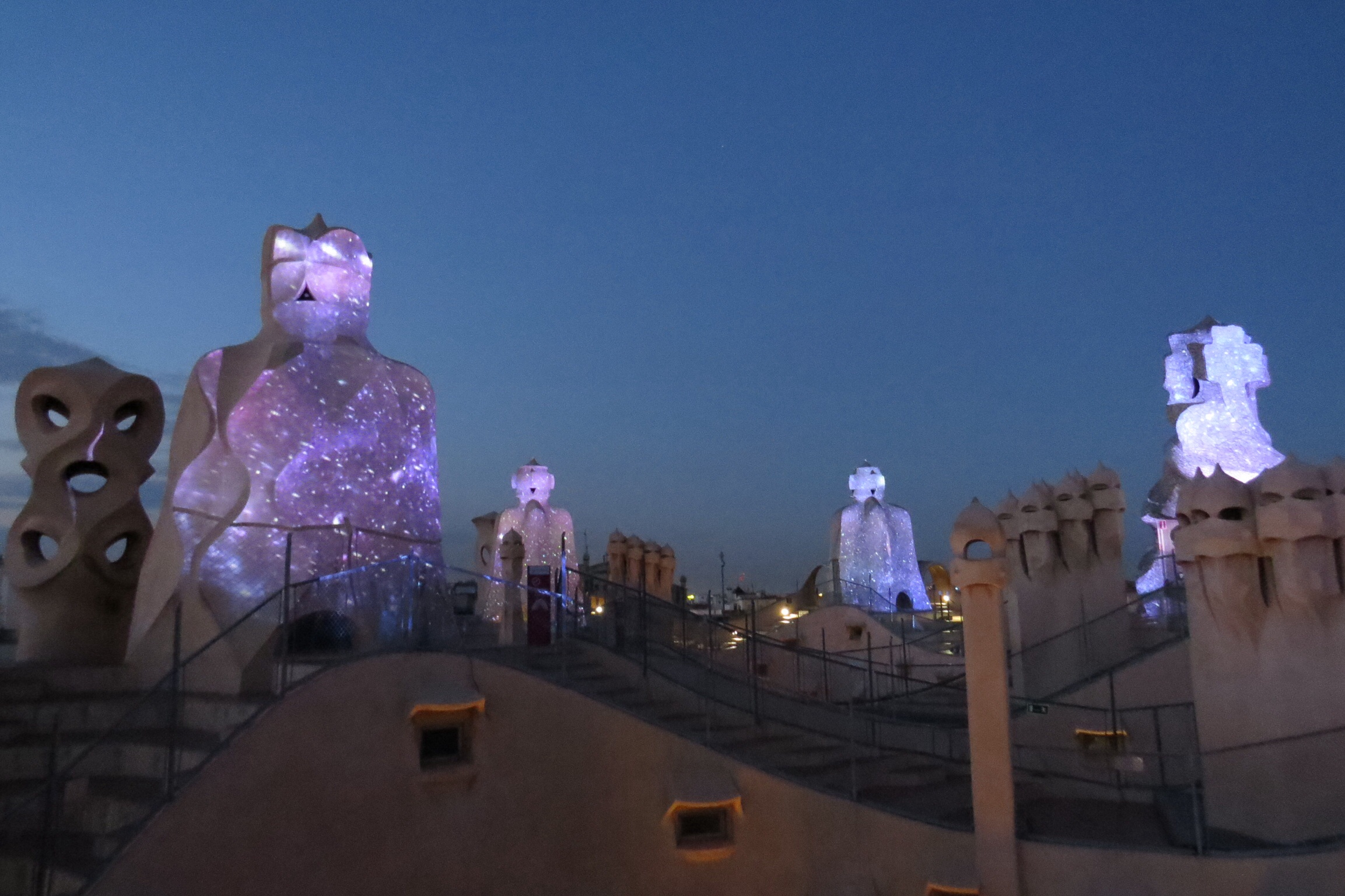
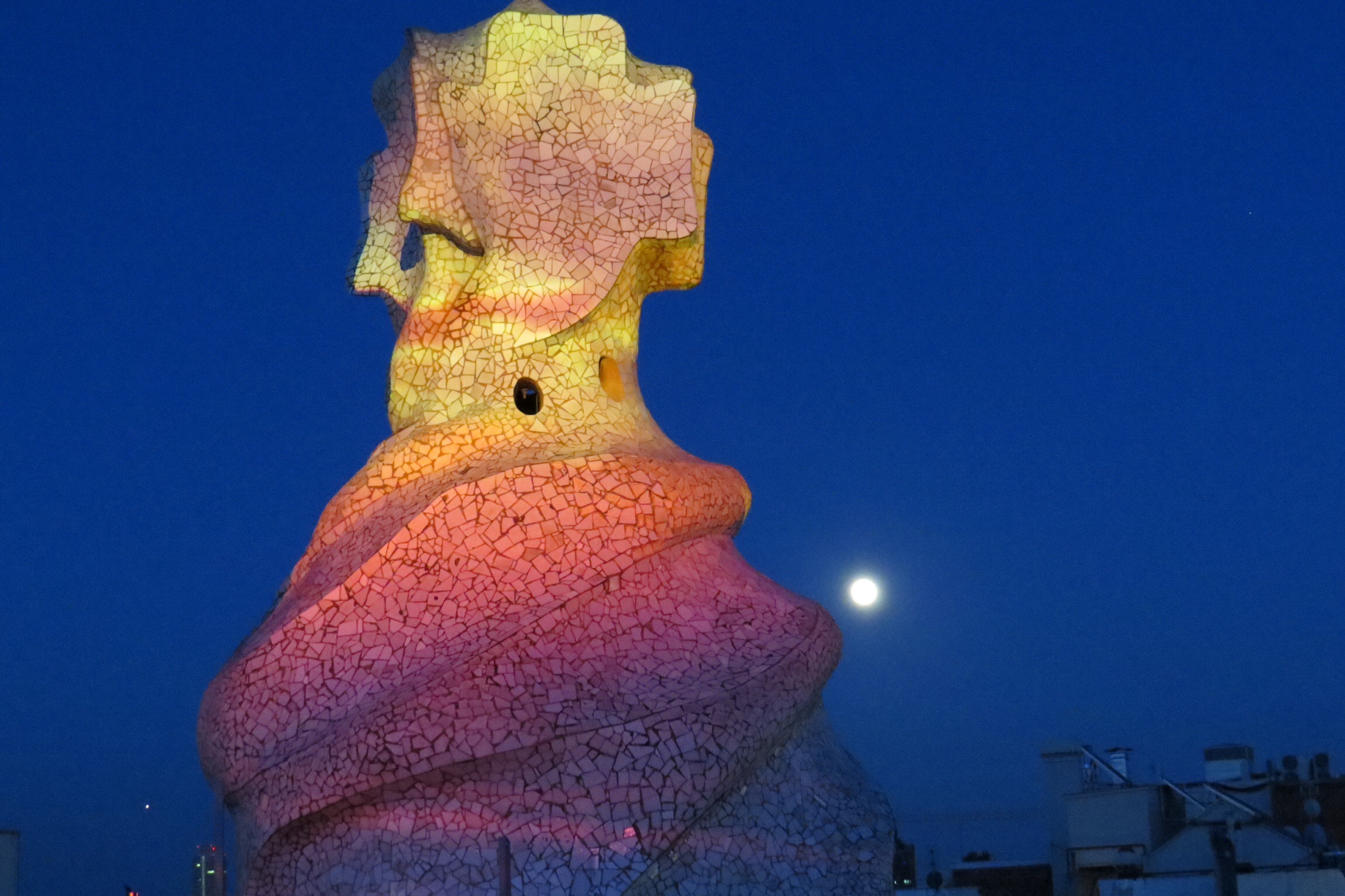
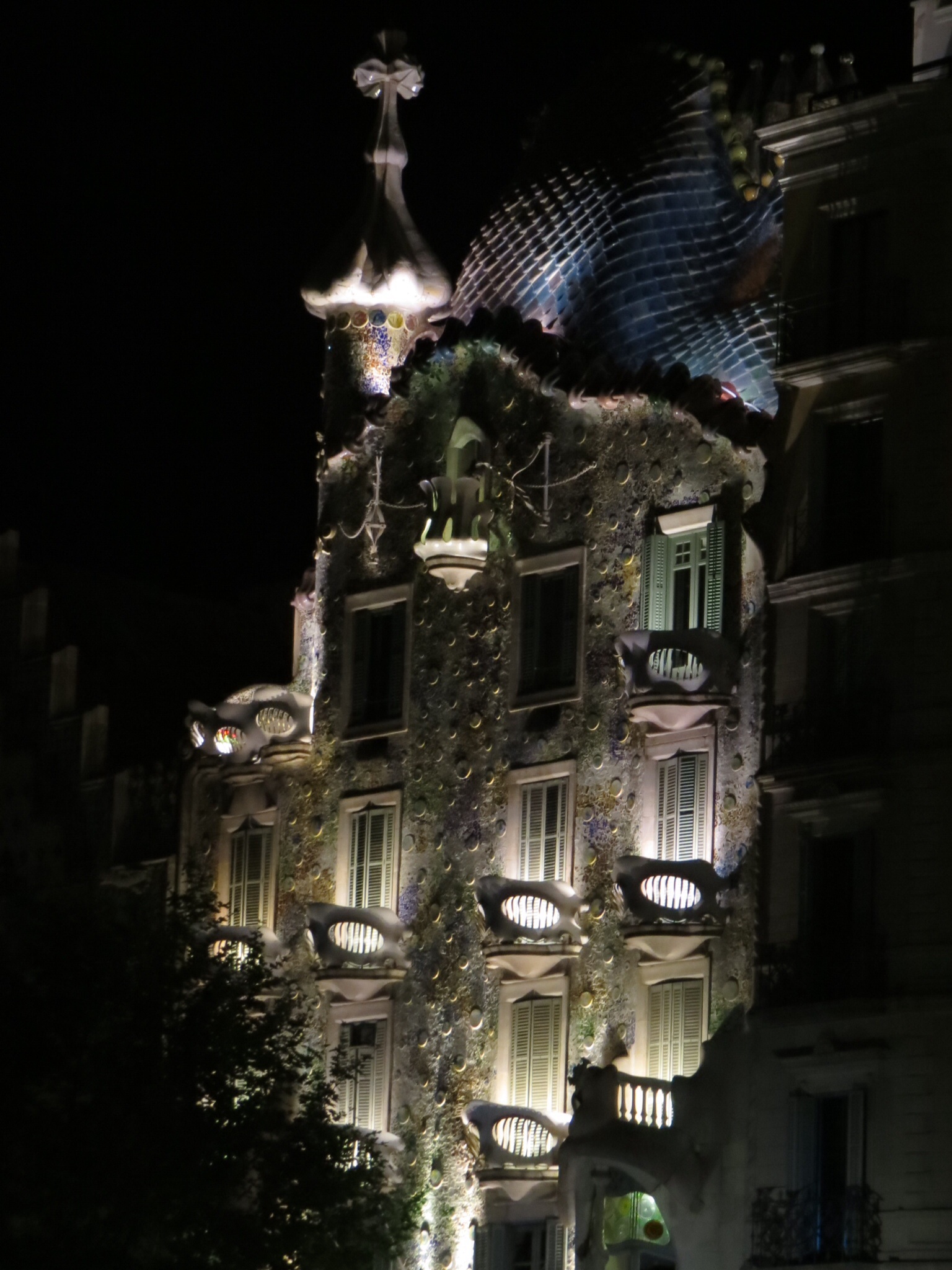
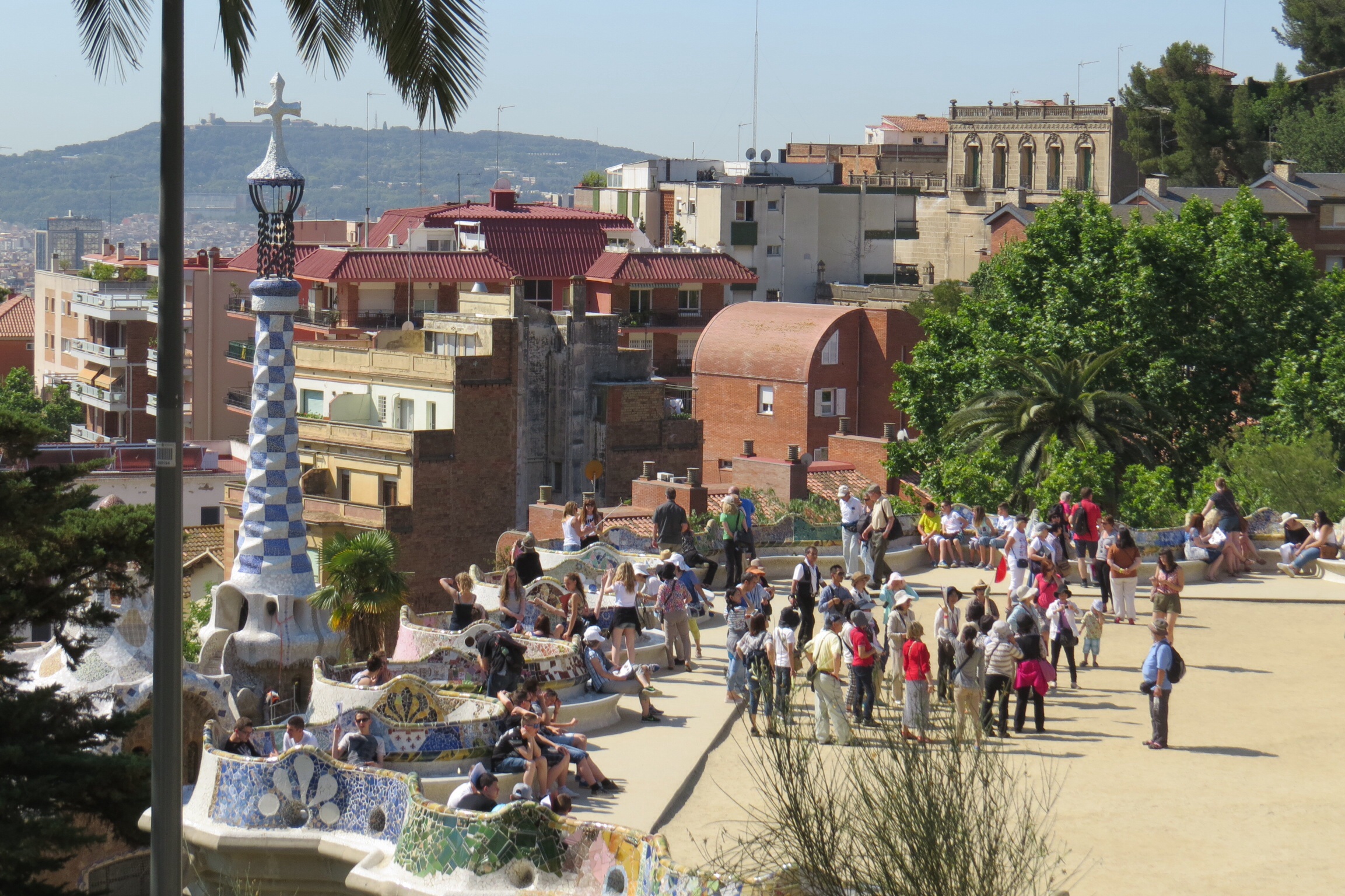
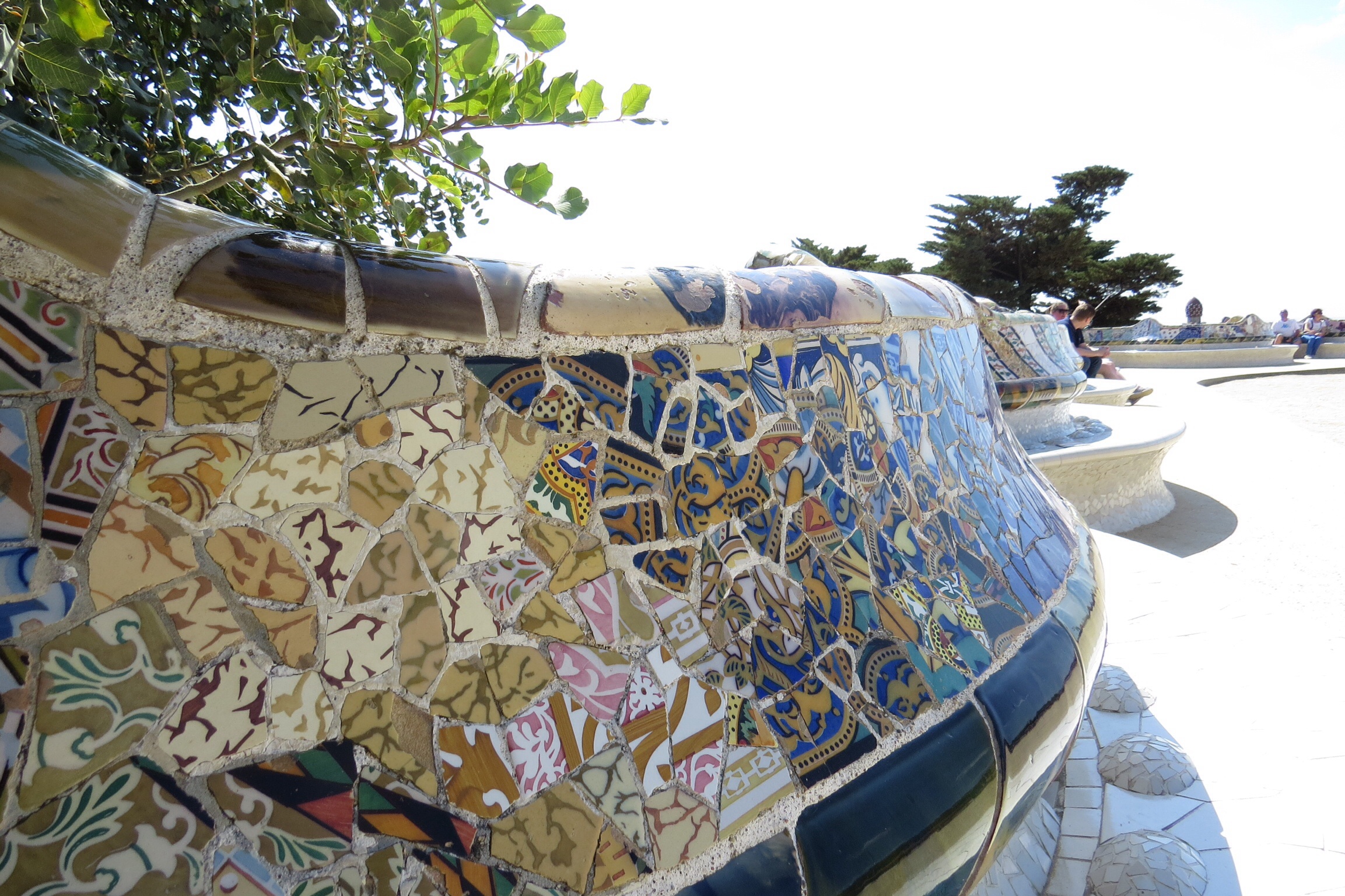
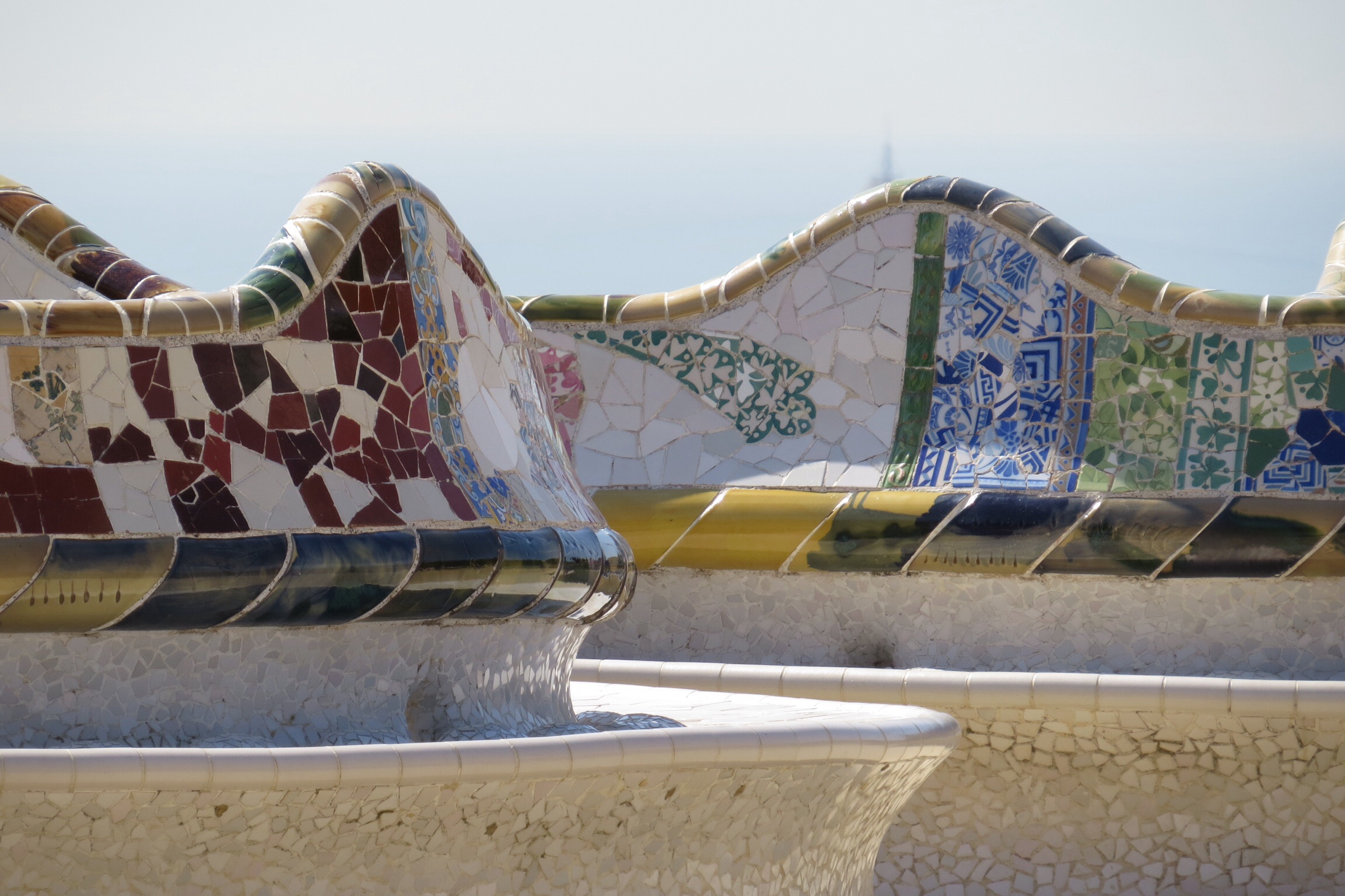
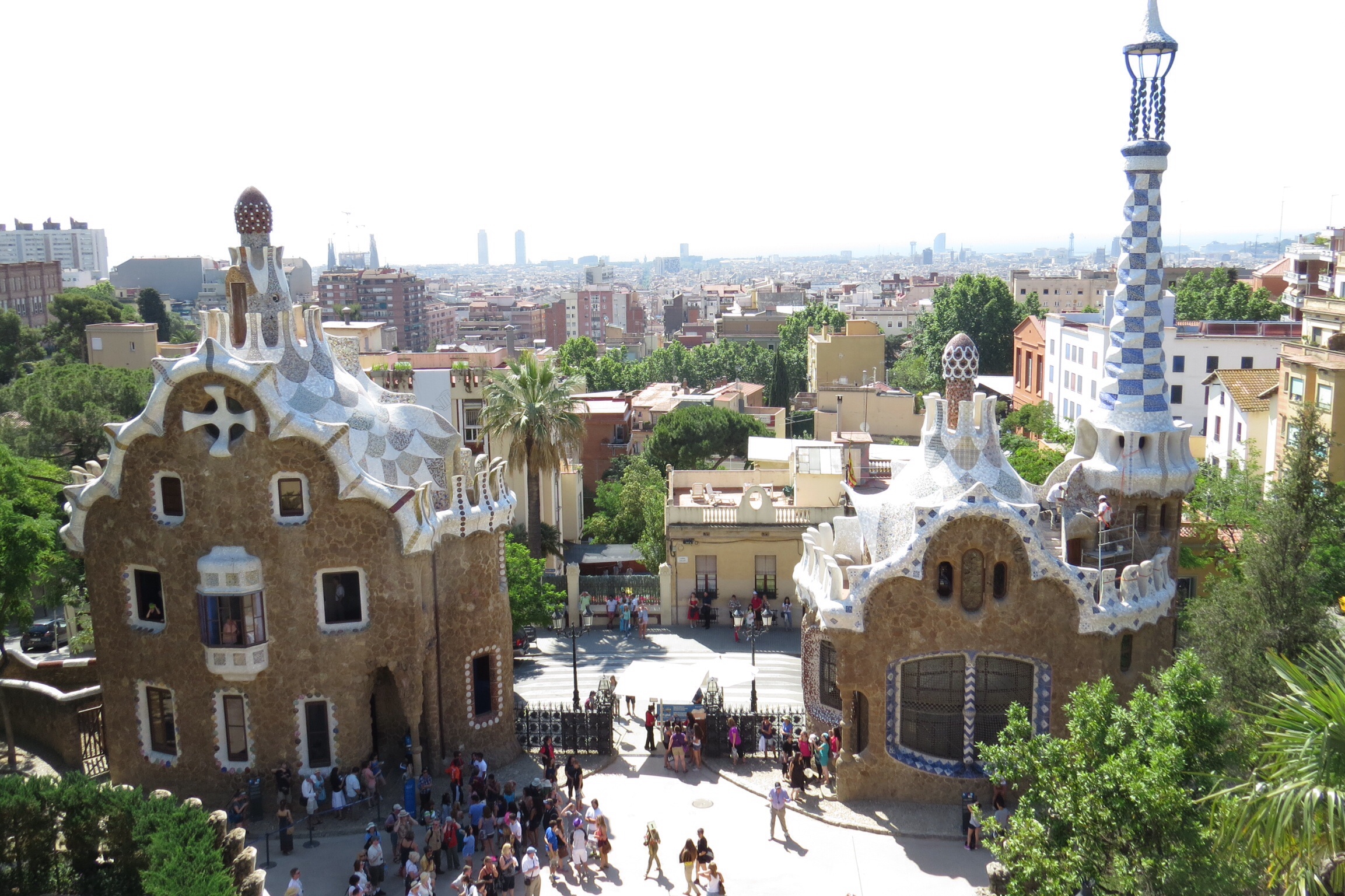
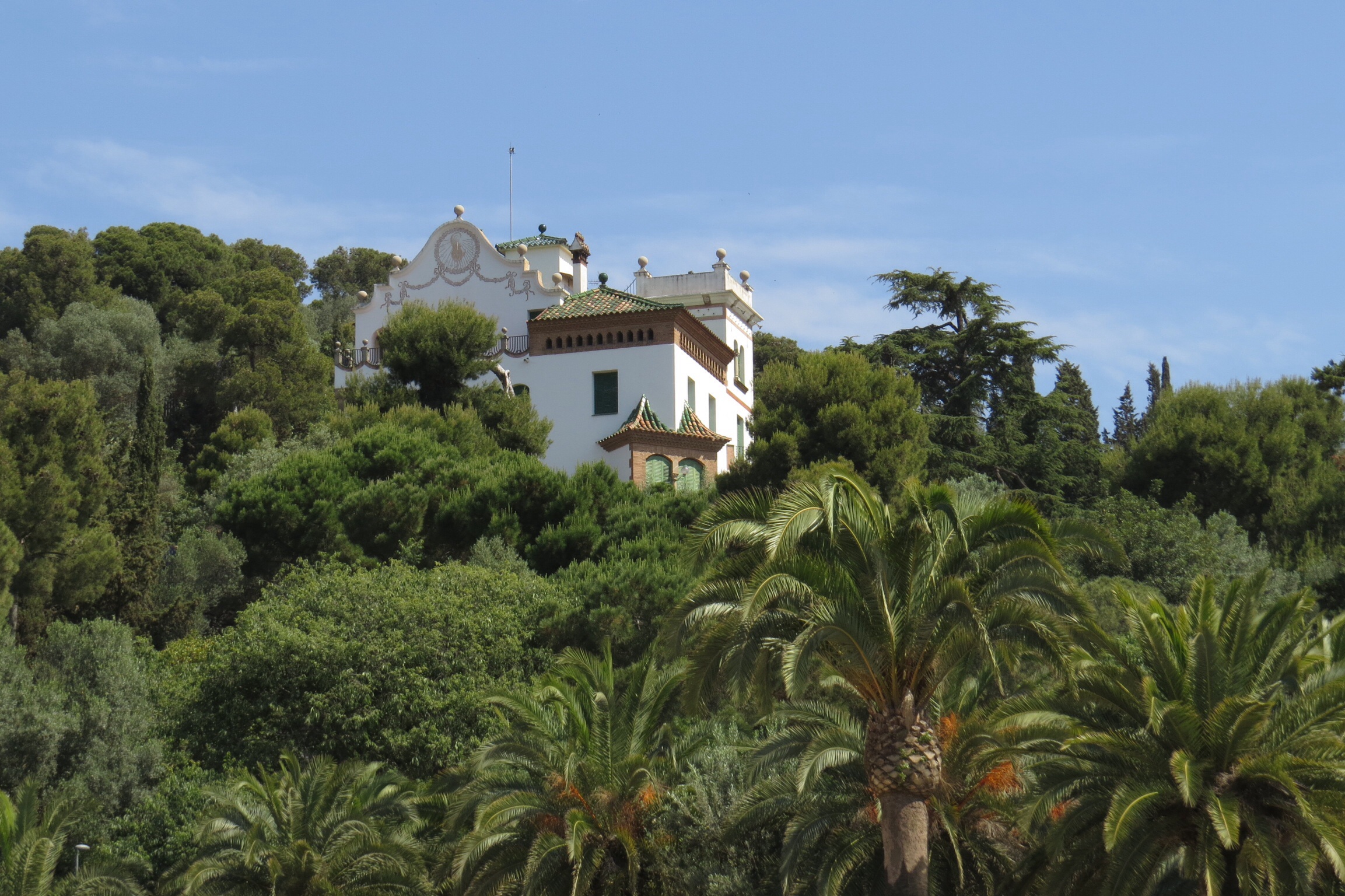
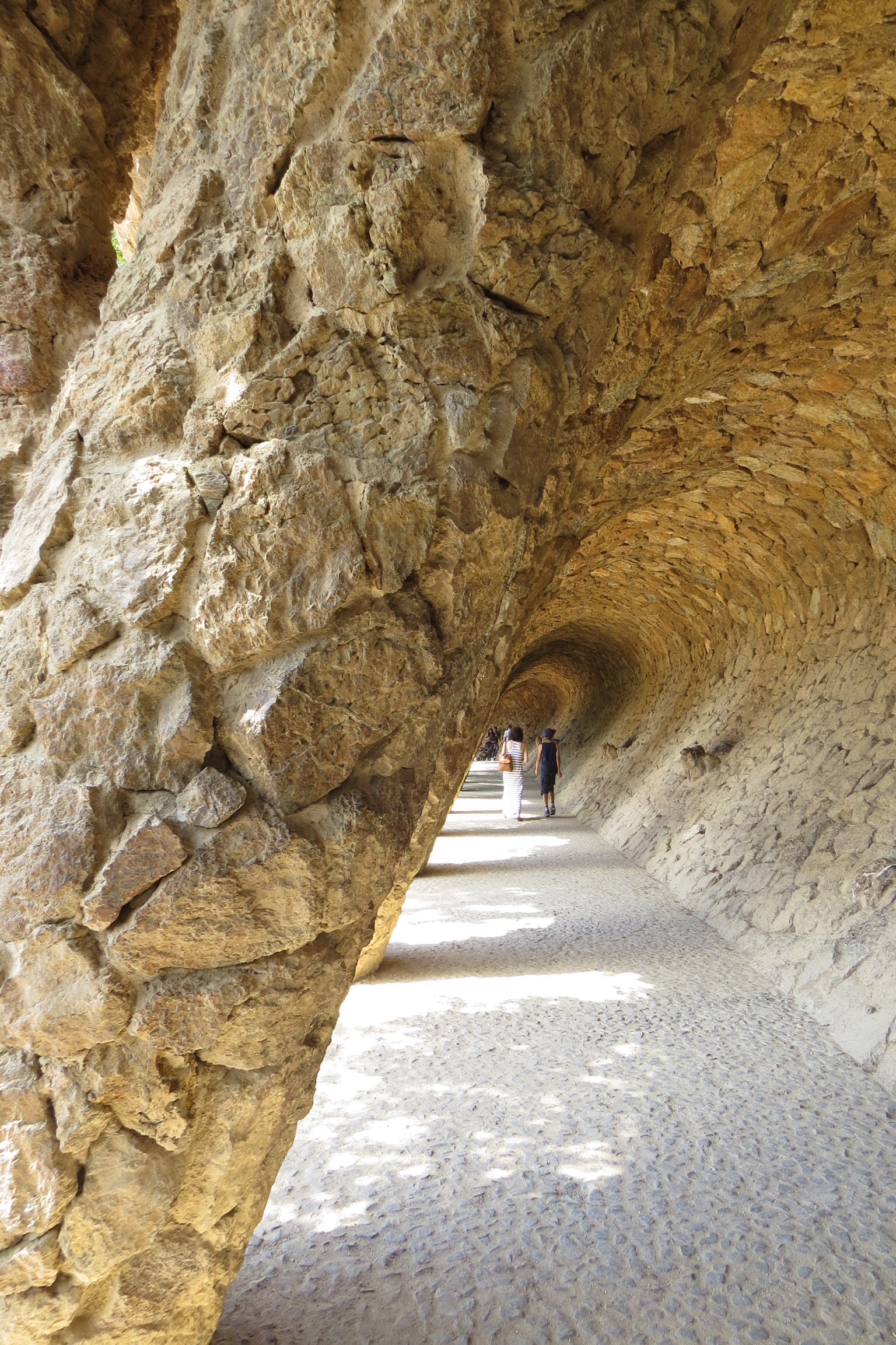
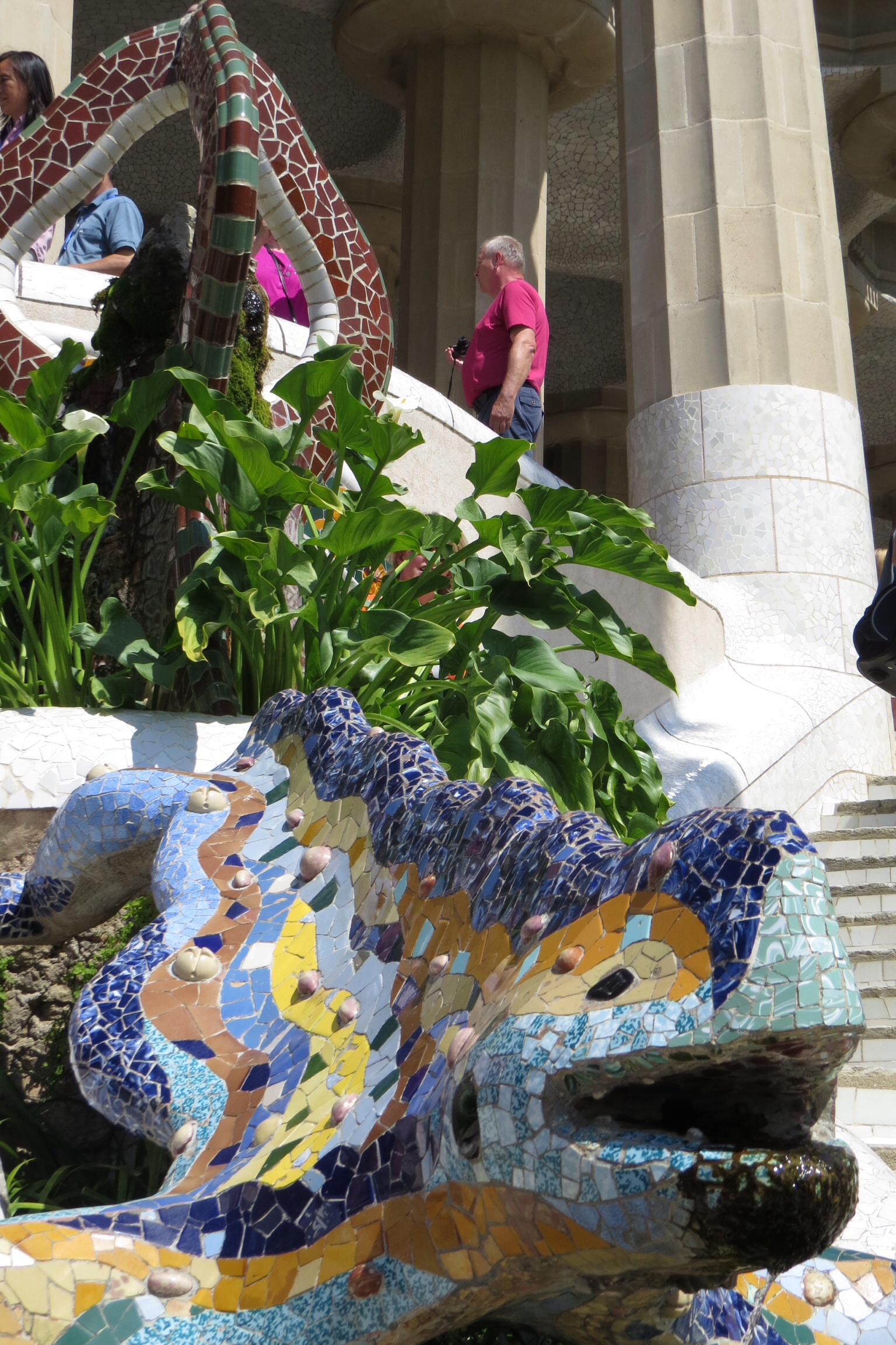
We were lucky enough to start our tour of Barcelona with the Sagrada Familia, and went on to see several other of Gaudi’s projects throughout the city including an apartment building, a park and a “gated community.” See if you agree with me that his buildings melt, drip, slither, crawl and glow.

Sagrada Familia

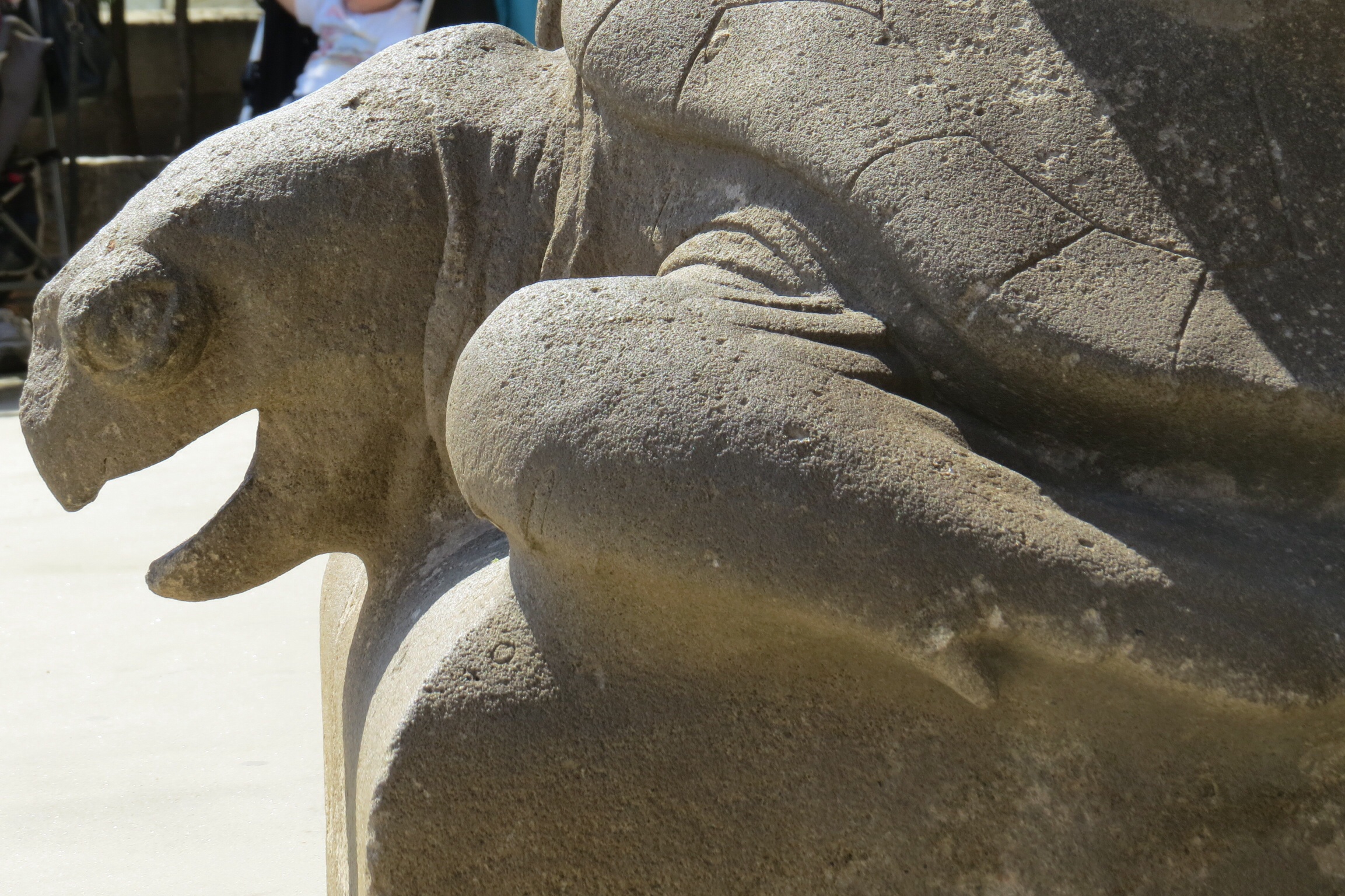
image imageimageimage image image image

image image image  image

image image imageimage

Darth Vadar inspiration

image

Gaudi

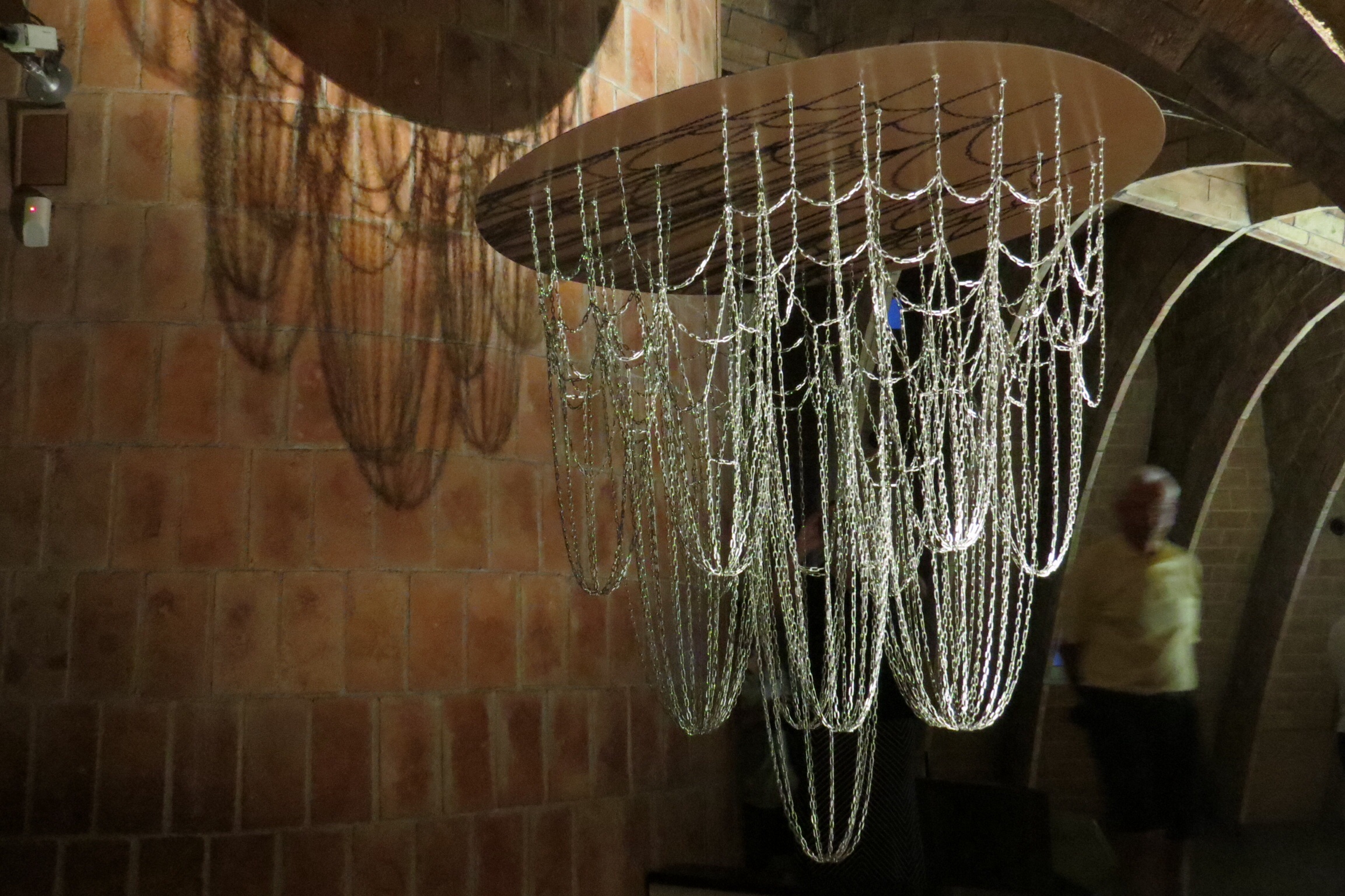
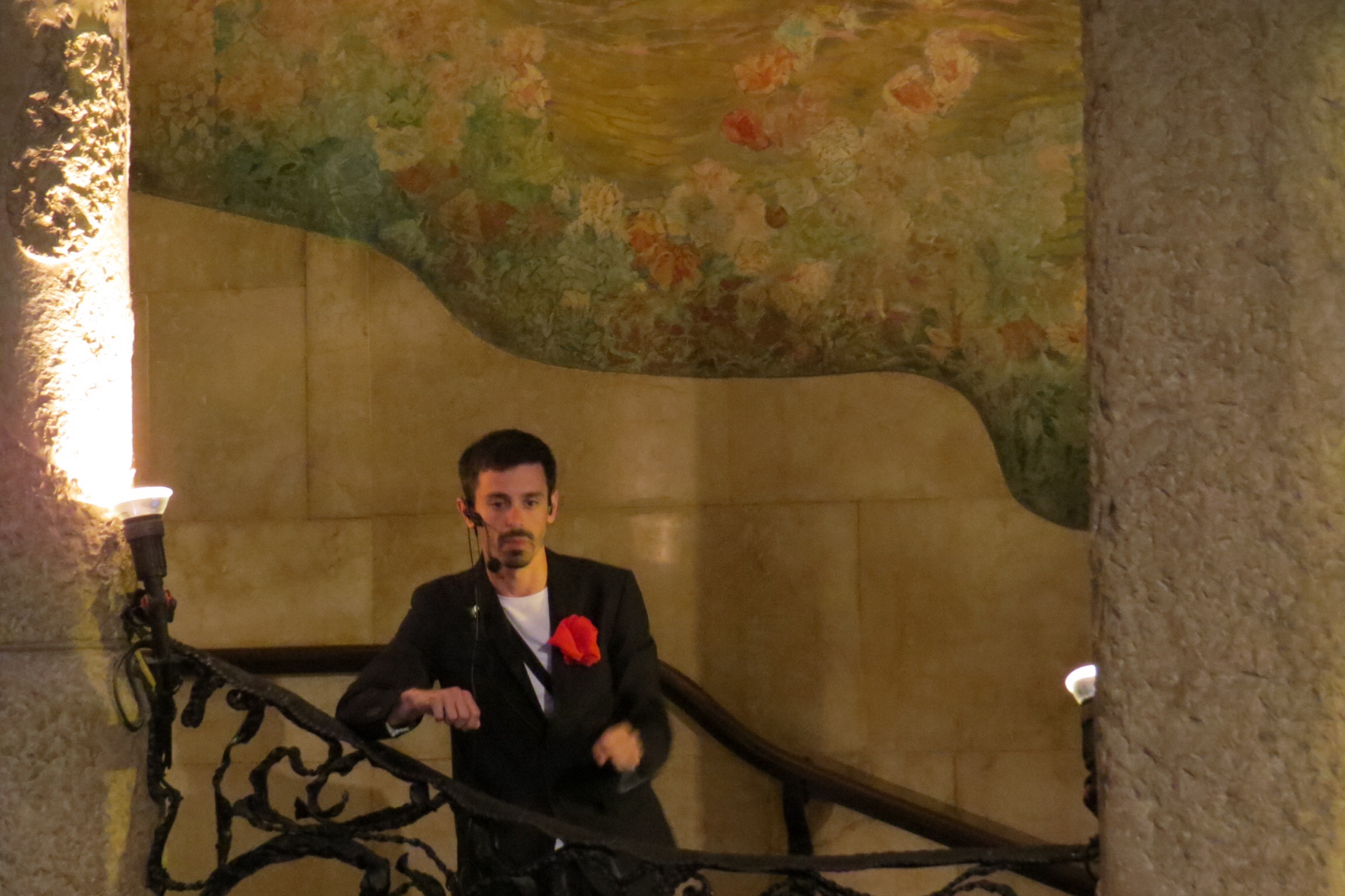
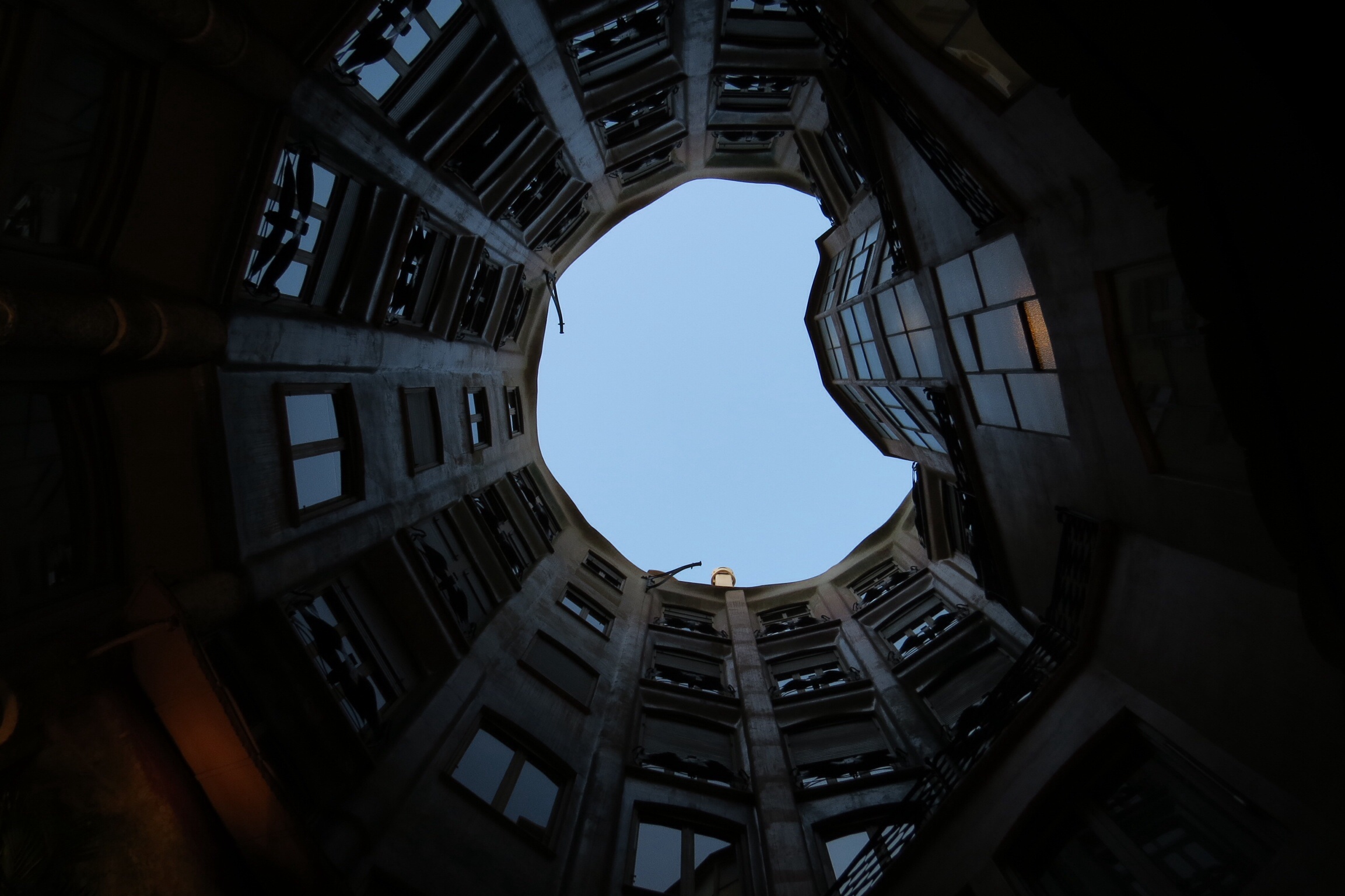
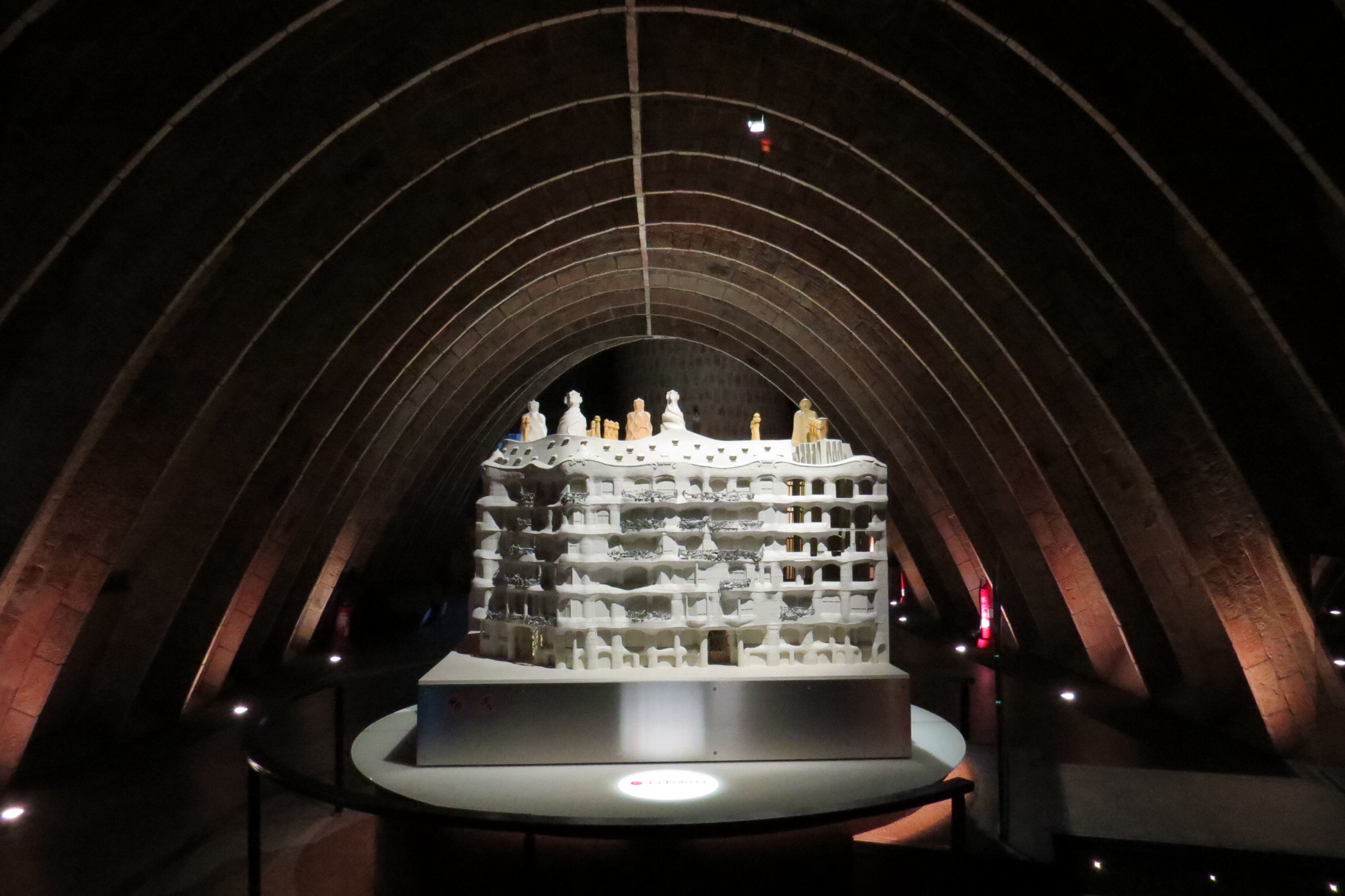
Casa Mila (nicknamed “La Pedrara” – the gravel quarry):

image image  image image image image image image image image

Casa Batlio:

image


Parc Guell (the Serpent Bench):

image image image image image image image

On June 11, 1926, Gaudi, obsessed with his beloved Sagrada Familia, barely eating or sleeping and working every day, failed to appear at work. As concern grew, it soon was discovered that this artistic giant was the tiny, gaunt figure struck by a tram the day before. A tragic end to a man whose vision is being fulfilled. The church has been designated a UNESCO World heritage site and in November, 2010, the Sagrada Familia was consecrated as a basilica by Pope Benedict XVI (with over 50,000 people present).  In  2003, the Roman Catholic Church began the beatification process for Gaudi’s sainthood.

Jan
Catalonia

The Spanish people have suffered invasions since Roman times and most recently, still bear the scars of the Spanish Civil War, the Second World War and the Franco years in close succession. But what has hurt them has made them stronger, and various regions of the country are fiercely independent. Just a few days before we arrived in Barcelona, the electorate ousted a long-time conservative party and replaced it with a left-leaning government. There is an air of hopeful expectation in the country that the new leaders will allow more freedom for the regions to retain their cultural identity and pull the country together as a cultural quilt instead of as a threadbare, tenuous community.

The Catalan people are among the strongest, most independent and proud regions of the country. Barcelona is the headquarters of Catalonia and the brilliant flags for an independent Catalan nation hung outside many homes. Catalonia was an independent nation until 1492 when the Ferdinand and Isabella married and united Spain. In 1638, when Spain was ruled by the Hapsburgs and Catalans were harshly treated by Madrid,Catalonia revolted and fought for independence with the backing of France until they were defeated in 1652.

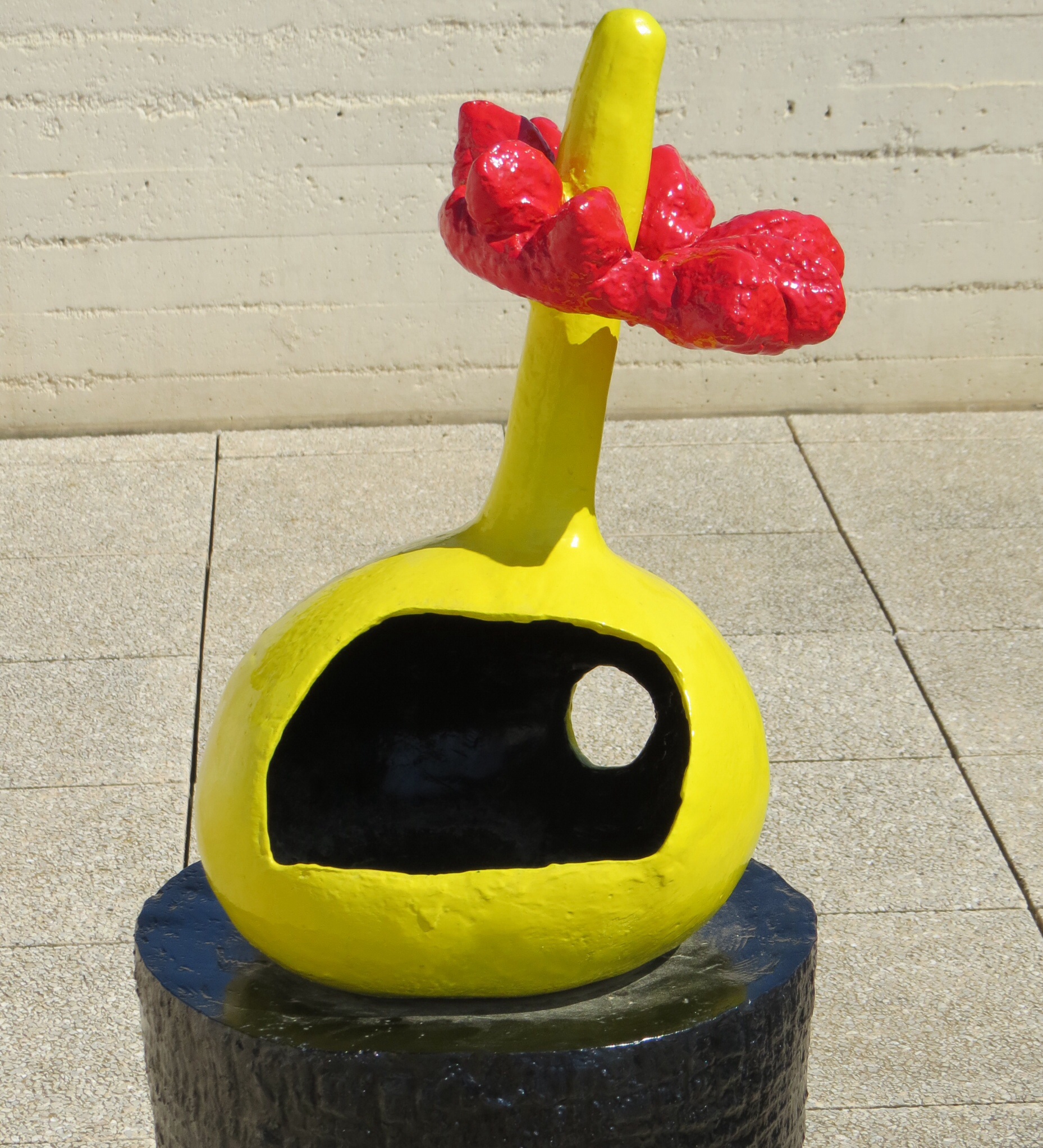
The Catalans have their own language, myths, music and cuisine. Among its greatest artists are Picasso, Dali and Miro. Miro may be a difficult artist to understand, and some of his own comments about his work may or may not assist:

“I try to apply colors like words that shape poems, like notes that shape music.”

“What I am looking for… is an immobile movement, something which would be the equivalent of what is called the eloquence of silence, or what St. John of the Cross, I think it was, described with the term ‘mute music’. ”

image image

image
Miro mosaic on Las Ramblas

The great architect Gaudi created the Modernisme movement and his buildings define Barcelona (more on him subsequently).

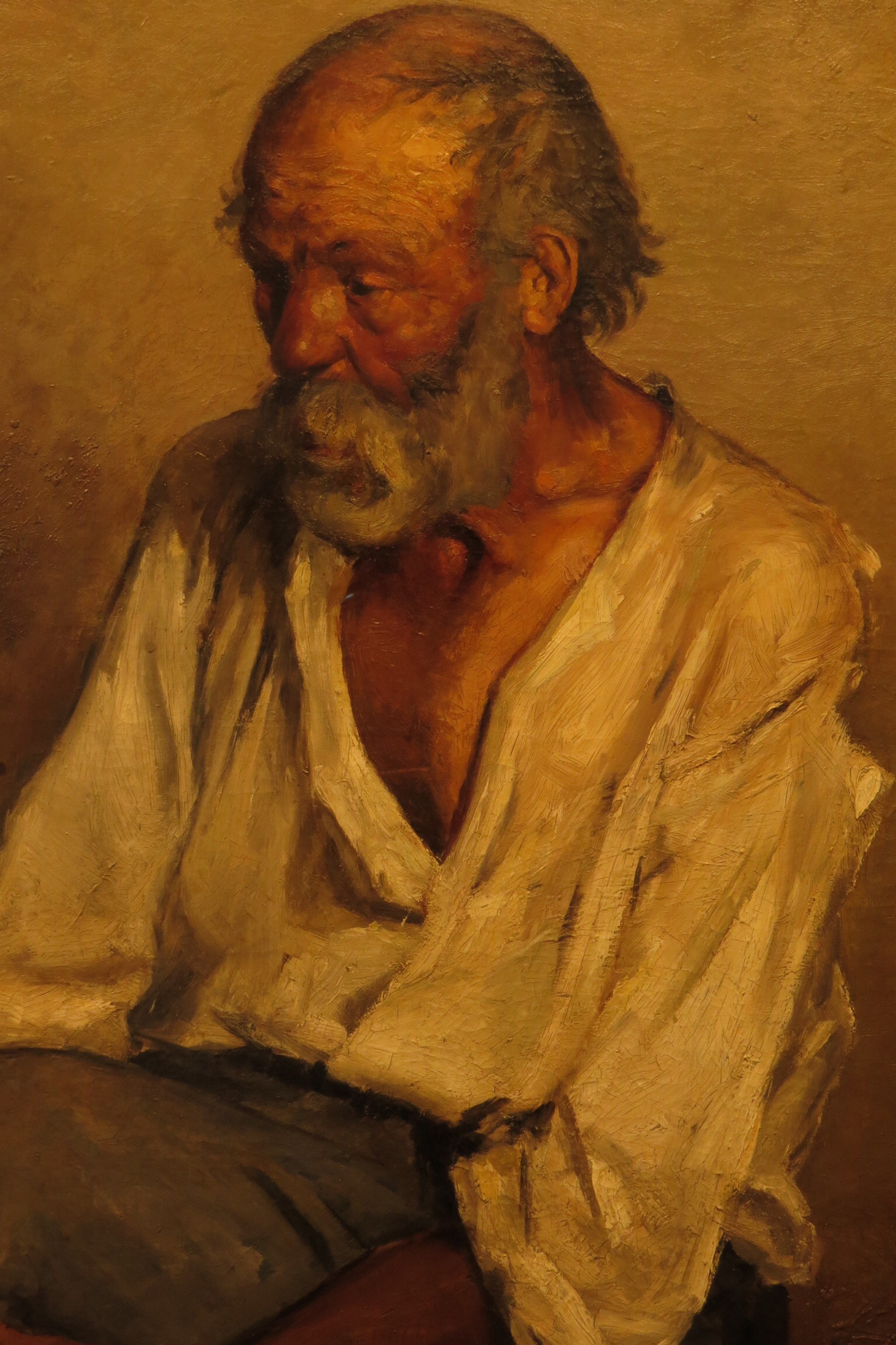
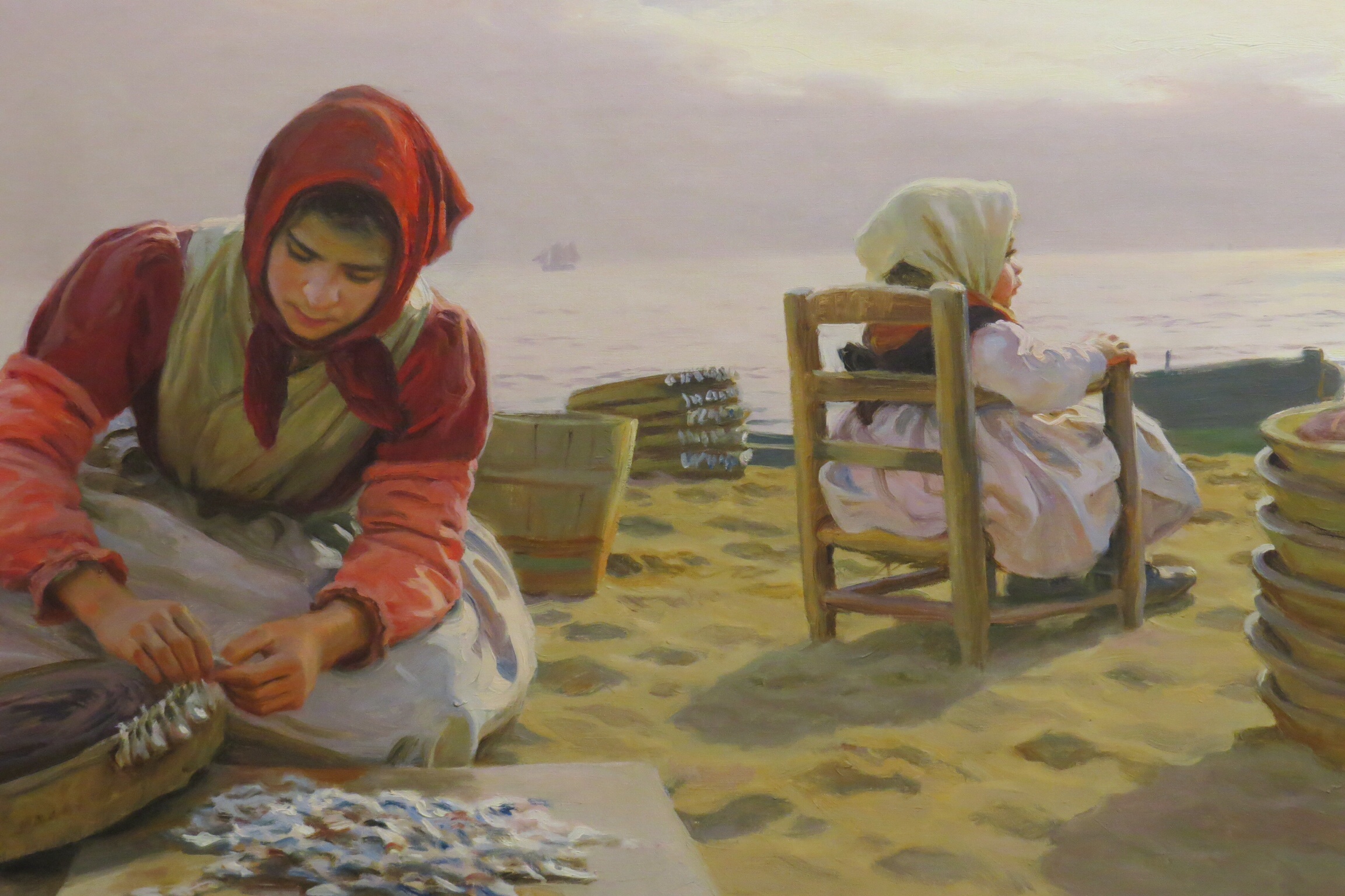
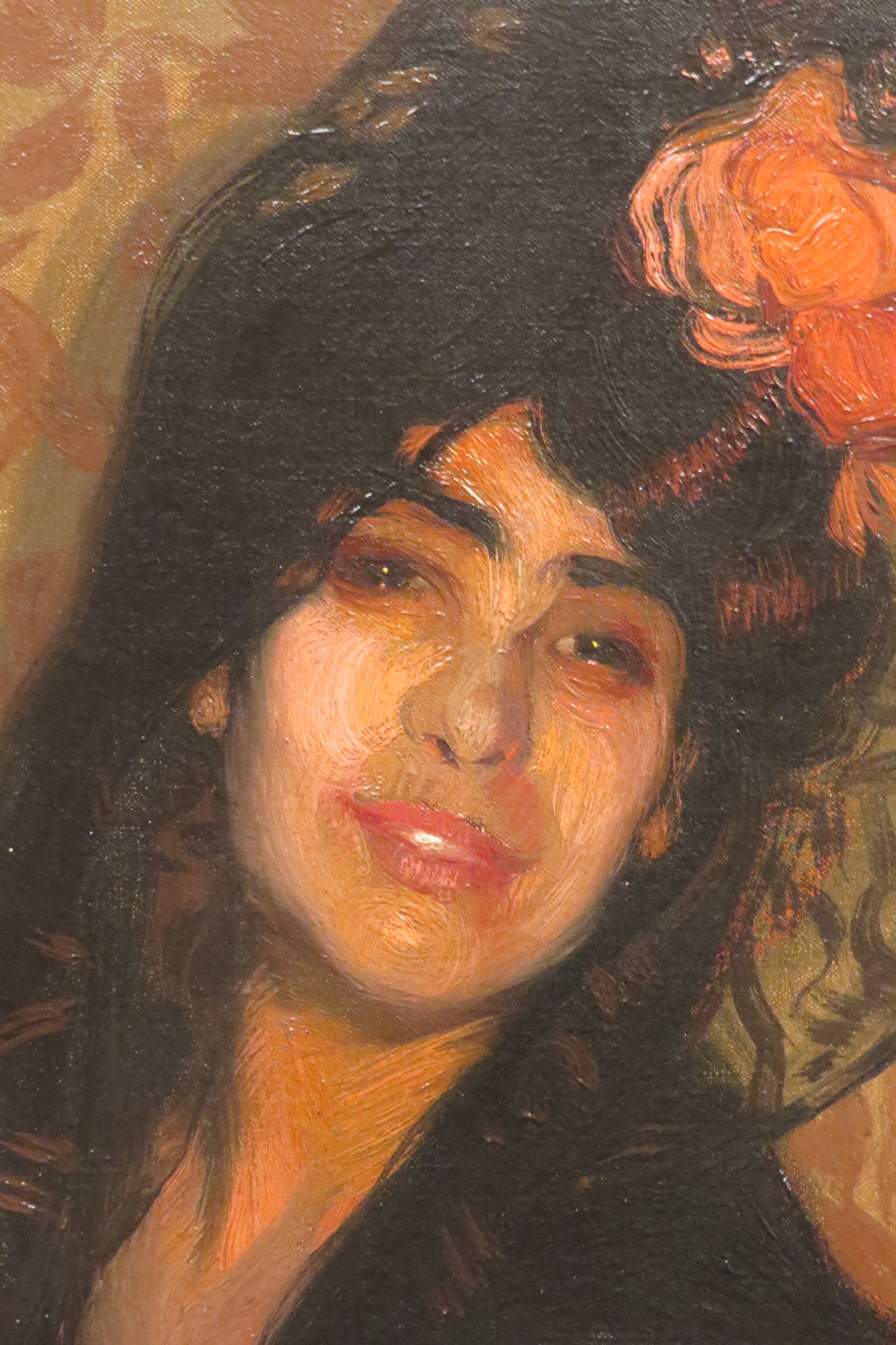
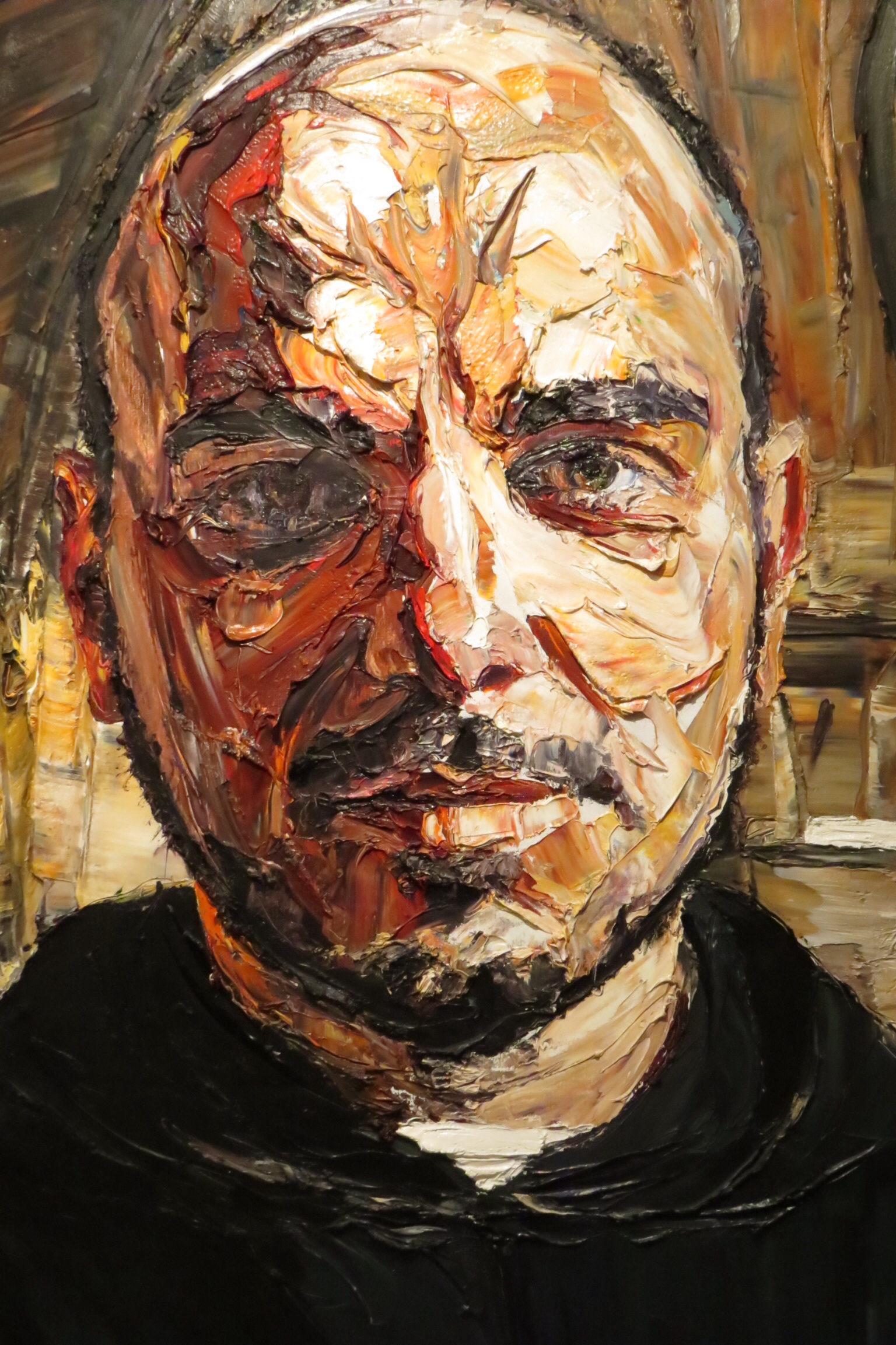
This history and culture was beautiful to explore over our four days in the city. We toured the beautiful museum Fundacio Joan Miro dedicated to the modern artist. We visited an exhibition at the Museo Picasso to see how closely Picasso and Dali influenced one another, presented in pairings of their paintings. We learned that Picasso was a prodigy, painting portraits of staggering maturity at the age of 14. It has been so interesting to see these three artists’ formative years, having already seen how they collaborated with other intellectuals and painters later in Paris, when they were forced into exile as critics of the Franco regime. Among the most interesting pieces in the collection were Picasso’s take on the great Velazquez painting, considered by artists to be the greatest painting ever painted, Las Meninas (which we will see at the Prada in Madrid). We also visited the fine collection at the Monserrat Benedictine Monastery which included a Caravaggio, Picassos, Dalis, Impressionists and others.

image
Repentant Saint Jerome, Caravaggio

image

Old Fisherman, Picasso

image
Checking nets on the beach, Baixeras


image image
Powdered Woman,                         Monk, Sunaco
Zuloaga
>image
Neocubist Academy, Dali

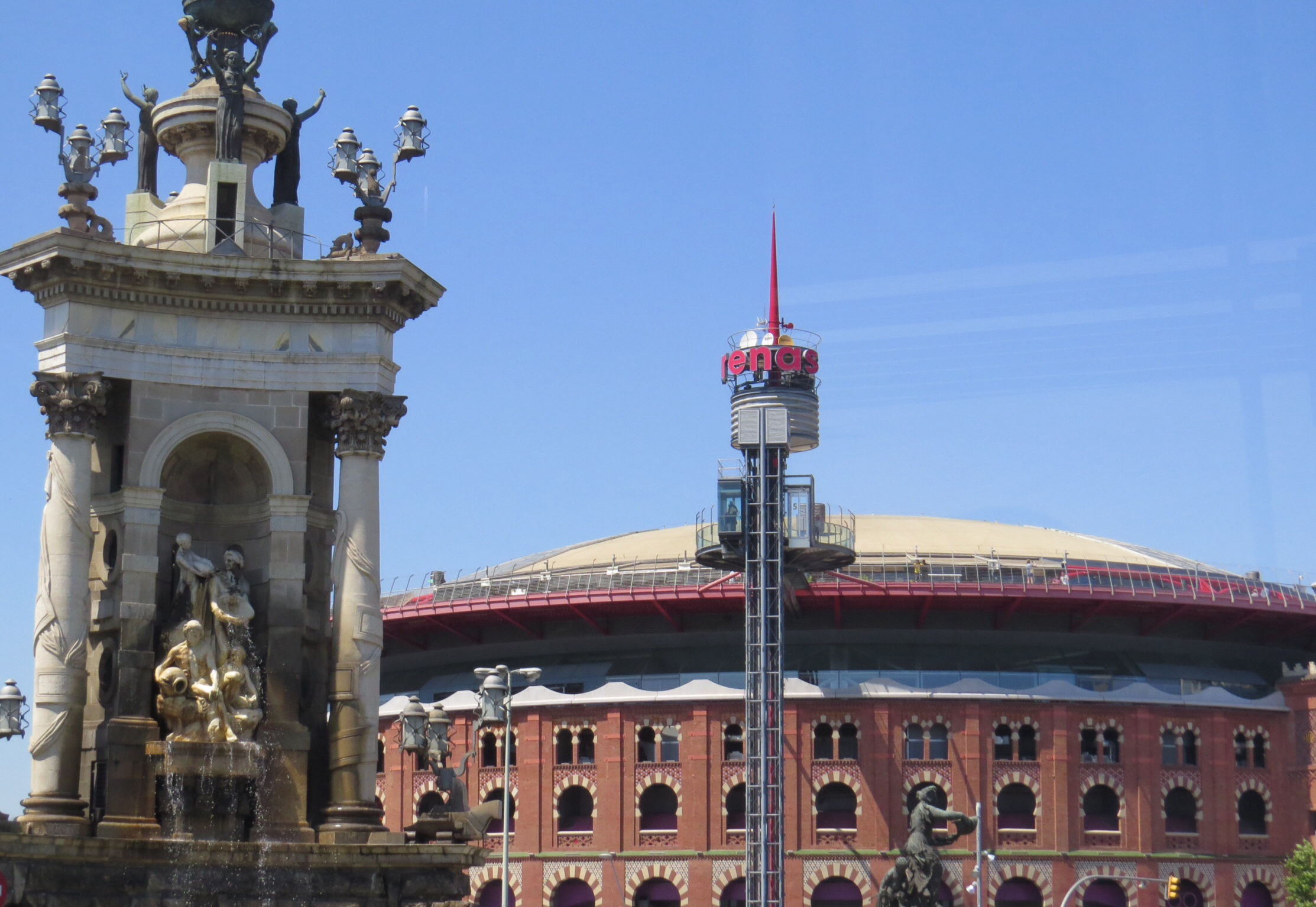
The bullfighting ring has been converted into a shopping mall after a Catalan-wide ban on bullfighting largely to distinguish Catalan from the Castillian image represented by the bull.

image

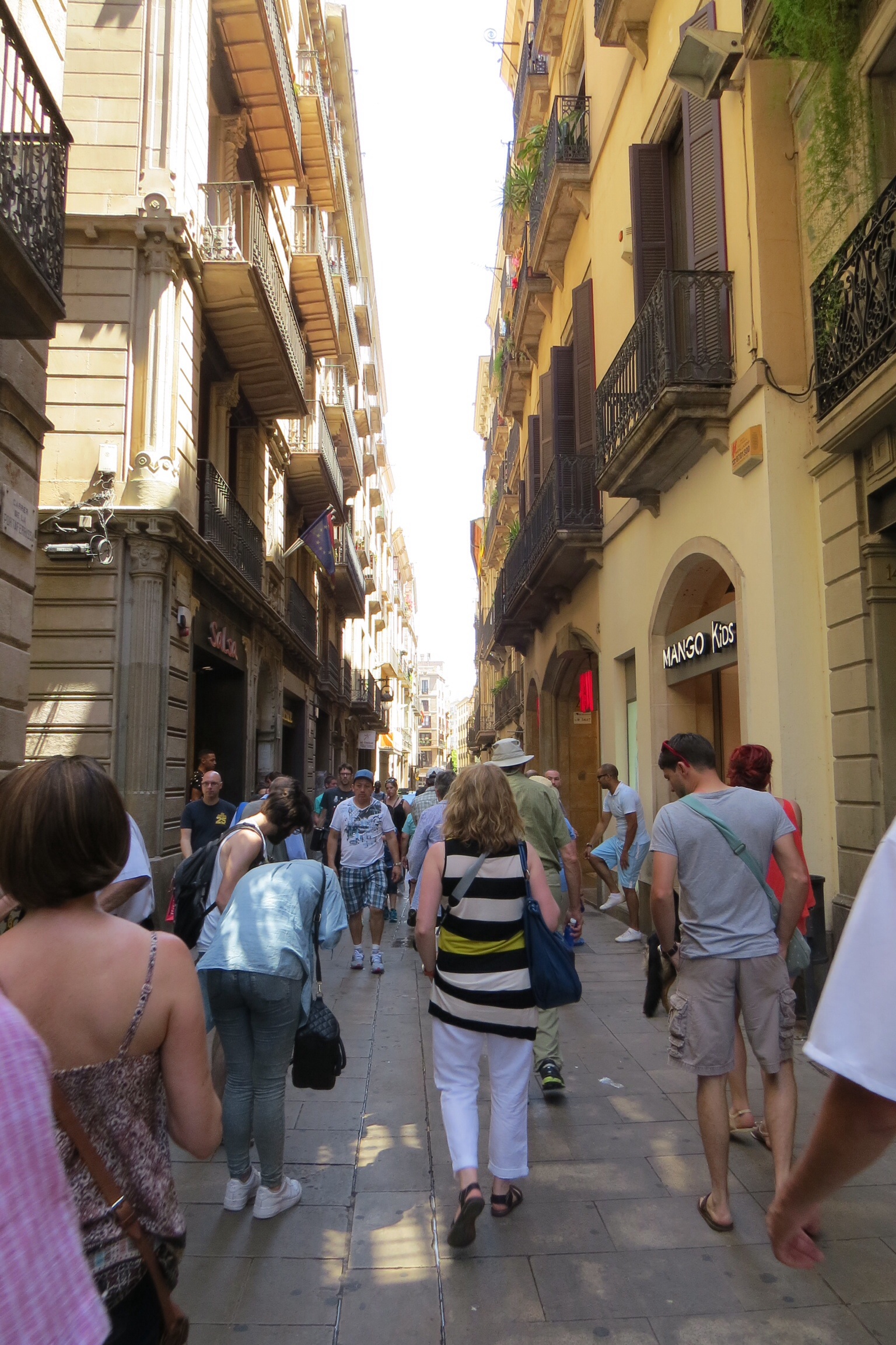
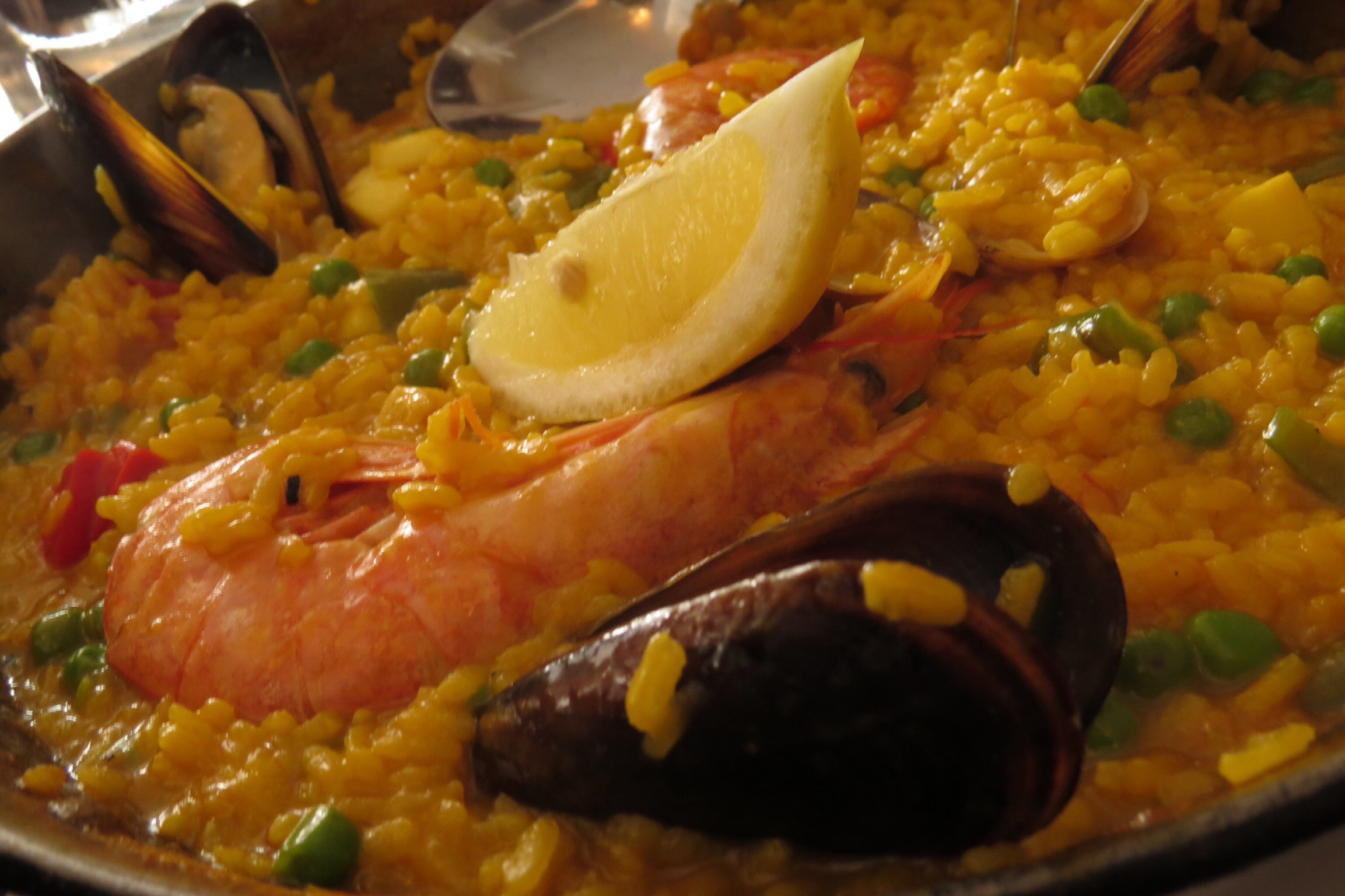
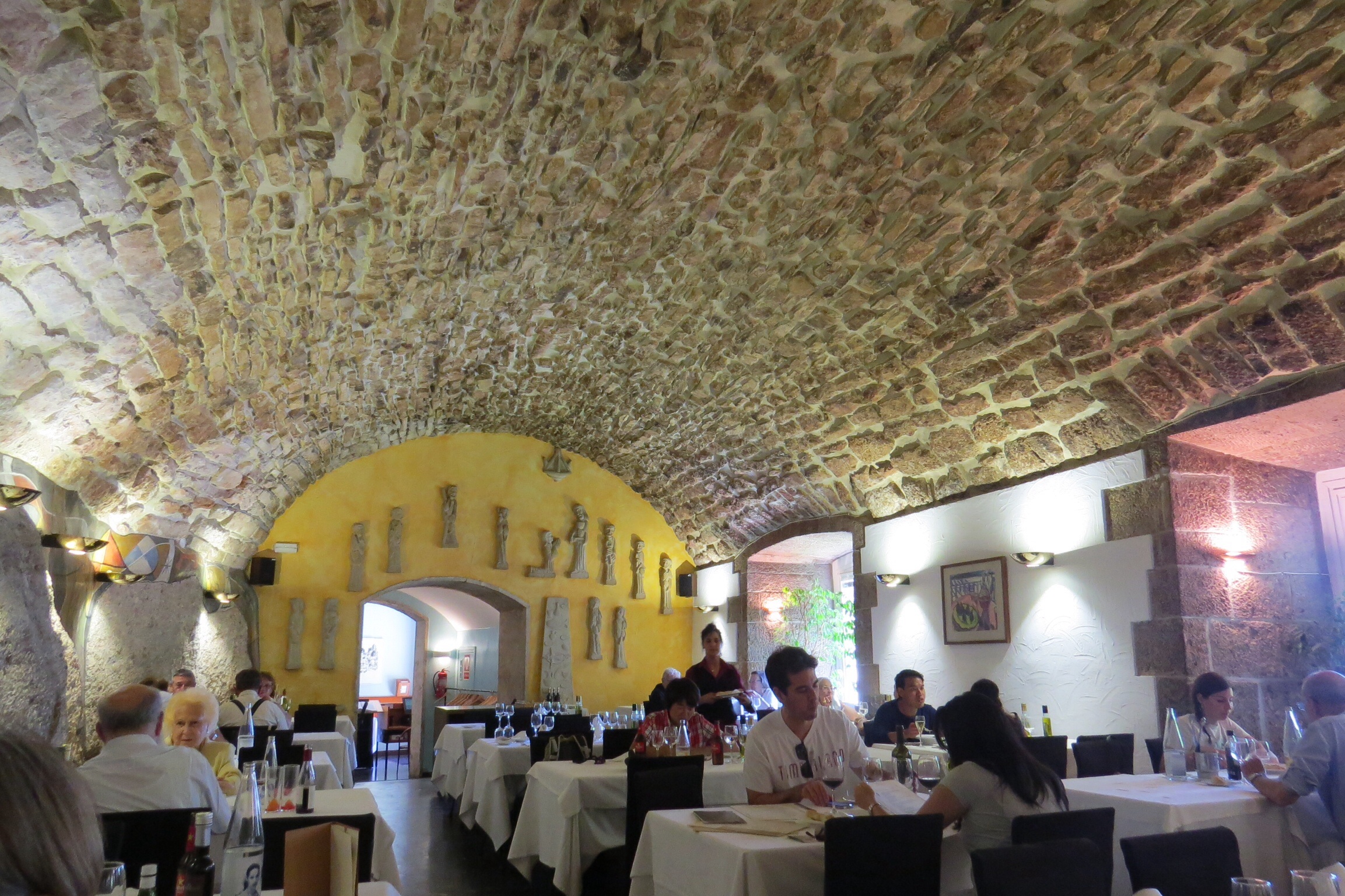
The distinct cuisine was a joy to discover both in little back alley cafes in the old Gothic Quarter and in modern, upscale restaurants we visited as a group. In the Barri Gotic (Gothic Quarter) and El Born districts, I was taken back to the pages of The Shadow of the Wind, a lovely story set in Barcelona which I read just before arriving.

image image image

image image image image image image image image image

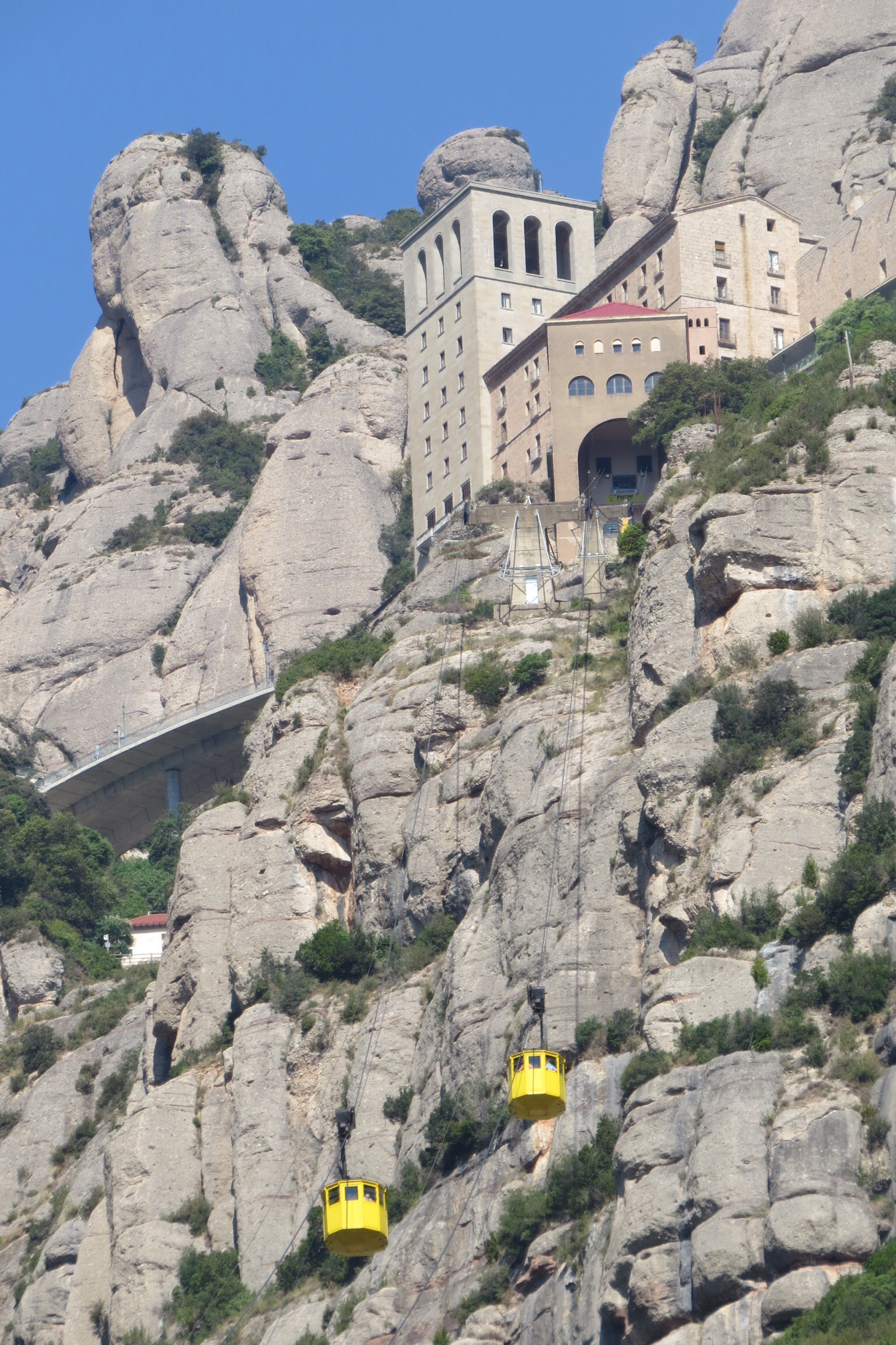
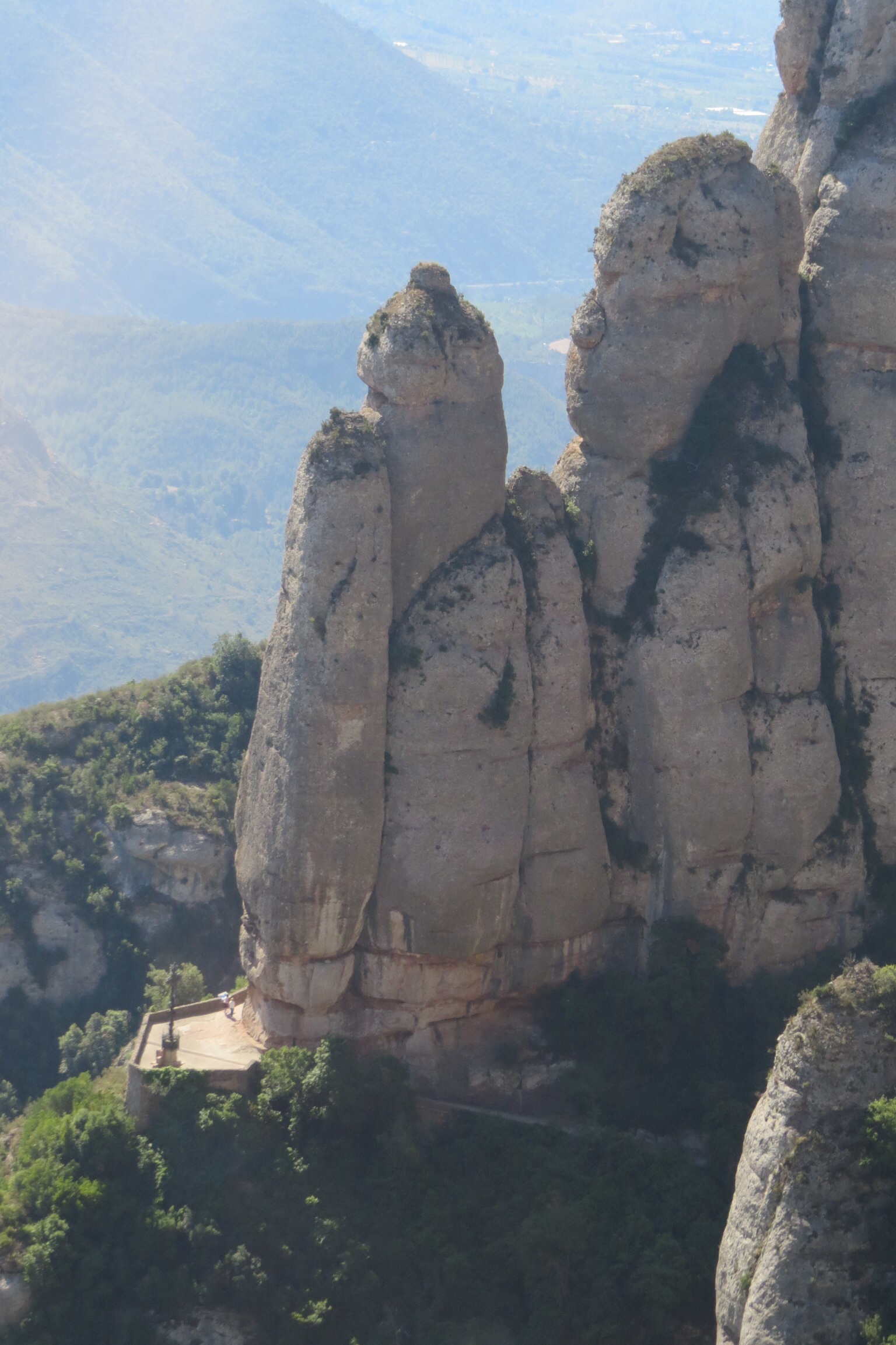
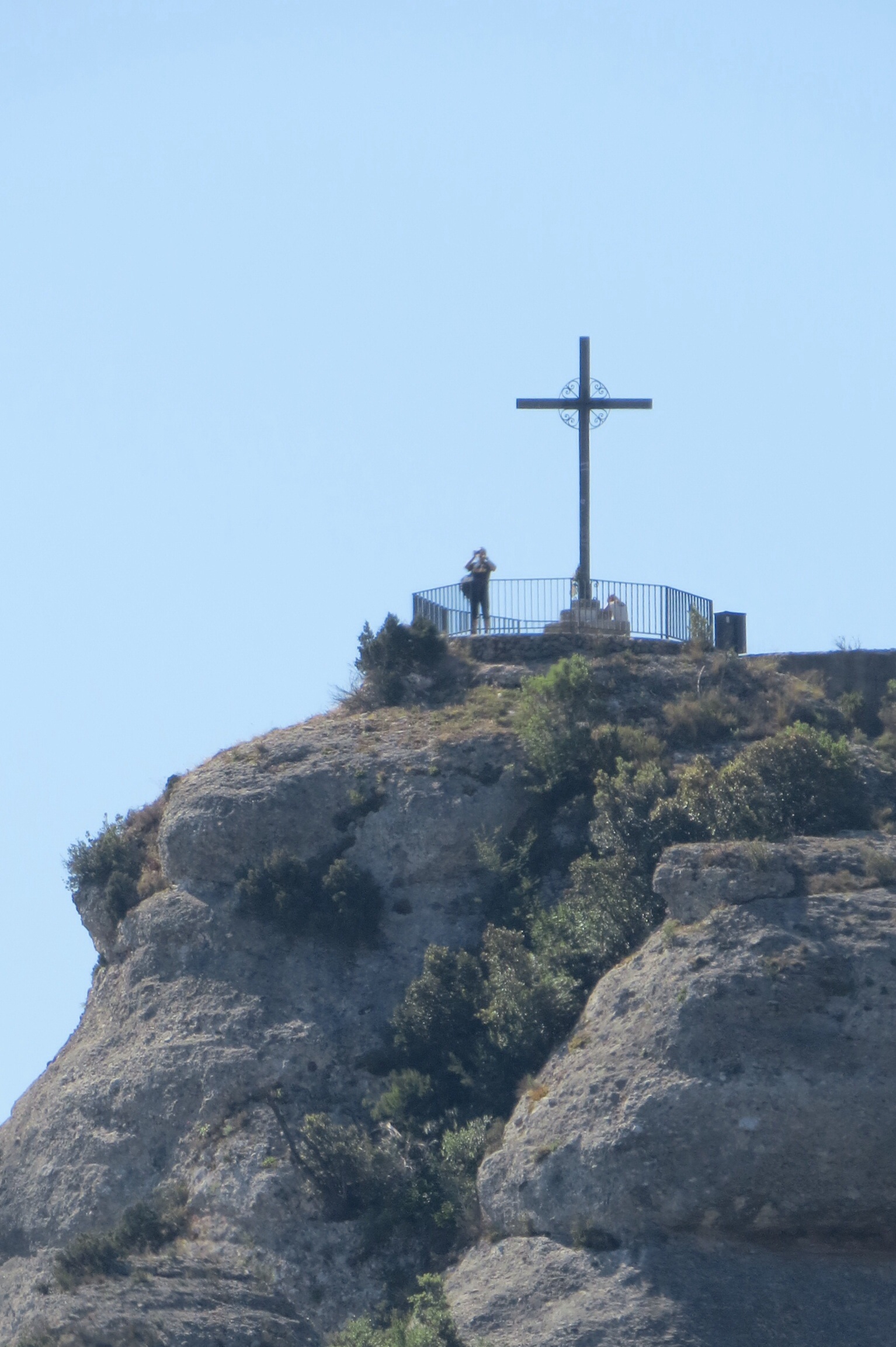
Our visit to Montserrat (serrated mountain) on our last full day in Barcelona was moving. The monastery has reached out to the community and is the heart and home of the Catalonia people: their refuge, their archives and library, and their spiritual home. It was moving to hear the boys and monks sing Gregorian chants in the Cathedral among the rocks that have carried religious weight since pagan times when Venus was worshipped here.

image image

image image image image
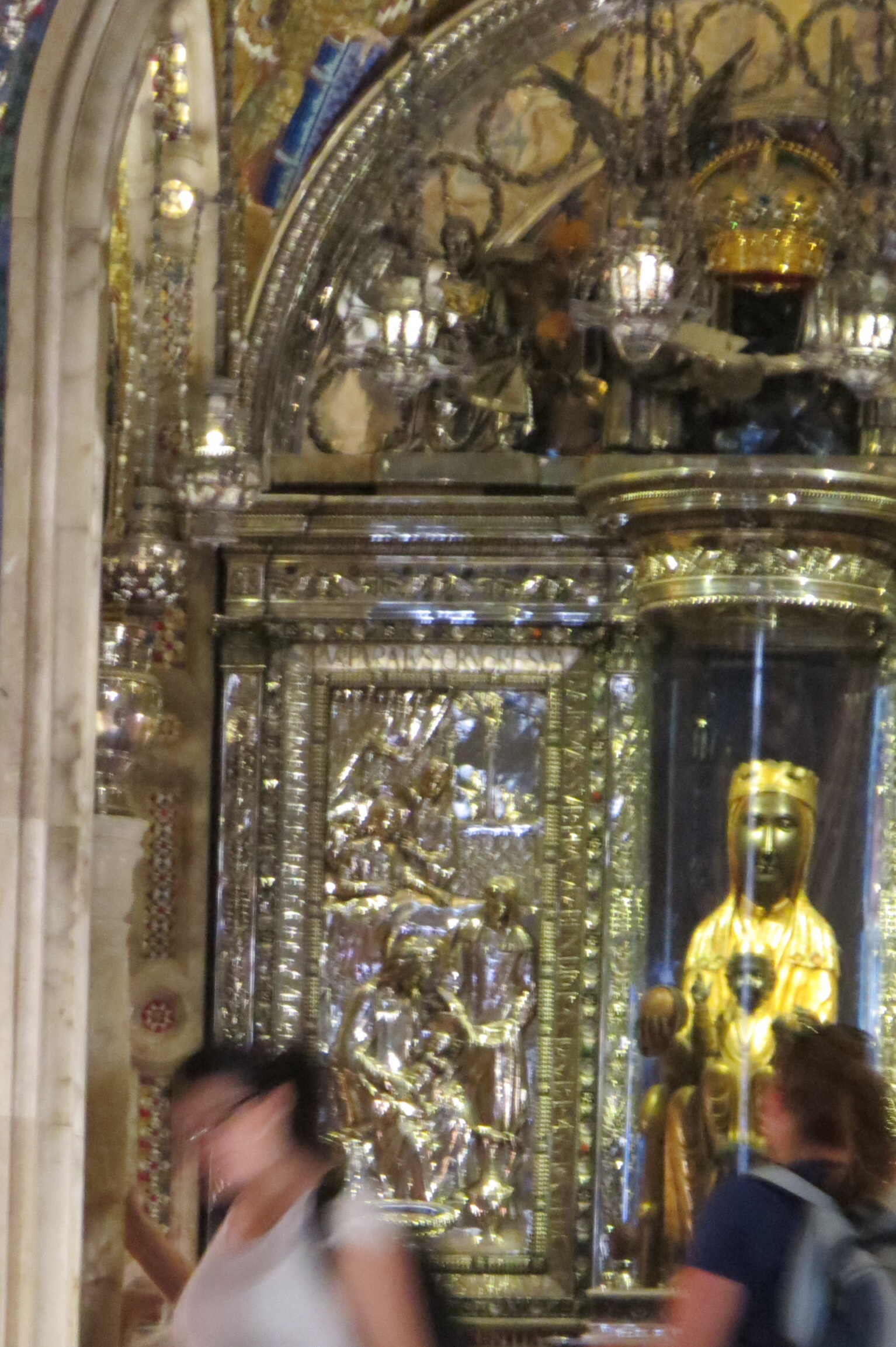
1 million pilgrims per year visit the Black Madonna

Many of our lovely group have expressed the same sentiments I felt as we reluctantly left this beautiful, vibrant city, much richer for the experience.

image

Our fearless leader, Rosa

Nightcaps at the end of our day:

image image

Jan
The Shadow of the Wind, by Carlos Ruiz Zafon

A book lover’s book, with a Cemetery of Forgotten Books (truly) in the Barri Gotic, a mystery, winds its way thru the back alleys of old Barcelona, with a central theme of the temptation of good over evil. And The Shadow of the Wind explores good, evil, and all the gray conundrums in between. Also a rollicking good ride!

Richard Eder, New York Times:

”The Shadow of the Wind” opens in 1945 in Barcelona, bleak and still shattered by the Spanish Civil War. Throughout, in fact, the residue of the war’s fraternal horror is the grave thematic substratum beneath capers and mystifications.

Give way to the redoubtable wit and grit of the Spanish character despite a tormented past; and to sudden flowery oases (Spain and its language have their Arabic touches) of the impossibly romantic and erotic. The impossible and the earthy have lived braided in the Spanish soul back through ‘Don Quixote’ and beyond.”

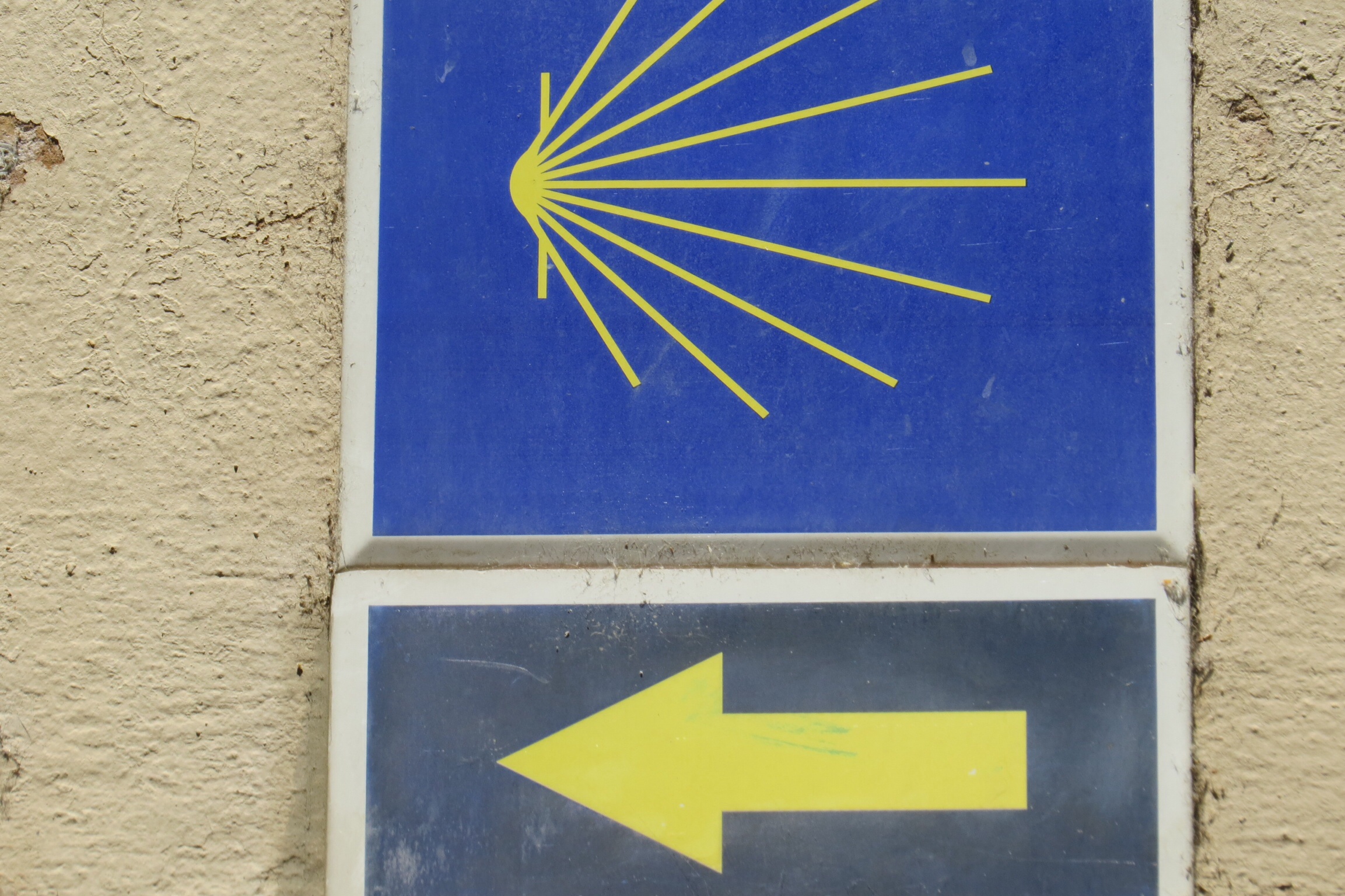
Setting Out / De salir en un viaje

Wanderer, your footsteps are
the road, and nothing more;
wanderer, there is no road,
the road is made by walking.
By walking one makes the road,
and upon glancing back
one sees the path
that will never be trod again.
Wanderer, there is no road—
Only wakes upon the sea.

—Campos de Castilla, Antonio Machado (1912)

Don Quixote by Pablo Picasso Don Quixote by Pablo Picasso

Bound for Northern Spain!

Our route, from Barcelona to Madrid:

https://www.google.com/maps/d/embed?mid=zymXvLbJoZiY.kkOYGMqOulSg

Clearly more about the journey than the destination — part wandering, even part pilgrimage, with only a dash of the quixotic (and that is the last time I will use that word), as in Knight-Errant (mis)Adventures — I venture forth.

Compatriot Shirley and I, who toured Russia together,  signed on for the University of Victoria Travel Study Program’s trip to Northern Spain, largely due to the fabulous personality of our leader, Rosa, a professor of the Hispanic Studies Department, and her descriptions of THE FOOD, and THE WINE.  She was joined by her colleague, Chrissy, whose specialties are Spanish FILM, and, among other things, THE SHOPPING. The 12 of us have had 7 classes on Spanish history, language, literature, art, music and yes! folk dancing, and we are ready to roll. Vamos!

imageimageimage

Connecting the Dots

2014.   A new year.  Some years we are so very grateful for a clean slate.  Other years, when we suffer losses, a continuum feels better.  And then, there are Rob Ford years, which are so implosive no realignment of the planets can resurrect them (we hope to god – but Toronto, step up to the plate on October 27th).

2013 was not a Rob Ford year for me, obviously, but it had to be said.  I hope none of us ever, ever, ever, ever, ever has a Rob Ford year, and that is not an outright lie.  But if it is an outright lie, I am super, super sorry.

High time I tucked away my blog until my next journey.

Some of what I learned…

The internet didn’t start global connectivity.  Our desire to connect with one another didn’t start with Apple. Our ability to learn from one another and to inspire each other defines us. True, Twitter helped the Arab Spring accelerate. But history shows that previous revolutions, and philosophies and ways of life sprung equally from previous history, communication, and inspiration from others.

>  From the dark ages sprung the Renaissance in Florence, 1300-1600’s – da Vinci, Michelangelo, Capernicus, Gallileo…

> Louis Quatorze raised style to new heights, building Versailles and moving the seat of power in France away from the Louvre to Versailles, 1643-1715

> The Age of Enlightenment rose in France with Voltaire, flowing from the Renaissance, 1650-1789

> Peter the Great moved the capital from Moscow, built St. Petersburg, and modernized and westernized Russia 1682-1725

> Maria Theresa expanded the Holy Roman Empire through marriage instead of war, 1740-1780

> Catherine the Great restored Peter’s Russia and introduced education, health care and art, 1762-1796

> The American Revolution 1775

> The French Revolution 1776

>  Thomas Jefferson and Benjamin Franklin studied in Paris before drafting the Declaration of Independence in 1776

> Karl Marx published The Communist Manifesto in Berlin, 1848

> Alexander II emancipated millions of Russian serfs in 1861

> Abolition of slavery in the U.S., 1865

> The Great War, 1914

> The Russian Revolution, 1915

One could go back to ancient Rome, Egypt and Greece to find similar connections. And surely back further in time to our roots.

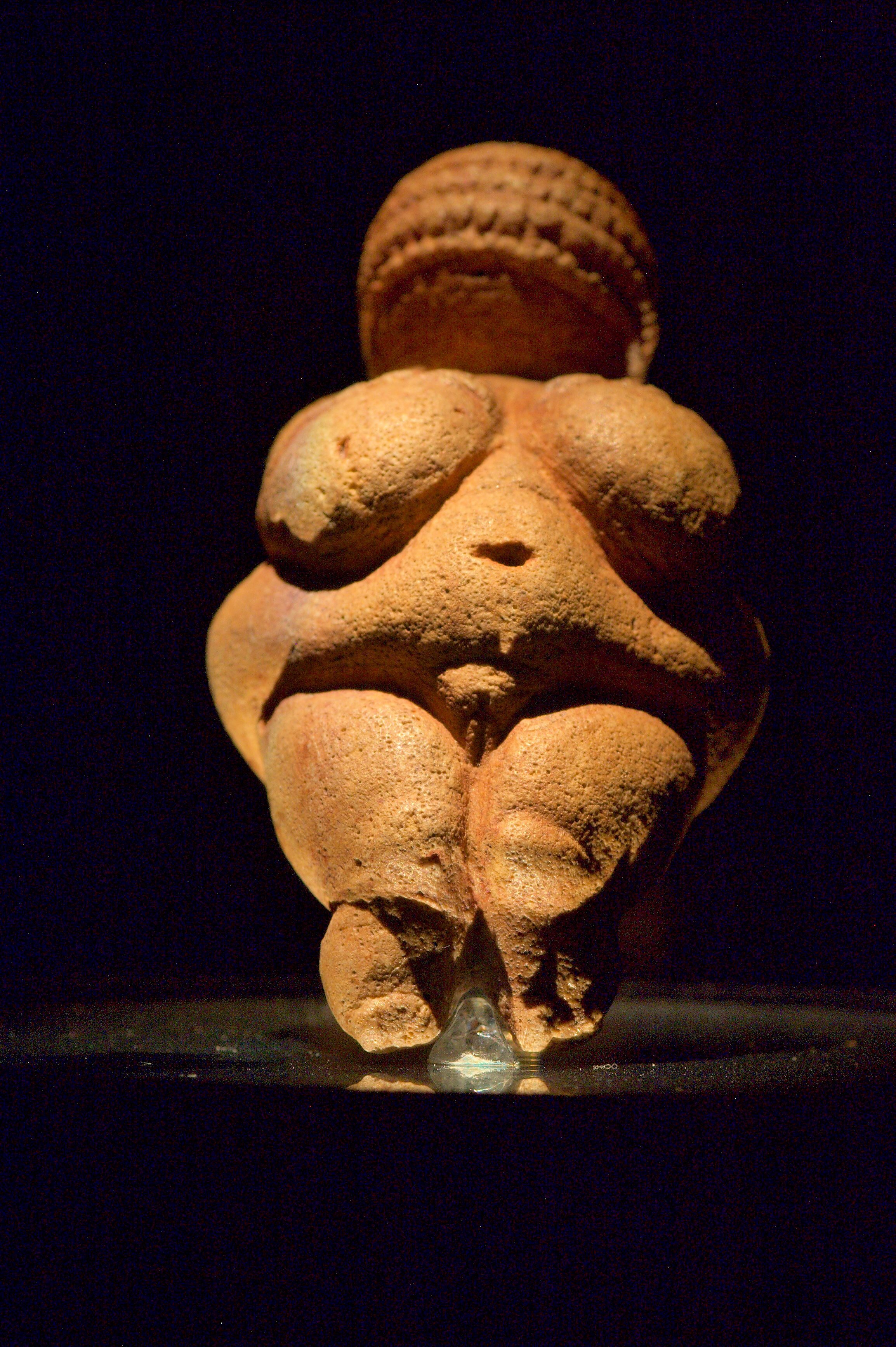
Venus of Willendorf
Venus of Willendorf

Best of (next best)…List:

Best city: St. Petersburg (Vienna)

Best opera: The Queen of Spades at the Mariinsky, St. Petersburg (Simon Boccanegra at the Vienna State Opera; Don Giovanni at the Estates Theatre, Prague)

Best concert: Berlin Philharmoniker, Mahler’s 10th Symphony (the Munich Philharmoniker Beethoven Piano Concertos; Mozart’s Requiem, Karlskirche, Vienna)

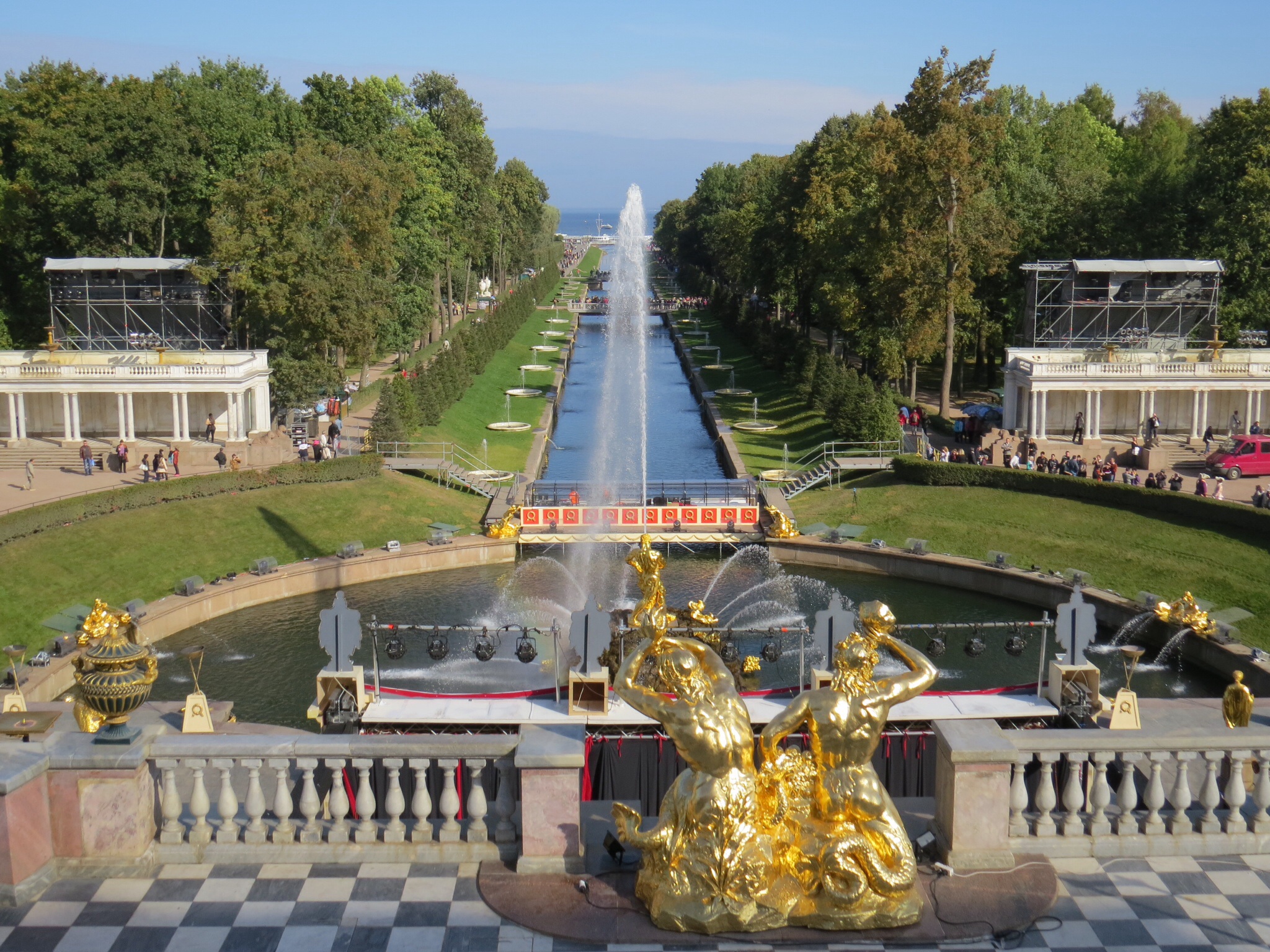
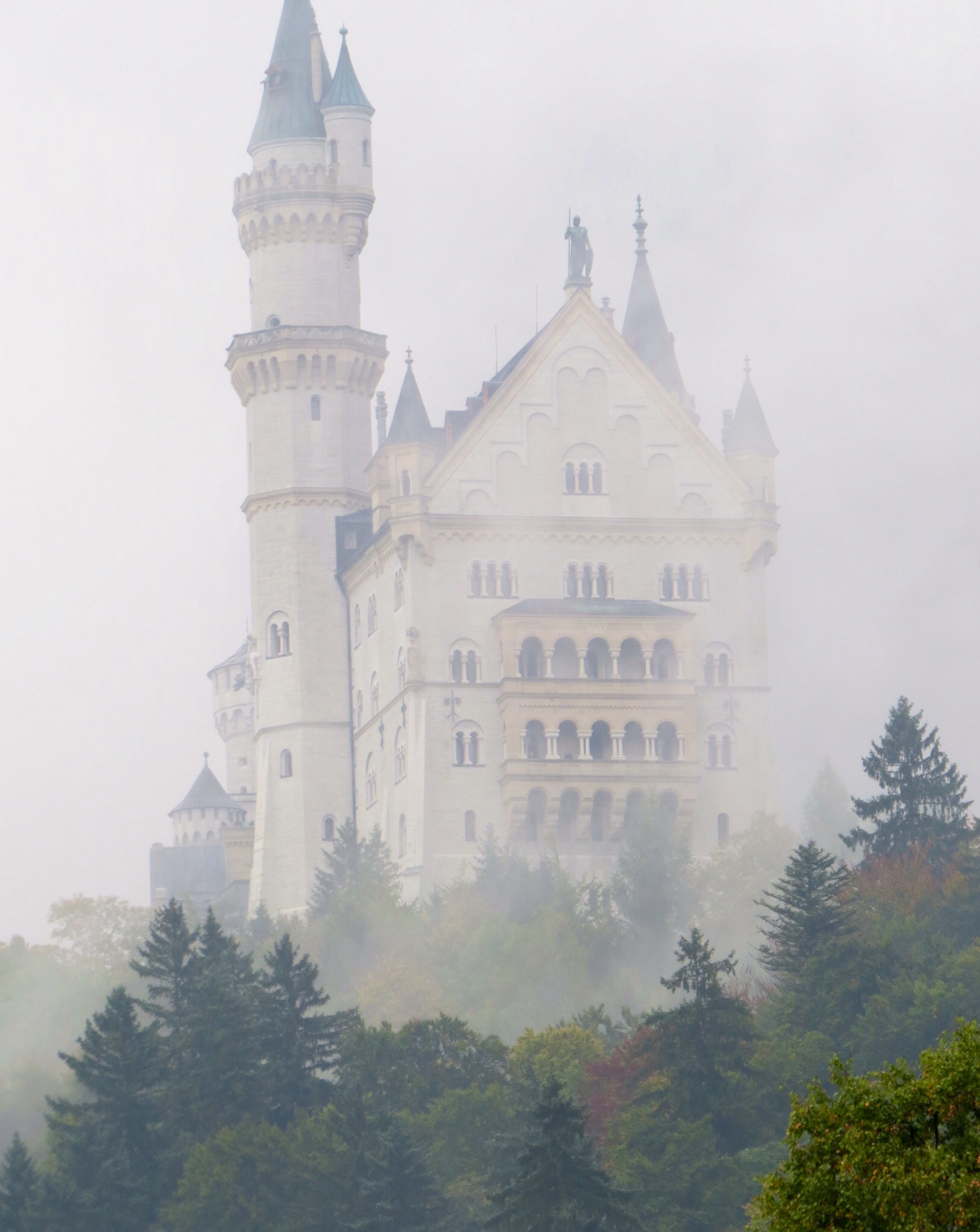
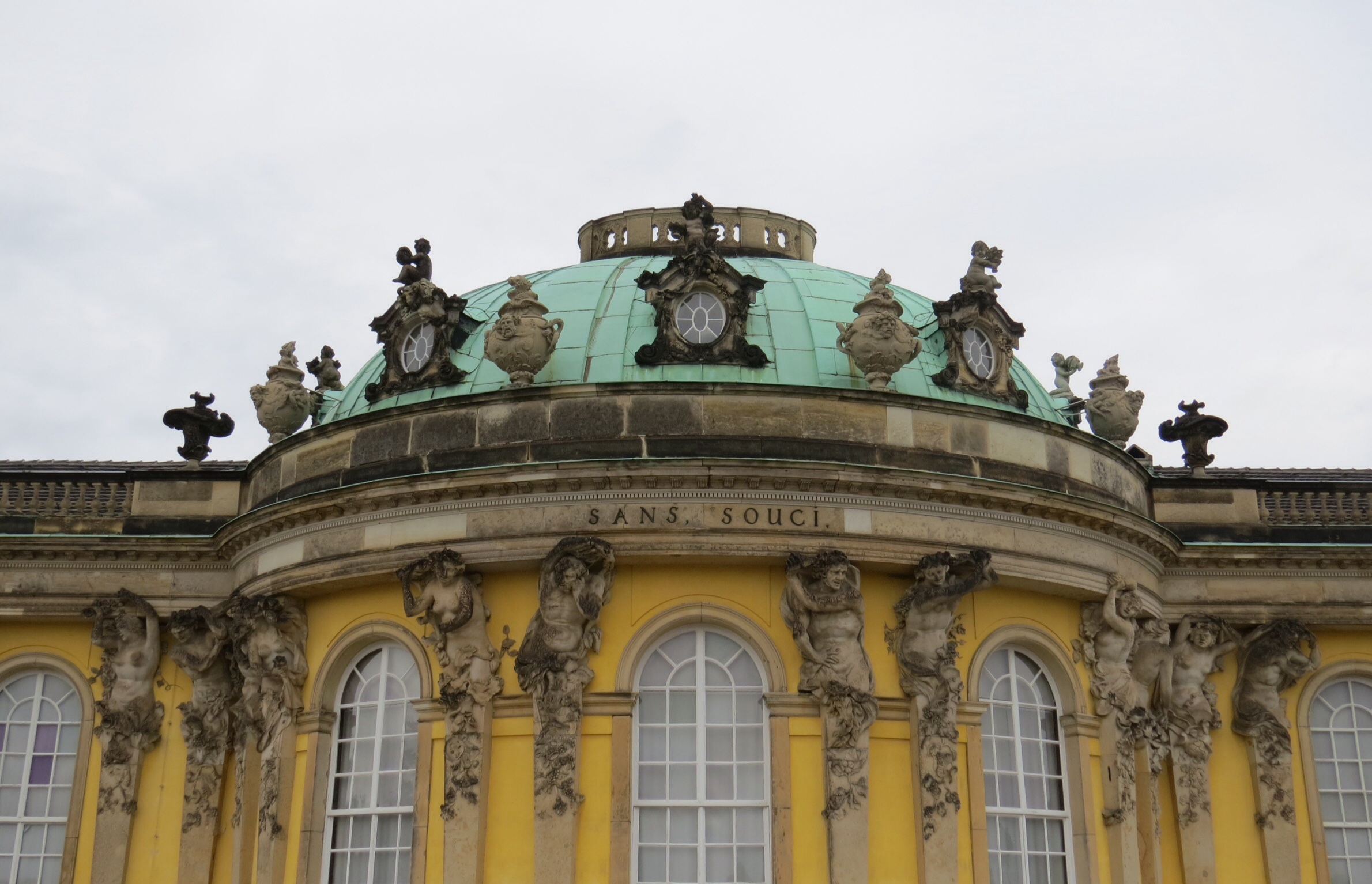
Best Palace:

Peterhof
Peterhof
(Neuschwanstein)
(Neuschwanstein)
(Sans Souci)
(Sans Souci)

Best Cathedral:

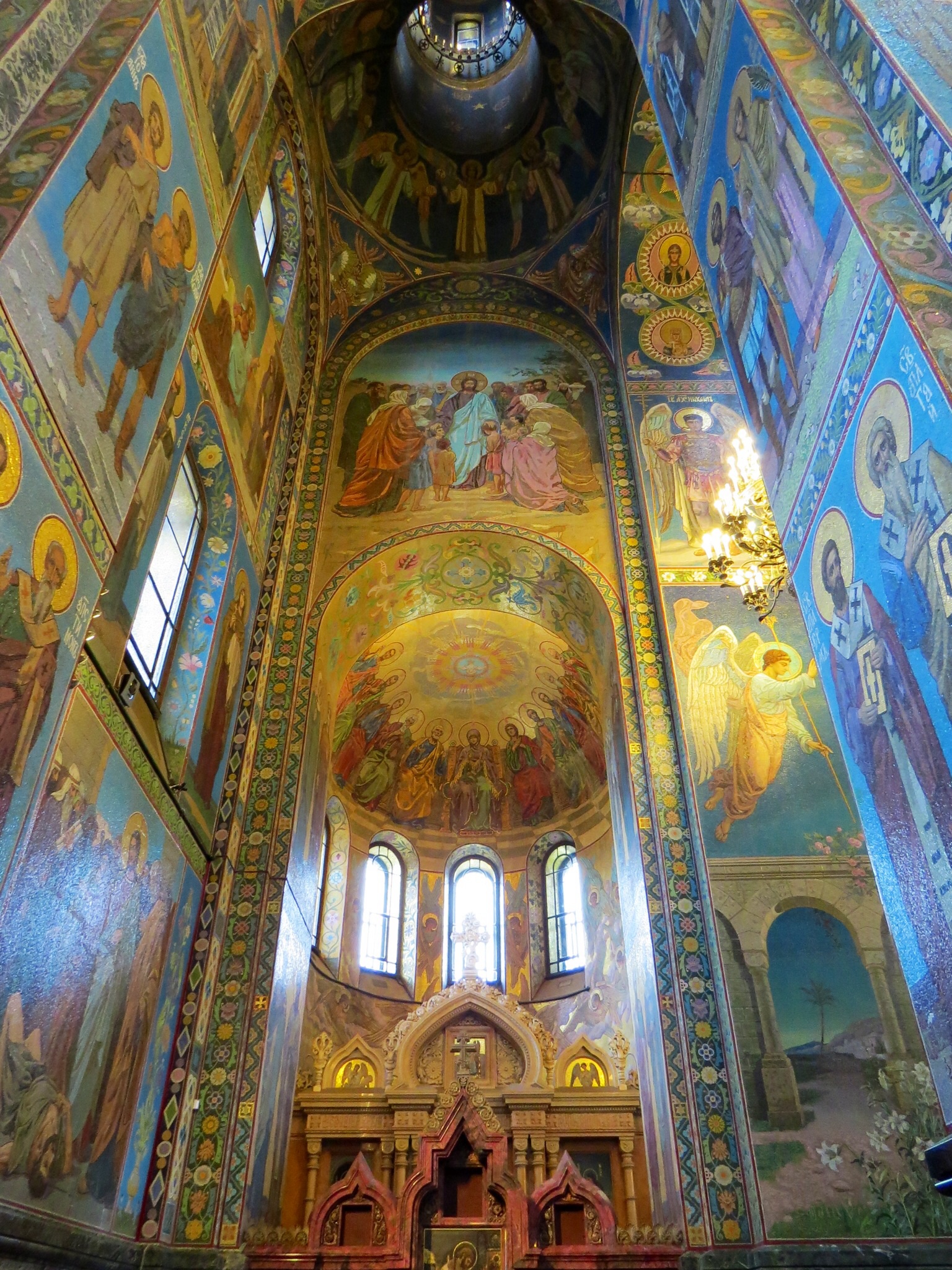
Church on Spilled Blood
Interior, Church on Spilled Blood
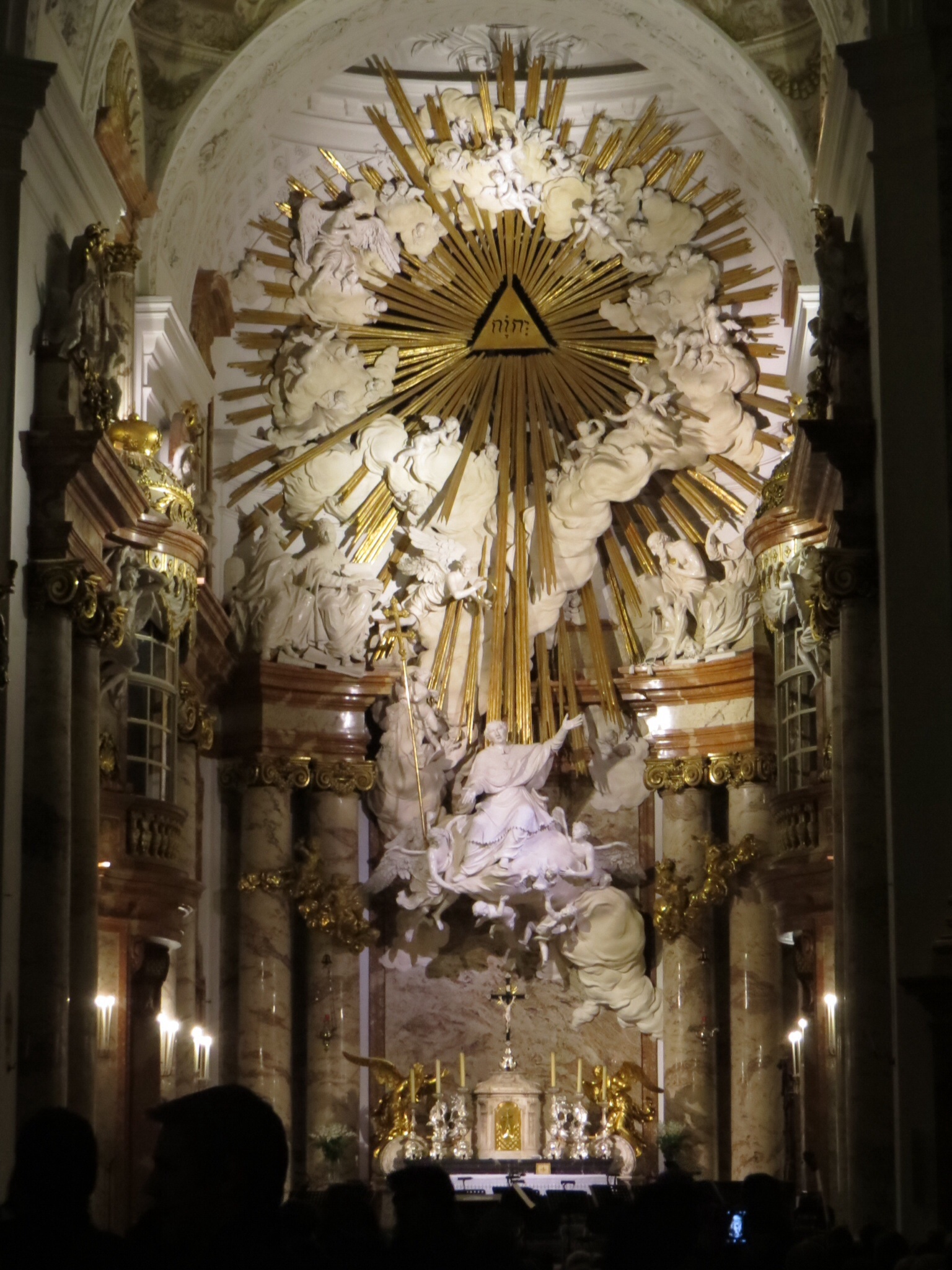
(Karlskirsche)
(Karlskirsche, Vienna)
(Benedictine Abbey, Melk)

Best museum: Russian Museum, St. Petersburg (Pergamon Museum, Berlin)

Best classical art gallery: Kunsthistorisches, Vienna (The Hermitage, St. Petersburg)

Best modern art gallery: The Boros Collection, Berlin (The Secession Building, Vienna)

Best monument:

The Bronze Horseman
The Bronze Horseman, St. P.
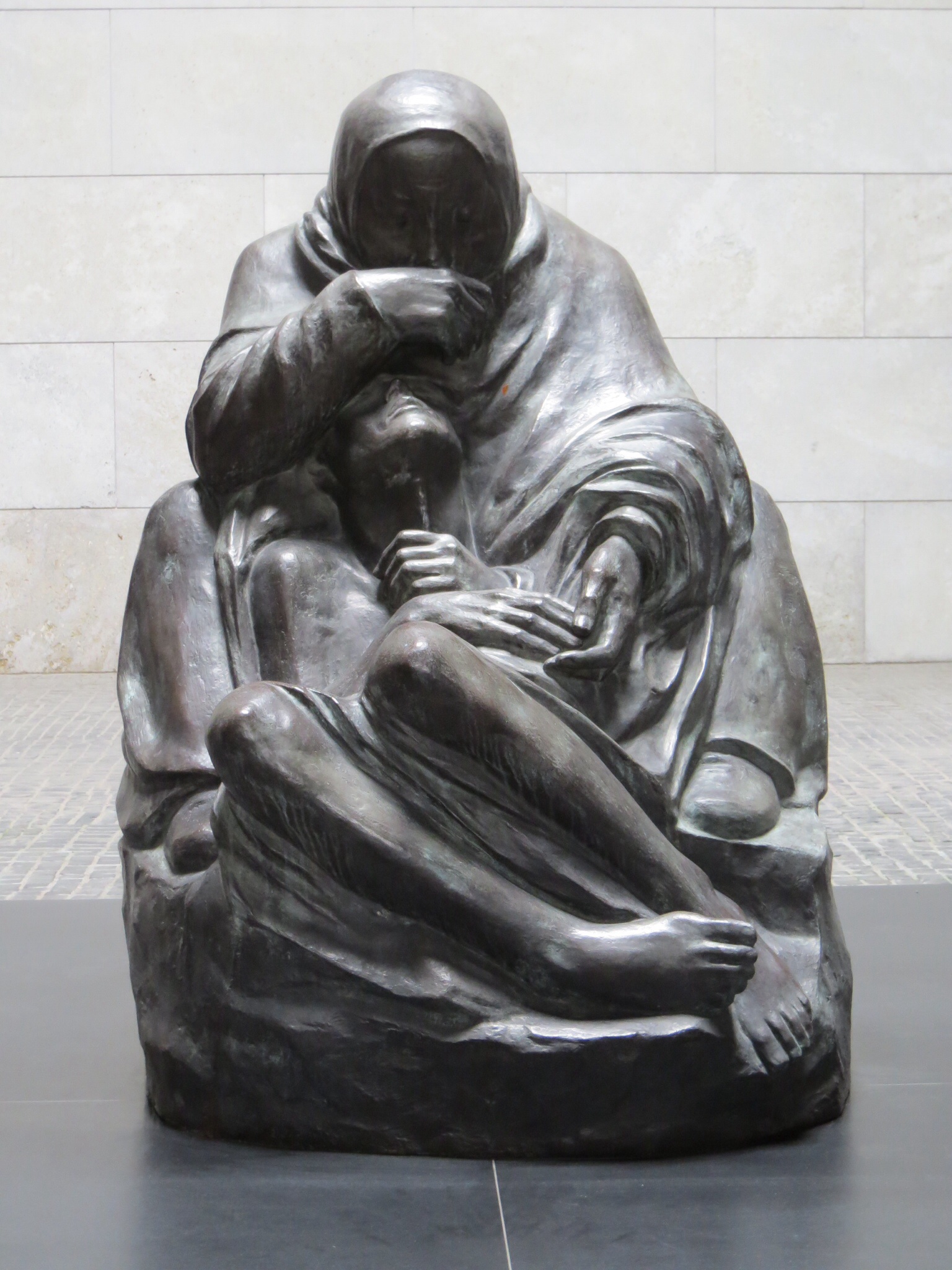
(Neue Wache, Berlin)
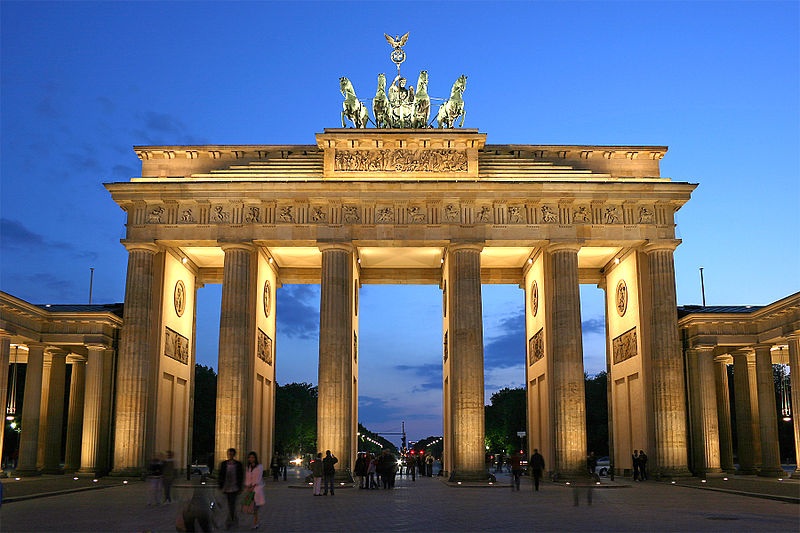
(Brandenberger Tor)
(Brandenberger Tor, Berlin)

Best walking tour: Insider Tour, Berlin

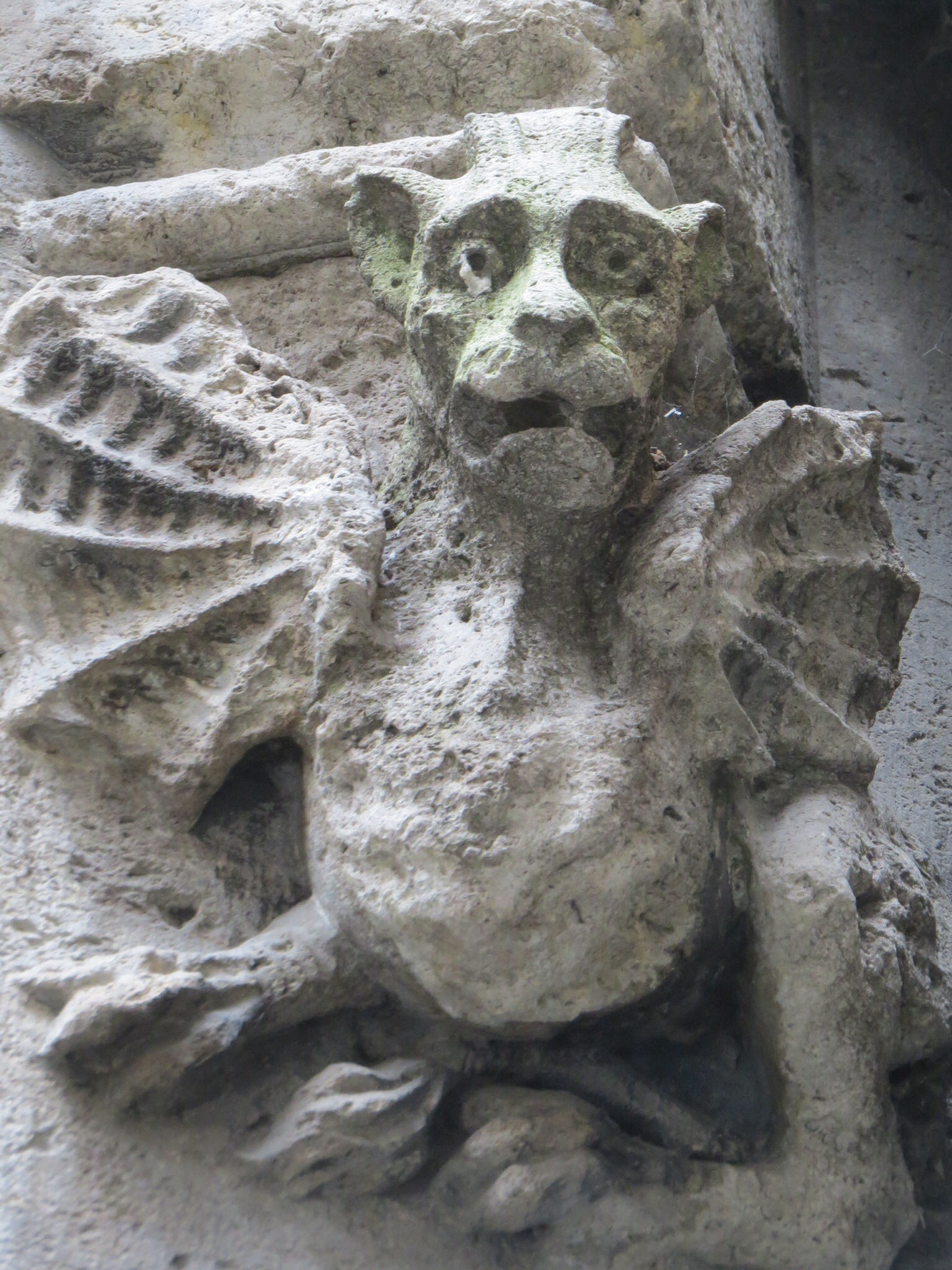
Best gargoyle:

Munich Rathaus
Munich Rathaus

Best food: Pushkin Cafe, Moscow

Best night: Post-Midnite Boat Tour of the Raising of St. Petersburg’s Bridges:

Palace Bridge
Palace Bridge

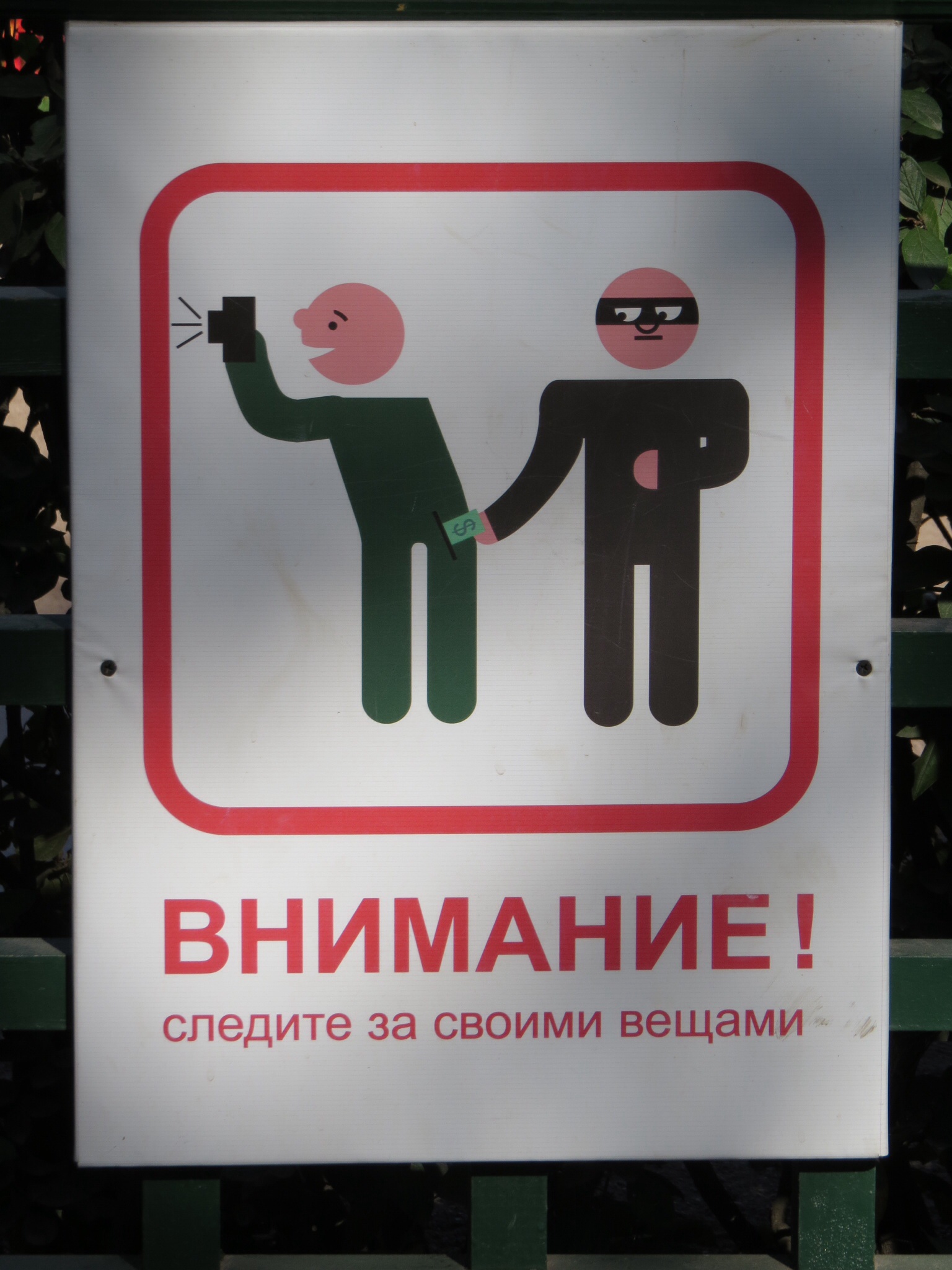
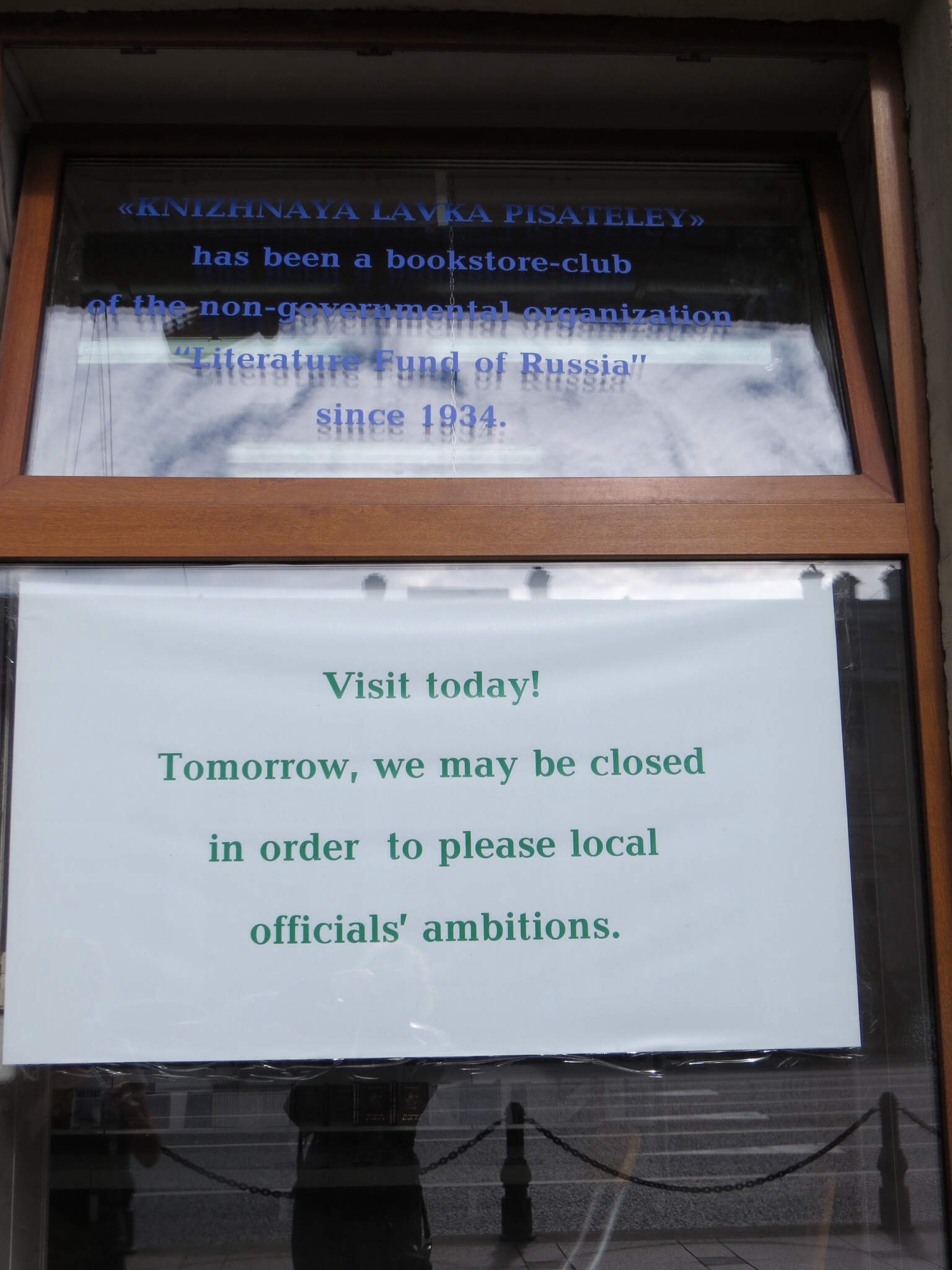
Funniest signs: St. Petersburg:
imageimage

Unexpected things about this trip:

1. Getting lost is awesome.
2. Learning how to say spasebo/danke/dekuji opens doors and windows.
3. Hearing a dog barking in a department store.
4. Men are chivalric in Moscow.
5. The men (and in a couple of cases, women) with their glorious six-packs serving as pillars all over Europe didn’t start in the Baroque period; I found them first at the bath house at Pompeii (but this has Cleopatra written all over it; hers were probably live).
6.  No security or passport control at train stations.  Train travel in Europe is as easy as hopping on a subway.
7. The natural inclination when cutting and pasting into a blog on an ipad that the information cut is held in the actual index finger and the middle finger must be used for other transactions until the information in the index finger is pasted.

Inspired:

Favourite movie this year:  The Intouchables
Another Favourite:  Love is All You Need
Another Favourite:  Searching for Sugarman
Another Favourite:  Cutie and the Boxer
Favourite Hollywood:  American Hustle

Favourite travel website: http://www.theculturetrip.com
Second favourite travel website: http://www.hotelswelove.com

Etiology of the word “inspire”:  to breathe in spirit.

All the best for 2014 and happy travels!

Jan
xo